Photo: Matt McClain/Washington Post. Albert Villa, center, and his grandmother, Jean Fratzke, right, during a practice for the Forgetful Friends Chorus on Oct. 7 in Springfield, Virginia. The chorus is for people with memory challenges and their caregivers.
I have blogged before about the ways people with dementia respond to music, how they can remember a song even when they can’t remember much else. Today’s story touched me particularly because one of the interviewees was so confident she was dementia-free. Her doctor had given her a list of conditions older people get, including dementia. “But that hasn’t happened,” she says stoutly.
Kendall Staton writes at the Washington Post, “Drema Yates, 86, wobbles into the sanctuary of Manassas Church of the Brethren, clutching tightly onto the arm of her husband, Mike Yates. She relies on Mike, who’s eight years younger, to keep her standing with each unsteady step. …
“A dozen people are talking in hushed voices, waiting for the rehearsal of the Forgetful Friends Chorus to begin. There’s no auditioning, because the only people allowed to participate are singers who have dementia and their caregivers.
“ ‘Singing brings me closer to God,’ Drema says. ‘God is in my world. Without God I wouldn’t know anything.’
“Drema can’t remember what she had for breakfast, but she knows she’s been married to Mike for 51 years. He reminds her that he made eggs, toast and coffee. Drema says matter-of-factly that she has a great memory.
“She was diagnosed with dementia four years ago.
“Says Mike, who is 78, ‘She refuses to accept that she’s got dementia.’ So, he avoids the subject altogether.
“The chorus is rehearsing ‘The Star Spangled Banner’ to open the Walk to End Alzheimer’s, an annual fundraiser hosted by the Alzheimer’s Association. Director Connie Young, who started the choir in 2016, says today is a better turnout than usual.
“The group gets together twice a month to rehearse and travels to local senior living facilities to perform. Before the coronavirus pandemic began in 2020, the choir sang for a crowd once every few months. Now the group performs only occasionally.
“Most recently, they sang at the funeral of Lisa Bosley, a member who died in May. Her husband, Dave Bosley, still sings with Forgetful Friends. He wants to feel connected to Lisa, he says: ‘We were married 56 years, 11 months, and 19 days.’ About a year ago, Bosley invited Drema and Mike to join the chorus. They’ve been coming ever since. …
“Mike makes Drema breakfast, drives her around and tries to make her happy. Their life is all he has, but it’s slipping away.
“ ‘We really had a good life together. To watch all that go away and to know there’s nothing you can do about it,’ Mike says. ‘That’s the hard part.’ …
“Procedural memory, a type of long-term memory, is what makes it possible for dementia patients to summon long-ago lyrics, experts say — even as they forget their loved ones’ names. …
“The morning of the fundraiser is 54 degrees. People pull coats tight around their bodies as the morning air nips at their skin.
“Mike convinced Drema to use a wheelchair, which he pushes to the pavilion on a street in downtown Manassas. She burrows her hands under the blanket on her lap. …
“Drema says she feels sorry for people who have Alzheimer’s: ‘We never know who’s going to have it. The doctor put it on my list of stuff that I might get because I’m old. But that hasn’t happened.’
“She looks at Mike and asks what they’re doing. He pinches her nose; she giggles. He looks at her tenderly. He wheels her back to the car.”
What courage it takes to be a caregiver! I can’t imagine how hard it must be.
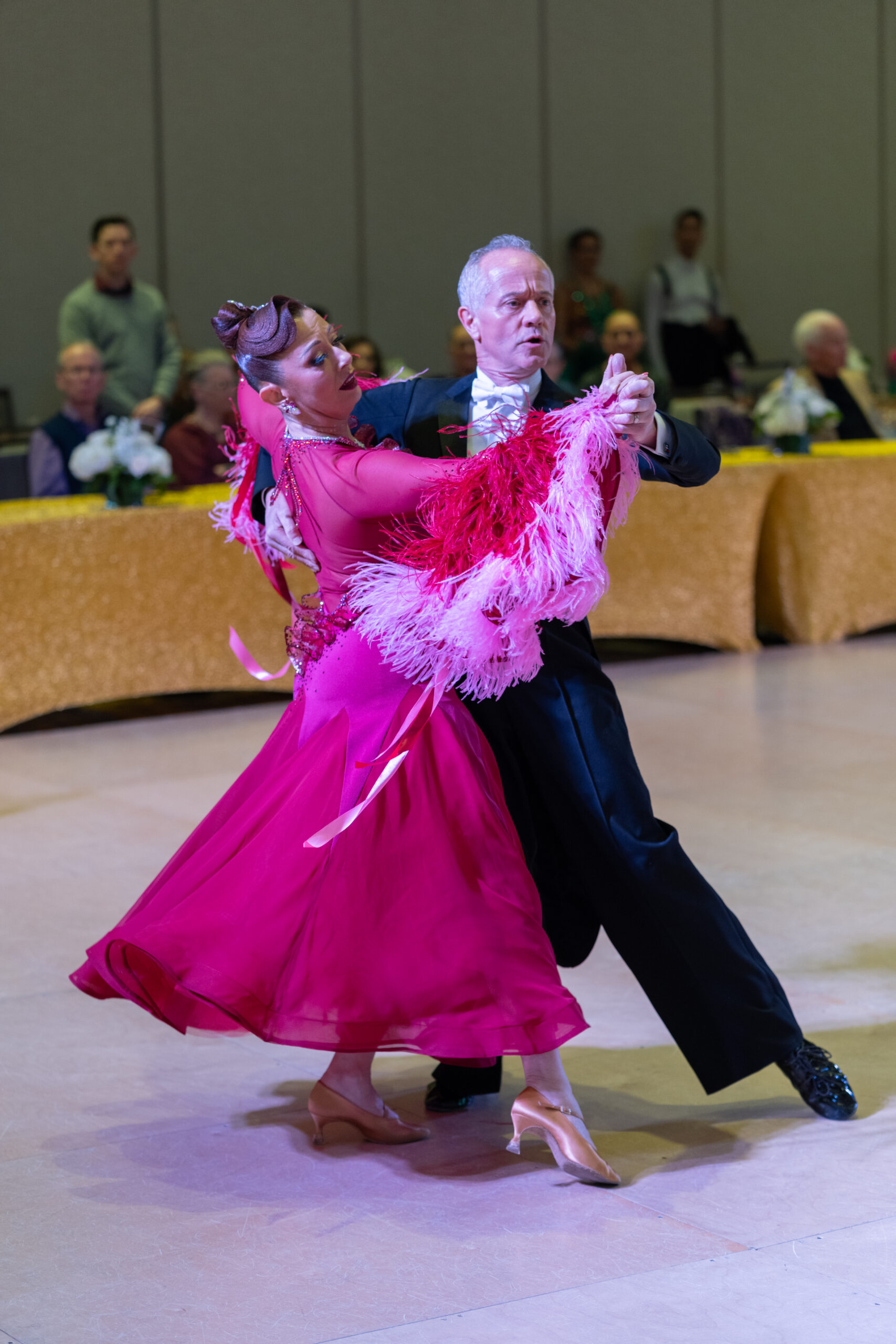
Photo: USA Dance. A dance competition for seniors.
One of the exercise classes I like at my retirement community is called Movement for Body and Brain. It is led by a dancer who is trained in a variety of related disciplines, including exercise for Parkinson’s patients. I started attending because she has the best music of any of the classes. I stayed because it’s great exercise.
An article at the Washington Post by columnist Trisha Pasricha, MD, explains why movement like dancing is good for your health.
“This fun hobby,” the Post claims, “may reduce your risk of dementia by 76 percent.”
Dr. Pasricha writes, “Dancing combines some of the best elements known to be associated with longevity: exercise, creativity, balance and social connection. … One study found that people who danced frequently (more than once a week) had a 76 percent lower risk of dementia than those who did so rarely.
“In the early 1980s, a group of researchers at Albert Einstein College of Medicine set out to better understand the aging brain by recruiting almost 500 men and women ages 75 to 85 living in the Bronx. Each person underwent neuropsychological tests and responded to questionnaires about their health and lifestyle. Then, over the next couple of decades, the researchers tracked the people’s cognition.
“Perhaps not surprisingly, the scientists found that, for every cognitively challenging activity performed one day a week, there was an associated 7 percent reduction in dementia risk. The more often people tested their brains — such as with board games or crossword puzzles — the less likely they were to develop Alzheimer’s or vascular dementia.
“But when it came to physical activity, one hobby stood out above the others after controlling for other lifestyle and health factors: dancing.
“The researchers, who published their findings in the New England Journal of Medicine in 2003, concluded that physical activities such as swimming and walking also trended in the right direction but that their results were not as profound as those associated with dancing. …
“Physical activity, especially aerobic exercise, in general is wonderful for our brain health. And this isn’t intended to knock walking. … But combining physical activity with creativity and cognitive challenges may help protect the brain further. Dancing asks your brain to do several things at once: match a rhythm, remember steps (or quickly improvise some new ones), navigate space and perhaps even respond to a partner. …
“Dancing is simply music-based movement — ideally of a kind that makes you feel good and involves the company of others. And it can truly be for almost everyone. In my own clinic, we recommend dancing as therapy for patients with movement disorders like Parkinson’s disease. …
“Besides brain health, there are other great reasons to consider shaking a hip. A 2020 meta-analysis of 29 randomized trials among healthy older adults found that social dance-based activities were associated with a 37 percent reduced risk of falling — as well as improvements in balance and lower body strength. …
“While many community centers offer dance classes specifically for older adults (often free), I know that dance classes suited to your interests and needs are not always easily available nearby. … There are also several classes on YouTube tailored to possible physical limitations and needs. …
“Even if you’re not up for dancing, there’s still power in playing your favorite tunes: A large population study published recently found that just listening to music most days was linked to a decrease in dementia risk.
“Music can evoke memory and emotions, but certain kinds of it can also offer a distinctly enjoyable challenge to the brain. As you listen to music, your brain is constantly evaluating its predictions regarding what comes next: Will the next note and beat be the one you’re anticipating?
“A potent driver of the urge to groove is syncopation. When music is syncopated — meaning, you expect to hear a loud beat in line with the rhythm, but instead it’s weak, or there’s a quick pulse of silence — it challenges our brain’s expectations. Think ‘Satisfaction’ by the Rolling Stones or ‘Uptown Funk’ by Bruno Mars.
“Syncopation creates an exciting sense of ‘push and pull in the music. Humans perceive songs with a healthy dose of syncopations as more pleasurable. Studies have found that those syncopations strongly compel us to bust a move, completing that gap our brain is craving to fill.
“There’s no magic bullet to prevent dementia. Cognitive changes are the result of several factors converging in our brains — our genetics, lifestyle, stress, diets and environmental exposures. Walking and other forms of physical activity can help boost your brain health, but doing so shouldn’t feel like a chore. Cognitive strength can also grow out of many activities that give us great joy — moving to music you truly love, sharing space with someone else’s company, and trying something new without worrying how you look doing it.”
Photo: Lorianne Willett/KUT News. Dr. Tyler Jorgensen sets “A Charlie Brown Christmas” on a record player at Dell Seton Medical Center in Austin, Texas. He uses vinyl records as a form of music therapy for palliative care patients.
We’ve had a lot of posts about how playing music from a patient’s youth affects those with dementia. It’s like watering a dry plant. The patient perks right up and often starts singing along. Now a doctor in Texas has found that old musical memories have a pleasing affect on people in palliative care, too.
Olivia Aldridge writes at National Public Radio [NPR], “Lying in her bed at Dell Seton Medical Center at the University of Texas at Austin, 64-year-old Pamela Mansfield sways her feet to the rhythm of George Jones’ ‘She Thinks I Still Care.’ Mansfield is still recovering much of her mobility after a recent neck surgery, but she finds a way to move to the music floating from a record player that was wheeled into her room.
” ‘Seems to be the worst part is the stiffness in my ankles and the no feeling in the hands,’ she says. ‘But music makes everything better.’
“The record player is courtesy of the ATX-VINyL program, a project dreamed up by Dr. Tyler Jorgensen to bring music to the bedside of patients dealing with difficult diagnoses and treatments. …
” ‘I think of this record player as a time machine,’ he said. ‘You know, something starts spinning — an old, familiar song on a record player — and now you’re back at home. …
“The man who gave Jorgensen the idea for ATX-VINyL loved classic rock. That was around three years ago, when Jorgensen, a long-time emergency medicine physician, began a fellowship in palliative care — a specialty aimed at improving quality of life for people with serious conditions, including terminal illnesses.
“Shortly after he began the fellowship, he says he struggled to connect with a particular patient. …
“He had the idea to try playing the patient some music.
“He went with ‘The Boys Are Back in Town,’ by the 1970s Irish rock group Thin Lizzy, and saw an immediate change in the patient.
” ‘He was telling me old stories about his life. He was getting more honest and vulnerable about the health challenges he was facing,’ Jorgensen said. …
“Jorgensen realized records could lift the spirits of patients dealing with heavy circumstances in hospital spaces that are often aesthetically bare. And he thought vinyl would offer a more personal touch than streaming a digital track through a smartphone or speaker.
” ‘There’s just something inherently warm about the friction of a record — the pops, the scratches,’ he said. ‘It sort of resonates through the wooden record player, and it just feels different.’
“Since then, he has built up a collection of 60 records and counting at the hospital. The most-requested album, by a landslide, is Fleetwood Mac’s ‘Rumours’ from 1977. Willie is also popular, along with Etta James and John Denver. And around the holidays, the Vince Guaraldi Trio’s ‘A Charlie Brown Christmas’ gets a lot of spins.
“These days, it’s often a volunteer who rolls the record player from room to room after consulting nursing staff about patients and family members who are struggling and could use a visit. …
“Often, the palliative care patients visited by ATX-VINyL are near the end of life. Jorgensen feels that the record player provides an interruption of the heaviness those patients and their families are experiencing. Suddenly, it’s possible to create a new, positive shared experience at a profoundly difficult time. …
“Other patients, like Pamela Mansfield, are working painstakingly toward recovery. She has had six neck surgeries since April, when she had a serious fall. But on the day she listened to the George Jones album, she had a small victory to celebrate: She stood up for three minutes, a record since her most recent surgery. With the record spinning, she couldn’t help but think about the victories she’s still pursuing.
” ‘It’s motivating,’ she said. ‘Me and my broom could dance really well to some of this stuff.’ “
More at NPR, here. For a different angle on music at the end of life, check out a Guardian story on a documentary about the Threshold singers, here.
Photo: Samuel Cruz/Unsplash. New research shows that constantly breaking your focus is bad for brain health.
In one of my routine harangues, I like to say that “notifications” are part of a tech conspiracy to ensure that we are never allowed to finish a thought. I can’t tell you how much I hate notifications. I try to block them on every feature of my phone.
To back me up, there is lots of research indicating that constant phone checking undermines cognitive health. It is even associated with dementia. When you yourself are instigating the constant checking, not just a push notification, you really better do something.
The Washington Post invented a composite figure from the new data — “Amy” — to illustrate just what is going on with your brain.
Amaya Verde and Luis Melgar report, “For many of us, checking our phones has probably become an unconscious reflex, similar to breathing or blinking. And like Amy, a composite character who illustrates usual patterns of phone usage, we are interacting with our phones a high number of times.
“Glancing at your phone can begin to compromise your cognitive skills once it passes a certain threshold. Studies from Nottingham Trent University in the U.K. and Keimyung University in South Korea found that checking your phone about 110 times a day may signal high risk or problematic use.
“Over eight years of research involving teenagers and millennials, Larry Rosen, a professor emeritus of psychology at California State University, Dominguez Hills, observed that participants checked or unlocked their smartphones between 50 and more than 100 times per day, on average every 10 to 20 minutes while awake. …
” ‘The phones and digital media are reinforcing for our brains, activating the same reward pathway as drugs and alcohol. The phones create a compulsive habit loop where we check without thinking and experience withdrawal when we don’t check or don’t have access to our phone,’ said Anna Lembke, a professor of psychiatry and addiction medicine at Stanford University School of Medicine.
“According to a survey conducted by YouGov in May on phone use, when Americans were asked where they place their devices before going to sleep, 8 out of 10 said they keep them in their bedrooms, most often next to their beds. …
People underestimate how often they check their phones.
“When asked in the same survey how many times they pick up their devices each day, most respondents believed they did so about 10 times. A study by the Singapore Management University found that frequent interruptions to check our devices lead to more attention and memory lapses. Unlike total screen time, the frequency of smartphone checks is a much stronger predictor of daily cognitive failures. …
“The habit is widespread. YouGov found that more than half of Americans check their phones multiple times during social activities such as eating with others or meeting friends.
“At work, during a 30-minute meeting, 1 in 4 people admitted to checking their phone at least once. After each workplace interruption, it can take more than 25 minutes to regain focus, said Gloria Mark, a researcher at the University of California at Irvine.
“Most people receive push notifications throughout the day, such as messages, emails and alerts, many of which originate from social media platforms. ‘Our constant need for connection increases the brain’s biochemistry, particularly anxiety-producing chemicals such as cortisol, which nags at us to “check in” upward of 100 times a day,’ Rosen explained. … ‘Whatever generational differences that were studied when the smartphone and social media arrived are now basically minimal.’ …
“German researchers from Heidelberg University found that after just 72 hours without smartphone use, brain activity began to mirror patterns typically seen in substance withdrawal. The investigation suggests that short breaks from smartphone use can help reduce problematic habits by reorganizing our reward circuits, making them more flexible.
“Experts offered simple ways to break unhelpful device habits. ‘Make the phone less reinforcing by turning off notifications, deleting all but the most necessary apps, going grayscale and powering the phone off between use. I also recommend leaving the phone behind on occasion, just to remind ourselves we can still navigate the world without our phones,’ Lembke said.”
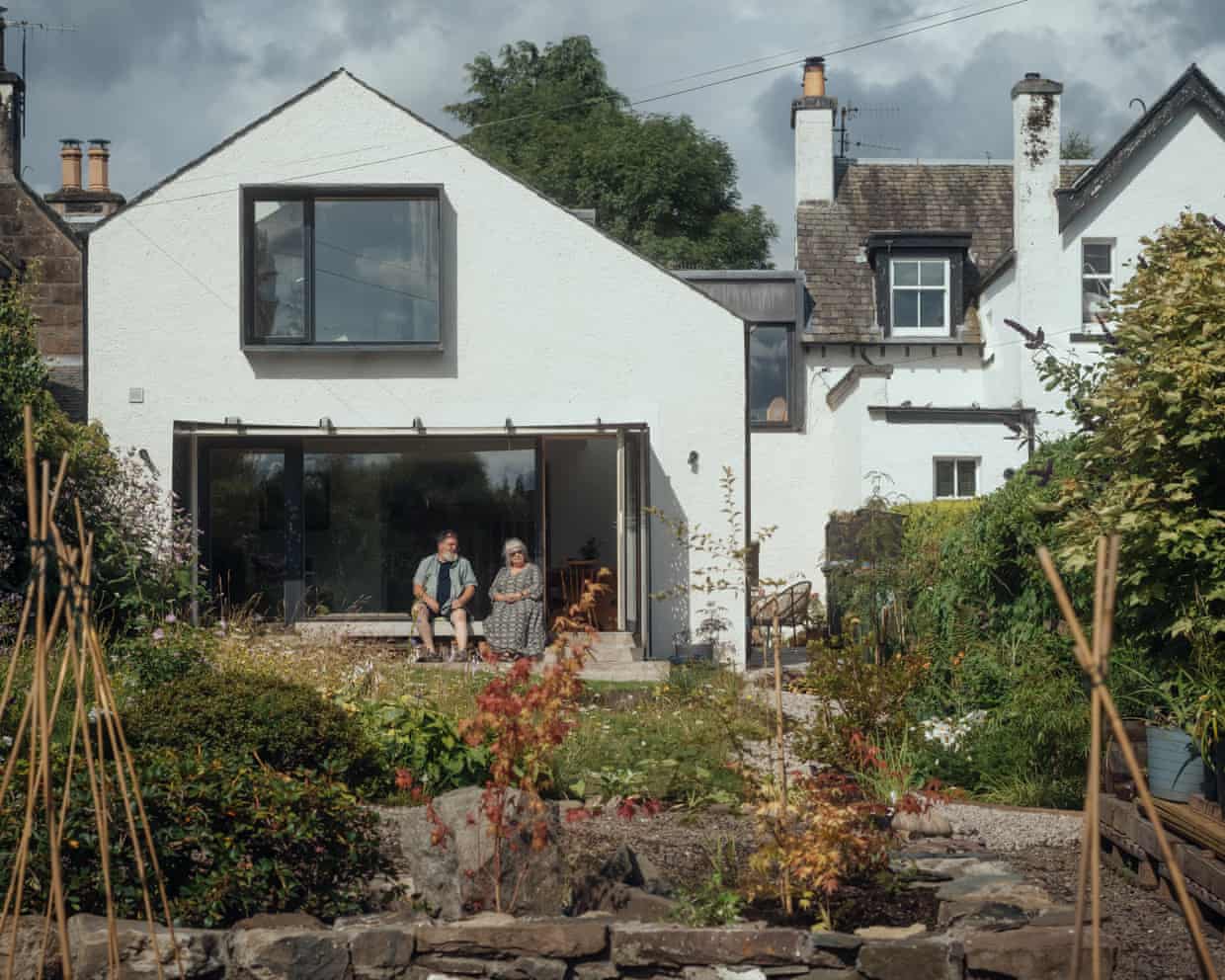
Photo: Jim Stephenson. The yard of a cottage in Comrie, Scotland. More and more architects are designing for people with dementia — and their families.
People who want to stay in their homes to the end are braver than I am, and they are in the majority. I think the most impressive are those who are determined to care for a disabled loved one until they can’t manage anymore. I have known a few caregivers adapting to life with a dementia victim.
To help them do that, some architects are designing “dementia-friendly” houses. Charlotte Luxford writes at the Guardian about a home like that near Glasgow.
“Glaswegian retirees Jim McConnachie and Frances McChlery had always dreamed of building their own home with a waterside view, and had even toyed with buying a plot on Scotland’s west coast. However, when McChlery’s sister was diagnosed with young-onset dementia, they had to rethink their plans.
“ ‘The prospect and implications of supporting my sister-in-law became a key consideration,’ says McConnachie, ‘and we decided to build a home closer to the facilities of the city so she could live with us and be closer to extended family.’
“McConnachie embarked on a tour of Scotland’s lochs, but after making a pitstop at Comrie in Perthshire on a sunny day he passed a ‘for sale’ sign on the way out of the village that piqued his interest.
“ ‘Looking at the cottage from the street it was tiny and worn, but to the rear was a lovely south-facing garden that backs on to the River Earn,’ says McConnachie. Excited, he brought McChlery and her sister for a viewing. They both saw potential in the property and were charmed by the bustling village with its valley views and thriving community.
“Last used as a dental surgery, the 18th-century cottage didn’t have any insulation and suffered from water damage and structural decay. McConnachie, who trained as an architect, embraced the challenge of transforming it into a warm and adaptable home that could also accommodate extended family. ‘We wanted the house to remain flexible and welcoming as a family hub, while also ensuring Frances’s sister felt safe, independent and engaged,’ he says.
“McConnachie sought guidance from architecture firm Loader Monteith on maximizing the layout, navigating conservation area restrictions and incorporating dementia-friendly design principles. For example, accessible kitchen shelving to allow her sister to navigate the space with some independence and open views through living spaces, so she feels connected but not surveilled.
“[Director] Matt Loader … wanted to respect the ‘honesty’ of the original cottage, so the front two rooms were maintained as cosy living spaces, each with its own fireplace and lime-plastered walls.
“The kitchen is at the heart of the home, with a small courtyard … providing a sheltered spot for morning coffee. ‘The relationship between Frances and her sister is rooted in cooking, baking and gardening, so the kitchen and its connection to the outside spaces was key,’ adds Loader.
“A defining feature is the marble-topped island, crafted from a piece of stone passed down through the family. As both sisters are short, ‘the island was set low to allow Frances’s sister to help with baking and food preparation, which is an important occupational therapy,’ says McConnachie. …
“Seating [nooks] are a recurring theme; upstairs is a thoughtfully positioned window seat surrounded by shelves displaying ‘memory anchors’ Loader says: ‘Housing artefacts that hold historical significance can help those with Alzheimer’s recognize that this is their home, and it’s important to retain that sense of familiarity.’
“McChlrey’s sister’s living quarters have been sensitively designed to cater for her needs without making it feel at odds with the rest of the house. The upstairs landing also includes a small servery, complete with sink and washing machine, that is designed to facilitate social interaction while also aiding practical care. …
“On the ground floor, thefront of the cottage is currently a home office on one side and a sitting room on the other, each with full-width sliding doors and sofa beds so they can be transformed into sleeping spaces when family visit or permanently if need be later.
“One of the biggest benefits of the layout, McChlery has discovered, is its ‘intervisibility,’ allowing her to keep an eye on her sister without making her feel she is under supervision.
” ‘The deterioration of people with Alzheimer’s isn’t predictable,’ says McConnachie. ‘The best-laid plans to leave clear space and simple-to-use facilities to allow for independence can be quickly taken over by the continuing onset of the condition, so it’s worth allowing space for supervised sharing tasks.’
“McConnachie ensured they left room for the introduction of fittings such as stair lifts and bathroom aids, as well as planning a simple and level route through the house – you can get from the front door to the garden without a step [up or down].
“ ‘Caring for another adult with dementia is very difficult emotionally and physically – the grief and injustice are always in the back of your mind,’ adds McChlery. ‘Everything about this house helps – it provides a beautiful and safe space that enables us allto be at home for as long as possible.’ “
Photo: Ahmed Gaber for the New York Times. “I figured I was probably winding down,” the soprano Lucy Shelton said of her career. “But then I got wound up again.” Shelton’s latest opera is Lucidity, about identity and dementia.
Today’s story is about an 80-year-old opera singer whose career took a new lease on life. I’m always impressed by things like that, especially as I know that memory starts playing tricks. In fact, today I nearly posted a story that I posted a couple weeks ago. Of course, I’ve been blogging every day for about 13 years, getting older all the time. Bound to repeat a post by accident.
Back to the opera singer. Corinna da Fonseca-Wollheim reports at the New York Times, “When the soprano Lucy Shelton opened a recital at Merkin Hall in 2019 with ‘Adieu à la vie,’ a song by Rossini, she was about to turn 75. And though she was not bidding farewell to life as the song’s title suggests, she felt she was done with performing. For decades, she had been one of the most sought-after interpreters of contemporary vocal music. But she had reached a point where ‘I couldn’t sing the things that I used to sing,’ she said in an interview. …
‘It’s kind of a riot,’ she said. ‘It probably thrills everybody else more than it thrills me.’
“Today [last November], Shelton, 80, takes center stage at the Abrons Arts Center in the world premiere of Lucidity, an opera about identity and dementia, composed by Laura Kaminsky, with a libretto by David Cote. With a score that calls for a multitude of expressive registers, including floated lyricism and sprechstimme, musically notated recitation, the work is tailored to Shelton’s undiminished dramatic strengths. It’s also a testament to her continuing dedication to her craft. …
“After five decades making her name primarily on the concert scene, Shelton finds her engagement calendar increasingly filled with opera. In 2021, she performed in the critically acclaimed premiere of Kaija Saariaho’s Innocence in Aix-en-Provence, France. Next season, she will reprise the role at the Metropolitan Opera, making her house debut at 82. ‘It’s kind of a riot,’ she said. ‘It probably thrills everybody else more than it thrills me.’ …
“One challenge of staged roles is memorization, which can be made harder by age. In discussing Lucidity with Kaminsky, she raised her concerns that she might not be able to perform the whole show from memory. In this production, she will always have either a newspaper or sheet music to hold (her character is an aging musician), so that she has all her lines at hand. …
“Opera, though, was never the focus of Shelton’s ambitions. Growing up in Claremont, Calif., she developed a love for playfully experimental singing at home with her siblings and parents, who had met in an amateur choir. ‘We would do crazy things with our rounds or Christmas carols or Bach chorales,’ she said. ‘We might slide from tone to tone and wait until everybody got to the chord and then hold it and slurp around.’ Along the way, she said she developed a taste for ‘the thrill of dissonances.’
“She was drawn into contemporary music when she studied with Jan DeGaetani, a champion of the avant-garde known for her virtuosic facility with unorthodox techniques. Among those was DeGaetani’s dramatic use of sprechstimme in Schoenberg’s Expressionist chamber drama Pierrot Lunaire, which would also become a signature role for Shelton.
“Working primarily in contemporary music, Shelton developed an instrument that prized rhetorical impact and sound color over the high gloss favored by opera. She often performed with a microphone (including in Saariaho’s Innocence), saving her voice from the strain of projecting full-throttle to the last row of a large auditorium.
“She worries that concentrating too much on opera can stymie young singers’ curiosity about the full spectrum of expressive colors in their voices. She said she often reinvented her technique to match the dramatic demands of a given piece. By contrast, an aspiring opera singer hustling for work is forced into a loop of preparing for and performing at auditions. ‘That’s not making music,’ Shelton said. ‘It’s making an impression.’ …
“Still, Shelton knew she needed help with her singing when her 75th birthday came and went and the invitations to perform kept coming. She had lost some of her upper extension, and struggled to keep her tone even across her range. Her intuitive approach to technique no longer served her.
“For the past two years, she has been taking lessons from Michael Kelly, a baritone she met at the Tanglewood Institute when she was his mentor. He remembers being in awe of her. ‘She was probably the vocalist who had collaborated with the most composers ever,’ he said in a video interview. …
“Kelly said that aside from helping Shelton unlearn some habits that had crept into her technique in reaction to physical changes, there was a psychological dimension that had to be addressed. ‘Not being able to do what she could do at one point in her career made her hesitant,’ he said. ‘A lot of it was getting her out of her head about it and saying: “You don’t have to sing this the way you would have when you were 25 years old. This is the voice you have which is still very beautiful and capable.” ‘ “
Photo: Juan Rumimpunu via Unsplash. Thinking? This pensive character looks like me when I’m struggling with word retrieval.
With every passing year, most of us take a bit longer to retrieve le not juste. Sometimes a lot longer.
The research of Nichol Castro, assistant professor of communicative disorders and sciences at the State University of New York at Buffalo, looks at “word retrieval in aging adults and adults with language impairments (e.g., aphasia, dementia), with a particular focus on how words are organized in memory.” What I loved about this story is learning that no two people have the same way to retrieve words because no two people have built up exactly the same associations with words.
Castro writes at the Conversation, “Just like a physical dictionary, your mental dictionary contains information about words. This includes the letters, sounds and meaning, or semantics, of words, as well as information about parts of speech and how you can fit words together to form grammatical sentences. Your mental dictionary is also like a thesaurus. It can help you connect words and see how they might be similar in meaning, sound or spelling.
“As a researcher who studies word retrieval … I’m intrigued by how words are organized in our mental dictionaries. Everyone’s mental dictionary is a little bit different. And I’m even more intrigued by how we can restore the content of our mental dictionaries or improve our use of them, particularly for those who have language disorders. …
Your personal mental dictionary is customized based on your individual experiences.
“What words are in my mental dictionary might overlap with the mental dictionary of someone else who also speaks the same language, but there will also be a lot of differences between the content of our dictionaries.
“You add words to your mental dictionary through your educational, occupational, cultural and other life experiences. This customization also means that the size of mental dictionaries is a little bit different from person to person. …
“There is a lot of debate about how mental dictionaries are organized. Many scholars agree that it’s probably not like an alphabetized book.
“One widely rejected theory, the grandmother cell theory, suggests that each concept is encoded by a single neuron. This implies that you would have a neuron for every word that you know, including ‘grandmother.’
“While not accepted as accurate, the aspect of the grandmother cell theory suggesting that certain parts of the brain are more important for some types of information than others is likely true. For example, the left temporal lobe on the side of your brain has many regions that are important for language processing, including word retrieval and production. Rather than a single neuron responsible for processing a concept, a model called parallel distributed processing proposes that large networks of neurons across the brain work together to bring about word knowledge when they fire together.
“For example, when I say the word ‘dog,’ there are lots of different aspects of the word that your brain is retrieving, even if unconsciously. You might be thinking about what a dog smells like after being out in the rain, what a dog sounds like when it barks, or what a dog feels like when you pet it. You might be thinking about a specific dog you grew up with, or you might have a variety of emotions about dogs based on your past experiences with them. All of these different features of ‘dog’ are processed in slightly different parts of your brain. …
“Your mental dictionary can’t be like a physical dictionary [because] it is dynamic and quickly accessed. Your brain’s ability to retrieve a word is very fast. In one study, researchers mapped the time course of word retrieval among 24 college students by recording their brain activity while they named pictures. They found evidence that participants selected words within 200 milliseconds of seeing the image. After word selection, their brain continued to process information about that word, like what sounds are needed to say that chosen word and ignoring related words. This is why you can retrieve words with such speed in real-time conversations. … Until you have a breakdown in word retrieval. One common failure in word retrieval is called the tip-of-the-tongue phenomenon.
It’s the feeling when you know what word you want to use but are unable to find it in that moment.
“You might even know specific details about the word you want, like other words with similar meaning or maybe the first letter or sound of that word. With enough time, the word you wanted might pop into your mind.
“These tip-of-the-tongue experiences are a normal part of human language experience across the life span, and they increase as you grow older. One proposed reason for this increase is that they’re due to an age-related disruption in the ability to turn on the right sounds needed to say the selected word.
“For some people, though, tip-of-the-tongue experiences and other speech errors can be quite impairing. This is commonly seen in aphasia, a language disorder that often occurs after injury to the language centers of the brain, such as stroke, or neurodegeneration, such as dementia. …
“Fortunately, there are treatments available that can help someone improve their word retrieval abilities. For example, semantic feature analysis focuses on strengthening the semantic relationships between words. There are also treatments like phonomotor treatment that focus on strengthening the selection and production of speech sounds needed for word production. There are even apps that remotely provide word retrieval therapy on phones or computers.” Find out more at the Conversation, here.
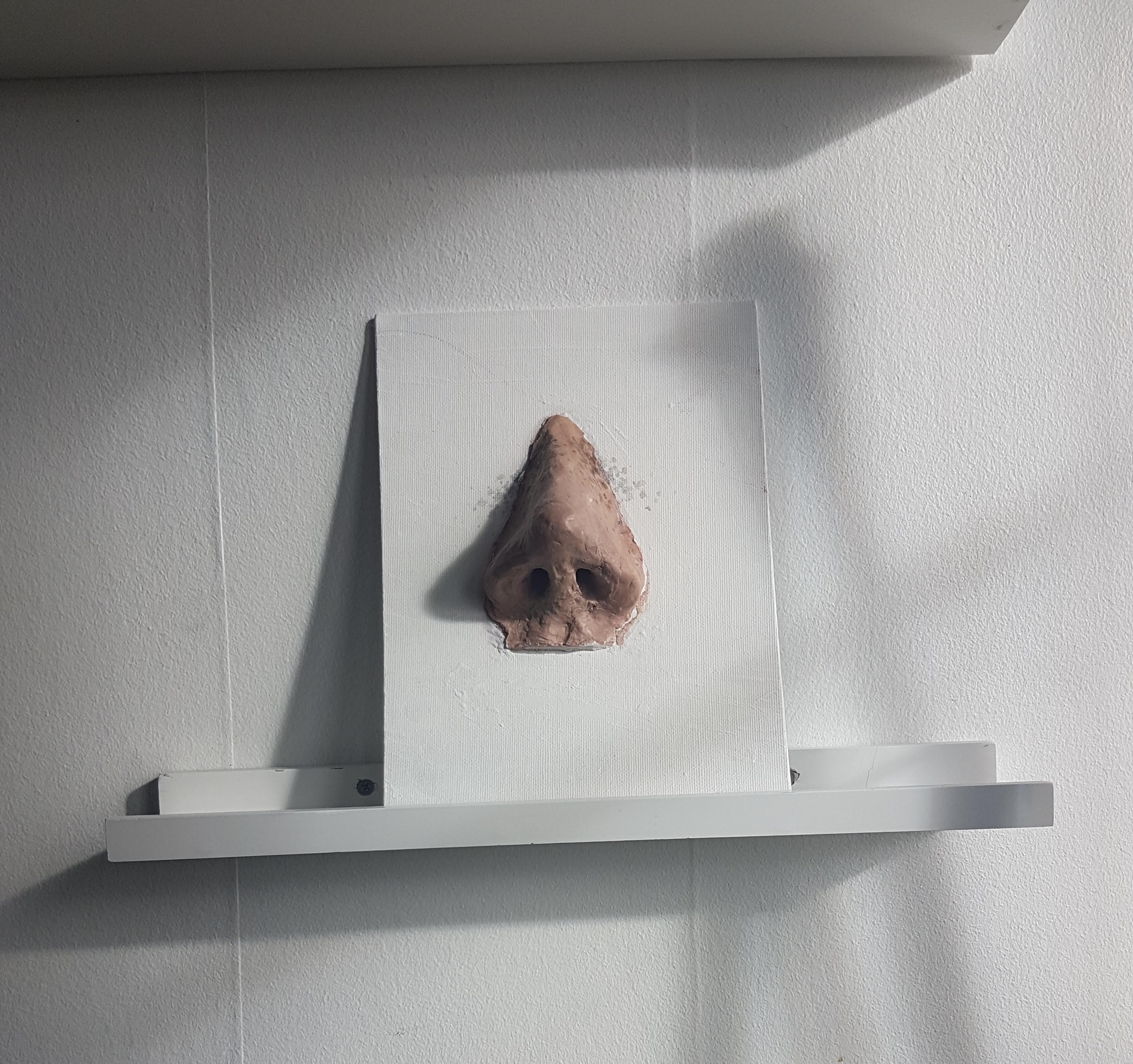
Photo: Trude Jonsson Stengel via Unsplash. An artistic nose from Sweden. New research finds a connection between a healthy sense of smell and a healthy memory — meaning less dementia.
Back in the 1980s, we experimented with using a kerosene space heater for a cold room. The first time I smelled that burning kerosene, I was taken back to age 4 and the week my brother and I spent in a home that used kerosene heat. What about you? Can you think of memories triggered by a smell?
Nicola Davis reports at the Guardian, “Whether it is the waft of clove-studded oranges or the crisp fragrance of a fir tree, the festive season is filled with aromas that conjure Christmases past. Now researchers say our sense of smell, and its connection to our memory, could be used to help fight dementia.
“Our senses can worsen as a result of disease and old age. But while impairment to hearing or vision is quickly apparent, a decline in our sense of smell can be insidious, with months or even years passing before it becomes obvious.
“ ‘Although it can have other causes, losing your sense of smell can be an early sign of dementia,’ said Dr Leah Mursaleen, the head of research at Alzheimer’s Research UK, adding it was a potential indicator of damage in the olfactory region of the brain – that is, the part of the brain responsible for smell.
“ ‘Olfaction is intimately involved in many brain processes, and especially the emotional processing of stimuli,’ said Prof Thomas Hummel, of Technische Universität Dresden. Indeed, smells, memories and emotions are often tightly bound, with research revealing recollections triggered by scent tend to be rooted in our childhood. …
“Neurons involved in the olfactory system are also involved in other systems in the brain. Indeed, as Hummel and others note, some areas of the brain play a key role in cognitive and olfactory processes. As a result, if the sense of smell becomes dysfunctional, cognitive processing might also be affected.
“A number of studies have found that exposure to certain odors can either boost or hinder cognition. …
“More pertinent still, a small study published last year, by researchers in Korea, revealed that intensive smell training led to improvements in depression, attention, memory and language functions in 34 patients with dementia compared with 31 participants with dementia who did not retrieve such training. …
“Intensive scent training takes time and effort. In an attempt to solve this problem, Dr Michael Leon, professor emeritus at the University of California, Irvine, and his team have come up with a device called Memory Air that emits 40 different smells twice a night, while people are sleeping – an approach Leon says allows ‘universal compliance.’ The hope is that exposing people to more smells, even when they are asleep, could strengthen their olfactory abilities.
“In another small study, Dr Alex Bahar-Fuchs, a clinical neuropsychologist at Deakin University, Australia, is looking at whether training cognitively healthy older adults to distinguish smells using a scent-matching memory game can help improve wider aspects of memory and cognition, compared with using a similar game based on matching pictures. The approach, he said, goes further than passive exposure to odors by setting cognitive tasks for participants.
” ‘We believe that the neuroplastic properties of the olfactory centers in the brain might make it more likely that improved performance on olfactory memory will generalize, or transfer, to memory functions more broadly,’ he said.
“Meanwhile, Prof Victoria Tischler, at the University of Surrey, is working to learn more about how our olfactory function changes as we age normally.
“As part of their work, the team hopes to produce olfactory training kits suitable for healthy older people, those with mild cognitive impairment, and those living with dementia in care homes.
“Tischler said it was important to cherish our most enigmatic sense. ‘I would advise the public to look after their sense of smell, much like they look after other aspects of their sensory health,’ such as their eyesight, she said.”
Well, I’m convinced. I’m now going around ripping orange peels and sniffing them, breathing in ground coffee, chocolate, Christmas tree needles.
More at the Guardian, here. No firewall; donations encouraged.
Our friend Toshi was lucky to have Yuriko to take care of his aging mother in their home. That was always the custom for daughters-in-law.
Nowadays, Japan has a greater percentage of people over 65 and not enough caregivers. So the Japanese are getting creative. Monthly “dementia cafes,” where elderly people can enjoy working, are a drop in the bucket. But charming.
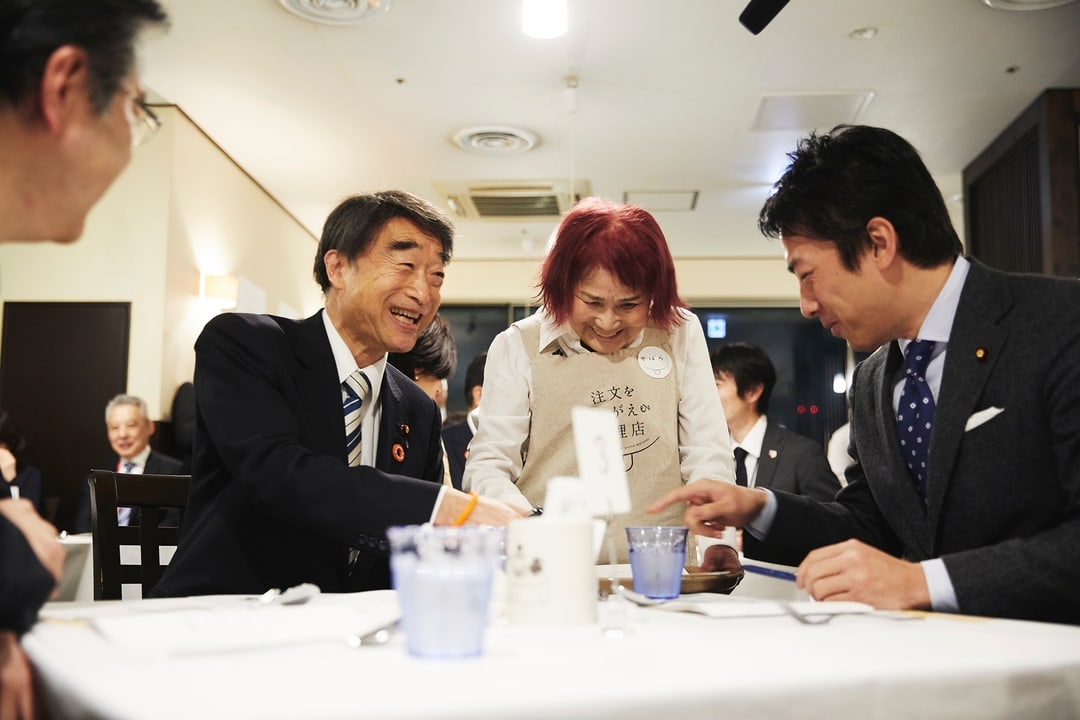
Michelle Ye Hee Lee and Julia Mio Inuma report at the Washington Post, “The 85-year-old server was eager to kick off his shift, welcoming customers into the restaurant with a hearty greeting: ‘Irasshaimase!’or ‘Welcome!’ But when it came time to take their orders, things got a little complicated.
“He walked up to a table but forgot his clipboard of order forms. He gingerly delivered a piece of cake to the wrong table. One customer waited 16 minutes for a cup of water after being seated.
“But no one complained or made a fuss about it. Each time, patrons embraced his mix-ups and chuckled along with him. That’s the way it goes at the Orange Day Sengawa, also known as the Cafe of Mistaken Orders.
“This 12-seat cafe in Sengawa, a suburb in western Tokyo, hires elderly people with dementia to work as servers once a month. A former owner of the cafe has a parent with dementia, and the new owner agreed to let them rent out the space each month as a dementia cafe. The organizers now work with the local government to get connected to dementia patients in the area. …
“ ‘It’s so much fun here. I feel like I’m getting younger just being here,’ said Toshio Morita, the server, who began showing symptoms of dementia two years ago.
“A condition of unending indignities and financial burdens, dementia is a global phenomenon that every society is confronting. But in Japan, the world’s oldest society, dementia is a pressing national health challenge.
About 30 percent of the Japanese population of about 125.7 million is over 65. More than 6 million Japanese people are estimated to have dementia, and the number is expected to grow as high as 7.3 million — or 1 in 5 people over the age of 65 — by 2025, according to the Health Ministry.
“Japan’s chronic lack of caregivers and the soaring costs of elderly care mean it needs to find creative ways to empower these dementia patients so that they can be mentally and physically active for as long as possible, rather than isolated at home or at a hospital.
“Dementia cafes [were] introduced in Japan in 2017 through pop-up events, but more permanent efforts are now cropping up throughout the country.
“In June, Japan passed legislation to enact a slew of new programs and services to help those with dementia, which Prime Minister Fumio Kishida has identified as an urgent national project. …
“Kazuhiko, a 65-year-old diagnosed with dementia five years ago, has been working at the cafe every month. … At one point, Kazuhiko was heading to a table with an order but became distracted when the construction crew outside made a loud noise. He proceeded to leave the cafe and move toward the sound, and the staff rushed to bring him back in. …
“Kazuhiko rarely talks or shows emotion anymore. He usually doesn’t make eye contact with customers until he sees them multiple times. But that day, he showed a smile.
“The smile was directed at Tomomi Arikawa, 48, and her 16-year-old daughter, Sayaka, who visited around noon for a piece of chiffon cake and a citrus jelly dessert. … Kazuhiko brought them their orders. Sayaka thanked him and smiled, and he smiled back. ‘It felt really special,’ she said. …
“Since April, the Cafe of Mistaken Orders has opened once a month around lunchtime. One dementia patient works as a server per hour, wearing an apron that is bright orange, the color associated with dementia care. There is a chair set aside for them near the kitchen so they can rest in between orders.
“Younger volunteers help the elderly servers as they mark customers’ orders on the order forms, which are simple and color-coded.
“Table numbers were difficult for the elderly to remember, so the staff switched them out for a centerpiece with a single flower, a different color for each table.
“The cafe’s administrators wanted to help the community see that dementia patients can prolong their active years, with a little bit of understanding and patience from those who interact with them. …
“ ‘I hope that our initiative will give people with dementia something to look forward to,’ said Yui Iwata, who helps run the cafe. ‘If people get a deeper understanding, it would become easier for people with dementia to go out, as well.’ ”
More at the Post, here. Or just check out the restaurant’s site, here.
Photo: Ann Nisbet Studio designed the house above to make it dementia- and age-friendly. In the kitchen, “there are large letterbox-type slots in the drawers and cupboards to allow someone with dementia to see that there are cups, plates, cutlery and food inside,” Homes and Interiors Scotland reports.
When I was at the Fed, I attended a couple Harvard conferences on housing for the aging. I learned about something called “universal design” and thought how sensible it would be if architects would always ensure that housing features worked for people at any stage of life. Why go to the expense and disruption of putting in wider doorways, higher toilet seats, shower grab bars, ramps, and the like down the road?
In today’s article, architects considered these issues, even taking into account the possibility of someone developing dementia.
Caroline Ednie writes at Homes and Interiors Scotland, “ ‘We lost all our belongings in the fire and were left homeless,’ recalls Kathy Li, an architect who teaches at Glasgow School of Art. ‘It was pretty traumatic. But after the initial shock wore off, we realized that what was important to us wasn’t necessarily the house itself but its location. It’s close to a beautiful reservoir where you can swim or fish, and forests that are perfect for mountain biking or road cycling.’ …
“So Kathy and her partner Richie Elliot decided to stay on the site, initially in a tiny caravan and then in a larger one-bedroom static caravan. ‘It took five years to resolve with the insurance company and we lived in the caravan the entire time,’ recalls Kathy. …
“Eventually, with the situation settled in their favor, she and Richie could begin to think about replacing their home on the site. …
“ ‘We knew we didn’t want lots of little rooms. There are fantastic views right down the valley, and we wanted to take advantage of these and of the woodland at the front. There is a southerly aspect too, which then got us thinking about a low-energy building. It was time to start again. We had this chance to create a house for life.’
“She approached architect Ann Nisbet. …The brief was essentially for an energy-efficient one-bedroom house, flexible enough to suit both living and working, to be constructed using ‘harmless’ materials.
“An unusual but crucial part of the brief was that the house should be dementia- and age-friendly. Kathy’s mother and stepfather both had dementia, and she was keen to explore and incorporate design features that would make it easier for sufferers to live in the house.
“ ‘We were keen to take this information, which mostly looked at care homes and hospitals, and apply it to a domestic house in a design-led, non-institutional manner,’ the architect explains.
“ ‘Research shows that you read your surroundings differently if you have dementia – for example, two materials of similar monotonal color when read together will be viewed as the same object. We used this knowledge to try to create a navigation system throughout the building, while still keeping the material palette modern and minimal.’
“As a result, the door and window frames, floors, skirtings and walls are all tonally different. As for circulation, all the key areas of the building are visible from the connection lobby, which helps you navigate the floor plan and prevents confusion.
“Thought was given to the kitchen units too: there are large letterbox-type slots in the drawers and cupboards to allow someone with dementia to see that there are cups, plates, cutlery and food inside.
“ ‘Many people have experienced a close friend or family member being diagnosed with dementia, and as we live longer, the number of sufferers is increasing,’ says Fay Goodwin, project architect at Ann Nisbet Studio.
“ ‘This house demonstrates that buildings can and should be designed to enable people with the condition to live longer in their own home and to help them overcome the day-to-day challenges they face.’ “
More at Homes and Interiors Scotland, here. Check out the close-up of the ktichen cabinets with the see-through slots. No paywall.
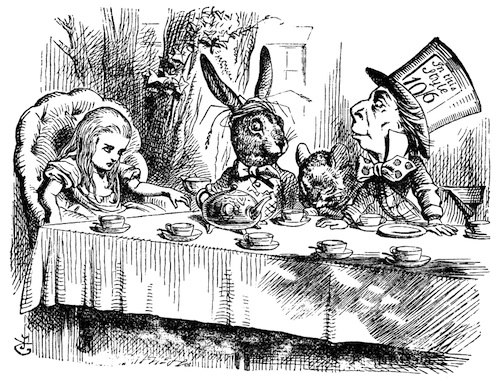
Art: John Tenniel. The Dormouse in Alice in Wonderland tells a story of sisters at the bottom of a well who were learning to draw “all manner of things — everything that begins with an M … such as mouse-traps, and the moon, and memory.”
When periodicals like the Washington Post block bloggers from linking to their images, we scavenge around for alternative illustrations. Today’s Post article on music and memory made me think of words that begin with an “m,” as the Dormouse did in Alice in Wonderland. The Dormouse even talks about “drawing” memory. Look it up.
Marlene Cimons has a report on music and dementia.
“When Laura Nye Falsone’s first child was born in 1996, the Wallflowers album ‘Bringing Down the Horse’ was a big hit. ‘All I have to hear are the first notes from “One Headlight,” and I am back to dancing … with my brand-new baby boy in my arms,’ she says. …
“When Carol Howard’s early-onset Alzheimer’s worsened, often she couldn’t recognize her husband. She once introduced him as her father. But if she heard a 1960s Simon & Garfunkel song playing, Howard, a marine biologist who died in 2019, could sing every word ‘effortlessly,’ her husband says.
“This ability of music to conjure up vivid memories is a phenomenon well known to brain researchers. It can trigger intense recollections from years past — for many, more strongly than other senses such as taste and smell — and provoke strong emotions from those earlier experiences.
“ ‘Music can open forgotten doors to your memory,’ says Andrew Budson, chief of cognitive and behavioral neurology, associate chief of staff for education and director of the Center for Translational Cognitive Neuroscience at Veterans Affairs Boston Healthcare System.
“ ‘Music can take you back in time, as well as act like a jolt of electricity that can fire up your brain and get it going,’ he says. ‘We all have the familiar experience of going back to our hometown, visiting our high school and feeling the memories come flooding back. Music can do same thing. It provides an auditory and emotional setting that allows us to retrieve all those memories.’
“Evidence also exists that music prompts the secretion of brain neurotransmitters, such as dopamine, a chemical messenger that plays a role in the brain’s reward/pleasure system. Other studies have shown that music reduces the stress-producing hormone cortisol and increases the secretion of oxytocin, which plays a role in labor and childbirth, as well as in infant-parental bonding, trust and romantic attachment.
“ ‘Music activates different parts of the brain,’ making it an especially versatile tool, says Amy Belfi, assistant professor of psychological science at Missouri University of Science and Technology and principal investigator in its Music Cognition and Aesthetics Lab. ‘We can use it to improve mood, to help us learn, to socially bond with other people. It becomes part of our identity.’ …
“Some experts also see a role for music — which can ease agitation in those with dementia — as an alternative to sedating medications, for example, or as a means of enabling patients to keep living at home.
“Frank Russo, professor of psychology at Toronto Metropolitan University, says he believes this ultimately will be possible. He is chief scientific officer of a company that is developing a music player that uses artificial intelligence to curate an individualized play list designed to guide a patient from a state of anxiety to one of calm.
“ ‘One of the really challenging things for caregivers is the anxiety and agitation,’ says Russo, whose research focuses on the intersection of neuroscience and music. … ‘Music has a real opportunity here.’
“Melissa Owens, a music therapist at Virginia Commonwealth University Health, already has seen this in her work. ‘I still find myself in awe of music’s ability to positively change behavior, emotion and even the relationship between a caregiver and their loved one, if even only for the duration of the specific song,’ she says. It provides ‘a moment of normalcy which so much of the time seems lost.’ ”
Read how experts look at the different types of memory involved at the Post, here.
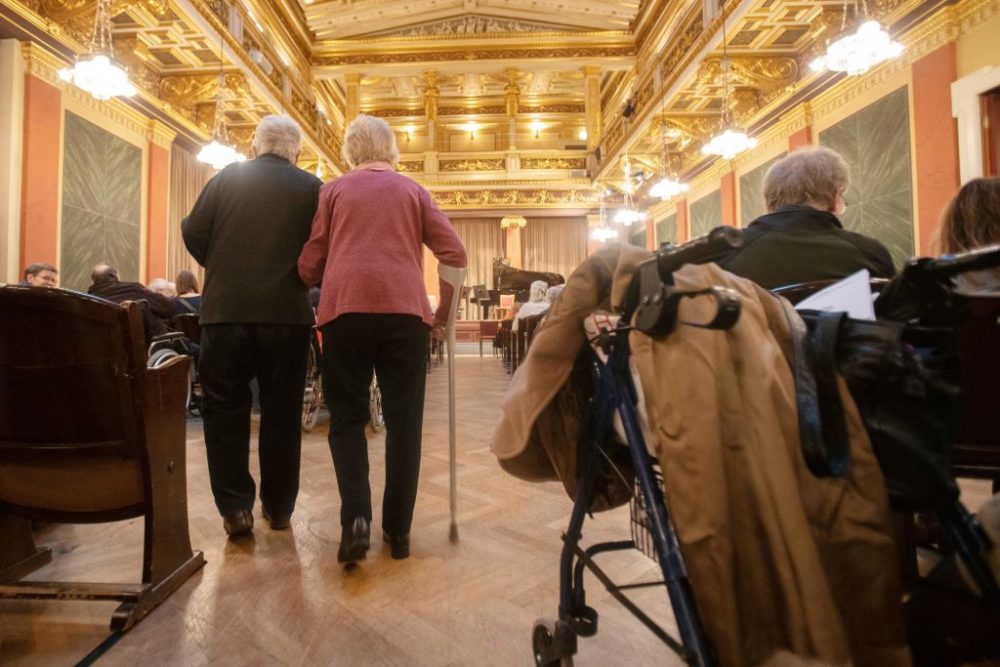
Photo: Alex Halada/AFP via Getty Images. Elderly spectators arrive to attend a concert specifically tailored to people living with dementia at the Wiener Musikverein in Vienna on December 5, 2022.
Meghna Chakrabarti of WBUR’s On Point had a great show recently about enlightened dementia communities in the Netherlands and other parts of Europe.
I came away feeling that the reason we have little like this in the US is because of insurance. We are such a crazily litigious society, we can’t afford to take the slightest risk, even if it means an older person will have a happier aging experience.
Producer Paige Sutherland and host Meghna Chakrabarti shared highlights from the show at the WBUR website.
“Is there a better way to care for dementia patients? And what might that look like?
” ‘I think it really focuses on what’s the day-to-day life and looking at this balance between safety and freedom,’ Dr. Tia Powell [professor of psychiatry and bioethics at Albert Einstein College of Medicine] says.
“And that’s exactly what the Netherlands did when they opened up the first-ever ‘dementia village,’ where residents can live freely despite their memory loss.
” ‘Officially, it’s a nursing home, so we offer highly complex care, skilled nursing. But it does not look anything like a nursing home,’ [advisor at Be Advice] Iris Van Slooten says. …
“On the idea behind a ‘dementia village’
“Iris Van Slooten: It should be about the individual; it should be about the person living in that place and need to deal with dementia. And you want to continue your life even though you are dealing with dementia. And so you want to continue life like you did before and not be hospitalized. I always ask our visitors and the people we work with, would you want to live in a hospital for the rest of your life? And then always the answer, of course, is no.
“So then why did we do that to the people that were living with us? … You can continue with your life, you can stay a human being. And what makes you a human being, for instance, is that you can make your own choices every day. Like … what do I have on my sandwich? Or in what place do I want to be right now? Very, very simple choices we make every day but are taken away from people that live in a nursing home.
“On what the village looks like
“Iris Van Slooten: You will enter through a door and then you will enter the hallway. And that is a safe neighborhood where the outside of the homes are the barrier to the … broader surroundings. And we had a door because there were laws in place back when we designed … we had to keep people inside. But you will find 27 homes in a normal looking community. In a normal neighborhood. The homes look like normal Dutch homes with a normal living room, a kitchen, private bedrooms.
“And when residents also step out of the front door, … they are really outside. And there are many streets and many gardens they can explore. We have a restaurant, a pub, a theater, many club rooms, a supermarket. So, everything you will find in any neighborhood, in any community. So yeah, very normal, and especially on a sunny day and in spring and summer, of course, then you see a lot of people walking around, having conversations, meeting each other, grabbing a chair, enjoying a drink in a restaurant. It’s just life. …
“Every resident that lives there has severe dementia. So, you need to have an indication from the Dutch government saying you have severe dementia. … We have teams in the houses that support the household and really run the household. But we also have a quite extensive medical support team, including a specialist, elderly care, doctor, but also a psychiatrist, an official therapist, a social coach. …
“Say someone left their home, and they wanted to go to the village supermarket, but got lost or forgot the way. How do you help that person get to where they wanted to go?
“Iris Van Slooten: One thing we highly value in the Hogeweyk is having freedom and giving the freedom to these people and not restraining them. … They are free to walk around on their own. A lot of people can find their way because also people with severe dementia, they still have learning abilities, and the place is designed [so that it is] recognizable for them. …
“So also the staff in the restaurant, also the reception, also the technicians, also me when I’m there. … When I look out my office and I see somebody in the rain without a coat on, it might slip to the attention of a staff member in house. But then it’s also my job to go over there and find a jacket for that person. …
“On helping people maintain their independence and humanity in the ‘dementia village’
“Dr. Tia Powell: [As] a bioethicist, really all of our challenges can be summed up by the tension between maintaining freedom, which is part of what all human beings strive for, and safety. And this argument’s been going on forever for hundreds of years.
So I do think that many of the ways in which we provide care today in the U.S. for people with dementia do not focus on care, but they focus on other issues. You know, maintaining regulations, all kinds of other things.
“And we have forgotten about freedom and joy.”
A bit from the transcript on the sad US situation.
“Meghna Chakrabarti: Beth Ounsworth … was living a very rich life full of friends and music. As a member of her choir, she was independent in her own apartment in Philadelphia. And that started changing when Beth was about 69 years old. She began forgetting simple things like what day and time she had scheduled meetings, directions to common places. …
“And so her children finally took her to see a neurologist. And Beth was diagnosed with Alzheimer’s disease. Now, we spoke with her daughter, Meg Ounsworth Steere. Because Meg wanted to care for her mother, but with two young children at home, it just wasn’t possible. So they looked at assisted living centers near where Meg lived in Boston.
“Meg Ounsworth Steere: So she did go and visit a few assisted living centers with me. … We went to lunch, and she just looked around and she was like, Not me, not now. And I was like, okay, you know? And that’s when we had this conversation about she was like, I don’t want to be in a place where I’m just surrounded by old people. I want to be in a place where there are, you know, babies, too, and young families, and I can feel a part of a community. …
“Chakrabarti: So Beth stayed in Philadelphia, but it wasn’t easy. Daughter Meg had to find full time aides to take Beth to all of her appointments and to help with all of her daily activities. Meanwhile, the disease progressed.
“Ounsworth Steere: It got to a point when I took her to the neurologist. He would give her a mini mental state exam and 30 is normal. My mom was testing at a four at that point. Partially because she has aphasia and so she doesn’t really understand words. And so he was like, you know, she’s not going to answer the questions that were like, do you know who the president is? …
“Chakrabarti: So the family decided it would be better for Beth to live in a memory care facility. And they found a good one near Boston. Beth moved in in 2018, and ever since then, Meg and the family have been paying about $100,000 out of pocket for the facility every year.
“Ounsworth Steere: What worries me is that I know I’m on the luckier side and it’s still not perfect. So I can’t quite fathom what it’s like when you have to go to a facility that can’t possibly retain the aides that they want. … Or where aides are just less engaged and involved, they’re just kind of physically there. Kind of like the first aides that I had, but not really assisting, you know, and engaging with and kind of trying to love the resident and then the people who can’t afford care at all. I just, I don’t know how that’s possible.
“Chakrabarti: Meg visits her mother often. Beth is nonverbal now, However, Meg gets to communicate with her in a different way: by singing.”
If you click on the arrow at WBUR, here, you can listen to the whole show. PS. I blogged about the Dutch dementia village in 2016, here!
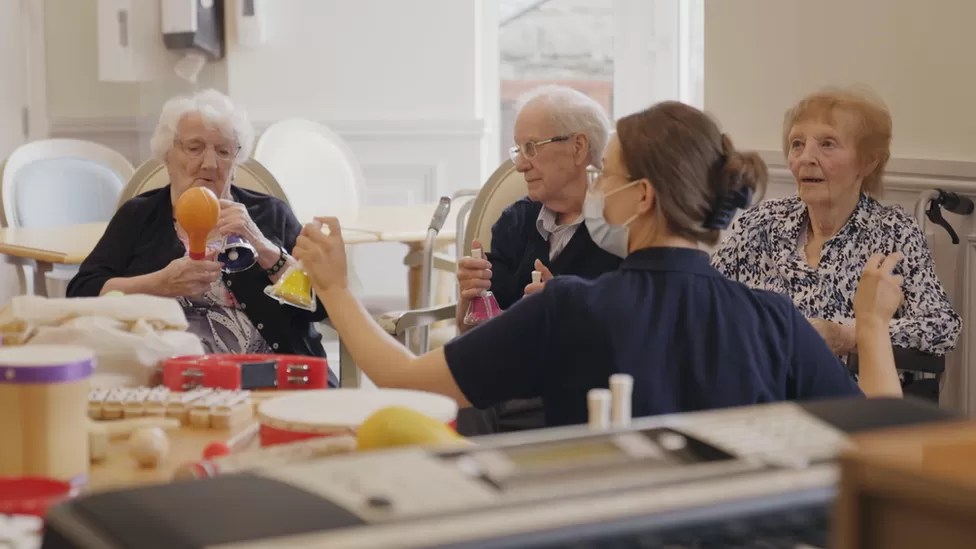
Photo: BBC. Carer Beth Forster leads music workshopsfor seniors with dementia in the UK.
At Thanksgiving, we had the pleasure of meeting Meg, a relatively new member of our family who shared a bit about using music therapy with hospitalized patients suffering from mental illness. So I was interested to read today’s story about a similar music program in the UK, one that focuses on people with dementia.
Sarah Gwynne and Woody Morris had this report at the BBC.
“An orchestra is attempting to bring people living with dementia back into the present. The work being done by Manchester Camerata has never been more important, given that there are about 900,000 people with the condition in the UK, a number that is predicted to nearly double by 2040. …
“People with dementia often find listening to music can reignite old memories from long ago. Much more overlooked, though, is the impact that making music can have on the present.
“While some with dementia can often feel trapped in the past, some researchers believe the act of creating music – as well as listening to it – can help to reconnect them to the here and now.
“A new BBC documentary — Dementia, Music and Us — follows the work of Manchester Camerata and its principal flautist Amina Hussain.
“Amina, who is also a professional music therapist, leads classes across the north-west of England that have been described as life-changing.
” ‘Taking part in the ‘Music in Mind’ workshops has been an enormous privilege for me as a musician,’ she said. …
“Classes for the community consist of improvisation, singing, and writing their own music and lyrics.
“Keith Taylor, 62, was diagnosed with frontotemporal dementia when he was 53. … Like many, he really struggled to come to terms with his new reality.
” ‘The best way I could explain it,’ he said, ‘is if you’re in a pine-wooded area and all of the trees are in grids and blocks and you’re walking through that and it’s dark and you can see the mist coming up behind you and you can feel it catching you.’ …
“Keith’s partner of 14 years, Joan, said they had found the sessions to be genuinely life-changing. ‘I think the thing that saved us was the first ever music group we went to because from that group it opened other groups up for us,’ she said. ‘It’s been fantastic.’
“Keith added: ‘I live life every week. Not every day — every week because I’ve got music sessions.’ He said the workshops ‘make him smile, enjoy life and it just brings the best out of you.’
“Researcher Dr Robyn Dowlen is seeking to better understand the ‘in the moment’ benefits of music-making for people with dementia. … She believes the improvisational music workshop experience allows people to ‘create something that is held now in the moment.’
“Keith described how the sessions and being in what Dr Dowlen calls the ‘musical spotlight’ had helped him ‘stand up taller.’
“Dr Dowlen added: ‘Improvisational music-making is particularly important for people with dementia, especially when it comes to building their confidence and their self-esteem.’
“Beth Forster, from Liverpool, started her career in caring as a volunteer two years ago when she found herself furloughed during the pandemic. When a staff position subsequently became available she applied and has never looked back.
“The 28-year-old decided to get involved in the music workshops after news began to spread about the positive impact they could have on those living in care homes. A musician herself, Beth received training from Manchester Camerata’s professional music therapists so she could lead her own workshops.
“Beth said: ‘I feel like I’ve got more strategies to bring residents into the present to help them if they’re distressed… I can’t really believe this is my job. … it is a real privilege.’ “
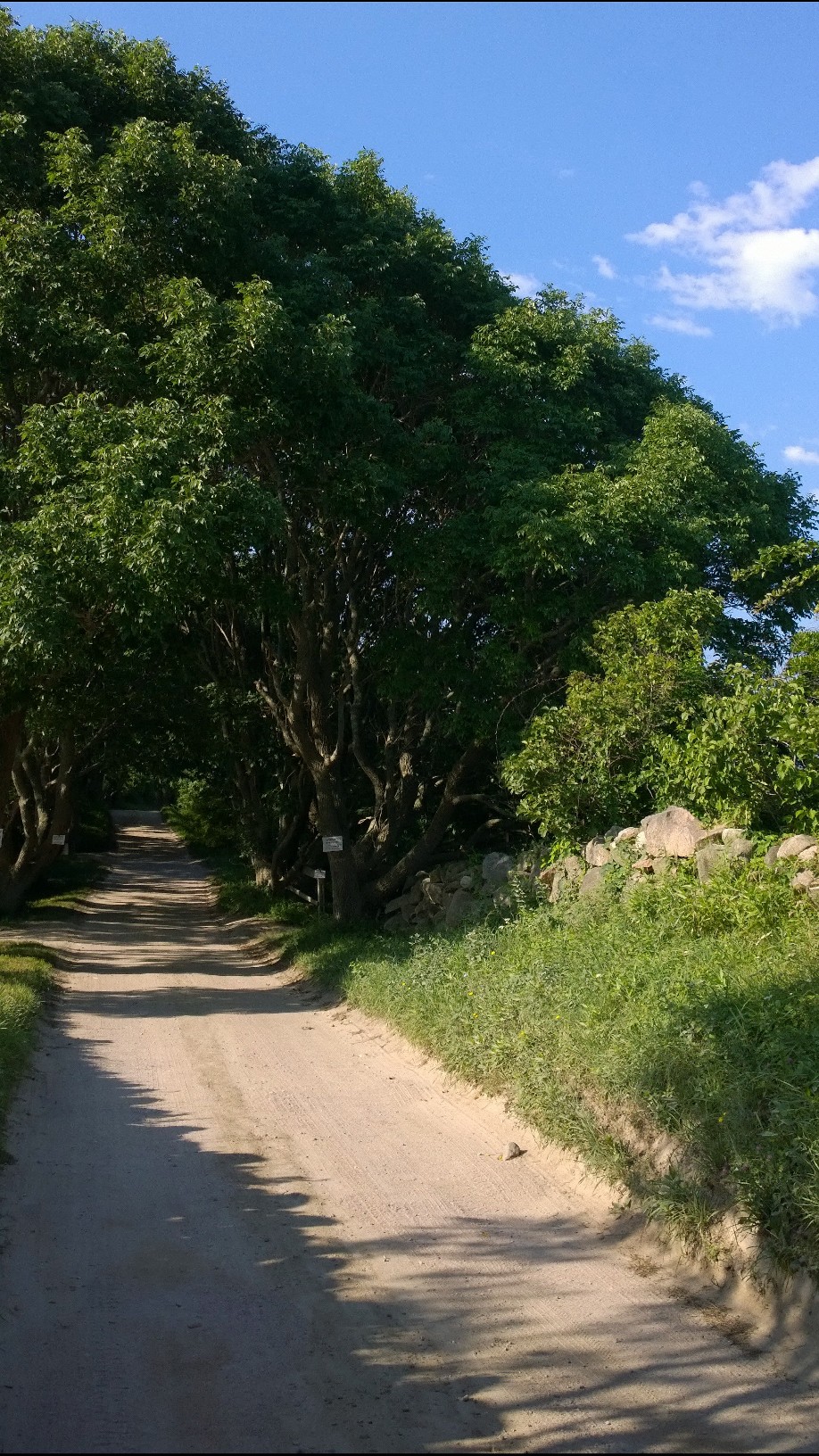
Photos: Suzanne’s Mom. Childhood walks in the natural world are associated with better navigation skills in age.
According to a recent New York Times article by Benjamin Mueller, whether or not a patient navigated irregular spaces in the great outdoors as a child may help with diagnosing later dementia. If an old person keeps getting lost, it may not mean Alzheimer’s. It may only mean she grew up in a gridlike city.
Mueller writes, “As a child in Chicago, Stephanie de Silva found that the city helped her get where she was going. Streets included directional names like ‘West’ or ‘North,’ and they often met at neat right angles. If all else failed, Lake Michigan could situate her.
“But when Ms. de Silva, 23, moved to London, where she now studies cognitive science, she suddenly could not navigate to a restaurant two blocks from home without a smartphone map. The streets were often crooked. Sometimes they seemed to lead nowhere. …
“Scientists in Ms. de Silva’s lab at University College London, along with colleagues in Britain and France, have now arrived at an explanation: People who grow up in predictable, gridlike cities like Chicago or New York seem to struggle to navigate as easily as those who come from more rural areas or more intricate cities.
“Those findings, published in Nature [in March], suggest that people’s childhood surroundings influence not only their health and well-being but also their ability to get around later in life. Much like language, navigation is a skill that appears to be most malleable when people’s brains are developing, the researchers concluded.
The authors hope the findings eventually lead to navigation-based tests to help diagnose Alzheimer’s disease.
“Getting lost can sometimes occur earlier in the course of the illness than memory problems, they said. Researchers have developed virtual navigation tests for cognitive decline, but they can interpret the results only if they know what other factors influence people’s way-finding abilities.
“Among the forces shaping people’s navigation skills, the study suggested, was what kind of places they experienced as a child.
“ ‘The environment matters,’ said Hugo Spiers, a professor of cognitive neuroscience at University College London and one of the study’s lead authors. ‘The environment we’re exposed to has a knock-on effect, into the 70s, on cognition.’ …
“In 2015, Michael Hornberger, who studies dementia at University of East Anglia in England, heard about a company that wanted to invest in dementia-related research.
“Having just attended a workshop about gaming in science, he proposed a video game that could help him figure out how people of different ages, genders and locations performed on navigation tasks. Such a game, he thought, could create benchmarks against which to assess patients who might be in the early stages of Alzheimer’s disease.
“To his surprise, the company — Deutsche Telekom, a major stakeholder in T-Mobile — funded his idea. Known as ‘Sea Hero Quest,’ the smartphone game involved steering a boat to find sea creatures. …
“The scientists had hoped that the game would draw 100,000 people in Western Europe. The participants would be testing their navigation skills while also providing basic demographic details, like whether they had grown up in or outside of cities.
“Instead, over 4.3 million people joined in, generating a global database of clues about people’s ability to get around. ‘We underestimated the gaming world,’ Dr. Hornberger said. ‘It went beyond our wildest dreams.’
“For all its simplicity, the game has been shown to predict people’s ability to get around real places, including London and Paris. In recent years, the research team has used the resulting data to show that age gradually erodes people’s navigation skills. ….
“The latest study addressed what its authors described as a more vexing question: Do cities, however grid-like, have the effect of honing people’s navigational skills by offering them a plethora of options for moving around? Or do people from more rural areas, where distances between places are long and paths are winding, develop superior navigation abilities?
“To find out, the researchers studied game data from roughly 400,000 players from 38 countries. The effect was clear: People who reported growing up outside cities showed better navigation skills than those from within cities, even when the scientists adjusted for age, gender and education levels. …
“Players of varying nationalities performed differently. Urbanites from some places, like Spain, came very close to matching the navigation skills of their rural counterparts. In other nations, like the United States, people raised in cities were at a huge disadvantage.
“One explanation, the researchers suggested, was that in countries whose biggest cities were complex patchworks, like Spain, chaotic street layouts had sharpened navigation skills.”
Photo: Waterloo-Cedar Falls Courier. Listening to music can soothe people of any age. The woman above was 108 when the photo was taken.
We have been keeping an eye on the use of music to connect dementia patients to calming memories. (For example, in this post.)
Today we have Robert Booth reporting at the Guardian that when hospital staff in the UK worked with Alzheimer’s patients on a targeted playlist for each person, the results included lowered heart rate and less agitation.
“Trials are under way at an NHS trust to see if an algorithm can curate music playlists to reduce suffering in Alzheimer’s patients as well as in stressed medical staff.
“A test among people with dementia found an algorithm that ‘prescribes’ songs based on listeners’ personal backgrounds and tastes resulted in reductions in heart rate of up to 22%, lowering agitation and distress in some cases.
“[Now] Lancashire teaching hospitals NHS trust is extending trials to medical staff who worked in critical care during Covid to see if it can ease anxiety and stress. It is also planning to test it on recovering critical care patients, needle-phobic children and outpatients coping with chronic pain in the hope of reducing opiate prescriptions.
“The technology operates as a musical ‘drip.’ playing songs to patients and monitoring their heart rates as they listen. … An algorithm allows the software, which is linked to a streaming service like Spotify, to change forthcoming tracks if the prescription doesn’t appear to be working. Its artificial intelligence system assesses the ‘DNA’ of songs, examining 36 different qualities including tempo, timbre, key, time signatures, the amount of syncopation and the lowest notes. Gary Jones, the chief executive of MediMusic, the company developing the software, said these were among the factors that can shape the heart rate and blood pressure response to a track.
“A trial of 25 people with Alzheimer’s aged from their 60s to their 90s conducted at the Lancashire NHS trust has shown some promising results, the trust said. …
Said Dr Jacqueline Twamley, academic research and innovation manager, ‘Some people it doesn’t affect the heart rate at all, but you can see the effect in their facial expressions and in them tapping along. One patient burst out crying. He said the song brought back happy memories and they were happy tears.’ …
“When Twamley tried it, she was surprised to see the algorithm prescribed her songs by Gloria Estefan, the Pretenders, Lionel Richie and Billy Ocean. She is a fan of more raucous bands, including Led Zeppelin, Queens of the Stone Age and the niche progressive rock outfit Porcupine Tree. But it still had an effect.
” ‘I was quite stressed at the beginning of it, but I just felt calm afterwards,’ she said.
“The system aims to select songs that create a gradation in heart rate, starting with something bracing like Tchaikovsky’s 1812 overture and moving towards a lullaby.”
At the Guardian, here, you can check out the playlists recommended for patients of different ages.







 Suzanne's Mom's Blog