Feeds:
Posts
Comments

Posts Tagged ‘dementia’


Photo: Alamy
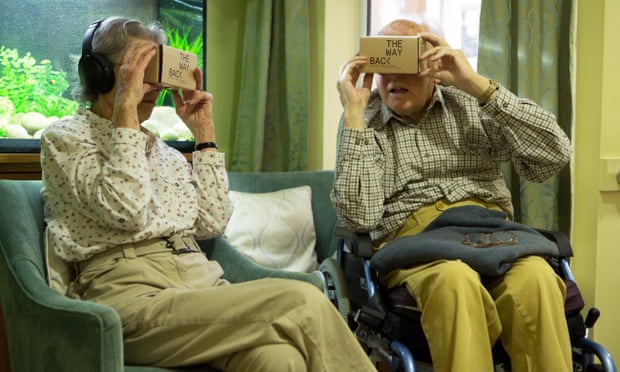
Exercise and social activities could help to reduce the risk of developing dementia in later life, according to a new report.

Although there is no cure yet for dementia, lifestyle changes have the potential to reduce new cases by as much as one-third.

Nicola Davis writes at the Guardian about a recent report from the Lancet Commission on dementia prevention, intervention and care. The study suggests that many “dementia cases might be avoided by tackling aspects of lifestyle including education, exercise, blood pressure and hearing. …

“ ‘There are a lot of things that individuals can do, and there are a lot of things that public health and policy can do, to reduce the numbers of people developing dementia,’ said Gill Livingston, professor of psychiatry of older people at University College London and a co-author of the report. …

“ ‘We expect it to be a long-term change that will be needed for exercise; joining a gym for two weeks is probably not going to do it,’ she said.

“Clive Ballard, professor of age-related diseases at the University of Exeter medical school and also a co-author of the report, added that the evidence suggests individuals should also try to follow a Mediterranean diet, maintain a healthy weight and keep an eye on their blood pressure. …

“The results reveal that as many as 35% of dementia cases could, at least in theory, be prevented, with 9% linked to midlife hearing loss, 8% to leaving education before secondary school, 5% to smoking in later life and 4% to later life depression. Social isolation, later life diabetes, midlife high blood pressure, midlife obesity and lack of exercise in later life also contributed to potentially avoidable cases of dementia, the report notes. …

“They admit that the estimate that more than a third of dementia cases could be prevented is a best case scenario, with the figures based on a number of assumptions, including that each factor could be completely tackled. …

“Fiona Matthews, professor of epidemiology at Newcastle University who was not involved in the report, said that interventions for depression and social isolation could still prove valuable. ‘If we could actually resolve some of that issue, even if it is not 100% causal, it is likely we might be able to slow [dementia] progression – even if [an individual] is on a pathway to developing dementia already,’ she said.

“She added that the proposed areas for action could offer myriad health benefits beyond lowering dementia risk. …

“The authors pointed out that an intervention that delayed dementia onset and progression by even a year could decrease the number of people with dementia worldwide in 2050 by nine million.”

More at the Guardian, here.

Read Full Post »

According to Josh Planos at the Atlantic, the forward-looking Dutch are at it again. Not only are they on the cutting edge in matters such as energy use and floating forests, they have anticipated the increase in Alzheimer’s diagnoses, creating a village where patients can feel normal.

“The isolated village of Hogewey lies on the outskirts of Amsterdam in the small town of Wheesp. Dubbed ‘Dementia Village’ by CNN, Hogewey is a cutting-edge elderly-care facility — roughly the size of 10 football fields — where residents are given the chance to live seemingly normal lives.

“With only 152 inhabitants, it’s run like a more benevolent version of The Truman Show, if The Truman Show were about dementia and Alzheimer’s patients. Like most small villages, it has its own town square, theater, garden, and post office. Unlike typical villages, however, this one has cameras monitoring residents every hour of every day, caretakers posing in street clothes, and only one door in and out of town, all part of a security system designed to keep the community safe. Friends and family are encouraged to visit. Some come every day.

“Last year, CNN reported that residents at Hogewey require fewer medications, eat better, live longer, and appear more joyful than those in standard elderly-care facilities. …

“Residents are only admitted if they’re categorized as having ‘severe cases of dementia or Alzheimer’s disease.’ Vacancies are rare, given that a spot only opens when a current resident passes away, and the village has operated virtually at full capacity since it opened in 2009.

“Hogewey was primarily funded by the Dutch government and cost slightly more than $25 million to build. The cost of care is nearly $8,000 per month, but the Dutch government subsidizes the residents—all of whom receive private rooms—to varying degrees; the amount each family pays is based on income, but never exceeds $3,600.”

More at the Atlantic.

Where did I just hear about someone with Alzheimer’s? Oh, right. A detective series on TV. So moving. Boy, I hope that detective’s daughter knows about this village.

Photo: Gabriel Rocha/Flickr

Read Full Post »

In case you missed it, there’s a new movie about using elderly people’s favorite music to call them back from dementia or Alzheimer’s.

The website for Alive Inside: A Story of Music and Memory says the movie is an “exploration of music’s capacity to reawaken our souls and uncover the deepest parts of our humanity. Filmmaker Michael Rossato-Bennett chronicles the astonishing experiences of individuals around the country who have been revitalized through the simple experience of listening to music.”

The documentary follows “social worker Dan Cohen, founder of the nonprofit organization Music & Memory, as he fights against a broken healthcare system to demonstrate music’s ability to combat memory loss and restore a deep sense of self to those suffering from it. Rossato-Bennett visits family members who have witnessed the miraculous effects of personalized music on their loved ones, and offers illuminating interviews with experts including renowned neurologist and best-selling author Oliver Sacks (Musicophilia: Tales of Music and the Brain) and musician Bobby McFerrin (‘Don’t Worry, Be Happy’).”

At the Washington Post, Michael Sullivan writes, “The benefits of music to enliven and awaken the senses are not limited to those with dementia. ‘Alive Inside’ also focuses on a woman who suffers from schizophrenia and bipolar disorder, and on a man with multiple sclerosis. The scenes in which they and others are shown listening to music that has personal meaning are absolutely joyous, but they also might move you to tears.

“As the movie makes clear, none of these conditions are reversible. Music isn’t a cure for anything. But it does seem to be a key to unlocking long-closed doors and establishing connections with people who have become, through age or infirmity, imprisoned inside themselves.” More.

Hmmm. It seems that in addition to making wills, we should all be writing lists of the music that we have enjoyed in our lives so that people know what to play. Should I go with “Swan Lake” and “The New World Symphony” or “For the Beauty of the Earth” and “Mary’s Boychild”? Or how about the Platters and Elvis and Nina Simone and Edif Piaf or musicals like Nine and Chess. Anything in a minor key.

I haven’t even scratched the surface.

Read Full Post »

« Newer Posts