Feeds:
Posts
Comments

Posts Tagged ‘democracy’

Photo: Lenora Chu.
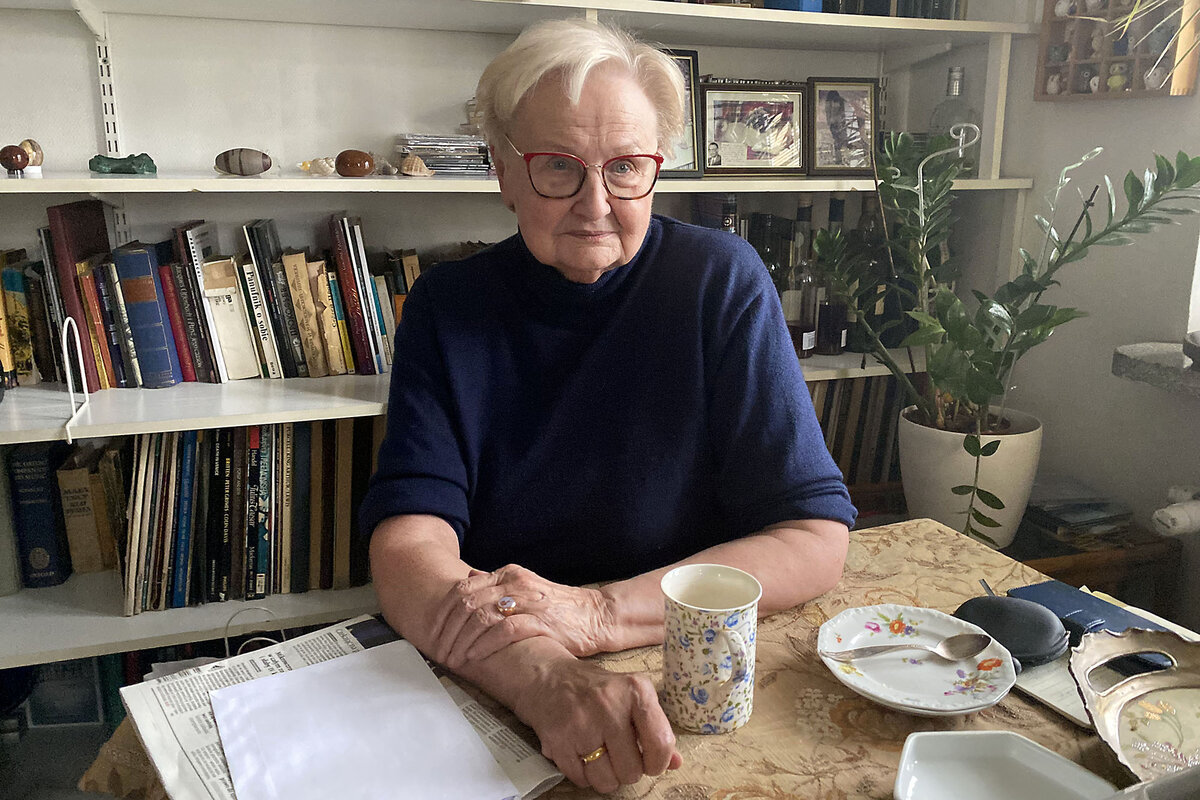
Ewa Łętowska, the elder stateswoman who helped build the legal framework of democratic Poland after communism, sits in her Warsaw flat last February.

Never underestimate the power of a woman. It may be under the radar, but woe to those who think they can always manipulate the quiet ones.

Lenora Chu of the Christian Science Monitor recalls, “It was late fall of 1987 in Poland, and the economic and social forces here were fueling tremors that would eventually fell communism across the Soviet bloc.

“Among a group of influential men – law professors – at a dinner party one evening was a Communist Party member brainstorming how to throw a bone to pro-democracy activists. The group was tasked with floating a name for a human rights ombudsman; that of legal scholar Ewa Łętowska kept surfacing. A devoted academic who had pumped out two decades of legal research on topics as benign as consumer protections and contract law, she was a respectable but safe choice.

“ ‘They said, “We want a woman, because women might be easier to manipulate,” ‘ Ms. Łętowska says in an interview in her Warsaw flat, lined floor to ceiling with books and opera records. She laughs at this memory that she possesses only because her lawyer husband was among the men feasting on schnitzel at that monthly table for regulars.

“If it was a wallflower they wanted, it turned out to be a miscalculation of historic proportion: They launched a stateswoman.

“Her trajectory as Poland’s top human rights thinker, she says, started ‘loudly, and with a bang’ when she was named the country’s human rights ombudsman soon after the dinner party, pioneering the balance between the state and the individual in the waning days of communism.

“She was an accidental influencer who, four decades later, now in her 80s, is a sought-after talking head, issuing viral social media posts about democracy. And when voters sent their right-wing government packing last October, a coalition of progressives turned to the wisdom and experience of Ms. Łętowska and her contemporaries.

“They’re looking for help to fix Poland’s institutions after the populists turned the country away from the European Union, rolled back civil rights such as abortion, took over the media and judiciary, and questioned the country’s humanitarian aid duties.

” ‘Ms. Łętowska’s value to Polish society cannot be overstated, says Helena Chmielewska-Szlajfer, a sociologist and assistant professor at Koźmiński University. ‘She’s a living legend, and she has the authority of this wise, powerful woman who set the institutions right in the beginning. She worked on this at a time it was the hardest – the intermediary stage between communism and democracy. And she still has much to say.’

“In 1980, the world saw burly Solidarity unionist Lech Wałęsa leading a revolt against communist authorities for worker rights – and eventually winning a Nobel Prize for it. But it was the progressive technocrats quietly blooming in that politically fertile time who did the less spectacular but essential work of building a democratic legal framework.

“Until then, Ms. Łętowska had forged her career as an impartial civil law professor, neither courting the communist regime nor joining the opposition. [She] now confidently says she … ‘was a state official to society, who brought more dialogue, more transparency. At the same time, I didn’t want a political future.’

“In an era when one didn’t easily trust one’s neighbor, there was little subversive in her ‘good girl’ youth to suggest she would emerge a strong voice for human rights and democracy. … On rare study trips abroad — few Polish scholars were trusted to leave the country — she might use German colleagues’ photocopiers to reproduce expensive legal tomes, like handbooks and casebooks on human rights law. …

“After law school in the 1960s, she published articles about civic law issues, rising through the ranks as a professor at the Polish Academy of Sciences’ Institute of Law Studies.

“A trip to the West – Hamburg, Germany – in the early 1980s was a turning point. She happened upon a demonstration by feminists. … From the other side of the street, she could see citizens hurling insults at the women.

“ ‘And in between you could see a line of police, with stone faces making sure no one gets hurt, being completely indifferent, and providing this space for demonstrating,’ says Ms. Łętowska. ‘It was the first time in my life I saw police not beating demonstrators – but rather protecting them. This is how I finally understood how things should be.’

‘The people of Hamburg would never know how much credit they should take, quite by accident, in my education,’ she says.

“Half a decade after that trip, she was named Poland’s first human rights official, judging the conduct of the state toward its citizens. … Should political parties have to register with the state? No, she famously wrote in 1988, when Poland was still under communist rule: ‘The constitution stated clearly: if parties want to form, let them form. Registration is required only for associations.’ …

“After the communist regime fell in 1989, she found herself among the legal scholars helping to modernize the Polish Constitution.”

More at the Monitor, here. Piotr Żakowiecki contributed to this report.
Read Full Post »

Art: Janet Boudreau/GPA Photo Archive via Flickr.
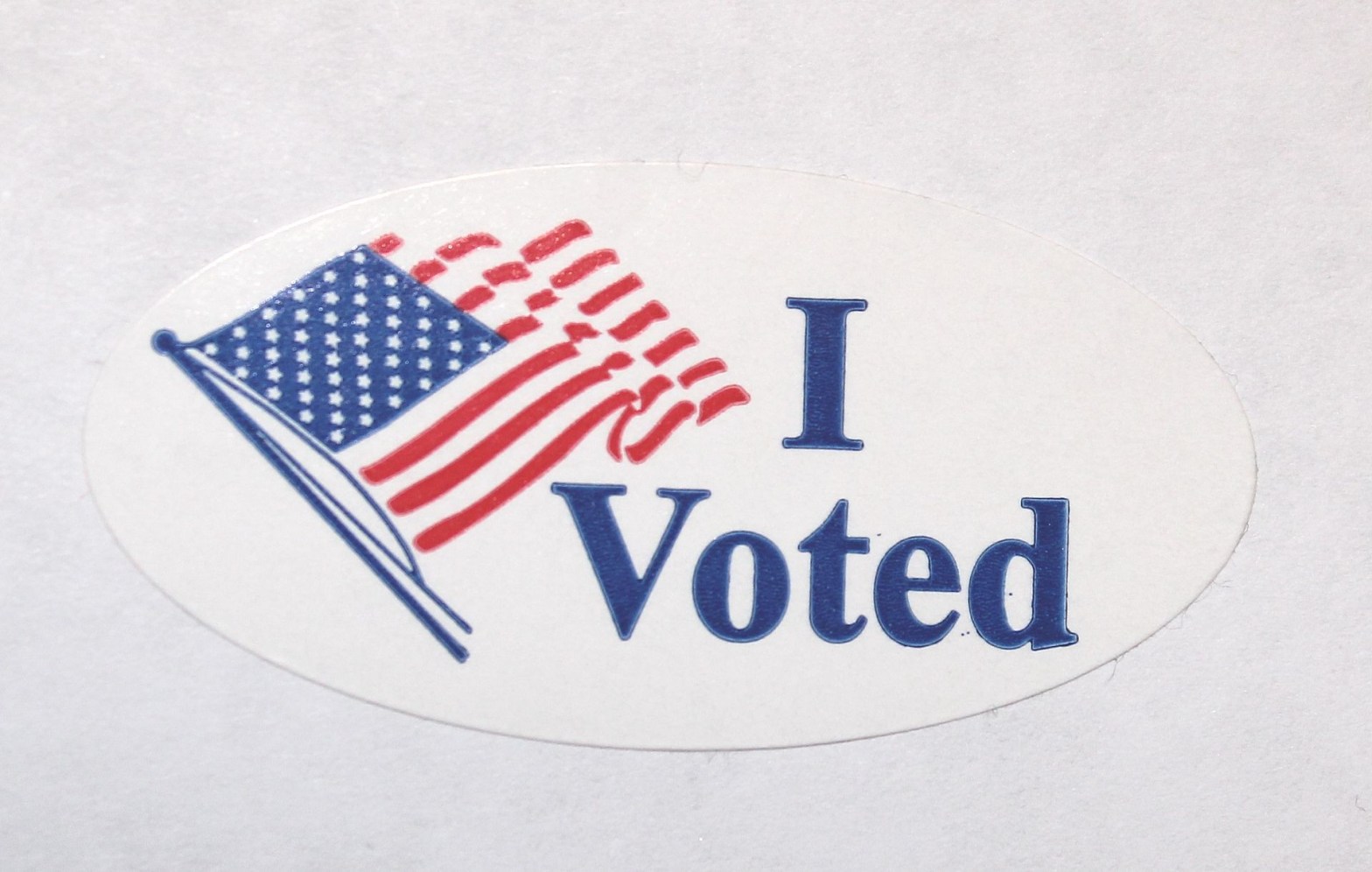
Boudreau’s 1987 sticker is the most familiar “I Voted” design.

Have you noticed that whenever you take a break from being involved in the maintenance of democracy, bad things happen? I think I’ve learned never to look away, never to leave democracy to others. Democracy is not so strong that it can take care of itself.

Because voting is the cornerstone of democracy, citizens often display the “I Voted” after going to the polls. Today’s story is about the sticker.

Rhea Nayyar writes at Hyperallergic, “The oval-shaped  ‘I Voted’ sticker with the billowing flag has been a staple within American voting culture for decades — so much so that even some absentee ballots include it in the envelope. While the sticker remains ubiquitous as the country’s most beloved participation trophy, many are unaware of its origins.

“States and counties across the nation have strayed from the historic sticker, holding contests for original designs that better reflect their local elections. While some areas of the country are phasing out the sticker reward in an effort to save money, 14-year-old Hudson Rowan swept the Ulster County, NY, ‘I Voted’”’ sticker contest with his viral spider-demon design entry, sparking a renewed interest in voter participation and voting paraphernalia all together.

“ ‘We’ve had a lot of fun this year with the sticker contest and are so proud of the positive attention it has brought to the voting process, specifically when it comes to engaging with younger voters,’ Commissioner Ashley Dittus of the Ulster County Board of Elections in New York said to Hyperallergic.

“It’s unclear where the first voting sticker debuted as they’ve been regionally available through local businesses and organizations post-World War II. The Miami Herald mentions the distribution of an ‘I Have Voted’ sticker at Miami polls as early as 1950 to remind others of their civic duty, and another article from 1982 notes small businesses offering Election Day discounts and freebies for those donning the sticker in Fort Lauderdale. On the other side of the country, the Phoenix Board of Realtors claimed that they designed and distributed the first ‘I Voted Today’ sticker for poll visitors in 1985 in an effort to get better acquainted with the community and promote voter turnout in favor of a freeway expansion query that was on the ballot that year.

“The rippling flag sticker design was developed in 1987 by Janet Boudreau, election supply vendor Independent Tabulation’s (InTab) former president, in acknowledgment of the lack of public awareness of Election Day. Boudreau had the design copyrighted, and by late 1988, the stickers were available in all 50 states.

‘I wanted them to see people with an “I Voted” sticker and think, “Oh, I should do that,” ‘ Boudreau told Time Magazine in 2016. ..

“I consulted with Claire Jerry, a political history curator at the Smithsonian Institution’s National Museum of American History (NMAH) in Washington, DC, home to a collection of voting paraphernalia from the 20th century.

“ ‘The oldest Election day paraphernalia we have is from 1920, during the women’s suffrage movement,’ Jerry told Hyperallergic. ‘We have a button with a ribbon extending down that says “I cast my first vote on November 2nd, 1920.” It’s the first time women would’ve been voting nationally in the presidential election, but it mentions specifically the Republican party for which they voted because that was the party that supported suffrage.’ …

“Jerry also pointed out a voting mobilization effort from 1972, when the 26th amendment granted 18-year-old American citizens the right to vote, appeasing the demands of activists who criticized the government for lowering the military draft age from 21 to 18 without lowering the voting age accordingly. …

“Jerry also provided an array of both humorous and serious voting bumper stickers that were circulating between the 1960s to the 1990s. … Certain states, counties, and cities have customized their ‘I Voted’ sticker designs to better reflect their voting populations. During the 2016 presidential election, Chicago administered tri-lingual ‘I Voted’ wristbands instead of stickers as if casting one’s ballot granted admission to a mosh pit. To be fair, many people were punched in the face during the 2016 election season so it’s not totally outrageous to make that comparison.

“When asked about the efficacy of ‘I Voted’ stickers, Jerry wasn’t so sure about their impact on today’s voters. ‘I don’t think it mobilizes people to go vote anymore. … I do hear parents talking about taking their children with them to vote and then sharing their sticker with their child, so I wonder if it’s a way of saying “let’s get future generations thinking about voting” with something that appeals to them.’ “

See a super collection of stickers at Hyperallergic, here. No firewall, but subscriptions are encouraged.

Read Full Post »

Photo: Suzanne and John’s Mom.
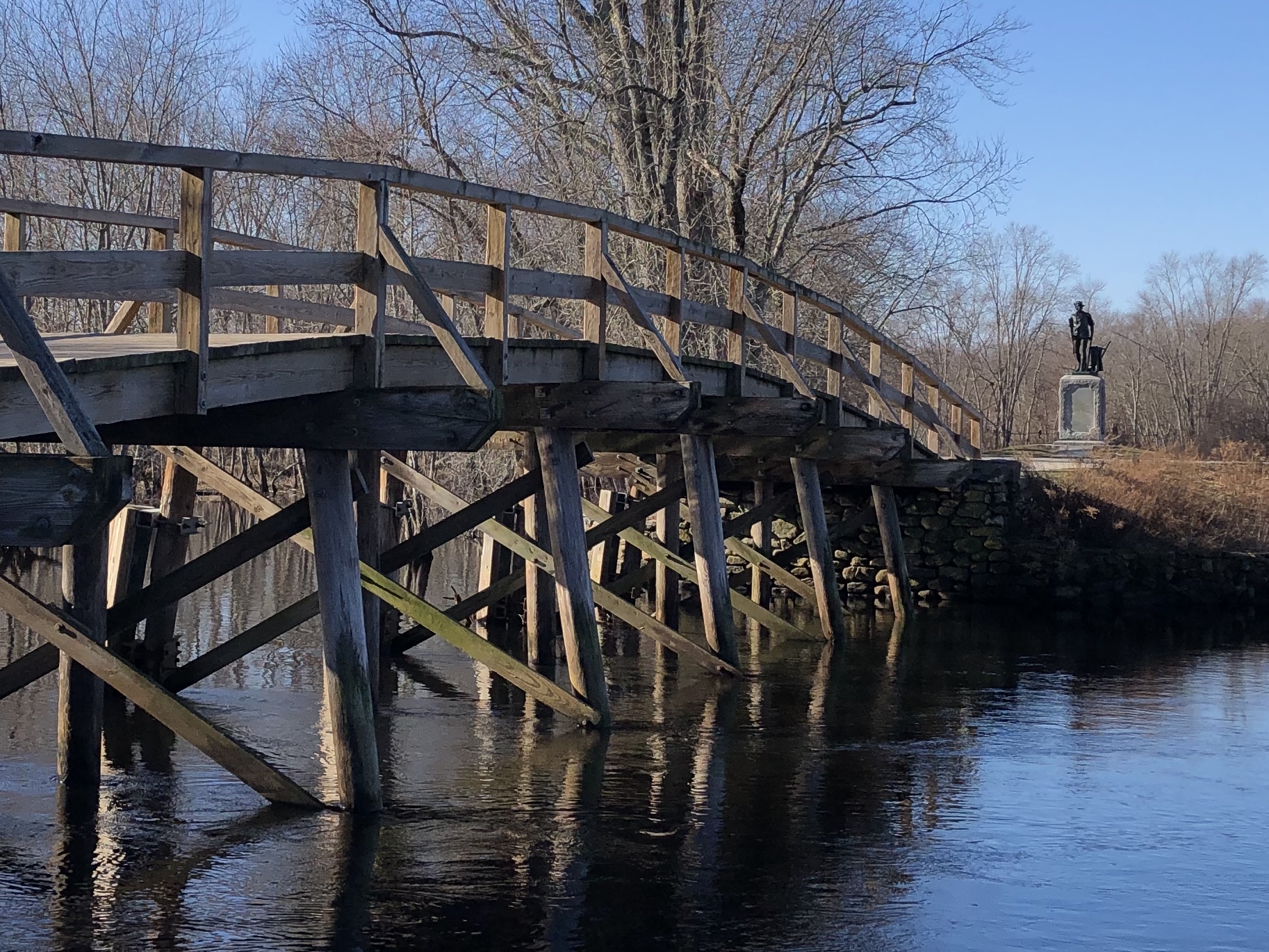
Remember Ralph Waldo Emerson’s lines, “By the rude bridge that arched the flood …”? A nonprofit news site named after this bridge will expand on a local-news trend led by the
Texas Tribune.

Hope is coming for one of the cornerstones of democracy, local journalism. Nowadays, it looks like the for-profit model ends in acquisitions, hedge fund ownership, and generalized stories that can be plugged into any town. Which is why we are seeing more nonprofit efforts for community news.

Margaret Sullivan writes at the Washington Post that if local journalism manages to survive, we need to “give Evan Smith some credit for it. The Texas Tribune founder has been a ‘true pioneer’ in finding ways to cover local communities as a nonprofit.

“When Evan Smith co-founded the Texas Tribune back in 2009, digital-first nonprofit newsrooms were something of a rarity. There was ProPublica, only two years old at the time, MinnPost in Minneapolis, the Voice of San Diego, and a few others.

“So his move from top editor of the award-winning Texas Monthly magazine, at the urging of venture capitalist John Thornton, was considered slightly bizarre.

“ ‘The tone of the coverage was almost mocking,’ Smith recalled last week, soon after he announced he would step down as the Tribune’s CEO at the end of this year. ‘It was, “What does this joker think he’s doing?” ‘

“As it turns out, Smith and company — he and Thornton recruited Texas Weekly editor Ross Ramsey to join the endeavor — had a good idea of what they were doing, or figured it out along the way.

“The Austin-based Tribune has grown from 17 employees to around 80 (more than 50 are journalists), raising $100 million through philanthropy, membership and events, including its annual Texas Tribune Festival that has attracted speakers including Nancy Pelosi and Willie Nelson.

Most important, it has done a huge amount of statewide news coverage with a focus on holding powerful people and institutions accountable.

“These days, such newsrooms are springing up everywhere; there are now hundreds of them. They are easily the most promising development in the troubled world of local journalism, where newspapers are going out of business or vastly shrinking their staffs as print revenue plummets and ownership increasingly falls to large chains, sometimes owned by hedge funds.

“In Baltimore, the Banner — funded by Maryland hotel magnate Stewart Bainum — is hiring staff and expects to start publishing soon. In Chicago, the Sun-Times is converting from a traditional newspaper to a nonprofit as it merges operations with public radio station WBEZ. And in Houston, three local philanthropies working with the American Journalism Project (also co-founded by Thornton) announced a $20 million venture that will create one of the largest nonprofit news organizations in the country.

“ ‘These newsrooms are popping up like mushrooms after a rainstorm,’ Smith, 55, told me. …

“As a speaker at Trib Fest myself, I’ve seen Smith in action — a promotional force of nature, energetic organizer, prodigious fundraiser, and lively onstage interviewer.

“Emily Ramshaw, who started at the Trib as a reporter and was named its top editor in 2016, called him ‘an innovator, a ringleader and a fearlessly ambitious local news entrepreneur.’ What’s more, she told me, Smith has brought along ‘a whole series of news leaders who have grown up in his image.’

“Ramshaw counts herself among them; she left the Trib in 2020 to found a new nonprofit news organization, the 19th, which covers the intersection of gender, politics and society.

“The Trib’s new editor is Sewell Chan, most recently at the Los Angeles Times, where he was the top opinion-side editor, and previously at the New York Times and the Washington Post. Smith considers it a triumph for nonprofit newsrooms that it’s no longer unusual for them to attract the likes of Chan, or of Kimi Yoshino, who was managing editor of the L.A. Times before being named editor in chief of the Baltimore Banner. …

“The Trib’s journalism is influential well beyond its own free website. More than 400 Texas Tribune stories appeared on the front pages of newspapers throughout the state last year, provided free of charge. The site has done investigative projects on the effect of sex trafficking on young girls, the influence of religious belief on the lawmaking of Texas legislators, and an investigation, part of its voting rights coverage, into the state’s review of voting rolls. In 2019, it announced it was joining forces with ProPublica to form a new investigative unit based in Austin. …

“With local news outlets withering in many communities — statehouse coverage, in particular, has dwindled despite its importance — and democratic norms under attack in many states, the need for that kind of watchdog reporting is acute everywhere.” More at the Post, here.

Another nonprofit news site will launch locally in fall, The Concord Bridge. Hooray. A world for which the “embattled farmers” fought doesn’t have to be merely aspirational. Neither does good local journalism.

Read Full Post »

merlin_162547917_954e6b18-5736-43ae-9543-23e4a4360113-jumboPhoto: Chloe Aftel for the New York Times
“If we weren’t covering it, no one would know what’s going on,” said Katherina Sourine, one of
four city and government reporters at the college newspaper, the Michigan Daily.

Local papers are vital to democracy not only for the local people to manage their lives well but because big stories start locally. Moreover, if Twitter gets the news first, misinformation or incomplete information may get a firm grip on the collective consciousness.

In Ann Arbor, Michigan, where local papers have followed the national trend of going out of business, the college newspaper is having to pick up the slack. And it is not the only student newspaper to do so nationwide.

Dan Levin reports at the New York Times, “Municipal committee meetings — the tedious minutiae of Ann Arbor’s local governance — do not tend to draw a crowd. On a recent afternoon, Katherina Sourine was among only a few in attendance.

“But Ms. Sourine, a University of Michigan senior, was there because she had to be. As one of four city and government reporters for Ann Arbor’s sole daily newspaper, she had biked through a steady rain between classes to take notes on the city’s plans for developing a new park. …

“Said Ms. Sourine, 21, who also plays rugby and is taking a full schedule of classes this semester, ‘It’s really hard to take time out of my day, especially when breaking news hits. But a lot of people rely on us to stay informed, not only students, but the people of Ann Arbor.’

“For more than a decade, the Michigan Daily, the university’s student newspaper, has been the only daily paper in town. After the Ann Arbor News shuttered its daily print edition in 2009 — and eventually its website, too — a staff of about 300 student journalists has worked hard to provide incisive coverage about the city’s police, power brokers and policymakers, all while keeping up with school.

“Student journalists across the country have stepped in to help fill a void after more than 2,000 newspapers have closed or merged, leaving more than 1,300 communities without any local news coverage. And several young reporters have broken consequential stories that have prodded powerful institutions into changing policies.

“A high school newspaper in Pittsburg, Kan., forced the resignation of the principal after discovering discrepancies in her résumé. After writing an article about a school employee’s unprofessional conduct charges, high school editors in Burlington, Vt., won a censorship battle against their principal.

“And when the State Department’s special envoy for Ukraine resigned abruptly last month, a 20-year-old junior at Arizona State University broke the news in the school’s student newspaper, a scoop that gained international attention. …

“ ‘We’re the largest Arizona-based news-gathering operation in Washington because we’re the only Arizona-based news-gathering operation in Washington,’ said Steve Crane, director of Washington operations at Arizona State’s Walter Cronkite School of Journalism and Mass Communication.

“Despite little training and no university journalism program, the staff of the Michigan Daily has embraced its vital role. Last year, in the wake of the #MeToo movement, it published a lengthy investigation that detailed sexual misconduct allegations against a professor, leading to his early retirement. In 2014, the paper published a major scoop about a sexual assault that the university concealed to protect a football player. …

“The Daily also covers issues that matter to Ann Arbor’s 121,000 residents, such as the inner workings of the municipal government, cuts to the county’s mental health budget, and a police oversight commission that was created last year in response to the shooting death of a black woman and the violent arrest of a black teenager.

‘We’ve been given this mantle of holding the powerful accountable, five nights a week, with no department backing us up,’ said Finntan Storer, 21, the managing editor of the Daily. ‘It’s a huge responsibility.’ …

“Today, the Daily’s closest competitor is MLive.com, a news website owned by Advance Publications that covers the state of Michigan. The company regularly publishes articles about Ann Arbor, including in a twice-weekly print digest branded as the Ann Arbor News, and it employs a staff of local journalists who cover the city’s government, real estate, police and other beats. But some residents said the student paper has often more effectively covered the community.

“Unlike many college newspapers, the Daily has the financial support — in the form of a $4.5 million endowment — to sustain its breadth of reporting, said Neil Chase, the chairman of the university’s student publications board. …

” ‘In a city of 100,000 people, you have to decide if you’re going to cover a City Council meeting, a car crash, or some other local news because you only have a few people to go around,’ he said. But the Daily ‘has so many people, they don’t have to make those tough decisions.’ ” More here.

Read Full Post »

discussing-finances

I’m not much of a world traveler although I always enjoy new places once I get there. I feel sufficiently challenged, though, just trying to see what is in front of me and delving into meanings.

I overheard two men who were walking in a shade-dappled lane this morning. They were discussing “operations” and the “lowest cost per month” and were consulting a smartphone. I’m not sure they saw much in front of them.

Not to be superior, I miss things, too. How many times have I come up out of the Porter Square subway station to cross the street and not noticed the bollards with the mysterious carvings? I’ve pasted three samples below.

A few more photos. Two sides of an especially nice paint job on the Painted Rock. A whole family brought their beach chairs and drinks to watch the artists among them paint the sunset, boats, and sea creatures and then photograph the art before someone painted over it with new messages. Which happened in a couple hours and involved much less style. But that’s OK — the rock is the billboard of pure democracy.

On another rock, one I had never noticed until early Saturday, please note directions to China.

Circling back to the “lowest cost” guys, when I got to the bend in the lane, they were gone. I was walking so much slower than they were.

mysterious-carving-3

mysterious-carving-2


mysterious-carving-1

direction-to-china


rock-with-octopus

rock-with-sunset


RI-summer-lane

Read Full Post »

Gene Sharp (founder of the Albert Einstein Institution and the go-to guy on nonviolent revolution) is proof that one and one and 50 make a million. Sharp is one man, but his writings have had a powerful influence on many of the players in the 2011 Arab Spring and democracy movements elsewhere.

Today I went with Jane’s family to see a movie about Sharp at the Boston Film Festival. (Jane’s cousin, Ruaridh Arrow, directed it.) It’s a remarkable film. There were interviews with organizers of nonviolent change in Serbia, Ukraine, Egypt, Syria, and beyond. The documentary was interspersed with news footage and video from recent uprisings around the world. A key message is that change takes strategic planning (you can’t wing it) and is a kind of armed resistance, only people are armed with ideas for undermining the pillars that support an oppressive regime. In addition to conducting research on the subject of nonviolence, Sharp has offered a list of 198 techniques that effect change.

After a standing ovation, a frail Gene Sharp, 83, his assistant, Jamila Raqib, and nonviolent-change trainer Col. Robert Helvey, retired, came up on the stage with the director and took audience questions. Raqib was asked about the funding for the Albert Einstein Institution, which operates out of a small space in East Boston. She said that likely funders back off because the ideas do relate to overthrowing a government. The institution is struggling.

I wish you could have been there to hear a young woman stand up and say that she is Egyptian and took  part in the January uprising. She said the overthrow of the government was easy but the rebuilding is hard. She wanted to know if any studies had been done comparing the transitions to democracy of other uprisings. When Sharp said that studies had yet to be done, I couldn’t help thinking what a good use of new funding such research might be. The film itself was funded by large and small donations from around the world through Kickstarter, which I blogged about here. Perhaps it can kickstart nonviolent change elsewhere.

Update: Gene Sharp died at his home in East Boston on January 28, 2018. He was 90.

Read Full Post »