Feeds:
Posts
Comments

Posts Tagged ‘education’

We blogged a while back about tutoring students via distance learning. Kyle Spencer at the NY Times wrote about it here:

“Newly designed software for the tutoring of beginning readers has bridged the gap, allowing volunteers to meet students online from a distance. P.S. 55 is testing the program with students in its four first-grade classes.”

Now it turns out that remote tutoring is not the only kind of remote volunteering possible. In this article by Casey Armstrong at Shareable, we learn more about why “volunteers don’t have to be in the room anymore to physically volunteer.”

“As far as fun volunteering opportunities go, playing with kittens at an animal shelter is probably unequaled. It’s no wonder that the option to do this over the internet is a popular one. The Oregon Humane Society gives volunteers the chance to control robotic arms wielding toys for bored cats waiting to be adopted. This opportunity is not only good for the cats and volunteers, but it’s a great way to encourage donations and adoptions.

“And, if you look beyond the surface, this is more than just a stunt. It proves a concept: Volunteering can be done from anywhere by anyone if you accommodate it with the right technology. … Check out Reach-In.com if you’re interested in setting up your own robot volunteer opportunity.”

Photograph: Librado Romero/The New York Times
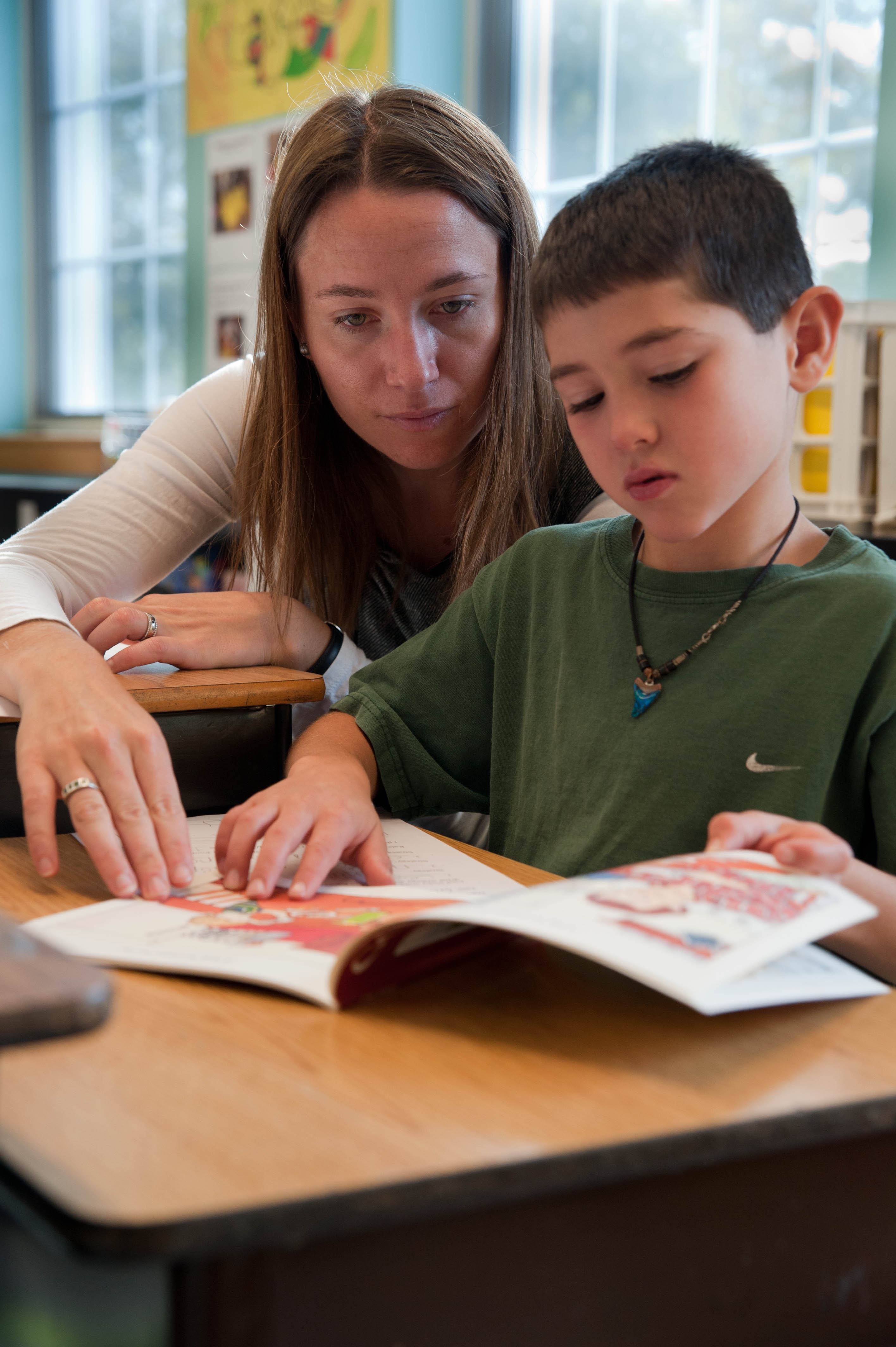
Edward Muñoz, a first grader at P.S. 55 in the Bronx, works out tricky words with Jenny Chan, his tutor in Midtown Manhattan.

Read Full Post »

This weekend, having spent special time with both grandsons and a brand-new granddaughter, I have been pretty aware of how much promise children hold.

Not just my grandchildren. All children.

But sometimes children who live in poverty need a boost from the rest of us. Kind of like at christenings when everyone in the congregation says they will help the baby learn and grow even though they don’t know the baby’s family and may not see them again. It’s a symbol that people take all children seriously.

At the Chronicle of Philanthropy, Suzanne Perry writes about the Washington, DC, version of the federal Promise Neighborhoods initiative that takes the nation’s responsibility toward children very seriously.

“The D.C. Promise Neighborhood Initiative, one of the country’s premier efforts to lift children out of poverty by offering a comprehensive array of educational and social services, has won a five-year, $25-million federal grant to step up its work.

“The grant, one of just seven of its kind that the Education Department awarded last month, was an especially sweet victory for the Washington project, which is working to turn around the city’s Parkside-Kenilworth neighborhood. Last year, it failed to win a similar award because it missed the application deadline due to technical problems it faced when e-mailing its proposal.

“This time, the group’s leaders left no stone unturned to ensure the application met all of the federal agency’s specifications, says Ayris Scales, the executive director—who now calls the project ‘the comeback kid’ and says she feels like ‘Cinderella at the ball.’

“The Washington effort is among dozens across the country that are following an approach pioneered by Geoffrey Canada, founder of Harlem Children’s Zone, which involves marshaling schools, nonprofits, and other community organizations to help children in troubled neighborhoods from ‘cradle to college.’ ” More.

By the way, I blogged about Geoffrey Canada and the movie on Harlem Children’s Zone, Waiting for Superman, a couple years ago, here.

Photograph: Cliff Owen/AP/File
A three-year-old pre-kindergarten student practices drawing spirals during a class at Powell Elementary School in Washington, DC. The DC Promise Neighborhood Initiative offers ‘cradle to college’ help to children in the nation’s capital.

Read Full Post »

Photograph: Melanie Stetson Freeman/Christian Science Monitor
Eric Schwarz, chief executive of Citizen Schools, advocates ideas such as an extended day, hands-on learning, and adult mentors in classrooms.

At work, we have a relationship with an after-school enrichment organization called Citizen Schools. One day a teacher brought in a Citizen Schools group for a special event that my friend Lillian and I attended.

At the end of the program I said to Lillian, “Do you see that girl second from left? Don’t we know her?” And then we both realized the sixth grader had the previous year been in a reading-enrichment program where we volunteer.

It makes you think. There are young people in urban public schools who understand the importance of education and will grab every opportunity they can get.

But about Citizen Schools: “Eric Schwarz is remaking public education in the United States using a simple formula: Extend the school day, give kids adult mentors, and let them get their hands dirty,” writes Gregory Lamb at the Christian Science Monitor.

“The program, called Citizen Schools, has succeeded so well that Mr. Schwarz has been invited to the White House to explain how it works ..

“Now at work in 14 US inner-city school districts and on one Indian reservation, Citizen Schools is seen as a model for making dramatic improvements at low-performing schools. To do that it partners not only with AmeriCorps, the quasi-governmental service organization, but with some of the biggest names in US business …

“The idea is to level the playing field for students who grow up in low-income households.

” ‘In this country we have a growing achievement gap based on family income. It’s actually a bigger gap than it was 50 years ago,’ Schwarz says in an interview at the Citizen Schools headquarters in a renovated brick building on Boston’s waterfront, just one pier away from the replica of the historical Boston Tea Party ship. ‘The reason, I think, is not that poor kids are learning less, but that rich kids are learning more because their families are giving them all these opportunities to get violin lessons, go to robotics camp, get extra coaching and tutoring, and have lots of chances to be [around] successful adults.

” ‘Those opportunities are incredibly unequally provided in our society, and Citizen Schools changes that.’ ”

More.

Read Full Post »

Erik’s mother saw yesterday’s post on poetry slams and sent this.

“I do not know if you are aware of a competition held in England in April for young people 14-18 years old who recite poems by heart. You can read about it on www.poetrybyheart.org.uk. I found out about it when I read a Swedish newspaper where they suggested it would be good if they had this type of competition in Swedish schools too.”

When I was in school, we were obliged to memorize both poetry and Bible verses. I still remember poems and verses going back decades, even some lines in French. The trend away from any sort of “rote learning” has an unfortunate side.

Having beautiful words and cadences in your head can help you so much with your writing. (It also helps when you are standing in a long line with nothing interesting to think about.) Educators threw out the baby with the bathwater when they decided kids should understand, not just memorize, historical facts, science, and math. Understanding is good, and sometimes it comes from memorization.

I’m going to reuse a funny little poetry recitation that I posted once before. Jim Clark, Poetry Reincarnations, copyrighted the animation and explains it on YouTube.

Read Full Post »

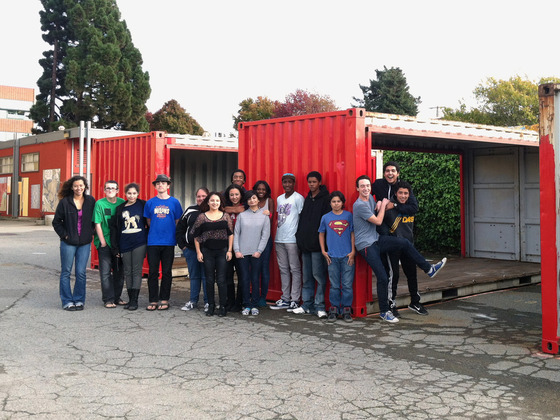
I’m not sure where I first read about Studio H, but I think you will be interested in this high school that engages students in hands-on construction from design to delivery.

The website explains: “Studio H is a public high school design/build curriculum that sparks community development through real-world, built projects. Originally launched in rural Bertie County, North Carolina, Studio H is now based at REALM Charter School in Berkeley, CA.

“By learning through a design sensibility, applied core subjects, and industry-relevant construction skills, students develop the creative capital, critical thinking, and citizenship necessary for their own success and for the future of their communities.

“Over the course of one semester, students earn high school credit and have the opportunity to design, prototype, and build a full-scale community project. Our students have designed and built some crazy chicken coops for families in need, and a 2,000-square-foot farmers market pavilion.”

More here.

Photographs: http://www.studio-h.org

Read Full Post »

Catch this story on National Public Radio today?

Jake Scott, a math teacher and wrestling coach in Silver Spring, Maryland, draws students in with clever ways to memorize formulas.

“Keeping control of the class is one thing, but holding their attention through complicated calculations and theorems is another challenge altogether. So Scott gets a little extra help from his alter ego, 2 Pi.

“About three years ago, Scott started infusing rap into his lessons.”

He describes to NPR’s David Greene his early lack of success in school, his time on the streets, the help he received from taking up wrestling, and the reasons he eventually got into math.

” ‘You know, when my dad lost his sight, I started doing accounting for him, and math was the one area that I was able to succeed in,’ Scott says. ‘Because of my time in the streets, my vocabulary wasn’t very extensive, and so I shied away from English. I was bored to death by history. Math, on the other hand — I didn’t need to know how to speak well in order to do well in math, so that was very helpful, when I look back. It helped me to grow in my appreciation for numbers.’

“Scott says that one of his most important goals as a teacher is to make meaningful connections with his students. This drive to connect with the kids in his classroom influenced him to begin rapping as 2 Pi.

” ‘I mean, I think that we can preach to kids until they turn blue and we turn blue, but if there’s no connection, then there’s no response,’ Scott says. ‘I mean, I constantly search for ways to connect with students — with the language, with conversations, music.” Read more here.


Read Full Post »

My husband and I like Colin Cotterill’s quirky mystery books about Dr. Siri Palboun of Laos. The series starts with The Coroner’s Lunch, in case you are interested.

Cotterill has been involved in several worthy causes in Laos, including one addressing the abysmal lack of children’s books in the country. You can read how he got started on his quest for children’s books, here. That work is now handled by Sasha Alyson at Big Brother Mouse, who writes:

“Do you remember the excitement of rushing home to read a book that you hoped would never end? Many Lao children have no such memories, because they’ve never seen a book that was fun or exciting to read. Some have shared textbooks; others have never seen a book at all. We sometimes have to explain how books work: ‘Look, if you turn the page, there’s more!’ ”

Big Brother Mouse is a “Lao-based, Lao-owned project.” More.

Cotterill also works with http://www.copelaos.org to help victims of land mines left over from the CIA’s “secret war.”

And, pointing out that more than 75 percent of children in the far north of Laos have no schools, Cotterill funds efforts to get hill tribe students into teachers colleges. More.

Art: Colin Cotterill at http://www.colincotterill.com

Read Full Post »

Here’s another nice story about using the arts to inspire kids who are turned off by school in troubled districts.

Writes Patricia Cohen at the NY Times, “Stationed in front of one of his large self-portraits, the artist Chuck Close raised his customized wheelchair to balance on two wheels, seeming to defy the laws of gravity.  The chair’s unlikely gymnastics underlined the points that Mr. Close was making to his audience, 40 seventh and eighth graders from Bridgeport, Conn.: Break the rules and use limitations to your advantage.

“The message had particular resonance for these students, and a few educators and parents, who had come by bus on Monday from Roosevelt School to the Pace Gallery in Chelsea for a private tour of Mr. Close’s show. Roosevelt, located in a community with high unemployment and crushing poverty, recently had one of the worst records of any school in the state, with 80 percent of its seventh graders testing below grade level in reading and math.

“Saved from closure by a committed band of parents, the school was one of eight around the country chosen last year to participate in Turnaround Arts, a new federally sponsored public-and-private experiment that puts the arts at the center of the curriculum.”

Read about the reactions of the students — and more at the NY Times.

Photograph: Kirsten Luce for the NY Times
The artist Chuck Close giving a private tour of his show to students from Bridgeport, Conn.

Read Full Post »

John knows a good blog topic when he sees it. This tip he gave me is about minimally invasive education, which brings learning to the poorest of the poor.


According to wikipedia, “Dr. Sugata Mitra, Chief Scientist at NIIT, is credited with the discovery of Hole-in-the-Wall [HiWEL]. As early as 1982, he had been toying with the idea of unsupervised learning and computers.

“Finally, in 1999, he decided to test his ideas in the field. On 26th January, Dr. Mitra’s team carved a ‘hole in the wall’ that separated the NIIT premises from the adjoining slum in Kalkaji, New Delhi. Through this hole, a freely accessible computer was put up for use.

“This computer proved to be an instant hit among the slum dwellers, especially the children. With no prior experience, the children learned to use the computer on their own. This prompted Dr. Mitra to propose the following hypothesis: ‘The acquisition of basic computing skills by any set of children can be achieved through incidental learning provided the learners are given access to a suitable computing facility, with entertaining and motivating content and some minimal (human) guidance.’ ”

More at Hole-in-the-Wall.com. Also at the Christian Science Monitor.

And of course, I have to say a word about the program’s appearance in Bhutan, since Suzanne loves Bhutan.

“One of the major projects that HiWEL is in the process of executing is for the Royal Government of Bhutan. The project is part of a large Indo-Bhutan project formally known as the Chiphen Rigpel (broadly meaning ‘Enabling a society, Empowering a nation’). Chiphen Rigpel is an ambitious project designed to empower Bhutan to become a Knowledge-based society.” Read more.

Photograph: HiWEL
Playground Learning Stations in Dewathang Gewog of Samdrup Jongkhar District in Eastern Bhutan.

Read Full Post »

Shawn and Laura Sears were touched by inner-city kids with too many strikes against them and invited a few for an outdoor camping experience. The outing was so satisfying all around that they just kept doing it.

Marilyn Jones has the story at the Christian Science Monitor.

“Leaving college with liberal arts degrees – his in psychology, hers in geology – Shawn and Laura applied to Teach for America and were eventually placed to teach in one of the poorest regions in the country.

“Today, celebrating 14 years together (getting married along the way in 2004), they’ve seen the seeds sown during their experiences in Mississippi grow to fruition in the founding of Vida Verde Nature Education, a nonprofit outdoor education camp they’ve now run for 11 years.

“Located on northern California’s spectacular coast between San Francisco and Santa Cruz, this free camp for children from low-income families has served more than 7,000 kids from the inner cities of Oakland, East Palo Alto, San Francisco, and San Jose.

” ‘We help them let go of much of the negativity they often carry,’ Shawn says. ‘It’s nonstop fun, and they get to just be kids for a few days. Three days later, they’re transformed.’ ”

Read more.

Tony Avelar/Special to the Christian Science Monitor
Laura and Shawn Sears founded Vida Verde to give groups of students three days of exposure to and hands-on experience in the outdoors.

Read Full Post »

Paul Tough has written a book arguing that developing character is more critical to a child’s future success than IQ.

National Public Radio has the story: “Tough explores this idea in his new book, How Children Succeed: Grit, Curiosity and the Hidden Power of Character.

” ‘For some people, [the] path to college is so easy that they can get out into life and they’ve never really been challenged,’ he tells NPR’s David Greene. ‘I think they get into their 20s and 30s and they really feel lost — they feel like they never had those character-building experiences as adolescents, as kids, that really make a difference when they get to adulthood.’

“That wasn’t true for the teenagers Tough met during the time he spent in some of Chicago’s roughest neighborhoods. There, he worked with teenagers overcoming unimaginable challenges. One young woman …  was getting into fights in school and was on the verge of dropping out. But then she entered an intensive mentoring program that changed her life.

” ‘She made it through high school, overcame a lot of obstacles and now is getting a cosmetology degree,’ Tough says. ‘For some people, that wouldn’t be a huge success. But for her, she overcame obstacles that won’t only set her on a path for material success, but also psychological success.’

“The difference-maker really depends on the person, Tough says. Mentoring programs that focus on goal-setting can be helpful, and he also says parents should try to help their kids manage stress from a very early age.”

Do you agree with this? Overcoming obstacles is important, but the obstacles that some of the students Tough met were so severe, I can’t help wondering if the consequences have yet to play out. I’m for kids overcoming normal, age-appropriate obstacles that are part of any life — as they say in Italy, “the things that happen to the living.”

More at NPR, here.

Read Full Post »

Ashoka, which defines itself as “a global organization that identifies and invests in leading social entrepreneurs,” has a blog called Changemakers that might interest readers. The March 26 post is on teaching and empathy.

Nora Cobo at the Center for Inspired Teaching writes, “While test-based assessments are essential, they reflect only one type of data and one kind of skill that students need. Schools must also focus on students’ social-emotional growth in order to create sound learning environments. Such settings help students develop interpersonal competence and improve short- and long-term academic and personal outcomes.

“Center for Inspired Teaching partners with teachers to change the school experience for students to include these critical skills. … Instead of looking at students’ behavior as something to be corrected, we train teachers to look at students’ behavior in terms of unmet needs. In particular, we ask teachers to consider students’ needs for Autonomy, Belonging, Competence, Developmental appropriateness, and Engagement — the ABCDE of learners’ needs.

“For example, a teacher may encounter a student who repeatedly gets frustrated and leaves his seat to chat with classmates when he encounters a complicated geometry problem. Rather than assuming the student has a bad attitude, the teacher strives to figure out which of the student’s needs is not being met. The teacher may discover that the student learns best when physically engaged – and offer him the option to tackle the equation by measuring distances by walking.

“Similarly, a teacher may find a student who refuses to work in a group setting, saying she just prefers to work alone. In examining the student’s unmet needs, that teacher may discover that the student longs for more autonomy with her work – and empower that student to create on her own.

“The teacher may discover, upon further engaging her skills of empathy, that other members of the group aren’t treating the student kindly, and therefore the student’s need for belonging is not being met when classroom groups are self-selected. …

“Placing empathy at the core of teachers’ practice ensures that students learn how to think, not just what to think – and go beyond covering the curriculum to learn the skills they need in order to thrive.”

More here.

Photograph: Kate Samp, Strategies for Children

Read Full Post »

When I worked with Denise at a certain hyped management magazine, I always knew she had better things in her than the tasks she was given there.

Moreover, she was the most sensible 25-year-old I had ever met. After moving on to better jobs, including writing for teens at Scholastic, she turned to the hardest and most important work in the world. And on the whole, it seems to suit her.

But nothing can stop the itch to write. Here she shares the joy and frustration of reading repetitive stories to book-hungry kids:

“Nothing brings me more joy than knowing how much my 5-year-old son, Isaiah, looks forward to sitting in our rocking chair while I read him books at bedtime. And my heart swells with love whenever my 2-year-old twins, Joel and Nina, bring me books and say, ‘Read book, please.’

“But, holy moly, I’ve run into a very serious problem. While Isaiah can enjoy a variety of different stories, the twins are all about sameness. Even though I rotate their books constantly so we’re not reading the same ones every week, the repetitiveness of reading these books is driving me crazy.

“I’m sure many parents are familiar with the rhythm and rhyme scheme of many children’s board books, ‘Bend and reach, touch your toes. Now stand up straight and touch your nose!’ Lately, I’ve been adding a few colorful rhymes in my head as I read these books to the twins. ‘Clap your hands, then point to your shoes, reading this book is driving me to booze!’ ” Read more.

(I admit I felt the same way about Richard Scarry. The pictures were darling, but the words, not so, even if I did let “five-seater pencil car” become part of my vocabulary.)

For a mom with twins, it is must be twice as much “bend, reach, touch your toes,” but for sure these kids will grow up to be readers.

This is Denise with one of her three book mavens.

Read Full Post »

Did you catch the story today about the young boy whose composition was performed by the New York Philharmonic?

At the National Public Radio site, Jeff Lunden writes: “What would it be like if you were 10 years old and composed a piece of music that was played by the New York Philharmonic? For a few New York City school kids, including one fifth-grader, it’s a dream come true, thanks to the orchestra’s Very Young Composers program.

“Composer Jon Deak, who played bass with the New York Philharmonic for more than 40 years, says the idea for Very Young Composers came when he and conductor Marin Alsop visited an elementary school in Brooklyn several years ago.”

Now every year, “72 lucky kids in six New York area schools participate in this free after-school program. …

” ‘The kids are not chosen for being musical geniuses,’ [the Philharmonic’s director of education, Theodore] Wiprud says. ‘The guidelines we give the schools, in trying to identify some fourth- and fifth-graders for the program, is that they be kids for whom this could make a difference. Whether or not they study an instrument is not necessarily a good predictor of whether they’re going to do something creative in music.’ …

” ‘Some of these kids have trouble locating middle C on a piano,’ Deak says. ‘Does that mean they can’t compose music of depth? No. What do they have to do? They have to hum it for us, sing, whistle, tap the rhythms — even if they can’t notate them — and we get their piece.’

“As [teaching artist and composer Daniel] Felsenfeld puts it, ‘The most important thing about this class is that you never, ever, ever write their music for them — not even a little.’ ”

I’m hearing a refrain from yesterday’s post: all children have music in them and you should just let it flower.

Read more and listen to the performance of young Milo Poniewozik’s composition at NPR.

Photograph of student Milo Poniewozik and the New York Philharmonic: Michael DiVito

Read Full Post »

I’ve been meaning to blog about the wildly successful music-education program out of Venezuela, El Sistema.

Here music critic Mark Swed follows the L.A. Philharmonic to Caracas and writes about El Sistema for the Los Angeles Times.

“Musically, Venezuela is like no other place on Earth. Along with baseball and beauty pageants, classical music is one of the country’s greatest passions.

“In the capital, Caracas, superstar Venezuelan conductor Gustavo Dudamel is mobbed wherever he goes. Classical music teeny-boppers run up to him for autographs when he walks off the podium at concerts. The state-run music education program, which is known as El Sistema and from which Dudamel emerged, is the most extensive, admired and increasingly imitated in the world. One of its nearly 300 music schools for children, or núcleos, is deep in the Venezuelan Amazon, reachable only by boat. …

“The basic tenet of José Antonio Abreu, the revered founder of El Sistema, is the universal aspect of music. He likes to say that music is a human right. That’s an effective, politically expedient slogan. But what he has demonstrated on a greater scale than ever before is that music is not so much a right as a given. El Sistema is not about talent, ingeniously effective system though it may be for discovering and fostering musical talent. The truly revolutionary aspect of El Sistema is its proof that everyone has a capacity for music.”

Read about how El Sistema has spread worldwide in the Los Angeles Times.

Children at La Rinconada in Caracas, Venezuela, Feb. 14, 2012. Gustavo Dudamel, right, among students at a showcase of El Sistema in Caracas, Venezuela, Feb. 15. Photograph: Mark Swed / Los Angeles Times

Read Full Post »

« Newer Posts - Older Posts »