Feeds:
Posts
Comments

Posts Tagged ‘escape’

Photo: Howard LaFranchi/The Christian Science Monitor.
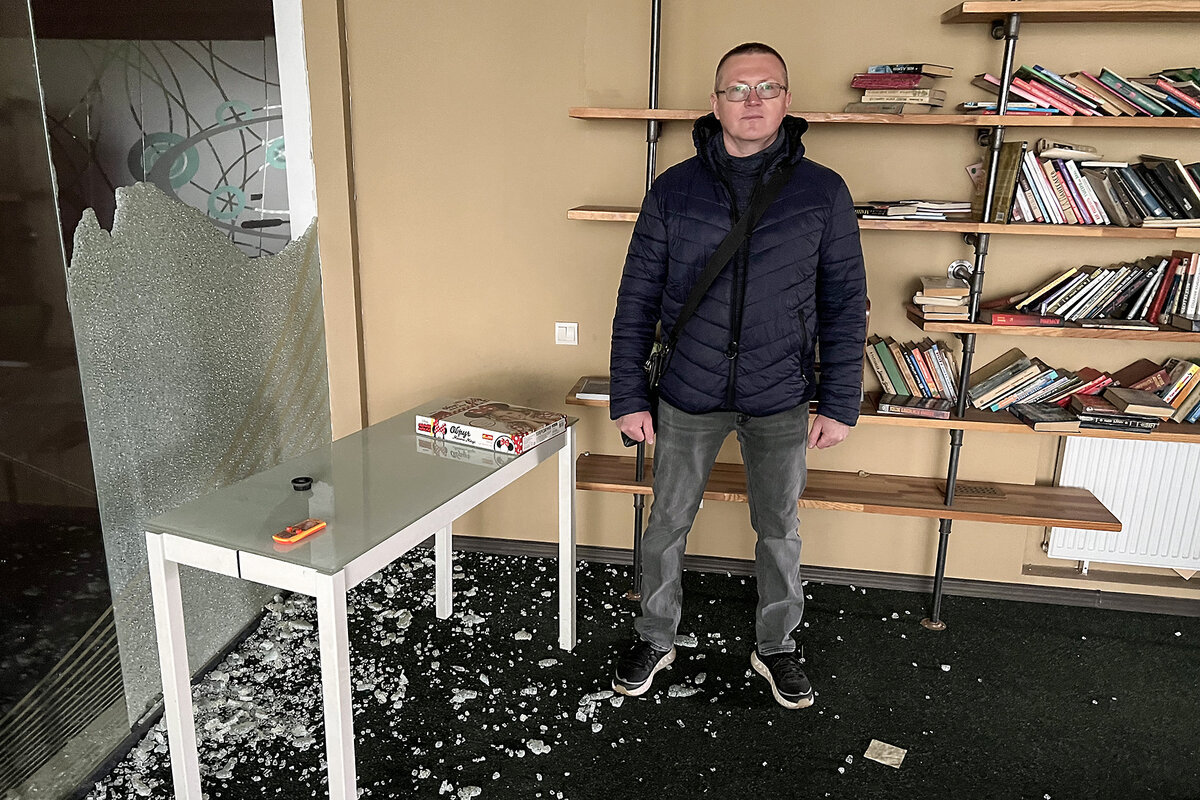
Ihor Pohorielov, commercial director of Ranok Publishing, at the company’s bomb-damaged offices, in Kharkiv, Ukraine, Nov. 4, 2024.

If ants can keep working and rebuilding after we’ve knocked over their anthill, how much more humans in war zones?

Among the many buildings damaged or destroyed by the Russian invasion in Ukraine are publishers of books. But books remain strong and Ukrainians keep reading.

Here’s a story by Howard LaFranchi at the Christian Science Monitor.

“Across Ukraine, but especially in Kharkiv, the country’s publishing capital, Russia’s war has been something of a boon to the nation’s publishing industry. More Ukrainians are seeking solace and distraction in books, and interest in Ukrainian literature and Ukrainian-language books is spiking.

“Many of the country’s publishing houses – from textbook-publishing giants to boutique operations specializing in culture – are keeping busy. And this despite the fact that Russian President Vladimir Putin has made publishing houses a key target of his war on Ukrainian culture.

“Publishers say a combination of their resolve to keep operating and a reawakened enthusiasm for books among a variety of readers is keeping the presses running.

“ ‘The war is reminding Ukrainians that books are an outlet for joy, for culture, for travel, when other outlets are closed to us,’ says Yuliia Orlova, general director of Vivat Publishing.

“ ‘We hear all the time about people rediscovering the joys of books as they spend less time on their computers and phones,’ she says. ‘People want to distract themselves from all the sad and depressing things going on around them, so they turn to fiction and fantasy. It’s their way to escape.’

“One night in November, Ihor Pohorielov was awakened by a Russian bomb blast that nearly shook him out of bed. His thoughts went to the modern offices and cavernous storage facilities where he works as the commercial director for Kharkiv’s Ranok Publishing, and which had already been the target of Russian air strikes. …

” ‘I thought of the orders we need to get out and the clients we need to serve – so I came into work’ the next day. …

“Across Ukraine, but especially in Kharkiv, the country’s publishing capital, Russia’s war has been something of a boon to the book publishing business.

“As more Ukrainians seek solace and distraction in books, and as interest in Ukrainian literature and Ukrainian-language books spikes, many of the country’s publishing houses – from textbook-publishing giants to boutique operations specializing in culture – are keeping busy.

“And this despite the fact that Russian President Vladimir Putin has made publishing and printing houses a key target of his war on Ukrainian culture.

“Kharkiv’s publishing industry was shaken to its core last May when a Russian S-300 missile struck the giant Faktor-Druk, one of Europe’s largest printing houses. The blast destroyed presses, incinerated some 100,000 books, and knocked out the three publishing companies housed there. …

“But the sense of devastation was short-lived. In a show of solidarity, several European publishers offered to print Ukrainian books for distribution to millions of Ukrainian refugees around Europe.

“An American philanthropic organization, the Howard G. Buffett Foundation, quickly agreed to pick up the tab for Faktor-Druk’s reconstruction. …

“ ‘Printing in Kharkiv is hanging on despite the almost daily attacks on the city,’ … says Yuliia Orlova, general director of Vivat Publishing, a division of the Faktor Group. …

“Ms. Orlova does not hide the fact that the war has been devastating for Ukrainian publishing in many ways, especially for the people who work in the sector. ‘The attacks and the destruction in the city have a big impact on the mental health of our workers. People don’t sleep and they are constantly worried for their families,’ she says. …

“Since 2022, the number of registered publishers in Ukraine has plummeted from about 1,600 to 150, Ms. Orlova says. …

“But Ms. Orlova cites another statistic that underscores the bright side of Ukrainian book publishing: Over the same period, the total number of books printed grew by 70%.

“The reasons for that jump are largely related to the war. Russia’s systematic destruction of Ukraine’s infrastructure has meant widespread power outages and spotty access to the internet, Ms. Orlova says. ‘We hear all the time about people rediscovering the joys of books as they spend less time on their computers and phones,’ she says. …

“Mr. Putin’s war on Ukrainian culture – targeting museums, churches, universities, and publishing houses – is feeding a renewed interest in history, language, art, and literature that confirm Ukrainian nationhood, publishers say.

” ‘Interest among Ukrainians in who we are was already starting to grow, but it was the full-scale invasion that really encouraged this desire to know more about our history and culture,’ says Oleksandr Savchuk, whose specialty Kharkiv publishing house carries his name.

“ ‘For many Ukrainians, the picture of who we are was like a puzzle with lost pieces,’ he says. ‘But now people are finding those pieces so we can complete the full picture.’

“To help nurture that process, in 2023 the philosophy professor and publisher opened a facility he calls a ‘Book Strongroom,’ a combination bookstore, event space, and neighborhood bomb shelter adjacent to his publishing operations. …

“Oleksandr Savchuk is a small player who has published about 50 titles over the last decade. … ‘For the 12 years before the invasion I was suffering to try to show people their great history and culture. It was a hard-going process,’ he says. … ‘I see now that I’m being heard.’ “

More at the Monitor, here. No firewall, reasonable subscriptions rates for a paper unusually strong in international news.
Read Full Post »

Photo via WDBJ7.
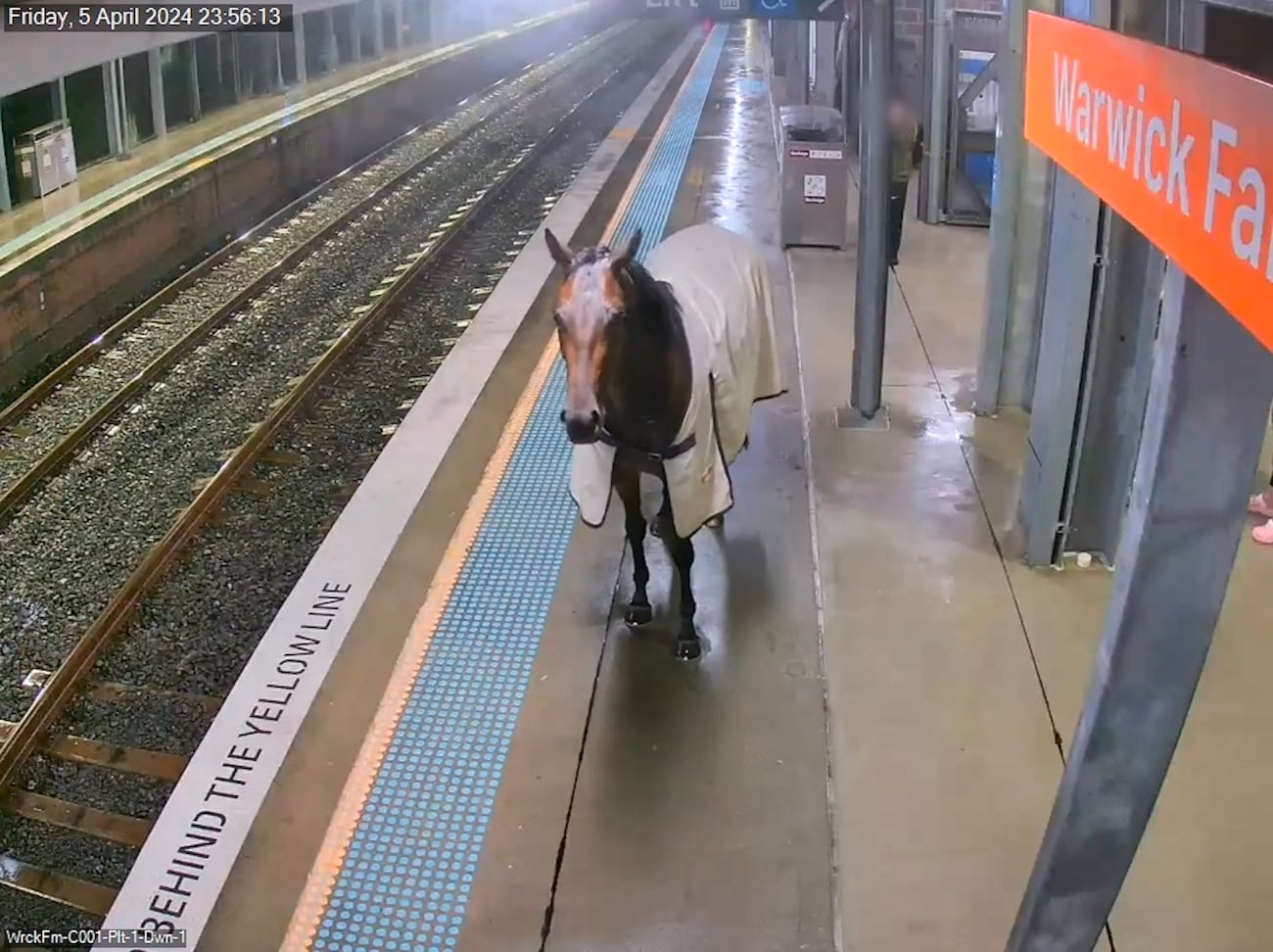
An escaped horse in Australia.

During the years that I took the commuter train to work, I saw some unusual things, but nothing as unusual as this.

Annabelle Timsit writes at the Washington Post about a thoroughbred horse in Australia who tasted a moment of freedom in an environment that to other travelers feels like anything but freedom.

“This commuter was one of the worst kinds,” writes Timsit. “Didn’t pay a fare, took up space on the platform, and caused a ruckus that slowed down trains and called security agents to the station. This particular commuter was also a horse.

“The equine traveler was captured by CCTV cameras wandering into Warwick Farm Station west of Sydney just before midnight on Friday, trotting up and down the platform, prompting other (human) commuters to jump out of its path. …

“ ‘Didn’t realize I needed to say but — horses aren’t allowed on our trains, sorry folks,’ tweeted Chris Minns, premier of Australia’s New South Wales state. …

“Footage shows that after horsing around for a while, it had a choice to make as the train pulled into the station: In or out? Yea or neigh? After staring at the train for a few seconds, the horse turned around and trotted back down the platform … or, as Transport for NSW put it: ‘The horse had planned its journey but got colt feet and decided to hoof it.’

“Security agents from Sydney Trains were alerted, ‘and trains in the vicinity were warned to run at reduced speeds,’ Transport for NSW said. …

“It later emerged that the horse had escaped from the stables of Annabel Neasham Racing, close to Warwick Farm Station, the Sydney Morning Herald reported.

“It’s not clear how it escaped, but Steve Railton, chief steward of Racing NSW, cited Annabel Neasham, a trainer and the owner of the racecourse, as saying that ‘an unknown person released three racehorses and a stable pony from one of her stables on Friday night.’

“ ‘One of the racehorses left the vicinity of the stable complex, while the others were captured,’ said Railton, according to the Herald. …

“ ‘I can confirm the horse has returned home, safe and sound,’ Minns said.

“Though it is not an everyday occurrence, ‘from time to time, we do find animals on tracks, particularly cows,’ said Sydney Trains chief executive Matt Longland, according to the Herald. … Longland said the horse may have gravitated toward the station because of its bright lighting. …

“ ‘Thankfully, we were able to warn our train drivers to look out for animals on the tracks,’ he said. ‘We were able to catch the horse not long after that.’

“Transport for NSW confirmed that the horse ‘was safely reined in and is in a “stable” condition.’ ”

Ouch! People really cannot resist terrible puns whenever there’s a quirky animal story to wrap puns around.

More at the Post, here.

Video: CityNews.
What do you suppose this taste of freedom felt like to the horse? Did it feel good? Scary?
Note the reaction to the train pulling in.

Read Full Post »

Photo: ABC News.
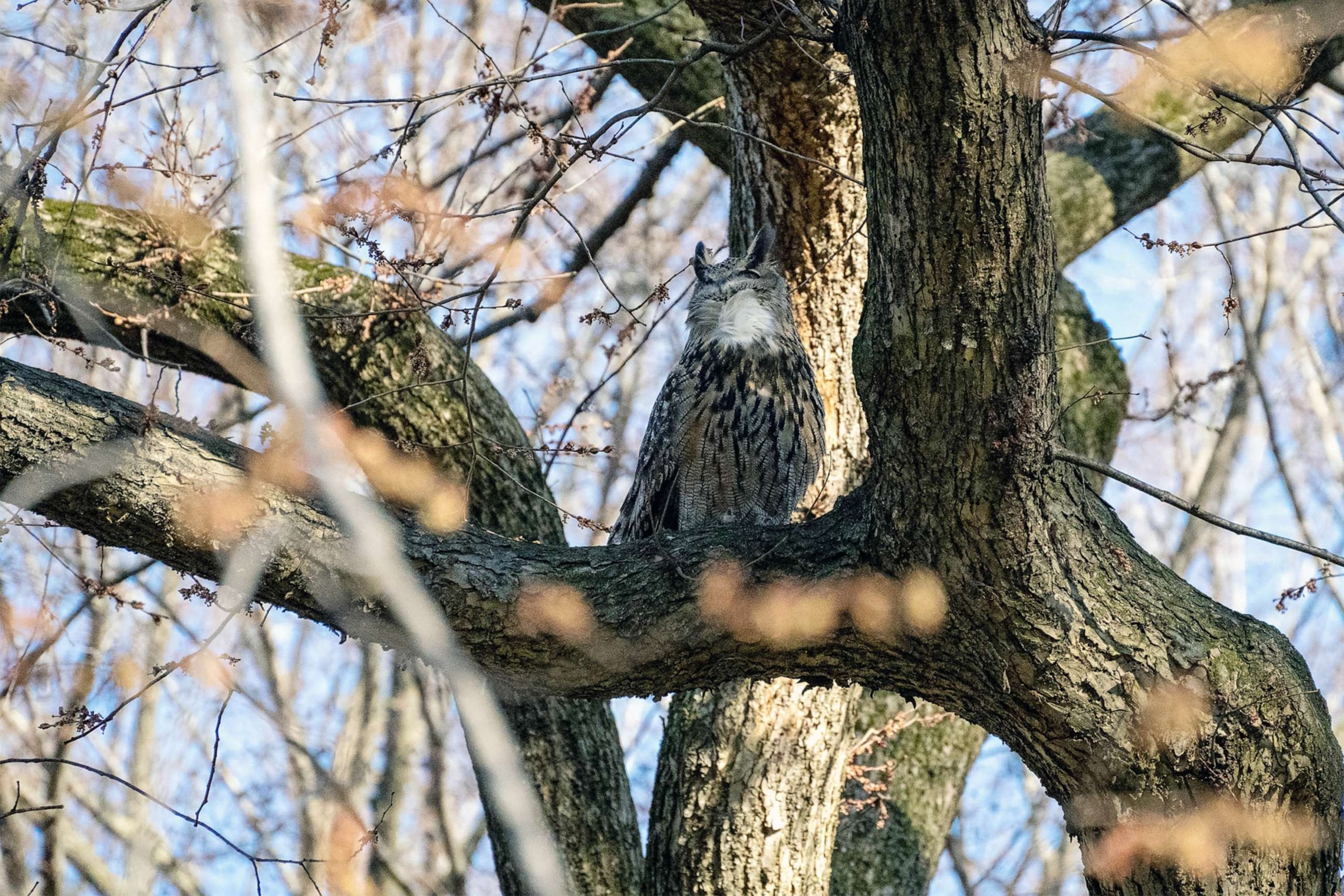
Flaco, the Eurasian eagle owl who escaped from his vandalized Central Park Zoo enclosure, seen on Feb. 18, 2023, in New York City.

Having recently read a children’s book about wild animals in a park like New York’s Central Park who were trying to free captive zoo animals, I am still pondering the message that freedom isn’t right for every once-caged creature. Now comes new detail on the death of Central Park Zoo’s escaped Eurasian eagle owl, Flaco, and some news on creating a statue in his memory.

Elaine Velie reports at Hyperallergic, “More than 3,000 people have signed a petition urging New York City to install a permanent statue in honor of Flaco, the beloved Eurasian eagle owl who died [in February]. The proposed monument’s design would involve a pedestal with a protruding branch where Flaco’s sculpture would perch for eternity. 

“Few members of the animal kingdom have captured the imagination of New Yorkers quite like the bird who was set free from his enclosure in the Central Park Zoo last year. Flaco, who was 12 at the time of his release, managed to live for more than a year in Manhattan, where he developed a devout following before colliding with a window on the Upper West Side last week. 

“Petition author Mike Hubbard, a 34-year-old musician who has lived in NYC for 12 years, told Hyperallergic that Flaco initially inspired him because of the bird’s ‘against-all-odds’ survival story. Though the owl had lived in captivity all his life, he was able to learn to hunt, most famously capturing rats. …

“Hubbard said. ‘He had people looking up instead of at their phones, and for once, everyone from all walks of life had someone to cheer for. It was beautiful.’ …

“Erecting commemorative statues in Central Park, however, is a lengthy process that requires rigorous rounds of public review. Few projects get approved. Still, New Yorkers have already taken the initiative to memorialize Flaco, creating ad hoc artistic tributes to the iconic bird.

“Native to a wide swath of land stretching from Siberia to the tip of Ethiopia and as far east as the Himalayan foothills, Eurasian eagle owls can live up to 60 years in captivity and 20 in the wild. Flaco died just short of 14. …

“ ‘Flaco’s swift adaptation to life in the wild inspired people all over the world,’ David Barrett, who runs the popular Manhattan Bird Alert X account, told Hyperallergic, adding that he ‘seemed to love being a free owl.’ ” More at Hyperallergic, here.

Ed Shanahan at the New York Times has details on the autopsy: “Flaco, the Eurasian eagle-owl whose escape from the Central Park Zoo and life on the loose captivated New York, had enough rat poison and pigeon virus in his system to kill him even if he had not died after apparently striking an Upper West Side building last month.

“The finding, from a necropsy conducted by Bronx Zoo pathologists after Flaco’s death on Feb. 23, validated widespread concerns about the hazards he faced living as a free bird in Manhattan for just over a year. …

“ ‘Flaco’s severe illness and death are ultimately attributed to a combination of factors — infectious disease, toxin exposures and traumatic injuries — that underscore the hazards faced by wild birds, especially in an urban setting,’ [said] the Wildlife Conservation Society, which operates the Central Park and Bronx Zoos.” More at the Times.

Read Full Post »

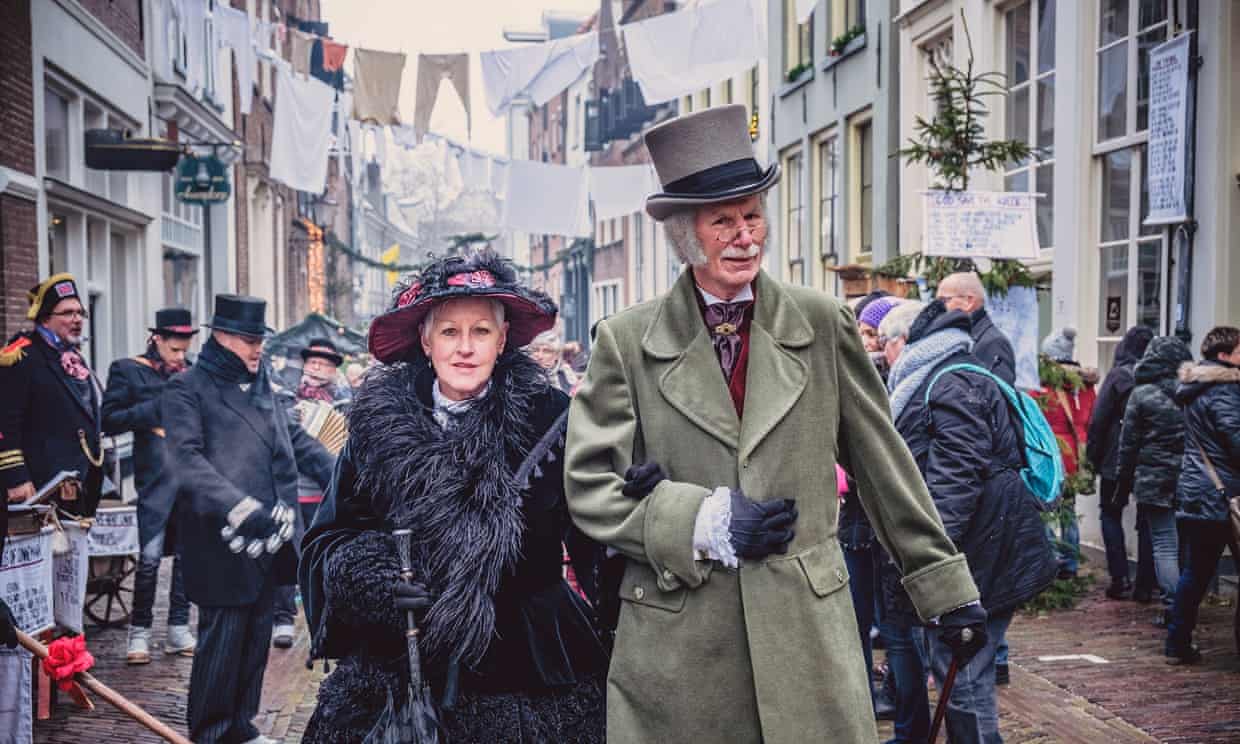
Photo: Sander Korvemaker.
Despite no known historical connection with Charles Dickens, this Dutch town plays host to an annual Dickens festival, the world’s largest.

Today’s story about a town that loves Charles Dickens drew me in because I also love Dickens. That is, I love his novels. With the exception of The Old Curiosity Shop and Barnaby Rudge — neither of which I liked — I have read them all multiple times. But I have also read about the man himself and am pretty sure he was not a very nice guy.

The surprising Dickens festival that Senay Boztas writes about at the Guardian focuses on both the novels and the guy.

Boztas reports, “Soon after limited Sunday trading started in the Netherlands, an anglophile shopkeeper in the small city of Deventer decided it could all be a bit more fun.

“ ‘My 82-year-old mother, Emmy Strik, is England-minded because my grandfather always went to England and read a lot of Dickens,’ said her daughter, Liesbeth Velders, who now runs the Dille & Kamille homeware store. ‘So when we were going to open on Sunday, she decided to make it a fancy-dress party – except the fancy-dress party got a bit out of hand.’

“Decades later, Strik’s experiment in literary frivolity has gone further than she could have imagined. The event she began in 1991 to commemorate Charles Dickens has run for 33 years, with a two-year break during the Covid pandemic.

“Despite no known historical connection with the author, Deventer, in the eastern province of Overijssel, now plays host to what is believed to be the world’s largest Dickens festival. This weekend [in December 2023], 950 volunteers will fill the streets of the ancient Bergkwartier, performing street theatre and selling hot punch and Victorian treats. There are strict rules for actors and traders: no [sneakers], modern watches or mobile phones.

“Among the expected 125,000 visitors will be Ebenezer Scrooge, Tiny Tim, Queen Victoria, Miss Havisham, beggars, thieves and, for the first time, Dickens himself.

“Ojon van Strijland, a bookseller and volunteer at the Dickens Kabinet museum, said he and Strik had learned while on a trip to Kent, where Dickens spent much of his childhood, that authenticity was essential.

“ ‘Years ago, Emmy and I went to [the city of] Rochester’s Dickensian Christmas festival to seek inspiration but there were things there we would not want,’ he said. ‘There were people walking around with Christmas lights on, Santa hats and polyester costumes.’ …

“Strik amassed almost 1,000 authentic costumes, collected enough Dickensian items to fill a museum and grew the Dickens Festijn with commercial sponsorship and support from Events dEVENTer. She has now – largely – handed over the reins to her daughter.

“ ‘We can’t roast chestnuts in big drums any more; there’s a fist-thick book of rules from the fire brigade and the police, but it’s still a real festival,’ said Velders.

“The festival has huge local status. One couple’s 50th wedding anniversary is being incorporated into this year’s edition, while 62-year-old system administrator Wessel Lindeboom is polishing insults in multiple languages for his dream role of Scrooge. …

“At a time when Dutch children’s reading skills are declining, some hope the festival will encourage a wider love of literature. ‘A lot of the visitors have never read a Dickens book but everyone recognizes Scrooge, who walks around calling “humbug!” and insulting people,’ said Velders. ‘There are also storytellers who recount the story of the books.’ …

“The mayor of Deventer, Ron König, hopes visitors will have an enormous amount of fun but also take home a more profound message. ‘The festival beautifully portrays the differences between rich and poor, an issue we are still trying to tackle.’ …

“Peter Jan Margry, professor of European ethnology at Amsterdam University, believes this kind of event provides a welcome break, particularly in dark days. …

“ ‘The festival of Christmas is also about stepping out of your own time into an atmosphere of carols and Christmas trees and a flight from reality,’ he said. ‘But it’s also a form of occupying yourself, a type of tourism, stepping out of your daily life, that you see in all fantasy and live action role-playing. … It’s about stepping into another world.’ “

I hope my blogging friends at Cook and Drink will weigh in on this aspect of life in their beautiful and surprising country.

More at the Guardian, here. No firewall. Subscriptions encouraged.

Read Full Post »

Photo: JShadab1/Twitter.
Says the NY Post, “A sea lion enjoyed a brief taste of freedom as she hitched a ride on floodwaters and swam out of her Central Park Zoo pool enclosure on Friday.”

Once upon a time, I was a kid who shared a crowded bedroom with two younger brothers. As the oldest, I was often relied on to help out — for example, by keeping the younger ones from wandering when they were supposed to go to sleep. And I did like telling them stories.

My series about a seal called Sammy who left the zoo at night for adventures but always came back in the morning must have meant something important to me because there were many episodes.

Sammy’s escape was different from Sally the Sea Lion’s in today’s story because Sammy had a secret place in the bottom of the tank where he went in and out, and he stayed away all night. Sally, on the other hand, merely took advantage of yesterday’s flooding to swim out the top of her enclosure for a brief look around and then go home.

I guess she was used to hanging out with the other sea lions there, her friends. I know what my hairdresser would think about this. She has almost convinced me that zoos are wrong. I think Tracie would let all the animals out if there were a way to do it safely.

Claire Fahy reports at the New York Times, “A female sea lion, known as Sally, escaped from her enclosure at the Central Park Zoo briefly on Friday, swimming out of the pool where she is kept when the heavy rains lashing New York City flooded the zoo grounds.

“Workers monitored Sally’s movements as she explored the area around the enclosure before rejoining the zoo’s other two sea lions in the pool, said Jim Breheny of the Wildlife Conservation Society’s Zoos and Aquarium, which oversees four zoos and the city’s aquarium.

“By 3 p.m., the water at the zoo had receded, and all animals were contained in their enclosures, Mr. Breheny said. No staff members were in danger during the storm, and the city’s four zoos were closed so that employees could focus on keeping animals safe.

“For Karen Dugan and her colleagues at the city’s parks department, the roving sea lion made for a rare sight from their third-floor offices in the agency’s headquarters at the Arsenal, a building inside the park that overlooks the zoo.” More at the Times, here.

What does an animal escaping the zoo mean to you?

Read Full Post »

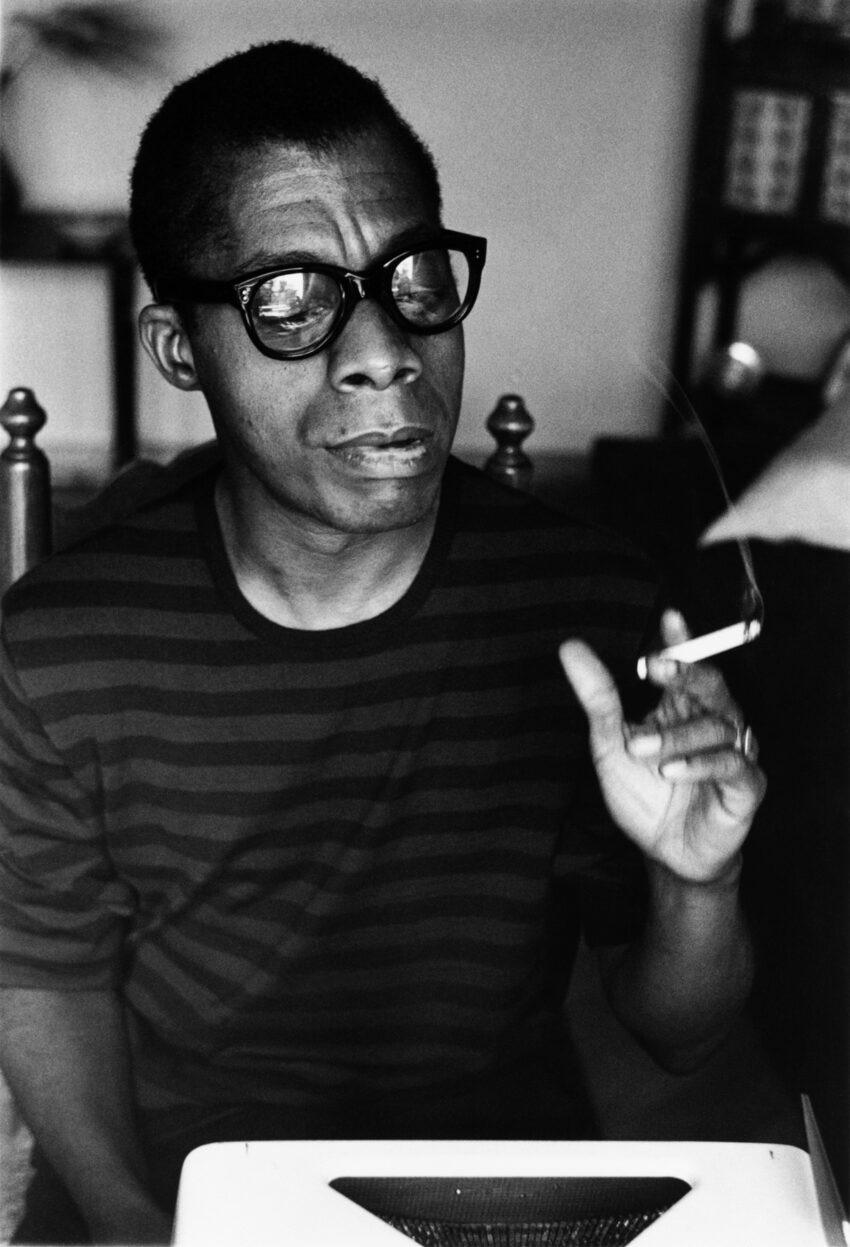
Photo: Sedat Pakay, Hudson Film Works II.
James Baldwin in Istanbul in 1966.

James Baldwin didn’t kid himself about life in America for a gay Black man in the 1960s. He traveled widely and lived for long stretches in countries he found more hospitable. (A 2016 post, here, addresses an effort to preserve a house he bought on the Côte d’Azur.)

I knew about France but not Turkey, which Azareen Van der Vliet Oloomi writes about in the Yale Review.

At the beginning of the “11-minute black and white documentary, James Baldwin: From Another Place, directed by Sedat Pakay and filmed in Istanbul in May 1970, … he turns his back to the cam­era and opens the curtains. A sharp Mediterranean light floods in. Baldwin scratches the small of his back, and we hear him say in voiceover: ‘I suppose that many people do blame me for being out of the States as often as I am, but one can’t afford to worry about that because one does, you know, you do what you have to do the way you have to do it. And as someone who is outside of the States you realize that it’s impossible to get out, the American powers are everywhere.’

“The camera pans over the glittering Bosphorus Strait as American ships glide silently through the passage connecting Asia and Europe.

“Pakay’s film has long been almost impossible to see in the United States, aside from a short clip on YouTube. But in February, it began streaming on the Criterion Channel, and its reappearance is a useful occasion to re-examine one of the most important, and yet relatively unknown, aspects of Baldwin’s career: his time in Turkey.

“At the time Pakay made his film, Baldwin had been living in Istanbul intermittently for almost a decade. He first arrived there in 1961, broke, emotionally spent, and struggling to complete his third novel, Another Country. The Turkish actor Engin Cezzar, who had met Baldwin in New York in 1957 when he was cast as Giovanni in the Actors Studio adaptation of Giovanni’s Room (Baldwin’s sec­ond novel), had given him an open invitation to visit, and follow­ing a demoralizing trip to Israel, Baldwin showed up on Cezzar’s doorstep.

“He quickly made himself at home, and over the next ten years lived irregularly in Istanbul, Erdek, and Bodrum, socializing with the Turkish intelligentsia and a small circle of Black artists and activists who were living in Turkey or passing through.

“Istanbul offered Baldwin a refuge during the tumultuous decade of the 1960s. In a 1970 conversation with Ida Lewis for Essence mag­azine, Baldwin said of his decision to move to the city, ‘It was very useful for me to go to a place like Istanbul at that point in my life, because it was so far out of the way from what I called home and the pressures.’ …

“Baldwin had first left the United States, for Paris, in 1948, and had lived out of the United States for years prior to his arrival in Istanbul. But the clarity and safety afforded by his time there allowed him to more sharply articulate America’s assaultive realities and to give expression to the connections between his personal wounds and the scars of racialized political history. …

“[His] layered inner landscape mir­ror the city’s multifaceted character, with its refusal of neat distinc­tions between tradition and modernity, East and West, Christianity and Islam.

“Istanbul was a liminal space of healing for Baldwin, a writing haven that he saw as having saved his life. As [Magdalena Zaborowska, author of James Baldwin’s Turkish Decade] notes, this may explain why the Baldwin we see in Pakay’s documentary is far more relaxed and at ease than the Baldwin we are accustomed to seeing in American media from that era.

“And yet, Baldwin’s decade in Turkey remains an enigma and a lacuna in our collective imagi­nation. Zaborowska’s is the only book-length treatment of Baldwin’s time there, and even people familiar with Baldwin’s writing are often unaware he ever lived in Istanbul. … What does the warm, vul­nerable, and playful Baldwin captured on film by Pakay tell us about his need to leave America time and again in search of safety?

“The respite Turkey offered Baldwin, combined with Istanbul’s vibrancy and the warmth with which he was received, sparked one of the most prolific periods of his artistic life. In 1961, when he first arrived, he was haggard and exhausted. 

“His trip to Israel had deep­ened his disillusionment with Christianity, and he was still mourn­ing Eugene Worth, a Black socialist and dear friend, who, in 1946, had killed himself by jumping off the George Washington Bridge. In addition, Baldwin had been trying without success to complete Another Country, his courageous and groundbreaking exploration of bisexuality and interracial love.

“Worth’s death, which Baldwin memorializes in Another Country, had devastated Baldwin for years, and he had tried and failed again and again to finish the novel until he was delivered from the strain of severe writer’s block in Istanbul. Baldwin wrote the book’s final sentence while at a party at Cezzar’s house in what he described as ‘the city which the people from heaven had made their home.’ …

“The years Baldwin spent off and on in Turkey coincided with one of the country’s most vibrant and expansive periods. The 1950s in Turkey had been a period of economic decline, ruthless author­itarianism, and iron-fisted censorship, a confluence of negative forces that gave rise to mass mobilization and to student-led pop­ular protests. …

“By 1965, free elections had been restored, and liberal constitutional reform had significantly expanded freedom of speech. The nation’s position as a strategic U.S. ally had been salvaged, but its cultural flowering continued, along with anti-imperialist and anti-capitalist move­ments similar to those that were emerging elsewhere around the world. Baldwin’s work and lived experience spoke directly to the political and aesthetic debates of the time. In Turkey, in a context of cultural ferment, Baldwin was revered as a major American and transnational writer, rather than being put in a position of having to prove his legitimacy over and over.

“Still, even in Turkey, Baldwin could not fully escape America. During the Cold War, relations between the United States and Turkey were founded on military collaboration and cooperation; the United States sent ships to Turkish waters to counter the threat of Soviet expansion, making Turkey a source of anti-Soviet mil­itary aid. As Baldwin said to Sedat Pakay, ‘American powers are everywhere.’ His feelings fluctuated between entrapment, the sense that no matter how far he traveled from the violence in the United States he could not, existentially speaking, ‘get out,’ and the feelings of transcendence and revival that Cezzar’s warm hos­pitality and Turkey itself afforded him.”

More at the Yale Review, here. No firewall.

Read Full Post »

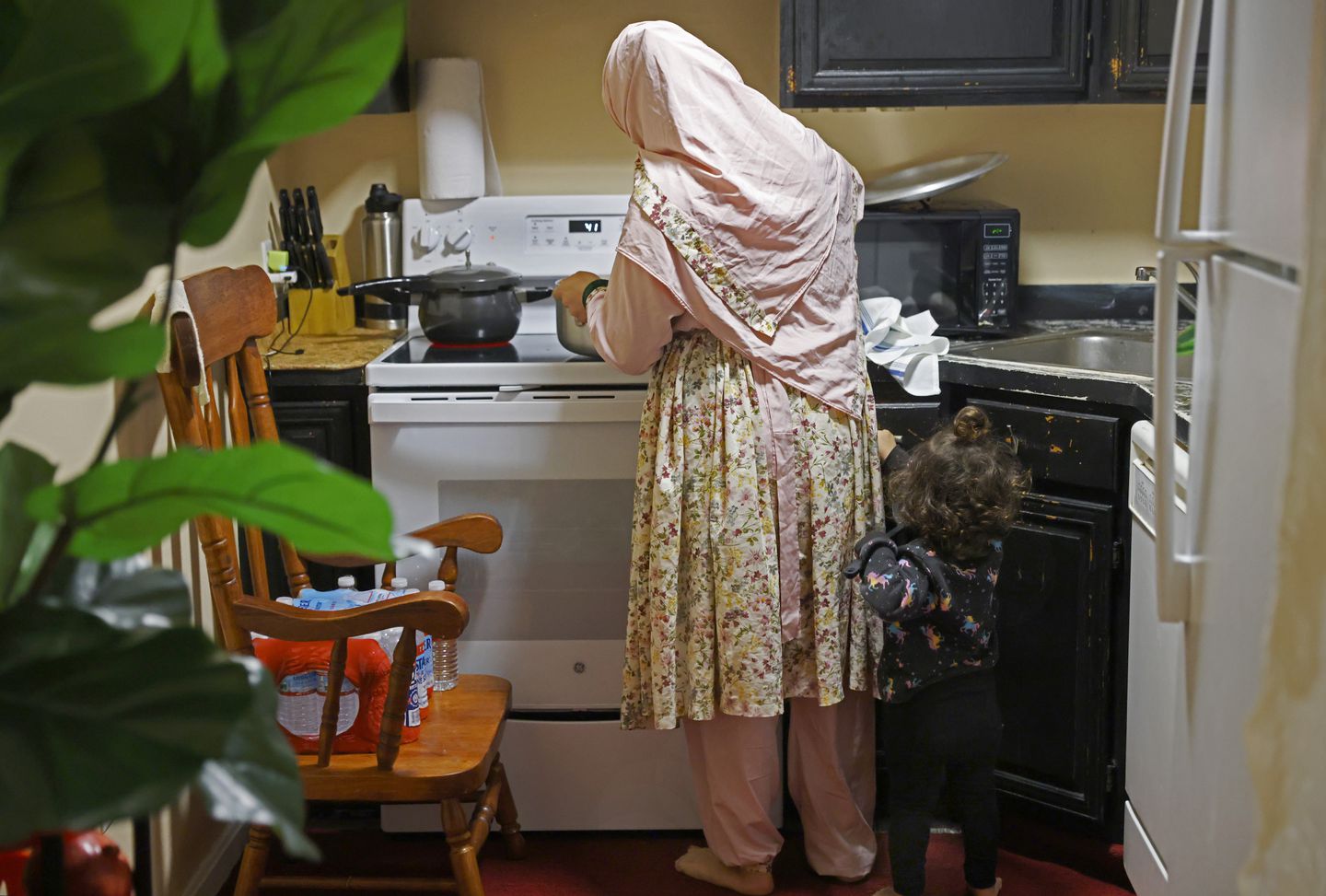
Photo: Pat Greenhouse/Boston Globe.
Samya prepares an evening meal. Back in Afghanistan, Samya and Noori’s fathers are out of work and their families struggle to find enough to eat. Noori sends them $200 to $400 a month.

In today’s story, an Afghan who worked as an interpreter for US troops builds a new life for his family in Lowell, Massachusetts, a longtime “gateway” city for new Americans.

Alexander Thompson reports at the Boston Globe, “Scarcely any of the 40 Afghans who trooped off planes at the Manchester, N.H., airport on an unseasonably warm day on Nov. 18, 2021, had ever heard of Lowell.

“Among the dazed and weary refugees at the airport was an irrepressibly optimistic former US military interpreter called Noori. His wife, Samya, and two young daughters, Taqwa and Zahra, were at his side. They were exhausted, but they were safe.

“Noori recalled that he didn’t know a single person in New England. He didn’t have a job. Or a car. Or an apartment. Or a winter coat. But he had his family. ,,,

“After a harrowing escape and a grueling journey halfway around the world, Noori and his fellow Afghans quickly found that life in Lowell is no Hollywood movie.

“ ‘We thought that in America all the facilities of life were going to be provided for you,’ he said. ‘It’s true that it has, if you work [for it].’

“Noori and several hundred other Afghan refugees who have been resettled in Lowell have set about doing what they could not in their own country. They’re building lives in peace while forging a united community that is, slowly, bridging the divides of language and creed that have riven Afghanistan for decades.

“ ‘The United States of America did not build a nation in Afghanistan, and now the Afghans who are here are trying to build a new nation here in the United States,’ said Jeff Thielman, president of the International Institute of New England, which resettled many of the Afghans.

“And in the past year, Noori has gone from being just another Afghan in the crowd to a community leader, always eager to help his compatriots even as he navigates his own obstacles in the new country he’s proud to now call home. …

“Getting his license at the end of March was a huge relief. It felt like a hard-earned victory after the family’s first few months in Lowell, which had been difficult at times.

“Noori was lucky that the Lowell Community Health Center hired him days after he arrived as a Dari and Pashto language interpreter for their influx of new Afghan patients. But rent, Wi-Fi, and heat were expensive. They also desperately missed their families back in Afghanistan.

“ ‘Whenever I’m talking to my mom, she was crying because we are away from her, so this is the hardest part,’ Samya said, with her husband interpreting from Pashto.

“[Samya’s] and Noori’s fathers are out of work and their families struggle to find enough to eat amid Afghanistan’s worsening humanitarian crisis. Noori sends back $200 to $400 a month.

“Worse still, as Noori would acknowledge many months later, the family was feeling trapped and helpless in a tiny apartment. Fortunately for Noori and the other 275 refugees who eventually settled in Lowell, there was a group of Afghans who had arrived in the area years earlier and who offered support and guidance. The group’s de facto leader, named Mohammad Bilal, is another former military interpreter, who arrived in 2014.

“Among the first things Bilal and the others did was establish a WhatsApp group for the new arrivals.

“ ‘We will just call to the community if there is someone available, just please help this family. … They were going to get [the refugees] food, they were there to get them to the hospital,’ Bilal said. ‘Whatever their need was, we were helping them.’

“Noori had an extra advantage: Major White [who helped him escape] was still looking out for him. White knew Noori needed a car, so he set up a GoFundMe page that raised $14,000 and bought Noori a used Ford Focus. …

“By May, doing checkups with every new Afghan, [Dr. Rob] Marlin and Noori were the clinic’s dynamic duo. Marlin brings the medical knowledge and Noori the linguistic and cultural savoir-faire. Each patient reveals aspects of Afghan life in Lowell. …

“Before one checkup, Noori pointed out to Marlin that a man’s name indicated he is a member of the persecuted Hazara ethnic group. That prompted Marlin to probe deeper about the man’s roommates and whether he feels safe.

“ ‘He will often find out something that I didn’t ask about, that I hadn’t thought about,’ Marlin said.”

Read more about the Marine who aided the family’s spine-tingling escape and about their new life, here.

Read Full Post »

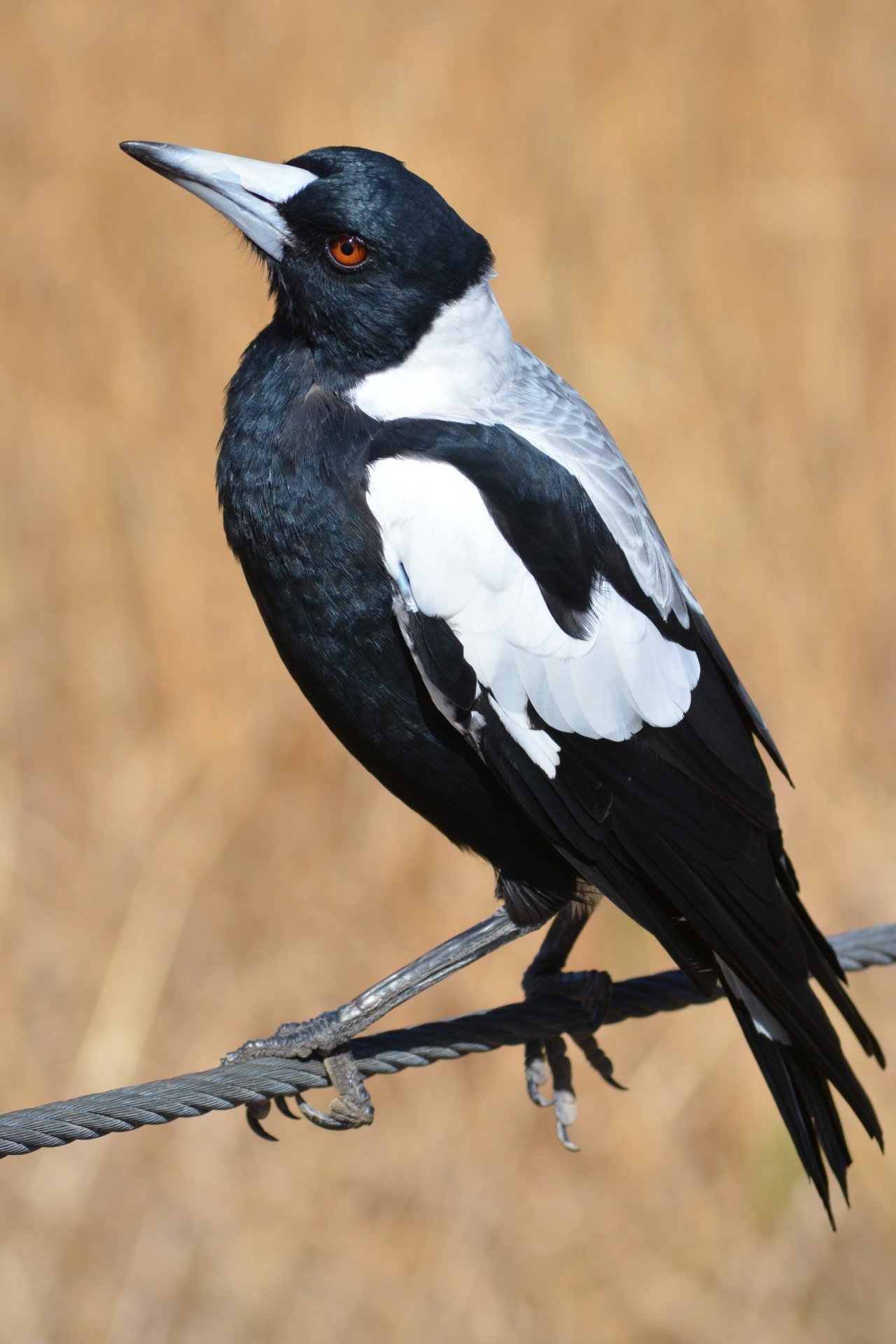
Photo: Australian Museum.
The Australian Magpie is a clever songbird that inhabits nearly 90 percent of mainland Australia.

Today’s article by Anthony Ham at the New York Times is reminding me of the children’s book Mrs. Frisby and the Rats of NIMH, in which a determined mouse helps lab rats escape from scientists using them for experiments.

He writes, “The Australian magpie is one of the cleverest birds on earth. It has a beautiful song of extraordinary complexity. It can recognize and remember up to 30 different human faces.

“But Australians know magpies best for their penchant for mischief. … Magpies’ latest mischief has been to outwit the scientists who would study them. Scientists showed in a study published [in] the journal Australian Field Ornithology just how clever magpies really are and, in the process, revealed a highly unusual example in nature of birds helping one another without any apparent tangible benefit to themselves.

“In 2019, Dominique Potvin, an animal ecologist at University of the Sunshine Coast in Australia, set out to study magpie social behavior. She and her team spent around six months perfecting a harness that would carry miniature tracking devices in a way that was unintrusive for magpies. They believed it would be nearly impossible for magpies to remove the harnesses from their own bodies.

“Dr. Potvin and her team attached the tracking devices and the birds flew off, showing no signs of obvious distress. Then everything began to unravel.

“ ‘The first tracker was off half an hour after we put it on,’ she said. ‘We were literally packing up our gear and watching it happen.’

“In a remarkable act of cooperation, the magpie wearing the tracker remained still while the other magpie worked at the harness with its beak. Within 20 minutes, the helping magpie had found the only weak point — a single clasp, barely a millimeter long — and snipped it with its beak. …

The scientists took six months to reach this point. Within three days, the magpies had removed all five devices.

“ ‘At first it was heartbreaking,’ Dr. Potvin said, ‘but we didn’t realize how special it was. We went back to the literature and asked ourselves, “What did we miss?” But there was nothing because this was actually new behavior.’

“The only similar example of what Dr. Potvin described as ‘altruistic rescue behavior’ — where birds help other birds without receiving tangible benefits in return — was when Seychelles warblers helped other members of their social group escape from sticky seed clusters in which they had become entangled.

“The magpies’ behavior was, Dr. Potvin said, ‘a special combination of helping but also problem solving, of being really social and having this cognitive ability to solve puzzles.’ …

“The Australian magpie is a large black-and-white perching songbird, or passerine, that inhabits nearly 90 percent of mainland Australia. … Remarkably, magpies can recognize the faces of as many as 30 people, which is the average number who live within a magpie’s territory, which is the average number who live within a magpie’s territory. ‘Very rarely do magpies attack more than one or two people,’ said Darryl Jones, a magpie expert at Griffith University. ‘It’s the same individual people that they attack each time.’

“And magpies have long memories: One of Dr. Jones’s research assistants was attacked upon his return after 15 years away from one bird’s territory. …

“If more than 30 people pass through a bird’s territory, ‘they actually start stereotyping people,’ [Sean Dooley, the public affairs manager of Birdlife Australia] said. ‘People who resemble 10-year-old boys are much more likely to be swooped, because those are the kids who are more likely to be throwing sticks and stones, shouting and chasing and running at magpies.’

“Dr. Jones calls the magpies’ ‘gorgeous, glorious caroling song’ another example of their intelligence.

“With more than 300 separate elements, he said, ‘it’s unbelievably complex. In order to remember and repeat a song of that complexity every single morning without error, you have to have a big brain.’

“Dr. Potvin and her team have shelved their original study. But they can’t help but ponder a bigger question: ‘What else are magpies capable of?’ ”

More at the Times, here.

Read Full Post »

Photo: Daniel Biber, via the Independent
A murmuration of starlings was targeted by a bird of prey and took the form of a giant bird. But contemporary scientists insist “thinking” isn’t involved. 

The natural world never ceases to amaze. Consider the flight of large groups of starlings. You have probably seen some of the YouTube videos. Mark MacNamara wrote about the phenomenon at Nautilus in March.

“Eugene Schieffelin was the eccentric ornithologist who in 1890 shipped 60 starlings from London to New York City and set them free in Central Park. The next year he released 40 more, and today there are maybe 200 million starlings in the United States and Southern Canada. [Starlings] are shrewd flyers, clever mimics, and often unwelcome … displacing woodpeckers and flycatchers, and destroying entire crops of berries and cherries. Not to mention the havoc they cause at many airports.

“Ah, but when they come round in their murmurations on fall afternoons, or in early winter, what magicianry is that, gathering up out of nowhere, arriving in strands or massive clusters, over inlets or forests. You’ll see them fill up neighboring trees and fall into an oily, high-pitched chatter. [The] most subtle spooking will do it, a dog’s bark, the slam of a car door down the street, or nothing at all, and off they go at 50 miles per hour, wheeling around the countryside, sheets and sheets of them, thickening and thinning, blackening and scattering, merging and splitting. …

“The performance is self-organized, cohesive, and perfectly synchronized; and distinguished by elaborate patterns of spirals, spheres, planes, and waves. What causes starlings to perform these displays? …

“Theories have evolved over the last century. In 1931, Edmund Selous, a renowned ornithologist and bird activist [sumised] that birds in a flock must all be ‘thinking’ as one; how else to explain the synchronization except by telepathy. …

“Later theories suggested that murmurations are ways to find food and keep warm. Those theories linger, but in the past 50 years the predominant explanation is predation, particularly the role of raptors, such as hawks and falcons, in triggering escape behaviors that involve particular patterns of grouping. …

“In the mid 1960s, researchers found that murmurating birds, particularly starlings, interact—not always, but often — with six or seven of their closest neighbors, who interact with six or seven of their closest neighbors. In recent years, studies posit that a network with seven neighbors optimizes the trade-off between ‘group cohesion and individual effort.’

One theory among researchers, in the context of predation, is that starlings are ‘managing uncertainty while maintaining consensus.’ …

“In a murmuration, the distance between fellow fliers is based on a set of rules also seen in certain kinds of fish and insects. These rules require birds to draw closer to birds farther away; at the same time, not to get too close to the nearest neighbor; and finally to join in directional flow. Add to these rules the aerodynamic factors in starlings — and the blistering speed at which the birds turn, climb, and dive — and you have a sense of the intricacy of flock synchronization. …

“In 2019, evolutionary biologist Rolf F. Storms at the Groningen Institute for Evolutionary Life Sciences in the Netherlands, led a study on starlings that delved into the rules of murmurations. … The study [found] different patterns of escape by the starlings.

“For example, when a falcon attacked a flock from above — not from the sides or below, and at high speed — the starlings frequently [scatter] in all directions in the sky. … When a falcon attacks starlings at medium speed, allowing it to be detected, warnings spread through the flock, and the birds respond in a ‘wave.’ They turn right and left, zig and zag, creating ‘darkened bands’ that ripple through the flock, confusing the falcon. …

“Grainger Hunt, Senior Scientist Emeritus with the Peregrine Fund’s California Condor and Aplomado Falcon restoration project, underscores the fact that murmurations are emergent. …

” ‘The peregrine does not purpose the shapes and movements of the flock. Nor does any starling. The spectacle of wondrous shapes and movements is an unintended effect. The peregrine is trying to catch a starling, and each starling is trying not to get caught.’ ” More.

Would you agree that humans need to learn from the starlings how to maintain consensus while managing uncertainty? What a concept!

Video: Dylan Winter
A murmuration of starlings.

Read Full Post »