Feeds:
Posts
Comments

Posts Tagged ‘filmmaking’

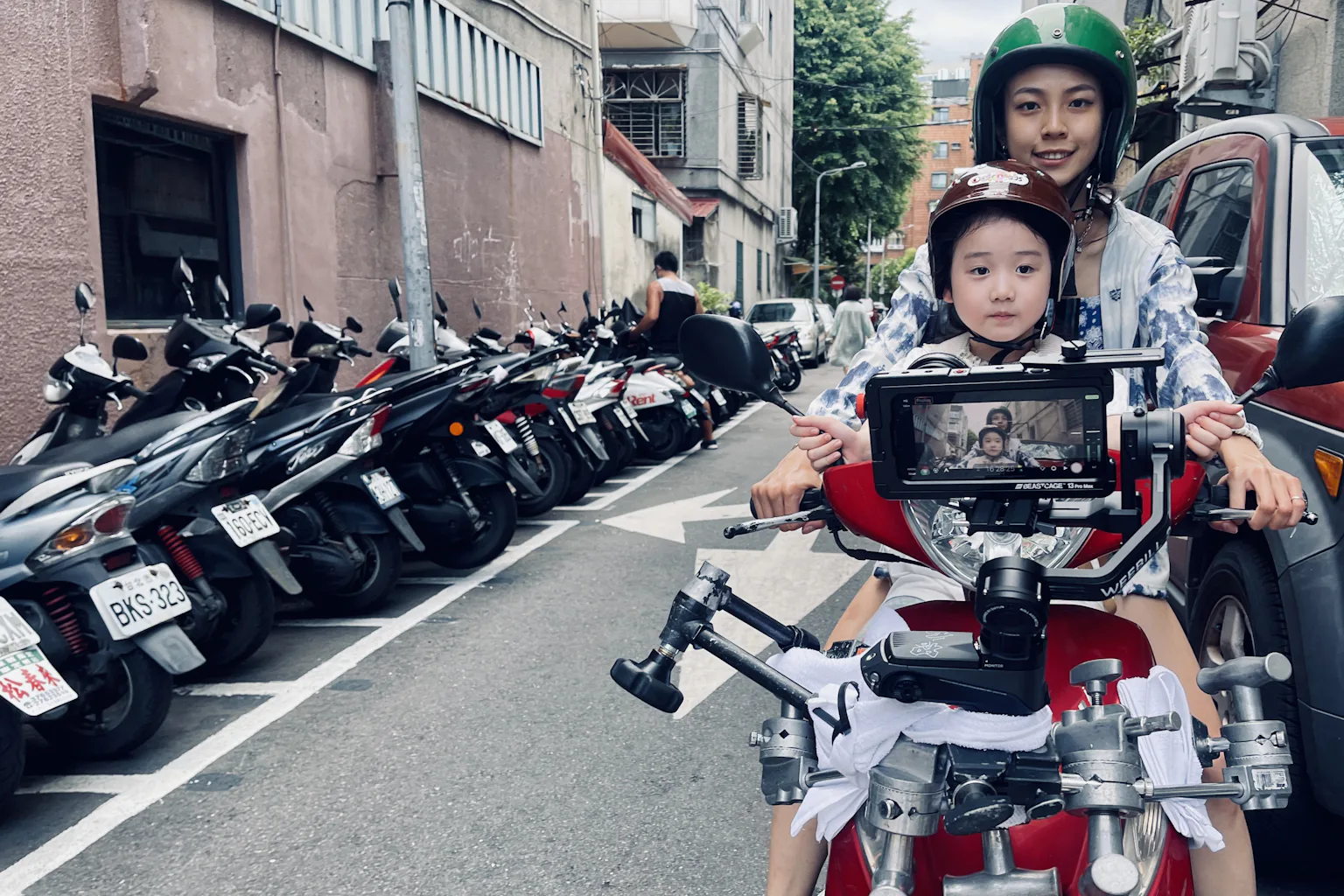
Photo: LHG Films.
A still from Left-Handed Girl, a movie created on a phone. 

A good subtitle for today’s story about making films on smartphones would be “There’s no one coming. … You have to do it yourself.”

Victoria Mapplebeck, professor of digital arts at Royal Holloway, University of London, writes at the Conversation about overcoming the challenges.

“When my feature documentary Motherboard was released, I was in my late 50s. I had filmed it over 20 years, on five generations of smartphones, documenting the pain, joy and comedy of raising my son Jim alone. …

“The film that changed everything for me was Tangerine, which was famously shot on an iPhone 5 in 2014. Its energy and immediacy blew me away.

“Around the same time, I came across an interview with director Ava DuVernay, the first black woman to win the best director prize for her film Middle of Nowhere at the Sundance Film Festival in 2012. Her advice to fellow filmmakers was to stop waiting for the right agent, financier or producer to ‘discover’ you. ‘There’s no one coming … You have to do it yourself.’ …

“Jim grew up on camera. I filmed his first day at school and his last day at college. I filmed days out, dance-offs and bedtime routines. I filmed the difficult stuff too: the day I was diagnosed with breast cancer, Jim’s reaction to meeting his dad for the first time at 14 and the rollercoaster teen years that followed. The smartphone made that access possible. Jim liked its spontaneity and low-fi intimacy; sometimes he filmed me on his phone too. …

“I could film on buses, trains and in hospitals without months of emails trying to secure access. During chemotherapy and radiotherapy, filming on a phone wasn’t intimidating and no one ever said ‘no.’ Sometimes nurses even helped me shoot, pressing record as I disappeared into another CT scan. …

“Over the last 15 years, as a filmmaker and professor of digital arts, I have seen extraordinary shorts and features made on smartphones. Many were created by early career filmmakers who would have struggled to access industry funding without a smartphone and a minimal crew. …

“This July, I’ve co-curated SMART, a one-day Smartphone filmmaking festival at Finsbury Park Picturehouse. The festival will celebrate filmmakers who have pioneered this way of working and got their films across the finish line despite the odds. I will also be screening Motherboard, followed by an audience Q&A with my son Jim and me.

“The program ranges from no-budget DIY shorts to internationally acclaimed features. It includes Shih-Ching Tsou’s Left-Handed Girl (2025), co-written and edited by Tangerine director Sean Baker – who won an Oscar for his film Anora in 2025 – and shot Tangerine on an iPhone with a small, agile crew.

“Tsou has been producing films with Baker for 25 years, but Left-Handed Girl is the first feature she has directed and co-written. When I interviewed her recently, she acknowledged how long it had taken to get the film financed: ‘I had the idea in, like, early 2000. So that’s how crazy this whole journey is.’

“Tsou is drawn to the freedom smartphones give filmmakers, but what really interests her is their access and intimacy. When she first considered setting her film in a Taipei night market, Taiwanese producers told her it would be impossible to shoot there for real. ‘They all said you need to build your night market. You have to hire all the extras,’ she told me. ‘I’m like, no, that’s not how I’m going to do it.’

“Instead, she shot on location with the iPhone 13 she still carries today. At first the 20 person crew and rig was too large, attracting crowds who stopped to watch. Only after reducing the crew size even further could Tsou successfully capture child actor Nina Ye running through the shops and kiosks of the night market as everyday life continued around her. …

“Several of the filmmakers showing shorts at SMART as part of the filmmaker panel discussion, are at the start of their careers. Tsou’s advice to them was simple: learn more than one skill. ‘You need to be able to write your own story and try to shoot your own story. And try to edit your own story. If you have these three basic skills, you don’t need anything. You don’t need money.’ “

More at the Conversation, here. No paywall.
Read Full Post »

16overlooked-reiniger3-jumbo

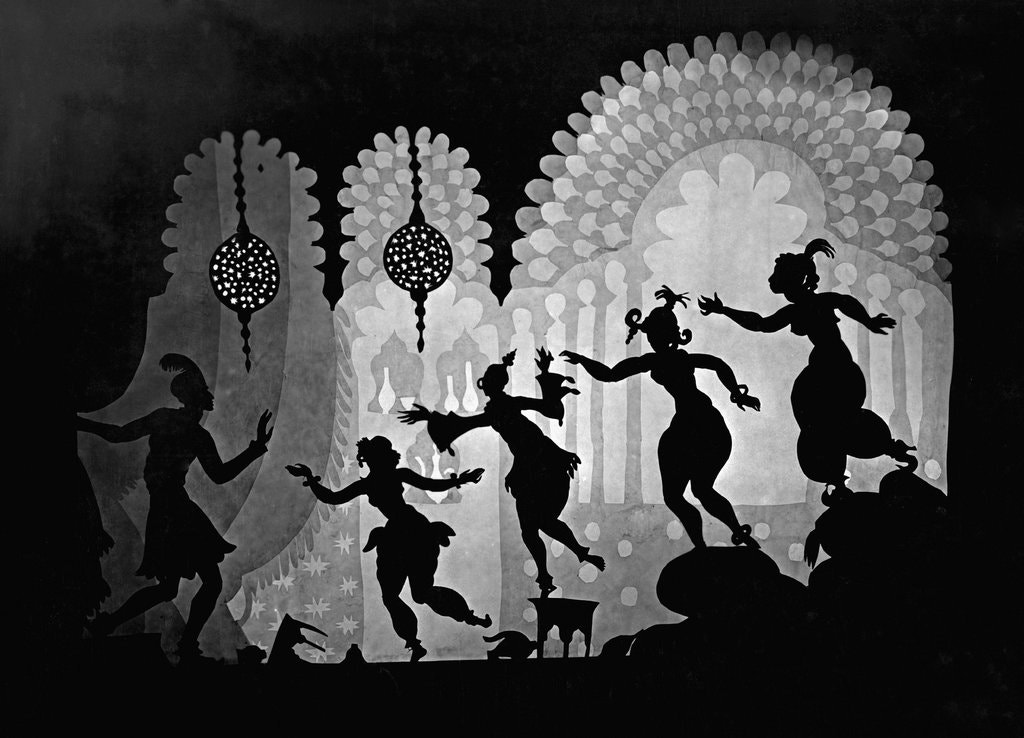
Photo: SZ Photo/Bridgeman Images
A scene from the animated film “The Adventures of Prince Achmed,” by the late Lotte Reiniger. Before there was such a thing as Disney Studios, she was using intricate hand-cut silhouettes to make movies.

Society has become so accustomed to Disney and Pixar types of animations that it has lost sight of predecessors in the field.

In a step toward restitution, Devi Lockwood wrote for the New York Times series Overlooked (“obituaries about remarkable people whose deaths, beginning in 1851, went unreported in the Times“) about an early animation artist we all should know.

“A decade before Walt Disney Productions came into existence, making its name synonymous with animated films, there was another pioneer of the art form — Lotte Reiniger.

“Reiniger’s filmmaking career spanned 60 years, during which she created more than 70 silhouette animation films. … She’s perhaps best known for her 1926 silent film ‘The Adventures of Prince Achmed,’ a fantastical adaptation of ‘The Arabian Nights’ that was among the first full-length animated features ever made.

“Charlotte Reiniger was born on June 2, 1899, in the Charlottenburg district of Berlin to Karl and Eleanor (Raquette) Reiniger. She studied at the Charlottenburger Waldschule, where she learned about scherenschnitte, the art of cutting shapes and designs in paper with scissors. The art form originated in China and later became popular in Germany. …

” ‘I began to use my silhouettes for my playacting, constructing a little shadow theater in which to stage Shakespeare,’ she wrote in 1936 in Sight and Sound magazine.

“At first she wanted to be an actress, but that ambition changed when, as a teenager, she encountered the film director and actor Paul Wegener after a lecture he had delivered in Berlin on the possibilities of animation in cinema. Fascinated by his films, like ‘The Student of Prague’ (1913) and ‘The Golem’ (1915), she persuaded her parents to enroll her in a theater group at the Max Reinhardt School of Acting, where Wegener taught.

“For fun she cut silhouettes of the actors in the group. Wegener was impressed [and] enlisted her to help with his 1918 film, ‘The Pied Piper of Hamelin.’ …

“Her work with Wegener led to her admission to the Institute of Cultural Research in Berlin, where she met the art historian Carl Koch. He would become her husband and a collaborator on her films. …

“Reiniger’s editing was meticulous. Starting with more than 250,000 frames [for ‘Prince Achmed’], she and her crew used just over 100,000 in the film, which ran for an hour and 21 minutes, each second requiring 24 frames. It took three years to complete, and premiered in the Volksbühne, or People’s Theater, in Berlin, when Reiniger was 27. …

“Reiniger designed a complex process to make her films. She cut each limb of each figure out of black cardboard and thin lead, then joined them together with wire hinges. For research, she spent hours at the Zoo Berlin, watching how the animals moved. …

“When Hitler was in power, Reiniger and her husband left Germany for France, Italy and England, where they collaborated with other puppeteers, funders and artists before returning to Berlin in 1944 to look after Reiniger’s mother. In 1948 they moved to London, where they joined a nearby artists’ colony. Reiniger then directed a series of short children’s films for the BBC.

“Her husband died in 1963, and she stopped making films. But in 1972 she was recognized with the Golden Reel Award at the Berlin Film Festival for her contributions to German cinema. Two years later, the Goethe Institute sponsored her on a lecture tour of Canada and the United States.

“ ‘A Reiniger revival swept North America,’ the Canadian newspaper the Globe and Mail wrote.

“The tour inspired her to make a few final short films, including ‘The Rose and the Ring’ (1979), a 24-minute adaptation of the 1854 satirical work of fiction by William Makepeace Thackeray, and ‘Düsselchen and the Four Seasons,’ a two-minute film completed in 1980. She died on June 19, 1981, in Dettenhausen, Germany. She was 82.

“[The] Times film critic A.O. Scott recalled her in a 2018 article about the unsung women who had advanced the art of filmmaking. Praising Reiniger’s ‘blend of whimsy and spookiness,’ Mr. Scott wrote that her ‘dreamy images that seem to tap right into the collective unconscious suggest both an antidote to Disney and a precursor to Tim Burton.’ ”

More at the New York Times, here.

You might also be interested in the Armenian shadow puppets I wrote about in 2018, here.

Lotte Renniger’s film about Jack and the Beanstalk.


Read Full Post »