Feeds:
Posts
Comments

Posts Tagged ‘finland’

Photo: Oodihelsinki.
Veera the robot on patrol at $116 million Oodi library in Helsinki, Finland. Last year, the average Finn visited libraries nine times and borrowed 15 books.
Finns really love libraries.

Whenever I write about libraries, I think of blogger Laurie and the young adult fantasy series she wrote called the Great Library Series. Laurie is someone who appreciates the power of books, the magical power of reading.

Apparently the Finns do, too.

Oliver Moody reports at the Times [of London], “In the €100 million [~$115 million] Oodi library, which looms over central Helsinki like a cruise ship from the future, robots called Tatu, Patu and Veera trundle back and forth between the shelves and the reading rooms.

“Against this backdrop, foreign visitors might be surprised to see how many children and teenagers are engaged in an almost unsettlingly archaic activity: reading and borrowing books. …

“Last year the average Finn visited them nine times and borrowed 15 books, resulting in the highest lending figures for 20 years.

“The appetite for children’s and young adults’ literature has risen to a record for the third year in a row, with a total of 38 million loans in 2024. That works out at about 40 books or other pieces of material, such as audiobooks, for each person under the age of 18. …

“Even by the standards of a country that is often ranked as the most literate on the planet, the numbers are remarkable. In Britain, the total number of loans has fallen to less than half of what it was at the turn of the millennium, despite a tentative recovery in the wake of the pandemic, and about 40 libraries a year are closing.

“Visits to German public libraries are still about a fifth lower than they were before the advent of Covid-19 and about one in five of them has shut down over the past decade.

“The most obvious explanation for the phenomenon is that Finland values its libraries and invests accordingly. The state spends about €60 [~$70] per capita on the public library system each year, approximately four times as much as the UK and six times as much as Germany.

“Where other countries rely on corporate skyscrapers or shopping centers for their visions of architectural modernity, Finland often looks to its libraries, such as Oodi and Vallila in Helsinki, the main Metso library in Tampere, or the revered 20th-century designer Alvar Aalto’s projects in Rovaniemi and Seinajoki.

“They have traditionally served as engines of social mobility and integration. Erkki Sevanen, professor of literature at the University of Eastern Finland, grew up in a working-class family in Eura, a thinly populated district of villages 110 miles to the northwest of Helsinki.

“ ‘My parents and relatives did not used to read books, but there was a fine and well-equipped public library in our home village,’ he said. ‘It opened a whole world of classical literature and philosophy for me in the 1960s and 1970s.’

“Sevanen said the public libraries were a significant part of the reason he had ultimately pursued a university career, and that today they perform a similar function for immigrants to Finland. …

“The roots of this culture predate Finland’s independence in 1918. Like large parts of Scandinavia and continental northern Europe, it was profoundly influenced by Lutheran Protestantism and its insistence that each individual should engage with the texts of scripture for themselves.

“ ‘The ability to read was a requirement for everyone who wanted to get married. To demonstrate their reading skills, people were tested at church gatherings,’ said Ulla Richardson, professor of technology-enhanced language learning at the University of Jyvaskyla.

“The movement gathered steam in the 19th century, when Finland was a semi-autonomous duchy in the Russian empire and the new public libraries were focal points for an emerging sense of national identity.

“They remain important hubs for Finnish society, providing a space in which people can be alone and together at the same time. ‘Many Finns tend to consider libraries almost as sanctuaries,’ Richardson said.

“Alongside computers and internet access, they offer board games, video games, musical instruments, sewing machines, seasonal theatre passes and even sports equipment in some cases. These services are particularly valued by families with straitened financial means, who might not otherwise be able to afford school textbooks or other media.

“ ‘The libraries are spaces that children and teens can access freely, especially if they don’t have other places to go,’ said Richardson. ‘These days we also have self-service libraries open when there are no personnel working.’ ” More at the Times, here.

The point about libraries helping immigrants acclimate reminds me that when I was still volunteering onsite instead of online (before Covid), we would take classes of immigrants to the nearest public library in Providence and explain how to get a library card.

Read Full Post »

Photo: Samuel Bloch.
Saimaa ringed seals are very sensitive to disturbance, and it is forbidden to deliberately approach them without a permit.

I once wrote here about one of John’s a Ukrainian employees who told me that in Soviet days it was dangerous to read certain books. People read The Master and Margarita, for example, under the library table with a flashlight if no one was around.

I don’t think we are there yet, but I do have a sense that a whole segment of our society will be living an alternate life and trying not to draw attention. That might include people who care about wildlife and global warming, like the Finns in today’s story.

Phoebe Weston writes at the Guardian, “Eight hours shoveling snow in -20C [-4 F] might not sound like the ideal day out, but a committed team of volunteers in Finland are working dawn to dusk building enormous snow drifts for one of the world’s most endangered seals.

“The Saimaa ringed seal was once common around Lake Saimaa in the south-east of the country, but only 495 of them remain.

“The seals make ‘snow caves’ inside snow drifts where they raise their young and protect them from the elements and predators such as red foxes – but as the climate warms, the snow is disappearing. To save these rare seals, 300 volunteers spend days shoveling snow into piles [23 feet long] around the edge of the frozen lake. Last winter they made 200, and the seal population is growing as a result. …

Volunteers meet at first light and work until dusk. [Vincent Biard, a PhD student and volunteer from the University of Eastern Finland] describes the day as ‘kind of fun,’ and adds, ‘you actually have an impact, which is nice. If we don’t do it, then they would just go extinct quite quickly.’ …

“Saimaa seals are less than 1.5 metres long and each one has a unique fur pattern – individual to each animal, like human fingerprints. In the late 1980s their population dwindled to its lowest point, with fewer than 200 left, driven by hunting and deaths caused by fish traps. Accidental deaths in fishing nets remain a challenge.

“Now, the seals are fully protected but the threat of the climate emergency looms large. Between 1925 and 2002, the maximum thickness of the ice decreased by 1.5cm [~i/2 inch] a decade. In mild winters the ice caves can collapse, leaving the pups exposed, with up to 30% of them dying.

“Human-made snow drifts are larger and ‘more durable than natural snow drifts,’ says [Jari Ilmonen, coordinator of Our Saimaa Seal Life, which is an EU-funded program]. …

In the future, ice cover is expected to disappear before the pupping season has ended.

“There have already been some winters where there has not been enough snow to create an artificial drift. In some cases the seals have been known to breed elsewhere, but with no snow ‘just a few would hang on,’ says Ilmonen.

“However, scientists from the University of Eastern Finland are working on plan B. They are creating artificial dens, or nest boxes, that mimic the real thing, with preliminary research showing the seals use them for resting, giving birth and nursing their young. The nest boxes could be used in ice-free winters, researchers say. …

“There are about 40 dens on the lake, where three pups have already been born, but Ilmonen wants to get more out there. ‘If you think that there are maybe 500 seals and maybe 100 pups born each year, you’d need a lot of the boxes,’ he says.

Find more of the Guardian’s age of extinction coverage here, and follow the biodiversity reporters Phoebe Weston and Patrick Greenfield in the Guardian app for more nature coverage.

More at the Guardian, here. No firewall, but voluntary subscriptions support responsible news.

Read Full Post »

Photo: Creatives Rebuild New York.
Painter Athesia Benjamin created a self-portrait while participating in the guaranteed income program.

From time to time this blog has checked in on experiments in basic income taking place around the world. If you use search terms like “basic income” or “guaranteed income” in my search box, you will find many related articles, including ones on helping Kenyan villagers, keeping New Orleans teens in school, slashing homelessness in Finland, and supporting artists in Ireland.

New York has also piloted a basic income for artists.

Maya Pontone writes at Hyperallergic, “Early findings from a guaranteed income program for artists across New York State reveal that such initiatives can provide crucial support for artists’ financial stability, professional advancement, and individual well-being. 

“While more comprehensive results are slated to be released at the end of the year, preliminary outcomes show that when artists receive guaranteed income, they generally concentrate on addressing outstanding debt, bills, and increasing their personal savings. They also have more freedom to work on their practice and more time for caregiving responsibilities.

“The report was compiled by Creatives Rebuild New York (CRNY), a $125 million guaranteed income and work opportunity initiative that began in 2021 and is chiefly funded by the Andrew W. Mellon Foundation, the Stavros Niarchos Foundation, and the Ford Foundation. Under the program, CRNY provided 2,400 artists across New York no-strings-attached monthly payments of $1,000 for 18 consecutive months, prioritizing individuals who are acutely impacted by institutional barriers to financial security based on their race, physical ability, sexual orientation, citizenship status, and caregiving tasks.

“On average, the survey found that 17% of the guaranteed monthly payments were used to pay off debt, principally outstanding credit card balances and loans and mortgages. Furthermore, artists saved approximately $150 more each month and put nearly $140 of the payments toward expenses like rent and utilities. The initiative also showed that participants generally reported feeling improved mental and emotional health in comparison to those who did not receive guaranteed monthly payments. …

“ ‘Going through a breast cancer diagnosis during a pandemic was the most difficult experience of my life,’ shared one anonymous participant quoted in the report. …

‘Guaranteed Income gave me the support I needed to slowly build my life back, become strong and healthy again, and has truly led me back to this industry feeling safe, valued and supported,’ the participant wrote.

“In an interview with Hyperallergic, Maura Cuffie-Peterson, CRNY’s director of strategic initiatives, explained that critics of guaranteed income programs generally ‘claim that they disincentivize work. … Our report shows that not only are artists working with a guaranteed income, but they’re really shaping work that is meaningful to them and in their community life.’

“The report’s findings add to survey results released by CRNY this summer that showed a majority of NY artists are in precarious financial positions, currently earning significantly below living wage standards.

“ ‘When done ethically and in collaboration of those who are directly impacted, research can lead us to better designed programs and even policy solutions,’ Cuffie-Peterson said, adding that guaranteed income programs could be more beneficial if they ran for longer periods of time.

“As an example, she cited Minnesota arts organization Springboard for the Arts’s recent announcement that it is extending its guaranteed income pilot for artists to five years and offering additional financial counseling services.

“ ‘It’s less what should be researched next, but more how these things that are all being researched are building up into something bigger, more impactful, and more meaningful to more people,’ Cuffie-Peterson said.”

More at Hyperallergic, here.

Read Full Post »

Photo: Julius Jansson via Unsplash.
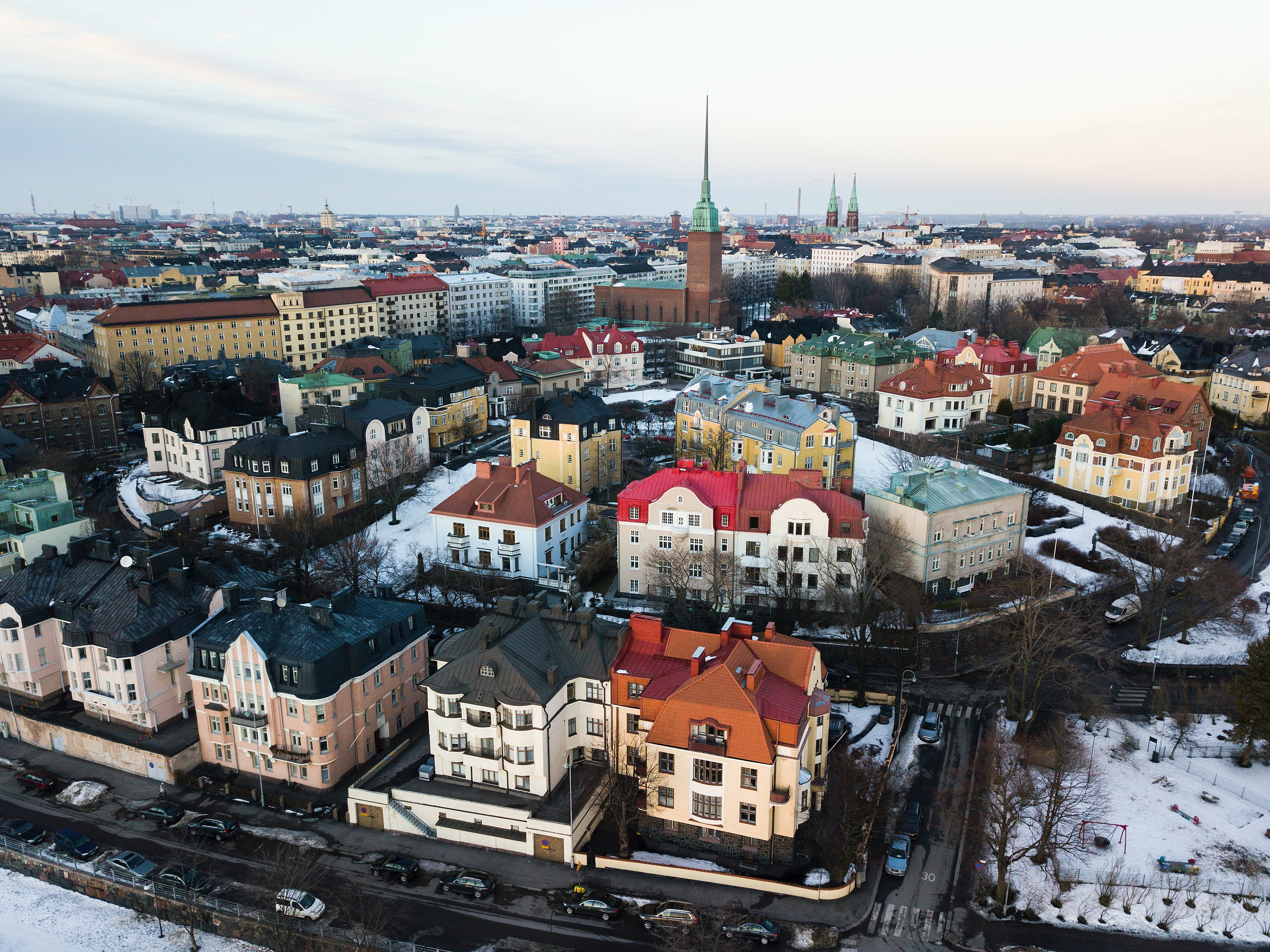
Aerial view of the centre of Helsinki, which is still a low-rise city.

I like learning how different countries make their cities more livable. Finland is known for being a trendsetter in many areas, including funny contests, housing, education, eldercare, basic income — and urban living.

Gillian Darley at Apollo magazine wrote recently about design in Finland.

“The Helsinki skyline is startlingly low for a capital city, its further horizons determined by water and scattered wooded islands. In the centre, urban civility and a clear-headed planning regime have established a height limit of around eight stories, punctuated by occasional eminences. The standout is the heroic central station, designed in the early 1900s by Eliel Saarinen. …

“Otherwise, only a few spires and the lofty white Lutheran cathedral, the jazz-style tower of the Hotel Torni and pencil-thin chimneys from redundant power stations cut into the ordained pattern. One of the power stations, Hanasaari, which closed down this March, is currently preoccupying the city authorities. They have turned to Buro Happold for advice, in the hope that the firm’s experience with Battersea Power Station may help rescue the 1970s brick shell.

“A little further east, overlooking the harbor, a gaggle of multi-story blocks has recently loomed – as if testing the water. Otherwise, only a few spires and the lofty white Lutheran cathedral, the jazz-style tower of the Hotel Torni and pencil-thin chimneys from redundant power stations cut into the ordained pattern. …

“Another factor is starting to determine the physiognomy of the city centre: some of it is, and more will be, sited below ground. There is no single clear reason for this, though factors include the exigent climate, respect for that polite skyline, and the key part that open space plays as amenity, in the city as in the overwhelmingly forested country.

“The use of subterranean space and the creation of a new realm overhead are becoming a speciality of Helsinki-based architectural practice JKMM. The Amos Rex art museum (named for the Finnish publisher and patron Amos Anderson) sits beneath a swooping pedestrian square – formerly a bus terminal, now an unorthodox playground of sculptural skylights and domes at the foot of a cheerful art-deco clock tower.

“The galleries below are reached via the handsome glazed entrance of the Lasipalatsi (‘Glass Palace’), part of a restored modernist complex together with the Bio Rex cinema (1936) next door. Elegant stairs sweep into a lobby and the sequence of soaring new galleries. …

“[Another] subterranean structure is due to open in 2027: this is an ambitious underground annex for the National Museum of Finland in central Helsinki. The spectacular new space is flagged by a circular cantilevered entrance, a concrete vortex from which visitors will descend on a series of stairs to the galleries and facilities below. Above, a public garden will be open all year round.

“For decades, visitors to Finland had been drawn by Alvar Aalto’s questing version of modernism, seen as closely aligned with Nordic social democratic aspirations and sustained by a tight group of followers, at home and abroad. Inevitably, his work has been challenged by the passing of time and changing usage. In Helsinki, the shrouded hunk of the white Carrara marble-clad Finlandia Hall, dating from 1971, is in the middle of a recladding expected to take five years; the crisp Academic Book Store of the 1960s – a smart street-front clad in beautifully detailed copper, with dramatic angular roof lights bursting into life within – is compromised by chipped and stained marble facings on the entry columns.

“West of central Helsinki is another post-war landmark: the ‘garden city’ of Tapiola, which has been highly influential in European town planning. It shares its roots with British first-generation New Towns and, patched and amended though it is, it still offers compelling evidence of an urbane landscape, the antithesis of the formless out-of-town development. …

“When considering a future for the best works by Aalto and his circle, there is often a clash between function and feasible preservation, but in Tapiola there is also a town of 9,000 people to consider. The building materials of the early 1950s, especially in schools and sports buildings, have not stood the test of time; the hazards of asbestos are ubiquitous. The swimming hall, already restored once, is wrapped in sheeting and plywood, its fate uncertain.

“Yet the best of the flats and housing are highly sought after: the terraced houses, with perky monopitch roofs and skinny clerestory windows on to the roadside, benefit from back gardens and immediate access to a natural landscape of rock and pinewoods.  The little cinema has been restored and is highly valued, the lake remains centre stage and expanses of open parkland stretch out on every side.

“The societal hopes that brought Tapiola into being in 1953, according to the ideas of a visionary lawyer, Heikki von Hertzen, may have faded. Established according to principles of social enterprise, Tapiola has been outstripped by Espoo, the municipality of which it is a part, and which is a product of modern broad-brush urban development. But Tapiola is more than just a name in the history of town planning – it richly deserves a second look and, even, another close look at those founding principles.

More at Apollo, here. No paywall.

Read Full Post »

Photo: Vesa Laitinen for the New York Times via the Jordan News.
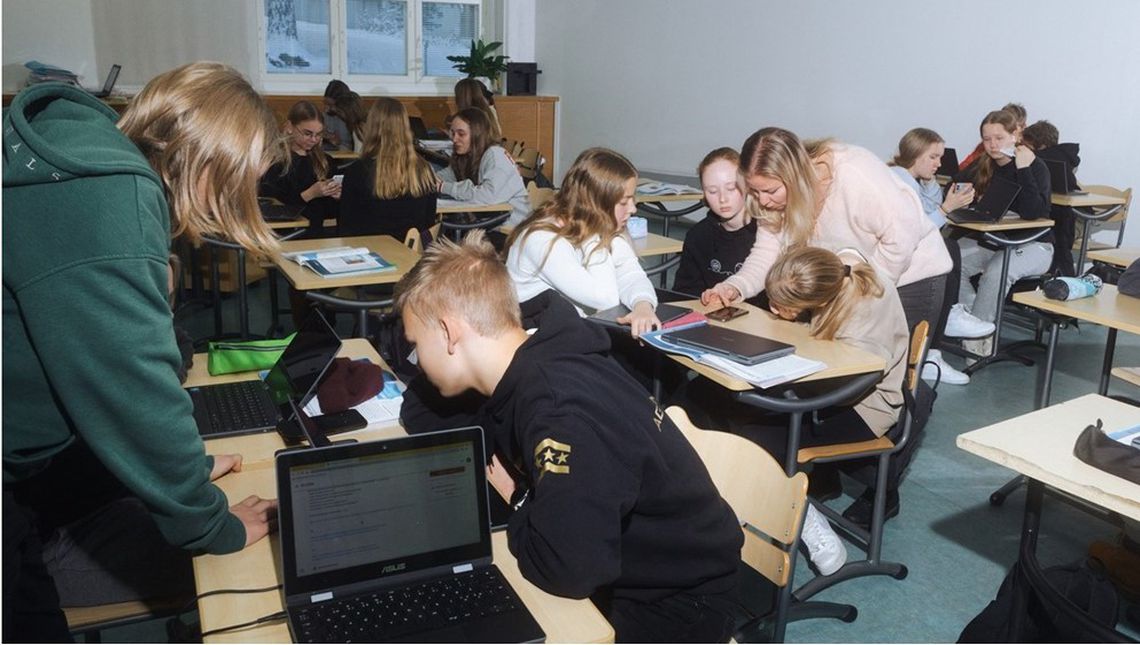
Teacher Saara Martikka (in pink sweater) works with students to identify misinformation. Media literacy is taught in Finland starting in preschool.

I have long admired Finland for its educational system, but this beats all. The country starts teaching children how to identify misinformation at a very young age. That’s why it “ranked No. 1 of 41 European countries on resilience against misinformation for the fifth time in a row in a survey published in October by the Open Society Institute in Sofia, Bulgaria.”

Jenny Gross has the story at the New York Times.

“A typical lesson that Saara Martikka, a teacher in Hameenlinna, Finland, gives her students goes like this: She presents her eighth graders with news articles. Together, they discuss: What’s the purpose of the article? How and when was it written? What are the author’s central claims?

“ ‘Just because it’s a good thing or it’s a nice thing doesn’t mean it’s true or it’s valid,’ she said. In a class last month, she showed students three TikTok videos, and they discussed the creators’ motivations and the effect that the videos had on them.

“Her goal, like that of teachers around Finland, is to help students learn to identify false information. … Officials say Finland’s success is not just the result of its strong education system, which is one of the best in the world, but also because of a concerted effort to teach students about fake news. Media literacy is part of the national core curriculum starting in preschool.

“ ‘No matter what the teacher is teaching, whether it’s physical education or mathematics or language, you have to think, “OK, how do I include these elements in my work with children and young people?” ‘ said Leo Pekkala, the director of Finland’s National Audiovisual Institute, which oversees media education. …

“The survey results were calculated based on scores for press freedom, the level of trust in society and scores in reading, science and math. The United States was not included in the survey, but other polls show that misinformation and disinformation have become more prevalent since 2016 and that Americans’ trust in the news media is near a record low. …

“Finland has advantages in countering misinformation. Its public school system is among the best in the world. College is free. There is high trust in the government, and Finland was one of the European countries least affected by the pandemic. Teachers are highly respected.

On top of that, Finnish is spoken by about 5.4 million people. Articles containing falsehoods that are written by nonnative speakers can sometimes be easily identified because of grammatical or syntax errors. …

“While teachers in Finland are required to teach media literacy, they have significant discretion over how to carry out lessons. Mrs. Martikka, the middle school teacher, said she tasked students with editing their own videos and photos to see how easy it was to manipulate information. A teacher in Helsinki, Anna Airas, said she and her students searched words like ‘vaccination’ and discussed how search algorithms worked and why the first results might not always be the most reliable. Other teachers also said that in recent months, during the war in Ukraine, they had used Russian news sites and memes as the basis for a discussion about the effects of state-sponsored propaganda.

“Finland, which shares an 833-mile border with Russia, developed its national goals for media education in 2013 and accelerated its campaign to teach students to spot misinformation in the following years. Paivi Leppanen, a project coordinator at the Finnish National Agency for Education, a government agency, said the threat of Russian misinformation on topics such as Finland’s bid to join the North Atlantic Treaty Organization ‘hasn’t changed the basics of what we do, but it has shown us that this is the time for what we have been preparing.’

“Even though today’s teenagers have grown up with social media, that does not mean that they know how to identify and guard against manipulated videos of politicians or news articles on TikTok. In fact, a study published last year in the British Journal of Developmental Psychology found that adolescence could be a peak time for conspiracy theorizing. …

“For teachers of any age group, coming up with effective lessons can be challenging. ‘It’s so much easier to talk about literature, which we have been studying for hundreds of years,’ said Mari Uusitalo, a middle and high school teacher in Helsinki.

“She starts with the basics — by teaching students about the difference between what they see on Instagram and TikTok versus what they read in Finnish newspapers. … During Ms. Uusitalo’s 16 years as a teacher, she has noticed a clear decline in reading comprehension skills, a trend she attributes to students’ spending less time with books and more time with games and watching videos. With poorer reading skills and shorter attention spans, students are more vulnerable to believing fake news or not having enough knowledge about topics to identify misleading or wrong information, she said.

“When her students were talking this summer about leaked videos that showed Finland’s prime minister, Sanna Marin, dancing and singing at a party, Ms. Uusitalo moderated a discussion about how news stories can originate from videos circulating on social media. Some of her students had believed Ms. Marin was using drugs at the party after watching videos on TikTok and Twitter that suggested that. Ms. Marin denied having taken drugs, and a test later came back negative.

“Ms. Uusitalo said her goal was to teach students methods they could use to distinguish between truth and fiction. ‘I can’t make them think just like me,’ she said. ‘I just have to give them the tools to make up their own opinions.’ ”

More at the Times, here.

Read Full Post »

Photo: Tony Jolliffe/BBC.
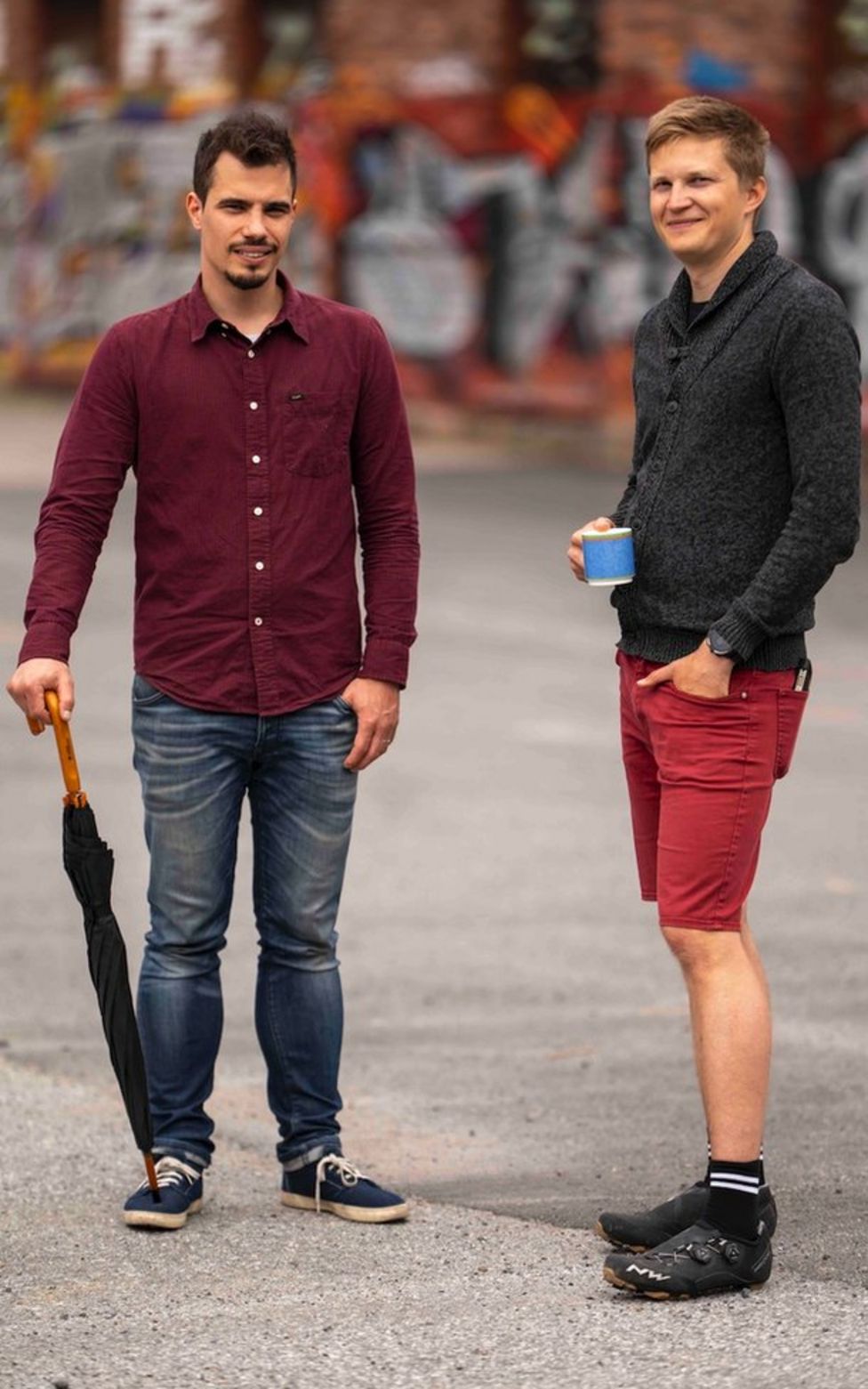
Finnish researchers Markku Ylönen and Tommi Eronen, who came up with the sand-battery idea. Don’t these guys look just like the kind of young people you’d expect to tackle something impossible?

The big challenge for renewable energy sources like solar and wind has always been storage. Where is there a battery big enough and powerful enough to store the energy until it’s needed?

Bring on a couple wiz kids who think about daunting problems like global warming and overdependence on Russian gas.

Matt McGrath writes at the BBC, “Finnish researchers have installed the world’s first fully working ‘sand battery,’ which can store green power for months at a time. …

“Using low-grade sand, the device is charged up with heat made from cheap electricity from solar or wind. The sand stores the heat at around 500C (~932 degrees Fahrenheit), which can then warm homes in winter when energy is more expensive.

“Finland gets most of its gas from Russia, so the war in Ukraine has drawn the issue of green power into sharp focus. It has the longest Russian border in the EU and Moscow has now halted gas and electricity supplies in the wake of Finland’s decision to join NATO.

“Concerns over sources of heat and light, especially with the long, cold Finnish winter on the horizon are preoccupying politicians and citizens alike. But in a corner of a small power plant in western Finland stands a new piece of technology that has the potential to ease some of these worries.

“The key element in this device? Around 100 tonnes of builder’s sand, piled high inside a dull grey silo.

“These rough and ready grains may well represent a simple, cost-effective way of storing power for when it’s needed most.

“Because of climate change and now thanks to the rapidly rising price of fossil fuels, there’s a surge of investment in new renewable energy production. But while new solar panels and wind turbines can be quickly added to national grids, these extra sources also present huge challenges.

“The toughest question is about intermittency — how do you keep the lights on when the sun doesn’t shine and the wind doesn’t blow? …

“The most obvious answer to these problems is large-scale batteries which can store and balance energy demands as the grid becomes greener.

“Right now, most batteries are made with lithium and are expensive with a large, physical footprint, and can only cope with a limited amount of excess power.

“But in the town of Kankaanpää, a team of young Finnish engineers have completed the first commercial installation of a battery made from sand that they believe can solve the storage problem in a low-cost, low impact way.

” ‘Whenever there’s like this high surge of available green electricity, we want to be able to get it into the storage really quickly,’ said Markku Ylönen, one of the two founders of Polar Night Energy who have developed the product.

“The device has been installed in the Vatajankoski power plant, which runs the district heating system for the area.

“Low-cost electricity warms the sand up to 500C by resistive heating (the same process that makes electric fires work). This generates hot air which is circulated in the sand by means of a heat exchanger.

“Sand is a very effective medium for storing heat and loses little over time. The developers say that their device could keep sand at 500C for several months.

“So when energy prices are higher, the battery discharges the hot air which warms water for the district heating system which is then pumped around homes, offices and even the local swimming pool.

The idea for the sand battery was first developed at a former pulp mill in the city of Tampere, with the council donating the work space and providing funding to get it off the ground.

” ‘If we have some power stations that are just working for a few hours in the wintertime, when it’s the coldest, it’s going to be extremely expensive,’ said Elina Seppänen, an energy and climate specialist for the city. ‘But if we have this sort of solution that provides flexibility for the use, and storage of heat, that would help a lot.’ …

“One of the big challenges now is whether the technology can be scaled up to really make a difference — and will the developers be able to use it to get electricity out as well as heat? The efficiency falls dramatically when the sand is used to just return power to the electricity grid. …

“Other research groups, such as the US National Renewable Energy Laboratory are actively looking at sand as a viable form of battery for green power. But the Finns are the first with a working, commercial system, that so far is performing well, according to the man who’s invested in the system.

” ‘It’s really simple, but we liked the idea of trying something new, to be the first in the world to do something like this,’ said Pekka Passi, the managing director of the Vatajankoski power plant.”

One of the aspects of this approach that I like best is that it doesn’t use lithium, a “blood mineral,” the mining of which often hurts local communities.

Check out the graphic at the BBC, here, to see how the sand-battery works.

Read Full Post »

Photo: Risto Matilla.
Risto Matilla, an amateur photographer, took this picture of ice eggs found on a Finnish beach. The largest was the size of a soccer ball. Ice eggs have also been seen in Siberia and Michigan.

I continually find Nature amazing. Whether it’s the cardinal in my yard this morning collecting grass to build a nest or author Sarah Smarsh’s experience last weekend at an outdoor concert in Kansas, where the audience came terrifyingly close to a tornado-producing supercell. Then there is a weather phenomenon like the one in today’s story,

Nicoletta Lanese wrote about it in November 2019, but it’s new to me. I just had to share it. Especially that picture — worth a thousand words.

Lanese’s report was at the BBC. “Thousands of egg-shaped balls of ice have covered a beach in Finland, the result of a rare weather phenomenon. Amateur photographer Risto Mattila was among those who came across the ‘ice eggs’ on Hailuoto Island in the Gulf of Bothnia between Finland and Sweden.

“Experts say it is caused by a rare process in which small pieces of ice are rolled over by wind and water.

“Mr Mattila, from the nearby city of Oulu, told the BBC he had never seen anything like it before. ‘I was with my wife at Marjaniemi beach. The weather was sunny, about -1C (30F) and it was quite a windy day, he told the BBC. ‘There we found this amazing phenomenon. There was snow and ice eggs along the beach near the water line.’

“Mr Mattila said the balls of ice covered an area of about 30m (100ft). The smallest were the size of eggs and the biggest were the size of footballs [soccer balls].

” ‘That was an amazing view. I have never seen anything like this during 25 years living in the vicinity,’ Mr Mattila said. …

“BBC Weather expert George Goodfellow said conditions needed to be cold and a bit windy for the ice balls to form. ‘The general picture is that they form from pieces of larger ice sheet which then get jostled around by waves, making them rounder,’ he said. … ‘The result is a ball of smooth ice which can then get deposited on to a beach, either blown there or getting left there when the tide goes out.’

“Similar sights have been reported before, including in Russia and on Lake Michigan near Chicago.”

Jessica Murray adds this at the Guardian: “Jouni Vainio, an ice specialist at the Finnish Meteorological Institute, said the occurrence was not common, but could happen about once a year in the right weather conditions.

“ ‘You need the right air temperature (below zero, but only a bit), the right water temperature (near freezing point), a shallow and gently sloping sandy beach and calm waves, maybe a light swell,’ he said.

“You also need something that acts as the core. The core begins to collect ice around it and the swell moves it along the beach, forward and back. A small ball surface gets wet, freezes and becomes bigger and bigger.’

“Autumn is the perfect time to see the phenomenon, according to Dr James Carter, emeritus professor of geography-geology at Illinois State University, as this is when ice starts to form on the surface of water, creating a form of slush when moved by waves.

“ ‘I can picture the back and forth motion of the surface shaping the slushy mix,’ he said. ‘Thanks to the photographer who shared the photos and observations, now the world gets to see something most of us would never be able to see.’ ”

According to a 2016 BBC report, residents of Nyda in Siberia found a strange and beautiful sight “in the Gulf of Ob, in northwest Siberia, after thousands of natural snowballs formed on the beach.

“An 11-mile (18km) stretch of coast was covered in the icy spheres. The sculptural shapes range from the size of a tennis ball to almost 1m (3ft) across. … Locals in the village of Nyda, which lies on the Yamal Peninsula just above the Arctic Circle, say they have never seen anything to compare to them.”

Check out the map showing the location of the Finnish find at the BBC, here, and read more at the Guardian, here. No firewalls, bless their hearts.

Lake Michigan, 2010

Read Full Post »


Photo: Michael Miller / OCA.
Venice Biennale Sámi Pavilion artist Máret Ánne Sara and her brother, Jovsset Ante Sara.

The Sámi are indigenous people of Finland, Norway, and Sweden. Today’s post is about the art some of them have chosen to present to the world at the Venice Biennale this year.

Anna Souter reports at Hyperallergic, “Sámi artist Pauliina Feodoroff says that ‘to be Indigenous is to be site-specific.’ For centuries, colonial governments have deliberately represented the site-specific Indigenous landscapes of the European Arctic as empty wildernesses. In reality, these are the ancestral lands of the Sámi people. Far from empty, they are ecologically diverse sites of culture, care, and collective endeavor. 

“At this year’s Venice Biennale, the Nordic Pavilion will be transformed for the first time into the Sámi Pavilion. The project undermines the nationalistic structure behind the Biennale, instead recognizing the sovereignty and cultural cohesion of Sápmi, the Sámi cultural region, which covers much of the northernmost areas of Norway, Sweden, and Finland, as well as part of Russia. The three contributing artists — Pauliina Feodoroff, Máret Ánne Sara, and Anders Sunna — draw attention to the ongoing colonial oppression and discrimination experienced by Indigenous Sámi under local and national governments across the Nordic region. 

“Feodoroff’s family members are Skolt Sámi reindeer herders, originally from the part of Sápmi within the Russian border. They were pushed into Finland after World War II, into a reputedly toxic area ravaged by mining and fallout from Chernobyl. Feodoroff’s work for the Sámi Pavilion will combine performance and video installations to explore non-colonial modes of physical expression, emphasizing the close relationship between the body and landscape in Sámi culture.

“Feodoroff has no artist studio; instead she sees the landscapes with which she works as her expanded studio. Her creative practice is inseparable from her work as a land defender. … She laments and resists the logging of old, slow-growth forests for one of Finland’s key exports: toilet paper. The bathos is not lost on Feodoroff and local Sámi reindeer herders, who are bypassed by the transaction, gaining nothing but a degraded landscape and poorer survival rates for their reindeer. 

“To protect and restore remaining old-growth forests, Feodoroff is attempting to use the art market to buy back land to be owned and managed collectively by Sámi people. Purchasing one of her works is framed as a contract through which the collector buys the right to visit an area of land in Sápmi; in return, the artist pledges to protect that land. …

“In 2015, the Norwegian government introduced mass reindeer culling quotas for Sámi herders, hitting younger herders such as artist Máret Ánne Sara’s brother particularly hard. Throughout a lengthy and expensive legal process, Sara has supported her brother’s appeal against the ruling, showing solidarity and resistance through her artistic project ‘Pile o’Sápmi’ (2016-ongoing).

“In 2016, Sara piled 200 reindeer heads outside the Inner Finnmark District Court and topped the pile with a Norwegian flag. The work refers to the 19th-century white settler policy of controlling the Indigenous population of Canada by slaughtering millions of buffalo and piling their bones in enormous heaps. …

“Sara’s work emphasizes that reindeer herding is at the heart of both Sámi culture and the complex ecologies of Sápmi. Her installation for the Sámi Pavilion incorporates preserved dead reindeer calves as bittersweet symbols of both loss and hope. …

“Anders Sunna’s painting and sound installations speak directly to his own history. ‘My paintings tell stories of what happened to my family,’ he says. ‘Today our family has no rights at all, we have lost everything.’ Located on the Swedish side of Sápmi, Sunna’s family has been refused its ancestral right to herd reindeer because of the competing interests of local Swedish landowners. … Sunna’s family has been practicing what he describes as ‘guerrilla reindeer herding’ for 50 years.

“Sunna’s paintings borrow motifs from international protest movements, news footage of riots, and his artistic origins as a graffitist. His move into the fine art world is helping to bring his family’s story to an international audience. For the 2022 Venice Biennale, he has created five paintings depicting episodes from the last five decades of the Sunna family’s struggles. … Sunna tells stories of oppression and even despair in the face of relentless attacks on his family’s rights, but he also hopes for a better future for the next generation.

“Before I visited Sápmi to meet the Sámi Pavilion artists in February 2022, I felt disillusioned with the power of the art world to enact change; despite countless artworks raising awareness of climate breakdown, for example, society has failed to make meaningful changes. But across Sápmi, I met individuals who believed in the capacity for art — and for the Venice Biennale — to make a difference. …

“The stories told in the Sámi Pavilion have rarely been presented on an international stage; and though often deeply personal, they speak to issues that affect us all. The Arctic is warming four times faster than the rest of the world; it is a litmus test for our environmental future. Indigenous knowledge and Indigenous land management could lead us toward a safer ecological future.”

More at Hyperallergic, here. For related posts, search on “Sámi” at this blog.

Read Full Post »

5d27b9822400009d17935475

Photo: Associated Press
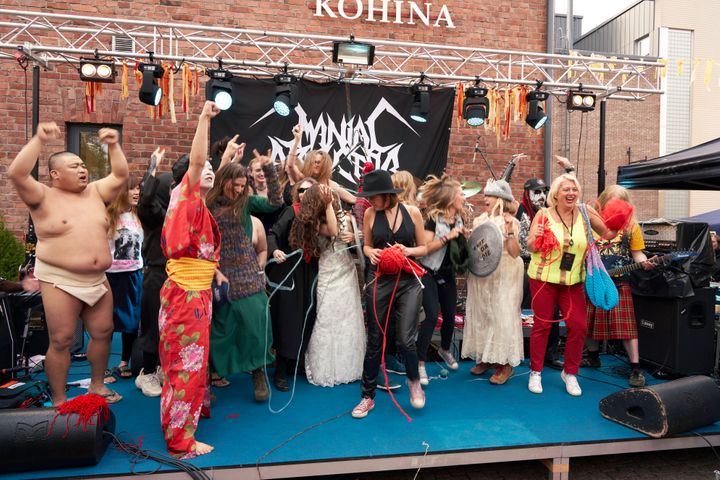
If it’s a heavy metal knitting competition, it has to be Finland. Finland has the world’s most unusual contests.

I love stories about the unique contests the Finns come up with. Remember cellphone tossing, swamp soccer, and wife throwing? So glad the Huffington Post shared this July report from the Associated Press.

“Armed with needles and a yarn of wool, teams of avid knitters danced Thursday to the deafening sounds of drums beating and guitars slashing at the first-ever Heavy Metal Knitting World Championship in eastern Finland.

“With stage names such as Woolfumes, Bunny Bandit and 9″ Needles, the participants shared a simple goal: to showcase their knitting skills while dancing to heavy metal music in the most outlandish way possible. …

“The competition took place in a packed square in the small town of Joensuu close to the Russian border. An eclectic group of around 200 people watched the performances, from families with young children and elderly to the less conspicuous heavy metal fans donning leather-jackets and swirling their long hair to the fast-paced rhythm of the music.

“A niche musical genre in many countries, heavy metal is more mainstream in Finland, with several bands household names frequently played on the radio. Its popularity grew further in 2006 when the Finnish band Lordi won the Eurovision Song Contest dressed as monsters. …

” ‘In Finland it’s very dark in the wintertime, so maybe it’s in our roots. We’re a bit melancholic, like the rhythm,’ said Mark Pyykkonen, one of three people judging the competition. …

“Said Mari Karjalainen, one of the founders of the event, ‘[Winter] really gives us lots of time to plan for our short summers and come up with silly ideas.’

“Thursday’s competition saw participants from nine countries, including the United States, Japan, and Russia, put on inspired performances full of theatrics, passion and drama and the jury struggled to agree upon a winner.

“Finally, it was a Japanese performance by the five-person Giga Body Metal team that clinched the title with a show featuring crazy sumo wrestlers and a man dressed in a traditional Japanese kimono.

“ ‘It’s a great release,’ said Elise Schut, a 35-year-old nurse from Michigan who performed with her 71-year-old mother and 64-year-old family friend, Beth Everson, who added that ‘knitting is such a meditative activity but now it’s energetic and heart pumping.’ ”

More.

Read Full Post »

5881
Photo: Sarah Johnson/
The Guardian 
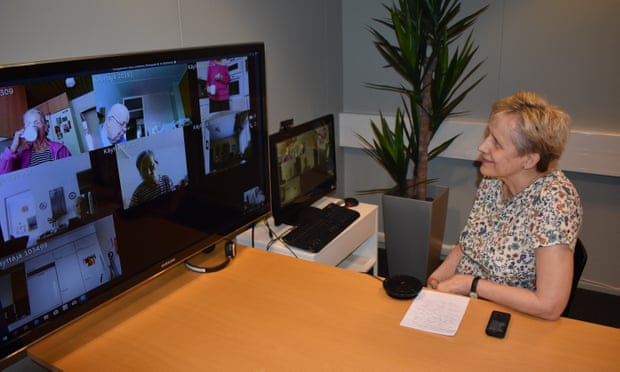
A remote nurse oversees a virtual lunch for older people in Helsinki. “The client feels like they are a part of a bigger thing. It’s also guaranteed that they eat properly,” she says.

Because my sister’s brain cancer is so troubling and her needs for care are growing so fast, I have started to give more serious thought to my own future and the more-common problems of ageing. I may never bite the bullet about a retirement community, but I plan to look into what they offer just in case.

Meanwhile Finland, which seems to be on the cutting edge of everything from preschool to end-of-life care, has set an example of keeping people in their homes longer using technology, as costs for in-person services increase.

Sarah Johnson writes at the Guardian, “It’s 11.30 am on a midweek June morning in Helsinki, Finland. Duvi Leineberg, a remote care nurse, is doing the lunch rounds. But instead of jumping in a car and visiting each person one by one, she is sitting in an office looking at a large computer screen where she can see into seven people’s homes. Most are sitting at a table preparing to tuck into some food.

“This is a virtual lunch group, set up to make sure older people receiving home care services in the city eat regularly and at the right time. Leineberg runs the session. She starts by checking everyone has their food and that it is warmed up. Some have soup, others have pre-prepared meals that have been delivered by home care services. People also sip coffee.

“One screen shows an empty backdrop and she calls the home to check her client is all right. He walks past the screen but says he isn’t hungry and doesn’t want to eat right now. Leineberg then asks everyone if they have any plans for the afternoon. A few reply that they will go out for a walk.

“A former hospital nurse, Leineberg sees the value of such groups. ‘Firstly, the client feels like they are a part of a bigger thing. It’s also guaranteed that they eat properly. If I spot anything that seems out of the ordinary, I can call the home care nurses who will pay them a visit if necessary.’

“Her clients are also fans of the lunch group. Riitta Koskinen, 80, says through a translator: ‘I’m old and living alone and it’s nice to have the company. We eat at the same time – food tastes better when you’re with others – and I’ve really enjoyed it. It makes me eat and it’s good to see other people.’

“Finland has a rapidly ageing population and recruitment problems in health and care. By 2070, one in three Finns is expected to be over 65. At the same time there has been a huge decline in the birth rate and the number of Finns of working age is expected to fall by around 200,000 by 2050. As a result, the demand for and cost of care services are growing while tax revenues are decreasing. …

“The virtual lunch group is one aspect of Helsinki’s remote care – where clients have a tablet that links up with remote care nurses in a service centre. Remote care appointments are set up to check on clients throughout the day and to make sure they take the relevant medication. There are 800 home care clients, and nurses carry out 24,000 remote care visits a month. By the end of 2019, the service hopes to cater for 1,100 clients. …

Over the course of one shift, a remote care nurse can carry out over 50 visits – which works out almost 90% cheaper than if they had knocked on each of their client’s doors.

“Little wonder that the city’s service centre is hoping to start a remote dinner group soon as well as other sessions. They already take clients virtually to concerts and shows. Hanna Hämäläinen, who works as a planner at the service, remembers when she took 64 clients virtually to a carol concert. A screen was placed on the front row and the priest greeted them while they watched at home on their tablets. She remembers: ‘The funny thing is that even if some had memory problems, they knew all the lyrics. That is the power of music and made me see that if there’s a concert, we should be there.’ …

“Roope Leppänen, medical director of Espoo hospital, … maintains that remote care will never fully replace physical care but that, with advancing technology and future generations that are used to digital life, it will become more and more important. But he doesn’t expect it to totally replace physical care services. ‘People will need physical visits as well. It’s my belief that [remote care] can’t completely replace that, but tech will make [things] even easier in 10 years time.’

“Both the staff and patients I meet seem to like it. Tiina Kosonen, a remote care nurse, says she is able to build close relationships with her clients. ‘I like it and the patients get a lot from it. It’s really intensive this contact. We look into each other’s eyes and talk together face to face.’ ”

More at the Guardian, here.

Read Full Post »

Photo: TV Tropes

You know about the imaginative world of hobby-horse competitions in Finland, but did you also know Finland is a leader in air guitar? And what is air guitar, you ask?

You would know the answer to that if you had seen the goofy 1989 film Bill and Ted’s Excellent Adventure, in which the heroes frequently launch into pretend guitar riffs.

Byrd McDaniel explains it all at the Conversation.

“Advertised as the ‘greatest thing you’ve never seen,’ the 2019 U.S. Air Guitar Championships will take place this summer. Competitors from around the country will don elaborate costumes, construct fantastical personas and perform comedic pantomimes of famous rock solos. Impaling themselves with their air guitars, swallowing them and smashing them to smithereens, they’ll elevate guitar playing to heights only imagined by real guitarists.

“The winner will go on to represent the U.S. in the Air Guitar World Championships, which will take place in Oulu, Finland, in late August.

“As an ethnomusicologist, I’ve studied air guitar competitions as a scholar, audience member and competitor. In fact, I was named the third best air guitarist in Boston in 2017 – truly one of my proudest moments.

“Beyond the humorous, ironic façade of these performances is a sincere craft that has exploded in popularity over the past couple of decades.

“The phonograph, which became a common household item in the the first decade of the 20th century, inspired some of the earliest known instances of solo air playing. The Minneapolis Phonograph Society described how some of its members, from the privacy of their homes, had ‘taken to “shadow conducting,” that most exhilarating phonographic indoor sport.’ …

“One journalist for the Washington, D.C., Evening Star wrote an article about patients at an asylum, including ‘one young girl [who] appeared to be fingering an imaginary guitar.’ And a 1909 article in The Seattle Star described a pantomiming prisoner who ‘spends his time in jail playing on an imaginary piano, hoping thus to give the impression that he is insane and so escape a more severe punishment.” ‘ …

“Some of the first known instances of live musicians breaking out the air guitar occurred during the 1950s and 1960s. Notable examples included Bill Reed and the Diamonds air guitaring on the Steve Allen Show in 1957, and Joe Cocker famously shredding an air guitar during his performance at Woodstock in 1969.

“But rock fans didn’t really start taking up air instruments of their own until the 1970s, when they found themselves unable to resist mimicking their favorite performers, who had become more and more inventive with their guitar playing. …

“Fans soon began copying the wild gestures of their favorite guitarists to mirror their onstage energy. As journalist Chris Willman wrote, Eddie Van Halen possessed ‘the fingers that launched a hundred-thousand air-guitar solos.’ And in the late 1970s, fans famously started bringing cardboard cutouts of guitars to Iron Maiden shows at The Bandwagon Heavy Metal Soundhouse in London. …

“By the early 1980s, air guitar had gone mainstream. Beer companies, radio stations and colleges staged lip sync battles and air guitar competitions all over the United States. John McKenna and Michael Moffitt published ‘The Complete Air Guitar Handbook‘ in 1983, a how-to guide and psuedo-history of air guitar playing. …

“In 1996, the Oulu Music Video Festival in Finland arranged to have an air guitar competition. … This year marks the 17th annual contest, and air guitarist Georgia Lunch will be competing as the reigning champion.

“In 2018, her routine included carrying a lunchbox onstage, sipping Jägermeister out of a hamburger flask and a spastic strumming style.

“Her challengers include a group of well-known names from the air guitar circuit: Airistotle, Cindairella, Shred Nugent, Lieutenant Facemelter, Kingslayer and the Rockness Monster. She’ll also face some first-time competitors, who hope to unseat the air apparent.”

Come up with a cool name of your own and join the fun. More here.

Read Full Post »

hobbyhorse-dispatch-slide-w7o4-jumbo

Photo: Dmitry Kostyukov for the New York Times
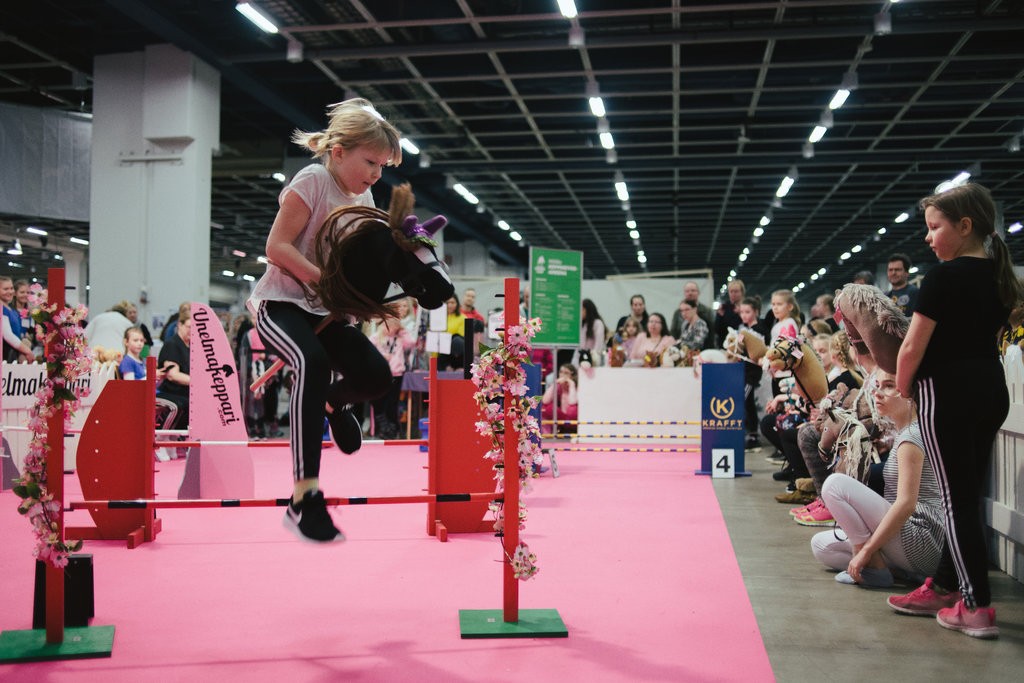
A girl performing during a hobbyhorse competition in Helsinki in March 2019.

Now here’s an unusual pastime: hobbyhorse competitions. Who knows how these things get started with kids? They make up their own fun. It starts out as private play, under the radar, and before you know it, it’s on TV.

Ellen Barry reported from Finland for the New York Times. “A dozen girls waited in line in a Helsinki arena for the dressage competition, ready to show off their riding skills, their faces masks of concentration.

“The judge put them through their paces — walk, trot, canter — and then asked them for a three-step rein-back, that classic test of a dressage horse’s training and obedience. The judge looked on gravely, occasionally taking notes.

“If anyone thought it strange that the girls were riding sticks, no one let on. The make-believe world of the hobbyhorse girls extended as far as the eye could see.

“A veterinarian lectured girls on hobbyhorse vaccination schedules, saying ‘check that the eyes are clear and there is no nasal discharge.’ The girls discussed hobbyhorse bloodlines and hobbyhorse temperaments, hobbyhorse training routines and hobbyhorse diets. There were rhinestone-studded bridles for sale. …

“ ‘The normal things, that normal girls like, they don’t feel like my things,’ [Fanny Oikarinen, 11,] said. But she is at home in the world of hobbyhorses, where boys and grown-ups have no place.

“Fanny and her friend, Maisa Wallius, are training for summertime competitions. They have choreographed a two-part dressage routine to a song by Nelly, the rapper. Asked which types of girls are drawn to hobbyhorses, Maisa thinks for a while before answering.

“ ‘Some are sports girls,’ she said. ‘Some are really lonely girls. And some can be the coolest girl at school.’

“It is impossible to say exactly when the Finnish hobbyhorse craze began, because it spread for years under the radar before adults became aware of it.

“In 2012, a filmmaker, Selma Vilhunen, stumbled across internet discussion boards used by hobbyhorse enthusiasts and was enraptured.

“Teenage girls had invented a form of hobbyhorse dressage, in which the rider’s lower body pranced and galloped like a horse, while her upper body remained erect and motionless like a rider. This evolved into an elaborate network of coaches and students and competitions, but it was discussed only online, for the most part.

“ ‘It was like a secret society,’ Ms. Vilhunen said.

“One of the girls she sought out as a guide to the hobbyhorse scene was Alisa Aarniomaki, a teenager from a city on Finland’s west coast.

“Leather-jacketed and fuchsia-haired, Ms. Aarniomaki was a celebrity in the online world for her hand-sewn hobbyhorses and riding videos, but she was apprehensive about letting her classmates know about it. When she was 12, some friends happened to spot her practicing in the woods near her school, and teased her for playing a child’s game. …

“When Ms. Vilhunen’s documentary film, ‘Hobbyhorse Revolution,’ was released in 2017, it captured its subjects in long spells of raucous joy. This was important to the filmmaker, who has made adolescent girls the focus of much of her work.

“ ‘Little girls are allowed to be strong and wild,’ she said. ‘I think the society starts to shape them into a certain kind of quietness when they reach puberty.’ …

“Within the rapidly expanding community of enthusiasts, the problem of ridicule really doesn’t come up. ‘I haven’t run into that sort of situation in a long time,’ [Ms. Aarniomaki] said. ‘I live in a bubble that is filled with hobbyhorses.’ ”

More here.

Read Full Post »

0321-ddp-finland-homeless

Photo: Gordon F. Sander
Residents at a Housing First facility near Helsinki, Finland. Emmi Vuorela, right, is the resident coordinator. 

“Housing First” is a model that parts of the United States have adopted on a limited scale. It provides housing to homeless people without making behavior changes a prerequisite. The theory is that a person is more likely to get off an alcohol dependency, say, if he has the stability of shelter.

Now Finland has not only seen the wisdom of the concept, it has decided to go much bigger and provide every homeless person with housing. It’s amazing what can be accomplished when a society as a whole makes up its mind to do something sensible. Sensible because the program not only helps individuals but pays for itself.

Gordon F. Sander writes at the Christian Science Monitor, “As anyone who has visited Europe recently can attest, the scourge of homelessness has reached epidemic proportions.

“The only exception to the trend is Finland, according to FEANTSA, the European Federation of National Organizations Working with the Homeless. There, homelessness is, remarkably, on the decline.

“Per the latest statistics, the number of homeless people in Finland has declined from a high of 18,000 30 years ago, to approximately 7,000: the latter figure includes some 5,000 persons who are temporarily lodging with friends or relatives. In short, the problem has basically been solved. ..

“Finland opted to give housing to the homeless from the start, nationwide, so as to allow them a stable environment to stabilize their lives.

“ ‘Basically, we decided that we wanted to end homelessness, rather than manage it,’ says Juha Kaakinen, CEO of the Y-Foundation, which helps provide 16,500 low-cost apartments for the homeless. …

The elimination of homelessness first appeared in the Helsinki government’s program in 1987. Since then virtually every government has devoted significant resources toward this end.

“Around 10 years ago, however, observers noticed that although homelessness in general was declining, long-term homelessness was not. A new approach to the problem was called for, along with a new philosophy. …

“The concept behind the new approach was not original; it was already in selective use in the US as part of the Pathways Model pioneered by Dr. Sam Tsemberis in the 1990s to help former psychiatric patients. What was different, and historic, about the Finnish Housing First model was a willingness to enact the model on a nationwide basis.

“ ‘We understood, firstly, that if we wanted to eradicate homelessness we had to work in a completely different way,’ says Mr. Kaakinen, who acted as secretary for the Finnish experts. … ‘We decided as a nation to do something about this.’…

“One of [the] goals was to cut the number of long-term homeless in half by producing 1,250 new homes, including supported housing units for tenants with their own leases, and around-the-clock presence of trained caring staff for residents who needed help. …

“As far as the not inconsiderable cost of producing the 3,500 units created between 2008 and 2015 – estimated at just under $382 million – [Sanna Vesikansa, the deputy mayor of Helsinki] declares that ‘the program pays for itself.’ As evidence, she points to a case study undertaken by the Tampere University of Technology in 2011. It showed society saved $18,500 per homeless person per year who had received a rental apartment with support, due to the medical and emergency services no longer needed to assist and respond. …

” ‘That doesn’t cover the contribution to the economy [from] residents who moved on from supported housing and got jobs,’ she adds.”

More at the Christian Science Monitor, here.

Read Full Post »

Photo: Sonia Narang/PRI  
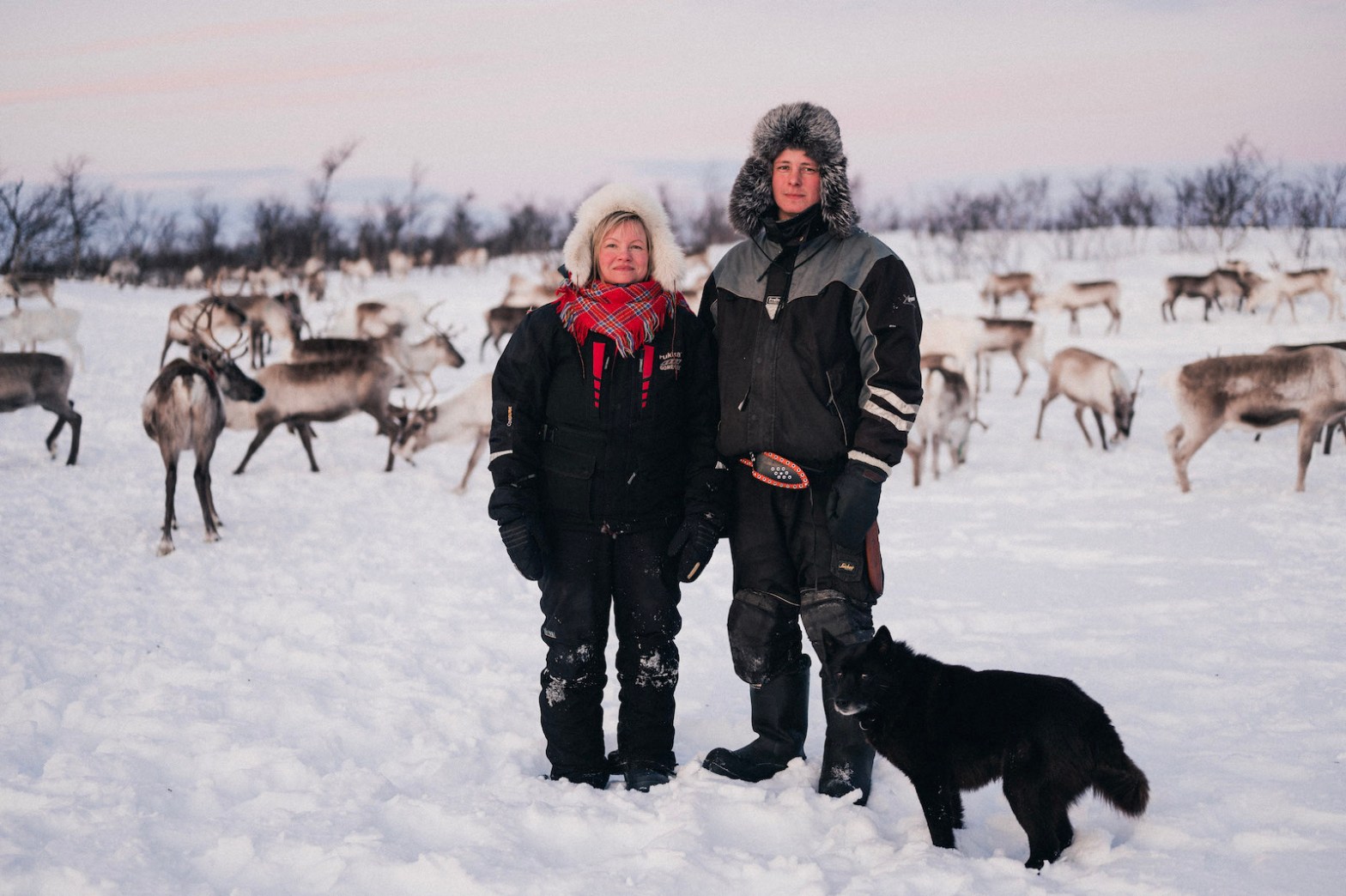
Inka Saara Arttijeff is the adviser to the president of the Sámi Parliament and hails from a family of Sámi reindeer herders. She represents Finland at international climate change summits. 

When I was in Sweden last year, I visited the history museum in Stockholm, where I learned a little about an indigenous population called the Sámi. I had previously heard them called Laplanders, but Wikipeida says they don’t like that term:

“The Sami people (also known as the Sámi or the Saami) are a Finno-Ugric people inhabiting Sápmi, which today encompasses large parts of Norway and Sweden, northern parts of Finland, and the Murmansk Oblast of Russia. The Sami have historically been known in English as the Lapps or the Laplanders, but these terms can be perceived as derogatory.”

Sonia Narang of the GlobalPost recently reported on the Sámi people and the threat that global warming poses for their way of life.

“Inka Saara Arttijeff and her family gather in the cozy kitchen of their red, wooden house, as a pot of soup simmers on the stove. They live at the edge of a frozen lake in the storybook village of Nellim, up toward the far reaches of northern Finland. … Arttijeff is part of a family of indigenous Sámi reindeer herders who are unfazed by short days in subzero weather.

“The Sámi [are] known for their centuries-old tradition of herding reindeer. … However, the warming climate has threatened to disrupt the Sámi people’s tradition of reindeer herding. … The combination of weather changes and increased tree cutting has made it harder for reindeer to find food, and it’s altered their migration patterns.

“ ‘Reindeer herding represents a way of life,’ Arttijeff said. … Arttijeff is one of a growing number of outspoken Sámi women who are taking their voices well beyond the borders of their small villages. The 33-year-old is the adviser to the female president of the Sámi Parliament, Tiina Sanila-Aikio, and represents Finland on the world’s stage. Every year, Arttijeff joins a delegation of indigenous representatives at the UN’s climate change talks. In between all that, she is also a graduate student in international relations and law. …

” ‘For reindeer herding, [we] need forest that is healthy,’ Arttijeff said. … Finland’s state-owned forestry agency, Metsähallitus, manages about one-third of the country’s forests, and it’s also responsible for harvesting and selling timber. Kirsi-Marja Korhonen, a regional director and environmental specialist at Metsähallitus, … notes 60 percent of trees on Sámi lands are in protected areas.

“That still leaves large swaths of Sámi forests up for grabs, reindeer herders say, and they point to clear-cutting of productive forests. …

“[Saara Tervaniemi, a reindeer herder] says it’s critical to monitor forestry activities on her people’s lands since logging is eroding the culture she hopes to pass down to her children. …

“Since Sámi women are primarily responsible for child care and passing on their culture to the next generation, reindeer herding has become an important issue for them, especially as logging and climate change have intensified in recent years. …

“It’s not just reindeer herding that’s at risk — it’s the four other Sámi livelihoods, too: fishing, gathering, hunting and handicrafts. ‘For all of those, you need materials from nature,’ Arttijeff says. ‘If the nature changes, you cannot do traditional livelihoods anymore. So, if that changes, everything changes for us.’ ”

More here. Hat tip: @morinotsuma on twitter.

For more on the importance of forests, see my post reviewing The Gospel of Trees, here.

Read Full Post »

Photo: Pekka Sipola/EPA
Finland is experimenting with a guaranteed income.

Recently I posted about a guaranteed-income pilot program in Kenya that MIT’s rigorously data-driven Abdul Latif Jameel Poverty Action Lab (J-PAL) will be evaluating over the next few years.

Now I see that Finland is testing the concept, too.

Aditya Chakrabortty wrote about Finland’s experiment last month at the Guardian. “In a speck of a village deep in the Finnish countryside, a man gets money for free. Each month, almost €560 [about $660] is dropped into his bank account, with no strings attached. The cash is his to use as he wants. Who is his benefactor? The Helsinki government.”

Juha Järvinen “is a human lab rat in an experiment that could help to shape the future of the west. Last Christmas, Järvinen was selected by the state as one of 2,000 unemployed people for a trial of universal basic income [UBI]. …

“Finland is the first European country to launch a major dry run. It is not the purists’ UBI – which would give everyone, even billionaires, a monthly sum. Nor will Finland publish any results until the two-year pilot is over at the end of 2018. …

“Ask Järvinen what difference money for nothing has made to his life, and you are marched over to his workshop. Inside is film-making equipment, a blackboard on which is scrawled plans for an artists’ version of Airbnb, and an entire little room where he makes shaman drums that sell for up to €900. All this while helping to bring up six children. All those free euros have driven him to work harder than ever.”

Even more than the money, the freedom from the country’s welfare bureaucracy is key.

“In Finland, €560 is less than a fifth of average private-sector income. … [Järvinen’s] liberation came in the lack of conditions attached to the money. If they so wish, Finns on UBI can bank the cash and do nothing else. But, in Järvinen’s case at least, the sum has removed the fear of utter destitution, freeing him to do work he finds meaningful. …

“Social affairs minister Pirkko Mattila … seems genuinely bemused that there could be any political resistance to handing poor people some money to sit at home. ‘I personally believe that in Finland citizens really want to work,’ she says.”

More at the Guardian, here.

Read Full Post »

Older Posts »