Feeds:
Posts
Comments

Posts Tagged ‘garden’

Photo: Brittany Schappach/Maine Forest Service.
The dreaded jumping worm.

“Jumping worms” sounds like a circus act, but they are unwelcome garden visitors that have become a menace for parts of the Northeast. I’d be interested to know if you have them where you live and what you can add to today’s report.

Catherine Schneider writes at Providence Eye, “Earthworms are generally seen as improving the structure and fertility of garden soil as they tunnel through the soil, consuming organic matter and leaving behind castings (worm manure) that are rich in nutrients, humus, and microorganisms. 

“Unfortunately, there is a not-so-new worm in town that provides none of these benefits and can actually do great damage to soil structure and fertility:  the so-called Jumping Worm. These worms devour the top layer of soil, leaving behind crumbly soil that dries out quickly, is prone to erosion, and makes poor habitat for many plants and soil dwelling organisms — including bacteria, fungi, and other invertebrates.

“The name jumping worms refers to several similar-looking species of invasives (Amynthas spp.) that originated in East Asia. … They have been in the US since the late 1800s, but pretty much remained underground until recently when their numbers and range have increased dramatically. The reasons for the recent rapid spread are not completely understood, although it may be due to climate change, as well as human activities which unwittingly spread the worms (e.g., gardening, landscaping, fishing, hiking).  They are now found in more than half of US states, including many areas in Providence and Rhode Island.

“Unlike other earthworms that burrow deep into the soil, jumping worms tend to live in the top three to four inches of soil and in leaf litter and mulch. They are voracious eaters and can quickly deplete nutrients found in soil and organic matter. While other earthworms distribute their high nutrient-value castings throughout the soil, jumping worms excrete their castings on the soil surface, where the nutrients are unavailable to plants. The castings are fairly hard, and they frequently erode away in the rain.

“The combination of hard castings and aggressive churning of the soil results in a dry, crumbly soil structure, with large air pockets, which can impact the ability of plants to produce and anchor roots, absorb water, and extract nutrients

“Once jumping worms come to inhabit a garden, they rapidly increase in numbers, no mating required, as they reproduce asexually.  Adult worms can have many offspring, and while the adults will die off after the first few hard frosts, the tiny egg cocoons they leave behind (which are virtually impossible to see with the naked eye) will survive the winter, emerging in the spring to start the destructive cycle again.

“Jumping worms can have a profoundly negative effect on forests and woodlands, as well as gardens and crop lands. A thick layer of leaf litter and organic matter (sometimes called the ‘duff’ layer) is essential to healthy forest soil.  Native forest plants and trees have evolved to rely on this duff layer for the successful germination and growth of their seeds. After jumping worms have altered forest soil, native species may start to diminish while invasives move in and outcompete native species. This alteration of the forest floor and decline in forest health also harms wildlife that depend on native plants and trees, like ground nesting birds, amphibians and invertebrates.

“Jumping worms are most easily identified by their behavior.  They move across soil or pavement in a snake-like fashion and when you touch them or pick them up, these worms will thrash around wildly. This behavior has given rise to the names jumping worms, crazy worms and snake worms.

“Adult jumping worms can also be distinguished from other earth worms in Rhode Island by a milky white or pinkish band, called a clitellum, that fully encircles one end of their body (see photo above). … Jumping worms in Rhode Island do not attain adulthood until sometime in July or August. Before then, juvenile jumping worms, which lack the white clitellum, are difficult to identify. Young jumping worms can best be identified by their thrashing behavior when they are touched or handled. …

“If you suspect that you may have jumping worms, you can try this test:  Mix 1/3 cup of dry mustard in a gallon of water and slowly pour this over your soil (it will not harm your plants).  The mustard solution should drive any worms to the surface, where you can inspect and remove them if they appear to be jumping worms. …

“The main step in prevention is to take care with the plants, soil, compost and mulch that you bring on to your property. Purchase soil, compost and mulch from reputable dealers. If you are buying bulk compost or mulch, ask the dealer if the product has been heated to 131 degrees F for at least 15 days, which is the industry standard for killing weed seeds and pathogens and will certainly kill jumping worm cocoons which do not survive temperatures above 104°F.  

“Cocoons can also be present in bagged soil, compost and mulch.  To play it safe with bagged products, you may want to solarize them by placing the bags in the hot sun for three (3) days, with a piece of cardboard or other insulating material underneath them to prevent cooling from the ground below them. If you want to be extra careful, you can use a soil thermometer to ensure that the product has reached a temperature of 104 degrees F.

“When purchasing plants or accepting plants from friends, check for any signs of jumping worms.  Starting from seed or buying bare root plants is safest.  Alternatively, you can carefully wash off all of the soil around any new plants before planting in your garden.”

More advice at Providence Eye, here. No firewall.

Read Full Post »

Photo: Joanna Detz/ecoRI News.
Tess Feigenbaum and Brendan Baba in the hot-composting room at their Providence facility.

At my retirement community, there’s a handful of people who are serious about composting both garden waste and food waste. We have Black Earth bins available for anyone hardy enough to trek to the garden area.

Massachusetts, meanwhile, passed a law that the kitchens of institutions our size must also compost food waste. But no one seems to be enforcing it. Here, the powers that be say it’s too complicated and expensive to reconfigure kitchen processes. Maybe they’d have to knock down a wall to build out the space.

Still, the idea of composting is catching on slowly in New England generally, and more restaurants and institutions are finding it can save a lot in trash-pickup fees.

In a story supported by 11th Hour Racing (get it — we are at the 11th hour with climate), Frank Carini of ecoRI News writes about a particularly dedicated composting couple in Rhode Island.

“Their journey, so far, has been epic, from Pawtucket to Los Angeles and back to Rhode Island. They left for the City of Angels with an idea borrowed from ecoRI News and returned with a business model to help the Ocean State get out from under all its food waste.

“Tess Feigenbaum and Brendan Baba co-founded Epic Renewal soon after landing in Los Angeles in late August 2016. They left three years later, but not before keeping some 23,000 pounds (11.5 tons) of L.A. food scrap from being landfilled or incinerated.

“Their for-profit operation, now run out of a 3,000-square-foot space on Acorn Street [Providence], provides low-cost composting services for events, businesses, and homes. Epic Renewal also offers zero-waste consulting services, products such as vermicompost and red wiggler worms, and software that helps other composting businesses track the amount of organic matter they are keeping out of the waste stream.

“ ‘Our big focus area is zero-waste events,’ Feigenbaum said. ‘We do a little bit of commercial and residential, but we very intentionally lean out of residential because of the density there … we’re not interested in competing with all of our friends. The events are really our fun place. They also let us reach a ton of people who otherwise might not really care about it.’

“Feigenbaum and Baba are part of an unofficial composting collaborative that Michael Merner, founder of Earth Care Farm in Charlestown and godfather of Rhode Island composting, unknowingly started in the mid-1980s. For years, Earth Care Farm went at it alone.

“Now, four decades later, about a dozen composting operations, including Epic Renewal, are helping Earth Care Farm take a bite out of the amount of food scrap being unnecessarily wasted.

“ ‘We had three generations of Merners at the last compost fund bill hearing,’ Feigenbaum said. ‘It was awesome.’

“The bill (H5195) would create a compost fund that would award composting and waste-diversion grants to help reduce the amount of material being sent to the getting-crowded Central Landfill in Johnston. …

“Baba said, ‘We need every single solution at the table, but what we really firmly believe in is hyper local, many sites that are smaller, especially knowing we have the most expensive farmland in the country, and we want those to be farms. It’s pretty critical when we’re thinking about urban spaces and creating a resilient network that we create more sites, not just one or two big ones.’ …

“In November 2024, they experienced a life- and career-changing event: they moved their composting operation from a Central Falls basement — Feigenbaum called the space ‘depressing’ — to a roomy, industrial space in Providence’s Valley neighborhood. Epic Renewal was born in an extra bedroom in the couple’s Los Angeles apartment.

“Their newish Acorn Street workspace includes room to store the operation’s 300 or so containers of various sizes, hot-composting boxes made of wood, and parking for their biodiesel-powered truck, a van, and two trailers. …

“Baba, with help from LA Compost founder Michael Martinez, replicated something similar to ecoRI Earth. By the time the duo left Los Angeles, Epic Renewal had 200 residential and 16 commercial customers. …

“When the couple isn’t collecting food scrap and other organic material and making compost with it, Feigenbaum works part-time at the Social Enterprise Greenhouse in Davol Square and Baba works full-time as a financial technology consultant. He wrote the material-tracking software Epic Renewal is sharing with other composting business for free while he works on putting the final touches on the tech. …

“Epic Renewal diverts about three-quarters of a ton of organic matter monthly from the waste stream. Since 2022, the operation has diverted 35.6 tons. Feigenbaum and Baba work with offices, food service and retail businesses, gyms, cosmetic producers, weddings, marathons, and festivals to reduce their waste.

“All of Epic Renewal’s magic is done indoors, thanks to bokashi composting. This anaerobic process, using a culture of bacteria that thrive in an oxygen-free environment, doesn’t produce off-gassing and is ‘ideal for indoor composting.’

“Feigenbaum noted this method requires less space, offers more input options, and is better suited for an urban environment or anywhere with limited green space. There is no runoff. The little liquid that is produced is recycled back into the process, which avoids the need to add tap water. …

“ ‘The biggest thing is demystifying it for people,’ Feigenbaum said of getting folks to compost. ‘We just need to get people exposed to it.’ ”

This story is part of a series “Black Gold Rush: The Race to Reduce Food Waste and Save Soil.”

More at ecoRI News, here.

Read Full Post »

Photo: Southside Community Land Trust.
Southside Community Land Trust high school interns making pizza. SCLT has numerous programs to ensure that locally grown produce gets to community members.  

Today’s story is about regular folks doing good things. It isn’t news. It’s common. As I scroll through all my feeds, I like to remind myself that it’s actually common.

Brooke Warner wrote at the Providence Eye about a neighborhood I know.

“The term ‘produce aggregation’ may not conjure up an image of healthy kids and families and farmers bringing good food to communities facing food insecurity. But Southside Community Land Trust’s Produce Aggregation Program is working to do just that. It’s a way to connect urban farmers to their neighbors with healthy food while at the same time connecting their small farms to new markets.

“It ‘gets fresh local food into the local community,’ said Amelia Lopez, food access associate at Southside Community Land Trust (SCLT), who works on the Produce Aggregation Program.

“Small-scale farmers typically face numerous challenges to access wholesale markets: they lack the capacity to grow large quantities; may not have access to processing facilities; and must manage the complexities of logistics and distribution required to fulfill wholesale orders.

“The Produce Aggregation Program addresses these challenges by acting as a wholesale buyer that combines the harvest of numerous urban farmers to distribute in larger quantities. The program has its own farm-to-market processing center to collect and process crops grown by the farmers and manages the logistics and distribution of the produce, making it possible for small farms to increase the scale of their businesses.

“Twenty-seven farmers regularly sell their produce through the program. Most of the farmers are refugees, immigrants, or part of other marginalized communities. More than half of the farmers who participate have plots at SCLT’s Urban Edge Farm or Good Earth Farm properties, where farmers are able to farm on larger plots of land.

“As their businesses expand and they run out of space, many farm on numerous plots in multiple community gardens and farms. Most of the farmers in the program also sell at farmers markets, but income from farmers markets can be unpredictable and unsteady, Lopez said. The aggregation program gives them another, more reliable, outlet to sell their produce. In addition, there are many years of experience among the farmers, and they are able to share this knowledge with the high school students who take part in the SCLT’s paid internship program. ..

“ ‘Sometimes there are moments when we have an abundance of some products and the program helps us to sell them,’ said Margarita Martinez, translating her husband’s comment from Spanish. Teo Martinez, a farmer from the Dominican Republic, and Margarita are commercial growers based at Urban Edge Farm. …

“Marcel De Los Santos, SCLT’s grants and communications manager, said, ‘The fight against food insecurity faces several significant obstacles that threaten its sustainability. Reducing crucial funding sources, such as the expiration of ARPA [American Rescue Plan Act] funds, has left many food assistance programs needing help to maintain their service levels. Land acquisition for food production and community gardens has become increasingly difficult as urban development drives up property costs and reduces available space.’

“Additionally, rising food and transportation costs and persistent supply chain disruptions strain food banks’ operational capacities. These challenges are compounded by the growing demand for food assistance services, climate change impacts on agricultural production, and the need for consistent volunteer engagement. …

“The [aggregation] program runs two distribution cycles each week during the growing season. SCLT orders different products in various quantities from different participating farmers and notifies them in advance of each cycle what they will be purchasing. Farmers deliver their produce to the food hub, where it is processed and packed into bags with other farmers’ produce. Each bag contains about $20 worth of fresh produce, sourced from different farmers, and is ready to be distributed … through numerous community partners that in turn give it out to their participants at no cost. Distribution partners include organizations such as health clinics, day care programs, and recreation centers. Health clinic partners … give out the produce through the VeggieRx program, where doctors give patients a ‘prescription’ of produce. …

“[As of this writing] the program us funded primarily by the USDA’s Local Food Purchase Assistance Cooperative Agreement program (LFPA), which began during the pandemic to expand access to local, healthy food and increase economic opportunities for underserved farmers. [The] program has a new home in the SCLT’s new Healthy Food Hub. …

“SCLT’s mission is to help local urban farmers by providing land access, agricultural resources, and agriculture and business training. The nonprofit supports the operation of 60 community gardens in Providence, Pawtucket, and Central Falls, including 20 land trust-owned properties.

“The Produce Aggregation Program is one of many that the SCLT runs or partners with to address food insecurity in the Providence area. Farmers markets, gardens, education programs, and internships are among further examples of the SCLT’s mission. All of these activities, like the Produce Aggregation Program, help increase access to fresh, healthy, and culturally relevant food for these urban communities and feed roughly 1,200 families annually.

“Although the growing season typically ends at Thanksgiving, the work of the SCLT continues year-round, along with its partner organizations and local businesses, farmers, volunteers, students, families, and the local community.”

Not being sure that USDA will still fund programs like those, I suspect this could be another worthy cause that will have to rely on private fund raising.

More from the Providence Eye via ecoRI News, here.

Read Full Post »

Photo: Ann Scott Tyson/Christian Science Monitor.
In China’s hutongs, people travel more slowly, affording them time to enjoy the lush bounty of small gardens.

I do like stories about the joy and innocence of growing things. Check out today’s feature from the Christian Science Monitor, an outlet that reliably covers more positive news than the blaring headlines we are used to.

Ann Scott Tyson writes, “On his morning rounds after a summer rainstorm breaks Beijing’s heat, Zhao Shisheng inspects his favorite vine of gourds. 

“From a small pot of dirt set against the wall of his back alley home, the vine climbs a bamboo pole, rising past mops hung out to dry. From there, it scales window ledges, pipes, and electricity wires, soaring toward a makeshift trellis Mr. Zhao built on his rooftop.

“In fact, Mr. Zhao’s prolific, potted garden – bursting with vines of melon, grapes, tomatoes, cucumbers, mint, and beans – is rapidly enveloping his modest, one-story house, where he lives with three generations of his family and a pet parrot.

“Mr. Zhao counts himself among the ranks of Beijing’s hutong gardeners – the avid, green-thumbed residents who work wonders in the city’s maze-like ancient neighborhoods, tucked behind skyscrapers and traffic-clogged avenues. In hutongs, as the narrow alleys are called in Chinese, people travel more slowly – often by bicycle or by foot – affording them time to enjoy the lush bounty, and admire the gardeners’ horticultural feats. 

“ ‘We eat some and I share the rest with neighbors. I don’t need to sell what I grow. I already have a way to make a living,’ Mr. Zhao says, pointing to a tiny convenience shop in the front room of his house.

“These gardens are largely vertical, rising like Jack’s beanstalk out of humble clay pots or small planters. Vibrant vines and curly tendrils cling to the old stone and rounded tiles of the traditional courtyard homes. Their rustling leaves create a soothing sound and welcome shade as they arc over alleys and courtyards on trellises. …

“Around the corner next to another hutong garden, a plein-air painter has set up an easel and canvas to capture the scene. ‘This plant is a loofah gourd,’ says Liu Changli, dabbing leaves on his watercolor tableau. ‘People in Beijing like to grow it because you can eat it, or simply enjoy looking at it.’ …

“The grower of the loofah gourds, Zhao Guangliang, steps out his door carrying a potted tomato that needs a sunnier exposure. Space is precious in the hutongs, where people live in crowded conditions and share public toilets. So gardeners must be creative. Assisted with strategically placed bamboo, they use every nook and cranny for plants. One of Mr. Zhao’s neighbors arrays plants on the roof of an unused van. Mr. Zhao opts, for now, to seat his tomato on a small chair. …

“Visit with them for a time, and the gardeners enjoy sharing not only growing tips, but also how to use different plants in cooking and other practical ways. ‘This is a Sichuan pepper bush I’ve been growing for more than a decade,’ boasts Mr. Wang, who withheld his first name for privacy. ‘You dry out the pepper in the yard, then you can use it to make mapo tofu or meat stew.’ …

“ ‘This is mint. Do you have some in your house? Smell this kind – see how strong it smells? If you get bitten by a mosquito you can crush some and rub it on your skin. … It’s good for people to chat like this,’ he reflects. ‘It gets rid of your worries.’ “

I wanted to grow loofah gourds here, but I knew I shouldn’t introduce a species to my region. Loofahs make those wonderful “sponges” I used to think came from the sea.

More at the Monitor, here. No paywall. Subscriptions encouraged.

Read Full Post »

Photo: matusgajdos17/500px.
Australian researchers say concrete could be 30 percent stronger with charred coffee grounds.

Longtime coffee drinkers know that coffee is good for all sorts of things besides waking you up. Coffee grounds are great in compost, for example, and provide useful nutrients for your garden — nitrogen, potassium, and phosphorous.

But coffee grounds for construction projects? At ScienceAlert, Tessa Koumoundouros describes new research showing the possibilities.

“We could be producing concrete that’s 30 percent stronger by processing and adding charred coffee grounds to the mix, researchers in Australia discovered. Their clever recipe could solve multiple problems at the same time.

“Every year the world produces a staggering 10 billion kilograms (22 billion pounds) of coffee waste globally. Most ends up in landfills. ‘The disposal of organic waste poses an environmental challenge as it emits large amounts of greenhouse gases including methane and carbon dioxide, which contribute to climate change,’ explained RMIT University engineer Rajeev Roychand.

“With a booming construction market globally, there’s also an ever increasing demand for resource intensive concrete causing another set of environmental challenges too.

” ‘The ongoing extraction of natural sand around the world – typically taken from river beds and banks – to meet the rapidly growing demands of the construction industry has a big impact on the environment,’ said RMIT engineer Jie Li. … ‘With a circular-economy approach, we could keep organic waste out of landfill and also better preserve our natural resources like sand.’

“Organic products like coffee grounds can’t be added directly to concrete because they leak chemicals that weaken the building material’s strength. So using low energy levels, the team heated coffee waste to over 350 °C (around 660 °F) while depriving it of oxygen.

“This process is called pyrolyzing. It breaks down the organic molecules, resulting in a porous, carbon-rich charcoal called biochar, that can form bonds with and thereby incorporate itself into the cement matrix. …

“The researchers [are now] testing how the hybrid coffee-cement performs under freeze/thaw cycles, water absorption, abrasions and many more stressors. The team is also working on creating biochars from other organic waste sources, including wood, food waste and agricultural waste. …

“Said RMIT engineer Shannon Kilmartin-Lynch, ‘Inspiration for my research, from an Indigenous perspective, involves Caring for Country, ensuring there’s a sustainable life cycle for all materials.’ “

The research was published in the Journal of Cleaner Production.

More at Science Alert, here.

Read Full Post »

Photo: MBARI.
Researchers nicknamed the Muusoctopus robustus species the pearl octopus because of the way they look while upside down protecting their eggs. In 2018, a team of scientists found thousands of M. robustus at the base of the Davidson Seamount, about 80 miles southwest of Monterey, California.

Some people may recall Ringo Starr singing “Octopus’s Garden” on “Abbey Road,” but who knew there was really such a thing as an octopus garden? Kasha Patel describes one at the Washington Post.

“About 80 miles from the coast of central California, thousands of octopuses gather on rocks two miles below the surface of the ocean. This location, dubbed ‘octopus garden,’ is the largest known aggregation of these mollusks in the world. … Scientists have been puzzled why so many octopuses plant themselves in these abysmal, colder waters — until now.

“After three years of monitoring the area, researchers found the site is a popular mating and nesting ground for pearl octopuses, where hot springs help embryos develop twice as fast as expected at this depth. The faster development increases a hatchling’s likelihood of survival through the brooding period, according to a study released [in August] in the journal Science Advances. …

“ ‘We’re supposed to be managing these areas and protecting them for future generations, and we didn’t even know that this habitat was down there [and] what kind of impact it was having,’ said Andrew DeVogelaere, research ecologist and study co-author. …

“The discovery of the octopus garden back in 2018 was lucky, said DeVogelaere, who runs the research program for NOAA’s Monterey Bay National Marine Sanctuary. For more than two decades, researchers have been studying an extinct underwater volcano called the Davidson Seamount. The seamount, located southwest of Monterey, Calif., is one of the largest seamounts in the world and known for its beautiful deep sea corals. It is also one of the most well-studied seamounts in the world, so when DeVogelaere wanted to explore it further, others were skeptical he would find anything new.

“ ‘We said, “Don’t waste your time going there,” ‘ said Jim Barry, senior scientist at the Monterey Bay Aquarium Research Institute and lead author of the new study. ‘ “We’ve been all over it.” ‘ …

“Nevertheless, Barry and his colleagues said there is an unexplored area on the foothills of the seamount that could be interesting to investigate. The researchers then sent a ship to study the area.

“DeVogelaere, who was following along on a video feed, said it was at first pretty dull, just a lot of mud. Then suddenly, they spotted a hoard of balls, like opalescent pearls, on the seafloor.

“They had found the ‘octopus garden,’ home to at least 6,000 nesting, Muusoctopus robustus. … The researchers estimate there could be 20,000 in this nursery.

“For three years, the team monitored the population through cameras and dives with remotely operated vehicles, measuring water temperature and oxygen. They found only adult males and female octopus, developing eggs, and hatchlings at the location, indicating the site was used exclusively for mating and nesting.

“They also noticed shimmering water, which was indicative of a thermal spring — something ‘totally new in this area,’ Barry said. He explained the shimmering water appears when warm water (such as from a thermal spring) and cool waters mix. Water temperature from these thermal springs can reach nearly 51 degrees Fahrenheit, while ambient water temperature is around 35 degrees. …

Typically at near-freezing temperatures in the deep ocean, researchers expected pearl octopus eggs at least five years to hatch. These hatched in just two years.

“ ‘As you get into colder waters, whether it’s polar waters or deeper waters, colder water slows down metabolism, slows down metabolic rates, slows down growth and embryonic development rates,’ Barry said. ‘We think that the warm water is providing some sort of reproductive benefit for them.’ …

“The team thinks the octopus garden is just one of many deep sea octopus environments out there. Just five miles away from the garden, researchers found another octopus nursery near thermal springs. In June, another group of researchers discovered a nursery near thermal springs in Costa Rica.

“[Beth Orcutt, vice president for research at the Bigelow Laboratory for Ocean Sciences in Maine] helped lead the Costa Rica expedition. [She] said both of these discoveries show that these small outcrops of rock on the seafloor, which are often passed over for study to focus on larger seamounts, can be incredibly rich and productive sites of life.

“ ‘I don’t think it’s a one-off curiosity,’ DeVogelaere said. ‘Most of the deep sea hasn’t been looked at.’ ”

More at the Post, here. For a version of the story with no firewall, see CNN, here.

Read Full Post »

Photo: Joanna Detz/ecoRI News.
The Garden Time program in Rhode Island gives formerly incarcerated people a chance to prepare for reentry into society.

Today’s article about a program to help incarcerated people find work on the outside notes successes and failures. One of the featured participants, Anderson, ended up back in trouble with the law. Others have stuck with the hard work needed to move on.

Colleen Cronin wrote about the initiative at ecoRI News.

“The Green Jobs Reentry Training program run by Garden Time, a Providence-based nonprofit [is] an offshoot of a gardening program run by Garden Time at the Rhode Island Adult Correctional Institutions (ACI) since 2011, according to Kate Lacouture, founder and executive director. In addition to teaching incarcerated people about gardening, the ACI program also helps participants on an individual level with reentry needs when their sentences end.

“Lacouture called the ACI training a ‘pre-employment program,’ because Garden Time teaches gardening, horticulture, and other green industries and brings in employers from those fields to teach and get to know program participants. …

“When the pandemic hit, Garden Time started expanding its work outside the prison. Lacouture said the organization started a garden at Open Doors, a nonprofit focused on reentry in the city’s Silver Lake neighborhood. Working in that garden regularly planted the idea of a formal reentry and job training program for individuals who were out of prison and trying to integrate into the community, Lacouture said.

“Garden Time ran a shorter reentry training pilot program in fall 2021, and thanks to its success, it was funded by the state Department of Labor and Training as a Real Jobs Rhode Island program. This allowed Garden Time to expand the program from six to eight weeks, offer larger weekly stipends to participants ($400 a week), and provide lunch Monday through Thursday.

“For participants of the program who have just left prison, ‘it’s really nice to have a nice landing spot,’ Lacouture said.

“The program also provides students with Chromebook laptops, work boots, and other tools that participants might need on a job. They attend classes in a Manton Avenue classroom on topics such as arboriculture and nutrition, or receive hands-on training at various locations Monday through Friday. Friday mornings are spent at the Open Doors garden.

“During the last week of the program, the students participate in an internship, for which Garden Time pays.

“The internship ‘becomes like an extended job interview, like a chance for the person to prove themselves, a chance for the employer to be comfortable with it,’ Lacouture said. ‘Because a lot of times, you know, you ask an employer if they would hire formerly incarcerated people, and they don’t really know what that means. It sounds scary. They don’t know what that entails.’

“By the end of the program, those who graduate become official Providence tree keepers, receive an Occupational Safety and Health Administration (OSHA) certification for completing a 40-hour training, and hopefully find full-time positions in a green industry job, Lacouture said.

“Participants must attend most of the classes to complete the program, but on the first Friday of the 2022 session, one of Lacouture’s star students was missing.

“Attending classes can be difficult for anyone who has recently been released from prison or has a police record. Suspended or revoked licenses, little funds for car insurance or a car itself, and sporadic and mandatory parole meetings and other legal hearings can all complicate attendance.

“But Ace, who … met Lacouture inside the ACI, missed the first Friday class because of a cat.

“Ace had been working for Groundwork Rhode Island earlier that week, when he saw a stray cat and couldn’t help picking it up, Lacouture said, despite his allergy to cats. The contact caused Ace’s asthma to flare up, keeping him from Friday’s class. …

“Since Ace was released from the ACI, before COVID, he has accumulated cats, dogs, and tons of pepper plants, gotten married, and started his own landscaping business.

“He knows some of the other participants in the reentry program, living in temporary housing and lacking satisfying work, struggling to maintain their connections in the world outside prison walls, looked up to him.

“Even though his success might look easy and the way he speaks and presents himself might seem completely controlled, his journey has been long, he said. He speaks mostly light-heartedly about the past and his hijinks while also admitting to deep pain and trauma. …

“ ‘I’m always getting in trouble,’ Ace said.

“He can talk about growing up in Liberia and sneaking into a neighbor’s garden to snatch fruit in the same easy tone as he discusses the trials of his addiction. And he readily speaks about the therapist he sees regularly to help him with his addiction, as well as attending Alcoholics Anonymous meetings.

“To overcome some of his challenges, Ace said he has had to make adjustments. The green jobs program starts at 9 a.m., but Ace regularly gets there hours early. If he picks his wife up from work, often at 2, 3, or 4 o’clock in the morning, sometimes he chooses to stay up, so he knows he’ll be ready for the class, he said. …

“On an unusually cold Friday morning, John Kenny, owner of Big Train Farm in Cranston, visited Open Doors to talk to the reentry program participants about green farming practices and how they could start their own farms.

“The Farm Service Agency (FSA) within the U.S. Department of Agriculture offers several different loan programs and has targeted incentives for women and people of color.

“ ‘I’m not going to kid you,’ Kenny said, going on to explain that even with help, obtaining a loan and starting a farm isn’t easy. …

“Ace has tried to let a lot go. He knows he’s made mistakes, and he tries to make up for them. He knows his life has been unfair, but he tries not to think about it. On the other hand, injustice boils under Anderson’s skin when [the  57-year-old military veteran and former oil-platform builder] talks about the environmental hazards Black and brown Americans face and their connection to the cyclical criminal justice he and others have experienced.

“Two million people are currently incarcerated in the United States. Out of the 11 participants that arrived at the first day of the reentry program, most were men of color. Two people were white. There was only one woman in the class. The group reflects the larger pool of Americans who are or have been incarcerated. …

“Like many of the people who have been incarcerated around the country, several of the participants in Garden Time’s green jobs program were in prison for long periods or repeatedly throughout their lives.

“A 2021 study of people incarcerated in Rhode Island showed that by the 3-year post-release mark, 47% had been sentenced again to prison. Many of them had been charged again within the first six months of their release date. Education programs inside a prison, like Garden Time, can do a lot to prevent this.”

Read the rest of the long article at ecoRI News, here. No firewall at this nonprofit, but donations are welcome.

Read Full Post »

Photos: John and Suzanne’s Mom.

My paternal grandmother, as the wife of a once-renowned Alpine gardener in Syracuse, New York, cherished this quote from Dorothy Frances Gurney: “The kiss of the sun for pardon,/ The song of the birds for mirth,/ One is nearer God’s Heart in a garden/ Than anywhere else on earth.”

Lacking profound insight into that particular claim, I will just say that gardening is good for one’s observational skills and hence one’s mental health, as a recent Washington Post article suggests.

Catie Marron wrote, “I often keep a single flower in a small bottle on my desk, where I can enjoy it. I learn a lot from studying that flower’s cycle.

“It’s an idea I got from the philosopher and author Alain de Botton, who once remarked that we unfairly dismiss museum postcards of prominent paintings. ‘Our culture sees them as tiny, pale shadows of the far superior originals hanging on the walls a few metres away,’ he observed, ‘but the encounter we have with the postcard may be deeper, more perceptive and more valuable to us, because the card allows us to bring our own reactions to it.’

“[As] with the postcard, that single flower invites us to study every detail more deeply. Even over just a few days, the changes are breathtaking. I’ve witnessed the magic of a peony going from hot pink to pale coral, watched a tulip’s petals double in size and seen a rose clinging to the last glimmers of its fading bloom. …

“It was a new sensibility for me, one I didn’t have before I began gardening seriously and closely observing these single blooms on my desk. Once I started digging in the dirt, I noticed ecosystems I had taken for granted. I’d pause to study a surprising color combination on a single flower or a mix of plants. I’d catch myself mid-stride if I recognized a plant but it looked different from similar varieties I’d seen before. Soon, looking carefully at plant life became a habit.

“Much has been written and said about gardening’s practical health benefits, and those effects are real and important. But less is shared about the way that gardening can reshape what you notice, and how that can impact your days. Gardener’s eyes can lead you to gaze at the texture of turf, the imaginative plantings on a brownstone stoop, the splendor of a February cherry blossom. …

The best thing about gardener’s eyes is that you bring them with you everywhere — and everywhere there is something to see. …

“I’ve been awed by the great, formal gardens I’ve visited, but I’ve been just as absorbed by my own modest vegetable garden, where plant growth and renewal always offer something new to capture my attention.

“Well-developed gardener’s eyes can also make you aware of how little you know, a feeling shared by the renowned garden designer Beth Chatto, who experienced this during a visit to Benton End, the home and gardens of Sir Cedric Morris and Arthur Lett-Haines. Morris was an artist-gardener who crafted ‘a bewildering, mind-stretching, eye-widening canvas of color, textures and shapes, created primarily with bulbous and herbaceous plants,’ Chatto said in Hortus Revisited, edited by David Wheeler. …

” ‘That first afternoon, there were far too many unknown plants for me to see, let alone recognize,’ she wrote. ‘You may look, but you will not see, without knowledge to direct your mind.’ That’s how I felt in my first gardening forays: I was looking, but not seeing. After years of reading about plants and simply spending more time in gardens big and small, I was able to see more clearly.

“That vision didn’t only come by watching plant life. I also learned to watch gardeners themselves. That was based, in part, on the unexpected advice of Tom Coward, the head gardener of Gravetye Manor in Sussex, England. I once bumped into Coward while walking around Gravetye. At that time, I was a new gardener, and I asked if he had any tips for a fresh practitioner of the craft. His guidance: Find a knowledgeable gardener, and watch what they do. …

“If you are new to gardening and feel confused, visit more gardens, spend an afternoon at your local nursery and talk to the gardeners. Ask questions and listen to their stories. Gardeners tend to be unfailingly patient and generous, because they too had to learn the trade in the same slow and circuitous manner. They know the feeling of gardeners’ eyes moving from muddled to clear.”

More at the Post, here.

Read Full Post »

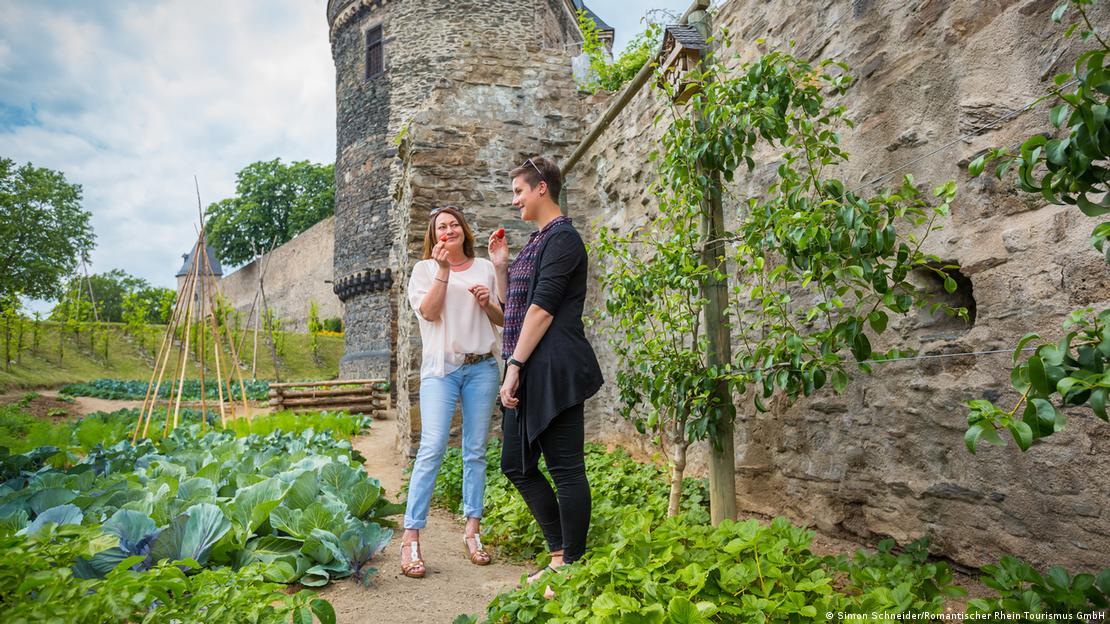
Photo: Simon Schneider/ Romantischer Rhein Tourismus GmbH via DW.
Residents and visitors alike are encouraged to pick whatever food they like from a public garden in Andernach, Germany.

An idea whose time has come may be growing food on public land and making it free for the picking. I wrote a 2011 post on scavenging, here, and a 2020 post on a homeless teen whose foraging helped her learn to cook, here. In those cases, the taking of food was done on the sly. But what if municipalities actively encouraged people to forage, as landscape director Paul did at my last job did?

Cathy Free writes at the Washington Post, “The city of Andernach, Germany, planted 101 varieties of tomatoes in the town center and told everyone to pluck and take whatever they wanted.

“It was such a hit, the following year the city did the same with beans. The next year, it was onions. After that, the city planted fruit trees, lettuce, zucchini, berries and herbs. All were free to anyone who lived or happened to be in the town of 30,000 people. …

“It’s one of a growing number of places across the globe known as edible cities. In the United States, there are public lands from Seattle to North Carolina where people are welcome to pick and take from fruiting trees and bushes.

“Organizers interviewed for this article said there has never been a problem with people taking more than they need, whether they grab a single pear or a bag full of potatoes and artichokes.

Every year, there is more than enough produce to go around.

“ ‘Many here are very proud when you talk to them about our edible city,’ said Bettina Schneider, 29, city team coordinator for the Edible Cities Network in Andernach.

“When word got out that Andernach’s public gardens and orchards — which started in 2010 — were free for the picking, other cities in Germany and throughout the European Union joined in, she said. Now the Edible Cities Network is funded by the European Commission, the executive body of the E.U.

“The areas that were converted into fruiting gardens and orchards in Andernach were previously overgrown and unkempt, so the gardens were well received, Schneider said, noting that a medieval moat is now covered with peach, almond and pear trees, and vacant spaces near schools have been transformed into community vegetable patches. …

“ ‘Every partner organization in the project receives funding from the E.U. budget to carry out their work,’ [Marisa Pettit, a coordinator for Edible Cities] said. Pettit said that several cities also receive funding for what Edible Cities calls ‘living labs’ — green spaces where residents can hold community events and develop their own plans to help their urban gardens to thrive and produce bountiful harvests.

“Edible Cities is now supporting a community garden in Cuba, while cities in China, Tunisia, Togo and Uruguay are also developing plans for urban food forests, said Ina Säumel, a principal investigator for the Edible Cities Network. …

“Many U.S. cities have similar projects. Detroit has an urban farming movement, Philadelphia has food forests, and there are edible community projects in Atlanta and Los Angeles. All rely on volunteers to do the weeding, pruning and planting.

“Smaller cities such as Bloomington, Ind., and Hyattsville, Md., also have fruit trees and vegetable gardens that can be accessed by anyone.

“At the Dr. George Washington Carver Edible Park in Asheville, N.C., founded more than 20 years ago, residents can harvest whatever they like from 40 varieties of fruit and nut trees, said Lynx Bergdahl, a community organizer at Bountiful Cities, the nonprofit that helps manage the food forest.

“ ‘Anyone can get whatever they want, when they want it,’ said Bergdahl, 33. ‘This is about taking away as many barriers as possible to create public food access, whether somebody wants a single apple or an entire basket.’

“In Seattle, the neighborhood of Beacon Hill turned a steep and empty slope next to a public park into a vibrant edible landscape in 2012 through a partnership with the city. The Beacon Food Forest recently celebrated its 10th anniversary as a diverse community garden that is open to anyone walking by, said Elise Evans, one of the project’s volunteers. …

“ ‘To create something from a blank hillside was a big deal,’ she said. ‘Our harvest truly offers something for everyone and it’s based on trust. People take what they need and are fed for free, and that’s an empowering feeling.’ “

Do you ever nibble from gardens around your town? Please let me know.

More at the Post, here.

Read Full Post »

A bullied homeowner in a homeowners association won the right to have natural landscaping. The governor is expected to sign a bill that affects every gardener in Maryland.

Jean is my go-to source for information on saving the planet by protecting insects, planting native species, and getting rid of yard chemicals.

Yesterday she sent me a cool article about a tyrannical homeowners association that bit off more than it could chew when it told one couple what to plant.

Nancy Lawson wrote at Human Gardener, “If you live in a community governed by a homeowners association [HOA] in Maryland, your HOA will soon no longer be allowed to require you to grow turfgrass. It can no longer prohibit you from planting native plants and creating wildlife habitat. The Maryland General Assembly has spoken, quietly and firmly, joining a growing number of states last week by passing House Bill 322, the low-impact landscaping legislation that specifically codifies your right to be wildlife-friendly, plant-friendly, and environmentally conscious.

“You can thank my sister, Janet Crouch, for that. … Three and a half years ago, Janet and her husband Jeff began receiving demands from the Beech Creek Homeowners Association in Howard County that they convert their beautiful 15-year-old pollinator gardens to turfgrass. In a series of bullying and nonsensical letters, the HOA’s contracted law firm, Nagle & Zaller, wrote that a garden ‘without the use of pesticides in which they have maintained “native plants” to provide food for birds, bees, and other insects and animals’ is ‘completely contrary to the overall design scheme for the Association, which is a planned development.’ … Attorney Sean Suhar used quotes around words and concepts he apparently viewed as suspicious, such as ‘garden,’ and wrote disparagingly of the Crouches’ ‘environmentally sensitive agenda.’

The law firm’s letters displayed a seemingly boundless ignorance by trying to demonize my sister and her husband for adding ‘plantings which grow back every year.’

“Throughout this process, there was virtually no opposition from politicians, and even the national association representing HOAs supported the legislation. When we testified for the bill the first time at last year’s hearing, the curmudgeonly delegate who’d voted against other environmental proposals that day surprised us all by asking, ‘Who wouldn’t support pollinator gardens?’

“His question was more than rhetorical for my sister. Janet’s HOA board was so unsupportive of pollinator gardens that it paid the law firm of Nagle & Zaller about $100,000 of the community’s money — made up entirely of homeowners’ dues — to try to get rid of the one in my sister’s  yard. …

“The entire case against the Crouches was built on the complaints of one neighbor, who grows Japanese barberries in front of his house and fills his lawn with blue chemicals that I have filmed running down toward the wooded and stream-filled park during rainstorms. He also hires pesticide sprayers routinely and accused the Crouches’ of attracting mosquitoes, even though his eroded lawn pools with standing water and provides perfect mosquito habitat. One of the most ludicrous complaints of all from this man — whose property and entire neighborhood abuts forest where owls, foxes, squirrels, chipmunks and many other animals live — was repeated in illogical screeds from the lawyers proclaiming that ‘numerous squirrels are being attracted to the subject property. The neighbor fear [sic] this will affect their property.’

“Claims of squirrel takeovers may sound laughable, but since 2017, it has been no laughing matter for Janet, who poured her heart into saving the garden that has offered so much solace to her family and so much habitat to the community’s birds and other wildlife. …

“In preparation for a ‘hearing’ process in 2018, we prepared many documents and photos, only to arrive and discover it was all a sham. Suhar, the HOA lawyer, immediately told my sister to ‘shut up’ when she tried to speak and yelled at me to ‘be quiet.’ …

“Unfortunately there was no law against such abusive behaviors, nothing to prohibit HOAs from acting in a kind of Wild West, arbitrary fashion toward gardens and nature and the people who love them. Until now. …

“We will be eternally grateful to wildlife biologist John Hadidian, native nursery expert Rob Jenkins, and realtor Kristi Neidhardt for their wisdom, insight and bravery in signing on to help with the case. Most of all, Jeff Kahntroff and Matt Skipper of Skipper Law took on what most lawyers consider to be an unwinnable issue. …

“It’s easy to become overwhelmed by the forces against nature, but my sister has taught me that you can change those tides by becoming a force of nature. ‘I’m a shy person,’ she told me last week, ‘and I don’t usually put myself out there like this.’ But she’s never countenanced bullies and has defended me from them since I was a little girl. This time, she was defending the plants and animals and her family, who felt attacked in their own home of 20 years. … Thanks in large part to the bravery and fortitude of Janet Crouch, many more people in my home state will now be allowed to nurture the bees, butterflies and other wildlife in their own backyards.

“The bill is waiting for the governor’s signature and is set to become law in October.”

More here. Hat tip: Jean at Meadowmaking.

Read Full Post »

The Journey Junkies blog doesn’t seem to have a Reblog button, but I have their permission to share this post about an unusual garden in India.

They write: “The Nek Chand Rock Gardens had been on our radar for a long time before we finally made it there. Located in the city of Chandigarh, at the foot of the Himalayas, the gardens are one of India’s hidden gems. In fact, they largely undiscovered by foreign tourists. Indeed, on our visit, we were the only foreigners enjoying the gardens. Interestingly, although they are largely overlooked by visitors from overseas, the gardens are the second most visited tourist attraction in the country after the Taj Mahal. Around 5000 visitors a day enter the gates of the gardens to experience Nek Chand’s captivating wonderland.

“Although the gardens themselves are incredible, the story of the Nek Chand Rock Gardens is even more so. Nek Chand was born in 1924 in Pakistan and moved to India during partition in 1947. Two years later he joined the Highway Department in Chandigarh as part of the Refugee Employment Programme. In 1951, he secured a position as a road inspector at Chandigarh Public Works Department. His job was to supervise the construction of a re-vitalisation of the road system in the city. …

“It was Nek Chand’s job to supervise the re-vitalisation of the road system in the 1950’s. However, Nek Chand was a man with a vision. It was during this period, that he started to collect unwanted materials that had been discarded throughout the area. These were items that had been abandoned when the city was being re-built, as well as objects that had been thrown away by residents. He searched for rocks, broken crockery, coloured glass, along with tiles and whatever else he could find. With these materials, he secretly built a sculpture garden hidden on government land. It started small, just a patch of land, with stones bordering the area, together with a few sculptures. However, before long, the garden had expanded significantly and various courtyards were added.”

More here.

Read Full Post »

Photo: Jim Davis/Globe Staff
John Fallon gathers squash at the 8,000-square-foot traffic island in Beverly Farms.

Today my friends surprised me with a bag of apples from a tree in their yard. They are not farmers, but many nonfarmers are getting into growing things these days. Some gardeners are growing especially to share.

Consider the Beverly, Mass., man who appropriated a traffic island for a community garden.

John Laidler reports at the Boston Globe, “Growing up in Beverly Farms, John Fallon developed a talent for cultivating vegetables by helping his Irish immigrant father tend the family’s backyard garden. A half-century later, Fallon is drawing on those farming skills — refined through many years of his own gardening — to help improve the lives of people in need.

“Since 2016, Fallon has been growing vegetables on a traffic island in Beverly Farms and donating them — together with vegetables from his own garden — to local food pantries, homeless shelters, and other organizations that serve low-income families.

“In the first four years of his nonprofit operation, Fallon annually harvested and donated on average 3,000 pounds of produce. This year, in response to COVID-19, he expects to raise that volume to about 5,000 pounds. …

“Now retired as a test engineer in the semiconductor industry, Fallon, 61, cited the need to promote economic and social justice as a motivation for his philanthropic farming. …

“ ‘Everyone should help those less fortunate than them,’ said Fallon, who experienced losing a job himself when he was laid off from his longtime semiconductor job in 2007.

“Fallon’s philanthropy began in 2014 when he donated surplus tomato plants from his home garden to a farming program for inner-city children. …

“In 2016, Fallon came up with the idea of growing crops on the idle traffic island on Hale Street. The state Department of Transportation, which owns the island, authorized him to farm the land for free provided he donate any crops he raised to charity. …

“His 8,000-square-foot Beverly Farms Gardens produces tomatoes, peppers, cucumbers, summer squash, regular and golden zucchini, eggplant, broccoli, and acorn and butternut squash.

“Fallon does all the growing and harvesting himself, with occasional help from volunteers, including students from Landmark School in Beverly, and Gordon College’s women’s soccer team. …

“Although his program is self-funded, Fallon has received donations from individuals, local businesses, and churches. The Farms-Prides Community Association helped him purchase compost last year and plans a fund-raising effort to assist him with other expenses.

“ ‘I have watched John over the last five years turn a barren plot of land into a lush, productive garden supplying food to needy families,’ Rick Lord, the association’s president, said by e-mail. …

“Fallon hopes he can inspire others to do similar work. … ‘My vision would be for each town or city to set aside 4 acres, whatever it takes to feed the homeless in their area,’ he said.”

More at the Boston Globe, here. Another take on the story is at the Salem News, here.

Read Full Post »

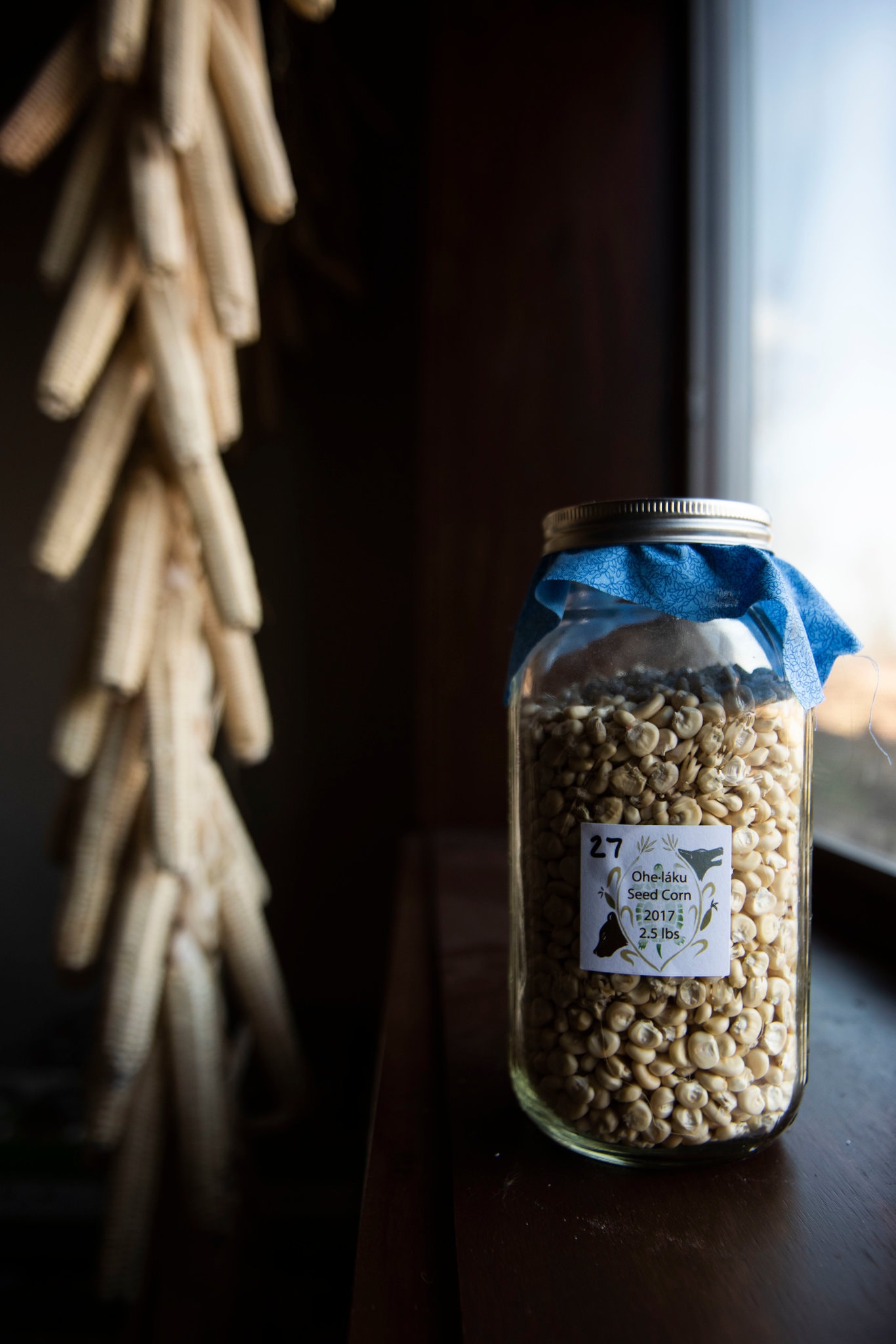
merlin_171325053_7e964ad6-9a5e-4fbb-a992-81804bd3bb07-superjumbo

Photo: Lauren Justice for the New York Times
“Faced with grocery shortages,” reports the
New York Times, “many Native Americans have started collecting seeds to plant in their gardens at home.” Among members of the Oneida Nation, white corn, above, is prized for its versatility and nutrient density. 

As many of us non-gardeners start to wonder if we could grow tomatoes and lettuce in the kitchen window, we look with envy at people who can feed themselves without grocery stores.

Recently I read an article in the New York Times by Priya Krishna about indigenous Americans who, although suffering in the pandemic like the rest of us, at least have ancient wisdom they can dust off to help them survive.

“For the roughly 20,000 members of the Oglala Sioux Tribe living on the Pine Ridge Indian Reservation — a vast, two million-acre expanse in southern South Dakota — social distancing is certainly feasible. Putting food on the table? Less so.

“Getting to food has long been a challenge for Pine Ridge residents. For a lot of people, the nearest grocery store is a two-hour drive away. Many rely on food stamps or the Food Distribution Program on Indian Reservations, a federal initiative that provides boxes of food (historically lacking in healthy options) to low-income families. Diabetes rates run very high.

“The coronavirus crisis [has] only made access to food harder, as shelves of the few groceries empty out, shipments of food boxes are delayed because of supply chain disruptions, and hunting and gathering are restricted by government regulations and environmental conditions.

“But the Oglala Sioux, like many other Native Americans across the country, are relying on the practices — seed saving, canning, dehydrating — that their forebears developed to survive harsh conditions with limited supplies. …

“Big-box stores and processed foods have eroded some of the old customs. But now, faced with a disrupted food system, many Native Americans are looking to those traditions for answers.

“Milo Yellow Hair, who lives in Wounded Knee, S.D., on the Pine Ridge Reservation, is hard at work preparing 8,000 seedlings of local varieties of squash and corn — hearty crops with a short growing time — to plant in people’s yards. …

‘Here on the reservation it is a day-by-day existence,’ said Mr. Yellow Hair, 70, who works for the nonprofit Slim Buttes Agricultural Development Program. ‘If this thing goes crazy and the external food services stop, the food we grow locally is going to be paramount to meet this need.’ …

“The coronavirus emergency is dire on the Navajo Nation in Arizona, Utah and New Mexico, which as of [April 13] had 698 cases and 24 deaths. …

“The Turtle Mountain Band of Chippewa has a strong tradition of canning local crops like beets, cucumbers and carrots, and some families are known for their expertise. Many are now donating their stockpiles to those on the reservation in need.

“ ‘You don’t think twice about it,’ said [Jamie Azure, the tribal chairman of the Turtle Mountain Band of Chippewa, in Belcourt, N.D. ]. ‘And then when the Covid-19 threat comes through, you realize how important all of this is.’

“In Alaska, the Athabaskan peoples have long dealt with brutal, protracted winters by preserving produce and freezing meats. Cynthia Erickson, who is Athabaskan and an owner of the only grocery store in her village, Tanana, has a freezer full of moose, caribou and whitefish. But she has been struggling to get her usual wholesale suppliers to fill orders. The tribe may ask Gov. Mike Dunleavy to open moose hunting season (which normally begins in August or September) early if the food supply runs low, she said. …

“After much of his work dried up, Brian Yazzie, a private chef in St. Paul who is Navajo, decided to volunteer at the Gatherings Café in Minneapolis, which is feeding Native American seniors. He is cooking almost exclusively with traditional Native ingredients, making stew out of tepary beans from Ramona Farms in Sacaton, Ariz., and cooking elderberries into a sauce for barbecue chicken.

‘Indigenous peoples survived colonization, and so has our food and ingredients,’ said Mr. Yazzie, 33. ‘Practicing our foodways is a sign of resiliency.’ …

” ‘As this pandemic continues to grow,’ [says Chelsey Luger, who co-founded an indigenous wellness program with her husband], ‘I can tell you that I feel safer on the reservation than anywhere else.’ ”

More at the New York Times. here.

Read Full Post »

afghan-peace-1_custom-2bf0e338cd1a8052480a2967558c666eaa9be5a8-s600-c85

Photo: Diaa Hadid/NPR
Farahnaz Mohammadi (left) and her cousin Fatima Almi, seen in a peaceful Kabul park, hope that the gains made by Afghan women in recent years will remain after a peace deal.

This story is about a peaceful garden in Kabul, Afghanistan, a city where peace is at a premium. Erik’s sister works for the UN in that city, helping women gain leadership skills, so of course, I want to believe in islands of peace like this taking over the danger zones.

Diaa Hadid and Khwaga Ghani reported on the Gardens of Babur at National Public Radio (NPR) in October.

“Farahnaz Mohammadi, 17, and her cousin Fatima Almi, 19, dress identically, from their patterned headscarves to their shoes with matching bunny ears. They also share the same opinions on Afghanistan’s future, which may be nearing a critical phase as a deal between the U.S. and Taliban insurgents appears to be reviving.

“That deal would likely see most American forces withdraw from Afghanistan, where they have been at war for 18 years. In exchange, the Taliban would not host global militant groups like al-Qaida and may adhere to some sort of ceasefire. It would also likely to allow the Taliban to reenter political life.

“The two young women don’t like it at all.

” ‘We will go back to what we were,’ says Mohammadi, referring to a time before she was born, when the Taliban ruled much of Afghanistan and imposed harsh rules against women. …

“Mohammadi’s view was echoed by other women interviewed by NPR in Kabul. The capital is more liberal than other quarters of Afghanistan, yet the uniformity of the opinions suggests a broadly held concern. …

“Mohammadi says she craves safety and security. But she has also benefited from the advances women have made with American forces helping to secure Afghan cities. Describing it as a ‘half-peace,’ she says even in those conditions, ‘girls can go out.’ She gestures around where she stands in Kabul’s Babur Garden, a centuries-old park where orchards and grassy lawns provide a shelter of sorts from the city’s dusty chaos.” More from NPR.

Wikipedia explains that the Garden of Babur “is the last resting-place of the first Mughal emperor Babur. The gardens are thought to have been developed around 1528 AD [when] Babur gave orders for the construction of an ‘avenue garden’ in Kabul …

“Since 2003, the focus of conservation has been on the white marble mosque built by Shah Jahan in 1675 to mark his conquest of Balkh; restoration of the Babur’s grave enclosure; repairs to the garden pavilion dating from the early 20th century; and reconstruction of the … Queen’s Palace. In addition, a new caravanserai was built on the footprint of an earlier building at the base of the garden …

“Significant investments have been made in the natural environment of the garden, taking account of the historic nature of the landscape and the needs of contemporary visitors. A system of partially piped irrigation was installed, and several thousand indigenous trees planted, including planes, cypresses, hawthorn, wild cherry (alubalu — allegedly introduced by Babur from the north of Kabul) and other fruit and shade trees. Based on the results of archaeological excavations, the relationships between the 13 terraces and the network of paths and stairs have been re-established.

“Since January 16, 2008, the garden has been managed by the independent Baghe Babur Trust and has seen a significant increase in visitor numbers. Nearly 300,000 people visited the site in 2008 and about 1,030,000 people visited the site in 2016.”

Read Full Post »

04garden1-jumbo

Photo: Mark Baldwin
A dense carpet of woodland perennials. Thomas Rainer, a landscape architect, calls plants “social creatures” that thrive in particular networks.

Today we understand that trees and other plants are the lungs of the planet and that we are losing too many every year, so it behooves us to understand them better and do what we can to help the remainder thrive. Even in our yards.

At the New York Times, Margaret Roach offers some tips from a landscape architect.

“Thomas Rainer and I have both been doing the botanical thing for decades,” she writes. “We know, and use, many of the same plants — and even much of the same horticultural vocabulary. But what he and I see when we look at a butterfly weed or a coneflower, or what we mean when we say familiar words like ‘layering’ or ‘ground cover,’ is surprisingly not synonymous.

“It turns out I’ve been missing what the plants were trying to tell me, failing to read botanical body language and behavior that could help me put plants together in combinations that would solve challenges that many of us have: beds that aren’t quite working visually, and garden areas that don’t function without lots of maintenance. … I asked Mr. Rainer, a landscape architect based in Washington, D.C., to lend us his 3-D vision.

“Roach: You visit a lot of gardens, and probably hear from gardeners like me with beds that just aren’t working. What’s the most common cause?

“Rainier: First, we have to understand that plants are social creatures. Our garden plants evolved as members of diverse social networks. Take a butterfly weed (Asclepias tuberosa, named this year’s Perennial Plant of the Year by the industry group the Perennial Plant Association), for example. The height of its flower is exactly the height of the grasses it grows among. Its narrow leaves hug its stems to efficiently emerge through a crowded mix. It has a taproot that drills through the fibrous roots of grasses. Everything about that plant is a reaction to its social network. And it is these social networks that make plantings so resilient.

“So if we think about the way plants grow in the wild, it helps us understand how different our gardens are. In the wild, every square inch of soil is covered with a mosaic of interlocking plants, but in our gardens, we arrange plants as individual objects in a sea of mulch. We place them in solitary confinement.

“So if you want to add butterfly weed to your garden, you might drift it in beds several feet apart and tuck some low grasses in as companions, like prairie dropseed, blue grama grass or buffalo grass.

“Start by looking for bare soil. It is everywhere in our gardens and landscapes. Even in beds with shrubs in them, there are often large expanses of bare soil underneath. It’s incredibly high-maintenance. It requires multiple applications of bark mulch a year, pre-emergent herbicides and lots and lots of weeding.

“The alternative to mulch is green mulch — that is, plants. This includes a wide range of herbaceous plants that cover soil, like clump-forming sedges, rhizomatous strawberries or golden groundsel, and self-seeding columbine or woodland poppies.

“Roach: If I want to try to do it more as nature does, what am I aiming for? Where do I take my cues?

“Rainier: The big shift in horticulture in the next decade will be a shift from thinking about plants as individual objects to communities of interrelated species. We think it’s possible to create designed plant communities: stylized versions of naturally occurring ones, adapted to work in our gardens and landscapes. This is not ecological restoration, it’s a hybrid of ecology and horticulture. We take inspiration from the layered structure in the wild, but combine it with the legibility and design of horticulture. It is the best of both worlds: the functionality and biodiversity of an ecological approach, but also the focus on beauty, order and color that horticulture has given us. It’s possible to balance diversity with legibility, ecology with aesthetics.

“And it is a shift in how we take care of our gardens: a focus on management, not maintenance. When you plant in communities, you manage the entire plantings, not each individual plant. This is a pretty radical shift. It’s O.K. if a plant self-seeds around a bit, or if one plant becomes more dominant. As long as it fits the aesthetic and functional goals. We can do much less and get more.” More here.

What do you think? I’m not a gardener, but I have a little yard, and I take Rainier’s point about how every patch of bare soil creates problems. I wonder what the Meadowscaping folks might have to say about combining horticulture and ecology in this way.

Read Full Post »

Older Posts »