Feeds:
Posts
Comments

Posts Tagged ‘global warming’

Photo: Suzanne Kreiter/Globe Staff.
Lacey Kohler, Urban Greening Projects co-ordinator and Cristiane Caro, cofounder of Pearl Street Garden Collective, worked in the new microforest in Providence, Rhode Island.

I have posted a lot about Miyawaki urban forests in Massachusetts, thanks to my friend Jean (Biodiversity Builders), who showed me several she’s helped to create. I didn’t know that similar work was afoot in nearby Rhode Island.

These efforts are all about what a dense little forest can give to a city neighborhood where there’s very little nature left. It can remove dangerous carbon from the atmosphere while spreading biodiversity all around, making the city a healthier place for both humans and critters.

Ed Fitzpatrick reports on the Rhode Island venture at the Boston Globe, “The asphalt grid of South Providence is lined with multifamily homes and concrete sidewalks. But along Pearl Street, one lot stands out.

“It’s lush and green, with nearly 270 trees packed into a 1,000-square-foot lot. Officially called the Pearl Street Garden, it contains a tiny forest in the middle of the urban jungle.

“ ‘Microforests’ like this one are cropping up in places ranging from Elizabeth, N.J., to Cambridge, Mass., to Pakistan. South Providence has two, both along Pearl Street, created by Groundwork Rhode Island and the Pearl Street Garden Collective. …

“ ‘This isn’t habitat restoration on the scale that is needed in terms of the world,’ said Jacq Hall, director of special projects at Groundwork Rhode Island … but it is a really great way, especially in a city, for people to become very in close touch with biodiversity and why it’s important and why it’s also beautiful.’

“In May, more than 100 people came out to plant the microforest. …

“The pocket forests adhere to the ‘Miyawaki method’ devised in the 1970s by Japanese botanist Akira Miyawaki, which calls for planting a wide variety of local trees in large numbers and in very tight quarters. …

“Massachusetts now has at least 20 microforests, according to Alexandra Ionescu, a Providence resident who is associate director of regenerative projects at Biodiversity for a Livable Climate, a Cambridge-based nonprofit that promotes ecosystem restoration to address climate change. …

“Rhode Island is the smallest and second most densely populated state in the nation, and a 2022 study found it contains 139 square miles of asphalt, concrete, and other hard surfaces, amounting to 13 percent of its land area. Hall said the benefits of forests and tree-lined streets are not distributed evenly in Rhode Island. …

“[Hall said], ‘We’re trying really hard to go back into those places that have been aggressively paved over and try to work in little bits of nature to bring those benefits to more people.’ …

“Hall said microforests help combat climate change because they grow so quickly. With plants packed close together, they both collaborate and compete for resources, racing to reach the sun first. She said research shows forests grown using the Miyawaki method grow 10 times faster than a traditional landscape planting. …

“Hall said projects such as this received a big boost in funding from the federal Inflation Reduction Act of 2022. ‘It was a historic moment,’ she said. …

“Groundwork Rhode Island and the Pearl Street Garden Collective are now looking for other funding sources” because of federal curbacks.

More at the Globe, here. And if you want to know more, search this site for “Miyawaki.” Or just click here.

Read Full Post »

Photo: Marvin Joseph/The Washington Post.
Until Jagadish Shukla, meteorologists generally believed that predicting the weather beyond 10 days was a hopeless pursuit. He wanted to help farmers anticipate monsoons.

Did you ever read Erik Larson’s Isaac’s Storm, a book about a devastating hurricane in Texas before there was good weather prediction? That was the first time I heard about the “butterfly effect,” tiny changes in weather conditions with powerful results.

A researcher interested in chaos theory asked himself what could happen with more butterflies than one.

Anusha Mathur writes at the Washington Post, “Standing in his home office in Rockville, Maryland, meteorologist Jagadish Shukla gestured at the high-resolution satellite map of India hung on the wall. It shows every groove of his home country’s geological landscape in vivid detail. …

“ ‘The trick is how to find predictable components in a chaotic system,’ Shukla told me. …

“He’s come a long way from his childhood village in northern India, where he spent his summers playing outside and praying for rain.

“The most anticipated season of each year was the annual monsoon, he writes in his memoir, A Billion Butterflies: A Life in Climate and Chaos Theory. Monsoons follow India’s hottest period and last for months, providing both relief from the sun and fertility for the land.

“But the monsoon also can be a source of suffering. Some years the rain brings intense flooding, while in others there’s too little for a good harvest — or worst of all, drought and famine. …

In 1970, 26-year-old Shukla arrived in Boston to pursue a doctorate at MIT.  “His goal: find a way to predict the Indian monsoon’s seasonal impact.

“At the time, weather forecasters relied heavily on ‘initial conditions’ — how volatile factors such as temperature, pressure, wind or jet stream today might affect the weather tomorrow. As a result, meteorologists generally believed that predicting the weather beyond 10 days was a hopeless pursuit.

“Soon after arriving at MIT, Shukla learned about the ‘butterfly effect,’ coined by renowned meteorologist Edward Lorenz. Lorenz observed that even the tiniest changes in initial weather conditions — something as small as a butterfly flapping its wings — could make an entire system chaotic over time.

” ‘The idea is that if you change just one decimal point in your initial condition, you will get a different forecast after 10 days,’ Shukla said.

“Lorenz’s work made many scientists skeptical about whether seasonal predictability was worth focusing time [on]. But Shukla’s felt sure that — at least for the monsoon — there was knowledge to be gleaned from the chaos. …

“Then came the breakthrough. While daily weather is driven by volatile initial conditions, seasonal averages are shaped by something else, ‘boundary conditions’ such as ocean temperature, soil moisture, snow cover and vegetation. And these boundary conditions are a source of predictability. …

“Said David Straus, a climate dynamics professor at George Mason University who worked with Shukla, ‘Shukla had a really outsize role in saying, ‘Look, all these little pieces of evidence in the past are there, we can use them together.” ‘ …

“Shukla’s team ran simulations in which they dramatically changed the initial conditions — the metaphoric flutter of billions of Lorenz’s butterflies — while keeping the boundary conditions fixed. Despite the day-to-day instability, the seasonal outcomes remained consistent. It was the origin of the phrase ‘predictability in the midst of chaos,’ which became the title of Shukla’s bellwether paper, published in the journal Science in 1998. …

“As Shukla deepened his work on dynamic seasonal prediction, a new scientific field was emerging: climate change. Throughout the 1970s and ’80s, Shukla’s colleagues repeatedly asked if he would turn his attention to global warming. …

“He ‘wasn’t convinced yet’ about global warming. He worried the claim of human-induced climate change was too bold, too early.

“Finally, in 2004, he accepted an invitation to serve on the United Nation’s Intergovernmental Panel on Climate Change (IPCC) to work on its fourth comprehensive assessment of the climate. …

“In the bombshell IPCC report, published in 2007, Shukla and his fellow scientists declared that the ‘warming of the climate system is unequivocal’ and identified ‘discernible human influences.’ That year, the panel received the Nobel Peace Prize for its work, along with former vice president Al Gore, with Shukla sharing in the honor.

“ ‘I cannot accept something simply on faith and belief,’ Shukla said. ‘The reason 2007 got the Peace Prize was because it was the first time our model said, “Oh, it’s now beyond the uncertainty.” ‘ “

Read at the Washington Post, here, how climate-denying members of the US House put Shukla under an intense and vicious investigation in 2015. Despite the misery of that period, he says, “It’s a small price to pay to defend the integrity of climate science. … If we don’t defend it, who will?”

Read Full Post »

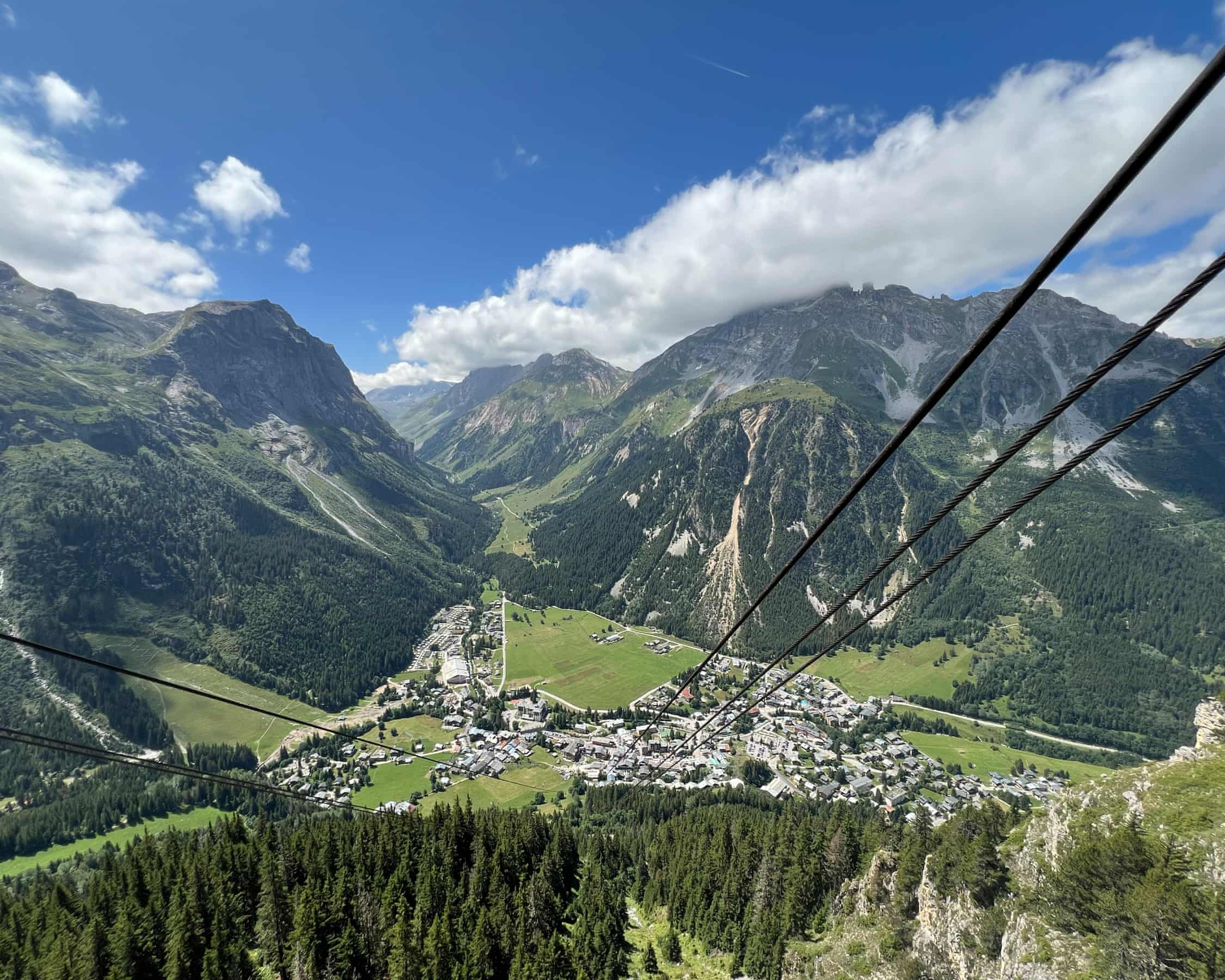
Photo: Kim Willsher/The Guardian.
Pralognan-la-Vanoise in the French Alps is in danger from global warming. An engineering operation to prevent catastrophic flooding will cost about €400,000 ($465,000). 

As discouraging as it is to read another story about global warming, one has to feel a little hopeful that human ingenuity keeps tackling its effects.

Kim Willsher reports at the Guardian about how engineering is fighting back in France. I leave it to you to decide whether putting humans first or the glacier first would be best.

The villagers of Pralognan-la-Vanoise in the French Alps know well the perils posed by the mountains that encircle them. Avalanches, rockfalls, mudslides, sudden crevices and torrents of water are within the living memory of most villagers, and every day the climate emergency throws up new dangers.

“Less than a year ago, an enormous lake formed by a melting glacier was discovered high above Pralognan that experts feared could inundate the village with more than 60,000 cubic metres [15,850,000+ gallons] of icy water. …

“As used to natural hazards as local people are high up in the Alps, they are not, however, an idle threat. The Swiss village of Blatten was wiped out by a rock and ice avalanche in May and last year a mountain lake swollen by heavy rainfall caused torrential flooding in La Bérarde in the Isère, forcing inhabitants to flee the hamlet. They have not returned.

“Today, an engineering operation is under way to prevent such a catastrophic scenario in Pralognan. Three workers have been helicoptered to the Grand Marchet glacier at an altitude of 2,900 metres [1.8 miles] to gouge a [narrow] ‘overflow channel’ in the ice. …

“ ‘The aim is to help the water find its way down the mountain gradually and avoid a rapid emptying of the lake,’ said David Binet, the director of the mountain land restoration service (RTM) for the northern Alps, part of the national forestry commission tasked with identifying and preventing natural hazards.

“ ‘What causes the problems and damage with torrents in the mountains is not the water but the stones, gravel, sand and even large rocks it brings down with it.’

“The glacier blocks the lake from spilling down the mountain but it is shrinking at a rate of 2 to 3 metres [6.6 to 9.8 feet] a year. There is also the risk that that the warmer waters of the lake could form a channel gush from underneath.

“Binet said his agency was examining 300 of the estimated 600 lakes in the Alps and Pyrenees one by one for such hazards. The Pralognan operation will cost about €400,000 [$465,000)]. …

“The idea of taking mechanical shovels to glaciers already shrinking at an alarming rate was deemed the least environmentally damaging option. Olivier Gagliardini, a glacier expert at Grenoble University, described it as ‘unfortunate, but necessary.’

“Martine Blanc, the mayor of Pralognan, said … ‘We asked ourselves could it wait but on the principle that prevention is better than cure we decided to go ahead,’ she said. ‘We decided to anticipate events rather than suffer them. Nature is nature and there’s no such thing as zero risk.’ …

“Local shopkeepers say the number of tourists and hikers this summer is down, possibly because the campsite is closed, but Silvere Bonnet, the director of the tourist office, said he had had very few calls from potential visitors concerned about the lake. …

“On a sunny day, the giant rock faces etched with shimmering cascades that rise almost vertically have a benevolent beauty. An hour later in a rapid change of atmosphere, the peaks are cloaked in dark clouds and loom intimidatingly.

“ ‘They can appear rather menacing at first to visitors because they are so sheer,’ [Bernard Vion, a 66-year-old Alpine guide who has watched the expanse of water grow and the mountain change over his lifetime] said. The 66-year-old knows these mountains ‘like his pocket,’ as the French say. He made his first high-altitude climb aged eight with his father, also a guide. Both his grandfathers were Alpinists.

“Vion first spotted what he describes as ‘a puddle’ of water on the Grand Marchet glacier in 2019. Every year since he has watched it grow; it now measures almost 2.5 acres. …

“ ‘We are on the frontline of climate change here. We know it is happening,’ he said.

“Blanc agreed. … ‘People here are used to natural hazards. We’re used to avalanches, falling rocks, torrential floods and mudslides because we’ve seen them and lived with them since we were young. Local people understand there are things we can control and then those we cannot.’ ”

More at the Guardian, here.

Read Full Post »

Photo: Niharika Kulkarni/AFP via Getty Images.
People fill up their bottles from a water tank on a hot summer day in Varanasi, Uttar Pradesh, India.

We are all experiencing a new level of heat wave.Where I go in the summer, sea breezes used to be enough to cool us down, but no more. Some places, however, are experiencing the new intensity more than others. Parts of India, for example, were pretty hot in the first place, and global warming has made it worse.

Charlotte Steiner, Sameer Kwatra, and Prima Madan write at the Natural Resources Defense Council (NRDC) about new Heat Action Plans (HAPs) in parts of India.

“As India grapples with yet another season of intense heat, the cities of Churu, Rajasthan, and Varanasi, Uttar Pradesh, are taking action to strengthen local preparedness and resilience. These cities launched their comprehensive Heat Action Plans (HAPs) in May of this year. Developed in collaboration with city authorities, health experts, and [NRDC] partners — Mahila Housing Trust (MHT) and Indian Institute of Public Health-Gandhinagar (IIPHG) — the Churu Heat Action Plan and Varanasi Heat Action Plan represent a significant milestone. …

“For Varanasi and Churu, building resilience to extreme heat is critical. Varanasi, a city of significant cultural and spiritual importance, gets more than 85 million tourists and pilgrims every year and has been grappling with worsening heat waves, year over year. In 2024, the city recorded a scorching 47.2 degrees Celsius (117 degrees Fahrenheit) — the highest temperature in 140 years. Churu, often referred to as the gateway to the Thar Desert, is not only one of the hottest places in India, but it is also particularly at risk for extreme heat events. …

“Historically, HAPs did not include climate projections to highlight the future increase in temperatures to assess risk. However, without concrete data on future projections, it’s hard for city officials and policy makers to move from planning to long-term action. Including robust climate analysis in HAPs strengthens the scientific credibility of the HAP, as well as helping city officials and urban planners to justify budget allocations for long-term heat resilience. It also builds a case for investment in public health and infrastructure to plan for not just saving lives today but reducing the risk over the long run.

“Both the Churu and Varanasi HAPs include tailored climate analysis in addition to a detailed assessment of historical trends (typically included in HAPs), highlighting rising baseline temperatures during both the day and night. The climate analysis for the two cities revealed that, by 2049, the temperatures in Churu are projected to increase by approximately 3.89 degrees Celsius and in Varanasi, by an additional 3.29 degrees Celsius. This could imply more days above 45 degrees Celsius, longer heat waves, and more nighttime heat stress. These HAPs also incorporate the U.S. National Oceanic and Atmospheric Administration Heat Index, which combines air temperature and relative humidity to indicate how hot it actually feels to the human body and thereby highlight the human thermal discomfort more realistically.

“Based on hyperlocal analysis, these HAPs also identify specific hot spot areas or account for localized vulnerabilities; they also include ward-level geographic information system (GIS) spatial vulnerability assessments, offering a detailed view of how extreme heat impacts different parts of each city differently. These assessments will help local authorities target interventions more effectively and equitably as they work on implementing each HAP.  …

“Timely early warnings, joint response protocols, and localized capacity building are essential to reducing heat-related morbidity and mortality and maintaining critical services during peak summer months. Keeping up with this expectation, the Churu and Varanasi plans embed institutional accountability by outlining a detailed stakeholder responsibility matrix. This framework defines clear roles, timelines, and coordination mechanisms across state, district, and municipal levels, ensuring that each actor — from government departments to civil society — knows when and how to act.” More at the nonprofit NRDC, here.

NRDC articles are quite technical and full of data charts, but even I can understand the drift, and I hope you find it interesting. I think every town in the world is going to need a HAP.

Read Full Post »

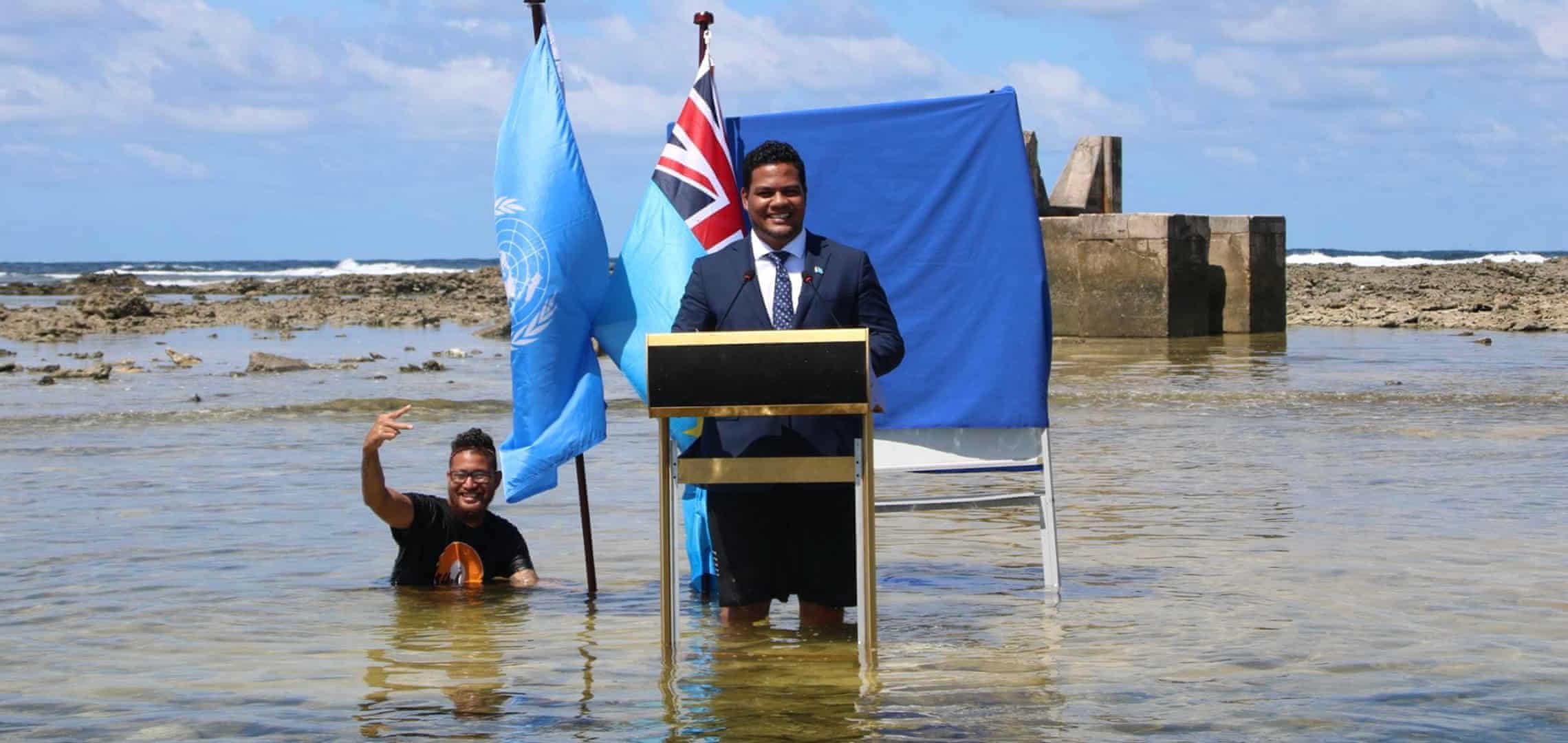
Photo: Tuvalu Foreign Ministry/Reuters.
Tuvalu’s foreign minister Simon Kofe in 2021 making a point as he gives his address to the international climate convention Cop26.

Climate change has been making itself known to most of us in early blooming seasons and the increased number of wildfires. But we don’t necessarily feel in our guts that this is really a moment that will determine if our country continues to exist.

Unless we live in a place like Tuvalu, an island gradually, and then not so gradually, sinking into the sea.

An article at the Guardian proposes that when the inevitable happens, countries like Tuvalu must find a way to keep their statehood.

Isabella Kaminski writes, “States should be able to continue politically even if their land disappears underwater, legal experts have said.

“The conclusions come from a long-awaited report by the International Law Commission that examined what existing law means for continued statehood and access to key resources if sea levels continue to rise due to climate breakdown.

“Average sea levels could rise by as much as [3ft] by 2100 if climate scientists’ worst-case scenarios come true, and recent research suggests they could even exceed projections. This is particularly important for small island developing states because many face an existential threat. …

“Having waded through international law and scholarship and analyzed state views and practices, legal experts concluded that nothing prevents nations from maintaining their maritime boundaries even if the land on which they are drawn changes or disappears. These boundaries give countries navigation rights, access to resources such as fishing and minerals, and a degree of political control.

“There is also general agreement that affected nations should retain their statehood to avoid loss of nationality. Legal experts say these conclusions are essential for maintaining international peace and stability.

“Speaking at the UN Oceans conference in Nice, Penelope Ridings, an international lawyer and member of the ILC, said the commission’s work was driven by the ‘fundamental sense of injustice’ that sea level rise would be felt worst by the most vulnerable states, which had also contributed the least to the problem. …

“The Pacific nation of Tuvalu has been particularly vocal in its concerns. Sea levels on its nine islands and atolls have already [risen] and are expected to get much higher over the coming decades.

“Australia was the first country to recognze the permanence of Tuvalu’s boundaries despite rising sea levels. In 2023, it signed a legally binding treaty committing to help Tuvalu respond to major disasters and offering special visas to citizens who want or need to move. Nearly a third of citizens have entered a ballot for such a visa. Latvia followed with a similar pledge of recognition.

“At the oceans conference, the Tuvaluan prime minister, Feleti Teo, said his citizens were determined to stay on their land for as long as possible. The government has just finished the first phase of a coastal adaptation project, building concrete barriers to reduce flooding and dredging sand to create additional land. …

“He urged Tuvalu’s development partners to be ‘more forthcoming in terms of providing the necessary climate financing that we need to be able to adapt. And to give us more time to live in the land that we believe God has given us and we intend to remain on.’ …

“Bryce Rudyk, a professor of international environmental law at New York University and legal adviser to the Alliance of Small Island States (Aosis), said the ILC had been very responsive to small states, which have traditionally not had their voices heard in matters of international law but are increasingly at the forefront of legal advances on climate change and marine degradation.

“In recent years, Aosis and the Pacific Islands Forum have both declared that their statehood and sovereignty, as well as their membership of intergovernmental organizations such as the UN, will continue regardless of sea level rise.

“The international court of justice [was] petitioned by Aosis to affirm this.”

More at the Guardian, here.

Read Full Post »

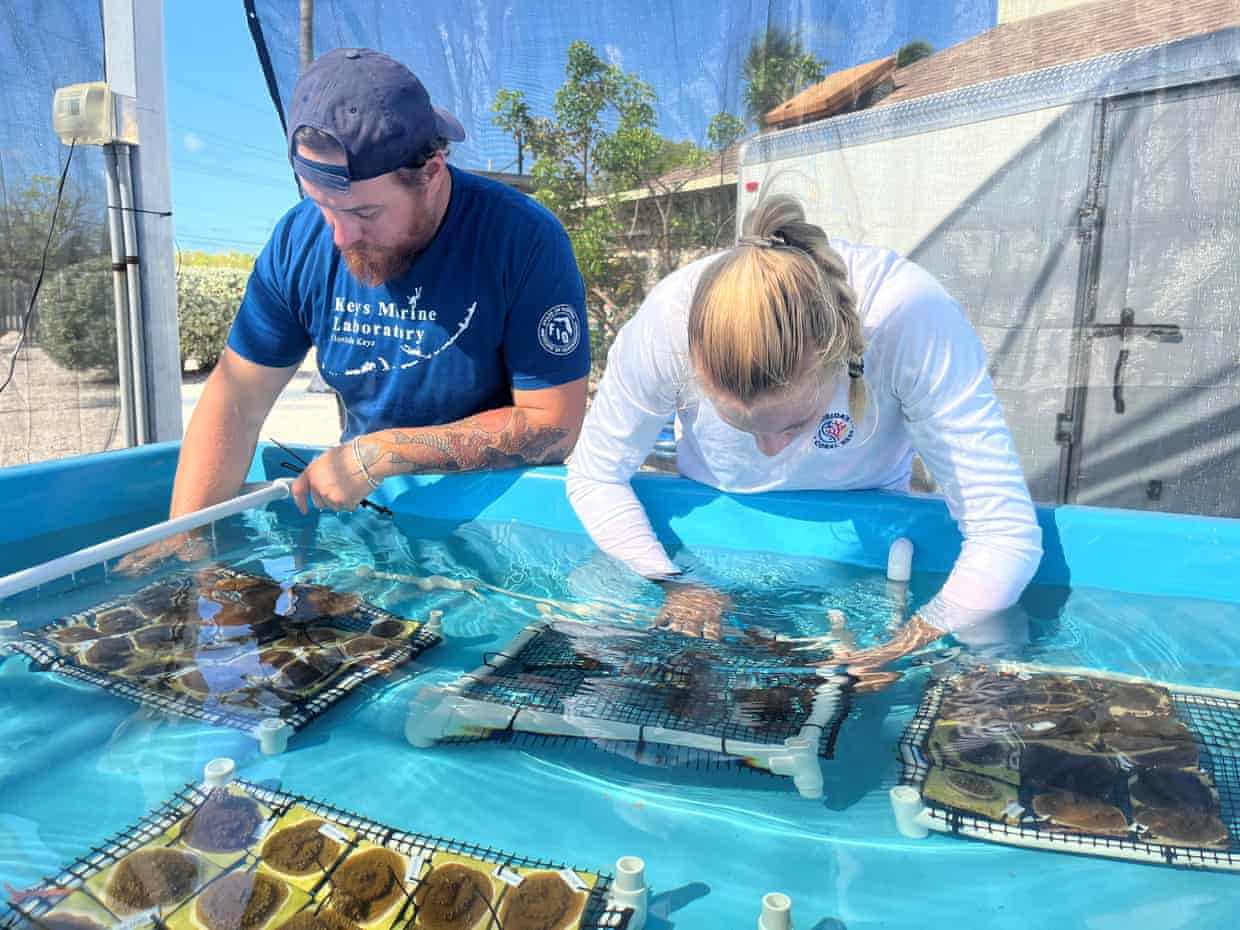
Photo: Keys Marine Lab.
Experts inspect nursery-grown juveniles from the reef-building elkhorn coral species.  They’re testing them to withstand warmer temperatures.

Scientists don’t give up, do they? They will surely have a harder time without federal grants, but I hope they will find ways to keep improving life on Planet Earth.

Take this effort to address the damage that global warming poses to coral. Richard Luscombe reports at the Guardian that a group pf experts are seeking “to save Florida’s dying reefs with hardy nursery-grown coral.”

“A taskforce of experts looking into the mass bleaching and decline of Florida’s delicate coral reefs is planting more than 1,000 nursery-grown juveniles from the reef-building elkhorn species in a new effort to reverse the tide of destruction.

Record ocean heat in 2023 hastened the death spiral for reefs in the Florida Keys, which have lost 90% of their healthy coral cover over the last 40 years, largely because of the climate emergency, according to the National Oceanic and Atmospheric Administration (NOAA).

“Marine biologists from the Keys Marine Laboratory of the University of South Florida (USF) partnered with scientists from Tampa’s Florida Aquarium to develop a large-scale restoration project involving elkhorn coral, which is critically endangered but also one of the fastest-growing and most resilient species.

“[In May], the USF facility in Long Key, halfway along the ecologically fragile Florida Keys island chain, took delivery of 1,050 young elkhorn corals spawned between 2022 and 2023 at the aquarium’s conservation and research center in Apollo Beach.

The corals are acclimatizing in temperature-regulated seawater beds in Long Key.

“They will be distributed to research partners including the Coral Restoration Foundation, the Mote Marine Laboratory, Reef Renewal USA, and Sustainable Oceans and Reefs for planting at seven designated offshore sites around the Keys during the next two months.

“Teams will monitor their progress over the following months and years. While project managers say not all will survive, they hope some of the juveniles will thrive and grow, and the knowledge gleaned will help better inform future recovery efforts.

“ ‘Maybe there will only be 100 out there a year from now, but even if it’s only one out of a hundred that survives that’s particularly tough, we can propagate that one,’ said Cindy Lewis, director of the Keys Marine Laboratory. …

“ ‘The coral juveniles we just transferred are made up of many new mother and father combinations that we hope will be more resilient to future stressors,’ Keri O’Neil, director of the [Florida Aquarium] coral conservation program, said.

” ‘Without human intervention, these parent corals would not be able to breed due to the extent of the loss. They’re a sign that, even during a crisis, we can make a difference. By working together we’re protecting a reef that’s essential to our environment, our economy and the thousands of species that call it home.’

“Lewis said the elkhorn project was a small component of a vast wider effort by numerous universities, environmental groups, and state and federal partners to try to restore as much lost coral as possible. …

“ ‘All these different organizations produced over 25,000 pieces of coral this winter to put out on the reef that are going to make a difference, along with our elkhorn.

“ ‘Even though it seems dismal and depressing, the ray of hope is that we can produce these corals, we can get these corals out there, and that everybody has banded together to work together. No one organization is going to do it all. We need everybody, and we need everybody’s ideas.’ “

More at the Guardian, here. No firewall.

Read Full Post »

Photo: Shanti Mathias.
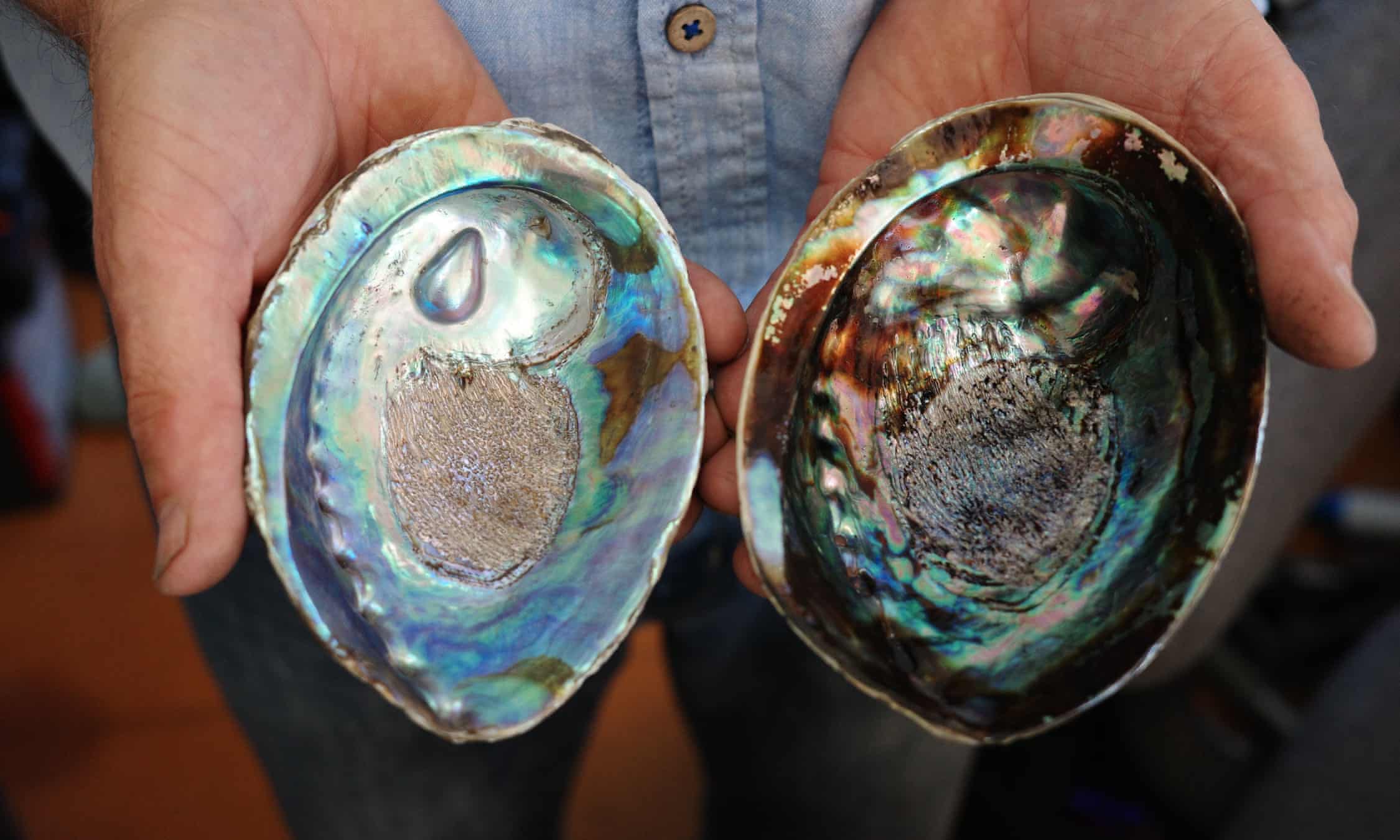
A farmed pāua shell with a pearl inside (L) held next to a wild pāua shell in New Zealand.

During the pandemic lockdown, there didn’t seem to be much point in dressing up or wearing jewelry. I certainly got comfortable with being casual all the time, and even now I mostly wear jeans. Except for funerals.

But the other day, I noticed my grandmother’s pearl necklace in a box and felt a little sorry that I hardly ever wear jewelry (unless from Suzanne’s company). I always liked pearls.

In today’s story, we learn about unusual blue pearls and how the reality of global warming suggests we better enjoy them now, while abalone can still make them.

Shanti Mathias writes at the Guardian, “Roger Beattie was diving off the Chatham Islands, about 800km [~500 miles] east of New Zealand, when he saw his first pāua pearl. Beattie was familiar with pāua, the Māori word for abalone, and their iridescent shells of shimmering purples and greens. But the pearl that had formed inside was unlike anything he had ever seen, gleaming with layers of the pāua’s natural colors. …

“That was in the early 1990s, and Beattie soon started experimenting ways of farming pāua, and creating pearls in the shell. A decade later, he began selling the so-called blue pearls commercially.

“Now a small industry exists in New Zealand cultivating the unique gems. They are rare, with only a handful of companies running farms, each producing only a few thousand pāua pearls each year. But the delicate operations are being made more complicated as changing conditions and warming seas alter the environments pāua need to survive.

“ ‘Warm waters cause physiological stress to the pāua,’ says Shawn Gerrity, an ecologist at the University of Canterbury who has studied the pāua.

“There are four species of pāua endemic to New Zealand. The blackfoot pāua is the biggest species, known for its vibrant shell and succulent flesh. All cultivated pāua pearls come from the blackfoot pāua. The pearls appear shades of blue, turquoise, purple and green.

“ ‘Only this abalone, in this water, produces such an unusual color of pearl,’ says Jacek Pawlowski, a jeweler in Akaroa, a seaside town southeast of Christchurch on New Zealand’s South Island. … ‘They have that rainbow, opal shine.’ …

“As juveniles, pāua are taken out of the water, where their flesh is pried up and a small implant placed under their shell for a pearl to form on. If their soft bodies are nicked, the pāua will bleed to death, so the process must be gentle. Only one in five pāua will create a jewelery-grade gem, Beattie says.

“Each mollusk needs to be fed vast quantities of kelp and live in water about 16 degrees for the three to four years it takes for a pearl to form. …

“But rising ocean temperatures pose a threat to their survival. … Marine heatwaves have dramatically increased in frequency around New Zealand, with a particularly severe event in 2017/18 causing thousands of sea creatures to die.

“Increased marine temperatures have caused mass die-offs of abalone species in other areas of the world, like California, where warming water has reduced abalone’s access to food and sped up the transmission of a withering disease. Beattie has had an algal bloom – which is more likely in warm water – kill a harvest of pāua by depriving them of oxygen.

“Gerrity says marine heatwaves ‘destroy habitats.’ …

“Gerrity has researched the recovery of pāua in Kaikōura, on the north-east coast of the South Island, where thousands of pāua died after the sea floor was lifted six metres [~20 feet] in a 2016 earthquake. Nine years later, with careful management, the population is healthy again. …

“Dr Norman Ragg, senior shellfish scientist at science organization Cawthron Institute, says pāua are a ‘really interesting quirk of nature’ that have remained unchanged for millennia. While New Zealand’s populations are still healthy, there is no room for complacency. … Ragg believes cultivating blue pearls could go some way to bolstering appreciation for pāua and securing its future in the face of climate change.”

More at the Guardian, here. With no paywall at the Guardian, donations are vital.

Read Full Post »

Photo: Brian Howell, Flickr Commons.
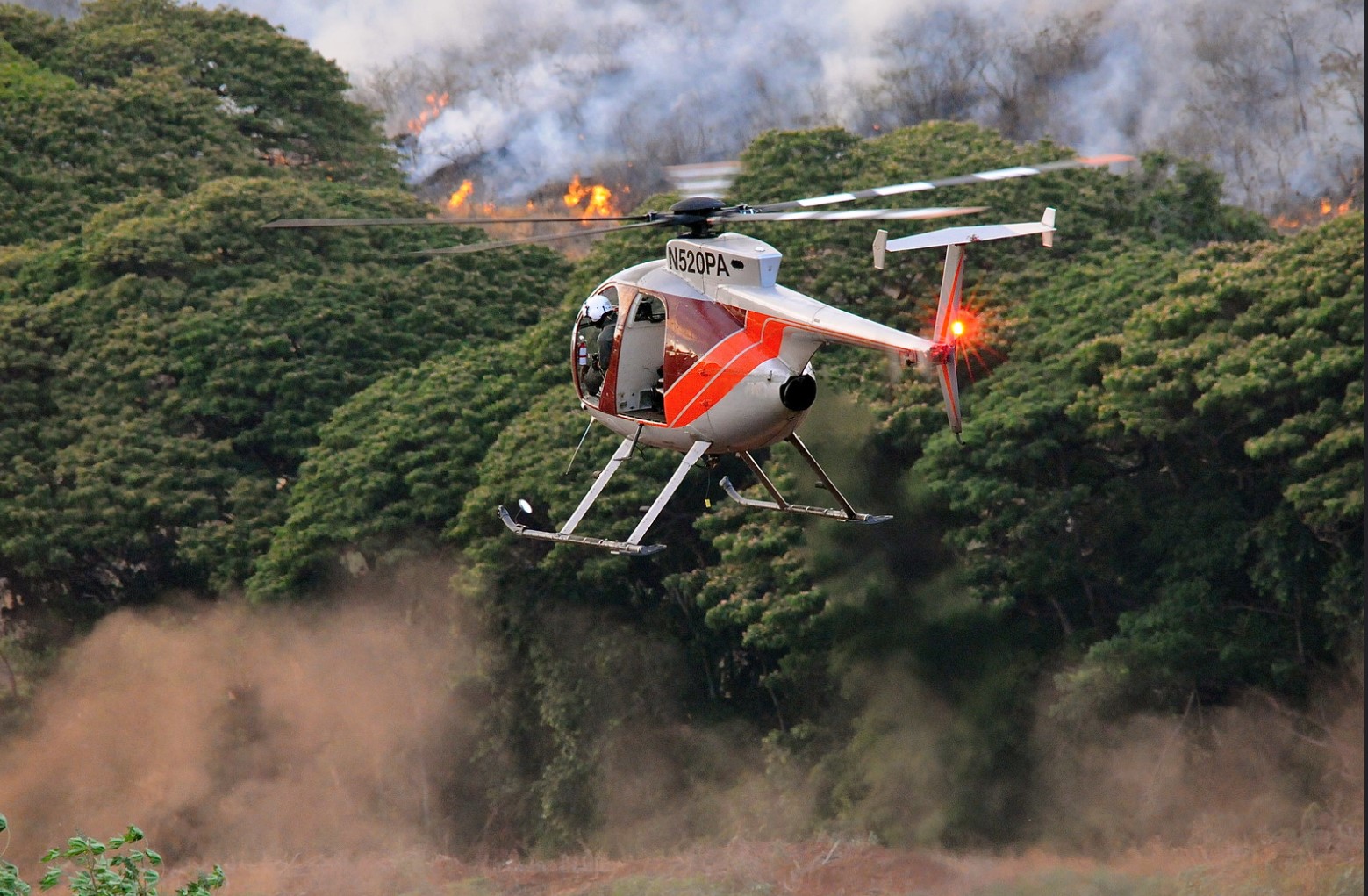
A helicopter circles a wildfire on Kaua‘i, where these fires are becoming increasingly common during drier summer months.

A Guardian update on what governments are doing about increased environmental costs sent me to Hawaii’s website. The island state, already grappling with the effects of global warming, is the first in the US to approve a tourism tax designated for climate issues.

The article says, “Lawmakers in Hawaii have passed first-of-its-kind legislation that will increase the state’s lodging tax to raise money for environmental protection and strengthening defenses against natural disasters fueled by the climate crisis. …

“[Gov. Josh] Green said in a statement. ‘Hawai‘i is truly setting a new standard to address the climate crisis.’

“The bill passed [adds] a 0.75% levy to the state’s existing tax on hotel rooms, timeshares, vacation rentals and other short-term accommodations. It also imposes a new 11% tax on cruise ship bills, prorated for the number of days the vessels are in Hawaii ports.

“Officials estimate the tax will generate nearly $100m annually. They say the money will be used for projects like replenishing sand on eroding Waikiki beaches, promoting the use of hurricane clips to secure roofs during powerful storms and clearing flammable invasive grasses like those that fed the deadly wildfire that destroyed downtown Lahaina in 2023. …

“Hawaii already levies a 10.25% tax on short-term rentals. As of 1 January, the tax will rise to 11%. Hawaii’s counties separately charge a 3% lodging tax, and travelers also have to pay the 4.712% general excise tax that applies to all virtually all goods and services. The cumulative tax bill at checkout will climb to 18.712%, among the highest in the nation. …

“As many visitors travel to the state to enjoy the environment, [Green] predicted they would welcome committing dollars to protect shorelines and communities.

“ ‘The more you cultivate good environmental policy, and the more you invest in perfecting our lived space, the more likely it is we’re going to have actually lifelong, committed travelers to Hawaii,’ he told the Associated Press.

“Zane Edleman, a visitor from Chicago, said … ‘If you really focus on the point – this is to save the climate and actually have proof that this is where the funds are going, and that there’s an actual result that’s happening from that, I think people could buy into it.’ …

“John Pele, the executive director of the Maui Hotel and Lodging Association, said there’s broad agreement that the money raised will go to a good cause. But he wonders if Hawaii will become too expensive for visitors.

“ ‘Will we be taxing on tourists out of wanting to come here?’ he said. ‘That remains to be seen.’ ”

The website Hawaii.gov notes that “2015 and 2016 were Hawaiʻi’s warmest years on record, and average air temperatures are 2 degrees warmer than they were in 1950. In 2019, Honolulu experienced its hottest recorded day three times, representing the hottest year ever recorded in the city. The last five years have seen peak average annual temperatures years across all islands.  In 2015-2016, it was so hot in Honolulu that emergency public service announcements were issued to curtail escalating air conditioning use because it stressed the electrical grid.” 

Among other global-warming consequences the website lists are the loss of 1.5 million acres of native forests, increasing numbers of wildfires, rapid growth of invasive species, “mass coral bleaching and mortality,” and a severe strain on water and energy infrastructure.

More at the Guardian, here, and at Hawaii’s official website, here.

Read Full Post »

Photo: Berclaire/walk productions.
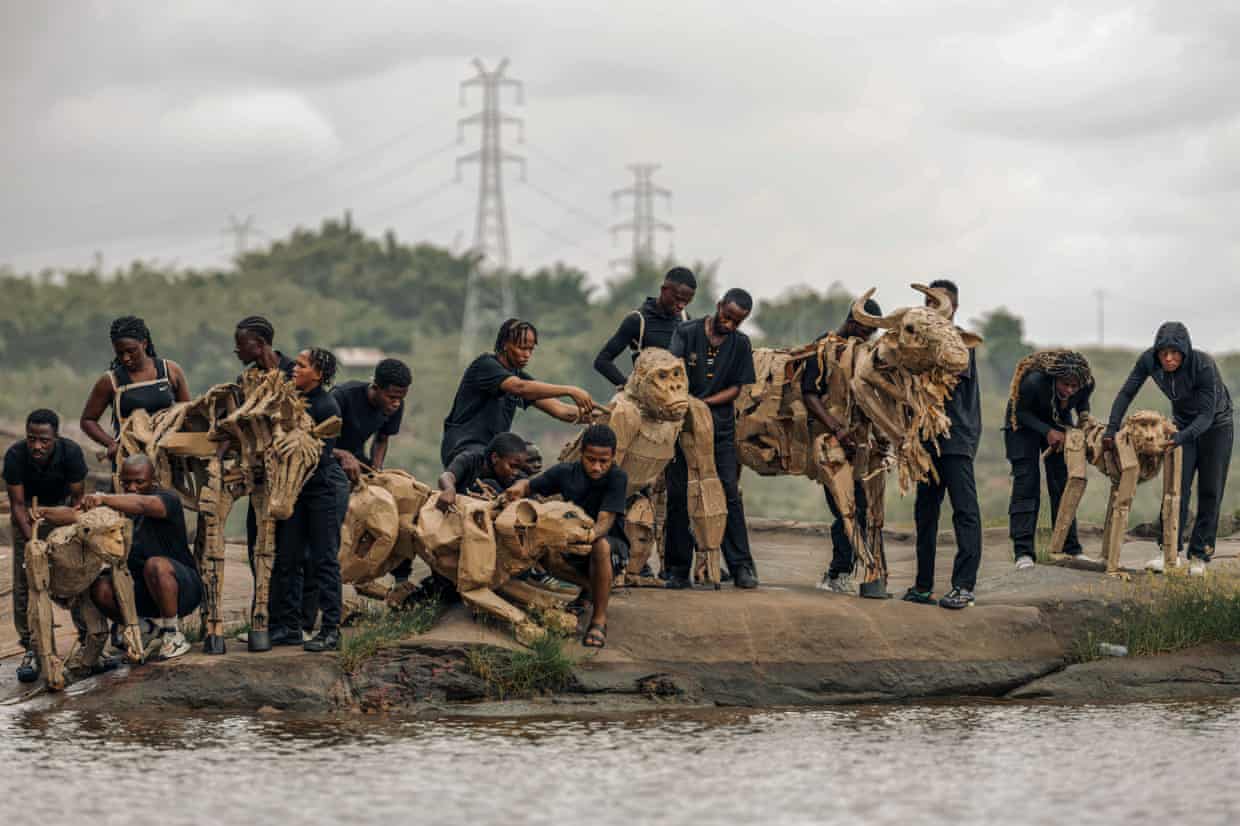
Above, a puppet herd beginning its 20,000km [~2,400 mile] journey in Kinshasa, the Democratic Republic of the Congo. The caravan of zebras, wildebeest, monkeys, giraffes and baboons “will make its way from Dakar to Morocco, then into Europe, including London and Paris, arriving in the Arctic Circle in early August,” the Guardian reports.

Do you remember Little Amal, the world-traveling puppet designed to spread empathy for asylum seekers, especially children? Well, now the creators of Little Amal have launched a slew of puppet animals to bring attention to another cause — the effects of global warming on all living things.

In April, Isabel Choat wrote at the Guardian about the project. “Hundreds of life-size animal puppets have begun a 20,000km (12,400 mile) journey from central Africa to the Arctic Circle as part of an ambitious project created by the team behind Little Amal, the giant puppet of a Syrian girl that travelled across the world.

“The public art initiative called The Herds, which has already visited Kinshasa and Lagos, will travel to 20 cities over four months to raise awareness of the climate crisis.

“It is the second major project from The Walk Productions, which introduced Little Amal, a 12-foot puppet, to the world in Gaziantep, near the Turkey-Syria border, in 2021. The award-winning project, co-founded by the Palestinian playwright and director Amir Nizar Zuabi, reached 2 million people in 17 countries as she travelled from Turkey to the UK.

In Dakar more than 300 artists applied for 80 roles as artists and puppet guides.

“The Herds’ journey began in Kinshasa’s Botanical Gardens on 10 April, kicking off four days of events. It moved on to Lagos, Nigeria, the following week, where up to 5,000 people attended events performed by more than 60 puppeteers.

“On Friday the streets of Dakar in Senegal will be filled with more than 40 puppet zebras, wildebeest, monkeys, giraffes and baboons as they run through Médina, one of the busiest neighborhoods, where they will encounter a creation by Fabrice Monteiro, a Belgium-born artist who lives in Senegal, and is known for his large-scale sculptures. …

“The first set of animal puppets was created by Ukwanda Puppetry and Designs Art Collective in Cape Town using recycled materials, but in each location local volunteers are taught how to make their own animals using prototypes provided by Ukwanda. The project has already attracted huge interest from people keen to get involved. In Dakar more than 300 artists applied for 80 roles as artists and puppet guides. About 2,000 people will be trained to make the puppets over the duration of the project. …

“Zuabi has spoken of The Herds as a continuation of Little Amal’s journey, which was inspired by refugees, who often cite climate disaster as a trigger for forced migration. The Herds will put the environmental emergency center stage, and will encourage communities to launch their own events to discuss the significance of the project and get involved in climate activism. …

“The Herds’ Senegal producer, Sarah Desbois [expects] thousands of people to view the four events being staged over the weekend. ‘We don’t have a tradition of puppetry in Senegal. As soon as the project started, when people were shown pictures of the puppets, they were going crazy.’ “

More at the Guardian, here.

Read Full Post »

Photo: Martin Godwin/The Guardian.
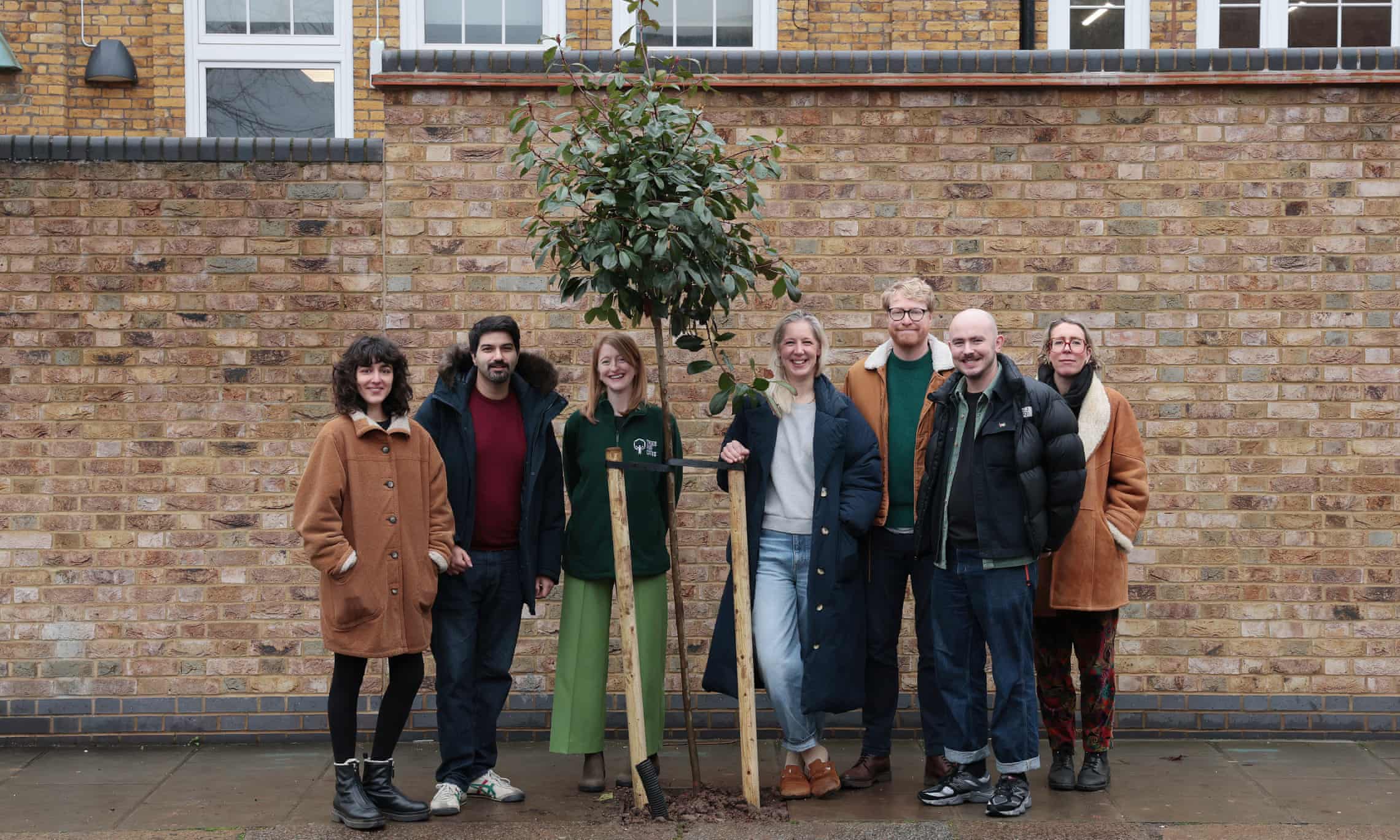
Residents in Tottenham, north London, with a tree sponsored through Trees for Streets. “City residents are working out how to fill their streets with trees as evidence grows of their benefits,” says the Guardian.

Can you bear another story about planting trees to beautify and bring warming temperatures down in neighborhoods?

Although really in-depth biodiversity efforts go further (read about Miyawaki urban forests here), street plantings are important, too. Each time I read about another community organizing to plant trees, I want to share the news.

Olivia Lee writes at the Guardian, ” ‘I wanted to do something that would benefit as many people from the community as possible,’ says Chloe Straw, pointing at a small but promising sapling visible through the window of her local cafe.

“In 2023, Chloe began chatting to her neighbors in Haringey, north London, about trees. ‘I thought it’d be really nice to raise some money for trees on the main road. Everyone uses West Green Road, regardless of whether you have a lot of money or not, regardless of your background.’

“After getting in touch with Trees for Streets, a sponsorship scheme that guides communities across England on how to plant trees in their local areas with support from local councils, a small group was formed to work out how to do it. As a first step, Straw and friends were provided with an interactive map to choose the location of the trees, and that was passed along to Haringey council.

“Then they got help to set up a crowdfunding campaign, which was shared in local WhatsApp groups and community forums, secured 168 backers and raised more than £6,000 [$8,000] in one month.

“Mohamed Eljaouhari, a co-chair of Haringey Living Streets, said [of WhatsApp], ‘It is a very powerful tool for getting a very simple message out very quickly to a lot of people. I got in contact with, like, a thousand people in a few minutes, because I forwarded on the message with a bit of an explanation to a local group here, a local group there, people who were interested in the environment and maybe wanted to help West Green.’

“The remaining costs were covered by Haringey council. The result? Twenty beautiful trees planted across the neighborhood. …

“Around the world, city residents are working out how to fill their streets with trees as evidence grows of their benefits. As temperatures rise, research has shown that urban trees can play a fundamental role in keeping cities cool, evaporating water to provide a natural form of air-conditioning, cooling air temperatures and reducing the urban heat island effect. Work by Friends of the Earth in five English cities in 2023 showed that areas with more trees and greenery were up to 5C cooler. …

“Public funds are stretched everywhere, and the community model followed by Trees for Streets empowers local people to take their own action without waiting for a government plan.

“The Pennsylvania Horticultural Society (PHS) is a non-profit organization in Philadelphia that trains individuals to lead community groups to plant trees across the US city. So far their program, Tree Tenders, has trained more than 6,500 people, who have led volunteers in planting more than 3,000 trees each year.

“[Andrew Conboy, an urban forester in Philadelphia, says,] ‘There’s a heavy emphasis on native species here in the Philadelphia area, which is good thing because the native species are ultimately better for our wildlife and for our ecosystems, because those are the species that evolved here.’ …

“The Garden City Fund, a charity in Singapore, runs a similar initiative, the Plant-a-Tree program. Individuals and organizations can donate to the cost of a young tree and then plant it in one of their managed green spaces.

“Tree People, an environmental advocacy organization, runs a forestry program that supports communities to plant and care for trees in cities in southern California. The organization also runs the School Greening program, which provides training to parents, students, teachers and district leaders to plant and maintain trees in schools. …

“As the West Green residents take turns discussing their local initiative over cups of coffee, it’s clear that one of the most significant impacts the project has had is in strengthening connections within the community. …

“[Says Dan Snell, an urban forest officer at Haringey council,] ‘There was another tree scheme on my mum’s street who lives in Haringey … suddenly there were all these new street trees and my mum had met a load of neighbors that she hadn’t really met before, even though she’s been there for 30 years. It’s had this really lovely long-term effect on bringing the street together.’ It’s such a wonderful thing to connect over.’ “

Plant a tree, make a friend. More at the Guardian, here. No paywall.

Read Full Post »

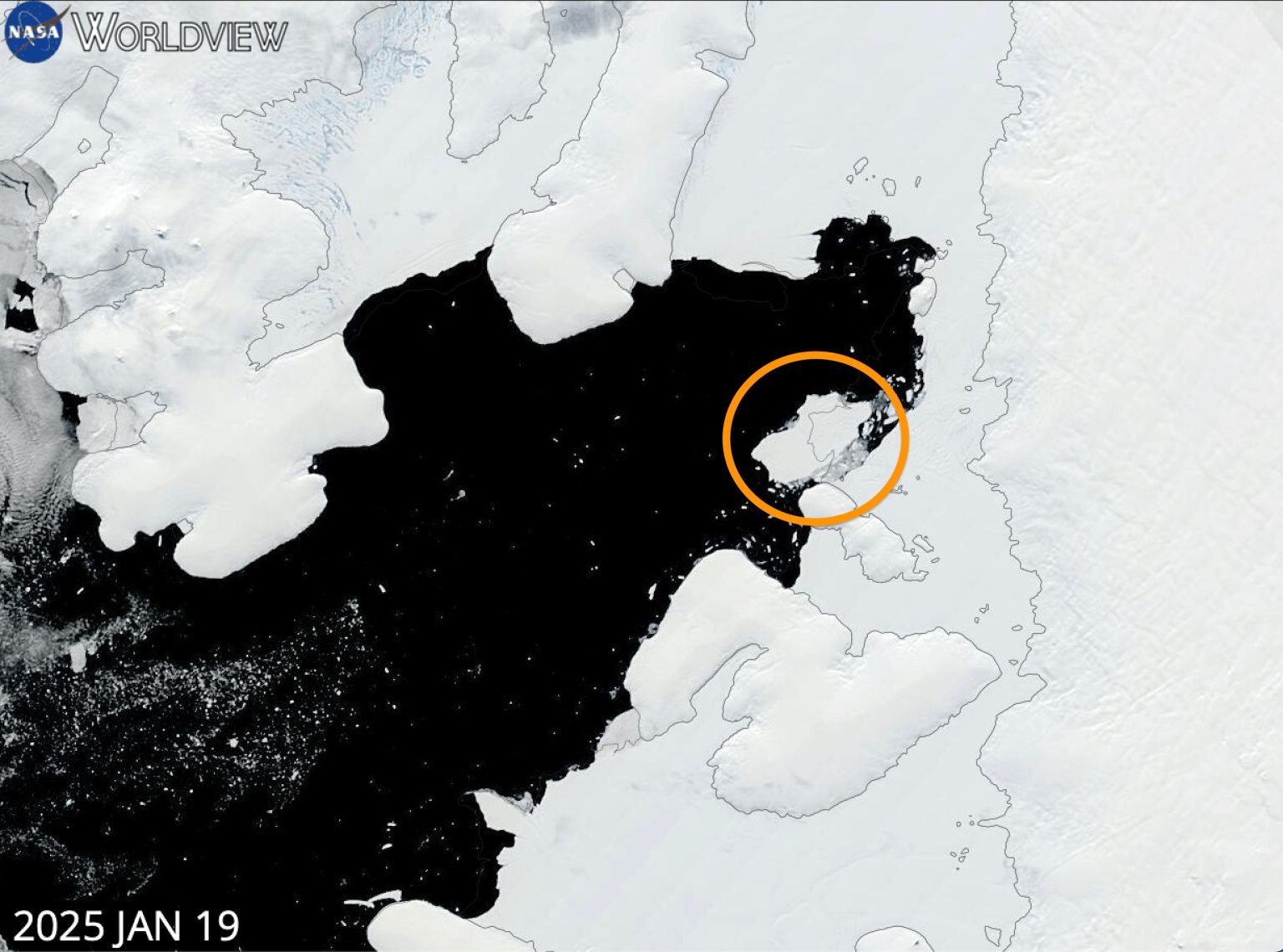
Photo: NASA Worldview, NASA Earth Science Data and Information System.
Satellite imagery showing the iceberg calved from George VI Ice Shelf in the Bellingshausen Sea, Antarctica, on 19 January 2025.

Not much of a recompense for ruining our planet, but it’s true that global warming is giving scientists a chance to study previously unknown places.

At Schmidt Ocean Institute, we learn about some unexpectedly vibrant communities of ancient corals and sponges in Antarctica.

“An international team on board Schmidt Ocean Institute’s R/V Falkor (too) working in the Bellingshausen Sea rapidly pivoted their research plans to study an area that was, until last month, covered by ice. On January 13, 2025, an iceberg the size of Chicago, named A-84, broke away from the George VI Ice Shelf, one of the massive floating glaciers attached to the Antarctic Peninsula ice sheet.  The team reached the newly exposed seafloor on January 25 and became the first to investigate an area that had never before been accessible to humans.

“The expedition was the first detailed, comprehensive, and interdisciplinary study of the geology, physical oceanography, and biology beneath such a large area once covered by a floating ice shelf. The ice that calved was approximately 510 square kilometers (209 square miles), revealing an equivalent area of seafloor.

“ ‘We seized upon the moment, changed our expedition plan, and went for it so we could look at what was happening in the depths below,’ said expedition co-chief scientist Dr. Patricia Esquete of the Centre for Environmental and Marine Studies (CESAM) and the Department of Biology (DBio) at the University of Aveiro, Portugal. ‘We didn’t expect to find such a beautiful, thriving ecosystem. Based on the size of the animals, the communities we observed have been there for decades, maybe even hundreds of years.’

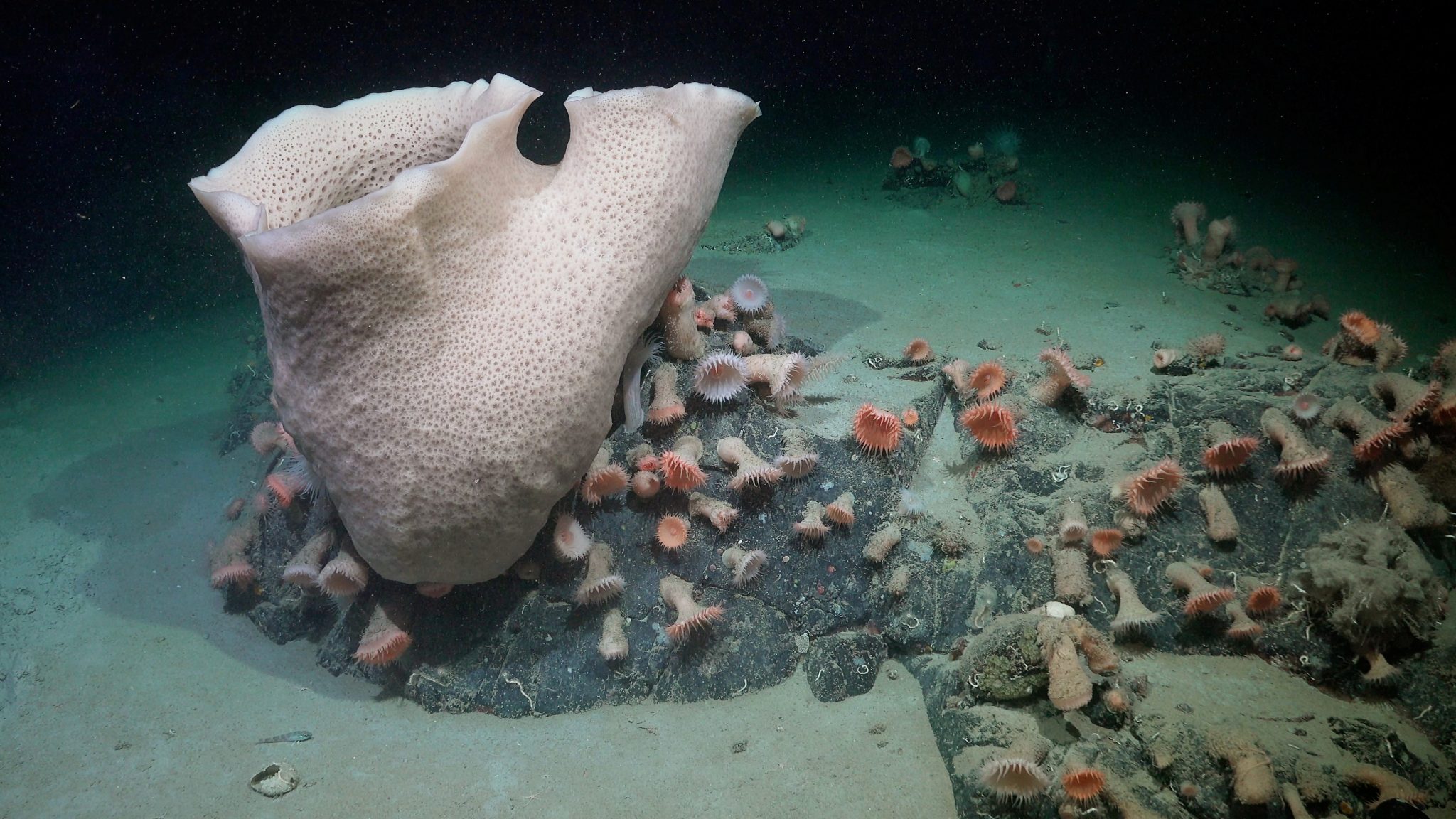
“Using Schmidt Ocean Institute’s remotely operated vehicle, ROV SuBastian, the team observed the deep seafloor for eight days and found flourishing ecosystems at depths as great as 1300 meters. Their observations include large corals and sponges supporting an array of animal life, including icefish, giant sea spiders, and octopus. The discovery offers new insights into how ecosystems function beneath floating sections of the Antarctic ice sheet. …

“The team was surprised by the significant biomass and biodiversity of the ecosystems and suspect they have discovered several new species.

“Deep-sea ecosystems typically rely on nutrients from the surface slowly raining down to the seafloor. However, these Antarctic ecosystems have been covered by 150-meter-thick (almost 500 feet) ice for centuries, completely cut off from surface nutrients. Ocean currents also move nutrients, and the team hypothesizes that currents are a possible mechanism for sustaining life beneath the ice sheet. The precise mechanism fueling these ecosystems is not yet understood.

“The newly exposed Antarctic seafloor also allowed the international team, with scientists from Portugal, the United Kingdom, Chile, Germany, Norway, New Zealand, and the United States, to gather critical data on the past behavior of the larger Antarctic ice sheet. The ice sheet has been shrinking and losing mass over the last few decades due to climate change.

“ ‘The ice loss from the Antarctic Ice Sheet is a major contributor to sea level rise worldwide,’ said expedition co-chief scientist Sasha Montelli of University College London (UCL), United Kingdom, also a 2019 Schmidt Science Fellow. ‘Our work is critical for providing longer-term context of these recent changes, improving our ability to make projections of future change — projections that can inform actionable policies. We will undoubtedly make new discoveries as we continue to analyze this vital data.’

“In addition to collecting biological and geological samples, the science team deployed autonomous underwater vehicles called gliders to study the impacts of glacial meltwater on the physical and chemical properties of the region. Preliminary data suggest high biological productivity and a strong meltwater flow from the George IV ice shelf. …

“ ‘The science team was originally in this remote region to study the seafloor and ecosystem at the interface between ice and sea,’ said Schmidt Ocean Institute Executive Director, Dr. Jyotika Virmani. ‘Being right there when this iceberg calved from the ice shelf presented a rare scientific opportunity. Serendipitous moments are part of the excitement of research at sea – they offer the chance to be the first to witness the untouched beauty of our world.’ ”

More at Schmidt Ocean Institute, here, and at radio show The World, here. No firewalls.

Photo :A large sponge, a cluster of anemones, and other life is seen nearly 230 meters deep at an area of the seabed. Sponges can grow very slowly, and the size of this specimen suggests this community has been active for decades, perhaps even hundreds of years.

Read Full Post »

Photo: Suwa City.
Kiyoshi Miyasaka, a Shinto priest, leads parishioners from the Yatsurugi Shrine onto the frozen Lake Suwa in 2018, the last time the Miwatari, or Sacred Crossing, formed.

Climate change shows up in many ways around the world, especially where humans have kept records for centuries. One such place is in Japan.

Martin Fackler and Hisako Ueno report at the New York Times, “For at least six centuries, residents along a lake in the mountains of central Japan have marked the depth of winter by celebrating the return of a natural phenomenon once revered as the trail of a wandering god.

“It would only appear after days of frigid temperatures had frozen Lake Suwa into a sheet of solid white. First, people were awakened at night by a loud rumbling. Dawn broke to reveal its source: a long, narrow ridge of jagged ice that had mysteriously arisen across the lake’s surface, meandering like the spiked back of a twisting dragon.

“This was the Miwatari, meaning the sacred crossing, which local belief held was left by a passing god of Japan’s native Shinto belief. Its appearance evoked feelings of awe but also reassurance among the residents, who ventured onto the ice to perform a ceremony honoring what they saw as a visitation from the supernatural.

In the rare winters when the ice ridge did not appear, the god’s absence was viewed as a warning that the natural world was out of balance.

“So  important was the Miwatari that residents recorded whether it appeared, the condition of the lake and what historical events accompanied it. They have loyally written these descriptions every winter since 1443, creating a remarkable archive that attests to centuries of monotonously cold winters.

“But recently, the chronicles of Suwa have told a different, more alarming story. For the past seven winters, the Miwatari has failed to appear because the lake didn’t freeze. While there have been occasional years without ice, an absence of this length has happened only once before in the archive, and that was a half millennium ago.

“In fact, Lake Suwa has not fully frozen over — what locals call ‘an open sea’ — for 18 of the past 25 years. Kiyoshi Miyasaka, the chief priest of Yatsurugi Shrine, which for the past three and a half centuries has borne the duty of maintaining the records, says ice has failed to appear with regularity since the 1980s. He and other locals blame the disappearance of the ancient rhythms on global climate change.

“ ‘In old times, an open sea was regarded as a bad omen,’ said Mr. Miyasaka, 74, whose shrine’s traditional stone gate and tile-roofed wooden buildings stand about a mile from the lakeshore. ‘We hear about melting of ice caps and Himalayan glaciers, but our own lake is also trying to alert us.’ …

“Only parishioners in their 60s or older remember when the Miwatari was still big enough to make a sound that could wake them at night. The last time an ice ridge formed, in 2018, it was barely six inches tall.

“ ‘When I was child, the ice spikes rose higher than my height,’ said Isao Nakazawa, 81, a retired auto company worker. ‘We knew when it appeared because it made a sound like a taiko drum, “Gon-gon-gon!” ‘

“These days, the Miwatari has lost much of its religious significance. Residents in Suwa, a small, sleepy city wrapped along the lake’s edge, see it as a local rite of winter. …

” ‘Carrying on a tradition for 580 years binds our community together,’ said the mayor, Yukari Kaneko, 66. ‘I fear what’s happening now is a warning to rethink how we’re living.’

“Science has also robbed the ice ridges of their mystery by explaining how they arise. When Lake Suwa freezes, its surface hardens into a slab some two and a half miles across. On particularly cold nights, the ice contracts, opening cracks that fill with lake water, which also freezes. As temperatures rise again, the slab expands back into its original shape, pushing the newly formed ice upward into buckled ramparts. …

“While Mr. Miyasaka says he feels discouraged by the failure of the ice ridge to return, he intends to keep updating the archive.

“ ‘You cannot just quit something that has been around for more than 580 years,’ said Mr. Miyasaka, whose family has held the position of chief priest for five generations. ‘I will not be the one who ends it.’ ”

More at the Times, here.

Read Full Post »

Photo: MWA Hart Nibbrig.
The makeover by Maarten van Kesteren Architects of  a 1960s Utrecht college at less than half the cost of a new building and a third the carbon footprint is a lesson in sustainability.

In today’s story, a design company worked with what was available to make an old building sustainable. Apparently there’s some controversy about the approach, refitting the old instead of building everything new. See what’s happening in the Netherlands.

Rowan Moore writes at the Guardian, ” ‘The greenest building,’ to quote a slogan now popular among architects, ‘is one that is already built.’ It sums up the belated realization that the carbon impact and energy consumption of demolition and new building can be more significant than those of heating, cooling and running a building when it’s in use. It’s still a principle that is only patchily put into practice, in the UK and elsewhere. But the Dutch not-for-profit organization Mevrouw Meijer (meaning Mrs Meijer), which works to give new life to old school buildings, is quietly showing how it can be done.

“Her organization’s approach, says its founder, Wilma Kempinga, makes environmental, financial and practical sense, but it’s also about the experiences and memories of childhood. ‘It’s very important that students experience beauty,’ she says. ‘This is a place you will remember for the rest of your life.’ For Kempinga, beauty is best achieved by making the most of existing buildings – even those thought unremarkable – and getting the best young architects to design the transformation.

“We’re sitting in Nimeto, a trade school in Utrecht where students aged 16 to 21 learn shop window dressing, theatre set design, painting and decoration, specialist restoration and other skills. It’s a decent work of 1960s Dutch welfare state modernism – one of thousands from the country’s postwar educational construction boom: well lit and well proportioned, built in white-painted brick, within whose plain walls are the sights, sounds and smells of young people making things. Some of them are painting at encrusted easels beneath north-facing skylights, or planing and cutting timber; others trying out their decorating techniques on a house-like structure built to offer them as many awkward junctions and other challenges as possible. The school is populated with trompe l’oeil fragments of architecture – parts of stage sets – and experimental displays of objects you might find in a shop window.

“Now it’s better than ever. Where once the school was divided into two main blocks, they are now linked by first floor bridge and gallery with a colonnade underneath. A central courtyard that was a car park is now a garden that marks the cycle of the school year with yellow-and-white flowers in September, and blue-and-white flowers in spring. Double-height spaces bring light into a large basement, which can now be used for learning rather just storage. They also break open a regimented former arrangement of internal corridors double-loaded with classrooms. You can now look up, down, sideways and across, as well as straight ahead.

“The canteen is in one of the two blocks, the library in another, meaning that the two facilities shared by all students are distributed across the school. Previously, says Nimeto’s principal, Henk Vermeulen, students working in one part would refer to those in another as being ‘on the other side,’ but now all parts of the building are equally theirs. …

“The new design, by Maarten van Kesteren, a young architect based in The Hague, is about opening up and connections and making a shared container for the multifarious creativity of the students. The ‘whole school has a feeling that you are part of a lively workshop,’ as Van Kesteren puts it. The detail is simple, with what Kempinga calls ‘very beautiful pure materials that are unusual in school buildings,’ such as an oak floor whose woody smell mixes with that of the workshops. The project is achieved by the minimum of means, the only new structure being the long gallery/bridge, and gains additional education space. … It is also less than half the cost of an equivalent new building, with 30% of the carbon footprint.

“Mevrouw Meijer’s role, here and elsewhere, is to make the case for renovating rather than replacing, generating the evidence that it will be cheap, practical and climate-friendly. They also help select the architect. … Young practices without previous school experience, such as Van Kesteren’s, are preferred. ‘We don’t want an old guy or an old girl,’ says Vermeulen, but someone who will bring fresh thinking. As his school is always making the case that its inexperienced students should be trusted with opportunities, he says, it should do the same when appointing architects. …

“The original Nimeto building is typical of many in the Netherlands, whose design is quietly humane without being spectacular or special enough for it to be designated as significant heritage. Yet, says Kempinga, they are part of the country’s shared memory. …

“Schools also tend to be located in the centre of the communities they serve, whereas new replacements are often more remote. Yet, as Vermeulen puts it, ‘our neighborhood should profit from a new school, and our students are supposed to be working for this society,’ so it’s better if they stay put. The external landscape at Nimeto has been designed so as to connect the school’s garden with its surroundings and form part of the ‘ecological structure,’ as Van Kesteren says, of Utrecht.

“Mevrouw Meijer now have a number of school projects under way and recently completed. … Mevrouw Meijer is named after a well-loved children’s book character who worries a lot about nothing until she adopts and raises a baby blackbird, which teaches her to concentrate on essentials. If this sounds whimsical, the organization’s projects seem to be based on impeccable logic and well-founded aspirations; the only mystery is why their ideas are not applied more widely. There’s a mistaken belief that the best way to be sustainable to is to build something with all the latest environmental materials and devices. …

“Kempinga says it’s a question of attitude. ‘A lot of people like new buildings,’ she says, ‘and don’t have the imagination to see what’s possible with old ones.’ “

More at the Guardian, here.

Read Full Post »

Photo: Biodiversity for a Livable Climate.
A Miyawaki forest at Danehy Park in North Cambridge, Massachusetts, planted on September 25, 2021 — with the help of enthusiastic volunteers. Other Miyawaki forests don’t look like much in April. But just watch!

Although I blogged about Miyawaki mini urban forests in 2023, here, and again after a tip from Hannah in Philadelphia, here, I had never seen one in person and didn’t really understand the concept. These are not forests you take a walk in. They are deliberately planted too densely for entering, which is why one elementary school asked for a crescent shape to let kids see the native plants that their teachers were talking about.

On a special day in April, my friend Jean Devine of Biodiversity Builders took two of us on a tour of three Miyawaki Forests and the site for one that she and students at her local high school are building.

Now I think I get it. In order to have a healthy climate, we need a healthy, biodiverse planet. And the effects of even very small sites can spread. Birds, small animals, pollinators, and other critters flourish in these biodiverse pockets.

Biodiversity for a Livable Climate: Restoring Ecosystems to Reverse Global Warming says, “The Miyawaki Forest is an ultra dense, biodiverse pocket forest that recreates the complexity of natural forests and the relationships and processes that help them grow strong and resilient. By giving home to a vast array of native species, they boost the biodiversity of the area and nurture pollinators, supporting and restoring ecosystems. They sequester carbon in the soil, reduce air pollution and soil contamination, improve water absorption to buffer against flooding and erosion, and cool the surrounding area to mitigate the urban heat island effect. They also create a living classroom for people and communities to learn about native ecology, engage in stewardship, and experience the interconnectedness of the natural world.”

GBH tv provides a forum on the concept, asking, “What can hold more than 500 species, sequester more than 500 lbs. CO2/year, be 10F cooler than its surroundings, soak up lots of rainwater, and be made by and for children in a space no bigger than a tennis court? A ‘mini-forest’ planted using the Miyawaki Method, of course!

“Biodiversity for a Livable Climate hosts Miyawaki-Method advocates Hannah Lewis (Bio4Climate Compendium editor) and Daan Bleichrodt (The Netherlands’ Tiny Forest initiative leader), as they talk about mini-/tiny-forests and their role in climate resilience, urban beautification, and connecting all of us to nature.” More here.

My photos are from mini forests Massachusetts, one in a large park in Cambridge, one in a Cambridge neighborhood’s pocket park, and one at an elementary school in Watertown. At the latter, the children sit on tree stumps for classes. Note the art they created for their forest, too. The forest doesn’t look like much in April, but just wait!

More at Biodiversity for a Livable Climate, here, and here.

Read Full Post »

Photo: Jenna Garrett/The Guardian.
Eric Haas in his backyard in Oakland, California. The California professor had a rainwater and greywater capture system installed at his highly efficient urban home to conserve water. 

I like reading about people who are handy at fixing or making things. Probably because I’m not. Other than sewing on a button or baking cookies, I don’t do much in the do-it-yourself line, but I know some of you do, and I’d love to hear about it.

Today’s article is part of a Guardian series on people who figure out ways to limit their impact on the environment. Sometimes that means working with companies specializing in sustainable building practices. Eric Haas told his story to Victoria Namkung.

“I joined the Peace Corps after college in 1985,” Haas explains, “and was a math and science teacher in Buchanan, Liberia. There, I started to realize that large parts of the world don’t live with all the energy consumption and materialism that we do in the US.

“I started seeing people’s innovative ways of keeping their houses warm or cool and how they would get their water. I had to carry my own water at times and be very conscious where it came from. These experiences started cementing this idea that life could take into account the environment you lived in.

Relatively simple ideas could make a huge difference in the comfort and quality of your house. You adapt and your lifestyle can adapt. …

“When our family settled in Oakland, California, in 2007, part of the decision in buying a house was whether it was somewhere I could finally focus on water conservation and other low-carbon-footprint projects like installing solar panels, insulation and high-efficiency appliances.

“I hired Dig Cooperative Inc, a local contractor known for pioneering water-conservation systems across the greater Bay Area, to install a rainwater and greywater collection system at our home. I have about 4,000 gallons of water I can collect, which translates to about 7inches of rain coming off the roof. Filtered rainwater is used to fill the toilets and washing machine and water most of our plants. It can also be saved on site for emergency use in case of a fire or an earthquake.

“The greywater system takes our ‘used’ shower, bathroom sink and washing machine water and diverts it to the backyard to water our vegetable gardens and six fruit trees. …

“During 2024, the typical household in our area used an average of 124 gallons of water a day. We used an average of 39 gallons of water a day, less than a third.

“It wasn’t hard and the whole project took about a week. Rain barrels needed to be purchased and set up and the ground had to be leveled. I have a relatively small and simple house and connecting the rainwater and greywater system into the existing plumbing just took a day or two.

“The whole project cost about $15,000. We still have a water bill because the shower, sink and dishwasher water use regular city water, but it’s a fraction of what it used to be. … Compared to the average water user, I save about $220 a year on my water bill. So, my rainwater and greywater systems do more for my local environment than they do for my wallet.

“Since moving to Oakland, I’ve noticed a lot of climate-related changes. Before, nobody had air-conditioning, and I never even thought about it. Now it’s almost a necessity on select days. When I first put in the system, there was enough rain periodically in California’s dry season to fill up the tanks enough that I never had to go back to city water for the first several years. Now it only lasts for about 10 months. The dry season is so dry and when we’ve got extra rain in the rainy season my tanks overflow and drain into the sewer because they’re full.

“We have to approach our water use differently in California. … Our overuse of water now impacts our quality of life. We have water-restriction days where they ask you not to use as much water, including not flushing our toilets every time, and we’re encouraged not to have a lawn. … You can still have a really nice garden. We have a hot tub, we have a regular shower, but because those things are connected into this larger system, we have a much smaller impact.

“I feel like I’m doing something real and concrete, and every time I hear the greywater pump go on or when I hear the pump from our rainwater system go on to fill up the washing machine or  toilet, that’s water that I’m not taking from the system and that matters.

“Every time it rains, I love to go out and look at the gutters and see how much it’s pouring into the system. It brings me joy to interact with the natural environment in this small way in my urban house.”

More at the Guardian, here. My DIY climate hack is a Guardian series about everyday people across the US using their own ingenuity to tackle the climate crisis in their neighborhoods, homes and backyards.

Read Full Post »

Older Posts »