Feeds:
Posts
Comments

Posts Tagged ‘history’

Photos: Ivan Vdovin/Alamy; Lyn Alweis/The Denver Post, via Getty Images.
With no known contemporaneous sketches or paintings of Sacagawea, artists have largely invented her look, even as historians have invented her story by relying on Lewis and Clark’s misunderstandings.

In a long article at the New York Times Magazine, Christopher Cox writes about researchers trying to piece together the real story of Sacagawea. Will these more-accurate accounts stick? As I learned when reading Josephine Tey’s mystery The Daughter of Time, truth may be “the daughter of time,” but popular legends are often too stubborn to die.

Cox writes, “In a conference room in the middle of the Great Plains, 50 people gathered to correct what they saw as a grave error in the historical record. It was July 16, 2015, on the Fort Berthold Indian Reservation in North Dakota, not too far upstream from the camp on the Missouri River where Meriwether Lewis and William Clark first met Sacagawea, the teenage girl who would accompany them to the Pacific Ocean and back.

“The story of that journey has been told many times: in the journals that Lewis and Clark kept; in more than a century of academic histories; and in countless more fanciful works that have turned the expedition, and Sacagawea’s supposed role as guide to the Americans, into one of the country’s foundational myths. The people in the conference room, members of three closely related tribes, the Mandans, the Hidatsas and the Arikaras, thought basically all of it was nonsense.

“Jerome Dancing Bull, a Hidatsa elder, took the microphone first. … ‘They got it all wrong!’ he told the people in the room, referring to the bare-bones, truncated life sketched out for Sacagawea by Lewis and Clark and the historians who followed them. In that telling, Sacagawea was born a member of the Shoshone tribe in present-day Idaho, was kidnapped by the Hidatsa as a child, spent most of 1805 and 1806 with the expedition and died in 1812, while she was still in her 20s. The Hidatsas insist that she was a member of their tribe all along and died more than 50 years later, in 1869. And not of old age, either: She was shot to death.

“History has always been a process; it has also long attracted partisans who insist that its judgments should be frozen in time. … Sacagawea long ago left the realm of the apolitical dead. Over the years, she has been pressed into service as an avatar of patient humility or assertive feminism, of American expansionism or Indigenous rights, of Jeffersonian derring-do or native wisdom. …

“The Hidatsas’ portrait of Sacagawea is both richer and more ambiguous than the one found in standard histories. By adding decades to her life, they have changed its meaning: The journey to the Pacific, rather than the whole of her existence, becomes a two-year blip in a story that stretches across the 19th century, from the opening of the Western frontier to the Civil War and beyond. Almost all those years were spent back where Lewis and Clark found her, among the Hidatsa.

“The meeting at Fort Berthold was organized by Dennis and Sandra Fox, married scholars who worked for the education division at the Bureau of Indian Affairs. Dennis is a direct descendant of Cedar Woman, whom the Hidatsas believed was Sacagawea’s daughter, born some 30 years after the Lewis and Clark expedition ended. He has heard about his famous ancestor since he was a boy, an oral tradition that included direct observations of her life long after her supposed death. That memory of her, he knew, was at risk of being lost. …

“The Foxes invited tribal historians and Hidatsa elders, many of whom believed themselves to be Sacagawea’s descendants, to speak. Everyone who participated got a Pendleton blanket. ‘It was a long day because we let everybody tell their stories,’ Sandra said. The discussion repeatedly veered away from the historical accounts of Sacagawea herself to more personal stories of what followed, in particular how the tribe’s memories of her had been suppressed in government and public schools. There she was called Sacajawea, with a J, and she was a Shoshone. …

“Some of those present wanted to make a film putting forward their version of Sacagawea’s life. But Gerard Baker, a former superintendent of the National Park Service’s Lewis and Clark trail, suggested that a book might be a better approach. ‘The first thing we learned in academia,’ he said, ‘is if we see something written, we believe it.’

“It was an early hint of a theme that would come to define the work that followed: the long-running historical debate over the relative value of oral and documentary evidence. In the moment, though, no one doubted Baker’s judgment. The tribal government agreed to fund research toward a book, with Dennis and Sandra Fox managing the project. The initial grant was for $30,000.

“Before the meeting ended, the Foxes chose five Hidatsa elders to serve as an advisory board: Baker, Calvin Grinnell, Bernie Fox, Wanda Sheppard and Carol Newman. Though the book would be credited to them, as the Sacagawea Project Board of the Mandan, Hidatsa and Arikara Nation, it was Dennis and Sandra who would do most of the writing. …

The board members themselves were important sources. Newman, one of the last surviving native speakers of Hidatsa, had polio as a child, which meant she spent an unusual amount of time among elder caregivers. From them she learned not only about Sacagawea’s life but also about the whole deep history of the Hidatsas, a tribe of farmers and buffalo hunters that, together with the Mandans and Arikaras, dominated trade on the Great Plains before the arrival of the Europeans. In passing along these oral histories, Newman was careful to cite her sources, most notably Philip Snow, her grandfather. ‘He’d describe it in our language,’ she said, ‘and I could see it.’

“Ultimately, the process of researching, writing and publishing the book stretched over six years and would cost some $250,000. ‘There were many nights when we thought, What have we done?’ Sandra said. ‘This story is just too complicated for anybody to understand.’ By 2020, though, they had a manuscript ready.

“The Foxes sent the book to a few independent and university presses but were dispirited by the responses. Even in written form, no one seemed to take their testimonies seriously. They felt themselves at a dead end and worried that the book might never reach the public. To the project board, it was a familiar result. … ‘the century-long efforts of the Hidatsa to overcome the power of the Lewis and Clark journals.’

“Academic historians have come a long way since, as E.H. Carr put it, they treated the past like a collection of facts ‘available to the historian in documents, inscriptions and so on, like fish on the fishmonger’s slab.’ For Lewis and Clark scholars, though, the journals have an irresistible pull that no oral history can match: an illustrated, contemporaneous, day-by-day account of the journey. ‘It’s something you can put your hand on,’ said Gary Moulton, the editor of the definitive version of the journals. ‘You can trace its lineage.’ …

“After a year of trying, in 2021, the Sacagawea Project Board found a small press in California, the Paragon Agency, that agreed to publish the book, with a long title drawn from Dancing Bull’s speech at Fort Berthold: ‘Our Story of Eagle Woman: Sacagawea: They Got It Wrong.’ In one of the few reviews the book received, Thomas Powers, the author of a well-regarded book about Crazy Horse, wrote, ‘One way or another, every future history’ of Sacagawea ‘will have to take it into account.’ ”

Lots more at the Times Magazine, here.
Read Full Post »

Photo: Hereford Cathedral and the Hereford Mappa Mundi Trust.
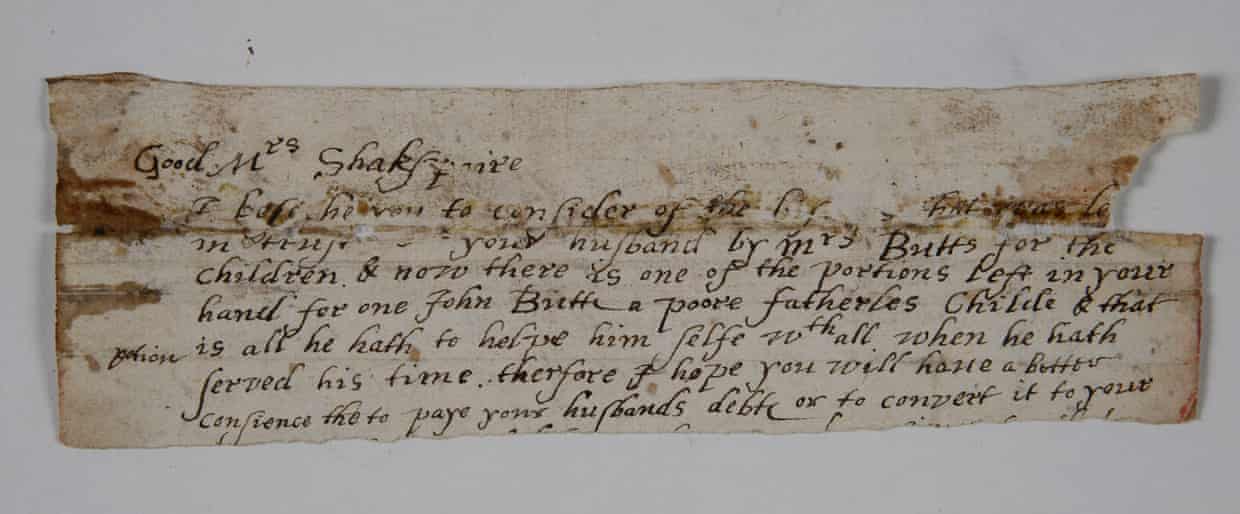
The letter fragment seems to place Anne Hathaway in London with William Shakespeare. 

Where do our firm convictions about history come from? Sometimes the accepted wisdom is based on facts, sometimes on what the influencers of the time thought, sometimes on mistakes. If for example, we have always thought Shakespeare had a bad marriage because his wife never came to London with him, what does new information contradicting that do to the accepted wisdom?

And there’s always new information.

Dalya Alberge writes at the Guardian, “It has long been assumed that William Shakespeare’s marriage to Anne Hathaway was less than happy. He moved to London to pursue his theatrical career, leaving her in Stratford-upon-Avon and stipulating in his will that she would receive his ‘second best bed,’ although still a valued item.

“Now a leading Shakespeare expert has analyzed a fragment of a 17th-century letter that appears to cast dramatic new light on their relationship, overturning the idea that the couple never lived together in London.

“Matthew Steggle, a professor of early modern English literature at the University of Bristol, said the text seemed to put the Shakespeares at a previously unknown address in Trinity Lane – now Little Trinity Lane in the City. It also has them jointly involved with money that Shakespeare was holding in trust for an orphan named John Butts.

“Addressed to ‘Good Mrs Shakspaire,’ the letter mentions the death of a Mr Butts and a son, John, who is left ‘fatherles,’ as well as a Mrs Butts, who had asked ‘Mr Shakspaire’ to look after money for his children until they came of age. It suggests the playwright had resisted attempts to pay money that the young Butts was owed.

“Steggle said: ‘The letter writer thinks that “Mrs Shakspaire” has independent access to money. They hope that Mrs Shakspaire might “paye your husbands debte.” ‘

“They do not ask Mrs Shakspaire to intercede with her husband, but actually to do the paying herself, like Adriana in The Comedy of Errors, who undertakes to pay a debt on her husband’s behalf, even though she was previously unaware of it: “Knowing how the debt grows, I will pay it.” ‘ …

“The fragment was preserved by accident in the binding of a book in Hereford Cathedral’s library. Although it was discovered in 1978, it has remained largely unknown because ‘no one could identify the names or places involved,’ Steggle said.

“Crucial evidence includes the 1608 book in which the fragment was preserved, Johannes Piscator’s analyses of biblical texts. It was published by Richard Field, a native of Stratford, who was Shakespeare’s neighbor and his first printer.

“Steggle said that it would be a ‘strange coincidence’ for a piece of paper naming a Shakspaire to be bound, early in its history, next to 400 leaves of paper printed by Field, ‘given Field’s extensive known links to the Shakespeares.’

“John Butts seems to have been serving an apprenticeship because the letter mentions ‘when he hath served his time.’ Scouring records from the period 1580 to 1650, Steggle found a John Butts, who was an apprentice, fatherless and in the care of his mother. …

“Steggle found John Butts in later records, placing him in Norton Folgate, outside the city walls, and living on Holywell Street (Shoreditch High Street today), home to several of Shakespeare’s fellow actors and associates.

“It was an area in which Shakespeare worked in the 1590s, first at the Theatre in Shoreditch, the principal base for the Lord Chamberlain’s Men throughout those years, and then at its near neighbor, the Curtain theatre. Shakespeare’s lifelong business partners, the Burbages, were involved in innkeeping and victualing nearby.

“Steggle said: ‘The adult John Butts, living on the same street as them, working in the hospitality industry in which they were invested … would very much be on the Burbages’ radar. So Shakespeare can be linked to Butts through various Norton Folgate contacts.’

“If the writing on the back of the letter – in another hand – was written by Anne, the words would be ‘the nearest thing to her voice ever known,’ he noted.

“The research is being published in Shakespeare, the journal of the British Shakespeare Association.”

What accepted wisdom will future historians overthrow by their scouring of our — probably digital — records? And will they draw such broad conclusions about what they find? I myself don’t see how you claim that Shakespeare had a good or bad marriage on the basis of his wife’s residence in London. But it’s fun to see how long new ideas can keep turning up.

More at the Guardian, here.

Read Full Post »

Photo: Andrea Lightfoot via Unsplash.

For Valentine’s Day this year I thought I would post about the love people have for pets. The article I found at Yale University’s human relations website is a little research-y, but it shows just how far back in history humans have felt that kind of love.

“The human love of pets is a powerful and global phenomenon. For many pet owners, their furry (or scaly) domestic companions transcend any simple categorization of non-human animal. Indeed, research shows that it is a growing global trend for pet owners to consider their animals to be full members of their families; to dote upon them as they would children or romantic partners, both emotionally and financially; and to thereby develop strong bonds of dependency, love, and support.

“Gray and Young (2011) conducted a broad cross-cultural study of human–pet dynamics around the world utilizing … a stratified random sample of 60 culturally, linguistically, and geographically diverse societies represented in eHRAF [Human Relations Area Files] World Cultures. Their study revealed that ‘dogs, birds, and cats were the most common pets, followed by horses, other hoofed mammals such as water buffalo, rodents, nonhuman primates, and pigs.’ … Attitudes and sentiments towards the domesticated animals vary, with many societies attaching spiritual meaning to their birds, cats, or dogs. …

“The emotional connection between pets and their owners is worthy of cross-cultural attention. For example, it has been discovered that dogs are able to read emotional cues from the faces of their owners and to respond accordingly. Other recent studies have shown that people tend to have more compassion for animals who are suffering than for adult humans in similar circumstances, treating the hurt dogs akin to helpless infants who need protection. Based on global data, researchers in this telling social experiment concluded that, by and large, subjects ‘did not view their dogs as animals, but rather as “fur babies” or family members alongside human children.’

“As to the origins of human-pet relationships, anthropologists suggest that our propensity for keeping pets, as well as our finely honed empathy for their emotional state, stems from the process of animal domestication in early human history, beginning with dogs and continuing to horses, sheep, goats, and others:

” ‘In each case, humans had to learn to put themselves in the minds of these creatures in order to get them to do our bidding. In this way our senses of empathy and understanding, both with animals and with members of own species, were enhanced. Our special relationship with animals is revealed today through our desire to have pets (McKie 2011).’ …

“Evidence of ancient burials from eHRAF Archaeology supports recognition of a longstanding bond between humans and animals far back into prehistory. For example, in ancient Egypt (5000-2000 BCE), Rice finds that, ‘amongst the graves at Helwan are examples of the burials of dogs and donkeys; as these do not seem to be the subject of cult or religious observance, it may be that they were family pets, since the Egyptians always kept animals about them, as members of their households’ (1990: 131). Similarly, on the other side of the world, the purposeful interment of animals in prehistoric settlements is known throughout the American Southwest and northern Mexico. According to Woosley and McIntyre, at the Wind Mountain site in New Mexico dating back to 2000-600 BP, the animals buried included dogs, bears, turkey, golden eagles, hawks, mourning doves, and scarlet macaws (1996: 281).

“Edmund Leach’s seminal work, Animal Categories and Verbal Abuse (1964), presents the human relationship to animals in terms of social distance. Attitudes towards different animals reflect our familiarity with them, so that the most familiar or ‘closest’ to ourselves are subject to ritual provisions or prohibitions because they are considered ‘taboo.’ They are also most worthy of human-like care and devotion. This is why people generally avoid eating the animals that they might also keep in their homes as pets. …

“The dynamic of intimacy in the human relationship to animals recurs in the ethnographic literature. The closeness of human-animal relationships is evident around the world with instances of beloved species being cared for as fondly and tenderly as human babies.”

Check out more at Yale’s Human Relations Area Files, here. No paywall.

Read Full Post »

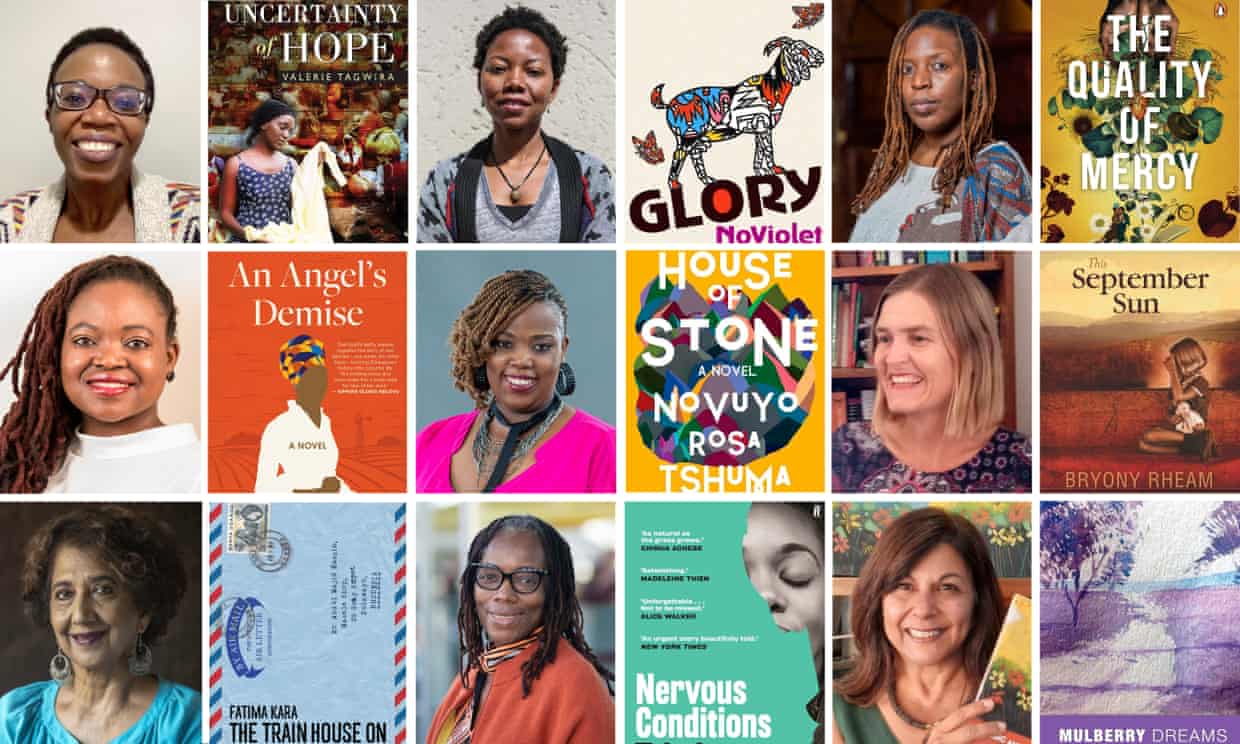
Photo: The Guardian notes that women are at the forefront of a seminal moment in Zimbabwe literature. 

The African nation Zimbabwe, formerly a British colony called Rhodesia, has suffered years of trauma perpetrated by every side in the conflicts. But when women start publishing books in record numbers, you can bet the country is moving into a new and better phase.

Tawanda Mudzonga reports at the Guardian, “A handful of events, says author Siphiwe Gloria Ndlovu, define her generation. ‘The war, the HIV crisis, migration and the brain drain, and the creation of the Zimbabwean diaspora.’

“They have not been topics that the country’s rulers want spoken of and many who have spoken frankly about Zimbabwe have been imprisoned or persecuted. But a new generation of female novelists is exploring the people, the political problems and the history of this complicated and still fledgling nation.

“ ‘I wanted to talk about what had happened. What does 40 years of a postcolonial country look like, and what does 40 years of a postcolonial country look like for us,’ says Ndlovu, author of the award-winning The Theory of Flight

“Ndlovu and her contemporaries, who include Novuyo Rosa Tshuma, Sue Nyathi and Valerie Tagwira, follow in the footsteps of celebrated author Tsitsi Dangarembga, whose 1988 book, Nervous Conditions, was the first published novel that had been written in English by a black Zimbabwean woman.

“Ndlovu’s lyrical writing has reimagined how stories about post-independence Zimbabwe are told, and reflected some of the country’s darker moments. …

“Ndlovu comes from Bulawayo, in the Matabeleland region. In The Theory of Flight, she writes about the Gukurahundi massacres, committed in the 1980s under the direction of Robert Mugabe, which killed an estimated 20,000 people, predominantly ethnic Ndebele from Matabeleland and Midland regions.

“Postcolonial Zimbabwe has been defined by a narrative in which the ruling Zanu-PF party explains its valiant efforts and sacrifice to liberate Zimbabwe, but the events of Gukurahundi do not feature in the country’s history books.

“ ‘What happened in the 80s, in this part of the country – it left something unresolved that needed to be resolved. A lot of writers decided the best way to do that is to write about it.’

“Novuyo Rosa Tshuma explores the same period in her debut book, House of Stone. ‘I didn’t know much about Gukurahundi, and it was the act of writing House of Stone that helped me sit with it and unpeel those layers,’ says Tshuma, who is also from Bulawayo. ‘We didn’t speak about it in my family. We knew it happened, but we were always encouraged not to talk about it. …

“ ‘If you notice the forms of violence that have come after that, experienced in the 2000s, what we are experiencing stemmed from that period, and also from the liberation period. That’s why I think it’s important to look at that time – it helps us to frame and think about and understand why we are where we are.’ …

“The novel is not available inside Zimbabwe. [Says] Tshuma, ‘That made me sad because I had envisioned this as a book that speaks to Zimbabweans directly. I’m talking to my people.’

“Dr Tinashe Mushakavanhu, a research fellow in African and comparative literature at the University of Oxford, says this is a seminal moment in Zimbabwean literature. ‘It’s exciting. … At the turn of the millennium, it is the women writers who have been carrying the burden of Zimbabwean literature.’ …

“The excitement comes at a price. ‘It is a burden to carry because Zimbabwe is not a forgiving country, especially if you choose to use your voice, if you are opinionated,’ Mushakavanhu says. … ‘In terms of the abuse one gets, the name-calling, you do not find that when male writers are writing Zimbabwe.’

“Sue Nyathi, whose novel, An Angel’s Demise, was published in 2022, says there is risk associated with writing. ‘The politics is such that there’s a lot of censorship. You can’t just write what you like without fear.

“ ‘That’s why people write books like Animal Farm. They use satire. There’s a fear of persecution when writers express themselves in their stories, and self-censorship.’ …

“Valerie Tagwira was afraid of the repercussions from her novel The Uncertainty of Hope, published just after the government’s Operation Murambatsvina (Clear Out the Trash), a slum clearance operation which displaced thousands of people in 2005. … ‘[My cousin] said: “Why are you being so reckless? Writing about this, we could end up being targeted.” ‘ …

“Tagwira asked her publisher if she thought it would be seen as a political book. ‘I was a bit scared because of what my cousin said.’ Her publisher assured her it wouldn’t be, and cautioned her against self-censorship. …

“Other success stories are white Zimbabwean Bryony Rheam with her award-winning debut novel, This September Sun, and Violette Kee-Tui and Fatima Kara who have written about Zimbabwe’s mixed-race and Indian communities respectively, in Mulberry Dreams and The Train House on Lobengula Street.

More at the Guardian, here. No firewall.

Read Full Post »

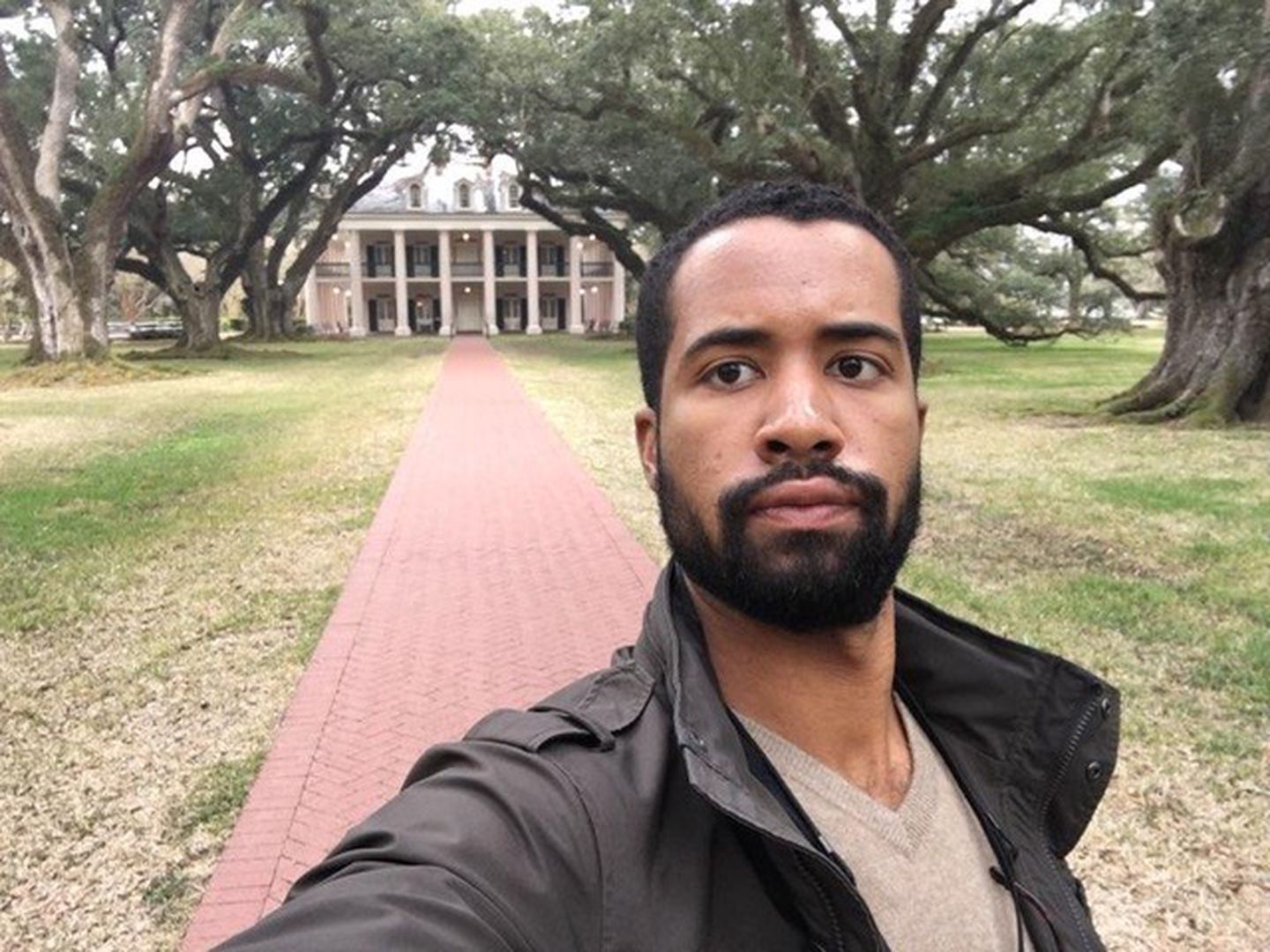
Photo: Kirk Brown/via Boston Globe.
Kirk Brown is the founder and CEO of the Black think tank Melanin MeetUps. The group launched The Better Together Project, which is demanding an end to what it calls the glorification of plantation houses, and the use of their grounds for parties and weddings.

In recent years, tourists at plantations in the South and stately homes in the North have started giving more thought to the people who kept the mansions running. There’s so much that wasn’t in our school histories. I, for one, was amazed to learn that when the colonial farmers fought the British at Concord’s North Bridge April 19, 1775, many of the folks minding the farm were slaves. What? In Massachusetts? Yes.

So I was interested in a recent Boston Globe story about a new, more thorough, house tour. Jon Marcus wrote, “After she graduated from Clark University in Worcester, Carolyn Michael-Banks worked as general manager for a tour company in Washington, D.C., where she quickly noticed that certain people and events were being left out of the script.

“ ‘We had absolutely nothing in there about African-American history,’ said Michael-Banks, who is Black. … So she added information about the Black abolitionist and writer Frederick Douglass. About Benjamin Banneker, a Black surveyor who helped lay out the district. About how enslaved people were among the builders of the White House.

“Then the CEO called. ‘His question to me was, “What’s all this Black stuff?” ‘ Michael-Banks remembered.

“Today Michael-Banks runs her own tour company, A Tour of Possibilities, in Memphis, which visits the birthplaces and workplaces of cultural icons including Aretha Franklin and Black investigative journalist Ida B. Wells, landmarks of the civil rights movement and sites of the city’s slave markets and lynchings.

‘History can be uncomfortable but it doesn’t mean we shouldn’t talk about it,’ Michael-Banks said. …

“Offerings like these are popping up all over the country, by and about people often excluded from the narratives delivered on those jump-on, jump-off bus and trolley tours.

“There are women’s history tours of Philadelphia, St. Louis, Buffalo, and Detroit, and LGBTQ tours of Charleston, S.C., St. Louis, New York’s West Village, and San Francisco’s Castro district. Native Americans tell their own stories on Navajo Tours USA in New Mexico and Nez Perce Tourism in the Pacific Northwest. The Wing Luke Museum of the Asian Pacific American Experience in Seattle offers tours of Chinatown that cover its history and not just its food.

“There are growing numbers of tours focused on Black history and culture, not only in Memphis, but in Austin, Texas; Birmingham, Ala.; Charleston; Chicago; Miami; Savannah, Ga.; Selma, Ala.; and Washington. Atlanta has Black history and civil rights tours and a cycling tour of off-the-beaten-track neighborhoods called Civil Bikes. In Tulsa, Okla., there are now tours of the places where the Tulsa Race Massacre occurred.

“A ‘truth and reconciliation’ tour of Montgomery, Ala., is run by a nonprofit from an office in a building where the words ‘white’ and ‘colored’ are still chiseled in the wall above a water fountain. And Alexandria, Va., last year launched a Black history trail and an Underground Railroad-themed tour. …

“Several house and plantation museums including Monticello and Belle Grove Plantation in Virginia and the Belle Meade Historic Site and Winery near Nashville, have started telling more about the enslaved people who built and worked at them. The state of Nevada last year converted the Stewart Indian School into a museum to illustrate the story of how Native American children were taken there to be assimilated. …

“When historic sites are treated solely as places for entertainment, said Stephanie Rowe, executive director of the National Council on Public History, ‘it becomes easier to focus on the furnishings and the stories of success and riches. But when we approach these sites as places to learn about our pasts, we’re called to broaden the narratives’ to include such things as who did the work, and under what conditions.

“In fact, said Paul Melhus, CEO of ToursByLocals, whose guides increasingly focus on the people who have been left out, ‘the history of America is the history of Black people. And gays are part of American history, and Hispanics. It’s all real, and you don’t really understand anything if all you’re doing is just looking at the pretty houses.’

“Others want to do more than change the script. The Better Together Project is demanding an end to what it calls the glorification of plantation houses, and the use of their grounds for parties and weddings.

“ ‘These were labor homes,’ said Kirk Brown, founder and CEO of the Black think tank Melanin MeetUps, which launched the project. … ‘Why is there this glamorization of these homes? It’s depressing and it’s disrespectful and it prevents us as a country from truly healing.’ …

“ ‘We haven’t been able to express ourselves in a way that’s proud,’ said Stacia Morfin, a member of the Nez Perce, or Niimíipuu, tribe and CEO of Nez Perce Tourism, which she started after finding that none of the tourism-related businesses in her part of Idaho were run by descendants of tribal people. … ‘The marginalized and the indigenous people are taking that power back.’ ”

More at the Globe, here.

Read Full Post »

Photo: Prasidha Padmanabhan.
Prasidha Padmanabhan, 16, founded WEAR (Women for Education, Advocacy and Rights), a nonprofit with an executive board made up entirely of students.

The teen in today’s story not only pointed out the absence of women of color in her school’s history curriculum. She influenced a large school system. That takes a special kind of patience.

Theresa Vargas reports at the Washington Post, “If you happen to get into a conversation about American history with Prasidha Padmanabhan, you will have to keep reminding yourself of this: She is only 16. The names of historically overlooked women flow from her in the same way the names of modern-day A-list celebrities flow from other kids her age.

“She can tell you about the lives of Rebecca Lee Crumpler (the first African American woman to become a doctor), Queen Liliuokalani (the first woman and last person to rule Hawaii) and Claudette Colvin (a Black teenager who refused to give up her seat on a bus before Rosa Parks did). …

“She can tell you why, if you know about Paul Revere, you should also know about Sybil Ludington. Ludington was 16 when she rode through the night during the American Revolution to warn militia members of a British attack. …

“The teenager has not only spent the last few years learning about the historic and too-often unseen roles of women, and in particular women of color, but also has worked to make sure students in one of the country’s largest school systems have a chance to learn about them.

“During the pandemic, Prasidha went from seeing people on social media talk about repealing the 19th Amendment, which granted women the right to vote, to creating a student-led nonprofit, to working with educators from Fairfax County Public Schools to add more women’s history to curriculum offerings.

“Her collaboration with school officials is ongoing, but so far, she has worked with social studies teachers to create Civil War material made available for sixth-grade U.S. history lessons, and she has written minibooks about Native American women for the school system’s young readers.

“ ‘She like many others noticed that when it comes to the stories we tell about Indigenous people in our K-12 classrooms, too often Native American people do not show up as individual people with lives and interests and contributions,’ says Deborah March, who works for Fairfax schools as a culturally responsive pedagogy specialist, a position that calls for her to support teachers and curriculum writers. ‘She created these short, accessible, image-laden biographies so that our younger elementary school learners can encounter Native American women as full human beings whose lives are worthy of study.’

“Days ago, the U.S. Mint prompted public celebrations and conversations across the country. The Mint announced that coins from the American Women Quarters Program — which honors the remarkable contributions of women — had been shipped. …

“That these women’s names will soon be in our hands and in front of our faces should give us joy. It should also cause us to pause and think about why many people still don’t know their stories and what women we should have learned about but haven’t. …

“Prasidha is a first-generation Indian American and says those comments she saw online in 2020 about taking away women’s right to vote made her think about what she had learned in her history classes about women. She, like most people, had been taught about Harriet Tubman, Rosa Parks and Susan B. Anthony. But she couldn’t recall learning about what women did during the Civil War or during other notable periods.

“She told her parents she wanted to start an organization that would focus on getting those stories told. From that conversation grew WEAR (Women for Education, Advocacy and Rights), a nonprofit with an executive board made up entirely of students.

One of Prasidha’s first actions through the organization was to create a Change.org petition calling on Fairfax Schools to integrate women’s history into elementary and middle school curriculum. … The petition drew more than 5,000 signatures.

“Prasidha recalls the day she was at home, engaged in virtual learning, and an email caused her to let out an excited yell. She says it was from March saying she wanted to meet and talk about a possible collaboration between the school system and WEAR.

“ ‘I didn’t know what to expect,’ March says of her first encounter with Prasidha, who is a junior at Thomas Jefferson High School for Science and Technology. … ‘It was exciting for me to connect with a student who was on fire for just and equitable access to learning experiences that tell a complete story.’

“March says everyone benefits when educators take seriously the type of questions Prasidha and WEAR are raising: ‘What if we broaden the story? What if we rethink whose lives and contributions are deemed worthy of study in our classrooms and textbooks?’

“ ‘I think students have a better chance of seeing their power to shape our systems and institutions when they encounter lots of different examples of what that can look like, examples of diverse people as the doers and movers of history,’ March says. ‘It would be a shame if students came away from their K-12 education thinking they have to become a president or a general if they want to make a difference in the world.’

“March says she, her colleague Jen Brown and three social studies teachers met with Prasidha weekly at one point to work on the Civil War material that is offered to sixth-grade teachers. Prasidha was also invited in August to speak to educators. Her presentation was titled, ‘Expanding and Transforming Women’s History for K-12.’

“Brown recalls Prasidha telling participants about Susie King Taylor, who was born into slavery and attended school in secret. At 14, she became the first Black teacher to openly educate African Americans in Georgia, and she later served as a nurse for the Union army during the Civil War.

“ ‘I had never heard of Susie King Taylor, before Prasidha introduced me to her, and was so grateful for the opportunity to learn about her and other women who did extraordinary things,’ Brown says.

More at the Post, here.

Read Full Post »

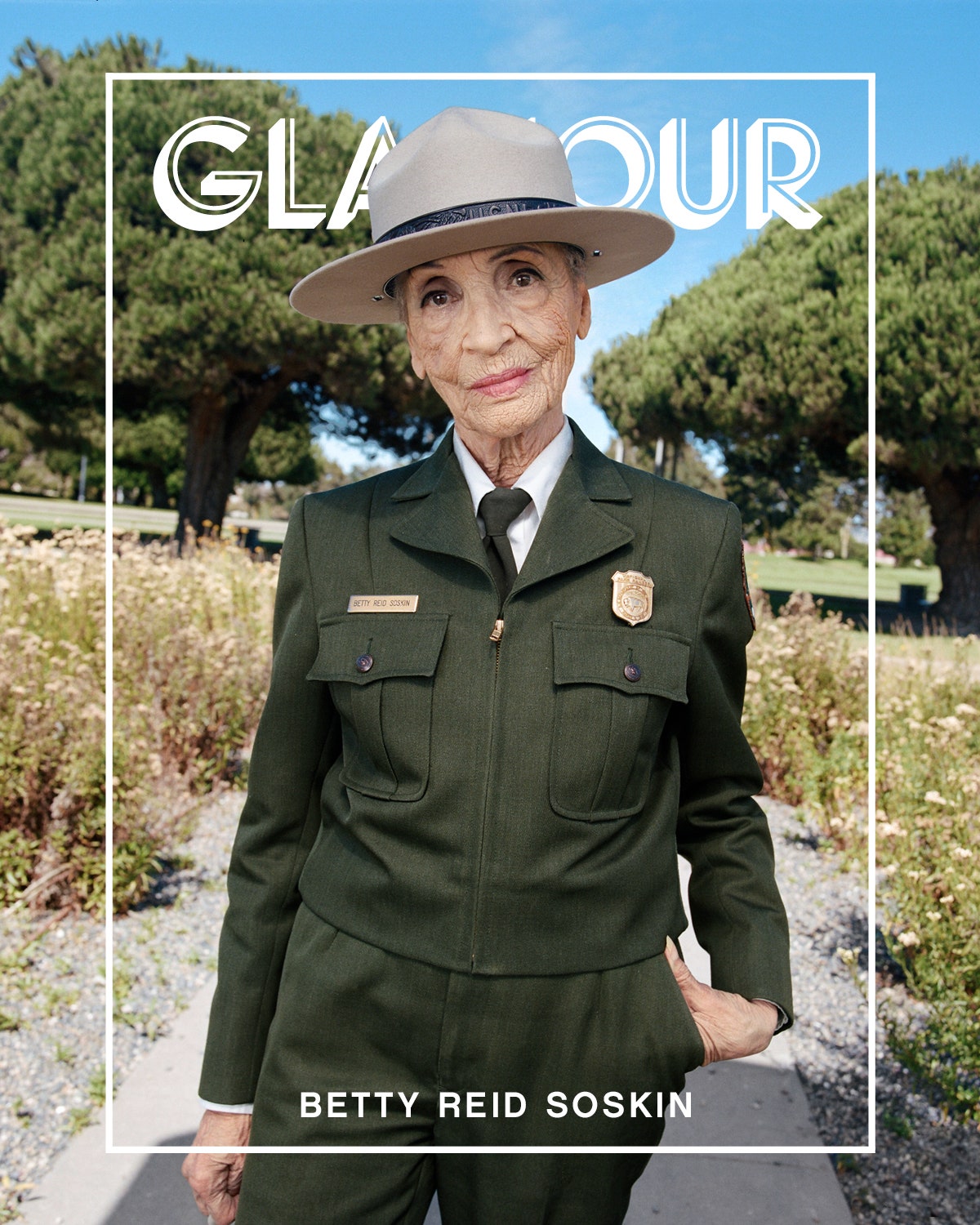
Photo: Shaniqwa Jarvis/Glamour.
Betty Reid Soskin works at the Rosie the Riveter World War II Home Front National Historical Park in Richmond, Calif. Soskin is the oldest active ranger in the National Park Service.

In a fascinating September article at the Washington Post, Sydney Page interviewed a no-nonsense park ranger who was in her 80s when she heard a call to improve on the way US history is told. Here’s her story.

“When asked how it feels to be 100 years old, Betty Reid Soskin [said]: ‘The same way I felt at 99.’

“But she’s not just any centenarian: Soskin is the oldest active ranger in the National Park Service. …

“When it comes to sharing her story, Soskin is not shy. As a park ranger at the Rosie the Riveter World War II Home Front National Historical Park in Richmond, she spends her days recounting her rich and complicated history, in the hope that her firsthand account will resonate with people, and encourage them to share their own stories.

“ ‘I think everyone’s story is very important. There is so much diversity,’ Soskin said. ‘It’s in that mix that the great secret of a democracy exists.’

“It wasn’t until 21 years ago, though, that Soskin truly started telling her own tale — and it happened by coincidence. While working as a field representative for a California assemblyman, Soskin attended a meeting with planners from the National Park Service.

“They were organizing the development of the Rosie the Riveter WWII Home Front National Historical Park, created in 2000 to honor Americans on the home front, who worked in various industries across the country to bolster the war effort.

“The park paid homage to Rosie the Riveter, a pop-culture icon, symbolizing civilian women who worked in shipyards and factories — assuming the vacated jobs of men — during the war. But the depiction of a red-bandana-wearing White woman didn’t speak to Soskin’s own experience on the home front as a Black woman in segregated America, she said. During the war, Soskin worked as a file clerk in a segregated union, Boilermakers Auxiliary 36.

“ ‘Black women were not freed or emancipated in the workforce,’ she said in a 2015 interview with the Washington Post. ‘Unions were not racially integrated and wouldn’t be for a decade. They created auxiliaries that all Blacks were dumped into. We paid dues but didn’t have power or votes.’

Sitting in that meeting with the National Park Service planners as the only Black person in the room, she realized something: ‘The history, as I had lived it, was nowhere in sight — not one minute of it.

“Soskin decided to change that. She became a consultant to the park in 2003, and a park ranger in 2007 at the age of 85. Sharing her story with as many people as possible, she decided, was her way of reclaiming her history, and that of countless others whose tales have gone untold.

“She’s become known for saying: ‘What gets remembered is determined by who is in the room doing the remembering.’ So she made it her mission to stay in the proverbial room — which, in her case, was in the park’s visitor center. …

“Tom Leatherman, the park’s superintendent, said Soskin has had a profound impact on the park.

“ ‘She has been fundamental to us being able to tell a more complete story,’ he explained. … Soskin has propelled the park, Leatherman added, to seek other stories of people who have been marginalized and ensure that they are heard — including voices that are Latinx, Native American, Japanese American and LGBTQ. …

“The content of her presentations is dictated, in large part, by what visitors want to know. Often Soskin speaks of her upbringing in a tightknit Cajun-Creole family and her experiences with racial discrimination growing up in Oakland, Calif. …

“Over the years, Soskin — who has four children, five grandchildren and one great-grandchild — wore many hats: mother, musician, civil rights activist, antiwar advocate and finally, park ranger. Her most recent role is what pushed her into the national spotlight.

“Just like that, ‘someone dropped a uniform on the life that I was already leading,’ Soskin said. … Wearing it, she said, feels right.

“ ‘Little girls that see me in uniform see possibility. They have a feeling there’s an option open to them that they wouldn’t have known otherwise,’ she said. …

“Since becoming a ranger, Soskin was awarded the Silver Service Medallion by the National WWII Museum; she was presented with a commemorative coin from President Barack Obama; and she has written a memoir called ‘Sign My Name to Freedom,‘ which is being made into a documentary. …

“Her most recent accolade came just in time for her 100th birthday: A middle school was renamed after her.

“ ‘I didn’t know that would mean so much, except that it does, because I think that it means that I will go forward into history along with all the other people,’ she paused to wipe a tear, ‘who have tried to make a difference.’ ”

More at the Post, here. You might also like the 2018 article about Soskin at Glamour, here.

Read Full Post »

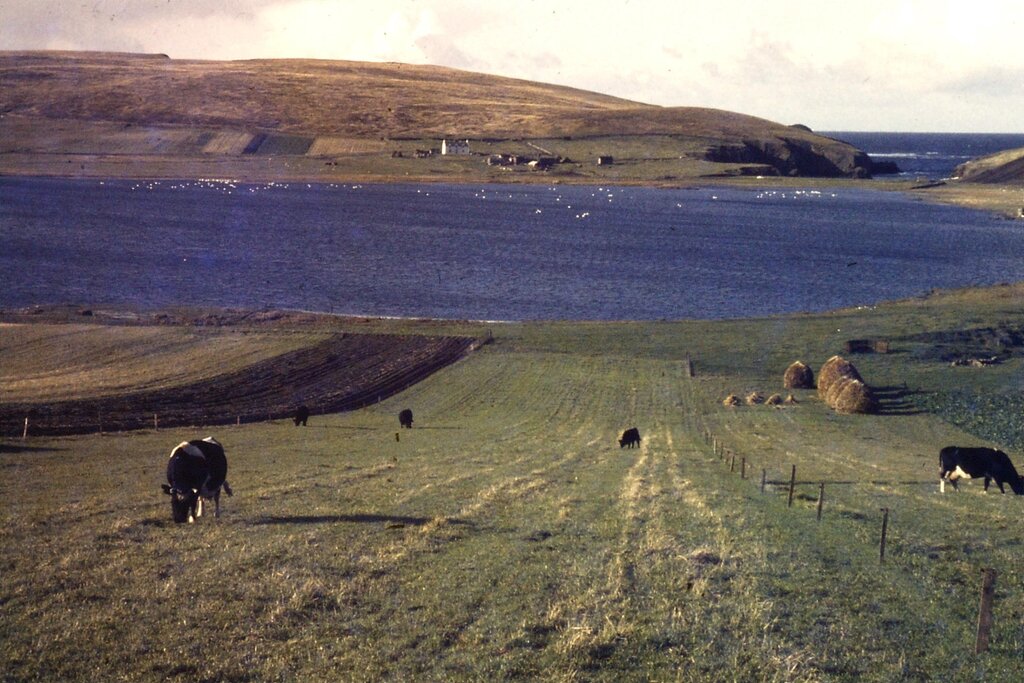
Photo: Nick Dymond.
Nick Dymond took his bags of old slides to the Shetland Islands recycling center. Paul Moar rescued them for posterity.

This why I have such a hard time throwing anything out. I say to myself that I really need to deal with the clutter here and leave less of a mess for my children. But then I think, what if these old letters, these old photos, etc., turn out to have value for posterity? I have read too many biographies that lament someone’s friend or grandmother burning precious material!

Megan Specia reported recently at the New York Times that a Shetland Islands resident who was cleaning house never considered that anyone would care about his slides of the old days. Fortunately, someone who did care saw them.

“After working for years at a recycling center in the Shetland Islands, at the northernmost reaches of the British Isles, Paul Moar is used to helping the public get rid of unwanted items.

“But when an older man walked into the recycling center in Lerwick, the capital of the archipelago in the North Atlantic, carrying two large bags heaving with old photograph slides, he quickly realized that this intended trash might be worth keeping.

“In the bags, he found a wealth of old pictures of the Shetland Islands taken in the 1960s and ’70s — old farmers shearing sheep by hand, views of dirt roads winding between small stone houses, and fishers rowing small dinghies ashore.

” ‘My jaw hit the ground,’ said Mr. Moar, a local history buff. ‘Some of them were these amazing snapshots into island life, and other ones were just scenic photos,’ he said. ‘But I knew I’d stumbled on a little bit of treasure.’

“In the days since, Mr. Moar has worked on digitizing the 300 images, tracked down the photographer and shared dozens of the pictures online. There, they have proved a sensation for residents of the islands, which have a population of just 22,000 or so, who have helped piece together when they were taken, identified the people in the photographs, and shared their own memories of the islands. …

“Through a neighbor, Mr. Moar reached out to Nick Dymond, the local resident who dropped off the bags and who took the photographs, and with his permission, uploaded a number of the images to a Shetland memories Facebook group

Overnight, dozens of people [on Facebook] were leaving messages and helping to identify the people featured, chiming in with notes on family homes and sharing memories of places they spent time as children. …

“One member of the Facebook group where Mr. Moar first shared the images said it was ‘giving everyone such a boost in these dark times.’

“Mr. Moar said his own passion for the history of the islands — where his family can trace ancestors back to the 1400s — was what had initially drawn him to save the pictures. …

“Mr. Dymond, 77, … is originally from Bedford, England, but in the 1960s, he made his home on the Shetland Islands, … and in the 1970s, he began leading bird and wildlife tours in the summers. He served as a warden for the Royal Society for the Protection of Birds, a charity, and later wrote a book on birding in the islands

“Mr. Dymond said that viewing the photographs was a journey back into small moments of his life that he had not thought of in some time. … One of his favorites is a photograph of a farmer kneeling to feed a lamb, taken on the tiny island of Fetlar, which had a population of just 100 during the seven years that Mr. Dymond lived there. He recognized the man, Lollie Brown, a neighbor, who died years ago.

“ ‘He was just a wonderful man,’ he said. ‘That was a great reminder for me.’ ”

More at the New York Times, here. See the Shetland Museum site, here.

Read Full Post »

People throw out very private things, usually without realizing it. When I was volunteering for my college’s used bookstore years ago, a piece of writing fell out of a book my neighbor had donated. I wish I hadn’t seen it. It was a very sad poem about a son that cried for his father after a divorce. It wasn’t for my eyes.

Amelia Tait writes at the Guardian book feature the Observer about things like that — diaries that people write for themselves but that may end up years later in the hands of a stranger. According to the article, very few people consciously give their diaries away.

“Sally MacNamara,” Tait reports, “has long told her four children that if there’s a fire in her Seattle home, they should rescue Olga first. … The ‘Olga’ that is so precious to the 63-year-old online seller is a 118-year-old diary written by a woman of the same name. Beginning in 1902, the diary chronicles the experiences of a young immigrant who was raised in a strict religious environment in America. [MacNamara] purchased the diary online in 2005 – it is now one of her most prized possessions.

“Over the past 35 years, MacNamara has read more than 8,000 strangers’ diaries. As a child, her mother would take her ‘dump diving’ to salvage objects – when she discovered an old, handwritten piece of paper in the trash one day, she was immediately intrigued. …

“At first, MacNamara bought diaries in antique shops, but when a friend introduced her to eBay in 1998, she began using the auction site to buy and sell. …

“While MacNamara has more than two decades’ experience trading strangers’ secrets, her hobby has recently become more widespread. On YouTube, videos entitled ‘I bought a stranger’s diary’ are incredibly popular – an October 2019 video racked up 300,000 views, while the video that started the trend in December 2017 has been watched by over 6.4 million people.

“Clearly the mystery and intrigue of reading someone’s personal history can be compelling. But should we be troubled by the inherent voyeurism? Or – as Observer literary critic Kate Kellaway once said on the subject – ‘do people who keep diaries secretly hope someone will read them?’

Joanna Borns, 35, is a writer from New York with 10,000 YouTube subscribers. Borns first started the YouTube trend for reading strangers’ diaries three years ago – since then, she’s purchased five diaries, which cost between [$26 and $52] each. ‘It’s interesting to see how you’re similar to a totally random stranger,’ Borns says. …

“Borns thinks ‘a lot’ about the ‘moral aspects’ of her videos. … ‘I certainly don’t want to broadcast anyone’s personal information – I do change the names,’ she says; she also avoids sharing ‘dark’ thoughts that diarists recorded. …

“Victoria is a 58-year-old from Cheltenham who has been selling love letters and diaries online since 2004 (she has asked to be identified by her first name only). She procures diaries in flea markets and car boot sales for up to [$26]. … ‘You go to one of these car boot sales and you find a box and it’s scruffy and insignificant and it’s wet, and you open it up and it’s a bundle of wonderful yellowing letters tied up with a ribbon,’ she says, ‘You’re just blown away.’ …

“Although the trend is undeniably voyeuristic, many collectors have a grander purpose. Polly North is the 41-year-old director of the Great Diary Project. …

“She believes historians can learn about marginalised people via journals. Yet North also receives a huge number of donations from modern diarists, who can opt to make their journals immediately available or can seal them for decades (amazingly, most people are happy to have their diaries read and shared straight away).

“North’s favourite is from a ‘virtually illiterate’ woman who was brought up in a trailer park in California and is still alive. ‘There’s no capital letters, there’s no punctuation… It’s stripped down, it’s raw, it doesn’t tick any conventional literary boxes, but it still achieves something that’s magical.’ ”

More at the Observer, here.

Read Full Post »

Photo: Volcano Discovery

I love stories about volcanoes that change the flow of history. The really big ones, you know, darken the skies for months — even years — and disrupt the sea like a tsunami.

As Katherine Kornei reports at the New York Times, there are other effects that researchers are just beginning to discover.

“Chaos and conflict roiled the Mediterranean in the first century B.C.,” she reports. “Against a backdrop of famine, disease and the assassinations of Julius Caesar and other political leaders, the Roman Republic collapsed, and the Roman Empire rose in its place. Tumultuous social unrest no doubt contributed to that transition — politics can unhinge a society. But so can something arguably more powerful.

Scientists [in June] announced evidence that a volcanic eruption in the remote Aleutian Islands, 6,000 miles away from the Italian peninsula, contributed to the demise of the Roman Republic.

“That eruption — and others before it and since — played a role in changing the course of history.

“In recent years, geoscientists, historians and archaeologists have joined forces to investigate the societal impacts of large volcanic eruptions. They rely on an amalgam of records — including ice cores, historical chronicles and climate modeling — to pinpoint how volcanism affected civilizations ranging from the Roman Republic to Ptolemaic Egypt to pre-Columbian Mesoamerica.

“There’s nuance to this kind of work, said Joseph Manning, a historian at Yale University who has studied the falls of Egyptian dynasties. ‘It’s not “a volcano erupts and a society goes to hell.” ‘ But the challenge is worth it, he said. ‘We hope in the end that we get better history out of it, but also a better understanding of what’s happening to the Earth right now.’ …

“Joseph McConnell, a climate scientist at the [Desert Research Institute in Reno, Nev.], and his collaborators are in the business of looking for debris [from long ago eruptions]. …

“Volcanic ash, more generally known as tephra, sometimes hides in ice. It’s a special find because it can be geochemically tied to a specific volcano. … The ice also carries a time stamp. Dr. McConnell and his colleagues look for variations in elements like sodium, which is found in sea spray that’s seasonally blown inland. By simply counting annual variations in these elements, it’s possible to trace the passage of time, Dr. McConnell said. ‘It’s like a tree-ring record.’

“Dr. McConnell and his collaborators recently analyzed six ice cores drilled in the Arctic. In layers of ice corresponding to the early months of 43 B.C., they spotted large upticks in sulfur and, crucially, bits of material that were probably tephra. The timing caught the scientists’ attention. Researchers have previously hypothesized that an environmental trigger may have helped set in motion the crop failures, famines and social unrest that plagued the Mediterranean region at that time. …

“Gill Plunkett, a paleoecologist at Queen’s University Belfast, set out sleuthing. After extracting 35 pieces of tephra from the ice, she pored over the rock chemistry of likely volcanic suspects. Nicaragua’s Apoyeque. Italy’s Mount Etna. Russia’s Shiveluch.

“But it was Okmok, a volcano in Alaska’s Aleutian Islands, that turned out to be the best match, at least on paper. Sealing the deal would require testing two tephra samples — one from the ice and one from Okmok — on the same instrument.

“Dr. Plunkett arranged for a tephra handoff at a conference in Dublin. A colleague from the Alaska Volcano Observatory, Kristi Wallace, packed four bags of Okmok tephra in her carry-on luggage. The match was spot on, Dr. Plunkett said. …

“This eruption was one of the largest of the last few millenniums, Dr. McConnell and his collaborators concluded, and the sulfate aerosols it created remained in the stratosphere for several years. These tiny particles are particularly good at reflecting sunlight, which means they can temporarily alter Earth’s climate. …

“There’s good evidence that the Northern Hemisphere was colder than normal around 43 B.C. Trees across Europe grew more slowly that year, and a pine forest in North America experienced an unusually early autumn freeze. Using climate models to simulate the impact of an Okmok eruption, Dr. McConnell and his collaborators estimated that parts of the Mediterranean, roughly 6,000 miles away, would have cooled by as much as 13.3 degrees Fahrenheit. … Rain patterns changed as well — some regions would have been drenched by 400 percent more precipitation than normal, the modeling revealed.

“That climate shock came at precisely the wrong time, Dr. [Jessica Clark, a historian of the Roman Republic at Florida State University] said. ‘This was a period of Mediterranean-wide political, social and economic upheaval.’

“These cold, wet conditions would have almost certainly decimated crops, Dr. McConnell and his colleagues said. Historical records compiled by Roman writers and philosophers note food shortages and famines. … For a society already reeling from the assassination of Julius Caesar the year before, such trying conditions might have exacerbated social unrest, the researchers concluded. They might even have kick-started transfers of political power that led to the rise of the Roman Empire.

“ ‘It’s an incredible coincidence that it happened exactly in the waning years of the Roman Republic when things were falling apart,’ said Dr. McConnell, who published the team’s results in Proceedings of the National Academy of Sciences.”

This was a long, fascinating article. For additional details, including details about the effects of distant volcanic eruptions on the Nile River in Egypt, click here.

Read Full Post »

img_4528-800x600-1

Photo: Filip Noubel
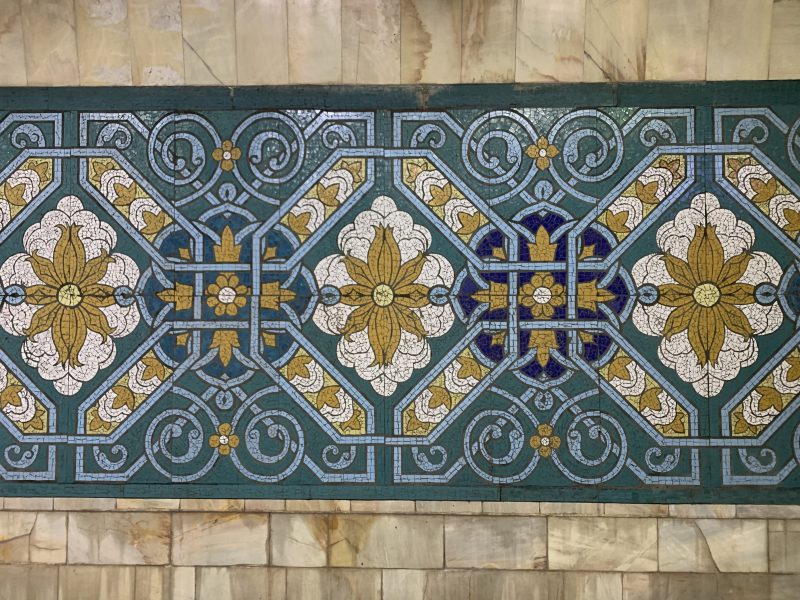
Tiles representing Uzbekistan’s huge cotton industry at the Paxtakor metro station. The  ornamentation of various subway stops portrays the accepted history of the moment.

As we struggle today with our nation’s history and painful, long-suppressed facts come to the fore, let’s turn off the television and think about Uzbekistan.

Back in the day, the Uzbeks thought it would be a beautiful thing to build something Stalin really wanted. They eventually completed a mighty subway system full of the kind of history their now discredited leader would have liked.

Filip Noubel reports at Global Voices, “For many years, it was strictly prohibited to photograph the ornate stations of the Tashkent metro in the Uzbek capital. The Soviet-era system had also been constructed with nuclear attack in mind, and could serve as a fallout shelter in wartime. But ever since that ban was lifted in early 2018, visitors from abroad have started to show heightened interest in Central Asia’s oldest subway system. And with good reason.

“Tashkent’s metro system is so much more than just a means of transportation. Over the decades of its existence, the design and names of the metro’s 29 ornate stations have changed to reflect the turbulent trends of Uzbekistan’s history. …

“Back in November 1920, electricity was a taste of the bold promises of progress to come; it embodied the new innovations now made accessible to the masses. Just 12 years later, the Soviet leadership pronounced yet another strategic and futuristic priority: the construction of the metropolitan, as Europe’s subway systems had come to be known in the second half of the 19th century. On May 25, 1932, the Sovnarkom, the then executive body of the Soviet government issued a decree …

‘The construction of the metropolitan must be considered a project of the utmost importance to the state, with its provision of timber, metal, cement, transportation, etc, and as a key priority in matters of superproductivity at the national level.’ …

“The development of the metro also marked a key turning point in the development of the Soviet economy: while the first five-year plan (1928–1932) emphasised heavy industrialisation, the second five-year plan focused on urbanisation. As a result, the metro became a major cultural symbol, present in films, children’s books, poetry and songs. It was hailed as testament to the success of Stalinism in official songs, such as this one from 1936:

” ‘We believed, we knew, That by digging a pit,
” ‘We would, Comrade Stalin, Make your plan come true.

” ‘They will describe it for centuries on, And not with just one pen
” ‘And they will tell the children, How they fought for the metro!’ …

“The people of Tashkent had to wait several decades for their metro, which was the first in remote and comparatively underdeveloped Soviet Central Asia. Planners faced several challenges: the Uzbek capital had experienced a crushing earthquake in 1966, which destroyed half the city. The city lacked trained engineers and metro workers. Uzbekistan’s long and scorching summers posed problems for ventilation. Which was precisely why the Soviet authorities had to demonstrate that they were up to the task.

“Mobilising human resources and special construction material from all across the Soviet Union, the first metro pits in Tashkent were dug in 1973. Just four years later, in a Stakhanovite spirit which set a record, the metro’s first line was opened in November 1977. The date was chosen to coincide with the 60th anniversary of the Russian revolution. Accordingly, as news footage from that day shows, all local politicians were present at the opening, where a message of congratulations from Soviet leader Leonid Brezhnev was read out before the crowd. …

“As in other Soviet metro systems, each station of the Tashkent metro was assigned a particular political and cultural message to illustrate key messages of Soviet ideology.  …

“Of the 29 stations operating today (a third line was opened in 2001), five metro stations are particularly revealing in what they tell us about Uzbekistan’s changing narratives around national identity.

“[One] station is an emblematic example. Known as Friendship of the Peoples during the Soviet period, its previous name reflected Soviet ideology’s extensive attempts to emphasise its supposedly peaceful international role during the Cold War, in opposition to western imperialism. …

“[The Cotton Grower] station’s name symbolises the Uzbek economy’s everlasting dependency on cotton production. During the Soviet period, Moscow assigned each of the 15 Soviet republics a particular crop to produce en masse. This focus on cotton monoculture has been continued by all subsequent Uzbek governments at a high price for the country’s population. The cotton sector has used forced labor, including that of children.”

Forced child labor, huh? Bet they’re not proud of that now. Read more about the stations and (how the accepted history keeps changing) here.

Hat tip: Arts Journal.

Read Full Post »

wampanoag_nation_singers_and_dancers

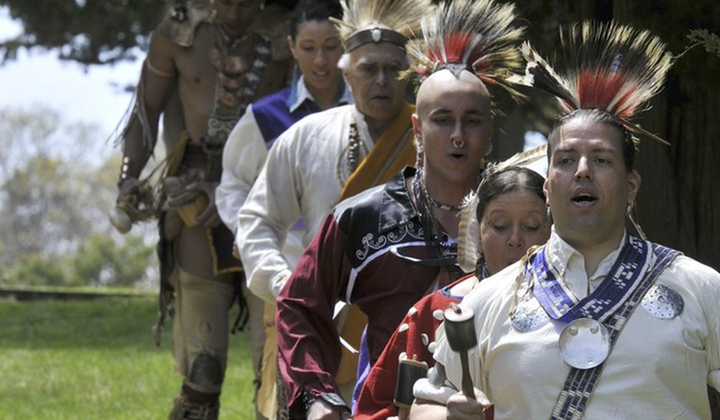
Photo: Wampanoag Nation Singers and Dancers
Many indigenous people refuse to celebrate Thanksgiving. Others use it as a chance to raise consciousness about American mythologies or just to be with extended family and give thanks.

The other day, I was asking my British neighbors if they celebrate Thanksgiving. After all, the traditional story of the First Thanksgiving is about being grateful for freedom from Britain. Why would they? They said they love the holiday and always invite a lot of expat Brits living in the area to eat turkey with them.

Just as language evolves and individuals use words in their own ways, so do customs. At Smithsonian magazine I recently learned that among indigenous Americans there are as many attitudes toward Thanksgiving as there are unique individuals.

Read Dennis Zotigh’s great piece “Do American Indians celebrate Thanksgiving?”

“In thinking about my earliest memories of elementary school, I remember being asked to bring a brown paper sack to class so that it could be decorated and worn as part of the Indian costume used to celebrate Thanksgiving. I was also instructed to make a less-than-authentic headband with Indian designs and feathers to complete this outfit. Looking back, I now know this was wrong.

“The Thanksgiving Indian costume that all the other children and I made in my elementary classroom trivialized and degraded the descendants of the proud Wampanoags, whose ancestors attended the first Thanksgiving popularized in American culture. The costumes we wore bore no resemblance to Wampanoag clothing of that time period. Among the Wampanoag, and other American Indians, the wearing of feathers has significance. The feathers we wore were simply mockery, an educator’s interpretation of what an American Indian is supposed to look like. …

“When children are young, they are often exposed to antiquated images of American Indians through cartoons, books, and movies. But Thanksgiving re-enactments may be their most active personal encounter with Indian America, however poorly imagined, and many American children associate Thanksgiving actions and images with Indian culture for the rest of their lives. … While I agree that elementary-school children who celebrate the first Thanksgiving in their classrooms are too young to hear the truth, educators need to share Thanksgiving facts in all American schools sometime before high school graduation.”

Here, for adult readers, Zotigh goes into the tragedy, which I hope you’ll make time to read. Next, he quotes an array of opinions of actual Native Americans, noting, for example, that “the United American Indians of New England meet each year at Plymouth Rock on Cole’s Hill for a Day of Mourning. …

“I turn to the Internet to find out what Native people think of Thanksgiving. A few of the responses I have received over the years, beginning with the most recent: …

“Exeter, California: ‘Being the only Native American classroom teacher at a public school, raised mostly in an urban setting steeped heavy in traditional American holidays, and around many other native people on weekends while traveling to dance, this has always been a challenging question for me that I cannot claim to know the answer for. I see many other teachers I work with who are not native struggle with knowing how to address the issue comfortably. I have to say, I have fear that if we avoid the issue altogether, Native people will be forgotten about.

” ‘I have seen some teachers decide to stop teaching about Native Americans for fear of offending. I personally get sad when I see that happen. I know Thanksgiving is a controversial subject, and there are so many viewpoints. I share the modern theme of Thanksgiving, which I think has good intentions — family and community. I have also chosen to teach about Native American culture, even more heavily in November because of Thanksgiving, even though it is no longer a part of the curriculum. I have found ways to integrate it while teaching something that I think is important. I do an assembly for the students in which we dance, and I emphasize how it is not possible to teach everything there is to know about Native Americans in just one assembly. I emphasize the diversity among native people.’

“Sevierville, Tennessee: ‘Regardless of all the political views of Thanksgiving, we can all find something to be thankful for!’

“San Antonio, Texas: ‘Except for the last four years, the twenty years before that I spent 95 percent of my Thanksgivings at the table of my brother-in-law. Our gatherings were about giving thanks for what we had. As for Native American history being left out of teaching, it is an outrage. Educate our fellow educators on how to teach it. …

“Edmonton, Alberta: ‘We have family members with addiction issues. The kids get to eat, which my mom loves. And we are thankful not only to survive colonization, but also grateful to feed family.

Norman, Oklahoma: ‘We celebrate and give thanks for our loved ones’ being able to be together again. But when my daughter was young and the realization hit, as it does all young American Indians, she said to me , “Do you think we should have helped them?” There will be extra prayers for Standing Rock at our table.

“Hydro, Oklahoma: ‘Could we just start over and go forward? We can’t change the past, but we can work for peace and unity in the future. History needs to be taught correctly in our schools—that is what needs to happen. My daughter had to write a paper about Big Tree, Satank, and Satanta. She interviewed Satanta’s great-grandson, who was in his 90s, and told the story as he told it to her, including their transport from Fort Sill and how the feather was turned into a knife as they passed the giant tree, causing the soldiers to shoot and kill Satank. She got an AAA+ from her teacher.’ …

“Santa Fe, New Mexico: ‘My family and I celebrate Thanksgiving, not so much in the way that the “Pilgrims” may have done with the Indians. We give pause, and acknowledge all of the blessings that we received in the past year. We think of family and friends; of the homeless; of those away from family in hospitals, elders in nursing homes, those incarcerated, the soldier men and women overseas, around the world, standing watch and guarding our freedom. We think of those in mourning, whose family have gone ahead of them. We also think of those in school, no matter what age. And, finally, we pray for traveling mercies said for folks traveling home. We are thankful each day for Creator’s gifts but on Thanksgiving, it seems we focus and are concentrated in our thoughts about these blessings.’ …

“For more on Thanksgiving, see the 2017 post Everyone’s history matters. The Wampanoag Indian Thanksgiving story deserves to be known.”

Read more of the fascinating comments at Smithsonian, here. It’s a real lesson in not painting any community with one brush. When we say, “Native Americans think [fill in the blank],” we need to remind ourselves that any group of people is full of unique individuals with individual thoughts.

Read Full Post »

Photos: Viaggio nei Fori
Special multimedia light shows will be enriching Roman history at the forums of Caesar and Augustus until November 11 this year.

Recently, I was talking to the amazing Margaret, who was diagnosed with my sister’s horrible cancer more than eight years ago and has never had a recurrence. She had just returned from volunteering with a Jesuit refugee organization in Rome and showing her nephew the sights of the city. She described how they were given access to a special Mass in the crypt below St. Peter’s Basilica, where recent archaeological testing suggests that Peter’s bones really were buried.

I thought of Margaret and her nephew as I read this article about a initiative to bring history alive for Rome’s many visitors.

Livia Hengel has a report at Forbes. “Rome is a city filled with cultural heritage. Every building, statue and column has a story to tell, but it takes a vast amount of knowledge to piece together the city’s nearly 2,800-year-old history. … Where do you even begin? …

“From video projections cast upon ancient walls and multimedia light shows to virtual reconstructions revealed through 3D visors, technology is being used to help tell the story of Rome in a more concrete and compelling way.

“A large part of this trend can be attributed to the pioneering work of Paco Lanciano, a Rome-born physicist with a passion for cultural communication and a keen understanding of the learning process. Namely: if you make education fun, it sticks. ‘You need to strike a balance between creating something spectacular to hold an audience’s attention while also helping them learn in the process,’ Mr. Lanciano tells me. …

“Together with Piero Angela, a leading Italian television host and science journalist, Mr. Lanciano designed an immersive multimedia visit of ‘Le Domus Romane’ within Palazzo Valentini over a decade ago – the first time technology was used to enhance an archeological site in the capital. During the virtual tour, visitors can see baths, furnishings and decorations brought to life through digital projections that enhance the archeological site without compromising it. …

“After the success of Palazzo Valentini, Mr. Lanciano and Mr. Angela worked together again to create Viaggio nei Fori, two popular shows that cast the stories of Emperor Augustus and Julius Caesar onto the ancient forums each evening during the summer months. These screenings have become a mainstay of Rome’s summer entertainment and are on view this year from April 21 to November 11 2019.

“Now Mr. Lanciano has turned his attention to an even more ambitious project with Welcome to Rome, a 30-minute introduction to the city, through a stirring film and 3-dimensional models of some of the city’s major landmarks. The show begins thousands of years ago when Rome is home to a handful of tribes scattered across its seven hills and takes the viewer on a journey through the Roman Republic, the Roman Empire, the Middle Ages, the Renaissance and then finally the present day. ‘It was quite a challenge to synthesize the story of Rome, but the feedback has been very positive,’ ” says Lanciano.

More at Forbes, here.

This summer’s light shows in Rome are available in eight languages: Italian, English, French, Spanish, German, Russian, Chinese, and Japanese. (Gives you an idea of where the city expects most visitors to come from.)

Read Full Post »

lead_720_405

Photo: University of York
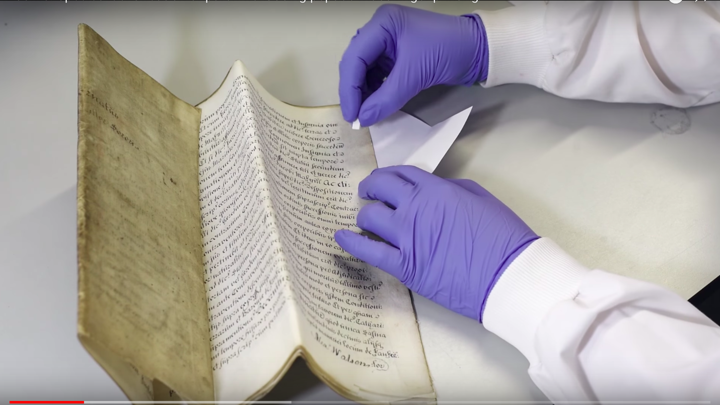
A UK lab is learning what the DNA in old books has to tell us about the past. Even the beeswax used in seals is rich with data, including the flowers that grew in that region year to year.

Do you know what set you on your career? As an oldest child, I spent a certain amount of time explaining things, and I liked making a school for my dolls. Although I ended up as an editor for many years, I started my worklife as a teacher and am now back to volunteer work as a teacher.

The scientist in the following story got launched on his passion after watching the movie Jaws.

Sarah Zhang writes at the Atlantic, “It was in the archives of the Archbishop of York that Matthew Collins had an epiphany: He was surrounded by millions of animal skins.

“Another person might say they were surrounded by books and manuscripts written on parchment, which is made from skins, usually of cows and sheep. Collins, however, had been trying to make sense of animal-bone fragments from archaeological digs, and he began to think about the advantages of studying animal skins, already cut into rectangles and arranged neatly on a shelf. …

“In recent years, archaeologists and historians have awakened to the potential of ancient DNA extracted from human bones and teeth. DNA evidence has enriched — and complicated — stories of prehistoric human migrations. It has provided tantalizing clues to epidemics such as the black death. It has identified the remains of King Richard III, found under a parking lot. But Collins isn’t just interested in human remains. He’s interested in the things these humans made; the animals they bred, slaughtered, and ate; and the economies they created.

“That’s why he was studying DNA from the bones of livestock — and why his lab is now at the forefront of studying DNA from objects such as parchment, birch-bark tar, and beeswax. … With ample genetic data, you might reconstruct a more complete picture of life hundreds of years in the past.

“Collins splits his time between Cambridge and the University of Copenhagen, and it’s hard to nail down exactly what kind of -ologist he is. He has a knack for gathering experts as diverse as parchment specialists, veterinarians, geneticists, archivists, economic historians, and protein scientists (his own background). ‘All I do is connect people together,’ he said. …

“Collins began his scientific career studying marine biology, thanks to a formative teenage viewing of Jaws. He specialized first in marine fossils and, later, in the ancient proteins hidden inside them. This turned out to be a dead end. For the most part, the fossils were too old and the proteins no longer intact enough to study. He was forced to look at younger and younger material, until he crossed from paleontology into archaeology. He applied the techniques of protein analysis to pottery shards, in which he found milk proteins that hinted at the diet of the people who used those pots.

“Collins quickly realized that DNA held even more potential than ancient proteins, which can be ‘a blunt tool compared to DNA.’ The DNA of any single animal is, after all, a library coding for all the proteins their cells can make. …

“When Collins embarked on the parchment project, he gathered a team that included geneticists as well as archivists, bookmakers, and historians.

“It didn’t take long for the group to hit their first culture clash. In science and archaeology, destructive sampling is at least tolerated, if not encouraged. But book conservators were not going to let people in white coats come in and cut up their books. Instead of giving up or fighting through it, Sarah Fiddyment, a postdoctoral research fellow working with Collins, shadowed conservationists for several weeks. She saw that they used white Staedtler erasers to clean the manuscripts, and wondered whether that rubbed off enough DNA to do the trick. It did; the team found a way to extract DNA and proteins from eraser crumbs, a compromise that satisfied everyone.”

Read how the research evolved, here.

Read Full Post »

kazakhstan-treasure

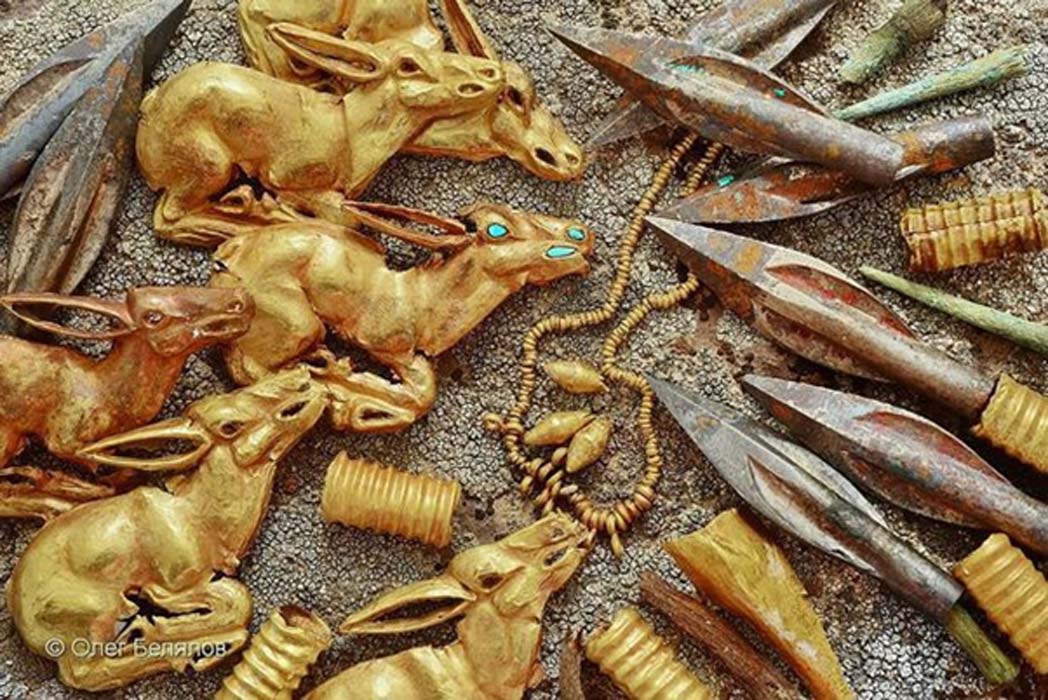
In the remote Tarbagatai mountains, where Kazakhstan meets northern China, archaeologists have found an ancient treasure.

I have heard that the day-to-day life of an archaeologist is all mud and digging and measuring — not glamorous. But imagine having your efforts rewarded by unearthing a pile of gold! You don’t get to keep it, of course, but it must be a thrill to feel a sudden connection with artisans of thousands of years ago.

Natasha Frost writes at the History website, “Archaeologists have unearthed a cache of thousands of millennia-old pieces of gold jewelry in an ancient burial mound in Kazakhstan.

“The remote Tarbagatai mountains, where Kazakhstan meets northern China, was once home to the Saka. These expert horsemen were a nomadic people who moved across Eurasia through Iran, India and Central Asia for many hundreds of years—until they were conquered by Turkic invaders in the 4th century A.D. It’s believed these glittering objects may have belonged to members of their elite.

“Though many mysteries remain about the Saka people, their skill with metal is well documented. Among the finds are intricate earrings shaped like little bells, a necklace studded with precious stones, and piles of chains and gold plates. Tiny animals have been expertly wrought out of gold. The items show evidence of micro-soldering, a highly sophisticated technique for artifacts estimated to be as much as 2,800 years old. …

“Some 200 other burial mounds have [been] found on the fertile Kazakh plateau, which was regarded as a paradise by Saka kings. Few have been found with quite so much treasure, however, since widespread looting during the time of Peter the Great depleted many of the burial sites of their riches. Experts say that the area has become a focus for archaeologists, who hope to find other precious objects in other sites. …

“Local politicians are celebrating the discovery, which they say helps to inform them about their ancestors. ‘This find gives us a completely different view of the history of our people,’ former Prime Minister Danial Akhmetov said, in an interview with Kitco News. ‘We are the heirs of great people and great technologies.’ ”

More here.

Read Full Post »

Older Posts »