Feeds:
Posts
Comments

Posts Tagged ‘identification’

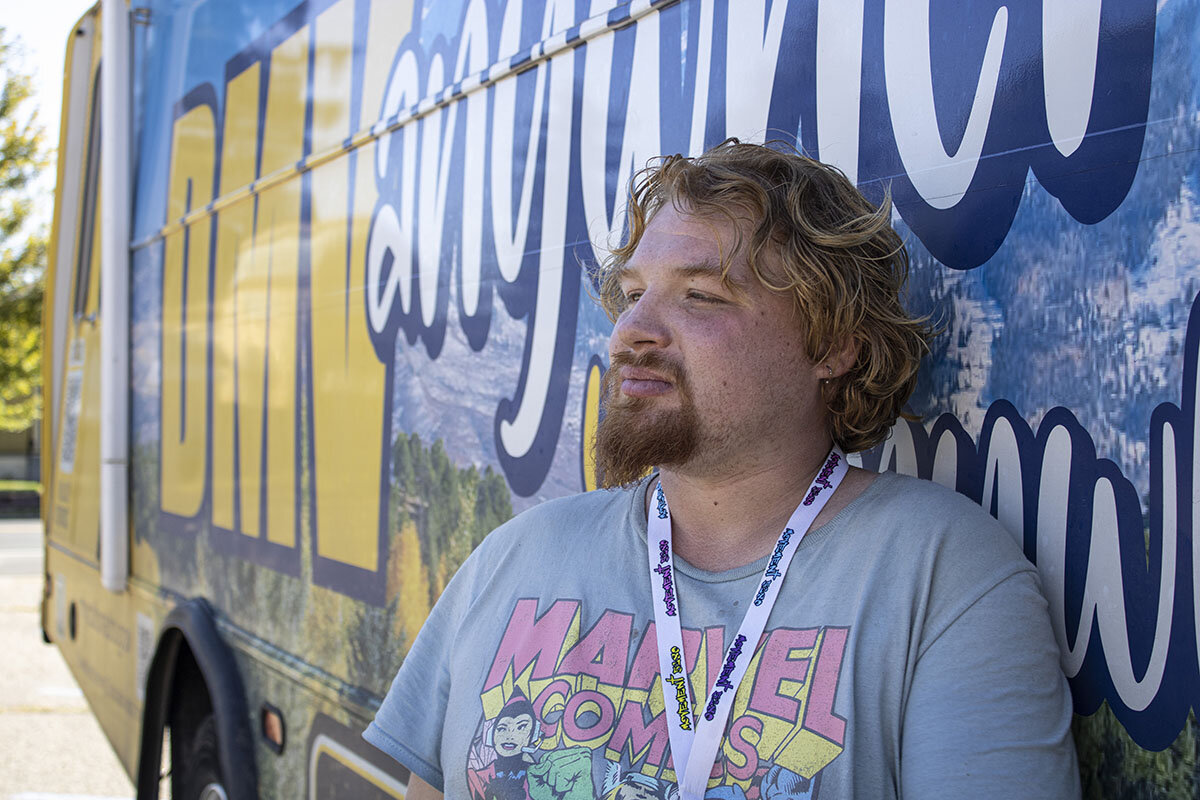
Photo: Sarah Matusek/The Christian Science Monitor.
At Colorado’s roving Department of Motor Vehicles — a bus — people experiencing homelessness and others can get an ID.

Some kind of ID is necessary in life — to apply for a job, get a bank account, rent an apartment, and sometimes to vote. That’s why Colorado has decided everyone should be able to get legal identification. The state’s Department of Motor Vehicles (DMV) is making it happen.

Sarah Matusek writes at the Christian Science Monitor, “Radio in hand, Steven Rustemeyer ushers the next person aboard the bus. … This bus has no rows of seats, no driver or destination. This is a project of the Colorado Division of Motor Vehicles – a DMV on wheels. It sits parked with an office inside – complete with computer, printer, fingerprint reader, and vision test chart. 

“ ‘It’s easier that way,’ says Mr. Rustemeyer, who got a new ID from the mobile clinic earlier this year. Homeless for eight years since he aged out of foster care, he says he appreciates not having to pay bus fare to head to the brick-and-mortar office. The bus shows up once a month at a nonprofit whose job readiness program he attends – and where he’s helping out today. The stop is one of several across the state. …

“As it issues IDs and licenses to hard-to-reach Coloradans, the DMV2GO program blunts bureaucracy by saving time and travel to traditional sites. Officially launched last year, the mobile program has issued around 11,000 documents as of September, stopping by incarceration sites, homeless shelters, universities, and rural community hubs. Given how IDs are key to securing housing, work, and other basics, the goal is to ensure equitable access to identity services for all, says Desiree Trostel, the program manager.

‘It’s important to “meet people where they’re at,” ‘ Ms. Trostel says, ‘regardless of circumstance or location.’

“Mobile staff members report more enjoyment on the job, too. Customers on the road are ‘a lot happier to come and see us,’ says Liz Kuhlman, an upbeat licensing technician on the bus.

“In mountainous Archuleta County, where there is no state DMV, Warren Brown says he and his wife saw the problem up close. At their former insurance business, part of the job meant helping older customers navigate license services online. 

“ ‘In my mind, this just didn’t have to be that way,’ says the county commissioner, who contacted the state for help. His constituents were first in line to benefit from the formal rollout of DMV2GO in 2022. …

“Customers can apply for or renew driver’s licenses or ID cards, including out-of-state transfers. The clinic doesn’t offer knowledge tests or print the physical card on-site (those will arrive later by mail), but it does offer temporary ones. …

“The Florida Licensing on Wheels program, or FLOW, has operated since 1988, says David Brown, a FLOW program manager. Beyond making regular stops, it’s also grown to respond to manmade and natural disasters. … ‘In order for you to start the process of rebuilding after a disaster, you need those solid credentials,’ he says.

“Rebuilding can also mean navigating society after incarceration. That’s why DMV2GO’s list of stops includes sites like the Jefferson County jail. …

“Convenience aside, mobile DMVs also aren’t without challenges. Spotty internet access in rural areas, for one, can complicate service. And in Colorado, demand is high for the program that currently involves four licensing technicians and three vehicles. The state says it’s gathering data on DMV2GO’s impact and hopes to expand. 

“That demand is clear at a recent stop at a public library in rural Westcliffe when a dozen people arrive ahead of the clinic’s opening at 10 a.m. Though a couple of locals note the wait, those in line still appreciate the service.

“ ‘This is awesome,’ says John Van Doren, a retiree here for a license renewal. ‘Very convenient.’ “

More at the Monitor, here.

Read Full Post »

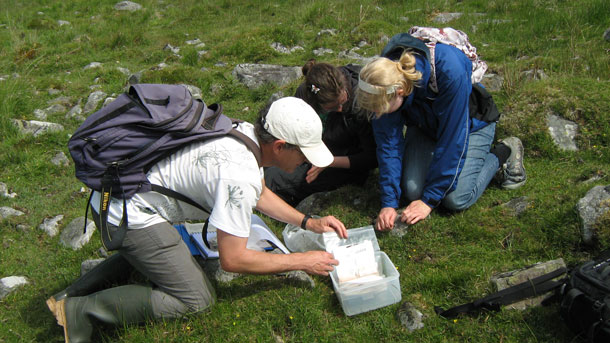
Photo: Natasha de Vere & Col Ford, Barcode Wales, Flickr, CC BY 2.0.
Samples of an organism’s genome are obtained in the field, before being brought back to the lab for the barcoding process.

Some years ago, I learned that students at High Tech High, which involves kids in real-world projects (click here), were helping rangers in Africa to identify poached meat with a DNA test they had developed. Turns out, using DNA that way was just the beginning of its possibilities for the environment.

According to the radio show Living on Earth, the 1.3 million species that have been identified and recorded on Planet Earth are just a small fraction of what exists. So host Steve Curwood decided to look at how DNA is helping to catalog many more.

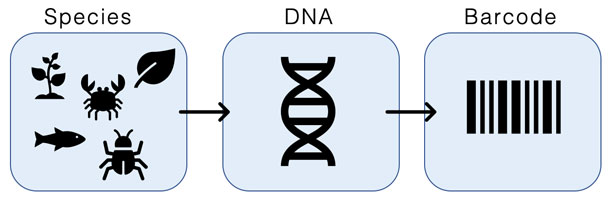
“CURWOOD: To make it easier to identify species, the International Barcode of Life Consortium is using a technique known as DNA barcoding. It can give a quick readout that tells whether a sampled organism is known to modern science, and if not, provide a marker to register it as a newly discovered life form. Paul Hebert is the molecular biologist who developed DNA barcoding.

“Paul, welcome to Living on Earth. Take us through the process of DNA barcoding. You find an organism you want to identify, and then?

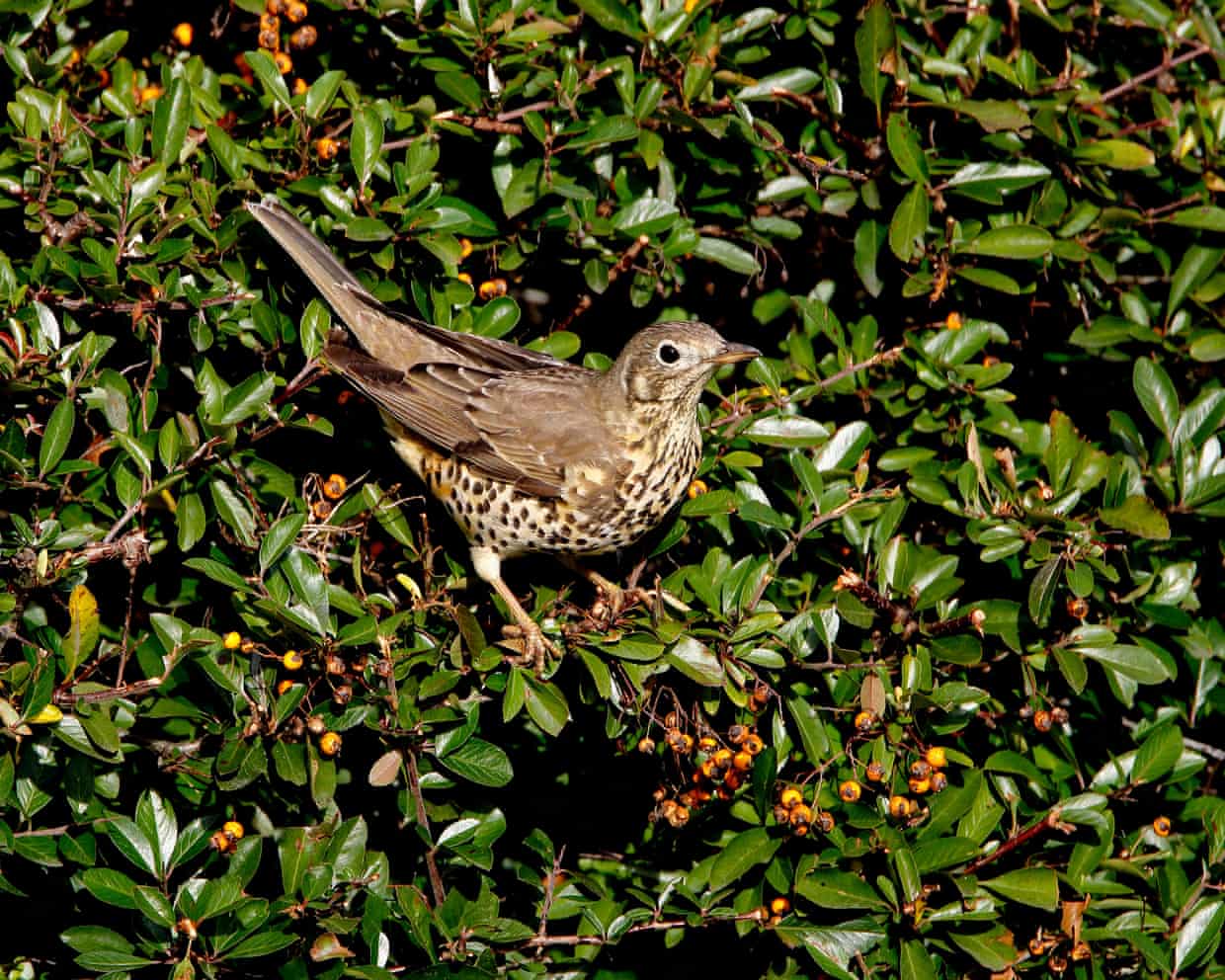
Photo: LarissaFruehe, Wikimedia Commons.

“HEBERT: [You] might just touch it … and pick up enough of its DNA. [But] in the case of smaller organisms, where we may be prepared to sacrifice them, and where we want to have a voucher specimen in a collection that we can look at and photograph and analyze in other ways, we might remove a tiny piece of tissue. If it were an insect, six legs, remove one of those legs and extract the DNA from that. That’s a fairly simple process. When you do that DNA extraction, of course, you get all of the DNA in the genome. … In the case of an insect, it might be 500 million base pairs. And we just want to read 500 of them. And you can think of the whole genome as sort of a book of life. And we want to read just one of those pages. So to do that, we use the polymerase chain reaction, which basically Xerox copies a selected page in that much larger book of life. And that prepares [for] sequencing the DNA. …

“CURWOOD: Where can that information go from there? And what can it do? …

“HEBERT: It was important to develop an informatics platform that’s now been adopted by the global community. It’s a platform called the Barcode of Life Data System, acronym ‘BOLD’. And basically, all of the data from each individual specimen go into that database, together with an image of the specimen and where it was collected, and by whom; all of the details. And so, let’s say you begin by sequencing an American Robin, next time you were to encounter a feather on your lawn that happened to derive from that bird species, you would get a connection to that reference sequence in the bar code library, in BOLD. …

The idea is to build up this reference library, so it has representative sequences for every species on our planet. And that’s what we’re in the process of doing now.

“CURWOOD: Now, of course, this is a very handy approach in academia with nice big laboratories. What about somebody who’s in the field? How useful is this? …

“HEBERT: In Kruger National Park, [the rangers who] normally are involved in suppressing poaching of rhinoceroses joined in a massive collection program that gathered up about a million specimens from that largest national park in South Africa … and we then translated those specimens into barcode records and built a DNA barcode reference library for Kruger National Park. … In the future, [you’re] going to be able to take a walk through the woods with your kids or your grandkids and see an organism and simply touch it and from its DNA barcode sequence, gain its identity. …

“CURWOOD: What’s your biggest surprise now, in this project? …

“HEBERT: For a very long time, it has been argued that beetles were the most diverse group of insects, the most diverse order of insects. … But it turns out that’s wrong. Barcoding revealed that flies are by far the most diverse group of insects. And [one] particular group of flies, gall midges, are hugely diverse, more diverse than all of the beetles on our planet. [And] one of the earliest studies that we did in Costa Rica involved a beautiful iridescent blue butterfly that for the last 200 years has been regarded as a single species. [When] we barcoded that species, we found that in fact, it was 10 species, not one. There’s a lot of hidden diversity, even within the large species that we share on this planet, when you move down to the small stuff, it’s massive discovery.

“CURWOOD: Now, the International Barcode of Life Consortium has this mission of identifying each and every species on Earth using barcoding. What is the ultimate goal of the project? …

“HEBERT: Creating that reference sequence library for all species on the planet is going to place us in a position where it’s going to be possible for us to set up global bio surveillance system. So we can track what humanity is doing to the other life forms. … I see detailed information on the shifts in biodiversity that are happening on our planet motivating humanity to take the action needed to do better. …

“CURWOOD: Paul Hebert is a molecular biologist at the University of Guelph in Canada, and science director of the International Barcode of Life Consortium. Thank you so much, Paul, for taking the time with us today.”

More at Living on Earth, here.

Read Full Post »

On Sunday, the Concord Bookshop had a guest speaker, bird maven David Allen Sibley.

There was a great turnout to hear him and to have him sign the new edition of his guide.

He talked about his painting process and his interest in perception as it applies to people who are convinced they see a bird they are looking for. From what he has read, he says, it’s very much like the phenomenon of witness identification of suspects — many factors may distort what witnesses think they see. (Consider the old guy in the play Twelve Angry Men, for example, who didn’t have his glasses on.)

When asked how 12 people who identified the probably extinct ivory-billed woodpecker in Louisiana in recent years could all be wrong, he tries to explain why it’s likely: They get only a glimpse, they are desperate to see it, they are being paid to find it, etc.

I want to believe they saw it, of course, but I thought his points were interesting.

Also interesting was the way he paints. He has a very good sense of the profile of the bird, having drawn birds since he was seven. So in the wild he looks for identifying markers, sketches in the profile, and adds the marks. Then he paints the bird in the studio. He does a lot of research, but once he has done all he can, he takes only about an hour to do each painting.

Read more at Sibley’s website, here, and at his Facebook page, here.

Below is a bird that a woman in the audience Sunday asked about, the Snowy Owl. The questioner wanted know whether the many Snowy Owls that were sighted around New England this winter would stay. He said that, no, they were already heading back to the Arctic and only came because there were a lot of babies hatched up north this year and not enough food to go around.

Art: David Allen Sibley
Snowy owl

Read Full Post »