Feeds:
Posts
Comments

Posts Tagged ‘japan’

Photo: Chang W. Lee.
“If I die in my workshop, I will be happy,” says Seiichi Ishii, one the centenarians in Japan who are still working. Ishii has been repairing bicycles since he was 12 and doesn’t want to stop.

Where I live now, there are several centenarians. They may still do things like give a presentation on their travels or work out in an exercise class. But most of them are bowed down with infirmity. No one is still working in their old career. Japan seems different. Hikari Hida at the New York Times interviewed five centenarians there who are still working.

“Japan has about 100,000 people who have lived for a century or more,” she writes, “the most in the world, and more per capita than in any other country. … We met five remarkable centenarians who credited their longevity to eating well, Japan’s affordable health care, exercise and family support. But for these five, there is also something else: their work.

Seiichi Ishii
“As a 12-year-old, Seiichi Ishii was walking home from school one day when he came across a ‘help wanted’ sign in the window of a bicycle repair shop in the Shitamachi district of Tokyo. He had always admired the long navy jumpsuits that bike repairmen wore, and he wanted to step into one himself.

“More than 90 years after that start, Mr. Ishii is still fixing bikes at his own shop. Though the legs of the jumpsuit are too long for his shrinking body, he goes to bed every night excited about the customers who might show up the next day. …

“Mr. Ishii, 103 … remembers living through the war, when nothing was guaranteed. His income from the repairs supplements a monthly pension of 50,000 yen, or about $330. ‘You never know what will happen,’ he said. …

Fuku Amakawa
“Five or six days a week, Fuku Amakawa works the lunch shift at her family’s ramen restaurant alongside her son and daughter, using long chopsticks to swirl egg noodles in pork broth and sprinkling chopped spring onions into bowls filled with hot soup.

“ ‘I can’t believe I’ve managed to work this long without getting bored,’ she said.

“Ms. Amakawa, 102, says she has always been a bit stubborn. She put off her arranged marriage as long as she could. But after she made the leap, she opened the restaurant with her husband. Its 60th anniversary was this year.

“ ‘It is really beautiful that I can still work. Physically and emotionally, it changes the quality of my life,’ she said. …

Masafumi Matsuo
“Bright yellow rapeseed flowers, Masafumi Matsuo’s favorite, filled the fields behind his home when he was young. He loved the mild bitterness of the vegetable, which turns sweet when cooked, and which he farmed and sold. …

“Mr. Matsuo, 101, also grows eggplants, cucumbers and beans across different seasons. ‘I work to stay healthy,’ he said on a July morning, dragging a plastic stool out into the field, where he sipped water during breaks from watering his rice seedlings.

“Mr. Matsuo was born, grew up and raised three children in his town, which is nestled in the mountains of Oita, a coastal prefecture on the southwestern island of Kyushu. … [He] survived esophageal cancer and, at 99, a bout of Covid, spends his weekends playing with his year-old great-grandson, Toki. …

Tomoko Horino
“Tomoko Horino always knew there was more in store for her than staying home. Inspired by a saleswoman she had met, she wanted to sell makeup. But she was a young mother of three, and cultural norms meant it would not be considered proper for her to work.

“At 39, she ran into an old friend whose husband was recruiting saleswomen for the same makeup brand she’d fallen in love with years before. With her children older, she took the job. Ms. Horino loved seeing her customers’ faces light up as they tried a new lipstick color or foundation that she’d suggested. …

“Her husband, who worked in an office, wasn’t happy to have a wife who also worked, but the family was in a dire financial situation. All he asked was that she knock on doors where she wouldn’t be recognized. … Now widowed and living alone at 102, she makes her sales over the phone, with only occasional home visits. Keeping busy helps her fend off loneliness. …

“ ‘I love making people feel beautiful,’ Ms. Horino said.” …

Tomeyo Ono
“When Tomeyo Ono plopped onto a cushion to begin her performance, there was total silence. Then, from somewhere deep in her petite body, she started to recite the folk tale of a bull and a baby bear, with perfect enunciation.

“As she spoke, she gestured wildly with her hands, the audience hanging on every word. At the end, the room filled with applause. With a repertoire of 50 stories, Ms. Ono is a teller of minwa, or folk tales, a career she took up for fun after turning 70. …

“Now 101, she is the oldest, and loudest, member of a storytelling collective. After the 2011 tsunami washed away her home in Fukushima, she vowed to incorporate the experiences of its survivors into her work.

“ ‘I’m living to tell my stories,’ Ms. Ono said, tears rolling down her cheeks. She said she was terrified by the idea of folk tales, or memories of the tsunami, being lost.”

More at the Times, here. Outstanding video clips and photos.

Read Full Post »

Photo: Shimabuku.
Unlike animals that spend their days eating, sleeping or mating, octopuses “have time to wander — time for hobbies,” says Shimabuku, who makes art for sea creatures to enjoy. 

There’s an artist in Japan who makes art for marine animals just to see how they react. The responses of octopuses seem to be the most gratifying to him. The whole time I was reading this story, I was wondering why I had never heard the naturalist Sy Montgomery, author of The Soul of an Octopus, talk about this on Boston Public Radio in one of her her weekly visits. I must have missed that day.

“When the Japanese artist Shimabuku was 31 years old,” writes Francesca Perry at CNN, “he took an octopus on a tour of Tokyo. After catching it from the sea with the help of a local fisherman in Akashi, a coastal city over 3 hours away from the Japanese capital by train, he transported the live creature in a temperature-controlled tank of seawater to show it the sights of Tokyo before returning it safely to its home the same day.

“ ‘I thought it would be nice,’ the artist, now 56, said about the experience, over a video call from his home in Naha, Japan. …

‘I wanted to take an octopus on a trip, but not to be eaten.’

“Documenting it on video, Shimabuku took the octopus to see the Tokyo Tower, before visiting the Tsukiji fish market, where the animal ‘reacted very strongly’ to seeing other octopuses on sale, the artist said. …

“The interspecies day trip, resulting in the 2000 video work ‘Then, I Decided to Give a Tour of Tokyo to the Octopus from Akashi,’ kickstarted a series of projects Shimabuku has undertaken over the decades that engage with octopuses in playful, inquisitive ways. A portion of this work is currently on show in the UK, in two exhibitions that explore humanity’s relationship with nature and animal life: ‘More than Human‘ at the Design Museum in London (through October 5) and ‘Sea Inside‘ at the Sainsbury Centre in Norwich (through October 26).

“Fascinated by what the sea creatures might think, feel, or like, Shimabuku has documented their reactions to various experiences, from the city tour of Tokyo to being given specially crafted artworks. ‘They have a curiosity,’ he said. …

“When he lived in the Japanese city of Kobe, Shimabuku would go on fishing trips with local fisherman, taking the opportunity to learn about octopuses. ‘Traditionally we catch octopuses in empty ceramic pots — that’s my hometown custom,’ he said. Fishermen would throw hundreds of pots into the sea, wait two days, then retrieve them — finding octopuses inside. ‘Octopuses like narrow spaces so they just come into it,’ explained Shimabuku.

“When he saw the animals within the pots, he discovered they were ‘carrying things’: shells, stones, even bits of broken beer bottles. He began to save the small objects the octopuses had gathered. …

“Shimabuku started to think, ‘maybe I can make sculptures for them.’ … In his 2010 work ‘Sculpture for Octopuses: Exploring for Their Favorite Colors,’ Shimabuku crafted a selection of small glass balls and vessels, in various colors. At first, he went out in a fishing boat and threw the sculptures in the sea, ‘like a present to the octopuses.’ But then he wanted to see how the animals were reacting to the objects.

“Collaborating with the now-closed Suma Aqualife Park in Kobe, he repeated the effort in a large water tank, where he could film the reaction of octopuses.

“ ‘They played with them, and sometimes they carried them,’ said Shimabuku. … ‘They keep touching, touching.’ The resulting film, and photographs, show the octopuses wrapping their tentacles around some of the glass objects, grabbing and rolling them across the sand, and even holding them in their suckers as they move across the side of the tank.

“In 2024, Shimabuku had a landmark solo show at Centro Botín in Santander, Spain. Specially for the exhibition, he collected an assortment of glass and ceramic pots to offer to local octopuses. Some of the vessels were made by the artist and others were from ‘second-hand shops and eBay.’ …

“Although octopuses are colorblind, Shimabuku wanted to see through these projects whether they were attracted to objects of certain colors. ‘What I heard from fishermen is that octopuses like red,’ he said. ‘Long ago in Kobe, I found an octopus in a red pot, so I believe they like red.’ Perhaps more so than the hue, Shimabuku is convinced that octopuses are drawn to very ‘smooth, shiny’ glass objects. He doesn’t have evidence to back this up, [he’s just] a man entranced by eight-legged mollusks is dedicating his time to engaging with them through art.”

More at CNN, here.

Read Full Post »

Photo:  Ken Yoshida at CarterJMRN.
Gen Z Japanese men are leading a cultural change that the government is fully supporting.

When my husband worked in Rochester, New York, we knew several coupes from Fuji Xerox who settled there for a period of years. I remember the laughs my friend Yuriko had over the effects of a different culture on Japanese men. She couldn’t get over the memory of a Japanese husband in a laundromat doing his own laundry. That would not happen at home in the 1970s.

Other cultural changes have been taking place since then.

Patrick Winn reported at Public Radio International’s The World about fatherhood in Japan, where traditionally, dads were not engaged with the daily lives of their children.

Winn writes, “Yuko Kuroda and her husband, Takashi Kuroda, live in a modest, two-story home in Tokyo’s outskirts. Both in their early 40s, Yuko Kuroda works at a daycare center, while Takashi Kuroda has a white-collar job. …

“In contemporary Japan, roughly one-third of women under the age of 50 do not have children. Couples who choose to raise kids usually stop at one. …

“Takashi Kuroda, his face streaked with black marker, just emerged from a rolling-on-the-floor play session with his son and daughter, aged 3 and 6, on a Sunday afternoon. The children drew whiskers on his cheeks while shouting, ‘Neko! Neko!’ (Japanese for ‘cat’). 

“ ‘I really recommend this lifestyle,’ he said. ‘Raising five kids is fun.’ …

“Officials warn that if the birth rate doesn’t rise, Japan could become unrecognizable in decades to come: less affluent, less vibrant and less powerful.

“What currently is deterring couples from raising children is being associated with overwork and sky-high housing prices. 

“But one of the major factors concerns dads ‘doing too little around the house,’ according to Mary Brinton, a Harvard University sociologist who has studied Japanese demographics for decades and has even advised Japanese officials.

“Traditionally, when Japanese couples have children, ‘women do most the housework and child care,’ Brinton said, and for working moms, the idea of holding down what is essentially a second, unpaid full-time job is ‘not very attractive.’ …

“Among the world’s high-income countries, including the US, fathers average more than two hours of daily housework and child care. In Japan, the average is only about 40 minutes. 

“But what erased Yuko Kuroda’s reluctance in raising five kids was that Takashi Kuroda wasn’t afraid to wipe a butt or wash a dish. 

“ ‘If one of the kids falls ill, he’ll immediately ask for a day off from work,’ she said. …

“Takashi Kuroda believes raising Japan’s birth rate requires a revolution in fatherhood. More than a decade ago, the government launched a social engineering campaign urging fathers to become ikumen, a Japanese word that loosely translates to ‘super dads.’ 

“Through public service announcements, namely posters, websites and online videos, Japan promoted this ideal of fatherhood. The ikumen eagerly burp babies, change diapers and walk toddlers to the park. …

“Fathering Japan, a nonprofit organization, contracted with the government to promote an ‘ikumen boom’ and teach fathers, through in-person classes, how to care for kids and do chores. 

“Manabu Tsukagoshi, a director with the group, believes it has successfully shifted fathers’ mindsets across Japan. But workplace culture is much harder to change. 

“Plenty of dads now want to live as ikumen, Tsukagoshi said, but — especially in white-collar jobs — they might toil for old-fashioned bosses who pressure workers to stay late and, after hours, bond over beer and sake. 

“Japan’s paternity-leave policies are now among the best in the world, but too many fathers fear taking time off work and risking the disapproval of their bosses or colleagues.

“ ‘I’m actually a bit ashamed of our Japanese men,’ Tsukagoshi said. ‘As employees, we have rights, but men hesitate to break from the norm. If other guys in the office aren’t taking paternity leave, they won’t feel keen to be the first.’

“But Takashi Kuroda is hopeful. He believes the revolution in fatherhood — in which dads stand up to corporations and put family first — is on the horizon. 

“Fifteen years ago, the rate of fathers taking paternity leave was almost zero. Only in recent years, it’s edged up to roughly 15% while by the decade’s end, Japan’s government hopes to up the rate to 85%.

“[Takashi Kuroda] credits Gen Z fathers for helping redefine what it means to be an attentive dad, unlike their own fathers, who often stuck with a corporation their entire working lives.

“ ‘Younger Japanese dads don’t feel like they have to belong to one company. So, they’re not so terrified of their bosses … and will stand up for themselves,’ he said.

“The COVID-19 pandemic, which saw more parents working at home, spurred a higher number of fathers to refocus on family, Takashi Kuroda said. He’s among the fathers who not only demanded paternity leave but took an entire year off for his third child, also insisting on remote work. …

“By late afternoon, Yuko Kuroda read to her children from a storybook while Takashi Kuroda was in the kitchen, elbows deep in dirty dishes. The sink was full of bowls used for breakfast, and water-logged noodles swirled around the drain. He looked silly — the cat whiskers remaining on his face — as he radiated joy.

“ ‘I’m very, very, very happy,’ he said.

“When asked if he’d be happy to have a sixth child, he answered maybe, as Yuko Kuroda popped in to end the questioning.

“ ‘No way,’ she said. ‘Our car only seats seven people. This is it.’ ”

More at The World, here. Lovely pictures. No firewall.

Read Full Post »

Photo: Suwa City.
Kiyoshi Miyasaka, a Shinto priest, leads parishioners from the Yatsurugi Shrine onto the frozen Lake Suwa in 2018, the last time the Miwatari, or Sacred Crossing, formed.

Climate change shows up in many ways around the world, especially where humans have kept records for centuries. One such place is in Japan.

Martin Fackler and Hisako Ueno report at the New York Times, “For at least six centuries, residents along a lake in the mountains of central Japan have marked the depth of winter by celebrating the return of a natural phenomenon once revered as the trail of a wandering god.

“It would only appear after days of frigid temperatures had frozen Lake Suwa into a sheet of solid white. First, people were awakened at night by a loud rumbling. Dawn broke to reveal its source: a long, narrow ridge of jagged ice that had mysteriously arisen across the lake’s surface, meandering like the spiked back of a twisting dragon.

“This was the Miwatari, meaning the sacred crossing, which local belief held was left by a passing god of Japan’s native Shinto belief. Its appearance evoked feelings of awe but also reassurance among the residents, who ventured onto the ice to perform a ceremony honoring what they saw as a visitation from the supernatural.

In the rare winters when the ice ridge did not appear, the god’s absence was viewed as a warning that the natural world was out of balance.

“So  important was the Miwatari that residents recorded whether it appeared, the condition of the lake and what historical events accompanied it. They have loyally written these descriptions every winter since 1443, creating a remarkable archive that attests to centuries of monotonously cold winters.

“But recently, the chronicles of Suwa have told a different, more alarming story. For the past seven winters, the Miwatari has failed to appear because the lake didn’t freeze. While there have been occasional years without ice, an absence of this length has happened only once before in the archive, and that was a half millennium ago.

“In fact, Lake Suwa has not fully frozen over — what locals call ‘an open sea’ — for 18 of the past 25 years. Kiyoshi Miyasaka, the chief priest of Yatsurugi Shrine, which for the past three and a half centuries has borne the duty of maintaining the records, says ice has failed to appear with regularity since the 1980s. He and other locals blame the disappearance of the ancient rhythms on global climate change.

“ ‘In old times, an open sea was regarded as a bad omen,’ said Mr. Miyasaka, 74, whose shrine’s traditional stone gate and tile-roofed wooden buildings stand about a mile from the lakeshore. ‘We hear about melting of ice caps and Himalayan glaciers, but our own lake is also trying to alert us.’ …

“Only parishioners in their 60s or older remember when the Miwatari was still big enough to make a sound that could wake them at night. The last time an ice ridge formed, in 2018, it was barely six inches tall.

“ ‘When I was child, the ice spikes rose higher than my height,’ said Isao Nakazawa, 81, a retired auto company worker. ‘We knew when it appeared because it made a sound like a taiko drum, “Gon-gon-gon!” ‘

“These days, the Miwatari has lost much of its religious significance. Residents in Suwa, a small, sleepy city wrapped along the lake’s edge, see it as a local rite of winter. …

” ‘Carrying on a tradition for 580 years binds our community together,’ said the mayor, Yukari Kaneko, 66. ‘I fear what’s happening now is a warning to rethink how we’re living.’

“Science has also robbed the ice ridges of their mystery by explaining how they arise. When Lake Suwa freezes, its surface hardens into a slab some two and a half miles across. On particularly cold nights, the ice contracts, opening cracks that fill with lake water, which also freezes. As temperatures rise again, the slab expands back into its original shape, pushing the newly formed ice upward into buckled ramparts. …

“While Mr. Miyasaka says he feels discouraged by the failure of the ice ridge to return, he intends to keep updating the archive.

“ ‘You cannot just quit something that has been around for more than 580 years,’ said Mr. Miyasaka, whose family has held the position of chief priest for five generations. ‘I will not be the one who ends it.’ ”

More at the Times, here.

Read Full Post »

Photo: Jeremy Siegel/The World.
A Tokyo Metro train during rush hour.

Tokyo seems to have found better ways to get around than by car. Public transit can get crowded, of course — it would have to in a city of that size — but many thoughtful touches make it all run smoothly, with less stress for the traveler. And the travelers contribute with good transit behavior.

As Jeremy Siegel reports at Public Radio International’s The World, “At Tokyo’s Ebisu train station, the first thing passengers hear upon arrival is the theme music from the 1940s noir film, The Third Man

“Every train stop in the city has distinctive jingles, subtly and efficiently letting people know where they are and when to get off. 

“In Tokyo, every little way you can make things run more smoothly counts, according to Tomohiko Taniguchi, a former rail executive and adviser to former Prime Minister Shinzo Abe.

“It includes individual station songs; having train employees literally stuff passengers into train cars during rush hour; and enforcing a unique set of unspoken rules for how passengers should act.

“ ‘One of the first things you might have noticed is that people are dead silent in busy trains and crowded trains,’ he said. ‘It is to make [as little] annoyance as possible.’

“Despite a population of 37 million, there’s relatively little congestion and pollution here since the majority of its residents rely on public transit rather than cars. But while Tokyo’s mass transportation system may serve as a global success story, it may not be replicable, because its organic growth over the decades has fostered a unique culture of transit.

“Taniguchi said that he has been taking the train his whole life. After decades of observing Tokyo’s system, he said, he’s come to the conclusion that in many ways, life in this city revolves around trains. …

“The busiest train station of all, with 3.5 million people passing through every day, is Shinjuku station where Hari — who only provided her first name — met a friend on a recent Tuesday evening. Hari said that she [loves] Japanese transit. Despite the fact that she can drive, she hasn’t since moving to Tokyo.

“ ‘The train is just more convenient,’ she said. …

“Japan’s culture of transit can be traced back to the late 1800s, according to Fumihiro Araki, deputy director of The Railway Museum, which houses dozens of old trolleys, rail cars and bullet trains.

“ ‘When Japan moved from a shogun government [with leaders who were emperor-appointed] to a democratic government in the late 19th century, it was decided that railways were absolutely necessary,’ he said.

“The idea was to keep up with Western countries, many of which were growing — and railways played a big part. But after World War II, the US and European countries began throwing money at highways. Japan, which was rebuilding from the war’s destruction, doubled down on trains.

“The country made massive investments in transit, which coincided with a population boom in Tokyo that allowed the train system to grow organically alongside the city. Additionally, they felt it was easier to build railways because of the mountainous terrain, and because the country itself isn’t as spread out as, say, the US. …

“ ‘In other countries, a railway is just a railway. It’s just a place to ride on the train,’ said Shunzo Miyake, who heads up international affairs at the country’s largest railway company, JR East. 

“Miyake, who has visited 40 different countries, said that he believes that the difference has to do with how Tokyo rail operators compete for passengers. They even develop real estate around stations to turn them into economic hubs — places where people want to stay after they get off the train.

“In fact, busy stations like Shinjuku and Shibuya feel like city centers in and of themselves. People can spend an entire day finding hundreds of restaurants to dine at, places to shop at and bars to drink at, virtually without ever having to leave the station. …

“Miyake said that developing Tokyo’s system, and ingraining transit into the city’s culture, has taken time and money. But for companies like JR East — and the many residents who don’t have to contend with traffic — it’s paid off.”

More at The World, here. I highly recommend this show, which I listen to online at GBH.org. It offers voices from around the world that you rarely hear on US media — and often a more positive perspective.

Read Full Post »

Photo: @antoninjapan on TikTok.
Screengrabs from a viral TikTok video posted by Anton Wormann (pictured right), who bought an abandoned farm in Japan for $15,000. 

Here’s a young man with a novel approach to making his fortune. It involves abandoned houses, or akiya, in Japan.

In October, Soo Kim wrote at Newsweek, “Anton Wormann, 31, who is originally from Sweden, relocated to Japan in 2018 after living in New York. He recently purchased an abandoned farm for $15,000 ‘right by the beach’ in Kujukuri, a town in the Chiba prefecture of Honshu, the largest and most populous island of Japan.

“Wormann shared a tour of the abandoned property, where ‘everything was left as is,’ in a video posted on his TikTok account Anton in Japan (@antoninjapan). …

“The farm comes with 11 rooms in a 250-square-meter house (about 2,690 square feet) and 0.62-acre garden ‘where you can hear the waves,’ he said in the clip.

“Located about 150 meters (0.09 mile) from the beach in Kujukuri, the farmhouse has six bedrooms and five living rooms as well as a kitchen, a toilet, a big garage and two other smaller structures on the compound.

” ‘I bought this farm about two months ago but only recently found the time to begin renovations,’ Wormann told Newsweek. ‘The land is … located about an hour away from central Tokyo by car. The previous owners were a family with grown-up children who no longer wanted to maintain the property after it had been vacant for so long. …

“Wormann, who has a background in fashion modeling and media, now focuses on real estate projects, particularly DIY renovations of abandoned homes.

“He’s been buying and renovating vacant homes in Tokyo for the past five years and ‘wanted to take on a project in the Japanese countryside to try something new,’ he told Newsweek. Wormann is also the author of the book Free Houses in Japan, released in 2023, which explains how he earns money through renovation projects like this in Japan.

” ‘There are tons of cheap abandoned homes in Japan, but this one is the cheapest one I’ve come across in the vicinity of Tokyo that still had a great location, a big piece of land and the potential of turning gorgeous again,’ he said.

“The renovation of the abandoned farm is in its early stages, ‘but there’s a lot of work ahead,’ Wormann noted, adding that ‘my vision is to transform the farmhouse into a mix of traditional Japanese and Scandinavian design, maintaining the rustic charm while modernizing it.’

“The footage in the viral video shows a building surrounded by greenery, including a large tree near a doorway in the garden space.

“The camera later enters the home, which is cluttered with various items, from cleaning products, shoes and umbrellas to toys, random memorabilia and several boxes.

” ‘The potential of this place is phenomenal,’ he says in the clip. ‘Now the crazy part is everything is left as is by the previous owners. When I say everything, I mean everything,’ he notes, as the footage shows various items such as a bottle of ‘very old rare’ Suntory whiskey, around 20 stuffed animals, about 500 kimonos (a traditional Japanese garment), ‘loads and loads’ of games, Pokemon cards and ‘anime-related stuff,’ as well as an unopened safe.

“Holding his shirt up toward his face, he says in the video: ‘This is what nine years abandoned plus a minor water leak in the kitchen smells like.’ The footage shows a kitchen setting with several plastic buckets filled with murky water.

“He continues: ‘The worst part is we can’t start the renovation and actually see what we bought until we’ve cleaned out all these treasures. …

” ‘Some of these things are probably worth a lot but I don’t know where to start,’ he says as the video concludes.

“Wormann’s been buying and renovating abandoned homes before turning them into short-term rentals at a rate of about one house a year since moving to Japan. He finds the homes by looking through Japanese websites and has a network of brokers around him who also help find the houses.

” ‘There are many reasons why there are so many abandoned homes in Japan,’ he noted, from a declining population and a preference for newer residences to ‘a high stock of apartment and houses.’

” ‘Japanese houses and real estate also depreciates over the years, making older houses over 20 to 30 years more or less worthless, and you basically only pay for the land if you buy older houses,’ he said.”

More at Newsweek, here. I first learned about the issue of abandoned houses in Japan at the radio show The World, here. See more pictures at Koryoya.

Now watch this video from an American couple who also have made a business doing this. Very cool.

Read Full Post »

Photo: Justin McCurry/The Guardian.
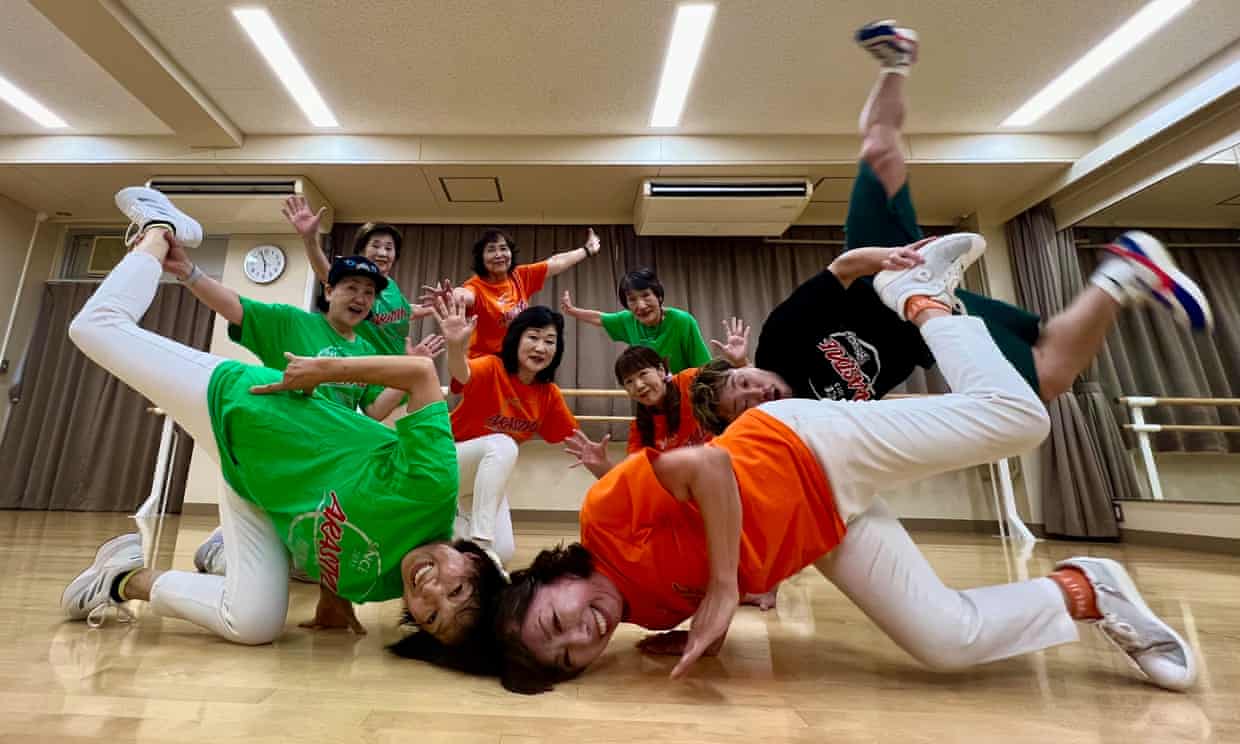
Members of Ara Style Senior breakdancing club at a recent class in Tokyo, Japan. 

When John was in middle school, he got into breakdancing for a while, an activity that seems manageable for young people. But what about for the elderly? For them, the more recent nomenclature, “breaking,” seems more appropriate.

But not in Japan. Justin McCurry filed another story at the Guardian about that endlessly fascinating country.

“Ten people – wearing bright orange and green T-shirts that mark them out as members of Ara Style Senior – do not belong to the demographic you would normally associate with breakdancing. Their average age hovers just below 70, and the oldest is 74.

“But on a hot afternoon in an eastern Tokyo suburb, amid nervous smiles and initial timing issues, the group ends with a perfectly executed pose the dance’s originators in 1970s New York neighborhoods would probably agree is not too shabby at all.

“Senior breaking is one of a growing category of sports tailored to Japan’s large population of older people who, thanks to the country’s extraordinary longevity statistics, are determined to keep popping and locking for as long as their bodies will allow.

“ ‘At first I thought, there was no way I could breakdance at my age,’ says 69-year-old Hitomi Oda. ‘And of course, we can’t do anything extreme, but it’s fun just to do the easy moves and get your body working.’

“These superannuated b-girls and b-boys, who meet twice a month at a community center in the capital’s Edogawa ward, have the organizers of this summer’s Paris Olympics, and former breaking national champion Yusuke Arai to thank for this novel approach to fitness in their later years.

“ ‘Some of my mother’s friends told her they were interested in learning how to breakdance, and when it was chosen as an Olympic sport, I thought, “Why not give it a go?” ‘ Arai tells the Guardian. …

“The 39-year-old tailors his class to bodies that may not be as supple as the children he has been teaching for almost a decade. ‘You have to lower the hurdles to make it possible for older people to do the moves, so I begin with a focus on easy moves using the top half of the body,’ says Arai. …

“The class is just a few minutes old when the dancers, faces flushed from stretches and warm-up exercises, take the first of several breathers. The genteel approach works: since the classes started last year, not a single dancer has so much as sprained an ankle.

“A few have backgrounds in other forms of dance, but most had never tried breaking until a combination of Olympic excitement and gentle peer pressure brought them through Arai’s door. Now they are converts, practicing together between sessions with the help of YouTube tutorials.

“The class ends with a meticulously rehearsed routine that combines toprocks and floor moves and, as its sign-off, a baby freeze the dancers are asked to re-create multiple times by a visiting Japanese TV crew.

“ ‘The rhythm and the perseverance mean it stimulates your brain as well as your body,’ says Kazuharu Sakuma, the only male dancer, who is here taking a trial class.

“The 71-year-old says he will be back. ‘It’s not like you have to memorize the moves … you just do them two or three times and you realize, “yes, I can actually do this.” That’s when it becomes really enjoyable. It’s also great for general fitness … I’m hoping it will make it easier to walk up stairs.’

“Class regular Takako Mizutani removes her trucker cap and pronounces herself ‘not in the least bit tired. … It doesn’t matter if you’re not very good at it, it’s a lot of fun and a proper workout,’ adds Mizutani, who has a background in jazz dance. ‘I plan to keep breaking for as long as I can.’ ”

More at the Guardian, here. No paywall.

Read Full Post »

Photo: Justin McCurry/The Guardian.
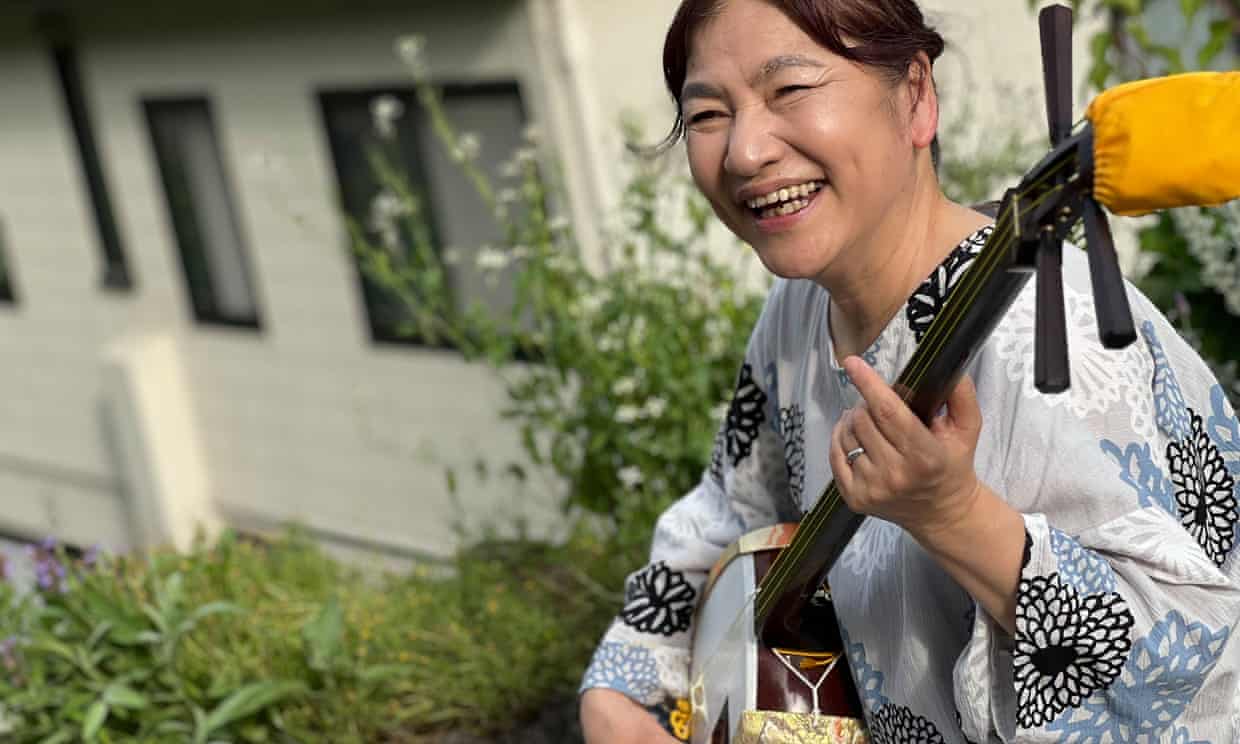
Rieko Hirosawa performs the music of the goze – itinerant blind and visually impaired women who earned a living playing the shamisen in Japan.

I love how the Guardian collects stories from around the world that I would never learn about otherwise. Sometimes I wonder how they do that. Do they have a reporter in all these locales, does a freelancer pitch them an idea? Maybe they have a stringer in a nearby country and send them there. Here is a story I like from Japan.

Justin McCurry reports at the Guardian, “Rieko Hirosawa sits on a stone bench outside her home, tunes her instrument and takes a deep breath. She unleashes an impossibly high note while her bachi plectrum slaps the three strings of her shamisen, a traditional instrument. …”

“Barely a decade has passed since Hirosawa started learning goze uta (blind women’s songs) – a prodigious genre of music spanning four centuries that most Japanese people have probably never heard.

“That she now plays with the composure of a veteran is remarkable for two reasons: not a single goze uta musical score exists, and even if the chords and notes had been written down, Hirosawa would not be able to read them.

“ ‘I knew when I was a young child that I would lose my sight,’ says Hirosawa at her hillside home in Tomi, Nagano prefecture, the outline of the Japanese Northern Alps in the distance.

“But it is because of her condition, not in spite of it, that the 65-year-old has formed an unbreakable spiritual bond with the music of the goze – blind and visually impaired women who earned a living as itinerant musicians and who numbered in their hundreds in the late 19th century.

“In the north-western prefectures, where the tradition flourished during the Edo period (1603-1868), Hirosawa is at the heart of a movement to protect the legacy of the goze.

“ ‘They sang songs while they were living really tough lives,’ she says. ‘Just surviving was a challenge. They used music to have a sense of purpose and then passed on those skills to their apprentices.’

“The musical genre, which historical texts and artwork suggest began as long ago as the 1500s, was no simple career choice. In feudal Japan, girls from poor rural regions who suffered from visual impairment as a result of measles and cataracts, then both commonplace, had only two means of making a living – as masseuses or as traveling musicians.

“Those who chose the latter route out of poverty and discrimination became live-in apprentices at guilds run by an experienced goze, who would pass on songs by word of mouth and teach the shamisen by sitting behind younger musicians and guiding their hands along the instrument’s three strings. …

“They were expected to give a portion of their earnings to the most senior woman in a show of loyalty and observed a strict hierarchy, from the use of honorific to address senior musicians, to the way they wore their hair. The least experienced ate and bathed last, their stock rising with every year of their apprenticeship. The women were not allowed to marry, and men were banned from their lodgings. …

“ ‘It wasn’t unusual for parents to go directly to the master of a goze household and ask her to take on their daughter,’ says Zenji Ogawa, curator of a museum dedicated to the musicians in Takada, a town in Niigata prefecture that was once home to almost 100 performers. ‘They were worried about what would happen to them after they died.’ …

“Life on the road was even more arduous. Three or four musicians, led by a sighted guide, spent 300 days of the year walking from one village to the next, mainly in Japan’s northwestern prefectures of Nagano and Niigata. …

“The women were paid in rice that they would exchange for cash. ‘There was a belief that the goze must have magical powers to have overcome so much adversity and become musicians, so people would buy back the rice they had donated to the women,’ says Ogawa, who organizes bus tours of goze-related sites. …

” ‘They thought that feeding the rice to their children would make them just as strong-willed,’ adds Ogawa, co-founder of the Takada Goze Culture Preservation and Promotion Association. ‘It was the opposite of discrimination. People with disabilities suffered terrible discrimination in those days, of course, but the goze were treated differently.’ …

“Haru Kobayashi, who went blind when she was three months old, is regarded as the last true goze. Born in 1900, she spent her childhood locked in a room at the back of her family home in Niigata and began her career at the age of eight.

“She continued performing until 1978 and was named a living national treasure and received the medal of honor. …

“ ‘Kobayashi-san was 101 years old when I met her,’ says Hirosawa, who wanted to interview the musician for her local radio program, Rieko no Mado (Rieko’s Window). ‘She had lost her sight, of course, and her hearing was failing too.’ Hirosawa had been warned by care home staff that Kobayashi would not be able to sing during their meeting.

“ ‘But she was determined to sing one stanza of a song to me. When I heard her sing it was like thunder … I’d never experienced anything like it. It sent chills down my spine, and I found myself crying the whole time, even on the train on the way home.’

“Inspired by the encounter, she continues to memorize more of the goze repertoire with the help of a teacher who once studied under Kobayashi. ‘All I want is for people to enjoy the music … after all, that’s what the goze’s original purpose was,’ she says.”

More at the Guardian, here. No paywall. Contributions encouraged.

Read Full Post »

Photo: Okinawa Institute of Science and Technology.
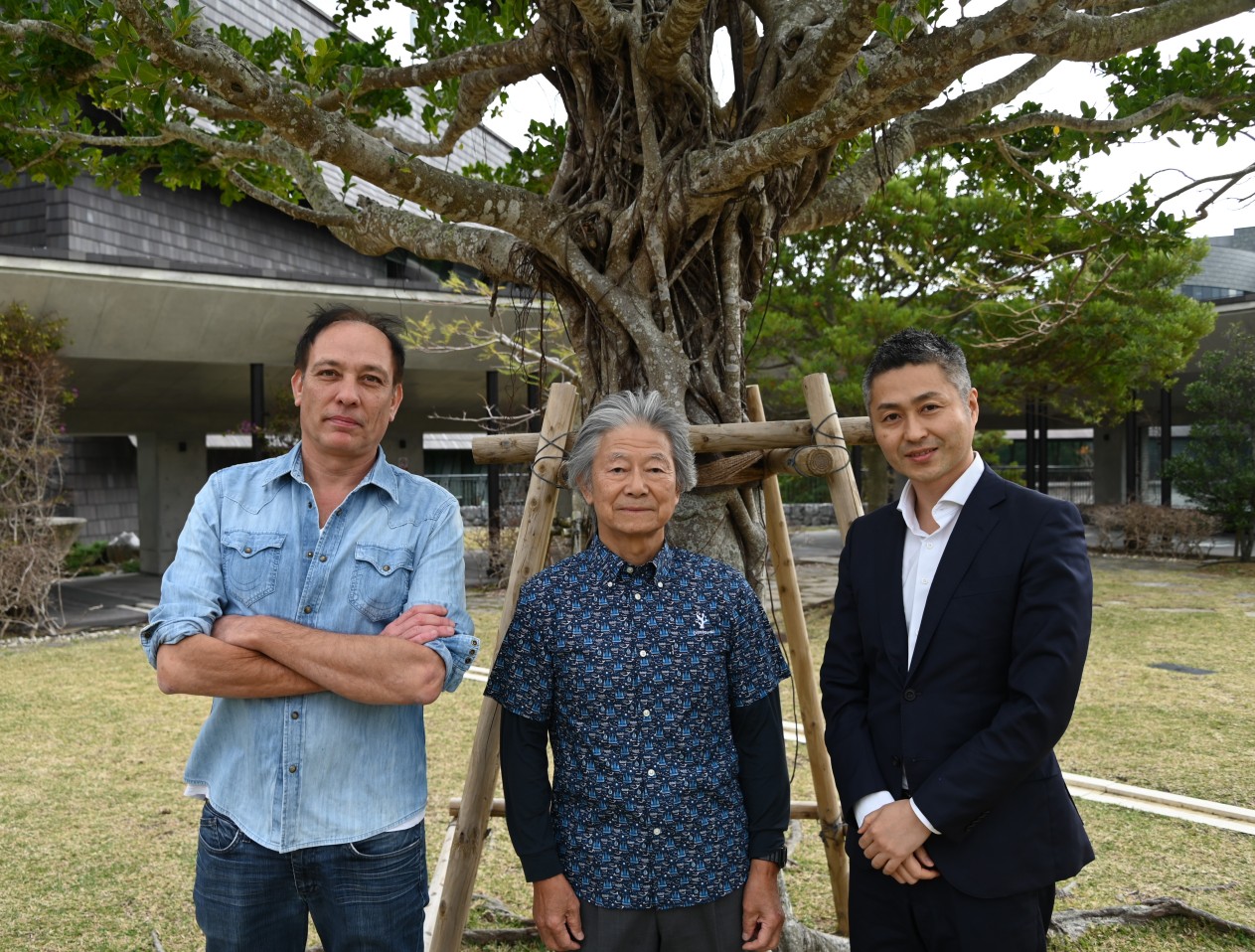
Prof. Timothy Ravasi, Prof. Noriyuki Satoh, and Shimon Sato (L-R) lead the Coral Project at OIST, a nonprofit initiative helping conserve coral biodiversity in Okinawa. 

It is now generally known that corals are important for ocean biodiversity but are in danger from climate change. If you search on “coral” at this blog, you will find a variety of stories about what people are trying to do to help.

Today we look at an organization in Japan that merges the work of local people to that of scientists.

The website of the Okinawa Institute of Science and Technology (OIST) says, “Unlike many global reef locations requiring a boat ride, Okinawa’s reefs are accessible directly from the beach — a simple walk to a nearby beach, a quick dip into the crystal-clear waters, and within moments, you are immersed in a lively ocean community. 

“Yet elders in Okinawa remember a time when coral-filled waters were more abundant, a contrast to the significant coral decline observed in recent years, especially near shorelines. Worldwide, human activities have resulted in an alarming decrease in coral populations in the last decade. Consequently, efforts to plant corals are gaining momentum. 

“The OIST Coral Project, an initiative focused on studying and preserving coral biodiversity in Okinawa, was launched in July 2023 at the Okinawa Institute of Science and Technology (OIST). To date, the project has successfully enlisted the support of 20 companies in Okinawa and mainland Japan. …

“In January 2023, Prof. Noriyuki Satoh, head of OIST’s Marine Genomics Unit, sat down with Shimon Sato, an experienced fundraiser and Advancement Officer at OIST. They came up with an ambitious idea: to use knowledge of genomics and eDNA in a new project to plant and conserve coral in Okinawa. This was the start of an innovative effort to protect local marine life by connecting with locals and companies in Okinawa and Tokyo to establish potential collaborations. 

“Prof. Satoh and his team at the Marine Genomics Unit achieved groundbreaking milestones by decoding the genomes of corals in 2011, zooxanthellae (symbiotic organisms that coexist with corals) in 2013, and the crown-of-thorns starfish (known for devouring corals) in 2017. …

“Using this knowledge, Prof. Satoh identified the best types of coral that can be planted at specific sites in Okinawa. … Permission was granted by Okinawa Prefecture and planting is done by professional vendors, following Japan’s strict coral planting regulations.

Each planting site is overseen by a different fishermen’s organization, each with its own unique team and structure.

“Before planting, Prof. Satoh engages in negotiations with the fishermen’s organizations, explaining the project’s objectives and benefits. These fishermen, who have a deep understanding and respect for the sea, are important allies. …

“Yet this project is not just about planting corals — scientists also conduct eDNA monitoring of corals and study the fish that arrive after the planting, observing which species are on the rise or decline. …

“Cause-related marketing is one of the unique aspects of this project. This is an approach where businesses associate themselves with societal issues or values by working with non-profit organizations to promote a specific cause. …

“ ‘We began with 8 companies, including Japan’s largest mobile company NTT Docomo in Tokyo and several others in Okinawa.’ … Supporting companies can use the project’s [logo]. Ryukyu Cement Co., Ltd., the largest cement company in Okinawa, displays the logo on their cement bags and donates a portion of their cement sales to the project. Another notable supporter is Majun, the leading Kariyushi wear company in Japan. Majun has created an original 100% cotton Kariyushi t-shirt embroidered with the Coral Project logo. …

“In 2018 Onna Village, where OIST is located, was declared a ‘coral village’ or ‘sango no mura’ in Japanese, and in 2019 the Government of Japan declared the village a ‘Sustainable Development Goals Future City.’ Impressively, the practice of coral planting in Onna Village began two decades ago. In 2004, a local organization, Team Churasango, was established by community members with participation from both local and mainland companies. On average, they plant 1,000 corals annually, in response to the observed decline in coral numbers. …

“The project team has recently welcomed a third person – Prof. Timothy Ravasi, leader of the Marine Climate Change Unit at OIST. Prof. Ravasi’s unit uses the latest methods in genomics to study how marine organisms adjust to warmer and more acidic oceans. …

“Shimon attributes the success of the project to two main factors. First, Prof. Satoh’s expert knowledge of corals and excellent people skills. Second, the project has secured the support of numerous stakeholders. … ‘Okinawan people value coral, and they want to return the coral reefs to their previous beautiful and healthy state. We want to support those hopes using the power of science,’ he said.”

More at the Okinawa Institute of Science and Technology, here. And you can click here to read about how OIST got the Isawa Award for this work.

Read Full Post »

Photo: Oscar Espinosa.
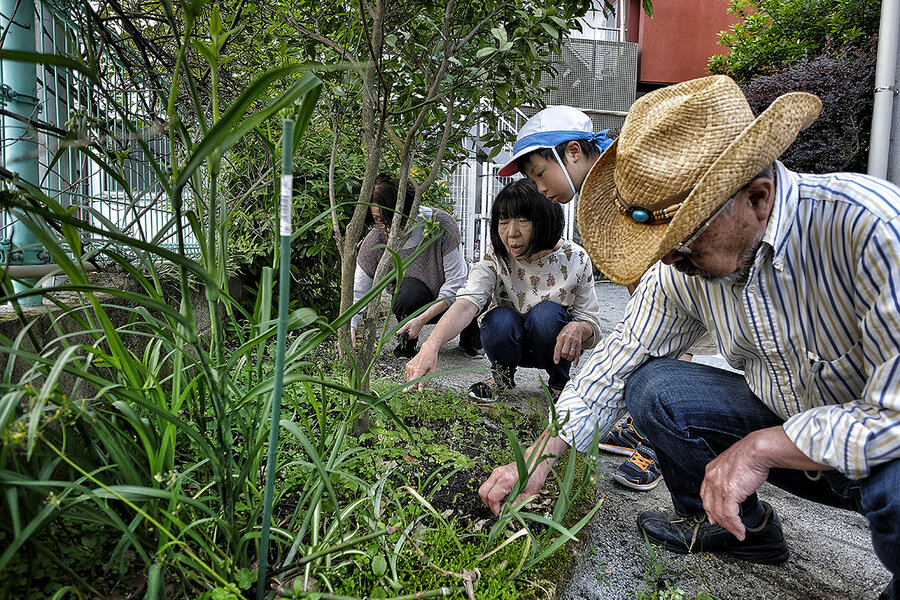
Residents of a Japanese apartment building designed to combat loneliness in seniors are seen weeding with a boy from the child development center on the first floor.

Social media, working at home, and lack of face-to-face interaction are among the reasons for the increased isolation of all ages in our world. Isolation is not good for individuals or for society.

At the Christian Science Monitor, Oscar Espinosa describes an apartment building in Japan specially designed to bring people together more.

“A message on a small whiteboard near the elevator,” he writes, “is a reminder that dinner in this apartment building is tonight at 7 p.m., as it is once every month. Many of the residents are likely to attend, since being together is the point.

“Nagaya Tower, in the peaceful city of Kagoshima on the Japanese island of Kyushu, houses 43 people, ages 8 to 92, including a family with five children. With shared community spaces, the tower was built so that different generations could meet and interact. The staff is dedicated to supporting residents and connecting them with each other to generate that community life so important to combating the loneliness of older people, which has become a significant problem in Japan’s increasingly aging society.

“ ‘This community is inspired by the ancient nagayas of the Japanese Edo period,’ says Nomura Yasunori, who moved here five years ago with his wife. ‘From children to the elderly, families, singles, from different occupations, all lived together in the same long compartmentalized house.’

The building was designed in a V shape so that everyone could see each other when they enter or leave their homes.

“[In 2021], the Japanese Cabinet Office appointed a minister for loneliness and social isolation. … According to a survey conducted in 2017 by Japan’s National Institute of Population and Social Security Research, 15% of older men who live alone talk with one person or no one every two weeks, while 30% feel they have no reliable people they can turn to for help in their day-to-day lives.

“Dozono Haruhiko, founder of one of Japan’s first palliative care clinics, saw how his patients could suffer from social isolation. He believed that what these patients needed was human interaction, and so, in 2011, he applied for a government grant with his idea for Nagaya Tower, which was completed in 2013.

“By 6 p.m. on this evening, residents are starting to arrive with food for the communal dinner. Some of them rearrange tables to form a single one that takes up almost the entire room; others go to the kitchen to lend a hand.

“ ‘After coming to Nagaya Tower I feel rejuvenated,’ smiles Kukita, who arrived three years ago with his wife. … ‘Here you stay young because you are surrounded by children and young people.’ Kukita says he walks every day in the park, swims in the pool, participates in the art workshop once a month, and, above all, takes every opportunity to talk and spend time with the children.

“ ‘I can learn a lot from the elderly people through the exchange,’ says Takai, who is in his 30s and is one of the younger residents. ‘We help each other from time to time if we have a problem.’

“The building was designed in a V shape so that everyone could see each other when they enter or leave their homes, allowing them to greet each other, which is not common practice in other places, according to Moemu Nagano, age 27, who has lived here for two years. …

“After dinner, Kawasaki Masatoshi sings Bob Dylan’s ‘Blowin’ in the Wind’ to a standing ovation, making it clear that Nagaya Tower’s motto, ‘Life is happy when you have someone to smile with,’ is more than just a phrase on a piece of paper. He loves community life and boasts of being resident zero, when he moved in 10 years ago.

“ ‘I signed up before the construction of the building was finished, and I will stay here for the rest of my life,’ Mr. Kawasaki says.

More at the Monitor, here. No firewall. Charming photos. And for more insights on communal or supported living, read the blog Making Home Home, here.

Read Full Post »

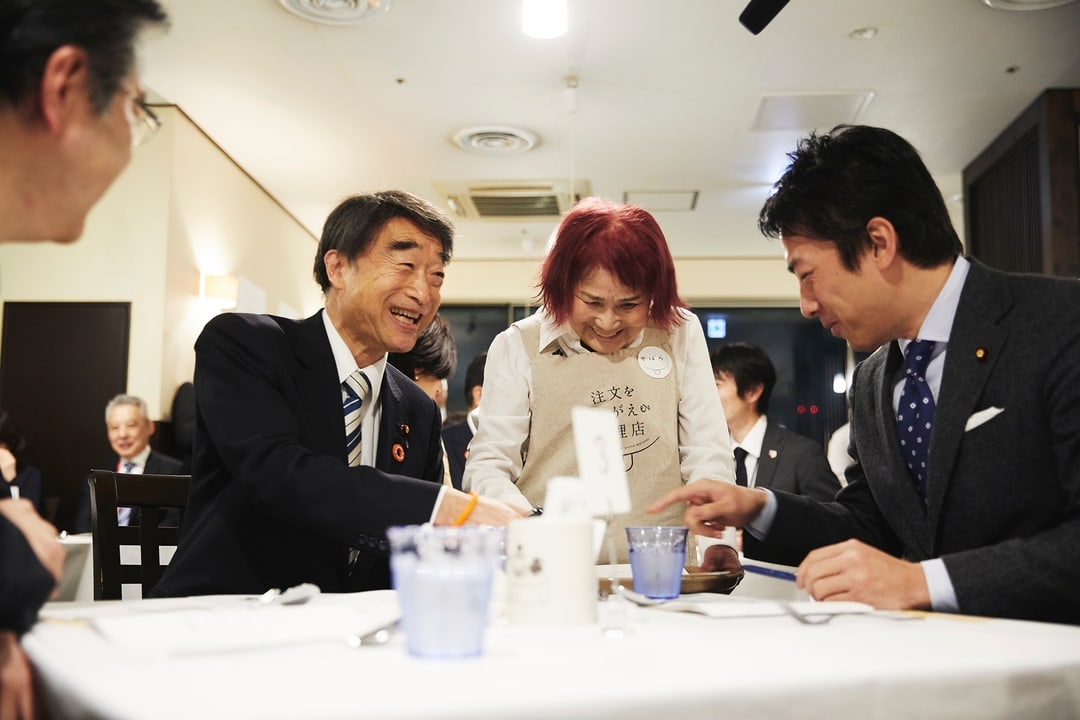
Photo: Restaurant of Mistaken Orders.

Our friend Toshi was lucky to have Yuriko to take care of his aging mother in their home. That was always the custom for daughters-in-law.

Nowadays, Japan has a greater percentage of people over 65 and not enough caregivers. So the Japanese are getting creative. Monthly “dementia cafes,” where elderly people can enjoy working, are a drop in the bucket. But charming.

Michelle Ye Hee Lee and Julia Mio Inuma report at the Washington Post, “The 85-year-old server was eager to kick off his shift, welcoming customers into the restaurant with a hearty greeting: ‘Irasshaimase!’or ‘Welcome!’ But when it came time to take their orders, things got a little complicated.

“He walked up to a table but forgot his clipboard of order forms. He gingerly delivered a piece of cake to the wrong table. One customer waited 16 minutes for a cup of water after being seated.

“But no one complained or made a fuss about it. Each time, patrons embraced his mix-ups and chuckled along with him. That’s the way it goes at the Orange Day Sengawa, also known as the Cafe of Mistaken Orders.

“This 12-seat cafe in Sengawa, a suburb in western Tokyo, hires elderly people with dementia to work as servers once a month. A former owner of the cafe has a parent with dementia, and the new owner agreed to let them rent out the space each month as a dementia cafe. The organizers now work with the local government to get connected to dementia patients in the area. …

“ ‘It’s so much fun here. I feel like I’m getting younger just being here,’ said Toshio Morita, the server, who began showing symptoms of dementia two years ago.

“A condition of unending indignities and financial burdens, dementia is a global phenomenon that every society is confronting. But in Japan, the world’s oldest society, dementia is a pressing national health challenge.

About 30 percent of the Japanese population of about 125.7 million is over 65. More than 6 million Japanese people are estimated to have dementia, and the number is expected to grow as high as 7.3 million — or 1 in 5 people over the age of 65 — by 2025, according to the Health Ministry.

“Japan’s chronic lack of caregivers and the soaring costs of elderly care mean it needs to find creative ways to empower these dementia patients so that they can be mentally and physically active for as long as possible, rather than isolated at home or at a hospital.

“Dementia cafes [were] introduced in Japan in 2017 through pop-up events, but more permanent efforts are now cropping up throughout the country.

“In June, Japan passed legislation to enact a slew of new programs and services to help those with dementia, which Prime Minister Fumio Kishida has identified as an urgent national project. …

“Kazuhiko, a 65-year-old diagnosed with dementia five years ago, has been working at the cafe every month. … At one point, Kazuhiko was heading to a table with an order but became distracted when the construction crew outside made a loud noise. He proceeded to leave the cafe and move toward the sound, and the staff rushed to bring him back in. …

“Kazuhiko rarely talks or shows emotion anymore. He usually doesn’t make eye contact with customers until he sees them multiple times. But that day, he showed a smile.

“The smile was directed at Tomomi Arikawa, 48, and her 16-year-old daughter, Sayaka, who visited around noon for a piece of chiffon cake and a citrus jelly dessert. … Kazuhiko brought them their orders. Sayaka thanked him and smiled, and he smiled back. ‘It felt really special,’ she said. …

“Since April, the Cafe of Mistaken Orders has opened once a month around lunchtime. One dementia patient works as a server per hour, wearing an apron that is bright orange, the color associated with dementia care. There is a chair set aside for them near the kitchen so they can rest in between orders.

“Younger volunteers help the elderly servers as they mark customers’ orders on the order forms, which are simple and color-coded.

“Table numbers were difficult for the elderly to remember, so the staff switched them out for a centerpiece with a single flower, a different color for each table.

“The cafe’s administrators wanted to help the community see that dementia patients can prolong their active years, with a little bit of understanding and patience from those who interact with them. …

“ ‘I hope that our initiative will give people with dementia something to look forward to,’ said Yui Iwata, who helps run the cafe. ‘If people get a deeper understanding, it would become easier for people with dementia to go out, as well.’ ”

More at the Post, here. Or just check out the restaurant’s site, here.

Read Full Post »

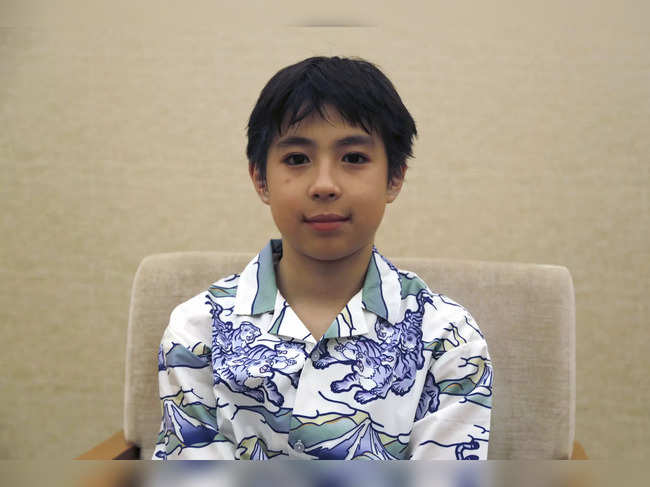
Photo: AP/Yuri Kageyama via Economic Times.
Ten-year-old Maholo is an emerging star in Japan’s 420 year-old Kabuki theater. And he happens to be French.

Having once been turned down for a New Shoreham committee because I was not a year-round resident, I love hearing about famously hidebound organizations that decide to open up. Today’s story is features Kabuki theater opening up.

Yuri Kageyama writes at the Associated Press (AP), “Ten-year-old Maholo Terajima Ghnassia loves watching anime and playing baseball. … And he’s breaking conventions in Japan’s 420-year-old Kabuki theater tradition.

“In Kabuki, all the roles are played by men, including beautiful princesses — a role Maholo accomplishes stunningly in his official stage debut as Maholo Onoe at the Kabuki Theater in downtown Tokyo. … He starts out disguised as a woman, dancing gracefully, before transforming into sword-wielding warrior Iwami Jutaro. He then makes a quick costume change right there on the stage, all while delivering singsong lines in a clear resonating voice unaided by a microphone.

“Out to avenge his father’s death, striking spectacular poses, Maholo performs swashbuckling fight scenes and slays a furry baboon.

” ‘I like “tachimawari” (fight scenes). It feels good, and people who are watching it think it’s cool,’ said Maholo. …

“Maholo’s grandfather, Kikugoro Onoe, appears as the God of War. He praises Maholo’s character, Iwami, and tells him to keep at his art, promising to always be at his side and help him attain his goals.

“Kabuki is typically passed from father to son, the art form largely limited to Japanese men. But Kikugoro Onoe is Maholo’s maternal grandfather; the young Kabuki performer’s father, Laurent Ghnassia, is French. …

“The huge curtain for the stage, which also works as advertising space, is speckled with fluttering dots of purple and orange, designed by French artist Xavier Veilhan of fashion house Chanel. This was Ghnassia’s idea — as an art director, he designs venues, installations, shops and events to market fashion brands, contemporary art and film ventures. …

“Maholo himself isn’t sure yet if he will stick with the strict, demanding art form and someday adopt his grandfather’s stage name, Kikugoro — a prized name in Kabuki passed down through generations of Onoe men.

“Child Kabuki actors go through a difficult transitional period when their voices change with puberty but they aren’t yet mature enough to take adult roles. Only the truly determined ones pull through that stretch to succeed.

“ ‘Unless he is recognized and in demand, he won’t get any roles. He must have the passion. It’s not easy. It’s up to him,’ said Maholo’s mother, renowned actor Shinobu Terajima. She won the Silver Bear for Best Actress at the Berlin International Film Festival for her poignant performance in the 2010 film Caterpillar.

‘It’s not easy, but choosing the harder path makes life more worthwhile. The more hurdles there are, the climb becomes worth it,’ Terajima said.

“Although Japan has been known for discriminatory attitudes toward foreigners and outsiders, Terajima hopes her son’s French cultural background will give Maholo a unique edge in the world of Kabuki. But he may become a film actor like herself, Terajima said.

“ ‘It must be felt. It’s not just the lines you speak,’ she said. ‘I want him to act by digesting within what’s received from the other, and then return that, changing one’s heart with that received energy. That’s fundamental to acting.’ “

More at AP, here. No firewall.

Read Full Post »

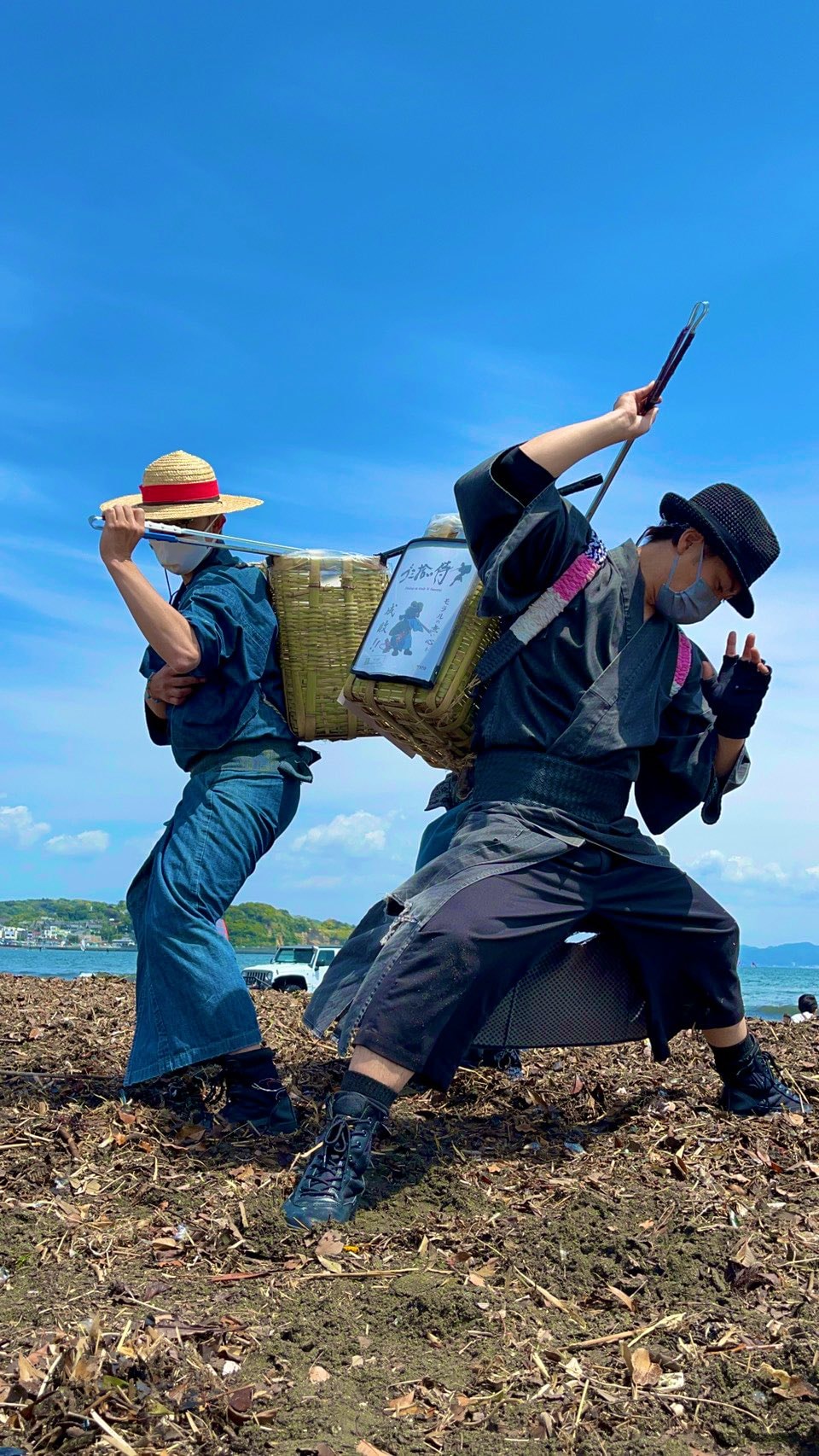
Photo: The Smart Local.
Members of the Gomi Hiroi Samurai, or the trash-collecting samurai, wear full-length samurai outfits and wield waste tongs that look like swords.

Proving that any kind of work can be turned into a game, Rebecca Rosman and Julia Kim report at Public Radio International’s the World, about some waste pickers in Japan.

“Passersby do a double take when they see Kaz Kobayashi and Ikki Goto. The two men glide through Tokyo’s bustling Ikebukuro district in full-length samurai outfits, while wielding objects that look like swords. They are members of the Gomi Hiroi Samurai or the trash-collecting samurai. …

“On closer inspection, their samurai swords — or katanas — are actually just very long tongs, used to pick up litter. Kobayashi said the tongs are important for novelty value.

“ ‘We’re doing this as entertainment … but it can be tiring sometimes. It’s tough, Man.’

“The Gomi Hiroi Samurai do this three times a week. There’s four of them, and they’re professional actors. In their spare time, they volunteer to keep the streets of Tokyo clean. Goto formed the group in 2009. Since then, they have become a viral sensation on TikTok, with over 700,000 followers and counting.

“Here in Ikebukuro, they target back alleys and parking lots, which are rife with litter. Kobayashi and Goto, working in sync, slice and spin their tongs through the air, meticulously seizing cigarette butts one by one before tossing them into the wastebaskets strapped to their backs. …

“An hour later, Kobayashi and Goto took their wastebaskets to a recycling base. There, they separated out every piece of rubbish they’ve collected. They said that they hope to recruit more Gomi Hiroi samurai  in Japan — and around the world — to spread their message: ‘We punish immoral hearts.’

“It means that trash in and of itself isn’t bad. Instead, it’s people and the actions that stem from their negative mindsets. And a growing sense of negativity is something that Kobayashi said worries him.

“ ‘This is a problem in Japan,’ he said. ‘People don’t go outside.’

“Last month, a government survey showed that 1.5 million people are living as social recluses in Japan. With loneliness and depression on the rise, Kobayashi said he hopes that their fun, zany take on something as mundane as trash-collecting helps people reengage with the outside world.

“ ‘Samurai is a warrior,’ he said. ‘Our philosophy is to help people.’

“For these eco-warriors, ‘clean space, clear mind’ is more than just a saying — it’s the way of the Gomi Hiroi samurai.”

More at the World, here. I was amazed that the “samurai” are doing this hard work as volunteers. PRI also has stories on trash pickers in countries like India, Ghana, and Colombia, where they earn a meager amount of pay and live very difficult lives.

I have to say, I think that public litter is best addressed by everybody pitching in. Clean communities are often the result of peer pressure against creating litter in the first place and individuals who are proud enough of their community to pick up litter where they see it.

PS. In case you don’t always read the Comments, do look at Hannah’s, which included a tip about Ya Fave Trashman. Like the trash samurai, he adds entertainment to an undervalued job. His online talks gained him fame during the pandemic, when trash was piling up in Philadelphia. Read about him here.

Read Full Post »

Photo: Studio Gibli via Comicbook.com.
Here’s a life-sized No Face from the wild imagination of “the world’s greatest living animator,” Hayao Miyazaki. You can see other beloved characters if you visit a new theme park in Japan.

All you friends of Japanese animator Hayao Miyazaki, how would you like to get up close to some of his delightful, scary characters? I can’t imagine it’s quite as powerful as seeing them on the screen, but amusement-park developers in Japan are betting on fans wanting to enter the Miyazaki movies and take selfies with characters.

Sam Anderson writes at the New York Times, “As an American, I know what it feels like to arrive at a theme park. The totalizing consumerist embrace. The blunt-force, world-warping, escapist delight. I have known theme parks with entrance gates like international borders and ticket prices like mortgage payments and parking lots the size of Cleveland. … This is a theme park’s job: to swallow the universe. To replace our boring, aimless, frustrating world with a new one made just for us.

“Imagine my confusion, then, when I arrived at Ghibli Park, Japan’s long-awaited tribute to the legendary animation of Studio Ghibli.

“Like filmgoers all over the world, I had been fantasizing about a visit to Ghibli Park since the project was announced more than five years ago. … Hayao Miyazaki, the studio’s co-founder, is one of the all-time great imaginary world-builders — right up there with Lewis Carroll, Jim Henson, Ursula K. Le Guin, Charles Schulz, Maurice Sendak and composers of the Icelandic sagas. Even Miyazaki’s most fantastical creations — a castle with giant metal chicken legs, a yellow bus with the body of a cat — feel somehow thick and plausible and real.

“Miyazaki started Studio Ghibli in 1985, out of desperation, when he and his co-founders, Isao Takahata and Toshio Suzuki, couldn’t find a studio willing to put out their work. The films were brilliant but notoriously artsy, expensive, labor-intensive. Miyazaki is maniacally detail-obsessed. He agonizes over his children’s cartoons as if he were Michelangelo painting the Sistine Chapel. He will pour whole oceans of effort and time and money into the smallest effects: the way a jumping fish twists as it leaps, individual faces in a crowd reacting to an earthquake, the physics of tiles during a rooftop chase scene. …

“ ‘Ghibli’ is an Italian word, derived from Arabic, for a hot wind that blows across Libya. The plan was for the company to blow like a hot wind through the stagnant world of animation. It succeeded. For more than 35 years, Studio Ghibli has been the great eccentric juggernaut of anime, cranking out classic after odd classic: Castle in the Sky (1986), My Neighbor Totoro (1988), Kiki’s Delivery Service (1989), Only Yesterday (1991), Princess Mononoke (1997), Spirited Away (2001). …

“Did I find myself stepping into the wonders of Ghibli Park? My first impression was not awe or majesty or surrender or consumerist bliss. It was confusion. For a surprisingly long time after I arrived, I could not tell whether or not I had arrived. There was no security checkpoint, no ticket booths, no ambient Ghibli soundtrack, no mountainous Cat Bus statue. Instead, I found myself stepping out of a very ordinary train station into what seemed to be a large municipal park. A sea of pavement. Sports fields. Vending machines. It looked like the kind of place you might go on a lazy weekend to see a pretty good softball tournament. …

I wandered into and out of a convenience store. I saw some children wearing Totoro hats and started to follow them.

“It felt like some kind of bizarre treasure hunt — a theme park where the theme was searching for the theme park. Which was, in a way, perfectly Studio Ghibli: no pleasure without a little challenge. And so I headed down the hill, trying to find my way in.

“Like many non-Japanese viewers, I first encountered Studio Ghibli through the 2001 film Spirited Away. It is Miyazaki’s masterpiece, a popular and critical supertriumph that won the Oscar for best animated feature and became, for two decades, the highest-grossing film in Japanese history. Critics all over the world simultaneously fell out of their armchairs to praise it in the most ecstatic possible terms. …

“I, on the other hand, am not a film critic. I am an ordinary American … which means that my entertainment metabolism has been carefully tuned to digest the purest visual corn syrup. Sarcastic men with large guns. Yearning princesses with grumpy fathers. Explosive explosions explosively exploding. When I watched Spirited Away, at first I had no idea what I was looking at. In the simplest terms, the film tells the coming-of-age story of a 10-year-old girl named Chihiro. It takes place in a haunted theme park — where, almost immediately, Chihiro’s parents are turned into pigs, and Chihiro is forced to sign away her name and perform menial labor in a bathhouse for ghosts (ghosts, spirits, monsters, gods — it’s hard to know exactly what to call them, and the film never explains). …

“But plot isn’t really the point. The majestic thing about Spirited Away is the world itself. Miyazaki’s creativity is radically dense; every little molecule of the film seems charged with invention. The haunted bathhouse attracts a proliferation of very weird beings: giant yellow ducklings, a sentient slime-blob, fanged monsters with antlers, a humanoid radish spirit who appears to be wearing an upside-down red bowl for a hat. There is a trio of green disembodied heads, with black mustaches and angry faces, who bounce around and pile up on top of one another and grunt disapprovingly at Chihiro. There are so many creatures, stuffed into so many nooks and crannies, that it seems as if Miyazaki has been spending multiple eternities, on multiple planets, running parallel evolutionary timelines, just so he can sketch the most interesting results. As a viewer, you have to surrender to the abundance. Crowd-surf into the hallucination.

“Miyazaki knows that his work can be difficult — and he is, at all times, righteously defiant. ‘I must say that I hate Disney’s works,’ he once declared. ‘The barrier to both the entry and exit of Disney films is too low and too wide. To me, they show nothing but contempt for the audience.’ …

“Let’s pause here, briefly, to make sure we all fully appreciate No Face. The very best Miyazaki characters, the ones that hit on the deepest spiritual levels, are the ones that do not speak. Totoro, the Cat Bus, soot sprites, kodama (the little rattle-headed forest spirits in Princess Mononoke). And the greatest of all these — one of the great strange miracles in the history of cinema — is No Face. No Face is a lonely ghost who appears, out of thin air, in the middle of Spirited Away. He is so simple and deep, so eloquently silent, that it is hard to even describe him. Words themselves hesitate. This, in fact, is partly what No Face is about: the failure of language. …

“This was the one experience I absolutely wanted to have at Ghibli Park, the thing I had been fantasizing about from thousands of miles away: to sit next to No Face. I wanted to enter Miyazaki’s most iconic scene: No Face, sitting, expressionless, on a red velvet seat on an ethereal train near the end of Spirited Away. I needed to sit there with him, to put my real 3-D body next to his fake 3-D body. I needed to feel that I was gliding over the water, lonely but not alone, on his sad hopeful journey.

“Unfortunately, this turned out not to be possible. Everyone else in Japan seemed to have come to Ghibli Park to take this photo.” 

Read Anderson’s long, wonderful article at the Times, here. Better yet, find the movies and watch them.

Read Full Post »

Photo: Sunphol Sorakul/Moment via Getty Images.
Some of Kyoto’s machiya homes that mix work and living space took on a new life during the pandemic, Bloomberg reports.

The places where people worked and the places where they slept merged during the pandemic. In Japan, that change gave an ancient style of architecture renewed prominence.

As Max Zimmerman wrote at Bloomberg CityLab in May, “While the pandemic has turned many kitchens and bedrooms into makeshift home offices around the world, there’s one style of housing in Japan that’s been mixing business and living space for centuries.

“The city of Kyoto is known for its stock of unique historical structures called Machiya, which get their name from two Japanese characters: machi — which in this context can mean a neighborhood, market or group of workshops — and ya, meaning dwelling. These beautiful wooden townhouses, which mingle residences with storefronts and workshops, offer a rare window into traditional Japanese life and architecture. Their design also raises an important contemporary question: How can aging homes created for a bygone lifestyle be incorporated into a modern city?

“Despite economic and cultural headwinds, machiya have proven capable of adapting to the present — and even influencing homes in the future.  An influx of tourists before Covid-19 saw many machiya find renewed purpose as restaurants or vacation rentals, while their mixed-use design provides lessons for people adjusting their lifestyles to working at home during the pandemic. 

Kyoto’s machiya reached their maturity as an urban form as early as the 17th century when, during a tumultuous period that still preoccupies Japanese culture today, the Tokugawa Shogunate ended more than a century of political violence.

“As the city rebuilt, massive demand for housing led to a standardization of designs, materials, measurements and fittings that allowed them to be erected quickly and inexpensively throughout the city. 

“It was during this time that machiya emerged as not just homes and businesses but also the basic building blocks for the city’s wider administrative structure. In times of conflict, communities within Kyoto banded together to defend themselves, even building stockades around their neighborhoods to protect themselves from the violence. When peace was restored, the Shogunate made these groups a permanent part of the city’s administration as semi-autonomous units with the power to establish local bylaws.

“Chief among their concerns was the uniformity of each machiya, whose size and design were crucial for fostering equality and harmony among its members. These neighborhood groups regulated the width of plots, forbidding the creation of larger parcels or combining homes, and imposed strict rules on various design elements. This ensured a relatively even distribution of taxes, light, ventilation and safety — as well as a pleasing aesthetic.

“These plots became known as unagi no nedoko, or ‘eels’ beds,’ for their long and narrow proportions. These ‘beds typically started at the street with a shop unit, fronted not with walls or glass but wooden lattices that provided some visibility from the inside and privacy from the outside. The typical unit was covered in a sloping roof, clad in lines of curved tiles producing a characteristic wave-patterned surface.

“Behind the shop was the residence, composed of multipurpose rooms with tatami mat floors and sliding doors. The deepest room was reserved for the head of house and important guests, with a small courtyard garden for light and ventilation. The spine of the house was a broad corridor with a packed earth floor running down one side of the house, connecting the commercial and residential portions. This hallway was where daily functions like cooking were performed, with a toilet and bathing space at the end. While the earliest machiya were single-storied, most later examples have an upper floor used as storage or sleeping space with slitted apertures to let in light. …

“For more than 250 years, machiya were the economic, political and social glue of Kyoto — as small businesses powering the economy, as households organizing community events such as festivals, and as administrative units by which local affairs were managed. 

“They began to change in the mid-19th century, when reform-minded revolutionaries overthrew the shogunate, destroying much of Kyoto and ushering in Japan’s modern era. In its rebuilding process, the city embarked on a period of modernization by incorporating western technologies and culture. …

“Although Kyoto was spared from destruction in World War II, its aftermath endangered machiya more than any other conflict. Japan’s postwar recovery redoubled modernization efforts that produced major housing changes. In their heyday, the machiyas’ use of gardens for natural light and ventilation would have made them relatively comfortable dwellings. By new standards, however, they were cold in the winter, lacked novel necessities like modern kitchens, had poor lighting and were expensive to maintain. …

“Many owners demolished or sold their machiya to make way for western-style housing like danchi apartments. Those that held on refurbished them with modern appliances, materials and layouts. New laws also made it impossible to build machiya with traditional construction techniques, leading to a decline in their number and skilled workers who can build them. There were 40,146 surviving machiya in Kyoto as of March 2017, down from 47,735 in 2011, according to a city survey. …

“Since the early 2000s, many machiya have found new life as restaurants, cafes, and museums thanks to a nostalgic aesthetic popular among young people and tourists. Some people still use their machiya to make traditional crafts like sake and textiles, while others have been preserved as cultural landmarks. …

Garden Lab, a co-working space and residence built out of two machiya that were uninhabited for four decades, is one such example of reuse. It forms part of a restored machiya cluster that includes a coffee shop and roastery, which makes use of the machiya’s capacity to accommodate machinery. Garden Lab’s founder, Drew Wallin, says that neighbors have noted the renovation’s positive impacts on the area after their long-term abandonment. 

“Wallin founded Garden Lab, however, to demonstrate how machiya can help balance private and professional life, a struggle for many still working from home as the pandemic endures. He found that machiya’s incorporation of natural light and outside air fostered healthier routines in ways that artificially lit, climate-controlled  homes fall short. Their reliance on the sun for light and warmth, for example, can help residents detach from work in the evenings and improve sleep habits as night set in. “

More at Bloomberg, here. Great photos. No firewall.

Read Full Post »

Older Posts »