Feeds:
Posts
Comments

Posts Tagged ‘justice’

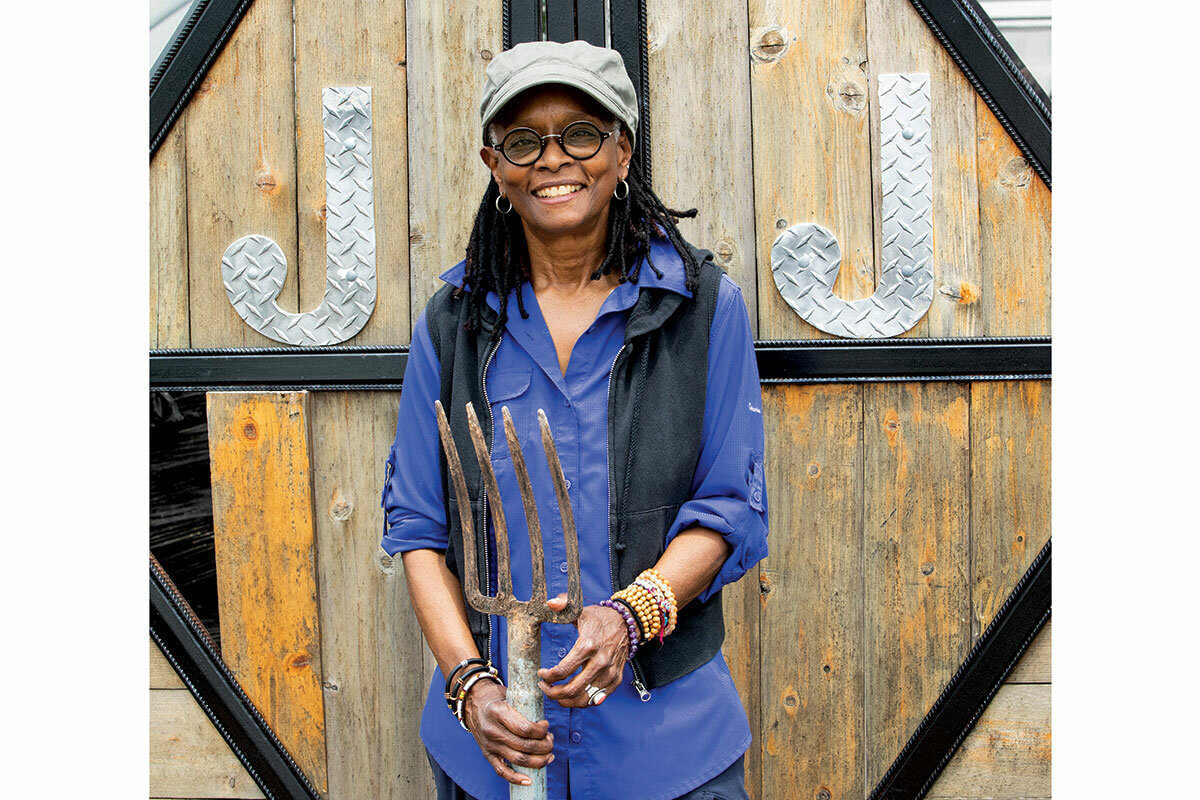
Photo: Melanie Stetson Freeman/CSM.
Konda Mason, founder of the nonprofit Jubilee Justice, poses at her farm in Alexandria, Louisiana, May 7, 2023. She teaches Black farmers a sustainable and environmentally friendly method for growing rice.

There are people who try their hand at many different things over a lifetime until something clicks. Or until all the pieces converge to make a new whole.

Consider Konda Mason, currently of Louisiana. Diane Winston has a long article about her at the Christian Science Monitor.

“It’s past daybreak on a muggy July morning when Konda Mason reaches the farm, a 5-acre plot in rural Louisiana. Mindful of the heat to come, several workers are already weeding, and Ms. Mason – her daily meditation and yoga done – is ready for a busy day.

“She’ll field calls from farmers and suppliers, check the progress of the industrial rice mill she’s building, and meet with a journalist curious about why a Black Buddhist from Oakland, California, is growing rice in a red county of a very red state. …

“A slender, muscled woman with waist-length dreadlocks, Ms. Mason sees the farm as the apex of her efforts as a social entrepreneur and eco-spiritual activist. Today she’s sporting a red bandanna to shade herself from the sun, but in her nearly 70 years, she has worn many hats. She’s been a concert promoter, filmmaker, and supporter of Black innovators and problem-solvers. As with her other endeavors, this new project manifests the values that have guided her life: love, justice, community, and a willingness to leap into the unknown.

“ ‘I was taught by my family that I had a role to play in making this world a better place,’ Ms. Mason told listeners in her keynote address at the 2015 Wisdom 2.0 forum in San Francisco. …

“ ‘The question I ask myself is, how can you go deeper, what do you have to let go of in order to do that, and are you willing to do it?’

“This time, going deeper meant leaving her home, her sister, her partner, and her friends to promote what she hopes is a revolution in rice production. Her goal is to support a more sustainable and less expensive way to grow rice, in hopes of staunching the loss of Black-owned farmland. Working alongside an agronomist from Cornell University, she uses what’s called the System of Rice Intensification, common in developing nations but new to American farmers. Going deeper has also meant mastering the complexities of soil and weed management, crop rotation, fertilization, the milling of rice, and bringing it to market. Equally complex, of course, is working in a region where race relations are historically fraught. …

“Though deeply committed to Buddhism, Ms. Mason is not an evangelist. At the farm, she rarely discusses her practice, and if she does, she talks about mindfulness, not Buddhism.

“ ‘Konda’s had many lives, and I never thought there would be a home for her,’ says Dianne Houston, a longtime friend. ‘But the combination of working on the land with people who share her beliefs about social justice – all the boxes are checked.’

“Ms. Mason’s work on the 3,700-acre former plantation is equal parts passion project, spiritual mission, and response to the loss of 12 million acres of Black farmland over the past century. … Since arriving in Louisiana in 2020, Ms. Mason has grown a network of nearly a dozen Black farmers whom her team visits regularly. Her agronomy colleagues offer technical assistance, and she provides rice seed and access to loans. She secured a centrally located, solar-powered industrial mill for processing the plants, and has a distributor to help with marketing. When she’s not working the land or promoting the project, Ms. Mason sometimes dons another hat, leading intentional conversations across racial and economic divides.

“Both the farming project and the conversations are part of Jubilee Justice, a nonprofit Ms. Mason created to help change a system that she says has profited by discriminating against people of color and despoiling the planet. It’s the natural outcome of her lifework. …

“in 1973, when she arrived for her first year at the University of California, Berkeley, … a new friend introduced her to yoga and broadened her taste in music. Soon Ms. Mason was running the Berkeley Jazz Festival, a well-funded community program sponsored by the university. Ultimately, she left school to team up with the manager for Sweet Honey in the Rock, a Black, female a cappella group whose music blended blues, gospel, and jazz. The two joined forces to promote female musicians. 

“ ‘We would put a Native American group with a Black group or a lesbian group,’ she says. ‘We kept building coalitions. We did it all over the country.’  …

“[Some years later in Louisiana] she helped organize a gathering of progressive women; most of the wealth-holders were white, and the activists people of color. Among the attendees was Elizabeth Keller, a white woman and devout Christian. Her grandfather had purchased a former plantation in Louisiana, hoping to ‘redeem’ the land, but he never did. When he died, he left all 3,700 acres to her.

“At the gathering, Ms. Keller spoke about the farm and her desire for healing there. She had prayed for someone to show her the way, and, to her surprise, Ms. Mason seemed to be the answer to that prayer.  The plantation could be redeemed, Ms. Mason realized, by using the System of Rice Intensification (SRI) to cultivate a pilot crop and develop a network of Black farmers to adopt the technique. 

“Ms. Keller, acknowledging that Ms. Mason ‘saw something I couldn’t,’ agreed to let her use the land.  Now Ms. Mason needed expertise. She cold-called Erika Styger, the Cornell agronomist, who knew from working with farmers around the world how SRI increases crop yields, improves the soil, cuts costs, enhances profits, and reduces the environmental impact of rice production. It took some convincing, but in the end, Ms. Mason’s vision and practicality persuaded her to provide technical assistance.”

Read more at the Monitor, here. No firewall. Subscriptions are encouraged and are reasonably priced.

Read Full Post »

0217-exoneration-lede

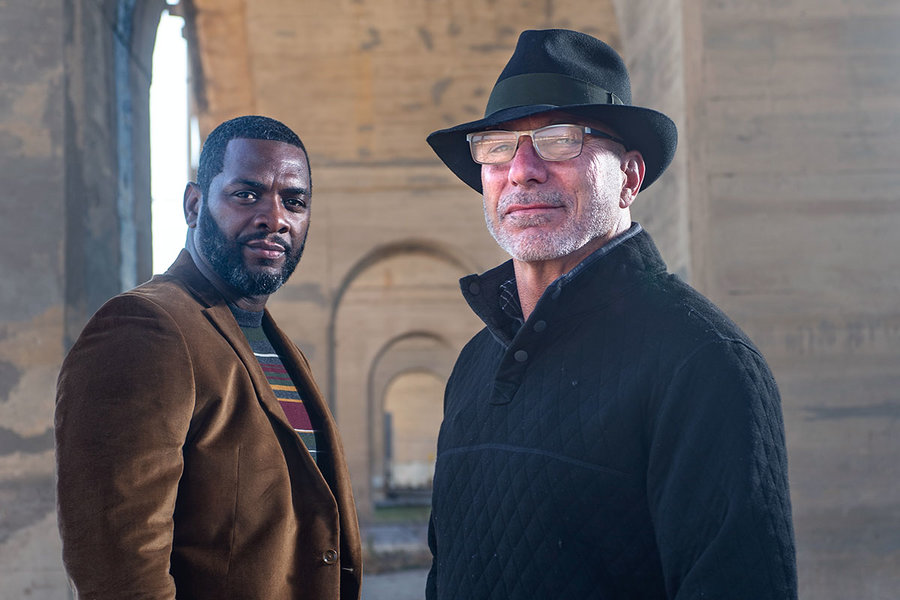
Photo: Ann Hermes/ Christian Science Monitor
Christopher Scott, left, and Steven Phillips, who spent a combined 37 years in prison for crimes they didn’t commit, were finally exonerated and are determined to pay it forward.

When I worked at the Fed magazine, I solicited a couple articles from the Innocence Project, which has a branch in New England. I continue to be impressed with the complicated, difficult work they do to exonerate men and women who’ve been wrongly convicted and sent to prison.

Today’s article is about two unjustly imprisoned men who got eventually got exonerated and decided to help others.

Henry Gass writes at the Christian Science Monitor, “The busiest P.O. box in North Texas may be in a drab, beige hallway in the post office of this Dallas suburb. [It’s] full of letters, mostly handwritten and postmarked from prisons across the country, addressed to what may be the most unusual detective agency in America. …

“The man who empties the box is Christopher Scott. Broad-shouldered and barrel-chested, he dresses sharp, talks in the gritty patois of the South Dallas neighborhood he grew up in, and uses his bright smile sparingly.

“Under normal circumstances, he probably wouldn’t know Steven Phillips, and they most likely wouldn’t be best friends or partners in a detective agency. They’re from different backgrounds and different generations. While Mr. Scott navigated urban streets as a youth, Mr. Phillips grew up in the country, in the Ozarks. …

“Yet for all their differences, these two men – one white and one African American – have forged a common bond around a common purpose: trying to get people out of prison who should never have been there in the first place. Their Dallas-based nonprofit, House of Renewed Hope, also campaigns for criminal justice reforms and raises public awareness about how the system often fails.

“But it is the tantalizing prospect of uncovering new information that might, just might, free other innocent men that drives Mr. Scott and Mr. Phillips the most. They spend their days meeting clients in prison, tracking down and interviewing family members, friends, and potential eyewitnesses. They meet with prosecutors and activists, lawyers and experts. …

“The two men spent a combined 37 years in prison for crimes they didn’t commit, crimes for which they were eventually exonerated. That’s why they read every letter they receive. They know there are others like them behind bars. …

“ ‘We was wronged,’ [Scott] says. ‘If you don’t want to see this happen to a lot of other people, there’s things that we can do, because we’ve been a part of that system before.’ …

“One April night in 1997 he was riding around his neighborhood with a friend, Claude Simmons. On their way home, he noticed a heavy police presence in the area and a helicopter flying overhead. A familiar nervousness crept in. …

‘So I’m scared, but I’m not too scared,’ he recalls. ‘In my head I’m thinking the law, the justice system, is going to get it together and figure it out.’

“Instead, he was identified by the wife of the slain man as one of the attackers. She had been sexually assaulted and her husband shot dead during a home invasion. No physical evidence linked him to the crime, and her testimony was crucial in convicting Mr. Scott in a trial that lasted only four hours. An all-white jury sentenced him to life.

“In prison. … he read three books a week, including law tomes, looking for ways to prove his innocence. He compared notes and exchanged tips with other guys in Coffield filing innocence claims in courts.

“His break came when a group of law students at the University of Texas at Arlington discovered that two other men, one of whom was in prison for aggravated robbery, had committed the murder for which Mr. Scott had been convicted. The prisoner confessed, and in 2009 his accomplice was arrested in Houston.

“After Mr. Scott passed a six-hour polygraph test, he was exonerated; Mr. Simmons was also exonerated. The two men were brought before a judge in Dallas and declared innocent. …

“ ‘I was like, “Dude, I asked for this 13 years ago, and they didn’t give it to me.” But I was happy. I knew I was going free. It was over.’

“When Mr. Scott got out, Mr. Phillips was waiting for him. He was in the courtroom for the exoneration hearing. Afterward he introduced himself and told him to call if he ever needed anything. Mr. Scott was wary at first – with everything he’d been through, he says, he didn’t trust white people – but after a few days living with his mother he did call.

“Mr. Phillips let him stay at an apartment he owned, lent him some money, and even bought him a cheap car.

“A year later, after going to regular meetings with other exonerees, Mr. Scott set up the House of Renewed Hope using some of his compensation money from the state. … He asked Mr. Phillips and Johnnie Lindsey, another exoneree, to be co-founders. …

“He’s getting close with one case. House of Renewed Hope has teamed up with the Innocence Project of Texas to try to exonerate Leslie Davis, a man who served 28 years in prison for aggravated robbery. His conviction was based largely off testimony from a Dallas police officer who claimed he’d eavesdropped on Mr. Davis confessing to the crime while hiding in some bushes.

“Some other Dallas officers gave similar testimony around that time in the early- and mid-90s, earning the nickname the ‘Bushmen’ with some county prosecutors, and it later came to light that several of them had been disciplined internally for dishonesty.

“ ‘That’s something that should have been disclosed to the defense and was not,’ says Mr. Ware of the Innocence Project of Texas.

“Mr. Davis was released on parole several months ago, but he is still trying to clear his name. ‘It’s close,’ says Mr. Scott. ‘We just need a little more information.’ ” More here.


Read Full Post »

Photo: Ann Hermes/ Christian Science Monitor
Judge Abby Abinanti presides over the Yurok Tribal Court in Klamath, California.

There has been a movement lately to restore to tribal courts the adjudication of certain types of crimes committed by Native Americans. The idea is that the traditional ways of handling problems often work better than those imposed by an outside system.

Henry Gass writes about one such court at the Christian Science Monitor.

“The mouth of the Klamath River – the spiritual heart of Yurok country – can be hard to find.  … Ira Thompson is here for his court date anyway, having made the 30-minute drive south from Crescent City. He grew up here, and when he got in serious trouble for the first time – a third DUI and a possible four months in jail – he knew he needed to come home. …

“So he reached out to the Yurok Tribal Court. He reached out to Abby Abinanti. …

“As Mr. Thompson enters, the air tastes of musky angelica root (burned by a paralegal minutes earlier to cleanse the room of pain, anxiety, and other negative energy).

“Judge Abby, as everyone calls her, is not your average judge. She sits at a table across from Mr. Thompson wearing her typical court attire: gray jeans and a crimson turtleneck. …

“ ‘How are things going?’ she asks him.

“ ‘Staying home,’ he replies.

“Mr. Thompson is under house arrest and participating in the court’s wellness program, a treatment employing Yurok cultural immersion. That’s the deal the tribal court struck with the county instead of jail time. He’s been home carving earrings out of redwood, making elk horn purses, and selling them. ‘That sounds good,’ she says, bringing the hearing briskly to an end about five minutes after it started. …

“When Judge Abinanti joined the Yurok Tribal Court in 2007 it operated like a normal state court, albeit on a much smaller scale. When most Yuroks got into trouble with the law they went to local state courts, and they entered a system designed to be adversarial and punitive. Root causes often went ignored and unaddressed, and recidivism inevitably followed.

“Judge Abinanti has taken the court in a different direction: one more communal and rehabilitative. It’s a judicial path followed by other tribes around the country. Personal responsibility and renewal – two pillars of the once nearly extinct Yurok culture – now permeate the court’s functions.

“Incarceration has largely been replaced by supervised release combined with Yurok traditions such as dancing and wood carving. Lawyering up for family disputes and child custody battles has been replaced by mediation. Almost every case is resolved through mediation – victims and perpetrators talking with each other – even if it takes years. Tribal courts resemble the growing U.S. restorative justice movement, which emphasizes repairing the harm caused by criminal behavior and getting all stakeholders involved. Judge Abinanti says it just resembles the old Yurok values system.

“The Yurok were village people, she likes to say. Living in clusters of redwood cabins along the Klamath River, people in the communities were so interdependent that when villagers did something wrong, they couldn’t just be locked away. They had to face consequences, but also become responsible, productive community members again. That’s tribal justice.

“After what she calls ‘the invasion’ by European settlers, the Yurok way of life was lost. By helping revive those values and applying them to modern-day problems – addiction, domestic violence, foster care – the Yurok say she’s not only meting out justice, she’s helping revive the tribe itself. And some U.S. criminal justice reformers are now beginning to explore what lessons can be learned from tribal courts. …

“Any Yurok tribe member is eligible to have their case heard in the tribal court (except for felony cases, which go to state or federal court). Judge Abinanti has expanded the kinds of cases the tribal court hears. … She also negotiates with other judges for alternative sentences for Yuroks convicted in other jurisdictions. …

“To fully understand Judge Abinanti’s approach to justice requires going back to the mid-19th century. … Massacres, slavery, and disease reduced California’s native population to about 30,000 within 23 years of statehood. Some tribes lost 95 percent of their population. The Yurok Tribe says three-quarters of its population died in this period, and the tribe faded into obscurity. …

“Judge Abinanti says that the Yurok history of decimation creates a generational trauma, a mental framework that shapes a cycle of behavior among some tribal members. ‘Until they get that, they feel sort of caught up in something that they can’t control or stop because they don’t know what it is or where it came from,’ she says. ‘We have to take responsibility for acquiring those habits and we have to deal with it….

“ ‘It’s one thing to just stop behavior, but I think it helps to stop the behavior if you know why,’ she says. …

“Understanding the ‘why’ helped change the ballgame for Jon Riggs, who has Yurok, Chetco and Cherokee ancestry. Raised off the reservation in a drug-addicted family, he started drinking and doing drugs at a very young age. He was 18 when he was arrested for the first time. …

“When last year he came back to the Klamath for the Jump Dance – a dance that’s meant to renew the world – he ‘was able to connect with something that was much deeper than I had ever done before.’ In January, he became a wellness case manager for the tribal court.”

More here.

Read Full Post »


Art: Roy Lichtenstein
Masterpiece, 1962, was sold by philanthropist Agnes Gund to launch the Art for Justice Fund. 

There’s a movement in the world of philanthropy to combine the arts with social justice. In some cases, donations to arts organizations specify reaching out to poor communities and new audiences. This particular article focuses on collectors who sell art to fund causes they believe in.

Mike Scutari writes at Inside Philanthropy, “After Agnes Gund launched the $100 million Art for Justice Fund with the proceeds from the sale of Roy Lichtenstein’s ‘Masterpiece,’ I wondered if collectors represented the sleeping giants of arts philanthropy. The prognosis thus far seems promising.

“A number of founding donors to Art for Justice have committed gifts of artwork or contributions, and late last year, the fund allocated $22 million to 30 criminal justice reform groups and education and arts initiatives. Around the same time, the anonymous consignor of Jean-Michel Basquiat’s ‘Red Skull’ announced they would donate the proceeds to a nonprofit that opens new public charter schools. …

“Glenn Fuhrman and his wife Amanda partnered with Suzanne Deal Booth and The Contemporary Austin to transform the existing $100,000 Suzanne Deal Booth Art Prize, which is currently celebrating its inaugural exhibition, into one of the nation’s largest awards presented to an artist.”

Scutari notes that although the prize doesn’t require attention to social causes, sometimes a winner’s work turns out to have been strongly influenced by the issues of the day.

“Collectors have historically deferred to institutional givers to do the heavy lifting when it comes to traditional grantmaking and the red-hot area of activist art in particular. This is why Gund’s Art for Justice Fund is so important. It’s predicated on the idea that by selling their work, collectors can advance social justice. As Ford [Foundation] President Darren Walker noted, ‘art has meaning on a wall, but it also has meaning when it is monetized.’ …

“An open question is the extent to which the Suzanne Deal Booth / FLAG Art Foundation Prize will align with the surging fields of boosting access to the arts and promoting socially focused work. Corroborating evidence suggests it will.

“Regarding access, the Fuhrmans’ FLAG Art Foundation exhibition space has been free and open to the public since its 2008 opening. The Fuhrman family has also underwritten free admission at the Institute of Contemporary Art [in Philadelphia] annually for nearly a decade. The couple is clearly committed to eliminating financial barriers to access.

“Exemplifying its social focus, in the charged aftermath of the 2016 election, the FLAG Art Foundation curated an exhibition that focused on artists who ‘negotiate politics, tragedies, social issues, and their own perspectives’ by using the New York Times as an inspiration for their work. …

“I recently spoke with VIA Art Fund President and collector Bridgitt Evans on the state of arts philanthropy and floated the theory that collectors are the sleeping giants of arts philanthropy. [VIA means Visionary initiatives in Art. It’s located in Boston.] She concurred with this assessment. Collectors, she said, are ‘exposed to a wider variety of artists, practices, ideas, and social commentary,’ and moving forward, they will ‘direct the same passion they have to collecting to philanthropy.’ ”

Read more at Inside Philanthropy, here.

Read Full Post »

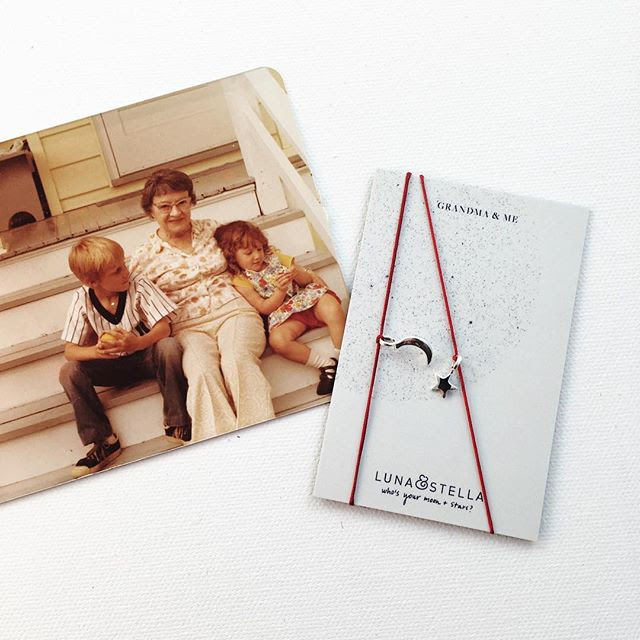
suzanne-john-and-mommom-and-jewelry

Suzanne (seen here with her paternal grandmother and John) sent this message to her customers today:

“At Luna & Stella, we make fine jewelry that celebrates our closest connections, the relationships between parents and grandparents, sons and daughters, aunts and uncles, sisters and brothers, partners and the friends that are our family.  I believe those relationships are the greatest treasures we have.

“But recently I have been thinking more about the extension of these relationships — community. Specifically, I have thinking about what the role of businesses in civil discourse is and should be, and what my role as a small business owner should be in being a part of the conversation.

“I am the first to admit I don’t have all the answers. But I think we owe it to our children and communities to start somewhere. The place we are starting is with Facing History and Ourselves.  For over 40 years, Facing History has been training educators to teach empathy, tolerance, and civic responsibility through the lens of history.

“On #givingtuesday, November 29, Luna & Stella will give 20% of all sales on our website to Facing History. 

“Thank you for your support of this important work.

“In gratitude,

“Suzanne

“P.S.  As a thank you, use code FACINGHISTORY for free shipping on your order.  If you are not able to shop on #givingtuesday, we will make a donation equal to 20% of your purchase all season long with this code.

“P.P.S. My friend and Facing History Los Angeles Director Liz Vogel interviewed me for Facing History’s website. Read the interview here.”

Read Full Post »