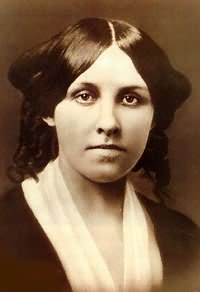
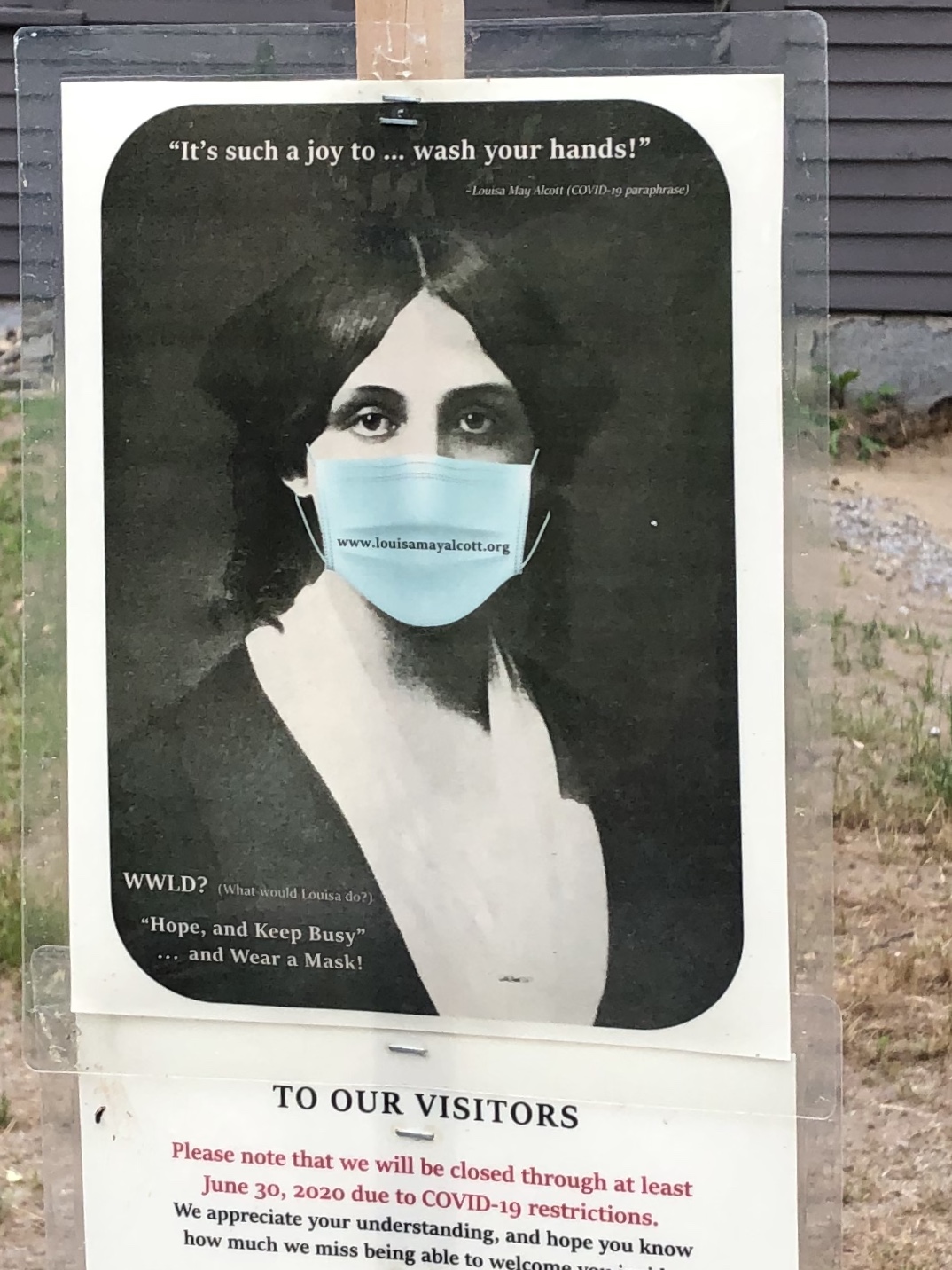
In my town, everyone knows who Louisa May is, but you may know her better as Louisa May Alcott, author of Little Women.
When Alcott was first starting out as a writer, she wrote dramatic potboilers under various pseudonyms. Researchers keep discovering more. Michael Casey at AP has the story.
“The author of Little Women may have been even more productive and sensational than previously thought,” he writes. “Max Chapnick, a postdoctoral teaching associate at Northeastern University, believes he found about 20 stories and poems written by Louisa May Alcott under her own name as well as pseudonyms for local newspapers in Massachusetts in the late 1850s and early 1860s.
‘One of the pseudonyms is believed to be E. H. Gould, including a story about her house in Concord, Massachusetts, and a ghost story along the lines of the Charles Dickens classic ‘A Christmas Carol.’ He also found four poems written by Flora Fairfield, a known pseudonym of Alcott’s. One of the stories written under her own name was about a young painter. …
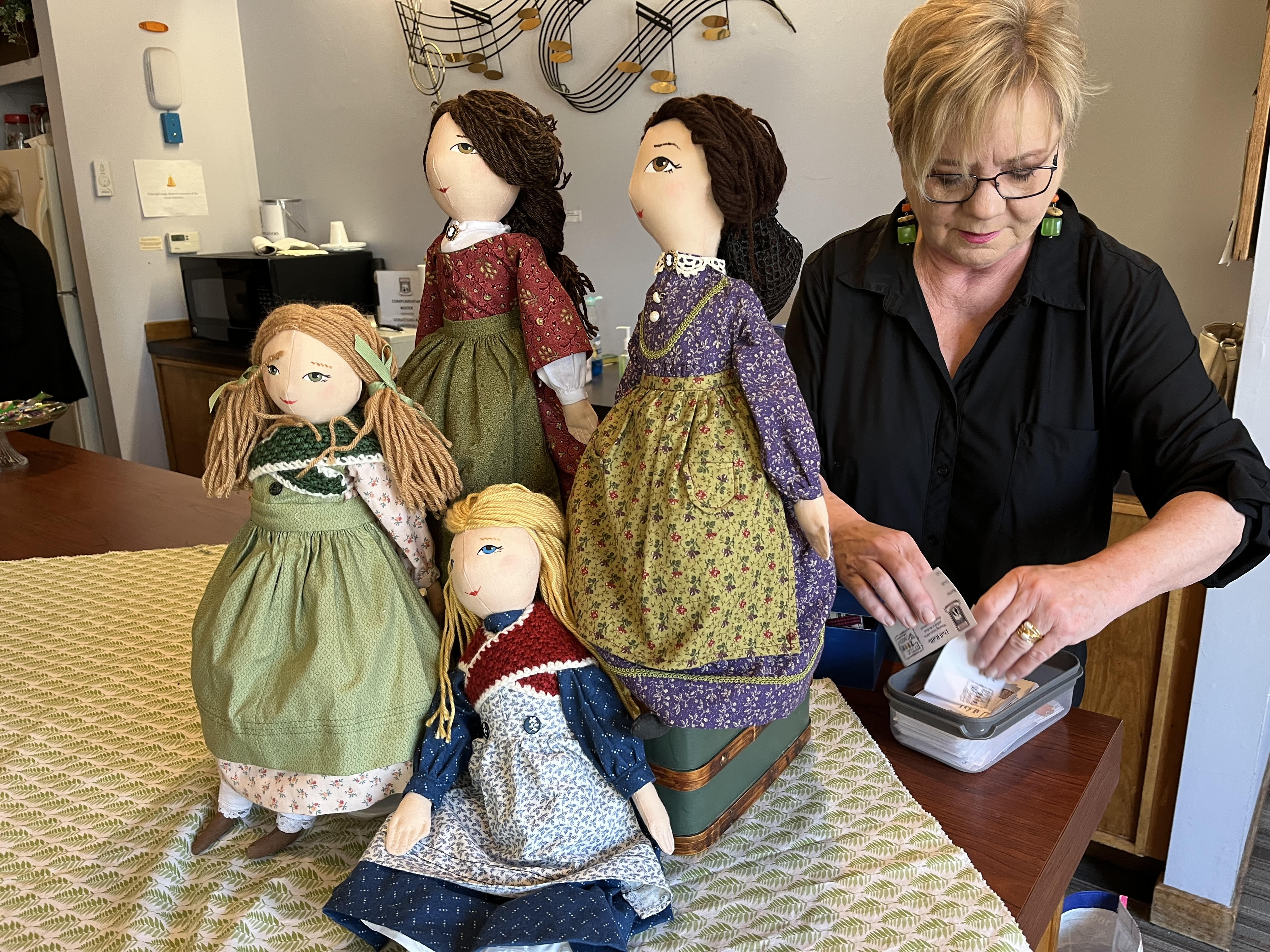
“Alcott remains best known for Little Women, published in two installments in 1868-69. Her classic coming-of-age novel about the four March sisters — Meg, Jo, Beth and Amy — has been adapted several times into feature films, most recently by Greta Gerwig in 2019.
“Chapnick discovered Alcott’s other stories as part of his research into spiritualism and mesmerism. As he scrolled through digitized newspapers from the American Antiquarian Society, he found a story titled ‘The Phantom.’ After seeing the name Gould at the end of the story, he initially dismissed it. … But then he read the story again.
“Chapnick found the name Alcott in the story — a possible clue — and saw that it was written about the time she would have been publishing similar stories. The story was also in the Olive Branch, a newspaper that had previously published her work.
“As Chapnick searched through newspapers at the society and the Boston Public Library, he found more written by Gould — though he admits definitive proof they were written by Alcott’s has proven elusive.
“ ‘There’s a lot of circumstantial evidence to indicate that this is probably her,’ said Chapnick, who last year published a paper on his discoveries in J19, the Journal of Nineteenth-Century Americanists. …
“When first contacted by Chapnick about the writings, Gregory Eiselein, president of the Louisa May Alcott Society, said he was curious but skeptical. … But he has come to believe that Chapnick has found new stories, many of which shed light on Alcott’s early career.
“ ‘What stands out to me is the impressive range and variety of styles in Alcott’s early published works,’ he said. ‘She writes sentimental poetry, thrilling supernatural stories, reform-minded non-fiction, work for children, work for adults, and more. It’s also fascinating to see how Alcott uses, experiments with, and transforms the literary formulas popular in the 1850s.’
“Another Alcott scholar at Kansas State, Anne Phillips, said … his paper makes a ‘compelling case’ that these were her writings.
“ ‘Alcott scholars have had decades to compare her work in different genres, and that background is going to help us evaluate these new findings,’ she said in an email interview. ‘She reworked and reused names and situations and details and expressions, and we have a good, broad base from which to begin considering these new discoveries,’ she said. ‘There’s also something distinctive about her writing voice, across genres.’ …
“In the 1940s, Leona Rostenberg and Madeleine Stern found thrillers written under the name A. M. Barnard, an Alcott pseudonym. She also wrote nonfiction stories, including about the Civil War where she served as a nurse, under the pseudonym Tribulation Periwinkle.
“It wasn’t unusual for female writers, especially during this period, to use a pseudonym. …
“ ‘She might not have wanted [her family] to know she was writing trashy stories about sex and ghosts and whatever,’ Chapnick said. …
“ ‘The detective work is fun. The not knowing is kind of fun. I both wish and don’t wish that there would be a smoking gun, if that makes sense,’ he said.”
More at AP, here.


 Suzanne's Mom's Blog