Feeds:
Posts
Comments

Posts Tagged ‘met’

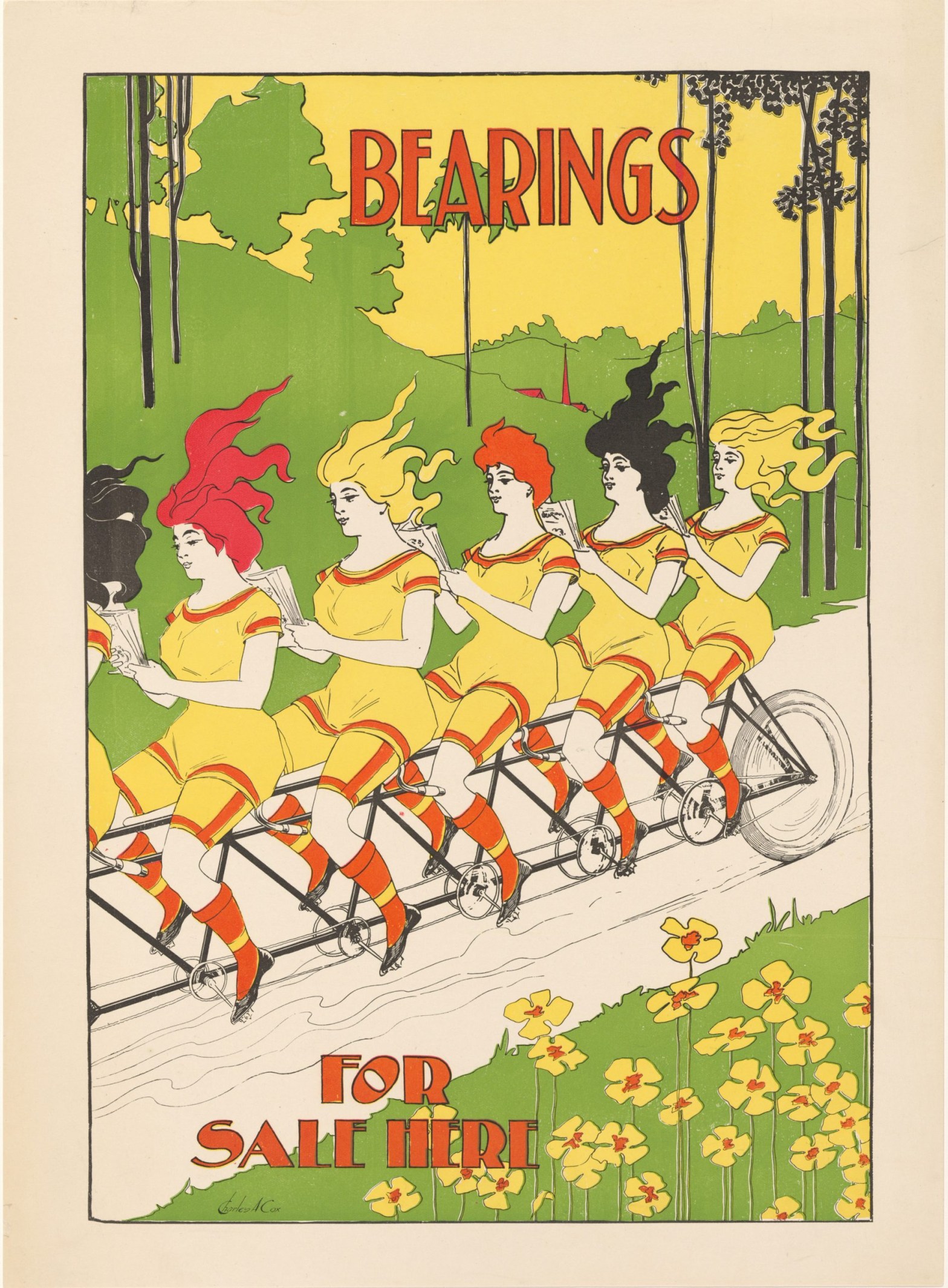
Art: Charles Arthur Cox, “Bearings” (1896), via Hyperallergic.
Art Nouveau posters often reflect both a love of books and young women enjoying more freedom.

Do you like the Art Nouveau, a style identified as roughly 1890 to 1910 in Europe? After reading about the literary posters of that time, my already considerable appreciation for it is has only increased.

Sarah Rose Sharp writes at Hyperallergic about a recent exhibition at the Metropolitan Museum of Art in New York.

“The literary poster occupies a special place at the intersection of American art history and literature. Advances in color printing technology at the end of the 19th century made way for a flood of colorful and intricately detailed materials, often in the form of handbills and posters, which were suddenly more affordable as a vehicle to advertise the latest books, magazines, periodicals, and other forms of literature.

“Accompanying an eponymous exhibition at the Metropolitan Museum of Art, The Art of the Literary Poster: The Leonard A. Lauder Collection illuminates the expansive genre through several examples culled from the titular collection, accompanied by essays on the form by exhibition curator Allison Rudnick, scholar Jennifer A. Greenhill, paper conservator Rachel Mustalish, historian Shannon Vittoria, and Lauder himself. …

“Both historically astute and visually delightful, the book captures the influence of the Art Nouveau movement on printed materials at the turn of the century, as well as showcases the evolution of graphic design as innovations in multi-color plate printing that allowed text and imagery to come together in increasingly complex ways. Vittoria’s essay highlights the particular power of literary posters as a genre ‘by women, for women,’ noting that American illustration was one of the few professions young women were encouraged to pursue at the time.

” ‘As male artists and critics worked to defeminize illustration by minimizing women’s contributions to the field, female artists and advocates saw the potential of the visual arts, particularly printed media, to advance the campaign for women’s suffrage,’ Vittoria writes. ‘The art poster became a potent tool in this struggle.’

“Turn-of-the-century literary journals like Lippincott’s Monthly Magazine and Harper’s were some of the first publications to avail themselves of this new technology, with cover art featuring thoroughly modern Gibsonesque girls riding bikes, snuggling cats, and of course, reading. Though the magazine and visual digest Bradley, His Book was only published between 1896 and ’97, the cover works by Art Nouveau illustrator and film director William H. Bradley, its publisher, are dazzling examples of the intricacies made newly possible in literary art posters. …

“In her catalog essay, Rudnick examines a cover of the July 1896 issue of Lippincott’s as the essence of the burgeoning form. Created by Joseph J. Gould Jr., the image features a woman in a day suit equipped with the exaggerated sleeve caps and narrow skirt of the era, perched calmly on a bike with a straw hat on her head, which partially obscures the masthead’s bold red letters. She is biking out of a richly blue background, presumably off to enjoy the copy of Lippincott’s held against the handlebars in her right hand.  ‘The poster itself represented something new: an advertisement that looks and functions like a work of art,’ Rudnick writes, ‘an image made for public consumption in which commercialism and culture coalesce.’

“The distinctive print also captures the spirit of new possibilities for women, as a cavalcade of unbothered women on bikes became the visual heralds of the era’s first-wave feminism that paved the way for women’s movements of the following century. A 1911 ‘Votes for Women‘ poster by artist and educator Bertha Margaret Boyé, chosen as the winner of a poster competition held by the San Francisco College Equal Suffrage League, embodies this renewed sense of possibility as a woman in flowing yellow robes stands before a landscape displaying the titular banner. Behind her, the rising orange sun halos her head, giving the effect of saintliness while hinting at the dawning of new opportunities.

“Full of aplomb women on bikes with literary and political ambitions (and, of course, cats), The Art of the Literary Poster gathers inarguably beautiful printed materials that — even beyond their political and promotional implications — demonstrate the elegance, interests, and aesthetics of a pivotal moment in art history.”

Check out the gorgeous collection of posters at Hyperallergic, here. No firewall. Subscriptions encouraged. And for those interested in learning more about Art Nouveau in general, see at Wikipedia, here.
Read Full Post »

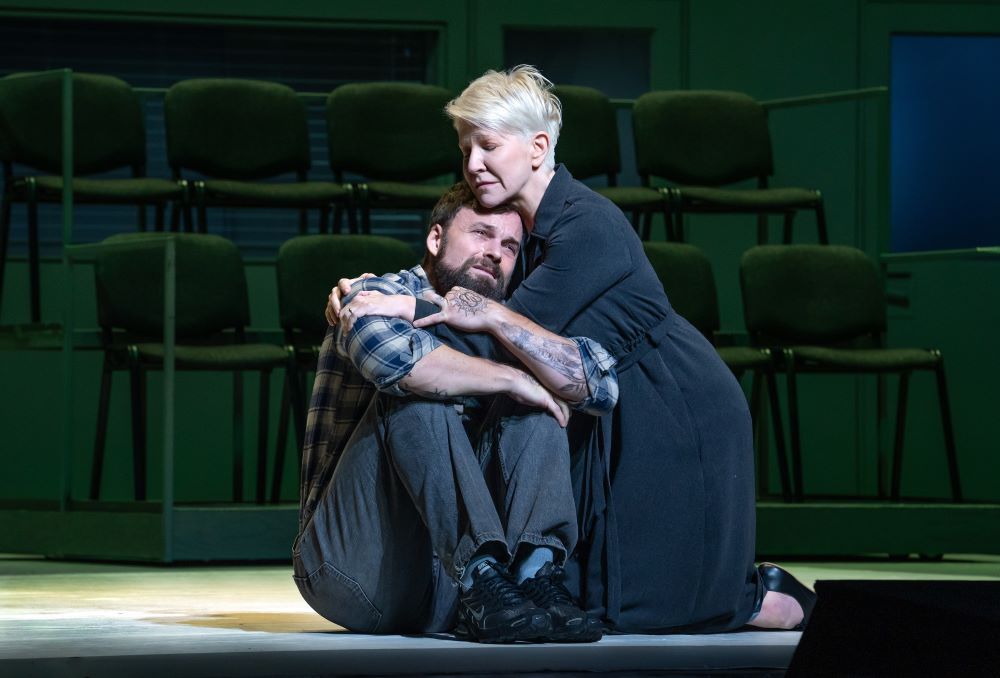
Photo: Met Opera/Karen Almond via National Catholic Register.
Ryan McKinny portrays inmate Joseph De Rocher and Joyce DiDonato portrays Sr. Helen Prejean in Jake Heggie’s opera Dead Man Walking.

My new friend Lynn S. is an opera lover. I met her when I was asked to interview someone for the newsletter at our current residence. She told me about attending a breathtaking Met opera broadcast in a local movie theater, Dead Man Walking. You may know the true story of the nun and the death row inmate.

As Javier C. Hernández reports for the New York Times, the opera generated an extra level of intensity when the Met took it to Sing Sing prison for a special performance.

“One by one, the inmates filed into a chapel at Sing Sing Correctional Facility in Ossining, N.Y. — past a line of security officers, past a sign reading, ‘Open wide the door to Christ.’ Under stained-glass windows, they formed a circle, introducing themselves to a crowd of visitors as composers, rappers, painters and poets. Then they began to sing.

“The inmates had gathered one recent afternoon for a rehearsal of Dead Man Walking, the death-row tale that opened the Metropolitan Opera season [in September]. Together, they formed a 14-member chorus that would accompany a group of Met singers for a one-night-only performance of the work before an audience of about 150 of their fellow inmates.

Michael Shane Hale, 51, a chorus member serving a sentence of 50 years to life for murder, said that he often thought of himself as a monster. 

“ ‘I feel like I’m at home,’ said a chorus member, Joseph Striplin, 47, who is serving a life sentence for murder, as the men warmed up with scales and stretches. ‘I feel I’m alive.’

Dead Man Walking, based on Sister Helen Prejean’s 1993 memoir about her experience trying to save the soul of a convicted murderer at the Louisiana State Penitentiary in Angola, has been staged more than 75 times around the world since its premiere in 2000.

“But the opera, with music by Jake Heggie and a libretto by Terrence McNally, had never been performed in a prison until last week at Sing Sing, which is home to more than 1,400 inmates.

“There were no costumes or props. Chorus members, who were dressed in prison-issued green pants, had to be counted and screened before entering the auditorium, lining up by cell block and building number. …

“Yet the opera, with its themes of sin and redemption — and of the pain endured by victims’ families — resonated with inmates.

“Michael Shane Hale, 51, a chorus member serving a sentence of 50 years to life for murder, said that he often thought of himself as a monster. In the 1990s, prosecutors sought the death penalty in his case. (New York suspended the practice in 2004.) Hale said the opera, which portrays the friendship between Sister Helen and Joseph De Rocher, a death-row prisoner, had taught him to see his own humanity. …

“Not everyone at Sing Sing, a maximum-security prison about 30 miles north of New York City, was enamored. Some prisoners declined to take part in the opera because of concerns about its dark themes, including the portrayal of a prisoner’s death by lethal injection. …

“The idea for bringing Dead Man Walking to Sing Sing emerged several years ago when an inmate promised the renowned singer Joyce DiDonato, who plays Sister Helen in the Met’s production, that the men could sing the chorus parts. …

“Paul Cortez, 43, who is serving a sentence of 25 years to life for murder, worked with [Bryan Wagorn, a Met pianist] to learn the score and held Saturday night rehearsals with small groups of prisoners at Sing Sing. Some were initially hesitant, unsure if the opera advanced prisoners’ rights and fearing they ‘might be exploited,’ he said, but eventually more people started showing up.

“ ‘It was daunting at first,’ said Cortez, who majored in theater in college. ‘I did not know how I was going to get the guys in shape. But they were so diligent. They took it seriously.’

“[In September] DiDonato, joined by Sister Helen, 84, visited the prison to work through the music and to get to know the participants. They discussed life in prison, morality, shame and stigma, as well as Sister Helen’s efforts to abolish the death penalty. Some inmates, saying they were still consumed by guilt about their crimes, asked about seeking forgiveness.

“DiDonato and Sister Helen returned [two days] after opening night at the Met, joined by singers and staff from the Met and Carnegie Hall. … The Met singers introduced themselves, taking pains to remind the inmates that they were only pretending to be prison guards and police officers. (‘Clemency!’ a prisoner shouted, after the bass Raymond Aceto announced he was playing the role of a warden.)

“Sister Helen, standing among the inmates, said that there was love and trust in the room. ‘This is a sacred gathering,’ she added. ‘There is no place on earth at this time that I’d rather be. We’re going to create beauty today, and you’re going to feel it.’

“For more than five hours, the men worked with the Met artists, under the conductor Steven Osgood, practicing rhythm, diction and dynamics in three sections that feature the chorus.

“They stomped their feet and clapped their hands in ‘He Will Gather Us Around,’ a spiritual that opens the opera, which is typically performed by women and children. And they sang with fiery intensity as De Rocher confesses his murder, shortly before his execution. …

“Then, around 6:30 p.m., an audience of inmates and corrections officials took their seats in the auditorium, adjacent to the chapel.

“ ‘The most beautiful thing in the world is a human being that does something and is transformed,’ Sister Helen said in introducing the opera. ‘Everybody’s worth more than the worst thing they ever did.’ ”

More at the Times, here. And there is no paywall at the National Catholic Register, here, where there’s an interview with Sister Helen. Really interesting!

Read Full Post »

Studio 360 interviewed a blind photographer the other day. He had not always been blind, and blindness has not stopped him from creating high-quality photographs, strange as that may seem. He gets by with a little help from his friends.

But then, which among us doesn’t?

“In 1994, a stroke left the young photographer John Dugdale nearly blind, and over the years since, he has lost the remainder of his vision. But has never stopped taking photographs.

“ ‘I have a few wonderful people in my life that I trust to help me create the pictures that I see in my mind’ Dugdale tells guest host [Studio 360] Alan Cumming. He insists on releasing the shutter on every photo he takes. ‘It’s the most sacred time in my life whenever that shutter opens and closes — and it’s also the only time I’m quiet.’ …

“Dugdale contracted HIV in the mid-1980s. In the early 1990s he became ill with cytomegalovirus retinitis, an eye infection common in HIV patients, and it accelerated quickly. ‘I didn’t tell anyone, because I thought through magical thinking maybe it would go away,’ Dugdale explains. ‘In a matter of weeks I lost one eye.’ A stroke left him paralyzed for a year and left him with about 20% of his vision. … ‘I’m alive because my mother brought me elbow macaroni with Parmesan cheese and beans every single day for a year.’

“When Dugdale was released from the hospital, he almost immediately began working again. He tells Alan that the photographs ‘poured like a libation out of a vase. I barely even felt like I was making them. They just made themselves.’ …

“ ‘Being blind is not what you think,’ Dugdale tells Alan, ‘it’s not all darkness. My optic nerve still works and shoots a beautiful ball of brightly colored orange and purple and violet light and sparkling flashes all the time.” More at Studio 360, here. Check out some of Dugdale’s work, which continues to be in demand by prominent collections.

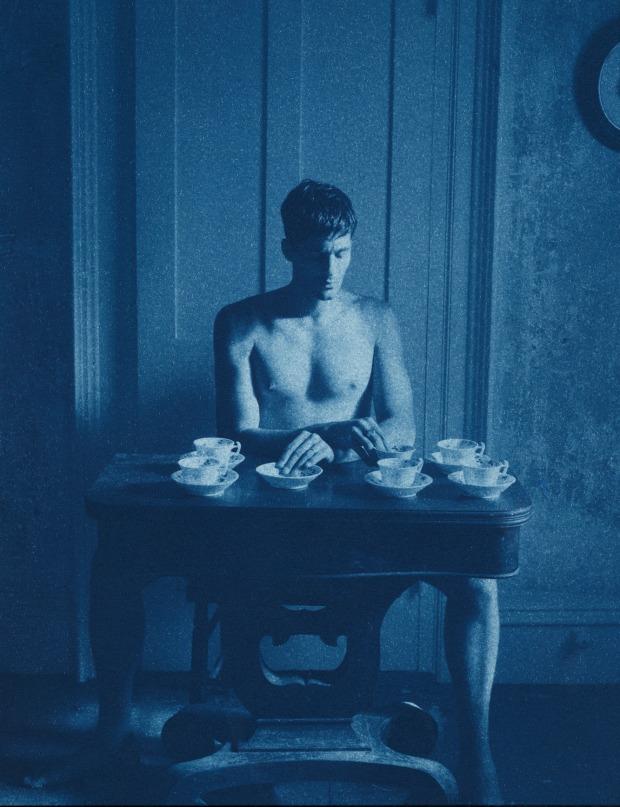
Photo: John Dugdale
“Untitled, Self-Portrait with Teacups” 1994

Read Full Post »

As I mentioned a few posts back, we went to the Metropolitan Museum when we were in New York. We saw a show from the dawn of photography, pictures of a lost Paris by Charles Marville. I greatly admired the angles, the light and shadow, the crispness of the images. Someday I want to try imitating his use of doorways and windows.

Karen Rosenberg writes about Marville in the NY Times, “In the massive construction site that was late-19th-century Paris, the photographer Charles Marville was just a few steps ahead of the wrecking ball. As an official city photographer working under Napoleon III and his controversial urban planner, Baron Haussmann, Marville recorded some 425 views of narrow, picturesque streets that were to be replaced by Haussmann’s grand boulevards.” More here.

The Met’s site adds, “By the end of the 1850s, Marville had established a reputation as an accomplished and versatile photographer. … Marville photographed the city’s oldest quarters, and especially the narrow, winding streets slated for demolition. Even as he recorded the disappearance of Old Paris, Marville turned his camera on the new city that had begun to emerge.

“Many of his photographs celebrate its glamour and comforts, while other views of the city’s desolate outskirts attest to the unsettling social and physical changes wrought by rapid modernization.” More at the website, here.

Catch the show by May 4.

Photo: Charles Marville
Rue de Constantine in 1866, one of a hundred photos of a lost Paris are now on display at the Metropolitan Museum of Art in New York
.

Read Full Post »

Washington-Sq-is-where-I-came-inWashington Square, New York City

Random photos from my travels.

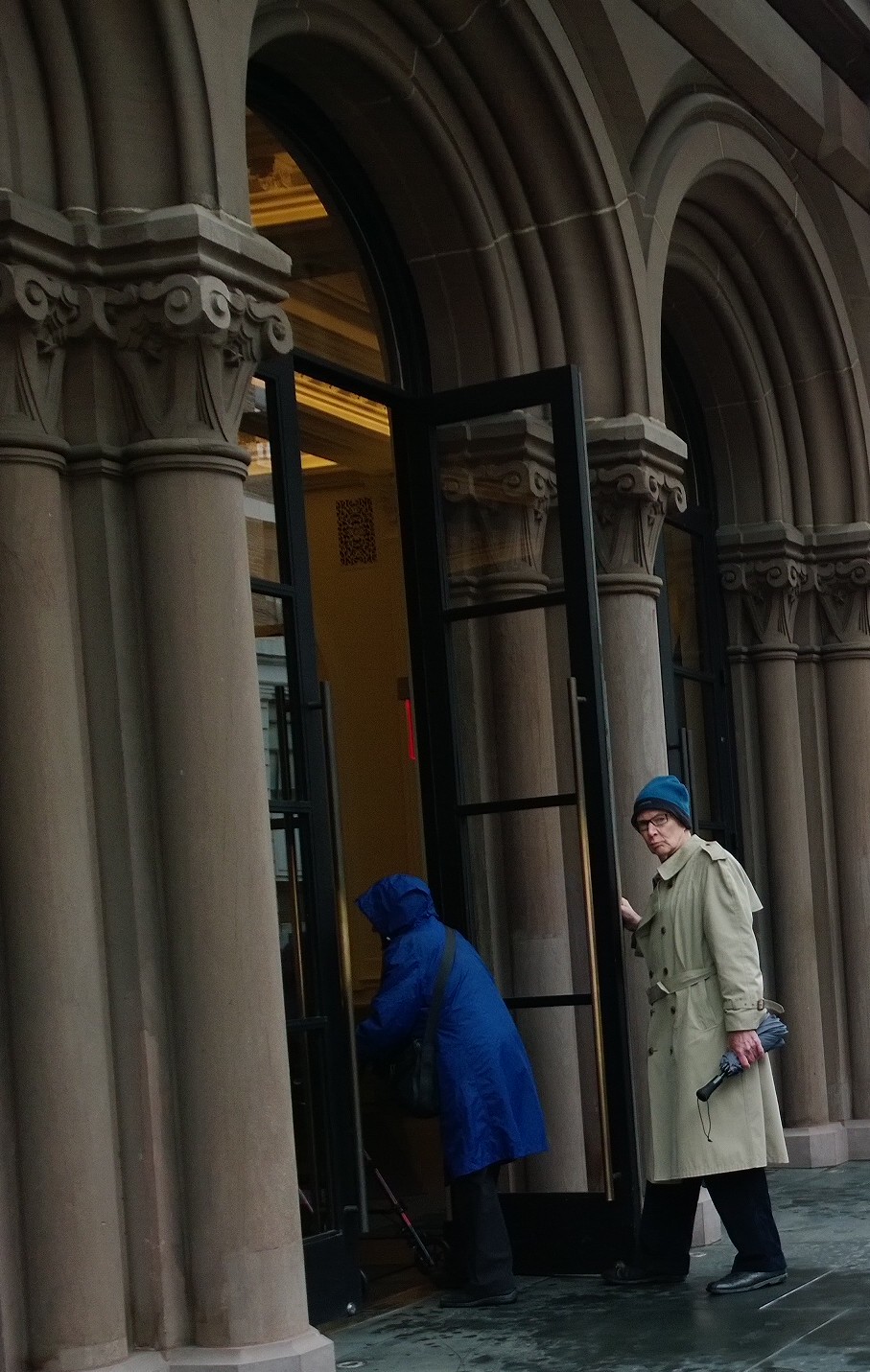
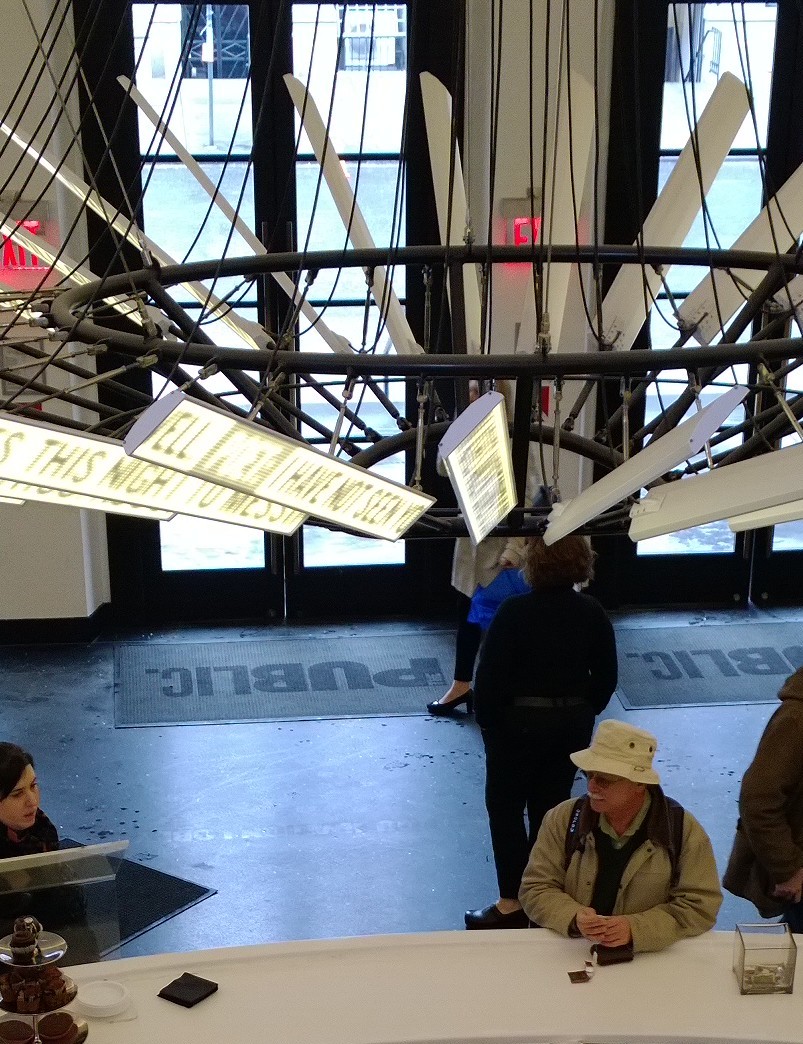
My husband going into the Public Theater to see classmate Ted Shen’s musical, A Second Chance. The Playbill for the show. A delightful chandelier at the Public, with paddles that illuminate changing phrases.

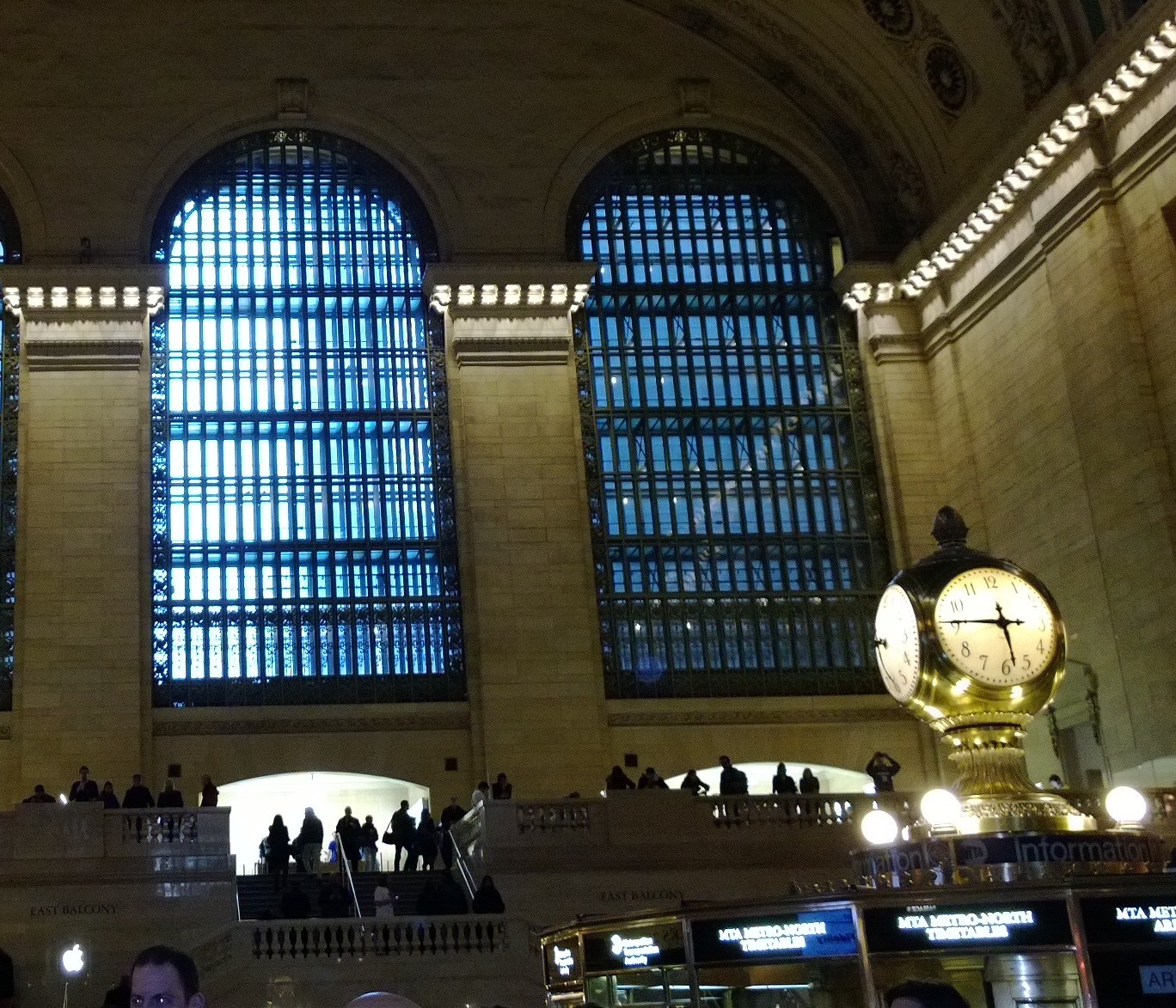
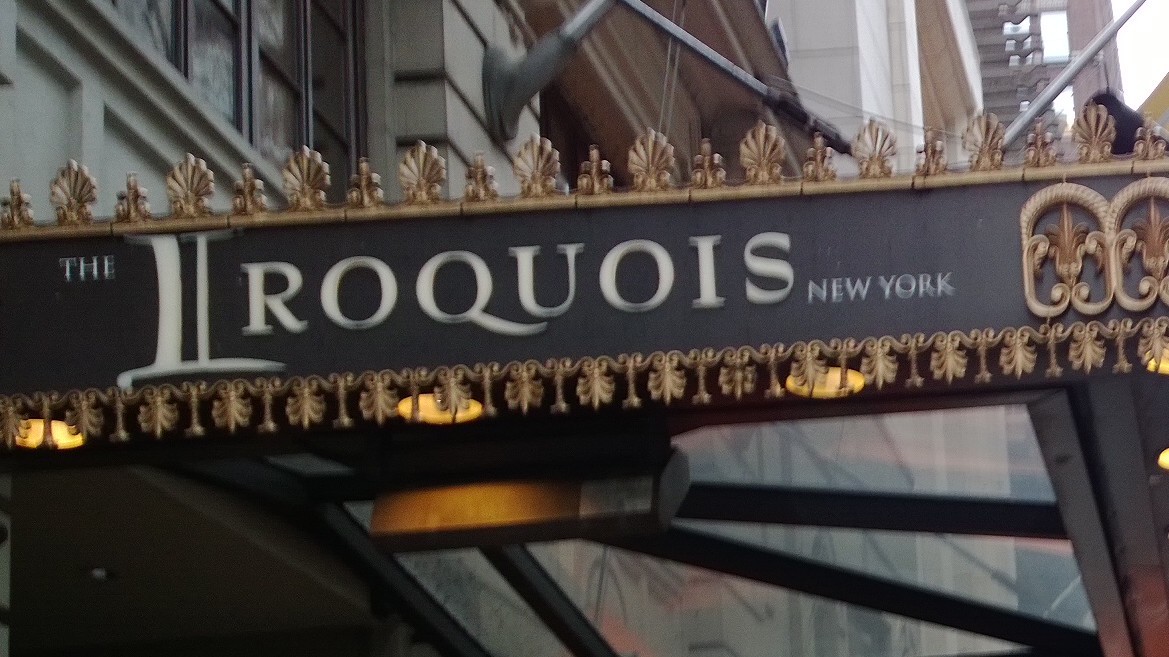
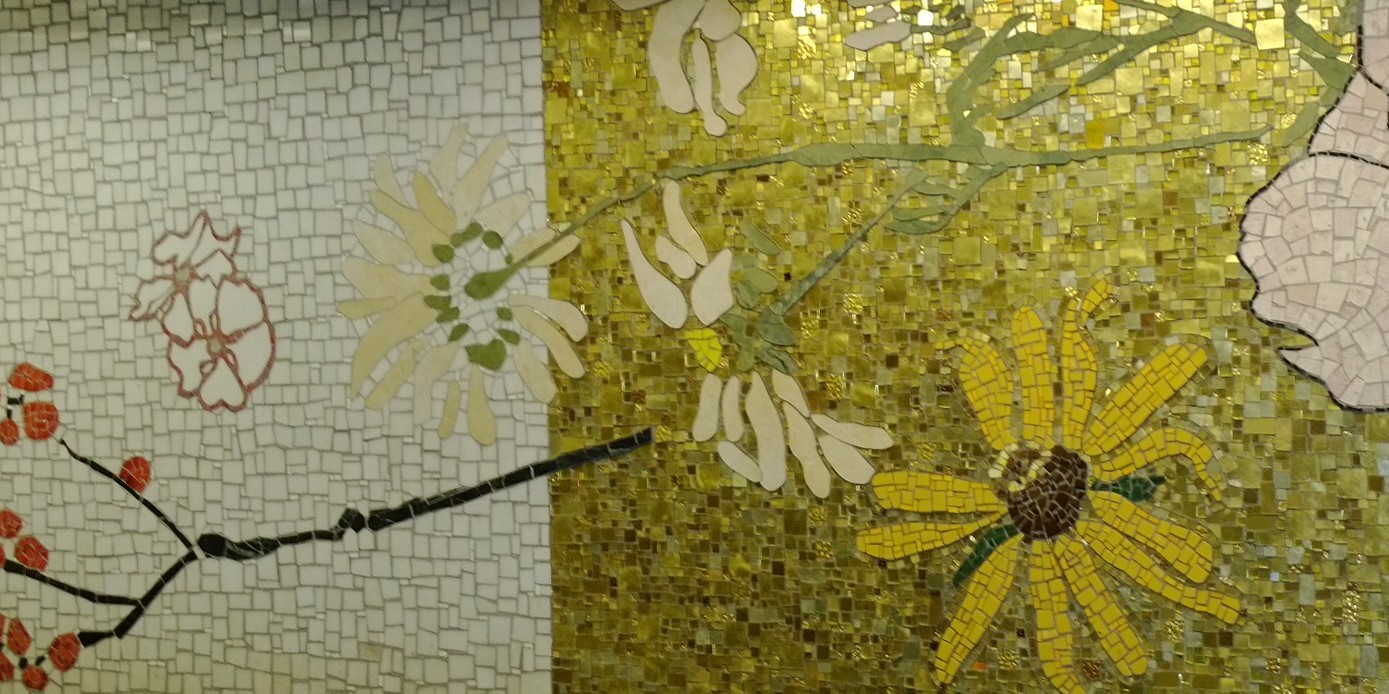
Subway buskers playing a grandson’s favorite song, “When the Saints Go Marchin’ In.” Grand Central Station. The charming Iroquois Hotel. A flower-themed mosaic in the Lexington Ave. subway.

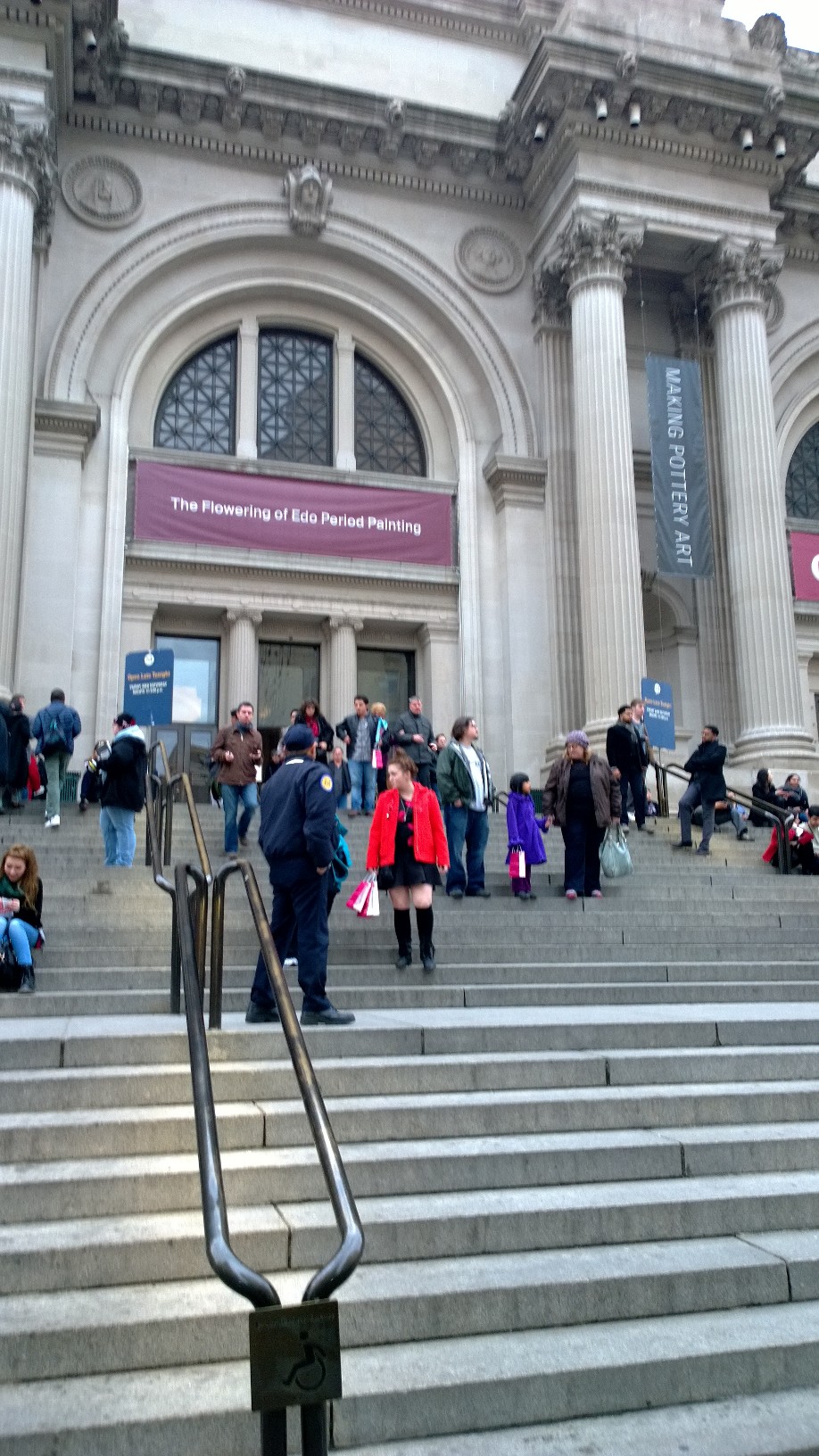
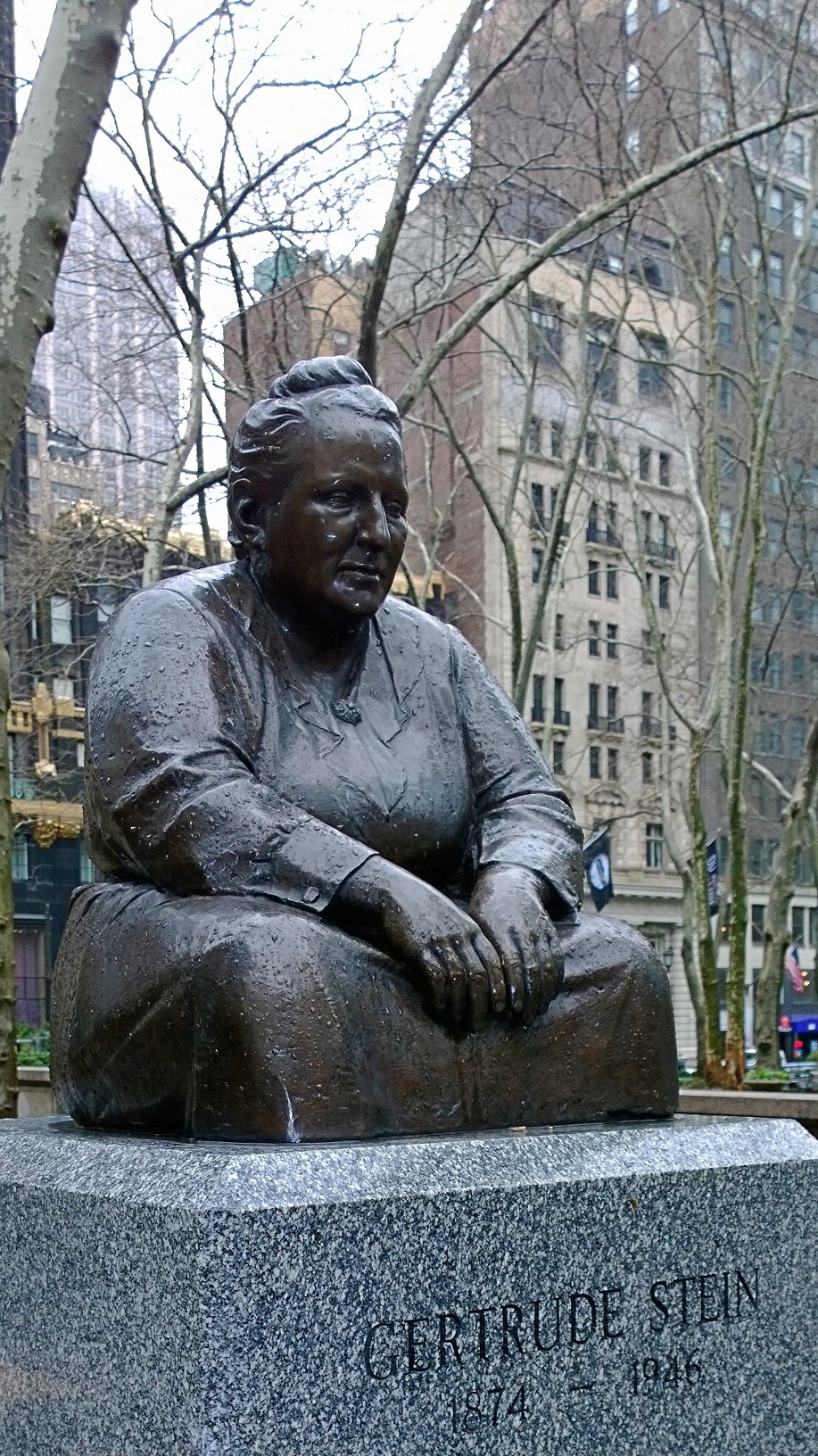
Gertrude Stein looking like herself in Bryant Park. And the Metropolitan Museum, where we saw a great photography show with my sister and brother-in-law. More on that later.

(Be watching for the relaunch of the Luna & Stella website, where one of the family pictures is of my sister at age 3, pictured with Suzanne’s maternal grandfather. … Did I mention this is a blog for Suzanne’s birthstone-jewelry company Luna & Stella?)

Public-Theater_NYC

Ted-Shen-Second-Chance-Playbill


The-Public_has-cool-chandelier

When-the-saints-go-marching-in


Grand-Central-NYC

Iroquois-hotel-treats-guests-right


Lex-Av-Subway-NYC

Met-Museum-NYC


Gertrude-Stein-Bryant-Park


Read Full Post »