Feeds:
Posts
Comments

Posts Tagged ‘minnesota’

The radio show Living on Earth is a font of useful and interesting environmental knowledge.

In a recent show, host Steve Curwood spoke with “agronomist Frank Forcella about how he modified the common sand blaster to simultaneously fertilize and weed food crops.”

Curwood introduces the topic thus, “If you’ve ever weeded a garden, you know it’s a backbreaking job, and if you have row upon row of crops, it’s, well, it’s easier to use herbicides. But then the crop is not organic. Enter a team of soil scientists for the U.S. Department of Agriculture who harnessed a common tool of the building trades to blast away those unwanted weeds without chemicals. Joining me to explain this breakthrough is Frank Forcella. He’s an agronomist with the USDA’s North Central Soil Conservation Research Laboratory.”

Forcella then tells Curwood how he got the idea. “One of my hobbies here in Minnesota is growing apricots, and 2007 happened to be a wonderful year for apricot production in Minnesota.

“We ended up with about a five gallon bucket worth of apricot pits, and I was wondering what can we do with apricot pits. One of the things you can do with them is to grind them up and use then as a grit in sandblasters, and I was talking about that with one of the fellows who works with me, Dean Peterson, on our way out to our field plots. Both of us work on weeds, and we had more or less simultaneously had the idea, ‘I wonder if you could use sandblasters to kill weeds.’ Initially we thought that had to be the dumbest idea in the world, but it was one of those ideas we just couldn’t get out of our heads.”

Read how a dumb idea led to a great invention here.

Photo: Frank Forcella
The four-row grit applicator in action, driven by Charles Hennen.

Read Full Post »

Around the country, art is playing a role in improving the livability of cities and towns.

Peter Brewitt writes at Orion magazine, “Over the past decade, communities across the nation have taken to beautifying their roads and intersections with hand-painted murals, slowing drivers as they go. Murals like these come at minimal cost — just buy some street-grade paint, get whatever permits your city requires, and figure out how to reroute traffic for a few hours. As people motor through the neighborhood, murals catch the eye, situate the mind, and lighten the right foot.

“Many of these creations did not begin as traffic-control devices — the goal was often to engage the neighborhood with itself, to display its spirits and hopes for the future, and to embrace the spaces that bind people together. But art touches drivers as well as neighbors …

Paint the Pavement [PtP], a street-art program in Saint Paul, Minnesota … offers support and advice, but the groups of friends and neighbors creating the art are self-organized and volunteer-run.”

Learn more about enlivening your neighborhood with pavement painting, here. Hat tip to Mary Ann on Facebook.

It’s an interesting art form. More lasting than children’s sidewalk chalks — which doesn’t mean that chalk is passé. In my work neighborhood, grownups have been taking up sidewalk chalk art, and I can attest that people smile when they see it.

Video: Vimeo and Orion magazine

Read Full Post »

The FortPointer passed along another great lead by way of twitter. He recommends a blog called We Love Beantown. (Beantown is a Boston moniker that comes from Boston Baked Beans.)

I really liked the post about people racing their couches in the middle of the city. Blog cofounder Jarret Izzo writes, “I laughed out loud when I first received word of the Great Boston Couch Race, an outdoor obstacle course completed via pedicabs/couches/rickshaws, for the awareness and benefit of House of Tsang sauces. …

“It turns out Tsang puts on quite a show and they deserve a thumbs up for a legitimately fun event. The race’s obstacles were so ridiculous that they circled back on the cool-o-meter, from a DVD hunt reminiscent of Supermarket Sweep to tossing vegetables at a teammate with the help of a wok.

“I felt like I was a contestant on Family Double Dare, if it were filmed on a frozen tundra. Multiple flatscreens displayed twitter feeds and a nearby tent cooked up stir-fry on demand. This is apart from the sauce itself, which I know as a staple for confused guys who want add flavor to meat, but for whom the advanced ways of five spice marinade remain a mystery. …

“The crowd was dominated by high schoolers in formal wear: there was a jazz band competition in the Hynes. … But I can only wonder, who chose to come to Boston in February and spend more time inside at a mall? How bad does it have to be where you came from?

“In the Couch Race, those high schoolers would be my downfall. I raced against two girls in town from Cape Cod — a pianist and a singer. We had a huge lead, entering the final stretch under 100 seconds. But  pedal mishaps necessitated pushing the bike-couch-rickshaw with our feet, a la Fred Flintstone, costing valuable time.” More here.

Reminds me of a couple silly things from years past. The outhouse races in Minnesota. And the time a 20-something John and his Life is good buddies put a couch on a corner of Newbury Street and sold lemonade from it like little kids. (I think there was a charity involved. I hope it got the money.)

Photo: We Love Beantown

Read Full Post »

Conrad Wilson recently posted an intriguing story at National Public Radio. It’s about a a practical approach to sustainability: converting sewage to energy.

“It turns out,” writes Wilson, “a sewer — the place where a city’s hot showers, dishwashing water and organic matter end up — is a pretty warm place. That heat can generate energy — meaning a city’s sewer system can hold tremendous potential for heating and cooling.

“It’s just that unexpected energy source that Brainerd [Minn.] hopes to exploit.

“Scott Sjolund, technology supervisor for Brainerd Public Utilities, is standing on the corner of 6th Avenue and College Drive in Brainerd, as sewage rushes unseen through underground pipes.

” ‘Everybody heats water up … and all that gets drained down the sewer, and that’s potential energy that could be extracted. That’s part of the equation,’ Sjolund says.

” ‘Actually extracting it in an economical fashion,’ Sjolund says, is the equation’s critical second part.

“The idea for this project comes from Brainerd-based company Hidden Fuels. In 2009, the business partnered with the city and the school district and received a $45,000 grant from the federal stimulus package.

“Hidden Fuels’ Peter Nelson says the first phase of the project involved installing sensors in the city’s sewers. For more than a year, the company and the city measured the temperature and amount of sewage running through the system to create a thermal energy map.

” ‘It shows that there’s a significant amount of energy — literally enough to heat hundreds of homes — within the streets of the city of Brainerd,’ Nelson says.

“Earl Wolleat, director for buildings and grounds with the Brainerd School District, says there’s enough energy running in just one of the sewer pipes to heat the entire high school. That could save tens of thousands of dollars every winter.”

Read more.

Public Utilities’ Scott Sjolund at a sewer site. Photograph: Conrad Wilson

Read Full Post »

This morning at Porter Square, none of the escalators were working. As I walked down the long staircase into the subway, I heard music. That is not unusual. We commuters often get to hear a busker or a group of musicians at Porter Square, some of them truly outstanding. Today as I descended I thought I heard opera.

It was indeed opera. Baritone Wesley Ray Thomas had set up his boom box and was performing “It Was You” from Verdi’s “Masked Ball.” When I say “performing,” I mean that not only was he singing beautifully but acting. Very emotional. I waited for a train to go by so I could hear the whole piece.

I asked for Thomas’s card, which gives his MySpace site, but when I poked around on YouTube, I found much more.

It turns out that not only is Thomas an opera singer, but being partly American Indian, he participates in the singing at PowWows and other traditional events.

I highly recommend this six-minute video. (The subway location shown is Porter Square.)

8/1/14 Update: Read new Globe story on what the opera guy has had to overcome in life, here.

Read Full Post »

Community-supported agriculture has been working well for some years now. A person who likes local produce and wants to support local agriculture will buy a “share” that can help support a farmer (recently, even a fisherman) while giving the “investor” a guaranteed amount of food. The “dividend” could be a dozen eggs a week, a basket of produce, a partial catch of fish. Often a group of friends will band together on a share, especially if they don’t think they can use all the zucchini they expect come midsummer.

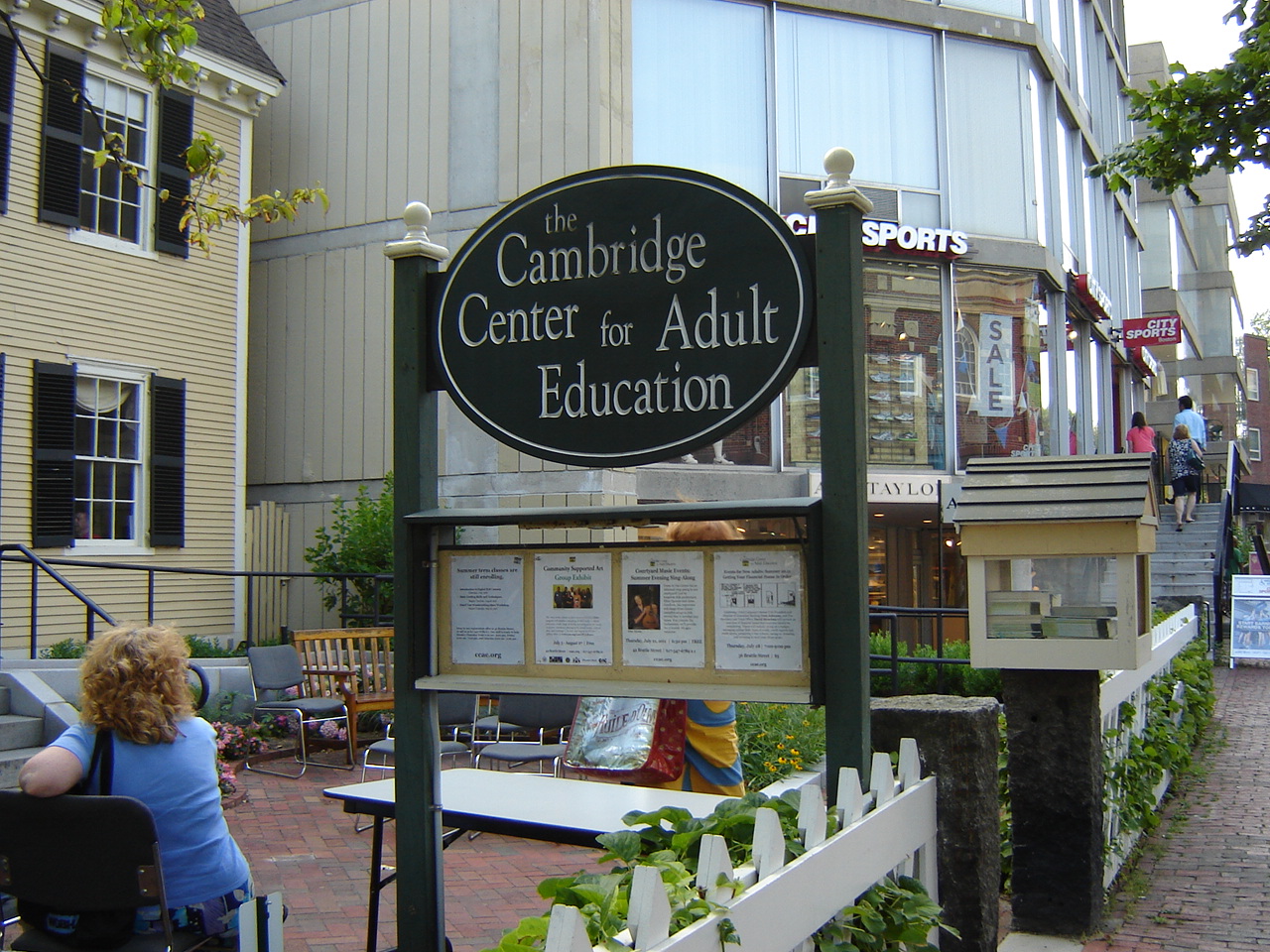
Now some artists are trying this approach. A $300 share in “Community Supported Art will get [a person] three monthly assortments of locally created artworks — nine pieces in all. … CSArt, a new project of the Cambridge [MA] Center for Adult Education, is modeled on a wildly popular Minnesota art CSA, which has inspired groups in Chicago and Frederick, Maryland, to create their versions. And some glassmakers in Burlington, Vermont., independently adopted the CSA form last year.

” ‘The success of the Minnesota program is due in part to the fact that it’s based on something people understand,’ said Laura Zabel, executive director. … CSArt aims to nurture artists as small business owners and to tap into the burgeoning enthusiasm for the local and the handmade.” Read the Boston Globe article.

Read Full Post »

« Newer Posts