Feeds:
Posts
Comments

Posts Tagged ‘natural’

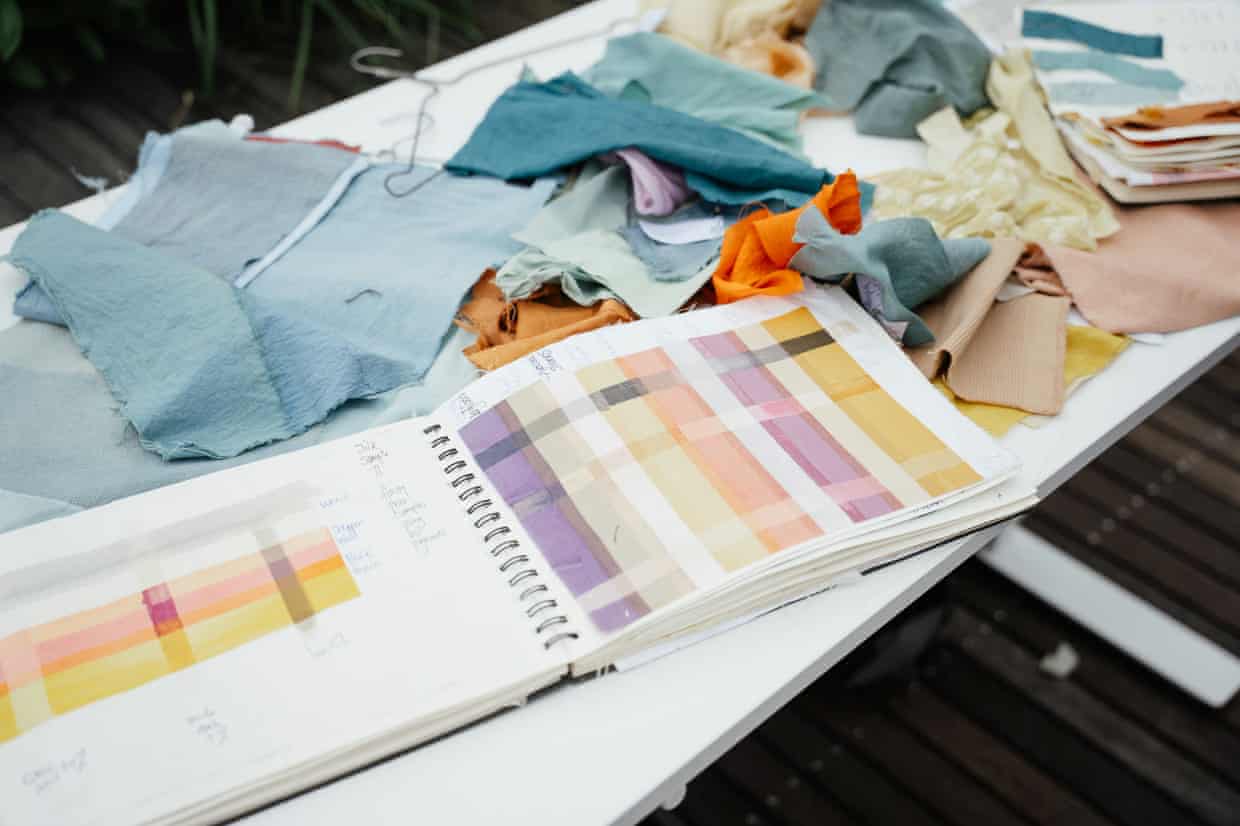
Photo: Rory Murphy.
Chemical dyes are often toxic for the environment and bad for human health, and that is why the National Theatre in London is planning to use natural dyes from a rooftop garden in its costumes.

My friend Ann is deep into using natural dyes for her textile art, and she even grows the plants that are used for those dyes. It is not just that she is concerned about all the synthetics in our environment, she loves the colors that nature produces.

In London, the National Theatre is on the same track.

Helena Horton  writes at the Guardian, “Squint at the roof of the grey, brutalist National Theatre on London’s South Bank and you might be able to spy a riot of color spilling from the concrete. This is the theater’s new natural dye garden, from which flowers are being picked to create the colors for the costumes worn in the theater’s plays.

“Chemical dyes are often toxic for the environment and bad for human health, so the costume designers at the theater are experimenting with using flowers including indigo, dahlias, hollyhocks, camomile and wild fennel to create the vivid colors used in their productions.

“The textile artist, Liz Honeybone, is buzzing with excitement about the opportunities the new garden is bringing. … She has been very concerned about the health impacts of using harsh, synthetic chemical dyes, which require users to be swaddled in protective clothing. …

“ ‘There used to be a thing called dyer’s nose, which is basically when the aniline dyes came in,’ Honeybone said, ‘They used to destroy your nasal membrane.’ …

“The theater is planning to use natural dyes from the garden in every production at the South Bank going forward, starting with Playboy of the Western World, which is on this autumn and winter.

“Claire Wardroper, costume production supervisor at the theater, said it was ‘a beautiful early 19th century piece, with lots of nice woolly jumpers, because it’s set in rural Ireland, and we can certainly get some nice colors into them.’ …

“They are trying to bring a gentler, more environmentally friendly way of dyeing into the mainstream. ‘We are saying that if you want to use this horrible synthetic dye, you can do that, but you can achieve this beautiful look by using a natural dye, and we can do it a little bit slower and a bit more sort of organically,’ said Honeybone.

“Wardroper added: ‘It’s unfortunate to say, but the theatre and film and anything creative in one-shot opportunity entertainment has a history of being incredibly wasteful.’ …

“Honeybone said: ‘It’s been such a good harvest. My indigo is more than I can cope with. I’ve got three shows going on at the moment, so I’ve had to recruit people to help me.’

“People may imagine the colors extracted from flowers will be muted compared with synthetic dyes, but Honeybone said this could not be further from the truth and she has been able to create neon greens and yellows. ‘Our forefathers were drowning in color. They loved it, it wasn’t hard to get and all the tapestries that were up on the wall were a riot of color. What we’re seeing now is the sad, faded leftovers,’ she said.

“Honeybone says she has become ‘obsessed’ with natural dyeing. ‘My daughter gave me a bunch of flowers on Mother’s Day, and I noticed there was some golden rod in it, so whisked that out and dyed with it just to see what it yielded. And it was the most glorious, strong yellow.’

“The garden is not only used for dyes but also as a refuge from the hustle and bustle of the theatre. The pair said actors were frequently seen pacing among the flowers, or sitting down on benches to learn their lines.

“The space is also a haven for wildlife. The grey concrete of the South Bank does not have a huge amount to offer pollinators, and they have been swarming to the garden to sample the nectar from the varied dye plants.

“Wardroper said: ‘We’re seeing so much more wildlife, like hummingbird moths, and we’ve got bees on the National Theatre roof which produce honey for the National Theatre. And they’re loving the variety of plants that we’ve planted as well. These are a new stock of plants that they just haven’t had access to. So the bee person that comes in and caters to the bees is very happy.’

“The pair hope that most if not all of the costumes at the theatre can eventually be produced using natural methods. But for now, Honeybone is enjoying the opportunity to start using these dyes.

“She said: ‘This is such an all round sensory experience, totally engulfed in the smells and the feeling. … It is just wonderful.’ ”

More at the Guardian, here. (Gotta love that someone in this earthy-crunchy field has a name like Honeybone and that Wardroper oversees the wardrobe!)
Read Full Post »

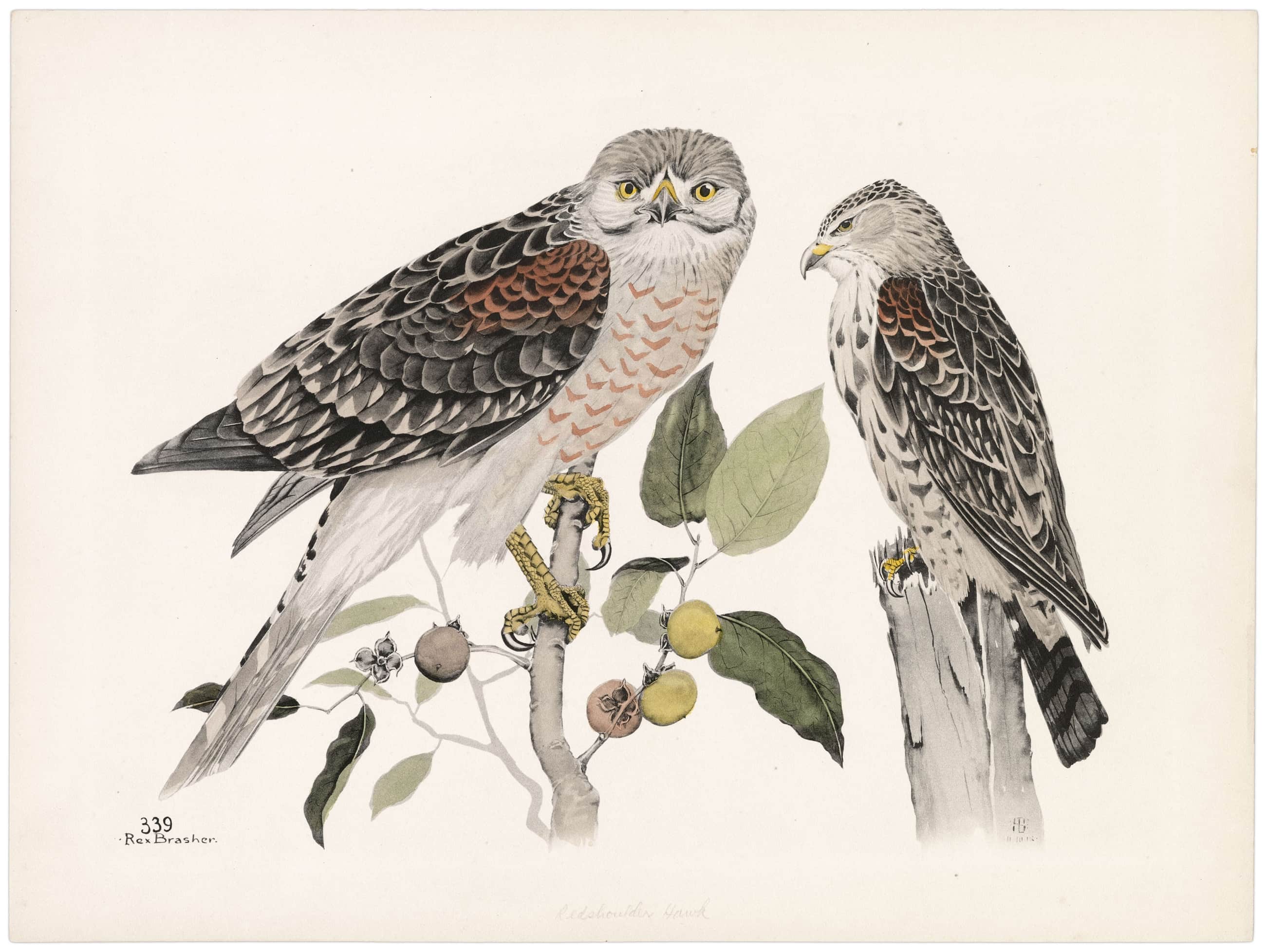
Art: Rex Brasher.
Rex Brasher painted more birds than Audubon — and never owned slaves.

With the more widespread understanding that bird painter John James Audubon owned slaves, controversy about honoring his name has erupted. Although for now the National Audubon Society is still the National Audubon Society, carrying on its otherwise great work, a small group called the Rex Brasher Association is advocating for more attention to another prolific bird painter of roughly the same period, Rex Brasher.

Philip Kennicott writes at the Washington Post, “On a gray day in March, Rex Brasher’s place looks a bit forlorn. The farmhouse is empty and the little shop made of cinder blocks feels derelict. But the leaders of the Rex Brasher Association who have gathered to show off the place see only possibilities for the 116-acre property.

“They want to place this wooded patch of the Taconic Range into conservancy, add modern studios for artist and naturalist residencies, refurbish the main house and cottage, and build a small museum inside the old shop. Two years after the death of the last Brasher relative to live on-site, they hope to resurrect the legacy and reputation of a man many people feel painted birds as well as or better than John James Audubon.

“Born in 1869, Brasher left an enormous body of paintings, almost 900 large-scale watercolors documenting American bird life and habitat, that became the source material for a monumental 12-volume compendium of hand-colored reproductions published as Birds & Trees of North America. He also made an unknown number of miscellaneous paintings and drawings, wrote a delightfully eccentric volume of philosophical reflections called Secrets of the Friendly Woods, and penned a hand-illustrated autobiographical account of his early forays, by sailboat, to document waterfowl from New England to Florida.

“Brasher was a retiring artist — a modest man who lived much of his life off the grid — which may be one reason he isn’t more famous. But his life’s project to document American birds, an effort to outdo Audubon that began in the 1890s and continued into the 1920s, was celebrated in its day, with an exhibition at the Explorers Hall of the National Geographic Society in 1938. Later, when he began hand-coloring more than 87,000 individual plates for publication, the project attracted subscriptions from collectors and patrons, as well as universities and libraries. Today, a complete set of his printed work can fetch more than $40,000. 

“He was praised by naturalists including John Burroughs (‘he is the greatest bird painter of all time’) and T. Gilbert Pearson, who helped found the organization that would ultimately become the National Audubon Society.

‘When you see a Brasher bird, you have seen the bird itself, lifelike and in a natural attitude.’

“But Brasher was very much a man of the 19th century, and despite periodic efforts to revive his work, his legacy — closely observed, naturalistic renderings of animal life — still suffers from having been out of step with the avant-garde and experimental art of the 20th century.

“That could change, however. The Connecticut State Museum of Natural History, which owns some 800 of the original watercolors, is planning to make them more accessible to the public with exhibitions in a new building, for which they will shortly begin fundraising. The efforts of the Rex Brasher Association, which has taken stewardship of the Upstate New York property near Kent, Conn., where Brasher lived until the mid 1940s, include digitizing and publicizing his work. And cultural changes, including a broader sense of what qualifies as fine art and a new urgency about the fragility of the natural world, may make people today more sympathetic to rediscovering his legacy.

“Brasher may also benefit from growing awareness that Audubon, to whom he was often compared, was a complicated, often odious figure, whose interest in birds grew out of a raw will to power more than any particular love of the species. Audubon was a formidable artist but also a ferocious antagonist within what Audubon scholar Gregory Nobles calls the ‘ornithological wars of the 1830s.’ He was also an enslaver and deeply contemptuous of the abolitionist movement in both the United States and the United Kingdom, where he spent considerable time preparing his landmark publication, The Birds of America, published between 1827 and 1838. The National Audubon Society is in turmoil today as local chapters drop the Audubon name and board members resign because the national leadership refuses to do so.

“Audubon studied birds in the wild before shooting them and then staging their carcasses in lifelike poses, a work process that has also aroused criticism even though it was standard practice for naturalists to kill animals they sought to collect and preserve. Those collections remain scientifically invaluable. …

“Audubon’s original paintings are a marvel, especially when seen up close. They are marvelously detailed and dramatic, and Audubon was particularly alert to the iridescent quality of feathers, which he reproduced with layers of silvery graphite over the pigments. But these images are also stagy and contrived, as if his birds are players on a stage, dramatically illuminated in the glow of gaslight. …

“Brasher sought a more naturalistic treatment, without Audubon’s operatic drama. Although he hunted and collected birds as a young man, he gave up that approach later, preferring close observation to specimen hunting. His paintings have a lightness and transparency wholly different from Audubon’s heightened atmosphere. He also had access to museums with extensive specimen collections and the published work of predecessors. He painted over 1,200 species of birds, far more than Audubon’s 497, but he was also building on the legacy of Audubon and others. …

“Between the early days of the artist-woodsman ornithologists and the death of Brasher a century and a half later, the science of ornithology spun off a vital and flourishing adjunct: birdwatching. Brasher might be considered the patron saint of that project. He was keenly interested in making accurate images of birds, but he was also interested in learning from birds. In Secrets of the Friendly Woods, he wrote about nature with a mix of genial animism and psychological insight. Nature was inexhaustible for him: ‘Forty years have not diminished the hope that each time afield I shall see something new, learn a novel habit of a bird or animal, and that expectation is seldom disappointed.’ …

“The difference between the artists’ work is like the difference between a grand aristocratic portrait and a psychologically nuanced character sketch. Audubon gets the dress and regalia right, and his birds project a powerful, self-fashioning sense of their own presence and importance. Brasher’s birds live contentedly in their own world and don’t need to perform or impress the viewer. If Brasher sometimes tends to moralize when he writes about birds, it isn’t Aesopian. The moral is almost always the same: We could learn a lot from birds.”

More at the Post, here.

Read Full Post »

Photo: Rachel Rosenkrantz.
Rachel Rosenkrantz, a luthier, uses all-natural materials. For example, to build a bracing structure for the instrument above, she followed a bee blueprint, placed the structure in a hive, and waited for a year.

Now here’s a commitment to using natural materials that I bet you never heard of.

The nonprofit ecoRI News is great at finding stories like this one by Emily Olson on a Rhode Island luthier who makes guitars using mushrooms and honeycomb.

“During the pandemic lockdown,” Olson reports, “local guitar-maker Rachel Rosenkrantz collected shells from her daily two-egg breakfast. They seemed an appropriate — and certainly plentiful — biomaterial to integrate into a USB-chargeable electric guitar she was working on.

“ ‘Calcium is an integral part of violin varnish because it contributes to the sound quality,’ she explains. With this in mind, and inspired by the work of Gaston Suisse, a French art deco artist who worked with eggshell inlay, she used a laser cutter and manicure file to shape her collected shells into tiny triangles. The eggshell guitar was the last in a series of biomaterial-based instruments she completed during the pandemic. …

“Rosenkrantz had a thriving and well-established career as a commercial furniture and lighting designer when, 10 years ago, she had an epiphany.

“ ‘I can always make money,’ she says. ‘But I can’t make time. … I had been daydreaming about being a luthier for too long to not do it.’ …

“Rosenkrantz grew up just outside Paris in Montfermeil, an industrial town she describes as ‘the Fall River of France.’ She is the daughter of a family of tailors; her grandfather lived in an apartment above his small tailoring shop. …

“Rosenkrantz studied at l’ESAG in Paris, and in her college days, crossed the ocean a couple of times, first as an exchange student at the Rhode Island School of Design — ‘I loved the name Providence,’ she recalls. … She now lives just outside Pawtuxet Village in Cranston … above her guitar-making studio, Atelier Rosenkrantz. ‘I guess I’ve come full circle,’ she says, referencing her grandfather’s shop. … ‘This is my happy place.’ …

“Rosenkrantz is well aware of the negative impact guitar-making has on the environment. Though little seems more environmentally conscious than someone sitting outside plucking a guitar, guitars are made from wood. And it isn’t always harvested in a sustainable way. …

“Rosenkrantz relies on timber updates from the Convention on International Trade in Endangered Species of Wild Fauna and Flora, a Switzerland-based organization that, through international agreement, offers a framework to ensure that when plants and animals cross borders, a species’ survival isn’t threatened.

“ ‘Brazilian rosewood is a big no-no because their rainforests were depleted,’ she says. But it isn’t just the type of wood used that she considers; she also considers how a country manages its resources. ‘India, for example, manages their rosewood really well,’ she adds. …

“Replenishment also is important. ‘Every guitar-maker, every woodworker — if we consume wood, we should grow wood,’ she says. The alternative, of course, is to not use wood at all. …

“One afternoon Rosenkrantz was at RISD, where she teaches spatial design, and decided to spend some time in the Nature Lab.

“ ‘RISD has a whole library of natural specimens, including biomaterials,’ she says. … ‘I know that Styrofoam conducts sound because it’s full of air, so I tested RISD’s [imitation Styrofoam] mushroom sample with my sound diffuser and realized that I could make a solid body sound like a hollow body.’

“The thing that excites her most about using farm waste inoculated with mushrooms in her craft is that she can grow her own design — a plastic mold is at her feet, leaning against the bench. ‘It takes about a week to grow a guitar body — four days to grow, then four days to let a crust develop,’ she says. …

“She slides a banjo from a shelf behind her and explains the body is made from kombucha leather. Kombucha home brewers are familiar with a symbiotic culture of bacteria and yeast (SCOBY), a cellulose mat that forms from the basis of kombucha — sweet tea — and houses the cultures that turn sweet tea into more kombucha. To get a SCOBY large enough make adequate leather for a banjo, Rosenkrantz brewed kombucha in a fish tank. ‘It took 11 tries before I made enough leather for one instrument,’ she says. …

“Rosenkrantz began dabbling in beekeeping, and as she researched hive options, quickly discovered the top bar beehive … a horizontal box with bars on top that support honeycomb, and it allows bees to build the way they would in nature. … ‘The bars in a top bar hive reminded me a lot of the bracing that goes in the front of a guitar that provides rigidity and guides sound,’ she says. … ‘I wondered if I provided the bees with bracing, if I could trick them into building a guitar.’

“But bees are not so easily tricked. ‘Bees have their own egress and architectural code,’ Rosenkrantz says, and she had to learn those codes to encourage the bees to collaborate on a design.

“So, after a great deal of research, she built a bracing structure according to the bees’ blueprint, placed it in a hive, and waited for a year. The result was something she never could have anticipated. The bees not only accepted her design and built their comb along her bracing structure, but they maintained the wood.”

More at ecoRI News, here. Amazing pictures. No firewall.

Read Full Post »

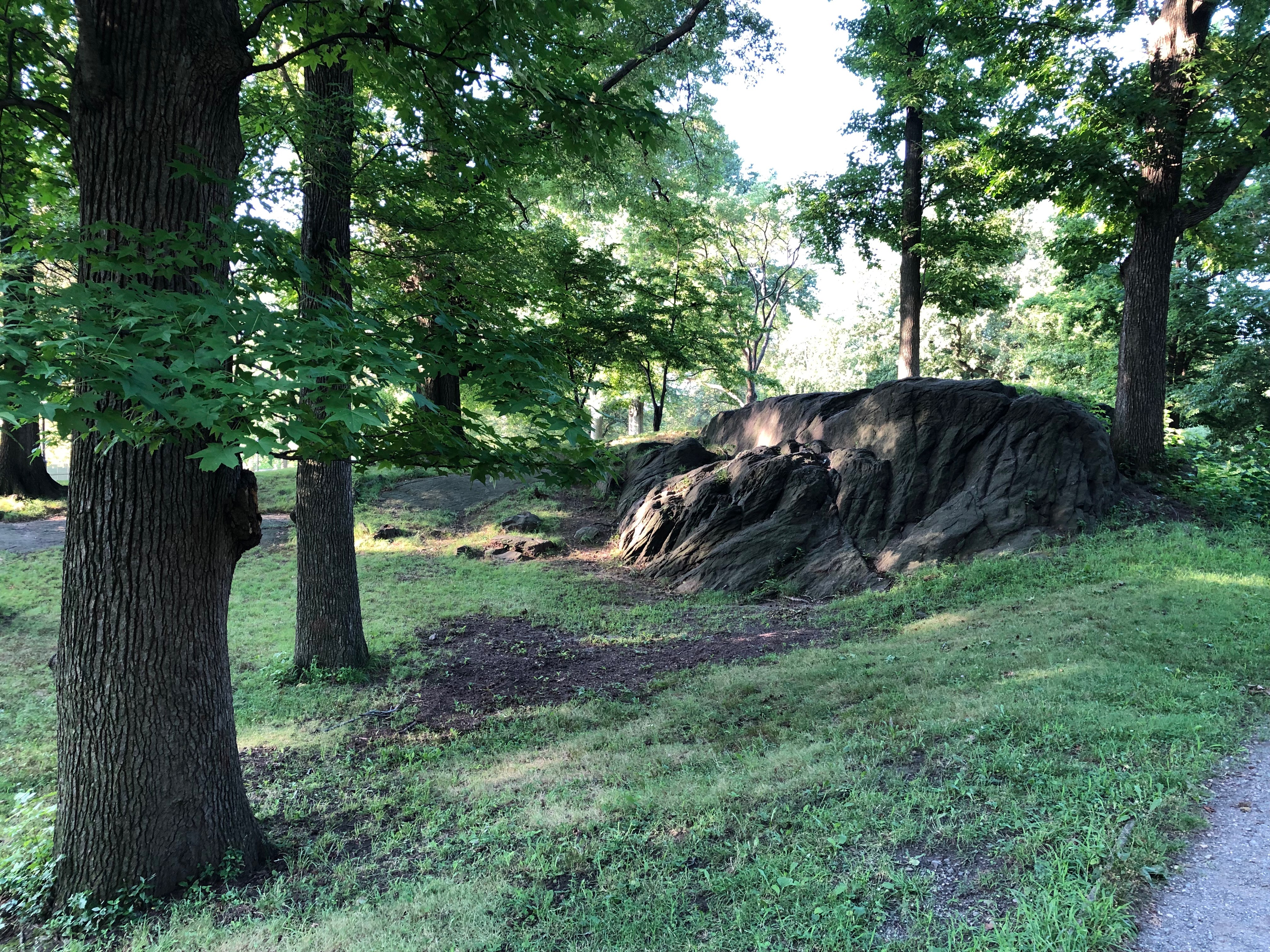
072519-love-Central-Park-rock-formations

I can’t stop talking about how much I love New York’s Central Park in the morning, especially as I remember being 14 and told not to walk my aunt’s Corgi anywhere near there in the morning.

In those days, the park had fallen on hard times and wasn’t being loved and protected. Nowadays in the mornings, half the word is there — bikers, walkers, runners, dog exercisers, tennis players, baseball teams, New Yorkers doing tai chi or push-ups or taking a detour to the office surrounded by birdsong and beauty. It’s a welcoming place for people of every background and income, who mingle there unselfconsciously, often with friendly smiles.

The experience is the genius of 19th century landscape architect Frederick Law Olmstead and the ordinary people who supported his vision. Perhaps you have an Olmstead park near you. You do if you live near Buffalo, Niagara Falls, New York City, or Rochester in New York State, or Boston in Massachusetts, Trenton in New Jersey, Riverside in Illinois, Detroit in Michigan, Louisville in Kentucky, Milwaukee in Wisconsin, Asheville in North Carolina … the list goes on.

I took a few highlights from the Wikipedia entry on Olmstead, here.

“The design of Central Park embodies Olmsted’s social consciousness and commitment to egalitarian ideals. Influenced by [landscape architect Andrew Jackson] Downing and his own observations regarding social class in England, China, and the American South, Olmsted believed that the common green space must always be equally accessible to all citizens, and was to be defended against private encroachment. This principle is now fundamental to the idea of a ‘public park,’ but was not assumed as necessary then. Olmsted’s tenure as park commissioner in New York was a long struggle to preserve that idea. …

“Olmsted’s principles of design, generally speaking, encourage the full utilization of the naturally occurring features of a given space, its ‘genius’; the subordination of individual details to the whole so that decorative elements do not take precedence, but rather the whole space; concealment of design, design that does not call attention to itself; design which works on the unconscious to produce relaxation; and utility or purpose over ornamentation. …

“The pastoral style featured vast expanses of green with small lakes, trees and groves and produced a soothing, restorative effect on the viewer. The picturesque style covered rocky, broken terrain with teeming shrubs and creepers and struck the viewer with a sense of nature’s richness. The picturesque style played with light and shade to lend the landscape a sense of mystery.”

Above you see his characteristic use of the elephantine rocks that jut out of the Manhattan landscape. I can’t tell you how mysteriously happy these sleeping giants make me, having grown up in Rockland County, where rocks are king.

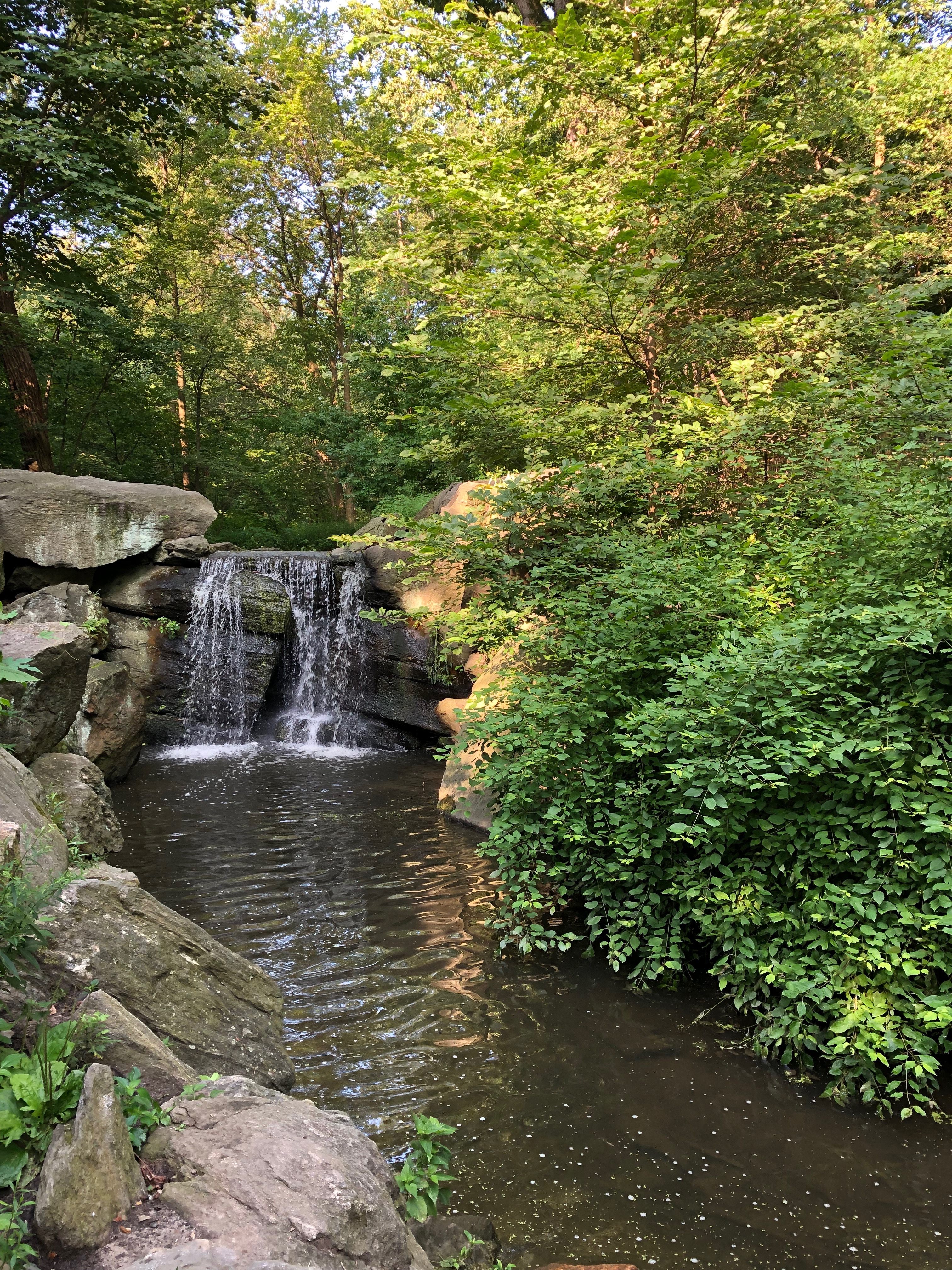
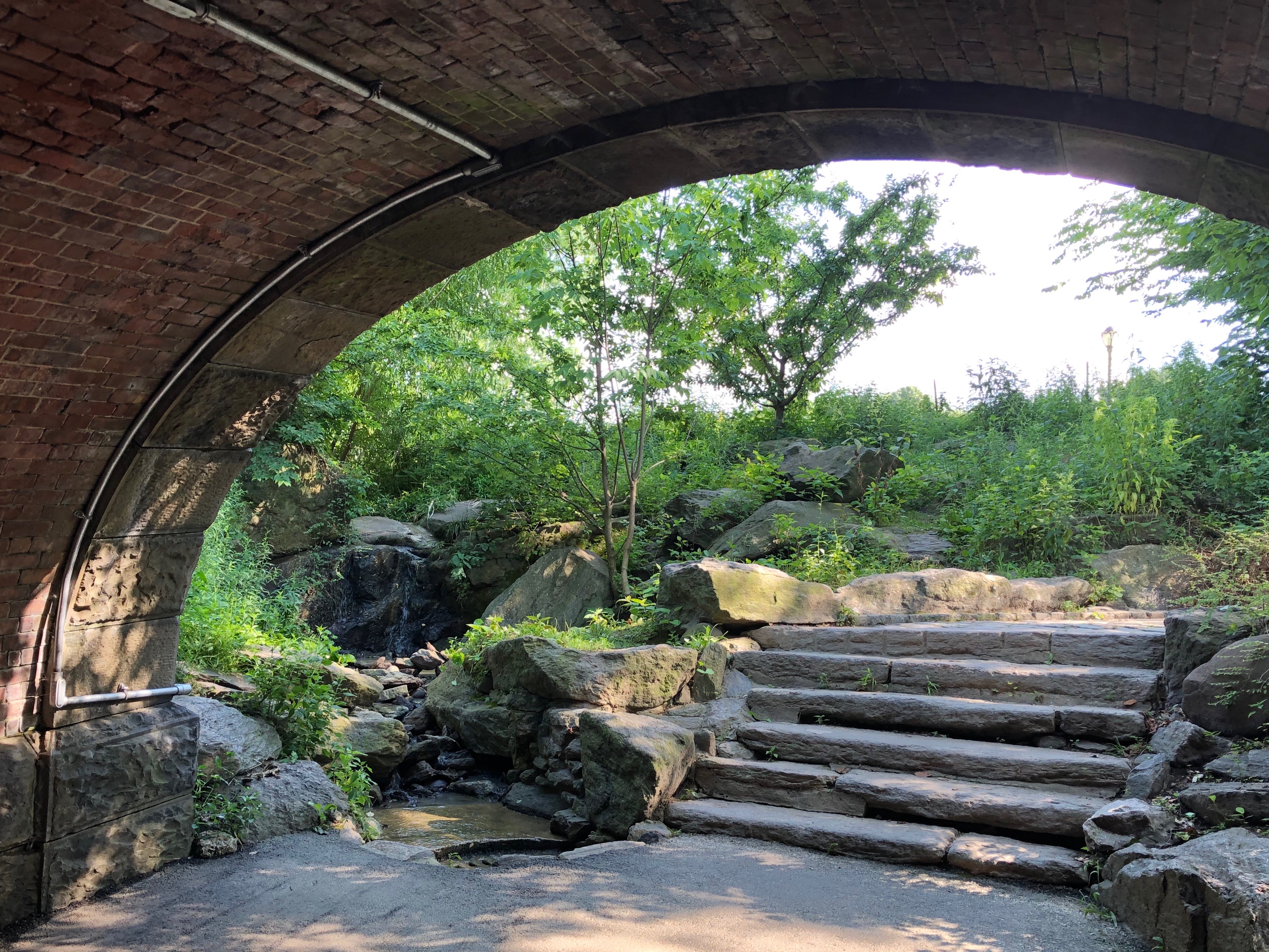
Below are my photos of one of Central Park’s fairylike bridges over a babbling brook, a musical waterfall, and a beckoning path under an arched bridge.

072419-Central-Park-stream

072619-babbling-brook-Central-Park

072419-Central-Park-NYC

Read Full Post »