Feeds:
Posts
Comments

Posts Tagged ‘new deal’

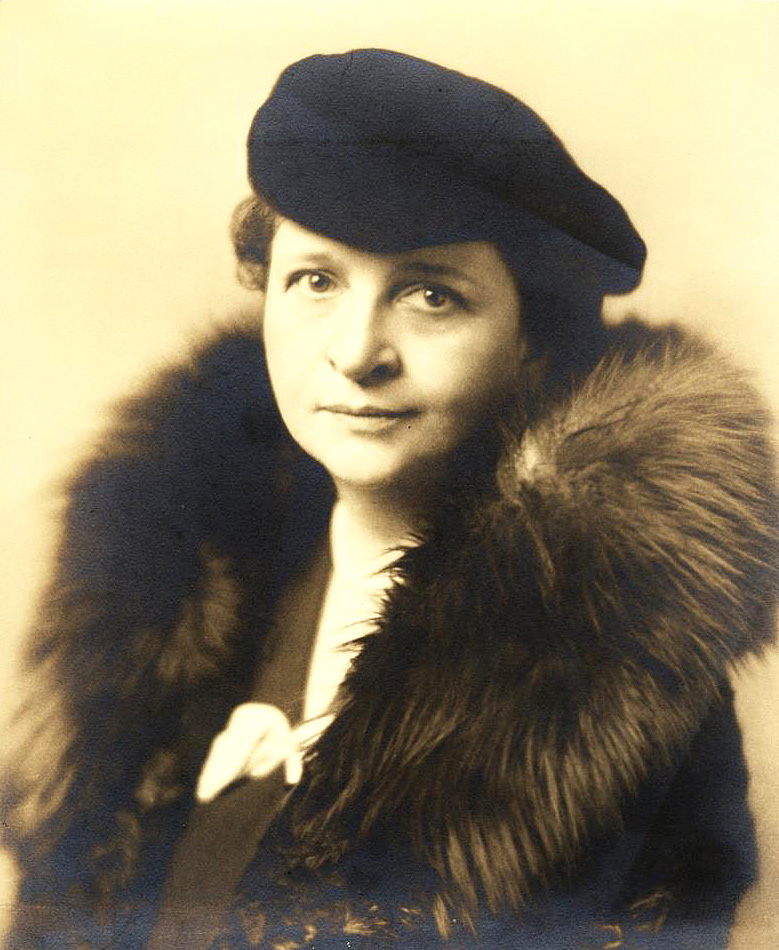
Photo: Frances Perkins Center.
Frances Perkins, President Franklin D Roosevelt’s Secretary of Labor, had more to do with shaping the New Deal than most Americans realize.

A few years ago, someone recommended a book to me, a biography of President Franklin D Roosevelt’s Secretary of Labor. I had heard of Frances Perkins, but until I read that book (see GoodReads, here), I really had no idea what an extraordinary woman she was — and how influential.

For Labor Day this year, I thought I would share what the AFL-CIO has to say about her, while also encouraging you to get a biography out of your library.

“Frances Perkins was secretary of labor for the 12 years of Franklin D. Roosevelt’s presidency and the first woman to hold a Cabinet post. She brought to her office a deep commitment to improving the lives of workers and creating a legitimate role for labor unions in American society, succeeding admirably on both counts. …

“Born in Boston in 1880, Perkins grew up in a comfortable middle-class Republican family descended from a long line of Maine farmers and craftsmen. When Perkins was two, the family moved to Worcester, Mass., where her father opened a profitable stationery business. Her parents were devoted Congregationalists and instilled in Perkins an earnest desire to ‘live for God and do something.’ At Mount Holyoke College … Perkins majored in the natural sciences, but she studied economic history, read How the Other Half Lives, Jacob Riis’s exposé of the New York slums, and attended lectures by labor and social reformers such as Florence Kelley, general secretary of the National Consumers League.

“After graduation from Mount Holyoke in 1902, Perkins accepted a series of teaching positions and volunteered her time at settlement houses, where she learned firsthand the dangerous conditions of factory work and the desperation of workers unable to collect their promised wages or secure medical care for workplace injuries. By 1909, she had given up teaching science and moved to New York to study at Columbia University, where she earned a master’s degree in economics and sociology in 1910. For the next two years, she served as secretary of the New York Consumers League; working closely with Florence Kelley, she successfully lobbied the state legislature for a bill limiting the workweek for women and children to 54 hours. …

“One of the pivotal experiences of her political life occurred in 1911, when she watched helplessly as 146 workers, most of them young women, died in the Triangle Shirtwaist fire.

Many, she remembered, clasped their hands in prayer before leaping to their deaths from the upper-floor windows of a tenement building that lacked fire escapes.

“It was, as Perkins later explained, ‘seared on my mind as well as my heart — a never-to-be-forgotten reminder of why I had to spend my life fighting conditions that could permit such a tragedy.’

“During these years, Perkins also witnessed the widespread labor upheavals among garment and other New York City workers and learned from friends such as labor leader Rose Schneiderman the one-word solution to poverty: organize. …

“In 1918, Perkins accepted Gov. Al Smith’s invitation to join the New York State Industrial Commission, becoming the first female member of the commission. In 1926, she became chairwoman of the commission, and then, in 1929, the new governor, Franklin D. Roosevelt, appointed Perkins industrial commissioner of the state of New York, the chief post in the state labor department. Having earned the cooperation and respect of a wide range of political factions, Perkins, ever the master deal-maker, helped put New York in the forefront of progressive reform. She expanded factory investigations, reduced the workweek for women to 48 hours and championed minimum wage and unemployment insurance laws.

“When Roosevelt tapped her as labor secretary in 1933, Perkins drew on the New York State experience as the model for new federal programs. She put every ounce of her formidable energy into weaving a safety net for a Depression-scarred society, securing a remarkable array of benefits for American workers. … Her vision found concrete expression in such landmark reforms as the Wagner Act, which gave workers the right to organize unions and bargain collectively, and the Fair Labor Standards Act, which established for the first time a minimum wage and a maximum workweek for men and women. Perkins also chaired the Committee on Economic Security, which developed and drafted the legislation that became the Social Security Act in 1935.

“As secretary of labor during the 1930s and early 1940s, Perkins played a crucial role in the outcome of the dramatic labor uprisings that marked the era. She consistently supported the rights of workers to organize unions of their own choosing and to pressure employers through economic action. In one famous incident captured in a widely circulated newspaper photo, an indomitable Perkins strides toward the U.S. post office in Homestead with thousands of steelworkers trailing behind her. Denied a meeting hall by the mayor and steel executives, Perkins found an alternative site where she could inform the workers directly of their collective bargaining rights. It was also the unflappable Perkins who advised President Roosevelt to ignore the pleadings of state and local officials for federal troops to quell the 1934 San Francisco General Strike. The successful resolution of that strike as well as countless others during her tenure as labor secretary laid the foundation for the rebirth of American labor. …

“In 1945, Perkins resigned from her position as labor secretary to head the U.S. delegation to the International Labor Organization conference in Paris. President Truman subsequently appointed her to the Civil Service Commission, a job she held through 1953. In the last years of her life, Perkins assumed a professorship at Cornell University’s School of Industrial and Labor Relations. She died in New York at the age of 85 and was buried in her family’s plot in New Castle, Maine.”

More at the AFL-CIO, here.

Read Full Post »

Photo: Harris & Ewing/Library of Congress Prints and Photographs.
Frances Perkins, Secretary of Labor under President Roosevelt.

I once read a fascinating biography of Frances Perkins, Secretary of Labor under President Franklin Delano Roosevelt. In the book, biographer Kirstin Downey set out to prove that Perkins was both the conscience of FDR and The Woman Behind the New Deal. (My take on the book is here.)

Recently, at the Guardian, Michael Sainato reported that President Biden had been asked by members of Congress and the National Park Conservation Association to create a monument to Perkins.

“Perkins, who served three terms under Franklin Delano Roosevelt from 1933 to 1945,” Sainato writes, “was the first woman to be appointed to a presidential cabinet and the longest-serving secretary of labor in US history.

“In 1911, Perkins was a witness to the Triangle Shirtwaist factory fire in New York City, which killed 146 people, mostly young women, and was one of the deadliest industrial disasters in US history. The tragedy greatly affected Perkins and helped inspire her labor activism in the subsequent decades.

“She said of her position: ‘I came to Washington to work for God, FDR and the millions of forgotten, plain common workingmen.’

“As secretary of labor, Perkins was one of the driving forces behind Roosevelt’s New Deal policies and pushed for many longstanding labor policies including a 40-hour work week, a federal minimum wage, unemployment compensation, worker’s compensation, the abolition of child labor, and social security. ‘The New Deal began on March 25, 1911. The day that the Triangle factory burned,’ Perkins said.”

At Goodreads, I observed that, according to biographer Kirstin Downey, Perkins “was the main person pushing the New Deal. Roosevelt, who was more cautious and political, trusted her and listened to her while many others in his circle came and went. She was unfailingly hardworking and skilled at understanding people and working with everyone, although in her first few months in Washington, she made some missteps that caused her trouble later.

“Her career didn’t start in Washington, though. She was focused on working people and their needs from college days, taking a teaching job in Chicago and spending all her spare time at Hull House, where she made lasting connections. When she lived in New York City, she was active in the rights of working women and child laborers. Greatly influenced by seeing the appalling Triangle Shirtwaist Factory fire after failing to get reforms, she worked harder than ever on workplace safety. She was the right hand of NY Governor Al Smith for some years and then the right hand of FDR when he succeeded Smith as governor.

“Perkins had a variety of roles in Washington over several decades but her biggest influence is seen in initiatives that got people working in the Depression and improved workers’ rights and workplace safety. …

“Downey wrote at the book’s end: ‘The secret of Frances’s success was that she had done what she did selflessly, without hope of personal gain or public recognition, for those who would come afterward. It was a perpetuation of the Hull House tradition of the old teaching the young how to advocate for the yet unborn. …

” ‘Factory and office occupancy codes, fire escapes and other fire-prevention mechanisms are her legacy. About 44 million people collect Social Security checks each month; millions receive unemployment and worker’s compensation or the minimum wage; others get to go home after an eight-hour day because of the Fair Labor Standards Act [all of which she shepherded]. Very few know the woman responsible for their benefits.’ “

By the way, although there are comparatively few monuments to women in the US, cities are trying to get up to speed. In New York alone, there are statues to Women’s Rights Pioneers, Joan of Arc, Harriet Tubman, Eleanor Roosevelt, women veterans, Gertrude Stein, and one coming soon of Shirley Chisholm, a Black woman who ran against Richard Nixon, and more. Click here for great photos.

More at the Guardian, here. No firewall, but if you click here, you can help support the Guardian journalism.

Read Full Post »

Photo: Goodman-Paxton Photographic Collection/Kentucky Digital Library
A Pack Horse Librarian returning over the mountainside for a new supply of books.

Here’s another story about dedicated book people making sure that books get to people in remote places. This one is from the 1930s Depression in the United States.

Eliza McGraw writes at Smithsonian, “Their horses splashed through iced-over creeks. Librarians rode up into the Kentucky mountains, their saddlebags stuffed with books, doling out reading material to isolated rural people. …

“The Pack Horse Library initiative, which sent librarians deep into Appalachia, was one of the New Deal’s most unique plans. The project, as implemented by the Works Progress Administration (WPA), distributed reading material to the people who lived in the craggy, 10,000-square-mile portion of eastern Kentucky. …

“In 1930, up to 31 percent of people in eastern Kentucky couldn’t read. Residents wanted to learn, notes historian Donald C. Boyd. Coal and railroads, poised to industrialize eastern Kentucky, loomed large in the minds of many Appalachians who were ready to take part in the hoped prosperity that would bring. ‘Workers viewed the sudden economic changes as a threat to their survival and literacy as a means of escape from a vicious economic trap,’ writes Boyd. …

“There had been previous attempts to get books into the remote region. In 1913, a Kentuckian named May Stafford solicited money to take books to rural people on horseback, but her project only lasted one year. …

“Unlike many New Deal projects, the packhorse plan required help from locals. ‘Libraries’ were housed any in facility that would step up, from churches to post offices. Librarians manned these outposts, giving books to carriers who then climbed aboard their mules or horses, panniers loaded with books, and headed into the hills. …

“Carriers rode out at least twice a month, with each route covering 100 to 120 miles a week. …

“The books and magazines they carried usually came from outside donations. [Lena Nofcier, who chaired library services for the Kentucky Congress of Parents and Teachers at the time] requested them through the local parent-teacher association. She traveled around the state, asking people in more affluent and accessible regions to help their fellow Kentuckians in Appalachia. …

” ‘ “Bring me a book to read,” is the cry of every child as he runs to meet the librarian with whom he has become acquainted,’ wrote one Pack Horse Library supervisor. ‘Not a certain book, but any kind of book. The child has read none of them.’ …

“Some mountain families initially resisted the librarians, suspicious of outsiders riding in with unknown materials. In a bid to earn their trust, carriers would read Bible passages aloud. Many had only heard them through oral tradition, and the idea that the packhorse librarians could offer access to the Bible cast a positive light on their other materials.”

More here.

Read Full Post »