Feeds:
Posts
Comments

Posts Tagged ‘north dakota’

Photos: Ivan Vdovin/Alamy; Lyn Alweis/The Denver Post, via Getty Images.
With no known contemporaneous sketches or paintings of Sacagawea, artists have largely invented her look, even as historians have invented her story by relying on Lewis and Clark’s misunderstandings.

In a long article at the New York Times Magazine, Christopher Cox writes about researchers trying to piece together the real story of Sacagawea. Will these more-accurate accounts stick? As I learned when reading Josephine Tey’s mystery The Daughter of Time, truth may be “the daughter of time,” but popular legends are often too stubborn to die.

Cox writes, “In a conference room in the middle of the Great Plains, 50 people gathered to correct what they saw as a grave error in the historical record. It was July 16, 2015, on the Fort Berthold Indian Reservation in North Dakota, not too far upstream from the camp on the Missouri River where Meriwether Lewis and William Clark first met Sacagawea, the teenage girl who would accompany them to the Pacific Ocean and back.

“The story of that journey has been told many times: in the journals that Lewis and Clark kept; in more than a century of academic histories; and in countless more fanciful works that have turned the expedition, and Sacagawea’s supposed role as guide to the Americans, into one of the country’s foundational myths. The people in the conference room, members of three closely related tribes, the Mandans, the Hidatsas and the Arikaras, thought basically all of it was nonsense.

“Jerome Dancing Bull, a Hidatsa elder, took the microphone first. … ‘They got it all wrong!’ he told the people in the room, referring to the bare-bones, truncated life sketched out for Sacagawea by Lewis and Clark and the historians who followed them. In that telling, Sacagawea was born a member of the Shoshone tribe in present-day Idaho, was kidnapped by the Hidatsa as a child, spent most of 1805 and 1806 with the expedition and died in 1812, while she was still in her 20s. The Hidatsas insist that she was a member of their tribe all along and died more than 50 years later, in 1869. And not of old age, either: She was shot to death.

“History has always been a process; it has also long attracted partisans who insist that its judgments should be frozen in time. … Sacagawea long ago left the realm of the apolitical dead. Over the years, she has been pressed into service as an avatar of patient humility or assertive feminism, of American expansionism or Indigenous rights, of Jeffersonian derring-do or native wisdom. …

“The Hidatsas’ portrait of Sacagawea is both richer and more ambiguous than the one found in standard histories. By adding decades to her life, they have changed its meaning: The journey to the Pacific, rather than the whole of her existence, becomes a two-year blip in a story that stretches across the 19th century, from the opening of the Western frontier to the Civil War and beyond. Almost all those years were spent back where Lewis and Clark found her, among the Hidatsa.

“The meeting at Fort Berthold was organized by Dennis and Sandra Fox, married scholars who worked for the education division at the Bureau of Indian Affairs. Dennis is a direct descendant of Cedar Woman, whom the Hidatsas believed was Sacagawea’s daughter, born some 30 years after the Lewis and Clark expedition ended. He has heard about his famous ancestor since he was a boy, an oral tradition that included direct observations of her life long after her supposed death. That memory of her, he knew, was at risk of being lost. …

“The Foxes invited tribal historians and Hidatsa elders, many of whom believed themselves to be Sacagawea’s descendants, to speak. Everyone who participated got a Pendleton blanket. ‘It was a long day because we let everybody tell their stories,’ Sandra said. The discussion repeatedly veered away from the historical accounts of Sacagawea herself to more personal stories of what followed, in particular how the tribe’s memories of her had been suppressed in government and public schools. There she was called Sacajawea, with a J, and she was a Shoshone. …

“Some of those present wanted to make a film putting forward their version of Sacagawea’s life. But Gerard Baker, a former superintendent of the National Park Service’s Lewis and Clark trail, suggested that a book might be a better approach. ‘The first thing we learned in academia,’ he said, ‘is if we see something written, we believe it.’

“It was an early hint of a theme that would come to define the work that followed: the long-running historical debate over the relative value of oral and documentary evidence. In the moment, though, no one doubted Baker’s judgment. The tribal government agreed to fund research toward a book, with Dennis and Sandra Fox managing the project. The initial grant was for $30,000.

“Before the meeting ended, the Foxes chose five Hidatsa elders to serve as an advisory board: Baker, Calvin Grinnell, Bernie Fox, Wanda Sheppard and Carol Newman. Though the book would be credited to them, as the Sacagawea Project Board of the Mandan, Hidatsa and Arikara Nation, it was Dennis and Sandra who would do most of the writing. …

The board members themselves were important sources. Newman, one of the last surviving native speakers of Hidatsa, had polio as a child, which meant she spent an unusual amount of time among elder caregivers. From them she learned not only about Sacagawea’s life but also about the whole deep history of the Hidatsas, a tribe of farmers and buffalo hunters that, together with the Mandans and Arikaras, dominated trade on the Great Plains before the arrival of the Europeans. In passing along these oral histories, Newman was careful to cite her sources, most notably Philip Snow, her grandfather. ‘He’d describe it in our language,’ she said, ‘and I could see it.’

“Ultimately, the process of researching, writing and publishing the book stretched over six years and would cost some $250,000. ‘There were many nights when we thought, What have we done?’ Sandra said. ‘This story is just too complicated for anybody to understand.’ By 2020, though, they had a manuscript ready.

“The Foxes sent the book to a few independent and university presses but were dispirited by the responses. Even in written form, no one seemed to take their testimonies seriously. They felt themselves at a dead end and worried that the book might never reach the public. To the project board, it was a familiar result. … ‘the century-long efforts of the Hidatsa to overcome the power of the Lewis and Clark journals.’

“Academic historians have come a long way since, as E.H. Carr put it, they treated the past like a collection of facts ‘available to the historian in documents, inscriptions and so on, like fish on the fishmonger’s slab.’ For Lewis and Clark scholars, though, the journals have an irresistible pull that no oral history can match: an illustrated, contemporaneous, day-by-day account of the journey. ‘It’s something you can put your hand on,’ said Gary Moulton, the editor of the definitive version of the journals. ‘You can trace its lineage.’ …

“After a year of trying, in 2021, the Sacagawea Project Board found a small press in California, the Paragon Agency, that agreed to publish the book, with a long title drawn from Dancing Bull’s speech at Fort Berthold: ‘Our Story of Eagle Woman: Sacagawea: They Got It Wrong.’ In one of the few reviews the book received, Thomas Powers, the author of a well-regarded book about Crazy Horse, wrote, ‘One way or another, every future history’ of Sacagawea ‘will have to take it into account.’ ”

Lots more at the Times Magazine, here.
Read Full Post »

Sometimes it’s good to be reminded that there are communities where everybody helps everybody, where one person’s emergency is a call to action. I imagine that the North Dakota farmers who gave up a day to help a neighbor feel as great as the family that benefited. What goes ’round comes ’round.

As Sydney Page reports at the Washington Post, “Lane Unhjem was driving his combine harvester across a field of durum wheat on his North Dakota farm [in September], when suddenly smoke began billowing from the machine. …

“Unhjem’s neighbors saw the fire and raced over, helping him extinguish the blaze and saving the field from ruin. But the shock of the moment, coupled with the thick plumes of smoke Unhjem inhaled, triggered the 57-year-old farmer to go into cardiac arrest.

“ ‘He flatlined three times in the emergency room,’ his daughter Tabitha Unhjem, 31, said.

“Lane Unhjem, who also had a heart attack several years ago, was airlifted about 100 miles from his farm near Crosby, N.D., to a trauma center in Minot, N.D., where he remains in critical condition.

“When other farmers in Divide County, N.D., heard what happened to Unhjem on Sept. 9, they immediately halted their own harvesting.

Nearly 60 of them showed up at Unhjem’s farm, equipped with a range of heavy-duty machinery, to finish his harvest for him.

“ ‘I made a couple phone calls and started getting equipment offered left and right, plus the help to go with it,’ said Jenna Binde, 28, a fellow farmer and family friend of the Unhjems. …

“Dozens of farmers and neighbors congregated at Unhjem’s farm on Sept. 12, bringing with them 11 combine harvesters, six grain carts and 15 semi-trucks. They spent almost eight hours harvesting 1,000 acres — an area comparable to 758 football fields — of durum wheat and canola. …

“What the group accomplished in one day would have taken Unhjem nearly two weeks to complete on his own, estimated Brad Sparks, a neighboring farmer.

“ ‘There were guys there who had their own harvest to do, and they just quit and came to help,’ said Sparks, who was there with his machinery that day. … ‘In this part of the country, any time anybody needs a helping hand, everybody will stop what they’re doing at the drop of a hat and come help.’ …

“ ‘If we hadn’t done it, I don’t know if he would have gotten the crop off in time,’ said Binde, adding that weather affects the quality of the crops. “It was crucial to get it off when we did. It’s one less thing for the family to worry about.’ …

“If the fellow farmers hadn’t stepped up to help, Tabitha Unhjem said, it would have been devastating for them. ‘This farm is our livelihood,’ she said.

“Lane Unhjem grew up on the farm, which has been in his family for more than six decades.

“ ‘This is the farm our dad was raised on and we were all raised on,’ [Unhjem daughter Toni White] said. ‘He has dedicated his whole life to this farm and to this community.’ …

“ ‘He has a long road ahead,’ White said. “We are looking at months of recovery. This is going to be a marathon. She called it a blessing that the other farmers were able to get to her father and the farm so quickly. ‘We were so thankful for that,’ White said.

“But for the farmers, ‘this is just something that comes naturally. This is the farming way of life,’ Binde said. …

“ ‘You can’t truly appreciate it unless you were there,’ [local photographer Don Anderson] said. ‘The ground was rumbling. It’s not only something you felt emotionally, but it was also a physical feeling. It was really something to be proud of.’ ” More at the Post, here.

Read Full Post »

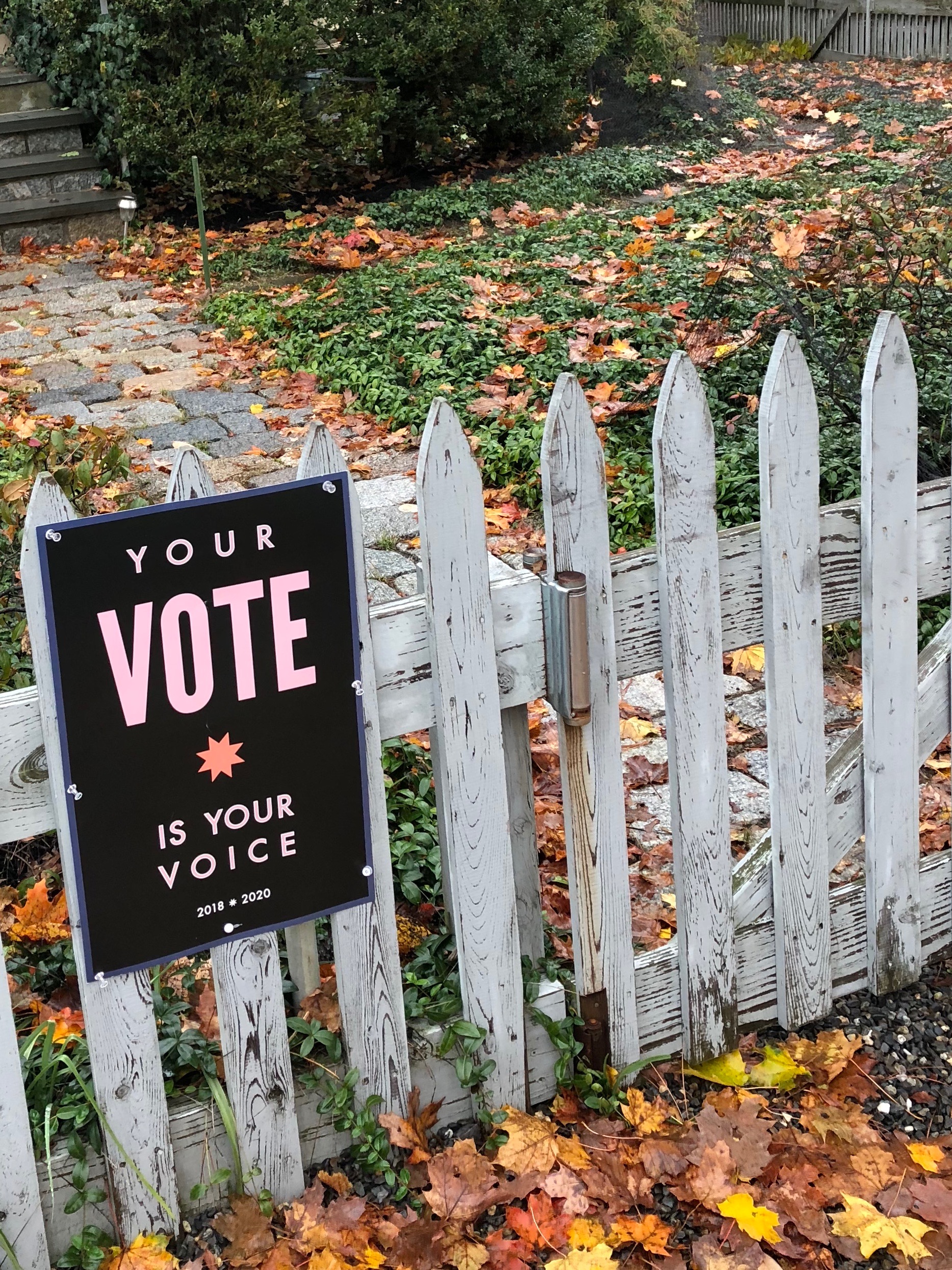
110218-VOTE

California graphic designer @lenawolffstudio printed lots of these Vote posters, with help from a Kickstarter campaign, and sent them around the country. If you want a few for 2020, contact her or email suzannesmom@lunaandstella.com.

Why is it that some Americans don’t take advantage of the greatest right and duty of living in a democracy — the vote?

Some people say one vote doesn’t count, but that makes no sense. Millions of votes are made only from many, many one-votes. And many races are extremely close.

Others don’t see anything on the ballot — candidate or ballot question — that they care about. But just showing up is important. It increases overall turnout, which shows we care, and you can always write in a name. I’ve done that in races where only one candidate was on the ballot.

Some people fear election results will get hacked, but at least one expert, the executive director of the Center for Election Innovation & Research, says so much work has been done since 2016 that the polls are now the most secure they have ever been. Read his op-ed.

Then there is the question of getting registered (having automatic registration for those getting a driver’s license would really help) and then getting to the polls. Volunteers from your party will give anyone a ride who needs one, you know. And many states let you choose your day by having absentee voting (generally by mail) and early voting (staff waiting for you at your town hall). In addition, you could support those who are trying to make Election Day a national holiday so fewer people are tied up at work.

The biggest concern to my mind is vote suppression. There have always been groups trying to keep some people from voting. This year we are seeing restrictive laws in North Dakota preventing tribes from voting by requiring all individuals to have street addresses, which Indian reservations don’t usually have. And in Georgia, where the man in charge of voting wants everyone to vote for him to be governor, we see massive vote suppression for inconsistent punctuation and challenges to recent naturalization. These kinds of tricks are similar to those that were still keeping African Americans from voting in the South in the 1960s.

People died for your right to vote.

Since voter suppression will probably always be attempted by unscrupulous people, the best thing someone who believes in democracy can do is to keep donating to organizations that take such people to court, like the American Civil Liberties Union. There will always be people who don’t want every eligible citizen to vote — the bedrock of democracy — but you can fight back. Even small efforts count. In Kansas, for example, the Dodge City polling place was moved a great distance from where voters lived, but many ordinary folk stepped up, and now there are enough volunteers to drive everyone to the distant polling place.

One and one and 50 make a million.

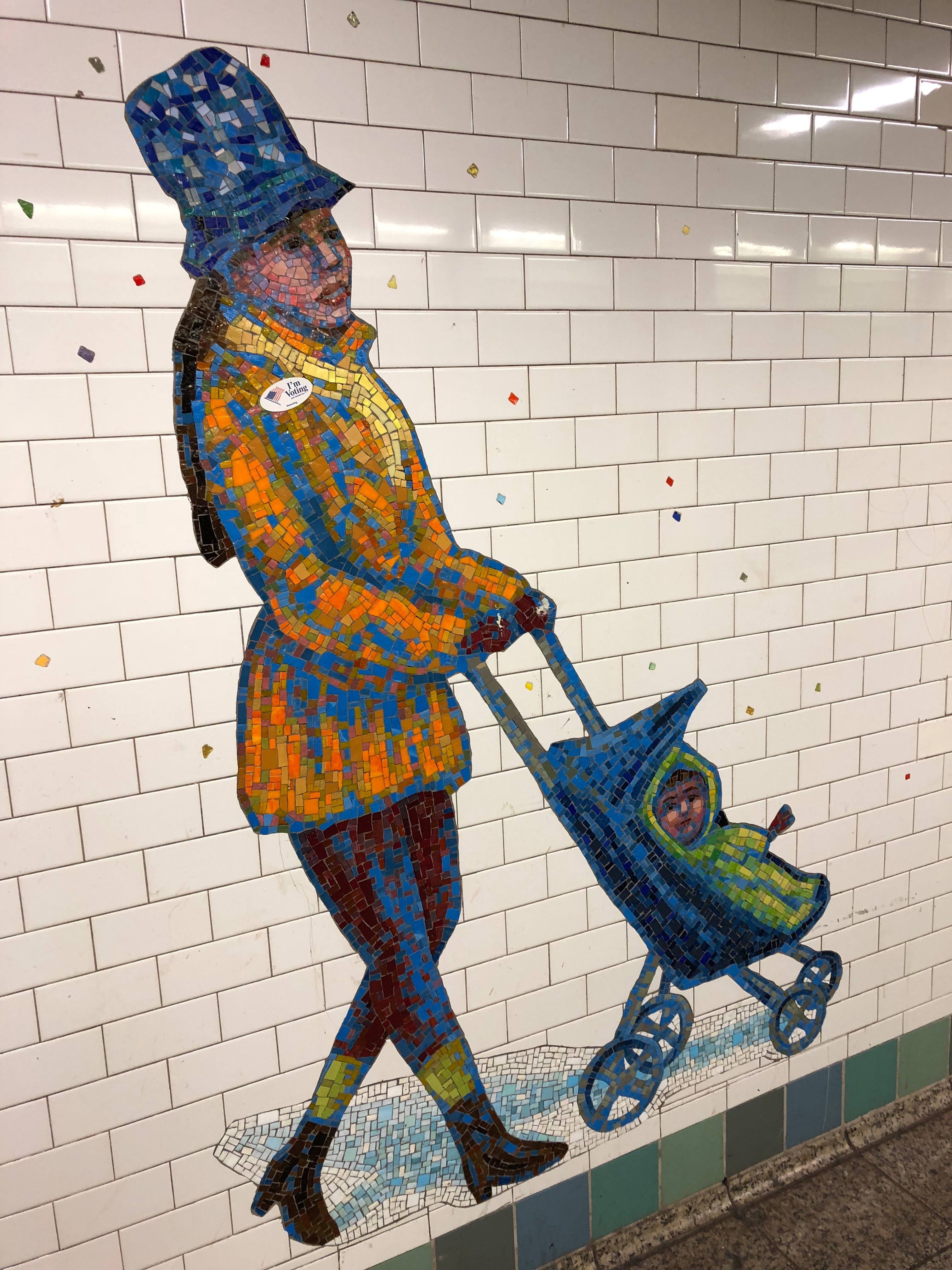
New York City subway mosaic: She voted.

102318-I-voted-subway-mosaic

Read Full Post »

In a move that will benefit the environment, farmers are placing increased emphasis on the quality of their soil and cutting back on ploughing. It took a kind of soil evangelist to create the revolution.

Erica Goode has the story at the NY Times.

“Gabe Brown is in such demand as a speaker that for every invitation he accepts, he turns down 10 more. …

“Mr. Brown, a balding North Dakota farmer who favors baseball caps and red-striped polo shirts, is not talking about disruptive technology start-ups, political causes, or the latest self-help fad.

“He is talking about farming, specifically soil-conservation farming, a movement that promotes leaving fields untilled, ‘green manures’ and other soil-enhancing methods with an almost evangelistic fervor.

“Such farming methods, which mimic the biology of virgin land, can revive degenerated earth, minimize erosion, encourage plant growth and increase farmers’ profits, their proponents say. And by using them, Mr. Brown told more than 250 farmers and ranchers who gathered at the hotel for the first Southern Soil Health Conference, he has produced crops that thrive on his 5,000-acre farm outside of Bismarck, N.D., even during droughts or flooding.

“He no longer needs to use nitrogen fertilizer or fungicide, he said, and he produces yields that are above the county average with less labor and lower costs. ‘Nature can heal if we give her the chance,’ Mr. Brown said.” More here.

Sounds like wisdom that even a backyard farmer could embrace.

Photo: Brandon Thibodeaux for The New York Times
“My goal is to improve my soil so I can grow a better crop so I can make more money,” [says Texas farmer Terry] McAlister, who farms 6,000 acres of drought-stricken cropland. 


Read Full Post »

Public banks can be helpful in emergencies, and what with hurricanes, tornadoes, and all, we sure seem to have a lot of emergencies.

Grand Forks, North Dakota, figured this out after one of their floods. Most banks have to make sure their loans meet the tough safety and soundness requirements of regulators, so they may not come through fast enough for people trying to rebuild after a disaster. Grand Forks isn’t relying on them.

Kelly McCartney at Shareable (by way of the Christian Science Monitor) says that the Public Banking Institute blog at WordPress “cites a powerful example of how a public bank can help a city bounce back from a devastating natural disaster. As Hurricane Sandy recovery efforts unfold, there’s a lesson from history about the role of strong local financial institutions in increasing urban resilience.

“In April of 1997, Grand Forks, North Dakota, was hit by record flooding and major fires that put the city’s future in jeopardy. One of the first economic responders was the Bank of North Dakota (BND), currently the only public bank in the United States.

“What’s a public bank, you ask? Public banks are owned by citizens through their government. They have a public interest mission, are dedicated to funding local development, and plow profits back into the state treasury to fund social programs and cover deficits. Rather than competing with private banks, BND partners with them to meet the needs of North Dakotans. …

“As a public bank, BND was able to respond to the ’97 flood in ways that a privately owned bank could not …

“Right after the flood, the Bank of North Dakota got to work, established a disaster relief loan fund, set aside $5 million to assist flood victims, and set up additional credit lines of around $70 million.” More.

Photograph: Reuters/File
Residents of Grand Forks, N.D., carry their pet dog to safety in the shovel of a frontloader April 20, 1997. The more than 50,000 residents of the city were forced to evacuate as the Red River reached 25 feet above flood level. A public bank, owned by citizens, was a key player in the city’s recovery.

Read Full Post »