Feeds:
Posts
Comments

Posts Tagged ‘norwegian’

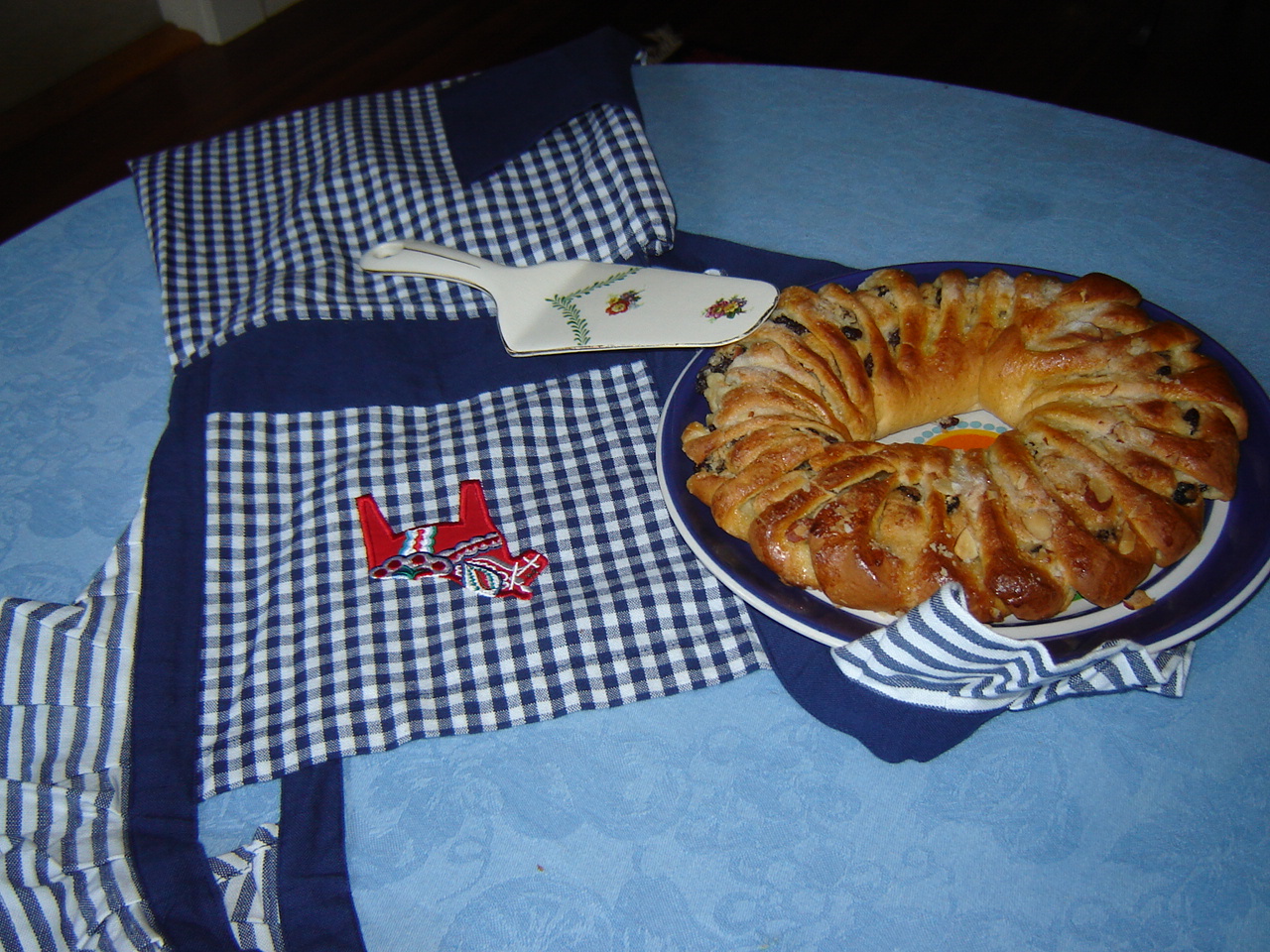
Photo: Bowl of Delicious.
According to the
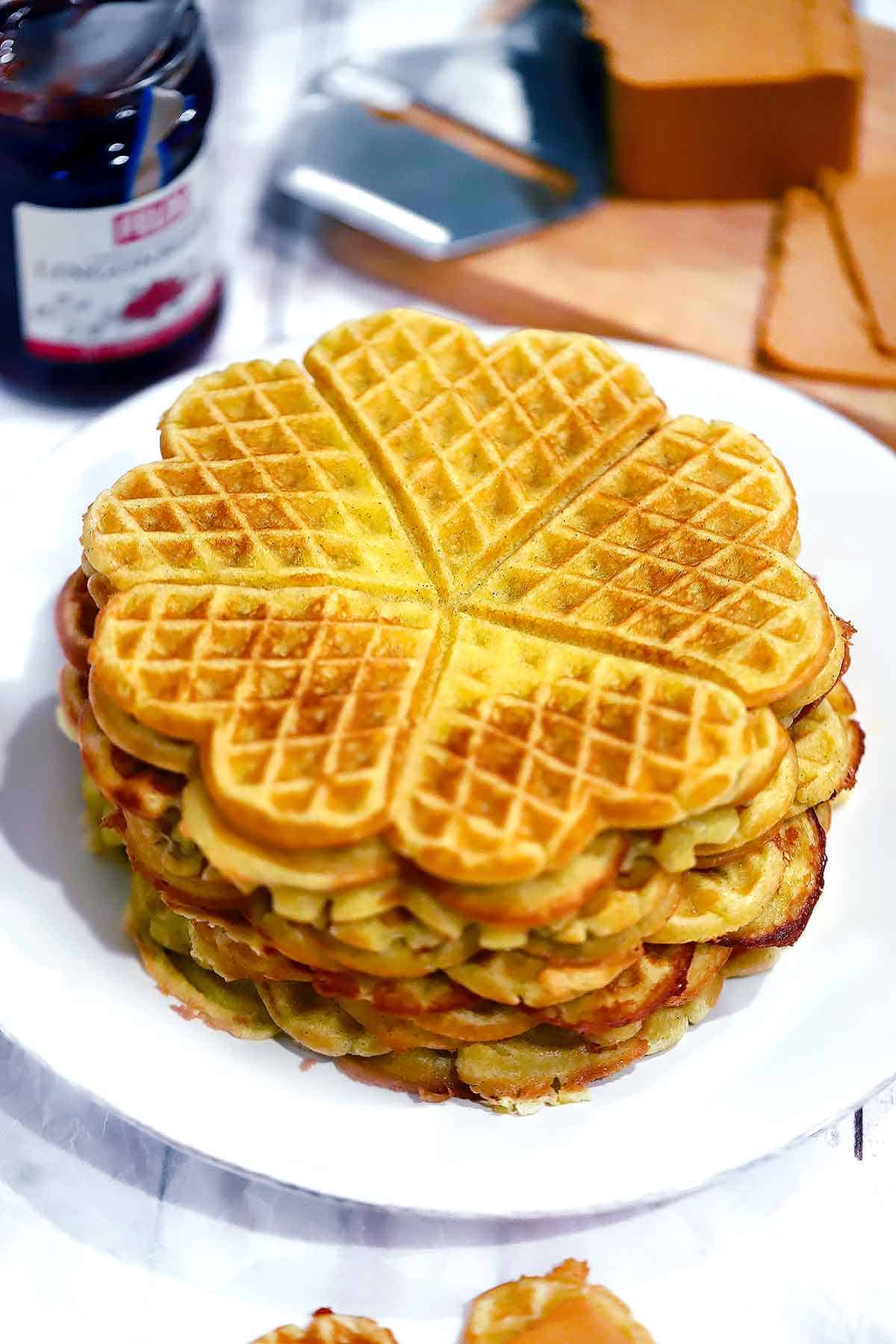
Christian Science Monitor, participating in a “dugnad” is just part of being Norwegian. A kind of community volunteering there, it usually involves an element of fun, such as waffles for mud-spattered workers or a cookout for kids.

Most Norwegian children are raised knowing that service for the good of the community is an essential part of life. It’s not presented as an unpleasant chore, according to the Christian Science Monitor, but work that you do with others and always combine with some fun.

Mark Sappenfield writes, “There is no precise word in English for what Ann Helen Myrvold is doing. ‘Volunteering’ perhaps comes closest. But it’s more than that.

“She has not come to this part of suburban Oslo just to beautify the stream Gjersrudbekken on its forested tumble toward the fjord. She has come from some deeply ingrained Norwegian sense of obligation, of community, of responsibility – and, of course, for the waffles.

“True, what she is doing looks remarkably like a run-of-the-mill cleanup, removing everything from car tires to motorized scooters from the stream’s path with a sweet treat for everyone afterward. But she and her friends from a nearby university have been doing things like this since kindergarten, cleaning neighborhoods and holding bake sales to fund sports teams.

Dugnad is not just the activity, but the mindset behind it. And at a time when social scientists see the fabric of societies fraying – churches and community organizations declining, connections across demographic lines dwindling – dugnads are something of an antidote.

“No one here would argue that dugnads are the reason why Norway consistently ranks as one of the highest-trust countries in the world. But no one would argue that they don’t play a role, either. They are a binding force, both simple and sweeping, that give Norwegians not only a sense of doing good, but of doing it together. …

“Says Ms. Myrvold, ‘You start at a young age, and you just learn to do it and love it. You see it as teambuilding.’

“The tradition has its roots in Norway’s history as a poor nation of small farmers and fishermen. When a church or bridge needed to be built, or a neighbor was building a barn, everyone came together to help.

“ ‘It was a kind of social insurance or a mobilizing of resources, and it was steeped in a sense of justice,’ says Karl Henrik Sivesind, a professor at the Institute for Social Research in Oslo who has studied the tradition. ‘It’s not for your own advantage. You chip in, and everyone chips in.’

“Today, social scientists lament the loss of ‘social capital’ – the connections in a community that drive trust and bring broader benefits for all. The dugnad is an incubator of social capital, Dr. Sivesind says.

“ ‘If you look at the word itself, it has a social element,’ he says, noting that its verbal roots reference the concept of virtue. ‘You contribute to necessities of organization, and you meet people, build networks, and get to know people in your neighborhood.’

“The Gjersrudbekken cleanup is organized by Rusken, a three-person bureau in the Oslo city government that organizes volunteer cleanups and is celebrating its 50th anniversary this year. Ms. Myrvold signed up with several friends who attend the nearby Norwegian University of Life Sciences. …

“To all the young women clad in bright orange vests and industrial work gloves, participating in a dugnad is just part of being Norwegian. And it usually involves an element of fun, whether that’s waffles for mud-spattered workers or a cookout for kids.

“Across town, Norway’s biggest hiking and outdoor activities organization is holding a dugnad of its own, skewers for sausages included.

“The Norwegian Trekking Association is among the most beloved groups in the country, maintaining trails and cabins for a nation of nature lovers. Today, in a playground of the residential neighborhood of Bærum, they’ve built a bonfire.

“The plan is to teach local children wilderness skills such as first aid. Many kids have brought stuffed animals to practice on. But it’s also a chance for neighbors to meet and talk….

“Maria Ruud has brought her 7-year-old daughter. She says she’s been doing these sorts of things ‘forever.’ Local carnivals for kids, neighborhood cleanups where ‘you find a task the kids can do,’ and Norway’s famous May 17 Independence Day celebrations – all made possible by dugnads.

“She acknowledges that she sometimes doesn’t look forward to the work, whether that’s planning games and food or raking leaves. But there’s a bigger benefit.

“ ‘The good part is the social side,’ Ms. Ruud says. ‘You come together and share the work. As humans, you feel like you’re a part of something bigger. We need that to make our life meaningful.’ …

“Kristin Sandaker ticks off the dugnads she has done over the years. At one flea market to support a local youth orchestra, she recalls getting in 24,000 steps simply lugging items around. …

“But she worries that the forces that would divide Norway are growing. The political polarization that shapes much of European politics has a foothold in Norway, too. And immigration can inadvertently raise the risks of different communities becoming detached and distant from one another.

“Dugnads are a counterbalance. There’s a fellowship that comes from taking 24,000 steps or being ankle-deep in mud with someone.

“ ‘It is the most obvious proof that we can do things together,’ Ms. Sandaker says. With the current state of things, ‘this gets even more important – that people get together in this way.’ ”

More at the Monitor, here. Do you see anything like a dugnad in your community?

Read Full Post »

When I saw an article in the Atlantic about how Americans need small talk, I thought immediately about Norwegian author Karl Ove Knausgaard’s disastrous meal with an unnamed famous America author.

First, James Parker’s small-talk overview in the Atlantic: “The correct answer to the question ‘How are you?’ is Not too bad.

“Why? Because it’s all-purpose. Whatever the circumstances, whatever the conditions, Not too bad will get you through. In good times it projects a decent pessimism, an Eeyore-ish reluctance to get carried away. On an average day it bespeaks a muddling-through modesty. And when things are rough, really rough, it becomes a heroic understatement. Best of all, with three equally stressed syllables, it gently forestalls further inquiry, because it is — basically — meaningless.

“Small talk is rhetoric too. Americans in particular are small-talk artists. They have to be. This is a wild country. The most tenuous filaments of consensus and cooperation attach one person to the next. So the Have a nice days, the Hot enough for yous, the How ’bout those Metses — they serve a vital purpose. Without these emollient little going-nowhere phrases and the momentary social contract that they represent, the streets would be a free-for-all, a rodeo of disaster.

“But that’s the negative view. Some of my most radiant interactions with other human beings have been fleeting, glancing moments of small talk. …

“I was out walking the other day when a UPS truck rumbled massively to the curb in front of me. As the driver leaped from his cab to make a delivery, I heard music coming out of the truck’s speakers — a familiar, weightless strain of blues-rock noodle. … Yes. It had to be. The Grateful Dead, in one of their zillion live recordings. And I knew the song. It’s my favorite Dead song. ‘ “ China Cat Sunflower”?’ I said to the UPS guy as he charged back to his truck. A huge grin: ‘You got it, babe!’

“The exchange of energy, the perfect understanding, the freemasonry of Deadhead-ness that flashed instantaneously between us, and most of all the honorific babe—I was high as a kite for the next 10 minutes.” More at the Atlantic, here.

Now for Knausgaard and the inevitable culture clash.

“I told [my American photographer Peter] about the last time I was in New York, when a well-known American writer invited me for lunch. I brought three of my children with me, none of whom speak English. I thought we might have some difficulty, but hoped for the best. He came and picked us up at the hotel, and we took the subway down to Chinatown, where we found a suitable restaurant. I tried desperately to think of something to say. We had to have something in common, we were about the same age, did the same thing for a living, wrote novels, though his were of considerably higher quality than mine. But no, I couldn’t come up with a single topic of conversation.

“He talked a little, I listened, nodding politely now and then, said: ‘Oh, really? Is that so?’ while all the time I also had to communicate with the children, who weren’t used to strangers either.

“When we got back to Sweden, I received an email from him. He apologized for having invited me to lunch, he had realized he never should have done it and asked me not to reply to his email. …

“ ‘Who was it?’ Peter asked.

“I told him.

“ ‘It’s deeply un-American, you know, not to make small talk. It’s a very important part of the culture of this country. You remind me a little of my dad. He didn’t know how to make small talk, either, when he first got here. Or maybe he didn’t want to. But he does now.’ ” More.

As someone who helps out in ESL classes, I’m thinking it could be important to teach new Americans how to do this. Small things can connect people or push them away, and in this country, it seems that small talk is big.

Read Full Post »

My husband is into all things Iceland and Frozen North, which led to his mentioning the other day that an island much farther north than Iceland was “where the seed bank is.”

“What seed bank?” said I, running to Wikipedia.

Wikipedia answered, “The Svalbard Global Seed Vault … is a secure seed bank on the Norwegian island of Spitsbergen … 810 mi from the North Pole. Conservationist Cary Fowler, in association with the Consultative Group on International Agricultural Research (CGIAR), started the vault to preserve a wide variety of plant seeds that are duplicate samples, or ‘spare’ copies, of seeds held in gene banks worldwide. The seed vault is an attempt to insure against the loss of seeds in other gene banks during large-scale regional or global crises. …

“The Norwegian government entirely funded the vault’s approximately … $9 million construction. Storing seeds in the vault is free to end users, with Norway and the Global Crop Diversity Trust paying for operational costs. …

“Running the length of the facility’s roof and down the front face to the entryway is an illuminated work of art that marks the location of the vault from a distance. In Norway, government-funded construction projects exceeding a certain cost must include artwork. KORO, the Norwegian State agency overseeing art in public spaces, engaged the artist Dyveke Sanne to install lighting that highlights the importance and qualities of Arctic light. The roof and vault entrance are filled with highly reflective stainless steel, mirrors, and prisms. The installation reflects polar light in the summer months, while in the winter, a network of 200 fibre-optic cables gives the piece a muted greenish-turquoise and white light.”

(You’ll forgive me for taking out all the hyperlinks for terms like “Norwegian,” “global crises,” “fibre-optic cables,” and “North Pole.” Wikipedia gets carries away with hyperlinks, but you can read the whole thing here.)

May 19, 2017 update: Uh-oh. The permafrost is melting and the safe house for seeds is starting to flood: https://www.theguardian.com/environment/2017/may/19/arctic-stronghold-of-worlds-seeds-flooded-after-permafrost-melts.

Photo: NordGen/Dag Terje Filip Endresen
Entrance to Svalbard Global Seed Vault in 2008

Read Full Post »

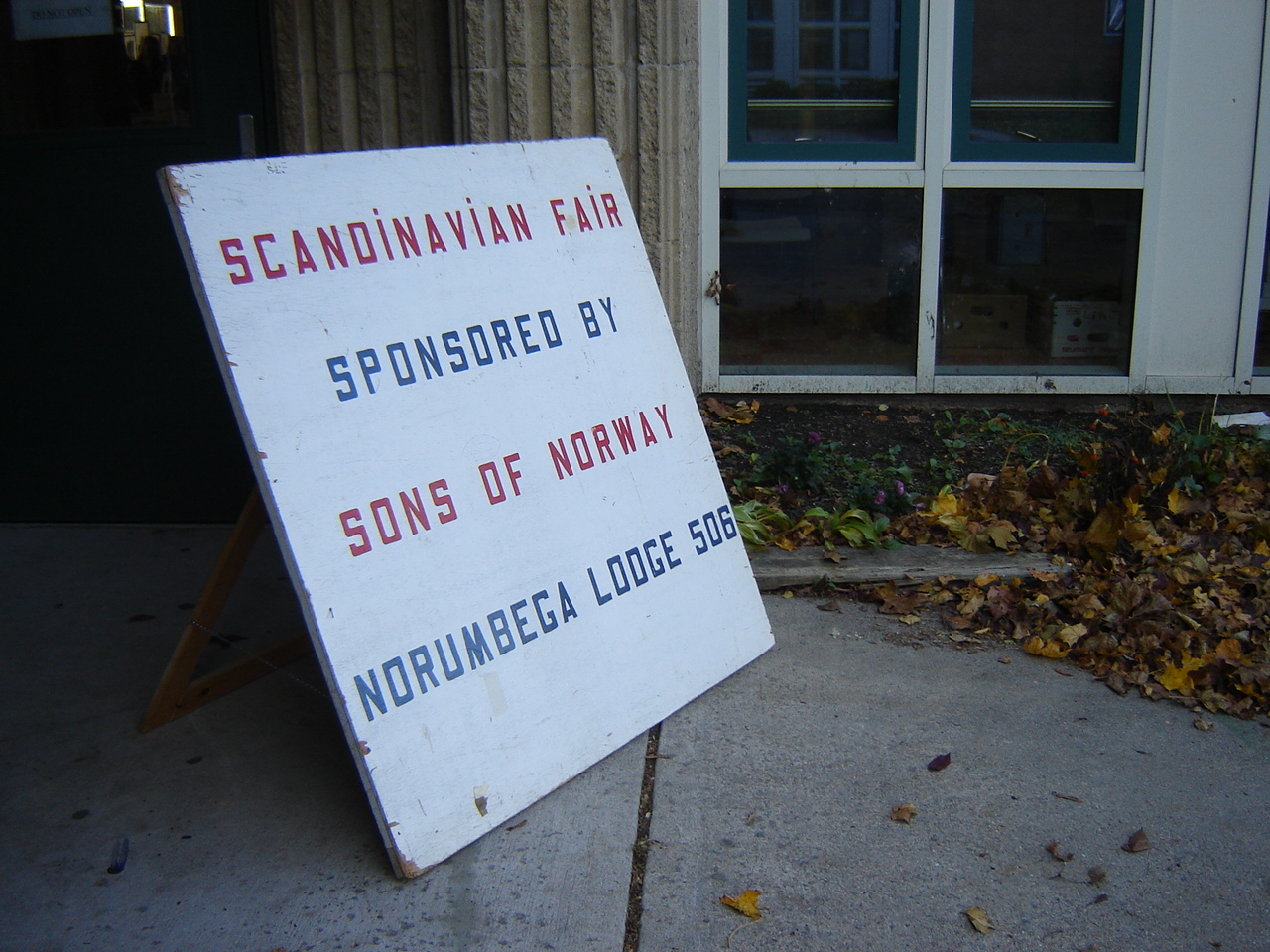
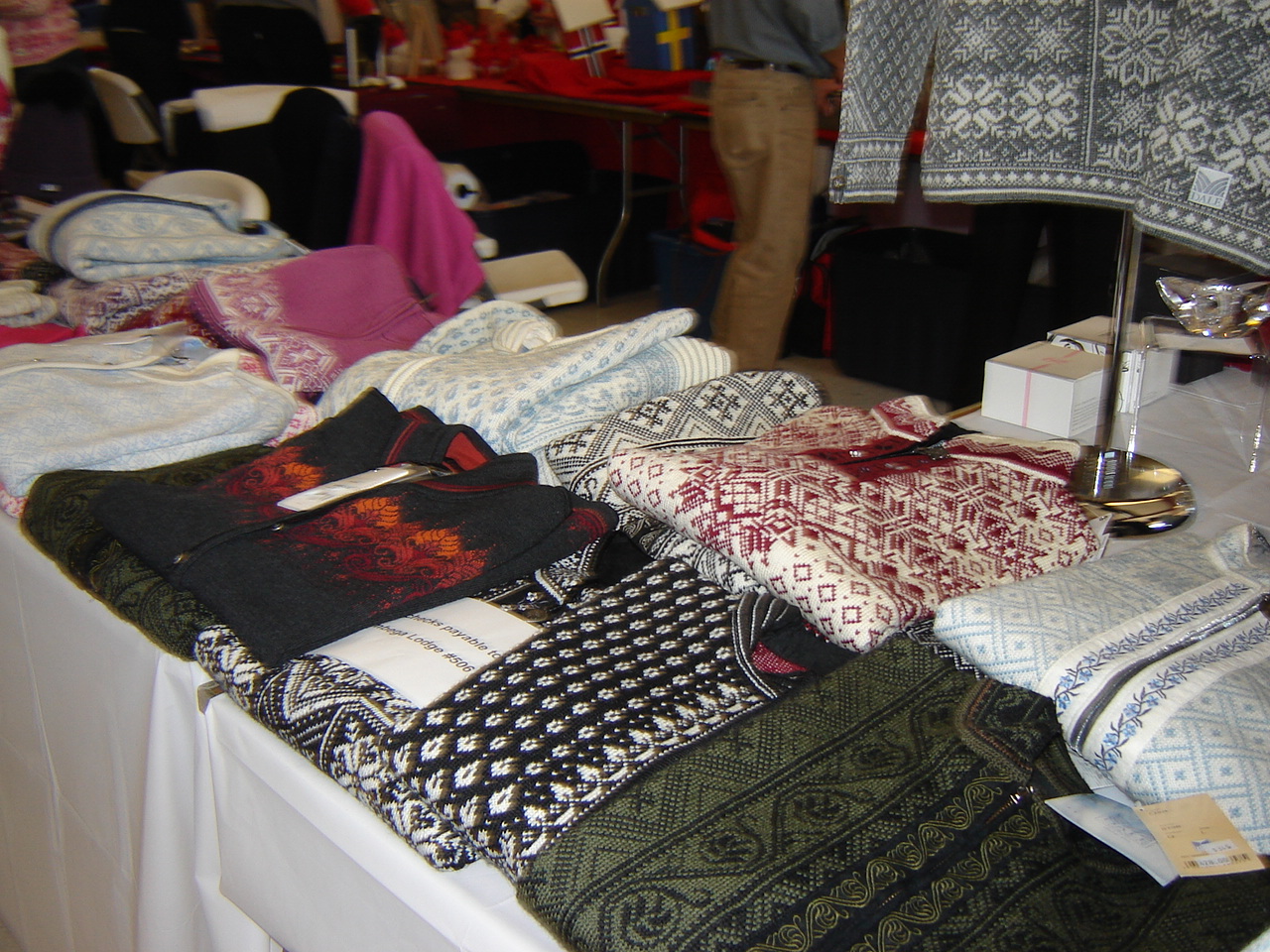
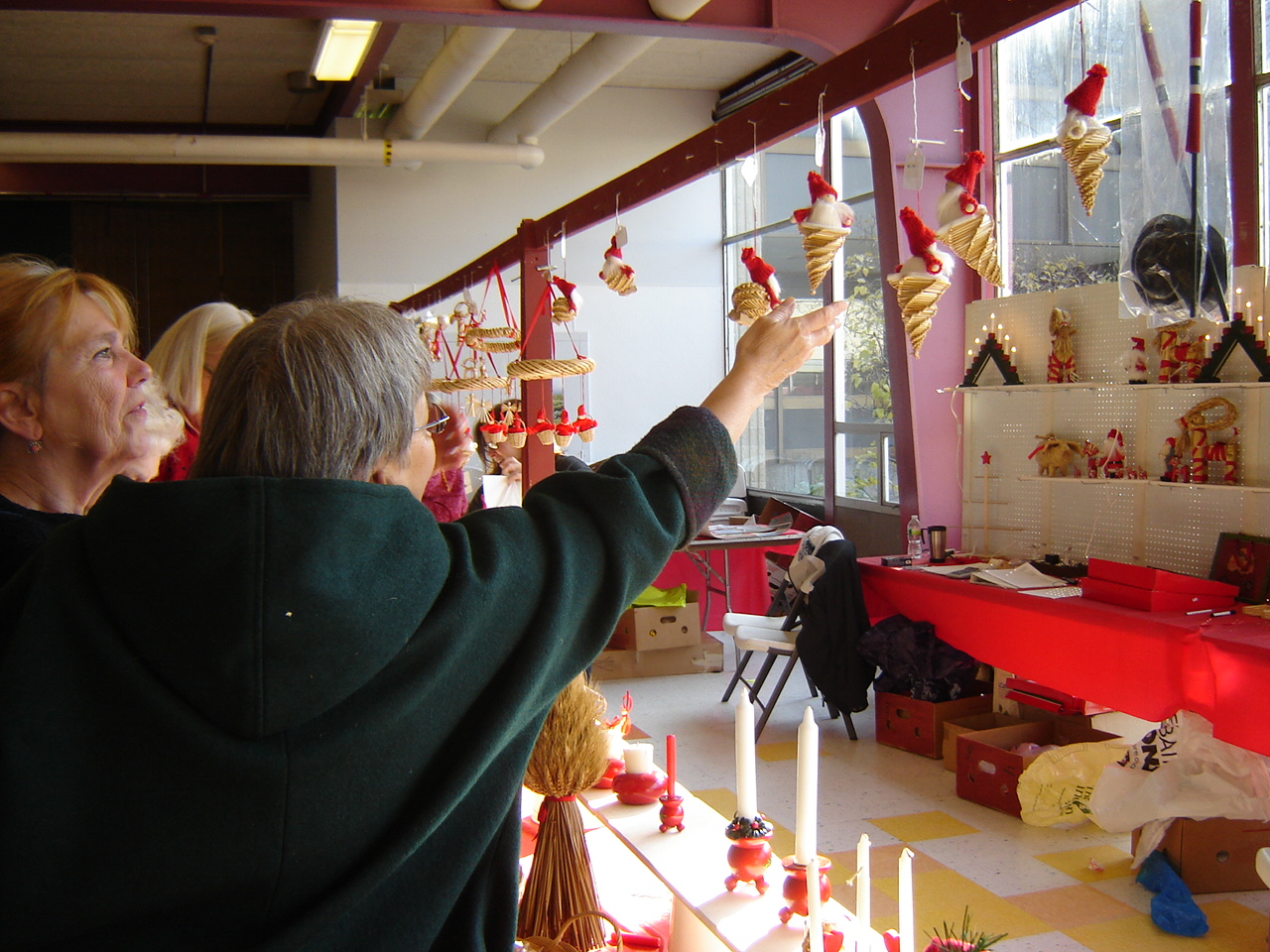
I’ve been attending the annual Scandinavian Fair ever since Erik came into our lives. Although he has yet to be in town when it has taken place, it’s OK. He may not feel a need to be more Scandinavian than he already is.

The Scandinavian Fair is a real happening — “sui generis to a fault,” as the humorist S.J. Perelman might have said. Definitely the place to go if you have inadvertently run out of glögg.

Update 11/13/14: This year’s fair is Saturday, November 15, at Concord Carlisle High School, Walden Street, Concord, MA, starting at 10 a.m.

Read Full Post »