Feeds:
Posts
Comments

Posts Tagged ‘pakistan’

Photo: Rasha Al Sarraj.
Ghulam Hyder Daudpota teaching his craft to students at a ceramics class in Karachi. 

Part of the effort to save artistic and cultural treasures has to be keeping alive the ability to make them in the future. It involves passing on the skills to new generations. Consider today’s story.

Saeed Kamali Dehghan reports at the Guardian, “The small city of Nasarpur in Pakistan has a centuries-old reputation for its ceramics. That’s why, when the ceramic worker Ghulam Hyder Daudpota decided to come all the way to London to master his craft, he says ‘it seemed futile.’ But, he adds: ‘It turned into a life-changing opportunity.’

“Daudpota grew up with eight siblings in a city where the mosques and shrines are embellished with terracotta and blue glazed tiles, known as the art of kashikari. He spoke little English until the age of 27 and his parents had ‘no deep pockets’ to pay his tuition fees.

“But the talented Pakistani secured a full scholarship at the King’s Foundation school of traditional arts (KFSTA) in east London, before returning to his country and helping to revive the dying craft.

“ ‘Kashikari is ubiquitous across [the province of] Sindh, but when I was growing up it was considered a dying craft and only a few craftsmen were practicing. If it wasn’t for my time at KFSTA, I wouldn’t be where I am at the moment,’ Daudpota says from his Nasarpur workshop, which now employs 40 people.

“Believed to have originated in the Iranian city of Kashan, kashikari involves making biomorphic patterns on terracotta clay by dabbing graphite on perforated paper, before applying turquoise metallic pigments found in copper and cobalt oxides.

“ ‘If you go back 100 years, we had a variety of glazes and techniques – masterpieces that we see today in Shah Jahan mosque in the city of Thatta – but we had no proper patronage and we lost our skills, we lost our knowledge,’ Daudpota says.

“Daudpota has since worked on designs at Islamabad airport, Pakistan’s pavilion at Dubai Expo 2020 and on restorations at prominent mosques and mausoleums. In 2010 he was awarded the Jerwood prize for traditional arts for a tile fountain inspired by kashikari panels found in Nasarpur’s old mosque. Daudpota sold the fountain for £5,000 [~$6,600] and received £2,500 in prize money, which he took back to Pakistan and opened a workshop.

“It was a long way from what he had expected from life. Daudpota did not perform well at school and his parents apprenticed him to a local craftsman. An encounter while working on a commission at a private mansion changed the course of his career. ‘It was a turning point in my life,’ he says.

“The house was owned by a teacher at the National College of Arts (NCA) in Lahore. He told Daudpota that his experience would qualify him to study for a master’s degree, provided he learned English within the next four months. He took classes at sunrise every day and passed the test.

“The NCA has a longstanding arrangement with KFSTA, sending one student to London every year for almost three months. Daudpota was chosen for the 2008 program. …

“KFSTA promotes ‘the living traditions of the world’s sacred and traditional art forms,’ such as Persian miniature painting, Moroccan zellige mosaic tilework and Egyptian Mamluk woodcarving. …

“ ‘Teachers in my country were discouraging me from pursuing traditional arts; they were saying it was primitive. The school broadened my perspective, and gave me the training platform to understand how we can turn a dying tradition into a living tradition.’ ”

More at the Guardian, here. No paywall. Donations encouraged.
Read Full Post »

Photo: Zofeen T Ebrahim/The Guardian.
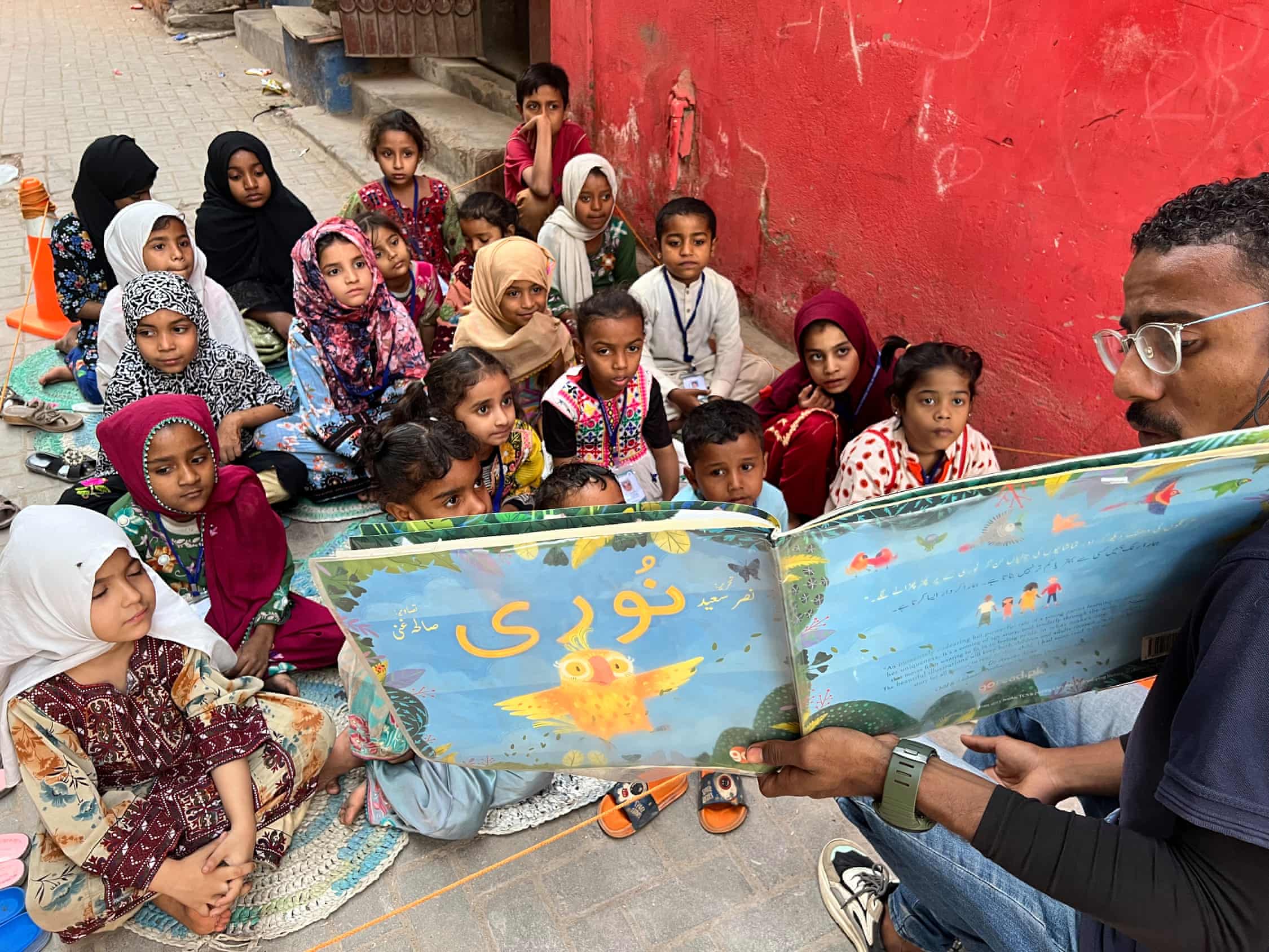
A GoRead worker helps to educate children in Pakistani slums through storytelling. The GoRead director says, “We cannot expect children to want to read if we don’t read to them first.”

If it’s true that Sauron is always collecting his strength to rise again, it’s also true that people who do good never stop doing good. Whatever happens, you can’t completely stamp out kindness or good works. They gather strength, too.

I hate hearing decent people’s defeatism. I like focusing on stories like today’s, stories of people trying to make the world a little better wherever they are.

Zofeen T Ebrahim writes at the Guardian, “Pedaling down a narrow alleyway in Karachi’s crowded Lyari Town, Saira Bano slows as she passes a group of children sitting on the ground, listening to a man reading aloud from a book. The eight-year-old gets off her bike, slips off her sandals, and sits on the mat at the back.

“She has already heard the story from Mohammad Noman, who is entertaining more than a dozen children with the tale of Noori, an insecure yellow parrot. ‘I don’t mind listening to it again,’ says Saira. ‘He’s so funny.’

“Noman, 23, is spending two weeks in Lyari pedaling an old ice-cream cart through its lanes, stopping to read his stories and leaving behind books for the children to borrow. He dropped out of school himself as a teenager but has returned to education and is now studying for his high school certificate.

“He is also one of two storytellers working part-time for the Kahaani Sawaari (Stories on Wheels) program, run by GoRead.pk, which is working to improve literacy among underprivileged communities in Karachi, Pakistan’s largest city.

“ ‘I become a kid when I am around the children,’ says Noman. In the past 18 months, he has visited 30 areas of Lyari, one of the most densely populated and deprived neighborhoods of Karachi, with more than 660,000 residents, mostly from the marginalised Baloch ethnic group.

“ ‘I have learned so much,’ says Noman. ‘It has brought a change in me as well. I’ve become more tolerant of people and developed patience. I think I have a certain rapport with children and they listen.’ …

“Education is free and compulsory in Pakistan yet, according to the UN, it has the world’s second-highest rate of children absent from school, at 44% of five to 16-year-olds. And 77% of 10-year-olds are unable to understand simple text, according to the World Bank. Books and uniforms can be prohibitively expensive in Pakistan. Saira dropped out of school a year ago when her father, who worked in a toy shop, lost his job as Pakistan’s economy was hit by rocketing food and fuel prices. …

“Erum Kazi, GoRead’s program director, says parents have told her how their children have developed a love for reading since the scheme began. …

“Nusser Sayeed, GoRead’s director [and] a former teacher, was inspired to set up the program after seeing ‘very little joy in the lives of children studying in schools in underprivileged neighborhoods.’ Children were growing up without anyone reading them stories, she says, adding: ‘We cannot expect children to read if we don’t read to them first.’ “

More at the Guardian, here. And in a related Guardian story, read about how a camel delivered books to poor children in Pakistan when Covid closed schools, here.

Read Full Post »

Photo: Shah Meer Baloch.
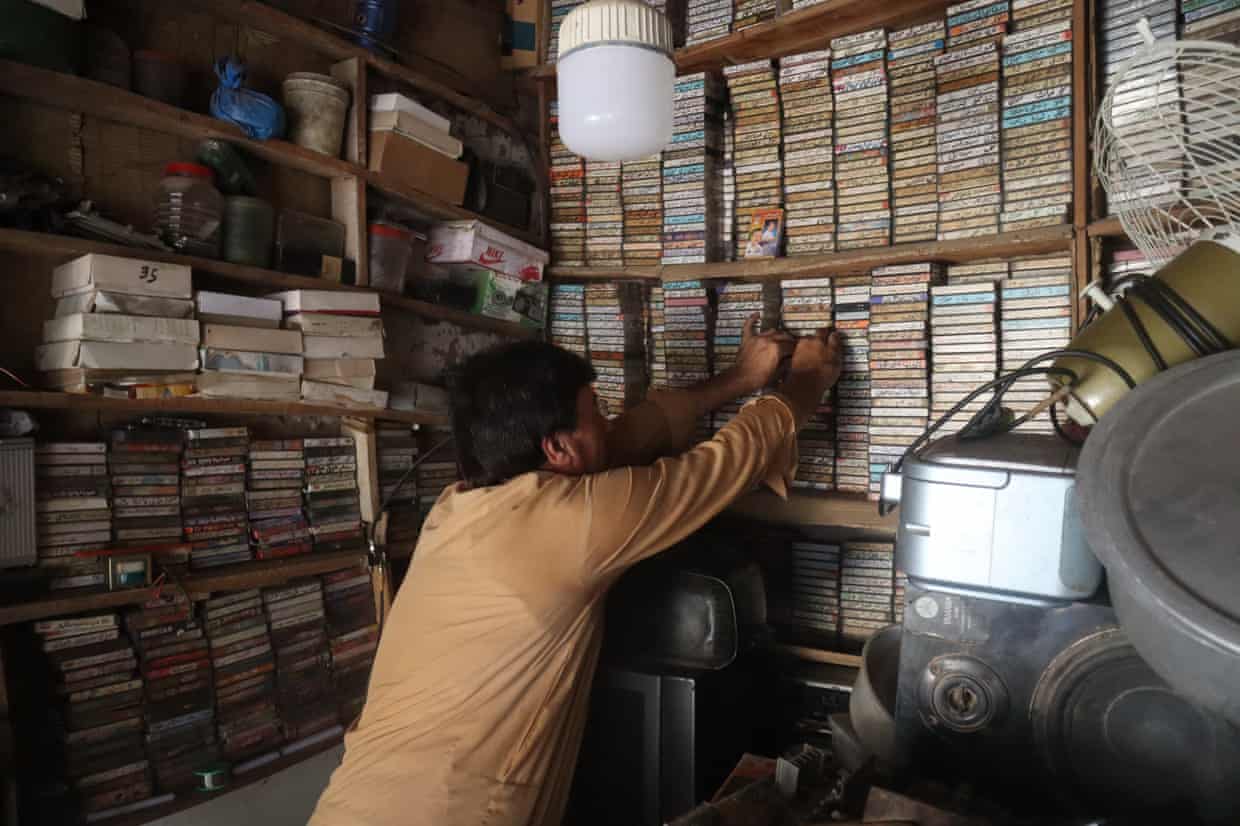
Afghan refugee Mohammed Hasan Zamri in his shop in Pakistan, where he keeps his collection of rare music cassettes from his homeland.

For the Afghan diaspora, you have to celebrate joy where you find it. In October, for example, Afghan friends lit up social media because of an unexpected triumph in cricket.

“I had a quick shower and was heading towards the office when I learned about Afghanistan’s phenomenal cricket victory against Pakistan, with the news dominating my socials,” Shadi Khan Saif exclaimed in the Guardian. …

“The team’s phenomenal performance has lifted up not just the devastated nation but millions in the Afghan diaspora, including in Australia. At Dandenong Park in Melbourne’s south-east, hundreds joined in on the traditional Attan dance to mark the victory. The scenes in Kabul and other cities in Afghanistan were equally charged with joy and celebration.

“Amid international isolation, Afghanistan’s cricket team has once again proved itself as the only source for the Afghans to connect with the outer world. Afghanistan’s tri-color flag – now replaced with the white Taliban flag – and the Republic-era anthem are still kept alive by the cricketers on the world stage.”

As unusual as was that moment of delight, it is clearly not the only way Afghans seek out joy. Some turn to a collector in Pakistan who is saving Afghan music for posterity.

Shah Meer Baloch reports for the Guardian, “Afghan music fans from Kabul and Jalalabad have crossed the border to the city of Peshawar in Pakistan to offer thousands of rupees to Mohammed Hasan Zamri’s workshop for just one cassette.

“Zamri, an Afghan refugee, refuses them all as he continues his quest to copy and, one day he hopes, digitize his collection of more than 1,000 rare and old Afghan music cassettes of various genres.

“It is his contribution to help preserve a musical culture that existed for centuries before the Taliban existed.

“Since retaking control of the country in 2021, the Taliban have imposed their rigid interpretation of Islam, restricting and even criminalising music and arts. In July, they publicised a bonfire of seized ‘illegal’ musical instruments, reminding Afghans that the sale of instruments was a punishable offense.

“ ‘The Taliban just use religion as an excuse to ban music and say it is haram, prohibited, in Islam. This is not true and it is part of our culture for centuries, but the Taliban have senselessly put a ban on it, says Zamri.

“Zamri fled Afghanistan during the Soviet invasion and went back for a few years after the war had ended and the Taliban had started to consolidate their power. He left again in 1996 and has been running a workshop fixing tape recorders and TVs ever since.

“Most of the space in his small workshop is taken up by stacks of cassettes, neatly arranged on a wall opposite the entrance. His collection includes tapes of renowned Afghan musicians including Munawar, Nashenas, Taj Mohammad and Haikal.

“ ‘I have done recordings of many singers myself who had fled Afghanistan in the 1990s or had come to Peshawar, which has been a thriving hub for Afghan refugees and musicians,’ he says.

“ ‘The love for music is there but the musicians, music and art is banned in the Taliban’s Afghanistan. Today, we have many singers but because of the ban, they cannot perform. They have fled Afghanistan.’

“Listening and copying his cassettes, Zamri reminisces of times when Afghan audiences could enjoy music and culture with freedom – the same freedom afforded to musicians and artists, men and women. … ‘The people who have heard these songs or lived through the era are the ones who come to buy cassettes. …

“ ‘Naseema, Kashan, Benazir and Zarghona were the best female singers who dominated Afghan music three to four decades ago. Now, if they do not allow men to sing or create music, how will they allow women?’

“Until [August], Zamri was unknown to many Pashto-speaking people until local media featured his attempts at saving Afghan music cassettes. He has since received both threats and messages of appreciation.

“ ‘I have been threatened on Facebook from people to stop my work and they would burn down my shop and that this is against Islam. But there were some positive and appreciative comments too. …

” ‘Some people are addicted to smoking, some people love pets and some are fond of many other things. I am addicted to Afghan music. It is my hobby and passion,’ he says.”

More at the Guardian, here.

Read Full Post »

Photo: Asif Hassan/AFP/Getty Images.
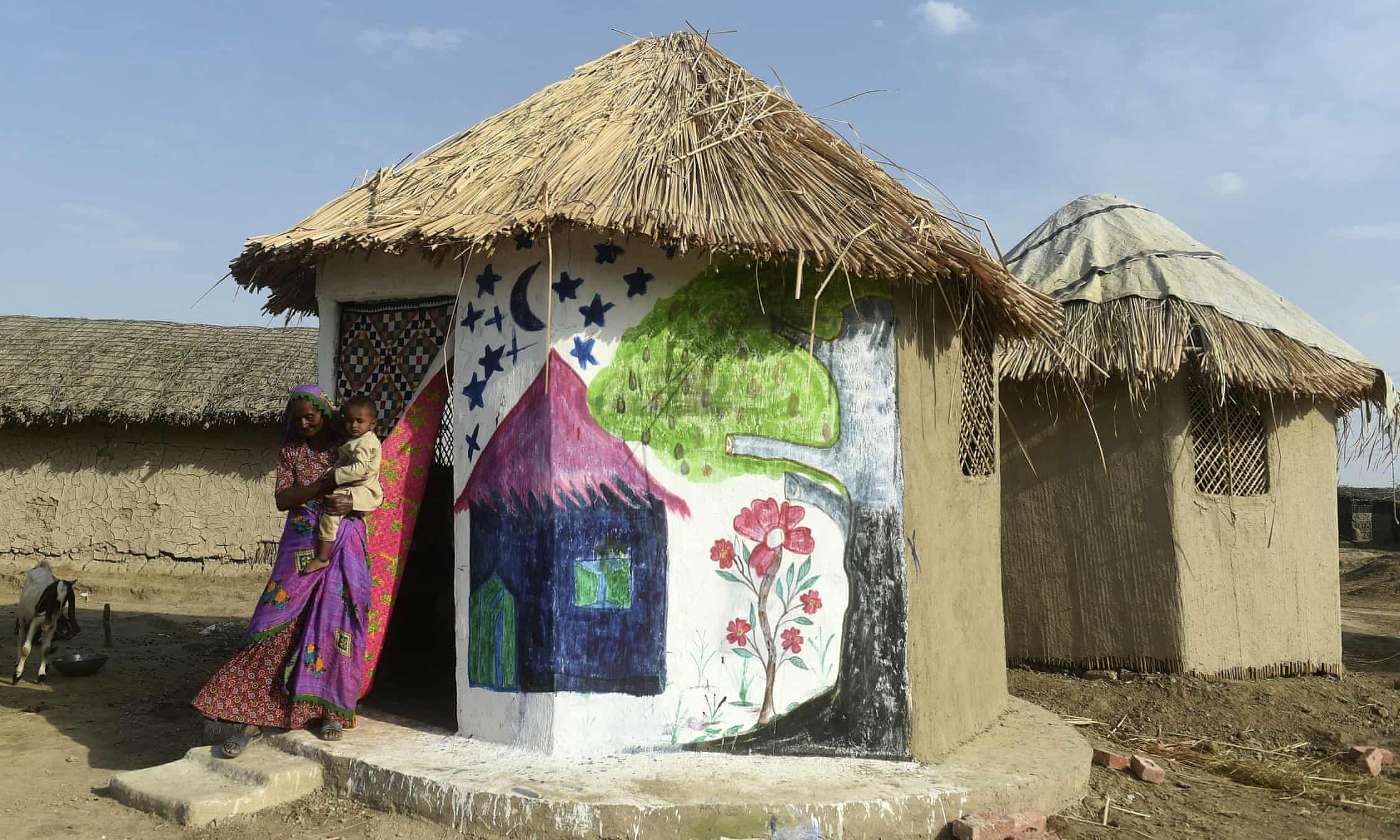
A resident with her flood-resistant hut made from bamboo at a cost of about $87.

The news of floods this week is tragic. In Libya a dam suddenly broke, wiping away villages, and even near me, a quixotic rainfall — 11 inches in about 6 hours — submerged many homes in one city while the rest of the region was untouched.

Pakistan, of course, has suffered worse. That’s why it’s extra interesting to read about a sustainable, cost-efficient way that some poor areas there are rebuilding.

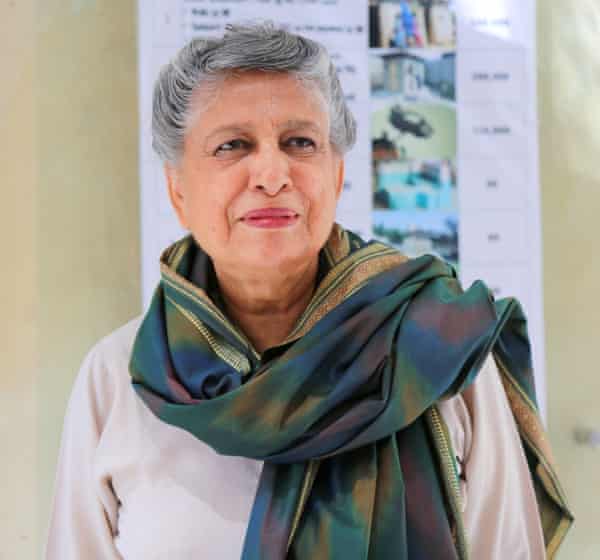
Zofeen T Ebrahim writes at the Guardian, “A year ago, Shani Dana’s mudbrick house was swept away in the worst floods on record to hit Pakistan. More than 1,700 people were killed and 900,000 homes damaged or destroyed. Sindh province, where Dana lives, was the worst affected.

“While waiting for government money to rebuild her home in Wasram village, in the Tando Allahyar district, word reached Dana that the Heritage Foundation of Pakistan (HFP), founded by a renowned architect, Yasmeen Lari, was building one-room homes in neighboring Pono village.

“The buildings ‘looked like rounded chauhras [traditional huts], but were octagonal in shape and the walls were much sturdier,’ says Dana.

“The foundation agreed to help Wasram rebuild and in March the HFP team joined villagers to construct 50 new homes. Prefabricated bamboo frames were built on meter-high raised platforms. Walls made of bamboo canes were fixed and plastered with mud mixed with rice husk and lime, and radial-style conical roofs were fitted. Four solar panels, six water hand pumps and 25 toilets were also built.

“ ‘This will not be swept away if the floods come again. It is not built at ground level, it’s airier and brighter since there is a window – ours didn’t have one before – and also looks much neater, since the walls and floor are plastered,’ says Dana outside her new home. …

“The HFP has helped build more than 5,000 chauhras since September [2022]. ‘In the next two months, I should be able to build another 2,600 homes,’ says Lari, who is urging every villager who has built their home to help 10 others build theirs.

“A year after the floods, tens of thousands of people are still waiting for help to rebuild. Organizations like HFP and the NGO Karachi Relief Trust have been stepping in.

“About 250 of the 1,000 one-room homes KRT is building in villages across Sindh, Punjab and Balochistan provinces … are being built using burned-earth bricks or cement blocks with roofs made of steel girders and precast cement slabs. ‘The houses we built in 2010 have survived and aged well,’ said Ahsan Najmi, the trust’s architect. …

“The Sindh People’s Housing Foundation (SPHF), which is overseeing the rebuilding, hopes 50,000 one-bedroom ‘resilient’ cement, brick and steel homes will be livable by September. It has enough money to cover the cost of 350,000 homes, but needs at least $500m to finish all the work. …

“However, Lari questions the cost of the project and believes rebuilding could be cheaper and more sustainable. The houses SPHF is asking people to build cost 300,000 rupees [~$1,030] each, about the same amount KRT’s homes are costing.

“HFP homes, which are made of fully cured bamboo, the ends of which are covered with lime to protect them from termites, cost just 25,000 rupees. The lime in the plaster and bamboo also absorb and store carbon from the air, helping mitigate the effects of the climate crisis.

“ ‘I’m not doing anything new. I may have tweaked the design, but the material used is age-old, indigenous and easily available,’ says Lari, who began her humanitarian work after a 7.6-magnitude earthquake shook northern Pakistan in 2005. …

“Lari, who is this year’s recipient of the Royal Institute of British Architects’ royal gold medal, one of the world’s highest honours for architecture, says she would like the government to adopt sustainable alternatives to housing. ‘I am happy to provide any assistance if they would like to provide a better quality of life for the poor,’ she says. ‘Our design is open source, available free. We can also identify many trained master artisans. It is up to the government. We are there to further the cause.’

“An essential part of Lari’s work is involving communities in the rebuilding process so they learn a trade. While the foundation pays for the bulk of the materials and brings its expertise, local people collect the mud and rice husk, and provide the labor.”

More at the Guardian, here. No firewall. Donations encouraged.

Read Full Post »

Photo: Hasan Ali.
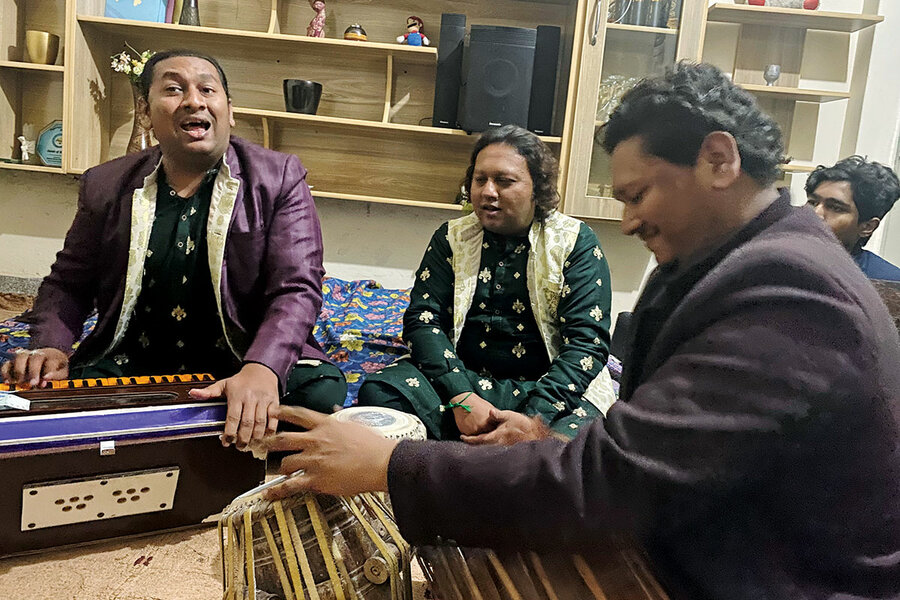
Brothers Tuqeer Ali Khan and Khurram Ali Khan perform a qawwali, a style of Sufi Muslim devotional music. The Christian Science Monitor writes, “The duo rose to prominence after being featured on The Dream Journey’s YouTube channel.”

Everyone loves the music of their youth. But what if it starts to disappear from the the radio and the other places it used to be played? Fortunately, a few enthusiasts have the power to turn things around if they care enough.

Hasan Ali reports at the Christian Science Monitor, “In the short interlude between musical pieces, Tuqeer Ali Khan looks suspiciously at his harmonium.

“ ‘Has someone tried to tune this?’ he asks, his eyes squinting in disapproval.

“ ‘No one has touched it but you,’ replies his brother and musical partner, Khurram.

“ ‘Are you sure?’ says Mr. Khan, raising an eyebrow. ‘It sounds a little off to me.’

“If it is, no one in the small audience seems to have noticed. Though he is only 10 minutes into the mehfil-e-samaa – a concert given in an intimate setting – he has created a mood of rapture. He resumes the performance with one of the numbers that made him famous. ‘Spring has come but my beloved has not,’ he sings. ‘My heart cries in anguish.’

“Though he comes from a family of musicians and is now considered one of Pakistan’s most promising classical vocalists, up until a couple of years ago Mr. Khan was virtually unknown outside of Dipalpur. Then he and his brother were featured on The Dream Journey

“Now in its ninth year, the audio-visual project is helmed by a small group of friends who record Pakistani musicians and publish their material on a dedicated YouTube page. The Dream Journey aims to promote traditional, Sufi-style music, the popularity of which has declined in recent decades due to geopolitical pressures. Their channel has amassed over 36 million views and 169,000 followers, and has launched several careers. But above all else, it serves as a source of joy not just for international audiences, but also for the project’s music-loving founders and featured musicians.

“ ‘My brother and I used to go around begging music producers to give us a chance,’ Mr. Khan says. ‘It was only when we were featured on The Dream Journey‘s YouTube channel that our careers began to flourish.’

“ ‘I pray for them every day,’ adds Khurram, who is himself an accomplished singer and tabla player. ‘All of our success is due to them.’

The Dream Journey project was started by eight music enthusiasts.

“ ‘We basically got to know each other online,’ says Musab bin Noor, a medical doctor. ‘It was always a desire to someday get together and listen to music as a group and that finally happened in 2014 when everybody’s schedules aligned.’

“They decided to visit musicians in their homes – the place where they practiced and felt most comfortable. ‘There’s nothing made up about it,’ explains Arif Ali Khan, a founding member who lives in Canada but regularly travels to Pakistan to work on The Dream Journey Project. ‘The focus is only on the music.’

After the group’s first trip to Karachi, team member Mahera Omar, a documentary filmmaker by profession, published her concert recordings online.  

“ ‘YouTube was becoming quite big in Pakistan at that time,’ she remembers. ‘The response we would get and people’s comments would just blow us all away.’

“Asif Hasnain, another founding member, describes the success of the YouTube channel as ‘miraculous.’ 

“ ‘When you put up a video and it gets 10,000 hits, you say, “Oh my God, it’s huge!” … And then suddenly you find that something has hit 3 million,’ he says. ‘I think the beauty of it is the surprise.’

“And for listeners, discovering the sounds of traditional Pakistani music – including new twists on familiar qawwalis, or Sufi devotional songs – brought its own kind of joy.

“ ‘So heartening to see a young qawwal party deliver a performance that would make the old maestros proud,’ writes one YouTube commenter by the name of Talha Khan. …

“The launch of The Dream Journey channel came at a time when Pakistan’s classical music scene was stagnant, leaving many performers struggling to make a living. 

“ ‘The job of the artist is not to go around begging people to listen to them. We are supposed to practice and perform,’ says Akbar Ali, a classical vocalist based in Lahore. ‘Musicians who were millions of times more talented than I am have left this world in a state of destitution.’ …

“Veteran performer Babar Niazi credits The Dream Journey with helping to revive the genre, saying ‘they’re basically filling the gap left by state institutions who have stopped doing their jobs.’ ”

More at the Monitor, here. No firewall. Reasonable subscription rates.

Read Full Post »

Photo: Paul Salopek/ National Geographic.
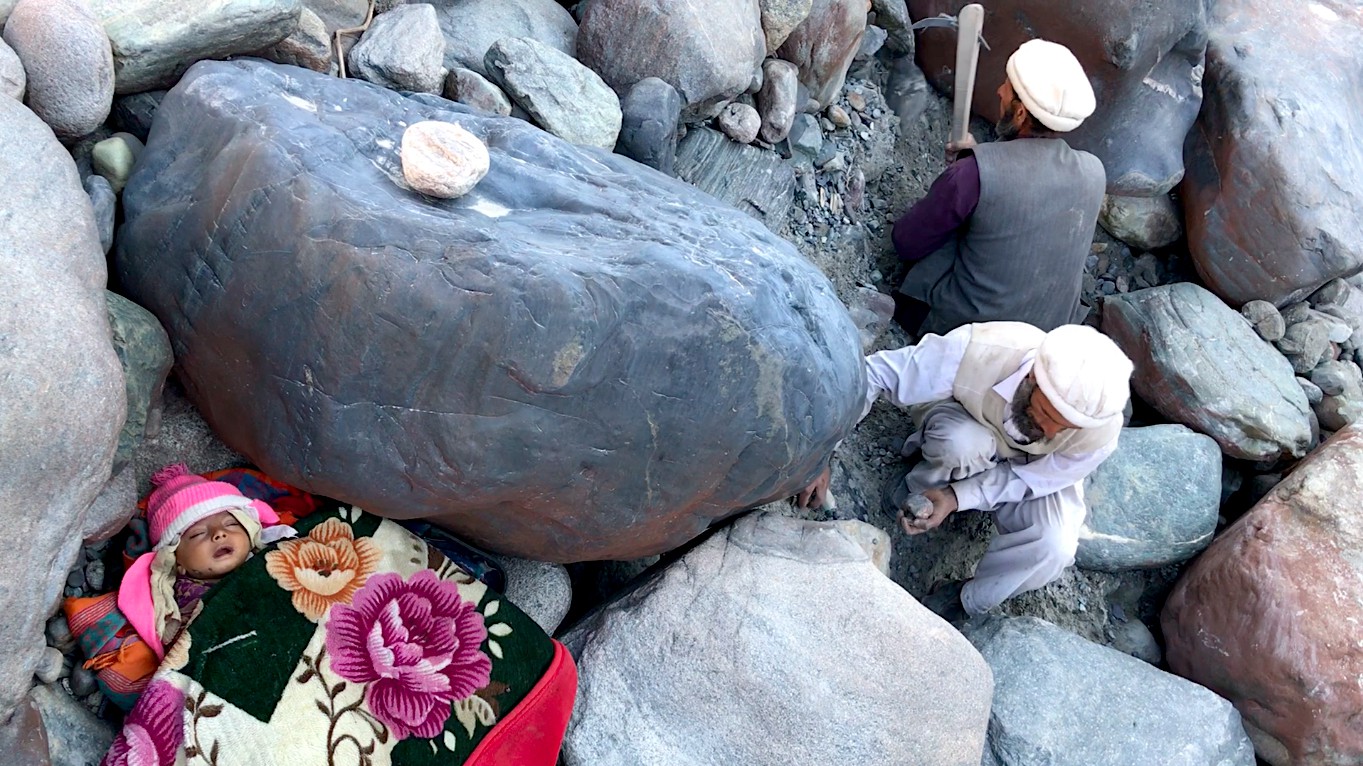
A baby sleeps near a gold prospector’s diggings in northern Pakistan.

I’m not sure how many readers will be interested in today’s rather academic treatment of an exotic part of the world and its many languages. Although I am not fluent in anything but English, I myself like learning about languages, especially those that are spoken by a small number of people and don’t even have a written form.

Language activist Zubair Torwali writes at Aeon about the many languages of ‘Dardistan,’ which includes northern Pakistan, parts of Eastern Tibet in China, eastern Afghanistan and the Kashmir valley on both sides of the Pakistan-India border.

“Dardistan is one of the most diverse linguistic regions in the world. … The region has the large Dardic languages such as Kashmiri, Shina and Khowar on the one hand and, on the other, it is home to the Burushaski language, which could not be placed within any language family because of its unique features. The Nuristani, formerly Kafiri, languages are spoken here, too. There are minor languages such as Kalasha, spoken by the Kalash community of hardly 4,000 people who still follow the ancient animistic religion that was once practiced across Dardistan.

“The name ‘Dardistan’ describes the area comprising the highest mountain ranges of Hindu Kush, Karakoram, western Himalaya and the Pamir mountains. … Dardistan’s enormous linguistic diversity occurs despite the fact that, culturally, the area is fairly homogeneous. [Anthropologist Augusto] Cacopardo says there is no match for this region in terms of linguistic and cultural diversity, except the Caucasus. Though, of course, minor differences exist, the same religious rituals and religious pantheon prevailed among the polyglot peoples of Dardistan.

“The many languages spoken here, though mostly belonging to the Indo-European family, still more narrowly to the Dardic sub-family within the Indo-Aryan group, are so different from each other that the people of one linguistic community have to rely on a third language, Pashto or Urdu, to communicate with members of another community. For instance, the people belonging to the Torwali and Gawri communities of the upper Swat valley in Pakistan need Pashto to converse with each other. This is despite the fact that the Torwali and Gawri languages are ‘sister languages’ and seem to have evolved from one single language a few centuries ago. …

“In 1986, the Summer Institute of Linguistics in collaboration with the National Institute of Folk Heritage, Lok Virsa, and the National Institute of Pakistan Studies at the Quad-e-Azam University in Islamabad, undertook a survey of the languages of northern Pakistan. Published in five volumes, this Sociolinguistic Survey of Northern Pakistan (1992) documented 25 languages. In fact, there are even more – at least 35 – languages in north Pakistan. …

“In his paper ‘India as a Linguistic Area’ (1956), the linguist M B Emeneau uses the phrase ‘linguistic area’ as a technical term to mean an area that includes languages of more than one family sharing some common traits with one another, but not all the linguistic features are alike among the language families. …

“[Swedish linguist Henrik Liljegren] argues that the Hindu Kush–Karakorum (HK) – also known as Dardistan – is a ‘linguistic area’ in the sense that it is a ‘convergence zone with a core that shares certain linguistic features’ as a result of a prolonged period of contact with other subareas. …

“Writing a century earlier, Morgenstierne was correct to claim that the region is among the most linguistically diverse in the world. Presently, about 50 languages are spoken here. [The] region has maintained this linguistic diversity, but it is under grave threat. Dardistan is at the crossroads of South Asia and Central Asia. It is mountainous and makes for very hard traveling. … It is perhaps thanks to Dardistan’s mountainous geography that we still find such a rich array of languages. …

“Dardistan is home to six language groups: namely Indo-Aryan, Iranian and Nuristani (all branches of the Indo-European language family), as well as Turkic, Sino-Tibetan and Burushaski. The Indo-Aryan phylum is the largest, including about 30 languages that have also been lumped together as ‘Dardic’ (North-Western Indo-Aryan) by linguists. … My work as an ethnographer and linguist has focused on north Pakistan. ….

“North Pakistan is a spectacular mountainous land of immense linguistic, ethnic and geographic diversity. It is undoubtedly one of the most multilingual places on planet Earth. Over many centuries, the movement and contact of people at this crossroads of Central and South Asia have left a complex pattern of languages and dialects. …

“None of Pakistan’s governments nor a university has ever taken any initiative in profiling the languages spoken by the people of Pakistan. Only a few – Urdu, Pashto, Punjabi, Balochi, Sindhi and Saraiki – are mentioned in any media, teaching materials and in any kind of national database. It is, therefore, difficult to estimate the exact number of speakers of each language because none of these languages has been counted in the six national censuses so far conducted in Pakistan. The number of speakers of these languages may vary from a few hundred to a million. Many are also spoken in Pakistan’s neighboring countries – Afghanistan, India and China.

“All these languages are categorized as ‘endangered’ in the Routledge Encyclopedia of World’s Endangered Languages (2007) edited by Christopher Moseley. Many of them are ‘severely endangered’ whereas a few are ‘moribund’ or already ‘extinct.’ “

The author details six of the languages at Aeon, here, and posts videos of people singing in them. No firewall.

Read Full Post »

Photo: Heritage Foundation of Pakistan.
Pakistani architect Yasmeen Lari says she wants to atone for past contributions to the world of excess by starting to build good homes for the poor.

A woman in a “man’s profession” wanted to prove she was just as good or better, outdoing other architects in creating over-the-top corporate buildings. Now she wants to be more true to herself and contribute to society.

Oliver Wainwright reports at the Guardian, “A mirrored glass ziggurat stands on a corner in central Karachi, flanked by a pair of polished granite towers. Golden bubble elevators glide up and down behind the tinted windows, shuttling oil executives to their offices through the sparkling five-storey atrium. The Pakistan State Oil House is a power-dressed monument to the petroleum-fuelled excesses of the early 1990s, oozing ostentation from every gilded surface – so it comes as a surprise to learn that its architect is now building mud huts for the poor.

‘I feel like I am atoning for some of what I did,’ says Yasmeen Lari with an embarrassed chuckle. ‘I was a “starchitect” for 36 years, but then my egotistical journey had to come to an end. It’s not only the right of the elite to have good design.’

“The 79-year-old architect was awarded the prestigious Jane Drew prize in London in March, a gong that recognises women’s contribution to architecture, for her tireless humanitarian work over the last two decades. …

“She made her name with a number of prestigious state commissions in the 1980s, including Karachi’s finance and trade centre, a vast hotel and a host of military barracks, as well as a low-income housing project that favoured low-rise high-density over the fashion for concrete-slab blocks. Then, in 2000, she retired, primarily to focus on writing books about Pakistan’s architectural history and put her energies into the Heritage Foundation, which she had founded with her husband in 1980. …

“In 2005, an earthquake of 7.6 magnitude on the Richter scale hit northern Pakistan, killing 80,000 people and leaving 400,000 families displaced. ‘I felt I had to go and help,’ says Lari. ‘I had no idea what I could do as an architect. I’d never done any disaster work, or any projects in the mountains. I had no workforce, I’d given up my practice. But I found that, if you do something beyond your usual comfort zone, then help will always come.’

While international aid agencies busied themselves erecting costly prefab housing with concrete and galvanised iron sheets, Lari worked with dispossessed families to rebuild their homes using mud, stone, lime and wood from the surrounding debris. Working with volunteers, she trained local people how to use whatever materials were to hand to rebuild in a better, safer way.

” ‘I think we often misunderstand what kind of help is needed,’ she says. ‘As an outsider, you do things that you think are appropriate, but the reality here is different. The aid mindset is to think of everyone as helpless victims who need things done for them, but we have to help people to do things for themselves. There’s so much that can be done with what’s already there, using 10 times less money.’

“She says that the process of co-creation can also be a crucial part of healing. ‘Disasters can be truly devastating and people easily fall into deep depression. But if you give them something to do, it really helps with recovery. Something people have helped to make is much more valued than something simply given.’

“Since 2005, a sequence of further earthquakes, floods and conflicts have kept Lari and her team at the Heritage Foundation on their toes, developing agile techniques with bamboo, mud and lime, always following the principles of low cost, zero carbon and zero waste. Severe flooding in Khyber Pakhtunkhwa and Sindh provinces in 2010 saw them develop a design for modular community centres raised on stilts, which safely survived more floods a couple of years later.

“When earthquakes hit Balochistan province in 2013 and Shangla in 2015, Lari designed shelters using a cross-braced bamboo framework, learned from the vernacular dhijji technique. Testing the prototype on a shaking table at NED University in Karachi, they found the structure was capable of withstanding an earthquake more than six times the strength of the 1995 Kobe disaster. If the homes ever did begin to crumble, they could be easily rebuilt using the same organic materials – unlike their concrete and steel counterparts.

“ ‘There’s so much money in disaster relief,’ says Lari, ‘but we need to put much more effort into disaster preparedness.’ She is critical of the ‘universal solutions’ offered by aid agencies and the siloed ways in which they work, as well as the urbanised mindset imposed on rural communities, insisting instead that responses should follow ‘forms based on age-old wisdom.’ “

More at the Guardian, here.

Read Full Post »

Maria Toorpakai is the top-ranked female squash player in Pakistan. Toorpakai is coached by retired Canadian squash star Jonathon Power, pictured here.

WBUR’s Only a Game is great at searching out fascinating sports stories that few media channels cover. Here is one about a female squash player bucking the odds in a conservative part of Pakistan, where girls just don’t do this kind of thing.

Karen Given reports, “There are places in this world where games aren’t just games and where sports heroes have the power to be more than just pixels on a television screen.

“One of those places is Waziristan, part of Pakistan’s tribal region. That’s where Maria Toorpakai grew up. Her sport was squash, and her hero was Jonathan Power — a Canadian who, in 1999, became the first North American squash player to become No. 1 in the world.

“From an early age, Toorpakai wasn’t like the other girls.

” ‘When I was two years old, I could see the happiness in boys’ faces and more glow. But most of the women are just no one, you know? …

” ‘I thought maybe it’s the differences because boys have different clothes than girls. So then I took all my girly dresses and I took it to the backyard and I burnt them, and I was four-and-a-half. I saw my father and he didn’t say anything but when I looked at him he just smiled and said, “Well, I guess I have a fifth son now.” ‘

“Toorpakai’s father allowed her to masquerade as a boy and play sports. But when she discovered squash at the age of 12, the family’s secret began to unravel.

” ‘There’s a proper squash academy and he took me there. And he asked what we should do for squash, and my son wants to play squash. The director of the squash academy, he said definitely we will give membership to this kid. You have to bring the birth certificate first. My father got a little nervous.’

“Maria Toorpakai tells her story In Her Own Words. To hear the full story, click [this page] the play button below the headline at the top of the page. Toorpakai’s book is called ‘A Different Kind of Daughter.’ ”

I really recommend becoming familiar with WBUR’s Only a Game, here. It’s syndicated nationally, and non-sports fans love it as much as sports fans.

Longtime host Bill Littlefield is an unusual sports maven. An English professor, he covers football but especially how it hurts athletes, and he has instituted an approach to interviews (like Toorpakai’s) in which a talented interviewer (like Karen Givens) asks probing questions that enable interviewees to tell their own story. The interviewer’s voice doesn’t appear. I love this idea. It sounds so natural.

Read Full Post »

She’s a mild-mannered school teacher in Pakistan — unless education for girls is threatened, and then, watch out! She’s the Burka Avenger!

Salman Masood and Declan Walsh have the story at the NY Times: “Cartoon fans in Pakistan have been excited by the arrival of the country’s first caped crusader, in the form of a female superhero who flies through the air, battling villains using pens and books.

“The heroine, Burka Avenger, is certainly an unusual role model for female empowerment in Pakistan: a woman who uses martial arts to battle colorful villains …

“But the cartoon, in which a demure schoolteacher, Jiya, transforms into the action heroine by donning a burqa, or traditional cloak, has also triggered an awkward debate about her costume.

“ ‘Is it right to take the burqa and make it look “cool” for children, to brainwash girls into thinking that a burqa gives you power instead of taking it away from you?” asked the novelist and commentator Bina Shah in a blog post.

“The criticism has not overshadowed the broader welcome that Burka Avenger, which aired [in Islamabad] for the first time on Sunday evening, has received. With slick computer animation, fast-paced action and flashes of humor that even adults can appreciate, the character could offer Pakistanis a new cultural icon akin to Wonder Woman in the United States.”

And she is generating some thoughtful discussions about the role of girls and women and the importance of education for girls.  The show’s maker, pop star Aaron Haroon Rashid, points out that the burka is merely the heroine’s disguise.

(An excellent disguise indeed, used effectively by the playwright Tony Kushner in Homebody/Kabul, about a Western woman who leaves home and disappears in Afghanistan.)

Read more about the cartoon show here.

Read Full Post »

Originally, I was just going to write about a new State Department program that brings foreign cultural acts to the United States. There had been a story in the Boston Globe.

“The US State Department, which has long sent American artists abroad as part of its cultural diplomacy efforts, is for the first time launching a sizable program to bring foreign performers here — an initiative administered by the New England Foundation for the Arts. Comedians, puppeteers, musicians, and dancers from Pakistan, Haiti, and Indonesia will tour to small and midsize cities across America next year as part of the nearly $2 million Center Stage program. ‘Since the early ’50s, we’ve basically sent groups overseas to do people-to-people exchange for mutual understanding,’ said Ann Stock, assistant secretary of state for educational and cultural affairs. ‘This is the first time we’re bringing 10 groups to Main Street America.’ ”

It sounded like a nice experience for foreign visitors and audiences alike.

But not all summer visitors who come in under the auspices of the State Department get what they expect. J-1 visas, for example, are given out for young people to work here and enjoy cultural interactions. But according to Monica Lopossay in Thursday’s New York Times, things cans go wrong, especially if job placements are contracted out to contractors who also contract them out.

In Palmyra, near Hersey (PA), “Hundreds of foreign students, waving their fists and shouting defiantly in many languages, walked off their jobs on Wednesday at a plant here that packs Hershey’s chocolates, saying a summer program that was supposed to be a cultural exchange had instead turned them into underpaid labor.

“The students, from countries including China, Nigeria, Romania and Ukraine, came to the United States through a long-established State Department summer visa program that allows them to work for two months and then travel. The students said they were expecting to practice their English, make money and learn what life is like in the United States.

“In a way, they did. About 400 foreign students were put to work lifting heavy boxes and packing Reese’s candies, Kit-Kats and Almond Joys on a fast-moving production line, many of them on a night shift. After paycheck deductions for fees associated with the program and for their rent, students said at a rally in front of the huge packing plant that many of them were not earning nearly enough to recover what they had spent in their home countries to obtain their visas.” Read more here.

In Rhode Island, our family often meets up with young adults on J-1 visas. They staff the grocery store and the restaurants in summer. For us, it is a nice cultural exchange to talk to people from Ukraine, Moldova, or Serbia, but it’s hard to know if the visitors are having a valuable experience. Often their housing is not great, but the location is beautiful and many make good friends.

If you know more about this, do weigh in.

Read Full Post »

On the Tuesday after Memorial Day I ran into a woman I know who works in another department. She grew up in New York City, where her father worked at the United Nations. Her family is from Pakistan. After inquiring about her weekend, I learned that she had cooked for 80 by herself, serving everyone in her backyard! The meal sounded amazing, so I asked her to e-mail the menu to me.

hi, here was my menu, enjoy!

mixed vegetable pilaf, BBQ chicken with various spices, beef kabobs, fenugreek and potatoes, samosas filled with ground chicken, corn, cow’s feet, naan, yogurt, Pakistani bread pudding

Cow’s feet/trotters are considered a delicacy in Pakistan.  Mine took 7 hours to make of which 6 hours were cooked on the regular stove and one hour was in the pressure cooker.  Ideally, you should be able to cook them for about 75 minutes in the pressure cooker.  However, since I was making such a large quantity I decided to cook them on the stove.  After six hours, I gave up and cooked a few batches separately in the pressure cooker 🙂

So I got to thinking, I wonder how many different kinds of banquets prepared by people from different countries of origin are being cooked for backyard parties on Memorial Day. Or July 4. What a recipe book that would make!

Do you publish cookbooks? You may take the idea and run with it. This book will surely be too heavy to carry, given all the different groups that make up America. You may have to make it an online e-book.


Reader Asakiyune writes, “The woman who cooked for 80 TOTALLY INTIMIDATES ME. Cooking for 10 is about all I want to ever try managing! … maybe 15 or 20. 80? 80?? Yowza. And I liked your earlier entry, on the group doing mild ecumenicism for Jews, Christians, and Muslims. I hope you can interest your religious ed director in hosting a lecture by the organizing woman.

Read Full Post »