Feeds:
Posts
Comments

Posts Tagged ‘people of color’

Photo: MinnPost.
Cynthia Tu of Sahan Journal is using Chat GPT to improve revenue streams.

A few times in the past, I’ve had reason to link to a story at Sahan Journal, a nonprofit newsroom serving immigrants and communities of color in Minnesota. Now NiemanLab, a website about journalism, links to an article on a surprising development at the small publisher.

Lev Gringauz, reporting at MinnPost via NiemanLab, writes “As journalists around the world experiment with artificial intelligence, many newsrooms have common, often audience-facing, ideas for what to try.

“They range from letting readers talk to chatbots trained on reporting, to turning written stories into audio, creating story summaries and, infamously, generating entire articles using AI — a use case vehemently rejected by many journalists.

“But Sahan Journal, the nonprofit newsroom serving immigrants and communities of color in Minnesota, wanted to try something different.

“ ‘We’re less enthusiastic, more skeptical, about using AI to generate editorial content,’ said Cynthia Tu, Sahan Journal’s data journalist and AI specialist.

“Instead, the outlet has been working on ways to support internal workflows with AI. Now, it’s even testing a custom ChatGPT bot to help pitch Sahan Journal to prospective advertisers and sponsors. …

“While AI has plenty of ethical and technical issues, Tu’s work highlights another important aspect: The intended users — in this case, the Sahan Journal team.

“ ‘A lot of … this experiment is less of a technical challenge,’ Tu said. ‘It’s more like, how do you make [AI] fit in the human system more flawlessly? And how do you train the human to use this tool in a way that it was intended?’

Sahan Journal’s AI experimentation, and Tu’s job, are supported by a partnership between the American Journalism Project, a national nonprofit helping local newsrooms, and ChatGPT creator OpenAI. …

Liam Andrew, technology lead for the AJP’s Project & AI Studio, sees part of his job as helping newsrooms overcome hesitancy around AI. …

“Tu joined Sahan Journal fresh from a Columbia Journalism School master’s program in data journalism. She had played a little with chatbots, but otherwise didn’t have much experience working with AI. …

“For one investigation, Tu used a Google AI tool to process the financial data of charter schools in Minnesota. Thinking about how to save time on backend workflows, Tu then helped Sahan Journal generate story summaries, tailored for Instagram carousels, with ChatGPT. …

“ ‘You need to know what the workflow of the organization looks like…[and how] you push for change within a department when they’ve already been doing [something] for the past five years using a manual or human labor way.’

“That knowledge came in handy when finally tackling Tu’s core AI project: improving Sahan Journal’s revenue.

“The project stemmed from an anonymized database of audience insights, which included demographic information and interests. While an important resource, Sahan Journal’s small revenue team didn’t have the time to figure out how to leverage it. …

” ‘What if AI could feed two birds with one scone? A custom ChatGPT bot could process the audience data and personalize a media kit for clients. But it needed to work without being an extra burden on the revenue staff. …

“The magic of AI chatbots like ChatGPT is that you don’t need to know how to code to use them. Just type in a prompt and get rolling. …

“Less magically, AI chatbots can be hard to keep in line for specific tasks. Designed to be eager helpers, they hallucinate false results and stubbornly twist instructions in an attempt to please.

“Troubleshooting those issues was no simple task for Tu.

“The custom revenue chatbot struggled to keep Tu’s preferred formatting, and hallucinated audience data. The bot would also intermix results from the internet that Tu had not asked for. None of that was ideal for a tool that should work reliably for the revenue team.

“ ‘I was kind of jumping through hoops and telling it multiple times, “Please do not reference anything else on the internet,” ‘ Tu said. …

“Working with chatbots is an exercise in prompt engineering — mostly a trial-and-error process of figuring out what specific instructions will get the preferred result. As Tu said, ‘lazy questions lead to lazy answers.’ … Eventually, Tu settled on a reliable set of prompts.

“The custom chatbot takes about 20 seconds to find relevant data from the audience database — for example, pulling up how much of Sahan Journal’s audience cares about public transportation. Then it creates a summary for a media kit tailored to potential clients.

“The chatbot also double-checks its work by referencing the database again, making sure its output matches reality. And part of the database is shown for users to manually see the chatbot isn’t hallucinating. …

“Earlier this year, Tu introduced the final version of the revenue bot to Sahan Journal’s team. …

“By mid-April, the Sahan Journal revenue team had used the custom chatbot on six sales pitches, with three successfully leading to ads placed on the site. …

“But there’s a larger question hanging over this work: Is it sustainable? In a way, newsroom experiments with AI exist in a bubble.

“ ‘Everything is kind of tied to a grant,’ Tu said, referencing the AJP-OpenAI partnership that supports her work. But grants come and go as donor interests (and financials) change.”

The other unknowns are weighed at NiemanLabs, here.
Read Full Post »

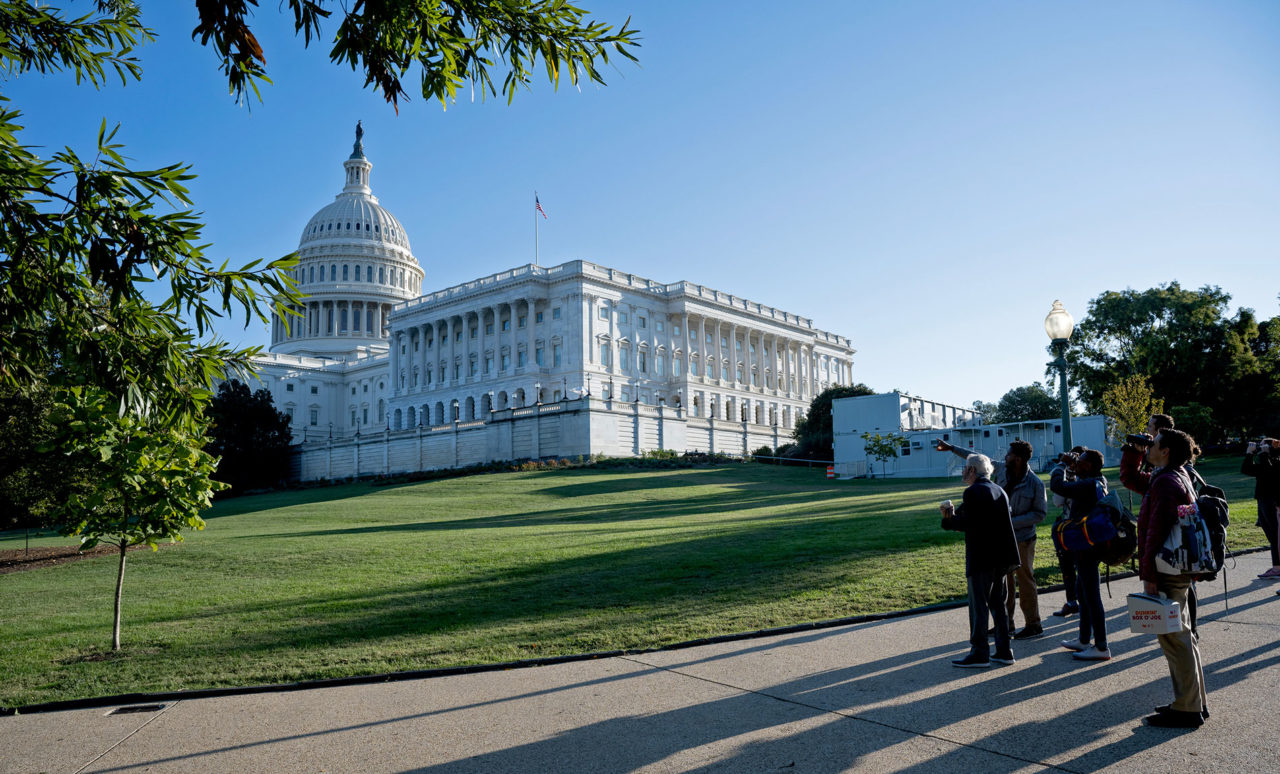
Photo: Chris Linder.
National Audubon Society government affairs coordinator Tykee James (second from left) has been leading monthly bird walks for congressional staff on Capitol Hill since 2019.

A while back I wrote how the Swiss ambassador in Washington, DC, got people there interested in birding (here). Today a story from Cornell Lab’s All About Birds touts the ability of bird walks to build common ground among government opponents.

Ariel Wittenberg writes, “It’s a busy morning on Capitol Hill when the gaggle of congressional staffers and their boss, U.S. Rep. Alan Lowenthal, gather on the back lawn. … This morning’s meeting isn’t about legislation in the House of Representatives. It’s about three visitors perched atop the chamber’s roof, backlit by the Capitol Dome’s soft gold glow.

“ ‘Will you look at that, House Sparrows sitting on the people’s House!’ exclaims Tykee James, the government affairs coordinator for National Audubon Society, eliciting a muffled chuckle from the dozen legislative aides and interns assembled. …

“He started the walks in 2019 as a way to forge connections with lawmakers and their staff who might work on bird-related legislation. … [And] they serve another purpose: building common ground in a place that is perhaps more partisan now than it’s ever been.

‘If you take down the political barriers and you just bird a little bit, if you calm down, smell the flowers, and look for some feathers, then I think that you can genuinely find where people are coming from and that gives you a better opportunity to find where you can meet in the middle,’ he says. …

” ‘I do no kind of lobbying on these walks.’ Instead, he gives pointers on using binoculars, fields questions about the difference between male and female House Sparrows, and mimics the different caws of Fish Crows and American Crows. …

“ ‘It’s not about me being an expert, it’s about me trying to find ways to connect people with the excitement of it all,’ he says. ‘Being present for moments like this makes you feel connected to birds and to their issues.’

“Congressman Lowenthal is no stranger to bird policy. He (a California Democrat) joined with Rep. Brian Fitzpatrick (a Pennsylvania Republican) to coauthor the that’s being considered in the 117th Congress. The Act would permanently codify protections for migratory birds that were rolled back. …. Reps. Lowenthal and Fitzpatrick have also reintroduced legislation calling for the U.S. to join the Agreement on the Conservation of Albatrosses and Petrels, a conservation treaty that covers 31 species of seabirds.

“But this is Lowenthal’s ‘first bird walk,’ he says, and he is genuinely surprised when James tells him that American Robins aren’t actually robins at all, but a type of thrush.

“ ‘Where are the robins, then?’ Lowenthal asks.

“ ‘They are in Europe,’ James says.

“To Lowenthal, participating in a bird walk is a means to escape the grind of the Capitol, where later in the day he will pay his respects to victims of the Covid-19 pandemic at a ceremony near the Washington Monument before returning to the House chamber for more debate on spending bills.

“ ‘There is so much going on, so much uncertainty and stress,’ Lowenthal says. ‘It’s nice to have a focus outside of ourselves.’

“Even though he doesn’t talk politics on his bird walks, James believes they do have policy impact. For example, the legislative director at Lowenthal’s office, Shane Trimmer, has been on almost every bird walk James has offered. And James says that he ‘suspects’ some cosponsors of Lowenthal’s bipartisan migratory bird legislation may have been inspired by the walks. …

“Today’s bird walk is full of first-timers. One aide from Long Beach, California, tells James he is only experienced at ‘identifying pigeons and seagulls,’ and another confesses she has ‘absolutely no birding experience.’ …

“James says he actually prefers to bird with people ‘who are picking up the bins [binoculars] for the first time. … It’s all about meeting people where they are with the birds,’ he says.

“That, and James hopes observing birds can help staffers and politicians think about their own environments in new ways. That was the case for James, when he started birdwatching during his first job out of college at the Cobbs Creek Environmental Center in West Philadelphia. …

“People of color in the United States are less likely to have adequate access to parks and green space. Lack of green space in communities of color often means those neighborhoods of mostly concrete feel hotter than areas with parks and ample tree cover. The phenomenon, called the heat island effect, can exacerbate health disparities because high temperatures can lead to heat exhaustion and stress, which complicate heart and respiratory conditions.

“The lack of access to green space is no accident, James notes, due to historic discriminatory mortgage lending and other practices that segregated neighborhoods. That’s one reason why, outside of his day job, James advocates for increasing diversity within the outdoors community. Last year, he cofounded Black Birders Week to promote the work of Black naturalists and raise the visibility of Black people within the birding community.”

More at All About Birds, here. For something extra entertaining about ornithology, read my post on so-called “birbs,” here.

Read Full Post »

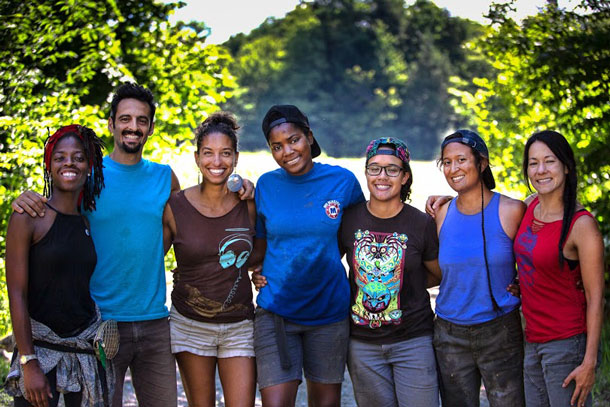
farming_soul-fire-farms-group-portrait_july2018

Photo: Soul Fire Farm
Run by a collective of black, brown, and Jewish people, Soul Fire Farm works to end injustice within the food system and offers trainings for people of color to learn essential agricultural skills,

I’ve been reading a sad book by Sarah Smarsh called Heartland. It’s about generations of her family on a small Kansas farm, and the subtitle tells it all : “A Memoir of Working Hard and Being Broke in the Richest Country on Earth.” So far she hasn’t said anything about today’s young people returning to the land with enthusiasm, which blog followers know is one of my interests. I’m into the chapter about giant agribusiness taking everything over.

But I know there are more stories out there offering hope for small, sustainable farming. Today’s story is about an upstate New York farm that focuses on helping black and brown people learn agricultural skills and fight food injustice.

From the radio show Living on Earth: “Leah Penniman is the co-founder of Soul Fire Farm and joins host Steve Curwood to discuss her new book, Farming While Black: Soul Fire Farm’s Practical Guide to Liberation on the Land, and her journey as a woman of color reclaiming her space in the agricultural world. …

“CURWOOD: Tell me a little bit about your journey falling in love with nature and farming, and how it has led you to create your book, Farming While Black.

“PENNIMAN: Well, nature was my only solace and friends growing up in a rural white town. … In absence of peer connection, I went to the forest and found a lot of support and love in nature. And so, when I became old enough to get a summer job, I [was] able to land a position at the Food Project in Boston, Massachusetts, where we grew vegetables to serve to folks without houses, to people experiencing domestic violence. And there was something so good about that elegant simplicity of planting, and harvesting, and providing for the community. That was the antidote I needed to all the confusion of the teenage years. …

“I feel connected to the whole ecosystem, but the plants are incredible. They have these secret lives that we can’t see, or even imagine. So take, for example, the trees of the forest, right? There’s a underground network of mycelium that connects their roots, and they’re able to pass messages and warnings. They pass sugars and minerals to each other through this underground network. And they collaborate across species, across family. And so, when we tune into that, I think we learn something about what it is to be a human being and how to live in community with each other in a way that if we’re not connected to nature, we sort of lose that deeper sense of who we are, who were meant to be.

“CURWOOD: Now, your book is not only a how-to guide for folks who are interested in pursuing a path similar to yours, but it also, well, it has some history, sociology, environmental lessons all wrapped up in this package. Why did you add those additional stories and information in with your guide, rather than it, well, having it be strictly a manual?

“PENNIMAN: Well, I wrote this book for my younger self. So, after a few years of farming, I would go to these organic farming conferences, and all the presenters were white. … In putting together this book, I was really thinking about myself as a 16-year-old and, all the other returning generation of black and brown farmers who need to see that we have a rightful place in the sustainable farming movement that isn’t circumscribed by slavery, sharecropping, and land-based oppression, that we have a many, many thousand-year noble history of innovation and dignity on the land. …

“The raised beds of the Ovambo and the terraces of Kenya, and the community-supported agriculture of Dr. Whatley, those are to remind us that, you know, we’ve been doing this all along, and we belong. …

“CURWOOD: You have a waiting list of people who want to come to Soul Fire Farm and learn how to do this? …

“PENNIMAN: This was something that just surprised me because I thought I was just a weirdo out here, I was going to start this farm with my family, grow food, provide it to those who need it most in the community. And that was going to be it. And I got a call our first year from this woman, Kafi Dixon in Boston who said, you know, through tears, I just needed to hear your voice to know that it was possible for a woman like me to farm, and that I wasn’t crazy, and that there’s hope. Right? And that was the first of thousands and thousands of phone calls and emails to come of folks saying, ‘I need to learn to farm, I want to do it in a culturally relevant, safe, space. I want to learn from people who look like me.’ …

“We’re living under a system that my mentor Karen Washington calls food apartheid. So, in contrast to a food desert as defined by the US Department of Agriculture, which is a high poverty zip code without supermarkets, right, a food apartheid is a human created system, not a natural system like a desert. … There are consequences to that. We see in black and brown communities a very high disproportionate incidence of diabetes, heart disease, obesity, cancer, even some learning disabilities, and poor eyesight. …

“CURWOOD: One of the most intriguing sections of your book Farming While Black: Soul Fire Farm’s Practical Guide to Liberation on the Land is this explanation of how you can clean up lead-contaminated soil, which you find in so many places in the urban environment. You have a very practical guide as to how you can use natural plants to chelate, that is, to remove lead from the soil, so that it’s safe to grow food there. I don’t think I’ve seen that anywhere else. …

“PENNIMAN: There’s an incredible plant, it’s an African origin plant called Pelargonium or scented geranium, and it’s a hyper accumulator. So, you can plant it, you acidify the soil, you plant it and it will suck the lead out and store the lead in its body. So, then you can dispose of that plant in a safe place. …

“CURWOOD: And what do you think people of color lost when we lost contact with the land?

“PENNIMAN: Certainly not all folks of color, right? Right now, about 85 percent of our food in this country is grown by brown skinned people who speak Spanish. And … it’s a belief in West African cosmology that our ancestors exist below the earth and below the waters, and by having contact with the earth we’ve received their wisdom and guidance. And with the layers of pavement, and steel, and glass, and the skyscrapers, it’s harder to feel that contact. … When folks come to Soul Fire and get their feet back on the earth, what I hear time and again is, I’m remembering things I didn’t know that I forgot.”

More at Living on Earth, here.

Read Full Post »

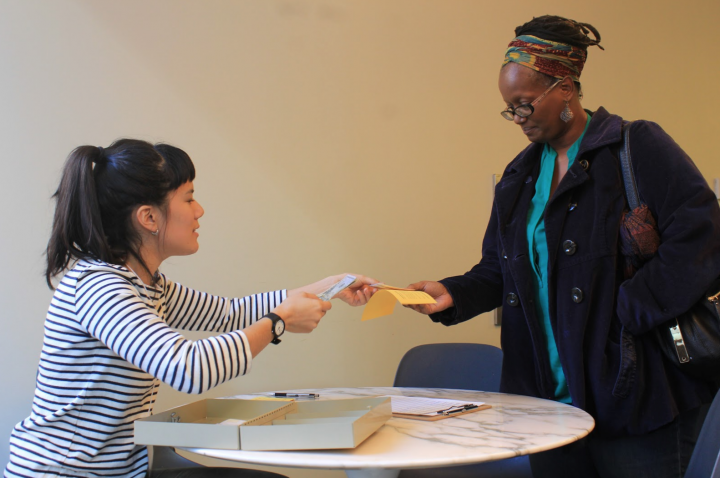
payment-720x478

Photo: Jay Simple
Artist Maia Chao pays a guest critic $75 in cash at the end of a 4-hour visit to the Rhode Island School of Design Museum.

The Rhode Island School of Design and its museum are justly famed for cutting-edge art and ideas. In this Hypoallergic story, Laura Raicovich speaks with Maia Chao and Josephine Devanbu, the founders of Look at Art. Get Paid., a program that pays people who wouldn’t otherwise visit art museums to visit one as guest critics. It premiered at RISD.

“Critique is a hallmark of the art field,” writes Raicovich, “yet the vast majority of cultural critics, curators, museum leadership, and museum visitors are affluent and white. What is critique without diversity? What possibilities and truths are we missing?

“I was fortunate to meet artists Maia Chao and Josephine Devanbu, who launched the pilot of an ingenious way to approach these questions called Look at Art. Get Paid. (LAAGP), in 2016 at the RISD [Rhode Island School of Design] Museum. The initiative is a socially engaged art project that pays people who wouldn’t otherwise visit art museums to visit one as guest critics of the art and the institution, flipping the script between the institution and its public, the educator and the educated, the paying and the paid. In the next year, they will embark on an expanded campaign to launch LAAGP simultaneously across a regional cohort of three to five art museums in the US. …

“Hyperallergic: What is the origin story of LAAGP?

“LAAGP: We started LAAGP when we were both students at the Rhode Island School of Design (RISD). We were grappling with the relevance of our chosen field to our wider communities. We believed in art making and cultural critique as vital sites of collective meaning-making and world-building, but felt frustrated by how access to the majority of resources and infrastructure to sustain ambitious projects was constrained to a (mostly white and affluent) initiated few. We asked each other, what would a critique environment look like if you didn’t need to be an insider to be in the room? We were curious to test out how we might use our institutional access and artistic license to move funds that would normally circulate within RISD out into the community. We launched our pilot in 2016 at the RISD Museum. …

“Paying people in cash to visit a museum names the elephant in the room: wealth, specifically the wealth accumulated by beneficiaries of the transatlantic slave trade, and the way this wealth continues to shape whose cultural production gets prioritized.

“As with any group of people, some enjoyed their experience and others didn’t. One critic took a picture of her favorite painting on her phone to get printed at Walgreens and hang it up in her living room. Others found the experience reaffirmed their assumptions that museums are boring.

“But beyond like and dislike of the experience, there was a general feeling amongst critics that the museum is ‘addressing a certain kind of person’ — namely white people and people with money. Throughout our conversations, the topic of belonging featured prominently, and one critic said, ‘maybe this place isn’t for me.’ Another critic articulated that they just didn’t feel like they had ‘bandwidth for another white space.’ When discussing what changes the critics would like to see, most agreed the museum would have to better represent POC [people of color] in their collection, improve language accessibility, advertise in their neighborhoods, and make the experience less intimidating.

“However, there were some critics who felt energized to help the museum. For instance, one critic, a sign-maker, said he’d love to help the museum improve their signage. Another critic — an organizer from Direct Action for Rights and Equality — suggested having cookouts at the museum. We’ve been working with these critics to commission local artists to engage these ideas. …

“Critic Samanda Martínez said, ‘Están cuidando más a las imágenes que a nosotros/They’re taking better care of the paintings than they are of us.’

“It’s one thing to know that a space isn’t welcoming to another person, but it’s another to hear directly from someone who has felt unwelcome. In general, our goal as artists is to make that experience legible and valid, in order to create more urgency and disrupt usual practices that need to change. ” More here.

Read Full Post »