Feeds:
Posts
Comments

Posts Tagged ‘plastic’

Photo: The Guardian.
Phra Mahapranom Dhammalangkaro, abbot of Wat Chak Daeng, with the solar-powered Hippo waste-collection vessel behind him. When he began his campaign against plastic, he found a novel way to get people to send monks their waste: ‘People can make [Buddhist] merits by giving us plastic bottles, bags and paper.’

Today’s story shows a good way to reduce current plastic problems, even though we know that long-term, we need to stop producing plastic. You can collect it and turn it into other products, but when the new products break down, we still have plastic.

Claire Turrell writes at the Guardian from Bangkok, ” ‘Once upon a time this river was filled with fish; now, nothing swims in it any more,’ says Wat Chak Daeng temple’s abbot, Phra Mahapranom Dhammalangkaro, as he looks out over Bangkok’s Chao Praya River.

“As a novice monk in the 1980s, he remembers seeing children playing in the river and people scooping up handfuls of water to drink. But when he became abbot of Wat Chak Daeng more than 25 years later, those bucolic images were a thing of the past. Instead, when he arrived at the 240-year-old temple, he was saddened by the sight of the dirty river and the rubbish-strewn grounds surrounding it.

“Dhammalangkaro knew that if nothing was done, the situation would only get worse. He built a recycling centre in the temple grounds, which evolved from collecting a handful of bottles to upcycling 300 tons of plastic a year. His biggest problem was that he was unable clean the river itself.

“But then he met Tom Peacock-Nazil, chief executive of Seven Clean Seas, an organization that finds solutions for plastic pollution. Last week the two men launched the Hippo, a solar-powered boat, which aims to remove [millions of pounds] of plastic a year from Bangkok’s busiest waterway. …

“The Chao Phraya River is the largest waterway flowing through central Thailand. It stretches more than 230 miles from the northern Nakhon Sawan province to the Gulf of Thailand and is home to critically endangered species such as the Siamese tigerfish, giant barb and Chao Phraya giant catfish.

“In Bangkok, it is an artery for a network of water buses, ferries and wooden long-tail boats. But it’s not just carrying people. According to research by the Rotterdam-based non-profit organization Ocean Cleanup, the Chao Praya River carries 4,000 tons of plastic waste to the sea every year. …

“The Hippo’s design is simple and effective. A boom on the vessel funnels the floating plastic from the river on to a solar-powered conveyor belt. This then hauls the rubbish out of the water and drops it into a dumpster hidden under its roof.

“The tangled mass of water hyacinths, food containers, plastic bottles and bags is then sorted by hand and recycled at the plant in the temple. …

“Chalatip Junchompoo, a director of the Marine and Coastal Resources Research Centre, believes the Hippo’s presence will have an important impact by raising awareness of plastic waste. She views it as a welcome addition to its network of river booms and rubbish-collection boats. …

Thailand is aiming to have all plastic recycled by 2027, up from 37% now, according to the Pollution Control Department. Plastic that cannot be recycled is, where possible, used for refuse-derived fuel. …

“While sponsorship has helped cover the running costs of the Hippo, future expenses and maintenance will be paid for with plastic credits, which companies can use to offset their plastic footprint.

“In Wat Chak Daeng, some of the plastic is sent to a factory to be converted into fabric. The fabric is then sewn by volunteer seamstresses at the temple into saffron-colored robes for the monks, as well as blankets and bags. …

“The monks can upcycle multilayered plastic, which is seen as challenging to recycle, thanks to a new machine that uses a chemical recycling method known as pyrolysis to break plastic down into oil. Any organic waste is converted into fertilizer using two industrial composters.

“The Hippo has created the final link in Wat Chak Daeng’s circular economy. Now the aim of the team is to build more Hippos to tackle other polluted rivers elsewhere in Thailand and south-east Asia.

“Peacock-Nazil says that addressing rivers alone is not the solution. ‘We need to work onshore and in riverside communities to make sure they have the infrastructure needed to stop plastic leaking into the environment in the first place,’ he says.

“Seven Clean Seas, as well as extending its reach in Bangkok, plans to create educational programs at a local level and would like to offer the Hippo as a floating laboratory for universities in the future.”

More at the Guardian, here. No paywall. Contributions keep the Guardian going.

Read Full Post »

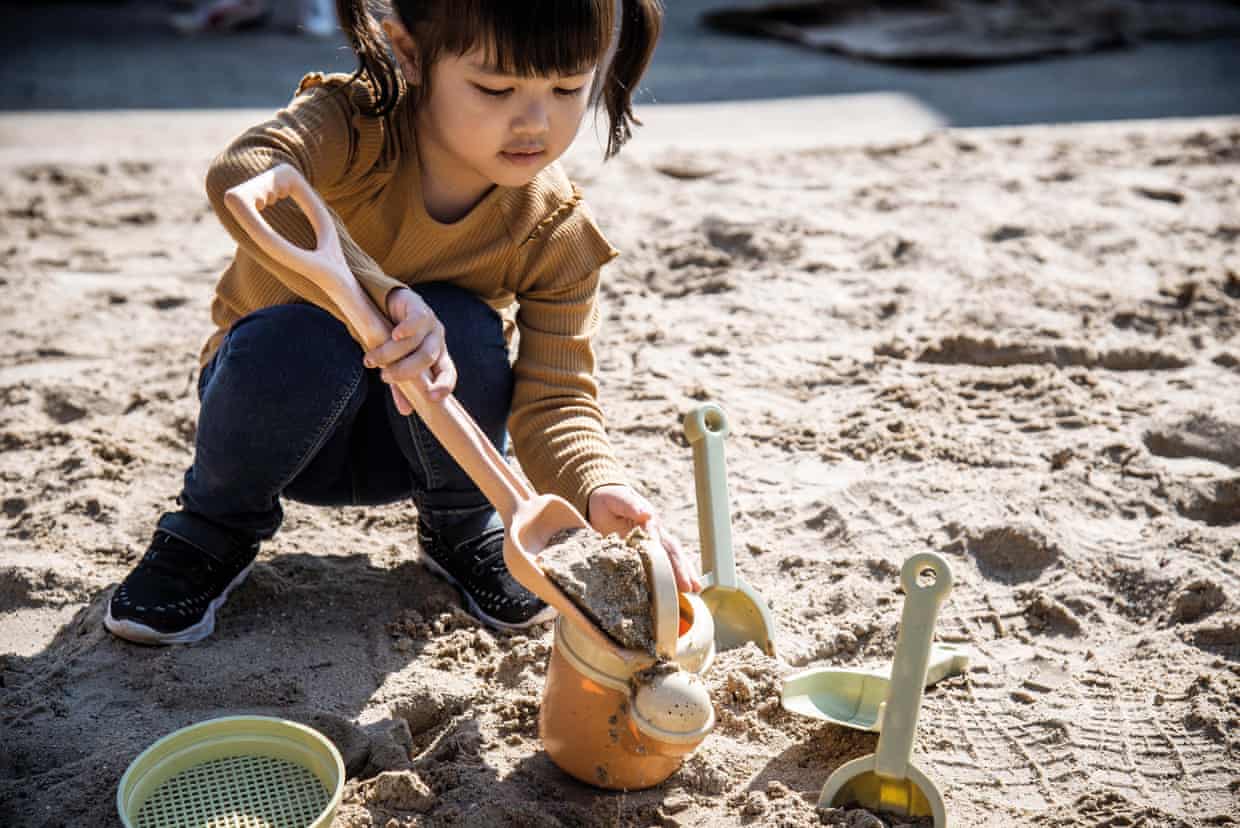
Photo: Mikkel Rolighed.
A bucket set made from sugarcane is an improvement on bioplastics, though the ocean won’t thank you if this is lost at sea – it won’t safely biodegrade (ditto recycled plastic toys). 

Now that we know that plastics have been found in the human brain, are we motivated to fight harder or are we despairing? Michelle O, you know, exhorts us to “do something” and not give in to despair, so here’s a place to start: the beach.

Fleur Britten at the Guardian has put together an impressive list of plastic substitutes you might take to the beach.

She writes, “Pre-1950, we just didn’t take plastic to the beach. Now it’s virtually impossible not to, even if it’s just you and your swimmers.

” ‘If you’re looking for plastic-free nirvana, you may never find it,’ says Anne-Marie Soulsby, aka the Sustainable Lifecoach. Matters are improving – though there’s usually a premium to pay if you want to minus cheap plastic from the mix. So why not borrow the plastic that already exists from friends, family or your local Library of Things. And don’t forget your reusable cutlery and containers for eating and drinking à la plage. If you can’t track down beach essentials from these sources, these are the other best ways to avoid seaside plastic pollution.

“ ‘The most sustainable swimwear is what you already own,’ says Soulsby. If you’re in need of new togs, they’ll most likely contain plastic. However, some brands are minimizing that: Italian label Isole & Vulcani’s swimwear for women and kids uses 93% GOTS-certified organic cotton jersey, with 7% elastane (which is fossil fuel-derived). …

“Inflatables and body boards: ‘Inflatables are a nightmare,’ says Lucy Johnson, founder of the Green Salon consultancy. ‘There isn’t a solution.’ According to one study, UK holidaymakers abandoned around 3 million [pool floats] in 2018. Even the genius Inflatable Amnesty is at capacity and can’t accept any more broken pool toys (though you can still buy its upcycled accessories). So borrow, or look after what you have. … 

“If you do need new toys, she advises silicon: ‘You can squish it into your bag and it doesn’t go brittle or rust’ (Johnson recommends Liewood’s silicon beach set from Kidly). Bioplastic toys are an improvement on regular plastic – for example, Dantoy’s bucket set made from sugarcane.”

As for sun screens, “ ‘There is no perfect solution,’ says Jen Gale, author of The Sustainable(ish) Living Guide. If you want to be absolutely plastic-free – including those pervasive nano-plastics – then your safest option is a zinc oxide-based formulation. …

“It is actually possible to find plastic-free eyewear, provided that you are one very careful person, because we’re talking glass lenses. The Marylebone-based brand Monc’s sunglasses feature wire and bio-acetate frames (made from wood pulp) and mineral glass lenses. …

“Flipflop pollution is real. Hardly surprising, given that about 3 billion are produced annually. According to the charity Ocean Sole, 90 tonnes of flipflops wash up annually on East Africa’s beaches alone. One alternative, suggests [Wendy Graham of the blog Moral Fibres], is Waves Flipflops, made from FSC-certified natural rubber. They also take back old Waves flipflops for recycling into, for example, children’s playground matting, and offer a free TerraCycle recycling programme for plastic flipflops from any brand.”

There’s lots more, including information on dry robes and wetsuits, at the Guardian, here. No paywall. Donations encouraged.

Read Full Post »

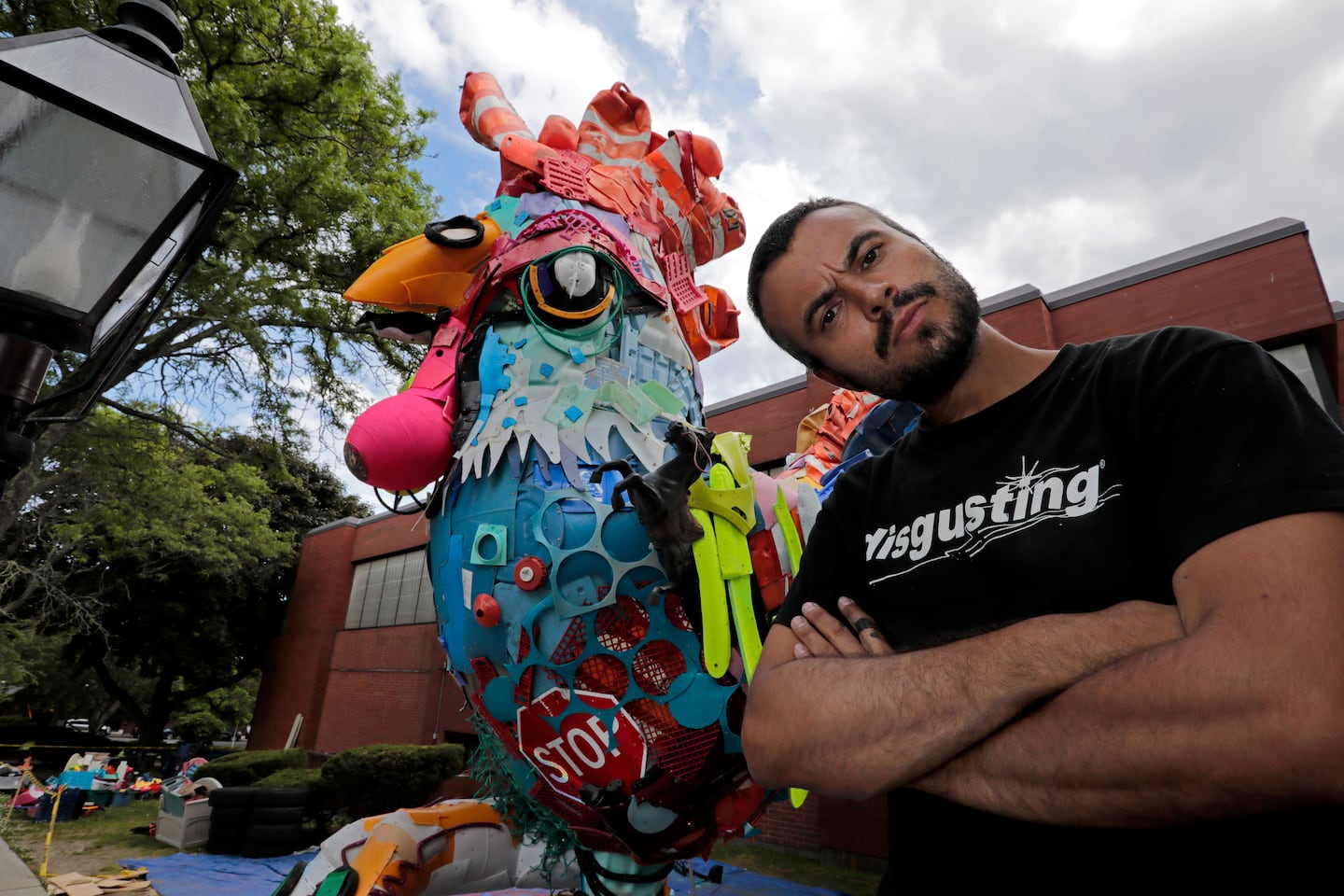
Art: Bordalo II.
Photo: Pat Greenhouse/Boston Globe.
I’ve been following this Portuguese sculptor on Instagram for several years. Now he’s worked with high school students to create a sculpture for Portuguese-speaking New Bedford, Mass., not too far from where I live.

I have been curious about this artist, age 36, for a long time. He makes vibrant sculptures from trash and shows them on Instagram.

Cate McQuaid wrote recently at the Boston Globe about Bordalo II’s “Plastic Rooster.” 

“There’s a new rooster in town,” she says, “and he’s close to 20 feet tall and kind of trashy. Portuguese artist Bordalo II’s ‘Plastic Rooster’ sits beside the New Bedford YMCA, the centerpiece of Massachusetts Design Art and Technology Institute’s (DATMA) ‘TRANSFORM: Reduce, Revive, Reimagine’ public-art initiative through Oct. 14. …

“Bordalo has traveled the world, from Bora Bora to Montreal, painting and building gaudy, charismatic animal sculptures out of waste materials. He was in town in mid-June putting finishing touches on ‘Plastic Rooster.’ The giant bird is clad in nautical refuse, plastic, street signs, and more collected by locals. He wears a plastic penguin under his beak like a bowtie, and his talons are cut from bright-pink safety cones. …

“[He says] ‘My grandfather, he was an artist. I was really young and I always tried to dig into his studio and steal his paints and draw stuff.’

“The artist, whose first name is Artur, calls himself ‘Bordalo II’ as a tribute to his grandfather, Real Bordalo. At 11, the younger Bordalo became a graffiti artist.

“ ‘It shaped the person I am, the way we do everything,’ he said. “Not being afraid to risk, to really do it. The scale. The sense of how it connects with the street.’ …

“The artist’s lighthearted characters carry messages about over-consumption and conservation. ‘With the big trash animals, it’s like you make portraits of the victims with what destroys them or their habitats,’ he said. …

“ ‘Plastic Rooster’ was commissioned by DATMA, which has partnered with local landfill management departments and the Greater New Bedford Regional Vocational Technical High School to involve the community.

“Bordalo sent his rooster image to the school’s 11th-grade Metal Fabrication students, who built the structure from steel and wood.

“ ‘After that we have a list of plastic trash materials that we know we’re going to need, and we ask the local production team to collect all those materials,’ Bordalo said. ‘My team starts to cover it, to make the first skin. I join them in the middle of the process, and I make more skin, more volumes, all the details. I make the head, the eyes, the nose.’ …

“Public art and programming presented around New Bedford by Massachusetts Design Art and Technology Institute through Oct. 14, www.datma.org/transform.”

I am adding more fromWikipedia, as I felt I had more questions.

“He studied painting at the Faculty of Fine Arts at University of Lisbon in Lisbon for eight years, but never finished the course, instead experimenting with ceramics, sculpture, and other materials. …

“His work has been shown in solo and group exhibitions and mounted in streets across the world, including Singapore, the United States, French Polynesia, and Europe. In the 10 years between 2012 and 2022, he used over 60 (or 115, by another estimate) tons of waste materials to create around 200 sculptures of animals.

“Bordalo’s work is focused on the themes of ecology, waste, and recycling, and makes use of garbage in his work as a method of critiquing over-consumption in the world. Using materials such as old tires, pieces of wrecked cars, discarded appliances, plastic waste, and aluminum cans, he challenges materialism and consumerism in the modern world. …

“Bordalo supports Portuguese refugee advocacy organization Humans Before Borders, which helps to fund five medical NGOs working in refugee camps on the Greek islands of Lesbos and Samos.

“A short documentary film entitled Bordalo II: A Life of Waste was released by the Irish Film Board in 2017.”

More at the Globe, here, and at Wikipedia, here.

Read Full Post »

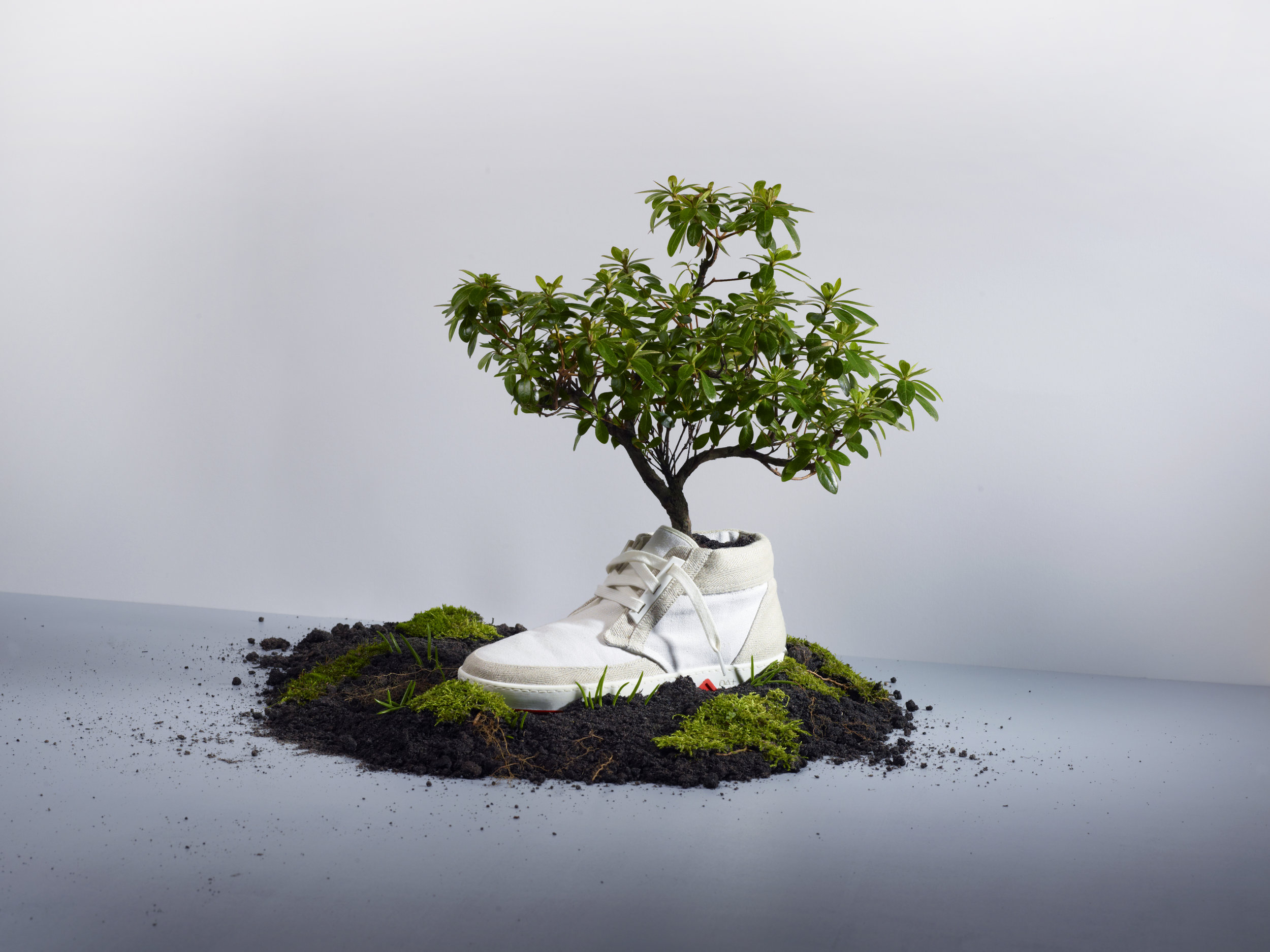
Photo: OatShoes.
One of the companies vying to be first in sustainable footwear is Oat. Plant your shoes when done, the company says!

I try to follow sustainable practices, but shoes for an old person’s feet need to be pretty strong, which means that when they’re worn out, the pieces end up in a landfill. So now I’m wondering if the recent initiatives to improve the sustainability of shoes can work for me.

Here are some thoughts from the Washington Post.

Daliah Singer writes, “Thomas Bogle was logging dozens of miles on the spruce- and pine-lined backcountry trails that weaved around his home in Steamboat Springs, Colo., as he trained for an ultramarathon. His mind wasn’t focused on his target pace, though. Instead, he couldn’t stop thinking about the micro bits of plastic and rubber the soles of his shoes were shedding on the forest floor.

“With every step we take, our shoes leave behind an invisible trail of toxic contaminants that can potentially harm the soil, water and animal health.

“Nearly 24 billion pairs of shoes were produced in 2022. Each contains myriad plastics and synthetic, petroleum-based rubber. Of the 500,000 tons of microplastics that seep into the world’s oceans each year, up to 35 percent come from synthetic textiles, including footwear, according to one estimate, from the International Union for Conservation of Nature.

Footwear alone accounts for 1.4 percent of global greenhouse gas emissions, not that far below the airline industry, which is responsible for around 2 percent.

“Though shoe brands have taken strides toward sustainability, from offsetting carbon emissions to swapping out materials in the upper sections of shoes, they have largely overlooked soles. Now a slew of companies are starting to focus underfoot by developing new plant-based soles that won’t leave plastics behind when they degrade.

“Bogle, who spent eight years working in product development at a footwear company, is now working on an outsole from plant byproducts, while Keel Labs, a sustainable materials company started by two fashion design students, is making soles out of seaweed-based fiber. Native Shoes has a line of slip-ons made from an algae-based material, and Unless, a plant-based streetwear company in Portland, Ore., rolled out a shoe made entirely of biodegradable materials in conjunction with NFW.

“Shoes are designed ‘to last 1,000 years, and we use [them] for 100 days,’ said Yuly Fuentes-Medel, program director of climate and textiles at Massachusetts Institute of Technology. Americans alone toss out 300 million pairs of shoes every year. According to the Environmental Protection Agency, only about 13 percent of clothing and footwear is recycled in the United States.

“That’s partly because of the complexity of the shoemaking process. The average sneaker is composed of more than 130 individual pieces, according to Fuentes-Medel, who recently helped create the Footwear Manifesto, a report on how to make the industry more sustainable. Manufacturinga pairrequires at least 100 steps on average, including stitching and gluing, she said. That makes it nearly impossible to recycle them or take them apart to reuse their materials.

“The plastics in shoes also pose problems while consumers are wearing them. A 2022 study in the Journal of Hazardous Materials suggests abraded plastic from shoe soles reduces soil’s capacity to hold water and impedes photosynthesis. Another study, published in Science of the Total Environment, attributed mass coho salmon die-offs to 6PPD, a chemical added during tire manufacturing that is also found in footwear. …

“Bogle had an idea to create an entirely plastic-free shoe outsole — the component that was the first to wear out on his shoes during his long runs in the Colorado wilderness. He enlisted Gene Kelly, a professor of pedology (or soil science) at Colorado State University and a fellow runner, who helped develop a shoe sole made of beeswax, vegetable oils and plant byproducts such as leaves and husks from corn, hemp and other crops.

“Bogle’s company, Solum, partners with farmers and producers across the country to grow and harvest the materials, before converting them into bio-pellets and blending them with natural rubber to craft the sole.

“Instead of shedding toxic chemicals, Bogle explained, Solum’s soles deposit biologically derived nutrients back into the soil as they naturally wear down over time. A consumer survey by the company found that the average lifetime of a shoe outsole is around three years. Solum’s break down about 11 percent faster by design.”

Check out BlueView shoes and Ponto, too.

Read Full Post »

Photo: John and Suzanne’s Mom.

As everyone knows, it’s hard to avoid plastic. The other day I found on the floor tiny pieces of one of those mesh bags that oranges often come in. I may be overthinking everything, but I was stumped about how to dispose of it. If I flush it, it goes into our water system. If I put it out for the landfill, the result is ultimately the same. And now we’re hearing that plastic particles are even getting into the clouds.

Nicola Jones writes at YaleEnvironment360, “Plastic has become an obvious pollutant over recent decades, choking turtles and seabirds, clogging up our landfills and waterways. But in just the past few years, a less-obvious problem has emerged. Researchers are starting to get concerned about how tiny bits of plastic in the air, lofted into the skies from seafoam bubbles or spinning tires on the highway, might potentially change our future climate.

“ ‘Here’s something that people just didn’t think about — another aspect of plastic pollution,’ says environmental analytical chemist Denise Mitrano of ETH Zürich University, in Switzerland, who co-wrote an article last November highlighting what researchers know — and don’t yet know — about how plastics can change clouds, potentially altering temperature and rainfall patterns.

“Clouds form when water or ice condenses on ‘seeds’ in the air: usually tiny particles of dust, salt, sand, soot, or other material thrown up by burning fossil fuels, forest fires, cooking, or volcanoes. There are plenty of these fine particles, or aerosols, in the skies. …

“Until recently, when chemists thought of the gunk in our air, plastics did not leap to mind. Concentrations were low, they thought, and plastic is often designed to be water repellent for applications like bags or clothing, which presumably made them unlikely to seed cloud droplets. But in recent years, studies have confirmed not only that microscopic pieces of plastic can seed clouds — sometimes powerfully — but they also travel thousands of miles from their source. And there are a lot more particles in the air than scientists originally thought. …

“ ‘The people who invented plastics all those decades ago, who were very proud of inventions that transformed society in many ways — I doubt they envisaged that plastics were going to end up floating around in the atmosphere and potentially influencing the global climate system,’ says Laura Revell, an atmospheric scientist at the University of Canterbury in New Zealand. …

“Global annual production of plastics has skyrocketed from 2 million tons in 1950 to more than 450 million tons today. And despite growing concerns about this waste accumulating in the environment, production is ramping up rather than slowing down — some oil companies are building up their plastic production capacity as the demand for fossil fuel declines. To date, more than 9 billion tons of plastic has been produced, and about half of it has gone to landfills or been otherwise discarded. Some project that by 2025, 11 billion tons of plastic will have accumulated in the environment. …

“In recent years, several studies have suggested that microplastics (pieces less than 5 millimeters in length) and nanoplastics (smaller than approximately 1,000 nanometers) were being transported long distances through the air. In 2019, for example, researchers found microplastics in the Pyrenees that had arrived via rain or snowfall. In 2020, Janice Brahney of Utah State University and four coauthors published a high-profile Science paper revealing high amounts of plastic in federally protected areas of the United States. …

“Brahney’s extensive U.S. dataset also opened the door for modelers to figure out where, exactly, all this plastic was coming from. ‘It’s a really beautiful data set,’ says Cornell University’s Natalie Mahowald, who did the modeling work.

“Mahowald took the plastic concentrations Brahney had cataloged and mapped them against atmospheric patterns and known sources of plastics, including roads, agricultural dust, and oceans. On roadways, tires and brakes hurl microplastics into the air. Plastic winds up in agricultural dust, notes Mahowald, in part from plastics used on farm fields and in part because people toss fleece clothing into washing machines: the wastewater flows to treatment plants that separate solids from liquids, and about half the resulting biosolids get sent to farms for use as fertilizer. As for the ocean, Mahowald says, big globs of plastic in places like the Pacific Gyre degrade into microscopic pieces, which then float to the surface and are whipped up into the air by chopping waters and bursting air bubbles. …

“Exactly how aerosols affect climate has been a critical sticking point in climate models, and many of the details are still unknown. Different aerosols can change the climate by either reflecting or absorbing sunlight, which can depend, in part, on their color. Black soot, for example, tends to have a warming effect, while salt reflects and cools. Aerosols can land on the ground and change the albedo, or reflectivity, of ice and snow.

“Aerosols also affect cloud formation: different bits and pieces can seed more and smaller droplets of water or ice, making for different types of clouds at different elevations that last for different amounts of time. High-altitude, thin, icy clouds tend to warm the Earth’s surface like a blanket, while low-altitude, bright and fluffy clouds tend to reflect sunlight and cool the Earth.”

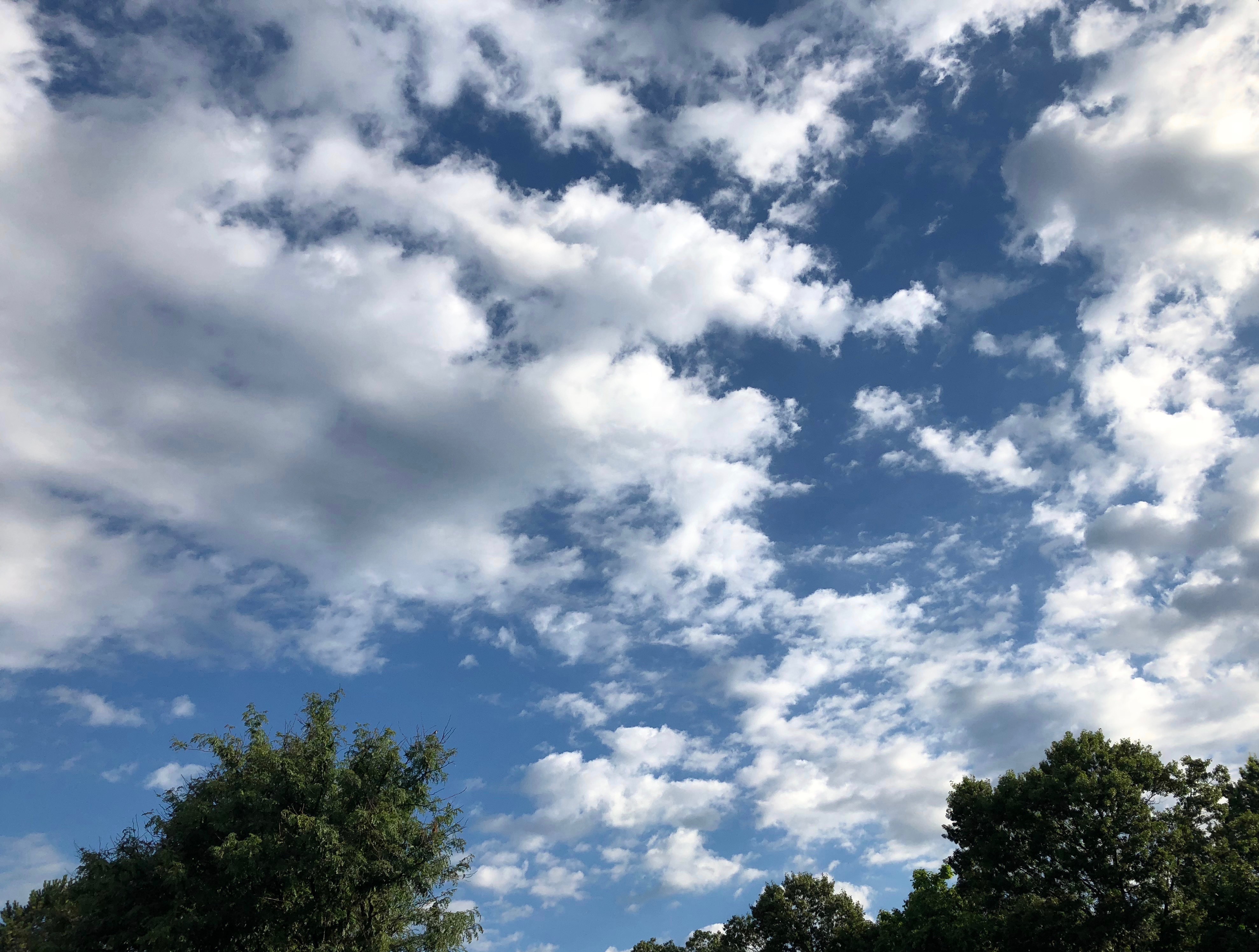
More at YaleEnvironment360, here. Rebecca of Fake Flamenco was speculating not long ago about clouds and whether they have started looking different. Do 20th century cloud photos from your region look different from those taken recently?

Read Full Post »

Photo: Alibaba.
You can take a jug to buy detergent in bulk at Debra’s and keep refilling the smaller bottle you keep by your sink.

For a few years now, I have been refilling the plastic bottle that my dishwashing liquid once came in. For a while I bought a concentrate online. Now I take a clean jug into Debra’s Next Door, pump the detergent into the jug, and refill my smaller container for months.

Today’s story is about big brands trying to get into the act.

Susan Shain reports at the New York Times, “Every week, Angela Espinoza Pierson looked at her recycling bin — filled with detergent jugs, shampoo bottles and clamshell containers that once held strawberries — with mixed feelings. Sure, it was a lot of plastic. But it was going to be recycled.

“Or so she thought. Then her husband sent her some articles revealing that less than 6 percent of the country’s plastic gets recycled, and that even recycled plastic can only be reused once or twice. Ms. Espinoza Pierson, who lives in Buda, Texas, was shocked. …

“Determined to cut back on her plastic consumption, Ms. Espinoza Pierson got a starter kit from a company selling refillable household cleaners. In it were tablets containing concentrated hand soap as well as multi-surface, glass and bathroom cleaners — and four empty containers. She filled each one with tap water, then dropped in a tablet and watched it dissolve. If she is happy with the cleaners, she will order more tablets but reuse the containers. No new plastic required.

“Given plastic’s detrimental effects on the environment, nearly three-quarters of Americans say they are trying to reduce their reliance on single-use plastic, according to Pew Research Center. Since plastic is everywhere and avoiding it altogether is extraordinarily difficult, some, like Ms. Espinoza Pierson, have revived a once-customary practice: refilling containers rather than disposing of them. If just 10 to 20 percent of plastic packaging were reused, a report from the World Economic Forum estimates, the amount of plastic waste entering the ocean could be cut in half. …

“Over the past few years, Windex, owned by SC Johnson, introduced concentrates that dissolve in water; Dove began selling a deodorant stick that slots into a reusable case; and The Body Shop added refill stations to half its American stores.

“These are tiny experiments in a country that generates nearly 500 pounds of plastic waste per person, per year. But Matt Prindiville, the chief executive of Upstream, a reuse advocacy organization and consultancy, says his organization has seen the number of reuse-refill start-ups grow from a dozen in 2019 to more than 150 today.

‘If you asked me about this three years ago, I wouldn’t have guessed at how quickly the interest in the sector has blown up,’ Mr. Prindiville said. ‘Not just from the do-gooders, but from the biggest brands in the world.’

“American beverage companies switched to single-use plastic containers during the 1970s, largely because it saved money, said Bart Elmore, an associate professor of environmental history at Ohio State University. No longer would companies have to collect or clean refillable bottles.

“Since throwing things away, rather than cleaning and reusing them, was convenient, too, it seemed like progress. … Manufacturers and consumers alike fell in love with the lightweight and unbreakable material. More than a third of all plastic ever produced has been used for packaging, most of it created and disposed of in the same year.

“Today, the pressure to reduce corporate carbon footprints is forcing a second look at all that plastic packaging. ‘Reuse, for some types of products and packaging,’ Mr. Prindiville said, ‘can put a huge dent in reducing those climate impacts.’

“Household cleaners seem particularly primed for a refill revolution. Whereas shampoo and conditioner* involve complicated chemical formulas, many cleaners can be easily concentrated and reconstituted with water. In fact, that’s what makes up the bulk of traditional cleaning products, leading Mr. Prindiville to describe the current system this way: ‘We’re just shipping around water. And that’s dumb.’

“In contrast, the concentrated surface cleaners sold by Grove Collaborative each contain 1 ounce of liquid, far less than a standard 16-ounce bottle of ready-to-use cleaner, and thus require less fuel to transport.

Grove’s spray bottles are meant to be reused, and its concentrates are packaged in glass or aluminum — materials that, unlike plastic, can be recycled over and over.

“Grove’s products are now on shelves in more than 5,000 stores, including Target, CVS and Walmart, and the company has seen its net revenue from refillables grow by more than 600 percent since 2018. But with $322 million in total revenue, it is a tiny player in the $30 billion home care market.

“The Clorox Company, on the other hand, has a huge reach. Last year, the $7.1 billion company, which sells products in 100 countries, stepped into the refillable market with cleaning spray concentrates that can be emptied into a reusable plastic spray bottle. (Packaging accounts for more than half of all trigger spray manufacturers’ greenhouse gas emissions, transportation for another third.) …

“Not everyone is as enthusiastic. Jan Dell, a chemical engineer and founder of the anti-plastic pollution organization The Last Beach Cleanup, noted that many cleaning products are housed in PET or HDPE, two types of plastic with relatively high recycling rates. So she is less concerned about them — and far more concerned about the packaging of other products.

“ ‘Where these companies should be focusing is on this vast portfolio of everything else that isn’t recyclable, that is single use and that often becomes plastic pollution,’ she said, pointing to SC Johnson’s Ziploc bags and Clorox’s Hidden Valley ranch dipping cups. ‘This is just a classic example of big corporations doing a stunt over here on something that’s not the main issue to distract from all the single-use plastic they’re pushing out.’

More at the Times, here, including the response from Clorox.

*Note that shampoo and conditioner in a soap-bar form work just fine.

Read Full Post »

Photo: Brian Yurasits/Unsplash.

Oh, what have we done? We are on our way to ruining Planet Earth with our activities. Let’s see if understanding the extent of the problem can help us rectify it.

At Slate, the online magazine, Niranjana Rajalakshmi writes about plastic in the ocean.

“Richard Kirby, a marine biologist based in Plymouth, England, was looking at zooplankton wriggling under a microscope when he spotted something else: shreds of plastic pieces interlaced with the tiny creatures.

“This wasn’t unusual to Kirby. He’d collected the sample off the sea of Plymouth for the purpose of raising awareness about microplastic pollution in oceans. Examining plankton is routine for Kirby, and so is observing microplastics in his samples.

“Plastic pollution in oceans has been increasing at an alarming rate over the years. According to the World Wildlife Fund, 88 percent of marine species have been affected by plastic contamination.

“People are familiar with seabirds dying from eating cigarette lighters, or turtles suffocating as a result of mistaking plastic bags for jellyfish, but there is very little awareness about plastics that harm creatures at a smaller level, Kirby explains.

Ingesting microplastic can even kill plankton that are crucial sources of food to other marine life, including fish.

“This is because plankton cannot get a sufficient amount of food into their guts if they’re already occupied by little shreds of plastic. …

“Says Kirby. ‘You can even find plastics in plankton samples collected in Antarctica, for example.’ Plastic shreds from clothing are a significant polluter at the micro level. Microplastic can also come from tires, road markings, and personal care products.

“Plankton aren’t mistaking microplastics for food, exactly, says Bill Perry, an associate professor of biology at Illinois State University. They are filter-feeding, during which they extract small pieces of food and particles from the water. In doing so, they gather up microplastics, too.

“The damage that microplastics cause is not just confined to microscopic marine organisms like plankton. In fact, it is more pronounced in species that are located higher in the food chain, explains Perry, and which eat smaller creatures that have themselves consumed microplastics. …

“Eating microplastics, as you might imagine, is not very good for marine animals. Fishes can face problems with growth and reproduction, says Grace Saba, an associate professor who also researches organismal ecology at Rutgers University. Their guts start to have more and more plastic and less food, and they don’t have enough energy to put toward growth and reproduction like they would if they weren’t eating microplastics.

“The microplastic problem is only going to get worse: A report by the International Atomic Energy Agency projects that the amount of microplastics in the eastern tropical Pacific Ocean will rise by 3.9 times in 2030 as compared to the microplastics level in 2008 in the region.

“Once microplastics enter the ocean’s food chain, it’s hard for them to leave. Individual animals may excrete microplastics, but ‘the thing about poop in the ocean is that it serves as a food source for marine animals, including plankton and filter feeders,’ Saba explains. In this way, microplastics get continuously recycled. Marine scientists in the future will probably be spotting microplastics in their samples, too.”

Sigh. I do small things to cut down on plastic use, but then suddenly I need plastic bins or some other big plastic thing. What do you do to cut back? A couple of my friends have been studying the issue (one who volunteers with the Sierra Club, another who is with a progressive political group in Massachusetts) and are concluding that recycling doesn’t work.

More at Slate, here. Follow Dr. Kirby @PlanktonPundit on Twitter.

Read Full Post »

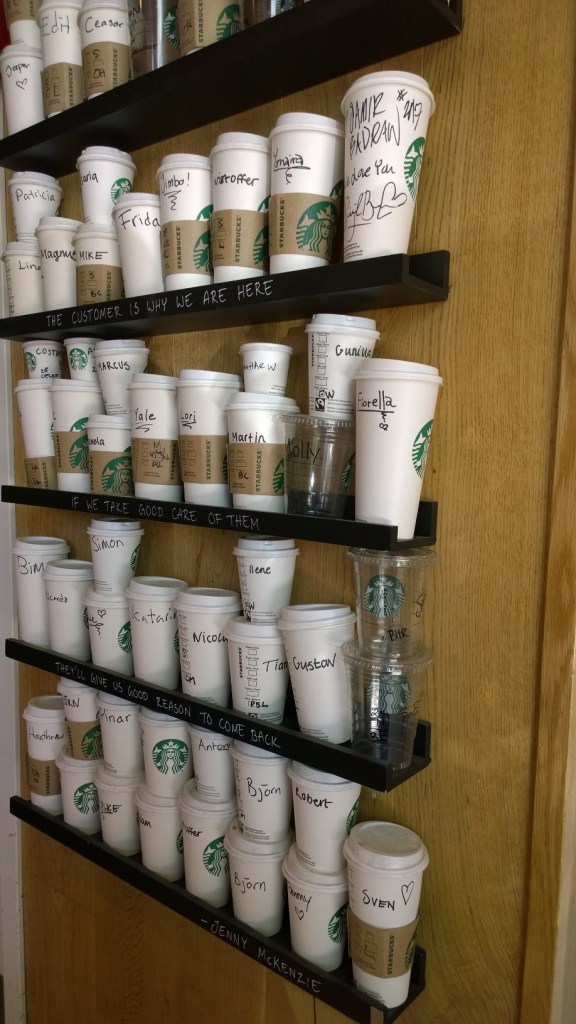
When I was in Sweden in 2017, I noticed that waste-conscious Starbucks customers could leave their cups in the shop for the next time. A Massachusetts startup carries the concept a step farther.

The party guest told Dustin Hoffman in The Graduate that “there’s a great future in plastics,” but today there’s a better future in non-plastic packaging.

At Debra’s Natural Gourmet, there’s demand for shampoo and conditioner in cardboard, skin cream in tins, water bottles in glass. I have also seen lip balm in cardboard at Earthling, here, and at Booda Butter, here. Imagine! Thoughtful people out there are noticing how often we throw plastic ChapSticks into landfills!

Joanna Detz writes at ecoRI News about a company called Usefull that is tackling our wastefulness with takeout coffee cups.

“What if your coffee shop had reusable mugs on demand that you could carry out with you and return to any other participating coffee shop when you were done? Alison Rogers Cove, founder and CEO of Cambridge, Mass.-based Usefull, envisions just such a circular foodware solution that would spell the end of disposable takeout products, most of which are not recyclable and wind up in a landfill or as litter.

“Usefull, an app-based foodware service that provides silicone-lidded stainless-steel containers for customers to check out and return (like a library book), recently wrapped up a pilot program on Block Island.

“The pilot, run in partnership with the Block Island Conservancy, was supported by a Small Business Innovation Research grant funded through the Environmental Protection Agency (EPA). A handful of cafes, a food truck, and a farmers market participated.

“ ‘The pilot was very successful in testing out a lot,’ Rogers Cove said. However, she admitted there were challenges in running the program in a largely transient community of day-trippers, where not all food-service providers opted into the system, and where single-use takeout containers were still an option. …

“Her data show a closed-loop returnable program such as Usefull’s has a better success rate in places where there is an outright ban on single-use takeout containers.

“ ‘From a business perspective, we can’t take the risk of going into a community without a ban. That’s part of our lesson learned,’ she said.

“Marin County in California is one of the few municipalities that has passed such a ban, which will take effect Nov. 10, 2023.

“As a result, Usefull has decided to focus its business efforts on serving colleges and universities invested in eliminating single-use takeout products on campus. … ‘College campuses are able to fully commit to their zero-waste goals and eliminate the option of single-use packaging.’

“On participating campuses, students download the Usefull app, place their takeout order, and scan a tracking code on their takeout container. After they are used, the containers — bowls and cups — can be dropped off at any of Usefull’s return locations on campus, regardless of where the container was checked out. Once the containers are returned, they are run through commercial-grade dishwashers and put back in circulation.

“Users are only charged if they return the container late — schedules vary by location — or if they lose the container.

“The idea for Usefull was born in 2013, when Rogers Cove was working in management consulting. … But it wasn’t until 2018 that she shared her idea outside her social circle, when she presented at a Boston Globe pitch event with angel investors. …

” ‘[The pandemic] was when we pivoted to colleges,’ Rogers Cove said, because it wasn’t clear when downtown Boston was going to reopen. She and her team figured college revenue was tied to having bodies on campus and bet that colleges would be first to reopen.

“The first college to partner with Usefull was Mount Holyoke, followed by other Bay State colleges and universities.”

More at EcoRI, here.

Read Full Post »

Pirate Artist

Photo: Art in America.
Dick Riley’s approach to art stirs things up.

The New York Times calls this anti-plastic missionary a “pirate artist.” Melena Ryzik‘s article explains how he got that moniker.

“The artist Duke Riley isn’t exactly sure why he had the idea to turn a plastic tampon applicator into a fishing lure, but he knows one thing for certain: It works.

“He put it to the test one summer day on a buddy’s boat in Block Island Sound, and, with his pastel bait bouncing along the ocean floor, pulled up a sizable fluke. It was a keeper — ‘I definitely ate it,’ he said.

“The applicator tube had first washed up ashore, part of the many tons of seaborne trash that Riley, a Brooklyn artist known to scavenge New York’s waterways for materials and inspiration, has collected over the years. Putting this spent plastic product to use as fish food — that was some D.I.Y. upcycling. Putting it into the Brooklyn Museum of Art: that is Riley’s wild and singular artistic ingenuity.

“There’s a film of the fishing endeavor, done in the style of a crusty YouTube tutorial. The lures — displayed on pegboard, as in a real bait shop — join other plastic detritus that Riley has repurposed, like straws, dental floss picks and vape pens, in ‘DEATH TO THE LIVING, Long Live Trash,‘ an exhibition [that opened in June] at the Brooklyn Museum. Across multiple rooms and settings, it confronts the calamitous environmental impact of the plastics industry and the ways in which unchecked consumption, for personal convenience, has polluted waterways.

“Its centerpiece is more than 200 works of painstakingly hand-drawn scrimshaw that Riley has spent three years making. Instead of the whale teeth and walrus tusks that 19th-century sailors once etched, he uses a contemporary, dispiritingly abundant, analog: discarded plastics. Lotion tubes, squirt bottles, brushes, a honey bear, solo flip-flops, a Wiffle ball and a legless lawn flamingo now stained bone-white, all provide the canvas for Riley’s patterned mariner drawings in India ink.

“As whalers often depicted the leaders and profiteers of their day, Riley portrays the C.E.O.s of chemical companies, plastic industry lobbyists and others he deems responsible for producing the devastating tonnages of single-use plastics that are engulfing our oceans and threatening our ecosystems. It’s a downer, but if you look closely there’s often a Riley twist of humor, like the seagull shown relieving itself on the head of a water bottle magnate.

“ ‘This is an artist who I always refer to as a modern-day pirate,’ said Anne Pasternak, the director of the Brooklyn Museum. ‘He’s not just an aesthete pointing to something passively, he’s working to actively spur change — you have to be in it with an artist like Duke. He’s not going to hold back.’

“Calling out corporate titans and politicians — particularly when institutions like the Brooklyn Museum depend on them for donations and support — comes from a fearless ethic and ‘a wit that is hilarious and unforgiving.’ She added, ‘I always think of him as the George Carlin of the art world.’ …

“Best known for ‘Fly by Night,’ a 2016 performance in which 2,000 trained pigeons outfitted with LEDs lit up the New York sky, or for launching his own homemade Revolutionary War submarine into the path of the Queen Mary 2 cruise ship, Riley has mostly succeeded by navigating around the commercial New York art world, though he holds degrees from some of its prestigious feeder institutions (a B.F.A. from the Rhode Island School of Design and an M.F.A. in sculpture from Pratt Institute). …

“ ‘Duke is a natural,’ said Ernesto Pujol, an artist and former professor at Pratt who has mentored him. ‘A huge talent. … He had to fight his way for the art world to see him holistically — he is the kind of artist that is always more than you bargain for.’ …

“Riley works in many mediums: The Brooklyn exhibition includes films, decorative installations, mosaics and illustrations, like a vast map of Brooklyn’s Gowanus Canal, encompassing its history from precolonial bounty to Dutch settlers through the polluted Superfund site that in 2007 tested positive for gonorrhea. …

“His mosaics offer one of the biggest wows of the show. Inspired by sailors’ valentines, a nautical souvenir traditionally made of shells, Riley’s are enormous and quite beautiful.

Only on close inspection do you notice that the perfect, shiny seashells are interlaid with a rainbow of bottle caps, cigar tips, bits of mechanical pencils, and bread bag clips, all harvested from New York streets and waterfronts. …

“[His studio is] a cleanish space, stacked with neatly bagged, color-coordinated trash. A trailer outside was filled with more refuse. Some of it came from Fishers Island, the exclusive enclave in Long Island Sound, where Riley had a residency in 2019, and where he met a woman whose full-time job is to rid its beaches, the summer home of families like the DuPonts, of plastic rubbish.

“ ‘The exhibition is so much about holding people accountable, and the little acts that people can take to solve this problem,’ Liz St. George, the show’s curator, said. That includes museum administrators; in the course of working with Riley, they changed cafeteria suppliers to minimize plastic, and reconfigured water fountains to accommodate reusable bottles. …

“He did the scrimshaw in solitude aboard his boat, now docked in Rhode Island. A Massachusetts native who worked on the fish docks and grew up visiting places like the New Bedford Whaling Museum, he has always been attracted to a New England nautical aesthetic. …

“This week, Riley is also debuting a mosaic in Boston’s central library. It is one of only a few pieces of contemporary art purchased for permanent installation in the landmark 1895 building, since a circa-1900s John Singer Sargent mural. Riley’s work is partly inspired by the Great Molasses Flood of 1919, an urban disaster caused when a storage tank exploded, releasing millions of gallons of the sticky stuff. It destroyed neighborhoods in the North End, a community of Italian immigrants. …

“For his core group of collaborators, no project is too brazen, or too labor-intensive. ‘We always pull it off,’ said Nicholas Schneider, a New York City firefighter and a longtime member of Riley’s crew. Through all the fun, ‘there is always a somber or very serious component that I think he’s always been the most focused on and proud of.’ “

More at the Times, here. See also Art in America, here.

Read Full Post »

Photo: Pacific Beach Coalition.
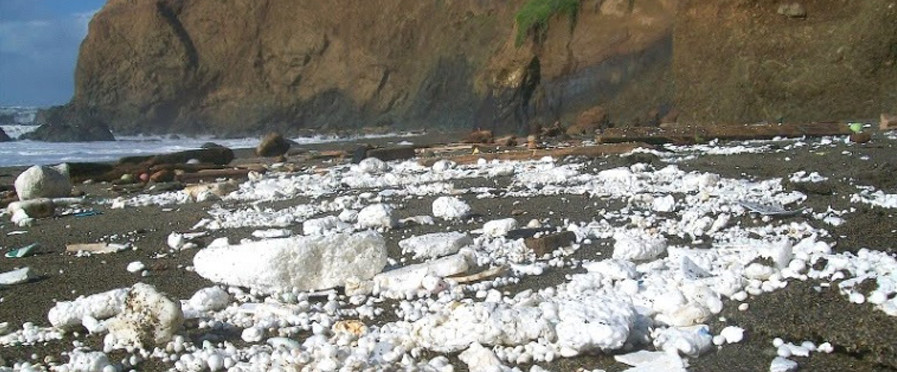
Scientists investigate whether a “superworm” can help solve our styrofoam problem.

It’s no secret that plastic has become a huge challenge for our poor old planet. Concerned people are finding solutions where they can. Ploggers of India (and other countries) pick plastic off the ground when they go jogging. Plastic Free Hackney is a UK town that aims to do without. Artists turn plastic waste into sculptures.

In today’s story, we learn about scientists testing a “superworm” that might be able to break down a particular kind of plastic, styrofoam.

Pranshu Verma reports at the Washington Post, “A plump larva the length of a paper clip can survive on the material that makes Styrofoam. The organism, commonly called a ‘superworm,’ could transform the way waste managers dispose of one of the most common components in landfills, researchers said, potentially slowing a mounting garbage crisis that is exacerbating climate change.

“In a paper released [in June] in the journal of Microbial Genomics, scientists from the University of Queensland in Brisbane, Australia, showed that the larvae of a darkling beetle, called zophobas morio, can survive solely on polystyrene, commonly called Styrofoam.

“The findings come amid a flurry of research on ways bacteria and other organisms can consume plastic materials, like Styrofoam and drinking bottles.

“Now, the researchers will study the enzymes that allow the superworm to digest Styrofoam, as they look to find a way to transform the finding into a commercial product. Industrial adoption offers a tantalizing scenario for waste managers: A natural way to dispose and recycle the Styrofoam trash that accounts for as much as 30 percent of landfill space worldwide. …

“The material is dense and takes up a lot of space, making it expensive to store at waste management facilities, industry experts said. The cups, plates and other materials made from it are also often contaminated with food and drink, making it hard to recycle. Polystyrene fills landfills, where it can often take 500 years to break down and decompose, researchers have found. …

“In 2015, researchers from Stanford University revealed that mealworms could also survive on Styrofoam. The next year, Japanese scientists found bacteria that could eat plastic bottles. In April, researchers from the University of Texas found an enzyme which could digest polyethylene terephthalate, a plastic resin found in clothes, liquid and food containers. …

“[The Microbial Genomics study’s coauthor Christian Rinke] said he was excited by his research results but noted it will take time to develop into an industrial solution, estimating somewhere between five to 10 years.

“To conduct the study, his research team in Australia fed the superworms three separate diets. One group was given a ‘healthy’ solution of bran. The second was given polystyrene. The third was put on a starvation diet.

“Ninety percent of the larvae that ate bran became beetles, compared with roughly 66 percent from the group given polystyrene and 10 percent from those forced to starve. This indicated to researchers that superworms have enzymes in their gut that can effectively digest Styrofoam.

“Next, the scientists will study those enzymes to see how well they can digest polystyrene on a large scale — modifying them if necessary to become more effective. ‘We want to not have gigantic superworm farms,’ he said. ‘Rather, we want to focus on the enzyme.’

“If the research proves successful, Rinke said waste managers could collect and grind Styrofoam materials and put them into a liquid solution made with the superworm enzyme. The solution would ideally dispose of the Styrofoam or digest it in a way that allows new plastic products to be created, thereby reducing the need for new plastic materials, Rinke said.

“ ‘If you can go all the way to the end,’ he said, ‘the idea is to use the system and come up with a biological solution to recycle plastic.’

“Despite the findings from Rinke and others, there are reasons that none have successfully translated into industry applications over the past decade, researchers said. Andrew Ellington, a professor of molecular biosciences at the University of Texas at Austin, said it has been difficult to find a plastic-digesting organism or enzyme that can operate in industrial conditions, which often process trash in very hot environments or through the use of organic solvents. … He suggested an alternative solution.

“ ‘I believe that we will be able to offer up, in the not-so-distant future, worm-based composting kits so that individuals can do this themselves,’ he said.

“Jeremy O’Brien, the director of applied research at the Solid Waste Association of North America, said there are other business challenges in putting this type of solution into use. As envisioned, the solution would require waste managers to collect Styrofoam separately from other trash, he said, which makes it cost-prohibitive.

“O’Brien also said it remains unclear what kind of organic waste the enzyme process would generate, and he worries it could harm the microorganisms landfills already use to process trash and reduce odors. He added that a more desirable and cost-effective solution would be to take Styrofoam in landfills and condense them enough so that they can be turned into new plastics.”

More at the Post, here. What do you think of this? Is breaking plastic down to enzymes enough to keep us safe?

Read Full Post »

Photo: Antoine Giret via Unsplash.
Are you ready to do something more about plastic?

Not quite sure what to make of the inventions described in today’s post. Another energy-using appliance, this time for dealing with plastics? I’m keeping an open mind.

Chris Velazco writes at the Washington Post that “a new wave of home tech could keep plastics out of landfills. …

“For a pair of start-ups we first met at CES [Consumer Electronics Show] no kitchen would be complete without a new kind of home appliance: one that makes recycling a little easier.

Lasso Loop relocated from the United Kingdom to California to work on its product, a hefty home appliance machine that automatically sorts and breaks down the recyclables you toss inside it. And ClearDrop, founded by a Texas businessman named Ivan Arbouzov, aims to handle single-use plastic bags, one of the most odious artifacts of modern life. …

“And while it might sound a little easier to keep a couple of dedicated recycling bins around, both companies are, in their own way, tackling a flaw in our waste management systems that many people probably aren’t aware of.

As it turns out, much of the material we toss into our recycling bins doesn’t actually ever get recycled.

“That’s for a whole host of reasons: improperly cleaned materials can contaminate others that would have been recyclable otherwise, and some of the items people might just assume are recyclable — say, plastic cutlery — usually aren’t. …

“In 2018 — the last time it published these figures — the Environmental Protection Agency reported that glass accounted for a little over 4 percent (or 12.3 million tons) of our total municipal solid waste. About a quarter of it was recycled. But of the more than 35 million tons of plastics that entered the country’s waste management systems that same year, just 9 percent was recycled or composted.

“Perhaps the only surefire way to reduce plastic waste is for companies to produce less of it in the first place. In the meantime, start-ups like Lasso Loop and ClearDrop hope to make people more mindful of what happens to the materials they don’t need anymore.

“For Lasso Loop, that means removing as much of the guesswork as possible. In its current form, the company’s Lasso machine is bigger than a dishwasher but smaller than a fridge, though the team hopes to be able to squeeze the final model under your countertops.

“What’s more interesting is the stuff inside: Lasso growth manager Dominique Leonard said the machine uses a smattering of sensors, cameras and AI to determine whether the stuff you’ve put inside it can be recycled. (Anything that doesn’t pass muster, like certain kinds of plastic, are summarily rejected.) From there, the remaining plastic, glass and metal products are steam cleaned, broken apart — seriously — and stored separately in a series of bins based on type to prevent contamination. …

“That sophistication will come at a cost, especially at first. The Lasso team plans to sell its machine for $5,000 — or $3,500 with a prelaunch discount — to start, though it hopes incentives from local governments will help lighten the load on potential customers.

“ClearDrop’s Minimizer, a trash can-sized plastics compactor, is much less complicated by comparison. You’re meant to feed all of your soft plastics into a slot onto the top of the machine, and once it has had enough — Arbouzov said that usually takes around a month — the Minimizer heats and compresses the bags to form a slightly squishy brick. If your municipality is one of the rare ones that accepts soft plastics, you should be able to toss those bricks into your recycling bin. …

“Important questions still linger. Leonard and Arbouzov both claim that an important chunk of their future business will require them to partner up with manufacturers and recycling facilities that are equipped to turn those materials back into actual products. … For now, those key partnerships have yet to solidify. It’s also unclear how energy-efficient these appliances are, though Lasso Loop claims that its machine requires roughly the ‘amount of power required for a hot water washing machine cycle’ to function.

“These start-ups face another considerable hurdle: How will they handle all the stuff their machines create, especially if they plan to resell it?

“The Lasso team will find out when it launches a pilot program with customers in the San Francisco Bay area next year. Once those first Lasso machines are live and full of precious glass and plastic bits, their owners are meant to schedule pickups from a smartphone app. But when people come to haul away those materials, they won’t be working from their local municipal recycling crew, but a team of people working on behalf of Lasso itself.

“That means, beyond just building the machines to help people recycle, it must also manage a fleet of people who fetch those recyclables and make sure they go where they’re supposed to. …

“ClearDrop has similar issues to sort out. … For now though, [Arbouzov] seems slightly more concerned with another goal of his: to be able to produce his Minimizers within six months, and sell them for just $150. Whether that’s a realistic forecast or start-up founder bluster is difficult to say, but to Arbouzov, what mostly matters is getting people to think more closely about where their old stuff goes.”

Gotta love inventors — whether they succeed or not. Their thought processes are inspiring. More at the Post, here.

Read Full Post »

Photo: Washed Ashore.
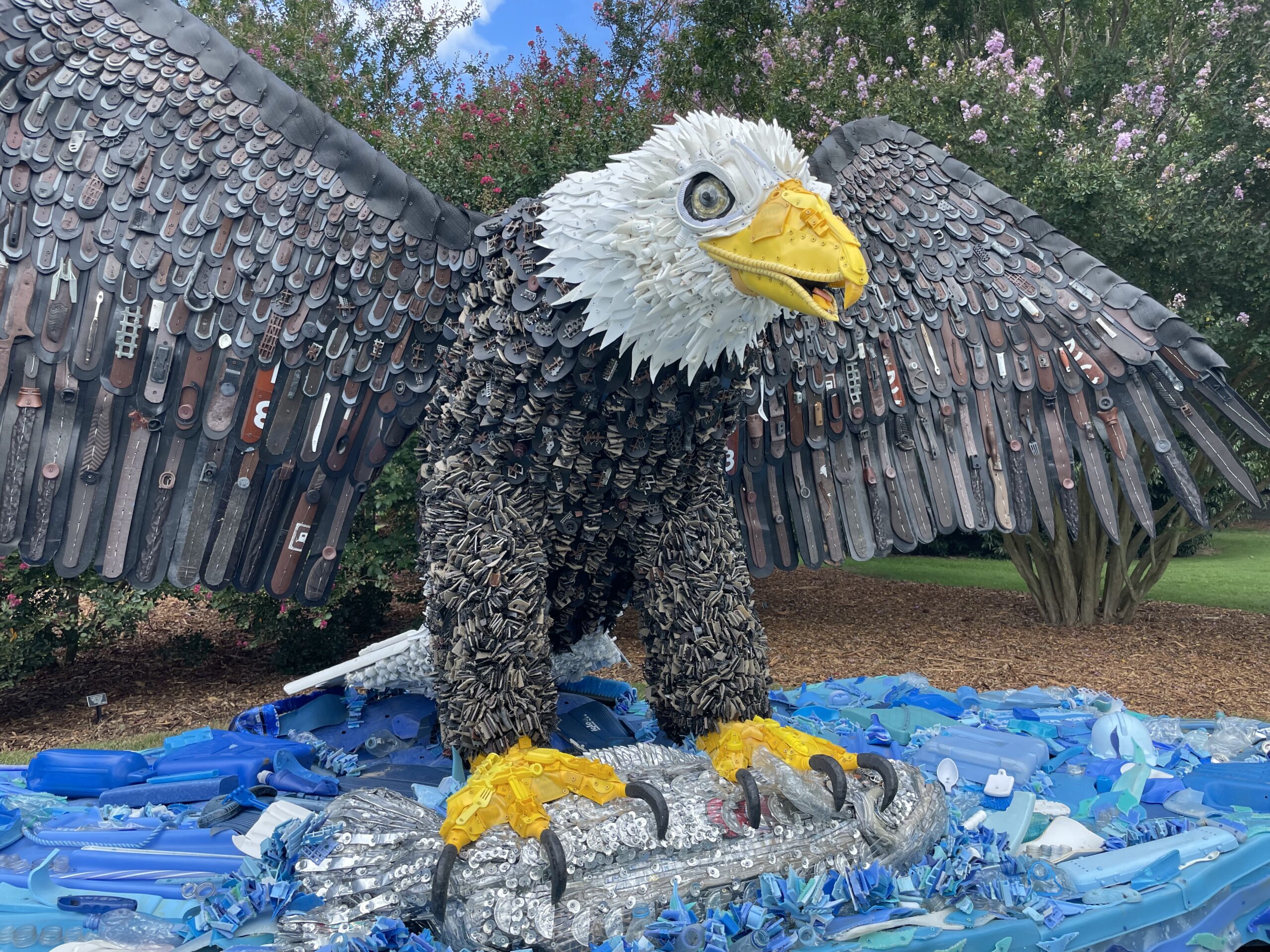
Rosa, the bald eagle, was created by Washed Ashore volunteers collaborating nationwide despite the pandemic. Washed Ashore is a nonprofit that repurposes ocean plastic to make art and raise awareness.

Having read about Washed Ashore at the New York Times before the pandemic, I wondered how these plastic-waste-fighting artists managed to keep going during lockdown. I should have known: nothing can stop them.

Founder Angela Haseltine Pozzi showed her mettle in an early March 2020 interview with Alex V. Cipolle: “Angela Haseltine Pozzi stands shoulder to shoulder with Cosmo, a six-foot-tall tufted puffin, on a cliff overlooking the blustery Oregon coast. It is January and the deadly king tides have come to Coquille Point, making the shoreline look like a churning root-beer float.

“Cosmo endures the weather just fine, as he is composed of plastic that has washed ashore — flip-flops, bottle caps, toy wheels, cigarette lighters — all mounted to a stainless-steel frame and bolted to concrete. The puffin is a sculpture from Ms. Haseltine Pozzi’s art and education nonprofit, Washed Ashore, whose tagline is ‘Art to Save the Sea.’

‘We’ve cleaned up 26 tons off the beaches, Ms. Haseltine Pozzi said, ‘which isn’t a dent in the actual pollution issue, but we’re doing something by raising awareness and waking people up.’ …

“Washed Ashore has taken those 26 tons of garbage, all debris that washed up on the Oregon coast (the majority within 100 miles of Bandon), and built 70 large-scale sculptures and counting, including Octavia the Octopus, Edward the Leatherback Turtle and Daisy the Polar Bear. …

“[The National Oceanic and Atmospheric Administration] estimates that eight million metric tons of plastic end up in the ocean each year. Marine animals become entangled in it or ingest pieces they mistake for food, such as the whale that recently washed ashore in Scotland with 220 pounds of debris in its belly — the same weight in plastic an American throws away annually.”

So having read about Haseltine Pozzi’s efforts to draw attention to this travesty through art, I wondered what happened to Washed Ashore during the pandemic. Surely, there would have been no more of Pozzi’s in-person workshops, workshops where Washed Ashore invites “the Buddhists and the Baptists, and the rednecks and the hippies, and the Republicans and the Democrats, and they all sit around the table and they all work together.”

The nonprofit’s excellent blog has that piece of the story.

“When the Covid-19 pandemic led to a national lockdown of indoor spaces in early 2020, the Washed Ashore gallery and art studios were affected much like everyone else. Volunteer activity ceased, exhibits were closed, and workshops were emptied. Washed Ashore relies heavily on a steady stream of volunteers to collect and sort debris and build parts of sculptures, accompanying our full-time staff of artists and helpers. But overnight, our doors were closed and volunteers sent home.

“Knowing the problems of plastic ocean pollution were too great to ignore, Washed Ashore looked to find a creative way to continue our mission to create ‘Art to Save the Sea’ and finding a way to still work together, but differently. …

“And so we got to work, calling on supporters and putting together a plan to unite us as the pandemic kept us all apart. [We] opened our determined efforts nationwide with a goal to work together and create a new sculpture, a symbol of unity.

“What better symbol of hope and unity for the people of the United States than a giant American Bald Eagle, the symbol of our democracy?

“The project was named ‘Come Soar With Us,’ by our Executive Director Katie Dougherty, and our team got to work putting together detailed plastic debris construction kits and instructions and mailing them out across America to over 1,550 volunteers across seven states. Their tireless participation stretched well over eight months, creating the feathers for what would be become Rosa’s impressive wingspan. …

“During a time when so much was halted, the momentum and collaboration from creating Rosa with all of our staff and volunteers was inspiring and has given our team an enormous sense of pride and accomplishment. … You can see Rosa in person at Norfolk Botanical Garden in Norfolk, Virginia, from August 21 – November 4, 2021.”

More at the Washed Ashore blog, here, and at the New York Times, here.

Read Full Post »

Photo: Salvatore Laporta / KONTROLAB / LightRocket via Getty Images.
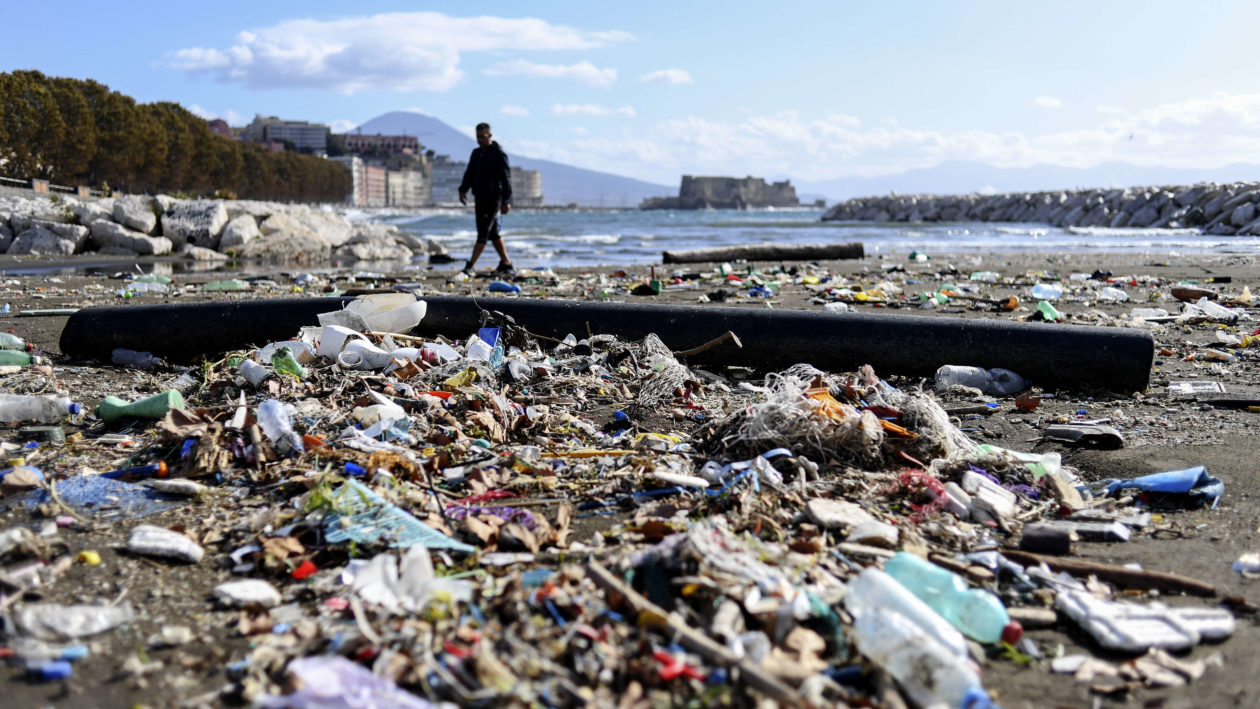
A beach in Naples, Italy, covered in plastic waste following a storm in 2018.

The pandemic unfortunately increased my use of takeout meals packaged in plastic, but today I’m back to thinking about ways to reduce plastic consumption. For example, instead of buying brands that usually come in plastic, I look for alternatives in glass: mayonnaise, olive oil, applesauce, lemon juice. Suzanne showed me a brand of yogurt that comes in glass, too. And my water bottle is glass with a kind of rubber coating.

You do have to hunt for these things. It’s not like government here is going to help you as the European Union would. This month, for instance, the EU banned many throwaway plastic products.

At YaleEnvironment360, Paul Hockenos reports, “In Europe, beachgoers have grown accustomed to the dispiriting sight of plastic garbage strewn along shorelines. Indeed, 85 percent of the continent’s saltwater beaches and seas exceed pollution standards on marine litter. The Mediterranean Sea is the most defiled of all, with researchers collecting an average of 274 pieces of plastic refuse per 100 meters of shoreline. And beneath the waves, microplastics have turned coastal waters into toxic ‘plastic soups.’

“In an all-out push to clean up Europe’s beaches — one plank in the European Union’s trailblazing efforts to address the almost 28 million U.S. tons of plastic waste it generates annually — a ban comes into effect July 3 that halts the sale in EU markets of the 10 plastic products that most commonly wash up on the continent’s shores. These include, among other items, plastic bottle caps, cutlery, straws and plates, as well as Styrofoam food and beverage containers.

“The ban is the most visible sign of Europe’s efforts to curtail plastics pollution by creating the world’s first-ever circular plastics regime. By the end of this decade, this will lead to a ban on throwaway plastics, the creation of a comprehensive reuse system for all other plastics, and the establishment of an expansive and potentially lucrative European market for recycled plastics.

“A raft of EU measures is now driving investments and innovation toward circular solutions that, according to experts and EU officials, will come to define Europe’s low-carbon economy and enhance its global competitiveness. A circular economy is one in which products and materials are kept in use along their entire life cycle, from design and manufacturing to reuse or recycling. In contrast to the current, linear system, products don’t end up in the rubbish bin, but rather are reintroduced into the production process.

“Under the EU Plastics Strategy, put forward in 2018, waste guidelines will overhaul the way plastic products are designed, used and recycled. All plastic packaging on the EU market must be recyclable by 2030, and the use of microplastics circumscribed.

The measures are the toughest in the world and have already pushed plastic packaging recycling rates in the EU to an all-time high of 41.5 percent — three times that of the United States.

“The EU has set a target for recycling 50 percent of plastic packaging by 2025, a goal that now looks within reach. And in 2025, a separate collection target of 77 percent will be in place for plastic bottles, increasing to 90 percent by 2029.

“This overarching regime will rely on the widespread adoption of extended producer responsibility schemes, which means that if a company introduces packaging or packaged goods into a country’s market, that firm remains responsible for the full cost of the collection, transportation, recycling or incineration of its products. In effect, the polluter pays. …

“ ‘The EU is taking the creation of a circular economy very seriously, and plastics are at the center of it,’ said Henning Wilts, director of circular economy at Germany’s Wuppertal Institute for Climate, Environment and Energy. …

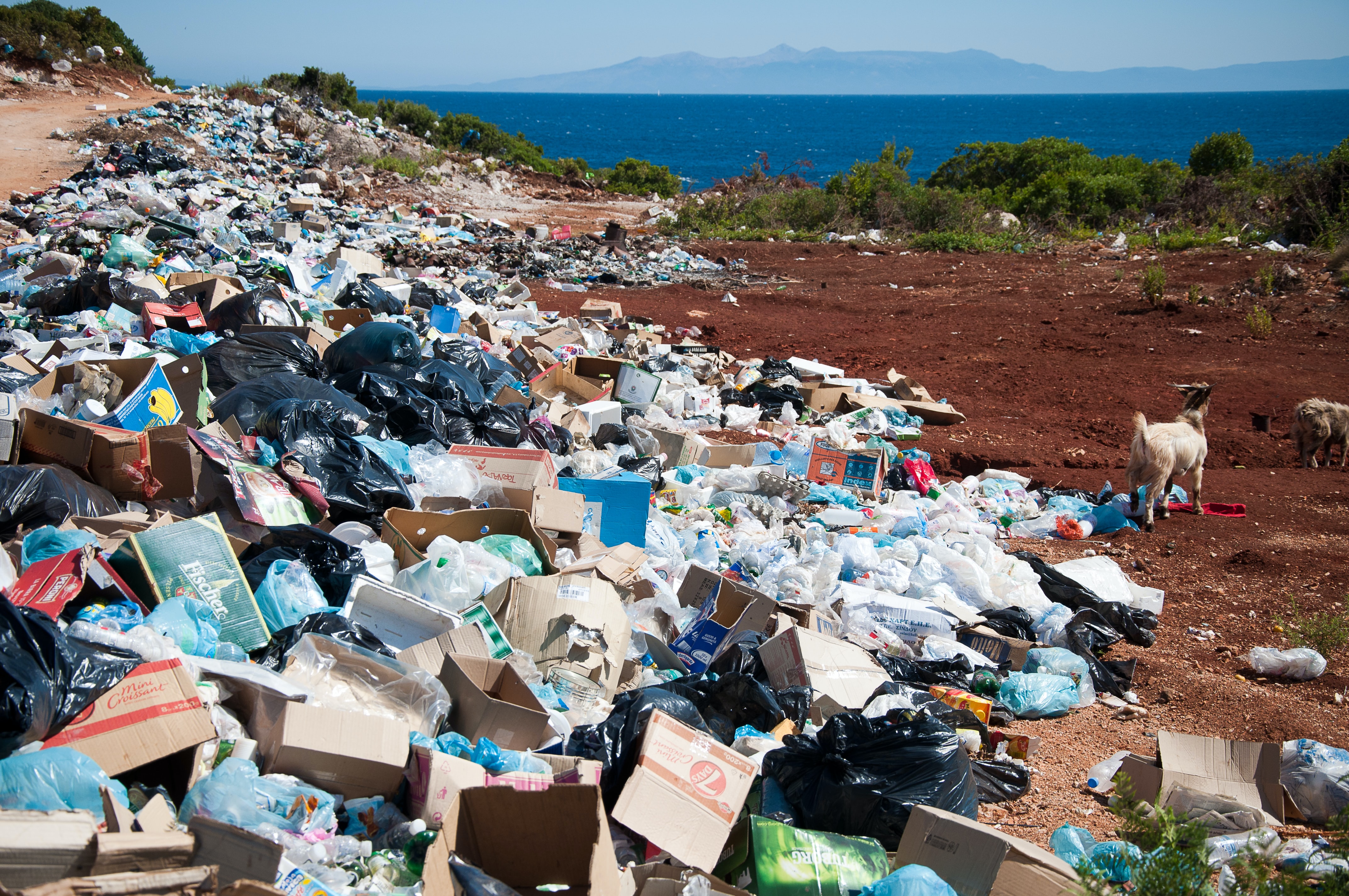
“The U.S., which generates the largest amount of plastic waste in the world, is awash in waste now that China — the largest manufacturer of plastic — no longer accepts imported waste; many U.S. cities end up pitching plastic waste into landfills or burning it. Congress has commissioned the National Academies of Sciences to conduct a sweeping review of the U.S. contribution to plastic waste, due out at the end of this year. …

“ ‘The 10-items ban is big. It’s not greenwashing,’ said Clara Löw, an analyst at the Öko-Institute, a German think tank. ‘There are many more measures afoot within the European Green Deal to rein in plastics and establish circularity as the cornerstone principle of Europe’s plastics economy. Even most Europeans aren’t aware of how much is happening right now.’ …

“Carmine Trecroci, an economist and recycling expert at the University of Brescia in Italy, said that external factors like the price of oil have a major impact; as long as oil is cheap, which it has been in recent years, so too is plastics production, making it all the harder to rein in. The plastics sector in the EU is big business, employing 1.5 million people and generating 350 billion euros in 2019. Trecroci said the powerful Italian plastics lobby fought fiercely to block the 10-item ban, and then to slow and dilute it. In the end, however, the EU approved the ban.”

More at Yale Environment 360, here. Vested interests are always going to fight back against measures like that, but the EU shows that common sense can prevail. In the US, if consumers boycott plastic, I think we will see companies changing.

July 22, 2021 Update: Wow, I just saw that Maine is doing what we’ve been asking for. Read this.

Read Full Post »

Photo: Reuters.
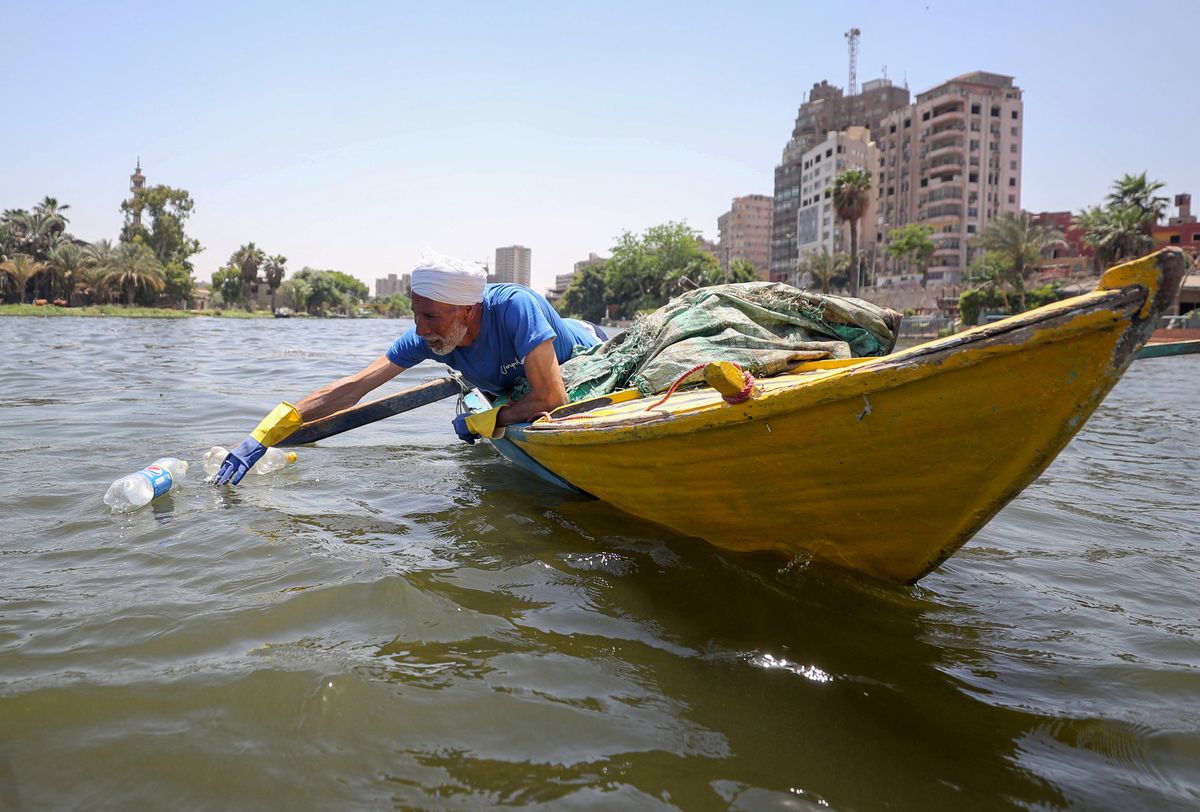
An Egyptian nonprofit has enlisted fishermen from Al-Qursaya, an island near central Cairo, to collect plastics that have been reducing the catch.

At the Center for Biological Diversity, I recently learned about the enormity of the plastics problem in waters where people fish. The website states: “Plastic accumulating in our oceans and on our beaches has become a global crisis. Billions of pounds of plastic can be found in swirling convergences that make up about 40 percent of the world’s ocean surfaces. At current rates, plastic is expected to outweigh all the fish in the sea by 2050.” Yikes!

New efforts large and small are needed to reverse what’s happening. On Twitter, the World Economic Forum is promoting one of the small efforts, which is how I learned about it.

Reuters reports, “For 17 years, Mohamed Nasar has supported his family of five by fishing in the Nile River near the banks of the tiny island of Al-Qursaya close to central Cairo.

“But the 58-year-old says fishermen like himself catch fewer fish every year as the Nile has become clogged with plastic bottles, bags and other waste.

‘The fish get caught in the bottles, and they die,’ said Nasar.

“A local environmental group named ‘VeryNile‘ has asked the island’s fishermen to use their boats to collect plastic bottles from the river. VeryNile says it buys the bottles at a higher price than the general market price on offer from traders or recycling plants.

“The initiative provides a sustainable solution for helping to clean up the Nile, while providing an additional source of income for fisherman like Nasar.

” ‘This job helped us a bit. We come and collect about 10 to 15 kilos (of plastic bottles), we get about 12 Egyptian pounds ($0.7682) for each,’ Nasar said as he sat in his boat collecting bottles. …

“Another fisherman, Saeed Hassanein, said cleaner Nile water would mean more fish.

” ‘On the one hand, the Nile is cleaner, and on the other hand the fisherman now has more than one source of income,’ he said.

“With the help of more than 40 fishermen, VeryNile has over the past year collected around 18 tons of plastic bottles, most of which were sold to recyclers.” More at Reuters, here.

The World Economic Forum, which defines itself as the “international organization for public-private cooperation,” is increasingly focused on addressing the consequences of global warming, and I hope it is serious about that. It’s easy to feel cynical about the forum’s annual conference for the world’s rich and powerful — called Davos because it takes place in Davos, Switzerland — but I have to believe it’s helping to make both the problems and the possible solutions more widely accepted. Besides, I know there are many altruistic people on the staff, like my friend Kai, who was one of them several years ago.

In a recent podcast, Radio Davos discusses initiatives tackling climate change, calling the current decade “the decade of ocean science, and one in which we must get on track for net-zero by 2050.”

So there’s that. Meanwhile, in Egypt, impoverished fishermen are pulling out plastic that corporations, cruise ships, and too many individuals keep dumping.

Read Full Post »

My friend Jeanne has been investigating more-sustainable living and has experimented with producing zero waste. I’m impressed. My small efforts have been almost completely undermined by the pandemic and all the plastic containers that come with takeout — takeout being both a break from cooking and support for our local restaurants.

Even the folks at Plastic Free Hackney, an inspiring effort in an English town, admit that it’s all harder during a pandemic. Still, idealists soldier on and will eventually triumph.

Jessica Wolfrom writes at the Washington Post, ” ‘It was kind of like a slow-moving coup on my part,’ said Anna [Marino], 32, a former seller on the website Etsy, who started researching the meat industry and the zero-waste movement. Even though they were only a family of four — [Anna and Justin] have two children, ages 6 and 3 — they knew they needed to change their lives.

“Paper towels and single-use napkins were the first to go. Then went the plastic. But as they traded traditional products for more eco-friendly items, they quickly realized that their reliance on online shopping was another problem.

“ ‘It almost defeats the purpose,’ said Justin, 43, who previously worked in cybersecurity. ‘I’m ordering something to save the planet, but in order for it to get here, it’s creating a pretty nasty carbon footprint. … And so, we were like, well, there needs to be a store around here.’

“Enter Mason & Greens, the Washington region’s first zero-waste store. … The airy shop is equal parts organic grocer and minimalist boutique, selling items such as package-free shampoo bars, organic produce and drip-irrigated olive oil. Hanging plants and shelves lined with stainless steel containers and books titled ‘All You Need Is Less’ offer shoppers a glimpse into the world of low-waste living. …

“ ‘You know it’s a movement when you don’t know everything that’s going on,’ said Gary Liss, vice president of Zero Waste USA, a nonprofit organization dedicated to reducing waste, who described the growing interest in low-waste living as a sea change in the relationship between people and things.

“Americans throw away about five pounds of trash per person per day, according to the Environmental Protection Agency — 12 percent of which is plastics. … Scientists estimate that up to 91 percent of plastic is never recycled, leaving the rest to burn in incinerators, clog landfills or degrade in the oceans. Scientists have even found microplastics in air, water and food. …

“The coronavirus pandemic has only increased reliance on disposable plastics. Billions of masks and gloves made from plastics and used by health-care workers, first responders and essential workers are being discarded every month, studies show. …

“Mason & Greens, which is based in part on the bulk model, makes a point of avoiding plastics at nearly every turn. Beans and grains come in gravity dispensers. Produce is package-free. Pomberry Kombucha and pinot noir stream from a tap. The spices are self-serve.

“Customers aren’t required to bring their own bags or refillable containers, but the couple said many customers do. The shop employs a tare system that logs the weight of an empty container and then calculates the price of products by the ounce. …

“The couple welcomes newcomers into their waste-free world, but Anna routinely castigates vendors for their packaging practices — she is not above shaming suppliers who send items wrapped in plastic. … ‘I have to go through so much to get a product into the store that’s zero-waste or low-waste.’

“But living a waste-free life might soon become easier. As consumers demand more sustainable options, brands large and small are shifting to make sustainability central to their strategy. Major companies such as Unilever have pledged to halve the use of virgin plastics in packaging by 2025. Walmart, Target, CVS and other retailers are working to develop an environmentally friendly alternative to the plastic bag. And other companies are starting circular delivery services — an updated version of the 1950s milkman — where groceries and goods are packaged in reusable containers that are returned empty.”

Signing up for the guy who brings milk in reusable bottles is one way I’ve actually gotten better at controlling waste in the pandemic. Thanks to my daughter-in-law, I got in under the wire with the dairy farm as other people started lining up for deliveries, too.

Read about a variety of zero-waste shops and the blogger who fit all the waste she produced over four years into a 16-ounce Mason jar at the Washington Post, here.

Read Full Post »

Older Posts »