Feeds:
Posts
Comments

Posts Tagged ‘poetry slam’

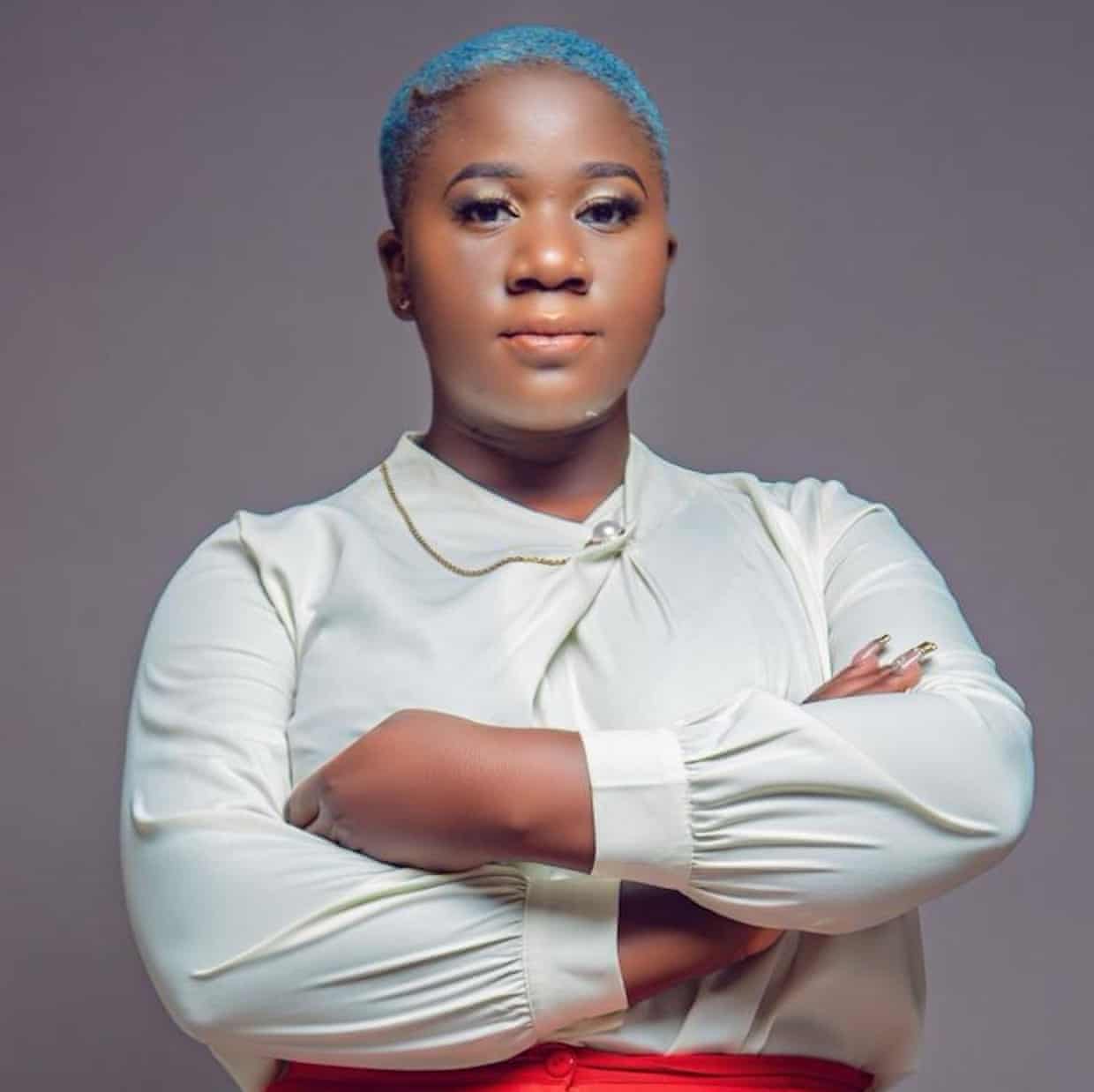
Photo: Vanessa Chisakula.
Vanessa Chisakula of Zambia wrote her first spoken word poem in her early 20s and “didn’t want to stop.”

It’s a universal human need: to have people listen to you, to be heard. How often do you find yourself talking to someone who is only waiting for you to pause so they can say their own thing? Well, that’s not being heard.

Recently in Africa, young people are finding that poetry events can be an outlet where other people are really trying to listen. It feels good.

Sarah Johns has written at the Guardian about poetry slams in Zambia.

“After giving birth, Vanessa Chisakula started writing poetry as a way of processing the changes and struggles she was experiencing as a new mother. ‘I was in my early 20s. I had just become a mum and didn’t understand it,’ she says. …

“Chisakula wanted to share her stories. She was inspired to do spoken-word poetry – a genre written to be read out loud and performed – when she heard I Will Wait For You by Janette…ikz, an American spoken-word poet.

“Now, she is spearheading efforts to expand the spoken-word scene in Zambia, where she is from. In 2017, she co-founded Word Smash Poetry, a movement for young creative activists across southern Africa. In her own award-winning work, she uses poetry as a tool for activism, focusing on issues including women’s rights, youth, African identity and mental health. …

” ‘Art is a form of protest that leaves no blood. It can be peacefully done but a strong message can be communicated artistically. … Poetry is just so beautiful,’ she says. ‘It can be a short but inspiring piece; it leaves you thinking and wanting more. I didn’t want to stop.’

“One of her first poems, ‘Her Place,’ was an examination of womanhood. She explains: ‘I wanted to tell my truth. What exactly is womanhood?’ … In 2020, Chisakula released a short collection of poems, Africana, written to embrace her identity as a black African.

“ ‘I always wanted to relocate to the US when I was young,’ she says. ‘I thought the American dream was the dream. There’s no African dream.’ She no longer believes this; now she wants to celebrate her home continent. …

“Over the past five years, Chisakula has seen the spoken-word scene grow in popularity in her home country. It is already well established across southern Africa, she says. From September to December there are poetry festivals ‘nonstop’ across countries including South Africa, Botswana, Zimbabwe and Zambia. In 2022, the winner of the World Poetry Slam, held in Brussels, was Xabiso Vili from South Africa.

“This year, the competition will be held in Togo. … ‘There’s a poet on every corner now,’ she says. ‘Back then, it was a bit uncommon; now people are doing it on a larger scale. I see poets at almost every event.’

“Male poets still outnumber female poets, however. Chisakula believes women struggle to get a foothold in the arts in Zambia. … Last month, the Word Smash Poetry movement hosted its second all-female national poetry slam in Lusaka, which took place during the 16 Days of Activism Against Gender-based Violence, an annual international campaign that kicks off in late November.

“There were 12 performers in total; four had returned after performing last year and there were eight new faces, which was a huge achievement, according to Chisakula.”

More at the Guardian, here.

Read Full Post »

While we’re on the subject, here are two more poetry events scheduled for spring.

Nancy writes, “Some of your readers may also be interested in the Massachusetts Poetry Festival, in Salem, May 1 – 3. Marge Piercy and Richard Blanco will be among the many well-known poets reading.”

She also notes that if you are near Providence in March, you may want to attend the Poetry Out Loud recitation competition for high school students. The statewide competition will be held at Rhode Island School of Design in Providence, with 15 students from schools across Rhode Island reciting poems (by such people as Shakespeare, Mary Oliver, Robert Frost, etc.) in hopes of qualifying for nationals. Info here.

Another inspiring poetry competition for youth is the one depicted by the movie Louder than a Bomb, in which students compose their own poems and perform them. My husband and I were impressed by what the creative opportunity and the discipline did for some at-risk kids. You can get the movie from Netflix, which describes it thus: “Capturing the combined creative spirit of more than 600 Chicago-area teenagers who are participating in what’s billed as the world’s largest youth poetry slam, this documentary highlights the joy of language and the power of collaboration.”

Read Full Post »

I think I first heard about poetry slams from Patricia Smith when she was a columnist at the Boston Globe. I went with Kristina to hear her slam some poetry at Cambridge Adult Ed once. It was fun.

Patricia Smith had too much imagination to be a Globe columnist, but I still remember one of her stories that, if it wasn’t real in the usual sense was real on a level that has meaning for me. She has developed her poetry side since then and has won the awards she deserves.

Today my husband pointed me to an article on another poetry slam guru, Jack McCarthy.

Bryan Marquard writes in an obit in the Globe, “At some 200 lines, Jack ­McCarthy’s first published ­poem appeared in the Boston Sunday Globe in October 1976. Filling a page, ‘South Boston Sunday’ describes a family stroll through the neighborhood of his youth

“He thought the poem would launch his writing career, but that didn’t happen until another October, in 1993, when Mr. McCarthy took his youngest daughter to a poetry slam at the Cantab Lounge in Cambridge. He got up to read and the positive response brought an epiphany: The poet’s voice and the audience’s ears were inseparable.

“ ‘For me, the live audience is really the only audience I ever think about,’ he said by phone when he knew his death was near. “When I put something down on paper and publish it, my highest hope is that someone somewhere will pick it up and read it to a third party. My sense of audience does not stop with the person who reads the poem. I hope the poem goes on to another life.’ …

“ ‘The only ambition he seems to have is to tell the truth as best he can in poems,’ the poet Thomas Lux once wrote of Mr. McCarthy.”

Stephen Dobyns, a respected poet and one of my favorite mystery writers, called him “one of the wonders of contemporary poetry. He writes — and often performs — dazzling narratives full of wit and humor, sadness and hard thinking. He should be cloned.”

Read more about McCarthy here, about Patricia Smith here, about poetry slams here.

Photograph: Peter Vicinanza/file 2007/Boston Globe
Mr. McCarthy became well known after he in the 1998 documentary “SlamNation.”

Read Full Post »