Feeds:
Posts
Comments

Posts Tagged ‘psychology’

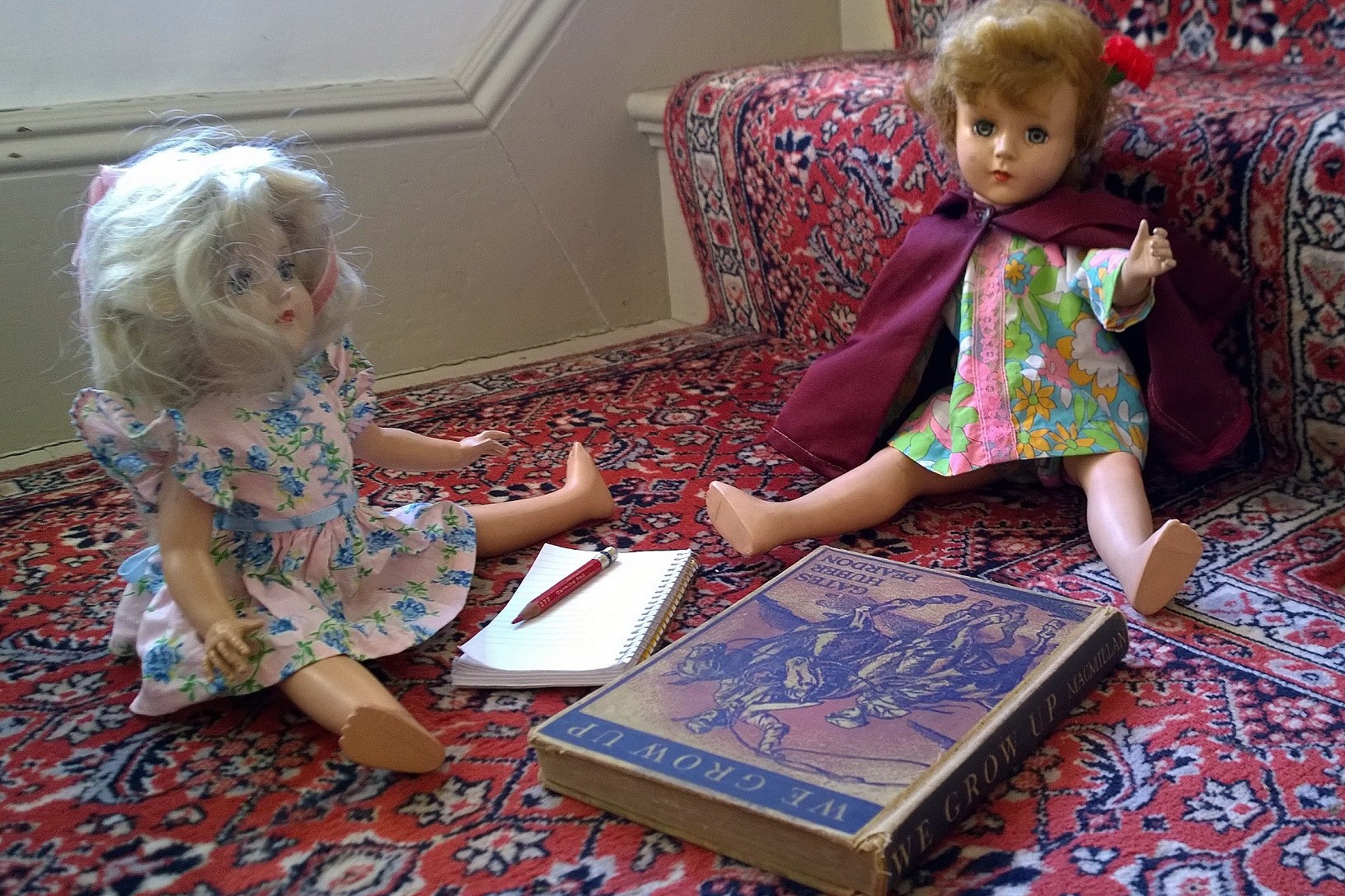
Photo: Suzanne’s Mom.

Dolls were an important part of my childhood, figuring prominently in what I called My Little House, a neglected corner of our third floor, and later in My Little School. So I was interested in recent research my husband saw about a role dolls can play in any child’s life.

Hannah Devlin reported at the Guardian, “Playing with dolls encourages children to talk more about others’ thoughts and emotions, a study has found.

“The research suggests that playing imaginary games with dolls could help children develop social skills … and empathy. The neuroscientist who led the work said that the educational value of playing with Lego and construction toys was widely accepted, but the benefits of playing with dolls sometimes appeared to have been overlooked.

“ ‘When children create imaginary worlds and role play with dolls, they communicate at first out loud and then internalise the message about others’ thoughts, emotions and feelings,’ said Dr Sarah Gerson, a neuroscientist at Cardiff University and the lead author.

‘This can have positive long-lasting effects on children, such as driving higher rates of social and emotional processing and building social skills like empathy that can become internalised to build and form lifelong habits.’

“The study, funded by the manufacturers of Barbie and published in the journal Developmental Science, involved 33 boys and girls, aged between four and eight who were given a collection of Barbie dolls and accessories such as an ambulance or horse to play with.

“They were left to play spontaneously, but their speech was monitored and they were also fitted with a specialized cap containing a form of brain imaging technology called functional near-infrared spectroscopy (fNIRS). The technique measures changes in blood oxygenation by shining light through the skull, which makes it possible to track brain activity while the subject is freely moving around.

“The study found that the children talked more about others’ thoughts and emotions, a concept known as internal state language, when playing with the dolls, compared with playing creative games on a computer tablet, such as a hairdressing game or a city-building game with characters.

“They were also more likely to address the dolls in the second person, talking to them directly, whereas the characters on the computer screen they tended to refer to in the third person. No difference was observed between boys and girls. …

“Benjamin Mardell, who researches the pedagogy of play at Harvard Graduate School of Education and who was not involved in the work, said: ‘The hypothesis that playing with dolls provides a scaffolding for young children to take the perspective of another, even if that other is inanimate, seems very reasonable.’ …

“Mardell added that the findings ought to apply to any kind of role-play toy, rather than being specific to Barbies. ‘I’d take a broader view of what a doll is,’ he said. ‘[It could be] any object that the child can invest a sense of other into – a stuffed animal, an oven mitt that talks to them, or even an imaginary friend.’

“Children typically start to show signs of internal state language around the age of four. At this age, they begin to voice their thoughts aloud, indicating that they are considering the thoughts, feelings and desires of themselves and others.

“ ‘These skills are really important for interacting with other people, learning from other people, and navigating a variety of social situations,’ Gerson said. ‘It becomes important for making and sustaining friendships, and how they learn from their teachers, and parents.’ ” More at the Guardian, here.

I’ll just add that dolls or “role-play toys” can be important to a child for other reasons, too. When I was a teacher, a mother told me about my student’s hostility to the family’s new baby. The girl was acting out (calling for help) when she kept throwing a baby doll off the dollhouse roof. I myself probably cherished dolls as substitutes for the baby that left our home when I was four. Long story. The point is that dolls become real little people to a child, and the thoughts and feelings experienced with the little people are important.

You might also like this NPR story on the importance of free play in preschool, here.

Read Full Post »

idea_sized-cod-newsroom-38012019442_148f3964b4_oPhoto: CoD Newsroom/Flickr
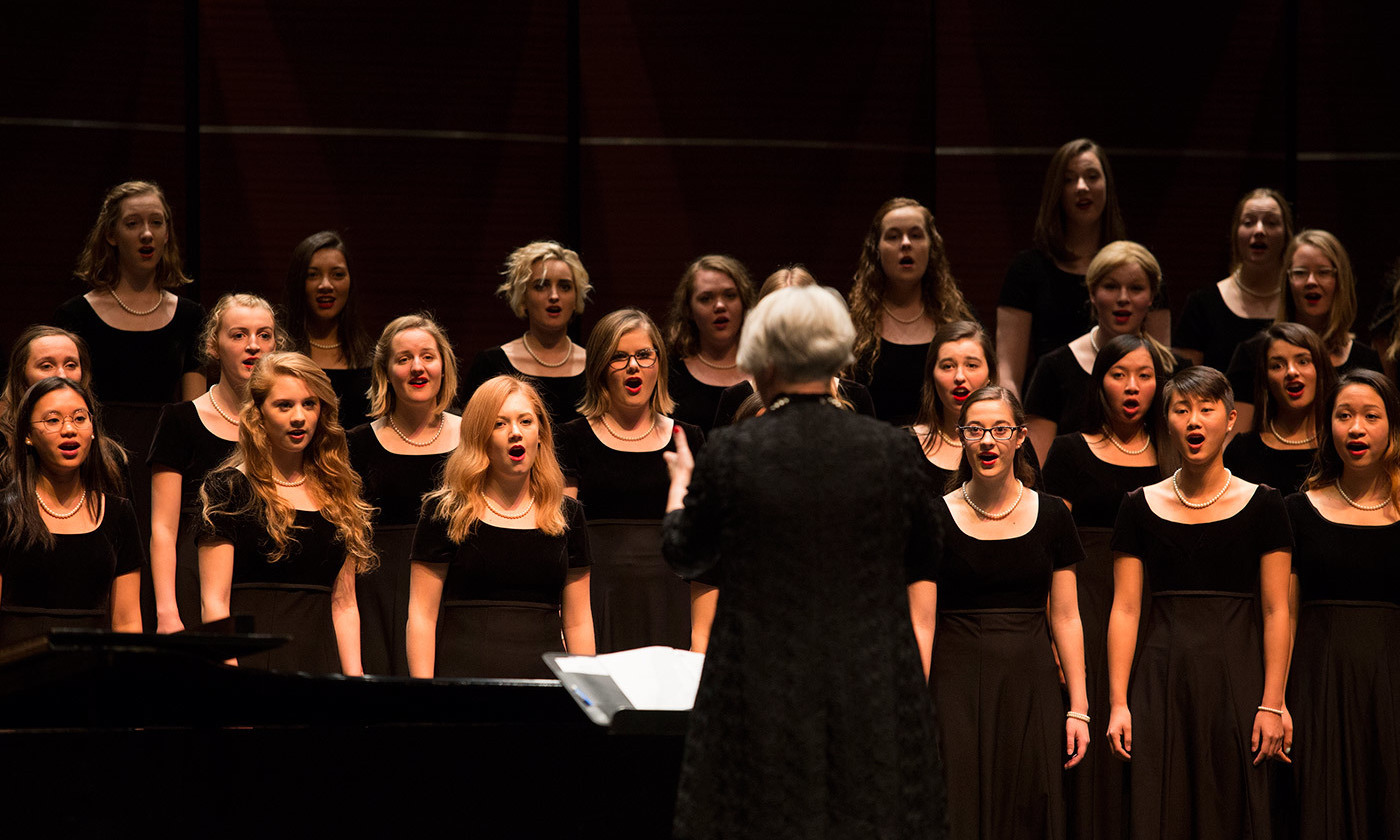
Singers at the Illinois American Choral Directors Association conference. Research explores how people bond through singing together.

Sometimes when the grandkids were small and fighting, I would break out in a song they liked — “Mister Moon,” say, or “Baby Beluga” — and they would join in enthusiastically and forget to fight.

The bonding aspect of singing together is something that many other people have discovered on their own. Now researchers want to learn more.

Eiluned Pearce, a postdoc research associate in experimental psychology at the University of Oxford, writes at Aeon, “Singing is universal. It is found in all cultures and, despite protestations of tone deafness, the vast majority of people can sing. Singing also often occurs in collective contexts: think about sports stadiums, religious services and birthday celebrations. Given these two characteristics, my colleagues and I wondered whether singing is a behaviour that evolved to bond groups together.

“Being part of a group is essential to human survival. In our hunter-gatherer past, having supportive social relationships would have enabled people to get the resources they needed to defend them against outsiders, to benefit from collective childrearing, and to share and develop cultural knowledge about their environment and about useful technological inventions. We now also know that feeling sufficiently socially connected guards against physical and mental illness, and increases longevity. …

“Whereas monkeys and apes create social bonds through one-to-one grooming sessions, human groups are too large to be able to do that and still have enough time to eat and sleep. We needed a more efficient mechanism of creating social cohesion, a way to bond larger numbers of individuals together simultaneously.

“To find out whether singing might fill this role, we needed to find out if this activity was capable of making large groups of individuals feel closer to each other. To help us answer this question, we teamed up with Popchoir, a British organisation that runs local choirs across London and beyond. What is great about Popchoir is that these different local choirs of a few dozen members periodically come together to create a unified ‘Megachoir’ of several hundred members.

“Our research team went along to some rehearsals to collect data before and after they sang together, either in their local choir or in the amalgamated Megachoir. … On average, people showed a significantly bigger increase in how close they felt to the Megachoir over the course of singing with them, compared with when they were singing with their local choir. …

“So singing can create cohesion in large groups of several hundred individuals, supporting the idea that this behaviour might have evolved to create community cohesion in humans.

“What we still didn’t know, however, was whether singing itself is special, or whether any activity that provided opportunities for social engagement could have similar bonding effects. To tackle this issue, we collaborated with the Workers’ Educational Association (WEA), a national adult-education charity in the UK. We predicted that singing classes would become more closely bonded than other types of classes (either creative writing or crafts). We were wrong: at the end of the seven-month courses, all the classes were equally bonded.

“But as we looked more closely at the data, we saw something that surprised us. Singing seemed to bond the newly formed groups much more quickly than the comparison activities. It was the most effective. So singing is special: it has an ice-breaker effect.”

More at Aeon, here. Even when groups of singers are competing, the researchers found, bonding occurs among opposing groups.

Read Full Post »

The New York Times Science section had a cute piece in January about surprising friendships among different species of animals. Perhaps you saw it.

Erica Goode reported, “Videos of unlikely animal pairs romping or snuggling have become so common that they are piquing the interest of some scientists, who say they invite more systematic study. Among other things, researchers say, the alliances could add to an understanding of how species communicate, what propels certain animals to connect across species lines and the degree to which some animals can adopt the behaviors of other species.

” ‘There’s no question that studying these relationships can give you some insight into the factors that go into normal relationships,’ said Gordon Burghardt, a professor in the departments of psychology and ecology and evolutionary biology at the University of Tennessee, who added that one video he liked to show students was of a small and persistent tortoise tussling over a ball with a Jack Russell terrier. …

“Until recently, any suggestion that interspecies relationships might be based simply on companionship would probably have been met with derision, dismissed as Pixar-like anthropomorphism. That has changed as research has gradually eroded some boundaries between homo sapiens and other animals. Other species, it turns out, share abilities once considered exclusive to humans, including some emotions, tool use, counting, certain aspects of language and even a moral sense. …

Barbara J. King, an anthropologist at the College of William and Mary, said that she hoped researchers would begin to collect examples of cross-species interactions to build a database that would merit scientific scrutiny. ‘I think we’re not even at the point of being able to extract patterns because the database is so small,’ she said, adding that the topic could also benefit from a rigorous definition of what constitutes a ‘friendship’ between members of different species.” More here.

Photo: Noah’s Ark Animal Sanctuary by way of Africa Geographic.

Read Full Post »

A day that Canadian short story writer Alice Munro wins the Nobel Prize for Literature might be a good day to talk about the power of fiction.

The NY Times took up the subject only last week. I think that reporter Pam Belluck must have been a little psychic. She wrote: “Say you are getting ready for a blind date or a job interview. What should you do? Besides shower and shave, of course, it turns out you should read — but not just anything. Something by Chekhov or Alice Munro will help you navigate new social territory better than a potboiler by Danielle Steel.

“That is the conclusion of a study published [October 3] in the journal Science. It found that after reading literary fiction, as opposed to popular fiction or serious nonfiction, people performed better on tests measuring empathy, social perception and emotional intelligence — skills that come in especially handy when you are trying to read someone’s body language or gauge what they might be thinking.”

Emanuele Castano and David Comer Kidd, researchers in the New School for Social Research’s psychology department. say “the reason is that literary fiction often leaves more to the imagination, encouraging readers to make inferences about characters and be sensitive to emotional nuance and complexity. …

“ ‘It’s a really important result,’ said Nicholas Humphrey, an evolutionary psychologist who has written extensively about human intelligence, and who was not involved in the research. ‘That they would have subjects read for three to five minutes and that they would get these results is astonishing.’ ” More.

My own use of literary fiction is mainly for pleasure, not job interviews. But when things are bleak, Dickens can be the best medicine.

Photo of Charles Dickens from Biography.com

Read Full Post »

Tom Jacobs alerted me to a piece he published at Pacific Standard, a publication that reports on studies in the social sciences.

Newly published research, he says, provides some support for the notion that children by nature want to help others.

“ ‘From an early age, humans seem to have genuine concern for the welfare of others,’ concludes a research team led by Robert Hepach of the Max Planck Institute for Evolutionary Anthropology. …

“But how exactly do you discover a toddler’s motivation? The researchers took a novel approach: by looking straight into his or her eyes.

“They note that our pupils enlarge in response to emotionally stimulating sights, and deduced this could provide an indication of what specifically prompts kids to perk up and take notice. Are they aroused by the sight of someone in need—or, perhaps, by the realization that they could play the hero by helping?

“Their experiment featured 36 2-year-olds, who viewed a scene in which an adult needed help reaching for a can or crayon. One-third of the children were allowed by their parents to help the person in need (almost all did so); another third were held back from providing assistance.”

Curious? Read more.

(By the way, the same institute was behind some research that Alan Alda featured on the PBS show The Human Spark, here.)

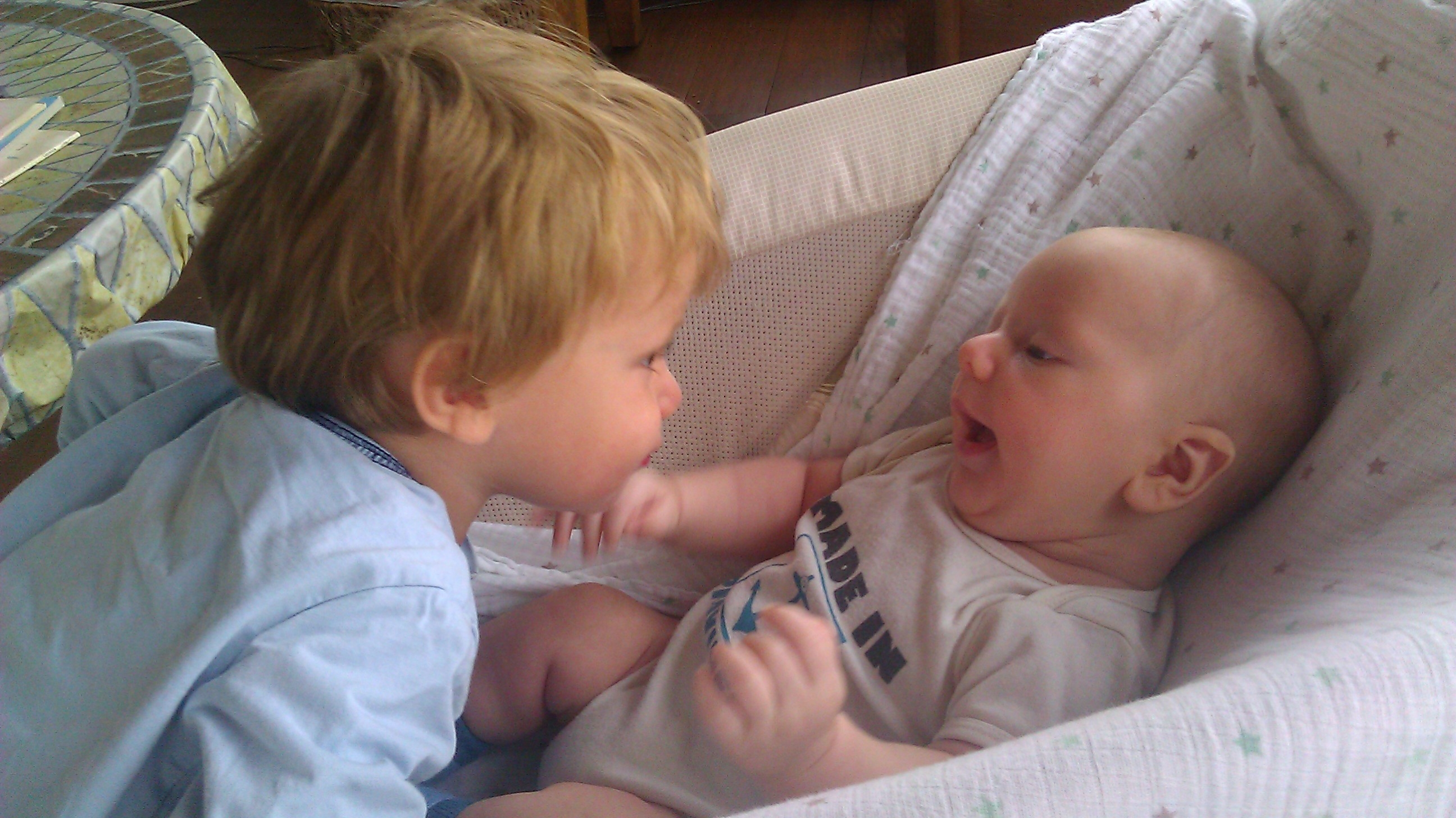
Photograph: Two-year-old meeting his cousin’s need for conversation.

Read Full Post »

We watched a couple unusual documentaries last night and last weekend. Often by the time films are available on Netflix, all I remember about the review is that someone highly recommended them. I know only that we will get a big surprise.

“Marwencol” and “Waste Land” were amazing surprises. They turned out to have something in common, too — the idea that art can lift people from despair, help them see things in a way that opens up their world. What was different between the movies was that for the troubled guy who created art in “Marwencol,” showing his work in a NYC gallery is quite beside the point of his healing process and probably the last thing he needs.

The movie is beautifully executed, but one has the sense that the young filmmakers who think the protagonist will benefit from the big-time art world don’t understand psychology very well.

The protagonist of “Waste Land,” successful Brazilian artist Vik Muniz, although equally idealistic, understands his subjects better, having experienced a life similar to theirs in his impoverished childhood. He decides to combine an art project with helping “garbage pickers” in the world’s biggest landfill, in Rio. Getting to know a few of the workers really well, he develops tremendous admiration for them and their deep dignity. He pays a few to work with him on giant portraits on themselves, portraits that play on the themes of some famous paintings. They use recyclables to complete the images, which are then photographed and shown in galleries and at auction. The proceeds come back to the people and help them both individually and collectively.

But the biggest transformation is not monetary but rather what Vik anticipated based on his own life experience — that by seeing things in a new way, they would get new ideas about themselves and their possibilities.


Read Full Post »