Feeds:
Posts
Comments

Posts Tagged ‘public’

Photo: Emily Mesner/Anchorage Daily News.
Lenora Ward, general manager at KOTZ radio station, listens to a 2022 dog-sled musher interview while on-air at the station in Kotzebue.

Few places in the US rely more heavily on public radio than Alaska. That is why people who care about Alaska rushed to bridge the gap after the current Congress decided public radio is not needed.

Iris Samuels reports for the Anchorage Daily News, “An Alaska fund has raised $3.5 million as it seeks to replace federal funding rescinded by Congress for public radio and television stations.

“Amid fundraising efforts, station leaders say they are already beginning to cut some programming. …

“Congress in July voted to rescind $1 billion in federal funding for public media across the country. … Two of Alaska’s three-member congressional delegation voted in favor of the rescission, which eliminated roughly $15 million intended for more than two dozen stations in Alaska. …

“Sen. Lisa Murkowski was one of a few Republicans in Congress who attempted to salvage the federal funding that Congress members themselves had approved last year, pointing to its importance in alerting Alaskans to natural hazards like tsunamis, earthquakes and fires.

“In a recent call hosted by a coalition of Alaska public radio and television stations, PBS President Paula Kerger said that Alaska is at the forefront of national fundraising efforts intended to — at least temporarily — supplant federal funding with money from private donors and foundations. …

“Kerger said she was ‘deeply grateful to Sen. Murkowski, who really fought for us more than any other member of Congress.’

Alaska stations banded together in the days following the July rescission vote to, with the Alaska Community Foundation, establish the Voices Across Alaska Fund, which in its first two months raised more than $3.5 million.

“The funds came from 80 donors, which include individuals, corporations and foundations in Alaska and in the Lower 48, according to Alaska Community Foundation spokesperson Ashley Ellingson. The funds will be disbursed to stations [based] on stations’ needs, Ellingson said. …

“Alaska Public Media President Ed Ulman said that since the rescission, new donors have begun giving, or existing donors have upped their contributions. …

“Funds will be distributed to Alaska stations, which are also independently fundraising, several station managers said in recent days. Even as they have pivoted to fundraising efforts, the station managers reported making several targeted cuts to their programming in response to the loss of federal funding.

“Alaska Public Media, the state’s largest public station, has paused Alaska Insight, a television news program that was broadcast across the state. Ulman said Alaska Public Media has also cut its education programming and is considering cutting Debate for the State, a program that features candidate forums for statewide offices. …

“Gretchen Gordon, general manager of KUAC, a station serving Interior Alaska, said the station has cut overnight broadcasting, eliminated some national radio programs and lost television service in Nenana in response to the federal funding cut. Gordon said KUAC is ‘determined to find ways to restore lost programs and services.’

“Kristin Hall, general manager at KYUK, which serves Bethel and the Yukon-Kuskokwim Delta, said the station lost $1.2 million in federal funding, and could eliminate more than half its staff by the end of the calendar year.

“Justin Shoman, president and general manager of KTOO, said the Juneau-based station may need to adjust its coverage of the Legislature. Gavel Alaska, a live-streaming service for legislative hearings, press conferences and trial hearings, costs more than $1 million annually to run and receives no state funding, Shoman said. Until the rescission, federal funding made up more than a third of KTOO’s annual budget. …

“The federal funding cut comes after a yearslong refusal by Gov. Mike Dunleavy to spend state dollars on public media. Starting in his first year as governor, he repeatedly vetoed funding intended for public radio stations. This year, the Legislature did not fund the grants for public radio in the budget. …

“ ‘It’s not lost on many of us that the Legislature has every single year put in funding, in particular for rural public radio,’ said Ulman. ‘And yet, there is one individual who has the power of the veto who exercises that veto and goes against — I’m just going to say it — the will of the people.’

“When Begich, Alaska’s lone U.S. House member, voted in June to claw back federal funding for public media, he reasoned that public broadcasting was no longer essential because Alaskans now use ‘pervasive cellular, satellite, and wireline technologies.’

“But Gordon, with KUAC, said many Interior residents do not have access to broadband internet. … ‘Our lawmakers need to understand that a little better,’ she said.”

Will the new fundraising levels last? Only time will tell. More at the Anchorage Daily News, here. And do read about how an Alaska public radio station saves lives, here.

Read Full Post »

Photo: Rasmus Hjortshoj.
Dortheavej residence in Copenhagen. Social housing accounts for about 20% of all housing stock in Denmark and is available to anyone, regardless of income.

I’m always interested in housing stories, partly because among the issues that the department I worked in at the Fed addressed was housing. After the mortgage meltdown in 2008, I remember, we had a gigantic event at the Patriots’ football stadium to gather borrowers in danger of foreclosure under one roof with organizations that could help them.

Today’s story looks at new ideas in public housing from around the world. Maddie Thomas reports at the Guardan, “The social housing of last century often calls to mind towering blocks of flats, poorly maintained with dark, pokey and cold units. But alongside a rise in community living, the 21st century has brought quality construction, sustainability, and quality of life to the forefront of social housing design.

“Australia’s commitment to and funding for social housing stock is limited. But by 2037, Australia is estimated to have 1.1 million people seeking social housing. Professor of architecture and head of the University of NSW’s school of the built environment, Philip Oldfield, says that for an investment in social housing to match cosmopolitan cities like Paris or Barcelona, more housing of quality needs to be built.

“ ‘Architects are trained in this … so when they’re given the opportunity to do it well, Australian architects will create as good a housing as anywhere else in the world,’ he says. ‘At the moment, the system, with few exceptions, doesn’t give them that creative opportunity to deliver … the kind of world class social housing we would love to see.’

“While Australian not-for-profits are building design-led affordable housing for low to middle income earners, government-funded social housing for those on waitlists is lacking. Oldfield says organizations like Nightingale Housing are pioneers in built-to-rent housing, with 20% of apartments assigned to community housing providers for those most in need. But examples like Sydney’s Sirius building, previously owned by the state government, show that Australia needs more purpose-built social housing to cater to demand and match international standards.

“ ‘In conventional market-led housing, you build for the people who purchase the house … so you don’t consider as much the energy bills that are going to accumulate over time,’ he says. ‘With social housing, you’re not trying to create a profit so you can consider things like the life cycle costs for housing in a much more significant way.’ …

“Social housing in Denmark is available to anyone, regardless of income. Highly regulated to ensure quality construction, social housing accounts for about 20% of all housing stock in Denmark. In 2013, global architecture firm Bjarke Ingels Group was commissioned by Lejerbo, a Danish organization building housing for those in need, to design ‘Dortheavej’ – a social housing block in Copenhagen.

“Bjarke Ingels’ ‘winding wall’ of social housing has 66 units for low-income citizens, with a small balcony and floor-to-ceiling windows in each.

“ ‘The stacking of prefabricated elements consisting of two kinds of stacked modules, which are repeated to create the characteristic checkered pattern,’ says Kai-Uwe Bergmann, partner at Bjarke Ingels. ‘By gently adjusting the modules, the living areas open more towards the courtyard while curving the linear block away from the street to expand the sidewalk into a public square.’

“The stairwells allow for the units to be filled with daylight, and views of the neighboring green space. Pathways through the site give access to the street. The apartments themselves range from 60 to 115 sq m [~646 to ~1200 square feet], but with open plan designs, space within the units themselves is flexible.”

Read housing stories from Mexico City, Paris, Barcelona, Los Angeles, and Vienna at the Guardian, here; no paywall. You’ll appreciate the variety of approaches around the world and enjoy some great photos.

Making Home Home blog, looking at you!

Read Full Post »

Photo: Simon Schneider/ Romantischer Rhein Tourismus GmbH via DW.
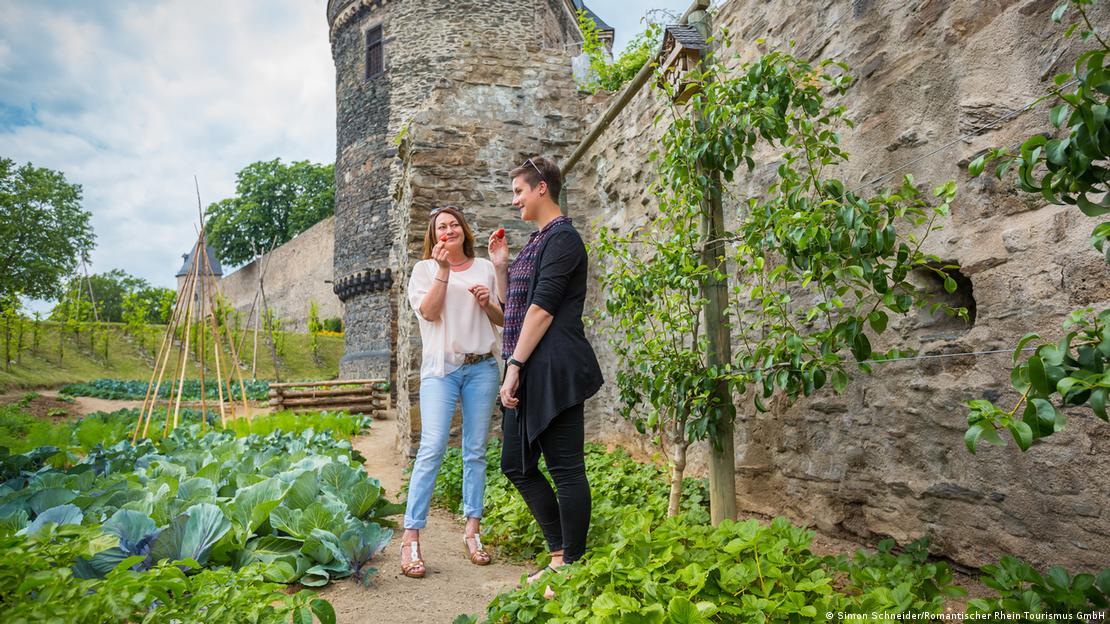
Residents and visitors alike are encouraged to pick whatever food they like from a public garden in Andernach, Germany.

An idea whose time has come may be growing food on public land and making it free for the picking. I wrote a 2011 post on scavenging, here, and a 2020 post on a homeless teen whose foraging helped her learn to cook, here. In those cases, the taking of food was done on the sly. But what if municipalities actively encouraged people to forage, as landscape director Paul did at my last job did?

Cathy Free writes at the Washington Post, “The city of Andernach, Germany, planted 101 varieties of tomatoes in the town center and told everyone to pluck and take whatever they wanted.

“It was such a hit, the following year the city did the same with beans. The next year, it was onions. After that, the city planted fruit trees, lettuce, zucchini, berries and herbs. All were free to anyone who lived or happened to be in the town of 30,000 people. …

“It’s one of a growing number of places across the globe known as edible cities. In the United States, there are public lands from Seattle to North Carolina where people are welcome to pick and take from fruiting trees and bushes.

“Organizers interviewed for this article said there has never been a problem with people taking more than they need, whether they grab a single pear or a bag full of potatoes and artichokes.

Every year, there is more than enough produce to go around.

“ ‘Many here are very proud when you talk to them about our edible city,’ said Bettina Schneider, 29, city team coordinator for the Edible Cities Network in Andernach.

“When word got out that Andernach’s public gardens and orchards — which started in 2010 — were free for the picking, other cities in Germany and throughout the European Union joined in, she said. Now the Edible Cities Network is funded by the European Commission, the executive body of the E.U.

“The areas that were converted into fruiting gardens and orchards in Andernach were previously overgrown and unkempt, so the gardens were well received, Schneider said, noting that a medieval moat is now covered with peach, almond and pear trees, and vacant spaces near schools have been transformed into community vegetable patches. …

“ ‘Every partner organization in the project receives funding from the E.U. budget to carry out their work,’ [Marisa Pettit, a coordinator for Edible Cities] said. Pettit said that several cities also receive funding for what Edible Cities calls ‘living labs’ — green spaces where residents can hold community events and develop their own plans to help their urban gardens to thrive and produce bountiful harvests.

“Edible Cities is now supporting a community garden in Cuba, while cities in China, Tunisia, Togo and Uruguay are also developing plans for urban food forests, said Ina Säumel, a principal investigator for the Edible Cities Network. …

“Many U.S. cities have similar projects. Detroit has an urban farming movement, Philadelphia has food forests, and there are edible community projects in Atlanta and Los Angeles. All rely on volunteers to do the weeding, pruning and planting.

“Smaller cities such as Bloomington, Ind., and Hyattsville, Md., also have fruit trees and vegetable gardens that can be accessed by anyone.

“At the Dr. George Washington Carver Edible Park in Asheville, N.C., founded more than 20 years ago, residents can harvest whatever they like from 40 varieties of fruit and nut trees, said Lynx Bergdahl, a community organizer at Bountiful Cities, the nonprofit that helps manage the food forest.

“ ‘Anyone can get whatever they want, when they want it,’ said Bergdahl, 33. ‘This is about taking away as many barriers as possible to create public food access, whether somebody wants a single apple or an entire basket.’

“In Seattle, the neighborhood of Beacon Hill turned a steep and empty slope next to a public park into a vibrant edible landscape in 2012 through a partnership with the city. The Beacon Food Forest recently celebrated its 10th anniversary as a diverse community garden that is open to anyone walking by, said Elise Evans, one of the project’s volunteers. …

“ ‘To create something from a blank hillside was a big deal,’ she said. ‘Our harvest truly offers something for everyone and it’s based on trust. People take what they need and are fed for free, and that’s an empowering feeling.’ “

Do you ever nibble from gardens around your town? Please let me know.

More at the Post, here.

Read Full Post »

Photo: Rashaun Mitchell + Silas Riener
Rashaun Mitchell + Silas Riener created new choreography in June at New York City’s Madison Park, where passersby could watch the process.

I have heard of modern dance performed outdoors, but this is the first time I heard of creating the choreography in public. That would be like putting some kind brain-wave detector on my head so people could read what I’m thinking as I write a post.

Brian Seibert at the New York Times wrote about the choreography project.The choreographers Rashaun Mitchell and Silas Riener, with dancers of their choosing, are creating something out in the open.

“They’re participating in a collaborative public art project, ‘Prismatic Park,’ sponsored by the Madison Square Park Conservancy. The sculptor Josiah McElheny has created a red pavilion for poets, a blue wall to back musicians and a green circular floor for dancers.

“Artists from those disciplines are in the park for a rotation of residencies through Oct. 8, and will be tasked with making works inspired by the space and unplanned interactions with the public. …

“Seibert: How did you approach the project?

“Riener: We were both excited by it and interested in subverting it. So, of course, the first thing we did was ignore the circle and use the full area.

“Mitchell: I tell the dancers, ‘You’re going to be confronted by people, a squirrel is going to run by, you’re going to stop to say hello to your boyfriend — all of that is what we’re doing.’ … We’ve done a lot of work outside, but this felt more vulnerable, because we weren’t coming in with something set. The first day, my nerves were wild.

“Riener: This part of every process is typically private, and I wasn’t prepared for how uncomfortable I would feel. The constant feeling of being on display, even in your rest moments. You can sort of hide behind a tree.” …

“Mitchell: One time, an older man started gesturing for me to come over and I started mirroring the gesture. And he got a kick out of it and started moving his whole body and we were in this dance together. … I’ve dropped into what it is, and feel more aligned with myself and connected to other people. … It’s a hard time in the world right now, and in a weird way, this is therapeutic.”

More at the New York Times, here.

Read Full Post »

Photo: Craig Barritt/Getty Images for Sing For Hope
Jon Batiste performing on June 5 at the 6th Annual Sing for Hope Pianos Kickoff Event at 28 Liberty Plaza in Lower Manhattan. You may know Batiste from Stephen Colbert’s Late Show.

Many of the artists, musicians, and theater people who live and work in New York City believe in the importance of bringing the arts to children in underserved schools. And they are turning their beliefs into action by supporting Sing for Hope.

On June 5, Sing for Hope sent out a press release on the unveiling of 60 new artist-designed pianos destined to go to public schools after a summer on the streets.

“Late Show with Stephen Colbert bandleader and Sing for Hope Board Member Jon Batiste kicked off the performances at 12 noon, followed by a special performance of Bach’s Prelude in C performed by 45 pianists simultaneously on 30 Sing for Hope Pianos. Other performances included renowned pianist Michael Fennelly, who played Gershwin’s ‘Rhapsody in Blue.’

“Each year, Sing for Hope selects local and international artists to create unique piano artworks that are placed in parks and other public spaces for anyone and everyone to play. This year, through a special partnership with the New York City Department of Education, Sing for Hope will place all of the Sing for Hope Pianos in permanent homes in NYC public schools after the pianos’ time on the streets, benefiting an estimated 15,000 New York City school children. …

“This summer marks the placement of the 400th Sing for Hope Piano to date, making NYC host to more street pianos than any other city in the world. …

“In time for the big reveal of the 2017 Sing for Hope Pianos, the world’s first-ever mobile app for street piano discovery and engagement is now available. The app helps people to discover, visit and play the pianos – and then share their experiences via social media. Now in its third year, the app will allow people to take curated tours of the pianos, discover special concerts by artists and performers taking place at the pianos, and sign up to give their own pop-up performances on the pianos. The app, designed and developed by Craver Inc., is free to download and available in the App Store.”

More here.

Read Full Post »

Washington-Sq-is-where-I-came-inWashington Square, New York City

Random photos from my travels.

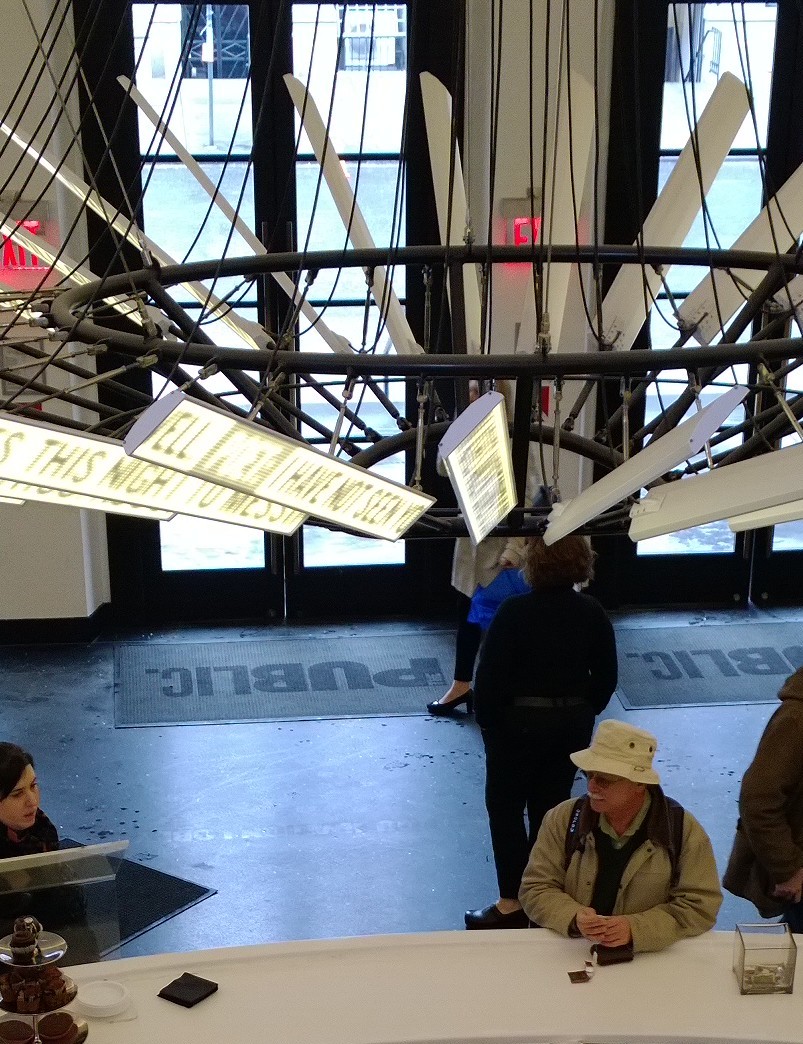
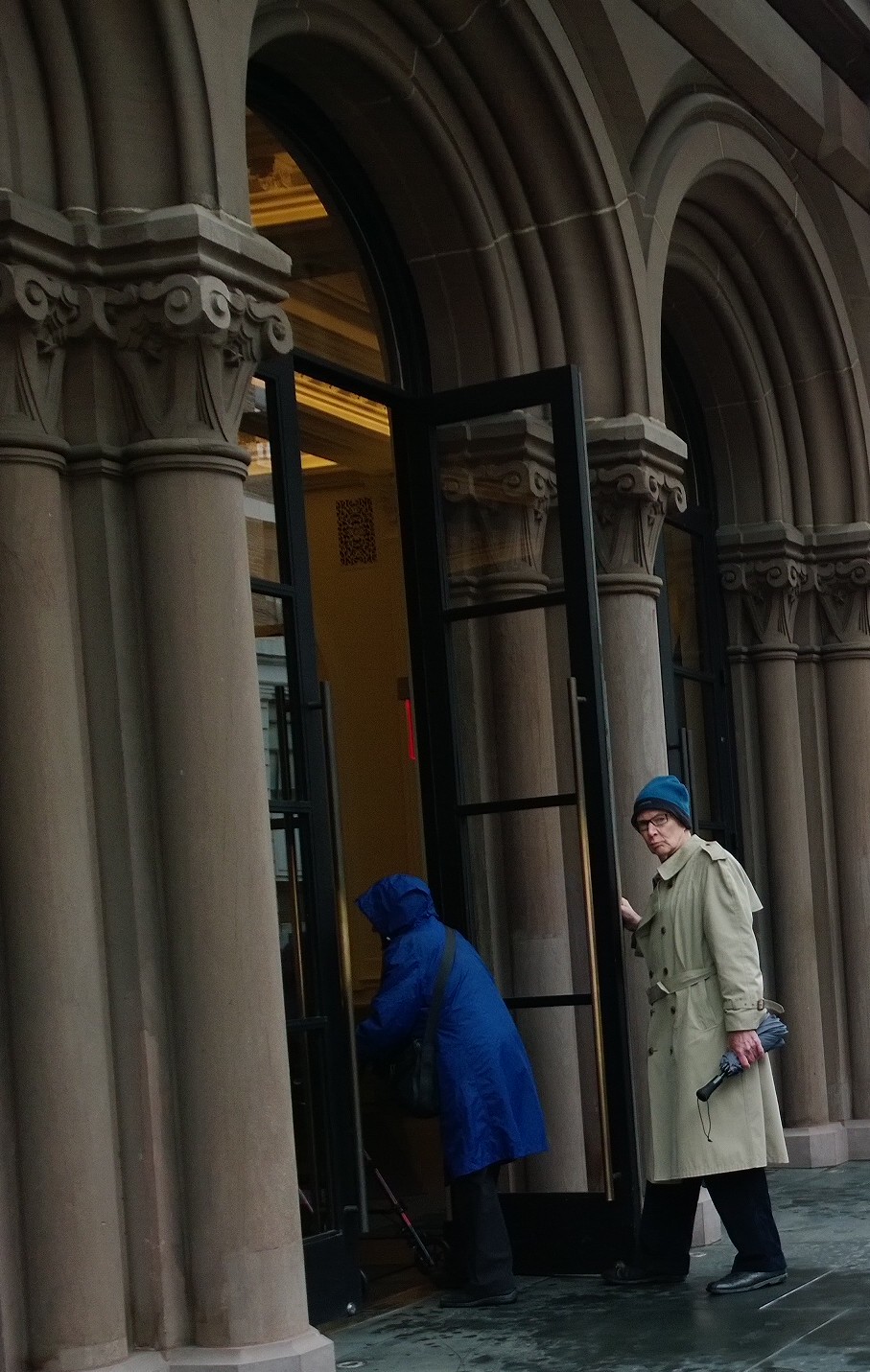
My husband going into the Public Theater to see classmate Ted Shen’s musical, A Second Chance. The Playbill for the show. A delightful chandelier at the Public, with paddles that illuminate changing phrases.

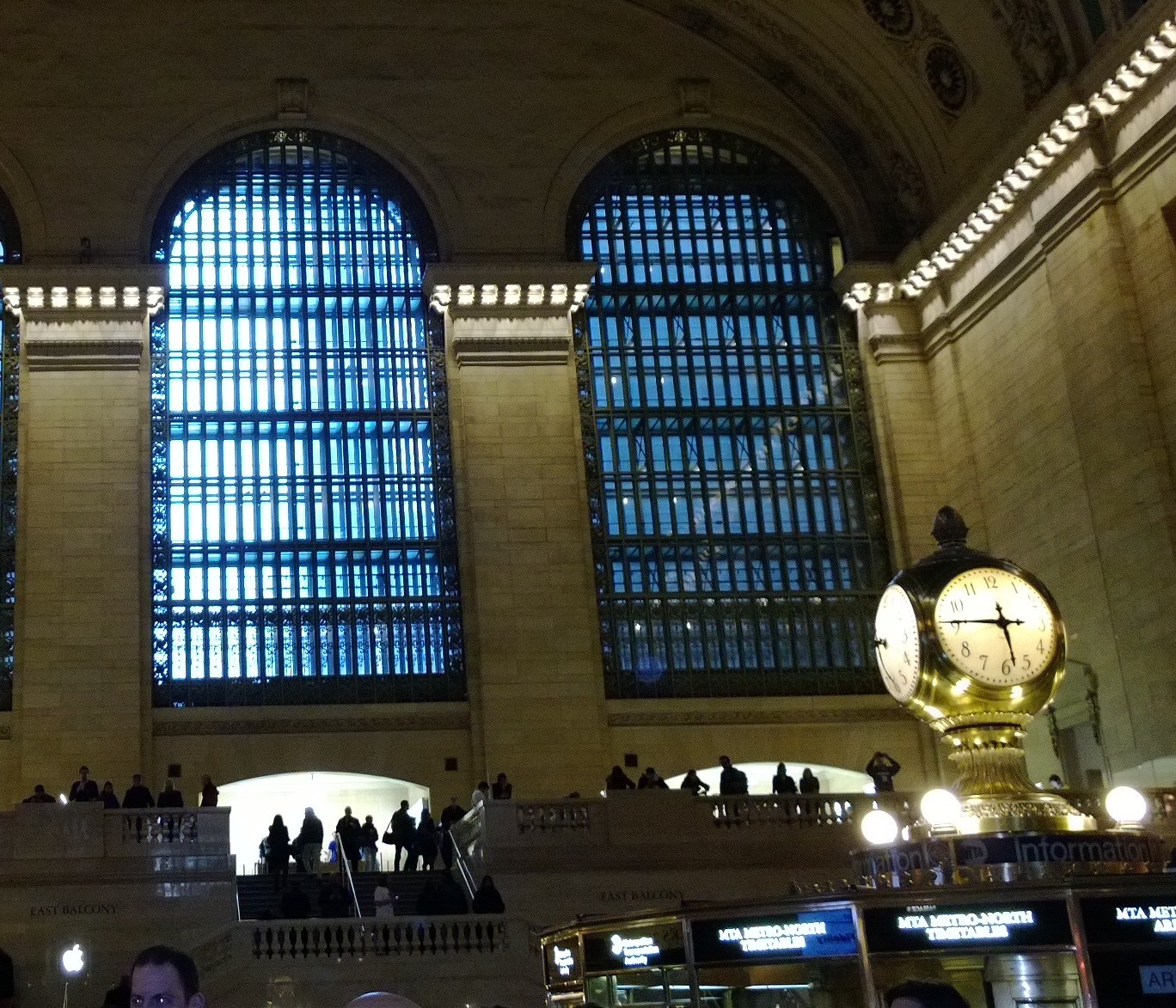
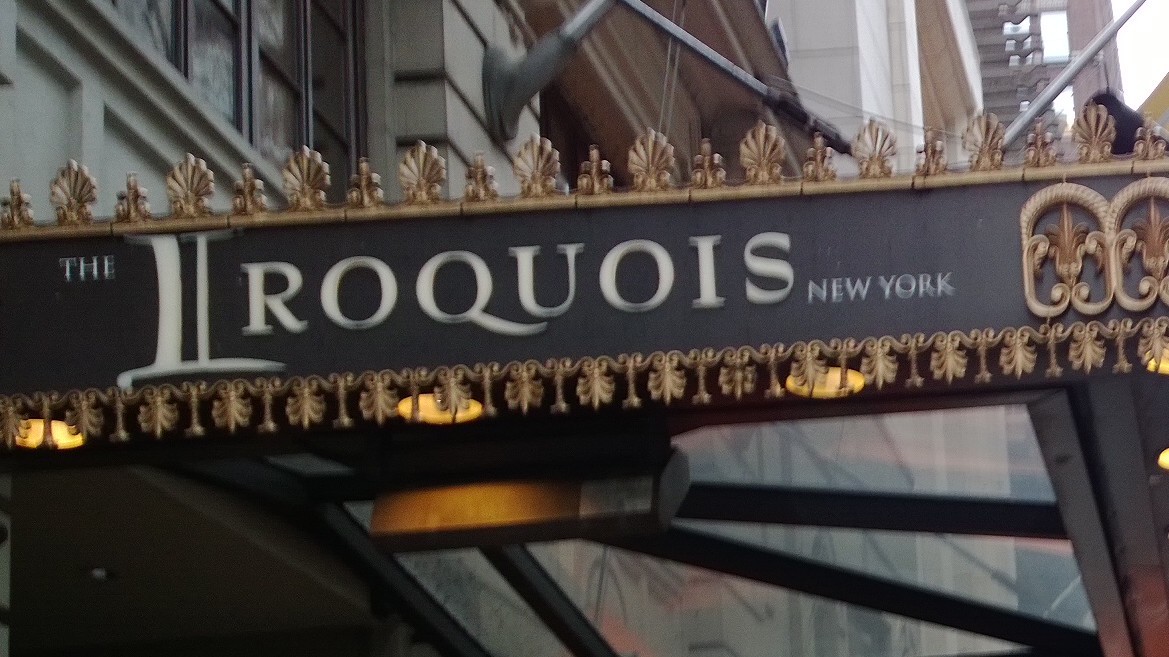
Subway buskers playing a grandson’s favorite song, “When the Saints Go Marchin’ In.” Grand Central Station. The charming Iroquois Hotel. A flower-themed mosaic in the Lexington Ave. subway.

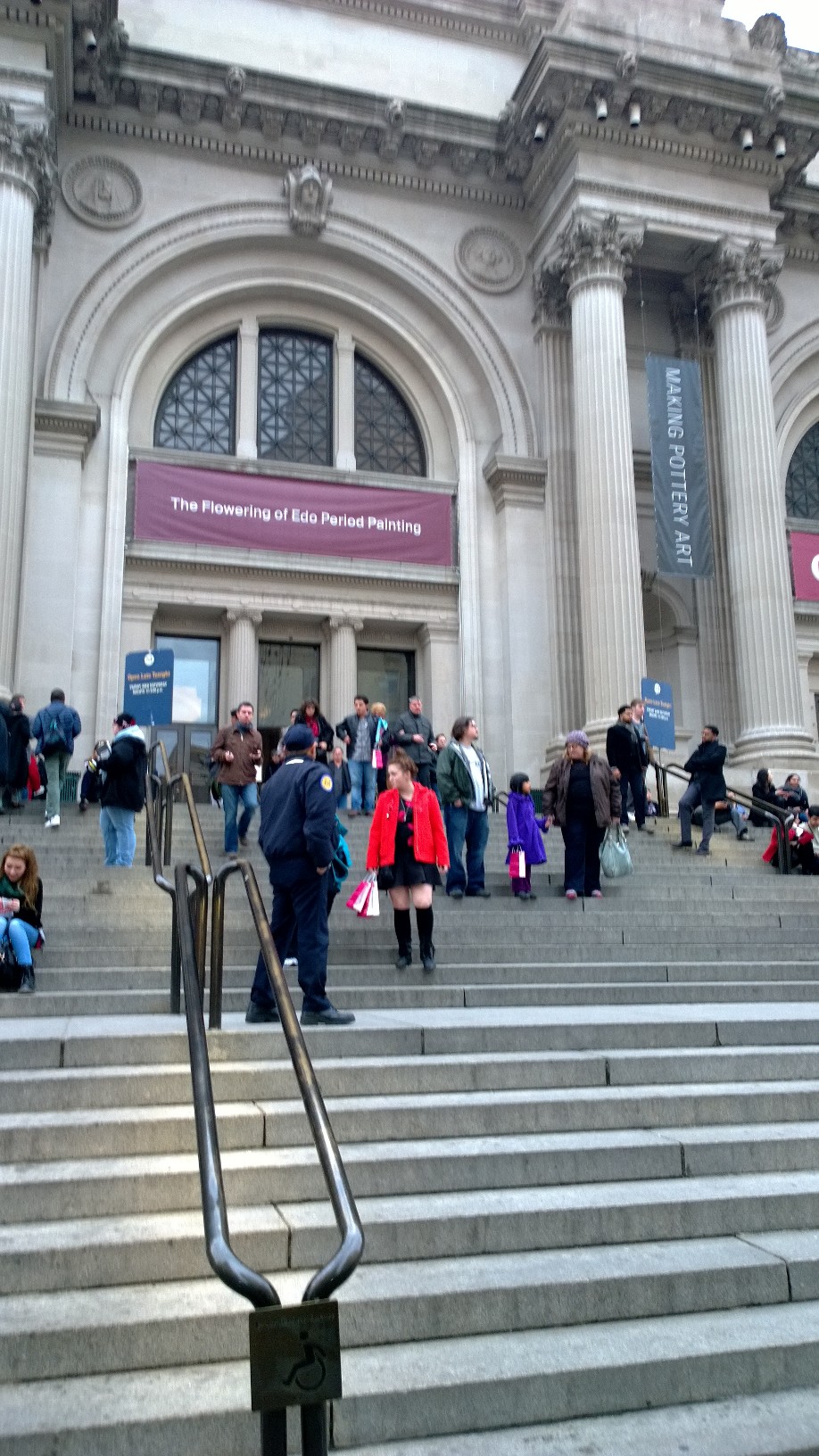
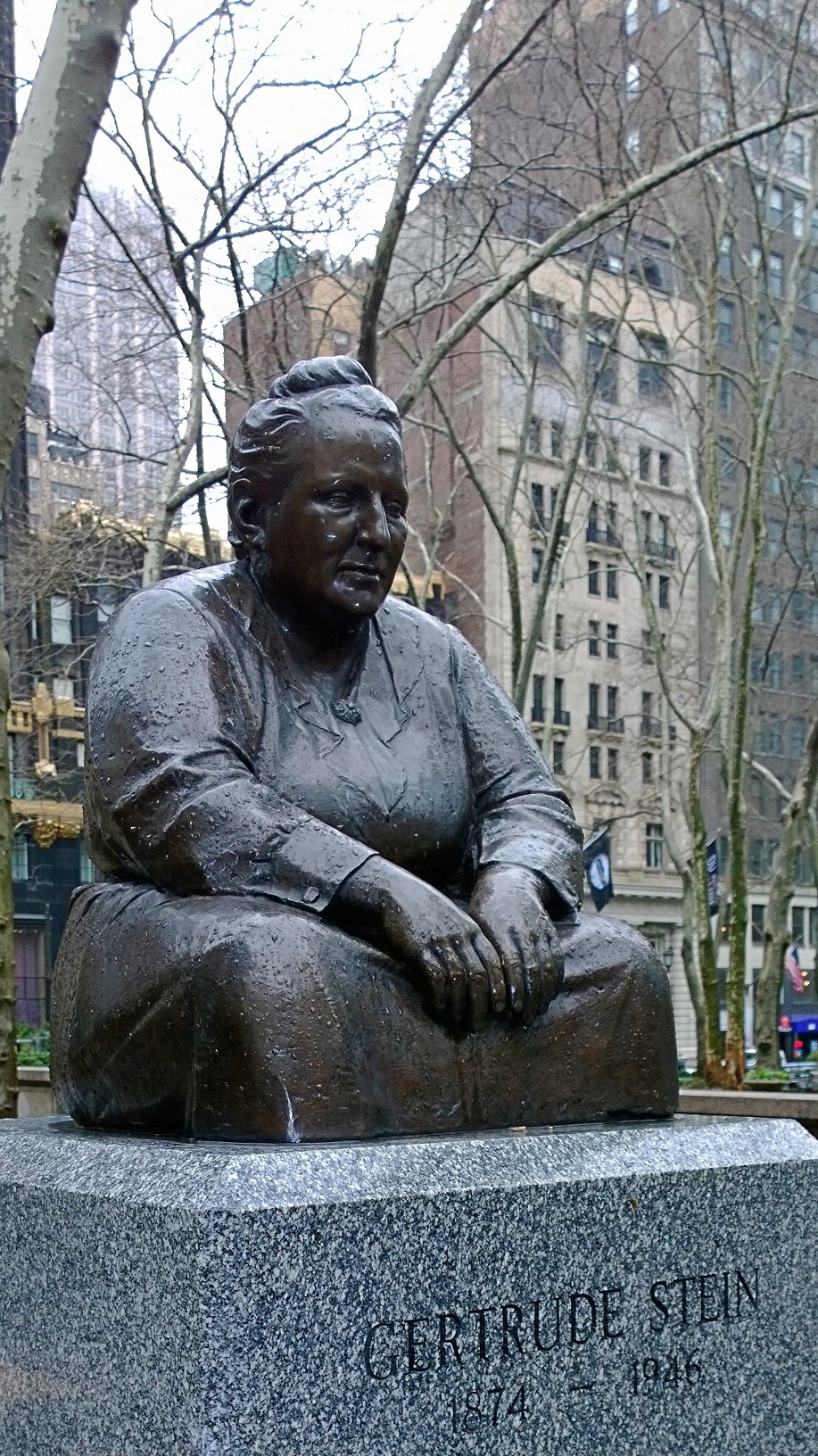
Gertrude Stein looking like herself in Bryant Park. And the Metropolitan Museum, where we saw a great photography show with my sister and brother-in-law. More on that later.

(Be watching for the relaunch of the Luna & Stella website, where one of the family pictures is of my sister at age 3, pictured with Suzanne’s maternal grandfather. … Did I mention this is a blog for Suzanne’s birthstone-jewelry company Luna & Stella?)

Public-Theater_NYC

Ted-Shen-Second-Chance-Playbill


The-Public_has-cool-chandelier

When-the-saints-go-marching-in


Grand-Central-NYC

Iroquois-hotel-treats-guests-right


Lex-Av-Subway-NYC

Met-Museum-NYC


Gertrude-Stein-Bryant-Park


Read Full Post »