Feeds:
Posts
Comments

Posts Tagged ‘rx’

Photo: Noah Stewart.
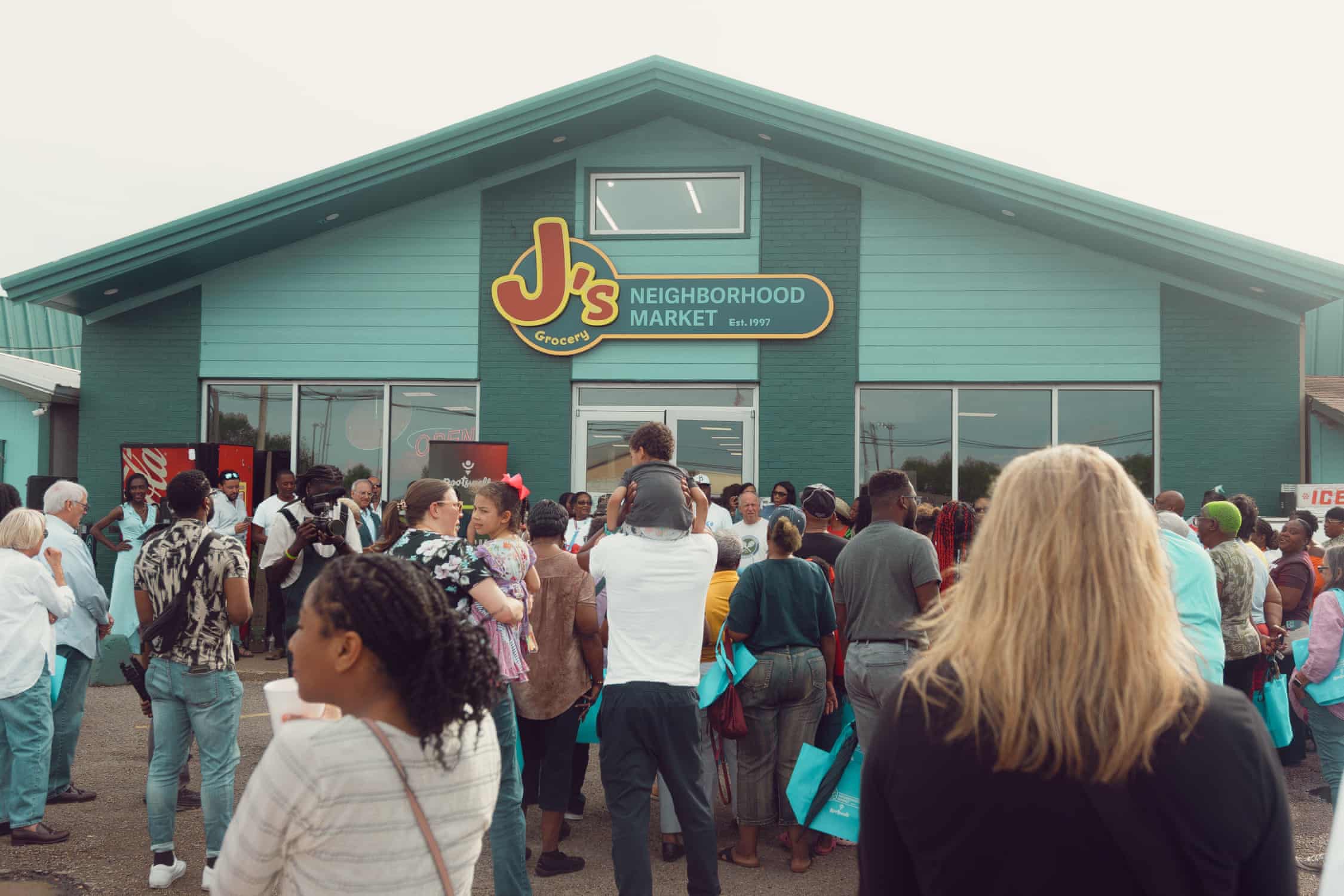
On 2 May, J’s Grocery in Clarksdale, Mississippi, reopened after a yearlong renovation. Through a new food-access initiative, J’s Grocery provides its mostly Black community with hard-to-come-by fresh produce.

The best medicine is often a healthful diet. But in many communities around the US, nourishing food is hard to access. That’s why a community in Mississippi is rejoicing about a newly renovated grocery store.

Adria R Walker writes at the Guardian about J’s Grocery revitalizing its majority-Black town with fresh produce.

“With the recent release of Ryan Coogler’s Sinners, Clarksdale, Mississippi, known as the home of the blues, has been thrust into the spotlight. But while the nation and world are captivated by a version of Clarksdale from more than 90 years ago, residents today are focused on the future.

“On 2 May, rain and warnings of thunderstorms were not enough to keep people in Clarksdale’s Brickyard neighborhood away from the reopening of J’s Grocery, a local staple since 1997 that had been under renovation for the last year.

“A collaboration between the store owner, Al Jones, and local farmers, J’s, the only Black-owned supermarket in the area, now carries fresh produce. …

“The new stock and collaboration was made possible by a deal among Jones; Partnership for a Healthier America (PHA), a nonprofit that works to provide access to nutritious food; Rootswell, a Mississippi Delta-based group that was formed to ‘shift the paradigm of food apartheid‘; Novo Nordisk, a pharmaceutical company; and other groups.

“ ‘At a time in our country when the federal government is just pulling money back everywhere, we invested in people and community,’ Noreen Springstead, PHA’s president and CEO said at the opening. …

“Jarvis Howard of Tunica, Mississippi, a visual artist who goes by DudeThatDraw, painted a mural, a smaller version of one he is installing at nearby George H Oliver elementary school. ‘Food is medicine,’ the mural reads over vibrantly colored vegetables. …

“Clarksdale, which today has a population of nearly 14,000 people, is primarily Black. The grocery store is in a walkable, mixed-income community, with an elementary school almost right across the street. A middle school, a Head Start center, a nursing home and senior citizen housing, low-income apartments and single-family homes are all in close proximity. In addition to the newly offered produce, the store also features a third space: a seated, shaded area surrounded by raised beds planted with herbs, where residents can gather and chat.

“The Mississippi Delta is abundant in fertile land and crops; agriculture is the state’s No 1 industry. Though some 30% of the state is farmland, most of that land is dedicated to cash crops, which are exported. In 2022, nearly 20% of Mississippians were food-insecure.

“Farms in the region ‘produce a lot of commodity crops, like corn, soybean, cotton. They don’t produce a lot of food that we eat,’ said Robbie Pollard, one of the farmers whose produce is now sold at J’s. ‘We’re trying to change the landscape to start producing more food in the Delta, like converting some of that land that’s used for row-crop production.’ …

“Pollard said that while the Mississippi Delta region is abundant in farmland, there’s a gap in what reaches the community. His initiative, Happy Foods Project, which is part of his farm, Start 2 Finish, is working to remedy that by collaborating with other farmers, and introducing youth to farming through farm visits and farm-to-school programs.

“J’s Grocery reopening will be a gamechanger for the neighborhood, he said. Some residents lack transportation to be able to get to big box stores that sell imported produce. Rural counties in the Mississippi Delta, like Coahoma county in which Clarksdale is the largest town, average one supermarket per 190.5 sq miles . …

“After Clarksdale lost its Kroger in 2017, residents initially pushed for another big box store to move in. But Tyler Yarbrough, the director of Mississippi Delta Programs for PHA, and others wanted the town to be able to return to its locally owned, locally operated roots. …

“Yarbrough said that stories from his grandmother and other older residents of shopping in the 1960s provided inspiration for what they might be able to bring back to the town. At the time, locals didn’t need to leave their communities to procure groceries. Instead, they went to the local grocery stores, which, like J’s, had a butcher who sold chicken, pork, freshly sliced bacon and produce.

“ ‘It is in our food-system history of having these neighborhood corner stores,’ he said, noting that the Brickyard and downtown Clarksdale once had 12 such shops. ‘This project is honoring that legacy and reminding us that we can own our food and the stores that we shop from.’ ”

More at the Guardian, here. No paywall, but donations keep this reliable news source alive. Help if you can.

Read Full Post »

Photo: Caroline Hernandez/Unsplash.
Few things matter as much as a good friend.

I’m thinking a lot about friends today because one of my friends has been in the hospital more than a week, having had a serious fall. She lives alone and has health issues that cause her to fall. Her only family, a nephew, lives far away. So her health proxy (and good friend) designated four of us as her family. The ICU admits only family.

My friend has come out of her coma and ditched the ventilator, and we have been rejoicing over the smallest things: eyes opening, head nodding for answers to questions, the lifting of a hand.

Friends have always meant a lot to me (see post “Time with Friends Boosts Health“), and today’s article suggests one of the reasons why: they are good for my health. They certainly have been good for my friend’s health.

Sharon Barbour (@SharonBarbour on Twitter) reports at the BBC, “A new approach to helping people with depression is becoming more and more popular. ‘Social Prescribing’ sees GPs sending patients on trips to places like allotments (community gardens) rather than pharmacies. Healthcare professionals say it works, and reduces pressure on GPs and A&E [emergency rooms] too.

“Craig Denton, from Gateshead, has struggled with depression and loneliness for years. … He is one of more than eight million adults in England now taking antidepressants. But, in the North East, a new approach to helping people with depression is growing.

” ‘Social prescribing’ is part of a plan by health and council bosses to tackle what Gateshead’s director of public health described as ‘really shocking’ health outcomes in the region.

“It has seen Craig enjoy a day out at an allotment run by his GP’s surgery where he has dug and cleared, but also chatted with other people, and not been alone.

” ‘Instead of just sitting down in your house, where you can just dwell on things, you can use this as a distraction, meet new people,’ he said.

“Julie Bray, from Oxford Terrace and Rawling Road Medical Group in Gateshead, was one of the first NHS social prescribers in the country and said she was ‘really passionate’ about it. … ‘They build their confidence up, it reduces GP appointments, it reduces A&E appointments, and it just makes them connect with the community and be resilient.’

“The North East has among the highest rates of drug-related deaths, heart disease, liver disease and suicide in England.

“Rates of child poverty are double the England average in some areas with poverty underpinning much of the ill health. Social prescribing is only one part of a plan by the NHS, local councils, and community groups to make improvements by 2030.

“Alice Wiseman, Gateshead director of public health, said a report in 2020 showed that, while life expectancy across the UK had stalled, it had started getting shorter for those in the bottom 10% income bracket in the North East.

” ‘Nine of all 13 areas within this plan have a healthy life expectancy of less than 60 years,’ she said. ‘People aren’t even reaching retirement age without having a life-limiting illness. It is really shocking.’ …

“What is needed is ‘forming friendships and feeling as if they’ve valued, as if they’re worth something,’ she said.”

Tell me about the importance of your own friends. It may not be enough for serious depression, but as the saying goes about chicken soup, “It wouldn’t hurt.”

More at the BBC, here. No firewall.

Read Full Post »

merlin_99210046_e422bfb4-003b-41b1-9127-bf8dc2edb60e-jumbo

Photo: Tom Jamieson for the New York Times
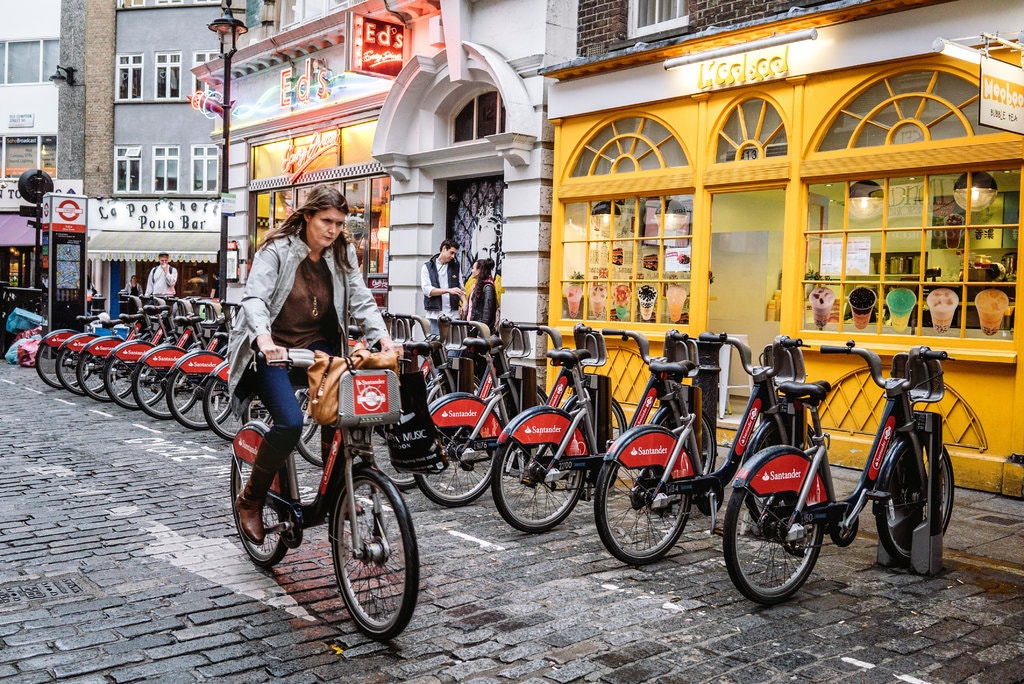
“London’s bike-rental program has proved popular. Now, patients at two medical centers in Cardiff, Wales, will be offered six-month subscriptions to a bike-rental service, with free rides of up to 30 minutes,” reported the
New York Times last year.

Last week, as I watched two grandchildren painstakingly donning piles of bulky ice hockey gear, I remarked that for me, walking is the best exercise because you don’t have to do any prep. You just open the door and go out. My granddaughter, age 7, opined that walking is boring, and I have to admit that ice hockey may be more heart-pumping.

But I am not bored. And after walking every day for many years, I no longer feel surprised that I like to exercise. At first, I was resistant to doing anything. But a friend who was an internist leaned on me about exercising. And I knew if I were going to do anything regularly over a long period of time, it would have to be something I liked. So, walking was it.

Given that I go quite slow, I was surprised that when I told various doctors I just ambled, they didn’t seem bothered. Then I heard one refer to walking as a “weight-bearing activity,” and the penny dropped!

In the United Kingdom, doctors are making it easy for patients to exercise by means of bicycles. And like me, many former non-exercisers are surprised to find that they like it.

The BBC reports, “A cycling-on-prescription scheme trialled in Yorkshire has been so successful it could be rolled out across the UK, the organisers said. The scheme allows health professionals to offer those with long-term conditions 12 weeks of cycle training.

“More than 1,000 people have been referred to the scheme since it launched four years ago, according to the West Yorkshire Combined Authority. Cycle UK said the scheme showed cycling was good for overall wellbeing. …

“The initiative is funded by West Yorkshire Combined Authority, which covers Barnsley, Bradford, Calderdale, Craven, Harrogate, Kirklees, Leeds, Selby, Wakefield and York.

“Figures from 2018/2019 showed people using the scheme reporting a marked increase in feeling more confident and relaxed. …

“At the start of the programme, only 18% of participants were meeting the NHS [National Health Service] activity guidelines of 150 minutes per week — a figure that rose to 73% afterwards.

“Andrea, 47, from Wakefield, was referred as she has suffered from anxiety. ‘I’m more confident. I’m able to be out with other people more than I would normally,’ she said. ‘My fitness has improved, my lung function is a lot better than it has been and now I actually want to go out and do other things, and keep cycling, keep active and really start living my life.’ …

“Cycling UK said the scheme started in Yorkshire, and has since been trialled in areas including Wales, Manchester and London, but is not yet available nationwide.”  More at the BBC, here.

The New York Times, here, talks about the biking-rx trial in Wales, noting, “Nextbike, the company that offers the bicycle service for patients in Cardiff, provides rentals in many other European cities. Mareike Rauchhaus, a spokeswoman for the company, said that it participated in a program called By Bike to Work, which allowed people to claim prizes from their health insurance providers if they cycled to work. …

“Dr. Karen Pardy, a family doctor who is participating in the program in Cardiff, said in the statement [that] she hoped prescriptions would encourage people to ‘have a go at cycling around Cardiff’ and realize how the activity can support their well-being.”

P.S. If you search Suzanne’s Mom’s Blog for the word “prescription,” you’ll find a lot of posts on doctors’ unusual prescriptions to encourage more healthful living, including  biking in Boston, woodland walks, gardening, museum visits, poetry, music, dance, art …

Read Full Post »

Boston Medical Center is an inner-city hospital that takes a special interest in immigrants and the poor. It also treats patients holistically, offering a referral service for problems that get in the way of good health.

With the support of the City of Boston, Boston Medical Center has added a new item to its medicine cabinet: bike sharing.

Catalina Gaitan writes at the Boston Globe, “The City of Boston has announced a program to subsidize bike-sharing memberships for low-income residents, in partnership with Boston Medical Center.

“The program, ‘Prescribe-a-Bike,’ would allow doctors at Boston Medical Center to prescribe low-income patients with a yearlong membership to Hubway, a bike-share program, for only $5.

“Participants would be allowed unlimited number of trips on the bicycles, provided they use them for 30 minutes or less at a time. They will also be given a free helmet, the mayor’s office said in a joint statement with Boston Medical Center.

“ ‘Obesity is a significant and growing health concern for our city, particularly among low-income Boston residents,’ said Kate Walsh, chief executive of Boston Medical Center, in the statement. …

“Statistics show that 1 in 4 low-income residents in Boston is obese, almost twice the rate of higher-income residents, the statement said.

“To qualify for the prescription, participants must be 16 years or older and be enrolled in some form of public assistance, or have a household income of no more than four times the poverty level.”

More here.

bikes-in-boston

Read Full Post »

Take two tomatoes and call me in the morning.

***

The University of South Carolina has developed a manual for health centers that want to collaborate with farmers markets on health, even writing food prescriptions for patients who need to improve their eating habits.

The manual’s authors, Darcy Freedman and Kassandra Alia, write in the intro of their manual:

“Farmers’ markets have grown in popularity in recent years as a place for improving health, increasing economic growth for local agriculture, and building communities. …

“Though the rebirth of farmers’ markets represents an exciting movement in the United States, data reveal that the benefits of farmers’ markets are not evenly distributed. Communities with the greatest need for farmers’ markets, for instance, are least likely to have them.

“In the present manual, we describe an approach for developing a health center‐based farmers’ market. Health centers, in particular federally qualified health centers or FQHCs, were identified as a strategic place to locate farmers’ markets because they may be located in food desert contexts (i.e., low‐income communities with low‐access to healthy food retailers). Additionally, locating at a health center makes an explicit connection between farmers’ market and preventive medicine.” More.

Photo: Aram Boghosian for The Boston Globe

Read Full Post »