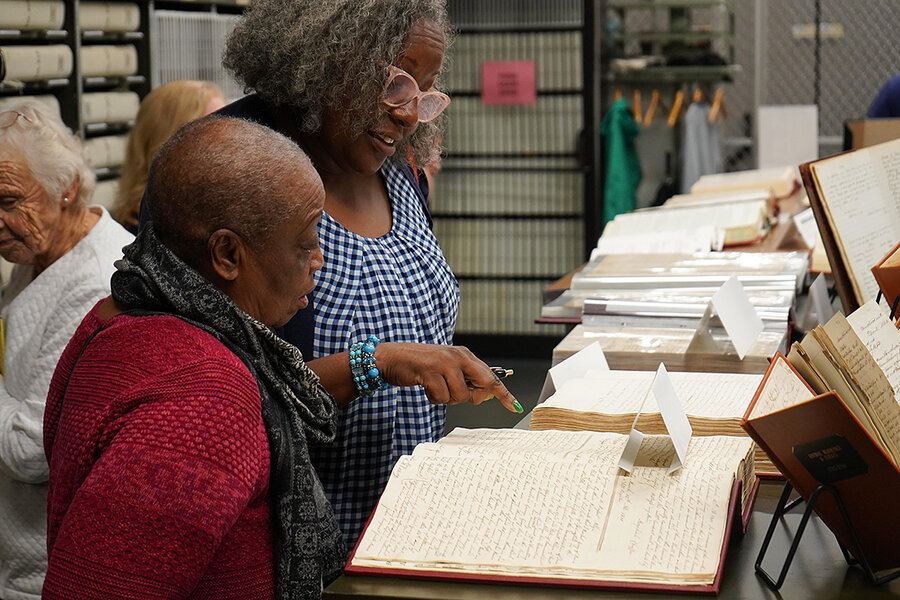
Photo: Annette Hornischer/American Academy in Berlin.
Kate Brown, MIT Professor and author of Tiny Gardens Everywhere.
It’s reassuring to think that small actions of many people can have a significant influence on what happens in the wide world.
In April, Kendra Nordin Beato of the Christian Science Monitor interviewed Kate Brown, a woman used to thinking very big, about how small improvements to improve urban living can play a role in saving the planet.
“Kate Brown, a professor of environmental history at the Massachusetts Institute of Technology and an award-winning author,” says Beato, “has examined the wake of large-scale disasters and the massive challenges they create.
“On a smaller scale, Dr. Brown is also an avid gardener. Her most recent book, Tiny Gardens Everywhere: The Past, Present, and Future of the Self-Provisioning City, probes gardens as small patches of resilience, resistance, and regeneration.
“By studying histories of select European and North American urban gardens, she explores how these spaces helped to build communities centered on cooperation and mutual support. They also hold a promise, she says, for cities as places of sustainable food production. …
Kendra Nordin Beato
“What drew you, as an environmental historian, to this subject of urban gardening?
Kate Brown
“I wrote two big nuclear histories – and then about the environmental and health effects of Chernobyl, which were profound. As I worked on these big histories, I would think, once people find this out, it is going to change everything. And then it doesn’t.
“Countries are threatening each other as if it is the Cold War all over again with nuclear weapons. And then I started to think that maybe part of the problem, maybe these big histories – problems on a planetary scale – add to our sense of anxiety, apathy, you know, that we can’t do anything about it. I can’t get a U.N. resolution passed. So what can we do? We can do something on a very local level; we can do something in our own backyards.
“I love to garden. As you see in the book, my friend and I decided to plant a food forest around this mothballed school. And there I was, out in the street, and I got to know my neighbors in this really amazing way. I had lived there for 15 years and all it took was just to be out with a shovel in my hand to meet the guy who is always a porch sitter and get to know the kids who are running around. So that’s where I started to connect the simple act of planting a garden – especially in a visible place, whether that’s a front yard or public land – with community.
Beato
“One theme in your book explores how regenerative it is to extract life from seemingly little pockets of wasteland. …
Brown
“We call gardening recreation for a reason: because it’s fun. Gardeners find it fascinating to go out, mess around, see what happens, see what works. And it’s the small scale of it that makes it enjoyable, not drudgery.
“Gardeners work with the environment. You treat your soil well; every worm is sacred. I abandon my garden every summer here in Cambridge [Massachusetts] for two months. I pack in the seeds, I set up a sprinkler that goes off at 5 every morning, and I have a lot composted from my kitchen compost. And when I come back, there’s really no space for weeds because all these plants – the beans are growing in the squash, the melons I didn’t even plant are vining their way around the potatoes and the garlic – all I have to do is come back and harvest, because this little space is self-propagating. …
Beato
“Why do you think gardens can strengthen, as you call it, civil societies?
Brown
“Not all community gardens are the same. [For instance, consider 19th-century factory workers in Berlin who] go to the edge of the town and they see all these sand dunes, basically. And so they take manure and the scraps from the brewery and the scraps from the sugar beet factory, all this organic material, and they build soils. … First it’s these miserable little gardens on sand, these poor little struggling plants. But then, within 10 years, they’re quite lush. And then, in another 10 years, most of the infrastructure is botanical. And so, people come together in these self-actuated communities, and they are living there, too. They start to build the sinews of what we would now call a social security network. They take up collections for people whose shacks burned down, unemployment collections, microloans to one another, and these places become very resilient. They weather war and famine. …
“We just did a YouGov Poll and asked a cross section of Americans what they do with their front-yard gardens. And 16% of Americans use their front yards to grow food. Then we asked: Did you get a lot of pushback? Did your neighbors complain? … Most of them – well over 60% – said, ‘Oh, my neighbors just compliment me. And a lot of them ask for advice because they want to do the same.’ So we found that these front-yard gardeners clustered together. Once somebody broke the mold, others wanted to follow. And so, we’re thinking there’s a quiet revolution against the institution of the American lawn that’s going on regardless of political affiliation.
“In case you are thinking, ‘Oh, this can’t happen in a big country. This can’t be part of modern life,’ think of the Soviet Union [when it was a] nuclear superpower. By the 1990s, 96% of the potatoes people were eating were coming from tiny garden plots. We can go a long way toward feeding ourselves with these tiny urban spaces.”
More at the Monitor, here.