Feeds:
Posts
Comments

Posts Tagged ‘soil’

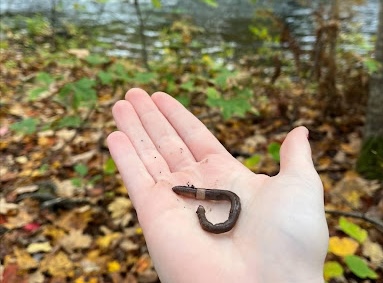
Photo: Brittany Schappach/Maine Forest Service.
The dreaded jumping worm.

“Jumping worms” sounds like a circus act, but they are unwelcome garden visitors that have become a menace for parts of the Northeast. I’d be interested to know if you have them where you live and what you can add to today’s report.

Catherine Schneider writes at Providence Eye, “Earthworms are generally seen as improving the structure and fertility of garden soil as they tunnel through the soil, consuming organic matter and leaving behind castings (worm manure) that are rich in nutrients, humus, and microorganisms. 

“Unfortunately, there is a not-so-new worm in town that provides none of these benefits and can actually do great damage to soil structure and fertility:  the so-called Jumping Worm. These worms devour the top layer of soil, leaving behind crumbly soil that dries out quickly, is prone to erosion, and makes poor habitat for many plants and soil dwelling organisms — including bacteria, fungi, and other invertebrates.

“The name jumping worms refers to several similar-looking species of invasives (Amynthas spp.) that originated in East Asia. … They have been in the US since the late 1800s, but pretty much remained underground until recently when their numbers and range have increased dramatically. The reasons for the recent rapid spread are not completely understood, although it may be due to climate change, as well as human activities which unwittingly spread the worms (e.g., gardening, landscaping, fishing, hiking).  They are now found in more than half of US states, including many areas in Providence and Rhode Island.

“Unlike other earthworms that burrow deep into the soil, jumping worms tend to live in the top three to four inches of soil and in leaf litter and mulch. They are voracious eaters and can quickly deplete nutrients found in soil and organic matter. While other earthworms distribute their high nutrient-value castings throughout the soil, jumping worms excrete their castings on the soil surface, where the nutrients are unavailable to plants. The castings are fairly hard, and they frequently erode away in the rain.

“The combination of hard castings and aggressive churning of the soil results in a dry, crumbly soil structure, with large air pockets, which can impact the ability of plants to produce and anchor roots, absorb water, and extract nutrients

“Once jumping worms come to inhabit a garden, they rapidly increase in numbers, no mating required, as they reproduce asexually.  Adult worms can have many offspring, and while the adults will die off after the first few hard frosts, the tiny egg cocoons they leave behind (which are virtually impossible to see with the naked eye) will survive the winter, emerging in the spring to start the destructive cycle again.

“Jumping worms can have a profoundly negative effect on forests and woodlands, as well as gardens and crop lands. A thick layer of leaf litter and organic matter (sometimes called the ‘duff’ layer) is essential to healthy forest soil.  Native forest plants and trees have evolved to rely on this duff layer for the successful germination and growth of their seeds. After jumping worms have altered forest soil, native species may start to diminish while invasives move in and outcompete native species. This alteration of the forest floor and decline in forest health also harms wildlife that depend on native plants and trees, like ground nesting birds, amphibians and invertebrates.

“Jumping worms are most easily identified by their behavior.  They move across soil or pavement in a snake-like fashion and when you touch them or pick them up, these worms will thrash around wildly. This behavior has given rise to the names jumping worms, crazy worms and snake worms.

“Adult jumping worms can also be distinguished from other earth worms in Rhode Island by a milky white or pinkish band, called a clitellum, that fully encircles one end of their body (see photo above). … Jumping worms in Rhode Island do not attain adulthood until sometime in July or August. Before then, juvenile jumping worms, which lack the white clitellum, are difficult to identify. Young jumping worms can best be identified by their thrashing behavior when they are touched or handled. …

“If you suspect that you may have jumping worms, you can try this test:  Mix 1/3 cup of dry mustard in a gallon of water and slowly pour this over your soil (it will not harm your plants).  The mustard solution should drive any worms to the surface, where you can inspect and remove them if they appear to be jumping worms. …

“The main step in prevention is to take care with the plants, soil, compost and mulch that you bring on to your property. Purchase soil, compost and mulch from reputable dealers. If you are buying bulk compost or mulch, ask the dealer if the product has been heated to 131 degrees F for at least 15 days, which is the industry standard for killing weed seeds and pathogens and will certainly kill jumping worm cocoons which do not survive temperatures above 104°F.  

“Cocoons can also be present in bagged soil, compost and mulch.  To play it safe with bagged products, you may want to solarize them by placing the bags in the hot sun for three (3) days, with a piece of cardboard or other insulating material underneath them to prevent cooling from the ground below them. If you want to be extra careful, you can use a soil thermometer to ensure that the product has reached a temperature of 104 degrees F.

“When purchasing plants or accepting plants from friends, check for any signs of jumping worms.  Starting from seed or buying bare root plants is safest.  Alternatively, you can carefully wash off all of the soil around any new plants before planting in your garden.”

More advice at Providence Eye, here. No firewall.
Read Full Post »

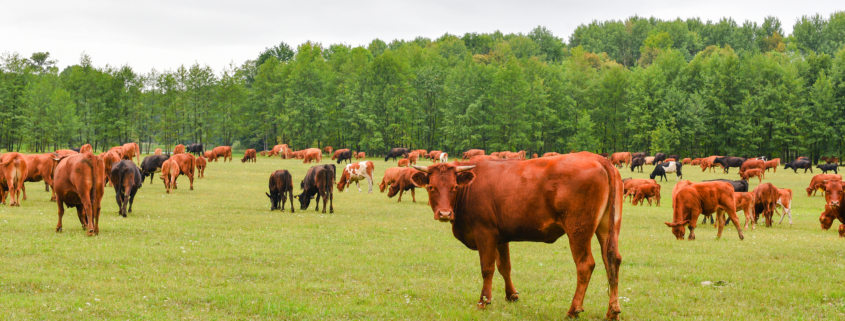
Livestock produces a lot of methane, which is unlikely ever to be balanced out by carbon captured in the soil. The Soil Association Exchange wants you to know about a few positive effects, however. 

It’s an ongoing process to keep up on the latest, especially when it comes to protecting the planet. I myself once thought that massive tree planting had the biggest bang for the charitable buck. Then I learned that, although trees are important, they can’t help much without due consideration given to where and how they are planted, and what varieties of trees they are.

Today I’m trying to bone up on the situation with cows, which we all know (including a young grandson who has cut beef out of his diet) produce too much climate-warming methane gas.

James Tapper reports at the Guardian, “New data shows [cows] may play an important role in renewing farm soil. Research by the Soil Association Exchange shows that farms with a mixture of arable crops and livestock have about a third more carbon stored within their soil than those with only arable crops, thanks to the animals’ manure.

“This also has an effect on biodiversity: mixed arable and livestock farms support about 28 grassland plant species in every field, compared with 25 for arable-only and 22 for dairy-only.

“Joseph Gridley, chief executive of SAE, which was set up by the Soil Association in 2021 to support and measure sustainable farming, said it was unlikely that carbon captured in soil would balance out the enormous amounts of methane created by cattle. Farm livestock around the world creates about 14% of human-induced climate emissions.

“ ‘It’s pretty unequivocal in the data that having livestock on your farm does mean you have more emissions – five or six times more emissions,’ he said. ‘But if you integrate livestock into the system, on every metric on soil health, there’s an improvement, and on a lot of the biodiversity measures as well.’

“Soils are degrading, but by how much exactly is unclear. In 2015, the UN Food and Agriculture Organization claimed that the world had only 60 harvests left, but researchers at Oxford University and Our World In Data said in 2021 that there was a complex picture. …

“Lee Reeves, UK head of agriculture at Lloyds bank, which helps fund SAE … suggested ministers should create a decarbonization strategy, and a standardized carbon calculator, so that farmers and other businesses could use a single tool to calculate their carbon impacts.

“ ‘Moving from traditional to regenerative farming can see a dip in profitability for the first five years, so the government needs to support farmers and banks in that,’ he said.

“[In the UK] the Department for the Environment, Food and Rural Affairs has been investigating so-called methane blockers as a way to reduce emissions. Adding substances such as essential oils, probiotics and even seaweed to cattle feed can reduce the amount of burps and wind they generate.

“Last month the Green Alliance charity said that feeding Bovaer, a methane blocker, to a third of the UK’s dairy cows would cut the country’s emissions by about 1%. Yet this is not happening, the campaign group warned, because farmers were unwilling to pay extra for something they did not benefit from. It said methane blockers should be subsidized, as other green farming schemes were.”

More at the Guardian, here. The Natural Resources Defense Council explains more about regenerative farming here.

Read Full Post »

Photo: Wil Crombie/Organic Compound.
In a good example of agroforestry, hazelnut trees and tall grasses are seen growing in the chicken paddocks at the Organic Compound, a farm in Faribault, Minnesota. 

Something about connectedness is in the air these days. Those of us with aches and pains have had to learn how muscles and bones and nerves are connected in unexpected ways. And what about connections in the environment? Even ten years ago, I failed to appreciate how soil and fungus and insects connect or how forests and farms need each other.

Tom Philpott explains at Yale Environment 360 shows agroforestry leading the way to a healthier ecosystem.

“Drive through rural Minnesota in high summer and you’ll take in a view that dominates nearly the entire U.S. Midwest: an emerald sea of ripening corn and soybeans. But on a small operation called Salvatierra, 40 minutes south of Minneapolis, Reginaldo Haslett-Marroquin is trying something different. When he bought the land in 2020, this 18-acre patch had been devoted for decades to the region’s most prevalent crops. The soil was so depleted, Haslett-Marroquin says, he thought of it as a ‘corn and soybean desert.’ Soon after, he applied 13 tons of compost, sowed a mix of prairie grasses and rye, and planted 8,200 hazelnut saplings.

“While he won’t reap a nut harvest until 2025, the farmer and Guatemalan immigrant doesn’t have to wait to make money from the land. He also runs flocks of chickens in narrow grassy paddocks between the rows of the fledging trees, where they hunt for insects and also munch on feed made from organic corn and soybeans, which they transform into manure that fertilizes the trees and forage.

“Salvatierra is the latest addition to Tree-Range Farms, a cooperative network of 19 poultry farms cofounded in 2022 by Haslett-Marroquin. Chickens evolved from birds known as junglefowl in the forests of South Asia, he notes, and the co-op’s goal is to conjure that jungle-like habitat. Chickens crave shade and fear open spaces; trees shelter them from weather and hide them from predators. In 2021, Haslett-Marroquin’s nonprofit, Regenerative Agriculture Alliance, purchased a poultry slaughterhouse just south of the Minnesota border in Stacyville, Iowa, where farms in the Tree-Range network process their birds. You can find the meat in natural-food stores from the Twin Cities area to northern Iowa.

“By combining food-bearing trees and shrubs with poultry production, Haslett-Marroquin and his peers are practicing what is known as agroforestry — an ancient practice that intertwines annual and perennial agriculture. …

“It’s widely practiced across the globe, particularly in Southeast Asia and Central and South America. According to the U.N. Food and Agriculture Organization, 43 percent of all agricultural land globally includes agroforestry features.

“Bringing trees to the region now known as the Corn Belt, known for its industrial-scale agriculture and largely devoid of perennial crops, might seem like the height of folly. On closer inspection, however, agroforestry systems like Haslett-Marroquin’s might be a crucial strategy for both preserving and revitalizing one of the globe’s most important farming regions. And while the corn-soybean duopoly that holds sway in the U.S. heartland produces mainly feed for livestock and ethanol, agroforestry can deliver a broader variety of nutrient-dense foods, like nuts and fruit, even as it diversifies farmer income away from the volatile global livestock-feed market. In recognition of this potential, the U.S. Department of Agriculture (USDA), in late 2022, launched a $60 million grant program to help farmers adopt such practices. …

“Using satellite imagery, a team of University of Massachusetts researchers has calculated that a third of the land in the present-day Corn Belt has completely lost its layer of carbon-rich soil. And what’s left is washing away at least 25 times faster than it naturally replenishes. As prime topsoil vanishes, farmers become more dependent on fertilizers derived from fossil fuel.

“Not surprisingly, given those applications, the Corn Belt is also in the midst of a burgeoning water-pollution crisis, as agrichemicals and manure from crowded livestock confinements leach away from farm fields and into streams and aquifers. … As University of Washington geomorphologist David Montgomery noted in his magisterial 2007 book Dirt: The Erosion of Civilizations, ‘With just a couple feet of soil standing between prosperity and desolation, civilizations that plow through their soil vanish.’

“Breaking up the corn and soybean rotation with trees — and freeing some farm animals from vast indoor facilities to roam between rows, where their manure can be taken up by crops — could go a long way to addressing these crises, experts say.

“Trees actually have a much longer and more robust history in the Midwestern landscape than do annual crops. Think of the Midwestern countryside before U.S. settlers arrived, and you might picture lush grasses and flowers swaying in the wind. That vision is largely accurate, but it’s incomplete. Amid the tall-grass prairies and wetlands, oak trees once dotted landscapes from the shores of Lake Michigan through swathes of present-day Indiana, Illinois, Iowa, and Missouri, clear down to the Mexican border. These trees didn’t clump together in dense forests with closed canopies but rather in what ecologists call savannas — patches of grassland interspersed with oaks. Within these oak savannas, which were interlaced with prairies, tree crowns covered between 10 percent and 30 percent of the ground. They were essentially a transition between the tight deciduous forests of the East and the fully open grasslands further west.”

More at e360Yale, here. The long and interesting article is by Tom Philpott, a senior researcher at the Johns Hopkins Center for a Livable Future and author of Perilous Bounty. No firewall. Donations sought.

Read Full Post »

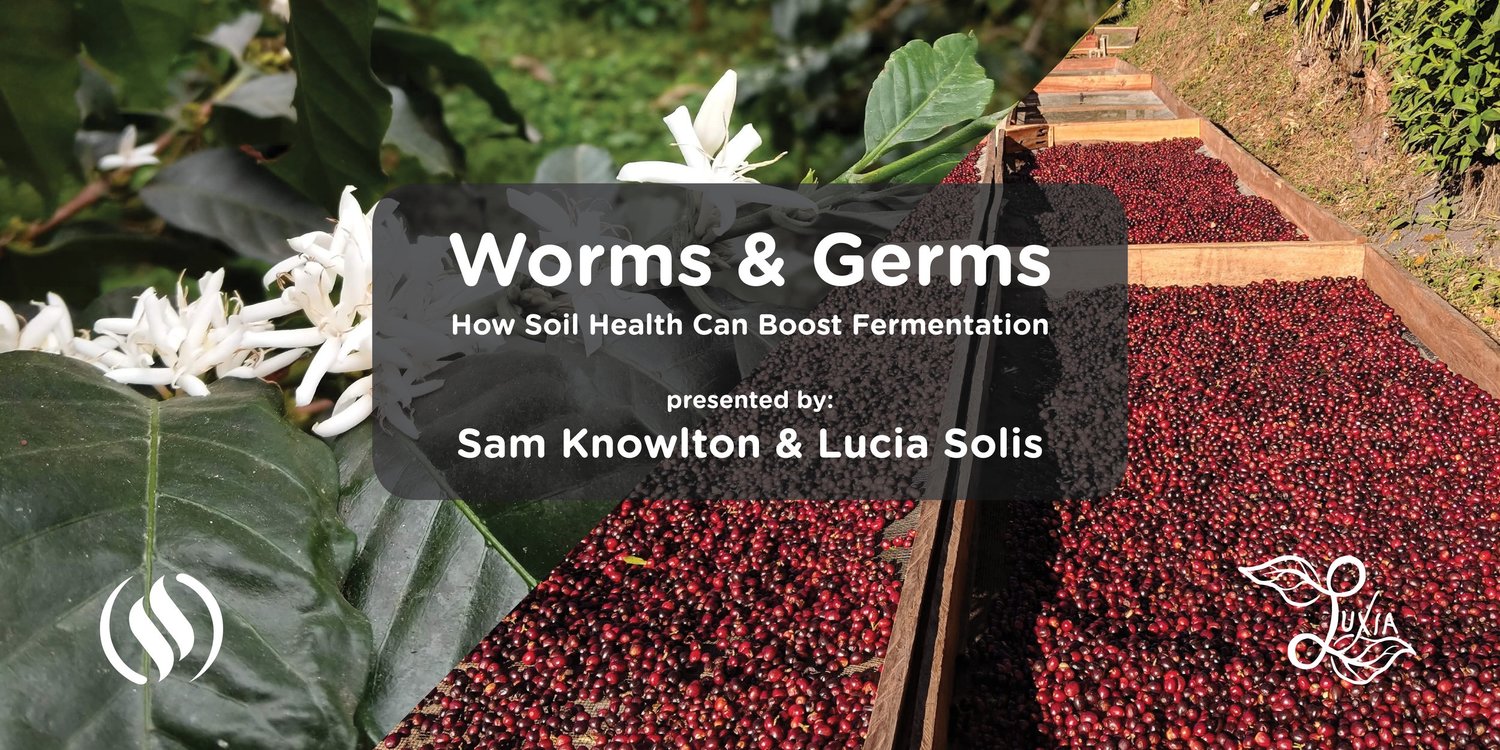
Sam Knowlton is an interesting guy who specializes in improvements to coffee growing — improvements that help both farmers and the environment.

According to his SoilSymbiotics website, he “offers a practical, principle based suite of consulting and education services to farmers and growers seeking to increase crop quality, yield and soil health.”

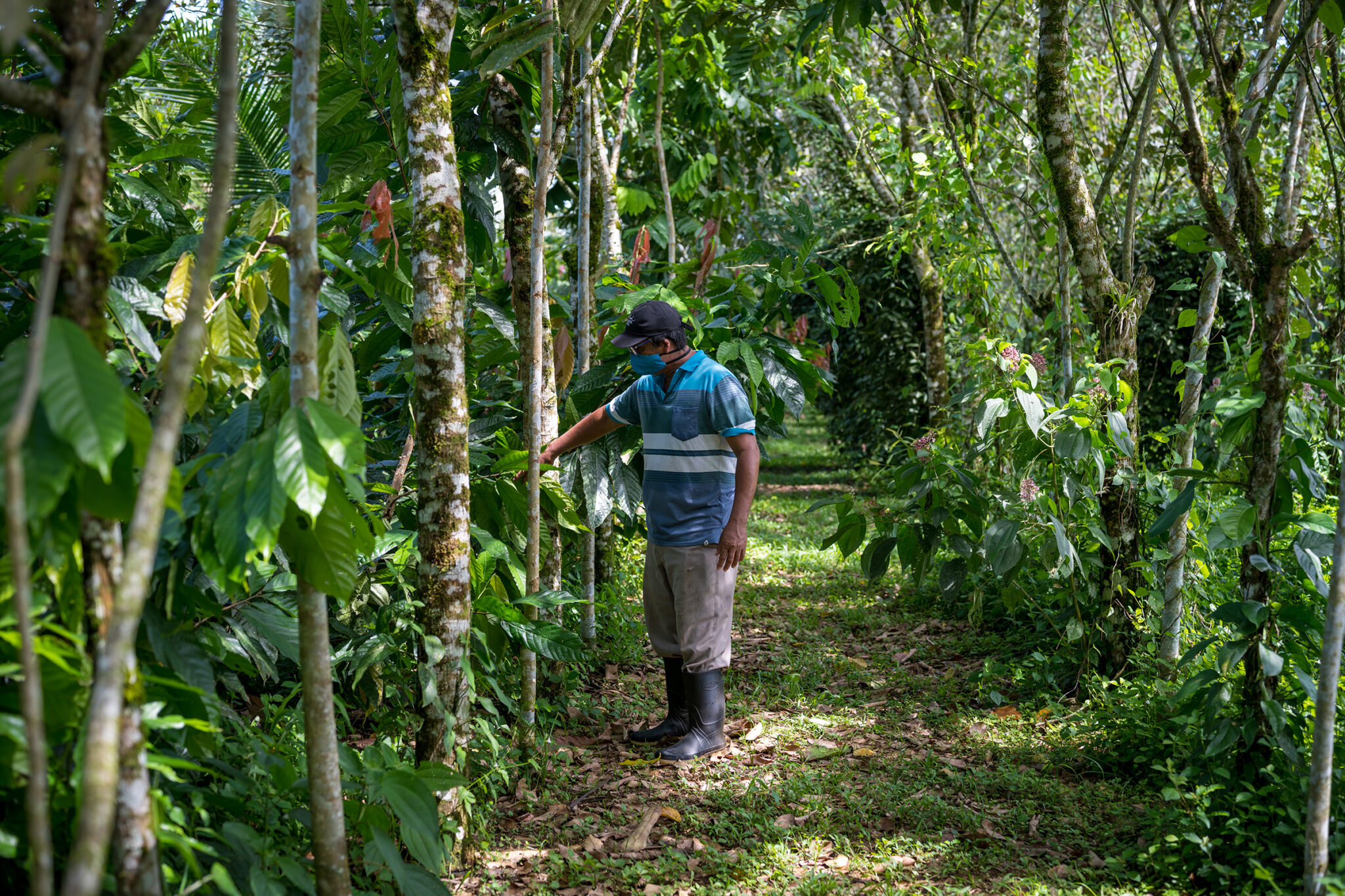
On Twitter, @samdknowlton recently posted a photo of a shady coffee farm with the words, “The typical coffee farm applies about 200 kg/ha of synthetic nitrogen (N) each year, an excessive amount. I worked with this farm to phase out synthetic N and cut a total of 195,000 kgs of annual applications. The trees are healthier, higher yielding, and the coffee tastes better.”

I went to Knowlton’s blog to learn more. In a typically intriguing post, he wrote, “To make it rain, plant more coffee trees.

“Coffee-growing regions are quickly becoming hotter and drier while at the same time losing substantial tree cover. Trees and forests create and maintain their ideal conditions by producing rainfall, and coffee excels as a crop of economic significance that thrives as part of a forest-like system. 

“Coffee farms cover 11 million hectares of ecologically sensitive land worldwide. Many of these farms are the last bastion of standing trees in landscapes that would otherwise be deforested and dehydrated. As part of an integrated agroforestry system, coffee trees are the key to preserving and expanding tree cover and maintaining and repairing regional water cycles.  

“Contrary to commodity crops like corn and soy, which are ecologically unfit for the fields where they’re planted, coffee is the ideal crop for most of the ecosystems where it grows. As an understory species, coffee trees prefer a shade story above them. They grow most vibrantly within a web of companion plants among their drooping branches adorned with waxy emerald leaves and bright red cherries. Coffee trees offer the unique possibility of planting a productive crop in a forest-like system of complimentary trees of multifunctional use like hardwoods, nitrogen fixers, fruits, and nuts. 

“Grown within an integrated agroforestry system, coffee farmers can produce abundant high-quality yields while simultaneously regenerating soil, water cycles, and overall ecosystem function. 

“The problem is most coffee farms are far from this ideal. The few successfully implementing integrated systems are relatively unknown compared to the standard coffee industry narratives dominated by pessimism and non-solutions. …

“In several coffee-growing countries, coffee trees represent a large share of the remaining tree cover. Between 1970 and 1990, approximately 50% of the shade trees associated with coffee farms in Latin America were lost. Globally, coffee farms have lost 20% of their shade trees since the mid-1990s, and countries like Costa Rica and Colombia lost between 50% and 60% of shade tree cover. This is a consequence of intensified production, where coffee trees grow in full sun and bare soil. The loss of shade is accompanied by the increased use of synthetic fertilizers and pesticides, further disturbing the ecology of these areas.  

“The textbook description of the water cycle presents the ocean as the primary source of condensed atmospheric moisture and ultimately falls as rain. Missing is the role of trees as veritable water fountains, pulling water up from the soil with their extensive root systems and releasing that moisture into the atmosphere through the microscopic pores of their leaves. This arboreal version of sweating is the process known as transpiration. A single tree can transpire hundreds of liters of water per day, and a forest, with its extensive, layered leaf surface area, can transpire an amount of moisture equal to or exceeding that of a large body of water. 

“Another step is required to turn the transpired water into rainfall, and trees are once again the benefactors making it all happen. 

“Trees transpire water into the atmosphere to produce precipitation and ice particles that take shape in the clouds. Not long ago, the prevailing belief was that small mineral particles served as the nuclei to catalyze ice particle formation. However, we now know that microbes, originating from the forests below, catalyze ice particle formation and trigger precipitation at higher temperatures than inert material like minerals. In other words, clouds don’t have to be as cold for ice nucleation, and rainfall can occur in a broader range of conditions.  

“Approximately 40% of precipitation over land originates from the evaporation and transpiration of water from plants. 

Simply put, trees create rainfall. In one of the more impressive feats of low-tech terraforming, Willie Smits reforested a 2,000-hectare area of clearcut Borneo forest using agroforestry and six years later documented a 12% increase in cloud cover with a 25% increase in rainfall

“Forests don’t simply grow in moist areas; they create and maintain the conditions in which they grow by producing rainfall and shortening the length of the dry season.  When trees are removed from the landscape, the rainy season becomes sporadic, and less water is available for evaporation and transpiration, effectively turning off the source of rainfall. 

“A key theme of the theory described above is the forest structure, not just individual trees. The action of trees seeding the rain through transpiration and microbial ice nucleation is the product of a more complex forest structure and greater leaf surface area — not monocrop tree plantations. 

“While coffee has been planted as a monocrop with increasing furor in the past few decades, it is one of the only crops of economic significance that grows as part of a system that mimics the natural forest structure and dynamics of its tropical environs. The benefits of growing coffee in an agroforestry system are vast.”

More at Sam Knowlton’s blog, here. Hat tip: John.

Read Full Post »

Photo: Georgi Mabee/RHS/PA.
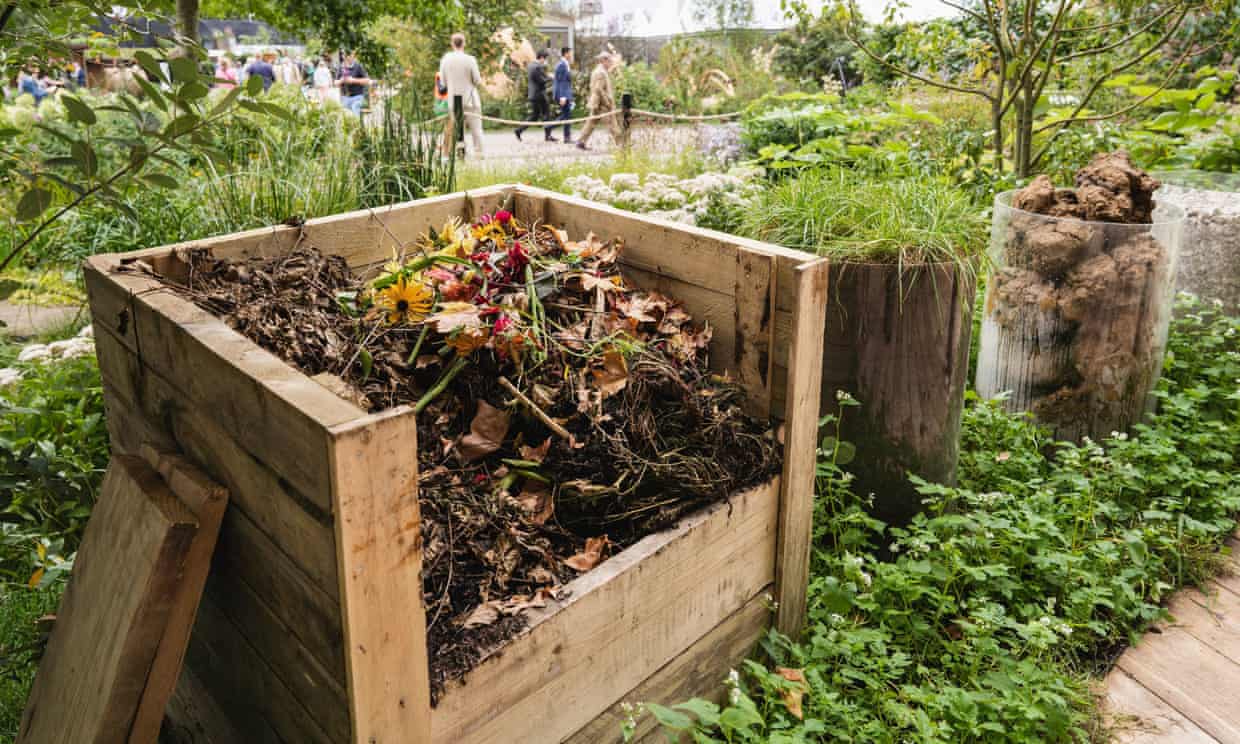
A compost bin in the Cop26 garden at last year’s Chelsea flower show. This year, designers have been asked to include biodiverse elements in their exhibitions.

I was talking to Jeanne yesterday about her yeoman’s effort to keep in place the restrictions on those gas-powered leaf blowers we all hate for noise reasons or health reasons or climate reasons. Town meeting voted to outlaw professional landscapers’ leaf blowers by 2025 and personal ones by 2026.

But in the blink of an eye, landscapers, claiming inaccurately that no one had consulted them, acquired enough signatures to bring the issue before town meeting again this year. I asked where they got the signatures. Customers. It seems that most people in this often forward-thinking town can’t live without a leafless vista in front of their house and don’t want to put the lawn service to the trouble of getting the cheaper electric blowers that would save their immigrant workers from diseases and help the environment.

As Pogo said, “We have met the enemy, and he is us.”

Given that her neighbors want leafless lawns, Jeanne is not focusing on the biodiversity trend that encourages homeowners to let the leaves stay and fertilize the soil. But the idea is taking hold elsewhere. Consider the displays at the Chelsea (UK) garden show.

From Helena Horton at the Guardian:

While many expect to see rows of bright flowers and pillowy blossoms at the Chelsea flower show, this year star gardens will also feature such biodiverse elements as fungi and a beaver habitat.

“Garden designers at the annual Royal Horticulture Society (RHS) show have been asked to consider the environment when making their entries. Though many of the traditional aspects of the show, including the prize flowers in the Great Pavilion, remain, many gardens focus on nature rather than conventional manicured beauty.

“For the first time, the gardening power of beavers will be displayed at the show. The Rewilding Britain Landscape garden, by the designers Lulu Urquhart and Adam Hunt, will demonstrate how the rodents tend the landscape and let biodiversity thrive.

“Beavers became extinct in the UK 400 years ago, and only in recent years have they been reintroduced to parts of the country. … It will feature a beaver dam, and a pool with a lodge behind, and show off a ‘riparian meadow’ of the sort beavers create when they partially flood a riverbank and attract pollinators and other wildlife. …

“Favourite trees of beavers, including hazel and field maples, have been chosen for the garden, as well as native wildflowers and plants that encourage and support trees such as hawthorn and alder, which provide winter food for many birds and support dozens of insect species.

“Rather than flowers, the designer Joe Perkins has decided to show off a range of fungi to highlight the ‘inseparable connection between plants and fungi within woodland ecosystems.’

“In between buying new roses and water features for their gardens, attenders will learn about the complex mycelium networks that connect and support woodland life. … The garden will also include species that are used to warmer climates, to highlight how our planting may have to change as a result of a warming planet.

“While most at the show, to be held in May in the grounds of the Royal hospital, Chelsea, usually focus on what grows in the soil, the dirt itself is the star of the new Blue Peter garden. The designer, Juliet Sergeant, is hoping to ‘open the eyes of children and adults to the role of soil in supporting life and its potential to help in our fight against climate change.’

“The garden will feature a subterranean chamber, which will show a soil animation, and soil-themed art by the children of Salford. It also features a roof-top meadow and barley field with common spotted and southern marsh orchids and a two-tonne tree on the planted roof, showing the wide variety of plants that good healthy soil can sustain. …

“Also at the show is a foraging garden by Howard Miller, for the Alder Hey children’s hospital. … The garden will heavily feature heather and bilberries. Miller said: ‘One of my favourite childhood memories is going to pick bilberries with my grandparents. My grandpa Harold had a habit of counting 1,000 bilberries into a bag before he would allow himself to talk to us. My grandma Mary and I would sit and eat the bilberries while he wasn’t looking.

“ ‘The smell of sitting in among heather and bilberries just transports me to that moment. So the takeaway I would like people to have is to give foraging a try, it’s free, it’s good for the soul and it’s a great excuse to connect with nature and each other.’ ”

More at the Guardian, here.

Read Full Post »

Photo: Earthshot.
Costa Rica won a Earthshot prize for its success reversing damage to tropical forests by incentivizing landowners to leave unused land alone.

I really liked this story about an effort in Costa Rica that is helping restore tropical forests. A study says that although “it’s not a license to kill” forests, they can come back eventually if humans just leave them alone to heal.

Tik Root writes at the Washington Post, “Deforestation is a global and accelerating threat. But new research shows that tropical forests can recover naturally and remarkably quickly on abandoned lands.

“The study, published [in] the journal Science, found that under low-intensity use, soil on previously deforested land can recover its fertility in less than a decade. Characteristics such as the layering of plants and trees in a forest, as well as species diversity, came back in about 25 to 60 years.

“ ‘I was totally surprised how quickly it went,’ said Lourens Poorter, an ecologist at Wageningen University in the Netherlands and lead author on the paper.

‘These forests can recover very fast and they can do it by themselves.’

“Burgeoning secondary forests are good for the climate as well. They are able to sequester more carbon dioxide from the atmosphere than established forests; like the voracious food intake of a sprouting teen compared to that of an older adult.

“ ‘It does provide a glimmer of hope for this process of tropical reforestation,’ said Meg Lowman, a conservation biologist and author of The Arbornaut: A Life Discovering the Eighth Continent in the Trees Above. ‘My only caution is that I don’t think it’s ever a substitute for the importance of saving big trees and old growth forests.’

“Older forests ultimately store more carbon dioxide than young forests, and deforestation releases those stockpiles, which helps drive climate change. The study found that it took more than a century for the overall biomass of tropical forests — and thus their carbon storage ability — to return fully. The recovery of a forest’s species makeup lasted a similar period.

“The longer time frame for the revival of these key benefits is among the reasons that Poorter says maintaining current forest cover is crucial. ‘First, stop deforestation and conserve old growth forests,’ he emphasized. The fact that deforested land can recover ‘is not a license to kill.’

“A 2019 study estimated that some 5.5 million hectares of tropical forest — an area more than twice the size of Belize — is lost each year to expanding commercial cropland, pastures and tree plantations. But cleared land is often abandoned as cultivation shifts, said Poorter, and researchers wanted to know, ‘Can it recover?’

“The answer is yes. … The subsurface soil, for example, often remains relatively vibrant after deforestation, which enables a faster recovery. The warmth and humidity of the tropics also allow trees to grow extremely fast, with some species climbing more than a dozen feet per year.

“And this all happens largely without human intervention, Poorter said. Seeds, roots and stumps embedded in the soil, or the spread of plants from adjacent forests, kick-start the recovery process. … ‘The conditions are that there has to be nearby forests, and the soil can’t be too degraded.’ “

The Post article continues with Daniel Nepstad, a tropical ecologist and president of the San Francisco-based Earth Innovation Institute, who says, ” ‘The research bolsters the policy argument for a nature-based approach to forest restoration. The cheapest way to get forest back on the land is to let nature do the work.’

“He would encourage governments to incentivize farmers and landowners to protect secondary forests and promote regrowth.

“Organizations such as the Natural Capital Project advocate for similar approaches to ecosystem services restoration. Costa Rica recently won Prince William’s Earthshot Prize for a program that helps reverse deforestation by paying farmers to protect and reforest their land. …

“This paper drew on 77 sites in three continents, comprising 2,275 plots and 226,343 stems.”

More at the Post, here.

Read Full Post »

Goat vs. Wildfire

Photo: Goat Green LLC.
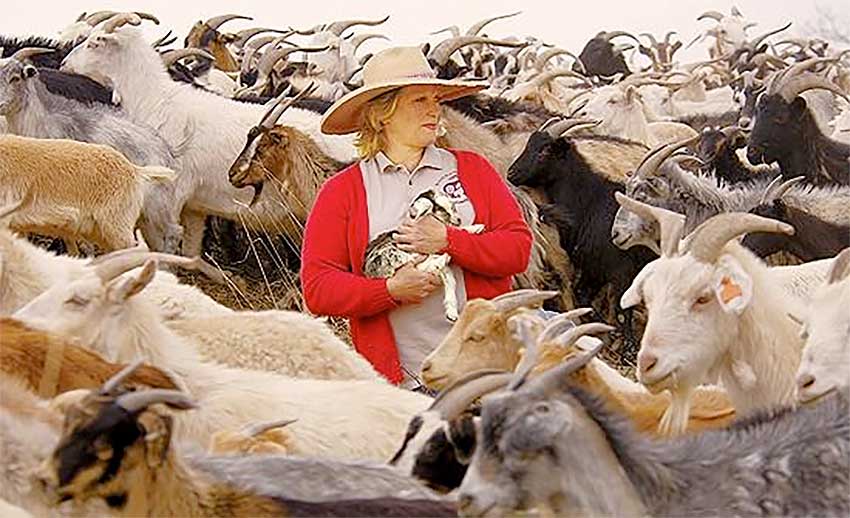
Lani Malmberg “contracts with federal, state, county, and city governments, homeowners associations, and private landowners for noxious weed control, fire fuel load abatement, re-seeding, watershed management, and land restoration.

While we’re on the subject of fungi and their role in improving soil, how about the work that goats are doing? Goats are not as ubiquitous as mushrooms, but they can really help restore damaged land and even prevent wildfires.

Coral Murphy Marcos reports at the New York Times, “When megafires burn in unison and harsh droughts parch the West, local governments, utilities and companies struggle with how to prevent outbreaks, especially as each year brings record destruction.

“Carrying an unconventional weapon, Ms. Malmberg travels the American West in an Arctic Fox camper, occupying a small but vital entrepreneurial niche.

“Ms. Malmberg, 64, is a goat herder and a pioneer in using the animals to restore fire-ravaged lands to greener pastures and make them less prone to the spread of blazes. She developed the fire-prevention technique in graduate school and is among a few individuals using grazing methods for fire mitigation. …

“Ms. Malmberg works with her son, Donny Benz; his fiancé, Kaiti Singley; and an occasional unpaid intern. The team runs on the goats’ time and have their dinner only when the day’s job is done. They arrive early and open the trailer. The goats jump out, ready to eat, as Ms. Malmberg watches that they don’t stray. The team sets up an electric fence to confine the goats and their meals to a specific area overnight.

After the goats digest the brush, their waste returns organic matter to the soil, increasing its potential to hold water.

“Goats are browsers that eat the grass, leaves and tall brush that cows and other grazers can’t reach. This type of vegetation is known as the fire fuel ladder and leads to wider spread when wildfires spark. More than quell a fire, Ms. Malmberg aims to prevent it from even starting. ‘By increasing soil organic matter by 1 percent, that soil can hold an additional 16,500 gallons of water per acre,’ said Ms. Malmberg. ‘If helicopters come and dump water on the fires, nothing is done for the soil.’ …

“ ‘Lani is a leading example of someone who has carved the pathway and is a trailblazer in this industry of prescribed grazing,’ said Brittany Cole-Bush, one of Ms. Malmberg’s mentees and the owner of Shepherdess Land and Livestock in Ojai Valley, Calif. ‘We want to support ecology as much as possible. We want to support the growth of native perennial grasses.’ Ms. Cole-Bush, who uses goats and sheep in her business, believes that fortifying perennial grasses, rather than planting grass annually, will make the land more tolerant of drought.

“Ms. Malmberg, who has a master’s degree in weed science from Colorado State University, spends most of the year traveling around the West on jobs. Last year, for the first time, the Bureau of Land Management contracted Ms. Malmberg and her goats for fire mitigation in Carbondale, Colo. …

“Ms. Malmberg’s assignments can take anywhere from a day to six months; she prices them after evaluating the site. In late August, she was hired to work on a property in Silverthorne that took six days and cost more than $9,000.

“At the beginning and end of every job, Ms. Malmberg asks the spirits in the area to protect her herd. She lights a ceremonial stick of tobacco and calls out to introduce herself, an intruder on the land, to the animals living there. …

“The work can take longer because of on-the-ground conditions. The Carbondale mitigation project was pushed back three weeks because mudslides caused by last year’s wildfires had closed Interstate 70, the state’s main highway

“Scientists say that wildfires have become hotter, more intense and more destructive in recent years.

“Experts attribute the longer and more ferocious fire seasons to climate change. Wildfires in the West are growing larger, spreading faster and reaching higher, scaling mountains that were once too wet and cool to support them. Studies have shown that wildfires are leading to skin damage and premature births.

“The cost of fire suppression has doubled since 1994 to over $400 million in 2018 — a cost, Ms. Malmberg notes, that doesn’t account for how people are affected by the loss of their land and homes.

“ ‘How do we value the nest that supports us?” Ms. Malmberg asked. ‘We’re just about out of time to change the ways of how we do things.’ ”

Amanda Lucier’s excellent photos of Malmberg’s work are at the New York Times, here. You can also search this blog on the word “goat” for related stories. I’m kind of a fan of goats.

Read Full Post »

Photo: Charles Russo.

Mushrooms, lichen, and fungus are increasingly fascinating to me. I’ve posted photos here and on Instagram, where I especially love the mushroom pictures of @chasonw.

When John’s employees visited from Ukraine, they used to enjoy looking for wild mushrooms to eat, but I don’t know any Americans who are sure enough of themselves to take a chance.

Today’s article by Margaret Roach at the New York Times explains why you really need mushrooms in your yard — and also which ones are safe to eat. (A tip of the hat to Hannah for the story!)

“They appear spontaneously, or so it seems, popping up out of the mulch, rising in a single spot on the lawn or bursting from between the pathway pavers like little marshmallows. But there is an intricate master plan at work, just not one to which most gardeners are privy. What are the mushrooms in our gardens trying to tell us — and would you be surprised to learn it’s mostly good news?

“ ‘Without the fungi we wouldn’t have soil, at least not the way we know it now,’ said John Michelotti, of Catskill Fungi in Big Indian, N.Y., a family farm on land his great-great-grandfather bought, where Mr. Michelotti spent his childhood summers. ‘Their filamentous underground mycelia are essential for the nutrient cycling and balance of our soils, plants, microbial life — and ecosystems as a whole.’

“Today, Mr. Michelotti leads guided mushroom walks, teaches classes about mushroom growing and medicinal mushrooms at the New York Botanical Garden and elsewhere, and produces health extracts from fungi — in between occasional calls to identify mushrooms in his role as a poison-control volunteer. …

Photo: Missouri Department pf Conservation
Giant puffball.

“Fungi serve various critical ecosystem roles. The saprobic species act as powerful decomposers: Oyster mushrooms, for instance, work to recycle a dead tree.

“Mycorrhizal fungi help plants build resilience and resistance to pathogens. In a symbiotic partnership, they translocate water and mine nutrients and micronutrients, making those resources available to plant roots. Some 92 percent of plant families rely on such services, according to the North American Mycological Association.

“In return, up to a third of the energy that plants make through photosynthesis goes to feeding simple sugars to the fungi, Mr. Michelotti said: ‘This plant-fungi symbiosis is how the earliest plants accessed essential nutrients that helped them inhabit land in the first place. …

” ‘People come up to me to ask, “I’ve got these mushrooms in my lawn — how do I get rid of them?” ‘ he said. …

“His message, always delivered patiently: ‘Can we perhaps look a little deeper about what the fungi are doing here?’

“Mushrooms — the fruiting or reproductive bodies of fungi — are not a disease, but a sign of health, he explains. They indicate that, under the grass, ‘your soil is running with vast networks of mycelial mats and trillions of microscopic organisms working together, helping break down organic matter to make nutrients available to plants.’

“His questioners might have seen some thin-stemmed, pointy-topped little Conocybe apala, mushrooms that come and go quickly, often unnoticed. Or maybe something more emphatic just erupted? From late summer into fall, soccer-ball-like giant puffballs (Calvatia gigantea) are the headliners.

“ ‘Watch the film “Fantastic Fungi” if you want to really appreciate the puffballs in your lawn,’ said Mr. Michelotti, who has a walk-on in the documentary — and a favorite recipe for puffball piccata.

“Again: Enough with the eradication efforts. First, you can’t eradicate them — most of the fungi’s life is unseen, below ground, and continues even if the fruiting bodies are removed. And ‘if you pick them and toss them somewhere, or mow them, you’re actually helping spread their spores,’ Mr. Michelotti said.” More here.

Read how Michelotti makes his delicious piccata from giant puffballs in the fall.

Photo: Suzanne’s Mom

100616-mushrooms-in-fall

Read Full Post »

In a move that will benefit the environment, farmers are placing increased emphasis on the quality of their soil and cutting back on ploughing. It took a kind of soil evangelist to create the revolution.

Erica Goode has the story at the NY Times.

“Gabe Brown is in such demand as a speaker that for every invitation he accepts, he turns down 10 more. …

“Mr. Brown, a balding North Dakota farmer who favors baseball caps and red-striped polo shirts, is not talking about disruptive technology start-ups, political causes, or the latest self-help fad.

“He is talking about farming, specifically soil-conservation farming, a movement that promotes leaving fields untilled, ‘green manures’ and other soil-enhancing methods with an almost evangelistic fervor.

“Such farming methods, which mimic the biology of virgin land, can revive degenerated earth, minimize erosion, encourage plant growth and increase farmers’ profits, their proponents say. And by using them, Mr. Brown told more than 250 farmers and ranchers who gathered at the hotel for the first Southern Soil Health Conference, he has produced crops that thrive on his 5,000-acre farm outside of Bismarck, N.D., even during droughts or flooding.

“He no longer needs to use nitrogen fertilizer or fungicide, he said, and he produces yields that are above the county average with less labor and lower costs. ‘Nature can heal if we give her the chance,’ Mr. Brown said.” More here.

Sounds like wisdom that even a backyard farmer could embrace.

Photo: Brandon Thibodeaux for The New York Times
“My goal is to improve my soil so I can grow a better crop so I can make more money,” [says Texas farmer Terry] McAlister, who farms 6,000 acres of drought-stricken cropland. 


Read Full Post »