Feeds:
Posts
Comments

Posts Tagged ‘solar’

Photo: Farmingdale Observer.
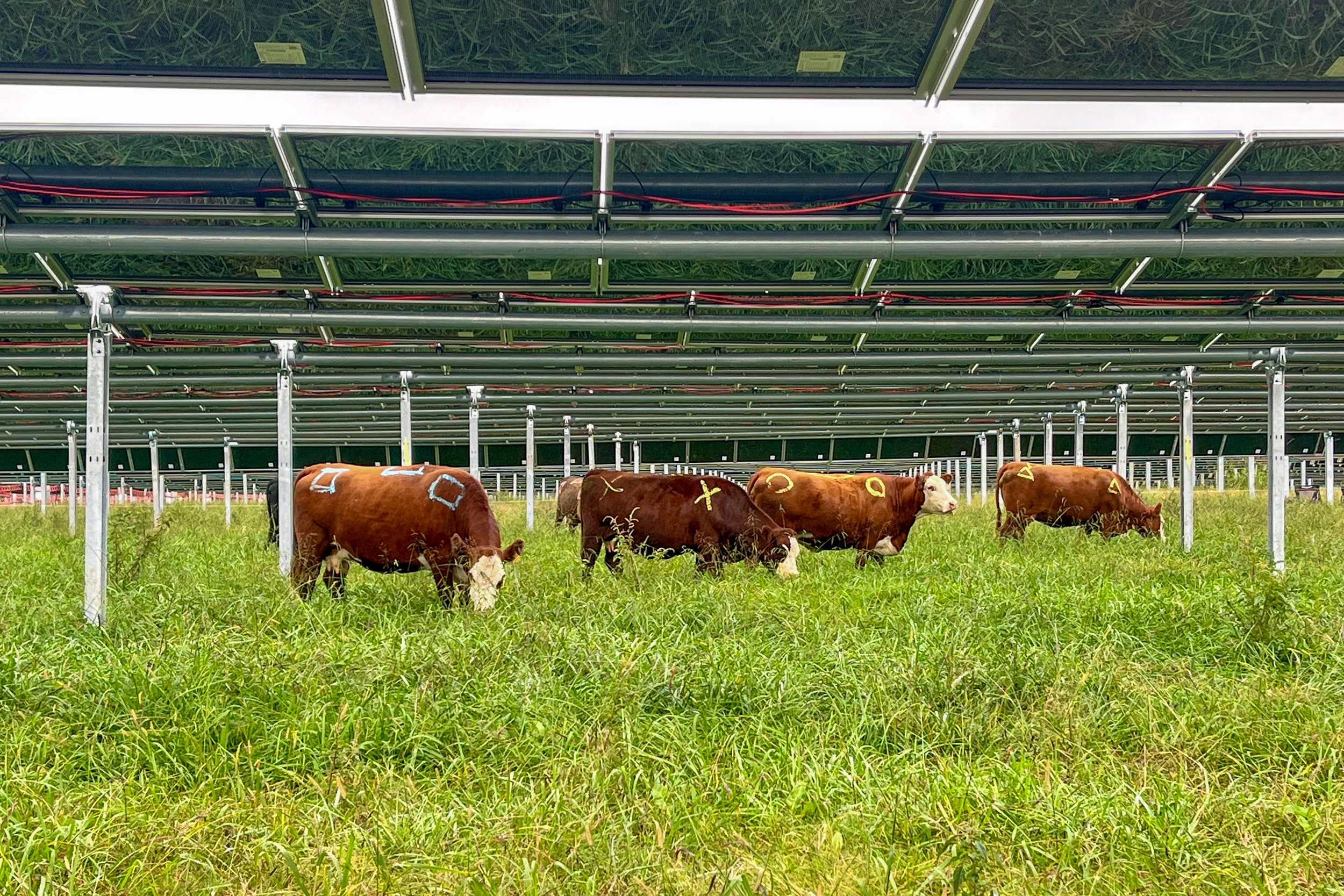
Merino sheep are said to show improved wool quality under solar arrays.

Here’s a win-win-win for the environment, sheep grazing, and agrivoltaic farming practices in general. One caveat: you need to place solar arrays on already open land. Cutting down trees to put in solar is actually a loss for the environment as trees are so good at carbon capture.

Bob Rubila writes at the Farmingdale Observer, “In a groundbreaking study that combines renewable energy with traditional farming practices, researchers have observed remarkable changes in 1,700 sheep grazing amidst solar panels. This innovative approach, known as agrivoltaics, is revolutionizing how we think about land use while yielding unexpected benefits for the animals involved.

“A comprehensive three-year study conducted at Wellington Solar Farm in New South Wales, Australia, has revealed fascinating results about sheep and solar panel coexistence. The research team from Lightsourcebp, in partnership with EMM Consulting and Elders Rural Services, monitored 1,700 Merino sheep divided into two groups: one grazing in traditional pastures and another among solar panels.

“The findings challenge conventional assumptions about livestock welfare in modified environments. Sheep grazing between solar arrays showed no negative health impacts. Instead, researchers documented enhanced wool quality with increased fiber strength and growth rates. The solar infrastructure created microhabitats that benefited both the animals and the underlying vegetation.

“ ‘The promising results indicate we’re on the right track,’ explained Brendan Clarke, acting environmental planning manager at Lightsourcebp for Australia and New Zealand. …

“The solar arrays provide critical shelter during extreme weather events, protecting sheep from both intense heat and adverse weather conditions. This protection creates a more stable environment for the animals throughout seasonal variations. The panels’ shade effect helps retain soil moisture, which promotes healthier grass growth and more nutritious forage for the grazing animals.

Interestingly, researchers noted reduced parasite presence in the solar grazing areas, contributing to improved overall animal health.

“This unexpected benefit appears to stem from altered ground conditions beneath the panels, creating an environment less hospitable to [common] parasites. …

“The relationship between energy infrastructure and animal welfare continues evolving as more long-term studies emerge. While some regions face environmental challenges like the dormant volcano showing signs of awakening after 250,000 years, these sheep-solar partnerships represent positive ecological developments.

“The Australian findings align with similar research conducted in France, where INRAE (National Research Institute for Agriculture, Food and Environment) collaborated with renewable energy producers Statkraft and CVE. Their two-year study involving 24 ewes confirmed beneficial effects on flock welfare, improved thermal comfort, and enhanced forage quality.

“ ‘The thermal comfort of the animals improves significantly, and the availability of quality fodder increases, among other benefits,’ noted Véronique Deiss, INRAE researcher. These correlated results across continents suggest universally applicable principles for successful agrivoltaic implementation.

“Beyond animal welfare, agrivoltaics offers economic advantages for both energy and agricultural sectors. Solar farms benefit from reduced vegetation management costs as sheep naturally control grass growth, eliminating the need for mechanical mowing or chemical treatments. For farmers, access to otherwise unused land provides additional grazing opportunities without purchasing or leasing additional property. …

“With these 1,700 sheep demonstrating improved wool quality while maintaining solar farms, agrivoltaics exemplifies how innovation can simultaneously address energy production, land management challenges, and animal welfare – creating sustainable solutions that benefit multiple stakeholders across agricultural and energy sectors.”

More at Farmingdale Observer, here.

Read Full Post »

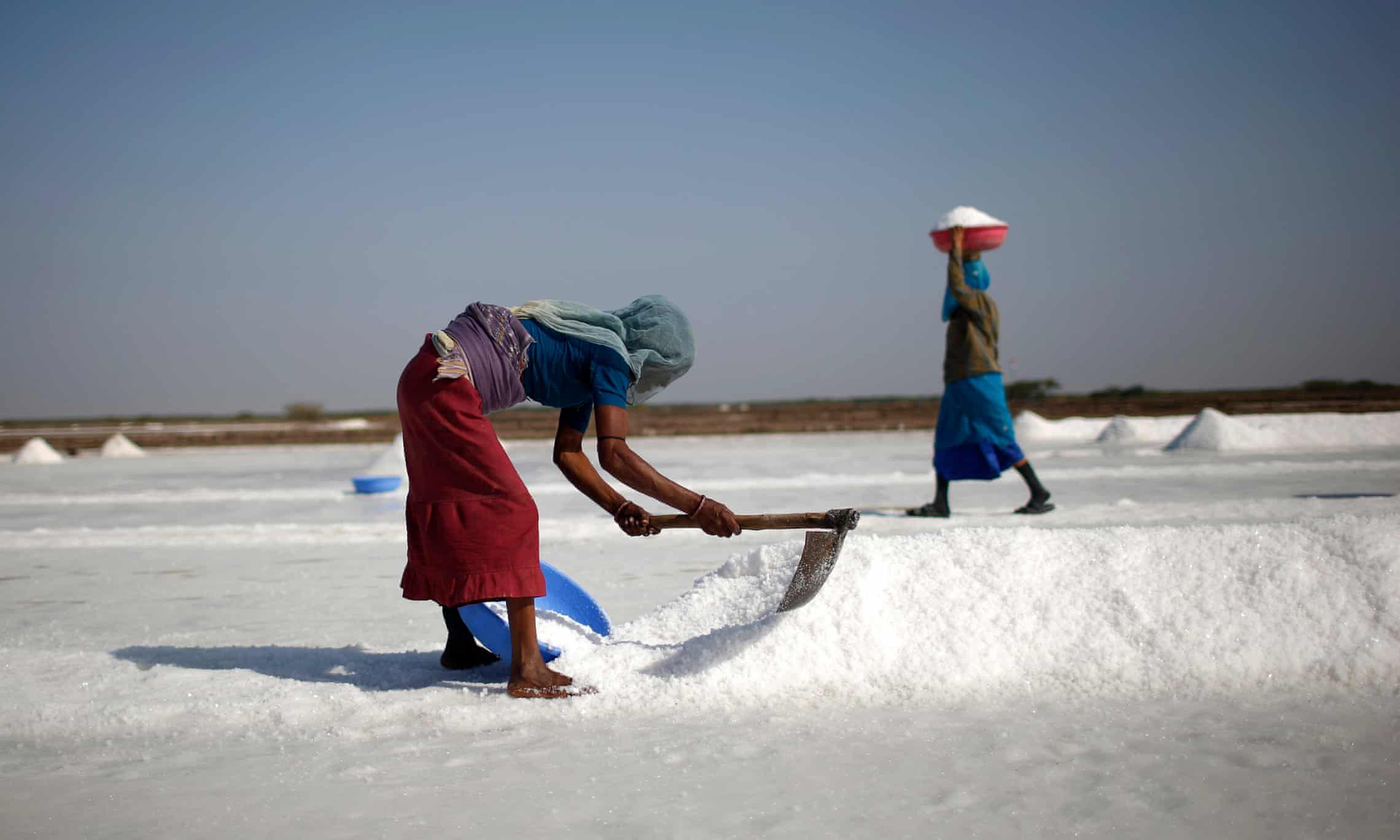
Photo: Ahmad Masood/Reuters.
Working on a salt pan in the western Indian state of Gujarat. The marshes produce 30% of India’s inland salt. 

I’m always up for a little good news from distance places, as I hope you are, too. Today we learn about the benefits of solar energy for one hands-on industry in India.

Suchak Patel writes at the Guardian, “In the expansive salt marshes of the Little Rann of Kutch the bleakness of the sunburnt, treeless landscape is matched only by the drudgery of the salt farmers who toil there for eight months of the year.

“In October, as the monsoon recedes and the flooded salt pans dry out, farmers and their families hop on to trucks and tractors to migrate to the Little Rann of Kutch in Kutch district, Gujarat, where they pitch tarpaulin shelters and begin mining the underground deposits.

“An estimated 10,000 families of farmers, known as agariyas in Gujarati, migrate to the marshes from across the state. They start each season by digging wells to pump out brine using diesel pumps; the brine is then poured into shallow, squarish plots carved on the salt pans and left to evaporate under the sun to produce salt crystals. These marshes produce 30% of India’s inland salt, typically table salt.

“Life in the salt marshes is uniquely challenging. Drinking water comes not from pipes but tankers, children attend schools inside buses not buildings, and the only avenue to healthcare is weekly mobile vans from the health department. Basic amenities such as an electricity grid and toilets are nonexistent.

“ ‘My entire family, including my brother’s two daughters, lives in the desert these eight months, and my nieces attend primary school in a mobile school bus,’ says Bharatbhai Shyamjibhai Mandviya, 45.

“Contracts made with salt traders before each season, where the traders pay an advance to the farmers to buy pumps, diesel, and to meet household expenses mean most farmers start the season in debt, with the harvest income barely enough to cover their costs, let alone allow them to save.

“Diesel constitutes nearly 65% of the input costs in salt farming, and about 1,800 litres [~476 gallons] of the fuel is needed to produce [about] 750 tons of salt, according to Purshottam Sonagra, area manager of nonprofit Vikas Centre for Development that works with salt producers in the region. …

“But the introduction of solar panels to the pans has triggered a significant shift in the lives and lifestyles of the impoverished salt workers. In 2017, the Gujarat government gave solar pumps to salt farmers at nearly 80% subsidy, as part of a larger push to cut emissions and bring down the costs involved in salt production.

“ ‘Solar-powered pumps have reduced the cost of salt farming to one-third of what it was,’ says Sonagra.

“Mandviya has installed three pumps on the salt pan he works on, the savings from which have led to many firsts in his life.

“ ‘We have now built a two-bedroom house with a separate hall and a kitchen in Kharaghoda [his home village],’ says Mandviya. The new home with tiled walls and built-in cupboards which he will share with his brother and family, is a big upgrade from the kuccha [mud and straw] house they lived in before.

“The brothers also bought a motorcycle and a refrigerator from the money they managed to save.

“With more than 5,500 solar-powered pumps now dotting the region, energy costs have fallen [and] the agariyas such as Mandviya are no longer as dependent on the capital from traders, which gives them greater negotiating power over salt prices. …

“Solar pumps and the financial stability they grant have improved access to health, education and mobility, while also offering freedom to salt farmers from an endless work cycle, campaigners say.

“ ‘Steady supply from the solar panels is powering not only pumps but also televisions. Children of salt makers are switching to state-run ‘edutainment’ programs to make up for the loss of education,’ says Bhavna Harchandani, a research scholar at the Indian Institute of Technology Gandhinagar, who has tracked the agariya community as part of her studies. …

“Sonagra says it was difficult to find an office assistant with basic secondary-school education among agariyas until a few years ago.

“ ‘Today, many agariya children attend private schools, complete ITI (vocational) courses, and some manage to go to college. Solar pumps have opened up educational opportunities for the next generation of the community,’ he says.”

More at the Guardian, here.


Read Full Post »

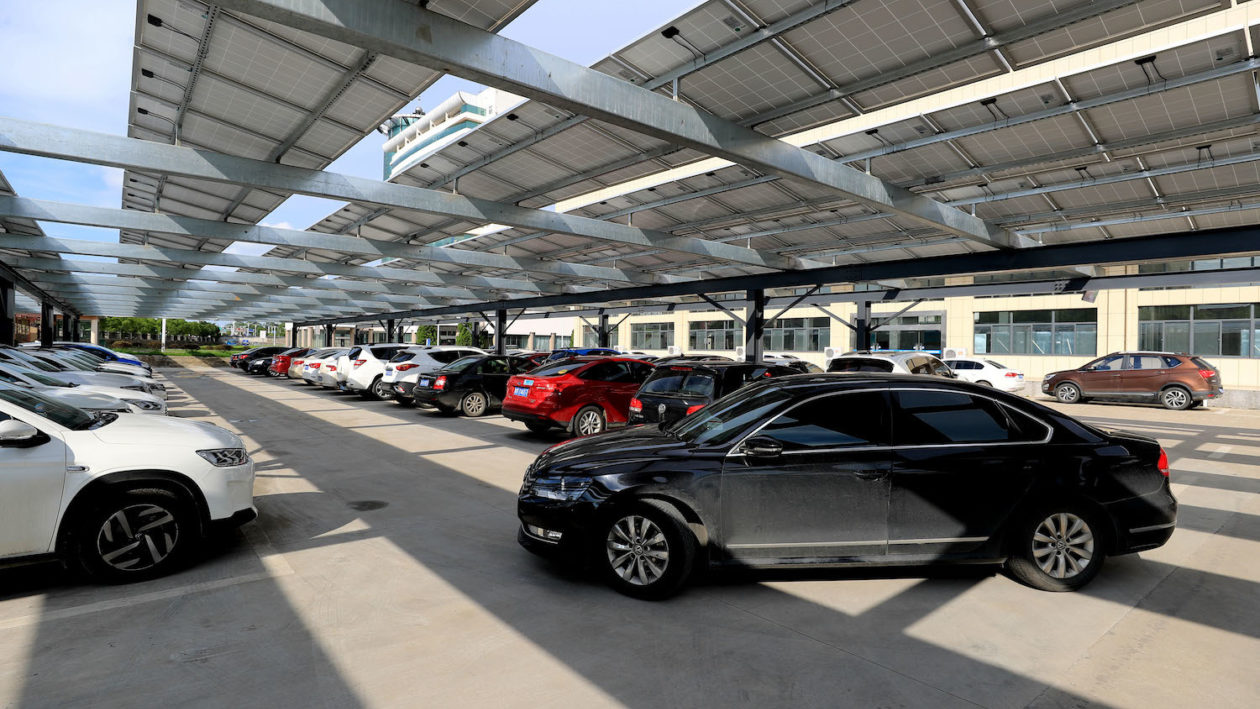
Photo: Imagine China via AP Images.
A solar-covered parking lot at the plant of Anhui Quanchai Engine Co., Ltd. in Chuzhou, China.

We have to keep a close watch on our innovations, even the ones we think are good. Take solar. Sometimes you read about aggressive solar companies decimating wooded lots to build an array. What? Trees are even better than solar at fighting global warming.

Let’s consider places where solar doesn’t harm anything. How about over a parking lot?

Richard Conniff writes at YaleEnvironment 360, “Fly into Orlando, Florida, and you may notice a 22-acre solar power array in the shape of Mickey Mouse’s head in a field just west of Disney World. Nearby, Disney also has a 270-acre solar farm of conventional design on former orchard and forest land. Park your car in any of Disney’s 32,000 parking spaces, on the other hand, and you won’t see a canopy overhead generating solar power (or providing shade) — not even if you snag one of the preferred spaces for which visitors pay up to $50 a day.

“This is how it typically goes with solar arrays: We build them on open space rather than in developed areas. That is, they overwhelmingly occupy croplands, arid lands, and grasslands, not rooftops or parking lots, according to a global inventory published last month in Nature. In the United States, for instance, roughly 51 percent of utility-scale solar facilities are in deserts; 33 percent are on croplands; and 10 percent are in grasslands and forests. Just 2.5 percent of U.S. solar power comes from urban areas.

“But that doesn’t necessarily make it smarter. Undeveloped land is a rapidly dwindling resource, and what’s left is under pressure to deliver a host of other services we require from the natural world — growing food, sheltering wildlife, storing and purifying water, preventing erosion, and sequestering carbon, among others. And that pressure is rapidly intensifying. By 2050, in one plausible scenario from the National Renewable Energy Laboratory (NREL), supplying solar power for all our electrical needs could require ground-based solar on 0.5 percent of the total land area of the United States … 10.3 million acres.

“Because it is more efficient to generate power close to customers, some states could end up with as much as five percent of their total land area — and 6.5 percent in tiny Rhode Island — under ground-based solar arrays, according to the NREL study. If we also ask solar power to run the nation’s entire automotive fleet, says Margolis, that adds another 5 million acres. It’s still less than half the 31 million acres of cropland eaten up in 2019 to grow corn for ethanol, a notoriously inefficient climate change remedy.

“The argument for doing it this way can seem compelling: It is cheaper to build on undeveloped land than on rooftops or in parking lots. And building alternative power sources fast and cheap is critical in the race to replace fossil fuels and avert catastrophic climate change. It’s also easier to manage a few big solar farms in an open landscape than a thousand small ones scattered across urban areas.

Despite the green image, putting solar facilities on undeveloped land is often not much better than putting subdivisions there.

“Developers tend to bulldoze sites, ‘removing all of the above-ground vegetation,’ says Rebecca Hernandez, an ecologist at the University of California at Davis. That’s bad for insects and the birds that feed on them. In the Southwest deserts where most U.S. solar farms now get built, the losses can also include ‘1,000-year-old creosote shrubs, and 100-year-old yuccas,’ or worse. The proposed 530-megawatt Aratina Solar Project around Boron, California, for instance, would destroy almost 4,300 western Joshua trees, a species imperiled, ironically, by development and climate change. … In California, endangered desert tortoises end up being translocated, with unknown results, says Hernandez. …

“The appeal of parking lots and rooftops, by contrast, is that they are abundant, close to customers, largely untapped for solar power generation, and on land that’s already been stripped of much of its biological value.

“A typical Walmart supercenter, for instance, has a five-acre parking lot, and it’s a wasteland, especially if you have to sweat your way across it under an asphalt-bubbling sun. Put a canopy over it, though, and it could support a three-megawatt solar array, according to a recent study co-authored by Joshua Pearce of Western University in Ontario.

“In addition to providing power to the store, the neighboring community, or the cars sheltered underneath, says Pearce, the canopy would shade customers — and keep them shopping longer, as their car batteries top up. If Walmart did that at all 3,571 of its U.S. super centers, the total capacity would be 11.1 gigawatts of solar power — roughly equivalent to a dozen large coal-fired power plants. Taking account of the part-time nature of solar power, Pearce figures that would be enough to permanently shut down four of those power plants.

“And yet solar canopies are barely beginning to show up in this country’s endless acreage of parking lots. The Washington, D.C., Metro transit system, for instance, has just contracted to build its first solar canopies at four of its rail station parking lots, with a projected capacity of 12.8 megawatts. 

“New York’s John F. Kennedy International Airport is now building its first, a 12.3 megawatt canopy costing $56 million. Evansville (Indiana) Regional Airport, however, already has two, covering 368 parking spaces, at a cost of $6.5 million. According to a spokesperson, the solar canopy earned a $310,000 profit in its first year of operation, based on premium pricing of those spaces and the sale of power at wholesale rates to the local utility.

“Rutgers University built one of the largest solar parking facilities in the country at its Piscataway, New Jersey campus, with a 32-acre footprint, an 8-megawatt output, and a business plan that the campus energy conservation manager called ‘pretty much cash-positive from the get-go.’ ”

Lots more info at YaleEnvironment360, here.

Read Full Post »

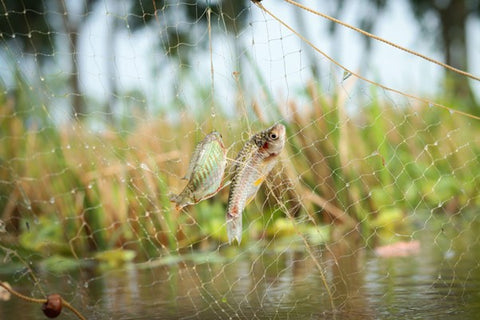
Photo: Bluetti Power.
Using solar power for a fish farm is better for the environment than the usual diesel.

Who wouldn’t be encouraged to see all the clever ways innovators are working to reduce the harm that human activity can cause to the planet?

If it’s happening anywhere near Rhode Island, the nonprofit ecoRI News will find it and tell you about it. For example, Rowan Sharp covered the advent of a solar-powered, self-cleaning fish farm in Rochester, Massachusetts, back in 2012.

“Dale Leavitt told me to meet him at the 7-Eleven in this small town of about 5,000. I wouldn’t be able to find the fish farm on my own, he said. ‘It’s way out in the woods — it would be impossible.’

“He pulls up in a pickup — a cheerful, mustached man with slightly wild silvering hair. He wears a weather-beaten baseball cap and T-shirt, both advertising the marine biology program at Roger Williams University, where he teaches part time. He has blurry tattoos on his forearms, including one of a cartoonish, polka-dotted octopus. …

“I follow him down Route 28, until he veers into forest. Soon we’re rolling slowly down an unpaved track, just rutted wheel marks with grass tufting up between them. … Leavitt parks on a little scrap of solid ground amid the bogs, where a murky pond and a bank of solar panels are the only clues to the one-of-a-kind innovation hidden here. But this unassuming exterior packs a punch. Leavitt, cranberry farmer Brad Morse, Roger Williams University engineering professor Charles Thomas and a handful of undergraduate students from Roger Williams University have turned hard-won Environmental Protection Agency (EPA) grant money into a solar-powered, self-cleaning fish farm that may prove two to three times more efficient than conventional fish farms, at scant environmental cost. …

“Leavitt — his students call him Dale — is in his element here. He produces a plastic container of what looks like dog food pellets — Purina Fish Chow, actually — and happily leads me over to an unnervingly rickety plank onto a metal walkway over the pond. Weathered boards delineate the 15 6-by-8-foot mesh-sided fish pens.

The 15 6-by-8-foot fish pens are stocked with juvenile largemouth bass. … Soon the surface roils with activity: 6-inch juvenile largemouth bass, voracious eaters, which, by fall, will grow into 14-inch, one-and-a-quarter-pounders. Each pen is a module that can be lifted out with a backhoe. The mature fish will be sold at Boston’s live seafood markets or over-wintered for pond stocking this coming spring.

“Each pen can comfortably hold 100 bass, though some aren’t yet filled. Soon three of Leavitt’s assistants drive up with more fish in plastic tanks. Leavitt bought the bass as 2-inch hatchlings from a Delaware hatchery last winter; he and his students raised them to their current size in a Roger Williams University laboratory. …

“[Cranberry] farmer Morse is out today, but this enterprise owes its beginnings to a struggling late-1990s cranberry market that left Morse searching for other options. Morse is a fifth-generation grower who has farmed the 65-acre bog surrounding us since 1971.

“By 1999, cranberry prices were so depressed that many farmers feared selling their land for development was the only viable option. But Morse had another idea.

“ ‘I was looking for ways to diversify,’ he says in a telephone interview. He connected with the Massachusetts Department of Agriculture, where Leavitt then worked as an aquaculture extension agent. Leavitt found funding to help Morse launch a fish farm, and the two became good friends as they worked together on an elegant partitioned aquaculture system, kept clean by phytoplankton.

“It was a two-pond design: one pond for the fish, with water circulating by paddle wheel through a wider, shallower pond — a converted cranberry bog — where naturally occurring algae absorbed fish waste from the water. An aerator gave the needed oxygen boost.

“The farm was ‘a learning curve,’ Morse says, but it supplemented his income until the cranberry market recovered. The project’s Achilles’ heel, however, was its fuel consumption. The bog is too isolated for an electricity connection; a diesel generator powered the paddle wheel and aeration.

“In 1999, diesel had cost 76 cents a gallon. By 2006, it was well over $3. The fish were no longer profitable; Morse converted the filtration pond back to cranberries. Leavitt turned his attention to other things.

“But Leavitt’s passion has never strayed too far. He joined the Roger Williams University biology department and continued doing aquaculture outreach, advising new oyster farmers and even designing a solar-powered shellfish growing system. His lab also grows oysters for restoration of Narragansett Bay.

“In 2008, Leavitt called Morse to say, ‘Brad, I’m ready to start fish farming again.’

“This time, Leavitt had a different plan. He applied for an EPA grant to work with undergraduates in developing technology for sustainable living. Morse was more than willing to get involved. …

“Morse, Leavitt, and Thomas worked with a team of senior engineering students to “completely revamp the concept” of the fish farm. They modeled the new system on the flow dynamics of an automobile turbo-charger — a lucky stroke of inspiration from a student. They designed a single-pond system, with waist-deep fish pens on one side and a shallow, 18-inch algae filtration area on the other; algae need plenty of sunlight to photosynthesize fish waste, so depth matters. A single pump would aerate and circulate the water, and the whole pond would only be a quarter acre.

“Eighteen 200-watt, 24-volt solar panels power the fish farm’s water pump.Goodbye diesel. They were going solar.”

More at ecoRI News, here. No firewall.

Read Full Post »

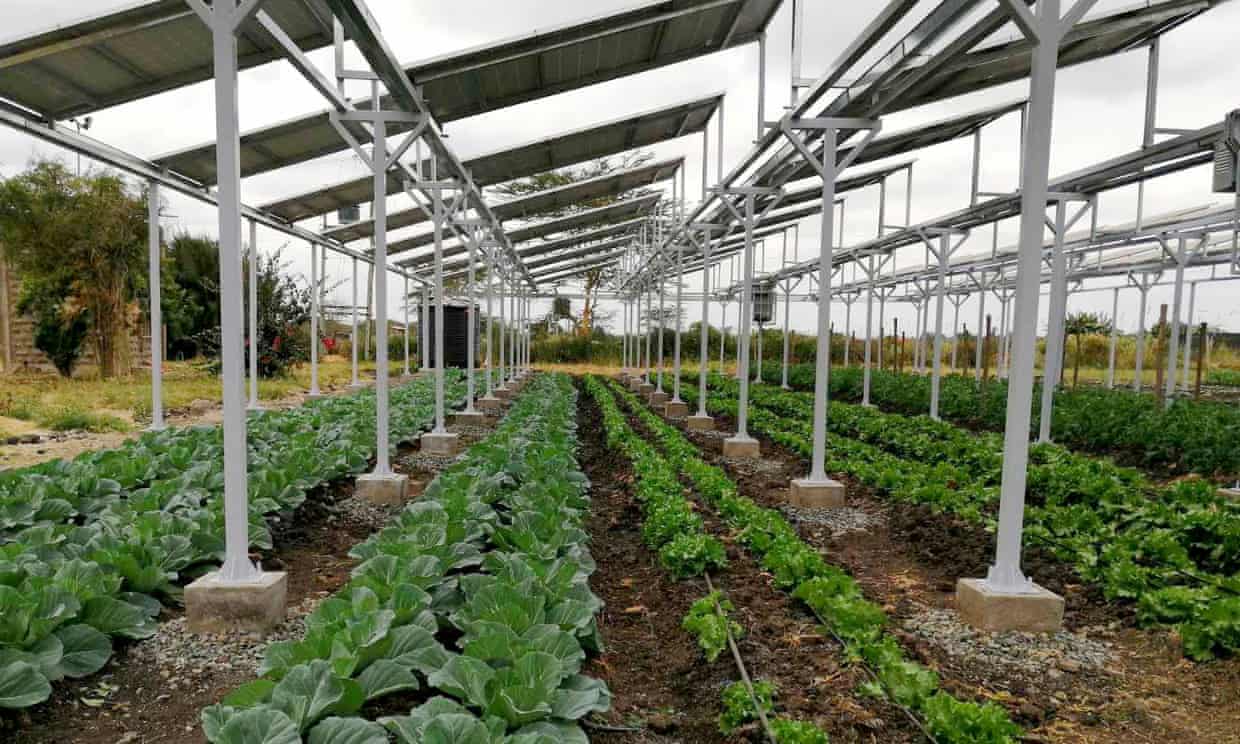
Photo: Christine Lamanna/Icraf.
The Guardian reports, “A research collaboration between the University of Sheffield and the Latia Agripreneurship Institute in Kenya’s semi-arid Kajiado county had promising results.”

A recent article in the Guardian got me interested in learning a bit more about a technical college in Kenya called Latia Agripreneurship Institute.

The website says, “Latia Agribusiness Solutions (LAS), is a business support services provider to the Agribusinesses in all sectors. It facilitates Agribusinesses (farm and firm), to access markets, farm products, technology, financial services and workforce solutions. It delivers these services through an agribusiness ecosystem consisting of local and international companies who have come together to address the needs of Agribusiness in Africa.”

The school is casting a very wide net for prospective students: “LAI uses an industry led, market driven and competency based approach to deliver a broad training program referred to as ‘Apprenticeship.’

The program targets anyone who can read and write and the core criterion for selection is the passion for agribusiness, the ability and readiness to either invest in own farm, or gain meaningful employment in the industry.

Geoffrey Kamadi reports at the Guardian on a collaboration between joining LAI and the UK’s University of Sheffield.

“Solar panels are not a new way of providing cheap power across much of the African continent, where there is rarely a shortage of sunshine. But growing crops underneath the panels is, and the process has had such promising trials in Kenya that it will be deployed this week in open-field farms.

“Known as agrivoltaics, the technique harvests solar energy twice: where panels have traditionally been used to harness the sun’s rays to generate energy, they are also utilized to provide shade for growing crops, helping to retain moisture in the soil and boosting growth.

“An initial year-long research collaboration between the University of Sheffield, World Agroforestry and the Kajiado-based Latia Agripreneurship Institute has shown promising results in the semi-arid Kajiado county, a 90-minute drive from the Kenyan capital of Nairobi and this week the full project will be officially launched.

“For example, cabbages grown under the 180, 345-watt solar panels have been a third bigger, and healthier, than those grown in control plots with the same amount of fertilizer and water.

“Other crops such as aubergine [eggplant] and lettuce have shown similar results. Maize [corn] grown under the panels was taller and healthier, according to Judy Wairimu, an agronomist at the institute. …

“According to Dr Richard Randle-Boggis, a researcher at the University of Sheffield’s Harvesting the Sun Twice project, the trial initiative will determine the potential of agrivoltaic systems in east Africa.

“ ‘We needed to build a test system to see if this technology will be suitable for the region,’ Randle-Boggis said, reiterating that, unlike conventional solar mini-grid systems, agrivoltaics have the additional benefits of improving food and water security, while strengthening people’s resilience against the climate crisis, as well as providing low-carbon electricity. …

” ‘Agrivoltaics can have a notable impact on household income in remote locations such as Kajiado. ‘Women here can spend up to 300 Kenyan shillings [$2.68] on a bodaboda (motorcycle taxi) fare to the market just to buy vegetables worth 100 Kenyan shillings,’ said Anne Macharia, head of training at Latia Agripreneurship Institute.

“The solar panels can be placed three metres [about 10 feet] from the ground, providing ample room for a farmer to work below, or higher in bigger systems to allow access for agricultural machinery. … In other countries, including France, the US and Germany, the technology has been employed successfully.” More at the Guardian, here.

I have posted numerous stories about innovations in Kenya over the last decade. Search this blog on the word “Kenya” for more.

Read Full Post »


Photo: Colette Davidson.
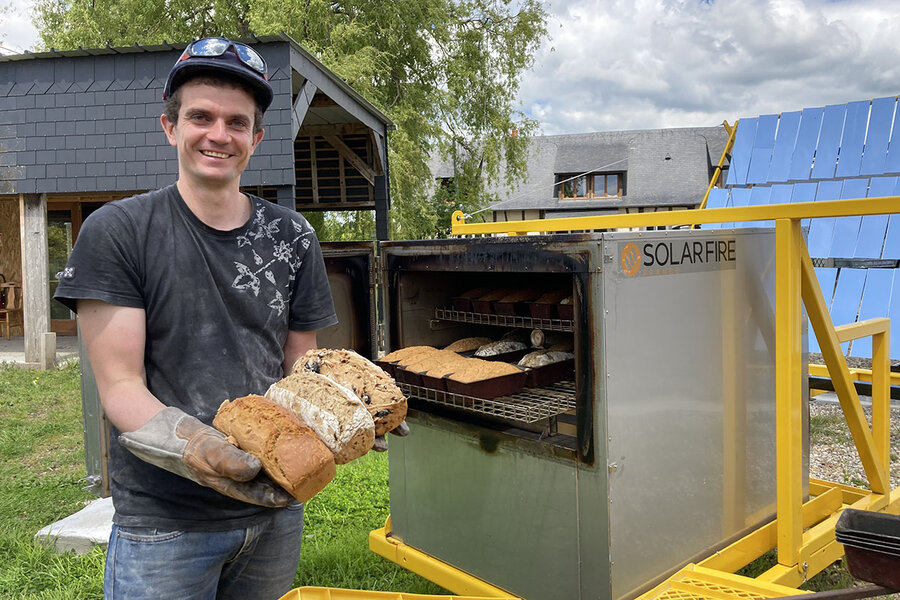
“Arnaud Crétot holds three varieties of his organic bread, which he bakes using a solar-powered oven,” reports the Christian Science Monitor.He is the first baker in Europe to use the technique.

I was 16 when I went to France and got hooked on café au lait and baguettes. So good! Understandably, the French cherish the purity of such traditional foods, but according to this article at the Christian Science Monitor, even the French can experiment a bit around the edges.

Colette Davidson reports on Arnaud Crétot, the country’s first solar baker.

“Every Thursday, he takes a break from his small business NeoLoco, roasting local grains for snacks and aperitifs, to make bread using solar panels. For the next few hours, he will scuttle back and forth between the makeshift, cabinlike kitchen he’s built in his yard … to his wall of 57 concave mirrors.

“At 10-minute intervals, the 5-square-meter contraption needs to be manually rotated ever so slightly into position, in order for the sun to properly fire up the outdoor oven connected to it. …

“By the end of the day – if the temperamental Normandy weather cooperates – he will have produced 40 loaves of sourdough-fermented, sun-baked bread. …

“Mr. Crétot is part of a burgeoning group of ‘neo-bakers’ around France who are working to incorporate local products and ecologically friendly, ancestral methods into making bread. For some bakers, it’s a question of choosing additive-free wheat or organic ingredients. For others, it’s about method – hand kneading dough or using sourdough fermentation in the place of yeast. …

“ ‘We have to adapt, to constantly re-imagine and renew our products without abandoning traditions,’ says Patrick Rambourg, a French historian and specialist in gastronomy. ‘The French aren’t against innovation. They like new things – but based on something they know and love already.’ …

“Over time, [French bread] grew to be synonymous with French gastronomy, and this past March, France’s culture minister nominated the French baguette for UNESCO cultural heritage status. … But in recent decades, the role of bread has diminished. …

“While around 10 billion baguettes are consumed each year in France, some 20,000 bakeries have closed since the 1970s. Shoppers are more likely than in previous decades to buy their bread at the supermarket, where it’s generally made on assembly lines instead of using artisanal methods. 

“ ‘When you look at what the French are eating commonly as bread, it’s an awful product of really mediocre quality,’ says Steven Kaplan, professor emeritus at Cornell University who has written 15 books on bread, trained as a baker in 1969, and lives in southern France. ‘The everyday, white baguette is an insipid, denatured bread – tasteless, not properly fermented, and full of additives.’ 

“That’s created an opening for new techniques and ingredients for those hoping to revitalize this French staple. Among them is Paris baker Benoît Castel’s pioneering pain d’hier et de demain – ‘yesterday and tomorrow’s bread.’ It’s the culmination of a year’s worth of meticulous work to find the right combination of ingredients and method to create a sourdough-based loaf using pieces of leftover, already-baked bread. 

“At the outset, Mr. Castel set off on this baking journey to fight food waste. France wastes approximately 10 million tons of food each year, equivalent to 3% of its gas emissions. The government has passed a handful of bills in the last decade to address the problem. 

“ ‘I’m lucky to have grandparents who were farmers and it’s made me realize how much we take raw materials for granted,’ says Mr. Castel. His pain d’hier et de demain is a hearty round loaf with a crusty outer layer and airy, light body, and lasts up to five days – as opposed to one day for a typical baguette. 

“ ‘That means respecting the land as well as the hard work others put in to grow wheat, cocoa, etc. We throw away a lot of food before utilizing all the energy and resources it can offer us.’

“Local initiatives in bread-making move in the same direction as trends in France’s agriculture sector. Over 10% of French farmers work with organic products and in 2018, around 7,000 farmers registered to convert to organic farming, according to national organic agricultural agency Agence Bio. Approximately 13% of French people eat organic products everyday, according to the same agency. 

“But neo-baking remains niche, and most baking schools continue to teach primarily based on dominant techniques. Thomas Teffri-Chambelland, who founded the International Bakery School in southern France in 2005, is hoping to shake up modern-day teaching. The school focuses entirely on using organic ingredients and offers the only high school-level diploma in Europe dedicated to organic and sourdough baking. Since its launch, 80% of graduates have opened their own bakeries, and none have closed since. 

” ‘Most of our students have recently changed careers and are looking for something more concrete and meaningful,’ says Mr. Teffri-Chambelland. ‘Working with organic materials or sourdough isn’t just about being trendy. It’s raising awareness about the benefits they have for health, conservation, and the environment.’ 

“[Mr. Crétot] learned about Solar Fire – the company that developed his solar oven – as well as the solar tech nonprofit Go Sol during a trip to India in 2014. He went on to work on developmental projects across Africa with them, teaching sustainable baking. Now, every month he gives training to those looking to learn more about his technique. … [He] plans to start delivering his bread to sales points by bike to further reduce his environmental impact.”

More at the Monitor, here.

Read Full Post »

still15_wide-2fba47733060b3e54c428cdbf3de87a8331aaae1-s700-c85

Photo: Blue Lake Rancheria
The Blue Lake Rancheria microgrid powers a number of buildings on the reservation and helped provide energy when California’s Pacific Gas and Electric shut off power during wildfires.

In the following story, disempowered people lacking reliable services not only took action to help themselves but were generous to more-privileged neighbors who suddenly learned what it’s like not to have services.

This is a story about two kinds of power.

Erik Neumann reports at National Public Radio (NPR), “California’s largest electric utility took the unprecedented step of shutting off power to millions of customers beginning last October. The decision was meant to prevent power equipment from sparking catastrophic wildfires.

“Now a renewable energy microgrid on a tiny California Native American reservation is proving to be one solution to this ongoing problem. The Blue Lake Rancheria is located just north of Eureka, Calif. On the 100-acre campus, just behind the casino and hotel, Jana Ganion opens a chain-link fence. …

“Inside, in an area half the size of a football field, are more than 1,500 solar panels, slanted toward the noonday sun. Ganion is the sustainability director with the Blue Lake Rancheria, which includes about 50 members.

[Ganion] helped build this solar microgrid as part of the tribe’s goal to develop climate-resilient infrastructure and to be ready for earthquakes and tsunamis. But then beginning in October, it became useful in a whole new way. …

“As one of the only gas stations in the county with power, the reservation provided diesel to United Indian Health Services to refrigerate their medications and to the Mad River Fish Hatchery to keep their fish alive. The local newspaper used a hotel conference room to put out the next day’s paper. Area residents stopped by to charge their cell phones.

“Ganion estimates that on that day more than 10,000 nearby residents came to the reservation for gas and supplies.

“County officials had been warned about the utility shutoffs, but they didn’t know they were happening until that day, says Ryan Derby, emergency services manager for Humboldt County, where Blue Lake Rancheria is located.

” ‘Our entire planning model for the last 18 months got thrown out the window,’ Derby says. … ‘Humboldt County prides itself on being resilient,’ Derby says, ‘But I think in light of these public safety power shutoffs we realized how dependent we really are on electricity.’

“The county focused on residents who relied on medical devices like respirators or oxygen tanks. At the Blue Lake Rancheria, Anita Huff was directing emergency services for people with critical medical needs.

” ‘We had eight people here who could not have lived without electricity,’ Huff says. ‘So, we saved eight lives.’ …

” ‘Microgrids are very complex. In some ways they’re kind of like snowflakes where no two of them are the same because it depends on where you are on the grid and what your facility is,’ says Dave Carter, the managing research engineer at the Schatz Energy Research Center and the lead technical engineer on the [Blue Lake] project.

“Microgrids keep the electricity flowing to customers even after disconnecting from the overall power grid. During an outage, the Blue Lake microgrid goes into ‘island mode’ and a large Tesla battery system stores extra power and balances the energy supply and demand.

“By comparison, Carter says, conventional solar arrays have to automatically shut down during outages for safety so they don’t electrocute powerline maintenance workers or people who could come in contact with a downed line.

“Microgrids do come at a price. The Blue Lake installation cost $6.3 million. Five million dollars came from a California Energy Commission grant, and the tribe helped raise the rest. …

“Carter’s lab at the Schatz Energy Research Center is looking for ways to lower the cost of microgrids. In spite of the upfront price, he says, communities should consider what it’s worth to stay in control during a natural disaster. …

“Jana Ganion, with the Blue Lake Rancheria, says with future electricity shutoffs, rural communities, and Native American reservations in particular, need to be especially resilient.

” ‘Many, many tribal nations are located at the end of the line in terms of the electricity grid,’ Ganion says. ‘They may have no power. They may have poor quality power. Microgrids are just a way to do an end-run around all of that.’ ”

More at NPR, here.

Read Full Post »

Photo: Alfredo Sosa
The newest solar farm of Florida Power & Light Company [FPL] is equipped to generate 74.5 megawatts of power, enough for approximately 15,000 Florida homes.

Large numbers of Americans are not as concerned as I am about fossil fuels and how they hurt the planet and until recently have not supported sustainable energy. But as the cost of renewable power comes down, many of them are giving wind and solar a new, pragmatic look.

Eva Botkin-Kowacki writes at the Christian Science Monitor, “There’s a new crop sprouting in southern Florida. Amid fields of sweet corn, squash, and okra dotting the landscape outside Miami, rows and rows of solar panels now soak up the Florida sunshine. …

“Despite being the Sunshine State, Florida has long lagged when it comes to tapping into the abundant rays overhead. But now that is changing as utility companies in the state have begun to recognize solar power as a vital component of a diverse energy future. …

“As solar has become more economically viable, the state’s utility companies now see opportunity more than competition in the technology Florida utilities’ newfound embrace for solar power echoes trends seen across the country, as the renewable energy source has shifted from a fringe indulgence for wealthy environmentalists to becoming a conventional part of power production. …

“With abundant sunshine, Florida ranks ninth in the United States for solar potential. But as recently as 2015, just one-tenth of a percent of the state’s power came from the sun. …

“Solar is still a bit player in Florida. At the end of 2018, solar power made up just 1.07 percent of the state’s energy portfolio, according to the [Solar Energy Industries Association] reports. But the rapid acceleration reflects a broader shift happening nationally. …

“Some of the ways Florida stands out among states make it a particularly good indicator of the renewable energy’s newfound status as mainstream. Many leading solar energy states, such as Massachusetts, Vermont, and California, have installed solar as part of a legislative push to diversify the energy sector in pursuit of emissions reductions. Policymakers in Florida, however, have not set specific renewable energy requirements or even aspirational goals. …

“The utilities want to maintain their control over the market, says Professor Fenton of the University of Central Florida. In 2016, they fought to amend a law that required them to purchase the electricity generated by customers’ rooftop panels at the net retail rate. … The recent foray into solar is a testament to the increasing economic viability of solar power. …

“ ‘[In 2016], the price point was just becoming right for us to be able to have it make economic sense for our customers for us to go and begin building large solar energy centers,’ FPL spokeswoman Alys Daly says.” More here.

One thought: As my friend Jean, of the environmental-education nonprofit Meadowscaping for Biodiversity, reminds me, it’s important not to cut down trees for solar arrays. Trees help the environment even more than solar energy. We need to keep the big picture in mind.

Read Full Post »

5b527e6903b4a-image

Large-scale solar “farms” are becoming the norm across the country. It’s best to put them on places that are already treeless. We need trees to absorb carbon and give us oxygen.

There’s an organization I follow on twitter, @ecorinews, that has made me more cautious about the renewable energy I advocate. I love that people are using more solar energy, but it should not be at the expense of trees, which are also important in controlling climate change. There are plenty of buildings and already empty spaces where panels could go.

Still, it’s heartening to see communities embracing sustainable energy, and I liked a story from Vermont about strange bedfellows getting the message and working together on solar — on a landfill.

Matt Hongoltz-Hetling wrote about the collaboration at the Valley News in September.

“As Vermont’s ever-shifting energy landscape continues to shake up the renewable energy sector, a community solar array coming online this month will showcase a new twist on existing financial models.

“ ‘This is a hybrid,’ said Dori Wolfe, whose company, Wolfe Energy in Strafford, has purchased two shares — at a cost of $2,784 each — of the 185-kilowatt array, which is sited beside a closed landfill site just off Route 113 in Post Mills.

“Community solar arrays — those which serve multiple customers, some of whom might not have solar-friendly homes — are nothing new in Vermont. …

“The nearly finished ‘Thetford-Strafford Community Solar’ array is designed to generate 230,000 kilowatt-hours of electricity during its first year, enough to power about 35 average Vermont homes.

“But it differs from projects in neighboring towns because it will be the first solar farm to serve a mix of customer sectors — the array is a partnership between residential customers, a commercial farm, and the town of Thetford itself. …

“Wolfe said that, among the 25 member-owner shareholders, the commercial entity — Dave Chapman’s Thetford-based Long Wind Farm — acts as the anchor, and purchased enough of the roughly 185 shares on offer to create a critical mass that allowed area residents to buy into the entity, ‘Thetford Strafford Community Solar LLC.’

“The shareholders (who live in Thetford, Strafford and Norwich) expect to recoup their investment and then some through reduced electric bills — about 85 percent of the electricity produced at the site will be sold to Green Mountain Power through the state’s net-metering program, which guarantees customers a minimum rate for feeding solar energy back into the grid.

“The remaining 15 percent of the power will be sold to the town of Thetford at 90 percent of the normal utility rate, which Wolfe said will exert downward pressure on the property tax rate. …

“Wolfe said she hopes that the Post Mills project will lead to a second phase in which more solar is installed on top of the adjacent landfill.

“Though having more solar options is expected to help more Vermonters access renewable energy, a report released earlier this summer by the Energy Action Network suggests that more regulatory action will be needed to get the state on pace for its ambitious goal of achieving 90 percent renewable energy by 2050.

“The state has made progress — in 2017, Vermont energy use was 20 percent renewable, up from 12 percent in 2010. But it is significantly off pace. … In 2017, the rate of newly added capacity was down 30 percent as compared to 2016, and new wind generation has seen an even steeper decline, according to the report.

“There are several reasons for the slowdown. … A new, 30 percent federal tariff on solar panels produced overseas [has] affected pricing, leaving solar projects looking for new ways to make the numbers work.” More.

If you are interested, click here to see what Rhode Island is doing to encourage siting of solar arrays on developed lands, like the landfill used in the Vermont story.

Does your community have a policy to spare forests from being taken down for the otherwise worthy purpose?

Photo: Tim Faulkner/ecoRI News
The Office of Administration, featuring the solar array below, is one of three Rhode Island government buildings to join the Lead by Example initiative.

img_20180424_155613

Read Full Post »

Photo: Sustainergy
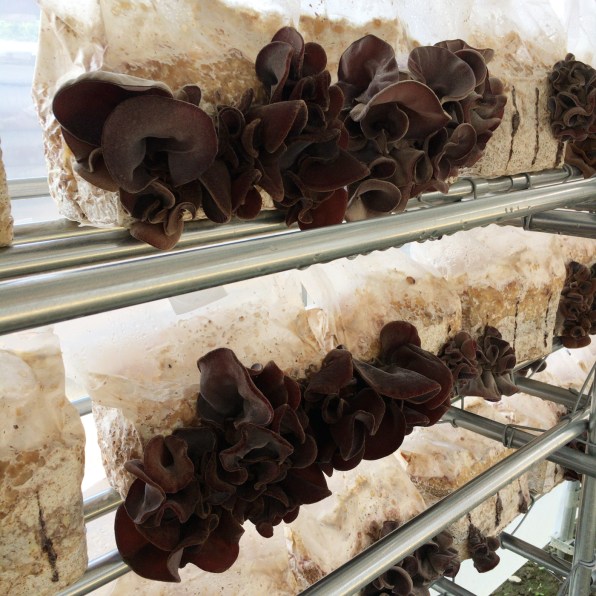
Solar arrays can reduce a farm’s carbon footprint while allowing room for crops and livestock. In Japan, Sustainergy has designed “solar farms at large scale so that farmers could obtain additional stable income.” Above, cloud ear mushrooms.

When a company solves two important problems with one project, I probably shouldn’t call it killing two birds with one stone. Send me a better metaphor, please.

Adele Peters writes at Fast Company about the dual benefits of a Japanese project that provides not only solar power but also a cozy place to grow mushrooms.

“Small farms in Japan are struggling to survive. Rural populations are shrinking, and the average farmer is 67 years old. But two new farms will test a different business model to try to reinvigorate the sector: solar panels with mushrooms growing underneath them.

“The farms, at two locations in northeastern Japan, will produce a combined 4,000 kilowatts of solar power that will be sold to a local utility, while the mushroom farms will yield an annual 40 tons of cloud-ear mushrooms, a crop that is typically imported from China.

“ ‘The environment needs to be dark and humid for mushrooms to spawn,’ says Minami Kikuchi, who leads the ‘solar sharing’ project that combines agriculture and solar power at Sustainergy, a renewable energy startup. ‘We simply created the suitable environment for them by making use of vacant space under the solar panels.’ ”

As Kikuchi explained to Fast Company in an email, ” ‘We designed the project of combination with solar farms at large scale so that farmers could obtain additional stable income. Of course, this renewable energy technology is contributing to the sustainable development of Japan too.’

“Today, an estimated 10% of Japanese farmland is not in use, despite the fact that the majority of food is imported. Government tariffs have discouraged companies from converting farmland to solar power generation, but a partial change in regulations in 2013 meant that solar power was more viable – provided that it was constructed in combination with agriculture. …

“Sustainergy believes that similar farms could potentially grow other crops that need little light, such as potatoes. In the U.S., researchers at the University of Massachusetts are exploring the possibility of growing a much wider range of crops; a farm in South Deerfield has spent the last two years growing plants like kale, broccoli, and Swiss chard under rows of nine-foot-high solar panels. …

“Farmers also have another option: Grazing sheep or cattle on grass grown under solar panels. Sheep can take the place of lawnmowers, and as the grass sucks up carbon dioxide from the atmosphere, the farm can have a negative carbon footprint.”

More at Fast Company, here.

Read Full Post »

Photo: Jason Margolis
Solar Holler founder Dan Conant, foreground, observes a solar roof installation in Lewisburg, West Virginia.

As warehouse and distribution jobs proliferate and meet a need for lower-skilled employment, I’m beginning to accept that companies like Amazon that destroy traditional industries have some redeeming social virtues. After all, times change.

Perhaps no American workers feel the changing times more deeply than do those in the coal industry. But displaced workers who are open to new opportunities seem to be emerging from the disruption OK.

Jason Margolis provided a coal-country report for Public Radio International’s excellent 50 States series.

“Tanner Lee Swiger graduated from high school in Wayne County, West Virginia this spring,” writes Margolis. “His father and grandfather both worked in West Virginia’s coal industry. But not Swiger, or any of his high school classmates.

“Nobody from his graduating class is working in coal, says Swiger. ‘[They’re] working in fast food or not working at all.’

“Not Swiger. He has a job installing rooftop solar panels. He says his family is delighted with it. …

“Swiger is working as an apprentice with Solar Holler, which was founded four years ago by 32-year-old Dan Conant. Conant doesn’t see solar energy and coal at odds with each other.

“ ‘The way I think about it, as a West Virginian, is that West Virginia has always been an energy state, and this is just the next step. It’s the next iteration,’ says Conant. …

“He left his job at the US Department of Energy to start Solar Holler, to try to help slow his state’s economic slide. By many metrics, West Virginia is one of the poorest states in the country. …

“ ‘We need to find new things,’ says Conant. ‘It’s not going to be the coal industry of the past.’ …

“Solar may be an energy of tomorrow, but … coal mining jobs in West Virginia typically pay more than twice the starting wages for solar. But those jobs are increasingly hard to find, and Solar Holler, and other solar installers, need workers now. …

“Solar Holler is partnering with a non-profit called the Coalfield Development Corporation. They own the building. Beyond solar jobs, Coalfield Development is teaching former coal workers skills like woodworking and farming.

‘Apprentices with Coalfield Development work 33 hours, spend six hours a week at a community college, and three hours engaged in ‘life-skills mentorship.’ Nearly 90 people have entered the program. ”

More at “50 States: America’s place in a shrinking world,” here, where you can listen to the story or read it.

Read Full Post »

All Dutch electric trains are now powered by wind energy, the national railway company NS has said.

“Since 1 January, 100% of our trains are running on wind energy,” said NS spokesman, Ton Boon. …

“We in fact reached our goal a year earlier than planned,” said Boon, adding that an increase in the number of wind farms across the country and off the coast of the Netherlands had helped NS achieve its aim.

“[Dutch electricity company Eneco] and NS said on a joint website that around 600,000 passengers daily are ‘the first in the world’ to travel thanks to wind energy. NS operates about 5,500 train trips a day.

“One windmill running for an hour can power a train for 120 miles, the companies said. They hope to reduce the energy used per passenger by a further 35% by 2020 compared with 2005.” More at the Guardian, here.

Meanwhile in London, researchers are looking into solar-powered trains.

As Michael Holder said in BusinessGreen, part of the Guardian Environment Network, “Imperial College London has partnered with the climate change charity 10:10 to investigate the use of track-side solar panels to power trains. …

“The renewable traction power project will see university researchers look at connecting solar panels directly to the lines that provide power to trains, a move that would bypass the electricity grid in order to more efficiently manage power demand from trains.” More.

I wonder what sounds solar- and wind-powered trains make. Can we still say choo-choo-choo and whoo-oo-OO with our grandchildren? And who will update Thomas the Train?

Photo: Geography Photos/UIG via Getty Images
Intercity train arriving at Leiden Central railway station, Netherlands.

Read Full Post »

As costs come down, solar and wind energy are being embraced in interesting places. Stereotypes about Texas and Big Oil will have to go.

Matthew Rozsa reports at Salon, “The notion that Texas might become a hub for renewable energy innovation isn’t that new. As Forbes noted earlier this month, Texas — which produces 37 percent of America’s crude oil and 28 percent of its natural gas — has more than 10,000 wind turbines, allowing it to produce more power from wind than the combined power produced by 25 other states from all energy sources.

“Similarly, The Wall Street Journal reported [in 2015] that Texas expects more than 10,000 megawatts of solar-generating capacity to be installed across the state by 2029, which is almost the size of all the operational solar farms in the United States today.”

Rozsa quotes Texans who were interviewed by Voice of America in October:

“ ‘A lot of wind companies have evolved to include solar and wind because solar has become so cheap. It is quite competitive with not only wind, but with fossil [fuel] generation,’ said Andy Bowman, chairman of Pioneer Green Energy.

“This point of view was echoed by Jennifer Ronk, a renewable energy expert at the Houston Advanced Research Center. ‘There is a lot of research being done, a lot of development being done,’ she argued. … ‘I think there is a mix of solutions that are going to be the optimal outcome.’ ”

I’m pretty sure that cost factors will ensure the continuation of renewable-energy research — if only at the state level.

Photo: Getty/Spencer Platt
Turbines at a wind farm in Colorado City, Texas, Jan. 21, 2016.

Read Full Post »

Is it possible for a group of people to collaborate effectively enough to make their quaint English village carbon neutral?

Tatiana Schlossberg has an answer at the New York Times: “Ashton Hayes is different in an important way when it comes to one of the world’s most pressing issues: climate change. Hundreds of residents have banded together to cut greenhouse emissions — they use clotheslines instead of dryers, take fewer flights, install solar panels and glaze windows to better insulate their homes.

“The effort, reaching its 10th anniversary this year, has led to a 24 percent cut in emissions, according to surveys by a professor of environmental sustainability who lives here.

“But what makes Ashton Hayes unusual is its approach — the residents have done it themselves, without prodding from government. About 200 towns, cities and counties around the world — including Notteroy, Norway; Upper Saddle River, N.J.; and Changhua County, Taiwan — have reached out to learn how the villagers here did it.

“As climate science has become more accepted, and the effects of a warming planet are becoming increasingly clear, Ashton Hayes is a case study for the next phase of battling climate change: getting people to change their habits.

‘We just think everyone should try to clean up their patch,’ ” said Rosemary Dossett, a resident of the village. ‘And rather than going out and shouting about it, we just do it.’

Oh, ye-es! One and one and 50 make a million.

More here.

Read Full Post »

Photo: Big Belly
Foot-pedal version of Big Belly for those who are squeamish about handles. (That would be me.)

Those Swedes! What will they think of next?

Are you familiar with the Big Belly solar-powered trash compactors sprouting up in public places? Well, in Uppsala, Sweden, the trash compactors have been taught to sing.

From a company post on Youtube: “Bigbelly International Partner, EWF, introduced an innovative and inspiring campaign to raise awareness of the Bigbelly Smart Waste & Recycling system in the metropolitan city of Uppsala, Sweden – home to one of the largest deployments in the world.

“The Uppsala ‘Waste Choir’ had their first performance during the Valborg celebrations on April 30th. Valborg is an annual holiday to welcome spring in Sweden. …

“The beautifully wrapped Bigbellys – each as a unique character and voice in the choir – stood together in front of 60,000+ visitors to the city and sang traditional Swedish songs in celebration of spring! …

“As noted in a press release regarding the campaign: ‘Citizens and visitors could for the first time listen to a garbage choir during the famous celebration of Walpurgis in the University City of Uppsala. The choir consists of 20 so called smart dust bins run by solar energy. Uppsala and Sweden are known for their many choirs.

“Maria Gardfjell (MP), chairman of the responsible municipal board had the honor of introducing the choir and informing the audience about other commitments to diminish littering.

“Fundamentally, it is an issue of changing attitudes and to encourage all of us to put our litter where it belongs, in a dust bin. … Since Uppsala introduced smart dust bins in 2013, the visible litter in the City Park and other main parks has decreased by 20 percent. The work environment for the sanitary workers has improved and the usage of plastic bags has decreased by 80 percent.”

Read the press release in full, here. And listen to the singing trash cans here:

Read Full Post »

Older Posts »