Feeds:
Posts
Comments

Posts Tagged ‘subway’

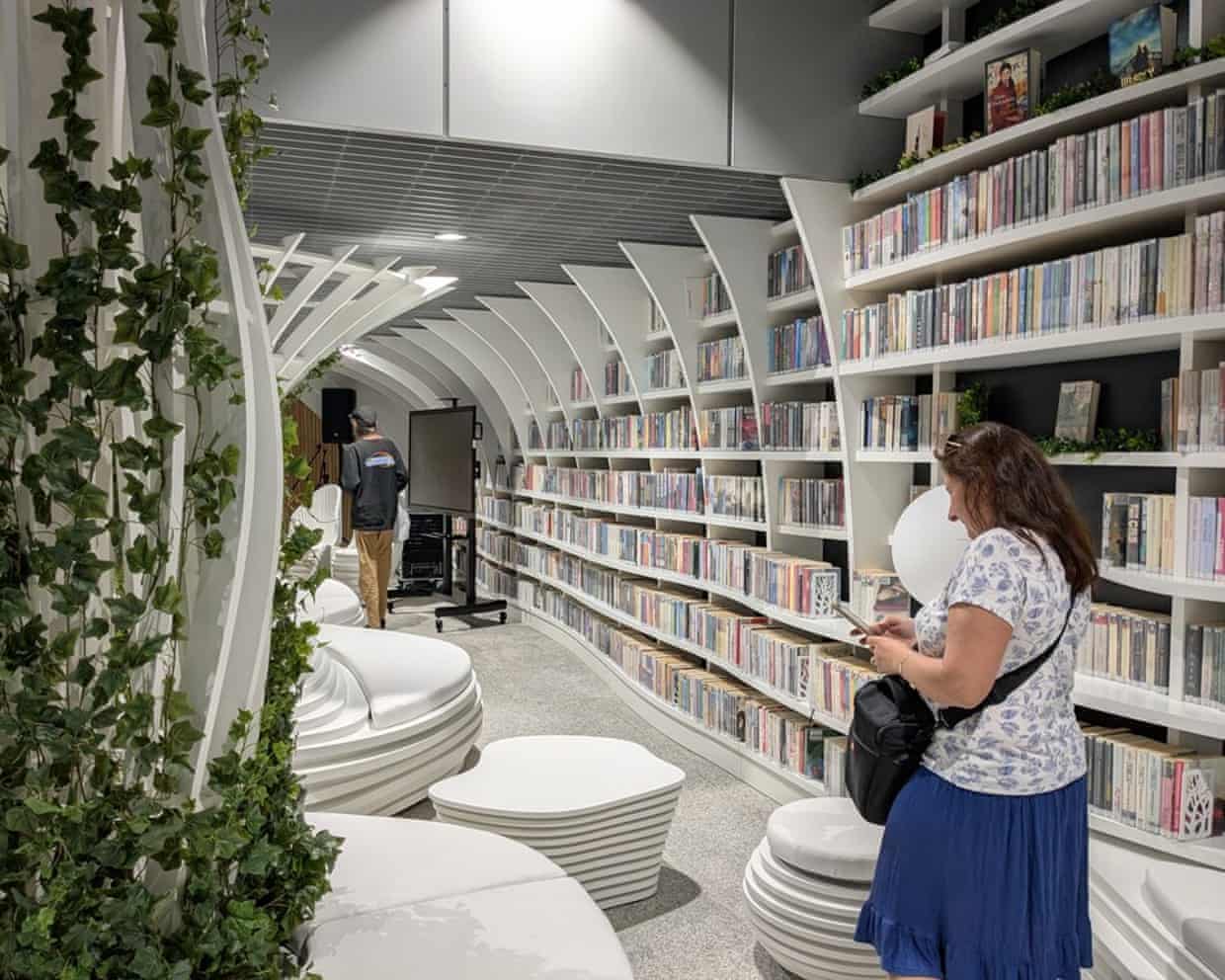
Photo: Biblioteka Publiczna w Dzielnicy Targówek m.st. Warszawy.
A library has opened in a new metro station in Warsaw. 

Fans of libraries know that libraries have a way of popping up in all sorts of unlikely — even inimical — places. If you search on the word at this blog, you will find stories about libraries on horseback, in impoverished countries, in war zones, and wherever people find comfort from reading.

Jakub Krupa reported for the Guardian about a new library in a Polish subway station.

“An ‘express’ library has opened in a new metro station in Warsaw, aiming to provide an appealing cultural space to encourage residents and commuters to forgo smartphones in favor of books and, thanks to fresh herbs growing in a vertical garden, a dash of subterranean greenery too.

“The stylish Metroteka [in] the Kondratowicza M2 line metro station in the Polish capital’s Targówek district offers two reading areas for adults and children, as well as a space for public readings and events.

“About 16,000 books are on offer. … Readers can return them on site or through a street-level parcel locker for books, available 24/7.

“Visitors can study or work in a communal area, borrow a laptop to browse the internet, or simply sit down with a complimentary coffee or hot chocolate to unwind after rush hour travel on the metro. …

” ‘Our dream is for Metroteka to become an educational and cultural centre, and not just a place where you borrow your books from,’ says the deputy director of Targówek library, Grażyna Strzelczak-Batkowska. …

“She says the unique subterranean location brings the library closer to busy commuters, ‘both geographically and in terms of time you need to spend on getting the book.’ …

“More than 400 books were leased on the first day, mostly recommended school readings, as well as travel guides and ‘all sorts of how-to books.’

“The library’s innovative model aims to encourage Poles to read more. The annual survey by the National Library of Poland found that only 41% of respondents had read at least one book in 2024, down from the high 50s in the late 1990s and early 2000s, as people turn to TV, streaming services, and phones for entertainment instead.

“These numbers are higher than in southern Europe, but lower than in the Nordic countries, or even the neighboring Czech Republic, the National Library’s director, Tomasz Makowski, says.

“He says there are historical reasons for it – with Poland losing 70% of libraries in the second world war, ‘we had several generations that did not see their parents or grandparents in front of a wall of books’ – but also cultural as ‘reading is not something associated with adulthood,’ but with ‘schools, teachers, librarians, and usually mothers reading to children.’

“ ‘Opening a library in a metro station is like a dream for us,’ Makowski says, as it challenges that stereotype. ‘Libraries should be beautiful and open; inviting, not intimidating. It’s not a shrine, but a place where you can spend time freely, take part in discussions, public consultations, or meet people,’ he says.

“He says the National Library has also opened a ‘loud’ reading room, breaking with the tradition that such areas need to maintain silence, where ‘no one shushes you or tells you to keep quiet. To our surprise, it’s still pretty quiet, but they also talk, give tutoring, different kinds of lessons.’ ”

Good photos at the Guardian, a free paper, here.

What do you think of the library’s chances? I love the optimism behind this effort but can’t help picturing what the subways I know well are like. Has anyone else commuted to work this way?

Read Full Post »

Photo: Elliott Jerome Brown Jr. for the New York Times.
Recently, the New York City subway system featured an audio-based public art project by Chloë Bass. Composer Jeremy Toussaint-Baptiste created the distinctive sound that starts each announcement. His shirt says, “If you see something, free something.”

In September and October, the New York City subway system, the MTA, had some fun with an art installation that involved the public address system. If you’ve ever traveled underground in New York, you know that there is art everywhere, some of it permanent, like mosaics, others ephemeral like this one.

Aruna D’Souza announced it at the New York Times: “Through Oct. 5, commuters making their way through the crowds at 14 subway stations throughout New York may notice a new type of announcement on the public address system. ‘What we hear changes how we feel. How we feel changes what we do. And what we do changes the world around us, even if just for a moment,’ one says.

“Some sound like snippets of overheard conversations: ‘Remember when Aretha Franklin died and people were singing her songs together on crowded train cars?’

“Each will end with the words ‘If you hear something, free something,’ which is also the title of this ambitious public art project by the conceptual artist Chloë Bass. …

“Bass turns around the instruction to be ever-vigilant in the face of threat, coaxing us instead ‘to return to ourselves in public space, and to experience it as a place where we engage with others instead of only being suspicious of others.’

“The project is a collaboration among Bass, the public art organization Creative Time and the Metropolitan Transportation Authority’s Arts & Design department. The M.T.A. has had a robust public art program over the years … but this is the first time they’ve allowed an artist to broadcast over the M.T.A.’s public address system.

“The 10- to 45-second announcements, 24 in all, will be aired in English, Spanish, Arabic, Bangla, Haitian Kreyòl, and Mandarin — six of the top 10 commonly spoken languages in New York City. (ASL translations will also be available on the Creative Time website.)

They are voiced by a range of vocalists, assembled in part through an on-the-street casting of regular New Yorkers. …

“Bass, 41, conceived the project over the course of her long train and bus commutes between Brooklyn and Queens College, where she taught in the visual arts program for more than eight years. [She says] ‘after 2016, there were more and more announcements, and they were really wrecking my emotional landscape.’

While broadcasts conveying basic information or emergency instructions were understandable and necessary, she said the constant reminders of police presence and increasingly frequent attempts to shape people’s behavior disrupted her thoughts. ‘We’re constantly being asked to internalize the idea that we are supposed to be watchful over each other, not in a supportive or caring way, but to report things to someone else,’ she said. …

“Diya Vij, curator at Creative Time, said that when she and Bass started thinking about what the project could achieve, they realized ‘it could help people see themselves and each other again and think about being neighbors and community differently in a space that might feel more tense than it should.’ …

“In addition to voices, the messages include sonic elements made in collaboration with the musician Jeremy Toussaint-Baptiste, who created the musical tone that opens each. (It draws in part from Bass’s research into the healing qualities of certain frequencies.)

“Before writing the scripts, Bass convened a series of focus groups composed of commuters, M.T.A. employees, transportation advocates and teenagers. (‘Large groups of teens are everybody’s subway nightmare, but they’re New Yorkers, too,’ she said.)

“Maggie Murtha, part of the project team at the M.T.A., said one of her takeaways from the focus groups was that ‘there was a longing to feel connected to the people around you.’ ”

More at the Times, here.

Read Full Post »

Photo: Maya Pontone/Hyperallergic.
Grand Central Station hosts the New York subway system’s newest public artwork, “Abstract Futures” (2025) by a collective called Hilma’s Ghost. The work was supported by the city’s Percent for Art program, which has brought more than 400 commissioned public works into the transit system.

Hilma af Klint is having a moment. I hadn’t heard of this mystical Swedish pathbreaker before the Guggenheim mounted a retrospective in 2018.

Now some artists inspired by her work have merged her eerie geometric style with Tarot cards to make beautiful subway art beneath New York’s streets. Maya Pontone at Hyperallergic has a report.

“Celestial motifs and cosmological geometries strewn across a prismatic landscape comprise ‘Abstract Futures’ (2025), the newest public artwork to grace the walls of the New York City subway system. Designed by the feminist art collective Hilma’s Ghost, the 600-square-foot glass mosaic mural now greets transit riders between the turnstiles and escalators at the 42nd Street entrance to the 7 train in Manhattan’s Grand Central Station. …

“The project was commissioned by the Metropolitan Transportation Authority’s (MTA) Arts and Design program through the four-decade-old Percent for Art initiative, which has brought site-specific works by more than 400 artists into the city’s subways, buses, commuter rail stations, and other transit areas. …

‘Abstract Futures’ [fuses] reinterpreted tarot archetypes with classic heroic tales to highlight the shared transformations experienced by commuters on their individual journeys.

“The first segment of the mosaic begins with the story of ‘The Fool,’ a tarot card signifying new beginnings and opportunity. … The next panel is laden with earth-toned tiles as the fool grapples with challenges and spiritual evolution, represented by the symbol for the ‘Wheel of Fortune‘ tarot archetype in the center. Situated closer to the subway turnstiles, the final section of the mosaic traces a spiritual metamorphosis in which the main character discovers a deepened [self-knowledge]. …

“Brooklyn-based artists Sharmistha Ray and Dannielle Tegeder, the founding duo of Hilma’s Ghost, told Hyperallergic that the artwork was developed over two years and executed in close collaboration with master mosaic fabricator Stephen Miotto, who has been working with the MTA since the 1980s. It shares the same name as their first visual art project, which consisted of a limited-edition abstract tarot deck, building on the collective’s commitment to reimagining historically under-recognized spiritual practices and gendered cultural narratives.

“Inspired by the work of Swedish Theosophist artist Hilma af Klint, Hilma’s Ghost has engaged in a variety of art projects since its founding in 2020. …

“Ray and Tegeder described their new mural as ‘both a celebration and a meditation on the city’s perpetual cycles of arrival, growth, and renewal honoring New York’s resilience, ambition, and the shared sense of collective belonging.’

“ ‘Our intention is to create a contemplative space that centers inclusivity, connection, and healing,’ the pair added.”

More at Hyperallergic, here. No firewall, but membership are sought.

Read Full Post »

Photo: William Frederking.
Ja’Bowen Dixon is a performance and visual artist on the Broadway Dance Center faculty. He is one of the founding members of the tap dance company M.A.D.D. Rhythms

The New York subway gets a bad rap these days, but did you know about all the art down there? So much great stuff to experience.

Gia Kourlas writes at the New York Times, “You can tell when Ja’Bowen is feeling a song. The grounded power of his feet — whether tapping delicate, whispery notes or hitting rhythmic patterns with ferocity and speed — enlivens an unassuming place: a subway platform.

“But beyond his sleek and supple feet, there is simply his presence. With rigor, elegance and humor, he takes the craft of tap seriously while disarming the crowds that pass through his impromptu theater.

‘You know, more than tap dancing, I’m working to bring some good energy to the city, to the moment where I am.’

“Stumbling on Ja’Bowen is like uncovering a New York City art secret. The lucidity of his body and the music that it produces are steadying forces in an unpredictable space. For months now, this Chicago transplant has been bringing quality tap to the uptown F platform at Delancey Street/Essex Street.

“What he creates with taps and a wooden board — his portable stage — is a reciprocal experience. His dances are containers for waves of energy that pass between him and a crowd. He is a dance artist who makes people smile. Of all ages. In the subway.

“ ‘I get real hyped, and then the audience gets real hyped, and then I lay back a little bit and the audience gets a little quiet,’ he said. ‘It’s like a tennis match going back and forth.’

“His improvs often start slowly. ‘If I’m being honest,’ he said, ‘sometimes people aren’t paying attention or could care less that I’m down there.’

“When a dancer, or really any performer, needs too much love, I tend to look the other way. Ja’Bowen is different. He can seem lost in his own world, dancing for himself until he feels the people around him drawing closer, looking — taking a break from social media to watch a live performance. That’s when he sends his energy out to the crowd.

“Ja’Bowen knows audiences love it when he dances fast, but his preference is to sit back in the pocket, to swing. His internal focus — the way he listens and reacts in this unprotected space of strangers — is a vulnerable display of deep body-mind awareness. And while his musical sensitivity starts at his feet, it doesn’t end there. He dances with his entire self. He likes to play with the levels and emotions in music.

“Ja’Bowen hails from a tap family in Chicago, where his older brother and a friend started the collective company M.A.D.D. Rhythms in part to give Ja’Bowen, then a teenager, something to do. Ja’Bowen joined the percussive-forward group with no formal training. Once he became proficient enough, he started performing in the streets.

“ ‘That’s what really developed my talent more than anything else,’ Ja’Bowen said. ‘You build the skill in rehearsals, but performing is a different thing.’

“If a train is a minute or so away and he’s done with his number, he’ll pick up his mic and invite kids on the platform — they watch him in awe — to learn a step. ‘I’m inviting the kids up, and I’m wishing everybody a good day and that’s intentional,’ he said. ‘You know, more than tap dancing, I’m working to bring some good energy to the city, to the moment where I am.’

“That idea is proven again and again. ‘Hey, tap dancer!’ a woman cried out from the opposite side of the platform one day. She wanted to know where to find him on Instagram.

“Where does his inspiration come from? Ja’Bowen, also an actor and musician, draws a lot from Jimmy Slyde for the way he used tap as a way to connect with an audience, as well as Sammy Davis Jr. and Gregory Hines. ‘It’s not just their footwork but their presentation,’ he said, ‘the way they talk to an audience when they’re onstage, the way they stand still.’

“Tap, he added, is like music. ‘The notes that you’re not playing also have just as much importance as the notes you do play.’ ”

More at the Times, here. Awesome videos.

Read Full Post »

Subway Door Chimes

Photo: The Atlantic.
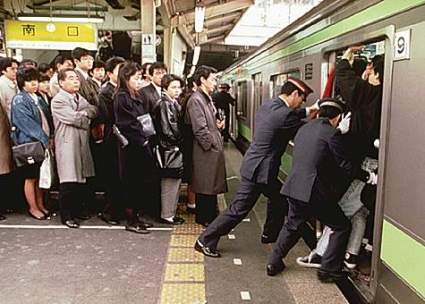
Workers are assigned to push commuters through the subway doors in Tokyo at rush hour.

You know about setting different ringtones on your phone. And you know how your choices say something about who you are or what you think of the various people who call you.

But there are other sounds programmed to convey a meaning — for example, the subway door chimes of different countries. What do they say about those countries or about what their transit systems are trying to convey? As Sophie Haigney and Denise Lu report at the New York Times, civil engineer Ted Green has actually looked into that.

“Ted Green has been collecting the sounds and sights of transit systems for more than a decade,” the authors write. “He travels frequently for work, as a civil engineer, and in every city he visits, he rides the mass transit system and films video of the closing doors, replete with the announcements and the telltale chimes — beeps, ding-dongs, jingles and arpeggios that warn riders around the world to stand clear. …

“Like many aspects of mass transit systems, door chimes may seem banal, the dull background track to daily commutes. If you listen more closely, though, you’ll notice regional patterns and distinctions.

“For Green, recording videos of door closings started as a way to document his travel for himself, but he eventually compiled some videos on YouTube. He was shocked when one door-closing montage got more than two million views. He has made many more videos since; this past year, he’s noticed that there’s been a spike in viewership, perhaps because of nostalgia for train riding during global lockdowns.

“ ‘A lot of train enthusiasts are also collectors,’ said Adam Rose, an audio designer who works on train simulations for Dovetail Games, and who consequently spends a good part of his day listening to transit chimes. ‘So looking for different transit chimes can almost be a form of collecting.’

“Most chimes these days are computer generated, played automatically as part of the door-closing process. But some originally emerged from mechanical processes in older trains.

“In Montreal, where the first metro trains were put in service in 1966, there was an electronic circuit called a current chopper, which worked to slow down the electronic frequency applied to the motor. It made a sound as the trains pulled out of the station: ‘doo-doo-doo.‘ ‘Metro cars act as a sounding board, and amplify the melody,’ said Benoit Clairoux, a historian of Montreal’s transit system.

“When the transit authority wanted to add a door-closing chime in 2005, they tested various sounds, though none was as popular as a chime that mimicked this mechanical sound. So executives added a synthetic ‘doo-doo-doo.’ …

“In Paris, a simple ‘A’ note plays as the doors shut. This is also a throwback, a sound that mimics the vibrations of a mechanical part that is no longer in use on any of the system’s trains. ‘But for a half century Parisians and visitors alike became used to that sound, so we decided to keep it, and recorded a synthesized version,’ said Song Phanekham, a communications manager for the Paris transit system. …

“In Tokyo, each station has its own custom jingle to signal departures. In Rio de Janeiro, the subway’s door chime pays homage to bossa nova. In Vancouver, the doors still close to a three-note sound that was recorded in the 1980s on a Yamaha DX7. …

“One Russian train enthusiast, who also collects transit videos, said that he finds station announcements and certain chimes to be reminiscent of a romantic, inaccessible past. … ‘When I ride through the Old Town and hear the names of the stations located there, I imagine that I’m a hero of a Dostoyevsky novel. I imagine that I’m in the 19th century, and if I get to this or that station I will see carriages, kerosene lamps and people in black suits and hats.’ …

“When it comes to designing a new transit chime, there is much to consider. Length, for one, especially given what is called ‘dwell time,’ when a train is lingering in the station. ‘One of the biggest things about transit is just trying to get people to step lively on and off trains as the doors are about to close,’ said Max Diamond, a New York City Transit conductor. ‘It seems to a layperson like a door chime is innocuous, but it’s a really critical part of keeping the capacity of the subway up.’

“So, Diamond said, you wouldn’t want the chime to be too long, or it might slow things down further on an already overburdened transit system. On the other hand, according to [Ian Fisher, manager of operations planning at] British Columbia Rapid Transit Company, it can’t be too short or people might miss their window of opportunity to rush out the doors. …

“Then there’s the question of how best to get people’s attention. A relaxing melody might fail to rouse slow-walking commuters from their daydreams, as they shuffle out the door. … But there is rider experience to think about, as people hear the chimes day in and day out, often during stressful parts of their day. Fisher said descending chimes might be more soothing than the upbeat sound of climbing notes. …

“Even given all these considerations, most commuters likely won’t notice the sound as they go about their days. ‘It becomes, like everything else, a part of the background,’ [Bruce Alexander, former director of strategic innovation and planning for the MTA] said. ‘No matter how strong a signal is, eventually it’s going to disappear into the general cacophony.’ “

Listen to sounds of subway systems around the world at the Times, here. They are really fun.

Read Full Post »

img_4528-800x600-1

Photo: Filip Noubel
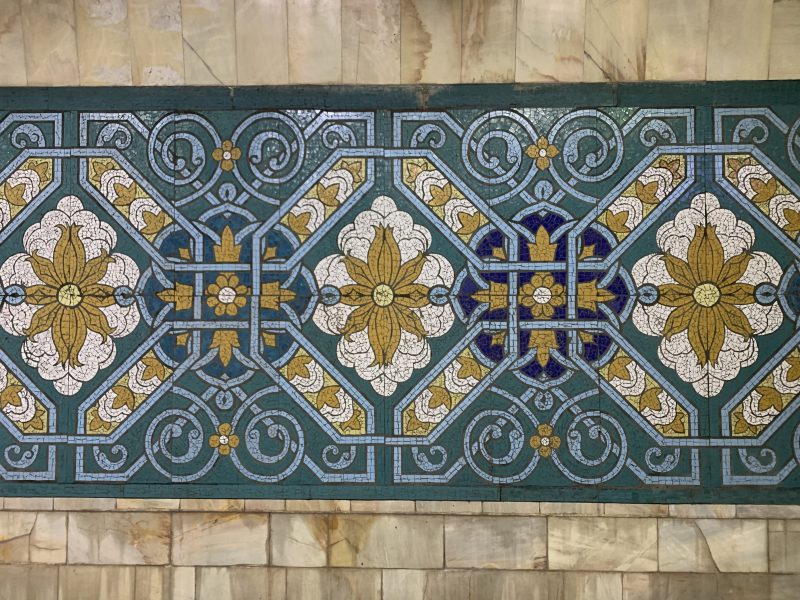
Tiles representing Uzbekistan’s huge cotton industry at the Paxtakor metro station. The  ornamentation of various subway stops portrays the accepted history of the moment.

As we struggle today with our nation’s history and painful, long-suppressed facts come to the fore, let’s turn off the television and think about Uzbekistan.

Back in the day, the Uzbeks thought it would be a beautiful thing to build something Stalin really wanted. They eventually completed a mighty subway system full of the kind of history their now discredited leader would have liked.

Filip Noubel reports at Global Voices, “For many years, it was strictly prohibited to photograph the ornate stations of the Tashkent metro in the Uzbek capital. The Soviet-era system had also been constructed with nuclear attack in mind, and could serve as a fallout shelter in wartime. But ever since that ban was lifted in early 2018, visitors from abroad have started to show heightened interest in Central Asia’s oldest subway system. And with good reason.

“Tashkent’s metro system is so much more than just a means of transportation. Over the decades of its existence, the design and names of the metro’s 29 ornate stations have changed to reflect the turbulent trends of Uzbekistan’s history. …

“Back in November 1920, electricity was a taste of the bold promises of progress to come; it embodied the new innovations now made accessible to the masses. Just 12 years later, the Soviet leadership pronounced yet another strategic and futuristic priority: the construction of the metropolitan, as Europe’s subway systems had come to be known in the second half of the 19th century. On May 25, 1932, the Sovnarkom, the then executive body of the Soviet government issued a decree …

‘The construction of the metropolitan must be considered a project of the utmost importance to the state, with its provision of timber, metal, cement, transportation, etc, and as a key priority in matters of superproductivity at the national level.’ …

“The development of the metro also marked a key turning point in the development of the Soviet economy: while the first five-year plan (1928–1932) emphasised heavy industrialisation, the second five-year plan focused on urbanisation. As a result, the metro became a major cultural symbol, present in films, children’s books, poetry and songs. It was hailed as testament to the success of Stalinism in official songs, such as this one from 1936:

” ‘We believed, we knew, That by digging a pit,
” ‘We would, Comrade Stalin, Make your plan come true.

” ‘They will describe it for centuries on, And not with just one pen
” ‘And they will tell the children, How they fought for the metro!’ …

“The people of Tashkent had to wait several decades for their metro, which was the first in remote and comparatively underdeveloped Soviet Central Asia. Planners faced several challenges: the Uzbek capital had experienced a crushing earthquake in 1966, which destroyed half the city. The city lacked trained engineers and metro workers. Uzbekistan’s long and scorching summers posed problems for ventilation. Which was precisely why the Soviet authorities had to demonstrate that they were up to the task.

“Mobilising human resources and special construction material from all across the Soviet Union, the first metro pits in Tashkent were dug in 1973. Just four years later, in a Stakhanovite spirit which set a record, the metro’s first line was opened in November 1977. The date was chosen to coincide with the 60th anniversary of the Russian revolution. Accordingly, as news footage from that day shows, all local politicians were present at the opening, where a message of congratulations from Soviet leader Leonid Brezhnev was read out before the crowd. …

“As in other Soviet metro systems, each station of the Tashkent metro was assigned a particular political and cultural message to illustrate key messages of Soviet ideology.  …

“Of the 29 stations operating today (a third line was opened in 2001), five metro stations are particularly revealing in what they tell us about Uzbekistan’s changing narratives around national identity.

“[One] station is an emblematic example. Known as Friendship of the Peoples during the Soviet period, its previous name reflected Soviet ideology’s extensive attempts to emphasise its supposedly peaceful international role during the Cold War, in opposition to western imperialism. …

“[The Cotton Grower] station’s name symbolises the Uzbek economy’s everlasting dependency on cotton production. During the Soviet period, Moscow assigned each of the 15 Soviet republics a particular crop to produce en masse. This focus on cotton monoculture has been continued by all subsequent Uzbek governments at a high price for the country’s population. The cotton sector has used forced labor, including that of children.”

Forced child labor, huh? Bet they’re not proud of that now. Read more about the stations and (how the accepted history keeps changing) here.

Hat tip: Arts Journal.

Read Full Post »

Photo: Shutterstock/Elizaveta Galitckaia

She looked me dead in the eye and said: ‘How do I know I’m real?’

It takes nerve to put yourself out there to answer people’s philosophical questions. After all, most potential questioners have only the fuzziest idea of what philosophy is or what questions would be relevant to a philospher’s expertise. Some people are bound to treat the philosopher as a Dear Abby advice columnist, a psychiatrist, or an astrologer.

Here is what Boston University philosopher Lee McIntyre experienced, according to his report at the Conversation.

“The life choices that had led me to be sitting in a booth underneath a banner that read ‘Ask a Philosopher’ – at the entrance to the New York City subway at 57th and 8th – were perhaps random but inevitable.

“I’d been a ‘public philosopher‘ for 15 years, so I readily agreed to join my colleague Ian Olasov when he asked for volunteers to join him at the ‘Ask a Philosopher’ booth. This was part of the latest public outreach effort by the American Philosophical Association, which was having its annual January meeting up the street. …

“I sat between Ian and a splendid woman who taught philosophy in the city, thinking that even if we spent the whole time talking to one another, it would be an hour well spent. Then someone stopped.

“At first glance, it was hard to tell if she was a penniless nomad or an emeritus professor, but then she took off her hat and psychedelic scarf and came over to the desk and announced, ‘I’ve got a question. I’m in my late 60s. I’ve just had life threatening surgery, but I got through it.’

“She showed us the jagged scar on her neck. ‘I don’t know what to do with the rest of my life,’ she said. ‘I’ve got a master’s degree. I’m happily retired and divorced. But I don’t want to waste any more time. Can you help?’

“Wow. One by one, we all asked her to elaborate on her situation and offered tidbits of advice, centering on the idea that only she could decide what gave her life meaning. I suggested that she might reach out to others who were also searching, then she settled in for a longer discussion with Ian.

“And then it happened: A crowd gathered. …

“One young woman, who turned out to be a sophomore in college, stepped away from the group with a serious concern. ‘Why can’t I be happier in my life? I’m only 20. I should be as happy as I’m ever going to be right now, but I’m not. Is this it?’

“It was my turn. ‘Research has shown that what makes us happy is achieving small goals one after the other,’ I said. … ‘You can’t just achieve happiness and stay there, you have to pursue it. … You’ve got to choose the things that make you happy one by one. That’s been shown from Aristotle all the way down to cutting-edge psychological research. Happiness is a journey, not a destination.’ …

“Again it was quiet. Some who passed by were pointing and smiling. A few took pictures. It must have looked odd to see three philosophers sitting in a row with ‘Ask a Philosopher’ over our heads, amidst the bagel carts and jewelry stalls. …

“And then I spotted her … an interlocutor who would be my toughest questioner of the day. She was about 6 years old and clutched her mother’s hand as she craned her neck to stare at us. Her mother stopped, but the girl hesitated.

” ‘It’s OK,’ I offered. ‘Do you have a philosophical question?’ The girl smiled at her mother, then let go of her hand to walk over to the booth. She looked me dead in the eye and said: ‘How do I know I’m real?’

“Suddenly I was back in graduate school. Should I talk about the French philosopher Rene Descartes, who famously used the assertion of skepticism itself as proof of our existence, with the phrase ‘I think, therefore I am’? …

“Then the answer came to me. I remembered that the most important part of philosophy was feeding our sense of wonder. ‘Close your eyes,’ I said. She did. ‘Well, did you disappear?’ She smiled and shook her head, then opened her eyes. ‘Congratulations, you’re real.’ ”

More here.

Read Full Post »

Photo: Istanbul Metropolitan Municipality
The new Istanbul subway machines add credit to your subway cards while crushing, shredding, and sorting your recyclables.

Creating a more sustainable world doesn’t have to be painful for the individual or expensive for government. In Turkey, a city government wanted people to recycle more, and so it got the idea of rewarding subway riders who help out. Ceylan Yeginsu has the story at the New York Times.

“Istanbul [has] rolled out an alternative currency for commuters who need to top up their subway cards but are short of cash: recyclables.

“The city is installing ‘reverse vending machines’ at metro stations that allow passengers to add credit to their subway cards simply by inserting a plastic bottle or aluminum can into the machine. Once a value has been assigned to the recyclables, the machine will crush, shred and sort the material. …

“This is how the vending machines [work]: A 0.33-liter plastic bottle, for example, roughly equivalent to 11 ounces, would add 2 Turkish cents to a subway card, while a 0.5-liter bottle would add 3 cents and a 1.5-liter bottle would add 6 cents. (A subway journey costs 2.60 Turkish lira, about 40 United States cents; 100 Turkish cents, or kurus, make up 1 Turkish lira.) …

“Istanbul’s mayor, Mevlut Uysal, said the machines would track the number of bottles recycled by each passenger and reward those recycling the largest number of containers with free or discounted events such as theater tickets.

“Turkey is Europe’s third-largest producer of household and commercial waste, after Germany and France, and it is the worst in the region at recycling, according to a 2017 report by the consultancy group Expert Market, which is based in Britain. …

“Elif Cengiz, a manager for the waste management project, called Zero Waste, said … that the municipality had made waste management a priority in recent years because of rising concern over the damage that waste is causing to the environment.

“The country’s recycling drive has started to produce results, saving 30 million trees in 15 months since last June, Mustafa Ozturk, the under secretary for the Environment and Urban Planning Ministry, said, [adding] ‘The use of recycled material in production contributes to productivity and separate storage for paper waste also saves storage space and decreases waste collecting costs for local administrations.” More at the New York Times, here.

I’d love to see the perennially cash-strapped Massachusetts Bay Transportation Authority (MBTA) try the reverse-vending idea instead of constantly raising fares.

Read Full Post »

102318-photographing-subway-mosaic

Yesterday was beautiful in New York, and my sister was feeling fine, having been off chemo and radiation a month. New treatments start today.

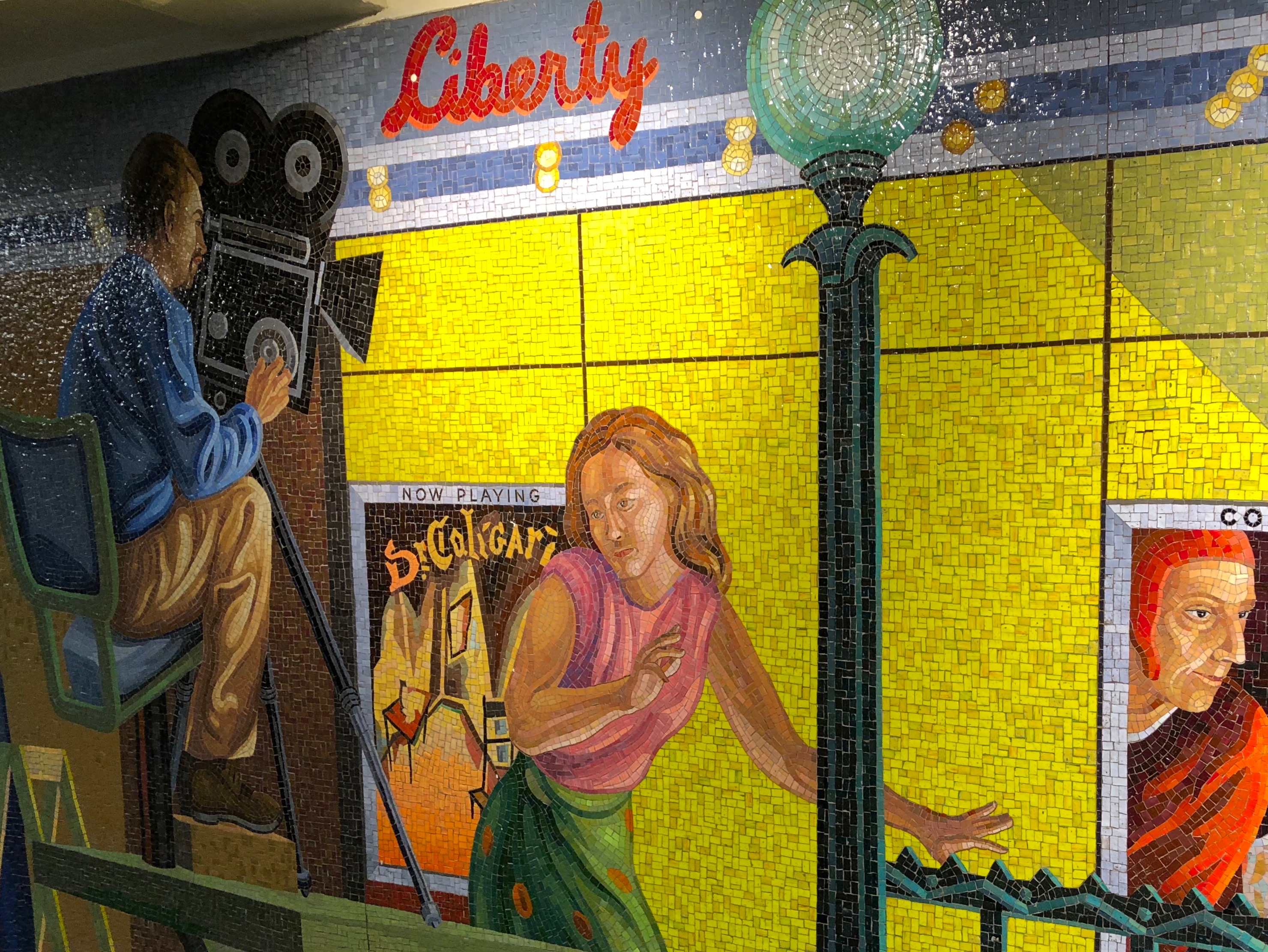
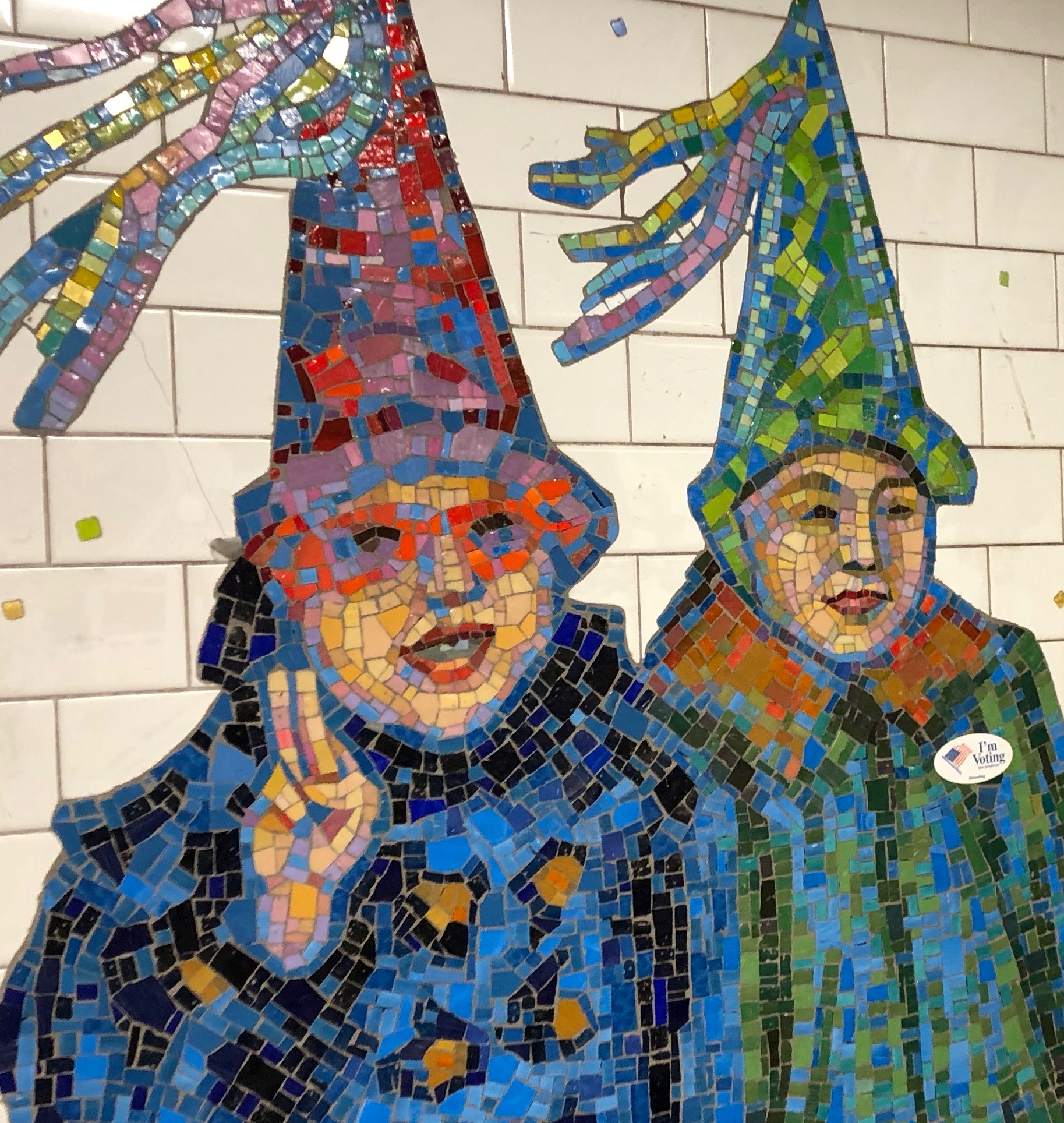
We took the subway from the Upper West Side down to Chelsea, which she says feels like a whole different city to her. We went to a very avant garde museum, walked around, met up with childhood friends, had tea at an indy bookstore, and admired several subway mosaics.

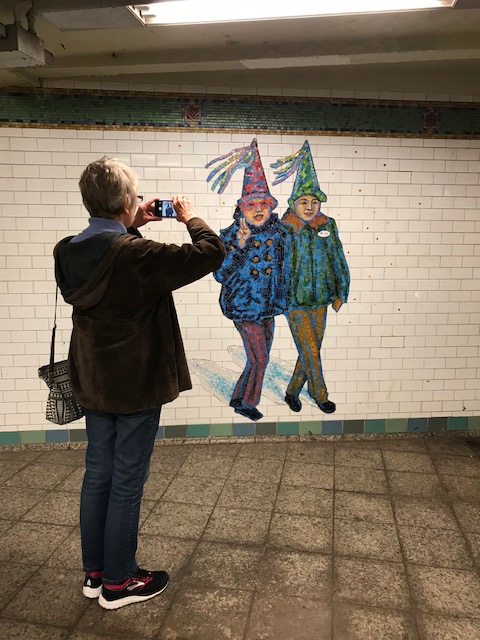
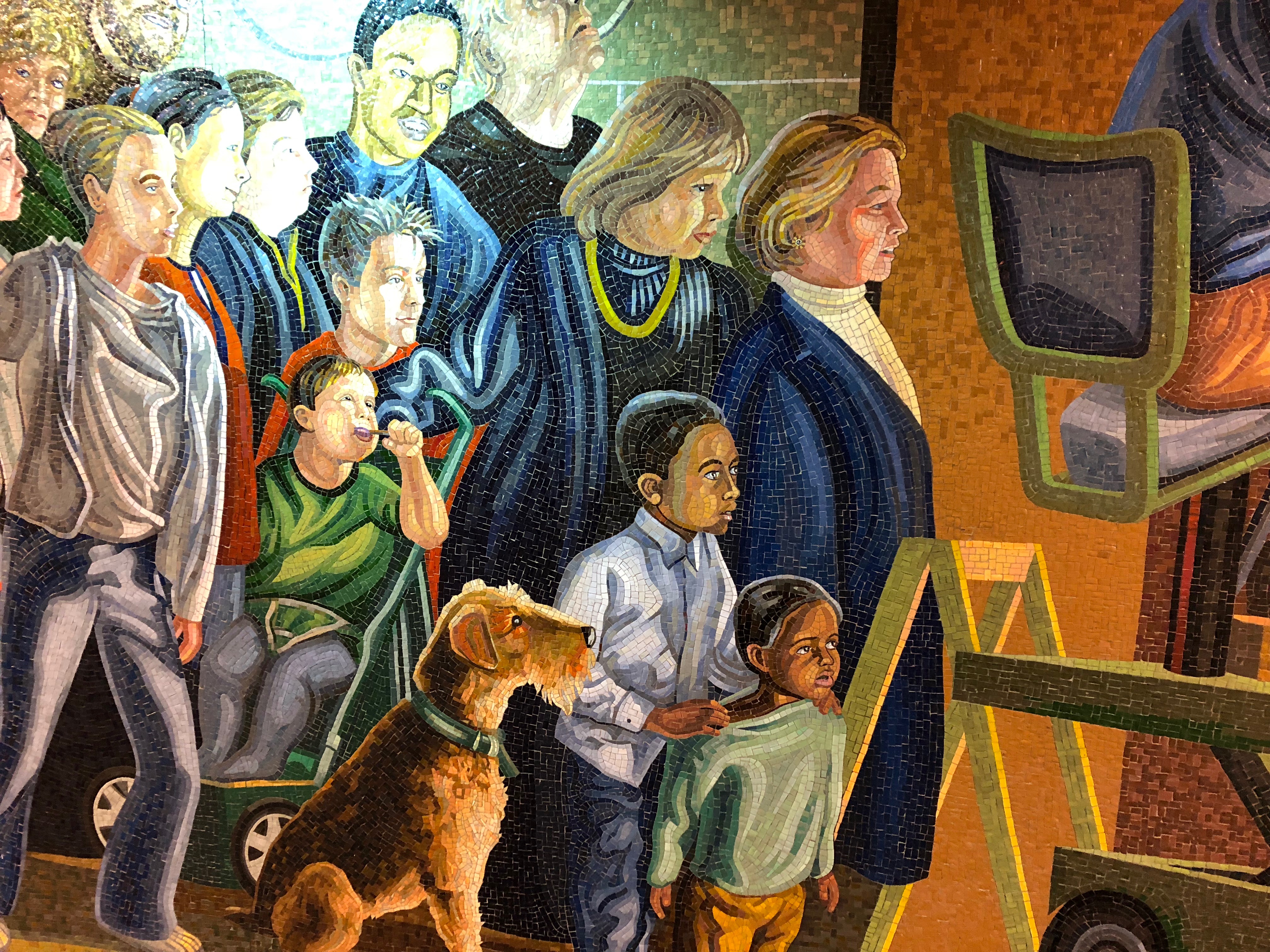
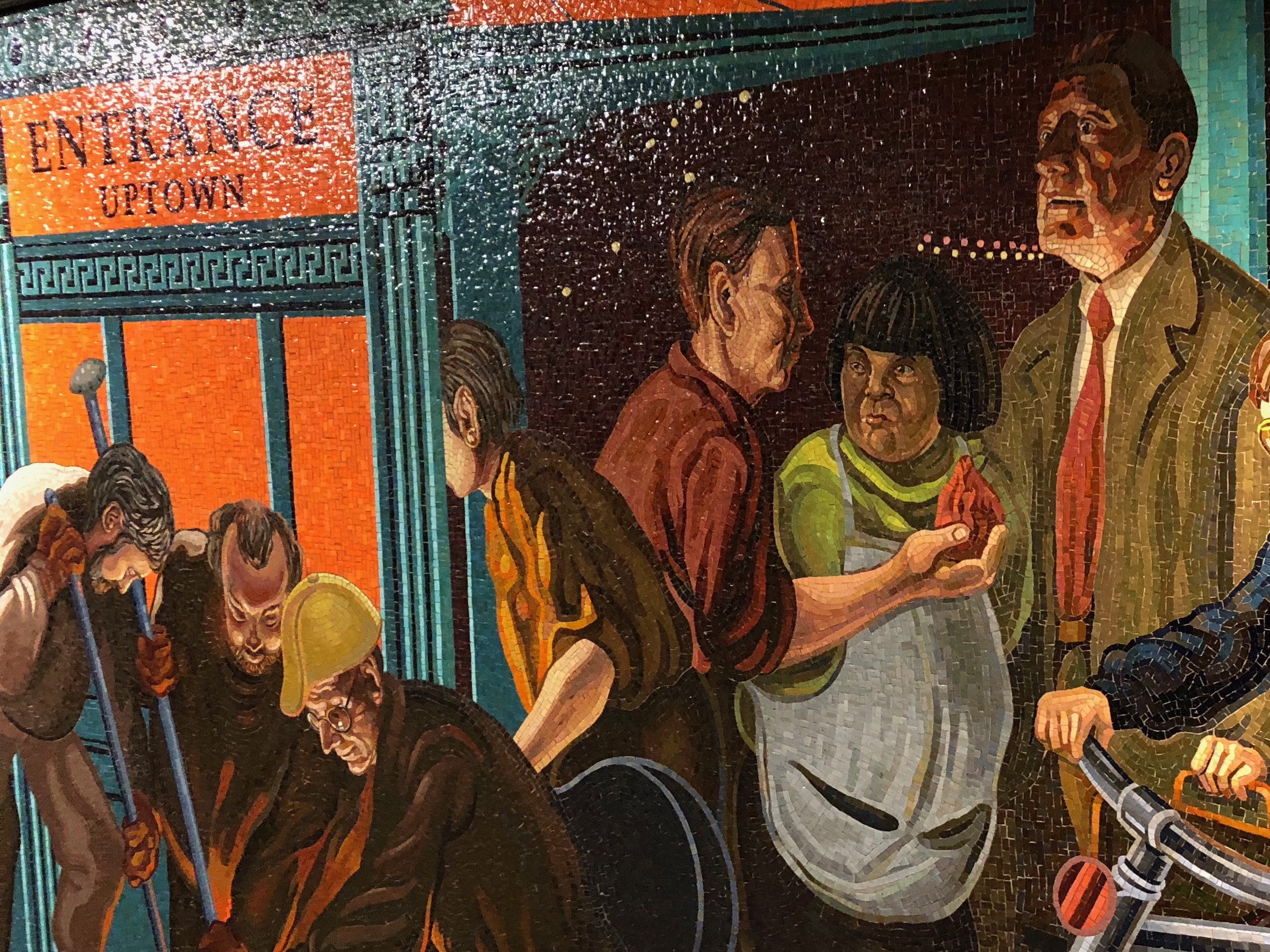
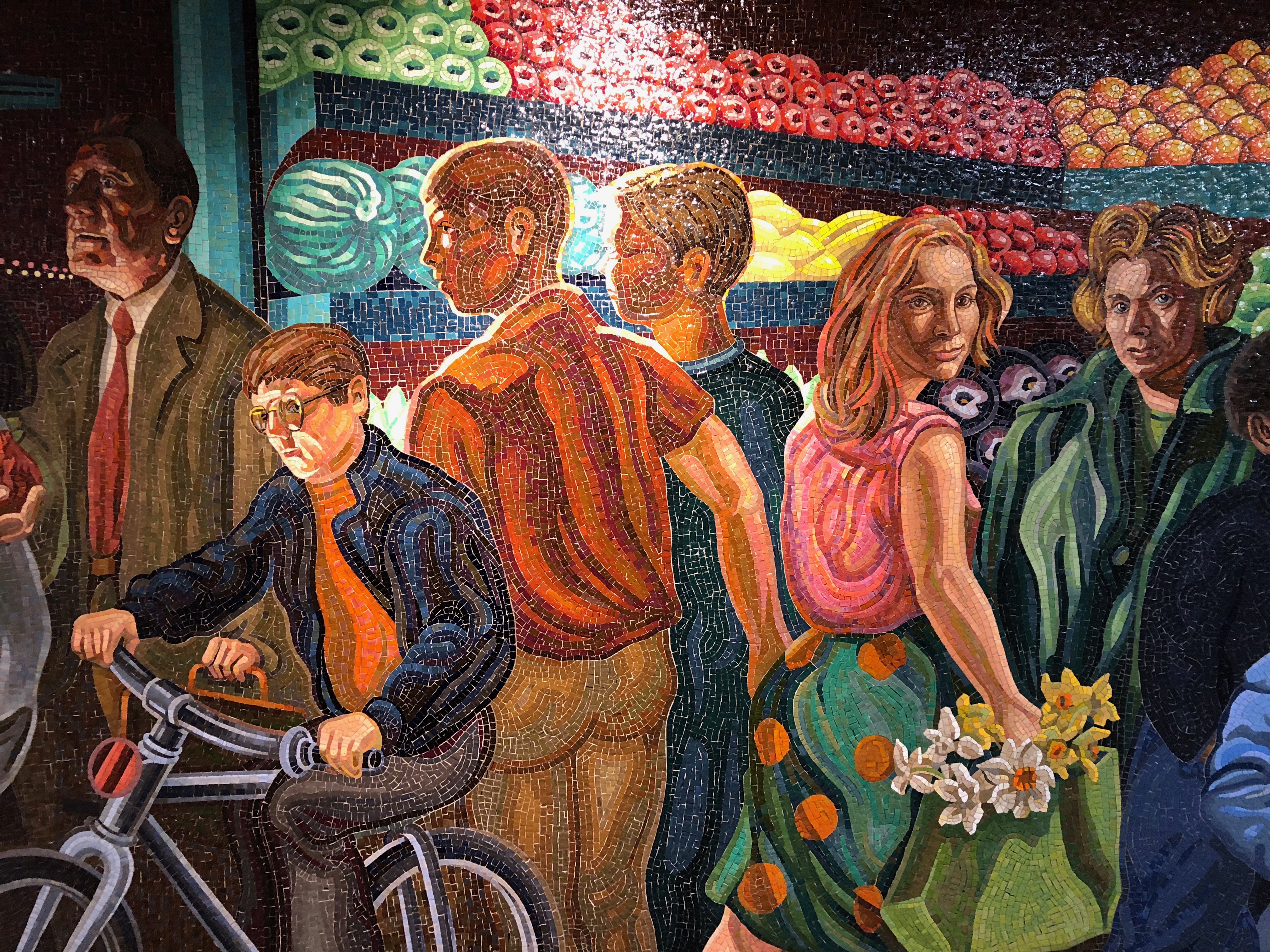
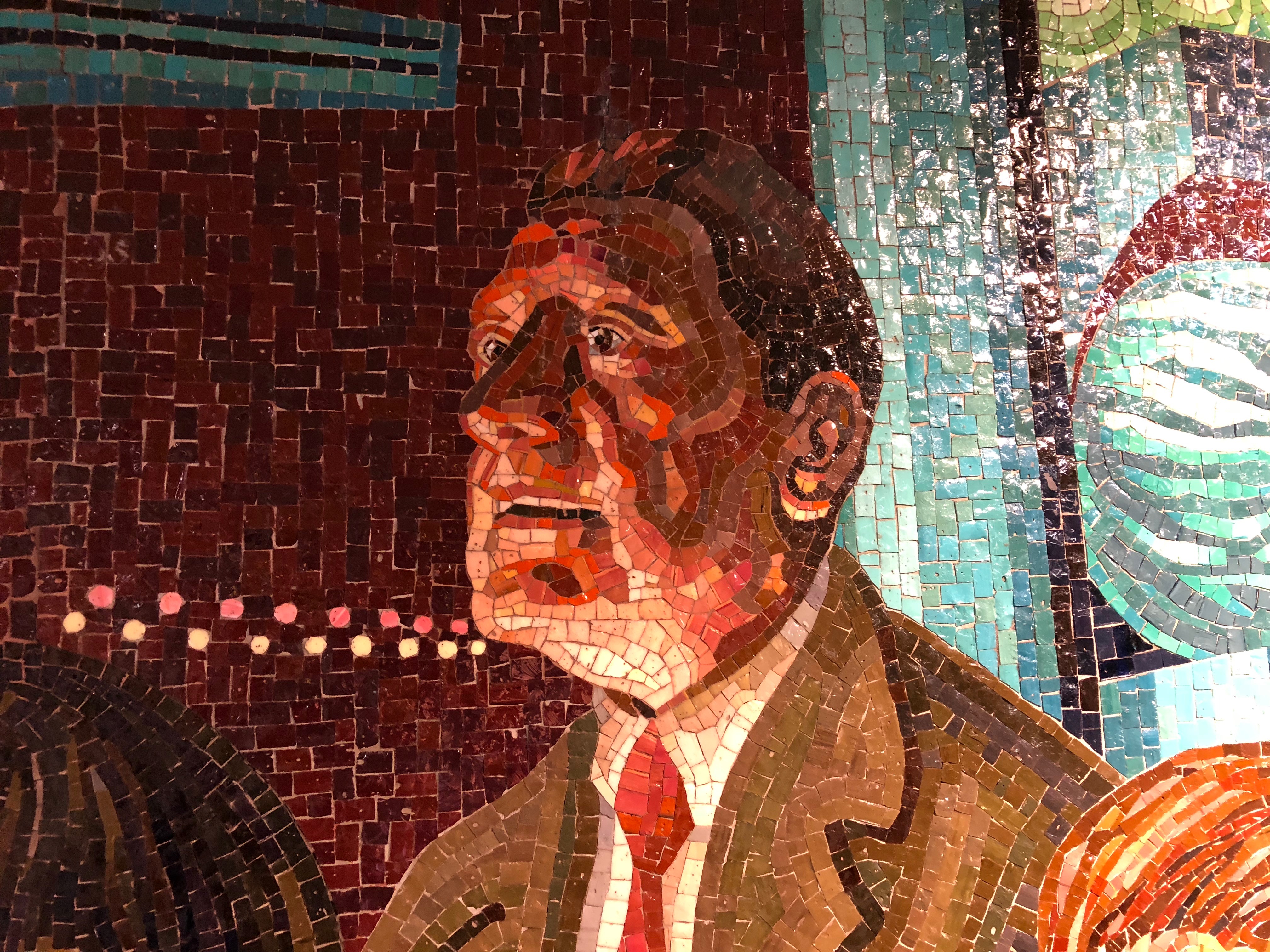
In the first photo below, a New York crowd is watching a cameraman who is making a movie of the woman in the second photo. Then there are several shots of a long city-life mural. I was especially struck by the man in the red tie, who seems to be riveted by a miracle that only he can see.

Next come New Year’s Eve revelers. The added sticker is a sign of how very eager New Yorkers are to vote right now, longing for a miracle.

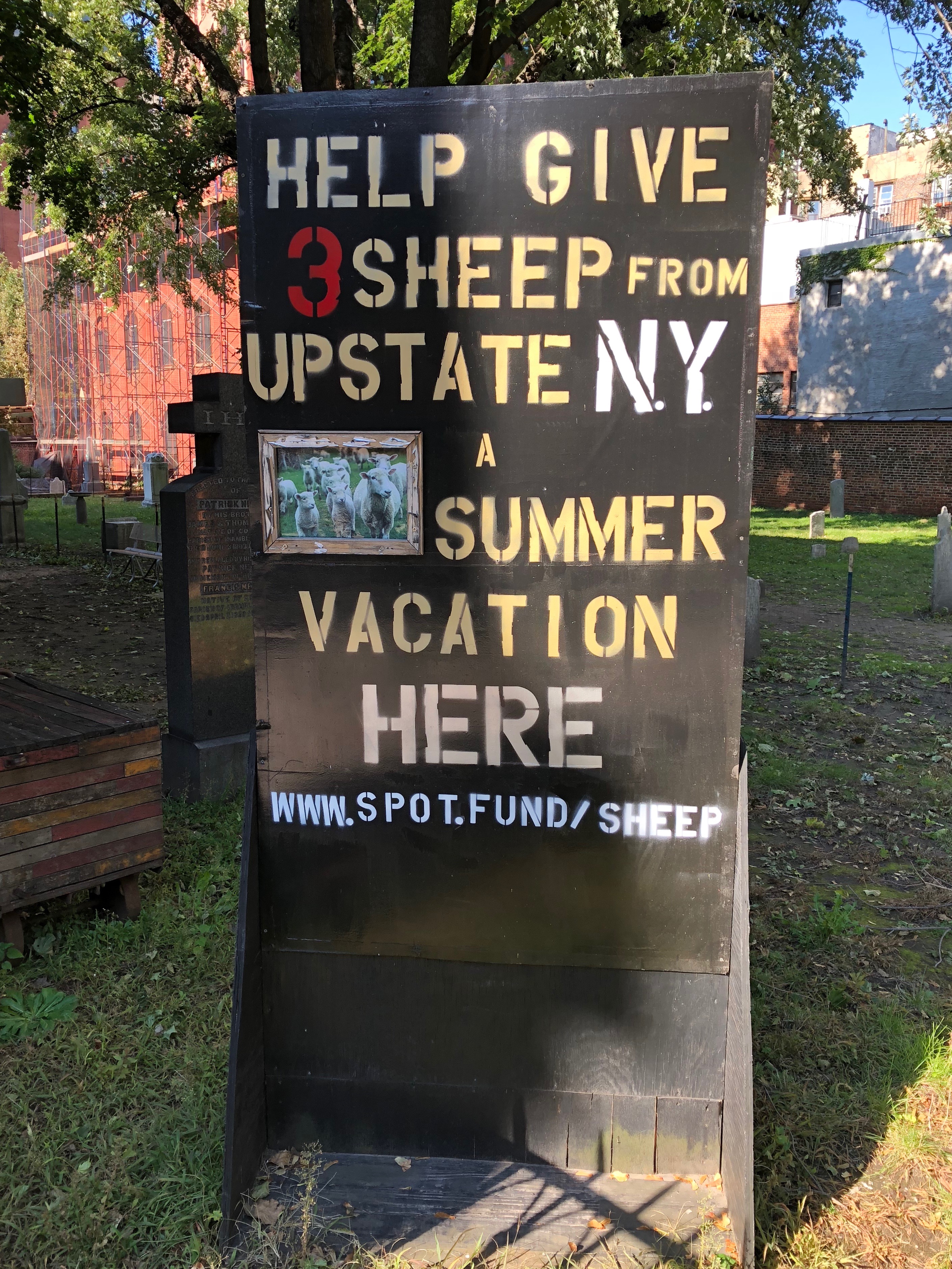
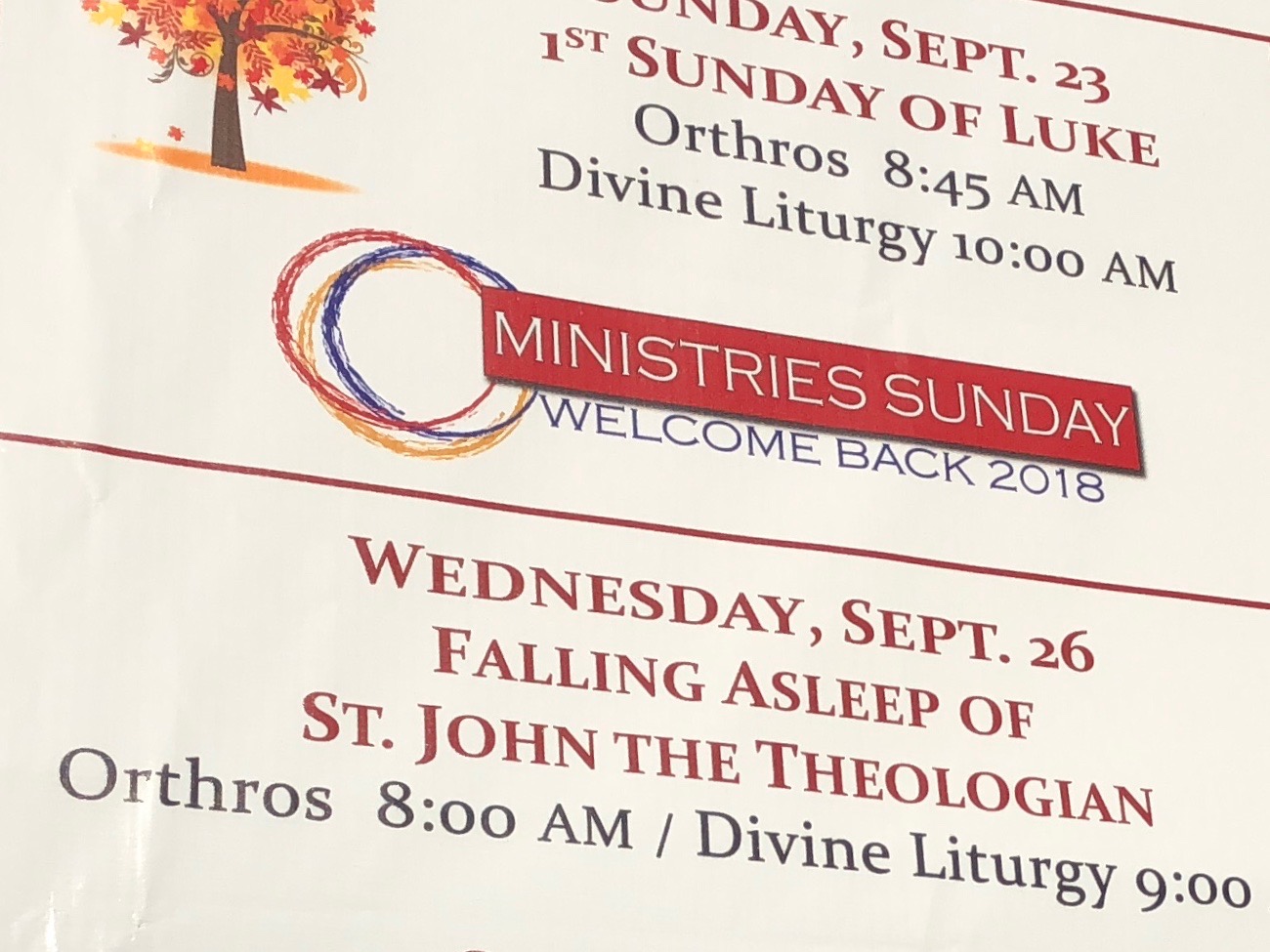
Next come two unusual church signs. The first is in the graveyard of the Basilica of St. Patrick on Prince Street. I’m guessing they wanted the sheep for mowing the grass. The second is from a Greek Orthodox church on West End Avenue that has a service called the Falling Asleep of St. John the Theologian.

Finally, someone’s tortoise is running like a hare from paparazzi.

That’s New York for you.

102318-mosaic-watching-film-making-

102318-mosaic-NYC-film-making

102318-mosaic-NY-city-scene

102318-mosaic-NYC-scene

102318-mosaic-man-sees-miracle

102318-MTA-New-Yearmosaic-

102318-St-Pat-Basilica-graveyard

IMG-0674

IMG-0689


Read Full Post »

screen-shot-2012-07-15-at-10-09-57-am

Photo: MTA Arts for Transit
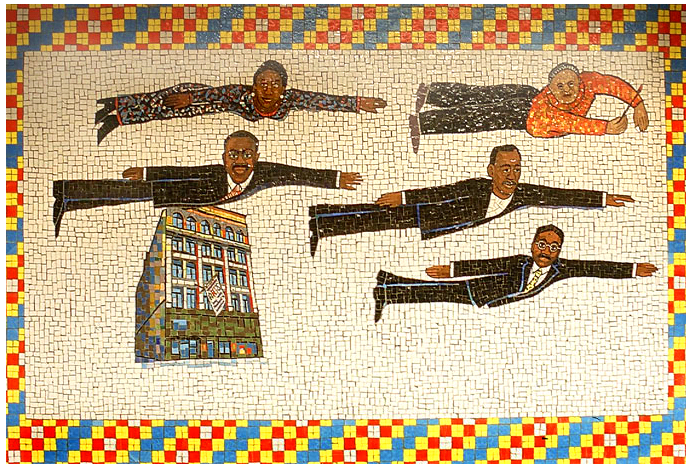
Faith Ringgold’s mosaic “Flying Home: Harlem Heroes and Heroines (Downtown and Uptown),” 1996, is one of the pieces of subway art featured in a PBS documentary.

I’m always amazed by the beauty of the mosaics in the New York subway, even the ones that merely tell you what street you’re at. It makes me happy to see that the city values them, too, and periodically cleans up the oldest ones. They go back as early as 1901.

My sister alerted me to an excellent PBS documentary about recent additions to the art in the subway system. You can read about it at the website Mosaic Art Now.

“For a delightful immersion into the history and current activities of the enormous underground museum that is the New York subway system’s Arts For Transit program, treat yourself to WNET Channel Thirteen’s free one hour video called ‘Treasures of New York: Art Underground.’ …

“Mosaic artist Steven Miotto gets major face time. His decades-long collaboration with artists of all stripes is a fascinating story in itself. When selected by a commissioned artist as a collaborating partner, he gets into their minds and hearts, leading them through the complex process of translating their vision and their graphic designs into mosaic ‘paintings for eternity.’ …

Faith Ringgold, speaks eloquently and nostalgically about the series of paintings – now mosaics – that portray the heroes of her Harlem childhood. Writers and musicians fly across the cityscape in flattened but vivid characterizations. I had the opportunity to interview her when she was in Miami last year, and she spoke about the challenges of trying to ‘make it’ as an African-American artist dealing with political themes at a time when the galleries favored the abstract.  Click here (http://bitly.com/yxGJ3R) to listen to that interview with her.”

See some of the beautiful new mosaics and watch the video here.

If you are up for more on transit-system art, be sure to check out an excellent article by Sarah Hotchkiss at KQED about what’s going on with San Francisco’s Transbay system, here.


Read Full Post »

The Sunnyside Social Club performs at the celebration for the completion of the Second Avenue Subway in Manhattan

Photo: Elizabeth Shafiroff/Reuters
The Sunnyside Social Club had to pass a rigorous audition process to get into the subway busker program in New York.

One of the few things I miss about commuting to a job is the daily possibility of great music in the subway. I would never know what I was going to get. Some performers were bad. Some were so fantastic I felt like letting a couple trains go by so I could listen.

The MBTA doesn’t require much more than signing up and paying a fee to be a busker, but in New York City, it’s a different story. You have to pass a tough audition.

Claire Bryan writes at CityLab, “Each year, hundreds of musicians vie to see their name not in lights, but in pink, on a banner indicating they’ve earned official status to perform in New York City’s subway stations. …

“By a March deadline this year, MTA MUSIC received 309 applications with audio samples and selected 82 finalists to audition. On May 15, the 31st annual auditions opened in Grand Central Station’s Vanderbilt Hall, a passageway from the station to 42nd Street. On that morning, the hall, with its 48-foot ceilings and five chandeliers, was filled with a myriad of musical scales: Behind a black felt curtain, cellos, French horns, a Kurdish hammered dulcimer guitar, and vocalists, were warming up. One of the finalists, the all-female a cappella group Mezzo, took to the stage.

“The women of Mezzo launched into ‘Dreams’ by The Cranberries. They had just five minutes to prove to the judges that they deserved the right to serenade people in the subways.

“Since 1985, the MTA Arts and Design program, of which MTA MUSIC is a part, vets musicians to find the best subway-appropriate performance groups to enhance New Yorkers’ commutes. MTA MUSIC Senior Manager Lydia Bradshaw says the judges look for quality, musical variety, cultural diversity, representation of the culture and people of New York, and appropriateness for the transit environment. …

” ‘The thing about it in the subway is you have no stage, you have no backline, you have no stagehands, you must just create the space right here,’ said Sean Grisson, a Cajun cellist who has been in the program since 1987 and a judge since 2013. For Grisson, whether or not performers are chosen comes down to if the performance is something that ‘you would want to pause and make you reflect as you go about your busy New York existence.’

“Once admitted to the program, musicians must call in and book slots. … Performers receive a personalized banner with their name and the MTA MUSIC bright magenta logo. Musician’s names and contact information also gets added to MTA MUSIC’s website — a feature that can help groups land events.

“But anyone can play in the subway as long as they follow MTA’s Transit Rules of Conduct. … MTA employees and music performance groups believe that registered groups deserve their spot. ‘One of the benefits of being in the program is sort of having that permission to book and be at more visible spots,’ Grisson said.

“Which doesn’t mean that non-sanctioned performers can’t play — they just aren’t afforded the security and institutional support MTA MUSIC performers receive. …

“MTA Press Officer Amanda Kwan said that if an MTA MUSIC group calls in, signs up, shows up, and there’s a non-MTA MUSIC group there, the issue is often resolved between the musicians. …

“Grissom, the judge who has also been performing in the subways since 1983, said the competition to enter the program is challenging and he has come to appreciate the MTA MUSIC program much more.

“But he adds: ‘I’ve never had issues [with the authorities] believe it or not. I always feel that street performing or subway performing is kind of Darwinism at its best.’ Grissom said.”

More.

Read Full Post »

Photo: beniculturali.gov.it
The newly discovered “commander’s house” was found while digging Rome’s Metro C subway line. It dates back to the 2nd century.

Nowadays, archaeologists get involved at construction sites early, especially if there’s a suspicion of buried culture deep down. It must be frustrating for builders to delay a project when something of historical significance is unearthed, but I like to think that some builders (or perhaps some low-level workers) find it exciting to be part of history. I like to imagine that once in a while an inspired worker goes back to school and becomes an archaeologist.

In Rome, a subway project first revealed unexpected treasure in 2016. Elena Goukassian has a report at Hyperallergic.

“In the summer of 2016, while digging the new Metro C subway line in Rome, workers came across a rare archeological find, a 2nd-century CE Roman barracks. [More recently] archeologists uncovered the remains of a ‘commander’s house’ (domus) connected to the barracks, ‘the first discovery of its kind in the Italian capital,’ according to the Agenzia Nazionale Stampa Associata (ANSA).

“Complete with marble floors, mosaics, and frescoes, the Hadrian-era house was found [roughly 39 feet] under the Amba Aradam station, close to the Basilica of San Giovanni Laterano. …

“Measuring 300 square meters (~3,200 square feet), the house contains 14 separate rooms, including a ‘bathhouse with underfloor heating.’

“The house will be dismantled piece by piece and temporarily moved, before returning to its original location and incorporated into the new metro station, which ‘will surely become the most beautiful metro station in the world,” [the head of Rome’s monuments authority, Francesco Prosperetti] told reporters.”

Great pictures at Hyperallergic, here.

Who wouldn’t love the mosaic owl discovered under a subway line in Italy?

Read Full Post »

Laura Bliss at the Atlantic‘s City Lab has a story on young people you may have seen performing in a New York subway car. She reports that in the film We Live This, the teens’ hopes seem hemmed in by poverty.

“ ‘Showtime’ dancing is a hallmark of the New York City transit scene,” writes Bliss. “Hoping for donations, crews of young black and Latino men perform exuberant choreographies for subway passengers, twisting and leaping from pole to pole with artful ‘lite-feet‘ dancing in between—and never before shouting, ‘It’s showtime!’

“Who are these dancers scraping by on their earnings? A new, short cinéma vérité documentary, We Live This, shines a light on the world of one crew, whose four young members perform on the J train. They are talented, hardworking, committed, and full of dreams, the film shows. But for some, the obstacles are high, and the alternatives slim. …

“Forty, is homeless.

‘As I’m dancing on the train, I’m thinking about where am I sleeping at night,’ he says. ‘Who should I call? Who is going to pick up? What if they don’t answer?’

“Showtime is the best way he he knows to a better life, a way into a community, he says. …

“Of course, the subway is no simple launchpad to success. While some passengers love the dancing, many others avoid eye contact, and some even yell at crews to switch cars. …

“ ‘I hope people will watch this and look at these young men as human beings,’ the film’s director, James Burns, tells CityLab. ‘And see the last vestiges of a culture that may be dying out.’ ”

More.

WE LIVE THIS – OFFICIAL TRAILER from HAYDEN 5 on Vimeo.

Read Full Post »

Nate Homan recently wrote a good human-interest story for the free subway newspaper, Metro. It’s about one of Boston’s subway musicians, a blind woman.

Michelle Abadia sits at Harvard Station early each morning that her T performer permit allows, strumming her guitar and singing to an audience she cannot see.

“ ‘Music was my passion from an early age. I don’t have a memory without it,’ Abadia said. ‘I am told that I was helping tune the piano when I was three.’ …

“She lost her sight to congenital cataracts at the age of 4 after six unsuccessful eye surgeries. She has started a GoFundMe page hoping to earn $20,000 to fund her musical career and to help pay for medical bills. …

“She earned a double degree in language studies and music in Boston College, and went on to earn a master’s in French literature and International Latin American Studies from Tufts. After that, she earned New England Conservatory master’s for vocal performances.

“Now she is trying to earn a living as a musician, after teaching Spanish at several colleges in the area and working as an interpreter in courtrooms.

“ ‘The commuters are half asleep, and I don’t know how effective I can be in brightening their days, but some people say the I do,’ Abadia said. …

“ ‘For anyone who is blind wants to be a musician, or anything, I would tell them to follow their dreams,’ Abadia said.”

More here.

Photo: Metro.us

Read Full Post »

I’m leaving a job that has been a great fit for me and starting at another organization. Although I’m really looking forward to new experiences after 10 years, there are a few things I’m likely to miss …

an unusual number of really nice co-workers, the building’s art collection and landscaping, subway musicians, the weary dignity of homeward-bound commuters, sunrise over Boston Harbor, Styrofoam sheep floating in Fort Point Channel, a vast array of food trucks, the farmers market, the Rose Fitzgerald Kennedy Greenway, conversations on the commuter rail, the conductor with the circus-announcer’s voice, a commute that allows me to read …

and this view.

120315-sky-over-boston-harbor

Read Full Post »

Older Posts »