Feeds:
Posts
Comments

Posts Tagged ‘sweden’


I enjoyed an upscale pre-auction showing of art and antiques with Stuga 40 on my recent trip. Next time I may need to check out an unusual shopping mall dedicated to recycled items. Steve Ghent wrote about it at Good News Network.

“A new generation of recycling has now gone from local drop-off centers to a shopping mall that sells only repaired or upcycled products. …

“ReTuna Återbruksgalleria … contains both a recycling center and a shopping mall. Customers can donate the items that they no longer need, then shop for something new – all in one stop.

“Dropped off goods are sorted into various workshops where they are refurbished or repaired accordingly. Products are then sorted into 14 specialty shops that include furniture, computers, audio equipment, clothes, toys, bikes, and gardening and building materials; all garnered from second-hand products. …

“The center, which is operated by the local municipality, has benefited the local economy by creating 50 new repair and retail jobs, and providing space for private start-ups and local artisans.

“The biggest bonus for the Swedish community is how the center relieves local government from the tremendous burden and expense of disposing of unwanted goods while turning potential ‘waste’ into profits.” More at Good New Network, here. Environmentalist Brad Zarnett posted the link on twitter.

By the way, if you are a big fan of recycling, be sure to check out the WordPress blog Things I Find in the Garbage, which is written by a Canadian who makes a living from things people throw out.

In his regular posts, he describes what he finds, what he usually gets for such items, where he sells them, and any little interactions with people who see him digging through their trash. He also offers resources like “How to Spot Bedbug Infested Garbage.”

Read Full Post »

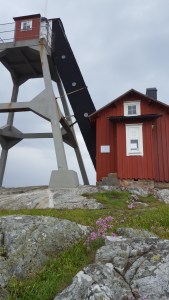
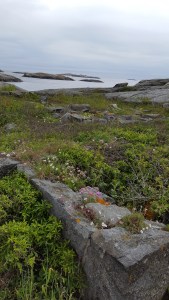
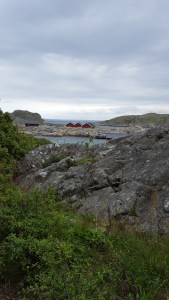
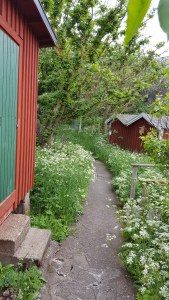
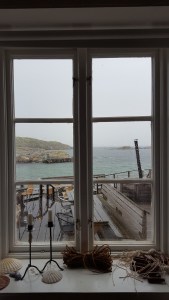
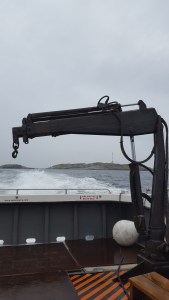
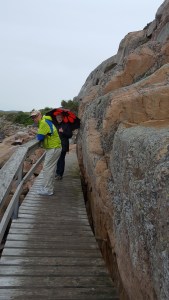
On Sunday we took a boat ride to the Weather Islands in Sweden’s western archipelago, Väderöarna. The drizzle didn’t stop us from enjoying a walk around and eating very fresh cod for lunch. Stuga 40 took all of the pictures seen here but the wooden sign.

We will be thinking about these views as we fly west over the Atlantic.

060417-Väderöarna-lookout


060417-Väderöarna-view-with-flowers


060417-Väderöarna-cabins


060417-Väderöarna-island-path


060417-Väderöarna-rainy-window


060417-Sweden-Väderöarna-message-to-sailors


060417-Väderöarna-wake


Read Full Post »

It’s going to be an adjustment, not just in terms of time zones. Monday we are off to Oslo and will catch our plane back to Boston from Norway on Tuesday.

Here are a few more Sweden pics.

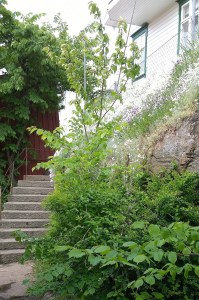
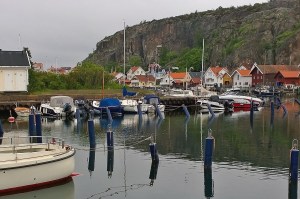
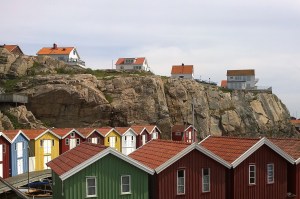
I love the picturesque seaside streets and cottages, the hidden staircases covered with flowers, the boats in snug harbors, the colorful cabins, and the views.

The last picture is one that Stuga 40 took at 10 p.m. Imagine how light it is in Sweden in June!

060317-seaside-cottages-Sweden


060317-hidden-staircase-Smogen


060317-harbor-Swedish-west-coast


060317-colorful-cabins-Smogen


060317-still-life-Veddo-Sweden

Read Full Post »

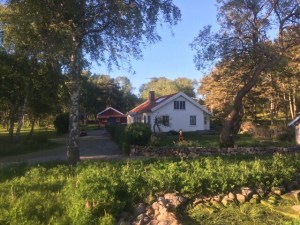
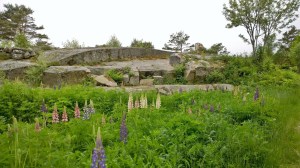
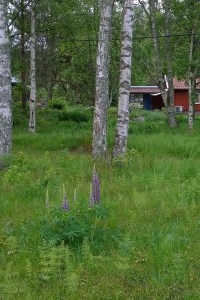
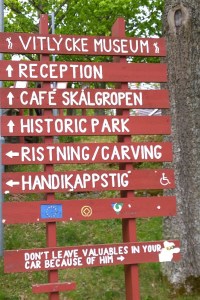
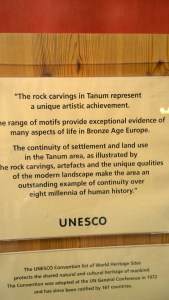
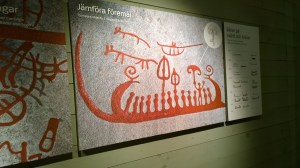
I love the family compound belonging to our hosts, with its birches, lupines, red cottages, and blue doors. Stuga 40 and I took photos there and at the nearby Vitlycke museum, a World Heritage site, where we saw ancient petroglyphs and a Bronze Age garden.

Near the garden were goats chewing their cud and two different kinds of shelters replicating life before 500 BC. It didn’t look luxurious. My photo of  Bronze Age instruments, below, is especially for Modern Age musician Will McC.

060217-staying-in-Sweden

060217-lupines-Veddo-Sweden


060217-birches-and-lupines

060217-hobbit-door-Sweden


060217-Vitlycke-Museum-Sweden

060217-about-the-rock-carvings


060217-petroglyphs-Tanum-Sweden

060217-Bronze-Age-instruments-Tanum-Sweden


060217-petroglyphs-in-museum

060217-petroglyphs-by-Stuga40-Sweden


060217-Bronze-Age-garden-Sweden


Read Full Post »

This morning Stuga 40 took us on a walk around breathtaking Veddö. I can take time now to give you only a few pictures as we are headed out again, but you may expect more photos in the days to come. Stuga 40 took the beautiful view of a red house with the harbor behind it.

060217-not-the-right-place-for-umbrellas

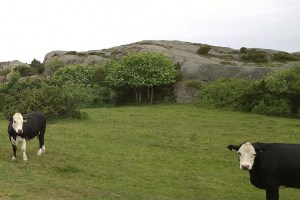
060217-cows-graze-Swedish-nature-preserve


060217-sheep-in-Sweden

060217-beautifulSwedish-west-coast


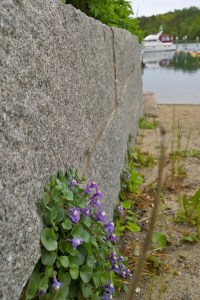
060217-flowers-beside-harbor-in-Sweden

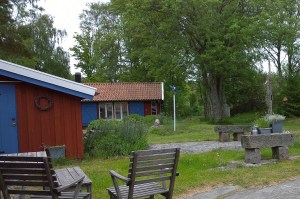
060217-guest-buildings-Sweden


060217-formerly-a-Swedish-farm

Read Full Post »

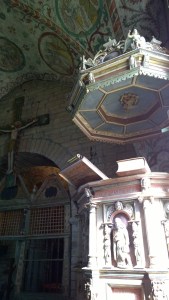
Stuga 40 followed an inspired impulse on our way to the Swedish west coast and took a detour to a historic church that she had never visited. Off in the open countryside, the Romanesque Husaby Kyrka was beautiful and serene. We felt like we were discovering it.

I am sharing a few photos, including one showing the tombstones of Queen Estrid and King Olof Skõtkonung, who was said to have been baptized at a nearby spring in 1008 by the English missionary Sigfrid. Olof was the first Christian monarch in Sweden.

060117-husaby-church-sweden.jpg

060117-husaby-church-11C-sweden


060117-husaby-church-window

060117-husaby-pulpit


060117-husaby-tombstones


Read Full Post »

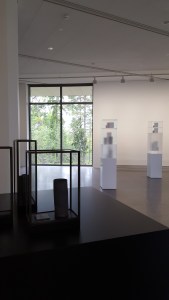
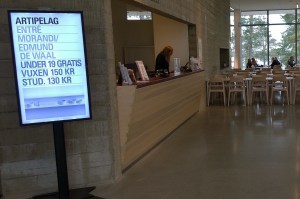
Tuesday we went to Artipelag, a pretty spectacular new museum in the archipelago on the east coast of Sweden. It was built by the founder of Baby Bjorn, with great attention to detail. We liked the wide windows that brought the outdoors in and the way that massive archipelago rocks were kept in place and worked into the design of the rooms.  Below you can see the rock wall in the bathroom, for example, and the rock in the lunchroom with its live candles marching along one edge.

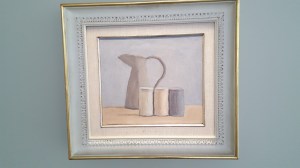
I took some of these pictures, and Stuga 40 took the rest. The current exhibit features the still life paintings of Giorgio Morandi (Italian, 1890-1964) and ceramic pieces made in admiring response by British potter and author Edmund de Waal. (Some people know the latter for the book The Hare with Amber Eyes, a memoir highlighting his family’s netsuke art.) I had not known about Morandi and found his simple, domestic shapes and shadows beautiful.

I should mention that the food at Artipelag was delicious. We had a smörgåsbord buffet, and Stuga 40 made sure we knew how to eat the dishes in the correct Swedish order. I have posted a picture of her friend Anna (in orange) discussing the art with me.

On less wet days, you can have a beautiful walk up and down the Artipelag grounds or tie up your boat at the museum’s dock and climb up for a picnic.

053017-Artipeleg-museum-Sweden

053017-rockc-wall-Artipelag-bathroom


053017-candles-and-native-rock-in-museum

053017-Morandi-at-Artipelag-Sweden


053017-Artipelag-Edmund-de-waal-show

053017-Anna-at-Artipelag-on-her-bday


Read Full Post »

Good morning.

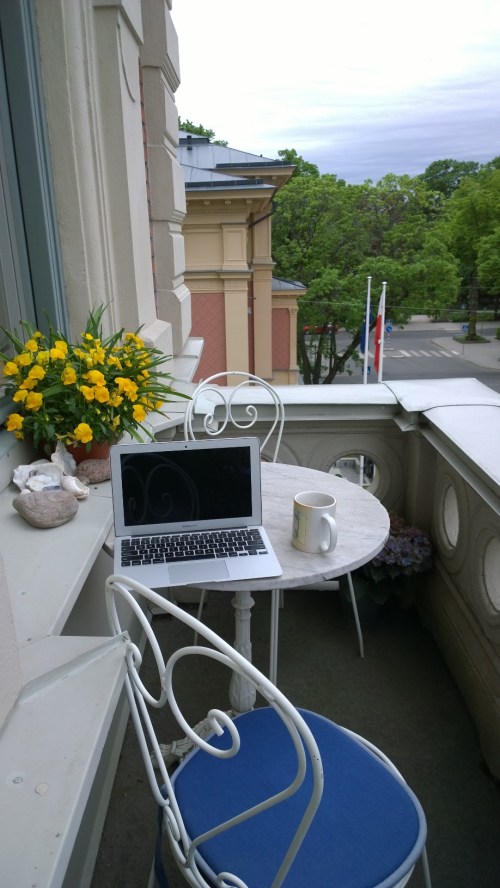
I’m watching Stockholm from the balcony. A garbage truck came for the trash cans behind the publishing house across the street. At 7, a young man on a bicycle took off his helmet and stowed his bike, came around the iron gate, and went into the front of the building.

People are running along the edge of the park. Soon parents will be rushing their toddlers to day care in the park. A blond woman is walking a small black dog with a curly tail past the Royal Swedish Academy of Letters, History, and Antiquities.

Spring was late here, so after we had enjoyed the tulips and daffodils and lilacs back home, we are getting to enjoy them again in Stockholm. A dad pulls down a branch of white lilacs and lifts his son to smell them.

From where I sit, I can see pink rhododendrons in the park, a red bus picking up passengers, and a man commuting by Segway.

Time to get a refill on tea.

053017-Stockholm-dream

Read Full Post »

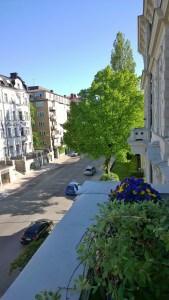
With the best Swedish tour guides imaginable, Erik’s folks, we saw many Stockholm highlights today, starting with a couple views from their balcony.

052817-view-of- Stockholm

052817-Stockholm-balcony


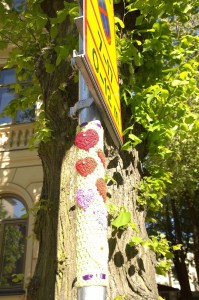
052717-knitting-on-sign-post

052817_6tag_Stockholm_chimneys


052817-Stockholm-from-a-hill

052817-Stockholm-cafe


052817-the-Baltic-Sea-Sweden


Read Full Post »

Off to Sweden!

Will blog if I can. Otherwise … see you June 7.

Read Full Post »

Photo: Graeme Richardson / Ice Music

And speaking of ice hotels, you might want to try an ice concert one of these days. That is, if you get yourself as far north as Swedish Lapland (also known as “the world’s best place for experiencing the Northern Lights“).

Tod Perry writes at Good that ice instruments have an ephemeral quality that is reminiscent of Buddhist mandelas.

“Tibetan Buddhists have a tradition of making elaborate artwork out of colored sand and, upon its completion, blowing it all into a river. The ritual is to show their belief in the transitory nature of life.

“On the other side of the world, a man [from Colorado who is working] in Sweden has created another form of temporary art by making music out of ice. Twenty years ago, Tim Linhart made his first ‘ICEstrument’ on a snowy mountaintop and his obsession led him to create an entire frozen orchestra and chamber hall.

“In Lulea, Sweden, [the ice sculptor] has made his own igloo concert hall where musicians perform with string and percussion instruments made of ice.

“One of the major problems with conducting an ice orchestra is that the instruments eventually fall out of tune due to body heat from the performers and audience. This has led Linhart to create a unique venting system in his ice theater that filters the body heat out of the igloo.

“Linhart’s ice instruments have a beautiful sound that play on our deep connection to water.

” ‘The ice instrument is made of frozen water, we’re made of melted water. And that physical connection opens the door for a spiritual connection,’ he says.”

Read more at Good, here.

Read Full Post »

Maria Popova at Brainpickings tweeted recently about artist Marina Abramović’s new production, “The Cleaner,” noting that it incorporated 40 Swedish choral groups. I couldn’t confirm that the choirs were 40 in number, but it looks like they were diverse.

At Deutsche Welle, Julia Hitz reports on her March 2017 visit to “The Cleaner.”

“Visitors had to leave all their personal belongings at the entrance and were allowed to stay as long as they wanted, becoming part of the performance. In fact, they were the actual performance. …

“Choirs and soloists are part of the performance. A group of professional singers connects the different choirs performing one after the other, resulting in a continuous, eight-hour-long musical performance.

” ‘They’re really a reflection of Sweden, like a small Stockholm: There are choirs of immigrants, such as the Iraqi Women’s Choir or the Bulgarian Choir, as well as traditional Swedish men choirs and church choirs, singing classical songs. Some solo musicians are also part of the performance,’ explains Catrin Lundqvist from Moderna Museet, who picked the choirs with Abramović and choreographer Lynsey Peisinger in a months-long process [that also involved] finding the 29 performers who are accompanying and guiding spectators through …

” ‘The Cleaner’ [was] performed daily at the Eric Ericson Hall in Stockholm through March 5, 2017. [Re-performances] of Abramović’s works are held through May 21, 2017. The retrospective will travel to Denmark and then to the Bundeskunsthalle Bonn in Germany next year, from April 20 – August 12, 2018.”

Some critics have called Marina Abramović too egocentric — for example, in the recent MoMA performance that had museum goers lining up for hours to sit and gaze into her eyes. But Maria Popova read her autobiography and feels sympathy for the traumatic childhood that shaped the artist. Popova posts this quote from the book:
‘When one of my baby teeth fell out and the bleeding wouldn’t stop, everyone thought I might have hemophilia so I was put in the hospital for a year. That was the happiest, most wonderful time of my life. Everybody was taking care of me and nobody was punishing me. I never felt at home in my own home and I never feel at home anywhere.’

Read about the Swedish performance of “The Cleaners” here and about Maria Popova’s take on the artist here.

Photo: Moderna Museet/Åsa Lundén
Marina Abramović’s “The Cleaner” performed in Stockholm.

Read Full Post »

Photo: SWNS
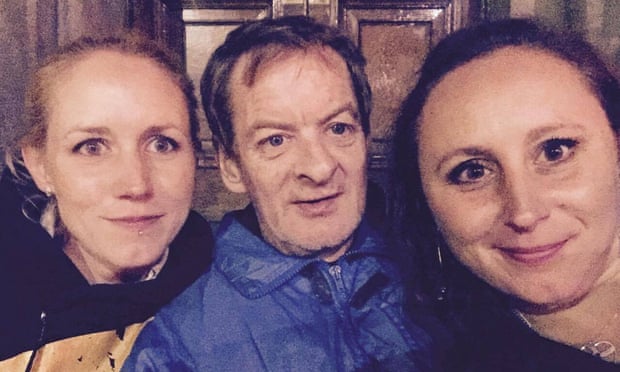
Annis Lindkvist, right, and her younger sister, Emma Åhlström, with Jimmy Fraser, a homeless Scot they invited for Christmas in Sweden. 

I have never been sure how to react to someone who is homeless, but I have learned smiling is better than walking past, head down.

Mother Teresa said to smile. A woman who runs an excellent Rhode Island homeless agency told me she doesn’t give anyone money but talks to people and tries to see if she can help with a referral or something to eat. A formerly homeless veteran told me he always talks to veterans and tells them where to find veterans services. Once he took in a stranger overnight. Some people will buy a sandwich or a cup of coffee.

Last week as I was talking to an employee of a refugee agency, I became curious about how he was led to his current work. He said, “One day I stopped walking past people.”

He didn’t initially look for refugee work, but he landed there after launching his personal outreach to homeless people and a subsequent stint in Americorps. He used to talk to people on the New York City streets, asked what they needed and delivered food, socks, and as many of their needs as he could.

So many good people out there showing kindness one person at a time!

This Guardian story about a Swedish tourist in Scotland who not only befriended a homeless man but invited him for Christmas with her family (and sent him airfare) is really over the top.

Libby Brooks writes, “A homeless man from Edinburgh has described the ‘incredible act of kindness’ of a tourist who invited him to spend Christmas at her family home in Sweden.

“Jimmy Fraser was begging on George Street in the city centre when Annis Lindkvist and her sister Emma, from Sagmyra in central Sweden, asked him for directions.

“They struck up a friendship and swapped numbers at the end of the trip, staying in touch by text before Lindkvist offered to pay for his flights so he could spend a week with her family over the festive period.

“Fraser, who became homeless following his divorce 13 years ago, said: ‘It’s weird, I know. I was begging on George Street and these two women came up to me and the next thing I knew I was in Sweden. People promise you things all the time on the street but they never materialise.

” ‘But I thought I’m going to go for it as it’s once in a lifetime. I couldn’t believe it anyway at first. People tell you “see you tomorrow, I’ll get you a drink” and then nothing happens. But this did happen, actually, so it was really weird.’

“The 54-year-old former security guard, who went to an ice hockey match, Christmas markets and midnight mass with his host’s family and friends, told the BBC News website: ‘It was a beautiful experience.’ …

“Lindkvist described her own doubts about issuing such an open invitation to a stranger. ‘We give money to charity every month but we have never done anything like this before,’ she said. ‘There were friends and family who thought I was really crazy, but I just opened my home to him and said everything that is ours was his too.’

“The 37-year-old, who works with dementia sufferers, said she had invited Fraser back to stay with the family again over the Easter break, and that he was ‘part of the family now.’ ”

More here.

Read Full Post »

My latest photo round-up includes several from family members plus examples of my own fascination with shadows and light.

The first picture is from Erik’s mother in Sweden. I love that a Swedish gingerbread house was rendered in red board-and-batten style. Next is a funny sign about Norwegians that my husband shot in Concord. Then we have Suzanne’s photo of proto-skiers and another funny sign, this time in Vermont.

The old barn is next to the Ralph Waldo Emerson homestead. The house being torn down is the haunted one I have described before. Tearing it down revealed that it was actually haunted by a raccoon.

The six light-and-shadow photos depict a stuffed animal in bright sunlight, our front gate after a recent storm, Plato’s Idea/Form of a trash can and recycling bin, three green windows, chairs in the pocket park, and a surprising pattern of light on a window blind.

https://suzannesmomsblog.com/wp-content/uploads/2017/01/122516-swedish-gingerbread-house.jpg

011217-humorous-sign-about-Norwegians


https://suzannesmomsblog.com/wp-content/uploads/2017/01/122816-grandkids-in-vermont.jpg

122716-stowe-penquin-safety-tips


122916-barn-at-rw-emerson-house

122816-concord-demolition


010817-sunlight-on-stuffed-cat

010817-sunlight-on-snowy-walk


011617-shadow-recycling-bins

011516-three-green-shadows


011617-shadow-chairs-in-pocket-park

011617-light-on-window-shade


Read Full Post »

This year, I’ve been volunteering with refugee organizations — four altogether — and am always grateful for positive stories about this population. Here’s a story from Sweden.

Bridie Witton writes at the UK’s Independent, “Immigration has helped fuel Sweden’s biggest economic boom in five years, new figures have revealed.

“The Swedish government, whose policies saw the country take in more refugees per capita than any other in Europe last year, helped lower unemployment rates by increased spending on welfare for asylum seekers from war torn countries like Syria, Afghanistan and Iraq.

“The move helped the Nordic region’s largest economy expand 4.5 percent on an annual basis in the fourth quarter of 2015, the most in almost five years and more than twice the growth of Germany, according to Bloomberg. Increased consumer spending and borrowing and high house prices also contributed to the boom which, although projected to fade, has consolidated Sweden as one of Europe’s success stories.

“National Institute of Economic and Social Research fellow Jonathan Portes said economies benefitted from more workers, but emphasised the difference between immigrants and refugees.

” ‘What the Swedish experience tells us is that even in the short term, even when you have a very large influx of refugees, there is a perception this is an impossible burden on the state,’ he told The Independent. ‘But in the short term it increases growth.’

“He said the Swedish government needed to have a long-term strategy to successfully integrate refugees and continue the growth.”

Careful planning is needed, for sure, but history shows that an influx of workers with needed skills helps countries grow.

More at the Independent, here.

Photo: Getty
Sweden took in more refugees per capita than any other country in Europe in 2015.

Read Full Post »

« Newer Posts - Older Posts »