Feeds:
Posts
Comments

Posts Tagged ‘texas’

Photo: Hyla Skoptiz.
The spiral bronze sculptures of Nasher prize-winning Kosovar artist Petrit Halilaj draw inspiration from doodles he saw carved into desks of primary schools across the Balkans. 

Today’s story is about more than an art prize, although that is important in itself. It’s about people uniting against the bad things that happen in the world.

In one instance, the article notes how people came together after ancient Balkan hatreds burned up props for a Kosovo opera. In another we see how funders, sometimes folks under the radar like us, are rising up to protect the independent journalism exemplified by the story itself.

But let’s start with the prize. From Uwa Ede-Osifo at the Dallas Morning News (via KERA in North Texas), we learn about the most recent recipient of an award for excellence in contemporary sculpture.

“Kosovar artist Petrit Halilaj, whose work often contrasts the innocence of youth with the sober realities of war, has been named the winner of the 2027 Nasher Prize.

“At 39, Halilaj is the youngest recipient of the award, according to [an] announcement from the Nasher Sculpture Center.

“In a phone call from his Berlin home, Halilaj said history molds his art. He came of age in Kosovo in the 1990s amid a bloody conflict between ethnic Albanians and Serbians. He was 13 when he and his family, who are Albanian, had their house burned down by Serbian forces.

Later, at a refugee camp, a psychologist encouraged Halilaj to draw his fears and dreams.

“The drawings, among which Halilaj depicted vibrant birds and trees (suggesting a utopia of sorts), would inspire a 2021 exhibition at the Tate St. Ives in England. ‘Whatever we live [through], it makes [us] who we are,’ he said. …

“Other works by Halilaj that recall history and childhood include a series of bronze sculptures based on scribbles found on generations of school children’s desks in the Balkans. These sculptures were shown in 2024 on the roof of the Metropolitan Museum of Art in New York.

“Most recently, Halilaj staged Syrigana, an interdisciplinary opera based on a local legend, in the namesake Kosovar village.

“He learned of his Nasher win shortly after the opera’s June debut. It was a hectic time. A few days before the premiere, several props — ‘months and months of work and preparation’ he said — were set ablaze. They had been stored in locked containers.

“The culprit was not found, but Halilaj suspected the fire was related to Kosovo’s history of ethnic tensions. Still, he was undeterred and rallied a fleet of artists to re-create the destroyed materials. The collective dream we have to bring culture back,’ he said, is ‘way bigger than this attack.’

“Halilaj sees the Nasher Prize as supporting this dream. He plans to use the prize money — $100,000 — to support the Hajde! Foundation, a nonprofit he founded with his sister in 2014 to promote the arts in Kosovo. The organization has provided artists with spaces to present their work and revitalized cultural institutions that fell into disrepair amid the conflict.

“In partnership with Kosovo’s Ministry of Culture, Hajde! has mounted a restoration of an arts center in Halilaj’s hometown. Called the House of Culture, it was a beacon for artists until its closure around the late ‘80s. Halilaj estimates it will reopen in 2027. … Halilaj [wants] to invite both ethnic Albanians and Serbians as well as minority groups into the space.

“Halilaj’s art offers hope, said Carlos Basualdo, director of the Nasher Sculpture Center. ‘Works like this tell you about what art can do,’ Basualdo said, noting it can bring people together.

“In the decade since the Nasher Prize was established, it has become one of the art world’s most prestigious honors. Recent laureates have hailed from countries around the world, including Nigeria (Otobong Nkanga), the U.S. (Senga Nengudi) and Iran (Nairy Baghramian). Winners are selected by a jury of museum directors, curators, art historians and artists. …

“The prize began as an annual award in 2015 before switching to a biennial basis in 2023 to allow recipients more time to collaborate with the museumPlans for programming around Halilaj’s work in 2027 will be announced.” More here.

I don’t usually include all the funders of an article, but today I’m feeling I really want to thank to anyone who contributes to the cost of independent journalism:

“Arts Access is an arts journalism collaboration powered by The Dallas Morning News and KERA. This community-funded journalism initiative is funded by the Better Together Fund, Carol & Don Glendenning, City of Dallas OAC, The University of Texas at Dallas, Communities Foundation of Texas, The Dallas Foundation, Eugene McDermott Foundation, James & Gayle Halperin Foundation, Jennifer & Peter Altabef and The Meadows Foundation. The News and KERA retain full editorial control of Arts Access’ journalism.

Read Full Post »

Photo: Peter Quadrino.
A Texas club has been reading
Finnegans Wake for 12 years. And making progress.

I have a bunch of reactions to today’s story about a book group reading the same James Joyce novel for 12 years and still going. One is that I would have benefited from reading Finnegans Wake with others because there was so much I didn’t understand. Another is that my stereotype about Texans needs constant correction: of course, there are people in Texas who tackle literature!

Sean Saldana wrote about this book club at Texas Standard, which I follow on Mastodon.

“In 1939, Irish author James Joyce published Finnegans Wake, a piece of literature that defies comprehension. 

“ ‘riverrun, past Eve and Adam’s,’ it begins, ‘from swerve of shore to bend of bay, brings us by a commodius vicus of recirculation back to Howth Castle and Environs.’ 

“The book starts and ends with a sentence fragment, combines multiple languages and has no clear or linear plot. It’s a work that’s so dense, one group that started in Austin has been working on it for more than a decade.

“ ‘We’re only reading one page at a time,’ said Peter Quadrino, founder and organizer of the Finnegans Wake Reading Group of Austin, TX.

“Every other week, Quadrino hosts a Zoom call where people from around the world gather and attempt to understand one of the most infamous books in English literature.

“The group spends the first 15 minutes of each meeting socializing. Then they all go around in a circle and each person reads two lines until they’re done with that week’s page.

“After that, they spend about an hour and a half researching, annotating and trying to make sense of Joyce’s experimental prose.

“ ‘We used to read two pages per meeting,’ said Quadrino. ‘Then at a certain point there was just so much going on in the pages and so much in the discussion that we had to lower it to one page per meeting.’ …

“The book’s complexity has made it a point of fascination for literary enthusiasts in the eight decades since it was first published. Houston, New York, Boston, Seattle, Dublin, Kyiv and many other cities around the world host groups dedicated to reading and analyzing Finnegans Wake. …

“ ‘I never really consider what it’s going to be like when we finish because I don’t want it to end,’ explained Quadrino, ‘and if we do finish we’ll just circle right back to the beginning and keep reading.’ ” More at Texas Standard, here.

Would you want to join a book group like that? I have heard of similar ones. Humans just don’t want to be defeated by complexity. The Athenaeum in Boston reads Proust’s Remembrance of Things Past over and over, too.

Read Full Post »

Photo: va.gov.
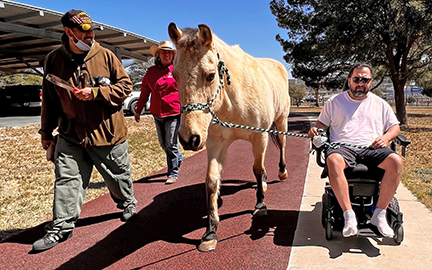
Army Veteran Carlos Longoria takes a trip on the track with Biscuit.

Whenever it gets close to Veterans Day, I start seeing stories about therapy for traumatized veterans. We know that, inevitably, some of the young people we send off to war will come back in bad shape. And unfortunately, our government spends a lot more on sending them off than on what they may need when they get back.

Often it’s civilian nonprofits that step up, like an arts group in Asheville, North Carolina, that offered supportive pottery classes to vets — that is, before Hurricane Helene. (Click here.)

Today’s article by Jason Kucera describes an ongoing Veterans Administration (VA) initiative.

“Mankind and horses have carried on beneficial, strong relationships with one relying on the speed, endurance, and raw power while the other affection and care. For a US Marine Corps Veteran such as Kody Wall, this special bond saved his life.

“ ‘I moved home to Montgomery (Texas) after my time as a Marine and very little went well. I had a really hard time adapting, so it wasn’t long until I was divorced and sleeping on an air mattress at my sister’s house,’ Wall said.

“During this time, he said he was battling suicidal thoughts, wanting to just ‘give up.’ Though he had been getting his routine care at a Houston VA outpatient clinic, he did not feel comfortable going into an office or trying to work through appointments over the phone. While hopelessness set in, the darkness would soon clear thanks to a unique therapeutic approach focused on his relationship with a horse.

“ ‘My sister pushed me to visit Sunny Creek Ranch as she knew how much I enjoyed being around horses. It was the best thing that could’ve happened for me,’ said Wall. ‘I’ve been attending sessions since 2016 and spend any extra time I have to help.’ He also shares his own experiences with other Veterans attending sessions, which can really help to open them up. 

“Sunny Creek Ranch hosts an intensive equine-assisted therapy Eagala-certified program in this heavily forested, southeast Texas town, just about an hour north of Houston. Launched by Shannon Novak, an Air Force Veteran spouse, the ranch is a partner of Houston VA. …

“She added that for a lot of Veterans and their family members that participate, they find the relationship with these horses to be similar to that of their own personal relationships. ‘Horses are so intuitive, they know everything about you, and they never forget you.’ …

“Houston VA recently began referring Veterans to equine therapy and plans to ramp up referrals to other holistic therapy approaches in the future. ‘Evidence-based talk psychotherapies for trauma are effective, but we know not every Veteran wants to address their trauma by sitting down in an office or virtual appointment with VA,’ said Dr. Shannon Sisco, whole health coordinator at the Houston VA. …

“Wall said working with the horses in equine therapy has helped him learn to communicate more openly with his young son, resulting in a better and more trusting relationship.

“ ‘The challenge in equine therapy is to develop a trusting relationship with your horse, which in many ways brings out lessons about our own relationships and helps us learn new ways of being in them,’ Sisco said.  

“Veterans do not need experience working with horses to participate in the therapy. They will not actually be riding horses, just interacting with them alongside a professionally licensed therapist. ‘The difference between connecting with horses versus people is that it all depends on your actions rather than your words,’ Sisco said. ‘They are watching what you do and listening to your tone. If you’re not earning their trust, they’re going to let you know.’ … 

“Veterans can choose to participate in individual equine therapy sessions, along with immediate family members, or in small groups with other Veterans.  For more information or to request a referral for equine therapy or any of the VA’s Whole Health programs.”

Although this story focused on Texas, there are similar VA programs around the country. Search here on “horses.” More on today’s feature, here.

Read Full Post »

Photo: Paula Levihn-Coon/Texas Observer.
Volunteers look at a photo on David Cook’s camera to see the insect he captured.

Because I follow Alex Wild, curator of entomology at the University of Texas at Austin, on Mastodon, I learn more about bugs and Texas than I ever expected to know. Both Texas and bugs turn out to be pretty interesting.

Kit O’Connell has an article at the Texas Observer about an Austin nature preserve that is a good place for most bugs (maybe not yellowjackets).

“The prey is already dying when the hunters arrive. The sky is dark gray, the air thick with the threat of rain. But that hasn’t stopped over a dozen from gathering. They’re mostly, but not exclusively, older folks — frequently retirees with the ability to take a weekday morning off — and they’re armed with Digital SLR cameras and macro lenses.

“Valerie Bugh [I hope her name is not pronounced bug] crouches down over the squirming spots on the stone of the shady courtyard entrance to the Lady Bird Johnson Wildflower Center, prodding at the poisoned insects. Bugh, a gray-haired local naturalist, isn’t responsible for the state of these southern yellowjackets (Vespula squamosa), but she’ll take advantage of it for a photo opportunity. Someone on staff at the center discovered their nest and sprayed them just before the bug hunters arrived, and the entire hive is trickling out from their hidden home in a low rock wall. …

“ ‘I’m trying to find one that doesn’t look dead,’ she said. Soon, she’d even manage to document the hive’s queen as it haplessly tried to flee the toxins — a rare catch, though a grim beginning for a weekly ritual that largely focuses on the living. 

“Bugh is the author of 10 short fold-out pamphlets with color photos, with titles like Spiders of Texas: A Guide to Common and Notable Species and Unusual Insects of Texas: Caddisflies, Mantides, Lacewings, Walking Sticks, & More. That’s just one of her jobs: She’s also second clarinet in the Austin Opera. …

“Every Thursday morning from February through mid-December, Bugh and her team of volunteers in the Lady Bird Johnson Wildflower Center Fauna Project explore a winding path, gradually aiming to cover the entire grounds over the course of a year, in order to inspect more than 650 species of native plants in the gardens and the 50-plus species of oaks in the Texas Arboretum for their occupants. 

“With this diversity of native plants comes a diversity in insect population too. … [Since 2010] she’s identified almost 3,000 species of insect including over 50 bees, 345 flies, and over 500 different beetles. It’s not unusual to find a new species to add to the garden’s known tiny inhabitant list every week. 

“As Bugh gets moving, other bug hunters follow her in a pack. One by one and in pairs they break off. … The group also documents signs of larger animals, from mammals to amphibians, but their main focus is on these tiny crawling creatures, since bugs are the most plentiful fauna present both in this garden and worldwide. 

“The bug hunters move in a little cluster, calling out when they find something new for Bugh to examine. The salt marsh moth (Estigmene acrea) caterpillars are everywhere.

“ ‘If it’s a salt marsh, I don’t want to know about it,’ declares Bugh dismissively, though with good humor. Their hairy bodies remind me of an asp, the caterpillar with a nasty sting. But they’re actually harmless to the touch. Bugh is just frustrated because there are too many of them. Unlike other caterpillars, the salt marsh moths will eat almost any plant, building its hairy cocoons all over. ‘Every single plant is their host,’ Bugh said. …

“As she moves around, her tone becomes more of a graduate lecture in entomology, no doubt similar to the insect walks she sometimes leads around Austin. Her volunteers are here to hone their skills at macro photography, to learn from a preeminent local expert, and to expand their naturalist knowledge. Many are members of the Texas Master Naturalist program. …

“ ‘It’s an insect safari,’ said volunteer Katherine Baker, who told me she relished the challenge of macro photography after over a decade of experience in more general nature photography. She’s been helping count the fauna for about four years now, and always feels among kindred spirits here. But they all orbit around Valerie, returning to her for advice or an ID after wandering off.

“ ‘Her knowledge surpasses everyone … she’s just amazing,’ Baker said of Bugh. 

“The gray morning clouds are starting to burn off. As it warms up, the butterflies and others will begin to emerge from the foliage where they’re resting during the rainy, humid part of the day. 

“ ‘Aha, here’s where the bumblebees are,’ Bugh declares with delight as some are pointed out to her. ‘These are workers and look how docile they are, they’re barely moving.’ …

“On the day we visited, the team spotted seven different kinds of grasshoppers, two types of katydids and one cricket. Hunters often spot the American bumblebee, Bombus pensylvanicus, which is thriving in Central Texas even as its numbers dwindle elsewhere. But lately, its Sonoran cousin (Bombus sonorus) has been showing up more and more in the bug counts. 

“ ‘That doesn’t bode well for desertification,’ Bugh told me. ‘We’ve had a lot of Western species moving in, birds too, which means the habitat is great for them and a little drier than we’re used to for everyone else.’ …

“ ‘The ecosystems are moving east, including tornado alley. It’s not great for the people in the way, and not great for us on the edge of deserts. Think of Austin without any trees. I really like trees,’ Bugh says wistfully.”

More at the Texas Observer, here. The author can be found @oconnell on Mastodon.

Read Full Post »

Photo: Mary McCoy.
Mary McCoy, the longest-serving female radio DJ on the globe, according to Guinness World Records, has no interest in retirement. 

If you are lucky enough to have a job that lights up your life, why would you ever retire? That’s the thinking of the woman featured in today’s story.

Ramon Antonio Vargas reports at the Guardian, “Mary McCoy has broken her neck, had multiple bouts with Covid-19 and grieved the deaths of two husbands. But none of that could get the 85-year-old off the airwaves she has been on for more than 70 years. The transition from vinyl to purely digital control panels was no match either.

“ ‘I have seen it all,’ the radio presenter from Texas told the Guardian, weeks before the end of her 72nd year in her role. ‘And you know what? I don’t plan on stopping anytime soon.’

Guinness World Records has confirmed McCoy as the longest-serving female radio disc jockey. She passed Maruja Venegas Salinas of Peru, who died in 2015 during her 70th year as a host.

“Such recognition has given McCoy and her loved ones the occasion to reflect on a remarkable journey. It began with a childhood dream of breaking into the entertainment business – dreamed even as she and her family briefly lived in a tent without running water or electricity. …

“ ‘She’s been through adversity, she’s been through pain, and she keeps going,’ said her longtime co-host, Larry Galla. …

“McCoy was born on a farm in east Texas. Her family soon climbed into their Ford Model A and moved about 200 miles south-west to Conroe. There, about 40 miles north of Houston, life was lived without frills.

“McCoy took breaks from life in the tent by learning how to yodel. She joked that her father probably wanted to strangle her but she became quite skilled. When she was 11, she signed up for a talent show at a local theater. Performing the Patsy Montana yodeling classic ‘I Want to Be a Cowboy’s Sweetheart,’ she won.

“The manager of a new radio station, KMCO, learned of the performance and called her school, inviting her to a recorded audition. McCoy borrowed a guitar she said was ‘three times’ as big as her, took a bus ride and performed. The manager asked if she knew enough songs to play a 15-minute program.

“McCoy said she did, so they recorded a show. McCoy recalls crying when she heard herself on the air. She ‘thought it was the worst thing I’d ever heard – I thought I’d never go back and my career had ended.’ But the manager called back and said KMCO had picked up a sponsor for her program, which would go out on Saturdays.

“McCoy was delighted. Eventually, she convinced the manager to let her host a show. She simply played 78 rpm records by the country artists to whom she listened. That was where the McCoy everyone in her community now knows began to take shape.

“She had on fabled singer-songwriters including Jim Reeves, Hank Locklin and Sonny James. She toured, sang and played the guitar with artists like James and Slim Whitman. She landed a spot on the Louisiana Hayride tour, which came to Conroe in 1955.

On that stop, she performed alongside a rising musician named Elvis Presley.

“Other episodes in McCoy’s career could fill a book with ease. One of her favorites came in 1965, when she performed as a last-minute substitute at a prison rodeo. After she and Roy Acuff sang, organizers let loose some bulls. It was part of the show but it scared her. McCoy tried to climb out of the rodeo ring but couldn’t because the dress she performed in was too tight. She asked some clowns to help her up. She remembers them hugging and even trying to kiss her, smudging her with their face paint. …

“In 2013, she suffered a fall. Doctors diagnosed a fractured neck, performed an eight-hour surgery and sent her home to rest on a hospital-grade bed, wearing an elaborate head brace she said made her look ‘like Frankenstein.’

“By then, 78 rpm records had given way to 45rpms and in turn CDs, before everything ultimately went digital. McCoy said she had minimal understanding of the technology that now runs her industry, but knew she could co-host her show from home if she had to. So she did, with help from colleagues at the station now known as K-Star.

“A similar plan let her stay on the air each of three times she has caught Covid-19.

“ ‘That shows you how much I love this,’ McCoy said.

“She was inducted to the Texas country hall of fame in 2010. In Conroe in 2014, she was added to a wall of local legends. Images since added to the mural include Roy Harris, a boxer who challenged Floyd Patterson for the world heavyweight championship, and the Pulitzer-winning historian Annette Gordon-Reed.

“To see if McCoy had a shot at the Guinness World Records, K-Star enlisted the help of McCoy’s youngest of four daughters, Kim Colette Stout. Beginning last year, Stout gathered photographs, newspaper articles and social security payment records, all to establish that her mother’s career began way back when at KMCO, the station whose nickname, ‘Kim-Coe,’ inspired Stout’s first and middle names. …

“Stout submitted the materials to Guinness. It eventually sent an email back.

“It said: ‘Your mother is now the world record-holder.’

“Stout said she once tried to coax McCoy, her ‘momma,’ to retire. She’s now glad she didn’t succeed. … ‘She’d be lost if she came home and she wasn’t going to work every morning.’ ”

More at the Guardian, here.

Read Full Post »

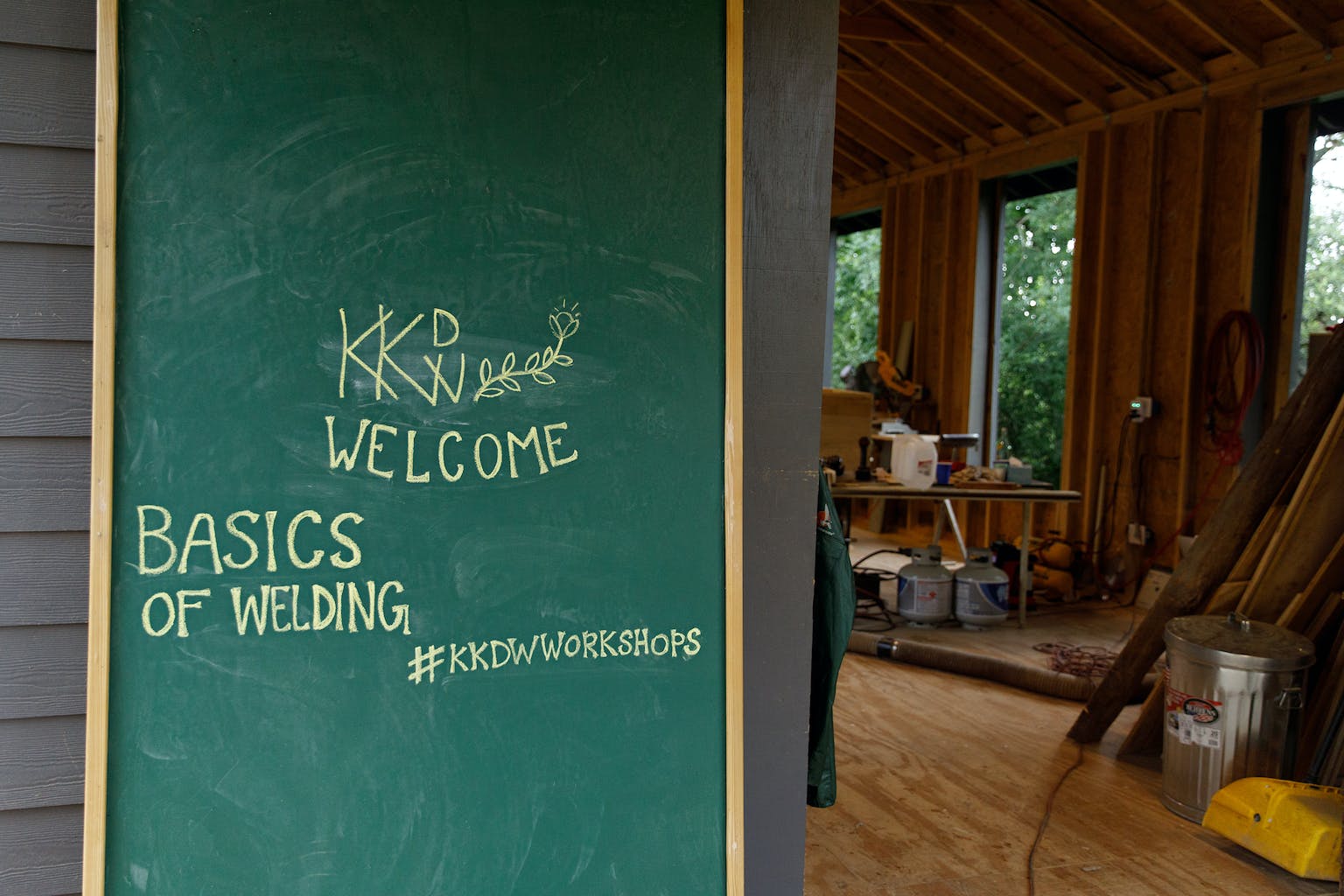
Welding for Girls

Photo: Nicole Mlakar/Texas Monthly.
Kelly DeWitt Norman and Travis Norman’s workshop is one example of the opportunities in Texas for nonwelders to learn welding.

There are no gender specific skills anymore, unless maybe giving birth.

Cathy Free at the Washington Post wrote recently about a camp organized by the Austin chapter of the National Association of Women in Construction in Texas where girls can learn welding and other traditionally male construction skills.

“Ainsley Muller, 11, went to art camp and theater camp in summers past. This summer, she was presented an opportunity she couldn’t refuse: learning how to use a power drill, weld metal and unclog a sink.

“ ‘When my mom told me about construction camp, I knew I had to go,’ she said. ‘Some people don’t think girls can do things like that, and they’re wrong. I had a blast.’

“Ainsley was among 35 middle-school-age girls who attended a free week-long building and plumbing camp last month, organized by the Austin chapter of the National Association of Women in Construction.

“ ‘I thought she’d be a good fit for it because she’s creative and hands on, and she loves science,’ said Ainsley’s mom, Amy Muller, 50.

“ ‘I also wanted to show her that as women, we don’t have to depend on the men in our lives to handle the physically hard tasks that present themselves,’ Muller added. ‘I wanted her to know that she was capable of doing these things herself.’

“That’s the same message Taryn Ritchie had in mind in 2019 when she helped put on Austin’s first girls construction camp sponsored by the National Association of Women in Construction.

“Ritchie is a chief estimator for Balfour Beatty, a general contractor in the Austin area. She said she’d noticed over the years that few women were working at the job sites she visited. …

“ ‘I wanted to shift the narrative and show girls that jobs as carpenters, plumbers and electricians are viable options,’ she said.

“Ritchie learned that other chapters of National Association of Women in Construction also held construction camps for girls. Girls from San Diego to Chicago have put on helmets and safety goggles and learned how to mix concrete, solder pipes together and rewire lamps. Camps have also been held in Baltimore and Silver Spring, Md., where earlier this month 16 girls learned about heavy equipment, heating and air conditioning systems and power installation.

“ ‘This industry, like many, is facing incredible workforce shortages,’ said Jennifer Sproul, a co-founder of the Baltimore camp, who now runs the nonprofit Maryland Center for Construction Education and Innovation.

” ‘The only way we can overcome [shortages] is by welcoming women with open arms,’ she said. …

“Ritchie said she felt a similar obligation. ‘I thought, “We need to do a camp like this in Austin,” ‘ she said. ‘I wanted to let girls know that office jobs in construction were not their only options. Why not teach them about all of the possibilities, from building houses to plumbing them?’

“That first year, she said, 15 girls signed up for a camp held with support from the Austin Independent School District. …

“One of this year’s instructors, Jennifer Barborka, enthusiastically got onboard to teach campers a little of what she’s learned as a fourth-year plumbing and welding apprentice. …

“ ‘I was proud that every single girl completed the project, but I was even more thrilled to see how many of them were interested in my trade,’ she said. ‘Not everyone can afford college, and not everyone is geared toward that kind of learning.’ …

“ ‘I told the girls that if they were to join a union, they could get paid while they get on-the-job training, and not end up with a ton of debt,’ she said, adding that last year as a third-year apprentice she made more than $60,000.

“That sounded appealing to Taryn Smith, 14. … She became intrigued at the idea of making a decent living without taking on student loan debt.

“ ‘Going to Camp NAWIC opened my eyes,’ Taryn said. ‘A lot of the things I do in my daily life — like being on the drum line in band — are very male-dominated. Sometimes, you feel like you’re not heard or seen. Seeing firsthand that women are plumbers and electricians made me think that I could do the same,’ she said.”

More at the Post, here.

Read Full Post »

Photo: Laura Young via LiveAuctioneers.
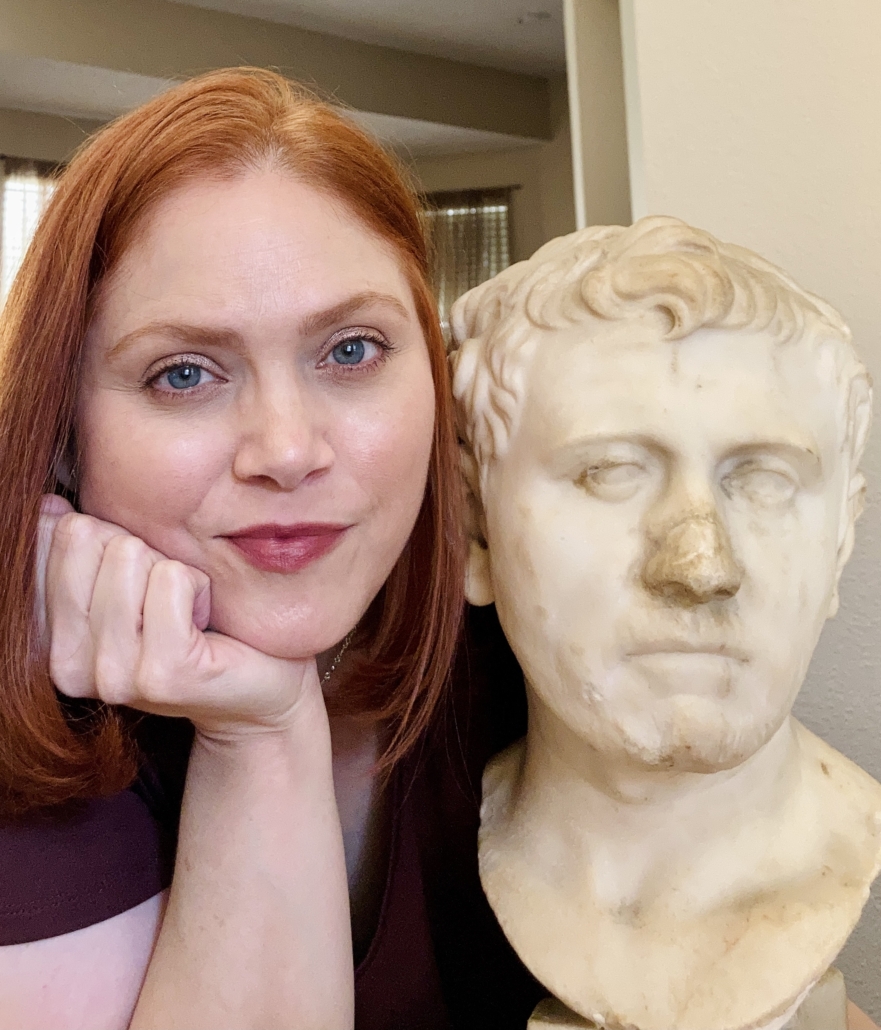
Laura Young with the Roman sculpture she found at a Goodwill in Austin, Texas.

Here’s a fun story. You may have heard it before as it was all over the media for a while. This version is by Matt Largey, reporting for KUT, an NPR station in Austin, Texas.

“When Laura Young found a human head under a table at the Goodwill store on Far West Boulevard in 2018, she had no idea what she was getting herself into.

“The price tag said $34.99. Seemed like a deal. It was all white. Made of marble. Weighed about 50 pounds.

“ ‘Clearly antique — clearly old,’ said Young, who runs her own business as an antiques dealer and goes to a lot of thrift stores looking for treasures.

“So she bought the head and lugged it out to her car, buckled it into the passenger seat and took it home.

“Young wanted to figure out what the sculpture was, so she did some Googling and she started to piece things together. She contacted an auction house in London that confirmed it was really old — like first century old. Another auction house managed to find the head in a catalog of items from a German museum in the 1920s and 1930s.

“It was listed as a portrait bust of a man named Drusus Germanicus.

“And so began Young’s four-year ordeal trying to get rid of a 2,000-year-old sculpture.

“How did a 2,000-year-old sculpture of a Roman general’s head wind up in a Goodwill in Austin, Texas?

“ ‘There are plenty of Roman portrait sculptures in the world. There’s a lot of them around. They’re generally not in Goodwills,’ joked Stephennie Mulder, an art history professor at UT Austin. ‘So the object itself is not terribly unusual, but the presence of it here is what makes it extraordinary.’ …

“The marble bust was cataloged at a museum called Pompejanum in the German city of Aschaffenburg. The museum was a replica of a villa in Pompeii, which was buried in volcanic ash in the first century. The German king, Ludwig the First, had something of an obsession with Pompeii, so he built this villa in the 1840s to house a bunch of Roman art. Germanicus was among the collection.

“Almost 100 years later, World War II was raging. In spring of 1945, Aschaffenburg was the site of a battle between the Nazis and the U.S. Army. …

“ ‘We know that many of the objects [in the museum] were either destroyed in the Allied bombing campaign or looted afterward,’ Mulder said. ‘So unfortunately in this case, it might have been a U.S. soldier who either looted it himself or purchased it from someone who had looted the object.’ …

“Perhaps the person who took it died or perhaps they gave it away. But somehow, someone decided they didn’t want it anymore and dropped it off at Goodwill. Workers slapped a price tag for $34.99 on it and put it out for sale. …

“Back at home, Young had a problem: She was in possession of a looted piece of ancient art. She couldn’t keep it. She couldn’t sell it. And giving it back to its rightful owners was a lot harder than it sounds.

“ ‘At that point, I realized I was probably going to need some help,’ Young says. ‘I was probably going to need an attorney.’

“So she hired a lawyer in New York who specializes in international art law, Leila Amineddoleh.

“Negotiations began. It was complicated. It takes a long time to figure out all this stuff — even in the best of times. But the pandemic complicated things even further. It was slow going and in the meantime, she was stuck with this 2,000-year-old head on display at her house. …

“It looked great in the house, she says. In a weird way, Young started to get attached. She named him — half-jokingly — after Dennis Reynolds, a narcissist character from the TV show It’s Always Sunny in Philadelphia.

“ ‘He was attractive, he was cold, he was aloof. I couldn’t really have him. He was difficult,’ she says. ‘So, yeah, my nickname for him was Dennis.’ …

“Finally, they got a deal: The Germans would take Dennis back. The exact terms of the deal are confidential, but the head will stay in Texas — on display — for about a year. Last month, the movers came to get him. …

“Young says, ‘It’ll be a little bittersweet to see him in the museum, but he needs to go home. He wasn’t supposed to be here.’

“[You] can see Dennis at the San Antonio Museum of Art, which already has a significant Roman antiquities collection.

“ ‘It actually ended up being a really, really good fit. He’s just right down the road,’ Young says. …

“In a way, Dennis will always be with Young. Before she let him go, she had a half-size copy of him 3D-printed. ‘I do have a collection of busts at home,’ she says. ‘So he’s with my other heads.’ “

More at station KUT, here.

Read Full Post »

Photo: Blanton Museum of Art.
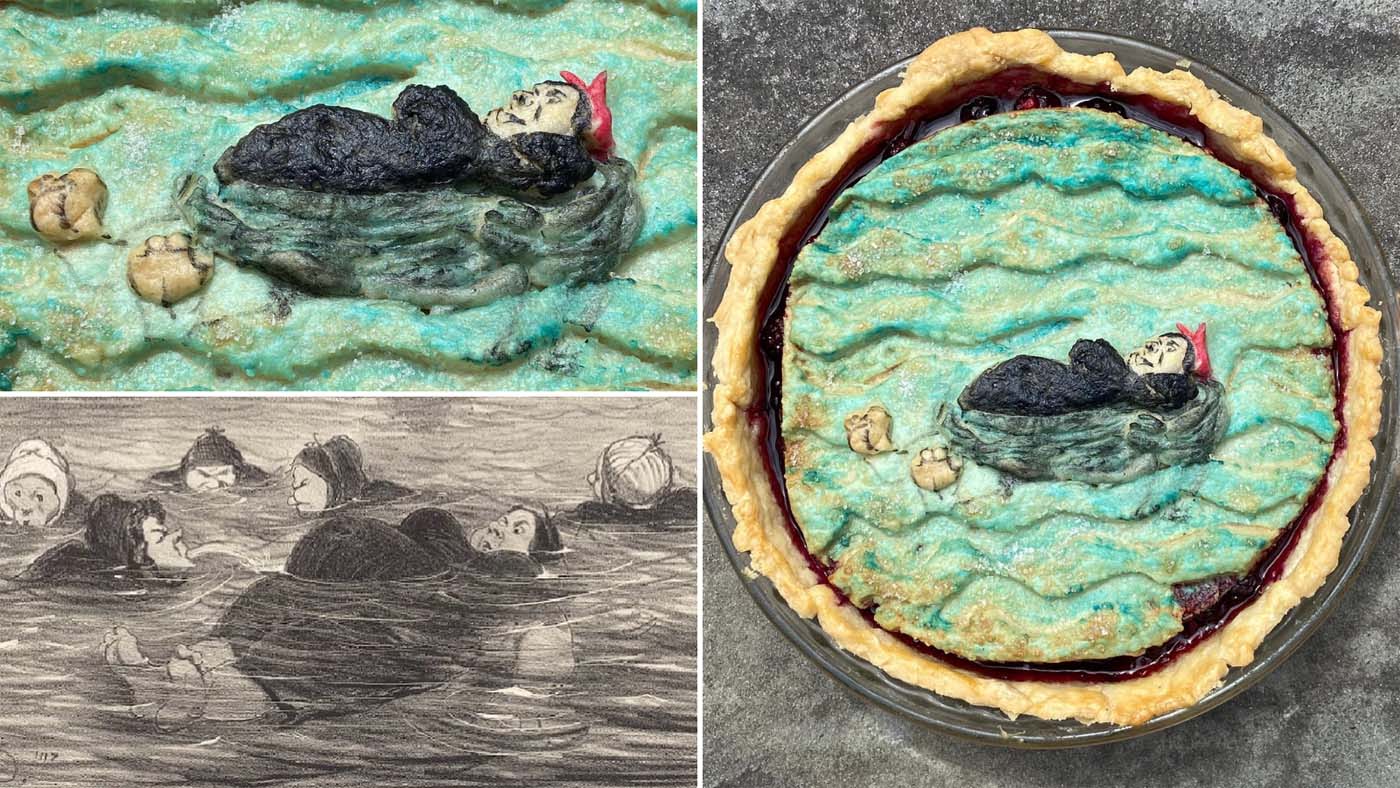
Pie by Christine Williams of Cookies del Mundo, inspired by Honoré Daumier’s “Naiads of the Seine” (1847).

Remember how, at the beginning of the pandemic, shut-in families took funny pictures of themselves imitating famous art? The Getty Museum in California was the first I knew to promote the meme, but people all over the world were soon doing it. I wrote about it here.

Well, something similar is going on at a museum in Texas. This time it’s about art turned into pastry.

Sarah Rose Sharp wrote at Hyperallergic about the Blanton Museum of Art in Austin, Texas, and the third annual Great Blanton Bake-Off.

“The contest, conceived in 2020 by Lizabel Stella, the Blanton’s social media and digital content manager, asks art lovers and amateur and professional bakers to recreate a work from the Blanton’s collection in edible treat form. In addition to a regular collection and a host of contemporary exhibitions, the museum is famous for Ellsworth Kelly’s ‘Austin,’ built into the museum’s architecture. …

“Stella told University of Texas student newspaper The Daily Texan, ‘I feel like baking is something that appeals to all ages because it’s so multisensory. You can’t eat or smell art … so this is a completely new way for people to engage with art from our collection.’

“Competition was fierce among the Adult Amateur category, with riffs on everything from Ray Johnson to a red-figure Apulian plate dating back to around 340 BCE. Ultimately, a competitive and humorous field was eclipsed by some expert joconde Imprime work by Blythe Johnson. The technique involves baking a design directly into a sponge cake (rather than simply using the decorative layer of the cake to figure the artwork), and perfectly suited the gentle geometrics of Mac Wells’s ‘Untitled, Meander Paintings, River‘ (1968), in whose likeness it was created. Shout-out to Lois Rodriquez for an iteration of the sculpture ‘The Barefoot Clown‘ (1999) by Tré Arenz (aka Tre Arenz) that offers the disgusting opportunity to eat a foot. …

“The Adult Professional category was a tighter competition, with a series of works on postcards from the Blanton’s collection, converted to cookie form by Hannah Erwin, taking top prize. This beat out a pie by Christine Williams of the Austin bake shop Cookies del Mundo in what is perhaps a miscarriage of justice, as cookie art is a medium with many icing possibilities, but pie offers limited means and requires a sculptural touch. Regardless, the results look all-around delicious, which is hard to say about a pie that has been tinted blue (you made the right choice with blueberry filling there, Christine).

“Finally, the junior bakers came through, a small field that nonetheless proves there is hope for the future. The top prize was taken by Georgia Gross, who meticulously reconstructed a colorful tapestry by Luis Montiel in friendly-looking fondant, but one must frankly tip the hat to the raw ambition of runner-up Jules Beesley, who attempted a functional rendition of the 1987 work of installation art by Cildo Meireles ‘Missão/Missões [Mission/Missions] (How to Build Cathedrals).’ Beesley built a net-covered scaffolding over his cake, the top of which was adorned with golden chips to imitate the 600,000 coins that filled the well of Meireles’s piece. If we haven’t got a baker on our hands, we’ve at least got an arteest.

“But really, everyone is a winner when it comes to competitive baking, because even if you have to eat humble pie, at least you also get to eat regular pie. As Stella emphasized in an interview with Smithsonian Magazine, the point of the event is to feel good.

“ ‘We’re going through a lot of hard things and political stuff right now,’ Stella said. ‘It’s important to remember that it’s okay to take a break — not to ignore the things that are happening, but to make time for the things that move you,’ said Stella.”

I liked this baker cameo at the Smithsonian: “The first time Blythe Johnson, winner of this year’s amateur category, baked a loaf of bread was in elementary school. She eventually started making cookies, cupcakes and pies … but the 40-year-old Austin resident, whose day job consists of medical billing, decided to cut gluten and dairy from her diet a few years ago in order to combat chronic illness. She took a step back from baking, until watching baking competitions, like the Great British Baking Show, rekindled her interest. … Yet, it wasn’t until she heard about the Blanton Bake-Off that she decided to give baking a cake a try. …

“For each Bake-Off, Johnson sets a goal or picks a skill she wants to learn to avoid being overly focused on winning or losing. This year, after seeing that the Great British Baking Show featured the ‘Joconde Imprime,’ a decorative design baked into a light sponge cake, she knew what her next Bake-Off entry would be.

“ ‘I was immediately interested in an Untitled piece by New York artist Mac Wells when I was looking through the museum’s catalog,’ Johnson said. ‘The colors of the painting made me think of blueberry and almond, and the rest just fell into place after that.’

“The cake, which had layers of blueberry almond sponge, lemon curd and whipped cream, was a challenge for Johnson. She made the joconde five or six times to achieve the perfect colors to match the artwork, and worked endless hours, broken up over a two-week period, to finish the cake.”

More at the Smithsonian, here, and at Hyperallergic, here. Wonderful pictures. No firewalls.

There’s a young baker in my neighborhood who could ace this competition. Maybe she’ll try.

Read Full Post »

Photo: Houston Chronicle.
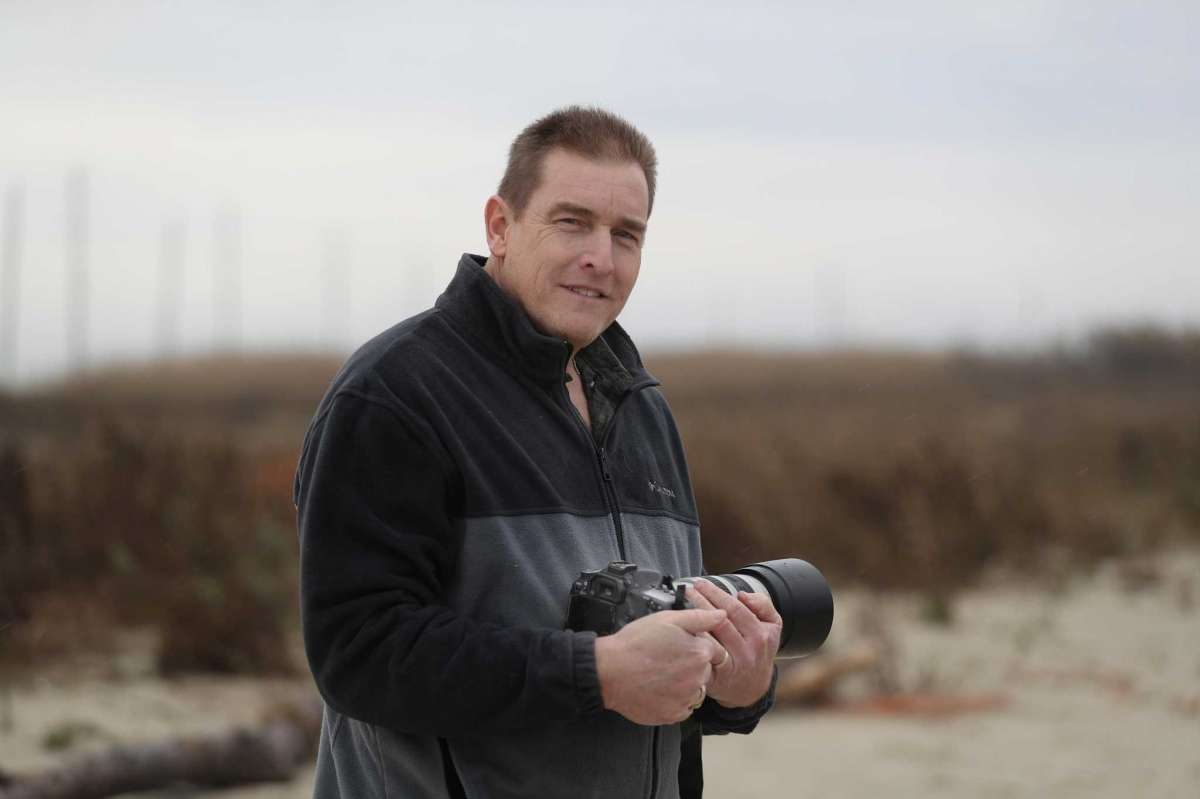
Ron Wooten of Galveston is a guy with a heavy dose of curiosity. His determination to learn more about the pack that killed his dog led to a surprising scientific discovery.

You may have already heard about the discovery in today’s story, but for me, the real story is about an ordinary guy and his insatiable curiosity.

After his dog was killed by a pack of coyotes, Ron Wooten went out searching for the pack, observed they looked different from normal coyotes, began a hunt to collect their DNA, and spent years trying to convince scientists that he had discovered something new. A true citizen scientist.

Emily Anthes wrote about him at the New York Times.

“From a distance, the canids of Galveston Island, Texas, look almost like coyotes, prowling around the beach at night, eyes gleaming in the dark.

“But look closer and oddities appear. The animals’ bodies seem slightly out of proportion, with overly long legs, unusually broad heads and sharply pointed snouts. And then there is their fur, distinctly reddish in hue, with white patches on their muzzles.

“The Galveston Island canids are not conventional coyotes — at least, not entirely. They carry a ghostly genetic legacy: DNA from red wolves, which were declared extinct in the wild in 1980.

“For years, these genes have been hiding in plain sight. … Their discovery, which came after a determined local resident persuaded scientists to take a closer look at the canids, could help revive a captive breeding program for red wolves and restore the rich genetic variation that once existed in the wild population.

“ ‘It doesn’t seem to be lost any longer,’ said Bridgett vonHoldt, an evolutionary biologist at Princeton University, referring to the genetic diversity that once characterized red wolves. …

“Ron Wooten, a Galveston resident, never paid close attention to the local coyotes until they ran off with his dog one night in 2008. ‘A pack took him and carried him off,’ recalled Mr. Wooten, an outreach specialist at the U.S. Army Corps of Engineers.

“He found the pack, and what remained of his dog, in a nearby field. He was horrified, and he blamed himself for his dog’s death. But as his flashlight swept over the coyotes’ red muzzles, he found himself fascinated.

“Determined to learn more, he posted a message on Facebook asking his neighbors to alert him if they spotted the animals. Eventually, a friend came through: There was a pack near her apartment building.

“Mr. Wooten raced over with his camera, snapping photographs as he watched a group of pups chasing each other. ‘They were just beautiful,’ he said.

“But when he looked more carefully at the photos, he began to wonder whether the so-called coyotes were really coyotes at all.

‘They just didn’t look right,’ he said. ‘I thought at first that they must have bred with Marmaduke or something because they had super-long legs, super-long noses.’

“Mr. Wooten, a former fisheries biologist, started reading up on the local wildlife and stumbled across the history of red wolves. Once abundant in the southeastern United States, the wolves had dwindled in number during the 20th century — a result of habitat loss, hunting and other threats.

“In the 1970s, the U.S. Fish and Wildlife Service made a last-ditch effort to save the species, traveling along the Gulf Coast and trapping all the red wolves it could find. Scientists selected some of the animals for a breeding program, in hopes of maintaining the red wolf in captivity.

“Mr. Wooten became convinced that the creatures that had taken his dog were actually red wolf-coyote hybrids, if not actual red wolves.

“Eager to prove his hypothesis, he began looking for dead canids by the side of the road. ‘I was thinking that if these are red wolves then the only way they’re going to be able to tell is with genetics,’ he recalled.

“He soon found two dead animals, collected a small patch of skin from each and tucked them away in his freezer while he tried, for years, to pique scientists’ interest. …

“Eventually, in 2016, Mr. Wooten’s photos made their way to Dr. vonHoldt, an expert on canid genetics. The animals in Mr. Wooten’s photos immediately struck her. They ‘just had a special look,’ she said. ‘And I bit. The whole thing — hook, line and sinker.’ …

“Dr. vonHoldt and her colleagues extracted DNA from the skin samples and compared it to DNA from coyotes, red wolves, gray wolves and eastern wolves. Although the two Galveston Island canids were mostly coyote, they had significant red wolf ancestry; roughly 30 percent of their genetic material was from the wolves, they found. …

“Mr. Wooten was thrilled. ‘It blew me away,’ he said.

“Even more remarkable, some of the genetic variants, or alleles, the Galveston animals carried were not present in any of the other North American canids the researchers analyzed, including the contemporary red wolves. The scientists theorize that these alleles were passed down from the wild red wolves that used to roam the region.

“ ‘They harbor ancestral genetic variation, this ghost variation, which we thought was extinct from the landscape,’ Dr. vonHoldt said. ‘So there’s a sense of reviving what we thought was gone.’ “

More at the Times, here.

Read Full Post »

Photo: Lauren Owen Lambert.
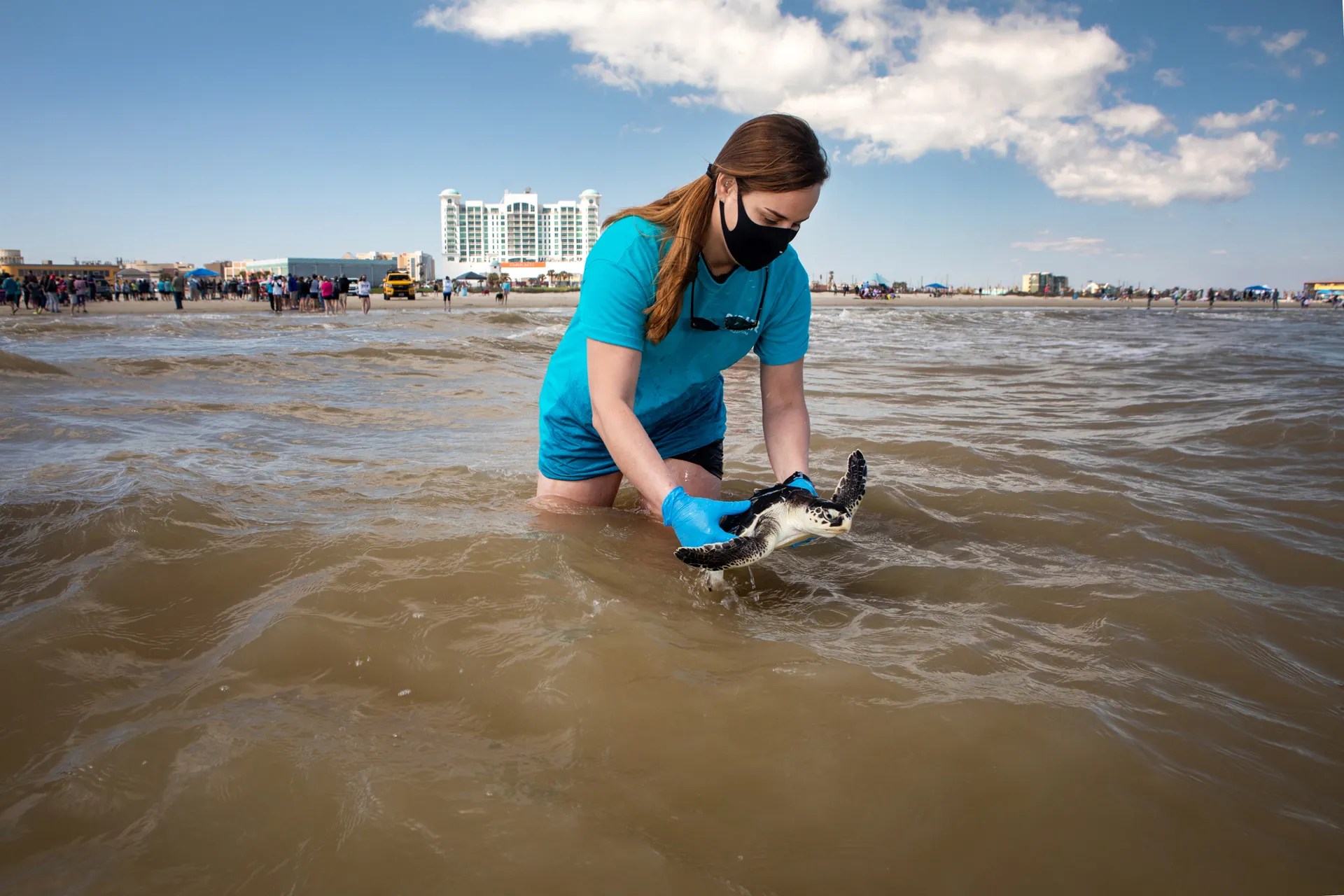
A rehabilitator with the Sea Life Aquarium holds one of approximately 85 endangered Kemp’s ridley sea turtles released at Galveston Beach in Texas last year.

When Suzanne and Erik and the kids were visiting the island of Eleuthera, a local guide gave them a treat. As they maneuvered their rented kayak, the guide stood on his paddle board and led them to where they could see green turtles without harming them. Though listed as endangered, the turtles seemed very happy in Eleuthera. According to Suzanne, they swam really fast and playfully.

Some other endangered turtles have been moving a little too fast — to the hook of Cape Cod, Massachusetts, where they get in trouble. That’s when local rescue operations go into high gear.

Lauren Owens Lambert at Vox has the story.

“Sea turtles appear to fly as they swim beneath ocean waves. With long, gray-green flippers that move like slow wingbeats, they glide through the water as birds do through the sky. Actually flying through the air, though, at 10,000 feet above the ground, the reptiles seem anything but graceful.

“Inside the airplane, 120 sea turtles, 118 of which are juvenile Kemp’s ridleys (Lepidochelys kempii), shift uncomfortably among beach towels inside stacked Chiquita banana boxes, their crusty eyes and curved pearlescent beaks peeking through slot handles. The windowless metal cabin vibrates with the sound of propellers as the pilots work to keep the plane aloft and the internal air temperature at a turtle-friendly 22 degrees Celsius (72 degrees Fahrenheit). It’s December 2020, and outside, the cold air above New England slowly gives way to balmier southern temperatures. The pilots are taking the turtles on a 2,900-kilometer (1,800-mile) trip from Massachusetts to Texas’s Gulf Coast.

“Eight hours later, they’re nearly there. ‘We’re coming into Corpus Christi,’ says Mike Looby, a pilot with a sea turtle rescue organization called Turtles Fly Too, as airport runways come into view among the sprawling buildings below. Looby and co-pilot Bill Gisler, both from Ohio, will visit four different locations in Texas to offload the animals. This is the largest number of turtles the organization has transported to date.

“Once the plane is on the tarmac, staff and volunteers from several aquariums and marine rescue facilities crowd around. The pilots gently slide each box of turtles toward the cargo door, and the group lines up to carry them to vans parked nearby.

“ ‘What happened to these guys?’ someone asks.

“ ‘They were found stranded on Cape Cod, in Massachusetts,’ says Donna Shaver, chief of the division of Sea Turtle Science and Recovery at Padre Island National Seashore, as she grabs a box.

“In the summer months, the waters in the Gulf of Maine where Cape Cod is located are warm, calm, and full of food, serving as a natural nursery for 2- to 4-year-old Kemp’s ridleys, the smallest and most endangered sea turtle in the world. Migrating loggerheads (Caretta caretta), green sea turtles (Chelonia mydas), and the occasional leatherback (Dermochelys coriacea) also visit Cape Cod Bay. But as water temperatures plummet in November, December, and January, the cold-blooded turtles must migrate out or perish.

Many lose their way and wash up, cold-stunned, on the inside edge of the hook-shaped Cape, which curls into the ocean like a flexing arm, forming what some locals call ‘the deadly bucket.’ …

“ ‘This area is increasing in water temperature faster than 99 percent of water bodies in the world,’ says Kate Sampson, sea turtle stranding and disentanglement coordinator at the National Oceanic and Atmospheric Administration (NOAA), who helps coordinate turtle transport. ‘Because of that, it seems like it’s drawing more sea turtles.’

“Fortunately for the turtles, hundreds of volunteers and several staff members organized by the nonprofit Mass Audubon Wellfleet Bay Wildlife Sanctuary stand at the ready to patrol every inch of the 105-kilometer (65-mile) stretch of beach lining the inner Cape, twice a day, from November through December, no matter the weather. When they find a turtle, the animal begins a logistically complex journey from rescue to rehabilitation and, eventually, to release.

“Saving each flight’s worth of little lives involves approximately five vans, 1,000 miles, four organizations, and 50 people. Without this monumental collaboration across North America’s Eastern Seaboard, other efforts to save the Kemp’s ridley sea turtle from extinction might be futile.”

Read why turtle strandings are on the rise at Vox, here. No firewall.

Read Full Post »

Photo: Kyle Peavey.
Kyle Peavey’s backyard in Richardson, Texas. He collects water in a 1,100 gallon rainwater tank to grow his flowers and vegetables.

One way that people are conserving natural resources these days is by being more thoughtful about the water they use in their homes and gardens.

To some extent this is going back to the old ways. On a recent Zoom panel discussing rural America, Montana Senator Jon Testa recalled how conservative with water his mother had to be when he was growing up. He said she could wash a sinkful of dishes with one cup of water.

Sen. Testa’s mother wouldn’t have been thinking about climate change, but she knew scarcity. Here is a report from Tara Adhikari at the Christian Science Monitor on conserving water today.

“In one Texas suburb, a battle of rainwater harvesting tanks is on. During a neighborhood garden tour in May, Kyle Peavy spotted Richard Townsend’s 260-gallon tank and decided to go even bigger. Just two months later, Mr. Peavy installed his own rainwater harvesting system – four times the size. 

“ ‘I’m both proud and slightly envious,’ says Mr. Townsend of Mr. Peavy’s system.

“The two neighbors use the tanks to water their backyard gardens. And while plants like rainwater better than sink water, the men installed these water systems for another reason besides gardening. Both see rainwater harvesting as a practical way to respond to water scarcity. They’re not alone.  

“Rainwater harvesting dates back more than 4,000 years to early Roman and Mayan civilizations. In its simplest form, it involves collecting water as it falls from the sky into barrels, so the water can be saved for later use. Today, this ancient solution is seeing a resurgence among homeowners, businesses, school districts, and at least one church. 

“Among green solutions to climate change, rainwater harvesting stands out in its potential to address two sides of a water paradox – flooding that destroys critical infrastructure, as well as drought conditions that threaten freshwater supplies. 

“ ‘We know that some areas are going to become drier. We know that storms are going to become bigger. And thinking about any practice that can help us address multiple of these issues is really important,’ says Sarah Sojka, associate professor of physics and environmental studies at Randolph College in Lynchburg, Virginia. 

“As Americans across the United States turn back to one of the oldest methods in the book, there’s a sense of empowerment that comes from knowing one small action can have a ripple effect. One small tank might just inspire something bigger.

“Typically, when rainwater falls on a roof, it is routed through a gutter system out into the yard or driveway and eventually into the road. Along the way, the water picks up pesticides and road contaminants, before flowing into curbside cuts that direct it into a nearby stream or lake. 

As the urban landscape has become more and more built up, the number of impermeable surfaces, such as paved roads, has increased, forcing larger quantities of water – and pollutants – into local waterways. …

“Rainwater harvesting tanks divert that flow path, reducing the amount of water that hits local systems all at once. As stored tank water replaces tap water for outdoor use, the draw on the municipal supply is reduced, and water that soaks in through the ground eventually helps to replenish baseline flow.

“But it’s not just an old-new way to water. It’s also a new way to think about water as more than an unending supply that spews from the tap. In drier climates especially, rainwater harvesting can provide a visual reminder of natural cycles, which can precipitate the ultimate goal: an actual reduction in water use. …

“Although Mr. Townsend doesn’t consider himself a ‘green warrior,’ he wants his children to understand these cycles. The rainwater tank, which shows natural ebbs and flows, helps him share greater water consciousness with his children. …

“Although one rainwater harvesting tank is unlikely to change local water quality and supply, when implemented at scale, the tanks can aid in overall water conservation – and local governments are taking notice. 

“To encourage widespread adoption, cities across the U.S. are subsidizing the costs of tank installation, which can range from a few hundred to several thousand dollars. Tucson, Arizona, started its rainwater harvesting rebate program in 2012, after residents had been living under drought conditions for over a decade. In Arizona, water is sourced from groundwater and the Colorado River, which was put under a drought contingency plan in 2019. …

“ ‘Americans just really like being self-sufficient, and … at its core, this is self-sufficiency,’ says Jaimie Galayda, a rebate participant who now works for Tucson Water. …

“When rainwater is collected, says [Fouad Jaber, a professor and water resources extension specialist at Texas A&M University] it reduces the amount of water used from the municipal supply, which comes from local waterways. And if used for outdoor purposes, the water will soak into the ground, eventually feeding back into local bodies of water. …

“St. Louis has a different problem, but rainwater harvesting is helping just the same. Like many older cities, St. Louis has a combined sewer system, meaning storm pipes connect with wastewater pipes. Normally, all the water is treated before entering the Mississippi River, but large storms overwhelm the system, creating direct overflow into the river. And when large quantities of water enter all at once, the water quickly swells out into the surrounding communities.  

“Large rainwater cisterns like the one at Jubilee Community Church help to divert the water before it overflows. In 2018 the church installed a 150,000-gallon cistern with funding and other support from St. Louis’ municipal sewer district and The Nature Conservancy. Rain flows off the church’s roof to the underground catchment, then irrigates a large garden and orchard, which includes tomatoes, cucumbers, beets, figs, and even juju berries.  

” ‘Building the rainwater tank with the garden on top is a way of reinvesting in the community, says Andy Krumsieg, the church’s pastor. ‘This is a very sustainable project because it will keep water out of the sewer system forever … and it created a tool for urban agriculture.’ “

More at the Monitor, here.

Read Full Post »

Photo: Dave Shafer.
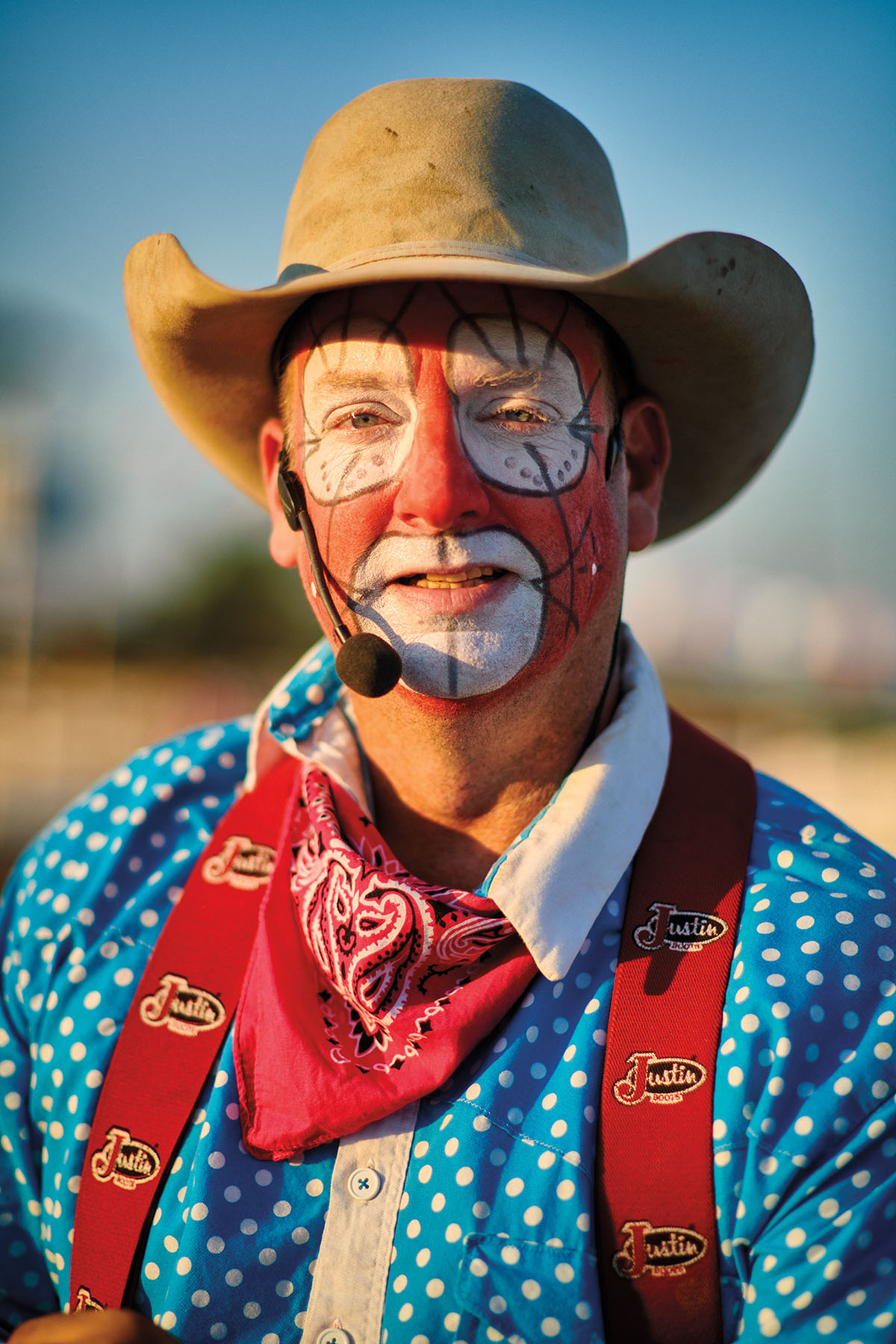
Rodeo clown and “barrelman” Brandon Dunn.

When my husband worked in Minnesota, the colleague who ran manufacturing was in his free time a bull rider. He seemed impervious to danger and injury, but he was young. Eventually, he was obliged to retire.

As dangerous as bull riding is, those in the know might tell you that the role of rodeo clown is more so.

W.K. Stratton says at Texas Highways, “This was one of the rodeo axioms my mother taught me as I was growing up. … Always respect rodeo clowns: They’re the best athletes in the arena, and they save lives.

“[That] perplexed me when I was young. Clowns were the guys who strutted around dusty small-town rodeos in ragged outfits while carrying out groanworthy banter with the event announcer. Sometimes they performed tricks with dancing burros or hoop-jumping dogs. Other times, they might drive around in a tricked-up old car with an exploding muffler and a radiator that could spew water like Old Faithful.

“The athleticism of rodeo clowns was lost on me until I got older and realized their work is just as dangerous and exciting as the bull riders they’re employed to protect. Working in teams, their job is to distract an enraged bull from attacking the rider who’s just been catapulted to the dirt. The clowns working on foot — as opposed to manning a barrel — have come to be known as bullfighters. …

” ‘A human’s instinct is to run away,’ says Weston Rutkowski, of Haskell, one of the best bullfighters in the business. ‘That’s the worst thing you can do in this particular sport. A bull’s got four legs. We’ve got two. So they’re going to run you down in a straight line.

‘You have to be ready to move in the moment a rider starts to fall off. If you don’t come in until they hit the ground, you’re four steps late.’

“While their job has little in common with the matadors of Mexico and Spain who share the ‘bullfighter’ name, rodeo bullfighters must also overcome basic safety impulses. …

“Bullfighting runs in the family for Brandon Dunn, a rodeo clown from the North Texas town of Petrolia. Dunn fought bulls until injuries from a car wreck in 2003 robbed him of his speed. Now he entertains audiences as a clown and barrelman, working in tandem with his 17-year-old son, Brendall Dunn, a bullfighter. The father-son team works about 20 rodeos a year.

“ ‘It got to where I was put together by bailing wire and duct tape, and I just couldn’t fight bulls anymore,’ Dunn says. But that didn’t dissuade Brendall, who worked his first rodeo at age 12. Brandon says he has coached his son carefully.

” ‘There’s a mental maturity you have to reach, no matter how athletic you are,’ he says. ‘We would bring him up with some slower and older bulls and transition him to faster bulls. Now he’s fighting anything that comes out of the chute.’ …

“As a hotbed for rodeos, Texas has produced a prominent line of influential clowns. Ralph Fulkerson, a bull rider from Midlothian, 25 miles southwest of Dallas, changed the game when he switched to bullfighting in the 1920s. He developed a cornball humor act that involved his mule, Elko. After numerous injuries, Fulkerson came up with a way to protect himself by introducing the clown’s barrel to bull riding. His first barrels were made of wood reinforced with metal. Fulkerson would draw the bulls away from the bull riders and toward the barrel. Then he’d hop inside the barrel and allow the bull to bang away at it with its horns. …

“The sport went through a radical change in the early 1990s when [Tuff Hedeman, a four-time world champion bull rider] and other top bull riders broke away from the Professional Rodeo Cowboys Association (PRCA) to form the Professional Bull Riders (PBR). The speed as well as the bucking and spinning ability of the bulls increased dramatically.

“Bullfighters have adapted accordingly. At some rodeos, the trappings of the rodeo clown have disappeared. Bullfighters’ work has become so refined that it developed into a sport itself—freestyle bullfighting, in which bullfighters show their stuff while challenging real fighting bulls. The Bullfighters Only (BFO) tour showcases their skills — no bull riders involved. … Judges score fighters on technique and wow factors, including leaps over the bull.

“The jalopy-driving rodeo clowns of my childhood in the 1960s would be dumbfounded by what occurs at BFO events. These bullfighters practice acrobatics reminiscent of the Minoans: They’ve been known to jump completely over a bull and perform flips. Though some of the participants wear clown makeup in homage to the past, freestyle bullfighting has an X Games vibe.”

See some great photos at Texas Highways, here. And if you are interested in the rodeo life, try getting a copy of the wonderful Chloé Zhao movie The Rider.

Read Full Post »

Photo: Erika Thompson via StyleBluePrint.
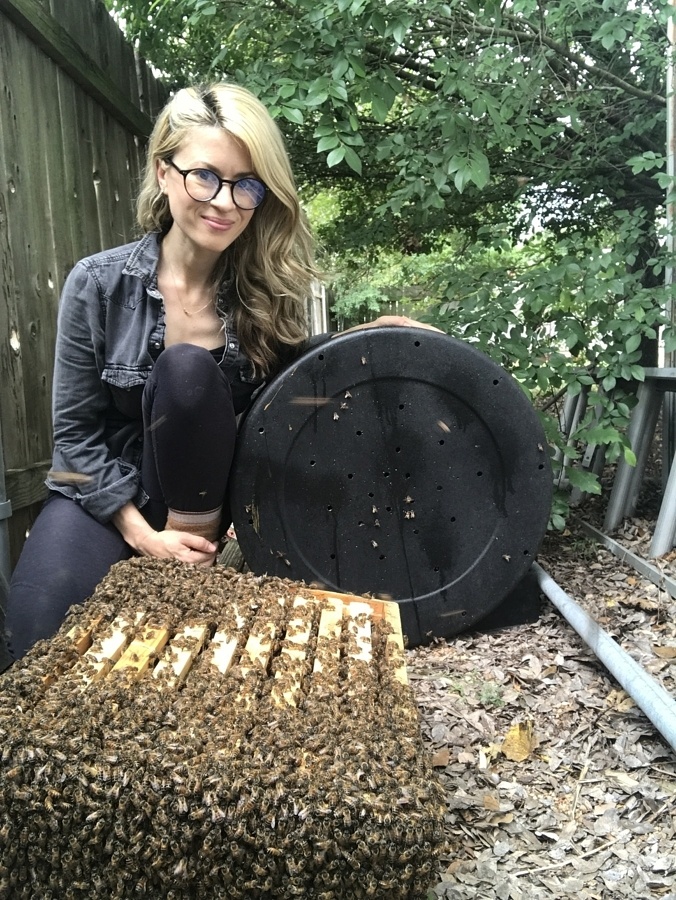
This Texas woman really loves bees. “Bees need advocates,” she says.

If you were to search this blog on words like “bees,” “Honeyland,” and “beekeepers,” you would see that I have a friendly attitude to bees. Besides the fact that they set such a good example for industry and cooperation, there’s this: no bees, no food.

Today’s post is about a woman who really, really loves bees.

Travis M. Andrews writes at the Washington Post, “The bees drip from Erika Thompson’s bare hand, as if she’s holding a scoop of melting ice cream. But she’s not worried. Just a simple flick of the wrist, and the gentle insects rush into their new home.

“This scene’s out of a recent TikTok from Thompson, an Austin-area beekeeper who has amassed an enormous social media following by documenting her work of ethical bee removal. In this particular video, she explains that she was asked to safely remove a colony of bees that have been living in a backyard shed for two years. At one point, she lifts up a section of wooden flooring to expose hundreds of bees crawling over one another. A delighted grin spreads across her face.

“And like a fly to honey, viewers flocked to the TikTok. It’s been viewed more than 60 million times. …

“Thompson simply love bees. Really loves them. The 35-year-old’s backyard is filled with about 50 hives. … Growing up, Thompson so admired Jane Goodall and Dian Fossey that she would pretend to be them, stringing binoculars around her neck and setting up her stuffed animals like creatures in the wild. Then, she’d head outside.

‘I spent a lot of time in my backyard on nights and weekends, trying to collect bugs and put them in jars … to keep them and care for them,’ she said. ‘It’s something I’ve been into my entire life.’

“About a decade ago, she took a beekeeping class out of curiosity. The University of Texas graduate didn’t expect it to become a living. She worked as a communications director at a nonprofit and didn’t even know if she could keep bees in her central Austin home. But she found herself learning more and more about bees and eventually keeping her own hive.

“She soon launched Texas Beeworks, spending nights, weekends and even some lunch breaks helping others keep bees and driving around with hives in the back of her hatchback. Two years ago, she made it full-time, making her feel like ‘the luckiest person in the world.’ …

“Thompson began making the videos to document her process for clients who, unsurprisingly, usually choose to be absent during a removal. Last year, when the pandemic began, several speaking opportunities she had lined up went by the wayside. With a little more time on her hands, she started a TikTok account. …

” ‘Most of the time when I tell people I’m a beekeeper, they say, “Oh, you’re a bookkeeper?” ‘ Thompson said. ‘I don’t know what has really captivated people, because for me, it’s just so normal. Maybe it’s people seeing something that they’ve never seen before and maybe that they didn’t know was possible.’

“Plus there’s an awful lot to admire about bees, she added, ‘from the way they work together as a superorganism and nobody thinks of herself as an individual but does everything for the good of the colony to the way they build the hive and forage and raise their young.’ …

“Though she didn’t expect her videos to become so popular, she hopes they can help continue changing our attitude by correcting misconception about bees, perhaps the largest one being that ‘all kinds want to sting you all the time.’

“For one, there are more than 20,000 species of bees, all of which have different temperaments. Plus, Thompson said, ‘Most bees, and most honeybees, are docile and do not want to sting you.’ ”

More at the Washington Post, here.

Read Full Post »

Photo: Regeneration International.

We are told we have to give up meat if we want to fight global warming, but I know that livestock farmers are not going to give up farming. Some are experimenting with techniques to have less harmful effects on the planet — for example, using methane from farm waste to power their farms. But, as Earle keeps reminding me, methane is also a greenhouse gas, and it’s better to put a greenhouse gas into the soil, not the air. It’s called sequestration.

In today’s article, we learn about a Texas farmer who is improving the quality of his land by avoiding herbicides and letting the cows stomp down weeds and brush. At the same time, he is practicing sequestration.

Henry Fountatin writes at the New York Times, “Adam Isaacs stood surrounded by cattle in an old pasture that had been overgrazed for years. Now it was a jumble of weeds.

“ ‘Most people would want to get out here and start spraying it’ with herbicides, he said. ‘My family used to do that. It doesn’t work.’

“Instead, Mr. Isaacs, a fourth-generation rancher on this rolling land in the northeast corner of the Texas Panhandle, will put his animals to work on the pasture, using portable electrified fencing to confine them to a small area so that they can’t help but trample some of the weeds as they graze.

“ ‘We let cattle stomp a lot of the stuff down,’ he said. That adds organic matter to the soil and exposes it to oxygen, which will help grasses and other more desirable plants take over. Eventually, through continued careful management of grazing, the pasture will be healthy again.

‘These cows are my land management tool,’ Mr. Isaacs said. ‘It’s a lot easier to work with nature than against it.’

“His goal is to turn these 5,000 acres into something closer to the lush mixed-grass prairie that thrived throughout this part of the Southern Great Plains for millenniums and served as grazing lands for millions of bison.

“Mr. Isaacs, 27, runs a cow-calf operation, with several hundred cows and a dozen or so bulls that produce calves that he sells to the beef industry after they are weaned. Improving his land will benefit his business, through better grazing for his animals, less soil and nutrient loss through erosion, and improved retention of water in a region where rainfall averages only about 18 inches a year.

“But the healthier ranchland can also aid the planet by sequestering more carbon, in the form of roots and other plant tissues that used carbon dioxide from the air in their growth. Storing this organic matter in the soil will keep the carbon from re-entering the atmosphere as carbon dioxide or methane, two major contributors to global warming. …

“Soil sequestration has gained favor as a tool to fight climate change. Done on a large enough scale, proponents say, it can play a significant role in limiting global warming.

“But many scientists say that claim is overblown, that soils cannot store nearly enough carbon, over a long enough time, to have a large effect. And measuring carbon in soil is problematic, they say.

“The soil-improving practices that ranchers like Mr. Isaacs follow are referred to as regenerative grazing, part of a broader movement known as regenerative agriculture.

“There are no clear-cut definitions of the terms, but regenerative farming techniques include minimal or no tilling of soil, rotating crops, planting crops to cover and benefit the soil after the main crop is harvested, and greater use of compost rather than chemical fertilizers.

“Regenerative grazing means closely managing where and for how long animals forage, unlike a more conventional approach in which animals are left to graze the same pasture more or less continuously. Ranchers also rely more on their animals’ manure to help keep their pastures healthy.

“These practices are spreading among farmers and ranchers in the United States, spurred by environmental concerns about what industrialized farming and meat production have done to the land and about agriculture’s contribution to global warming. In the United States, agriculture accounts for about 10 percent of greenhouse gas emissions.

“Agribusiness companies and large food producers are launching initiatives to encourage regenerative practices, part of efforts to appeal to consumers concerned about climate change and sustainability.

“[The] administration, in its initial moves to combat climate change, has cited agriculture as a ‘linchpin’ of its strategy. One idea is to allocate $1 billion to pay farmers $20 for each ton of carbon they trap in the soil.

“Proponents of regenerative agriculture have sometimes made extravagant claims about its potential as a tool to fight global warming. Among them is Allan Savory, a farmer originally from Zimbabwe and a leader in the movement, who in an often-cited 2013 TED Talk said that it could ‘reverse’ climate change.

Some research has suggested that widespread implementation of regenerative practices worldwide could have a significant effect, storing as much as 8 billion metric tons of carbon per year over the long term, or nearly as much as current annual emissions from burning of fossil fuels.

“While there is broad agreement that regenerative techniques can improve soil health and bring other benefits, some analyses have found that the potential carbon-sequestration numbers are vastly overstated. …

“ ‘It’s really great to see the private sector and the U.S. government getting serious about reducing agricultural emissions,’ said Richard Waite, a senior researcher at the World Resources Institute, an environmental research organization in Washington. But for carbon sequestration in soils, the institute’s analysis suggests that ‘mitigation opportunities are on the smaller side.’

“Focusing on carbon sequestration through soil also risks drawing attention from other important ways to reduce agriculture’s carbon footprint, Mr. Waite said, including improving productivity, reducing deforestation and shifting food consumption to more climate-friendly diets.”

My gut feeling is that we should use as many techniques as possible to reduce carbon emissions — that every little bit helps. Read more at the New York Times, here, and me know what you think.

Read Full Post »

Photo: Reuters Marketplace/UK World Online Report.
Endangered Green Sea Turtles are placed in bins and kiddie pools to help them warm up gradually.

Sometimes a crisis can bring out the best in human nature. Consider all the people making food for health-care workers in the pandemic or the volunteers manning pantries for 2020’s many unemployed.

This morning, as I was reading about the failure of the Texas electric grid, I learned that one supermarket, having suddenly lost power, couldn’t operate cash registers and let customers go home without paying.

Meanwhile, Texas nature lovers, despite hardships of their own, are rescuing sea turtles from the extreme cold. Many thanks to Hannah for pointing me to the story.

Raechel Allen reports at Slate, “An unprecedented winter storm provoked massive disruption in Texas this week: Millions lost power, hundreds were displaced from homes. [And] because of the temperature, thousands and thousands of sea turtles cannot move.

“An endangered species, these sea turtles usually live off the waters of South Padre Island, which is off the southern coast of Texas. Over the past week, they’ve been loaded into dinner cruise boats and minivans. The rescue center at the nonprofit Sea Turtle Inc. is used to rehabilitating injured sea turtles and responding to minor cold snaps but cannot hold all the turtles — so they’re also filling up a convention center. … Slate spoke to Wendy Knight, Sea Turtle Inc.’s executive director. Our conversation has been edited and condensed for clarity.

Rachael Allen: Can you walk me through what’s been going on this week with the turtles?
Wendy Knight: We are in the midst of the single largest cold-stun event in history. We have approximately 4,800 cold-stunned, federally protected, endangered sea turtles. … On Sunday things really started to hype up and we had local boat owners go out and find hundreds of floating sea turtles.

“What does it mean for a sea turtle to be cold-stunned?
“Sea turtles are cold-blooded so they need the temperature of water to regulate their own body temperature. … If the water gets below a certain temperature, the turtles are no longer able to sustain their own body temperature. Usually, they don’t think about all of their instincts — moving their flippers to swim, eating, diving to the bottom of the ocean, lifting their head up to draw breath. In a cold-stun event, they’re still aware they need to do those things, but because their body is frozen, or cold-stunned, it’s is not reacting to the instinct message. As a result they’re not able to swim, so the turtle floats to the top of the water and because their body is not responding by lifting their head to breathe, they drown in the ocean. I’m sure as we get farther away from the stun event, there will be perished turtles found, regardless of our best efforts.

“How did your team rescue thousands of turtles?
“This is a nesting beach where thousands and thousands of hatchlings are born each season, so everybody is keenly aware that we’re sharing space with sea turtles. We have almost 500 registered volunteers, plus all the city employees, who participate in training at the beginning of cold-stun season. That plan was executed here, just on a much bigger scale.

It’s important to remember that when all this was happening these hundreds of community members didn’t have power of their own. They hadn’t had electricity or running water in days. …

“They had their own personal tragedy happening. And despite that, they took time away to serve an animal that can’t serve itself.

“I can’t explain what it’s like to stand in a convention center that’s probably a football field and a half, and see 4,200 sea turtles laying tip to toe as far as the eye can see. And that’s not even all of them — that’s the overflow. … Nothing happens when they’re stunned — no bodily functions. It’s like a catatonic state. The best thing you can do is to let them rest. As things go along, they will start to wake up, but there are consequences that can come from cold stuns that require antibiotics and IV therapy, like pneumonia. We’ll watch them all closely, and as they recover and become more alert, we’ll start releasing them incrementally back into the Gulf of Mexico.”

I shouldn’t overlook the fact that there are people who volunteer year-round. Which is just to say that it doesn’t always take a crisis to bring out the best in human nature. More at Slate, here.

Read Full Post »

Older Posts »