Feeds:
Posts
Comments

Posts Tagged ‘traditional’

Photo: John and Suzanne’s Mom.
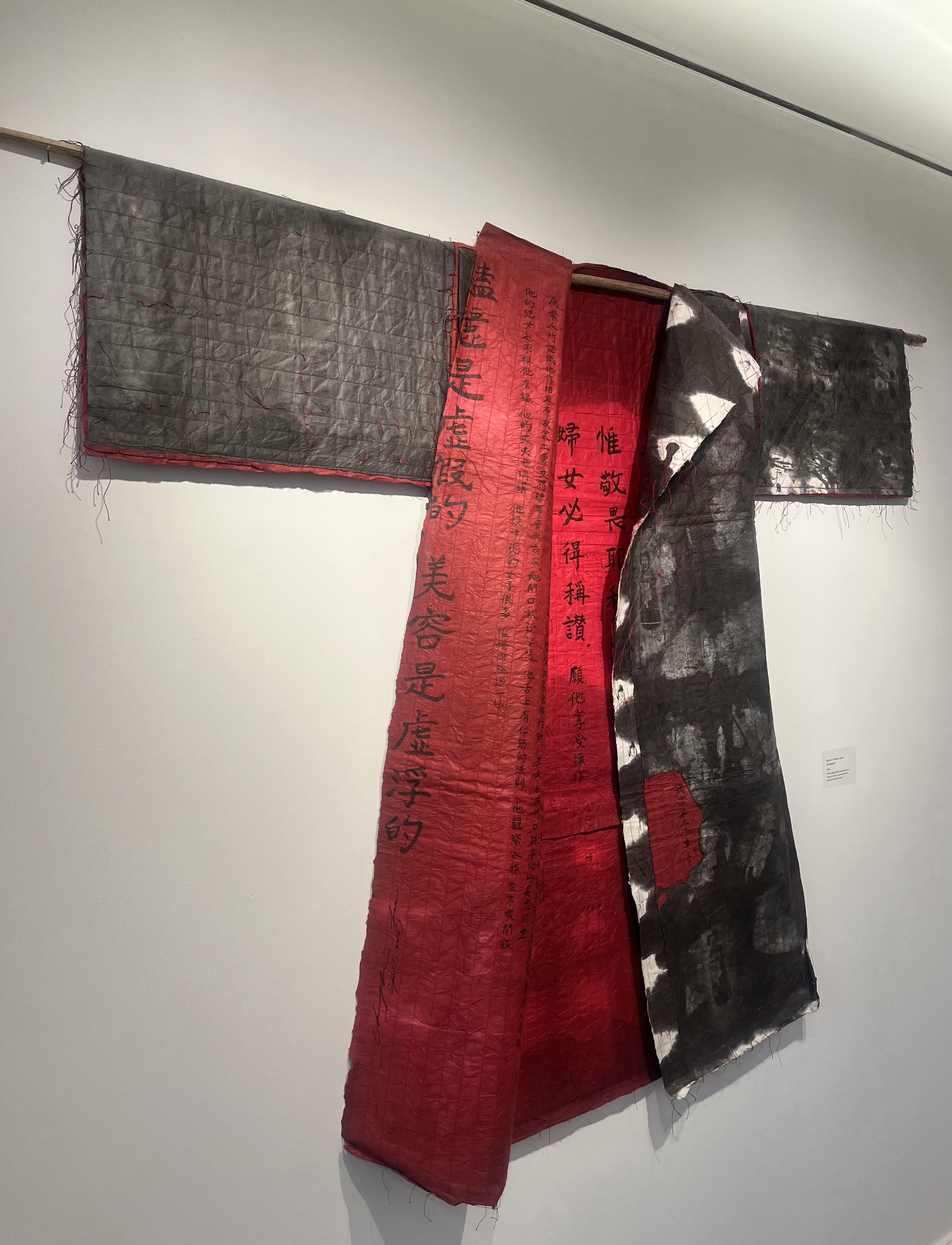
Chunghie Lee‘s bojagi style “No-Name Women Paper DuRuMaGill”: photo images silk-screen-printed on Korean mulberry paper dyed with ground oriental ink stick. At Lexington Arts in Massachusetts.

My friend Ann, the textile artist, put me on to a new/ancient type of quilting and fabric art. It’s from Korea and it’s called bojagi.

According to the websit for Beyond Above Publications, “Bojagi (Bo-Jah-ki), or wrapping cloth, is the ancient Korean folk tradition of making pieced textiles for both everyday and ceremonial use. Originally made by anonymous housewives to fulfill a practical need along with an artistic impulse, Bojagi and its techniques have recently gained attention outside of Korea due to the increasing interest in the value of handmade items, as well the use of recycled materials and the politics of sustainability in textiles and contemporary art.”

I would never know about this type of thing, but Ann is on every email list imaginable for textile art in Greater Boston and beyond. So one day I headed over to Lexington Arts and Crafts to see contemporary bojagi by artist Chunghie Lee.

Apart from appreciating Lee’s skillful needlework, I was struck by her use of sustainable materials: previously used fabrics, mulberry paper, and ground-up ink sticks for red and black dyes. Especially moving was her focus on “no-name women,” the anonymous people behind this technique to make scraps of cloth go far. Women unknown and unappreciated.

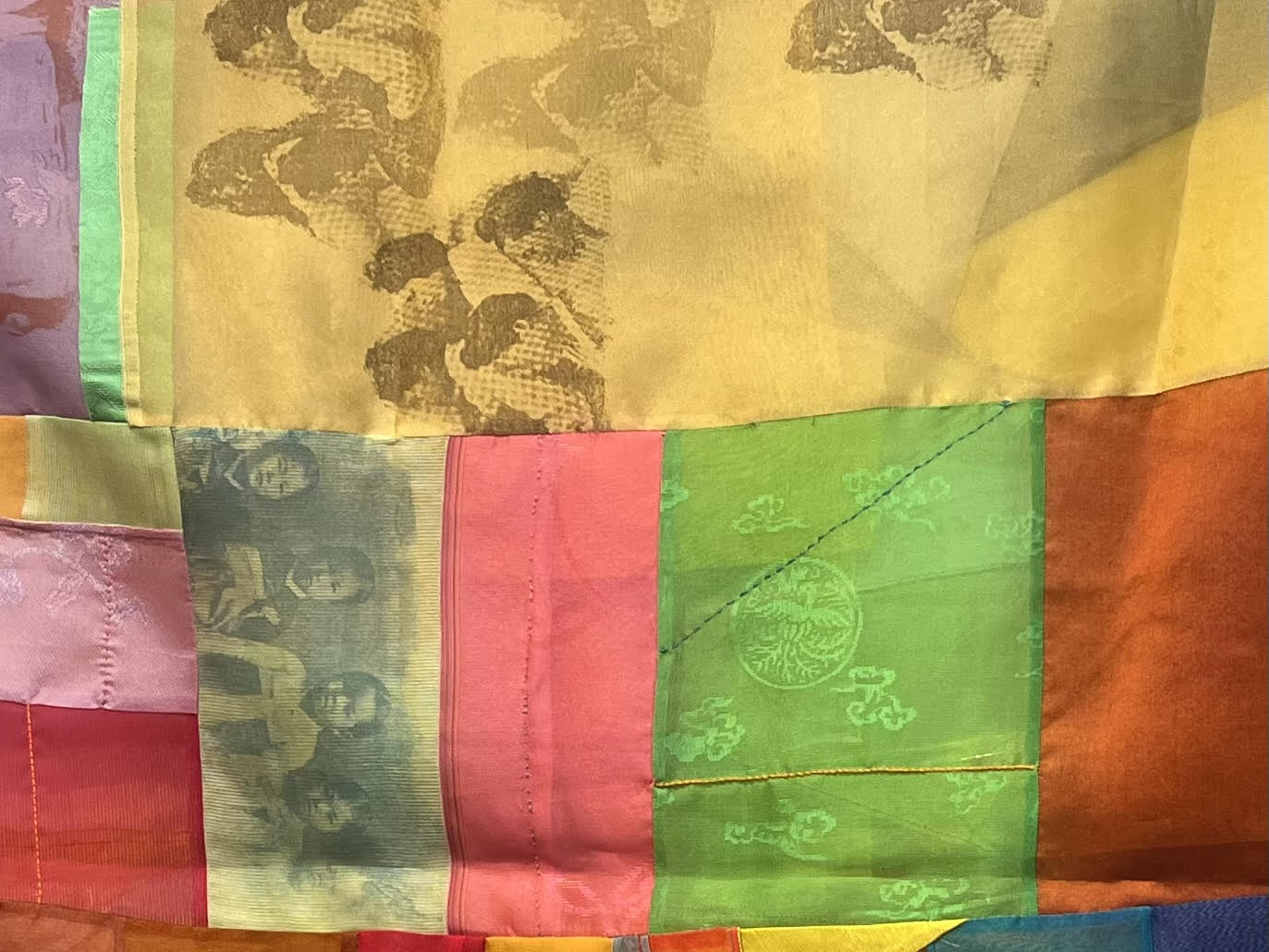
You have to look closely to see them. Lee brings them into her work with silk screens of old-time photos, barely visible. Which is why for this piece I am showing you only a close-up.

Close-up of silk bojagi “no-name women” piecework by Chunghie Lee.

Here is more detail from the publishing company Lee founded with Jiyoung Chung, a visual artist inspired by the Joomchi papermaking tradition.

“From traditional women’s work to contemporary sustainable textiles, bojagi works include delicately pieced and hand-stitched traditional bojagi, reinterpreted bojagi, wearable pieces, installations, and wall hangings.

This uniquely Korean art form made by anonymous ancestors has evolved from functional works into a contemporary art form that is embraced worldwide.

“Since the late 14th century, every household, from the royal palace to the thatched-roof hut in a mountain village, has found these wrapping cloths indispensable. The tradition of making and using bojagi was established during the Josun Dynasty (1392 – 1910), when women were restricted from leaving their households. To spend the long, tedious hours of the day, girls were taught to sew at age ten, and needlework became a big part of their lives as they moved into  adulthood. This folk art tradition was the only escape from the sequestered lifestyle of Korean women, and provided them with an artistic outlet for creative expression.”

Chunghie Lee adds, “I see this patchwork as a metaphor for human life. We may feel ourselves to be as random pieces of fabric, alone and without meaning, but God’s hand places us together in a beautiful composition, which has great harmony and meaning. As artists of all nationalities, generations and heritages, we discover we are all alike, and have been saving and making beautiful things with discarded fabric and other materials. In the eyes of artists, fabric scraps can be transformed and repurposed to fulfill the design and vision of the creator.”

More on bojagi at the website for publishing company Beyond Above, here. Follow Lee on Facebook, here.

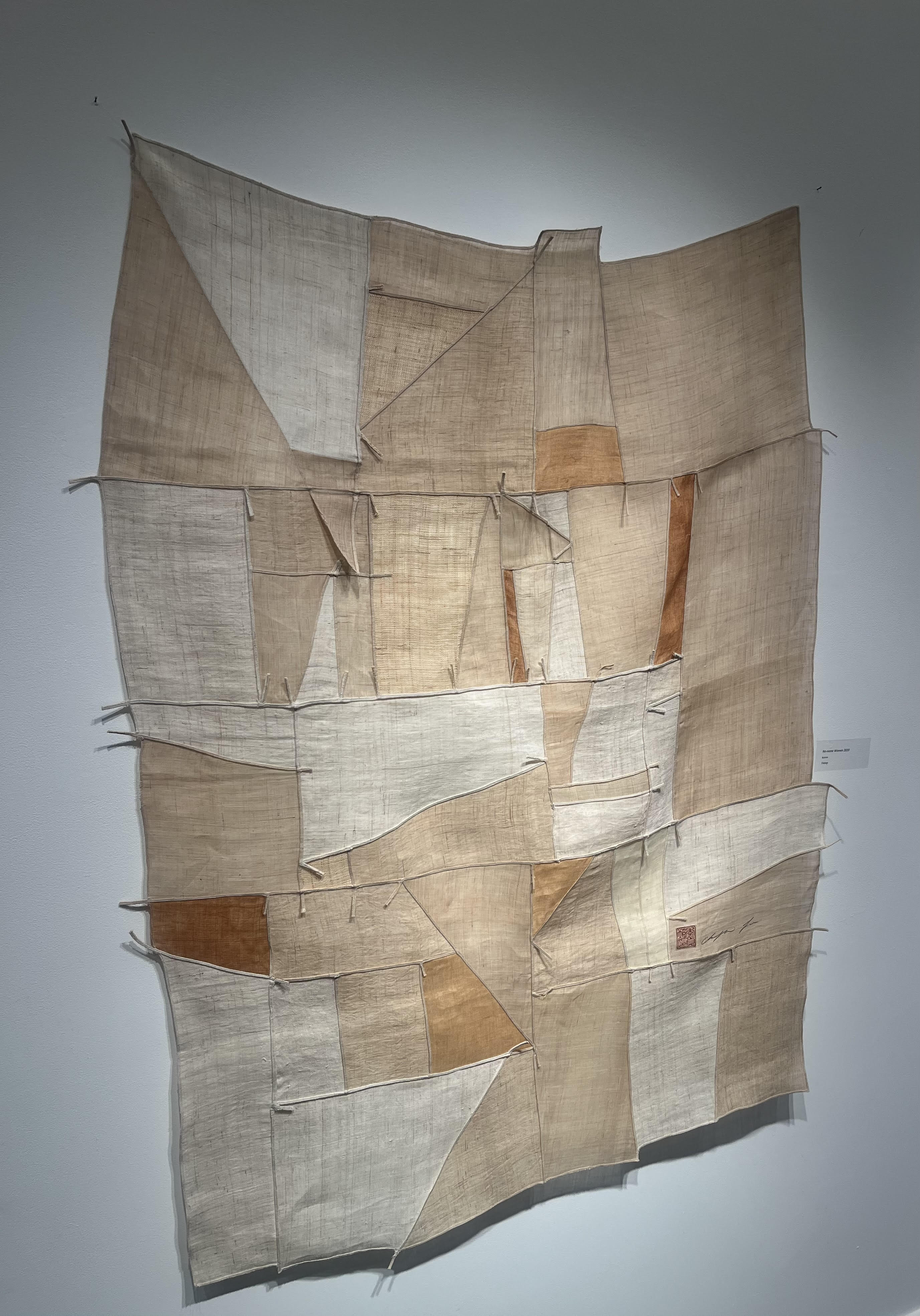
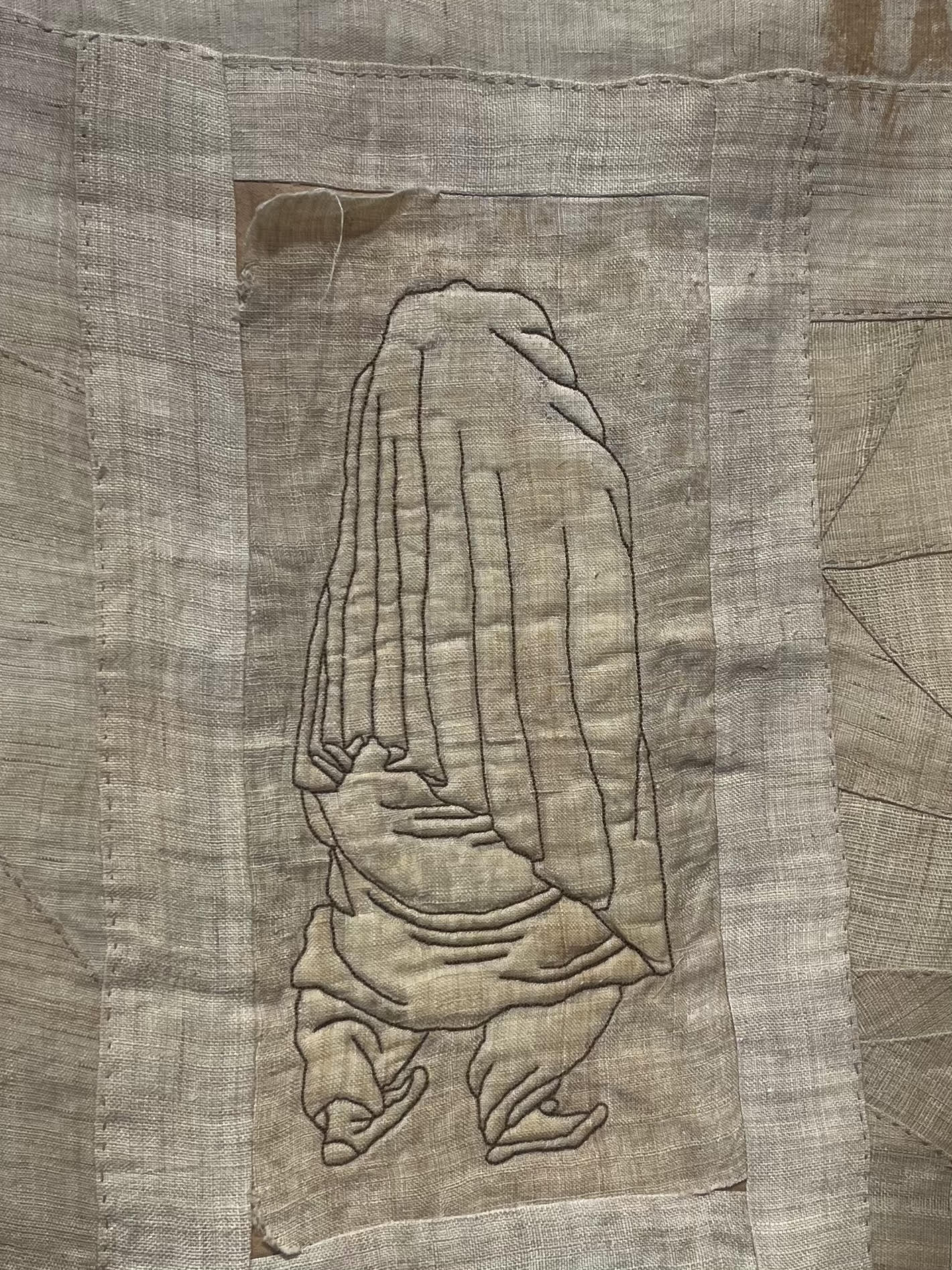
Below, Chunghie Lee’s contemporary version of Korean piecework, followed by her careful stitching for “No-name Woman with Head Covering.”

Read Full Post »

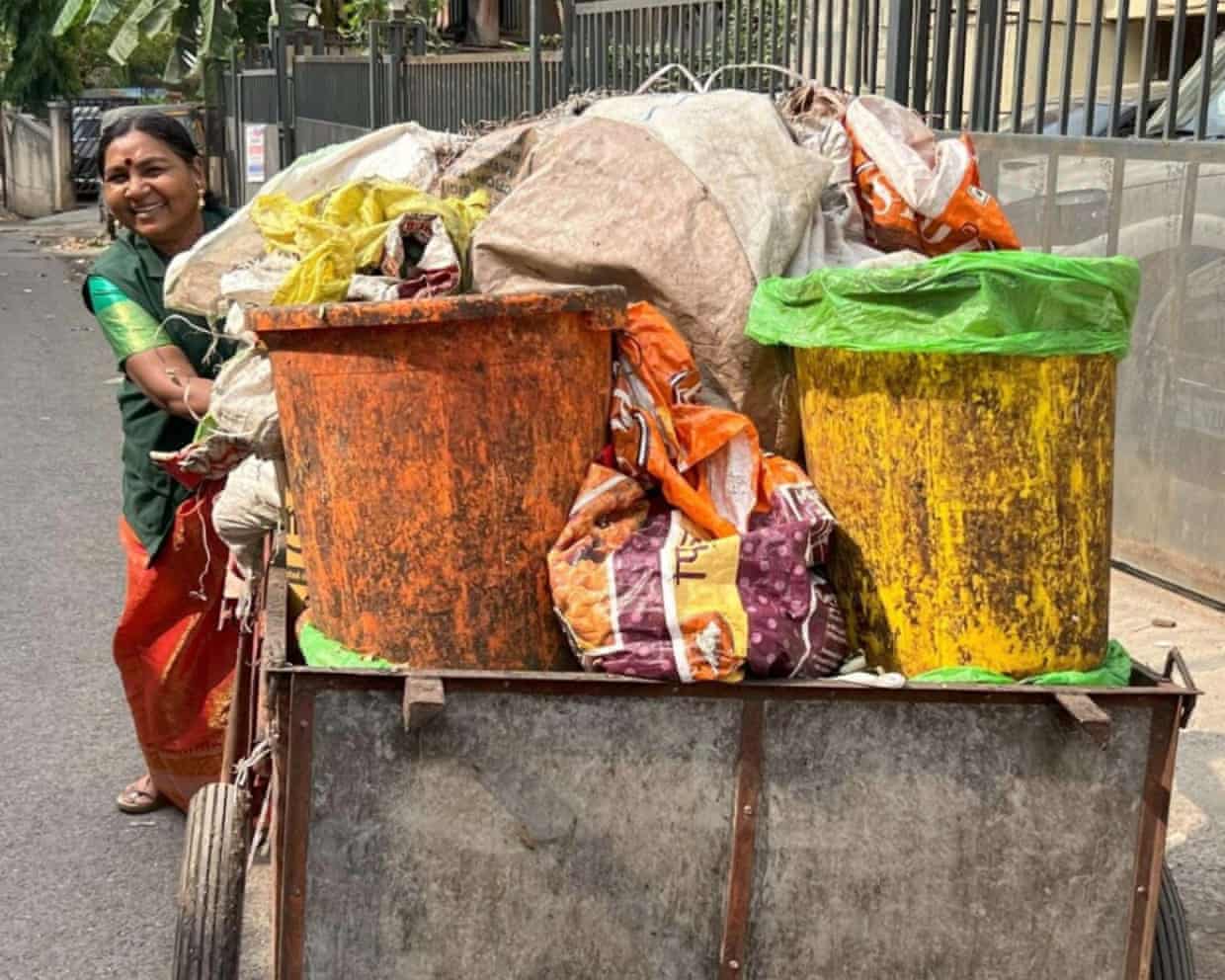
Photo: Swach Cooperative, Pune.
More than 70% of Swach waste collectors in Pune, India, are women.

I like stories about win-win-wins. Today Shatakshi Gawade writes at the Guardian about a cooperative in Pune, India, that is diverting waste from the landfill and cleaning a city while also alleviating poverty. Trash collection is a job the mostly female workforce fought hard to retain when the city failed to renew the contract.

“Three decades ago, Rajabai Sawant used to pick and sort waste on the streets of Pune with a sack on her back. The plastic she collected from a public waste site would be sold for some money that saved her children from begging.

“Today, dressed in a dark green jacket monogrammed with the acronym Swach (solid waste collection and handling) over a colourful sari, the 53-year-old is one among an organized group of waste collectors and climate educators who teach residents in urban Pune how to segregate and manage waste, based on a PPPP – a pro-poor private public partnership.

“ ‘Even though we were earning money and running our homes by collecting and selling recyclable waste in the past, our job was not valued and we were not respected for the work we did,’ Sawant says as she pushes a loaded four-wheeled metal cart up a gentle slope. …

“Swach was set up in 2005 by a trade union of waste pickers, Kagad Kach Patra Kashtakari Panchayat (KKPKP), which was not in favor of contractor-run private models and envisioned a scheme that enhanced waste collectors’ work instead of displacing them.

“Lakshmi Narayan, one of the co-founders of Swach and KKPKP, says: ‘Contractor models typically end up hiring males and displacing the people who traditionally did the work. We strongly felt that a person who has been doing the work for so long brings in the knowledge, experience and intelligence to handle the material in a particular way, and should be the first claimant of that work.’ …

“Rehabilitating the waste workers by teaching them a new skill such as embroidery, and taking them away from their work of waste collection, segregation and sale was not the long-term solution, Narayan says. ‘The waste sector generates a large number of jobs not just in Pune but across the world.’ …

“Through detailed discussions with waste pickers, KKPKP realized that they were diverting a significant amount of waste from the landfill. Segregation at source, plus recycling material recovered from the waste, was contributing to climate change mitigation by minimizing landfill waste, reducing greenhouse gas (particularly methane) emissions, lowering the demand for scarce raw materials and saving taxpayers money by reducing solid waste management costs. …

“The waste sector is the third-largest source of anthropogenic methane emissions, one of the most potent of greenhouse gases, and Swach calculates that its work saves 100,000 tons of CO2 every year.

“In negotiations over a global plastics treaty in Busan, South Korea, last year, the chair’s text highlighted that countries should take measures to ‘promote a just transition for plastic waste management workers, especially waste pickers and other informal workers.’

“Narayan says: ‘We have argued that waste collection itself is green work but it’s not necessarily decent work. And there has to be a way to make it decent.’ Narayan says the Swach model helped transition the work of waste collectors from the informal sector, in which they spent their whole day at public bins and roadsides in tattered clothes, to a more formalized setup, where they began wearing a uniform and started speaking directly to residents.

“Rani Shivsharan, a waste picker and board member of Swach, says: ‘We did not know how to talk to people, since we had never been included in society. We wouldn’t have dared to talk in front of even two people, but now we can fearlessly articulate our demands and thoughts with conviction in front of an audience of 500.’ “

Read at the Guardian, here, about current threats to employment of the traditional waste picker. This story is an abridged version of a piece originally published by Mongabay.

Read Full Post »

Photo: Sabine Glaubitz/dpa/picture alliance.
Notre Dame’s spire is visible once again following the partial removal of scaffolding.

After the Notre Dame cathedral in Paris burned, there were many suggestions for rebuilding it with lots of modern features, but tradition mostly won out. Ancient craft processes and materials were used whenever possible. People from all over pitched in.

Stefan Dege writes at DW, “The fire was still raging at the Notre Dame Cathedral on April 15, 2019, when French President Emmanuel Macron vowed to renovate and reconstruct the medieval monument within five years. Since then, work on the Gothic Episcopal church has been in full swing and is apparently on schedule.

” ‘We are meeting deadlines and budget,’ Philippe Jost, the head of reconstruction efforts, told a French Senate committee in late March. …

“The cathedral is officially scheduled to reopen on December 8, 2024. Though it will not be ready in time for the Summer Olympic in Paris, as was initially desired, visitors to the French capital can once again see Notre Dame’s towering spire following the recent removal of the surrounding scaffolding. The lead roof is also currently being installed. Fire-prevention features, such as a sprinkler system and compartmentalized sections, are also part of restoration efforts. …

“Exactly five years have passed since the fire, which partially destroyed the historic building. The Paris fire department fought for four hours before it was able to confine the fire to the wooden roof truss. The west facade with the main towers, the walls of the nave, the buttresses and large parts of the ceiling vault remained stable, along with the side aisles and choir ambulatories. Heat, smoke, soot and extinguishing water affected the church furnishings, but here, too, there was no major damage. …

“The extent of the destruction was not as great as initially feared. ‘Thank God not all the vaults collapsed,’ German cathedral expert Barbara Schock-Werner told DW at the time. Only three vaults fell in the end, and there was a hole in the choir. …

“French donors alone pledged €850 million ($915 million) to help restore the landmark. But money and expertise also came from Germany, with Schock-Werner taking over the coordination of German aid.

Cologne Cathedral’s construction lodge restored four stained glass windows that had been severely damaged by flames and heat. The four clerestory windows with abstract forms are the work of the French glass painter Jacques Le Chevallier (1896-1987), and were produced in the 1960s.

“In the glass workshop in Cologne, they were first freed from toxic lead dust in a decontamination chamber. The restorers then cleaned the window panes, glued cracks in the glass, soldered fractures in the lead mesh, renewed the edge lead and re-cemented the outer sides of the window panels. …

“As dramatic as the fire was, a discovery by French researchers at the fire site was just as sensational: iron clamps hold the stones of the structure together. Dating and metallurgical analyses revealed that these iron reinforcements date back to the first construction phase of the church in the 12th century. This may make Notre Dame the world’s oldest church building with such iron reinforcement.

“But more importantly, the mystery of why the nave was able to reach this height in the first place has also been solved. When construction began in 1163, Notre Dame — with its nave soaring to a height of more than 32 meters (about 105 feet) — was soon the tallest building of the time, thanks to a combination of architectural refinements. The five-nave floor plan, the cross-ribbed vaulting with thin struts and the open buttress arches on the outside of the nave, which transferred the load of the structure from the walls, made the enormous height possible. …

“In a stroke of luck, the cathedral’s showstoppers — the statues of the 12 apostles and four evangelists that architect Eugene Viollet-le-Duc grouped around the ridge turret he designed in the 19th century — survived the fire unscathed because they had been removed from the roof shortly beforehand for restoration.

“Some 2,000 oak trees were cut down for the reconstruction of the medieval roof truss. To work the trunks into beams, the craftsmen used special axes with the cathedral’s facade engraved on the blade. These can be seen in a special exhibition in the Paris Museum of Architecture. The show also details the painstaking work that was required to reinstall stones and wood in their original places to make the reconstruction as true to the original as possible.”

More at DW, here. No firewall.

Read Full Post »

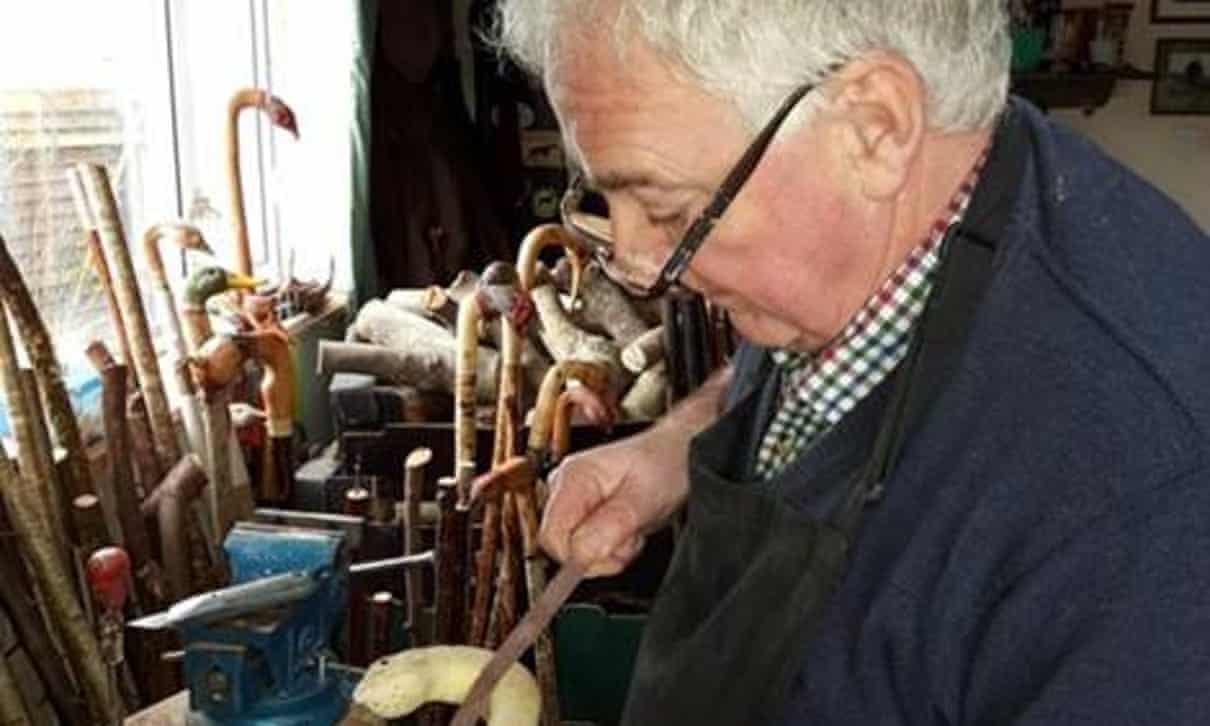
Photo: Robert Mckergan.
Robert Mckergan, 66, is a stick-maker from Portstewart, County Londonderry.

When I saw this story on traditional crafts, I thought of the late, great James Hackett of Moate, Ireland, and the handsome shillelagh he made for John. There was something so special about knowing the maker and knowing that his skill had been handed down through generations. Although his day job was harness making, I suppose James might also have been called a “stick-maker,” like the craftsman in this article.

Vanessa Thorpe wrote at the Guardian in March 2020 about organizations that are working to preserve traditional craft skills like those.

“Clay pipe making, wainwrighting, tanning and making spinning wheels – all are skills of the past that can offer us a sustainable future. This is the message behind a drive, launched this spring, to preserve endangered traditional crafts in Britain.

“With a new award of £3,000 available, together with fresh support from outdoor pursuits company Farlows, the Heritage Crafts Association is calling for a renewed effort to save old skills and pass them down to the next generation.

“The association’s list of ‘critically endangered’ ancient techniques has often been regarded as simply concerned with conserving history. But renewed interest in sustainability, together with a growing dislike of throwaway consumer culture, has prompted a new campaign. …

“The new HCA award was set up this month by Prince Charles, the association’s president: craftspeople are invited to submit a proposal to help secure the survival of a craft ranked either endangered or critically endangered on its official list. …

‘We have a rich heritage of craft skills that can be regarded as just as important as historic buildings and treasured objects,’ [Patricia Lovett, chair of HCA] said. ‘However we are in danger of losing a number of these crafts: our research has found that in some cases there are only one or two makers left.’

“The at-risk list is compiled by combining a conservation status ‘red list’ system used by the International Union for Conservation of Nature and the Rare Breeds Survival Trust watchlist.

“A heritage craft, usually carried out by an individual in small workshops or at home, is considered viable only if there are sufficient makers to hand down their skills to a younger generation. Last year the traditional paper-making skill of ‘mold and deckle’ was judged extinct, and the vanishing of production in turn endangers paper making. Those deemed merely to be endangered are those crafts which are not financially viable as a sole occupation and those which have no clear system for training or passing on skills. Among these are fan making, watch making and walking stick making – all involving the manufacture of items that are still popular with the public, and even regarded as essential by some.

“Farlows, a company closely associated with fields sports and makers of traditional fishing rods, works directly with many artisan manufacturers, in particular tweed makers, and so its management has decided to formalise that arrangement by backing the heritage association, which they see as a key umbrella body.

“ ‘There is a real knack to making something like a split cane rod. People who fish really value it,’ said [Robin Philpott, chief executive of Farlows].

“The danger, according to Farlows, which began trading 180 years ago and in 1942 switched all its manufacturing to support the war effort, lies in widespread mass production. Although the company now has a Russian owner, its management say it still aims to keep alive the key trades it supported when it was owned and run by family members. …

“Robert Mckergan, 66, is a stick-maker from Portstewart, County Londonderry. ‘For me, it started as a hobby, but I feel we need these crafts to go on. I am a retired engineer and while you can teach yourself as I did, not everyone can do it. You need to be competent with your hands.

“ ‘You couldn’t live on this work, I don’t think. Each stick is about 20 hours’ work. But you get a sense of achievement and of purpose. When I see a tree, I see all the potential carvings. And of course the smell that comes from a piece of wood, say cherry, as you work is lovely.’ ”

More at the Guardian, here. An update is at the Heritage Crafts Association, here.

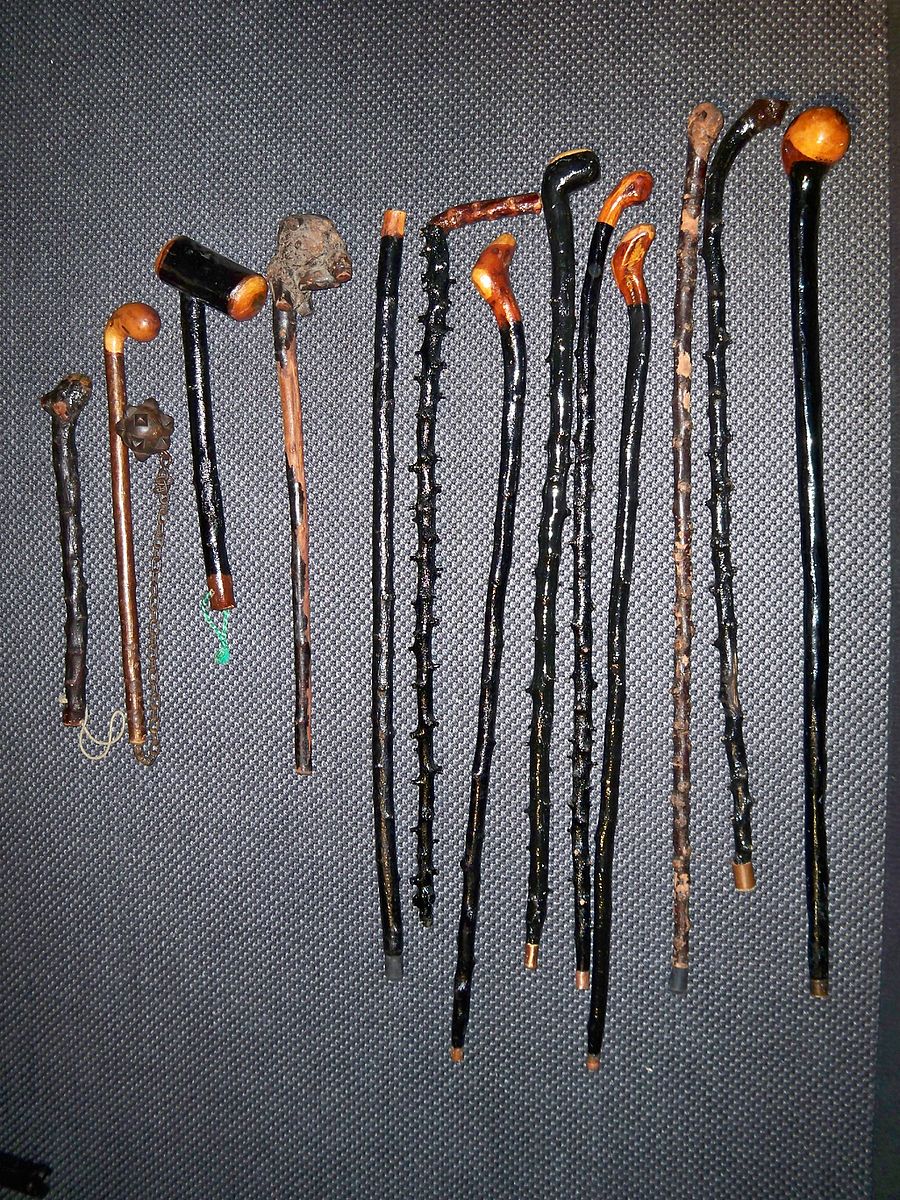
Photo: Wikimedia.
Shillelaghs. See the one James made for himself, here.

Read Full Post »

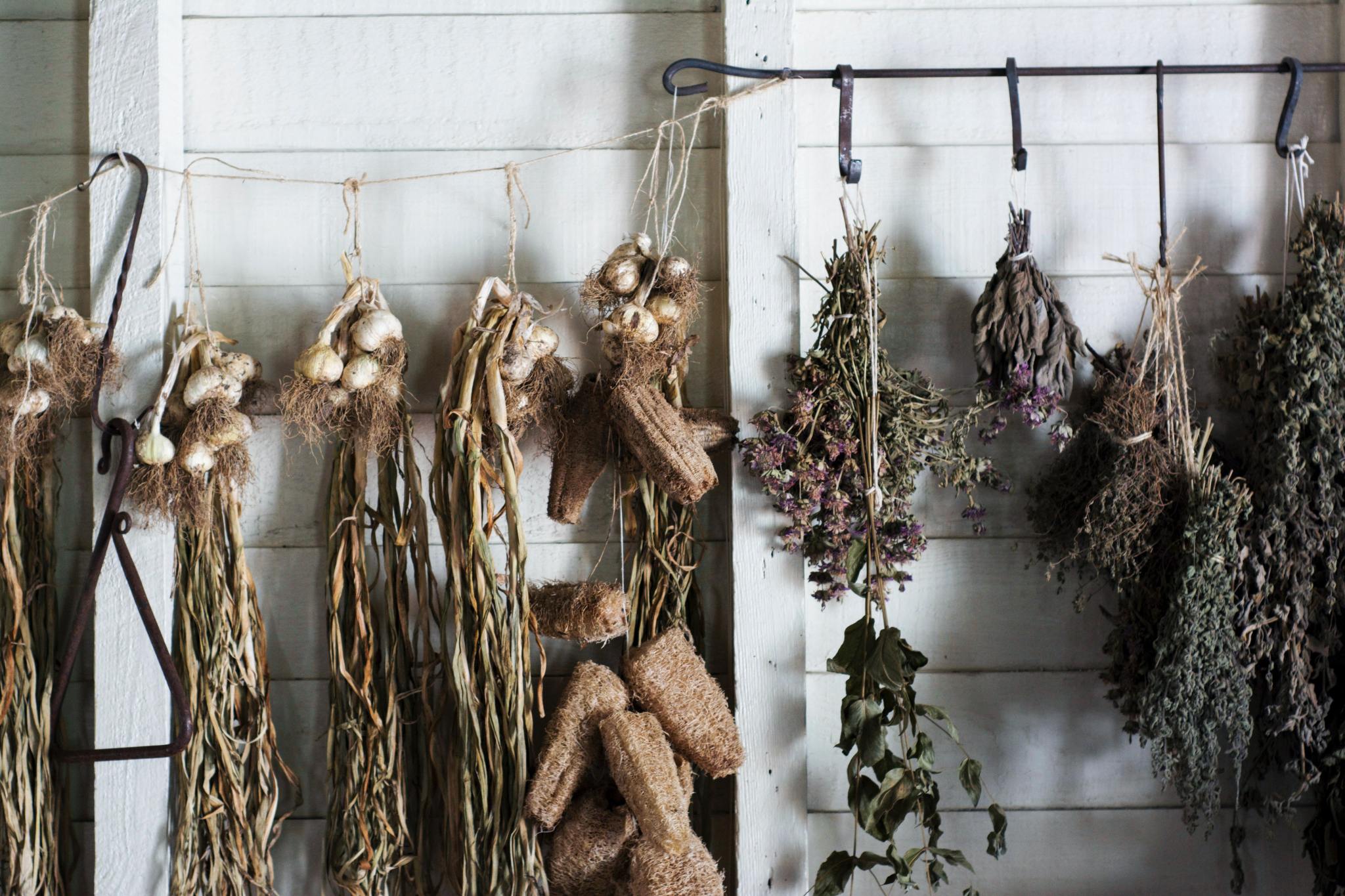
Photo: Landis Brown/The Archive of Healing at UCLA.
The Archive of Healing describes cures, rituals, and healing methods spanning two centuries.

My daughter-in-law and I got interested in a kind of tumeric tea that we bought at the farmers market before Covid. Since then, I’ve tried other kinds of tumeric tea just because I like the weird flavor. And as today’s article points out, tumeric has long been known to reduce inflammation.

At Hyperallergic, Valentina Di Liscia wrote recently about similar tried and (sometimes) true traditional remedies that are featured in something called the Archive of Healing.

“The digital archive features hundreds of thousands of entries describing cures, rituals, and healing methods spanning two centuries, with a focus on protecting Indigenous knowledge from for-profit exploitation.

“The University of California, Los Angeles (UCLA)’s Archive of Healing, one of the most comprehensive databases of medicinal folklore in the world, is now accessible online. The interactive, searchable website boasts hundreds of thousands of entries describing cures, rituals, and healing methods spanning more than 200 years and seven continents.

“The site … focuses on the preservation of Indigenous traditions and customs related to wellness.

“The project started five decades ago, when former UCLA professors Wayland Hand and Michael Owen Jones led teams of students to document medicinal practices described in university archives, published sources, anthropologists’ field notes, and their own family folklore.

In 1996, the school received a grant to digitize the research — encompassing more than a million handwritten four-by-six note cards — and transform it into a searchable database then known as the ‘Archive of Traditional Medicine.’

“But somehow, the massive trove remained a little-known resource until 2012, when a librarian at UCLA came across the database and alerted Dr. David Delgado Shorter, Professor of World Arts and Cultures/Dance at UCLA. Shorter, who had just published a book based on fieldwork with the Yoeme communities in northwest Mexico and launched a digital tool to help Indigenous people preserve their languages, was ‘blown away’ by the archive.

“ ‘It was just sitting there probably for years without people knowing about it,’ Shorter said in an interview. … ‘In some ways it’s fantastic that no one knew about it, because in this day and age, someone could have created a mining program and simply just pulled all the material from the database,’ he added. … His team safeguarded the data in a secure server.

“One of Shorter’s priorities is protecting Indigenous knowledge from exploitation by for-profit entities, such as pharmaceutical companies. For that reason, some entries in the archive do not mention specific plant names or recipes unless that information is already widely known.

“As dangerous health-related disinformation surged during the coronavirus pandemic, many have become wary of alternative medicine. The archive’s initial compilers were folklorists, not medical doctors, and the website includes a disclaimer that the entries do not constitute medical advice. … Users can flag entries they deem inappropriate. …

“Most importantly, these spices, plants, and other healing methods can deepen our understanding of how different cultures view the body, wellness, and community.

“ ‘The whole goal here is to democratize what we think of as healing and knowledge about healing, and take it across cultures in a way that’s respectful and gives attention to intellectual property rights,’ said Shorter.”

Hooray for librarians who alert people to “treasure troves”! More at Hyperallergic, here.

Read Full Post »

Photo: Ann Hermes/ Christian Science Monitor
Judge Abby Abinanti presides over the Yurok Tribal Court in Klamath, California.

There has been a movement lately to restore to tribal courts the adjudication of certain types of crimes committed by Native Americans. The idea is that the traditional ways of handling problems often work better than those imposed by an outside system.

Henry Gass writes about one such court at the Christian Science Monitor.

“The mouth of the Klamath River – the spiritual heart of Yurok country – can be hard to find.  … Ira Thompson is here for his court date anyway, having made the 30-minute drive south from Crescent City. He grew up here, and when he got in serious trouble for the first time – a third DUI and a possible four months in jail – he knew he needed to come home. …

“So he reached out to the Yurok Tribal Court. He reached out to Abby Abinanti. …

“As Mr. Thompson enters, the air tastes of musky angelica root (burned by a paralegal minutes earlier to cleanse the room of pain, anxiety, and other negative energy).

“Judge Abby, as everyone calls her, is not your average judge. She sits at a table across from Mr. Thompson wearing her typical court attire: gray jeans and a crimson turtleneck. …

“ ‘How are things going?’ she asks him.

“ ‘Staying home,’ he replies.

“Mr. Thompson is under house arrest and participating in the court’s wellness program, a treatment employing Yurok cultural immersion. That’s the deal the tribal court struck with the county instead of jail time. He’s been home carving earrings out of redwood, making elk horn purses, and selling them. ‘That sounds good,’ she says, bringing the hearing briskly to an end about five minutes after it started. …

“When Judge Abinanti joined the Yurok Tribal Court in 2007 it operated like a normal state court, albeit on a much smaller scale. When most Yuroks got into trouble with the law they went to local state courts, and they entered a system designed to be adversarial and punitive. Root causes often went ignored and unaddressed, and recidivism inevitably followed.

“Judge Abinanti has taken the court in a different direction: one more communal and rehabilitative. It’s a judicial path followed by other tribes around the country. Personal responsibility and renewal – two pillars of the once nearly extinct Yurok culture – now permeate the court’s functions.

“Incarceration has largely been replaced by supervised release combined with Yurok traditions such as dancing and wood carving. Lawyering up for family disputes and child custody battles has been replaced by mediation. Almost every case is resolved through mediation – victims and perpetrators talking with each other – even if it takes years. Tribal courts resemble the growing U.S. restorative justice movement, which emphasizes repairing the harm caused by criminal behavior and getting all stakeholders involved. Judge Abinanti says it just resembles the old Yurok values system.

“The Yurok were village people, she likes to say. Living in clusters of redwood cabins along the Klamath River, people in the communities were so interdependent that when villagers did something wrong, they couldn’t just be locked away. They had to face consequences, but also become responsible, productive community members again. That’s tribal justice.

“After what she calls ‘the invasion’ by European settlers, the Yurok way of life was lost. By helping revive those values and applying them to modern-day problems – addiction, domestic violence, foster care – the Yurok say she’s not only meting out justice, she’s helping revive the tribe itself. And some U.S. criminal justice reformers are now beginning to explore what lessons can be learned from tribal courts. …

“Any Yurok tribe member is eligible to have their case heard in the tribal court (except for felony cases, which go to state or federal court). Judge Abinanti has expanded the kinds of cases the tribal court hears. … She also negotiates with other judges for alternative sentences for Yuroks convicted in other jurisdictions. …

“To fully understand Judge Abinanti’s approach to justice requires going back to the mid-19th century. … Massacres, slavery, and disease reduced California’s native population to about 30,000 within 23 years of statehood. Some tribes lost 95 percent of their population. The Yurok Tribe says three-quarters of its population died in this period, and the tribe faded into obscurity. …

“Judge Abinanti says that the Yurok history of decimation creates a generational trauma, a mental framework that shapes a cycle of behavior among some tribal members. ‘Until they get that, they feel sort of caught up in something that they can’t control or stop because they don’t know what it is or where it came from,’ she says. ‘We have to take responsibility for acquiring those habits and we have to deal with it….

“ ‘It’s one thing to just stop behavior, but I think it helps to stop the behavior if you know why,’ she says. …

“Understanding the ‘why’ helped change the ballgame for Jon Riggs, who has Yurok, Chetco and Cherokee ancestry. Raised off the reservation in a drug-addicted family, he started drinking and doing drugs at a very young age. He was 18 when he was arrested for the first time. …

“When last year he came back to the Klamath for the Jump Dance – a dance that’s meant to renew the world – he ‘was able to connect with something that was much deeper than I had ever done before.’ In January, he became a wellness case manager for the tribal court.”

More here.

Read Full Post »

Photo: AFP/Sebastien Rieussec
A dancing contest in Mali challenges entrants to excel in traditional dances not their own. Here is a contestant in the “Faso Don,” performing during the filming of the show in the Malian capital, Bamako.

In Mali, an African country still suffering from the effects of French colonialism, ethnic groups have often had trouble getting along, and extremists have moved into vulnerable areas. (See my blog post about a secret operation to save ancient manuscripts from the radicals’ destructive rampage.)

But better days are ahead, especially if more people act on their ideas to promote peace and coexistence.

Sebastien Rieussec wrote recently for Agence France-Presse [APF] about one such person.

“All 3,000 seats in the cavernous Palace of Culture in Bamako had been snapped up, and the mood was at fever pitch as the TV dance competition reached its climax. The three finalists took to the floor one by one, dancing alongside a celebrity — a format familiar to viewers of talent shows around the world.

“But here’s the difference: the three hopefuls each had to perform a traditional dance from a region of Mali that was not their own. …

“In the landlocked Sahel state of Mali, the show has been a raging success. And it has bred a desperately-needed sense of unity in a country burdened by jihadist violence and ethnic tensions.

“The competition is the brainchild of dancer and choreographer Sekou Keita. Just six years ago, he was wondering how he could reverse the decline of traditional dance in Mali, a country whose music is now achieving global fame.

” ‘Our dances are so varied, we have a number of ethnic groups — we’re very lucky to have such cultural wealth,’ he told AFP. … ‘But [dancers] don’t know the traditional dances of their own country.’

“From this came his idea for a program that explored ancient cultural roots and built bridges across ethnic divides — ‘Faso Don,’ or ‘Dances of the Country’ in the Bambara language.

“Over six weeks, TV audiences shared the fate of eight young men and women from different regions, who shared a house Big Brother-style in Bamako, the capital.

“Each week they performed before an audience and the TV cameras, their numbers progressively falling as a competitor was eliminated by a vote by the public and the jury. … The final took place last weekend before an audience exhilarated by the ground-breaking, cross-cultural performances.

“Dressed in traditional costumes, the finalists performed one dance from their region and one from another region, accompanied by Malian stars such as musician Bassekou Kouyate and singers Habib Koite and Oumou Sangare. …

“The winner was Rokia Diallo, a woman from the Fulani pastoral community in Sikasso, southern Mali. Dressed in a flowing gown and a veil, she interpreted the takamba, a sinuous, sensuous dance from the Songhai group in the far north of the country.

” ‘It’s the first time I’ve seen something like this,’ said hip-hop dancer Oumar Tamboura, who had come to support a relative who was also one of the finalists. ‘Until now, people weren’t interested in folk dance, tradition and costumes.’

“Faso Don has not just revived interest in generations-old regional dances in Mali. It has also reinforced mutual respect in a country whose reputation for hospitality is tragically being supplanted by one for violence.”

Read more of this hopeful initiative here. It’s another example of one solitary individual having an idea and making a big difference.

Read Full Post »

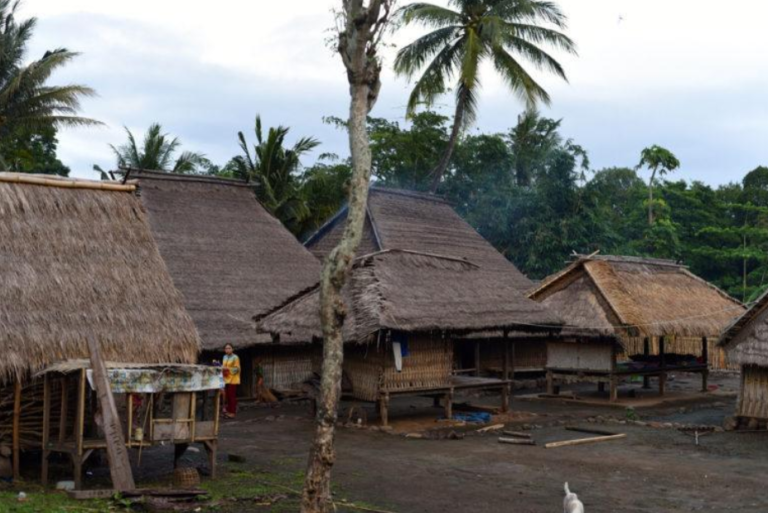
untitled1-768x513

Photo: Fathul Rakhman/Mongabay-Indonesia
The traditional homes on the island of Lombok have survived several earthquakes over the years. Concrete homes crumble.

Often there is wisdom in the old ways. That’s what residents of an Indonesian island in the Ring of Fire learned after a series of earthquakes created havoc with modern concrete structures.

Fathul Rakhman has a report at Mongabay.

“Jumayar’s house fell early on Aug. 5, as the second of four large earthquakes in the span of three weeks ripped through the Indonesian island of Lombok, clobbering his village of Beleq in the process. …

“Although Lombok, which is next to Bali, sits squarely on the quake-prone Ring of Fire, heavy, concrete homebuilding is the norm. These rigid structures became death traps during the earthquakes. Only the handful of wooden traditional houses in Beleq, with their lightweight, flexible designs, emerged unscathed. …

“Though elements like floor height or wall width may vary in different parts of the island, all traditional Sasak homes employ the same basic design: Thatched bamboo walls enclose dirt floors, connecting them to roofs of woven reeds. … Wooden homes can sway, or ‘breathe’ when earthquakes strike, concrete houses cannot; they have no flex and topple easily.

“In North Lombok, the epicenter of the damage, 70 percent of the houses collapsed or were severely damaged. Rebuilding will require hundreds of millions of dollars, according to government estimates.

“In Beleq, families in traditional houses ran outside like everyone else, fearing for their lives. Not a single one of their traditional structures fell, even as the concrete homes around them crumbled.

‘If the government offers to rebuild here, we will reject the [construction of] concrete homes,’ said Sahirman, the Beleq village head. ‘We want to go back to our ancestral homes.’ …

“ ‘The ancestors bequeathed to us an architecture that is in harmony with nature,’ said Lalu Satriawangsa, chairperson of the provincial AMAN [the country’s largest indigenous rights nongovernmental organization] chapter. …

“The Indonesian government has typically looked upon the traditional houses as ‘slum dwellings,’ an indicator of poverty. But Lalu says the government should support the construction of traditional houses. Not only are they cheaper, but as the recent disasters proved, they are infinitely safer.

“For too long traditional homes have been seen to mark the persistence of poverty rather than the preservation of culture, ignoring their instrumental value, Lalu said.

“ ‘Now is the time for us to campaign for [the rebuilding of] homes that are more in tune with nature,’ he said. …

“As rebuilding plans take form, Sahir, the Beteq village head, believes the community should look to the past for inspiration.

“ ‘I don’t want to sleep in a concrete house ever again,’ he said.”

More at Mongabay, here.

Read Full Post »


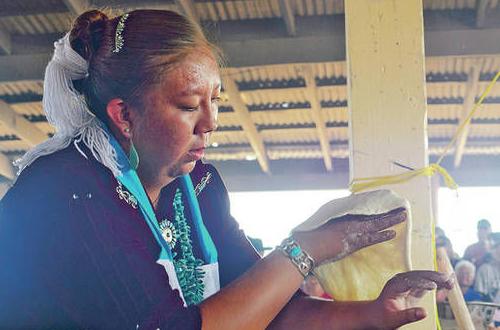
Photo: Adron Gardner/Gallup Independent via AP
Fry bread is available at the Navajo Nation Fairgrounds in Window Rock, Ariz., but is no longer part of the Miss Navajo Pageant competition.

It’s interesting how customs that evolve out of oppression can sometimes be so warmly appropriated that they will be missed if discontinued. As tribes like the Navajo start to promote healthier ancestral foods, some feel wistful about the fry bread that families got used to over the years.

Felicia Fonseca writes at the Sante Fe New Mexican, “The Miss Navajo Nation pageant is parting ways with fry bread, the fluffy, golden brown delicacy that’s become a symbol of Native American culture but is rooted in oppression.

“Women vying for the crown [in September] in Window Rock [prepared] traditional Navajo foods instead, like blue corn mush or a cake made at puberty ceremonies.

“Outgoing Miss Navajo Ronda Joe said the tribe’s new ambassador must know the history of those foods and speak about them in Navajo.

“ ‘We need to educate our people to utilize plants as food that are tied to our land, culture and beliefs,’ she wrote in an email. The change aligns with a movement in Indian Country to refocus on traditional foods and reinforce native languages.

“Fry bread was born out of government rations given to Navajos on a forced relocation to Eastern New Mexico in the 1860s. Traditional Navajo breads or cakes would be made of corn and cooked on hot stones or in the ground, not in a cast-iron pan filled with oil.

“Fry bread can be found across the Southwest in Indian tacos, slathered in honey or powdered sugar, or broken off in pieces and used as a spoon for stews. The exact ingredients vary and everyone claims ‘mom’ makes it best.

“Despite being removed from the tribal pageant, fry bread offers lessons in survival, being a contributor and creating something out of nothing, said Jocelyn Billy-Upshaw, Miss Navajo 2006-07. She remembers her mom saying she’d never get married unless she knew how to make bread. …

Brian Yazzie, a Navajo chef who focuses on precolonial foods in Minneapolis, Minnesota … praised the switch from fry bread to a traditional food presentation.

“ ‘It encourages and inspires youth to step up and take a challenge of ancestral knowledge and ancestral roots,’ he said. ‘It makes my heart happy to see that.’ ”

More.

Read Full Post »