Feeds:
Posts
Comments

Posts Tagged ‘underground’

Photo: Elliott Jerome Brown Jr. for the New York Times.
Recently, the New York City subway system featured an audio-based public art project by Chloë Bass. Composer Jeremy Toussaint-Baptiste created the distinctive sound that starts each announcement. His shirt says, “If you see something, free something.”

In September and October, the New York City subway system, the MTA, had some fun with an art installation that involved the public address system. If you’ve ever traveled underground in New York, you know that there is art everywhere, some of it permanent, like mosaics, others ephemeral like this one.

Aruna D’Souza announced it at the New York Times: “Through Oct. 5, commuters making their way through the crowds at 14 subway stations throughout New York may notice a new type of announcement on the public address system. ‘What we hear changes how we feel. How we feel changes what we do. And what we do changes the world around us, even if just for a moment,’ one says.

“Some sound like snippets of overheard conversations: ‘Remember when Aretha Franklin died and people were singing her songs together on crowded train cars?’

“Each will end with the words ‘If you hear something, free something,’ which is also the title of this ambitious public art project by the conceptual artist Chloë Bass. …

“Bass turns around the instruction to be ever-vigilant in the face of threat, coaxing us instead ‘to return to ourselves in public space, and to experience it as a place where we engage with others instead of only being suspicious of others.’

“The project is a collaboration among Bass, the public art organization Creative Time and the Metropolitan Transportation Authority’s Arts & Design department. The M.T.A. has had a robust public art program over the years … but this is the first time they’ve allowed an artist to broadcast over the M.T.A.’s public address system.

“The 10- to 45-second announcements, 24 in all, will be aired in English, Spanish, Arabic, Bangla, Haitian Kreyòl, and Mandarin — six of the top 10 commonly spoken languages in New York City. (ASL translations will also be available on the Creative Time website.)

They are voiced by a range of vocalists, assembled in part through an on-the-street casting of regular New Yorkers. …

“Bass, 41, conceived the project over the course of her long train and bus commutes between Brooklyn and Queens College, where she taught in the visual arts program for more than eight years. [She says] ‘after 2016, there were more and more announcements, and they were really wrecking my emotional landscape.’

While broadcasts conveying basic information or emergency instructions were understandable and necessary, she said the constant reminders of police presence and increasingly frequent attempts to shape people’s behavior disrupted her thoughts. ‘We’re constantly being asked to internalize the idea that we are supposed to be watchful over each other, not in a supportive or caring way, but to report things to someone else,’ she said. …

“Diya Vij, curator at Creative Time, said that when she and Bass started thinking about what the project could achieve, they realized ‘it could help people see themselves and each other again and think about being neighbors and community differently in a space that might feel more tense than it should.’ …

“In addition to voices, the messages include sonic elements made in collaboration with the musician Jeremy Toussaint-Baptiste, who created the musical tone that opens each. (It draws in part from Bass’s research into the healing qualities of certain frequencies.)

“Before writing the scripts, Bass convened a series of focus groups composed of commuters, M.T.A. employees, transportation advocates and teenagers. (‘Large groups of teens are everybody’s subway nightmare, but they’re New Yorkers, too,’ she said.)

“Maggie Murtha, part of the project team at the M.T.A., said one of her takeaways from the focus groups was that ‘there was a longing to feel connected to the people around you.’ ”

More at the Times, here.

Read Full Post »

Photo: BBC/Sarah Rainsford.
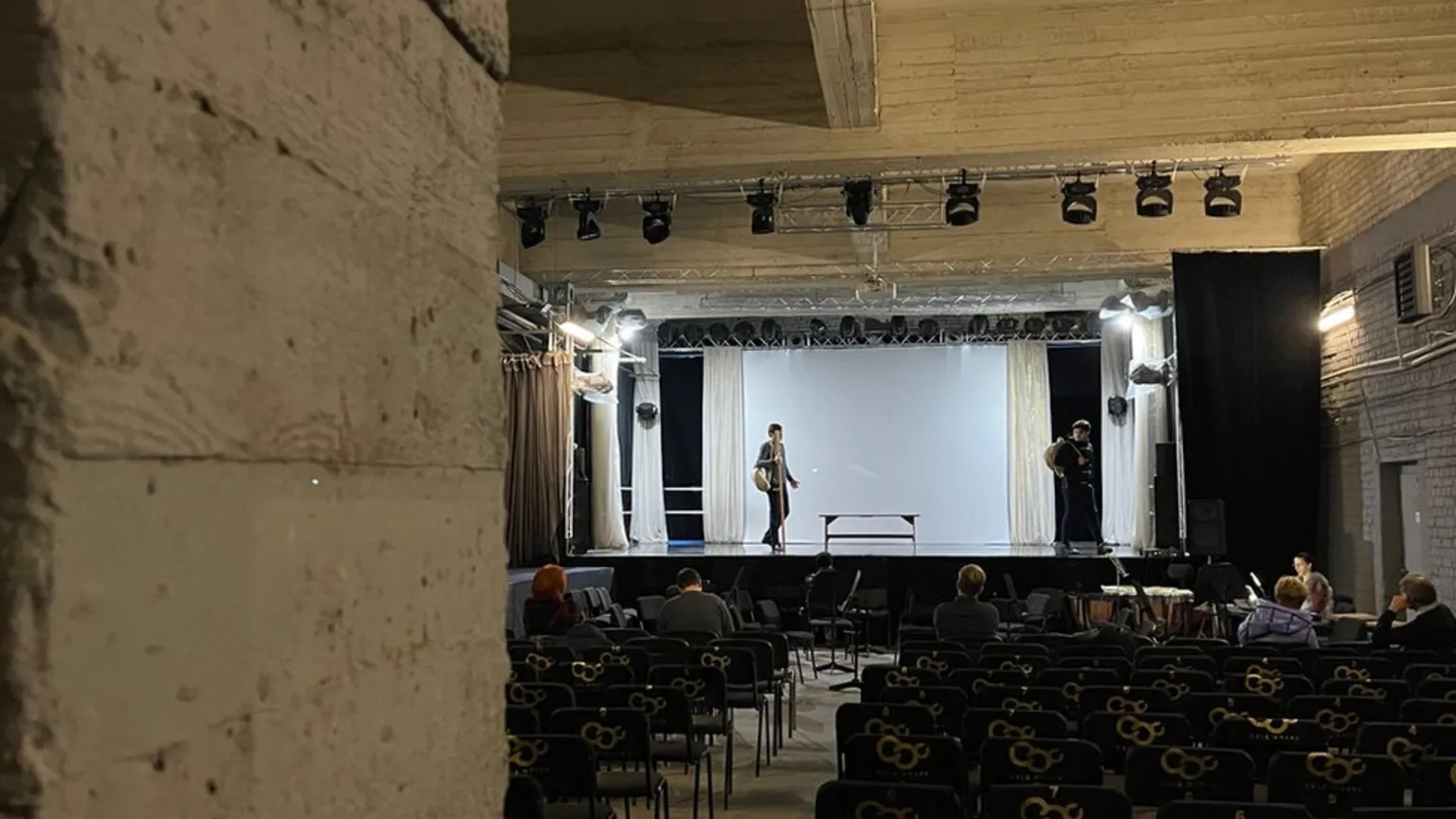
Culture has had to move underground in Kharkiv, to hide from Russian drone and missile strikes.

I want to tell you about a beautiful initiative to move culture underground in Kharkiv, Ukraine. But you know that in a county at war, plans are made with the knowledge that they may go off track at any time. What matters most about the story is the indomitable spirit of the Ukrainian people and how they always strive to get things back on track no matter what.

The BBC’s Eastern Europe correspondent Sarah Rainsford wrote about the initiative in March.

“If you want to go to a concert in Kharkiv these days, you have to know who to ask. In Ukraine’s second city, just 40 kilometres [~25 miles] from the Russian border, mass gatherings have been banned since the start of Russia’s full-scale invasion. Most cultural events that do take place are not advertised to make sure they do not get shelled.

“But after two years of near-silence, the Kharkiv National Opera and Ballet is about to burst back into sound — underground.

” ‘We want to bring life back to Kharkiv, including cultural life,’ the theatre’s general director, Ihor Touluzov, explains. ‘Demand for any kind of cultural event here is really high.’

“The bunker theatre is being prepared beneath the main auditorium, down several flights of stairs.

“It has no dress circle, chandeliers or champagne — and a lot of grey concrete. But follow the sound of music and it leads to a raised stage with spotlights and rows of seats. Most importantly, there’s a company of singers, dancers and musicians desperate to perform before a proper audience again.

” ‘We really miss our big hall, the feeling of being on a big stage with lots of people watching,’ violinist Natalia Babarok explains. …

“In the first weeks after the full-scale invasion, when Russian troops were closest and the shelling most intense, a missile landed near to the theatre. Chunks of stone were torn from the side of the building and windows blown out. The roof caught fire several times, but staff managed to extinguish the flames before they took hold. The risk to life remains. …

“When the main theatre closed in February 2022, Volodymyr Kozlov did not stop singing. Thousands of Kharkiv residents were living on the metro then, staying underground away from the explosions. So Volodymyr and a group of fellow artists would tour the stations, performing three concerts a day, a mixture of classical music and popular tunes.

“When he was not singing, Volodymyr was helping to evacuate residents from the areas under heaviest fire or delivering food and other supplies.

” ‘It was impossible to stop, because if you did then the thoughts [of danger] would enter your head, and you couldn’t let them,’ the baritone explains. …

“Volodymyr is performing alongside his wife, Yulia Forsyuk, a soprano soloist who plays the lead role in the Ukrainian opera, Natalka Poltavka. …

“Now the pair are rehearsing to perform for Kharkiv residents again, safely beneath the city streets. But it’s not just the surroundings and acoustics that are different. … One man was killed fighting on the frontline and several more have been mobilized; others are scattered as refugees.

“For those who have stayed in Kharkiv, everything is being adjusted to their reduced new reality.

” ‘Our director adapts the score to feel like everyone’s still there,’ Natalia Babarok describes the changes for the orchestra.

” ‘My husband plays the trombone, but he’s told to play the bassoon and the horn parts too. As a violinist, I might also play the part of the flute. You have to play for yourself, and for someone else.’ “

The long, beautiful article is at the BBC, here. No paywall.

Alas, last Friday: “KYIV, May 10 (Reuters) – Russian forces launched an armored ground attack on Friday near Ukraine’s second city of Kharkiv in the northeast of the country and made small inroads, opening a new front.”

Read Full Post »

Photo: Stiftung Jüdisches Museum Berlin/Jewish Museum Berlin/ Convolute 816/Curt Bloch collection
Het Onderwater Cabaret, 1943. The satirical magazine, now on exhibit in Berlin, was produced by a German Jew hiding in a Dutch attic during the war.

Both the New York Times and the Guardian reported recently that a German Jew, hiding like Anne Frank in a Dutch attic during WWII, produced an angry, humorous magazine because he could. His magazine was in the news thanks to an exhibit in Berlin.

Nina Siegal writes at the Times that many people hid in attics during the war but that Curt “Bloch’s experience was different because, in addition to sustenance and care, his helpers brought him pens, glue, newspapers and other printed materials that he used to produce a startling publication: his own weekly, satirical poetry magazine.

“From August 1943 until he was liberated in April 1945, Bloch produced 95 issues of Het Onderwater Cabaret, or the Underwater Cabaret. … Writing in both German and Dutch, [he] mocked Nazi propaganda, responded to war news and offered personal perspectives on wartime deprivations.”

Charlie English at the Guardian has more from the perspective of Bloch’s daughter, Simone, now 64.

“As the daughter of antiques dealers, Simone Bloch grew up in a New York house filled with rare and mysterious materials. The dining room was packed with precious volumes, including a collection of small, hand-written magazines, illustrated with collages in a dadaist or surrealist style.

“ ‘All of my parents’ books were kind of intimidating,’ Simone, now 64, says. ‘But this was weirder. It wasn’t something I would ever want to pick up.’

“She found them a little creepy, with their frequent images of Adolf Hitler and other wartime leaders. It was only many years later that Simone came to understand that these magazines represented her father’s resistance to the Holocaust.

“Born in Dortmund in 1908, Curt Bloch was the first in his family to go to university, studying law in the German capital, which at that time was the centre of the buzzing avant-garde cabaret scene. Curt was Jewish and objected to Hitler from the first. In 1933, when Hitler introduced a law banning Jews from civil service positions unless they had fought in the first world war, Bloch wrote a biting response to the authorities, declaring that, no, he hadn’t served in the war since he was only five when it had broken out. When the Gestapo came knocking, Curt was ready. He slipped out of a top floor window with some cash he’d hidden, and fled across the rooftops, eventually reaching Holland.

“But he wasn’t safe for long. The Germans invaded the Netherlands in 1940, and … Bloch took refuge in the crawlspace above the attic of a small suburban house in Enschede, on the German border. It was here that he began to produce the first issue of his magazine. He wrote in fountain pen, made collages from cuttings and stitched the pages together by hand. He called his volume the Underwater Cabaret in reference to the Dutch term for people in hiding, ‘divers,’ and to the favored form of political theatre in Weimar Berlin. Friends in the Dutch resistance helped circulate the Underwater Cabaret to 30 or so other ‘divers.’ They would bring the issue back a week later, by which time Bloch had prepared a new one.

“Alongside political commentaries, Bloch published highly personal writing. His mother Paula and little sister Hélène had followed him to the Netherlands, and had also gone into hiding. In May 1943 they were detained. … He devoted several poems to Hélène, one of which contained the lines: ‘Stay strong against the hatred, betrayal, and scorn / And when the war someday comes to an end / I will go looking for you.’

“Writing this kind of material was extremely dangerous. … Why take the risk? Simone believes it was a way for her father ‘to fight his own despair.’ It was a demonstration that, even in such circumstances, resistance was possible. ‘It’s getting away with something when you can’t get away with anything,’ Simone suggests. …

“In all, Bloch produced 95 magazines. The last issue is dated 3 April 1945. By that day Enschede had just been liberated, and Bloch could leave his hiding place. He travelled back to Amsterdam, where he met and married an Auschwitz survivor, Ruth Kan. In 1948 they emigrated to the US. …

“It was only recently, after years of research conducted in part by her daughter, Lucy, that Simone came to understand the full significance of the zine as a rare literary monument capturing a terrible period in history.”

More at the Times, here. And at the Guardian, here. Is it any wonder that today’s Germany is a loyal supporter of Israel? Unlike America, I suggest, Germany has reckoned with the weight of history.

All 95 copies of the Underwater Cabaret are on loan to the Jewish Museum Berlin, where an exhibition will run to 26 May.

Read Full Post »

Photo: BBC.
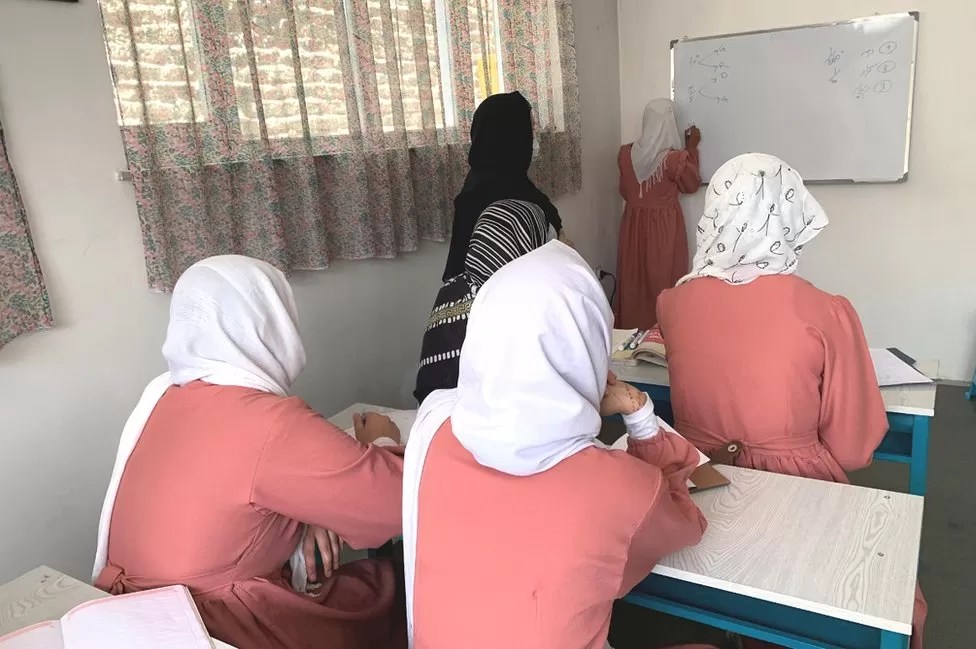
“If you are brave no-one can stop you,” says one girl in the class.

We know we can never completely eliminate rats. Or crime. Or intolerance.

But there are good things that have the same resilience. For example, the determination of young people who have been deprived of education and who — against all odds — persist in learning. Let’s look into the secret girls schools in today’s Afghanistan.

Sudarsan Raghavan has the story at the Washington Post.

“On a quiet residential street, teenage girls with school bags swiftly entered a large green gate. They were dressed in traditional garb, their faces covered, and many were holding copies of the Quran, Islam’s holy book. It was for their own protection.

“The house is a secret school for Afghan girls who are barred by the Taliban from getting an education. If agents raid the house, the girls will pull out their Qurans and pretend they are in a madrassa, or Islamic school, which the country’s new rulers still allow girls to attend.

“ ‘The Taliban are floating around in this area,’ said Marina, 16, a 10th-grader. ‘So, I always carry a Quran in the open. My other books are hidden in my bag.’

“More than a year after seizing power in Afghanistan, the Taliban still refuses to allow girls to attend secondary school, from grades seven to 12. The ban, as well as other hard-line edicts restricting women’s lives, have triggered global outrage and widespread protests by Afghan women.

“But a more subtle form of defiance is also happening. Underground schools for girls have formed in the capital and other Afghan cities, hidden away in houses and apartments, despite the immense threat to students and teachers. For the girls and their families, it is worth the risk. …

“The Taliban has said repeatedly that secondary schools for girls will reopen when there is an appropriate ‘Islamic environment.’ But the group has provided no criteria for what constitutes such an environment.

“When the Taliban first seized power in 1996, it closed schools for all girls —then too, underground schools were formed to fill the void —banned women from working and forced them to wear head-to-toe coverings known as burqas whenever they ventured outside the home.

“The group has been less draconian this time around, and the issue of education has revealed divisions among the Taliban’s leaders and religious scholars. In some areas, local Taliban officials have allowed girls above sixth grade to attend school, bowing to pressure from community leaders.

“[In October], the Taliban’s deputy foreign minister, Sher Mohammad Abbas Stanikzai, made a rare public appeal urging that all secondary schools for girls be reopened, adding that ‘the delay is increasing the gap between [the government] and the nation.’ …

“Abdulhaq Hammad, a top Taliban official in the Ministry of Information and Culture, insisted that ’90 percent of Taliban members are against the closure of the schools.’ But convincing the remaining 10 percent is a delicate process. …

“Five months ago, a woman named Ayesha launched a collective of 45 underground schools around the capital. …

She was motivated in part by her bad marriage, she said: ‘Women should not be dependent on men. Education is the only way out of our difficulties.’

“But within a month, her funds dwindled. Many of the schools closed. Others were shut down out of fear. Only 10 are active today, and Ayesha is struggling to find donors to support them. The girls in her schools come from the poorest families; with the Afghan economy collapsing, most can’t pay tuition or even buy textbooks.

“Worse, she fears the Taliban will come for her. The group’s intelligence agency has summoned her three times, she said, forcing her into hiding. …

“The girls recited a few verses from the Quran. Then class got underway. ‘Today’s lesson is on pages 37, 38 and 39,’ Masouda said, opening a biology textbook. ‘It’s about the types of plants and vegetables. … If someone doesn’t have a book, please take notes.’ …

“ ‘Who would like to come up and explain this?’

“Angila raised her hand. She stood and recited the lesson in a clear, authoritative voice. Biology was her favorite subject, she explained after the class was over.

“ ‘I want to be a physician,’ said Angila, who wore a head-to-toe black gown and a lime-green headscarf. … She was well on her way, part of a generation of girls and women that started attending school during the American occupation. When the Taliban regained power and ordered teenage girls to stay home, Angila was devastated.

” ‘I watched the boys go to school, but I couldn’t,’ she recalled. ‘My heart was broken.’ …

“Three months ago, she stopped classes for 25 days after the Taliban arrested a teacher working in another underground school. If Taliban agents enter Masouda’s school, the girls know to open the cupboard and grab the Qurans.

“Then Masouda will ask Marina, who has memorized the Quran, to come forward.

“ ‘If they come, she will take over the class, and I will pretend to be a student,’ Masouda said.

“Marina, dressed in a traditional purple gown and a black headscarf, said that she’s attending the class ‘to gain courage.’ She wants to become a pilot for Kam Air, an Afghan carrier, because ‘there’s very little representation of women in the aviation sector.’

These girls remind me of Shagufa, who continues to tell everyone about the power of believing in yourself. She, too, was an underage bride of an abusive man. Poor families rely on the bride price.

More at the Post, here. If you don’t have a subscription to the Post, the BBC also has a story about the school, here.

Read Full Post »

Photo: Tunisia Guru.
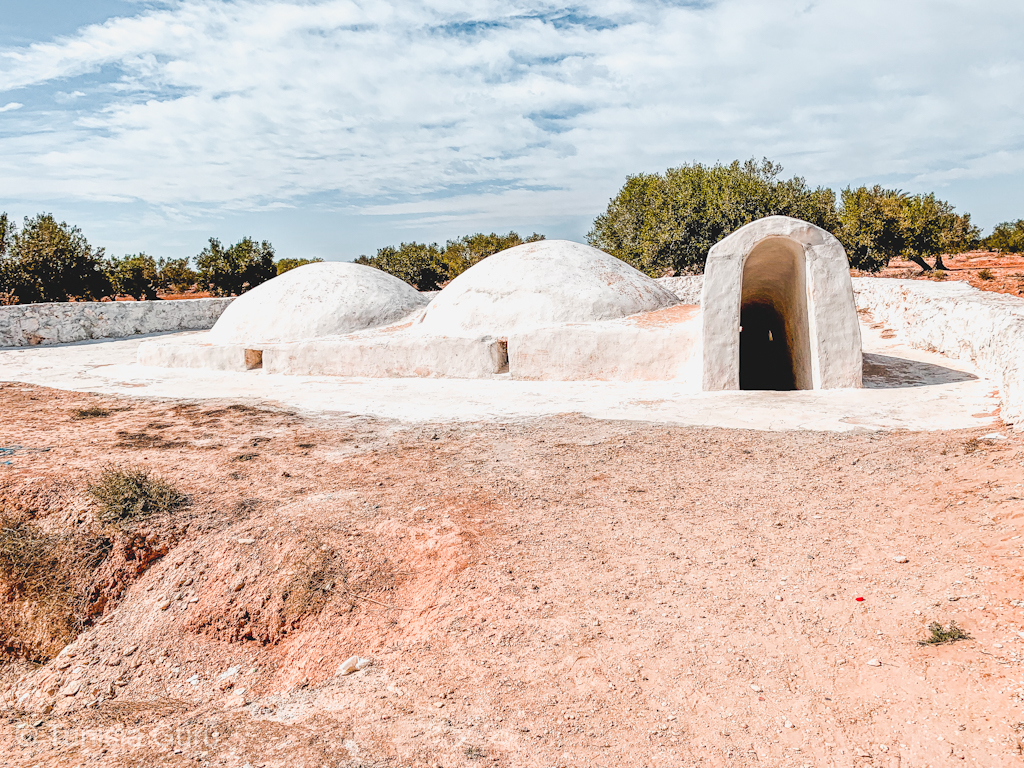
An underground mosque on the island of Djerba in Tunisia.

I got interested in finding out more about underground mosques after seeing a photo of one on the island of Djerba in Tunisia — an island thought to be the same that Homer had in mind when writing about the Lotus Eaters in the Odyssey.

An entry at Wikipedia says that underground mosques are “either erected beneath other buildings or lay freely in the ground with an inconspicuous appearance. The prayer rooms in underground mosques are usually very small, and they also have no minarets. Underground mosques are very rare. [The Djerba mosque] served as a hidden place of prayer for the Ibadis.”

From a different Wikipedia page, we learn that the mosque is near Sedouikech, Tunisia, and dates from the 12th or 13th century. “Surrounded by an olive grove, it opens to the outside by a very steep staircase that leads to the main room; next to it is a large underground tank fed by a well. Another of these underground mosques is located on the Ajim road. Not being used for worship, these mosques can be freely visited.”

An underground mosque in Turkey was built only recently, not because worshippers needed to hide like the Ibadis but because underground worship can feel peaceful.

Menekse Tokyay writes at Alarabiya, “The uniqueness of the Sancaklar mosque is that it departs from standard mosque design in a bid to break architectural taboos and encourage worshippers to focus on the essence of the religious space and on the Islamic faith. …

“Strolling around the mosque’s outdoor area, you will notice a long canopy running along one side where two olive trees and one linden tree are located. From this point, you have to descend natural stone stairs to reach the building.

“The cavernous prayer hall of the mosque is large enough to host more than 650 worshippers, while it aims to isolate believers from the outside world and invite them to delve deeper into their inner world.

“What strikes one about the Sancaklar mosque is that its design is humble and simple, perhaps to deepen worshippers’ relationship with their faith, and with this underground concept, visitors can leave behind all the challenges of the outside world. …

“Sancaklar mosque stands in Istanbul’s suburban Buyukcekmece district and is spread over an area of 1,200 square meters. The architecture combines Islamic and Ottoman designs with a modern touch, seemingly free from mainstream architectural typology.

“In 2013, out of 704 projects from 50 countries, the building won first prize in the World Architecture Festival competition for religious places. In 2015, the project was selected for the Design of the Year award, organized by the London Design Museum and it was also shortlisted among the 40 nominees for the Mies Van der Rohe Award.

“The mosque was designed by Turkish architect Emre Arolat for the Sancaklar Foundation. …

“The only decoration on the walls is the Arabic letter ‘waw’ and verse 41 of Surat al-Ahzab, a chapter in the Quran: ‘O you who have believed, remember Allah with much remembrance.’

“The main space is free of any decorative ornaments unlike many modern mosques built recently in Turkey. Daylight penetrates the prayer hall along the Qibla, or Mecca-facing, wall. …

“ Every time I come here for worship I feel an enormous [sense of] inner peace. It is also a place of meditation for me when praying under daylight infiltrating into the hall,’ Asli Karacan, a youngster living nearby, told Alarabiya.”

More at Wikipedia, here and here — also at Alarabiya, here.

Read Full Post »

Photo: Kolya Kuprich
Outlawed Belarus Free Theatre has been successfully performing
A School for Fools and other plays despite the pandemic. It took some ingenuity, but they have plenty of that.

What kind of theater could handle a pandemic better than one that is of necessity always underground? If you’re fighting an authoritarian regime, you will continually find ways it doesn’t know about for getting your work out into the world — or you’ll go to prison.

Verity Healey writes at HowlRound,* “If any theatre company is going to feel at home during COVID-19 and the challenges the pandemic has brought to theatres worldwide, it is going to be Belarus Free Theatre (BFT), an outlawed company based in Belarus and the UK (its artistic directors Natalia Kaliada and Nicolai Khalezin, in fear of their lives, had to seek asylum in Britain in 2011).

In Belarus, where dictator President Lukashenko faces national elections in August — and is busy arresting citizens attending opposition rallies — the BFT ensemble is banned from performing and from registering as a theatre company because it produces democracy-promoting plays and global campaigns advancing human rights.

“Working out of a small garage in a secret location in Minsk, the country’s capital city, BFT is ineligible to apply for national funding, and ensemble members, continuing to perform illegally and underground, face the very real and constant threat of being arrested by the KGB. …

“On top of this, Lukashenko is a COVID-19 denier and has advised his citizens to drive tractors, go to the sauna, and drink vodka to prevent infection. Whilst he has not imposed a lockdown, he is using the virus as an excuse to ban protests of any kind (prescient in the run-up to the elections) and arrest anyone who raises a voice in opposition. This means that, in Minsk, BFT, in tandem with their colleagues in the UK, have voluntarily gone into self-isolation to protect themselves and their families whilst creating work from their living quarters — turning their homes, quite literally, into performance spaces.

“ ‘I get to spend twenty-four hours a day with the people I love, otherwise the lockdown is no different for me,’ says Khalezin.

“It will not come as a surprise then that, since late February, the company has premiered two full-length plays, facilitated and broadcast several online fairy tales with renowned artists such as Stephen Fry, Juliet Stevenson, Will Attenborough, and Sam West for their campaign #LoveOverVirus, and made all of their previous shows accessible for free on YouTube. …

“It’s their latest show, though, A School for Fools (ASFF), which is streaming live online, that has recently made the headlines. Adapted from Sasha Sokolov’s 1960s phantasmagoric modernist novel of the same name … the story charts the experiences of a young boy living with a dual personality disorder attending an oppressive school, a kind of place that used to exist in Eastern Europe (and still does in Kazakhstan). …

“Starring twelve of BFT’s ensemble members, all living in Minsk, in twelve locations (the actors’ mostly small Soviet-style [flats]), and with sixteen different camera setups hosted by Zoom, it is a feat of technical wizardry imagined by [director Pavel] Haradnitski’s artistic vision and Sveta Sugako’s broadcasting direction. …

“Haradnitski calls the need to do ASFF ‘a desire to act, because even in two months, actors can lose their skills.’ Previous conversations had with Haradnitski, Sugako, and Nadia Brodskaya, the producer for ASFF, have also revealed to me that for everyone in the ensemble BFT is a way of life, 24/7. …

“ASFF is not just an ideological road map out of the pandemic — i.e., using technology and social media platforms in new ways to bring live drama to people at home via laptops and devices. It is also a way of doing theatre that, as Khalezin says, we may have to return to more and more if the world faces other pandemics. …

“Zoom is not custom-made to handle large-scale live performances—it was invented purely for business meetings and conferences and it lacks the interfaces custom-made platforms might have (there are ones being developed especially for BFT, but they were not ready in time for the pandemic). ..

“One of Sugako’s and Haradnitski’s main difficulties, for example, was working out how to let the actors know what marks to hit, especially when it was required for actors to make it look like they were physically interacting with each other. In the end, Sugako had to use a webcam, pointed at her Zoom host interface, which allowed her to share her screen with the actors so they could see they were in the right place to make it look like they were connecting across frames.

“The other issue is Zoom’s propensity to kick people off the platform if their internet connection drops — which anyone who has ever been to Belarus will know is a common occurrence. And to make things more complicated, Sugako had to line up the sixteen devices — laptops, phones — in a particular order for actors to hit their cues. If they get out of sync, the whole show is scrambled.” Read how they handled that difficulty and others at Howlround,* here.

By the way, John has been to Belarus. Maybe he will confirm that the internet connections often get dropped.

* The staff of HowlRound Theatre Commons at Emerson College wish to respectfully acknowledge that our offices are situated on land stolen from its original holders, the Massachuset and Wampanoag people. We wish to pay our respects to their people past, present, and future.

Read Full Post »

00sci-mayanlidar7-jumbo

Photo: Takeshi Inomata
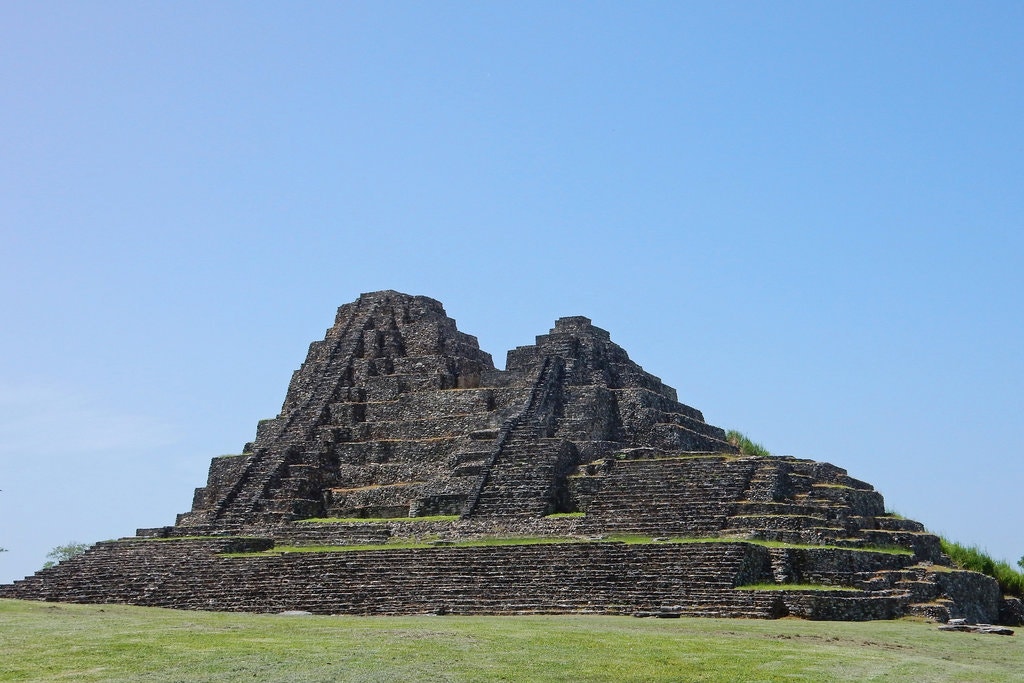
Human activity at the Mayan city Moral Reforma in Mexico ended about 1,400 years ago. Recently, researchers figured out that
lidar maps revealing underground Mayan archaeological sites, though ordinarily costly, are free if you know where to look.

It often takes time, a creative thinker, and a hot tip to uncover the best way to access technology. In this example, an archaeologist learned that the expensive underground maps he needed for his research could be found free online.

Zach Zorich writes at the New York Times, “Until recently, archaeology was limited by what a researcher could see while standing on the ground. But light detection and ranging, or lidar, technology has transformed the field, providing a way to scan entire regions for archaeological sites.

“With an array of airborne lasers, researchers can peer down through dense forest canopies or pick out the shapes of ancient buildings to discover and map ancient sites across thousands of square miles. A process that once required decades-long mapping expeditions, and slogging through jungles with surveying equipment, can now be done in a matter of days from the relative comfort of an airplane.

“But lidar maps are expensive. Takeshi Inomata, an archaeologist at the University of Arizona, recently spent $62,000 on a map that covered 35 square miles, and even was deeply discounted. So he was thrilled last year when he made a major discovery using a lidar map he had found online, in the public domain, entirely for free.

“The map, published in 2011 by Mexico’s National Institute of Statistics and Geography, covered 4,440 square miles in the Mexican states of Tabasco and Chiapas. …

“Dr. Inomata learned about the map from Rodrigo Liendo, an archaeologist at the National Autonomous University of Mexico. The resolution of the map was low. But the outlines of countless archaeological sites stood out to Dr. Inomata. So far, he has used it to identify the ruins of 27 previously unknown Maya ceremonial centers that contain a type of construction that archaeologists had never seen before. …

“His findings have not yet been peer-reviewed, but Dr. Inomata has presented his work at four conferences during the past year. ‘The stuff he is finding is crucial for our understanding of how Maya civilization developed,’ said Arlen Chase, an archaeologist at Pomona College, who did not contribute to Dr. Inomata’s work. …

“The 27 sites he identified on the map have a type of ceremonial construction that Dr. Inomata and his colleagues had never seen before — rectangular platforms that are low to the ground but extremely large, some as long as two-thirds of a mile.

“ ‘If you walk on it, you don’t realize it,’ Dr. Inomata said of the platforms. ‘It’s so big it just looks like a part of the natural landscape.’ The similarities between these sites and the early buildings they found at Ceibal led them to believe they both date to sometime between 1000 B.C. and 700 B.C. …

“While lidar technology is giving archaeologists new ways to analyze the ancient world, the change in perspective has been shocking and a little disorienting for some researchers. Marcello Canuto, director of the Middle American Research Institute at Tulane University, was the lead author of a lidar survey that covered 800 square miles of the Petén rainforest in Guatemala. He is also the director of an excavation at the Maya city of La Corona. Seeing the edges of the city as well as buildings between cities and the roads that connected them was shocking to him.

‘The word that all of us used when we started looking at the lidar was “humbling,” ‘ he said. ‘It humbled all of us in showing us what we had missed.’

“Dr. Inomata agreed. Even in areas where they were busy excavating, he said, ‘lidar was showing us things we didn’t notice.’ This included broad causeways and agricultural terraces, which are difficult to see in an excavation. …

“Viewing the archaeology of an entire region, in detail, will allow archaeologists to answer bigger-picture questions, such as the ones that Dr. Inomata has about the interactions the Maya had with the Olmec at the beginning of their civilization. …

“ ‘The future pattern,’ Dr. Inomata said, ‘will be that everything will be covered by lidar, like topographic maps today.’ ”

Lots more detail at the New York Times, here.

Read Full Post »

5942b901caac9e5b368b456c-640-480

Photo: Associated Press
Under the streets of Paris, you can get lost in a whole other world.

I have a friend whose dream is to go to Paris. It has been her goal for decades, and she was all signed up for a trip when she fell and landed in the hospital. But she hasn’t given up, and I expect by this time next year she will have met her goal.

Paris has an irresistible lure for people around the world. If you have already been there, consider discovering the underground version of that city next time you go.

Robert Macfarlane writes at the New Yorker, “The map runs to sixteen laminated foolscap pages, or about ten square feet, when I tile the pages together. I have been given it on the condition that I do not pass it on. It is not like any map I have ever seen, and I have seen some strange maps in my time. The plan of the above-ground city is traced carefully in pale silver-gray ink, such that, if you read only for the gray, you can discern the faint footprints of apartment blocks and embassies, parks and ornamental gardens, boulevards and streets, the churches, the railway lines and the train stations, all hovering there, intricate and immaterial.

“The map’s real content — the topography it inks in black and blue and orange and red — is the invisible city, the realm out of which, over centuries, the upper city has been hewn and drawn, block by block. This invisible city follows different laws of planning to its surface counterpart. …

“The map’s place names traverse a range of cultural registers, from the classical to the surreal to the military-industrial. … Affordance is specified on the map in handwritten cursive words: ‘Low,’ ‘Quite low,’ ‘Very low,’ ‘Tight,’ ‘Flooded,’ ‘Impracticable,’ ‘Impassable.’ More detail is occasionally given: ‘Humid and unstable region (sometimes flooded)’; ‘Beautiful gallery, vaulted and corbelled.’ …

“I have come to the catacombs with two friends — let us call them Lina and Jay. Jay is a caver keen to extend his explorations into city systems. He is droll, unflappable, and strong. Lina is the leader of our group, and she has been here many times. She is passionate about the catacombs, especially about preserving and documenting their swiftly changing features through photography and record-keeping. …

“ ‘We’ll plan to exit by a manhole, whenever we come out.’ She gestures back up the tunnel with a smile, then eases herself feet first into the ragged hole, raises her arms above her head, and disappears.

“All cities are additions to a landscape that require subtraction from elsewhere. Much of Paris was built from its own underland, hewn block by block from the bedrock and hauled up for dressing and placing. Underground stone quarrying began in the thirteenth century, and Lutetian limestone was used in the construction of such iconic buildings as Notre-Dame Cathedral, the Louvre, and Saint-Eustache Church.

“The result of more than six hundred years of quarrying is that beneath the southern portion of the upper city exists its negative image: a network of more than two hundred miles of galleries, rooms and chambers, extending beneath several arrondissements. …

“For centuries, quarrying was ill-regulated and largely unmapped. Then, in the mid-eighteenth century, the extensive undermining began to have consequences for the upper city, causing subsidence sinkholes, known as fontis, that were reputed to be of diabolic origin. The quarry voids had begun to migrate to the surface; the under city had begun to consume its twin. …

“Louis XVI responded, shortly after his accession, by creating an inspection unit for the ‘Quarries Below Paris and Surrounding Plains,’ headed by a general inspector named Charles-Axel Guillaumot, and tasked with regulating the quarries for the purposes of public safety.

“It was Guillaumot who initiated the first mapping of the void network, with a view to consolidating existing spaces and regulating further quarrying activities. A subterranean town-planning system was established whereby chambers and tunnels were named in relation to the streets above them, thus creating a mirror city, with the ground serving as the line of symmetry.”

There’s a long read at the New Yorker, here.

Read Full Post »


Map: Athanasius Kircher, from Mundus Subterraneus (Amsterdam, 1665)
Beneath Our Feet: Mapping the World Below is on exhibit through February 25 at the Norman B. Leventhal Map Center, Boston Public Library.

You don’t have to be keen on fantasies like Alice’s Adventures Underground or Jules Verne’s Journey to the Center of the Earth to be fascinated by maps of the world below our feet.

That is why, as Allison Meier writes at Hyperallergic, the Boston Public Library (BPL) is sharing its amazing array of subterranean cartography — from mythology to science, from the God of Death in Pompeii to leaded water in Flint, Michigan.

“Only in recent centuries have cartographers visualized what’s underground,” she writes. “Early mapmakers employed mythology to explain the volcanic eruptions and earthquakes that seemed to erupt from some dark force, and sometimes swallow whole communities, like Pompeii or Herculaneum. Even now, our ability to delve below the thin crust on which we’ve built our civilization is limited by the intense pressure and molten magma that churns within the planet. …

“The Leventhal Map Center is exhibiting ‘Beneath Our Feet: Mapping the World Below,’ featuring 400 years of subterranean maps from their collections. These visualize volcanoes, catacombs, pipelines, mines, and seabeds, ranging from 19th-century geological surveys to 21st-century sensing technology. …

“ ‘We’re seeing that these maps were typically produced much later than the weather maps,’ [Stephanie Cyr, associate curator] explained. The exhibition is organized into different underground subjects, such as ‘Earth’s Crust,’ ‘Oceans,’ ‘Mining,’ ‘Archaeology,’ and ‘Beneath Boston.’ These are all further explored in an online component. …

“As soon as people found a way to map the Earth’s underground, they began to exploit it as a resource, drilling natural gas pipelines and digging coal mines.

“Yet as Cyr noted, ‘Before we could actually get down there and explore and survey it, people had to cope with things in the best way they could, and mythology helped people do that.’

“A 17th-century map on view, by Athanasius Kircher, has a tumultuous subsurface scene, with a ball of fire at the center of the Earth and all its bodies of water linked by underground waterways. …

“The maps in ‘Beneath Our Feet’ continue into the 21st century. … And (as the inclusion of maps of lead testing in Flint, Michigan, and the invasive technique of fracking remind viewers) this knowledge can have a significant impact on the lives of the people above.”

If you can’t get to the show, you can at least see some great underground maps here and explore the online features of the show.

Hat tip: Michelle Aldredge (@gwarlingo) on twitter.

Read Full Post »

I can’t remember at the moment how I came across this tidbit, but I knew as soon as I saw it that I wouldn’t be able to resist something cool about  Stockholm.

I took the Stockholm subway a few times in the 1990s, but I don’t remember anything like this. Relatives living in Stockholm will have to let me know if the subway today is really the magical mystery tour that Dangerous Minds suggests.

Go to the Dangerous Minds website for a wonderful array of pictures. It sure doesn’t look like the Red Line. If the Red Line looked like this, I would expect to encounter Ming the Merciless around every corner.

Might make the commute more interesting.

Click here.

Photo: Dangerous Minds
A human emerges from a wall in the Stockholm subway’s “wild underground fantasia.”

ssssdddwwwcccc

Read Full Post »

Loved this Wired article about an unusual artist underground in France that preserves antiquities under cover of darkness.

Jon Lackman writes that the Urban eXperiment (UX) “is sort of like an artist’s collective, but far from being avant-garde — confronting audiences by pushing the boundaries of the new — its only audience is itself. More surprising still, its work is often radically conservative, intemperate in its devotion to the old. Through meticulous infiltration, UX members have carried out shocking acts of cultural preservation and repair, with an ethos of ‘restoring those invisible parts of our patrimony that the government has abandoned or doesn’t have the means to maintain.’ …

“What has made much of this work possible is UX’s mastery, established 30 years ago and refined since, of the city’s network of underground passageways — hundreds of miles of interconnected telecom, electricity, and water tunnels, sewers, catacombs, subways, and centuries-old quarries.” Read more.

I’ve been collecting stories of people doing good by stealth. In fact, if you type the word “stealth” in the search box in the upper right-hand corner, you will find five other stealth stories I have blogged about.

Read Full Post »