Photo: Haley Friesen. The Somali Museum Dance Troupe practiced at the Tapestry Folk Dance Center in Minneapolis a few years ago.
It has not been an easy adjustment for Somali refugees who were settled in Minnesota years ago. It’s been especially hard for new generations to find their way. So I’m happy to read about the positive things.
Amina Isir Musa reports at Sahan Journal that “the Somali Museum Dance Troupe’s TikTok presence has helped popularize traditional dances among U.S.-born Somalis.”
She says, “In the basement of the Midtown Global Market in Minneapolis you might find yourself transported to a different land. As you walk toward the Somali Museum of Minnesota, you might hear the joyful sounds of the jaandheer, a traditional dance from the Sanaag region of the Somali peninsula. To many listeners, particularly those from the Northern Somali region, the music says, Welcome home.
“On a recent day, a group of young Somali Minnesotans practiced the dance as their instructor replayed the past 30 seconds of music over and over until they got it right. The instructor, Abdurahman Muhumed, a young man with braided hair, had recently performed with the Somali Museum Dance Troupe at the ‘Star of Unity’ concert at the Ordway Theatre in St. Paul. As a more experienced dancer, he was training the others as part of the troupe’s leadership training component.
“A few days later, several members of the 20-member Somali Museum Dance Troupe –- Bashir Ismail, Ayan Furreh, Harun Mohammed and their coach, Mohamoud Osman Mohamed, who is also artistic director of the Somali Museum, talked about their work and their passion for celebrating Somali culture through dance.
“Mohamoud helped found the Somali Museum Dance Troupe nearly 10 years ago to share his love of that culture and to elevate its artistic expression. His father, Osman Ali, had told him about the importance Somali performing arts held before that country’s long-raging civil war, and the two of them combined efforts to create the Somali Museum Dance Troupe.
“In its early years, the troupe consisted of young recent immigrants who knew a lot of dances from back home and wanted to share those same dance styles,” and it has since grown to include many enthusiastic young people who have never known Somalia. For more about the dance troupe, click here.
The Sahan Journal has also covered what’s going on with a community leader my husband and I got to know when we lived in Minneapolis, Mohamed Wardere. Having once worked in community outreach for a US Senator, he is now “executive director of Hiddo Soor, a Somali nonprofit that hosts cultural events.” He said that “Somali business owners around the state, who sponsor the festivals, requested events in their towns so that their neighbors could understand their culture.
“Wardere said when he began hosting cultural festivals, most attendees were members of the Somali community, but in recent years the wider community has participated in the festivities. Last year, about 4,000 people attended the festival in Plymouth, he said.
“Wardere said he is excited that more people are learning about Somali history and gaining respect for his culture.” Mohamed was always good at sharing understanding of Somali culture.
Read the article by Yvette Higgins on the celebration of Somali independence, its “street festival in Minneapolis, a multiday soccer tournament, a concert at the Ordway, and festivals in Plymouth, Rochester, Owatonna and St. Cloud.” That story is here.
Is there hope for Americans with different political views to get along? Well, why not? We used to get along. Now it seems that we have to teach ourselves that skill all over again.
Believe it or not, there’s actually a member of the House of Representatives who is showing people how it’s done.
Samantha Laine Perfas and Clayton Collins at the Christian Science Monitor created a podcast about her with West Coast bureau chief Francine Kiefer.
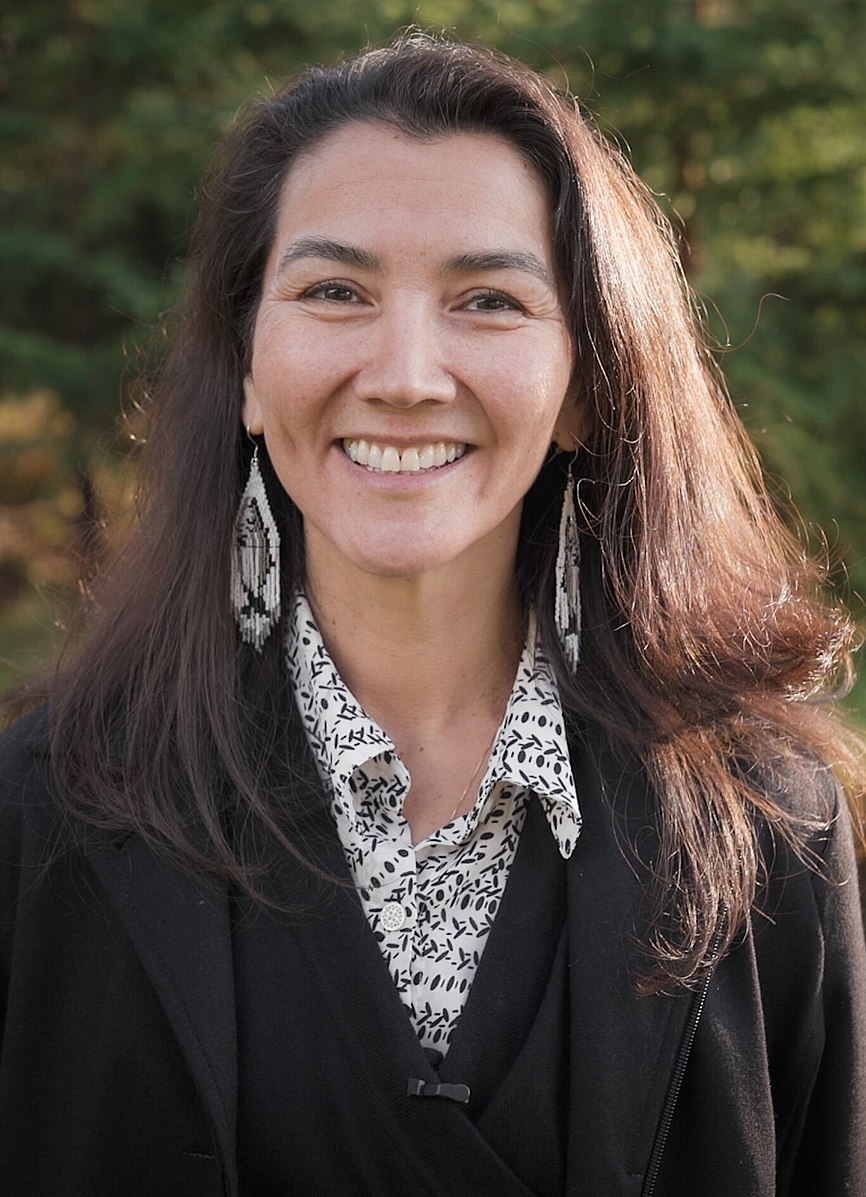
“A race for [Alaska’s] lone House seat had been won in a special election by Mary Peltola, an Alaska Native and a Democrat. … Representative Peltola had hired the chief of staff of her late Republican predecessor, and then hired two other Republican staffers.
“ ‘This just doesn’t happen in Washington,’ Francine says on the Monitor’s ‘Why We Wrote This’ podcast. ‘And I was curious about what kind of person it was that would make sort of a practical decision to hire folks who knew Alaska, who knew Washington, even though they’re not of your own political party.’ (Representative Peltola’s mother’s side of the family is Alaska Native and all Democrats; her father’s side is white Nebraska wheat farmers and all Republicans.)
“What Francine produced [is] a story about the ‘Alaska way’ at the root of such thinking. It’s about interdependence. And while there are many factors at play in Alaska politics – ranked choice voting among them – it’s really about something that might transfer beyond the 49th state. …
“Samantha Laine Perfas “Welcome to ‘Why We Wrote This.’ I’m today’s host, Samantha Laine Perfas. I’m joined by Francine Kiefer, a longtime, award-winning staff writer at the Monitor. … What was it that piqued your interest about Alaska?
“Francine Kiefer “I have to admit that I’ve just been wanting to get back to Alaska for over 40 years. It was the scene of where I had my first job in journalism, at the Anchorage Daily News. I was just a pipsqueak intern, and I fell in love with the state and I’ve just always wanted to go back. And the political story was a fantastic reason. Here you have a red state. And it just elected two moderates to Congress.
“[Mary Peltola] was the first Alaska Native to be elected ever to Congress. And her whole persona is a bridge builder. One of the things that really got my attention was when I read that Mary Peltola had hired the chief of staff of her Republican predecessor, Don Young. She hired his Republican former chief of staff, his Republican scheduler, and she hired a Republican spokesperson from another office on the Hill. And I was curious about what kind of person it was that would make sort of a practical decision to hire folks who knew Alaska, who knew Washington, even though they’re not of your own political party. …
“Laine Perfas “What was it like talking to her for this story?
“Kiefer “I’ve talked to many lawmakers over my journalistic career, and she sounded so authentic. She didn’t have her guard up. She wasn’t being measured about what she was saying. She is from an area in western Alaska that depends on fishing for survival. And she’s been fishing since she was six years old. She, as the Alaskans say, ‘She knows how to fill a freezer.’ And she also embraces the spirit of Alaska. It’s a large state. It’s a beautiful state, but it’s also a cold and a dangerous place. And people rely on each other. And there’s a real spirit of cooperation there where people help each other out in tough spots. … Having to help each other out, that is part of the ‘Alaska spirit.’
“Laine Perfas “I think it’s interesting to think about how this spirit of Alaska might be different than other parts of the US. How did you see that affecting the political arena? Did it affect the way that candidates interacted with their potential constituents?
“Kiefer “It definitely did, because of the way that ranked-choice voting works. That allows voters to rank their choices in order of preference such that the one with the broadest appeal emerges from the system. When you’re out there on the campaign trail, you’re not only trying to get people to vote for you as their first choice, but you’re [also] trying to get people to vote for you as their second choice.
“I talked with a local candidate for the state Alaska Senate. And she said this time because of ranked-choice voting instead of knocking only on the doors of the Republican base, she knocked on over 6,000 doors, including many Democrats’, and they would open their door to her and say, ‘You don’t want to talk to me. I’m a Democrat.’ And her answer was, ‘Oh, yes, I do want to talk to you because you can put me as your No. 2 vote. And we may not agree on everything, but here is the stuff that we do agree on.’ And in the end, it was votes from Democrats who had ranked her second, who put her over the line into the majority.
“Laine Perfas “In the beginning of the conversation, you referred to Peltola as a ‘bridge builder.’ What is the value of having someone like that in office?
“Kiefer “I think it has two main impacts. One is it can help restore civility to a political dialogue and the other one is it can build understanding and mutual understanding among lawmakers, and hopefully lead to compromise.
“One of my sources for this story was a gentleman named Andrew Halcro. He’s a Republican. He talked to me about the time in which he served as a freshman legislator in the Alaska House at the state Capitol in Juneau. Right off the bat, within a few days of his arriving, he gave a speech where he said, you know, the way to solve Alaska’s fiscal problems is to cut the budget. Cut, cut, cut. And he pointed to rural Alaska, which is where most Alaska Natives live as the place [where the budget] needed to be cut.
“And this speech did not go over well. And within hours, he said, Mary Peltola, who of course, is from this region, knocked on his door and said, ‘You know, I know we’re both new here, but let me explain to you a little bit about what I know about rural Alaska and what their needs are.’ And he said that out of this discussion came a wonderful working relationship with her, as well as understanding and appreciation for the needs of a part of Alaska that he had never set foot in except for sport.
“So you get a sense there of the relationship building, of the understanding that can come about by having bridge builders in a legislature. At the same time, there are limits. And Mary Peltola also said to me, look, she can’t singlehandedly solve the political divide in the United States, but she can do her job of being a model in the way she communicates and the way she reaches out for other political leaders.
“Laine Perfas “Do you think what we’re seeing in Alaska could be transferable to the rest of the country?
“Kiefer “Well, definitely the voting system could be. Ranked choice voting has been practiced by Maine in a more limited sense since 2018. And in this very past election in November, Nevadans voted for a system very similar to what Alaska is practicing. So that part of it, I think, could be replicable. The other part of this that we’ve talked about is ‘the Alaska spirit,’ which is that cooperative spirit. I think that is rather specific to Alaska. And in fact, people told me that. But as Peltola said to me, it’s not exclusive to Alaskans, right? And she said, ‘You know, we have been civil before. If we’ve been civil before, we can do it again.’ ”
Click the podcast arrow at the Christian Science Monitor, here.
Today I wanted to share several links on the power of getting to know those with views that are opposed to yours. It’s not something I’m especially good at, but I’m sure there are few things more important.
ArtsJournal posted a New York Magazine/”Science of Us” link about “the contact hypothesis” recently.
Jesse Singal wrote, “In the last few months I’ve found a bit of solace and much-needed solidity in a social-psychological idea that has been developed for the better part of the last century: the contact hypothesis.
“It’s the simple, inspiring idea that when members of different groups — even groups that historically dislike one another — interact in meaningful ways, trust and compassion bloom naturally as a result, and prejudice falls by the wayside.
“The contact hypothesis, or contact theory as it’s sometimes known, is a really powerful, promising idea for a country like the United States — one that is big and diverse and whose national conversation on a host of subjects ranging from poverty to crime is veined through with implicit and explicit racism. …
“[For example,] if you could get more non-Muslims to interact with Muslims, whether as neighbors or business partners or in a host of other contexts, [the percentage of those with bias] would likely drop. And while this idea sounds idealistic, there’s solid evidence behind it — significantly more than there is behind other ideas, like corporate diversity trainings for reducing prejudice that focus more on information and awareness than personal relationships. …
“As I read about [the work of LindaTropp, a social psychologist and contact-theory expert at the University of Massachusetts Amherst] and spoke with Tropp, I kept thinking about the airport protests [this year].
“Suffice it to say that many of the protesters were simply there because they thought it was the right thing to do, because they were motivated by politics or religion or their social networks or whatever else. But think about how much more potent that drive is when you know and value and worry about people who could be personally affected: Think about the difference between I am protesting this policy because it is wrong and I am protesting this policy because it is wrong and could hurt people I care about.
“That’s the ultimate promise of the contact hypothesis: You don’t need fancy educating or lecturing or anything else to get people to treat one another better. To a certain extent, you just need to get them to interact on the same level, and progress will follow.”
Two favorite examples of the power of human contact: Parents Circle, in which Israelis and Palestinians who’ve lost loved ones to the conflict come together, and Kids4Peace, summer camps for Jewish, Muslim, and Christian youth to get to know one another.
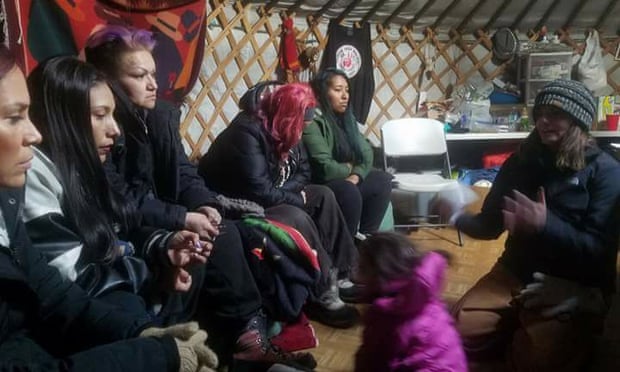
Photo: David Valdez Alisha Custer – whose lineage traces back to the US army commander who led the 19th century wars against Lakota Sioux and Cheyenne warriors – meets with Standing Rock members.
As some readers know, I used to be quite energetic about Esperanto, an invented international language that I’ve blogged about a few times.
Even though Esperanto never took the world by storm, it’s still in use, and the goal to create a widely accepted bridge between languages and cultures is still a worthy goal.
At the New Yorker recently, Joan Acocella wrote about Esperanto’s founder, Ludwig Zamenhoff, a Jew living in Poland at a time of fierce enmity among people of different ethnicities. Convinced that a shared language could promote peace, Zamenhoff decided to do something about it.
The usefulness of a common, intermediary language was not a new idea, writes Acocella. “Ambitious organizations such as the Roman Empire and the Roman Catholic Church made sure that their members, whatever their mother tongue, learned a second, common language. …
“Esperanto’s creator, Ludovik Lazarus Zamenhof (1859-1917), a short, sparkly-eyed, chain-smoking ophthalmologist, was a Jew, and, as he wrote to a friend, this made all the difference: ‘My Jewishness has been the main reason why, from earliest childhood, I gave myself completely to one crucial idea . . . the dream of the unity of humankind.’
“By this he may have meant that Jews were broader in outlook. In any case, he felt that they needed to be. In the town where Zamenhof grew up — Białystok, now in Poland but at that time part of the Russian Empire — the population, he wrote, ‘consisted of four diverse elements: Russians, Poles, Germans, and Jews; each spoke a different language and was hostile to the other elements.’
“He went on, ‘I was brought up as an idealist; I was taught that all men were brothers, and, meanwhile, in the street, in the square, everything at every step made me feel that men did not exist, only Russians, Poles, Germans, Jews.’ …
“[At one time a Zionist], Zamenhof became disillusioned with Zionism. … He wanted Judaism purged of all narrowness. Let the Jews keep some of their nice things, their High Holidays and the stories and the poetry in their Bible. But, as for theology and ethics, they should confine themselves to the teachings of Rabbi Hillel (first century B.C.), which, according to Zamenhof, consisted of just three principles: that God exists and rules the world; that He resides within us as our conscience; and that the fundamental dictate of conscience is that we should do unto others as we would have them do unto us. …
“At his nineteenth-birthday party, in 1878, he surprised his guests by giving each of them a small dictionary and a grammar of a new language he had invented.” It was the beginning of an international movement.
More here. The New Yorker article is a review of Esther Schor’s book Bridge of Words: Esperanto and the Dream of a Universal Language.
There’s a lot more to the story of Zamenhoff and the rise of Esperanto, which today is spoken in surprising places all over the world. (When I was first learning it, for example, China was publishing propaganda stories in the language.) To learn more, start with the New Yorker book review — and then maybe the book itself.
Photo: Loyal Books Ludwig L. Zamenhoff (1859-1917), the eye doctor who invented Esperanto as a language to bridge disparate cultures. The word Esperanto means “one who is hoping.”
We have no idea what Wednesday will bring, but let’s do this. Let’s commit to focusing on what we once shared with that friend whose life path led him to a different decision. Let’s honor his or her life path if not the most recent destination. We’ve had different life experiences.
Let’s focus on what we both like: the funny things small children say, lazy days at the beach, imaginative Halloween costumes, the blended aromas of a Thanksgiving kitchen, Peter Pan.
There’s no need to bring Abe Lincoln into this, but well, you know: A house divided against itself cannot stand.
As I passed by on my walk last Thursday, this engraving with its old-fashioned wording spoke to me.
My friend was born and raised in Hawaii. His parents were Japanese-American. His mother was sent to an internment camp during World War II. It’s a complicated story how she got released and ended up in Japan for the war’s duration. Something like a prisoner swap. She returned to Hawaii after the war and raised a family.
My friend was invited to talk to fifth graders about his mother’s experience in the camp. He was reluctant. It’s painful to think about. Would young children get it?
In the end, he went, and it was a good experience for him as well as for the kids. I think he had an impact on how they think about differences in our multicultural society. And their curiosity and understanding was a comfort to him.
Here is what he put on Facebook this spring.
“Last week I spoke to two classes of fifth graders about my mom’s experience in a Japanese-American relocation camp during World War II. After the talk, one of the students asked me why the Japanese-Americans had been relocated to camps but the German-Americans hadn’t. Wow, I could have hugged that boy for asking such a perceptive question, and I was also touched by how the students were able to draw a parallel between the Japanese-American discrimination decades ago and the anti-Muslim sentiment that’s currently been gaining so much traction in the U.S. and elsewhere.”
My friend posted a family photo that he goes on to describe. It is not the photo I put below.
“This photo, taken in the mid 1930s, is of my mom and her younger sister when they were growing up in downtown Honolulu, before they were forced to relocate to a camp in Arkansas. My mom looks like she’s around the age of the students I was talking to last week, and when I showed those students this photo I got a little emotional imagining my mom as a young girl being in that classroom too, listening to me tell her story. In such ways, our stories really do have such raw power to connect people through different generations and cultures, which, I suppose, is why I first became interested in becoming a writer all those years ago.”
America has always needed people like my friend’s mother — people who carry on and return benefits to the place that harmed them. And there are lots of them. Even in the town where I live, a couple who suffered internment during the war became quietly known for philanthropy to both the Nisei Student Relocation Commemorative Fund, Inc. and our town, donating all their reparation money to local high school scholarships.
Photo: Dorothea Lange Some Japanese-Americans who suffered from internment in World War II
still chose to return kindness for hurt after the war.
I was so happy to get this hopeful update on Kids4Peace Boston today.
“For a while last summer, as violence escalated in Israel/Palestine, the possibility of Israeli, Palestinian and US youth coming together for a Kids4Peace camp seemed pretty unlikely.
“But despite countless barriers and uncertainties, all 25 young leaders — Muslims, Christians and Jews from Jerusalem, the West Bank, and Boston — did make it to be together on that beautiful mountaintop in New Hampshire. …
“Being in the presence of one another and listening, really listening, to each other’s stories is the crucial first step in the Kids4Peace experience.
” ‘I came to Kids4Peace to try and understand the different viewpoints that each kid has. Some people don’t understand that someone with a different opinion than you can be right without making you wrong.’
~Participant from Boston
“In the midst of violence, in the midst of despair, there are people who turn towards each other rather than away. This summer 25 peace leaders and their families proved that they are the kind of people who choose to turn towards. These young leaders walked away from camp feeling empowered by and connected to others who believe, as they do, that together peace is possible.
” ‘To be a peacemaker is to hold our hands together, and to help each other not killing each other, to treat each other as humans.’
~Participant from Jerusalem”
Last night I went to a jazz benefit for the nonprofit Kids4Peace Boston, which sponsors a summer camp and other events for children of three faiths — Christian, Muslim, and Jewish. The children are from both the United States and Jerusalem and are 11 to 12. Read more about the program here.
The fundraising event was held in the Grand Circle Gallery in Boston, which features magnificent travel posters and travel photography from the 1930s and 1940s. The entertainment was provided by Indian vocalist Annette Philip and her jazz quartet. Very impressive.





 Suzanne's Mom's Blog