Feeds:
Posts
Comments

Posts Tagged ‘water’

Photo: Jen Siska
Shreya Ramachandran holds workshops on how to install graywater systems.

I know we shouldn’t be leaving up to kids the solutions to our intractable problems, but sometimes it seems that they’re the only ones showing leadership. At least, they’re the ones who focus their leadership on a single issue. Thanks to their focus, energy, and not knowing what’s impossible, they them seem more likely to succeed than political leaders who must address a million issues at once. I think of David Hogg on the issue of gun violence and Greta Thunberg on climate change.

Here is a Sierra Club story on Shreya Ramachandran, who started very young with big, practical ideas on water conservation.

Wendy Becktold writes at Sierra, the Sierra Club magazine, “When Shreya Ramachandran was in sixth grade, she became obsessed with water scarcity. It was an unusual preoccupation for an 11-year-old, but when visiting California’s Central Valley for an archery competition, she had learned about the historic drought then underway that was devastating the area’s farmers. Not long afterward, she visited her grandparents in India and encountered taxi drivers who’d been forced to abandon their farms when the annual monsoon had failed to arrive.

“Ramachandran began researching water conservation online. She grew fascinated with graywater systems–plumbing designed to reuse household water by redirecting water from washing machines into lawns and yards, for example. ‘It’s water conservation on a whole different level,’ she says.

“But Ramachandran also learned that toxic chemicals in some laundry detergents can render water unsuitable for reuse. She started to experiment with soap nuts – the berry shells of Sapindus mukorossi (a tree in the lychee family), which release a natural cleaning agent and are traditionally used for shampoo in India – and determined that they were safe to use in graywater systems. She presented her findings at various science fairs, and people were intrigued.

“By the time she was in eighth grade, Ramachandran had built her own graywater system; her parents let her drill a hole in the side of their house to install the PVC piping that channels water to the plants and trees in their yard. Shortly after, she started the Grey Water Project (thegreywaterproject.org) to teach others how to install their own systems.” More at Sierra, here.

And in case you want to learn more about soap nuts, the Australia-based environmental group 1 Million Women has a post about them, here.

“They’re really simple to use, you just pop them in a small fabric bag, chuck them in with your load of washing, the berries contain saponin which is a surfactant that can be used like soap. …

“[But] here is one little point that planet friendly women have pointed out and that is that they only work in hot water.

“Most of us self-proclaimed eco-warriors have never washed a load of clothing in hot water in our life, or for at least a very long time. The amount of energy that is takes to heat up a load of washing seems pretty wasteful and pointless, but for without hot water soap nuts don’t turn soapy.

“Some have figured out that by adding the soap nuts to a cup of boiling water and then pouring the water into the wash eliminated the need to waste … However a few have expressed that this step was inconsistent and made switching to soap nuts from their current homemade, planet-friendly laundry detergent not worthwhile.

“While the warm water and make-your-soap-nuts-into-tea step may be a deterrent for some, others have made another valid point, soap nuts are better for your skin. They’re all natural and non-toxic, which makes them especially good for sensitive skin and those prone to allergies. Also, due to the very gentle, mild detergent they produce they’re safe for your delicates. (Excluding dry-clean only items.) Read next: 9 Ways to lower the carbon impact of laundry day.

No perfect answers, I guess.

Read Full Post »

Water for Congo

Photo: Ideo
Asili, an enterprise designed by the American Refugee Committee (ARC), IDEO.org, and the people of Kabare in the Congo, has distributed millions of liters of clean water to people who didn’t have any. In the photo, a prototype offers sample cups of Asili water outside a Sunday church service. 

One of my favorite organizations is the Minneapolis-based American Refugee Committee, which does good work all around the world. In this story about bringing clean water to people in the Congo, they demonstrate the importance of asking the local people what they want, consulting with them on how work should be done, and enabling them to take charge.

In the Congo’s Kabare region, ARC partnered with residents and USAID to create a community-run business called Asili, and Asili partnered with residents and the design firm Ideo to launch a clean water initiative.

The project is described at Ideo.

“The Democratic Republic of Congo (DRC) has been beset by decades of war, deep poverty, and an underdeveloped infrastructure for international development projects. Yet Asili — a community-run business delivering essential services in the Kabare region — is flourishing, thanks to the pride, strength, and ingenuity of the Kabare locals.

“[It] offers clean water, agricultural services, and a health clinic to area communities. Designed by the American Refugee Committee (ARC), IDEO.org, and the people of Kabare themselves, Asili has distributed millions of liters of water, seen local farmers’ incomes and outputs jump tremendously, and had thousands of patients at its three health clinics since they were established in 2014.

“Perhaps what’s most important, especially in a landscape of failed international development projects, is that Asili was born from — and is run by — the people of Kabare.

“In 2013, the American Refugee Committee (ARC) approached IDEO.org with a bold challenge: How might we build a community-owned, for-profit business in eastern DRC to support better health and improved livelihoods? …

“The early results have been truly remarkable. Since Asili was launched, 60 kilometers of pipeline have brought 5.3 million liters of clean water to previously overlooked villages, and this influx has helped cultivate a new local agriculture ecosystem. In addition, world-class healthcare has been delivered to over 3,000 people in some of the most vulnerable communities on earth….

“The Asili team have totally embraced human-centered design, and Congolese staff are hard at work building prototypes, iterating on what’s working, and using a design approach to build the next steps for this remarkable organization.” Wow.

In my ESL volunteering, I have had the privilege of meeting many Congolese refugees. To say that life in Congo is hard would be a gross understatement. Projects by Asili represent hope.

More at the American Refugee Committee website, here, and at Ideo, here.

Read Full Post »

Is the neighborhood of the future going to be on the water? A growing number of architects around the world seem to think so.

Eleanor Ross and Laura Paddison write at the Guardian about some pluses and minuses.

“Architects and city planners across the world are starting to look beyond the traditional confines of the city, towards building on water as one of the answers to reducing inner-city population density and also developing flood-resilient designs. Global damage to cities from flooding could amount to $1tn a year by 2050 if no action is taken, according to a World Bank report. …

“Building on water isn’t straightforward, however. The recent collapse of the Makoko Floating School in Lagos, one of the most famous examples of floating architecture, shows some of the complexities. …

“There are also environmental concerns. The need for foundations of many floating buildings to go deep into the river bed, for example, will have an impact on the environment, says Phillip Mills, director of the Policy Consulting Network, and a specialist in water construction.

“ ‘Foundations or structures within the river could also alter the river bed with silt erosion and deposition elsewhere in the river. The same thing already happens around bridge piers,’ he says. …

“However, Lucy Bullivant, adjunct professor of history and theory of urban design at Syracuse University, thinks there are greater environmental consequences building on land – such as the tendency to be more car focused – than on rivers. ‘Floating designs will create a good anchor point for plants to help foster biodiversity and create habitats for fish and birds.’

“Building on ‘bluefield’ sights can be environmentally friendly, according to Mark Junak, director of Floating Homes. He says floating structures such as those at Noorderhaven in the Netherlands have recently been subject to underwater drone surveys to observe whether their construction has negatively affected the ecosystem.

“According to the research project, the underwater footage ‘revealed the existence of a dynamic and diverse aquatic habitat in the vicinity of these structures, showing that floating structures can have a positive effect on the aquatic environment.’

“For London architect Carl Turner, who has designed a pre-fabricated, open-source amphibious house specifically designed to float on floodwater, called the Floating House, climate change means needing to work with water.

“ ‘You either protect the house or protect the land,’ he says. ‘Creating large-scale flood protection zones is expensive and in itself potentially harmful to the environment. Once breached, homes are left defenceless, as opposed to floating homes that can simply rise with flood waters.’ ”

More.

Photo: Mark Junak 
The Chichester prototype floating home designed by Baca Architects.

Read Full Post »

A friend from my childhood called Caroline has been following this blog, sometimes making comments related to her field, which is architecture.

Today Caroline sent me a link that she knew would be a perfect fit here. The story is about a design competition to address New York City’s rising seawater.

Kayla Devon wrote about it at Builder Online, “In the next 30 years, roughly 30% of Manhattan is expected to sink below sea level, according to a climate study by the NASA Goddard Institute for Space Studies. Instead of trying to stop the inevitable, Brazilian architect Walmir Luz focused on embracing it.

“After studying climate predictions from the United States Landfalling Hurricane Probability Project and the history of Manhattan’s edge, Luz designed a utopian/dystopian future for New York (depending if you’re a glass half-full or half-empty kind of person).

“Luz’s NYC 2050 concept makes flooding a part of city life by taking inspiration from Venice. Luz designed structures as levels that could allow water to move through lower levels as the sea rises. Streets would become permeable so water can wash over the roads instead of flooding them, and more barriers would surround the city’s edges.

“Luz completed the concept as his thesis for his Bachelor of Architecture degree from Cornell University, and won a Silver award in the urban planning and urban design category at the A’Design Award & Competition. He now works as an architect for Gensler.” More at Builder Online.

I love it when people who read the blog come upon topics that they know will fit and then send them along. I like being able to share the cool stuff with a wider audience. Thank you, Caroline.

Design: Walmir Luz
Luz won a design award for a concept making the best of rising sea levels in New York City.

Read Full Post »

OK, here’s one I bet you don’t know about. Like a couple super fathers I know, the sandgrouse father is devote to parenting. But when the fathers I know give thirsty children some water, it is likely to arrive in a bottle or sippy cup. The sandgrouse papa delivers water in his feathers.

Rick Wright and Mary McCann report at Public Radio International’s Living on Earth, “Sandgrouse – pointy-tailed relatives of pigeons – live in some of the most parched environments on earth. To satisfy the thirst of newly hatched chicks, male sandgrouse bring water back to the nest by carrying it in their feathers. It sounds incredible, and for decades, scientists thought it was just a myth. But it’s not. In the cool of the desert morning, the male flies up to twenty miles to a shallow water hole, then wades in up to his belly.

“The water is collected by ‘rocking.’ The bird shifts its body side to side and repeatedly shakes the belly feathers in the water; fill-up can take as long as fifteen minutes. Thanks to coiled hairlike extensions on the feathers of the underparts, a sandgrouse can soak up and transport 25 milliliters of liquid. That’s close to two tablespoons.

“Once the male has flown back across the desert with his life-giving cargo, the sandgrouse chicks crowd around him and use their bills like tiny squeegees, ‘milking’ their father’s belly feathers for water they so desperately need.”

Listen here.

Photo: Ian White, Flickr CC
The Feathers of Burchell’s Sandgrouse carry water for miles back to the nest.

Read Full Post »

There’s been a lot in the news lately about water shortages in the West. In the search for any help they can get, some concerned citizens are turning to the oft-maligned beaver.

Living on Earth‘s Steve Curwood gets to the bottom of the story with Sarah Koenigsberg, the filmmaker behind The Beaver Believers.

“In the drought-ridden West, some people are partnering with beavers to restore watersheds, where, before trappers arrived, the large rodents once numbered in the millions. Filmmaker Sarah Koenigsberg captures various efforts to reintroduce beavers to their former habitat in her documentary The Beaver Believers and tells host Steve Curwood why beavers are essential for a healthy ecosystem. …

Koenigsberg: We feature the stories of a biologist, a hydrologist, a botanist, an activist, a psychologist and a hairdresser. So these are all very different people who share the common passion of restoring beaver to the west. Some work within the federal agencies, the forest service, others are just average citizens who stumbled upon to the cause accidentally …

“What struck me with all of these beaver believers is that they are working on the problem of water, which is one of the biggest problems of climate change, but is very tangible. They’re working at the level of their own watershed. And while they do work very hard, they’re finding great joy and satisfaction in this work. …

Curwood: There’s a finite supply of water in the drought-ridden American west. Beaver can’t increase that water supply. What can beaver do to help the water situation? …

Koenigsberg: What they do is they redistribute the water that does fall down onto the landscape, so if you picture spring floods — all that water that comes rushing down in March or April just goes straight through the channels and out to the ocean — what beavers do is they almost act like another snowpack reserve, whether it’s rain or snow runoff, all of that water can slow way down behind a beaver pond and then it slowly starts to sink into the ground. It stretches outward making a big recharge of the aquifer and then that water ever so slowly seeps back into the stream throughout the rest of the spring and summer as it’s needed so that we end up with water in our stream systems in July and August when there is no longer rainfall in much of the west.” More here.

Photo: Sarah Koenigsberg
The Beaver Believers live-trapped a beaver family including this kit in Aurora, CO, and relocated them into the forest on a private ranch.

Read Full Post »

Fred Pearce of Yale Environment 360 (a publication of the Yale School of Forestry & Environmental Studies) had a post on some positive change in Kenya recently. It came to me by way of the Christian Science Monitor Change Agent e-mail.

“In Kenya, local farmers are replacing state officials and forest wardens …

“Kenya’s five main ‘water towers’ — the Aberdare Mountains, the Mau forest complex, Mount Kenya, Mount Elgon, and the Cherangani Hills — cover just 2 percent of the country. But their elevation means that they intercept clouds blowing off the Indian Ocean, capturing most of the country’s rains. These places are the sources of all but one of Kenya’s major rivers. …

“Emilio Mugo, the acting director of the Kenya Forest Service (KFS) … says an important factor in [the process of reclamation] was the popularizing of the phrase ‘water towers.’ It unlocked a recognition about the nation’s precarious ecosystems and water supplies, and their link to forests.

“ ‘The new terminology galvanized public attention,’ he says. Calls to revive the towers became a national priority, culminating in the creation in 2012 of the Kenya Water Towers Agency to coordinate government activity.

“We are now looking at the towers as national assets,” says Francis Nkako, the CEO of the new agency. In the past five years, 81 square miles of the Mau forest system have been repossessed from illegal settlers for ecological rehabilitation …

“Control of the forests is being systematically given to democratically elected community forest associations (CFAs) that manage the forests under agreements with the KFS. …

“Under the agreements, CFAs are tasked with ensuring sustainable use of the forests, preventing illegal activity in them, managing and raising fees for grazing of livestock and firewood cutting in the forests, and starting new economic activities based on forest resources. No members of the community are allowed to live in the protected forests, but they can use them.” More here.

Photo: Fred Pearce
Sarah Karungari shows beehives set up by the community forest association (CFA) in Kimunye village in Kenya. Management of mountain forests is being systematically given over to democratically elected CFAs.

Read Full Post »

Here’s an unusual approach to art. Christopher Bollen at Interview magazine has the story.

“Since 2005, the 41-year-old [Marie] Lorenz has been navigating New York Harbor in her handmade plywood-and-fiberglass boat, taking friends, artists, and willing participants on nautical odysseys of the city’s rivers and islands.

“The project, Tide and Current Taxi … has its roots in multiple artistic practices — from traditional Romantic seascape and marine painting to more radical iterations of performance art …

“It helps that the Brooklyn-based artist, who could command a boat by the age of 6, is an adventurer at heart — the kind of avant-garde pioneer more often found on Manhattan’s dry land than in its surrounding waters. Lorenz has extensive knowledge of the city’s waterways. ‘When I got to New York, I realized that the tides were significant,’ she says. …

“Lorenz uses the tides like a motor to propel her boat, as well as the time-trusted manual labor of paddling. She usually sits at the stern, with passengers facing forward at the bow and in the middle.  …

“The boat trips themselves are often captured on video by a waterproof digital camera fixed to a metal pole jutting up from the stern. The camera’s eye is in the position of fellow traveler or a Charon-like ferryman through the derelict metropolis. Perhaps what is most arresting about her work is the way it destabilizes our usual perception of the city itself — specifically the hypnotic rocking of the Manhattan skyline.

” ‘You usually see the city on solid ground,’ Lorenz says. ‘I think when you’re floating, you see differently, your vision expands. You get to see the city from an in-between zone.’ ”

More here.

Sebastian Kim

Read Full Post »

If you want to convert the moisture in clouds into water to feed a parched land, you could train to be a sorcerer.

Alternatively, you could go to the Massachusetts Institute of Technology.

Beth Buczynski at MIT’s inhabitat.com has the story on the “giant nets that trap moisture in the foggy mist, and funnel all of the tiny droplets into a container where they add up to water we can drink.”

According to “findings published online in the journal Langmuir, most existing fog harvesting systems are far from optimized. … Postdoc Kyoo-Chul Park PhD, MIT alumnus Shreerang Chhatre PhD, graduate student Siddarth Srinivasan, chemical engineering professor Robert Cohen, and mechanical engineering professor Gareth McKinley, believe that by closing the gaps in the net material, they can drastically improve the efficiency of fog harvesting systems.”

A press release from the research team says, “Chilean investigators have estimated that if just 4 percent of the water contained in the fog could be captured, that would be sufficient to meet all of the water needs of that nation’s four northernmost regions, encompassing the entire Atacama Desert area.”

Photo: Shutterstock

Read Full Post »

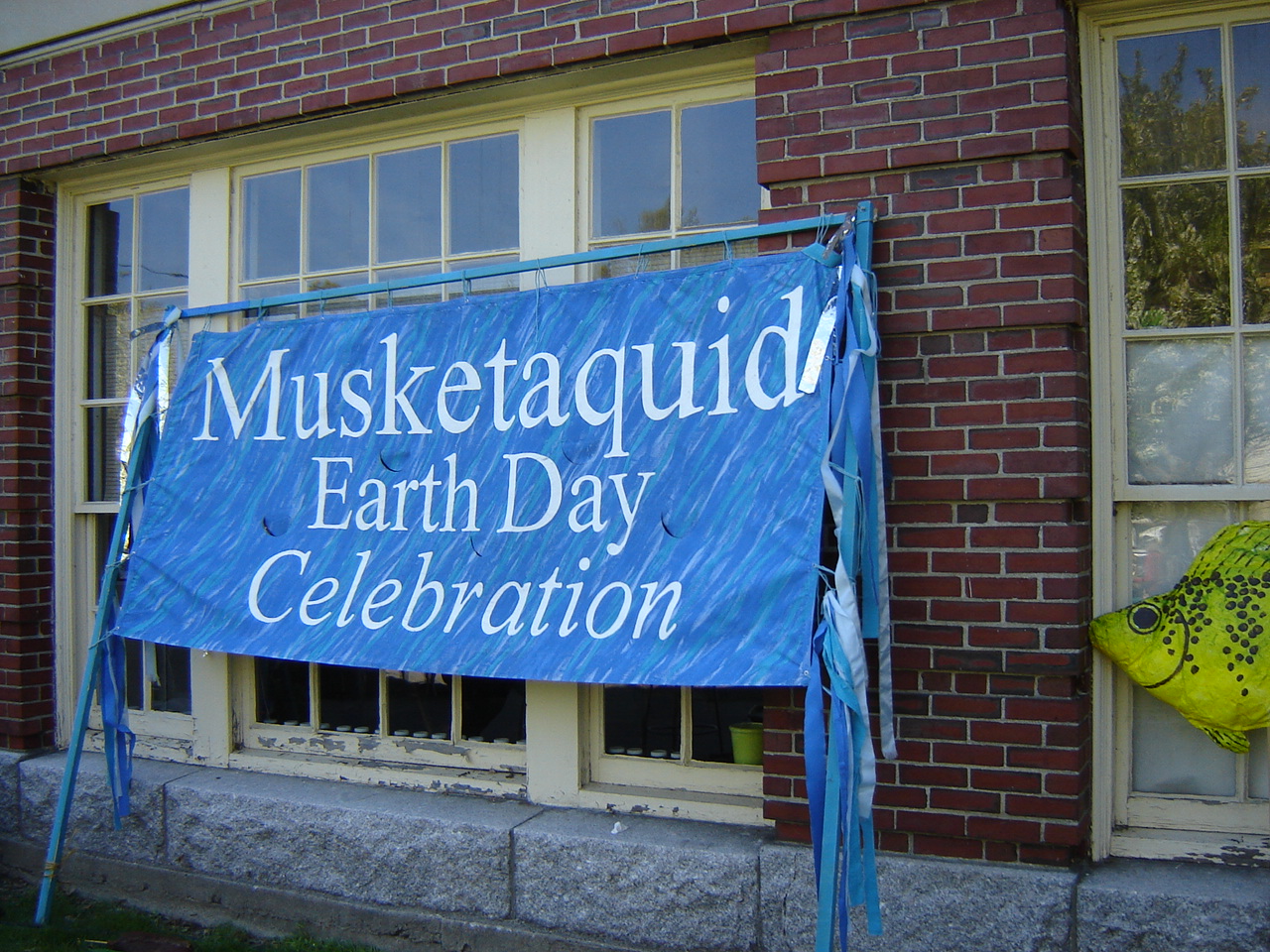
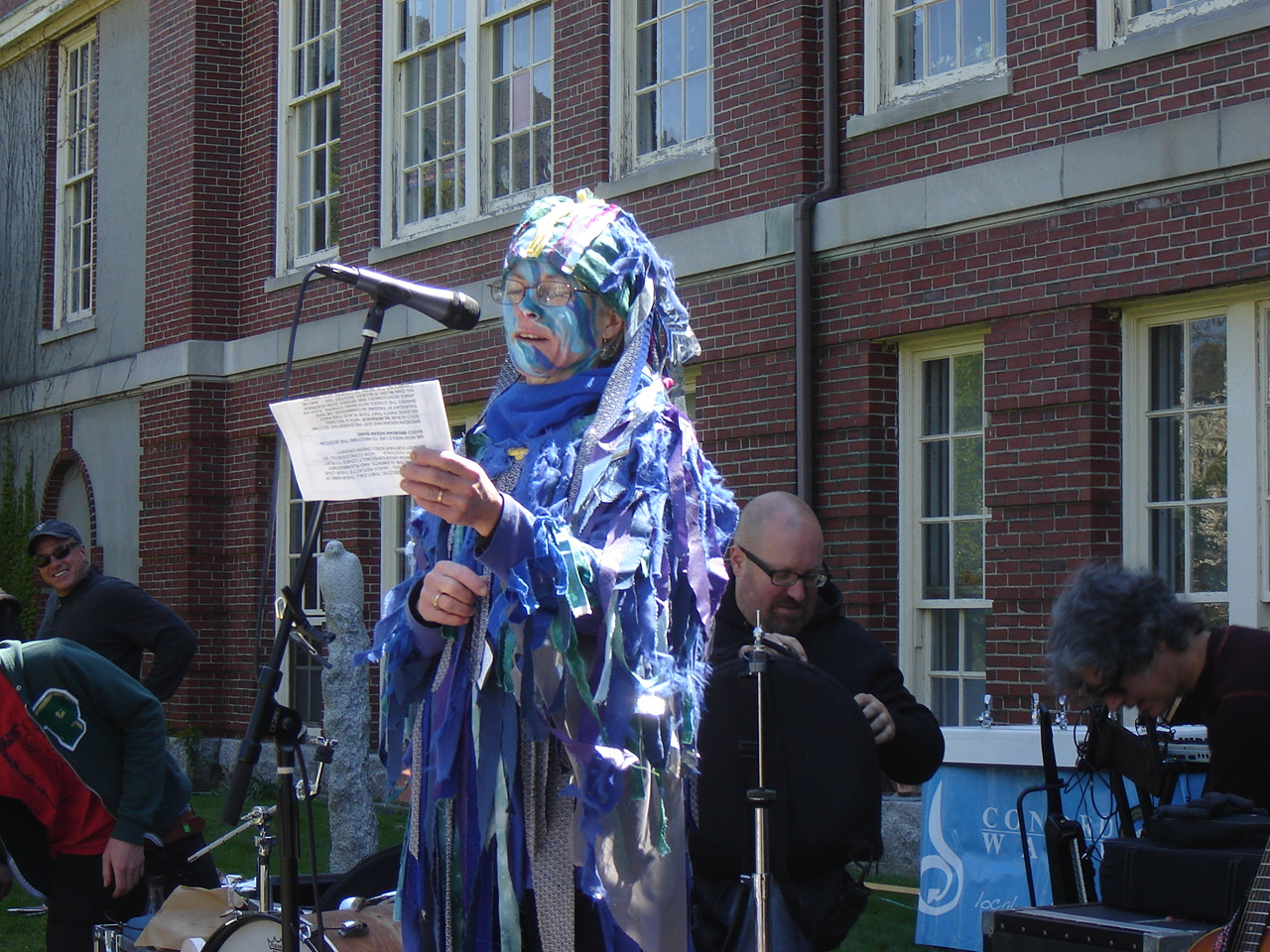
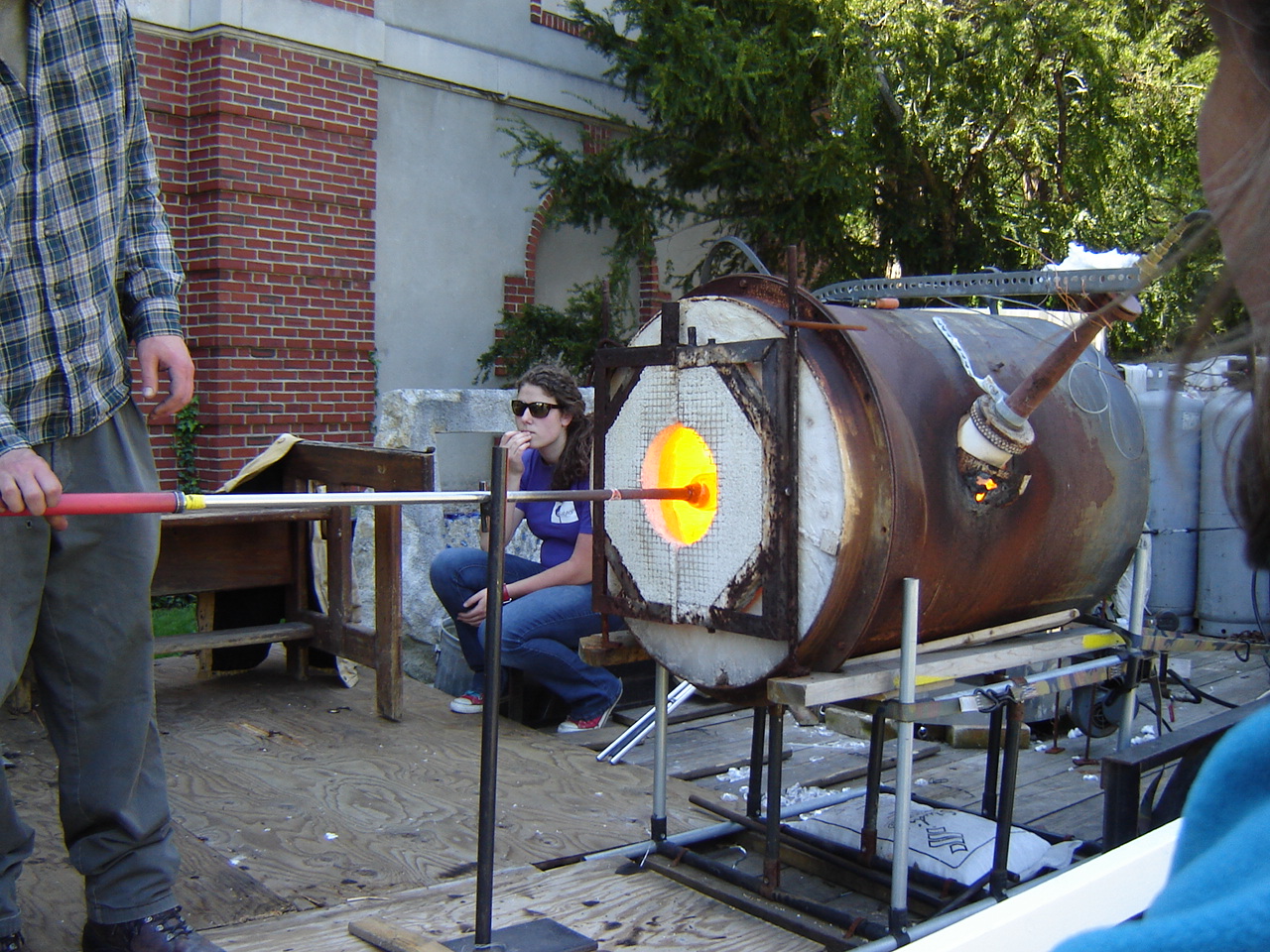
For some years now, Concord has had a fun and funky Earth Day that involves a parade with giant animal and bird puppets and a festival at the Emerson Umbrella Center for the Arts afterward.

The photos: The Blue Person is one of the event’s costumed organizers. Note also the glassblowing demonstration. The faucet made of plastic bottles is meant to remind you that drinking tap water is better for the environment. (Concord Town Meeting just passed a ban on the sale of bottled water — the second attempt to get the legal language right.)

More here.

Read Full Post »

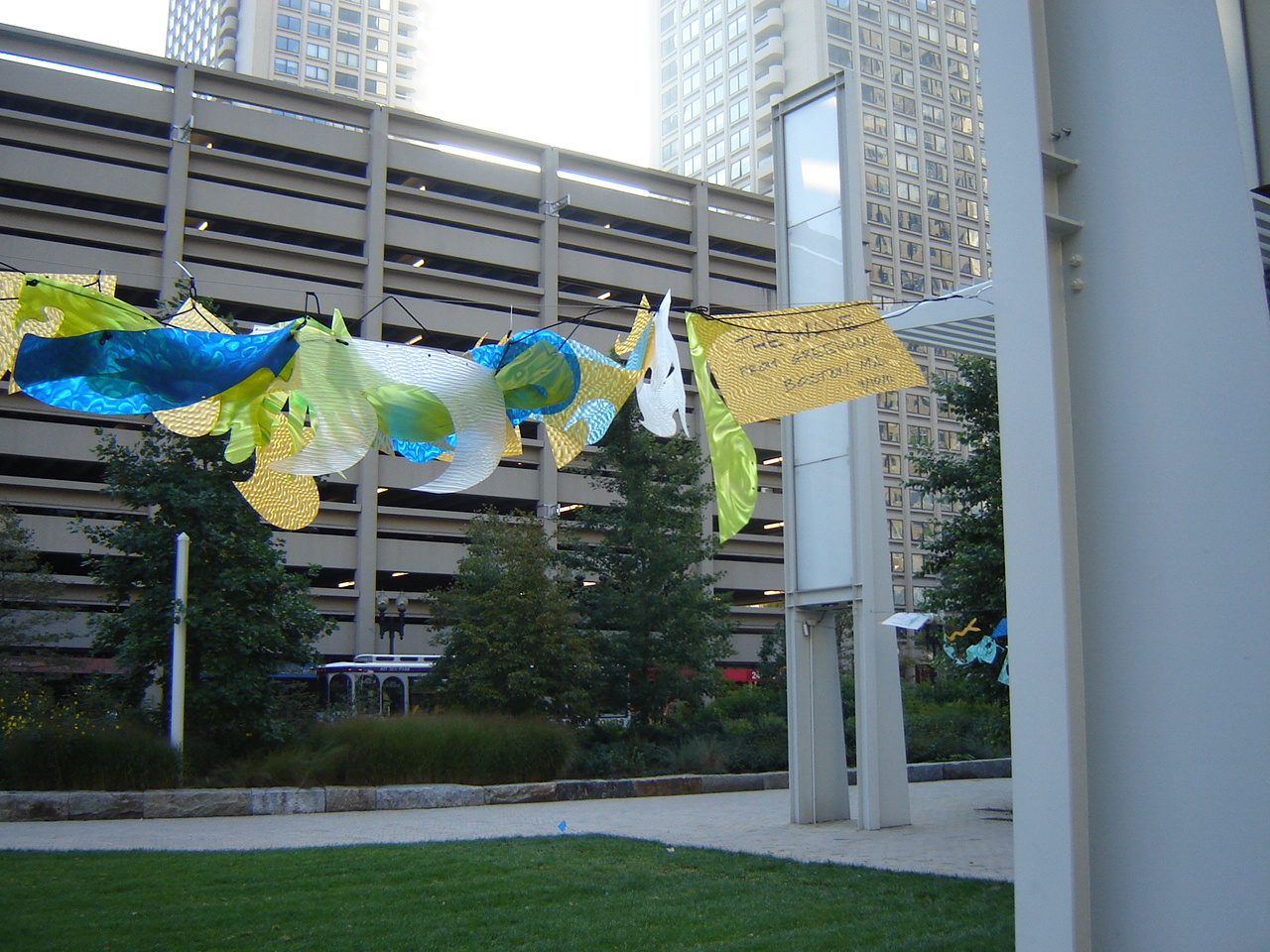
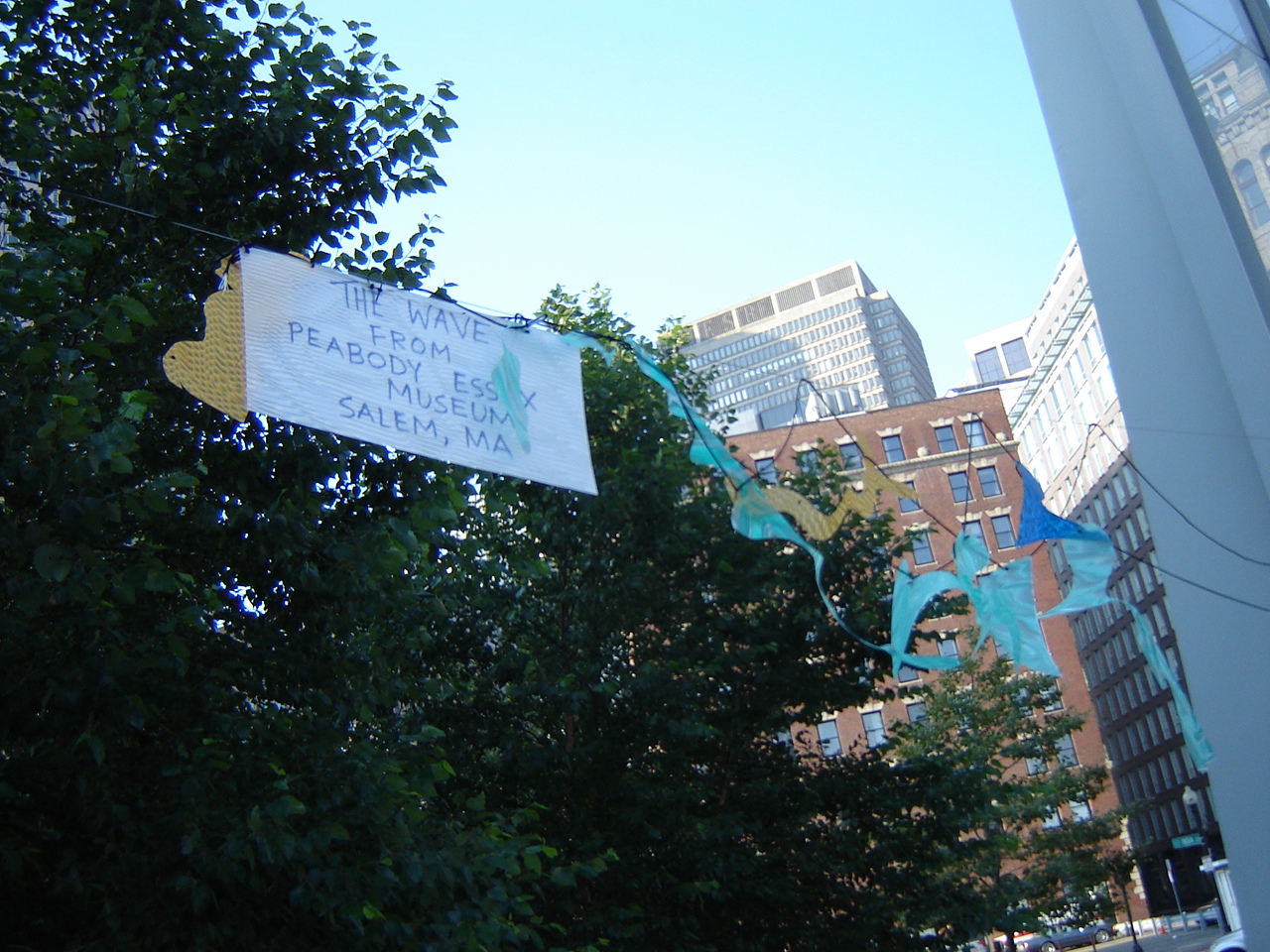
More curiosities seen on the Rose Kennedy Greenway in Boston: Waves. The first wave pictured below has a sign saying, “From the Greenway.” The second says, “From the Peabody Essex Museum, Salem, MA.”

This website helps to explain that an urban collaboration led by artists Susan Hoffman Fishman and Elena Kalman is behind this project, “The Wave: An Interactive Public Art Installation Fostering Global H20 Awareness.” I love it, but it didn’t raise my water awareness immediately because I had trouble figuring out what it was. Thank goodness for Google.

A couple weeks ago, I wrote to the Greenway people (and to the city of Boston) about bikers who were using the Greenway paths despite signs saying not to use “bicycles, skateboards, personal transportation, i.e. Segway.” I like that people bike instead of use cars, but not on footpaths. The signs cause walkers to lower their guard. I’ve seen near misses.

The city wrote me: “Thank you so much for your email. It is illegal to ride on the Greenway. We at the City of Boston are aware of this issue. We will be installing a bike lane on the road for the cyclists this season. Research shows that that bike lanes dramatically reduce sidewalk riding.”

The Greenway people wrote: ” For the safety and enjoyment of all Greenway visitors, biking is not permitted anywhere in the parks. When our horticultural and maintenance staffs witness a cyclist, they will ask them to dismount; City of Boston Police Department handles enforcement.  … The City of Boston installed five new Hubway stations along the Greenway.  This fall, the City will be installing painted bike lanes onto the street which will help alleviate the problem in the parks.”

(At the moment the Boston police are more preoccupied with Occupy Boston. They arrested 141 Occupiers early Tuesday because they had spread into the Greenway from Dewey Square. Funny how a few days can change one’s perspective. Today the concerns of the Occupiers and the concerns of the police both seem more serious than bikes on footpaths.)


Read Full Post »

« Newer Posts