Feeds:
Posts
Comments

Posts Tagged ‘well-being’

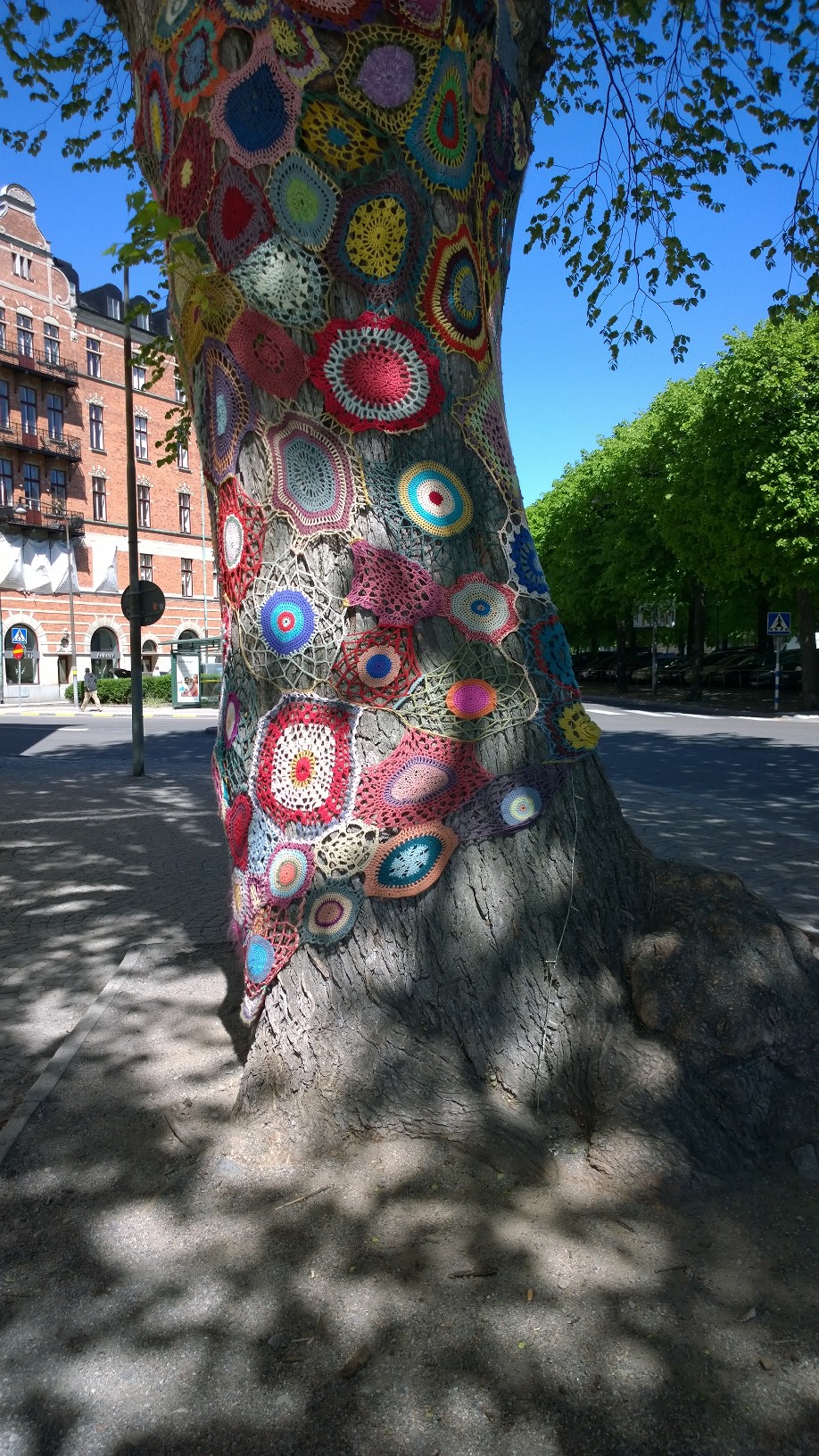
052917--crocheted-tree-Stockholm

Photos: Suzanne and John’s Mom.
Crocheted tree in Stockholm, 2017.

Working with your hands, creating something that is all you — how satisfying that can be! Today’s story is on the latest research showing that that can be good for you and the people around you.

As Nicola Davis wrote at the Guardian, “Winston Churchill had painting, Judi Dench is famous for her rude embroidery and Tom Daley has been known to knit at the Olympics. Now researchers say we could all benefit from creative endeavors and that such pursuits have a bigger influence on life satisfaction than having a job.

“While arts and crafts have long been used to aid mental health, experts said most research has looked at their effect on patients rather than the general population, and tend to look at specific activities.

“However, the researchers have now said such interests could be an important tool for improving public health in general.

“Dr Helen Keyes, a co-author of the research from Anglia Ruskin University, said: ‘It’s quite an affordable, accessible and ultimately popular thing for people to do. And that’s key. You’re not going to be shoving something down people’s throats that they don’t want to do.’

“Writing in the journal Frontiers in Public HealthKeyes and colleagues reported how they analyzed data from more than 7,000 people aged 16 or over who took part in the face-to-face ‘taking part survey’ by the UK Department for Culture, Media and Sport between April 2019 and March 2020.

“As part of the survey participants were asked to rate various aspects of their well-being on 10-point scales, report whether they took part in arts or crafts, and provide demographic details.

“The team found that just over 37% of participants reported taking part in at least one art or craft activity in the past 12 months – ranging from painting to pottery and photography. …

“The results revealed that people who engaged with creating arts and crafting had greater ratings for happiness, life satisfaction and feeling that life was worthwhile than those who did not, even after taking into account other factors known to have an impact – including age, gender, deprivation, poor health, and employment status. …

“Among other results the team found engaging in arts and crafts was associated with an increase in happiness on a par with aging by 20 years (as Keyes notes, well-being goes up slightly with age), while the sense that life was worthwhile was more strongly associated with crafting than being in employment.

“Keyes said [the reults] might reflect that not everybody is in a job they find fulfilling, while people often have a sense of mastery or ‘flow’ when undertaking arts and crafts – experiencing control, achievement and self-expression. …

“Keyes said smaller clinical trials have suggested engaging in arts and crafts can increase well-being. Keyes also acknowledged the increases in well-being associated with creating arts and crafting were very small – on average engaging in such activities was only linked with a 2% higher rating for the feeling that life was worthwhile. But, she said, the results remained meaningful at a population level. …

“Keyes said that backing such activities would offer a simpler route for governments to improve the nation’s well-being than other factors that are known to have a big effect. …

“ ‘But it’s a really quite cheap, easy, accessible thing for us to engage people in.’ ”

What was the last craft you tried your hand at? I made a pottery vase.

More at the Guardian, here. No paywall.

I used to make collage greeting cards.

Read Full Post »

Photo: Terry Smith/ AthensNews.com
“The American Woman,” a sculpture by the late David Hostetler in the Wolfe Garden on Ohio University’s College Green, is part of the 144-mile Ohio Art Corridor.

How encouraging to see communities embrace initiatives that lift people’s spirits and to read that towns are actually spending money on those things! It’s true that parks, trees, and art in a municipality offer economic benefits, but things are also worth doing just because they’re good.

I bet that Ohio’s 144-mile arts corridor, which is meant to lure tourism dollars to an area that has been struggling in recent years, is pretty successful at making the locals feel happy. Nothing wrong with happiness. Nothing wrong with a sense of pride and well-being.

Nancy Trejos writes at USA Today, “Southeastern Ohio is trying to attract visitors by giving them something unique to look at. … The founders believe The Ohio Art Corridor is the largest outdoor gallery in the world, surpassing one in Stockholm that covers 70 miles.

“ ‘Our desire is to draw people out of the big cities, to take a drive through the beautiful Appalachian country of Ohio, to learn, grow, and have experiences that they otherwise would not have,’ says Rebekah Griesmyer, executive director of The Ohio Art Corridor.”

Reporter Fred Kight from Athens News has more.

“The corridor extends 144 miles through Athens, Morgan, Fairfield, Muskingum and Pickaway counties. It currently consists of eight sculptures and two large murals, and organizers hope to add new works.

“ ‘I love the idea. … Public art is wonderful,’ said Athens Mayor Steve Patterson. …

“Griesmyer said, ‘We are attempting to draw people to small cities and towns with outdoor art. It is a huge project, and we couldn’t be more excited to see it implemented and adopted by cities like Athens.’ …

“In order to be included on a Corridor map, the art must [now] meet three criteria. It must be outdoors and free; it must be large; and if the art is not large (over 12 feet) as one piece, it must consist of three sculptures in one place.”

The idea’s originator is Griesmyer’s brother-in-law, David Griesmyer. He “operates a metal fabrication business in Malta, across the Muskingum River from McConnelsville. Creation of the Corridor combines his love of art with a desire to bring new life to the region.

“ ‘This part of Ohio is so rich with beauty, talent and creativity,’ he said. ‘I see southeast Ohio as a large stone ready to be carved, only to reveal a masterpiece hidden within.’ ”

More at the Athens News, here, and at USA Today, here.

Photo: WGRZ-TV
This section of the Ohio Art Corridor is located on the Muskingum Parkway across from the Morgan County Fairgrounds.

Read Full Post »

Photo: @elliott.jerome, via Instagram
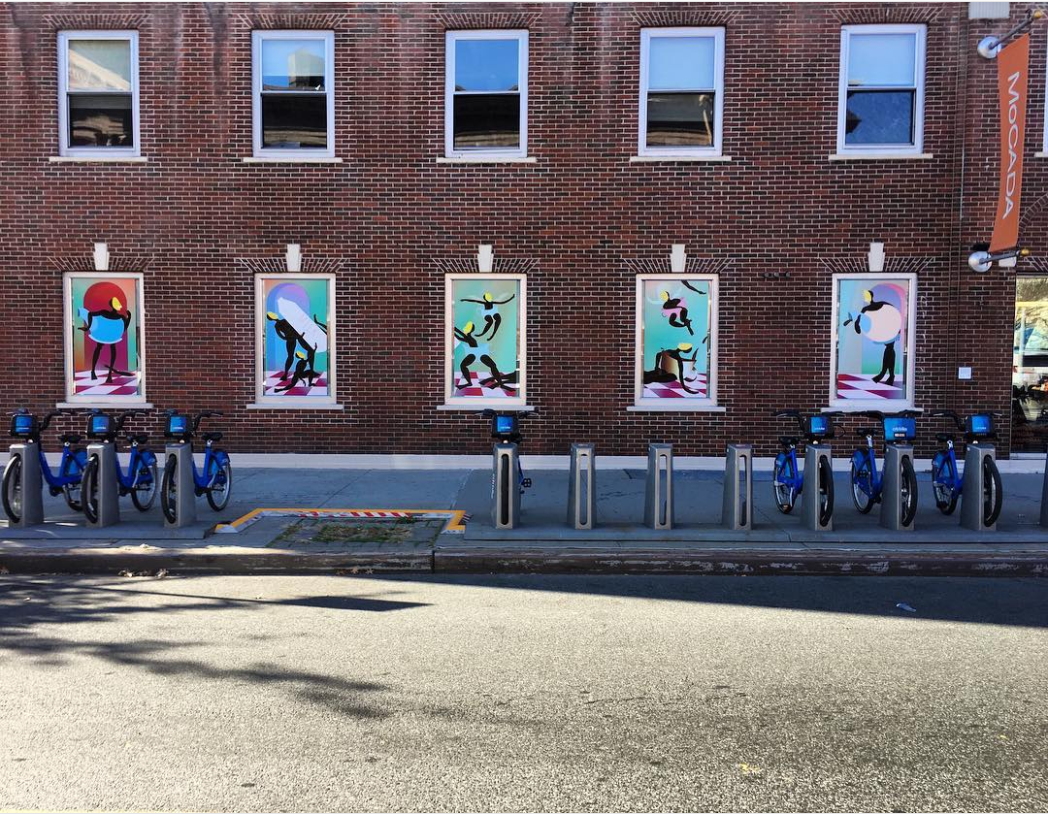
Installation view of Theresa Chromati’s
Tea Time, with audio accompaniment by Pangelica, at Museum of Contemporary African Diaspora Arts in Brooklyn.

For ten years, I was the editor of a magazine focused lower-income communities, and like this blog, it reflected a lot of my interests. One of the topics I was always on the hunt for was the role of the arts in community development. This study would have fit perfectly.

Isaac Kaplan writes at Artsy, “Arts advocates have long extolled the benefits of culture to personal and neighborhood welfare. While the contention is broadly accepted within the field, the existence of the link has largely been argued without an abundance of data and taken a backseat to economic justifications for arts funding.

“But a two-year study released this month by researchers from the School of Social Policy & Practice at the University of Pennsylvania has revealed a quantitative relationship between the presence of cultural resources in a neighborhood and key aspects of social well-being, particularly in less advantaged neighborhoods. The research was part of the school’s ongoing Social Impact of the Arts Project (SIAP).

“Professor Mark J. Stern and SIAP director Susan C. Seifert found that low- and middle-income residents across New York City with more access to cultural resources experience better education, security, and health outcomes compared to residents of neighborhoods with similar economic profiles but with fewer cultural resources. …

“The relative higher presence of cultural resources in lower-income neighborhoods is linked with several health, safety, and education benefits. These include a 14% decrease in indicted investigations of child abuse and neglect, an 18% decrease in felony crime rate and also a 17–18% increase in the number of students scoring at the highest level on standardized Math and English tests. …

“While the report is careful to note that such findings do not mean the arts are causing these outcomes, the link is nonetheless significant within a broader picture. …

“To reach their conclusions, the researchers compiled a ‘cultural asset index’ — an accounting of thousands of nonprofits, for-profits, employed artists, and cultural participants across New York City, drawing on numerous sources, including tax, grant, and administrative data.

“The study complements this data with interviews and discussions with individuals engaged with cultural enterprises across the entire city. …

“The study says that economically disadvantaged areas generally have fewer cultural resources than wealthier parts of the city. But less advantaged communities also had a stronger correlation between the prevalence of cultural resources and social well-being.”

Read more at Artsy, here.

Read Full Post »

Following up on yesterday’s post, which highlighted simple pleasures like spending time in the library, I give you this report by Morgan Ribera at Bustle.

“Apparently, libraries provide patrons with a happiness that money can’t buy. Or at least nothing less than almost two grand in cash. According to a recent study commissioned by the U.K.’s Department for Culture, Media, and Sport, the act of going to the library induces joy equivalent to that brought on by a £1,359 ($1,878) pay raise.

“The study was conducted in an attempt to measure which activities have the most positive impact on an individual’s well-being. Visiting a library scored among the top joy-generating activities, alongside dancing and swimming, giving us yet another reason to hang-out at our local library. …

“And this U.K. study adds even more to the proof already stacking up on the value of libraries, a value that was evidenced extensively in a Pew Research Study released [in March]. The rather pleasing results of this eye-opening Pew study showed that habitual library goers maintain stronger community ties, are more likely to socialize with friends and neighbors, and exhibit higher levels of technological engagement.”

More at Bustle, here.
Photo: Bill Lapp

Read Full Post »