Feeds:
Posts
Comments

Posts Tagged ‘wildfire’

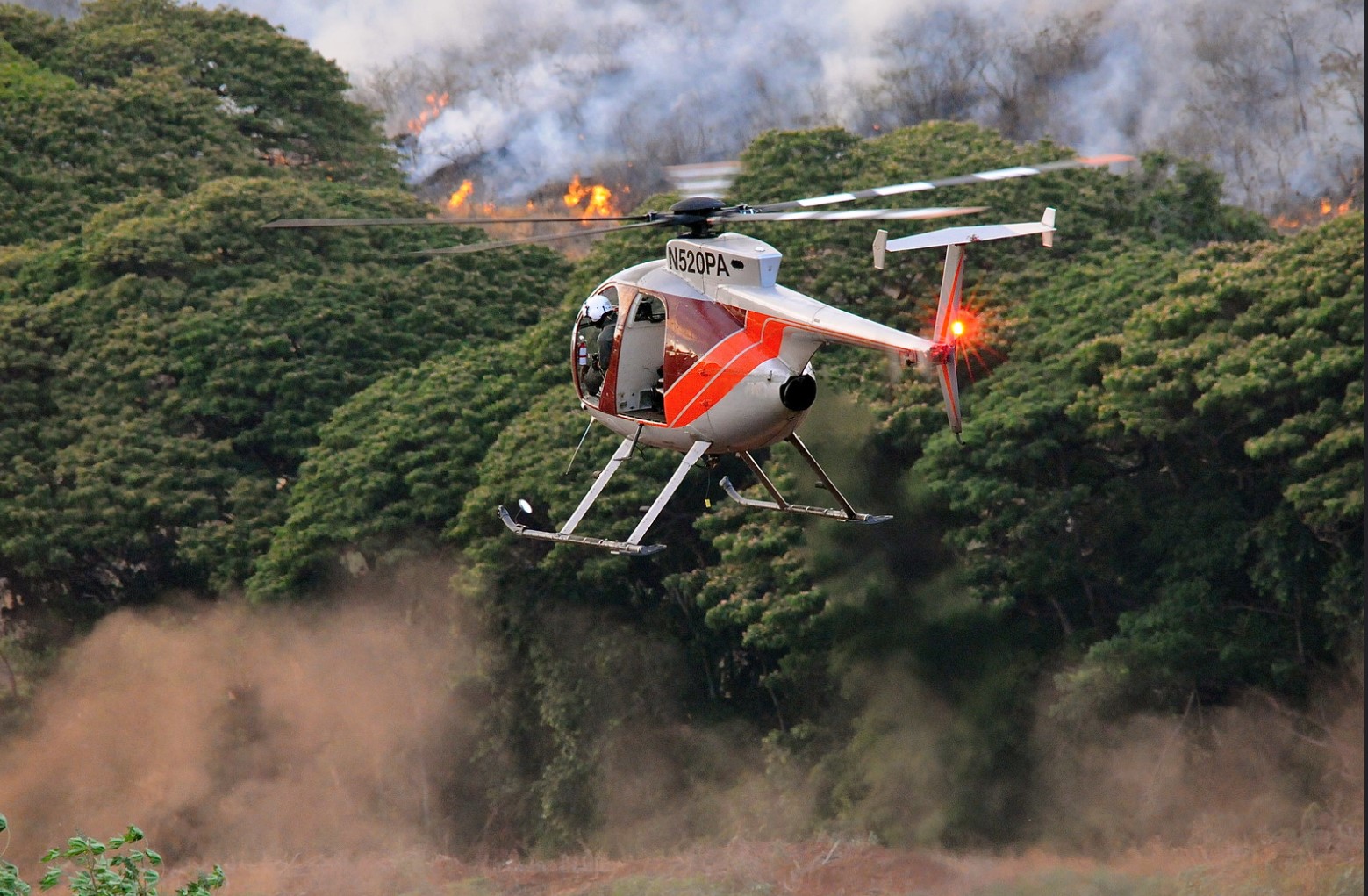
Photo: Brian Howell, Flickr Commons.
A helicopter circles a wildfire on Kaua‘i, where these fires are becoming increasingly common during drier summer months.

A Guardian update on what governments are doing about increased environmental costs sent me to Hawaii’s website. The island state, already grappling with the effects of global warming, is the first in the US to approve a tourism tax designated for climate issues.

The article says, “Lawmakers in Hawaii have passed first-of-its-kind legislation that will increase the state’s lodging tax to raise money for environmental protection and strengthening defenses against natural disasters fueled by the climate crisis. …

“[Gov. Josh] Green said in a statement. ‘Hawai‘i is truly setting a new standard to address the climate crisis.’

“The bill passed [adds] a 0.75% levy to the state’s existing tax on hotel rooms, timeshares, vacation rentals and other short-term accommodations. It also imposes a new 11% tax on cruise ship bills, prorated for the number of days the vessels are in Hawaii ports.

“Officials estimate the tax will generate nearly $100m annually. They say the money will be used for projects like replenishing sand on eroding Waikiki beaches, promoting the use of hurricane clips to secure roofs during powerful storms and clearing flammable invasive grasses like those that fed the deadly wildfire that destroyed downtown Lahaina in 2023. …

“Hawaii already levies a 10.25% tax on short-term rentals. As of 1 January, the tax will rise to 11%. Hawaii’s counties separately charge a 3% lodging tax, and travelers also have to pay the 4.712% general excise tax that applies to all virtually all goods and services. The cumulative tax bill at checkout will climb to 18.712%, among the highest in the nation. …

“As many visitors travel to the state to enjoy the environment, [Green] predicted they would welcome committing dollars to protect shorelines and communities.

“ ‘The more you cultivate good environmental policy, and the more you invest in perfecting our lived space, the more likely it is we’re going to have actually lifelong, committed travelers to Hawaii,’ he told the Associated Press.

“Zane Edleman, a visitor from Chicago, said … ‘If you really focus on the point – this is to save the climate and actually have proof that this is where the funds are going, and that there’s an actual result that’s happening from that, I think people could buy into it.’ …

“John Pele, the executive director of the Maui Hotel and Lodging Association, said there’s broad agreement that the money raised will go to a good cause. But he wonders if Hawaii will become too expensive for visitors.

“ ‘Will we be taxing on tourists out of wanting to come here?’ he said. ‘That remains to be seen.’ ”

The website Hawaii.gov notes that “2015 and 2016 were Hawaiʻi’s warmest years on record, and average air temperatures are 2 degrees warmer than they were in 1950. In 2019, Honolulu experienced its hottest recorded day three times, representing the hottest year ever recorded in the city. The last five years have seen peak average annual temperatures years across all islands.  In 2015-2016, it was so hot in Honolulu that emergency public service announcements were issued to curtail escalating air conditioning use because it stressed the electrical grid.” 

Among other global-warming consequences the website lists are the loss of 1.5 million acres of native forests, increasing numbers of wildfires, rapid growth of invasive species, “mass coral bleaching and mortality,” and a severe strain on water and energy infrastructure.

More at the Guardian, here, and at Hawaii’s official website, here.
Read Full Post »

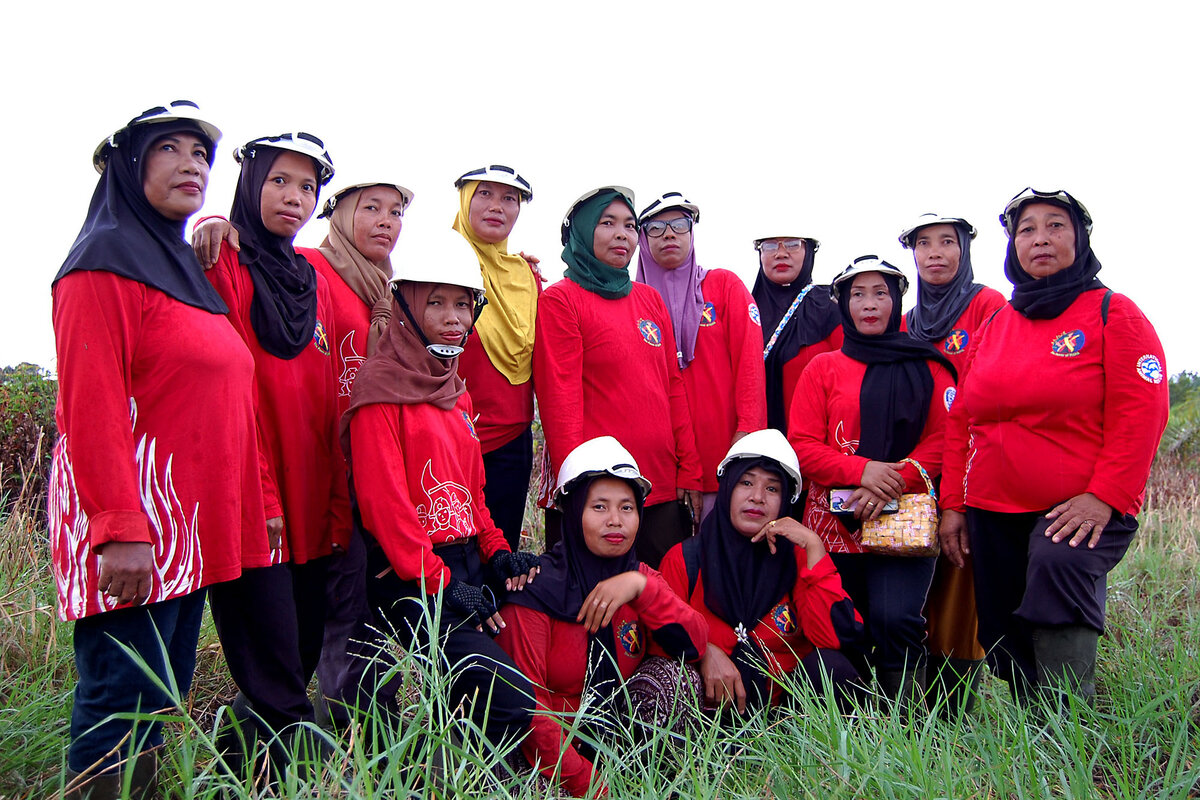
Photo: Lindsey McGinnis/The Christian Science Monitor.
Power of Mama patrollers, who routinely put out palm oil fires in Indonesia.

In Indonesia, women have answered the call to do something about wildfires. Because in Indonesia, careless and illegal palm-oil logging routinely causes fires, endangering orangutans. And not just orangutans.

Lindsey McGinnis and Sara Miller Llana report the story at the Christian Science Monitor.

“The women adjust hard hats over hijabs and pull on knee-high boots. Then they set off into what was once a dense forest of rubber and bamboo trees but is now a patchwork of small-scale palm oil fields. Everyone knows who they are. Their scarlet, elbow-patched uniforms with flames snaking up the torso, and the image of a firefighter emblazoned on the chest, give it away.

“This is the Power of Mama.

“Across Kalimantan, the Indonesian part of the island of Borneo, lush rainforest hosting carbon-rich peatland and one of the country’s most significant populations of orangutans meets illegal logging and palm oil farms. That adds up to wildfires.

“So Power of Mama members have started patrolling for fire risks, urging farmers to follow the rules about slash-and-burn clearing, and challenging stereotypes about women’s roles in rural Indonesian life along the way.

“Female forest rangers in Indonesia are rare, says Eulis Utami, director of a nongovernmental organization called Hutan Itu Indonesia, or Indonesia is Forest, which aims to educate Indonesians about their tropical rainforest, the world’s third-largest. But when women are given training and information, she says, ‘They protect the forest with their whole hearts.’

“In untouched forests of West Kalimantan, orangutans build their nests high up in trees. Hornbills soar through the vines with deep swoops of their wings. The chirps of songbirds mingle with the ‘o-ho!’ calls of gibbons.

“But this habitat is shrinking. West Kalimantan has lost more than a third of its tree cover since 2000.

“Indonesia is the world’s largest producer of palm oil, and nearly all of it comes from either Sumatra or Kalimantan. The farms have wreaked havoc on peatlands, one of the world’s most important carbon sinks. When the bogs are cleared, the water table sinks and soil becomes highly flammable.

“A new consciousness about the risks of fire spread rapidly to this community in 2019, when agricultural burning amid drought conditions sparked fires that raged for months. Millions of acres of peatlands and rainforest burned. And it kept many of the mothers who would eventually form the Power of Mama up at night, worried about the effects of smoke and haze on their children’s health.

“The Power of Mama was launched in 2022 by Yayasan International Animal Rescue Indonesia (YIARI), whose long-term goal is to save the critically endangered orangutan. …

“YIARI intentionally made women part of the solution. Male farmers have been impervious to NGOs trying to convince them to protect the forests, but they listen to their wives, says Anna Desliani from YIARI. ‘Women have influence in their families,’ she says.

“One of the newest branches is in the community of Sungai Putri, which counts 2,000 residents. Farmers here have long tended rice paddies but many switched to more lucrative oil palm trees in 2017.

“ ‘It’s sad because … before it was real forest,’ says Misnati, a patroller who, like many Indonesians, has just one name. She says she misses the sounds of gibbons and the cooler air the forest brought. She also felt more protected from fire and floods when the forest served as a buffer zone.

“The Power of Mama doesn’t aim to stamp out cultivation – in fact, most of its members’ husbands toil in palm oil now. But they have been educated on the risks of clearing land by burning, of overcultivating, and of smoking in a highly flammable field. And that knowledge gives them an authority that many had never known. …

“When it comes to forests, the discussion is always ‘heavy,’ explains Ms. Utami. It’s about deforestation, wildfire, conflict. That’s why Indonesia is Forest, which introduces young town dwellers to the rainforest, focuses on positive narratives that make people want to protect Indonesian biodiversity.

“The Power of Mama is, in its own way, cultivating a similar enthusiasm.

“On this rainy day, the women aren’t on high alert. They walk the land and talk with farmers. Passing a patch of blackened vegetation, Misnati recalls her proudest moment: when she figured out how to connect a hose to a water pump and put out a fire here last year. …

“Before the Power of Mama, ‘I’d never venture this far into the land alone,’ she says. ‘I’ve gotten to know the landscape even though I’ve lived here my whole life.’ …

“ ‘We need to be a role model, to set an example,’ says another patroller, Lita, sporting an upcycled crossbody purse made of plastic detergent sachets she collected from her neighbors. Other women are wearing them, too. ‘If we don’t do this, who will?’ ”

More at the Monitor, here. Nice pictures. No paywall.

Read Full Post »

Photo: Melanie Stetson Freeman/CSM Staff.
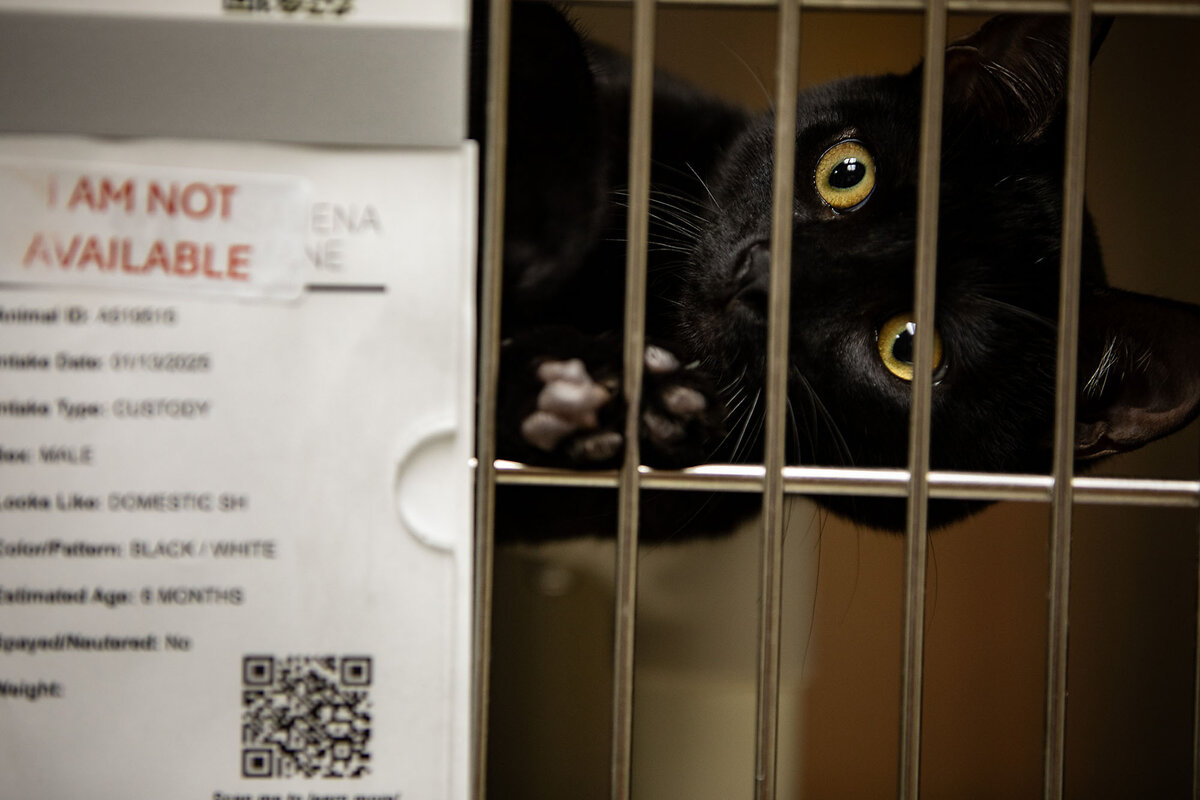
A sign on the cage of a young black cat boarded at Pasadena Humane indicates that it belongs to someone who lost their home in the Eaton Fire. The organization took in about 500 pets right after the fires. As of March 8, there were about 170 still boarding, free of charge.

Speaking of those pets and other animals in the Latvian animated film Flow, what actually does happen to them in a disaster?

Whether it’s a catastrophic flood as in Flow, or a massive wildfire as in California last January, humane societies and lots of volunteers rise to the challenge.

Ali Martin wrote at the Christian Science Monitor, “Six weeks after the Los Angeles wildfires erupted, Chris Briffett was sifting through 10,000 volunteer applications. The director of volunteer services for Pasadena Humane, a nonprofit, is expected to bring on about 2,000 – giving the organization an ‘unprecedented chance, he says, to respond to the community’s needs. …

“When communities are devastated, people step up to help, often in ways that align with their own skills or interests. But in the past decade, more trained volunteers have been integrated with official disaster response, says Tricia Wachtendorf, co-director of the University of Delaware’s Disaster Research Center. The inclusion of volunteers in the government process of planning for emergencies, she adds, improves coordination in the midst of disaster.

“Christine Quesada, director of volunteer programs for LA County’s Department of Animal Care and Control, says volunteers were vital during the wildfire evacuations at LA Pierce College, which took in horses and other livestock. LA County’s Equine Response Team — volunteers trained to work with large animals — provided food and care; worked with organizations for donations of food and supplies; and cultivated relationships with owners. …

“During the January wildfires, the small staff at Pierce’s equine science center worked around the clock with about 20 volunteers a day, plus officers from the county’s Department of Animal Care and Control. After the first day, Pierce was at capacity with over 200 animals.

“Some belonged to Sarah Kern. She arrived with six horses and two donkeys after watching the glow of flames spread across the oak-covered hills surrounding her home in Topanga. Ms. Kern knew the stakes; she and her family lost a home in the 2018 Woolsey Fire.

“Their animals are a way of life, central to their daily activity and rhythms. With the horses and donkeys safe, she says, she could focus on caring for her family and protecting her property.

“ ‘Yes, you’re supporting animals,’ she says, ‘but you’re really supporting the people. … They’re both important.’

“Back at Pasadena Humane, Skinny Minnie is recovering from severe burns. She is one of nearly 170 animals still boarding here because of the fires.

“Owners Mark Pastor and Lisa De Lange evacuated their home in Altadena and managed to grab their other two cats – Beauregard and Stella – but little else, with flames melting the back of Mr. Pastor’s car as he pulled out of the driveway.

“Someone found Skinny Minnie in the burnt remains of their home and took her to the shelter, which posted her photo on its website, where it was discovered by Mr. Pastor. Either he or Ms. De Lange visit Skinny Minnie nearly every day.

“Skinny Minnie’s care has been extensive, and it’s all covered by Pasadena Humane. When they told him, Mr. Pastor says, he ‘broke down.’

“ ‘It’s like they care as much about us and our feelings as they do about the animals that they’re treating,’ says Mr. Pastor.”

More at the Monitor, here.

Read Full Post »

Photo: Kevin Winter/Getty Images
After a bad year for wildfire, the Oscars gave the Los Angeles firefighters some well-deserved recognition.

After wildfires devastated the Los Angeles area last winter, Hollywood decided to give the firefighters some love. For men and women who are professionally calm in the face of extreme danger, being around celebrities felt a bit scary.

Jada Yuan reported the story for the Washington Post. “When 12 of greater Los Angeles’s firefighters took the stage at the Oscars … they got a standing ovation so big you could hear it the lobby bar. Screams filled the Dolby Theatre, which had been evacuated in early January when one wildfire ripped through the Hollywood Hills.

“Onstage, Los Angeles Fire Department Capt. Erik Scott earned his laughs, joking, ‘Our hearts go out to all of those who have lost their homes … and I’m talking about the producers of “Joker 2.” ‘ He and his fellow firefighters would take Monday off, but after that, it would be back to work — back to 5 a.m. wake-up calls, back to heartbreaking days, back to being on constant alert in a city that has barely recovered from the destruction wrought by the fires this winter. …

“Was Scott tearing up as the crowd cheered? ‘Maybe!’ he told the Washington Post … laughing sheepishly in the Dolby lobby after the bit. ‘I was not expecting for them to have that standing ovation for that long. I put my head down, and they got louder.’ … He kept emphasizing that they’re mere representatives of thousands of firefighters in the L.A. area. …

“This Hollywood awards season has been as Tinseltown-focused as ever, but for good reason. The devastating wildfires that swept through Pacific Palisades and Altadena, destroying tens of thousands of homes and businesses and killing 29, broke out two days after the Golden Globes. At first, it seemed like awards season might have to be put on hold. Every subsequent event was paused, rescheduled or reassessed as organizers tried to figure out how to honor the artistic achievements of an industry that is the lifeblood of this city without seeming indifferent to the struggles of so many.

“Inviting first responders to the awards shows and honoring their hard work and sacrifices — beginning with the Grammys and continuing through the Critics Choice and Screen Actors Guild awards, all the way through to the Oscars — has allowed the Los Angeles music and film communities to give thanks. …

“Many of the firefighters on the Oscars stage had been deployed for 28 days straight after the fires began, either actively fighting fires in the hardest-hit areas or getting information to the public. A month later, they were back out there, responding to life-threatening mudslides from heavy rains that even swept one firefighter’s car into the ocean.

“They’ve got a story to tell while the stage is theirs. Since the fires, Scott says he’s been dealing with a lingering cough and wheezing, as are others, because even a mask can’t protect you from breathing in toxic smoke for 28 days straight. … He has been put on breathing treatments, and researchers from the University of Arizona have given him and many others a full blood panel to test for heavy metals as part of a multiyear cancer study because of all the particles from vehicles with lithium batteries that were floating in the air.

“The immediate dangers are over, but the long-term ones will persist, and they are similar to those faced by first responders on and after 9/11 — something Scott is eager to explain to anyone who will listen, from the Hollywood A-list on down. … Scott said, ‘It’s part of the inherent dangers of our chosen profession.’ …

“ ‘Firefighters in general, we want to come to work, do our job, put the fire out, and we’re there to help people,’ Capt. Adam VanGerpen said. ‘We’re not looking for recognition. We don’t need praise. So we’re not used to that. It’s overwhelming for the amount of recognition that we’re getting, not just by these awards, but by just the general public coming by the fire station.’ They had so many supplies dropped off at various fire stations that they had to get flatbed trucks to spread the love around. …

“In the field, the LAFD had plenty of celebrity encounters, often with no fanfare and no cameras present. Jay Leno brought barbecue on his vintage fire truck to the Palisades base camp multiple times and would spend all night serving food. Gary Sinise did the same. Singer Steven Tyler invited the LAFD members to his Grammys after-party and then showed up at Station 69 in the Palisades and just hung out. VanGerpen’s favorite, though, was ‘J.T.’ — Justin Turner — the former Dodger who came out with his wife to serve firefighters food till 8 p.m. and then just chilled in the kitchen at the station, FaceTiming everyone’s kids. ‘He’s like a hero to these guys. That’s probably the No. 1 guy these guys want to see.’ “

More at the Washington Post via MSN, here.

Read Full Post »

Photo: Magdalena Wosinska for the New York Times.
Ian White, an artist, against a burned house across from the park named for his celebrated father, the painter Charles White.

The outside world never knew much about the generations of Black artists enriching life in Altadena — not until after the town burned down.

As Sam Lubell wrote in February at the New York Times, “Before the Eaton fire raced across Altadena, destroying more than 9,000 of its buildings, many, even in nearby Los Angeles, barely knew of the place’s existence. This sleepy 42,000-person hamlet hugging the glowing foothills of the San Gabriel Mountains is not part of that city but an unincorporated community of Los Angeles County, and just far enough off the beaten track to blissfully avoid notice.

“Once typified by its bucolic quirkiness, tight-knit neighborhoods and generations-old churches and businesses, Altadena now consists of row after row of twisted, charred building remains, scorched car chassis, blinking or broken stoplights and the occasional khaki National Guard Humvee. The future, for now, is filled with toxic cleanup, insurance adjustments and conflicting visions for rebuilding.

“Yet the past has gained newfound prominence. With so much gone, Altadena’s histories are being unearthed, by residents, scholars and preservationists who say they may hold a key to making this a special place once again, and provide anchors for those weighing whether to stay.

“One of the most profound of Altadena’s legacies — its spectacular story of Black creative culture — had been buried not only under its seclusion, but also under layers of racial and institutional apathy, the loose accounting of informal memory, and the absence of formal plaques and other preservation markers. The fire has spurred calls for a more rigorous approach to remembrance.

“ ‘Sometimes it takes a tragedy for people to mark history,’ said Brandon Lamar, president of the N.A.A.C.P.’s Pasadena branch, whose own home was destroyed, as was his school, his grandparents’ home and their church. But that destruction, he noted, ‘does not mean that we can’t create public memories in spaces now, so that people can remember this information for generations to come.’

“Starting in the 1950s and ’60s, the west side of Altadena (and parts of neighboring northwest Pasadena not bulldozed for the 210 and 134 Freeways) drew middle-class Black families eager to buy homes.

“Many came because the redlining — discriminatory lending by banks — was less severe here, and some of the schools had been integrated comparatively early. The area became a magnet not just for Black teachers and social workers but also for Black artists from around the country, drawn to its affordability, inventive vibe, gorgeous mountain backdrop and general spirit of permissiveness.

“ ‘It had this energy of bohemian California,’ said Solomon Salim Moore, assistant curator of collections at the Benton Museum of Art at Pomona College. ‘You could have a little less scrutiny and a little more room to do your projects.’

“On Feb. 22, as part the Frieze Los Angeles art fair, a discussion called ‘Land Memories’ will feature artists’ recollections of this unique legacy. The talk will be co-hosted by the Black Trustee Alliance for Art Museums, which will also share oral histories recorded from Altadena artists and residents, and collect new histories.

“Moore, who is also an artist, grew up in Altadena and said that its nonconformist spirit has endured to the present, even as prices have climbed and the Black population has fallen, according to the U.C.L.A. Bunche Center for African American Studies, to about 18 percent from 43 percent in 1980. Artists here, he said, loved that they could set up informal studios or even family compounds, or that they could enjoy little freedoms like hosting parties without friends worrying about permit parking.

“Sometimes creative people need to step away because you need to get out of the light to see,” said Ian White, an artist, teacher and the son of Charles White, the renowned painter and printmaker whose haunting depictions of African Americans, their struggles and dignity, inspired generations of artists. He spent the last 20 years of his life in Altadena and is buried at the community’s Mountain View Cemetery. Ian lives in a house next to his father’s modest home (which he also owns) in the Meadows, a district along Altadena’s west edge that in the 1950s and ’60s became one of the first here to integrate. Virtually all of the Meadows survived the fire.

“Also living west of Lake Avenue (then the unofficial dividing line between white Altadena and Black Altadena) was John Outterbridge, the noted assemblage artist and longtime director of the Watts Towers Arts Center. His home on Fair Oaks Avenue was destroyed, along with much of his archive and family memorabilia, according to his daughter, Tami. The famed enamel artist Curtis Tann lived within walking distance, while the prolific sculptor Nathaniel Bustion, known as Sonny, lived near White in the Meadows. Betye Saar, 98, known for repurposing everyday objects into mystical collages, grew up in a home on northwest Pasadena’s Pepper Street, just blocks from Altadena’s west side.

Sidney Poitier, a good friend of White’s from New York, and the first Black actor to win an Academy Award, rented a home in west Altadena before moving to Beverly Hills.

“Ivan Dixon, the actor and trailblazing director, lived on Marengo Avenue, and the science fiction writer Octavia Butler on Morada Place.

“Later generations of Black artists continued to thrive here, including Mark Steven Greenfield, Yvonne Cole Meo, Senga Nengudi and Michael Chukes, and dozens of others holding down day jobs and creating whenever they could in this secret Eden.

“Charles White, already an established figure when he moved from New York in 1959 for health reasons — he had respiratory problems and was advised to live in a milder climate — would become the glue holding this arts community together. His home and studio, still standing, was a gathering place, with many artists competing for the honor of driving White to or from one place or another. (He didn’t drive.)

“Ian still refers to Dixon, Poitier and Charles’s good friend Harry Belafonte as his ‘fictive uncles.’ He recalled how his father set up the sculptor Richmond Barthé, a cornerstone of the Harlem Renaissance, with an apartment, and how his mother, a social worker named Frances Barrett, was his caregiver until the end.”

More at the Times, here.

Read Full Post »

Photo: David Swanson/AFP/Getty Images.
The hillside along the Pacific Coast Highway burns in front of the driveway to the Getty Villa in the Pacific Palisades neighborhood in Los Angeles on Jan. 7.  

Planning, courage, and commitment saved California’s Getty Museum in the last big conflagration, but how long can it escape what few others did?

Kelsey Ables at the Washington Post explained how the famous art collection was protected in January.

“As wildfires ravaged greater Los Angeles … the J. Paul Getty Museum faced encroaching flames on two fronts. Blazes nearly surrounded the Getty Villa in Pacific Palisades, coming within six feet of its walls. Days later, ominous red clouds were visible from the Getty Center in Brentwood, hovering on the horizon like a warning.

“The fire at the Villa was the closest flames had ever come to either building. But through it all, the institution made no evacuation plans. On the most intense nights at each location, a team of more than a dozen people at the Villa and 28 at the Center waited it out, and the museums’ vaunted artworks — the ancient sculptures, the Gentileschis, the Manets and Monets — remained inside.

“This was no gamble, though. Those familiar with the Getty describe it as a place one would evacuate to, rather than from.

“With the fire about a mile away from the Center on Jan. 10, a security staff member suggested to J. Paul Getty Trust chief executive Katherine Fleming that she might want to leave. ‘I was thinking, “I actually feel really good here,” ‘ she said in an interview. ‘This feels like a very safe place to be.’

“That is by design. … As the fires have killed more than 20 and razed swaths of the Los Angeles region, the Getty — with its more than $8 billion endowment — has emerged as a beacon of fire preparedness as well as a symbol of the defenses that wealth can build.

“From its grounds to the museum’s core, the $1.3 billion Getty Center, which was designed by architect Richard Meier and opened in 1997, was built to resist flames. …

“High on a hilltop, the campus has sprawling plazas made of fire-resistant travertine imported from Italy. Open spaces surround imposing, elevated buildings that boast walls constructed from reinforced concrete or fire-protected steel. The roofs are covered with stone aggregate, which is fire-resistant. Inside, the buildings are equipped with special doors that prevent flames from traveling. Temperature and humidity are closely monitored during red-flag warnings.

“Outside, the grounds are routinely cleared; the plants, selected for their drought-resistant qualities, are pruned regularly to prevent them from becoming fuel. During a previous fire, the museum said: ‘There is no need to evacuate the art or archives, because they are already in the safest place possible.’

“ ‘It’s very much like a fortress,’ said [Todd Cronan, an L.A. native and art history professor at Emory University in Atlanta], who briefly lived at the Center as a fellow. …

“To Cronan, though, the Getty’s unassailable features say ‘more about privatization and their … endowment than anything else,’ he wrote [by email].

“While the Getty stresses that it does not hire private firefighters or seek special treatment, it maintains its own water tanks — including a 1 million gallon tank at the Center — year-round. …

“When the Villa emerged largely unscathed last week, the museum in a press release credited its own ‘extensive efforts to clear brush from the surrounding area,’ noting that it also stores water on-site and that the grounds were irrigated ahead of the blaze. …

“Fleming, the CEO, said they were confident in their preparations but described a nail-biting evening watching the fire move closer as 15 staff members remained on-site. … The next day, with staff unharmed and the Villa still standing, Fleming found a strange calm in the collections. The galleries were ‘cleaner than an operating room.’ “

More at the Post, here.

Update April 4, 2025. The Getty is selling bonds to raise money for more protection. Article here.

Read Full Post »

Art: Beatrix Potter via the Marginalian.
The mighty mushroom.

As the blogger at Spores, Moulds, and Fungi in New Zealand could tell you, mushrooms are important to the efficient functioning of the planet.

Today’s article explains how, if encouraged to do their own thing, fungi can prevent the worst climate-change wildfires. Here are excerpts from Stephen Robert Miller’s report at the Washington Post.

“If you’ve gone walking in the woods out West lately, you might have encountered a pile of sticks. Or perhaps hundreds of them, heaped as high as your head and strewn about the forest like Viking funeral pyres awaiting a flame.

“These slash piles are an increasingly common sight in the American West, as land managers work to thin out unnaturally dense sections of forests. …

“The federal government has committed nearly $5 billion in the Inflation Reduction Act and Bipartisan Infrastructure Law to thinning forests on about 50 million Western acres over the next 10 years. Although this can be accomplished with prescribed burns, the risk of controlled fires getting out of hand has foresters embracing another solution: selectively sawing trees, then stripping the limbs from their trunks and collecting the debris.

“The challenge now is what to do with all those piles of sticks, which create fire hazards of their own. Some environmental scientists believe they have an answer: mushrooms. Fungus has an uncommon knack for transformation. Give it garbage, plastic, even corpses, and it will convert them all into something else — for instance, nutrient-rich soil.

“Down where the Rocky Mountains meet the plains, in pockets of forest west of Denver, mycologists like Zach Hedstrom are harnessing this unique trait to transform fire fuel into a valuable asset for local agriculture.

“For Hedstrom, the idea sprung from an experiment on a local organic vegetable farm. He and the farm owner had introduced a native oyster mushroom to wood chips from a tree that fell in a windstorm.

“ ‘That experiment showed us that the native fungi were helping to accelerate the decomposition really substantially,’ he said. Working with local governments, environmental coalitions and farmers, he is now honing the method. …

“When slash piles are set alight, they burn longer and hotter than most wildfires over a concentrated area. This leaves behind blistered soil where native vegetation struggles for decades to take root. As an alternative, foresters have tried chipping trees on-site and broadcasting the mulch across the forest floor, where it degrades at a snail’s pace in the arid climate. Boulder County also carts some of its slash to biomass heating systems at two public buildings.

“ ‘We’re removing a ton of wood out of forests for fire mitigation,’ Hedstrom said. ‘This is not a super sustainable way of managing it.’ He hopes to show that fungi can do it better.

“Jeffrey Ravage is a forester with the Coalition for the Upper South Platte, which manages protection and restoration of a more-than-million-acre watershed in the mountains southwest of Denver. He describes the action of saprophytes, a type of fungi that feeds off dead organic matter, as ‘cold fire.’ Like a flame, saprophytic fungi break organic material into carbon compounds.

Mycelium, the often unseen, root-like structure of the fungi, secretes digestive enzymes that release nutrients from the substrate it consumes.

“Whereas a flame destroys nearly all organic nitrogen, mycelium can fortify nitrogen where it’s needed in the forest floor. … Standard thinning costs somewhere around $3,000 per acre, about a third of which is spent hauling out or burning the slash. Using mycelium could drastically reduce that cost. With the right kind of fungi, he said, ‘we can do in five years what nature could take 50 years to a century to do: create organic soil.’

“Though the method is new, it’s not untried. At the Balcones Canyonlands Preserve, north of Austin, biologist Lisa O’Donnell deploys mycelium to combat invasive glossy privet [successfully]. … For mycelium to be a truly viable solution to wildfires, however, it would have to work at the scale of the Western landscape. Hedstrom is experimenting with brewing mycelium into a liquid that can be sprayed across hundreds of acres. …

“Ravage doubts it could be so easy. ‘Half the battle is how you target the slash,’ he said. Success stories like Balcones are rare. Ravage has spent a decade cultivating wild saprophytes and perfecting methods of applying them in Colorado’s forests.

Photo: Suzanne and John’s Mom
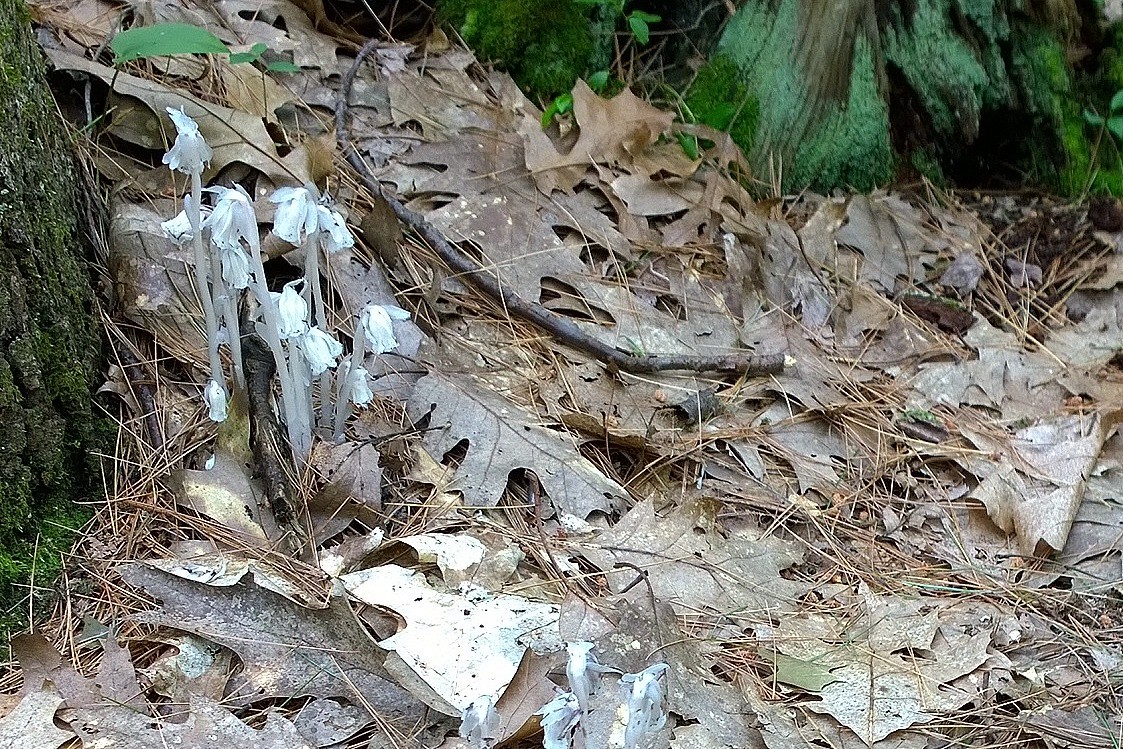
Indian Pipe is a kind of saprophyte.

062917-Indian-Pipe-fungus-ConcordMA

“He begins by mulching slash to give his fungi a head start. Then he seeds the mulch with spawn, or spores that have already begun growing on blocks of the same material, and wets them down. Fungi require damp conditions and will survive in the mulch if it is piled deeply enough. Given the changing character of Western forests, however, aridity poses a serious hurdle.

“At his lab in the Rockies, Ravage grows about a ton of spawn annually. To meet the demands of forest-fire mitigation, he wants to produce 12 tons every week. This presents an opportunity for intrepid mushroom farmers, should the government choose to fund them.”

The article was produced in collaboration with the Food & Environment Reporting Network.

More at the Post, here.

Read Full Post »

Photo: Jim Weber/Santa Fe New Mexican/AP/File.
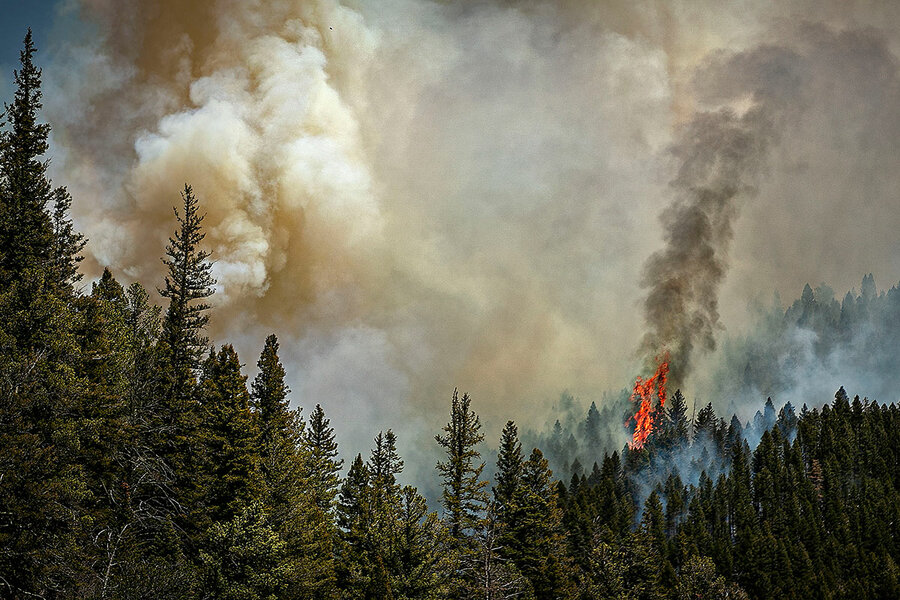
Fire rages along a ridgeline near the Taos County line as firefighters from all over the country converge on northern New Mexico to battle a fire on May 13, 2022.

An interesting experiment is taking place in New Mexico, where leaders are merging recovery efforts for children who were affected by recent wildfires and floods with recovery efforts for the environment.

At the Christian Science Monitor, Sarah Matusek has the story.

“Sara Villa watches her second grader, Aaron, focus on the task, his jacket hood raised against the November chill. He’s one of several dozen students on a school excursion at a New Mexico ranch. The Villas evacuated their nearby Holman home in the spring due to wildfire, then again in the summer due to floods. Because of water damage, the family went into debt purchasing a new mobile home, says Ms. Villa. Other scars are harder to see.

“Aaron gets ‘scared now when it rains,’ she says. ‘I just try to explain to him that he’s OK.’

“Aaron, shy, offers a snaggletooth smile. The ball in his mud-smeared palms is stuffed with seeds of native grasses. Students can plant these ‘seed bombs’ where they please, such as at home or here at Collins Lake Ranch, where about half of its 300 acres burned last spring in the state’s largest recorded wildfire.

“The activity is part of a school district experiment linking environmental recovery to that of students, whose families lost ranchland, income, freezers full of food, and safe drinking water. This school year, the rural Mora Independent School District (MISD) has tried several ways of harnessing lessons about such disasters to ‘promote the healing,’ says Superintendent Marvin MacAuley. …

“The district hired a second social worker to deal with an upswell of behavioral issues. MISD has also doubled down on logistical preparedness, which includes ongoing food distribution to local families and the drafting of school flood-response plans. …

“Not unlike the weather radio that Mr. MacAuley keeps on his desk, antenna raised at the ready, district staffers have had to broaden their attention to student needs that include not only academics but also resilience.

“ ‘I want them to recover. I want them to succeed,’ says the superintendent. …

“Family trees in Mora County intertwine with Indigenous, Spanish, and Mexican histories; some residents trace back ties to the land through nine generations. The district of around 400 students – most are Hispanic, and nearly all qualify for free or reduced-price lunches. …

“In April, prescribed burning in Santa Fe National Forest botched by the U.S. Forest Service grew into the largest wildfire in recorded New Mexico history. The blaze of over 340,000 acres was fueled by adverse conditions that the government says it underestimated. April set a record dry average for the state in terms of precipitation: five-hundredths of an inch that month. …

“As the fire blazed, Mr. MacAuley, a former wildland firefighter for the U.S. Forest Service, made the call to send students and staff home early. Evacuations followed. After a ‘chaotic’ two weeks, he says displaced teachers resumed lessons through a semblance of virtual learning. Though the district had begun using 1-to-1 computing during the pandemic, not all children evacuated with devices, let alone landed where they had access to Wi-Fi. …

“Summer flooding from thunderstorms was made worse by the wildfire. At the start of the fall semester, flooding cued two early dismissals and the sheltering of students late at school until the roads cleared. …

“Researchers are beginning to understand the impact of climate change on young people, including through self-reporting of ‘climate anxiety.’ In April 2021, a year before the New Mexico blaze, the National Association of School Psychologists adopted a resolution recognizing the importance of mitigating climate-related harms (like air pollution, extreme heat, and wildfire) to the learning and mental health of students. 

“MISD is now equipped with cots, food, and water in case of future needs to shelter students. And the district used American Rescue Plan Act education funding to hire the second social worker based on a spike in social-emotional needs, with a third contracted on an as-needed basis. …

“Senior Casey Benjamin is among those who helped, as a junior firefighter. Sixth grader Ana Crunk, daughter of the teacher, volunteered at an evacuation center in Peñasco.

“Though it was ‘scary’ to flee home, helping out ‘helped me feel better,’ says Ana, whose own family was evacuated for two weeks. …

“Mora’s expeditionary learning, first mentioned in a report by Searchlight New Mexico, is partially meant to address social-emotional needs. Sometimes called experiential or project-based learning, the hands-on learning approach was developed by educators in the 1990s.

“Since the fall semester, several expeditionary learning days, including the seed bomb outing, have taken place at Collins Lake Ranch, a nonprofit serving people with disabilities. In other lessons there, students learned to fly drones for aerial data collection and tested post-fire water quality, in partnership with the New Mexico Forest and Watershed Restoration Institute at New Mexico Highlands University. …

“The district has [also] launched its first team to enter the New Mexico Envirothon, a problem-solving competition that tests student knowledge of natural resources.”

More at the Monitor, here.

Read Full Post »

Nature has messages for those who want to hear.

Wildfires have have shown Californians the dark side of Nature, especially how it fights back when it has reached the limits of its tolerance for human destructiveness. Today’s article shows the residents of the obliterated town of Paradise gaining strength from the healing side of Nature.

Sarah Kaplan reported at the Washington Post, “Laura Nelson was dreading this drive. It’s bad enough seeing the mailboxes for houses that no longer exist, the dusty roads lined with the blackened skeletons of trees. But the day is also bone-dry and scorching, the smoke from a distant fire casting a too-familiar pallor over the landscape. Her car bumps over rough patches of pavement — places where the asphalt was melted by vehicles engulfed in flames.

“It has been four years since Nelson navigated these roads while fleeing the deadliest and most destructive wildfire in California’s history. And still, every return to Paradise is a reminder that she can never truly go home.

“When the Camp Fire incinerated Nelson’s Northern California town, it plunged the community into a mental health crisis. Butte County already had one of the highest rates of childhood trauma in the stateand the sudden loss of home and kinship left residents at high risk of depression. The author of one study on the fire’s aftermath said survivors experienced PTSD at rates on par with veterans of war.

“They are not alone: Research increasingly shows that victims of climate change disasters are left with deep psychological wounds — from anxiety after hurricanes to surges in suicide during heat waves — that the nation’s disaster response agencies are ill-prepared to treat.

“But in the burned and battered forests near Paradise, a small program run by California State University at Chico is using nature therapy walks to help fire survivors recover.

“Drawing on the Japanese practice of ‘forest bathing,’ the community-led walks test a fraught premise: That the site of survivors’ worst memories can become a source of solace. That landscapes still threatened by ever-rising temperatures may hold a remedy to the anguish that climate change will bring. …

“After the dual ordeals of fleeing from fire and navigating an overburdened disaster bureaucracy, participants say the program has helped relieve some of their pain.

“ ‘The forest is the therapist,’ Nelson says. ‘Nature knows how to heal.’ …

“As she approaches the shaded entrance to Paradise Lake park — a rare patch of the forest left mostly untouched by fire — she feels her pulse ease ever so slightly. There is something reassuring about the sweet scent of fir needles, the cool breeze of the lake, the chatter of sparrows and squirrels.

“Suddenly, Nelson is glad she came. She needs this morning in nature, she realizes, to restore some of what she lost when Paradise burned. She yearns to feel at home again in this wounded, warming world.

“In the woods beside Paradise Lake, Blake Ellis stands amid a circle of survivors, breathing deep. As program manager of the Chico State ecotherapy program, she has guided scores of forest therapy walks. But this one feels especially freighted with meaning. …

“Ellis doesn’t know what memories they have brought to this moment. But she knows her job is to create a ‘safe container’ for their pain.

“The fire started around dawn on Nov. 8, 2018, when a faulty piece of electrical equipment sent a spark into the parched vegetation of the northern Sierra foothills. …

“The streets in Paradise weren’t designed to carry tens of thousands of evacuees at a moment’s notice. LeeAnn Schlaf saw families crammed into sedans, boats pulled by trailers, trucks carrying dogs and cats and chickens. Some people had abandoned their vehicles and started to walk. She couldn’t understand why. Then Schlaf turned onto the Skyway and was confronted by a ‘tunnel of fire. …

“After introductions, Ellis leads the forest therapy group along the lakeside trail to a flat, open stretch of ground. The water is so still it looks like a mirror, perfectly doubling the trees, the clouds, the smoke-streaked sky.

“ ‘Find a nice, cozy, comfortable spot,’ Ellis says. … ‘Begin by simply bringing your awareness to your breath. Simply noticing what it’s like to breathe.’ …

“Ellis’s goal in this moment is to help the participants feel grounded. To anchor them in a safe and peaceful present, even as they are buffeted by the traumas of their past.

Studies have found that as many as 40 percent of people will develop post-traumatic stress disorder after a disaster, said psychologist Karla Vermeulen, deputy director of the Institute for Disaster Mental Health at the State University of New York at New Paltz.

“Survivors often remain hypervigilant, their bodies pulsing with stress hormones long after the threat has subsided. Vivid memories of the disaster can disrupt their sleep and haunt their days. Untreated, their suffering may begin to calcify into something more deep-seated and persistent. …

“In the moment when they are most in need of stability and compassion, Vermeulen said, survivors too often find themselves at the mercy of a convoluted bureaucracy that climate change has stretched increasingly thin. …

“Accessing the few resources that are available requires survivors to complete reams of paperwork, adding to their stress levels. It may take months or even years to get approved for government assistance, exacerbating peoples’ sense that they will never be safe again. …

“Years later, Schlaf still worries something will happen to her house every time she goes on vacation. She compulsively checks that the knobs on her stove are turned off. Though it was her life’s dream to live in the woods, now she is uneasy among too many trees. …

“But sitting in the sunshine beside Paradise Lake, Schlaf notices how calm she feels. She looks at the reflection of tall, dark pines quivering on the lake surface. For what feels like the first time in a long time, the forest doesn’t make her fearful.”

More at the Post, here. Hat tip: Earle.

Read Full Post »

Photo: Petros Karadjias/AP.
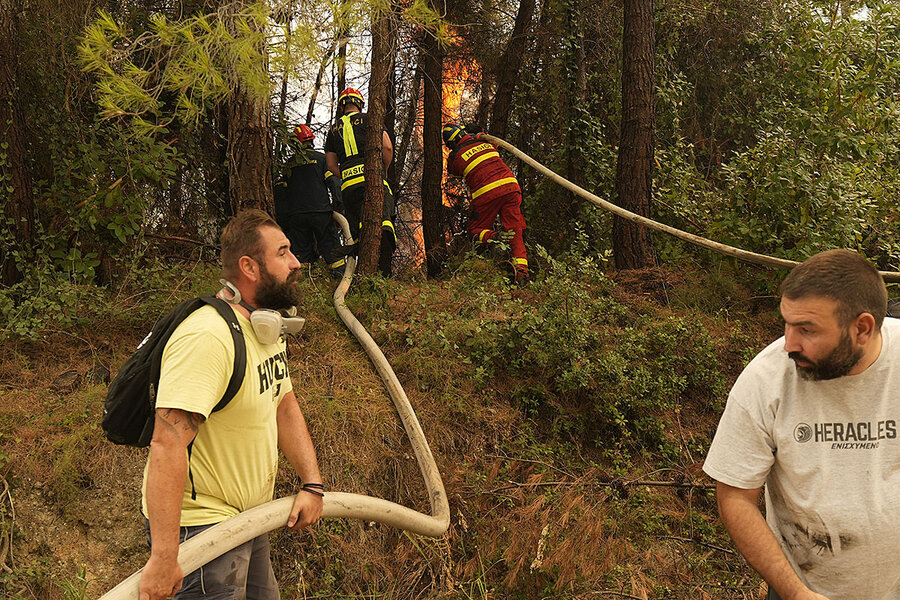
Firefighters try to extinguish a fire in Avgaria village on Evia, an island about 115 miles north of Athens, Aug. 10, 2021.

The Greek government was doing nothing to fight the raging fires on Evia island, and some mainland folks watching the disaster on television couldn’t stand what they were seeing. So they took matters into their own hands.

Tony Rigopoulos and Dominique Soguel reported the story for the Christian Science Monitor.

“Volunteers were the first – and at times only – line of defense against the wildfires that engulfed the Greek island of Evia this week, leaving charred olive trees in a sea of ashes.

“Some were brave local youth. Others came from other parts of the country, shocked into action by the inadequacy of the government response as it scrambled to fight an unprecedented number of fires across multiple fronts, including the capital, Athens.

“Wherever they came from, the volunteers, as well as grassroots support from nearby cities and towns to get supplies into fire-stricken areas, have helped save lives and property from roaring blazes across the island, located just northeast of Athens. The destruction the fires caused is nonetheless catastrophic for many living on Evia, especially in its heavily wooded north. But the actions of volunteers helped prevent loss of life and keep a bad situation from becoming that much worse.

“[The fire] broke out on Aug. 3 and continued to smolder through Thursday. A sinister smoke hung over the small western port of Aidipsos early Wednesday as firefighters and volunteers from other parts of Greece arrived to help Evia.

“The blaze had spared the port, an important entry point to the island, but consumed more than 110,000 acres just beyond. Some villages continued to burn, adding to the bitterness of residents who say the government prioritized fighting a wildfire at a large forest near Athens and allowed the fires on Evia to grow into a huge front that was impossible to battle.

“Known for its fierce winds that stayed mercifully calm in recent days, the island’s north boasted beautiful pine forests that went up in flames all the same, along with vineyards and olive groves. Thousands of residents work either in small honey or resin production facilities. …

Said soccer coach Vaggelis Bekakos, ‘The volunteers saved Evia because there was no one there to help.’ …

“After the fierce wildfires of 2016, says the coach, residents of Limni created a volunteer corps of firefighters and rescuers who received proper training. They are bound by an oath to drop their day jobs and serve any time that there is a fire alert. Mr. Bekakos credits their heroic acts to save the town – broadcast on national TV – with inspiring villagers in other parts of the island to also fight the flames, rather than flee.

“ ‘We were asking the fire service to spray some water on a house that was beginning to burn and they would answer, “We have no such order. Our order is to evacuate the people, not to spray water,” ‘ he recalls. …

“Greece had to battle nearly 600 fires in the span of just eight days, issuing 65 evacuation alerts and evacuating 63,000 people, according to Nikos Hardalias, the deputy minister of crisis management. ‘What I know is that the choices we made saved lives,’ he told journalists on Tuesday. ‘We didn’t underestimate any fire. … We had to deal with a situation that was unique for the fire service: 568 fires!’ …

“Five days after the start of the fires, Marinos, a native of the southern part of Evia who now studies in Athens, went with his friends to the scorching north because there appeared to be no government effort to bring the flames under control.

“ ‘We took branches from trees to hit the flames until they died,’ says Marinos, who didn’t give his last name. ‘Later a man came from the village with his car, carrying the watering tank he uses for his vines. We used that water too. We used anything we could find. …

“ ‘It’s not only the houses, it’s the forest. Their whole life is now in the past. What can they do after this?’

“Maria Papadopoulou, a native of Athens, has devoted days to delivering food and water packages to those in need, shuttling villagers to safety, and rescuing and feeding the few animals that survived the inferno. She agrees that the loss of the forest is a huge problem. ‘The forest and the animals are gone forever,’ she says. ‘In a few days, all the volunteers will leave and the people of the villages will be really alone then. They will continue to live in this huge cemetery.’ ”

More at the Monitor, here.

Read Full Post »

Once again radio’s Living on Earth, has a holistic take on current events affecting the environment. Host Steve Curwood and environmentalists elsewhere have noted the fire-control success of indigenous people and long-ago subsistence farmers — fighting fire with fire.

In today’s story we learn how good fire management, though made more difficult by increased development, can benefit both humans and wildlife.

“The record-setting wildfires in the Western U.S. this year have had devastating consequences for the people who have lost their homes and businesses. But as Aaron Scott of Oregon Public Broadcasting [OPB] reports, many species of plants and animals depend on forest fires to create and maintain the habitat they need.

“AARON SCOTT: Ecologist Paul Hesburgh and Bill Gaines are taking us on a tour through a section of the Washington Cascades that was burned by the Tripod Fire in 2006.

“BILL GAINES: Paul, I’m not seeing a lot of woodpecker cavity activity. …

“SCOTT: The reason we’re looking for woodpeckers is that they are a poster animal for how scientists like Gaines and Hesburgh are reimagining fire. Instead of seeing fire as a negative thing that needs to be suppressed, they are finding it is essential to the well-being of many plants and animals. For example, burned forests may look barren to us. But for wood-eating insects and their predators, they are a feast waiting to happen. Gaines marvels at how woodpeckers just seem to flock in. …

“And they are far from alone. From aspen to morels, from blackberries to bees. There’s an incredible range of plants and animals that thrive in areas touched by fire. One of the best-known examples is the lodgepole pine, which grows what’s called serotinous cones.

“PAUL HESBURGH: And so every cone scale is held together by a drop of resin, and it takes the heat of a fire to melt that resin and cause those cone scales to open up.

“SCOTT: The cones shed seeds that quickly grow into dense stands of young trees. And these stands are one of the only hunting grounds for one of the country’s most adorable and threatened predators. The Canada lynx. …

“GAINES: We’re going to pretend we’re a Canada lynx. And what we want to find is our prize food, you know, a snowshoe hare.

“SCOTT: Gaines crouches down in stalks his way through the thick branches.

“GAINES: You can see here a scat from a snowshoe hare, so we know they’ve been here. Tells us this is good habitat for snowshoe hare and good habitat for lynx.

“SCOTT: That’s because these young pines are like a goldilocks zone. They’re just right, big enough to provide shelter for the bunnies with branches low enough for them to hide under. But as the pines grow taller and their branches no longer touch the ground, the bunnies and the lynx that hunt them have to go in search of new stands. …

Few northwest animals have evolved to live in thick, unchanging forests. Instead, most need an evolving clumpy mosaic of landscapes to meet all their needs. And the main driver behind that constant process of change and renewal is fire.

“HESBURGH: If you were to roll the film back a hundred, hundred and fifty years in history and take a look at a big landscape panorama, what you would see is places that were burned yesterday, places that were burned five years ago, ten years ago, that create this variety of habitats. …

“Where the forest is all grown up and blended. There are some critters still making a living in that landscape, but it has nowhere near the variety of the former landscape before it was homogenized.

“SCOTT: Today’s thick forests combined with a warming climate also set the stage for megafires. The result is two starkly contrasting landscapes and a dynamic far different from the one native animals evolved with. …

“GAINES: Lynx recovery is either made or are not here in this part of Washington. This is the largest population in the lower 48 states.

“SCOTT: And it doesn’t stop there. Fire has a crazy interaction with water by helping to thin out dense spreading forests, it actually leads to more water flowing into wetlands and streams. That encourages rich cool dining rooms for everything from bear to fish. No one is advocating that we let all fires burn freely, especially the human-caused ones. But a consensus is emerging that as crazy as it sounds, we need to restore regular fire to the land to help our fellow plants and animals survive.”

More at Living on Earth, here. Check out the original, too, at OPB in Portland, Oregon.

National Geographic, meanwhile, explains how “controlled” or “prescribed” burns can protect nature: “Controlled burns have become more important as fire suppression efforts have grown over the last century. Historically, smaller fires occurred in forests at regular intervals. When these fires are suppressed, flammable materials accumulate, insect infestations increase, forests become more crowded with trees and underbrush, and invasive plant species move in.

“Controlled burns seek to accomplish the benefits that regular fires historically provided to an environment while also preventing the fires from burning out of control and threatening life and property.”

Read Full Post »

Goats to the Rescue

3000

Photo: Phil Klein
Goat farmer Bob Blanchard tends to his flock above Diablo Canyon nuclear power plant in Avila Beach, California.

Can you take another story about goats as lawnmowers? (Click for an example.) Today’s update shows how goats are not only a good way to cut your grass but are an important wildfire-fighting tool.

Susie Cagle writes at the Guardian, “As the western US braces for another wildfire season, following its most devastating on record, public officials and private landowners are turning to an unlikely, rustic tool to manage increasingly incendiary lands. Goats.

“They’re currently munching away at summer-dried, fire-ready grasses in Oregon, Washington, Colorado, Idaho, Montana, Utah, Nevada and across California. In some places that outlaw livestock within city limits, officials have even changed local ordinances. …

“In California, where wildfires have long been a threat, goats have worked for decades to protect coastal communities from creeping conflagrations. But worsening, deadly fire seasons across western US have inspired more communities to try managing their lands not with machines and chemicals, but with hungry animals.

“More extreme, climate-changed weather cycles could make fuel management a more important part of wildfire mitigation, as more intense rainy seasons lead to huge spring sprouts in grasslands, that are in turn dried out in the hotter, drier summer sun. …

“ ‘There’s a lot more awareness just because of the horrific fires we’ve had lately,’ said [Mike] Canaday, who runs a company called Living Systems Land Management. ‘If people want goats, the sooner they can get on somebody’s waiting list, the better.’

“He believes goats are a superior form of fuel management, more sustainable and less risky than herbicides or fuel-powered mowers. ‘And they’re a lot more fun to watch than people with weed eaters.’

“Grazing goats are far from the newest wildfire prevention tool, but they have a comparably tiny footprint. They’re efficient, clean eaters, nibbling away at weeds and grasses and leaving far less damage than an herbicide. They’re nimble climbers, able to scamper up steep flammable hillsides and into narrow canyons that humans would struggle to reach. They’re impervious to poison oak, and they don’t disrupt natural ecosystems or scare away indigenous animals. Where conspicuously carved fire breaks on verdant hillsides might upset homeowners, goats are welcome seasonal cuteness.

“In its 2019 wildfire safety report, released in July, [Laguna Beach] officials estimated a human crew costs roughly $28,000 to clear an acre, while a goat crew costs an average of $500. …

“The west cannot survive on goats alone, in part because of the limited labor pool, and in part because fuel management isn’t enough to abate wildfire impacts. Goats are effective, but they can’t do anything about flammable wood shingle roofs or cedar siding on ageing buildings that are not subject to new fire safety codes.

“ ‘We have a lot of tools in the toolbox,’ said [fire marshall Jim] Brown. And when it comes to clearing the fuel that could send flames rushing toward those old, flammable homes, ‘the goats are just the best tool we have in the toolbox to do that – there’s just nothing better.’ ”

More here.

Speaking of goats, I happened to run into one today at the library. The young lady with the leash told me that the goat’s name is Hermione.

091419-goat-at-library

Read Full Post »

Photo: Monica LeRossignol
After a devastating wildfire, Bob Wilson, a Southern California real estate developer, gave $1,000 to each of Paradise High School’s 982 students and 105 employees. He is pictured here with student Trevor
LeRossignol.

Compassionate people pop up everywhere. I try to keep my attention focused on that as much as possible. In this example, a wealthy developer was moved to put money behind his compassion after the devastation of the 2018 wildfires in Paradise, California.

In November, Brianna Sacks wrote at BuzzFeed News, “Monica LeRossignol and her son are still stunned by the freshly printed $1,000 check, a gesture that’s brightened the difficult, surreal reality of rebuilding their lives after losing their home and most of their community in Paradise, California.

“On Tuesday night, her 17-year-old son, Trevor LeRossignol, and hundreds of other students, parents, and faculty members from Paradise High School gathered at Chico High School, as they have every week since the Camp fire leveled their town, to catch up, give hugs, rifle through donations, and eat some warm food. But this gathering had a major bonus.

“Bob Wilson, a Southern California real estate developer, was there giving out $1,000 to each of Paradise High School’s 982 students and 105 employees, totaling about $1.1 million in donations.

” ‘I gave him a hug,’ LeRossignol said. … Like thousands of others, the 46-year-old lost everything in the catastrophic wildfire, which has killed 88 people, torched more than 153,000 acres, and destroyed 14,000 homes. The mother, her son, fiancé, two nephews, and six other family members fled for their lives and are now crammed into two bedrooms at a friend’s house in the nearby city of Chico. …

“A few weeks earlier, as the Camp fire continued to burn around Paradise, Wilson came across a story in the Los Angeles Times about the students of Paradise, most of whom lost their homes. It delved into the uncertainty facing Paradise Unified School District and its class of seniors who were readying to graduate.

“The 89-year-old told BuzzFeed News that Paradise High School’s plight stuck with him, reminding him of his own ‘carefree’ days as a teenager. …

‘I made up my mind in five minutes,’ the businessman said Wednesday morning from Chico. ‘I had some of the most profound experiences in my life in high school because I was still able to be a kid, and it broke my heart to think of the experiences these kids were missing.’ …

“About two weeks later, Wilson was flitting between about 10 tables set up inside Chico High’s hallways, handing out envelopes containing a letter and personal check addressed to each student, teacher, and custodian, which he had personally stuffed from one of his offices in Los Angeles. …

” ‘It was a really unique, cool way to give,’ [Paradise High Principal Loren] Lighthall said of Wilson’s donation. ‘It’s been rough, especially for high schoolers who need their friends and there’s no way to get together.’ …

“Two days after the fire tore through their close-knit, rural California town, Lighthall, who has been principal for two years, started a GoFundMe for Paradise High, a ‘high-poverty”‘ school where 67% of students qualified for free lunch last year. Almost every one of the nearly 1,000 students lost their home and ‘everything they own,’ he said. …

“For now, Lighthall explained that their main goal is getting the kids their credits however they can. More at BuzzFeed, here.

By the way, it’s sad that BuzzFeed and other news outlets have had to lay off so many reporters lately, people who come up with good local stories like this one. The news model is changing nationwide and we need to pay for journalism in new ways. My husband and I pay to read the Boston Globe online, the New York Times, and the Guardian. I also have a membership in the investigative news site Talking Points Memo. Online ads are not enough to keep these vital services going.

Read Full Post »