What’s weird about WordPress is that it keeps changing how things are done and forgets its own history. So, for example, it recently decided to congratulate people for consecutive days of posting. I guess it started counting when the new editing system went in. But when it throws exclamation points at me for “1,449!” consecutive days, it’s really a bit insulting.
Every day for ten years is 3,650 plus three leap years. So ex-cu-use me!
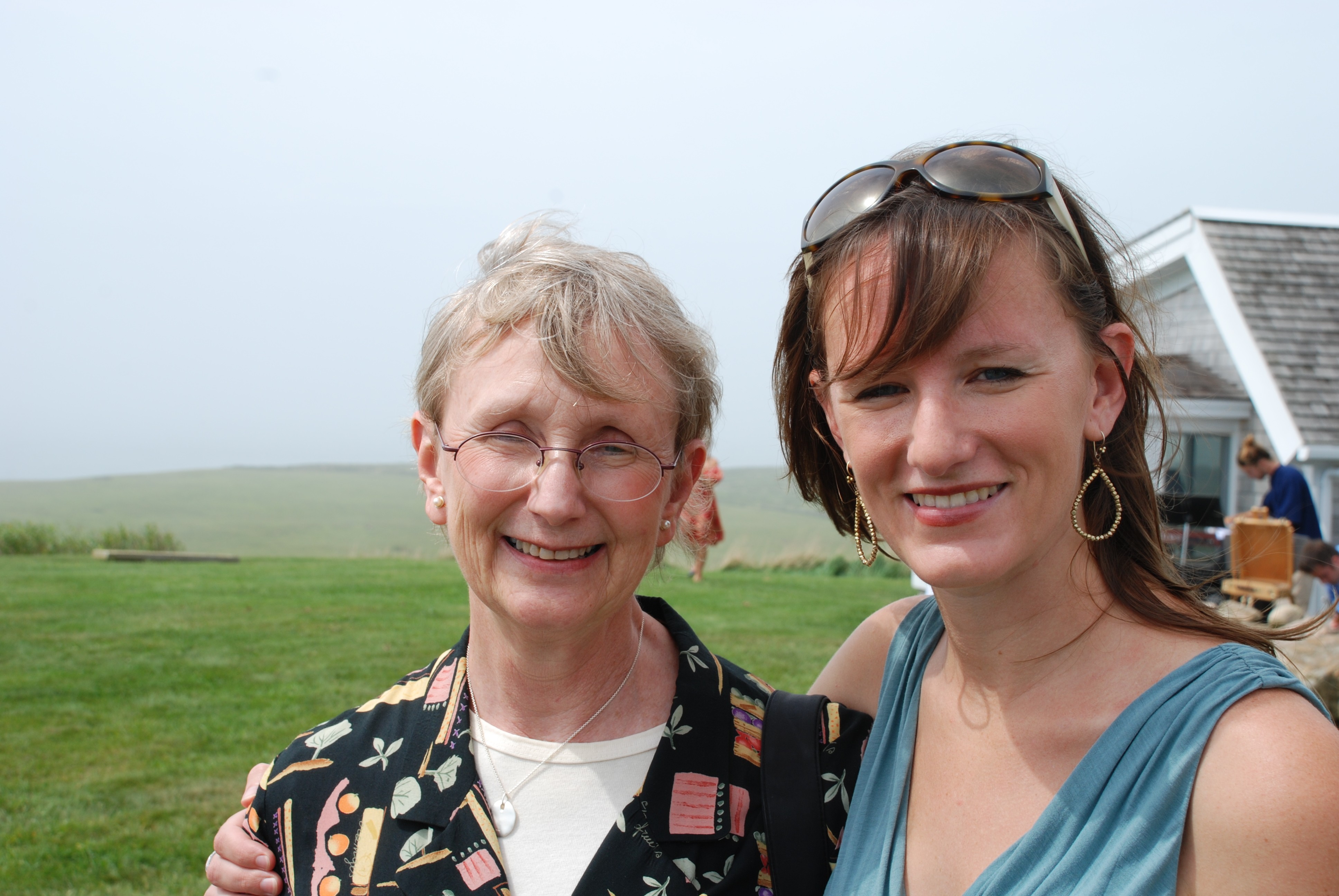
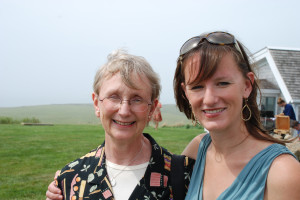
Well, enough of that. Today I also thought I would post some spring photos, the one above being ten years out of date. Suzanne, of course, looks exactly the same, but I really got old!
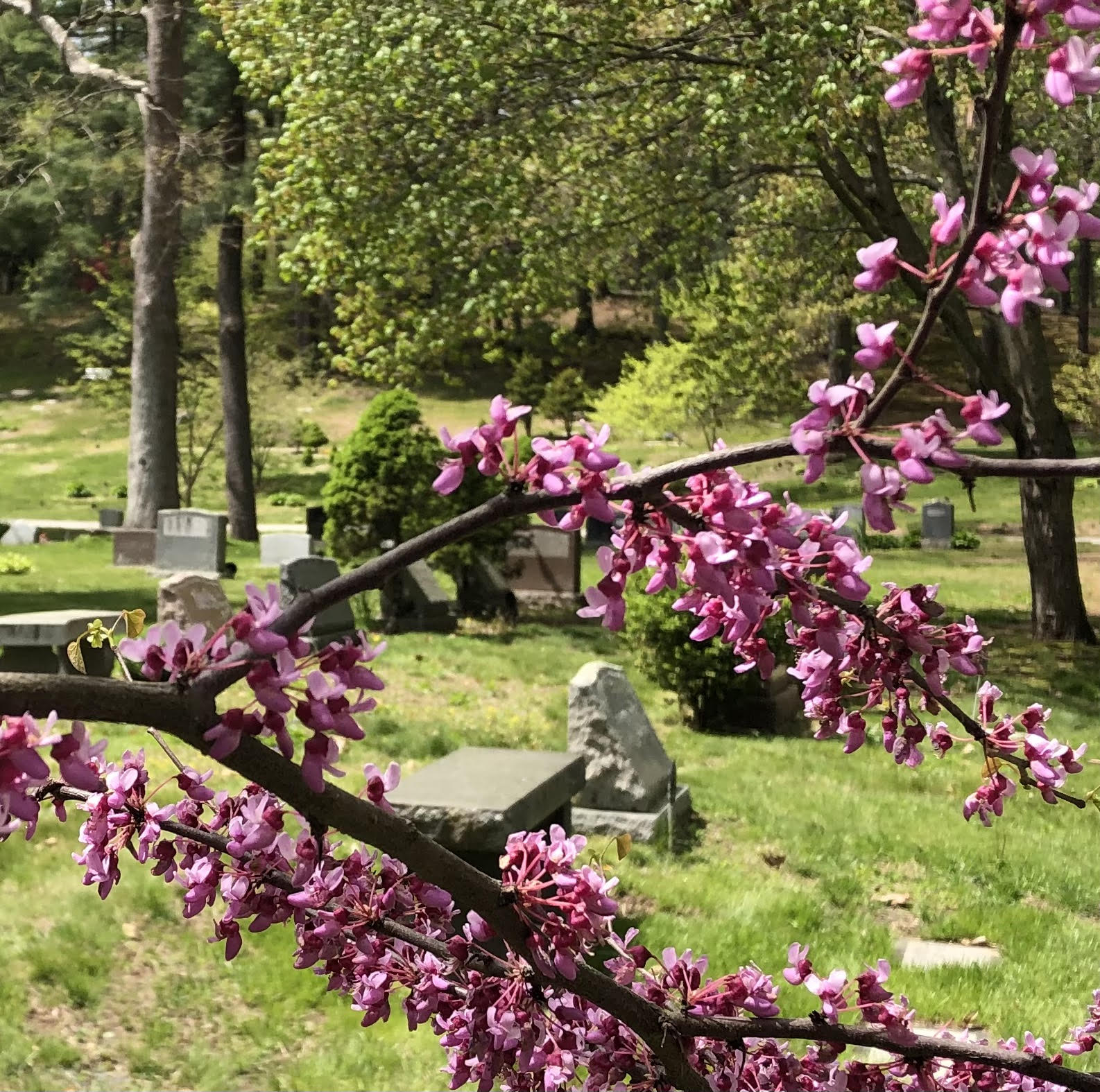
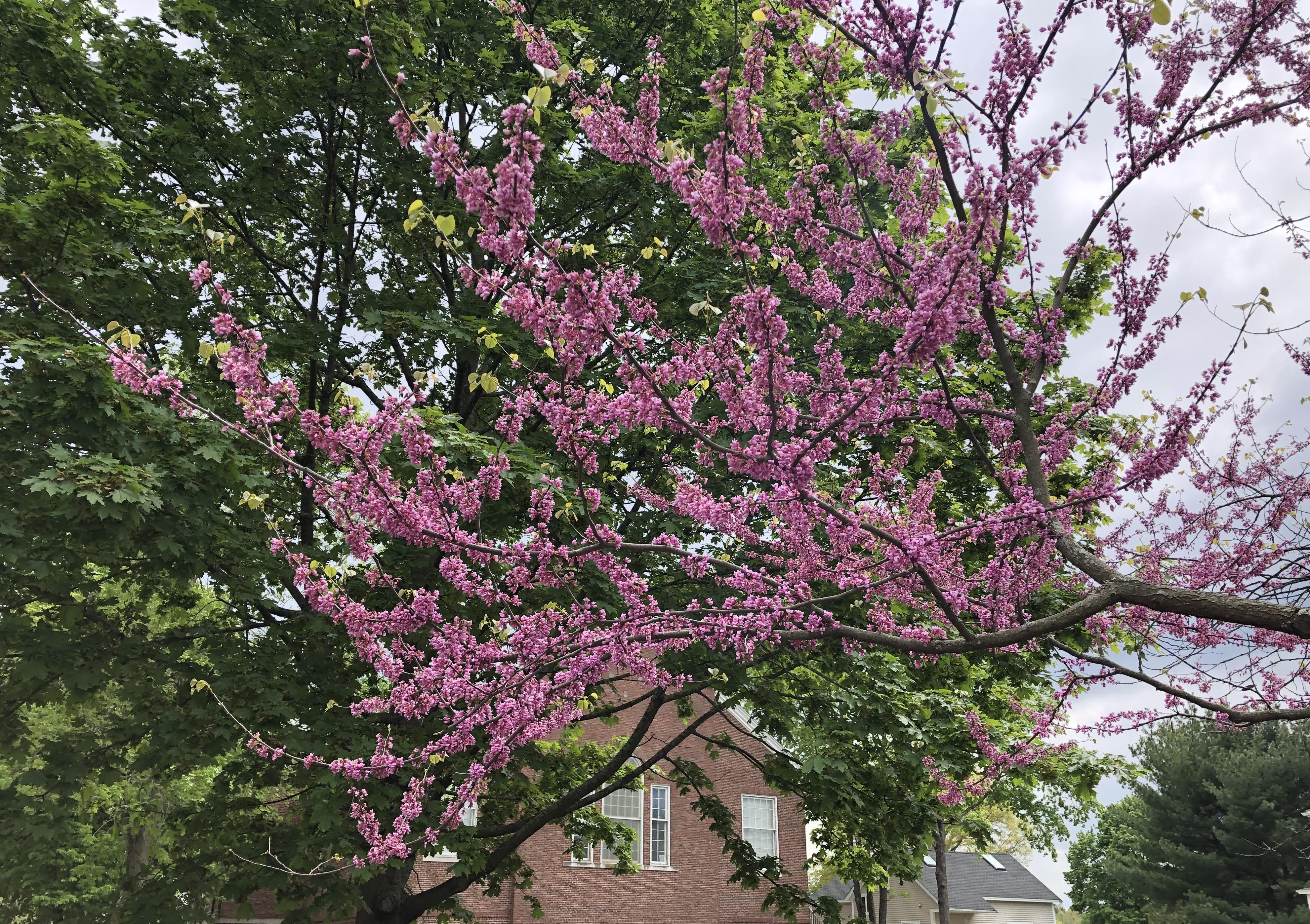
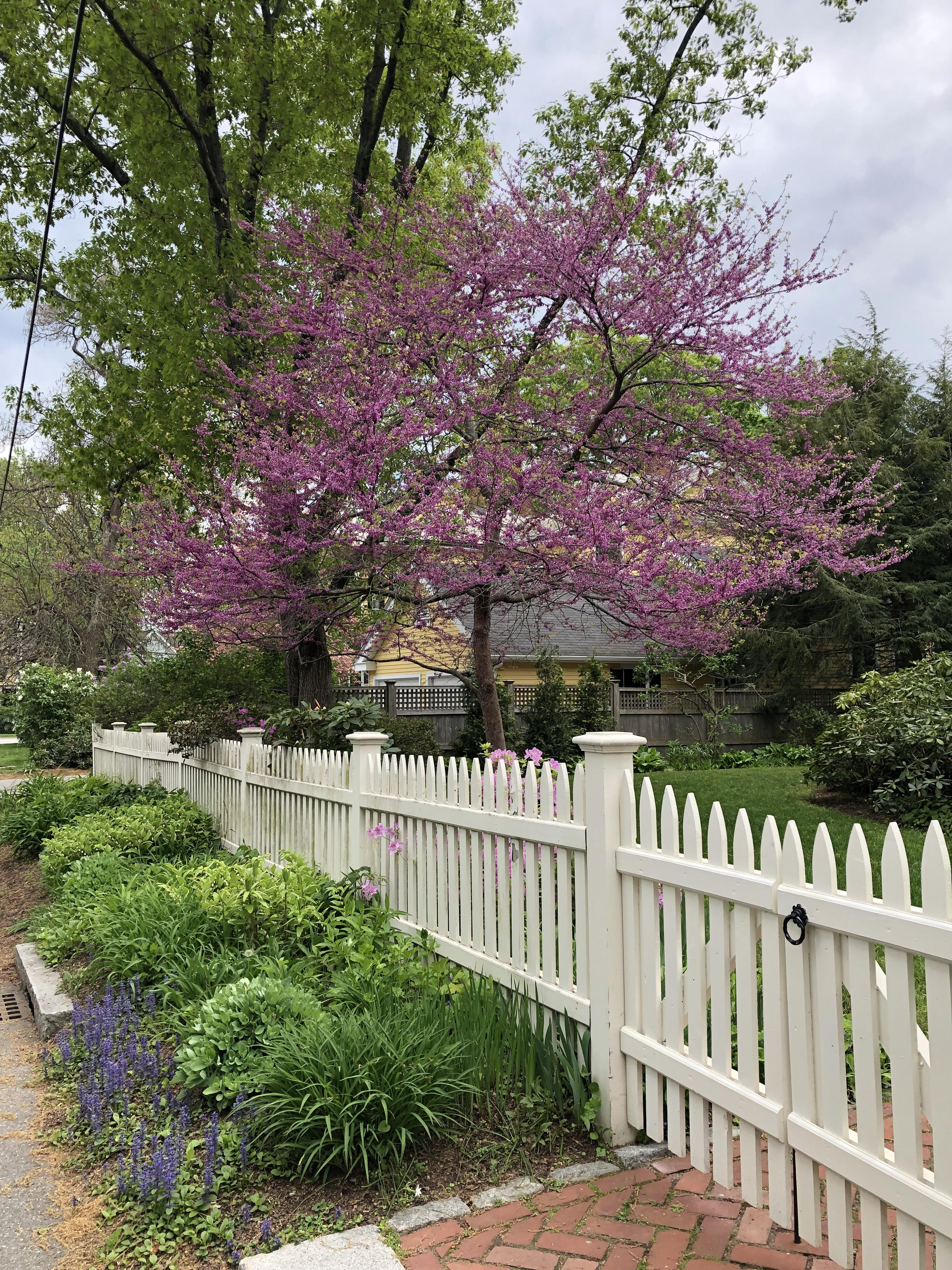
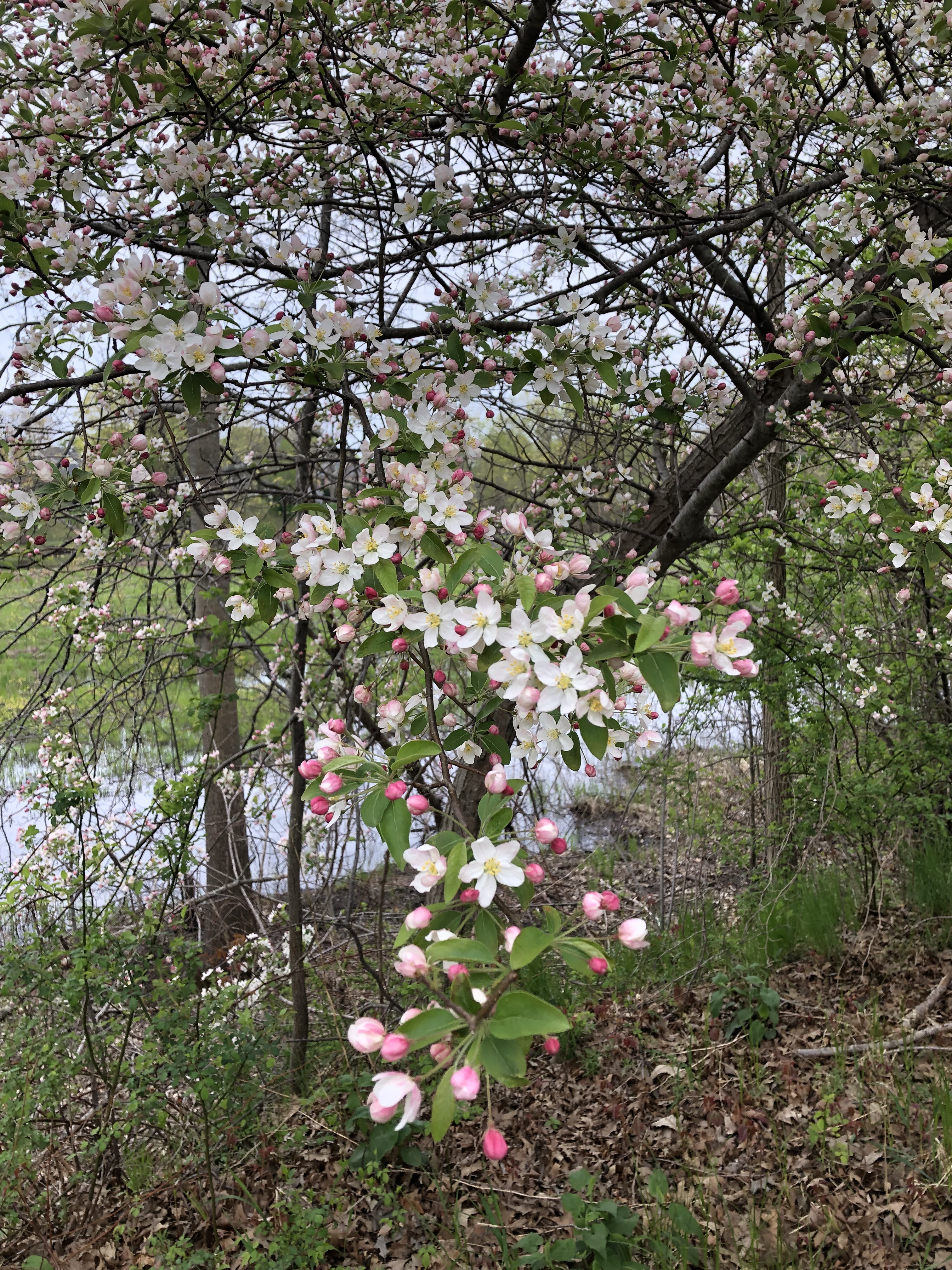
First, I want to share three pictures I took of redbud trees, which I always thought were plum trees until the dear sister who died in 2019 showed me an especially beautiful one on Fifth Avenue in New York. I realized from studying these photos that it’s the delicate shape of the branches from a distance that charms me most. And I always think of my sister now when I see redbuds.
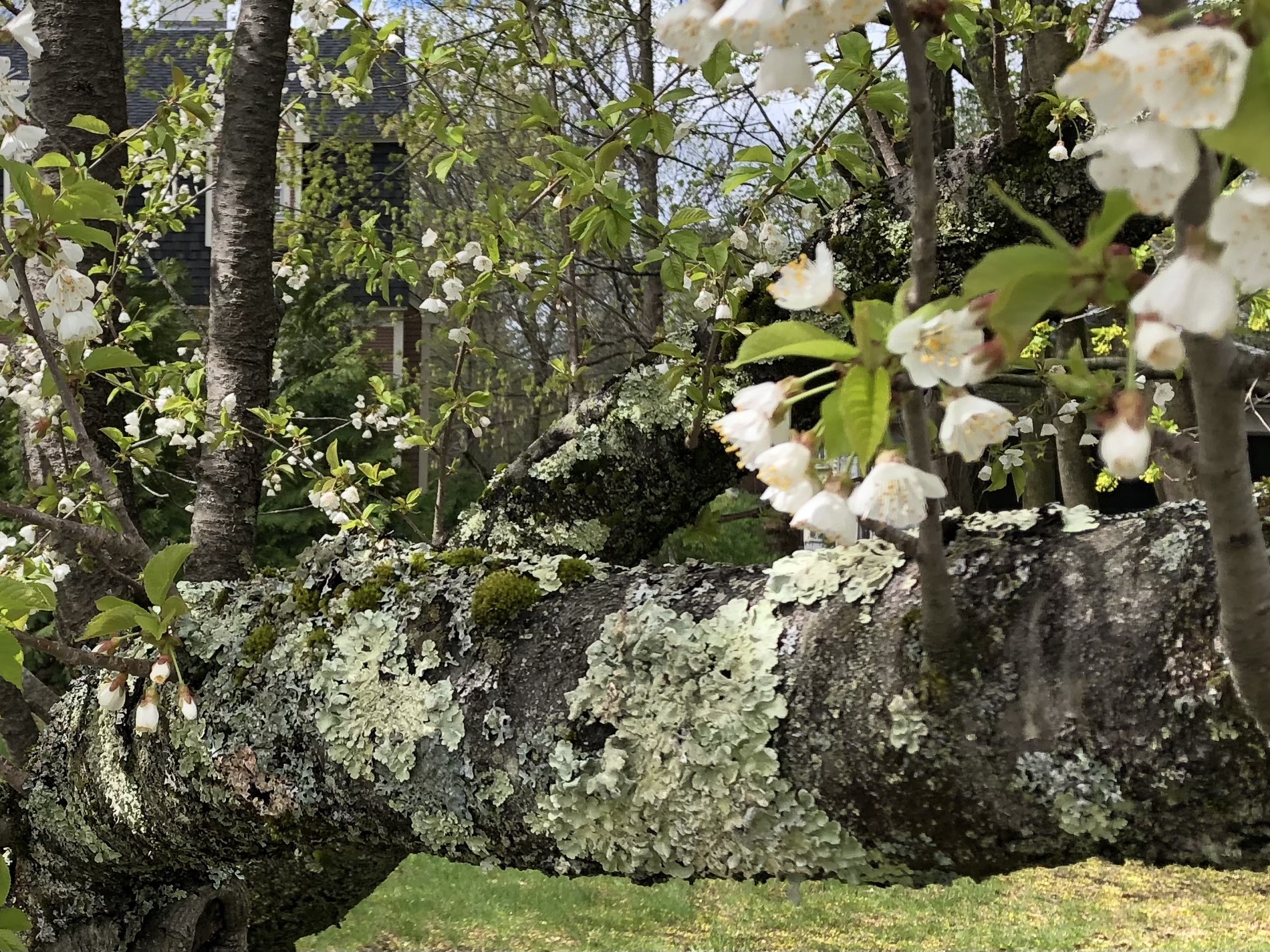
Next are apple trees growing wild along the Sudbury River and cherry blossoms coexisting on a branch with moss and lichen.
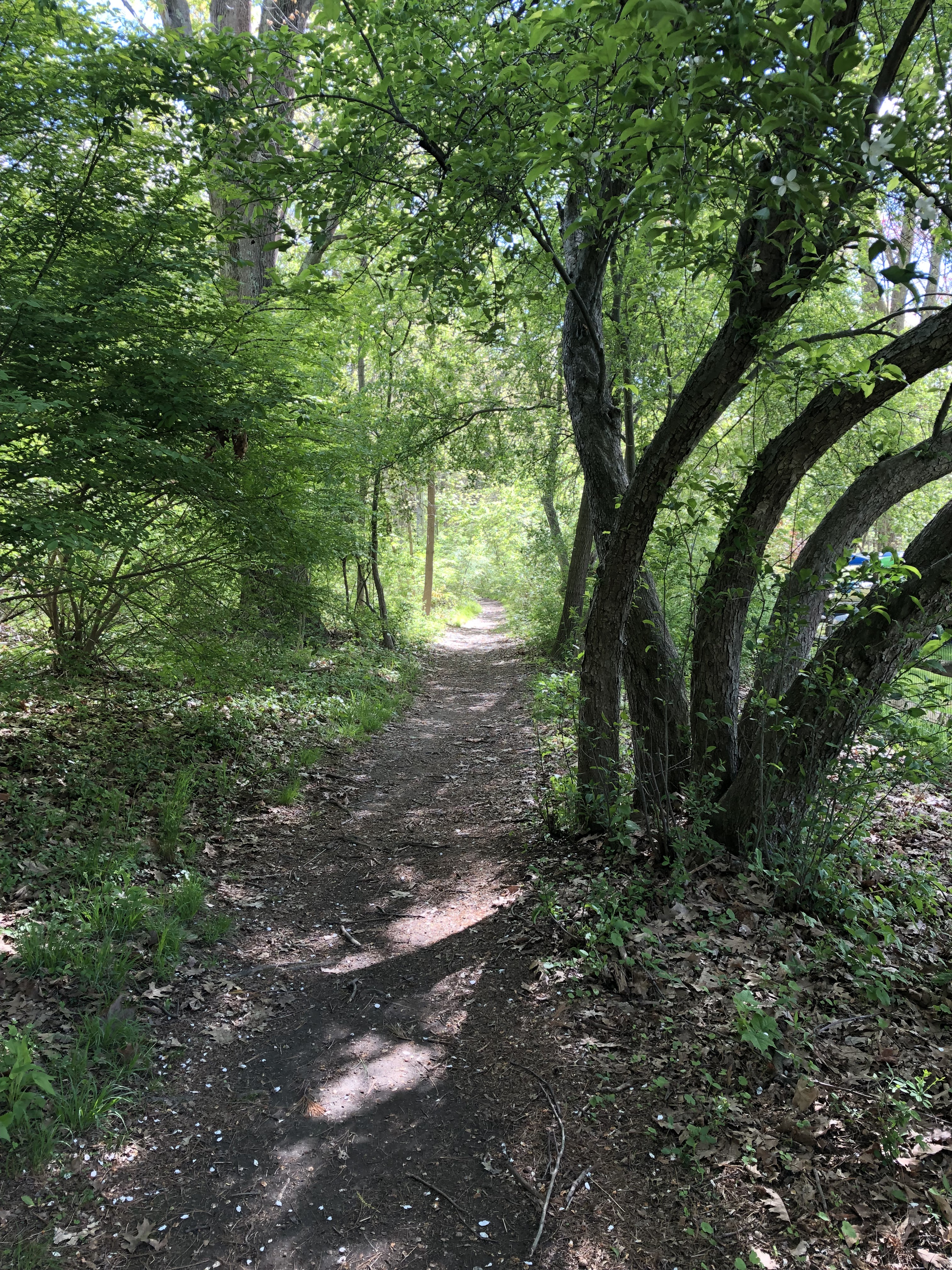
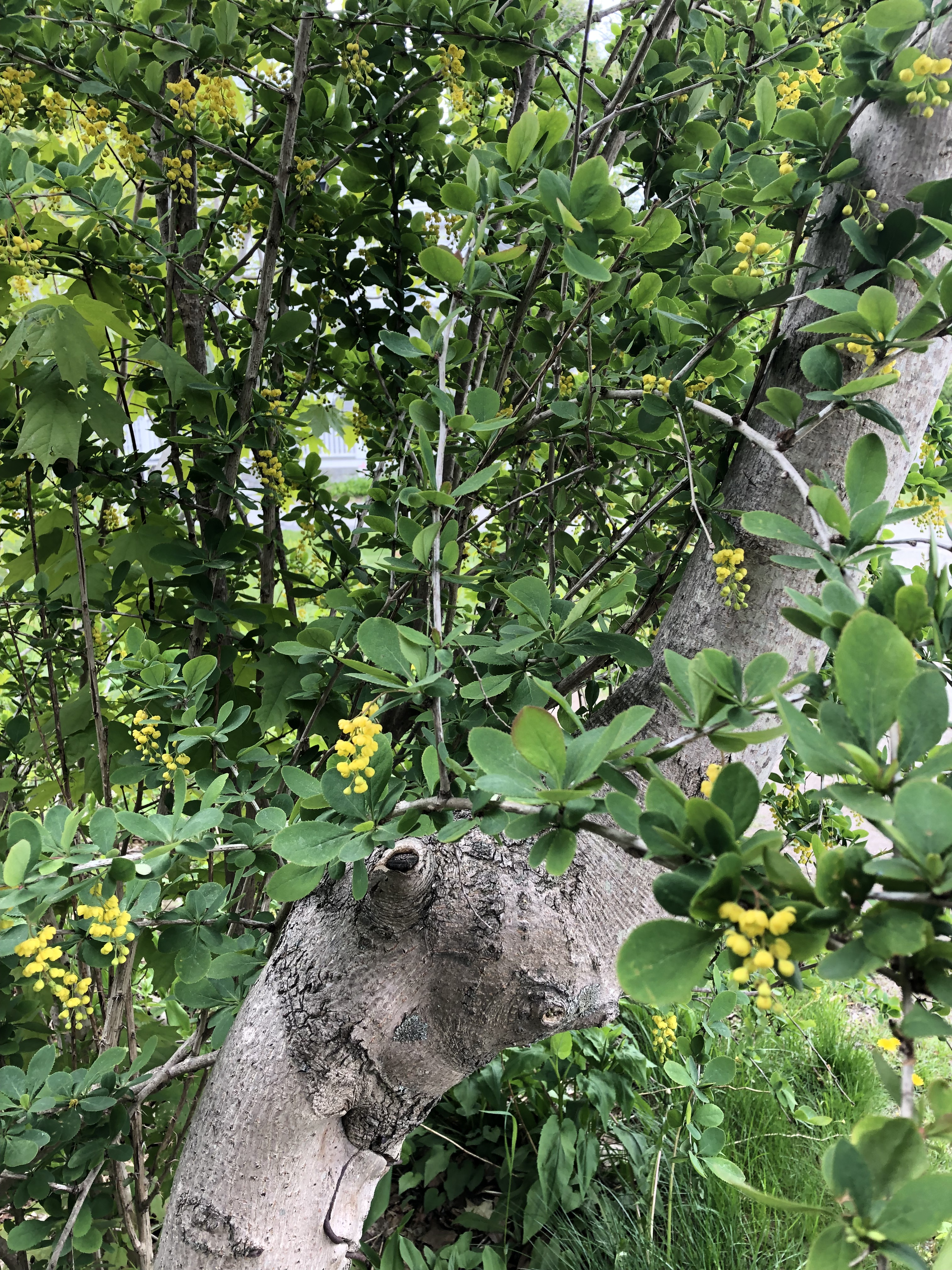
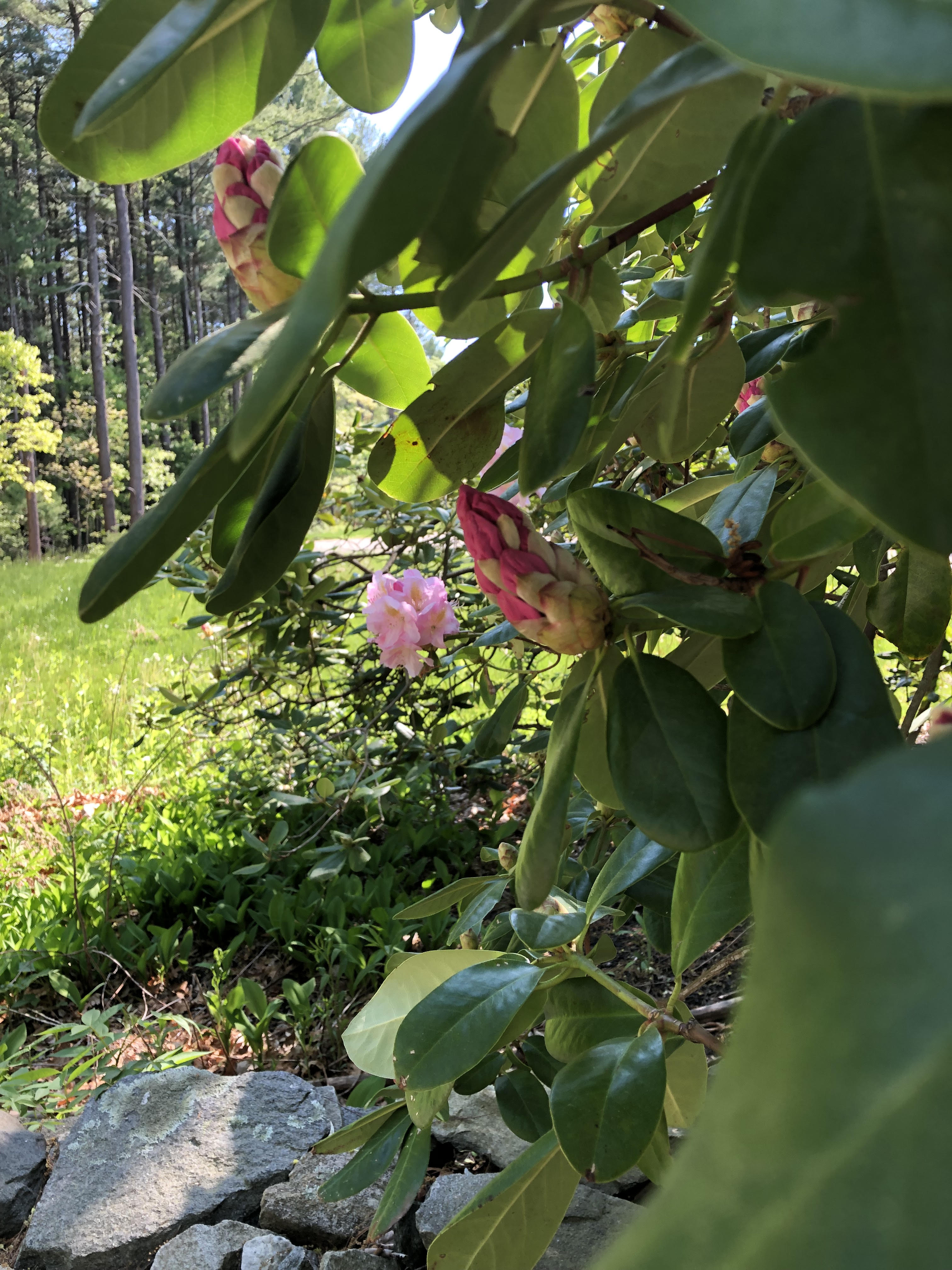
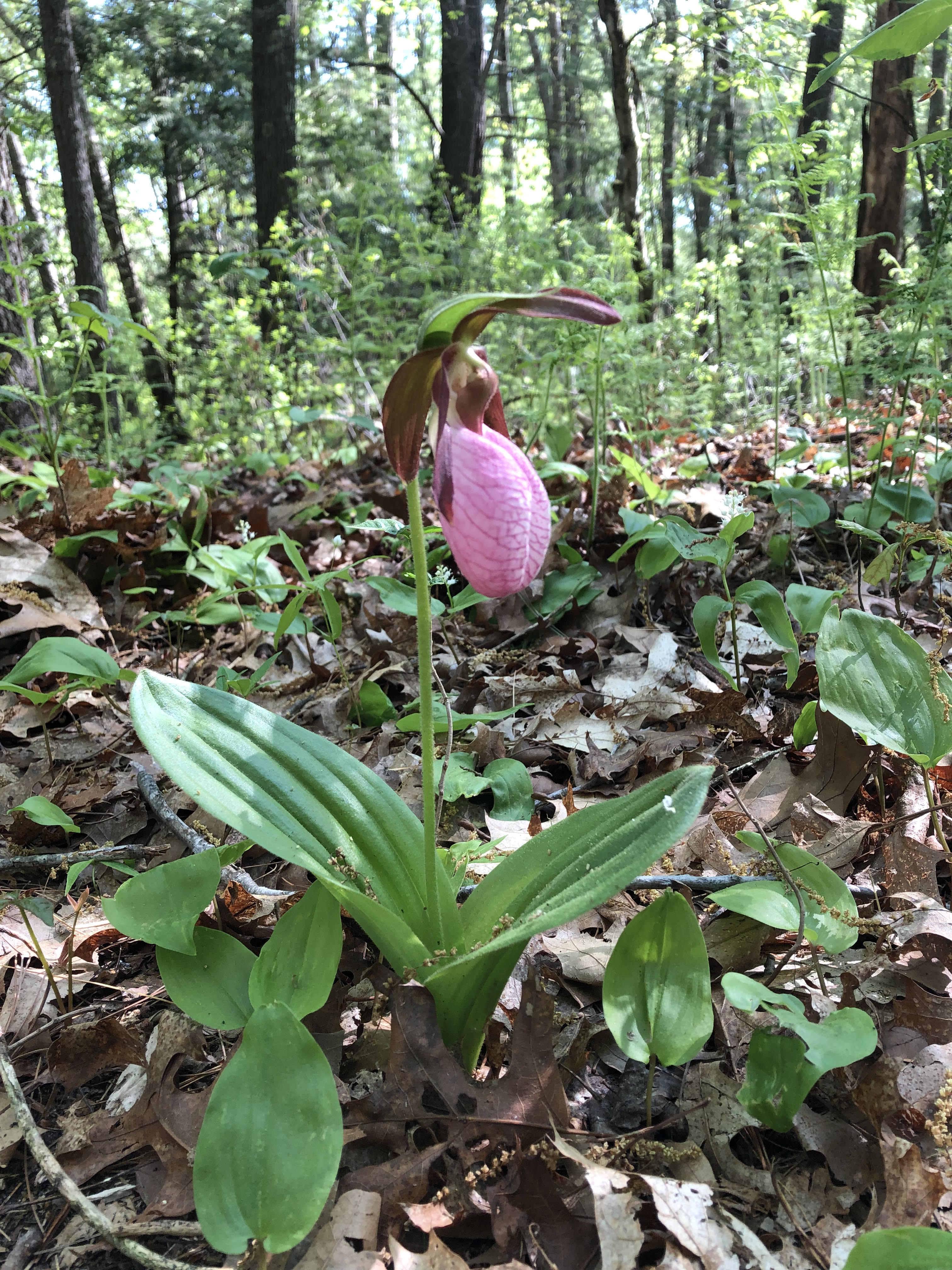
Also looking pretty: woodland trails, dogwood, barberry flowers, rhododendron open and opening, plus a rare pink Lady Slipper.
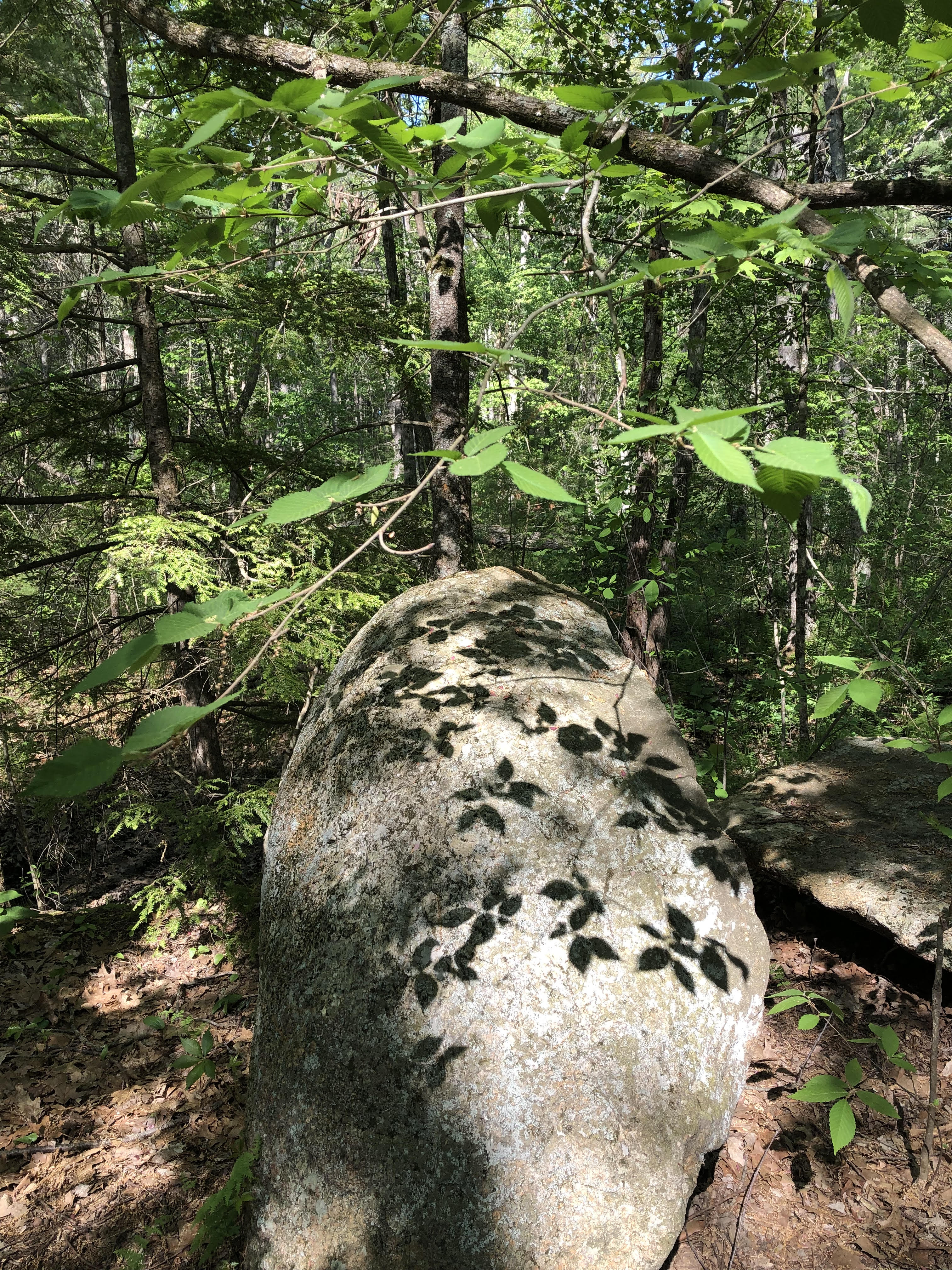
And it wouldn’t be a Suzanne’s Mom’s Blog photo round-up without some shadows.
As of today, I’ve been posting every single day for ten years. This was my first post. As you can see, I hadn’t yet figured out how Comments were done!
Suzanne knew that I blogged at work and asked me to do a blog for Luna & Stella, her birthstone jewelry company. She said I could write about anything that interested me, which is a good thing because as much as I love birthstone jewelry, it would be hard to say something new about it every day.
The things that interest me include the arts, the environment, my family, and people who try to make the world a better place. So I think I’ll start out by telling you about an organization that I learned of from Suzanne, The Homeless Prenatal Program, which is based in San Francisco. “HPP has three major goals: Healthy babies … safe and nurturing families where children thrive … and economically stable families.” I love that this organization is really preventing problems before they start. Check it out.
Photo: Nicole Leeper on Unsplash. Learn why many people say child care benefits are essential to a strong economy.
When Suzanne and four other women running Rhode Island businesses talked to Vice President Kamala Harris recently, the subject of child care came up a lot. Commerce Secretary Gina Raimondo, who was also present, emphasized that to reboot the economy, we need the more than 2 million women Covid forced out of work to come back — and they can’t come back if they have no child care. Child care is infrastructure just like bridges and roads.
Now imagine how hard it has always been for people who lose benefits like child care support when their earnings inch even a tiny bit over the poverty level.
At the Washington Post, Zoe Sullivan describes the ongoing challenges.
“In October 2016, Georgia Allen got a phone call that changed her life. At the time, Allen, 35, was a single parent living in Madison, Wis., with a 3-year-old daughter. To cover her $925 monthly rent and keep her daughter in day care, Allen worked two jobs at a hospital, answered calls part time at a domestic violence center and held down a side hustle caring for elderly people and children. Even with a $300 state subsidy, Allen had to pay another $1,200 out of pocket for her daughter’s care.
“The caller told Allen that she had reached what she calls the ‘benefits cliff’: She was earning too much to qualify for the health- and child-care benefits she was receiving. Yet without those benefits, Allen couldn’t make ends meet.
‘I get emotional thinking about it, because I was just so frustrated,’ Allen said. ‘I finally get to 16, 17 dollars an hour, and the journey was so hard because I couldn’t go to school and have child care. I had to choose one or the other.’ …
“Although Allen adjusted her work schedule after that October call so she wouldn’t lose her benefits, she ultimately lost her job. …
“ ‘It took me several months of a lot of prayer,’ Allen said about finding her new direction in that period. One day, in tears, Allen had a revelation that the different jobs she’d held were all training for running a business. With families like her own in mind, Allen envisioned a cooperative network of home-based child-care sites that would not only ensure that low-wage-earning parents could secure quality child care but also provide living-wage employment to caregivers.
“The challenges and disparities Allen faced existed long before the coronavirus pandemic. The crisis, however, has exacerbated these challenges for many families and underscored the argument that caring for children is an essential service. Without child care, front-line workers, whether supermarket employees or doctors, can’t go to work. …
“In Allen’s home state of Wisconsin, only child-care programs that participate in the state’s ranking system can accept the subsidies low-income families receive. But on the flip side, those subsidies often don’t fully cover the cost of care at high-quality facilities. …
“ ‘If economic stability isn’t happening, and people are choosing alternative child-care options because child care is expensive or not accessible, that will affect the educational journey that our children will face. So, I started to see how it was all connected,’ [Allen] said. …
“Julia Henly, a University of Chicago social work professor, framed the challenge: ‘Child care needs to be super flexible and variable around parents’ work schedules, but child-care workers themselves are low-wage workers who, you know, we kind of are expecting them to carry the caregiving needs of other low-wage workers, and I just think that is not really sustainable.’
“These are the conundrums Allen aims to solve. In mid-2019, she met someone who took seriously her two-pronged approach of simultaneously addressing both employment and child-care needs. That was Abha Thakkar, executive director of a community development organization, the Northside Planning Council, which focuses on that sparsely served area of Madison.
“Now the NPC is helping Allen and her team build a round-the-clock, in-home child-care network with support on a business proposal, and by facilitating connections to grant-makers and lenders. The network’s home-based care sites will be supported by a central location that, along with offering care, will also train providers, prepare meals for the in-home satellites, and handle the back-office tasks.
“One of the central elements of Allen’s plan is that families who participate in this child-care network won’t face the sort of spike in costs that threatened to derail her after that 2016 phone call.
“ ‘This platform, for the parents, when they get to that benefits cliff, there is an option,’ Allen said. She points to a plan for a sliding pay scale and case management to help parents navigate the transition away from public benefits as they grow their incomes. …
“ ‘This model is going to be a hybrid,’ Thakkar says. ‘You don’t want a worker-owned co-op to be a nonprofit [because] the whole point is wealth-building,’ she said. As a result, the Northside Planning Council will serve as a nonprofit fiscal sponsor while the co-op develops its business.”
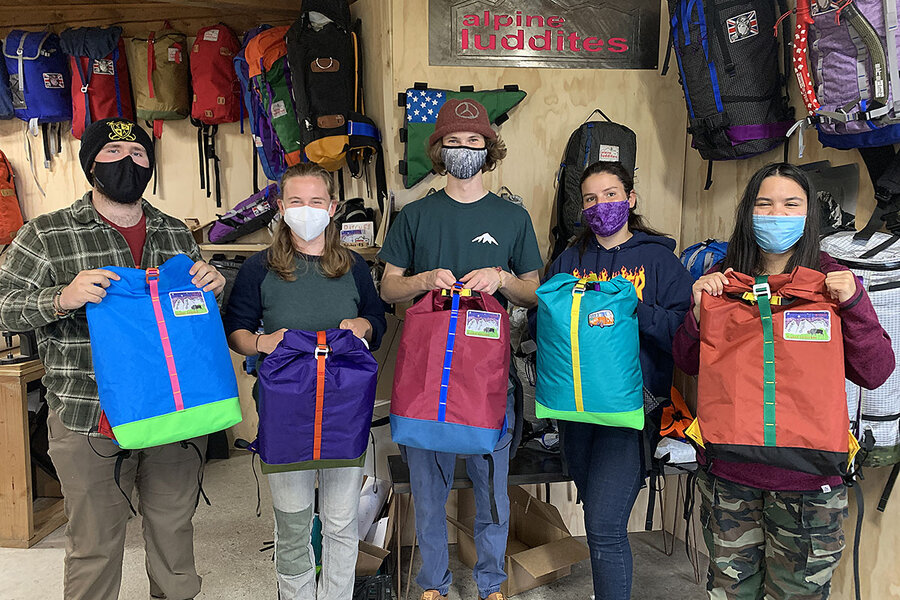
Photo: John Campbell via CSM. “This spring,” says the Christian Science Monitor, “two groups of Sterling College students spent time at instructor John Campbell’s shop, Alpine Luddites, learning how to design backpacks and operate industrial-grade sewing machines.”
I never cease to be amazed by the great variety of careers out there, some of which are careers that individuals create for themselves. Consider mountain climber John Campbell, who has learned survival skills outdoors the hard way and now shares them with others, often indoors.
Gareth Henderson reported for the Christian Science Monitor on his work.
“After scaling the heights of the Andes, Alps, and northern Rockies, John Campbell understands the importance of proper outdoor gear – and he’s eager to share that knowledge.
“This spring, he taught college students in Vermont the finer points of backpack fixing – and even how to make their own product from scratch. That’s a big advantage for those pursuing outdoor careers, because it’s rarer than one might think, Mr. Campbell says.
“As recently as the 1990s, many outdoor brands in the United States sewed their products locally. But Mr. Campbell, who runs his own gear business, says that’s not the case anymore, and he wants to pass along how it’s done.
‘These are just good skills to have,’ he says.
“Mr. Campbell is one of three instructors for the first gear design and repair course at Sterling College, in Craftsbury Common, Vermont. The scenic college, about 40 minutes from the Canadian border, has long focused on the environment and sustainability. The new design class has the potential, say the instructors and those in the industry, to not only help students be better prepared for surviving in the wild, but also expand both local gear manufacturing and an understanding of the design process overall.
“ ‘Everything – and I do mean everything – is designed and developed the same way: through a series of steps that visualize, confirm, and then create,’ says Kurt Gray, who runs the design and product operation at Jagged Edge Mountain Gear in Telluride, Colorado. ‘The major benefit to the community,’ he adds, ‘is teaching young people how to realize their dreams through the rigors of meticulous planning and application of skill.’ …
“Mr. Campbell started by introducing students to his business, Alpine Luddites, in Westmore, Vermont. Students – in two groups of five due to pandemic protocols – trained on three large, industrial-grade sewing machines. Each group created its own backpack design, and from there individuals made their own packs, which they personalized with smaller parts, like daisy chains (the bumpy strips on the sides of packs), pockets, clips, and straps. …
“When the students weren’t at Mr. Campbell’s shop, they were honing their new skills on the nearby 130-acre Sterling campus in Craftsbury Common, a village in the town of Craftsbury, where experiential outdoor learning has been in place for five decades.
“Josh Bossin, one of the outdoor education faculty, organized the course and taught the ins and outs of repair and gear history. At his request, the college community dropped off all kinds of outdoor gear for the students to fix.
” ‘This allows us to support our community [with] keeping things out of the landfill, and at the same time, gives my students a chance to do real-life repairs and feel the impact it has with a real “customer,” ‘ says Mr. Bossin. …
“Having more students learn the skills the class is offering, Mr. Campbell says, could help bring back some manufacturing jobs that were lost years ago. …
“Prin Van Gulden focused on participants mastering fundamentals like sewing in her part of the course, including a range of techniques for making repairs by hand. ‘My goal is for students to gain confidence and competence with the basics,’ says Ms. Van Gulden, an adjunct faculty member in the area of environmental humanities. ‘I want them to feel undaunted, to feel empowered to deal with problems as they come up.’ …
“Tyler Kheang, a student from Philadelphia, would like to use what he’s learned to get others interested in the outdoors. ‘For me personally, I want to get more minorities into the outdoor setting,’ he says.
“These skills save money, he says, as you can repair old gear rather than buying new. And anyone can learn it, he adds. ‘It takes away that financial factor and makes an opportunity for everyone to be equal,’ he says. ‘A lot of people back where I’m from don’t have a lot of money to buy expensive things.’ “
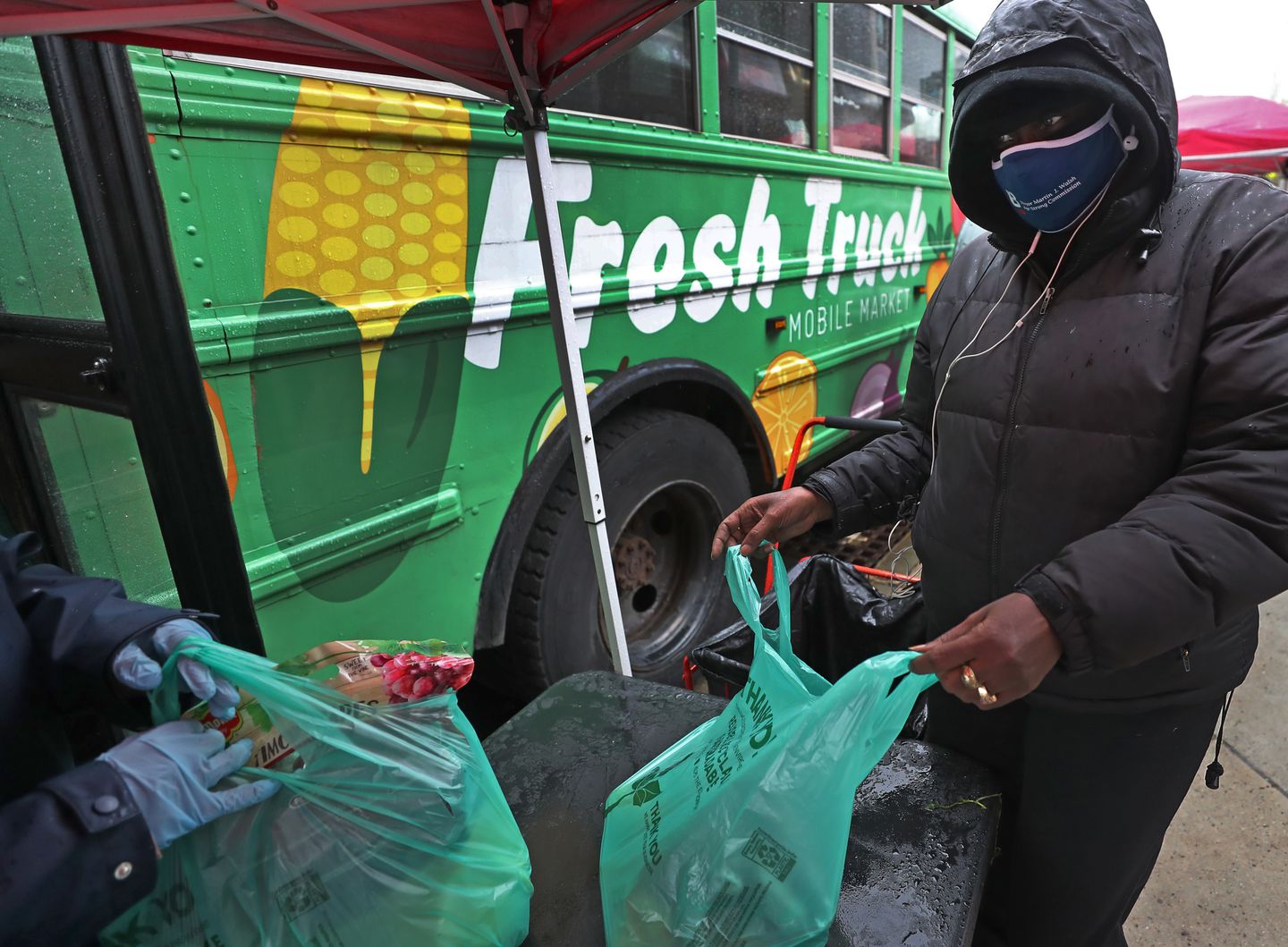
Photo: David L. Ryan/Globe Staff. A customer got groceries at the Fresh Truck stop in the Mission Hill neighborhood of Boston.
When I was a kid, my mother sometimes bought vegetables from Mr. Mackey. Mr. Mackey was a “huckster” who came around in an old school bus, repainted blue and outfitted like a produce market. I think my mother patronized this project because it charmed her. Earle and Caroline’s mother, Grace, was more practical. She may have tested Mr. Mackey’s wares once or twice, but she objected that he was overpriced. As indeed he was.
But if nothing else, there’s something to be said for the memories generated by such “old tyme” services. My husband likes to talk about a knife grinder who frequented his childhood neighborhood. And ever since the pandemic inspired me to start getting milk delivered in glass bottles, I feel like I’m not only reducing plastic waste but preserving a happy tradition.
As to repurposed school buses carrying produce, Diana Bravo reports at the Boston Globe about a few that are now serving “food deserts” in the Boston area.
Fresh Truck “co-founder Josh Trautwein was working as a health educator at MGH Charlestown Healthcare Center,” she writes, “when he heard from local families that it was difficult to shop for healthy food because the only local grocery store was shut down for a yearlong renovation. That inspired Trautwein to start About Fresh, which operates a program called Fresh Truck to bring affordable, healthy food into Boston communities that need it most.
“The nonprofit purchases food wholesale, and during the growing season Fresh Truck buys from local growers and resells the food at around the same price to help families keep nutritious food on the table at affordable prices.
“The nonprofit operates three retrofitted school buses that have been converted to mobile grocery stores. The trucks accept a variety of payments. Beyond cash and credit, they also accept Electronic Benefit Transfer, Healthy Incentives Program, and Fresh Connect. … Before the COVID-19 pandemic struck, mobile markets would allow customers to board and shop on the three buses at 18 locations. But at the height of the pandemic, that was not possible. …
“After a brief shutdown, the program reopened with an open-air plan. Now, at most locations, customers order outside the bus while volunteers shop and package their orders.
“Customers order online in advance and pick up their produce at four locations. [Victoria Strickland, director of communications and partnerships for About Fresh,] says this has been beneficial to the nonprofit’s senior and disabled customers. As a result, Fresh Trucks hopes to continue and expand online ordering beyond the end of the pandemic.”
Sure beats food shopping for your family at “convenience” stores, where in addition to pretzels, Coke, and canned soup, a couple hard, bland apples are likely to be unconscionably marked up.
More at the Boston Globe, here. By the way, I have posted a lot of stories on how other people are addressing the challenge of food deserts. Just search on the phrase in the search box above if you’re interested.
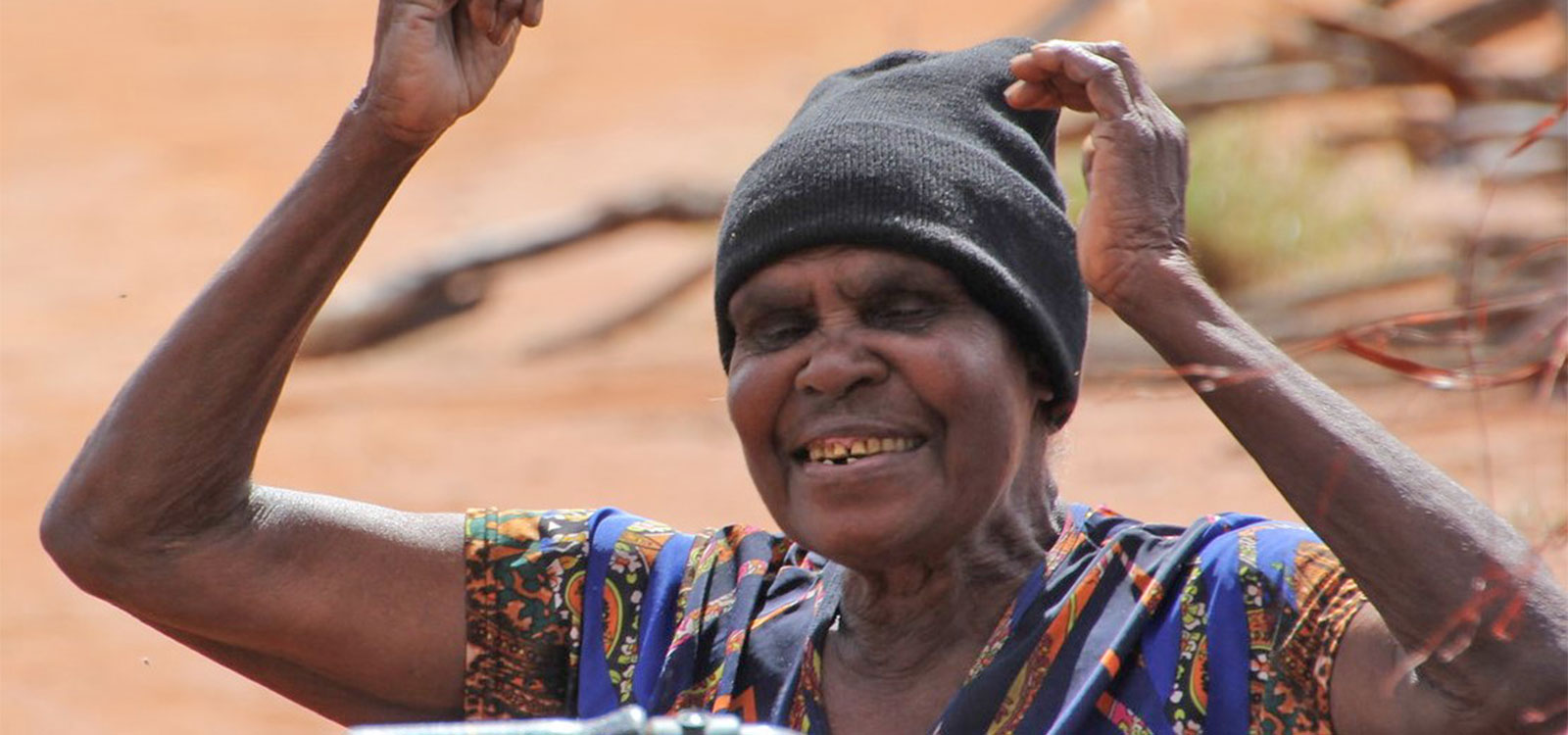
Photo: NPY Women’s Council. To combat coronavirus in Australia, “For the first time, Aboriginal health workers were given contact-tracing powers usually reserved for state health authorities.”
Recognizing that plagues of the past had wiped out whole indigenous communities, Australian authorities took action to get ahead of the coronavirus plague — with a particular focus on protecting elders.
At the Washington Post, Rachel Pannett reported on where their results stood in early April.
“From Alaska to the Amazon, Indigenous people are more likely to get sick with or die of covid-19, as the pandemic magnifies deep-rooted health and socioeconomic inequities. That is not the case in Australia.
“Not only have Indigenous Australians recorded far fewer infections per capita than their global counterparts, they are six times less likely than the wider Australian population to contract the coronavirus, government data shows.
“There have been no cases in remote communities, and not a single Aboriginal elder has died. Of the 149 cases involving Indigenous people since the start of the pandemic nationwide, few were serious enough to require hospitalization. …
“The vaccine rollout is also proceeding more smoothly in many Indigenous communities than elsewhere in Australia, where some clinics are complaining of empty vaccine fridges. Aboriginal people and Torres Strait Islanders are being prioritized for vaccinations because of their higher risk of developing serious illness if infected.
“On the first day of the vaccine rollout in Sydney, one Aboriginal clinic booked all of its appointments in an hour, according to Aboriginal health officials. In the remote Australian-controlled islands of the Torres Strait — near Papua New Guinea, which is battling an outbreak — over 80 percent of adults have been vaccinated, officials said.
‘This is a most amazing response to the pandemic from a community that is so marginalized,’ said Fiona Stanley, an Australian epidemiologist specializing in public health. ‘This is probably the best evidence we have that if you put Aboriginal people in charge, then you get better outcomes.’
“First-nation people globally have a painful legacy of disease and its impact on elders, those most responsible for the survival of Indigenous culture. Europeans introduced smallpox and other diseases to the New World starting from around 1500, wiping out much of the Indigenous population. The 1918 flu pandemic destroyed entire villages. …
“The first case of the coronavirus in Australia, in January 2020 — a man from Wuhan, China, who arrived in Melbourne — was a wake-up call for the country, but especially for Australia’s Indigenous leaders. The new virus was striking older people, particularly those with chronic conditions. And being highly contagious, it was likely to spread like wildfire through remote Indigenous communities where overcrowding is common. …
“Pat Turner, chief executive of the National Aboriginal Community Controlled Health Organization, wrote to state and federal leaders in March 2020, asking them to use their powers to order the closure of remote communities to stop visitors from entering. Accordingly, the communities were sealed off.
“Lawyer Teela Reid kicked off efforts to protect elders in Gilgandra, a rural town 270 miles northwest of Sydney. ‘I could clearly see how catastrophic it could get in the country, if we got one case in our town of 3,000, because we don’t have the health resources,’ Reid said.
“The local municipality compiled a list of elders and made sure they did not need to leave their homes for food or medicines. Reid’s grandmother Stella, the town matriarch who presides over traditional ceremonies, went against her natural instincts and padlocked her gate.
” ‘It was hard for us,’ Reid said. ‘Our grandparents are often the people who raise children. But they also hold our story lines. They’re passed down orally. If you lose that, it’s gone.’ She added, ‘The ways in which many communities acted was through the natural instinct to be a survivor and to protect elders.’
“Before the pandemic, Aboriginal health organizations had been talking with government officials about plans to address a syphilis outbreak using local Indigenous health services. Australia’s chief medical officer at the time, Brendan Murphy, supported the approach, an endorsement that [Dawn Casey, who co-chairs a government task force established to develop a virus plan for Indigenous communities], says helped smooth the way for a community-led approach to the coronavirus.
“On Facebook, TikTok and Vimeo, Aboriginal health agencies launched coronavirus messages — including instructions on cough etiquette and hand hygiene — and interviews with trusted health officials, translated into local languages.”
Because I used to be a theater reviewer, I was interested in comments by critic Peter Marks at the Washington Post about returning to live entertainment after being fully vaccinated. He was nervous, but it was all great.
It was early April when Marks decided to test the waters.
“Slowly, painstakingly, theatergoing is making its way back to three live dimensions,” he wrote, “and we’re all learning the rules of engagement. On Friday night, the process began for me outside the Kraine Theater on East Fourth Street, where I was about to attend a solo performance by Mike Daisey. And one unhappy couple who thought they were attending, too — couldn’t.
They hadn’t noted the warning in the marketing materials: that admission required proof of full vaccination and that it had to have been at least 14 days since the last shot.
“ ‘I spent $100 on tickets I can’t use,’ the man groused as he tried to argue with one of the theater’s representatives, and then, with his companion, walked disconsolately away. …
“Here’s a little secret: Everything is not about you. Especially now, at this sensitive juncture, when the overseers of public spaces are trying to build back trust and operate without risk of spreading this insidious, calamitous infection.
“I can report that once the rest of us were inside — 25 or so socially distanced in a black box theater that normally seats up to 99 — the evening unfolded exuberantly. It was the first of three live theatrical events I attended over the weekend, the first time in a year my schedule resembled something like the days before covid-19. I wore my mask throughout the shows, a feat that a year ago I had convinced myself would be too uncomfortable to tolerate. …
“A year of watching theater online had left me feeling as if I had been forever condemned to crave my favorite brand and had to settle for a knockoff. So being released from virtual captivity and newly free to breathe the fresh (read: ventilated) air of live performance was, well, a blessing. …
“The weekend amounted to a preview of the palette of measures being put in place to get theater safely up to speed, in spaces still with severe restrictions on capacity. If my experience is any indication, the process is going to be a challenge for culture vultures. Not impossible, but varied, patience-testing and even a bit stressful. Theaters seem to be evolving their own peculiar systems, with pre-attendance health questionnaires, idiosyncratic ticketing apps, entrance and exit protocols, document checks and seating arrangements. …
“My experience in the great indoors involved three wildly different productions: Daisey’s discourse on the past year, ”What the F— Just Happened?’; an NYPopsUp performance with Nathan Lane and Savion Glover at Broadway’s St. James Theatre; and the off-Broadway debut at the Daryl Roth Theatre of ‘Blindness,’ a dystopian drama experienced via headphones.
“The vaccine seemed to have immunized my English major’s brain from worry. In each of the environments, I felt perfectly safe. Although when ushers at the Daryl Roth told me that the bathrooms were shut and that patrons would have to use a nearby Starbucks, I did have a moment of anxiety that I would need to run for a, er, latte break. Other anxieties: waiting in line on Saturday outside the St. James for a worker to check my credentials — photo I.D., vaccination card, QR-coded ticket — and fumbling with my cellphone as the screen went dark. And, for that matter, trying to remember whether the tickets were in my email or on an app or had been texted to me. Or was that the covid-19 survey that arrived by text?
“Mercifully, that momentary panic subsided by the time the lights went down — reliably, in that hallowed tradition of starting six minutes later than the time on the ticket. Daisey’s one-night-only show was an account of a year of living pandemically, recounted entertainingly in his signature countenance of enlightened outrage. Saturday’s event at the St. James was a delightful demonstration of tap artistry by Glover and of flawless comic timing by Lane playing a theater-starved New Yorker as conjured by playwright Paul Rudnick. …
“Daisey’s ‘What the F— Just Happened?,’ [was] also live-streamed. Sitting for a spell a couple dozen feet from the stage, listening to a talented storyteller spin a version of a year not entirely unlike the one I had just spent, felt really, really good.”
Photo: American Diesel Training via Social Finance. The Social Finance model ensures training programs don’t get paid until students get hired. And students train for free until then.
Because one of the things this blog focuses on is “good works,” I have inevitably put up stories that later turn out to have unexpected downsides. (If I learn about a problem, I do put up a correction.) One story I recall was about an effort in mining country to train out-of-work miners for high-paid tech jobs. I don’t think anyone was trying to rip anyone else off, but there was a Pollyanna aspect to the program, and it didn’t work. Not many people acquired the skills and those that did were unable to find those high-paying jobs.
So that is how we learn. Now there’s a nonprofit called Social Finance that doesn’t pay up on a training program until the trainee has that good job.
Steve Lohr writes at the New York Times, “Bill Barber saw an ad on Facebook last year for American Diesel Training Centers, a school in Ohio that prepares people for careers as diesel mechanics. It came with an unusual pitch: He would pay for the schooling only if it landed him a job, thanks to a nonprofit called Social Finance.
“After making sure it wasn’t a scam, he signed up. After going through the immersive five-week program, he got a job with starting pay of $39,000 a year — about $10,000 more than he made before as a cable TV installer. …
“American Diesel Training is part of a new model of work force training — one that bases pay for training programs partly on whether students get hired. Early results are promising, and experts say the approach makes far more economic sense than the traditional method, in which programs are paid based on how many people enroll. …
“Social Finance, founded a decade ago to develop new ways to finance results-focused social programs, is showing how the idea could grow quickly just as the pandemic made job-training programs more important than ever. The coronavirus put millions of people out of work, upended industries and accelerated automation. …
“The Social Finance effort is powered by a fund of more than $40 million raised from philanthropic investors. The money goes toward paying for low-income students, as well as minority candidates and veterans, to enter the training programs. … It has supported four job training programs, including American Diesel Training, in the past year. It has plans to have double that number a year from now. …
“A few nonprofits have a track record of lifting low-income Americans into higher-paying jobs, including Year Up, Per Scholas and Project Quest. Their training is tightly focused on specific skills and occupations, they work closely with employers, and they teach soft skills like communication and teamwork. But there are too few of them, and they struggle for sustainable financing.
“Social Finance is seeking, designing and supporting new programs — for-profit or nonprofit — that follow that training formula but then apply a different funding model.
“ ‘There is emerging evidence that these kinds of programs are a very effective and exciting part of work force development,’ said Lawrence Katz, a labor economist at Harvard. ‘Social Finance is targeting and nurturing new programs, and it brings a financing mechanism that allows them to expand.’
” ‘The goal is to create a tool for impact, to get more people on the economic escalator,’ said Tracy Palandjian, co-founder and chief executive of Social Finance. …
“For Social Finance and its backers, the career impact bonds are not traditional investments. For them, breaking even or a small return would be winning — proof the concept is working, which should attract more public and private money. …
“The Social Finance income-share agreement with students ranges from about 5 percent to 9 percent depending on their earnings — less from $30,000 to $40,000, and generally more above $40,000. The monthly payments last four years. If you lose your job, the payment obligation stops.
“ ‘Our investors aren’t after high returns. They’re primarily after social impact,’ Ms. Palandjian said.
“When screening programs, Social Finance looks for those that offer training for specific skills linked to local demand, and have data to show that its students graduate and get good-paying jobs. … American Diesel Training, based in Columbus, Ohio, met the requirements. The for-profit company’s program is designed as a short, intensive course to train entry-level diesel technicians, mostly for trucking companies and dealerships. …
“Before Social Finance arrived, Tim Spurlock, co-founder and chief executive of American Diesel Training, looked into financing through income-share agreements offered by venture-backed start-ups. The terms, he said, were far less favorable for students.
” ‘Social Finance comes at it from a completely different angle,’ he said. … ‘We’ve completely proven our educational model. The problem was the funding mechanism.’ ”
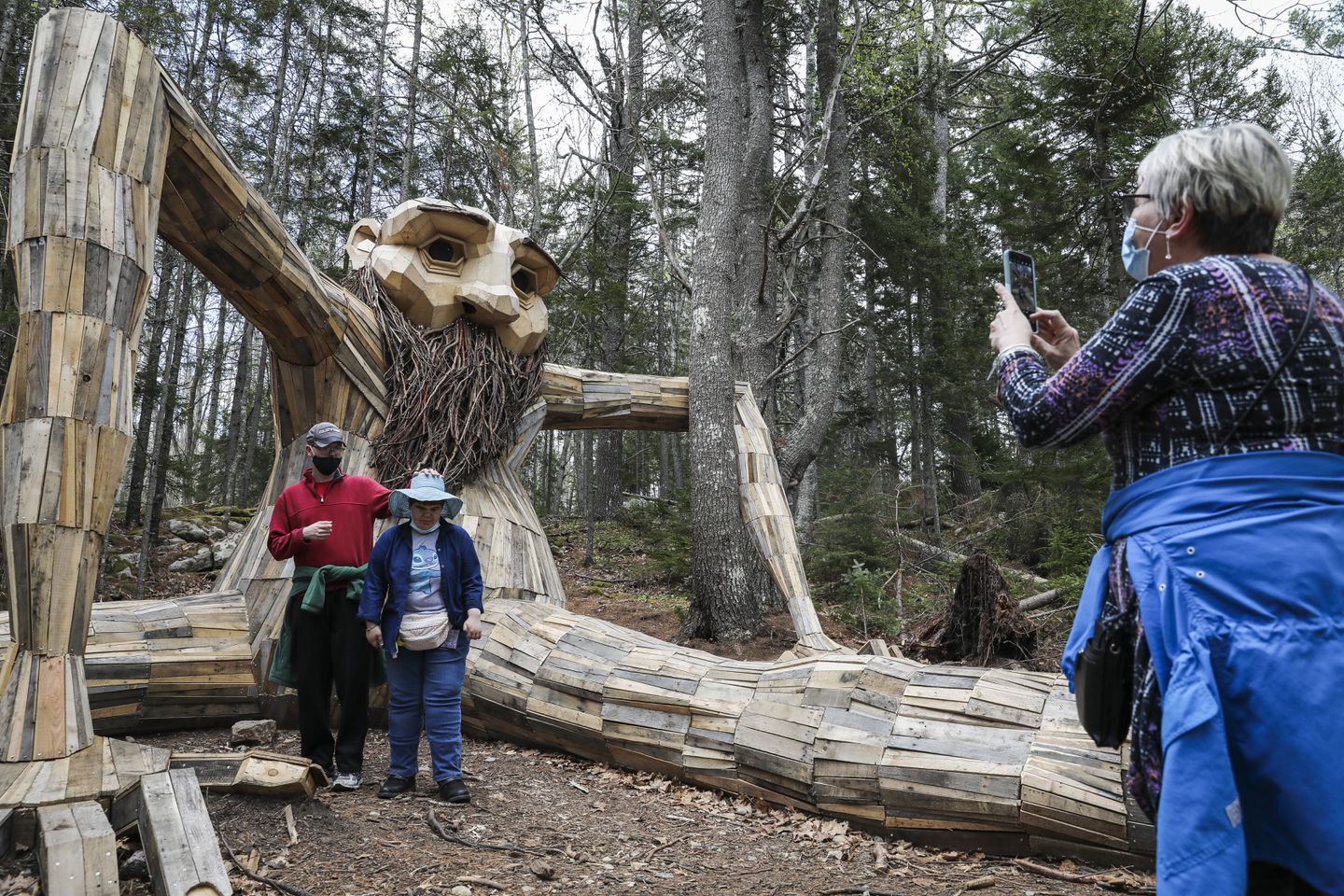
Photo: Erin Clark/Globe Staff. Visitors pose with Birk, one of five trolls created by artist Thomas Dambo in the Coastal Maine Botanical Gardens in Boothbay, Maine.
Who doesn’t love trolls? Especially big, ol’, harmless trolls amenable to selfies?
Steve Annear, a reporter who gets all the fun assignments at the Boston Globe, recently wrote an article about the Danish trolls that have shown up in Maine.
“These trolls, including one that stands nearly three stories tall, aren’t dastardly by any means. They come in peace, settling in Midcoast Maine to share an urgent message with those who discover them tucked away in the Coastal Maine Botanical Gardens in Boothbay: Please appreciate and take care of the planet, before it’s too late.
“ ‘These are nature’s protectors,’ said Gretchen Ostherr, president and chief executive of the gardens, the largest botanical garden in New England.
“Later this month, visitors to the 323-acre property may discover a series of five giant, whimsical troll sculptures, each immersed in nature and made from reclaimed and recycled wood and other natural materials.
“The exhibit, called ‘Guardians of the Seeds,’ is the work of Copenhagen-based artist Thomas Dambo, and was put together by a team of people, including community volunteers, during the past seven weeks. …
‘I really want it to stir two things,’ Ostherr said. ‘That people have a wonderful, connected, restorative experience, and that they are inspired to take care of their planet’ and become stewards of the woods.
“The Maine display officially opens May 29. While it’s similar to dozens of other eye-popping troll sculptures Dambo has built across the world and part of a shared narrative, the storyline of the Boothbay trolls is unique.
“In the United States, Dambo’s trolls have drawn crowds in Illinois, Florida, and Kentucky, with much fanfare. But the arrival of the mythical creatures to the woods of Maine marks a first for New England.
“Officials from the Coastal Maine Botanical Gardens first reached out to Dambo in 2019 as they discussed ways to have more visitors ‘share the magic of the gardens,’ Ostherr said.
“ ‘We loved the story of the trolls, and Thomas’s focus on the trolls being about biodiversity and taking care of the planet and the forest,’ she said. ‘It perfectly aligns with our mission, which is about connecting people with plants and nature.’ …
“Dambo, 41, said he built the faces and feet in his workshop (a.k.a. ‘troll factory’) in Denmark before they were transported to Maine. But the bulk of the sculptures were constructed on site using several tons of recycled materials, their positions and designs inspired by the precise spot in the woods they call home. …
“It’s the first international project Dambo has done since the coronavirus all but shut down the art world last year. He said he hopes the sculptures will bring people out of their homes to appreciate the great outdoors while also educating them about society’s wasteful habits.
“ ‘My art is about trying to convey the message of the importance of taking care of our natural world, and being better at recycling,’ he said. ‘I try to use the trolls as a medium for being the voice of nature, and how nature perceives us.’ ”
More at the Globe, here. By the way, while we’re on the subject of amazing gardens in New England, be sure to visit Bedrock Gardens in Lee, NH, where my brilliant friend, Jill Nooney, one of the founders, displays her wildly imaginative sculptures made of found objects, mostly metal.
Photo: United Airlines via Flight Global. United Airlines will invest in carbon capture to try to limit the bad effects of its fuel on the climate.
It would be better for the planet if we all took fewer airplane trips, but consumer demand just keeps increasing. Especially after the pandemic, everyone wants to get away by plane. So here is an alternative way to deal with aviation pollution. Would love to know if you regard this as a good solution.
Steven Mufson reported for the Washington Post in January, “United Airlines is … backing carbon capture — the nascent technology designed to suck carbon dioxide from the atmosphere.
“United Airlines is the first major U.S. air carrier to take a step toward trying to remove some of the greenhouse gases spewed by it and every other airline, pollution that is driving up global temperatures.
“For United, it’s an alluring project. Governments, particularly in Europe, are beginning to crack down on emissions from airlines. Last month, the U.S. Environmental Protection Agency for the first time regulated greenhouse gas emissions from commercial aircraft. … United is increasingly focused on its voluntary goal of net-zero emissions by 2050 — good publicity at a time of growing alarm about climate change.
“But it may also be placing an early bet that carbon-capture technology could — with the help of federal tax credits — prove profitable. …
“Steve Oldham, chief executive of Carbon Engineering, which has developed carbon-capture technology, said United is taking an unusual approach to decarbonization. ‘When most are thinking they have to stop emissions, here you have a very credible company with a real need saying that the best way of dealing with emissions is removing them,’ he said.
“A lot is at stake. If global airlines were lumped together as one country, they would rank among the world’s top five or six emitters of carbon dioxide, according to the International Energy Agency. Aviation accounts for 3.5 percent of the planet’s man-made greenhouse gas emissions, a recent Manchester Metropolitan University study says. At high altitudes, the planes leave behind contrails of carbon dioxide, nitrogen oxide, water vapor and soot.
“When it comes to commercial aviation, there are no low-carbon alternatives. In the summer, a small white-and-red all-electric-powered Cessna e-Caravan flew safely over Washington state — for only 28 minutes. The plane had room for nine, but only the pilot was on board.
“Solar-powered flights are even less practical. A plane called Solar Impulse 2 went around the world over 14 months, but it could only hold the pilot in an unheated, unpressurized phone-booth-size cockpit whose single seat doubled as a toilet. The plane flew at an average of 30 miles per hour to maximize energy savings, and, despite an enormous wingspan, it was only able to carry the equivalent weight of one automobile.
” ‘The aviation sector is one of the hardest to decarbonize,’ Oldham said. ‘Planes require fuel and burn a lot of fuel. At high altitude, the impact of those carbon emissions is greater than if they were released on the surface.’
“So United says it will become a partner in 1PointFive, a joint venture designed to finance and deploy a large-scale direct-air-capture plant. The firm, formed in August by a subsidiary of Occidental Petroleum and Rusheen Capital Management, will use technology created by Carbon Engineering.
“The name 1PointFive refers to the U.N. goal of limiting the average increase in global temperature to 1.5 degrees Celsius compared with preindustrial times. Constraining global warming to that level could avert the most catastrophic fallout from climate change, scientists say. The company will build its first plant somewhere in the Texas Permian Basin, an area rich in shale crude oil and natural gas.
“Occidental, the biggest oil and gas operator in the Permian, will take the carbon dioxide from the air and pump it into old wells to extract more oil. Legislation gives firms a $35-a-barrel tax credit for this capture and use. Occidental will leave the carbon dioxide underground; it has said it has enough geologic storage capacity to bury 28 years worth of U.S. emissions. …
“Scale remains a problem. United has improved its fuel efficiency by more than 45 percent since 1990, the year often used as a benchmark for climate-oriented energy savings. It has added aerodynamic fins on wingtips, used only one engine when taxiing on runways and bought planes that weigh less. But the number of travelers has soared, and airline fuel consumption has gone up. The federal Energy Information Administration estimates that jet fuel demand will more than double by 2050.
“Each carbon-capture plant will take up about 100 acres and capture 1 million tons, equivalent to the work of more than 40 million trees. To put that into perspective, worldwide emissions are 40 gigatons. Offsetting that would require 40,000 carbon capture plants. …
“David Victor, a professor and climate expert at the University of California at San Diego, said, ‘The airlines are an example of a sector where firms are starting to see the writing on the wall … and a lot of them don’t know what to do.’ “
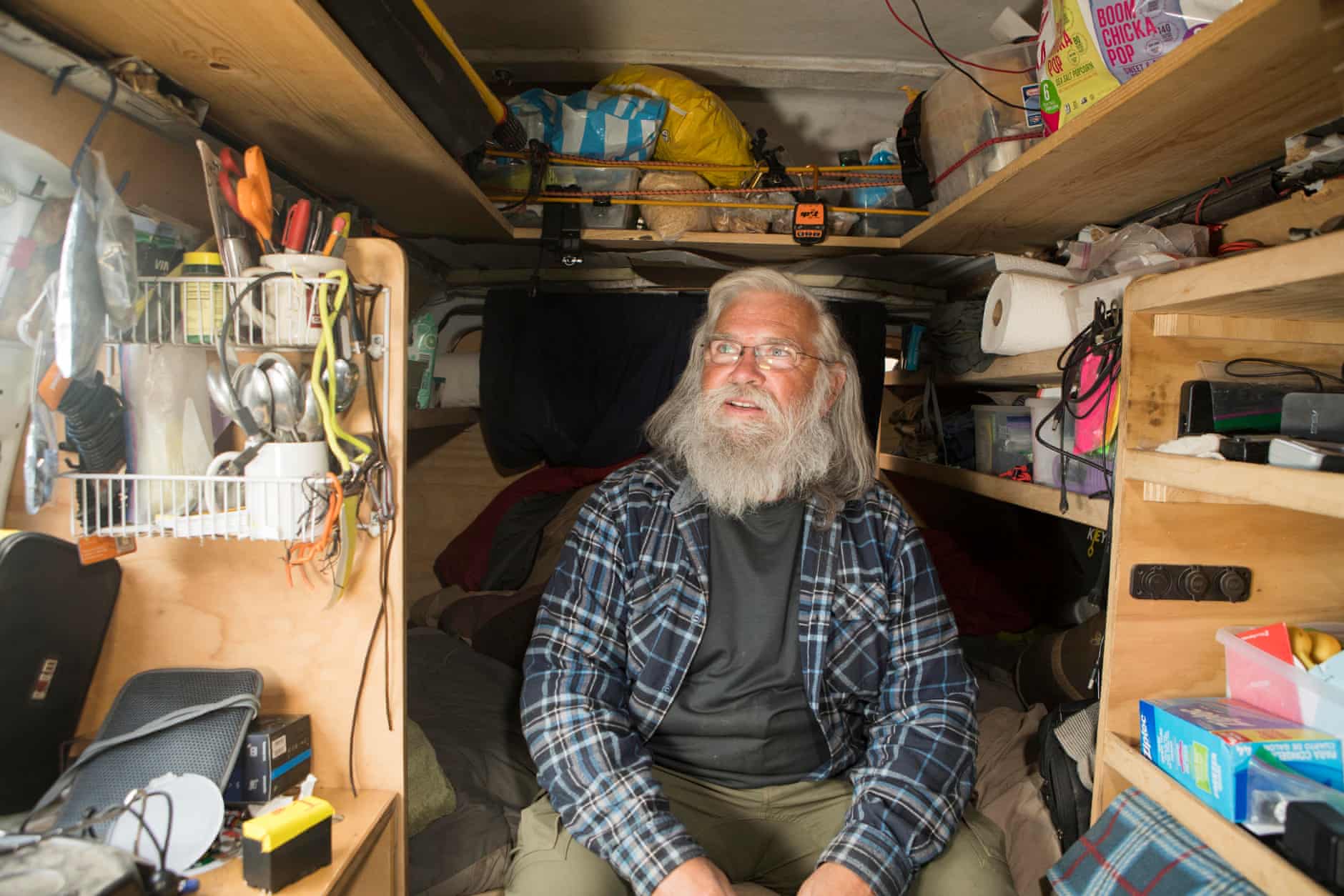
Photo: Angie Smith/Redux/eyevine. Bob Wells: ‘Then came the first of the month, and something clicked: he didn’t have to pay rent.’
Although many of us have yet to see the award-winning film Nomadland, we can get a taste of the characters’ way of life from this article at the Guardian.
Reporter Stevie Trujillo describes living off the grid in the back roads of America. “If you look closely on city streets, campgrounds and stretches of desert run by the Bureau of Land Management, you’ll see more Americans living in vehicles than ever before. It was never their plan.
” ‘I wasn’t prepared when I had to move into my SUV. The transmission was going. I had no money saved. I was really scared,’ said April Craren, 52, bundled in blankets atop a cot inside her new minivan, a 2003 Toyota Sienna.
“She flipped the camera on her phone to show me the camp stove she uses to make coffee and her view of the sun rising over the Colorado River. She has no toilet, shower or refrigeration.
“After separating from her husband, April found herself homeless in June 2020, exacerbating the depressive disorder for which she receives $1,100 a month in disability benefits.
“ ‘I could have gotten an apartment but in a crappy unsafe place with no money to do anything at all,’ she explained.
“Last year, where April lived in Nixa, Missouri, the average rent for an apartment was $762, slightly less than the national average. Like nearly half of American renters, she would have been crippled by the cost.
“It’s not surprising, then, that job loss, divorce or, say, the sudden onset of a global health or financial crisis can push so many over the edge.
“ ‘If the Great Recession was a crack in the system, Covid and climate change will be the chasm,’ says Bob Wells, 65, the nomad who plays himself in the film Nomadland. …
Today, he lives exclusively on public lands in his GMC Savana fitted with 400 watts of solar power and a 12-volt refrigerator. His life mission is to promote nomadic tribalism in a car, van or RV as a way to prevent homelessness and live more sustainably.
“Before becoming a nomad in 1995, Bob lived in Anchorage, Alaska, with his wife and two boys. He worked as a union clerk at the same Safeway where his father had worked until retirement, only to die two years later. … By his own telling, he was the living embodiment of Thoreau’s ‘quiet desperation.’ …
“Then, when he was 40 years old, the divorce happened. After paying alimony and child support, he was taking home $1,200 a month, $800 of which went towards rent.
“One day, fretting about impossible finances, he saw a green box van for sale and thought: ‘Why don’t I buy that van and move into it?’ The idea struck him as crazy, but with the prospect of homelessness closing in, he drained the last $1,500 in his savings account and bought the van. …
“Then came the first of the month, and something clicked: he didn’t have to pay rent. As his finances improved, he installed insulation, a proper bed, even a dream-come-true PlayStation fortress for his boys. He started working only 32 hours a week, and since every weekend was a three-day weekend, he spent more time camping with his kids, which ‘tremendously helped’ his mental outlook on life. …
“Realizing he had something valuable to share, he bought the domain name Cheap RV Living in 2005. He posted tips and tricks about better vehicle-dwelling, but what he was really offering was a road map to a better life.
“Four years later, when close to 10 million Americans were displaced after the Great Recession, traffic to his site exploded. Finding himself at the center of a growing online community, he decided to create a meet-up in Quartzsite, Arizona. He dubbed it the Rubber Tramp Rendezvous (RTR), and in January 2011, 45 vehicles showed up. Eight years later, an estimated 10,000 vehicles convened for what was said to be the largest nomad gathering in the world. …
“While Bob concedes the limits of his solution – it doesn’t address PTSD, mental illness or drug addiction, three main causes of homelessness – he does see it as a way to lower our carbon footprint and make ourselves more financially resilient in trying times ahead.”
At the Guardian, here, read why it’s mostly older women seeking advice and assistance from Bob’s programs.
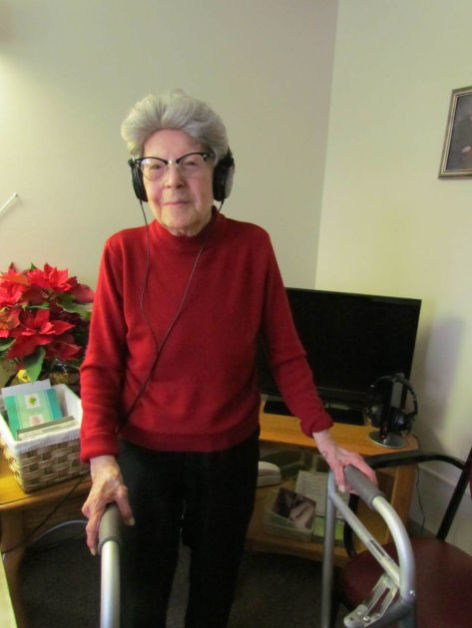
Photo: Waterloo-Cedar Falls Courier. Listening to music can soothe people of any age. The woman above was 108 when the photo was taken.
We have been keeping an eye on the use of music to connect dementia patients to calming memories. (For example, in this post.)
Today we have Robert Booth reporting at the Guardian that when hospital staff in the UK worked with Alzheimer’s patients on a targeted playlist for each person, the results included lowered heart rate and less agitation.
“Trials are under way at an NHS trust to see if an algorithm can curate music playlists to reduce suffering in Alzheimer’s patients as well as in stressed medical staff.
“A test among people with dementia found an algorithm that ‘prescribes’ songs based on listeners’ personal backgrounds and tastes resulted in reductions in heart rate of up to 22%, lowering agitation and distress in some cases.
“[Now] Lancashire teaching hospitals NHS trust is extending trials to medical staff who worked in critical care during Covid to see if it can ease anxiety and stress. It is also planning to test it on recovering critical care patients, needle-phobic children and outpatients coping with chronic pain in the hope of reducing opiate prescriptions.
“The technology operates as a musical ‘drip.’ playing songs to patients and monitoring their heart rates as they listen. … An algorithm allows the software, which is linked to a streaming service like Spotify, to change forthcoming tracks if the prescription doesn’t appear to be working. Its artificial intelligence system assesses the ‘DNA’ of songs, examining 36 different qualities including tempo, timbre, key, time signatures, the amount of syncopation and the lowest notes. Gary Jones, the chief executive of MediMusic, the company developing the software, said these were among the factors that can shape the heart rate and blood pressure response to a track.
“A trial of 25 people with Alzheimer’s aged from their 60s to their 90s conducted at the Lancashire NHS trust has shown some promising results, the trust said. …
Said Dr Jacqueline Twamley, academic research and innovation manager, ‘Some people it doesn’t affect the heart rate at all, but you can see the effect in their facial expressions and in them tapping along. One patient burst out crying. He said the song brought back happy memories and they were happy tears.’ …
“When Twamley tried it, she was surprised to see the algorithm prescribed her songs by Gloria Estefan, the Pretenders, Lionel Richie and Billy Ocean. She is a fan of more raucous bands, including Led Zeppelin, Queens of the Stone Age and the niche progressive rock outfit Porcupine Tree. But it still had an effect.
” ‘I was quite stressed at the beginning of it, but I just felt calm afterwards,’ she said.
“The system aims to select songs that create a gradation in heart rate, starting with something bracing like Tchaikovsky’s 1812 overture and moving towards a lullaby.”
At the Guardian, here, you can check out the playlists recommended for patients of different ages.
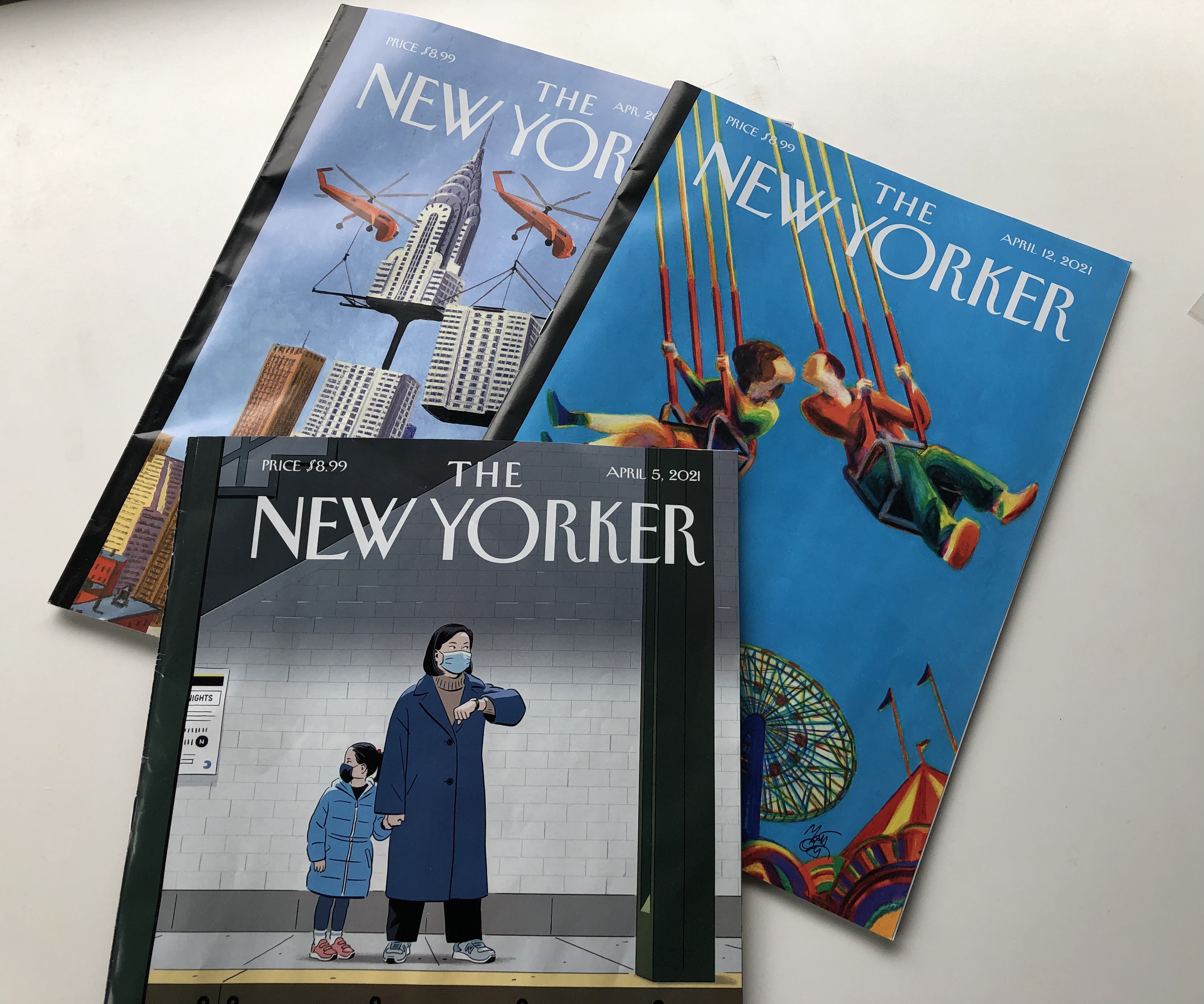
These are real New Yorker covers, but for a laugh (or a tear), check out fake pandemic covers created for an art class, here.
In New York, an art teacher’s creative idea in the pandemic was to make magazine covers in the style of the New Yorker magazine. The next thing the students knew, their work had gone viral on social media.
Michael Cavna writes at the Washington Post, “A masked woman pauses to perch between two worlds: the Zoom-room confines of her virtual life this past year, and the real physical realm of a post-pandemic future. As her classmates spring across a laptop keyboard, the emotional moment resonates, a split-second frozen in art.
“Its creator, Lauren Van Stone, a New York college student originally from Connecticut, rendered the work to empathize with anyone else enduring virtual learning. ‘I felt inspired to illustrate a piece that focused on the tentative reopening of schools,’ she says, ‘and the mixed feelings that many students will inevitably have upon re-entering society.’
“Van Stone created the artwork for her third-year illustration class taught this semester by Tomer Hanuka [@tropical_toxic on Twitter] at the School of Visual Arts in New York. Hanuka had asked his students to create moving-past-the-pandemic works in the style of a New Yorker magazine cover — and was so impressed with the finished pieces that he shared some of them last week on Twitter.
“Soon, the virtual world was as moved by the students’ art as Hanuka was. Within a few days, the first tweet in the viral thread of 17 works attracted more than 130,000 likes and more than 30,000 retweets. Nearly 60,000 liked Dou Hong’s poignant image of two figures on a park bench: One is of a woman, the other an outline filled with names of covid victims. …
“Hanuka, a veteran illustrator who has contributed covers to the New Yorker, was shocked by the public response. … He had merely sought to give the student artworks some exposure beyond the classroom. But his timing couldn’t have been better: As millions of Americans are vaccinated daily amid cultural debates over evolving social and medical protocol, the art reflects the year we’re emerging from — and where we hope soon to be. …
“The assignment was to analyze the storytelling mechanisms within ‘classic’ New Yorker covers and create original ideas using some of that visual vocabulary.
‘It’s about observing a seemingly mundane detail that, by the way it’s presented, illuminates a bigger story,’ says Hanuka. …
“Amy Young, who’s originally from Vancouver, British Columbia, created a powerful cover showing a family around the table with the deceased matriarch missing, her living husband and their wall picture bathed in the lavender tint of loss. Existing alongside the buoyant hope of vaccination, she says, is the ‘grief, sorrow and perhaps even bitterness experienced by those whose loved ones have already passed away. I wanted to show that duality of emotions in my cover, and how they can find co-existence in a family.’ …
“Katrina Catacutan, from Baltimore, drew a reunion with her significant other, in a home brimming with her collection of pandemic plants that evolved to include ‘propagating cacti’ and various vegetables.
“Once their works were posted on Twitter, the students were stunned by the impassioned response. ‘It really showed me just how powerful art is, in the way it can connect countless people from across the world over one shared feeling or image,’ says Jane McIlvaine of New York, who depicted a cat watching its formerly locked-down owner exit their home. …
“As for their teacher, he is not only wowed by the outcome, but also by how his young artists have persevered academically during the pandemic. Some of them hold day jobs, and some have been cut off from their families for a year. Yet, Hanuka says, ‘They had the emotional bandwidth to gather for four hours a week — and that’s just my class — to discuss color choices and compositions with all the gravity and focus these topics demand. … They were asked to find logic in the chaos — to make sense of it, by way of beauty. They practiced their craft rigorously and showed up.’ ”
Photo: Reuters. ‘Lost golden city’ found in Egypt reveals lives of ancient pharaohs.
Archaeologists in Egypt have had a run of successes lately. The most recent find of a whole city is expected to generate clues to the daily lives of the pharaohs.
The BBC reports that “the discovery of a 3,000-year-old city that was lost to the sands of Egypt has been hailed as one of the most important archaeological finds since Tutankhamun’s tomb.
“Famed Egyptologist Zahi Hawass announced the discovery of the ‘lost golden city’ near Luxor. [He] said the find was the largest ancient city, known as Aten, ever uncovered in Egypt. It was unearthed within weeks of the excavation starting in September 2020.
“The city dates to the reign of Amenhotep III, one of Egypt’s most powerful pharaohs, who ruled from 1391 to 1353 BC. …
“Betsy Brian, professor of Egyptology at Johns Hopkins University in Baltimore, US, said … the city would ‘give us a rare glimpse into the life of the ancient Egyptians’ at the time when the empire was at its wealthiest.
“The dig revealed a large number of valuable archaeological finds, such as jewelry, colored pottery, scarab beetle amulets and mud bricks bearing seals of Amenhotep III. …
” ‘Within weeks, to the team’s great surprise, formations of mud bricks began to appear in all directions,’ Dr Hawass said in his statement. ‘What they unearthed was the site of a large city in a good condition of preservation, with almost complete walls, and with rooms filled with tools of daily life.’
“Now, seven months after the dig started, several areas or neighborhoods have been uncovered, including a bakery, an administrative district and a residential area.”
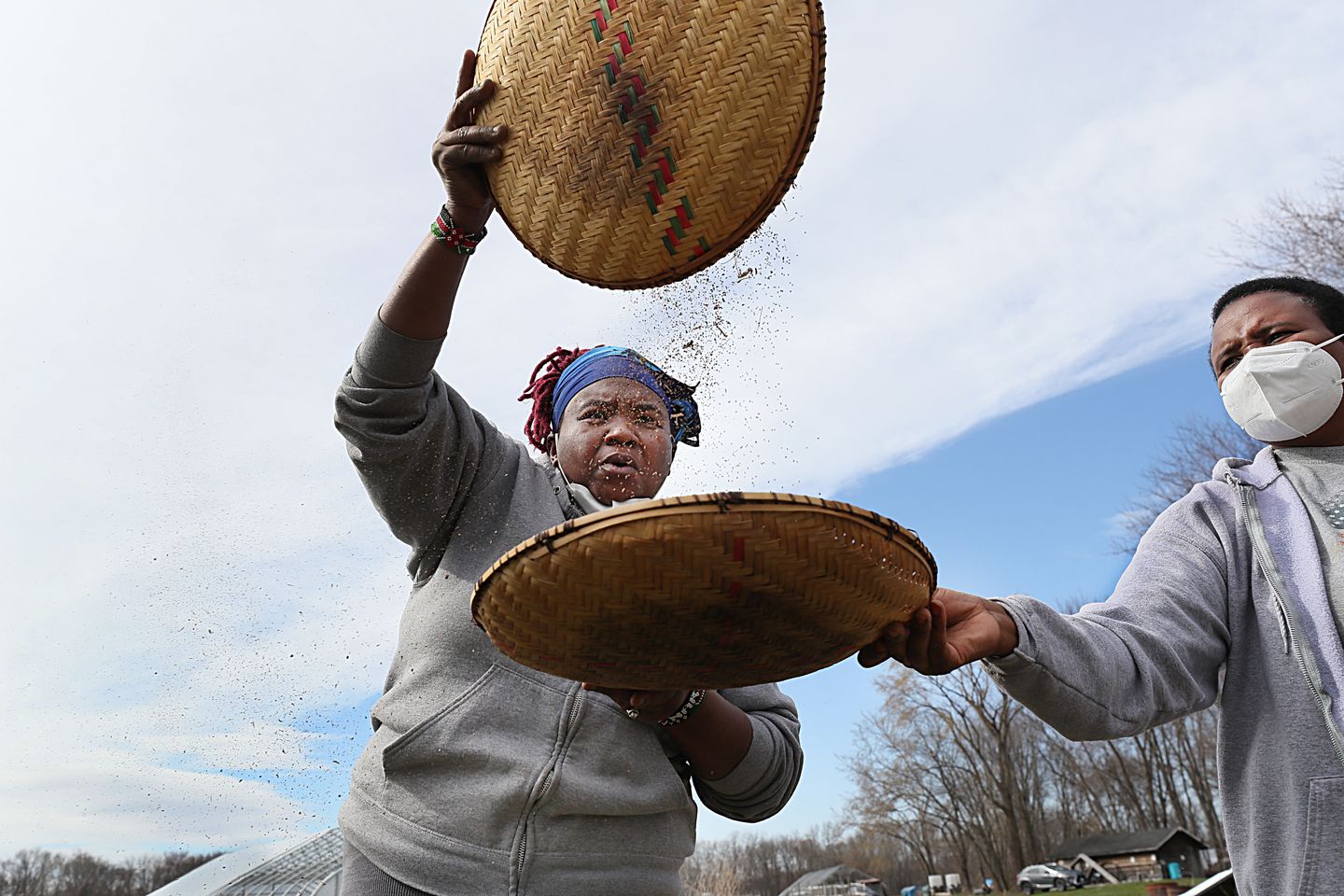
Photo: Suzanne Kreiter/ Globe staff. Henrietta Nyaigoti with her mother, Veronicah Nyaigoti (right), working with baskets of chinsaga spider plant seeds.
Some years ago, for the magazine I edited, I acquired an article about Hmong immigrants in Lancaster, Massachusetts, and the role that their community garden played in their new life. The garden was called Flats Mentor Farm, and I’m excited to see it’s still going strong.
Jocelyn Ruggiero wrote recently at the Boston Globe about a Kenyan transplant whose family’s garden inspired a new business. “Six days a week, May through October, 33-year-old Henrietta Nyaigoti arrives at Flats Mentor Farm by 7 a.m. She waters the inside of her two high tunnels, checks the progress of the vegetables growing there, and walks her family’s 2 acres to assess any damage from pests and weather.
“During planting season, she puts seeds in the ground, and during growing season, tills weeds and makes any necessary soil amendments. At 2:30 p.m. on weekdays, she drives 15 minutes home, where she lives with her two young daughters, then showers and changes before heading to her job as an assistant program manager at a group home for individuals with traumatic brain injuries. She works there 50 to 70 hours per week during farm season, and 80 to 100 hours in the off-season. All year round, Nyaigoti spends 30 hours a week as a home health aide at an assisted living facility. She recently began a position as a sales coordinator for World Farmers — the nonprofit that operates Flats Mentor Farm — which has so far been a 10-hour a week commitment. … And this May, after three years of hard work, she will complete coursework for her Master’s in Public Health at Southern New Hampshire University.
Nyaigoti says, ‘I work hard because I have an opportunity that many people don’t, especially in Kenya.’
“Nyaigoti was almost 14 in 2001 when, ‘seeking greener pastures,’ her family immigrated to Massachusetts from a small town in Kenya called Rigoma Market. Her parents were teachers and, like everyone they knew, grew the vegetables — managu, chinsaga, amaranth, maize, and kunde — that their family ate. When they packed their bags, Nyaigoti says, ‘we did … what a lot of people did back then. We dried our vegetables and traveled with them … because we didn’t know if we were going to find them here. And lo and behold, we didn’t.’ …
“TIn [2003] Nyaigoti’s mother first visited Manny’s Dairy Farm in Lancaster. She was delighted to discover something she hadn’t seen since her time in Kenya: amaranth. She struck up a conversation with Manny, who invited her to pick the vegetable. Shortly after, he introduced her to Maria Moreira, the executive director and cofounder of World Farmers, the Lancaster-based nonprofit whose mission is to support small farmers in sustainable agricultural production.
“In 2004, Moreira offered her a parcel of land at the 70-acre Flats Mentor Farm, where World Farmers provides infrastructure and marketing assistance to small refugee and immigrant farmers — today approximately 25 countries represented — whose ethnic specialty crops (cleared by the government for planting and growing) make their way to more than 15 farmers’ markets, dozens of direct-to-consumer outlets, and a World Farmers’ CSA. …
“By 2006, [Nyaigoti] wanted to help her mother more, who she saw ‘working crazy hours [at her day job], and still struggling at the farm.’ She knew, though, she wasn’t going to farm the way her mother did. She explains, ‘When we came to the States, we were put into a system where you have to work for somebody in order to survive.’ She saw the farm as an opportunity for a degree of economic independence. ‘When I started working it [the farm], I said, I’m not going to sweat for free.’ Nyaigoti’s personal network of Kenyan friends had grown at UMass Lowell, and she was increasingly aware of the wider Kenyan diaspora in the region. She recognized the potential value of their Kenyan crops in this narrow target market.
“She began in 2007 with a single Kenyan church. ‘I would literally just get there, and in 30 minutes’ time, I’m done selling my produce, and I’m heading home.’ The more she sold, the faster word spread within the Kenyan community. The demand became so great that by 2008, she didn’t have enough supply to keep up. She went to Moreira, who helped facilitate ‘farmer-to-farmer sales’ between Nyaigoti and approximately 10 Flats Mentor farmers. The growers Nyaigoti subcontracts from are mostly Kenyan, however, she also buys from Tanzanians, Liberians, Burundians, and Haitians. …
“Once CDC regulations prevented large numbers of people from gathering in church parking lots to pick up their orders, Nyaigoti pivoted, fast: ‘If I know you’re not coming to the church, how can we make our relationship still work? Where can you get the vegetables where you are at? My commitment to people is: “Don’t worry about it, I will deliver.” ‘ …
“Nyaigoti wants to pack more and more of these orders: ‘my personal goal is to find a new community every year.’ She has her sights set on Cambodian, Tanzanian, and Ugandan communities next. In her own business and as sales coordinator for World Farmers, she wants to familiarize Massachusetts residents with Kenyan and other cultural crops grown by farmers at Flats Mentor Farm. She plans to share recipes and cooking videos to introduce new customers to these vegetables.”







 Suzanne's Mom's Blog