Feeds:
Posts
Comments

Archive for the ‘Uncategorized’ Category

An African writer’s gratitude to a generous book lover in his childhood city has inspired an online bookstore geared toward African authors.

Daniel A. Gross writes at the New Yorker, “Magunga Williams grew up in Kisumu, a Kenyan city that’s home to more than three hundred thousand people but to only two major bookstores. There, Williams told me recently, ‘people depend on books that they find in supermarkets.’ Most of these books come from the United States and Europe. ‘These supermarkets do not have a rich African collection,’ Williams said.

“But there was one place where he could always find a wider range of books. It was the personal collection of a local man, whose house became a neighborhood meeting place and an unofficial sort of public library. …

“Williams moved to Nairobi and began an undergraduate program in law, but he never forgot the way that a house full of books, in a city with too few, became an escape. …

“So Williams, while he was in school, started a literary blog, Magunga.com, and … he made it his mission to create a space like that library—not in a house but on the Internet. The result is a fledgling online pan-African bookshop: the Magunga Bookstore.

“In becoming a bookseller, Williams was, in part, following in the footsteps of his girlfriend, Abigail Arunga. A few years ago, Arunga, a Nairobi-based freelance writer in her late twenties, stopped by a few local bookstores and asked if they would stock ‘Akello,’ her self-published collection of poems.

“At one shop, she was told that Kenyans don’t read poetry. At another, an employee claimed that her ninety-three-page book was too short. ‘They told me that my book had to be at least a hundred pages,’ she said. So she decided to sell the book herself — at poetry readings, literary festivals, even family gatherings. …

“An epiphany came last winter, when Williams was reading an article in the Guardian and noticed that the newspaper operates its own online bookstore. He told Arunga that they were going to open a bookstore, too. …

“Williams earns his living by writing sponsored posts on his blog, which attracts around five thousand readers each day. He asked his Webmaster, David Mabiria, to add a new tab to the Web site, which would offer books for sale. … He and Arunga requested book donations from writer friends, who provided copies of their own work. They launched the feature with ten titles in stock, under a simple slogan: ‘Spreading the Word.’

“Word spread slowly. The Magunga Bookstore made its first sale in December, 2015, when Williams was out of town — he had to ask a friend to deliver the book. ‘He was telling me he was in traffic,’ Williams recalled. ‘And I was, like, “I don’t care. Just go get a boda-boda ride.“ ‘ (Boda-boda is East African slang for a motorcycle taxi.) He remembers telling the friend, “I’ll pay you even if it costs me double the price. Just to make sure the client is happy.” ‘ ”

More at the New Yorker. And while you’re clicking, take a look at the Magunga Bookstore site, here.

Photo: Facebook/Babishai Niwe Poetry
Abigail Arunga and Magunga Williams at the 2016 Babishai Poetry Festival, in Ntinda, Uganda.

Read Full Post »

There are no limits to human ingenuity. Jordan Todorov writes at Atlas Obscura, for example, about an “olfactory artist” who has been working to recreate the scents of cities for more than a decade. And why not?

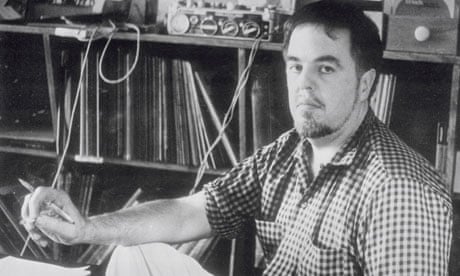
” ‘Berlin smells of cigars and boiled cabbage.’ This observation comes from the 1963 travelogue Thrilling Cities by the British author Ian Fleming … But for Berlin-based olfactory artist Sissel Tolaas, who creates ‘smellscapes’ of major cities, it smells like so much more.

“ ‘Every city has an identity like we humans do. And every city is unique smell-wise,’ explains Tolaas, a half-Norwegian, half-Icelandic expatriate artist with background in chemistry, linguistics, mathematics, and visual arts. ‘The odor depends on things like climate, geography, demography etc. Inside the city, smells differs from neighborhood to neighborhood.’ …

“Tolaas is traveling around the world and mapping its cities, one smell at a time. The project, called SmellScapes, has taken her to 35 cities so far, from London and Paris to Cape Town to Kansas City (both of them).

“Tolaas started working on her SmellScapes more than a decade ago. Most of them are commissioned by either creative platforms, city councils, or universities and private foundations, and they serve an amazingly wide variety of purposes. For example, her SmellScape of Mexico City, developed in 2001 in collaboration with the Harvard graduate student teacher program, was a creative way to understand pollution. …

” ‘I walked around and [caught] in a playful manner the smells in different neighborhoods. The goal was reproducing the smell of pollution—the car exhaust, the refrigerator, the air conditioner … Then I gave the smells to people and asked them to articulate them which made them understand better what’s causing the pollution.’ …

“Tolaas collects the smell samples in a small glass tube called tennex. Then the container is sent to her research partners from International Flavors & Fragrances, an American perfumery corporation headquartered in New York City, which according to Tolaas is ‘one of a small number of companies which controls how the world smells and tastes.’…

“After analyzing the sample with a gas chromatograph, IFF sends Tolaas a formula that contains the fingerprint of the smell captured, describing all the subtle nuances in great detail. Using this data chart, Tolaas replicates the smell in her lab, combining some of the nearly 4,000 individual molecules she has at her disposal. The result, Tolaas explains, is as close as possible to the original smell.” More at Atlas Obscura, here.
I am going to start paying more attention to neighborhood scents. I know, for sure, we have pizza aroma and dry cleaning chemicals and the smell of trains grinding to a halt on metal tracks. But in spring, we also have lots of flower smells.

I may come back to this.

Photo: Atlas Obscura
Sissel Tolaas uses a nano-scale to measure the smell molecules.

Read Full Post »

The children’s holiday show at the American Repertory Theater (A.R.T.) this year was a musical version of Roald Dahl’s James and the Giant Peach. My husband and I went to see it with our older grandson and granddaughter.

Last year, invited by our grandson’s friend and her grandmother, we attended A.R.T.’s musical about a pirate princess. Unfortunately, we didn’t have a good view. Somehow or other I had failed to complete my ticket purchase, and we ended up standing in the back much of the time.

This year we were right up front. Our six-year-old grandson was thoroughly engaged with the performance this year. His three-year-old sister, dressed up like a princess, was riveted but felt safest watching the show from my lap.

“What happened to James’s mother and father?” was her first question as the lights went up at the end. I reluctantly reported that they were eaten by a rhinoceros but added that, of course, “That’s pretend. Rhinoceroses don’t eat people.” She took it in stride and later told the theater-going neighbor from down the street that she loved the show.

One thing A.R.T. likes to do with children’s shows is provide some interactivity. For the Pirate Princess, there were actors in costumes before the performance wandering around the lobby and posing for pictures with the children. For Giant Peach, children could make origami fortune tellers (once called “cootie catchers”) that looked either like herring gulls or sharks. When sharks and gulls appeared in the production, children were encouraged to activate their own small versions. Our grandchildren both made sharks.

An adult played James in a childlike way. After James’s parents vanish, he’s sent sent to live with two nasty aunts, played by men. He is rescued when magic beans turn a peach into something big enough to crush the aunts.

As the peach grows, the critters inside the peach become giant-sized themselves (earthworm, spider, ladybug, centipede) and soon join forces with James as they all float skyward in the peach.

Each bug contributes special skills to extricating the team from dangers. I especially liked the blind earthworm, whose special skill turned out to be posing as bait for fearsome gulls so his friends could harness them with Miss Spider’s silk to get the peach away from sharks.

You can read more about the production here. Last chance to see the show is January 8, 2017.

Read Full Post »


Photo: ABC News: Kristine Taylor
The arrival of six primary school-aged children allowed Mingoola’s (New South Wales, Australia) school to reopen.

Cousin Claire put another good link on Facebook–this one about the small Australian community of Mingoola, which was losing population and decided to welcome refugees just as its only primary school was about to close.

Greg Hassall writes at ABC Australia, “In the tiny township of Mingoola, on the border of New South Wales and Queensland, local woman Julia Harpham was grappling with a common problem in rural communities.

“The population was in decline, enrolments at the local primary school were down and farmers could not find labourers to help with manual work. Her town was dying before her eyes.

” ‘Many of us have children who work in the city and aren’t going to come back to the farm because things have been so tough on the land,’ Ms Harpham said.

” ‘You don’t like to see a community die. And there’s not much joy in a place with no children.’

“Three years ago the local progress association decided to take a leaf from the region’s migrant past and looked for refugees willing to move to the area.

“But when they began contacting refugee agencies they were told there would not be adequate support for refugees in the bush. …

“Meanwhile in Sydney, refugee advocate Emmanuel Musoni was grappling with problems in his community from central Africa. They had been displaced from Rwanda and neighbouring countries during years of bitter civil war.

“The majority had rural backgrounds before having to flee their homes for refugee camps. …

“They were resettled in cities where employment prospects were few, the environment was intimidating and many became depressed and isolated. …

“Mr Musoni led a small delegation from his community to Mingoola early this year to meet locals and see whether resettlement was viable.

“On his return he put out a call for families willing to make the move; within a week he had a waiting list of 50.

“He chose two families [with] 16 children between them. Six of the children were of primary school age, which would allow Mingoola Primary School to remain open.

“Meanwhile, the community began renovating several abandoned houses in the area to accommodate the families, who moved to Mingoola in April. …

“For those involved in this social experiment, the hope is that its success can be replicated elsewhere to help other struggling rural communities.

“Mr Musoni now has 205 families on his database wanting to move out of the cities and politicians have been watching the Mingoola project with interest.”

Read more here. And for a past post on African refugees in rural Maine, click here.


Read Full Post »

What is it about Nordic countries that they seem to find more solutions to global challenges than the rest of us? Do they have fewer challenges to worry them, better education, more ability to focus?

Here are some of their successful and replicable tactics for combating global warming.

Christian Bjørnæs writes at Cicero, “By scaling up just 15 proven Nordic solutions, countries all over the world can save 4 [gigatons] of emissions every year by 2030, which is as much as the EU produces today. The costs for this scale-up equal the amount spent in just 9 days on fossil fuel subsidies.

“These results come from the Nordic Green to Scale study which was launched during the UN Climate Conference in Marrakech. …

“ ‘The main concern decision makers have is that it’s either too difficult or too expensive to rapidly reduce emissions,’ says Senior Advisor Oras Tynkkynen, who led the Nordic Green to Scale analysis on behalf of [the Finnish Innovation Fund Sitra].

“ ‘Our objective with this study is to highlight what different countries have already achieved on climate action and what other countries can learn from their successes.’ …

“Urban Danes cycle on an average almost 3 km every day. If other countries followed the example of Denmark and promoted cycling in cities, it would reduce emissions by almost as much as Slovakia produces in a year.

“In Finland, most of industrial and district heating is provided with energy efficient combined heat and power production (CHP). If other countries used CHP like this, it would reduce emissions by almost as much as Japan produces in a year.

“Iceland produces almost 30% of its electricity and most of its heat with geothermal energy. If countries with significant geothermal potential started using it like Iceland does, it would reduce emissions by more than Denmark produces in a year.

“Last year, almost every fourth new car sold in Norway was an electric or plug-in hybrid vehicle. If other wealthy countries used as many electric vehicles as Norway does, it would reduce emissions by almost as much as Denmark produces in a year.

“Sweden has the world’s highest number of heat pumps per population. Scaling up the solution to selected European countries would cut emissions by as much as Cuba produces every year.

“In addition to direct emission reductions, the 15 solutions also create considerable co-benefits. These include improved air and water quality, higher energy security, more local jobs, lower fuel bills, less traffic jams, and sustained biodiversity.”

More here.

Photo: Cicero
Biking can help reduce global warming.

Read Full Post »

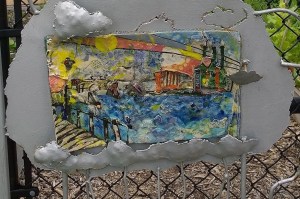
The artist I have in mind is four. Here are some watercolors he painted over a couple days at Christmas.

The Christmas tree is green along the left side, but this artist likes lots of color. He is careful to keep colors from running together and getting muddy.

He paints snowmen and people in twos.

The still life features a banana, apples, grapes, a pear and limes.

I love that over two days, his people evolved to have hair, arms and a discernible smile. I’m smiling, too..

123016-xmas-tree

https://suzannesmomsblog.com/wp-content/uploads/2016/12/123016-snowmen.jpg


123016-still-life-with-fruit

123916-evolution-of-figure-painting

Read Full Post »

As costs come down, solar and wind energy are being embraced in interesting places. Stereotypes about Texas and Big Oil will have to go.

Matthew Rozsa reports at Salon, “The notion that Texas might become a hub for renewable energy innovation isn’t that new. As Forbes noted earlier this month, Texas — which produces 37 percent of America’s crude oil and 28 percent of its natural gas — has more than 10,000 wind turbines, allowing it to produce more power from wind than the combined power produced by 25 other states from all energy sources.

“Similarly, The Wall Street Journal reported [in 2015] that Texas expects more than 10,000 megawatts of solar-generating capacity to be installed across the state by 2029, which is almost the size of all the operational solar farms in the United States today.”

Rozsa quotes Texans who were interviewed by Voice of America in October:

“ ‘A lot of wind companies have evolved to include solar and wind because solar has become so cheap. It is quite competitive with not only wind, but with fossil [fuel] generation,’ said Andy Bowman, chairman of Pioneer Green Energy.

“This point of view was echoed by Jennifer Ronk, a renewable energy expert at the Houston Advanced Research Center. ‘There is a lot of research being done, a lot of development being done,’ she argued. … ‘I think there is a mix of solutions that are going to be the optimal outcome.’ ”

I’m pretty sure that cost factors will ensure the continuation of renewable-energy research — if only at the state level.

Photo: Getty/Spencer Platt
Turbines at a wind farm in Colorado City, Texas, Jan. 21, 2016.

Read Full Post »

Photo: The Daily Mail
At the Ursul festival, Romany gypsies wear bear skins to ward off evil spirits from the year gone by. This scene in Comanesti, north of Bucharest, is replicated across Romania.

Today I saw a photo in the Boston Globe about an unusual custom in Romania. Inspired to do a Google search, I found a surprising amount of information.

Jay Akbar writes for Mailonline, “In a bizarre ritual every December between Christmas and New Year, Roma gypsies living in Comăneşti, 300km north of Bucharest … put on real bear skins and parade through the streets.

“The festival called Ursul — which is replicated across the country — originated from an ancient Indo-European tribe known as the Geto-Dacians, who believed bears were sacred.

“They and other tribes who lived in what is now Romania and Moldova — then known as Dacia — thought bears were the spirit of the forest and ‘the supreme master of cosmic energy’.

“According to Romanian mythology, the bear possesses the power to protect and heal.

“Villagers would long ago cover a newborn baby with bear fat, to give him strength and luck. And today they believe bear skins protect them from the spirits they are chasing out of the village.”

Read more at The Daily Mail, where you will find lots of terrific pictures.

The Ursul experiences of photographer Diana Zeyneb Alhindawi are at CNN. She recounts how her grandmother used to see Gypsies descending “into towns from the forests in which they lived, bringing with them real bears.”

Up until the 1930s, she says, “Townsfolk would pay the Gypsies in exchange for letting the bear cubs walk up and down their backs — seen as a cure for backache.”

No more live bears today — just people in bearskins.

(Even so, I wonder if I should ask a physical therapist about getting a bear cub treatment.)

Read Full Post »

The Concord Museum has an exhibit on dollhouses right now, and I walked over to check it out. I’ve always liked dollhouses and even sought out one for Suzanne  when she was in utero.

At the museum, children were playing happily with the sturdy contemporary dollhouse they were allowed to touch, but I suspect the people most intrigued by the glassed-in displays from the Strong Museum and various private collectors were the adults.

The Concord Museum is a history museum, and so I was less troubled by the accurate recreation of inequality in the miniature scenes than by the lack of relevant commentary in the placards. I couldn’t help thinking, for example, that some of the black schoolchildren who pass through the museum might be troubled by one dollhouse and might appreciate some discussion of the life of the servants in the attic and kitchen. But the placard was silent about wealth, poverty, and the legacy of slavery.

Another aspect of social history that seems fundamental to a discussion of dollhouses involves the many women who created them as a hobby.

Women who had servants in the attic and the kitchen were not folding the laundry. They were not cooking or tidying up. They were not raising their children. They did not have jobs. In short, they had almost nothing useful to do — a recipe for depression.

I often wonder about the psychological constraints that kept such women from giving themselves permission to go out into the world, as Jane Addams or Beatrix Potter did, each in her own way.

If making exquisite little worlds at home gave the dollhouse creators and their friends and families pleasure, that is a great thing in itself. If it represents a determination to create something fine when hardly any meaningful activity was allowed, then that is an even greater thing.

The dollhouse exhibit is up through January 15. Related events may be found here.

122916-dollhouse-reflects-unequal-history

122916-racial-inequality-in-dollhouse

Read Full Post »

At National Public Radio, Rachel Martin reported recently on Music in Exile, an initiative that is providing a certain comfort to displaced musicians and other refugees.

“Alex Ebsary, a member of the Music in Exile team, explains that its mandate is straightforward: ‘What we do is go around, either to refugee camps or to places that we know there will be refugees or internally displaced Iraqis, and try to find musicians,’ he says. ‘They can be anyone, from somebody who knows how to sing a few songs to professionals.’

“One of the musicians featured in the project is Barakat Ali, a Yazidi man who fled from ISIS attacks on his home of Khana Sor. He says the past few years have changed the way he approaches music.

” ‘Sometimes, I feel very sad about what happened to Yazidis,’ he says. ‘So I’m just playing this music and singing to forget myself, to not be so worried and cry about these things. And sometimes I’m crying while singing.’ …

“Hear the full interview at the audio link,” here.

According to Wikipedia, “Yazidism is linked to ancient Mesopotamian religions and combines aspects of Zoroastrianism, Islam, Christianity and Judaism.”

I wish I could learn about these unfamiliar cultures through less tragic events, but I do like to learn something new. A colleague at my old job enlightened me about his Assyrian relatives, who were suffering the same dangers as the Yazidis at about the same time period, 2015.

Assyrians are mainly Christian (Wikipedia again) and speak a modern version of Aramaic. Amazing! Now I am completely confused by Byron’s energizing lines, “The Assyrian came down like the wolf on the fold …”

History is written by the victors.

Photo: Sasha Ingber
Barakat Ali is a Yazidi refugee and musician who has contributed to the recording project Music in Exile.

Read Full Post »

Despite its size, the compassionate Netherlands has welcomed a large number of refugees during the largest migration since World War II, perhaps remembering the terrified families that fled Hitler.

To house all the newcomers is naturally a challenge, but a design competition has yielded creative ideas.

Jon Comulada writes at Upworthy, “As the worldwide refugee crisis continues, innovative solutions are needed so that the people fleeing civil war and sectarian violence have a safe place to live. …

“In January 2016, the Netherlands launched a design competition called ‘A Home Away From Home’ in which entrants were tasked with designing temporary housing for refugees and disaster victims. All of the winning designs rethought the idea of public housing, adding amenities and innovations to make the buildings more like fully functioning homes than simply a bed to sleep on.

“The winners of the contest recently appeared on display in Amsterdam as part of Dutch Design Week and included things like solar power, water purification systems, and ingenious use of space and material.

“The cube design of the Farmland [below] means dozens can be stacked, placed together, and moved easily. The architects of this design imagined the miniature villages establishing a ‘DIY economy’ with local towns. …

“Home is a concept many of us take for granted, but it’s not a small thing. It makes us feel safe, comfortable, and human.

“The current refugee crisis hasn’t showed signs of slowing down, and with climate change creating more and more dangerous weather systems, we’re likely to see climate refugee numbers grow sharply. All of those people are going to need places to live. Innovative solutions like these help them to not only live, but live with dignity and opportunity.”

Check out several other designs from the competition at Upworthy, here.

Photo: A Home Away From Home
This Farmyard shelter is designed to transform vacant farmland into mini villages.

Read Full Post »

The street art in St. Petersburg, Florida, is a selling point for tourism. It started with unwanted tagging on buildings and evolved into murals authorized by building owners and respected by taggers.

Tampa Bay Times art critic Lennie Bennett has the backstory.

“In recent decades, murals have become a way to spruce up bare walls of buildings and to discourage graffiti. St. Petersburg has street murals in many areas but there is a concentration of them along the downtown Central Avenue corridor. To see them at their best, you need to walk through the area. Even if you travel the route regularly by car, you’ll miss many of them because they adorn the once-drab back walls facing alleys.

“An incentive for owners of the buildings, says [Florida CraftArt executive director Diane Shelly], is that they were regularly ‘tagged,’ meaning a graffiti artist would use an exterior wall as a canvas or to scrawl messages with spray paint. ‘It’s illegal and the city has a graffiti removal program,’ so city workers come out and use whatever paint is available to cover up the tags, which led to a different kind of unsightliness, she said. ‘But taggers respect art, and most won’t tag an existing mural.’ …

“Shelly commissioned Derek Donnelly to create a mural that would replace those painted-over areas and discourage future tagging. ‘A Moment to Reflect ‘was created by Donnelly and Sebastian Coolidge, another well-known street painter whose most beloved work is probably the image of a young man with elongated limbs stretching for an orange on the exterior of the clothing store Freshly Squeezed at First Avenue N and Dr. Martin Luther King Jr. Street.

” ‘Reflect’ is the largest of the Central Avenue murals, stretching up four floors. It depicts a businessman wearing a green tie, the color associated with CraftArt’s neighbor and sponsor of the mural, Regions Bank, discovering his creative side. ‘I think it’s the largest free-hand mural in St. Petersburg,’ Shelly says, meaning it wasn’t done using a grid method or projector. …

“Because of the murals’ growing popularity, some business owners rehire the artists to freshen up the works rather than painting over them.

“But in [the experience of Leon Bedore, or Tes One] ‘You end up learning that all murals are temporary art and not intended to stay up forever. (When painting illegally) I felt lucky to have one up for a night. A week was amazing. When an owner didn’t have one removed I thought, ‘” might be on to something if they’re keeping it up.” ‘ ”

The Tampa Bay Times article by Lennie Bennett is here. A comprehensive tour of the murals is here.

Photo: Creative Loafing

Read Full Post »

Sheikh Khalifa believes the United Arab Emirates would benefit in multiple ways if people there had more time to read. So he saw to it that a law got passed requiring employers to do their bit.

The National reports, “Employees will be given time off work to read under a law that was passed [in October], which also exempts reading material from taxes and fees.

“The President, Sheikh Khalifa, announced the law, which is aimed at achieving the country’s vision of a knowledge-based economy. …

“As part of the law, the Government will give a ‘knowledge briefcase’ to the families of newborns.

“Schools will be obliged to encourage reading among pupils, as well as a respect for books. Books that are no longer wanted must not be destroyed, but preserved, reused or donated, Sheikh Mohammed said.

“Fees and taxes for distributing, publishing and printing reading material will be scrapped, and facilities for authors, editors and publishing houses will be provided. Sheikh Mohammed said the law would consolidate ‘the cultural image of books in our society, and oblige coffee shops in shopping malls to offer reading material for customers.’ …

“A national fund will be set up to support reading initiatives and assist media organisations to advertise the importance of books. The fund will also be used organise a month dedicated each year to promoting literature.”

More here.

It’s an unusual approach, but it seems OK as long as there is freedom to choose what gets read. Lately, I’ve been immersed in the beautiful, wrenching autobiography of poet Jimmy Santiago Baca and learning all over again how literacy gives people wings. Baca learned to read in prison at around age 20 and it transformed his life.

Read Full Post »

122316-making-xmas-cookies


I like this about traditions: they are always a little the same and a little different. You carry forward the old activities, but you and the people around you are a little different every year and customs get tweaked.

I’m posting a few pictures of holiday doings that are both the same and different in our family.

The youngest grandchild decorating a reindeer cookie. My collage gift tags made from scraps. Another grandchild’s Christmas tree watercolors. Luminaria bags with candles. A traditional light display.

My husband and I and Suzanne’s family gathered for a magnificent meal at John’s house, and everyone ended up dancing to Gummy Bears disco videos in the dark.

121716-collage-card-for-family122516-painting-on-xmas-tree


122416-luminarias

122516-teel-st-lights

Read Full Post »

Getting Ready

Except for the cooking, I think I’m ready. Suzanne’s family is staying at our house, and John’s family will come for supper and the church pageant. (Here’s hoping the minister doesn’t give a long prayer like last year when all the toddlers were holding lighted candles. My advice: Just raise the candles and blow them out.)

On Sunday, we all go to John’s house for my daughter-in-law’s fabulous cooking, bringing a few contributions of our own.

So. Donations have been mailed. Almost all the tips have been handed out (have to catch the sanitation engineers next week; they were too fast for us). The tree is decorated. The presents are wrapped. The camera is recharged. What am I forgetting?

Whatever your holiday, please take it slow. And savor.

120916-angel-on-tree

Read Full Post »

« Newer Posts - Older Posts »