Feeds:
Posts
Comments

Photo: JRE.
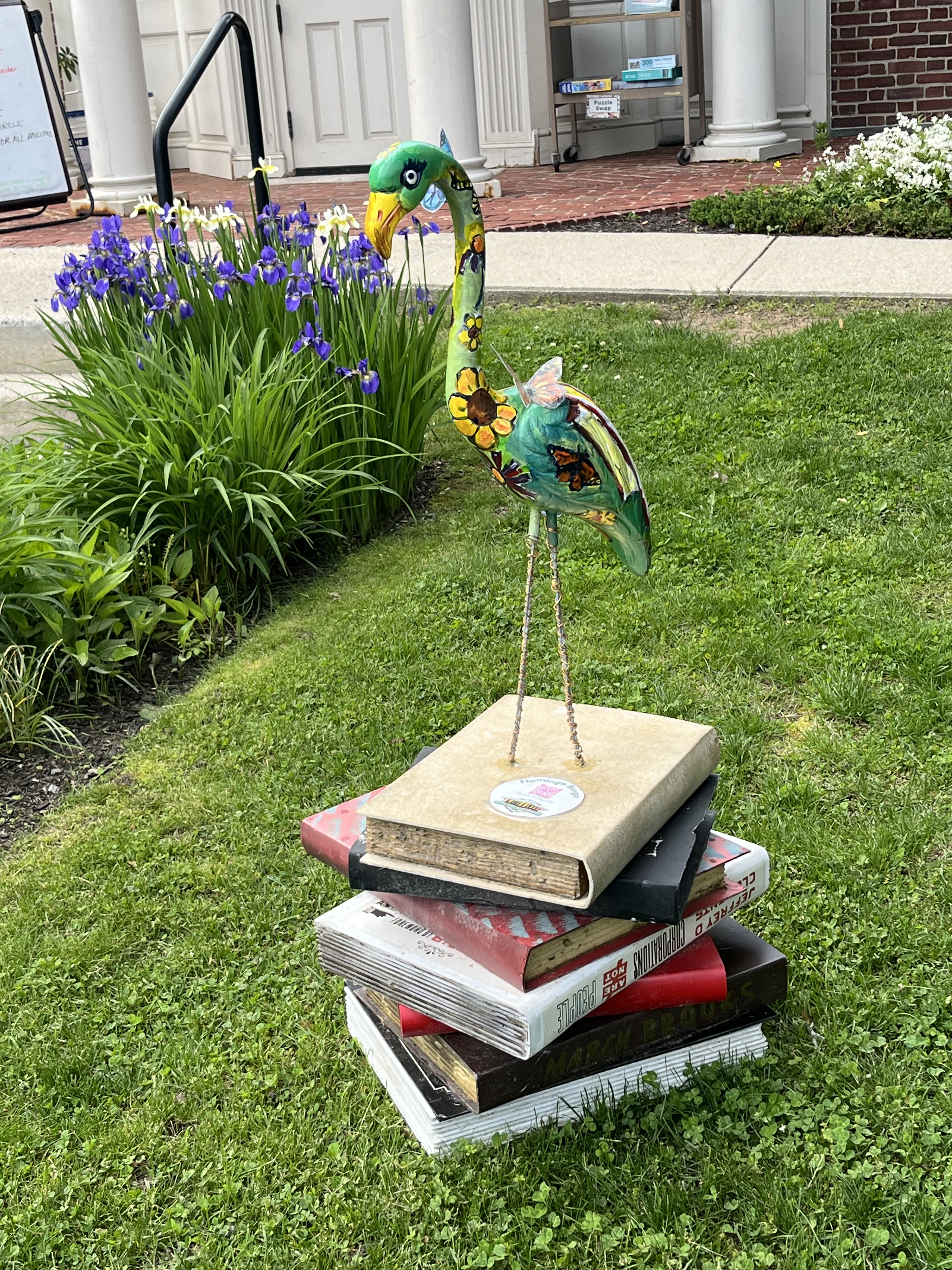
Now almost 12 and 15, these two are good readers.

I recently learned about a group called Grandparents for Truth, organized in reaction to other groups pushing book bans in schools and threatening librarians.

I am not a member, but I think reading is important and I understand enough history to know what happens to countries that start with book bans, so I thought I would share the information.

Huda Hassan wrote at MSN.com in late 2024, “Last August, a retired special-education teacher named Holly Hall joined a rally of grandparents warring against book censorship in Temecula, a small Southern California town. Locals had gathered to oppose a school-board decision to ban a social-studies reader, Social Studies Alive!, for citing Harvey Milk — the first openly gay politician elected in the state. ‘The Harvey Milk reference was in the supplemental materials,’ 72-year-old Hall says, ‘which meant that it wouldn’t have even been mentioned in some classes.’

“The world of literature is currently ablaze with rapidly escalating book bans targeting narratives and histories about gender and sexual identity, race, class, and just about anyone deemed ‘other.’

“[In 2024] alone, 1,128 books have been challenged, according to the American Library Association, which documents ongoing censorship attempts across the nation. Florida is the state with the most banned books (3,135 bans, according to PEN America), and in the 2022–23 school year, there were book bans in 153 districts across 33 states, including Texas, Missouri, Utah, and Pennsylvania.

“Earlier this year, schools in Escambia County, Florida, removed 1,600 books on gender and race from school libraries and, through this process, even banned multiple dictionaries. In August, New College of Florida, a public liberal-arts college, disposed of hundreds of library books, emptying the school’s Gender and Diversity Center. Then, this fall, major publishers — including Simon & Schuster, Penguin Random House, and HarperCollins Publishers — filed a lawsuit against book-removal provisions in Florida (through HB 1069, a law introduced in 2023).

“When Hall, who taught in California for 40 years, spoke out at that rally in Temecula, she gave an impassioned speech about censorship in her state. ‘I addressed the dangers of banning books,’ she says. ‘It’s not 1933 Germany.’ Opponents attended the Temecula rally too, such as Moms for Liberty, a Florida-based parenting group formed in 2021 that’s pushing for banning books on race and what it calls ‘gender ideology.’ A few months prior, the same three school-board trustees Hall spoke against had voted to ban the school’s study of critical race theory the day they were sworn into office. This preemptive act confused many, as no courses on critical race theory had been offered at the school. …

“As parents across the country and groups like Moms for Liberty have joined the attacks on literature, grandparents like Hall are mobilizing in response, and they are afraid. ‘I am so concerned about my country, our freedom, and the world,’ Hall says.

“But she felt encouraged to speak in front of her peers and opponents last year because she knew she was not alone. She was invited to the rally by Grandparents for Truth, a national organization formed in the summer of 2023 to fight for the right to read. ‘A neighbor walked by and told me about the group. He had a sign in his yard,’ says Hall. …

“In Philadelphia, Ruth Littner, one of the earliest members to join Grandparents for Truth last summer, discovered the collective through her daughter, Alana Byrd, the national field director of People for the American Way. Like Hall, the pair are committed to countering book banning despite heckling or pushback from the police. ‘I am the daughter of two Holocaust survivors,’ Littner says on the phone from her home. ‘When Alana told me she had an initiative to fight this kind of authoritarianism, I jumped right on that. I was the first one to get the Grandparents for Truth T-shirt.’

More at MSN, here. No paywall.

Photo: Michael Frachetti.
Using a drone equipped with LiDAR (light detection and ranging equipment), archaeologists have mapped two abandoned cities in the mountains of Uzbekistan. The location of the larger city, known as Tugunbulak, is pictured above

Over the years, I’ve read quite a few novels from other lands and cultures, including one unsettling story about nomads in Africa and another called The Railway, by Uzbek writer Hamid Ismailov. Possibly something died in translation, because I remember little of either book. Wikipedia reminds me that The Railway is about a small town on the Silk Road as seen through the eyes of its inhabitants.

Although the books did not come across as great literature, the cultures continue to draw one who hears so little about them from the American media unless it’s radio show The World. The Monitor and Reuters also seek out such stories.

Will Dunham of Reuters reports, “In the mountains of Uzbekistan, archaeologists aided by laser-based remote-sensing technology have identified two lost cities that thrived along the fabled Silk Road trade route from the 6th to 11th centuries AD — the bigger one a center for the metal industry and the other reflecting early Islamic influence.

“The fortified highland cities, located three miles apart at around 6,560-7,220 feet above sea level, are among the largest known from the mountainous sections of the Silk Road, the sprawling web of overland trade routes linking Europe and the Middle East to East Asia.

” ‘These cities were completely unknown. We are now working through historical sources to find possible undiscovered places that match our findings,’ said archaeologist Michael Frachetti of Washington University in Saint Louis, lead author of the study published in the journal Nature.

“The bigger of the two, called Tugunbulak, covered about 300 acres, with a population perhaps in the tens of thousands, the researchers said. It was one of the largest cities of its time in its region of Central Asia, rivaling even the famed trade hub Samarkand situated about 70 miles away. It existed from around 550 to 1000 AD. …

“The other city, Tashbulak, was only a tenth the size of its neighbor, with a population perhaps in the thousands, the researchers said, lasting from around 730-750 to 1030-1050 AD.

“Founded in early medieval times in what is now southeastern Uzbekistan, the cities were eventually abandoned and forgotten until archaeologists came across the first evidence of them while scouring a rugged mountain area, with deep ravines, steep ridge lines and forests. They deployed drone-based lidar remote scanning to map the scale and layout of the sites. …

“It revealed evidence of numerous structures, plazas, fortifications, roads, habitations and other urban features.

“Preliminary excavation at one of Tugunbulak’s fortified buildings — girded by thick earthen walls — yielded the remains of kilns and furnaces, indicating it was a factory where metalsmiths may have turned rich local deposits of iron ore into steel.

“The researchers are working to confirm steel was made there by chemically analyzing slag — a byproduct of iron and steel production — found at the site. The region in the 9th and 10th centuries was known for steel production. …

” ‘Tugunbulak in particular complicates much of the historical understanding of the early medieval political economy of the Silk Routes, placing both political power and industrial production far outside the regional “breadbaskets” such as Samarkand,’ Frachetti said.

“Tashbulak lacked the industrial scale of Tugunbulak but boasted an interesting cultural feature — a large cemetery that reflects the early spread of Islam in the region. Its 400 graves — for men, women and children — include some of the oldest Muslim burials documented in the region.

” ‘The cemetery is mismatched to the small size of the town. There’s definitely something ideologically oriented around Tashbulak that has people being buried there,’ Frachetti said.

“Islam arose on the Arabian Peninsula in the 7th century and rapidly spread in the successive centuries. The Silk Road enabled economic, cultural, religious and political exchanges between East and West, as the caravans that traversed its pathways toted not only a panoply of products but also people and ideas. It linked cosmopolitan Chinese cities such as Xi’an to destinations including the Byzantine capital Constantinople and the sophisticated Islamic metropolis Baghdad. More at Reuters, here.

I must say, this research sounds like fun to me. You discover a city no one knows anything about except its location on the Silk Road, and then you go back and read all the ancient documents you can on the Silk Road — the history, the legends — and look for a likely match.

Precious Snails

Photo: Ryan Kellman/NPR.
Inside this lab in Hawaii, David Sischo and his team care for 40 species of snails. For some snails, it’s the only place they live, having been brought into captivity to stave off extinction.

If we take care of the least of Earth’s organisms, we ultimately take care of ourselves. That’s one reason why today’s story on some obscure research actually matters, even at a time when humanity seems to have bigger issues on its plate.

Lauren Sommer and Ryan Kellman report at National Public Radio about Hawaii’s “jewels of the forest.”

“When Hurricane Douglas came barreling toward Oahu in 2020, David Sischo quickly packed up and drove to higher ground. But he wasn’t evacuating his family. He was evacuating snails.

“Sischo works with some of the rarest endangered species on the planet, kāhuli — Hawaii’s native tree snails. The colorful, jewel-like snails were once so abundant, it’s said they were like Christmas ornaments covering the trees. Almost all of the 750 different species were found only in Hawaii.

“Today, more than half of those species are gone, the extinctions happening in the span of a human lifetime. Sischo and his team with Hawaii’s Department of Land and Natural Resources have the heavy task of saving what’s left.

“To stave off extinction, 40 species of snails, each about the size of a dime, live in human care inside an unremarkable trailer near Honolulu. For some, it’s the only place they’re found, their wild populations having completely disappeared.

” ‘Most people, when they think endangered species going extinct, they think of pandas and tigers and elephants, but imagine having 40 different panda species that are all as rare as pandas are,’ Sischo says. ‘That’s what this facility is.’

“This winter, one species of snail will inch toward an auspicious milestone. It will be released in a special enclosure in the mountains of Oahu, one that has been painstakingly prepared to give the snails the best chance of survival in their natural environment.

“Still, the outlook for Hawaii’s snails is uncertain, symbolizing a new era in the conservation of endangered species. Around the world, plants and animals are being brought into captivity as a last-ditch effort against extinction. But as the climate heats up and invasive species continue to spread, many have no clear path to return to nature in the near-term. That could mean they stay in human care, isolated in zoos for the imperiled. …

” ‘I don’t think people realize how fast things are changing,’ Sischo says. ‘It’s happening, like right now as I’m talking to you, there’s species blinking out, out in the wild right now.’

“To keep that from happening to Hawaii’s native snails, Sischo never turns off his phone. They rely on life support systems in the Snail Extinction Prevention Program trailer, kept in environmental chambers that control temperature and release mist to simulate their native rainforest habitat. Sensors are set up to detect any problems, alerting Sischo and his team 24 hours a day. …

“Sischo pulls out one with snails the size of a fingernail hiding among the leaves. It’s Achatinella fulgens, a snail with a pale yellow shell and a bold black stripe swirling around it. … Other snails have intricate stripe patterns, almost like they’re sporting a plaid shirt. One snail has a shell like a miniature cinnamon roll. Some are almost iridescent, glowing with golds and greens.

” ‘Our tree snails are known as the jewels of the forest,’ he says. ‘The islands were dripping in snails. They were everywhere.’

“Hawaii’s tree snails play a crucial role in the ecosystem, having evolved over millions of years on the isolated islands. They don’t actually eat leaves, instead eating the fungus that grows on them. That helps keep the native trees clean and recycles nutrients in the forest. The snails also hold an important place in Native Hawaiian culture, their shells used to make lei.

” ‘In Hawaiian tradition, snails sing,’ Sischo says. ‘They represent voice. So they were probably one of the most revered invertebrates in the world.’

“Hawaii’s tree snails were no match for the barrage of changes that humans brought. Rats eat snails, and they arrived on ships, both Polynesian and European. The snails’ habitat disappeared as Hawaii’s forests were cleared for agriculture. But the biggest threat came in the form of another snail.

“In the 1950s, a predatory snail was introduced to Hawaii from Florida. The rosy wolf snail was released to control another invasive snail, but as so many invasive species stories go, it quickly spread. Rosy wolf snails are exceptionally good at eating native snails, hunting them down by following their slime trails and ripping them from their shells.

” ‘When they encounter a slime trail, they know the direction it was going,’ Sischo says. ‘Once they’re locked in on a trail from a native snail, they go right up to it. There’s no getting away.’ “

Oh, gee. That’s exactly what I meant in a recent post about introducing a species to address a problem. What if the fix goes awry and creates new problems?

More at NPR, here. No paywall.

Umbrella Sharing App

Photo: Rentbrella.
An umbrella-sharing startup from Brazil.

I used to live in New York City, and one of the many characteristically New York phenomena I observed back then was what would happened in a rainstorm.

All of a sudden, from nowhere, sellers of umbrellas would appear. The umbrellas sold quickly, but most often they were poorly made. If there was a high wind, you would see them inside-out in a trash bin, dumped before the buyer even got home.

I can’t speak to the quality of the umbrellas in today’s story, but I’m guessing they are made of sturdier stuff — else how could they be shared repeatedly?

Aleksandra Halina Michalska and Carolina Pulice write at Reuters, “A Brazilian umbrella-sharing app, which has for several months been giving New Yorkers a way to cope with unexpected downpours, is now preparing to expand to Europe.

“Rentbrella launched in 2018 in Sao Paulo, a city known for torrential late afternoon summer rains. It offers an app that allows customers to borrow an umbrella from an automated kiosk and use it free of charge for 24 hours.

“If they don’t return the umbrella within that period, they are charged $2 for the second day under the U.S. price plan and another $2 for the third day. When the daily charges hit $16, the user can keep the umbrella.

“Freddy Marcos, one of the company’s three co-founders, said in an interview that Rentbrella aims to expand to at least 10 other countries in Europe in the next two years.

“The company launched in the New York boroughs of Manhattan and Brooklyn in October with 35 kiosks, each with 100 umbrellas, under agreements with real estate firms such as WeWork … Tishman Speyer … and Beacon Capital. Rentbrella plans to add 100 more stations throughout the United States this year.

” ‘The best thing about it is that it is free,’ said co-founder Ary Krivopisk, adding that Rentbrella aims to expand into London early this year.

“The company plans to generate revenue from advertisements printed on the umbrellas, although it has yet to sign any such deals in New York.

“The startup, which has so far raised $7 million from undisclosed investors, has around 40,000 umbrellas available in Sao Paulo.”

More at Reuters, here.

Photo: TiVa.
Installation of the fish counter at Gamla Stan in Slussen. The new fish highway in Stockholm has some of the first fish passages between the Baltic Sea and Lake Mälaren at Söderström in nearly 400 years.

Today’s story is about how Sweden is giving a helping hand to migrating fish that are not strong swimmers.

TiVa, an AI-powered fish-counting company, reports, “In mid-2024, a TiVA FC was installed in connection to the newly built fish migration path at Slussen in Stockholm. This long-awaited passage allows fish to freely migrate between Lake Mälaren and Saltsjön at Söderström for the first time in almost 400 years. As part of the reconstruction of Slussen, a new fish migration path has been constructed under the northern sluice quay on the side of Gamla Stan. The old Nils Ericson sluice has been converted into a passage to facilitate the free movement of weak-swimming species such as eel, roach, and perch – species that were previously hindered by human infrastructure.

The TiVA FC fish counter delivers [improved] results, both in image quality and AI-based species and length classification. … The TiVA FC at Slussen is connected to our cloud platform fiskdata.se. Here, data is available for both the client and, in this case, for the public. … The City of Stockholm has chosen to broadcast a live stream via TiVA’s YouTube channel. Shorter streams can also be broadcasted to other platforms, like Facebook, depending on the client’s needs.

“The City of Stockholm will install an informational screen for ‘Fish TV’ on the crane structure by the fish counter. Passersby in Gamla Stan will be able to learn more about the project, see selected videos, and get updates on the latest migrations.” More at the TiVa website, here.

And from Stockholm’s website: “You can watch online the fish swimming between Lake Mälaren and Saltsjön [at fiskdata.se].

“Moving between different areas is a natural part of life for many fish species. They migrate from their breeding grounds to spawning grounds to reproduce. When humans have blocked various watercourses, this has prevented fish species from passing through. To protect the fish and promote the environment, watercourses can be restored, or, as here at Slussen, a fish migration route can be opened up.

“The primary purpose of the fish migration route is to enable passage between Lake Mälaren and Saltsjön for [fish] that do not jump, which is basically all species except salmon and sea trout. By building this route, we hope that species such as eel, roach and perch will once again be able to pass here.

“The trail is designed by experts to mimic as natural an environment as possible. Stones of various sizes have been carefully placed along the trail. Some of the stones come from Gustav Vasa’s 16th-century defensive wall, which was found during the excavations of Södermalmstorg in 2022. The water flow needs to be calm so that the fish can stop and rest. There is lighting here so that the fish can swim in pleasant light.

“The fish walking trail is located under the quay on the Old Town side and is not visible from the outside. But you can watch the fish swimming through at fiskdata.se.” More here.

Looking for comments — from Swedes and fish lovers everywhere.

Photo: Mount Vernon Ladies’ Association.
Bottles that were filled with cherries and other fruit were found buried in the basement of Mount Vernon.

Back in the day, little American children had early exposure to fake news in the form of a story about George Washington, invented by his biographer Mason Locke Weems. We were told to believe that even as a boy, Washington was scrupulously honest and that when accused of cutting down a cherry tree, he confessed his guilt with the words “I cannot tell a lie.”

Today’s more scientific take on our first president reveals a remote but fact-based connection with cherry trees.

Michael E. Ruane reports at the Washington Post, “The furniture in the bedroom where George Washington died will go into storage. So will his silver oil lamps, his French marble and bronze mantel clock, and most of the other contents of his elegant 290-year-old Mount Vernon mansion on the Potomac River.

“[The] bulk of Washington’s famous home is due to close for several months as it undergoes the next phase of its largest-scale rehabilitation in over 150 years.

“The $30 million project is the most complicated preservation effort since the house was saved from decay in 1860 by the private, nonprofit Mount Vernon Ladies’ Association of the Union, which still owns it, said Douglas Bradburn, president of George Washington’s Mount Vernon. …

“Other parts of the house, along with the extensive grounds, Washington’s tomb, the quarters for enslaved people [yes, he owned slaves and freeing them on his death does not make up for that] and other outbuildings will remain open, Bradburn said in a recent interview. …

“The historic structure had become loosened from its foundation over time, and the work will resecure it, Bradburn said. There also will be restoration work done in the basement and on flooring, among other things. …

“Earlier repair projects have been piecemeal. [They’ve been] ‘dealing with problems as they come,’ he said. This is a chance for a more complete approach.

“The project made headlines in the spring when archaeologists digging in the basement found six storage pits containing more than two dozen bottles filled with cherries and other fruit that had been buried about 250 years ago. …

“The rehabilitation project began last year after officials realized that over time the big oak ‘sills’ that connected the mansion to the foundation had been devoured by termites and the house was no longer being held firmly in place.

“ ‘Essentially, the mansion was sitting on termite shields, or just sitting directly on brick,’ Bradburn said. ‘Lateral winds could knock it off its foundation.’ … The new sills are being made with oak from trees grown at Mount Vernon and from salvaged 18th-century oak acquired in Ohio, said Amy McAuley, Mount Vernon’s restoration manager. …

“Mount Vernon is about 20 miles south of Washington. The original house was a modest structure built for Washington’s father in 1734.

“George Washington inherited it in 1761 and expanded it dramatically over the decades — most of the work being done by people enslaved at Mount Vernon, officials said. By the time of Washington’s death in 1799, more than 300 were enslaved across the plantation there.

“Washington [was] was often away from Mount Vernon but loved the site and died there on Dec. 14, 1799.

“But by the 1850s, the mansion was in poor condition. … John Augustine Washington tried unsuccessfully to sell the mansion to the federal government and the state of Virginia.

“In 1853, Ann Pamela Cunningham, a well-to-do woman from South Carolina who was shocked by accounts of the dilapidated state of the home, founded the Mount Vernon Ladies’ Association of the Union to save it, according to the website.

“At the time, tensions that would eventually lead to the Civil War were already on the rise. But the association had members from the South and the North, Bradburn said.

“ ‘That “of the Union” part was like, “If we save the house of Washington, maybe we can save the Union,” ‘ he said.”

More at the Post, here.

PS. Hannah got me wondering about how the fruit could get out of those narrow mouths on the bottles. Here’s a different photo from CNN. The cherries were small!

Photo: Alex Barber/Contemporary Arts Museum Houston/Theaster Gates Studio.
“We Will Save Ourselves” (2024), a painting by Theaster Gates made with roofing materials.

I have blogged before about the unusual urban planner and artist Theaster Gates. Now the New York Times has done a deep dive on the many surprising facets of his work.

Siddhartha Mitter writes, “Theaster Gates is the kind of artist whose work is perpetually on view somewhere in the world. When we met for the first time, in May at his studio in Chicago’s Greater Grand Crossing neighborhood, he had just returned from opening exhibitions at the Mori Art Museum in Tokyo and the Contemporary Arts Museum Houston. …

“He is known for installations that use supplies and furnishings from old buildings, paying tribute to their past lives — as homes, stores, churches. These installations serve double or even triple duty: They are works of art in themselves, but they can also become venues for parties or performances. His sculptures and paintings employ construction materials like wood, rubber and roofing tar. He’s a master ceramist and a musician and singer who performs with his experimental group, the Black Monks, in which he’s known as the Abbot.

“For years, Gates has acquired archives, and he sees their stewardship as integral to his work. Many preserve Black American cultural memory, like the roughly 20,000-volume library that once belonged to the Johnson Publishing Company, publisher of Ebony and Jet, and the 5,000-record vinyl collection of Frankie Knuckles, the Chicago D.J. at whose late ’70s parties house music was born.

“He is currently advising an arts-led redevelopment project in Philadelphia and an initiative to preserve Houston’s Freedmen’s Town, a historically Black district in the city’s Fourth Ward. He chairs the diversity council at Prada, where he runs a mentorship program for designers of color, and he is developing partnerships in Japan with small family-owned businesses to produce incense and sake. …

“In his hometown, Gates is recognized as an entrepreneur who buys and restores properties on Chicago’s South Side. He puts these properties to unusual, sometimes less than practical use. The core of his holdings is a quiet half-mile stretch of South Dorchester Avenue, where he started acquiring run-down houses in 2006. He filled some with archives — thousands of art books purchased from a shuttered bookshop; LPs from a defunct record store. One house became his residence. …

“Salvage from the buildings goes into his art installations; proceeds from his art sales fund his building renovations and community programs. But they also stem from shared soil — his upbringing as the son of a roofer on Chicago’s West Side, his training as an urban planner — and commingle in his projects to the point where it would be artificial to separate them. …

“He rebuffs categories like ‘social practice’ — jargon for participative art with civic goals — but cites predecessors like Donald Judd, who made furniture as well as geometric objects, and the Fluxus movement, with its interest in everyday materials and spontaneous performances. He’s an inheritor of the legacy of Marcel Duchamp and his readymades, mass-produced and utilitarian objects that the French artist displayed as art. …

Gates sees himself as helping Chicago to ‘hold its Black self together.’

“A bureaucrat before he was ever an artist, Gates worked as an art planner for the Chicago Transit Authority from 2000 to 2005. After that, he began investing in Grand Crossing when he moved to the South Side to become an arts administrator at the University of Chicago, where he’s now a professor.

“ ‘The neighborhood had stigma, but the people were great and interesting,’ he said. He recognized the terrain: Black neighborhoods that faced disinvestment and crime but were once self-contained and self-possessed — places where, he said, ‘the Black doctor and lawyer and bus driver and maid were all on the same block, and they all went to the same church.’ By revitalizing these quotidian spaces — homes, a bank, a school, hardware stores that he has bought, often with their contents, when they were going out of business — he is summoning a kind of utopian memory in the service of new functions. … Through his investments in Grand Crossing — even when they take unconventional forms — Gates sees himself as helping Chicago to ‘hold its Black self together.’

“He took me down a side street edged by commuter rail tracks where in 2021 he opened Kenwood Gardens, a sanctuary with lawns, wildflowers and a pavilion that hosts house-music parties in the summer. It occupies 13 lots that were in decline — notorious, he said, for burned-out cars and prostitution. A wall encircling the garden is made partly from bricks that he saved from St. Laurence Catholic Church, a neighborhood anchor that the archdiocese sold and that was razed in 2014.

“ ‘When I built the perimeter wall, I didn’t own the property,’ Gates said. ‘I built the wall to stop the bad stuff.’ He then bought the lots, many loaded with tax arrears. ‘The city was quite happy to help us negotiate the land sales,’ he said, ‘because they would finally have a steward.’ Building his unauthorized wall, Gates said, was a case of tactical urbanism, as citizen initiatives that bypass city bureaucracy or goad it to action are called in the planning business. …

“[Gates] is too obviously sincere, even earnest, to come across as an operator. And yet he has both an aptitude and an appetite for policy and negotiations. In a famous deal, he purchased the former Stony Island State Savings Bank, a 1920s edifice facing demolition, from the city in 2012 for $1 and the commitment to restore it — which he funded in part by selling salvaged marble slabs at Art Basel for $5,000 each. …

“Romi Crawford, 58, a professor of visual and critical studies at the School of the Art Institute of Chicago, described how Gates enfolds transactions into his art as ‘contract aesthetics.’ Gates has fielded periodic criticism that he is too amenable to the rich and powerful. He rejects this. … ‘If you’re talking about protesting, there are people who are better protesters,’ he said. ‘If you’re talking about getting [things] done in the city, I can do it better than most artists. I can do it better than most developers.’ …

“But despite the busy world Gates has built for himself, its center is paradoxically calm. At the studio in Chicago, I’d been struck by the quiet. His operation has downsized, he said — from 65 employees at its peak, around 2016, which he admitted overwhelmed him, to just 15.

“Next to go might be his collection of buildings, though it could take a while. ‘I did not attempt to amass a real estate holdings situation,’ he said. ‘I was simply trying to prove the point that artists can change a place.’ “

For the the rest of the long profile, click here.

Photo: @antoninjapan on TikTok.
Screengrabs from a viral TikTok video posted by Anton Wormann (pictured right), who bought an abandoned farm in Japan for $15,000. 

Here’s a young man with a novel approach to making his fortune. It involves abandoned houses, or akiya, in Japan.

In October, Soo Kim wrote at Newsweek, “Anton Wormann, 31, who is originally from Sweden, relocated to Japan in 2018 after living in New York. He recently purchased an abandoned farm for $15,000 ‘right by the beach’ in Kujukuri, a town in the Chiba prefecture of Honshu, the largest and most populous island of Japan.

“Wormann shared a tour of the abandoned property, where ‘everything was left as is,’ in a video posted on his TikTok account Anton in Japan (@antoninjapan). …

“The farm comes with 11 rooms in a 250-square-meter house (about 2,690 square feet) and 0.62-acre garden ‘where you can hear the waves,’ he said in the clip.

“Located about 150 meters (0.09 mile) from the beach in Kujukuri, the farmhouse has six bedrooms and five living rooms as well as a kitchen, a toilet, a big garage and two other smaller structures on the compound.

” ‘I bought this farm about two months ago but only recently found the time to begin renovations,’ Wormann told Newsweek. ‘The land is … located about an hour away from central Tokyo by car. The previous owners were a family with grown-up children who no longer wanted to maintain the property after it had been vacant for so long. …

“Wormann, who has a background in fashion modeling and media, now focuses on real estate projects, particularly DIY renovations of abandoned homes.

“He’s been buying and renovating vacant homes in Tokyo for the past five years and ‘wanted to take on a project in the Japanese countryside to try something new,’ he told Newsweek. Wormann is also the author of the book Free Houses in Japan, released in 2023, which explains how he earns money through renovation projects like this in Japan.

” ‘There are tons of cheap abandoned homes in Japan, but this one is the cheapest one I’ve come across in the vicinity of Tokyo that still had a great location, a big piece of land and the potential of turning gorgeous again,’ he said.

“The renovation of the abandoned farm is in its early stages, ‘but there’s a lot of work ahead,’ Wormann noted, adding that ‘my vision is to transform the farmhouse into a mix of traditional Japanese and Scandinavian design, maintaining the rustic charm while modernizing it.’

“The footage in the viral video shows a building surrounded by greenery, including a large tree near a doorway in the garden space.

“The camera later enters the home, which is cluttered with various items, from cleaning products, shoes and umbrellas to toys, random memorabilia and several boxes.

” ‘The potential of this place is phenomenal,’ he says in the clip. ‘Now the crazy part is everything is left as is by the previous owners. When I say everything, I mean everything,’ he notes, as the footage shows various items such as a bottle of ‘very old rare’ Suntory whiskey, around 20 stuffed animals, about 500 kimonos (a traditional Japanese garment), ‘loads and loads’ of games, Pokemon cards and ‘anime-related stuff,’ as well as an unopened safe.

“Holding his shirt up toward his face, he says in the video: ‘This is what nine years abandoned plus a minor water leak in the kitchen smells like.’ The footage shows a kitchen setting with several plastic buckets filled with murky water.

“He continues: ‘The worst part is we can’t start the renovation and actually see what we bought until we’ve cleaned out all these treasures. …

” ‘Some of these things are probably worth a lot but I don’t know where to start,’ he says as the video concludes.

“Wormann’s been buying and renovating abandoned homes before turning them into short-term rentals at a rate of about one house a year since moving to Japan. He finds the homes by looking through Japanese websites and has a network of brokers around him who also help find the houses.

” ‘There are many reasons why there are so many abandoned homes in Japan,’ he noted, from a declining population and a preference for newer residences to ‘a high stock of apartment and houses.’

” ‘Japanese houses and real estate also depreciates over the years, making older houses over 20 to 30 years more or less worthless, and you basically only pay for the land if you buy older houses,’ he said.”

More at Newsweek, here. I first learned about the issue of abandoned houses in Japan at the radio show The World, here. See more pictures at Koryoya.

Now watch this video from an American couple who also have made a business doing this. Very cool.

Photo: John Lindquist/Harvard Theatre Collection.
Dancer and choreographer Alvin Ailey.

I have a special memory of dance icon Alvin Ailey, who early in his career came to Spring Valley (NY) High School to perform and offer a class. I jumped at the chance. I remember he gave me a moment of personal attention when I was trying to learn a step.

New York City’s Whitney Museum of American Art also has memories. 

Rebecca Schiffman writes at Hyperallergic, “Alvin Ailey’s performing arts transcend the traditional boundaries of dance. The seminal dancer and choreographer created a living history of movement imbued with cultural memory and personal expression. Through his choreography and his company’s performances, he seamlessly interwove narratives of Black, American, and queer identity, exploring themes of struggle and liberation in performances that were both physically dynamic and deeply rooted in the human condition. His expansive vision of what modern dance could be — flexible, inclusive, and multidisciplinary — makes his work an ideal centerpiece for the Whitney’s first-ever exhibition dedicated to a performing artist.

Edges of Ailey at the Whitney Museum of American Art blends performance footage, recorded interviews, and notes from the late choreographer’s personal archive with paintings, sculptures, music, and installations by more than 80 artists. As Ailey himself reflected in a 1984 interview, ‘There was movement, there was color, there was painting, there was sculpture, and there was the putting it all together.’ This holistic approach allows the two sides of the exhibition — Ailey’s life and work alongside art that relates to or is inspired by him — to coexist harmoniously, each enriching the other to compose a more complete story of American culture.

“Among the exhibition’s direct references to dance are Barkley Hendricks’s painting ‘Dancer’ (1977), depicting a Black woman in a white leotard set against a white ground; Senga Nengudi’s sculpture ‘R.S.V.P.’ (1975), evoking a body or body parts through stretched nylon pantyhose and sand; and two paintings of dancers in rehearsal by Lynette Yiadom-Boakye, one of which was created specifically for this exhibition.

“These works are complemented by an 18-screen video projection of various Ailey performances, played on a loop throughout the space and accompanied by scores from Josh Begley and Kya Lou. Another section hosts videos of musicians, dancers, and choreographers who influenced Ailey, including Katherine Dunham, Maya Deren, Carmen de Lavallade, and Duke Ellington. 

“But the real lure of the exhibition lies in the opportunity to connect with the storied Alvin Ailey on a personal level through his notebooks, journal entries, letters, and other ephemera meticulously organized alongside corresponding artworks. Ailey was a scrupulous note taker, chronicling his life in painstaking detail. On Monday, September 20, 1982, he works through his daily minutiae: ‘Woke up at 10:30, call from Atlanta, watched soaps and drank tea, called Ernie at 12:13, Sylvia called at 2:00 to talk about …’ But in other entries, such as one from 1980 that states ‘nervous breakdown, 7 wks in hosp,’ Ailey’s brevity highlights the overwhelming weight of the experience of a mental breakdown, a reality that might be too heavy or painful to unpack in words. Aptly placed next to this entry is Rashid Johnson’s ‘Anxious Men’ (2016), a drawn alter-ego of the artist’s own anxieties.

“Born in 1931 into a lineage of sharecroppers in rural Texas at the height of the Great Depression, Ailey was raised by his mother after his father abandoned them. Constantly searching for work, she moved them from town to town; at one point, when Ailey was just five, he helped her pick cotton. This upbringing, steeped in the struggles of Southern Black life and the spiritual grounding of the church, profoundly shaped his most iconic work, Revelations.

“Drawing from the gospel, blues, and spirituality that surrounded him as a child, he transformed these memories into a montage of pain, hope, and redemption. Works like John Bigger’s portrait of a weary yet resilient Black man, ‘Sharecropper’ (1945), characterized by its dark and somber tones, or ‘Haze’ (2023), Kevin Beasley’s landscape painting of a few trees against a yellow sky in the South, depict histories that visually resonate with Ailey’s creations.”

More at Hyperallergic, here. No firewall. The exhibition, running through February 9, is accompanied by a series of dance performances. Check the Whitney website for dates and times.

Photo: Trinity Church.

One of the churches most affected by the collapse of the Twin Towers at Ground Zero was Trinity, a 300-year-old church that, after a recent upgrade, is still going strong. Today’s story is about Trinity and its hosting of a bell-ringing competition.

Rose Adams writes at the Gothamist, “Bells reverberated across the Financial District on [a Saturday in October], producing thunderous clangs and glissandos.

“Bands had traveled as far as hundreds of miles to climb into the landmark Trinity Church tower and strike eight bells in a complex, intricate order for the national Trinity Striking Competition, a demonstration of skill in the 17th-century art of change ringing. …

“Down in the churchyard, only band members and unsuspecting tourists milled about. Trinity didn’t advertise the contest, which had participants from Washington, Boston, Smith College and the church itself. A world-renowned expert in the art form, Simon Linford of England, judged how evenly the teams rang — no jumbled notes or overlapping gongs.

“Change ringing requires strength and focus. Participants each tug a rope attached to a bell weighing between 500 and 2,700 pounds, working together to chime all the bells in unique sequences, known as ‘changes.’

“For Saturday’s contest, each team arrived having memorized a ‘touch,’ or 238 permutations of eight bells, which takes about 15 minutes to ring. A full peal — the gold standard of change ringing — involves more than 5,000 permutations and lasts more than three hours.

“ ‘It’s a meditation of sorts,’ said Austin Paul, 30, a software engineer who led the Boston team. Paul learned about change ringing eight years ago from a friend who studied bells. ‘I love the sound of it. I love the mathematical problems in it. And I love the social aspect of it, too,’ Paul said.

“Ringing remains popular in its native England, which holds a national, 12-bell striking competition. But in North America, which houses only about 50 bell towers, compared to Britain’s 5,000, the art form has been kept alive by a small group of enthusiasts, mostly along the East Coast.

“The Trinity contest was the first U.S. competition in six years, and the mood was friendly.

“ ‘Competition is not the main thing,’ said Micah Walter, 31, from the Smith College team. ‘It’s more for the social aspect of getting together with the other ringers.’

“Trinity Church’s band, an eclectic group of all ages, practices weekly and performs about twice a month for church service. Although the ringing is unpaid and takes years to master, the group has found a steady stream of members through word of mouth.

“ ‘If you really get hooked by change ringing, you tend to do it for your entire lifetime,’ said the band’s leader Tim Barnes, who has been ringing for 46 years.

Despite Trinity’s hometown advantage, Saturday’s win went to the Boston band, which rings in Old North Church, where Paul Revere was a change ringer.

“The Washington team, the 2018 defending champions, came in close second, followed by New York and Smith College.

“The third-place finish didn’t faze New York, though. The team has been rebuilding since Trinity tower’s yearslong closure.

“ ‘From a band development perspective, we feel great,’ Barnes said. …

“Future competitions may enlist younger members in training. Seraphim Ericsson, a 10-year-old bell enthusiast who knows the hertz and specifications of each Trinity bell, hopes to compete one day.

“The hardest part of change ringing, Ericsson said, is ringing ‘the tenor’ — the 2,700-pound bell, which is the church’s biggest.”

More at the Gothamist, here.

Floating Windmills

Photo:WindFloat Atlantic.
Portugal’s WindFloat Atlantic – the world’s first semi-submersible floating offshore wind farm – is now four years old.

We keep learning that our innovations to save the environment often have unexpected effects, both positive and negative. That’s why more research is always necessary.

Studies of offshore windmills, for example, need to be expanded to include a new variety — one that floats.

Michelle Lewis writes at Electrek, “The 25 megawatt (MW) WindFloat Atlantic, which came online in July 2020, was also continental Europe’s first floating offshore wind farm. … WindFloat Atlantic’s electricity production has steadily increased, reaching 78 GWh [gigawatt hour] in 2022 and 80 GWh in 2023. In July 2024, it recorded a total cumulative production of 320 GWh, providing power annually to over 25,000 households in Viana do Castelo, north of Porto [Portugal] while preventing more than 33,000 tons of CO2 emissions and creating 1,500 direct and indirect jobs.

“The offshore wind farm sits 20 km [~12 miles] off the Portuguese coast. It comprises three 8.4 megawatt (MW) Vestas wind turbines that sit on semi-submersible, three-column floating platforms anchored by chains to the seabed. A 20 km-long (12.4-mile) cable connects it to an onshore substation.

“Here’s how the semi-submersible floating platform works:

  • “Each triangular floating platform is semi-submersible and anchored to the seabed. It consists of 3 vertical columns, interconnected/solidary to each other, and one of them is attached the base of the wind turbine tower.
  • “The lateral distance of the platform (between the center of the columns) is about 50m. Its stability is reinforced by a system of gates that are filled with water at the base of the three columns, associated with a static and dynamic ballast system.
  • “This active ballast system moves the water between columns to compensate for the stresses caused by the wind thrust on the wind turbine. This moving ballast compensates for significant differences in wind speed and direction. Its purpose is to keep the wind turbine tower upright to optimize its performance.

“WindFloat Atlantic has an operations and maintenance base in the port of Viana do Castelo, where the team receives the wind farm’s information in real-time so they can address issues immediately. Onsite intervention can be complex, due to adverse weather and sea conditions in the area where it’s sited.

“At the end of 2023, WindFloat Atlantic was resilient in the face of Storm Ciarán, weathering wave heights of 20 meters (66 feet) and wind gusts up to 139 km/hr (86 mph).

“Ongoing surveys have found that over 270 species are successfully coexisting with WindFloat Atlantic, and the floating structures have fostered marine life, contributing to a conservation and reef effect underwater.” More at Electrek, here.

Of course, as we know, all offshore windmills have reef-making effects. And the mixed environmental impacts are the reason many conservationists have had mixed feelings about windmills. But now the benefits seem to outweigh the concerns.

Jared Brey wrote at Sierra Club magazine in 2022, “Historically, many environmental groups have worked to slow down the permitting process for development until possible impacts to wildlife have been studied. Today, the environmental consequences of not speeding up offshore wind development are arguably worse than delaying it. In August 2021, the most recent report from the Intergovernmental Panel on Climate Change (IPCC) emphasized how urgent the stakes are: Unless countries around the world cut their carbon emissions drastically in the next few years, climate change will devastate ecosystems around the world within our lifetimes. …

“[Environmental] groups will decide what research needs to be done and who will fund it, says Emily Shumchenia, director of the Regional Wildlife Science Entity. The group is making research plans for different topics; a marine mammal subcommittee held its first meeting in December, for example. Then it will begin researching existing wildlife and how it might be affected by offshore wind farms. ‘This is a huge opportunity to collect information about the ocean and learn about the ecosystems out there that we wouldn’t have otherwise,’ Shumchenia says.

“It’s important, Shumchenia adds, to push past the ‘data paralysis’ that sometimes delays decision-making, especially for something as critical as renewable energy. The government and offshore wind industry have a responsibility to understand how wind turbines will affect sea life. But the human footprint is already offshore, in everything from commercial fishing to shipping to anthropogenic climate change.

“ ‘I think there’s this perception that the ocean is this vast untapped wilderness, which in some ways it is — it’s vast,’ Shumchenia says. ‘But especially in the Northeast [US] and probably the entire Mid-Atlantic, it’s a lot busier than people perceive.’ ” 

See Sierra Club, here.

Photo: Roberto Nutlouis.
Danielle Kaye builds a berm spillway on the farm of Roberto Nutlouis. The berm holds back water, flooding the cornfield behind it. Navajos are using ancient ways to restore parched earth.

In their eagerness to invent, humans seem to be programmed to forget why ancient ways worked. Then they have to reinvent the wheel. Fortunately, indigenous people often are repositories of that wisdom and can produce it as needed.

Lela Nari writes at YaleEnvironment360, “Here in Burnt Corn Valley, smack in the middle of the Navajo reservation’s vast Black Mesa region, the hilly land both craves water and is brutalized by it. The sandy Arizona soil cracks under a punishing August sun as red-striped blister beetles search for moisture across its baked surface. Cottonwood trees and sagebrush rise from deep gullies carved by floodwaters that, during the intensifying summer monsoon, sluice off surrounding mesas and wash away fragile topsoil — reminders that with climate change, even quenching rains harbor powers of destruction.

“This portrait of climatic havoc belies a softer reality, though. Farming once thrived in this parched region and could once again — if the right practices are adopted. Exhibit A: The crops on Roberto Nutlouis’s 12-acre Sliding Rock Farm, in his reservation hometown of Piñon, a five-hour drive north of Phoenix.

“ ‘The corn is actually pretty big and thriving,’ Nutlouis says. He believes — and both Western science and the lived experience of his Native elders affirm — that the traditional rock and stick structures he’s built on his property, which help store water and prevent erosion, have a lot to do with it.

“These structures, similar to those used by Native peoples long before Europeans arrived on the continent, are not only delivering water to crops. … They are also restoring Nutlouis’s watershed and those of his neighbors, helping to sequester carbon, and reviving this high-desert ecosystem. It’s all part of a bigger effort among a range of local and regional grassroots organizations to build back the reservation’s fragile, depleted ecosystems and bring greater sovereignty over food, water, and health to its communities.

“Diné (the Navajo name for themselves) are well aware that climate change is making the weather on their semi-arid plateau weirder, wilder, and more destructive. … The ecological health of the reservation has also been weakened by deforestation from timbering operations and from overgrazing over the years.

“Still, this season, Nutlouis, 44, has been able to skip his usual two-hour roundtrip drive to a reliable well to haul water home for his corn. His crop is healthy and hydrated because his land still holds last winter’s snowmelt. Clearly, his heavy labor over the past 20 years — during which he has built woven brush dams, gabions (wirework cages filled with rocks), earthen berms, concrete spillways and trenches, limestone aprons and walls, and stone-lined ‘Zuni bowls,’ which stabilize eroding streambeds — is paying off.

“Diné and others living in arid zones around the world have long used structures made of naturally occurring materials to capture and control water to grow crops and to mitigate the devastation of floods in ephemeral stream systems. …

“Time and again over the last 15 years, Laura Norman, a research scientist with the U.S. Geological Survey, has seen evidence that when these structures — which Norman calls Natural Infrastructure in Dryland Streams, or NIDS — are placed in gullies, they slow water to mitigate erosion, collect nutrient-rich sediment and plant debris that nourish both crops and wild plants, help store carbon, improve groundwater recharge, and increase downstream water availability by as much as 28 percent. ‘It’s a snowball effect that counters degradation, and you get all of these ecosystem services,’ she says.

“The structures on Nutlouis’s farm are integral cogs in a larger system. … Nutlouis’s property lies in an alluvial fan, where mineral-rich sediments and plant waste atop mesas and other uplands wash down onto flatter ground with rainwater, snowmelt, and spring water. Across the valley, similar farms rely on this kind of system, many of which feature stone and stick constructions that Nutlouis helped build. The organic materials trapped behind the structures, says Jonathan Sandor, an emeritus agronomy professor at Iowa State University, ‘are a major input into keeping the fertility of the soils up.’ …

“Whether rock walls or ramps, hand-dug depressions in the soil, earthen walls, or branches plaited into dams, NIDS splash water over a wider area and slow its flow so it can better soak into the soil. Many trap sediments behind them, fertilizing whatever grows nearby. The stone structures create a hyperlocal cooling effect, especially when they’re combined with shade-making vegetation.

“Here, too, smallness is a boon. ‘Even tiny little one-rock dams can make big changes on the landscape,’ Norman says. …

“Lately, climate change has thrown extra challenges at the reservation. … But the ecosystem services provided by Nutlouis’s structures on his farm and elsewhere do seem to be meeting those climatic challenges. He’s noticed small juniper trees popping up on hillsides around his property despite the dryness; A cottonwood tree towering over one cornfield is also lush and full. ‘The idea that Earth will restore itself with natural seed dispersal’ after NIDS begin to do their job ‘has been my observation,’ says Norman.

“Or as Nutlouis puts it, ‘We’re allowing nature to do its own thing and restore itself.’ ”

More at Yale e360, here. Fascinating pictures. No firewall.

Photo: AP/Amr Nabil.
Sudanese Camirata troupe founder Dafallah el-Hag at the Russian cultural center in Cairo, Egypt, this past September.

There is too much war going on.

I struggle to think what alternative Ukraine had after an invasion, but I wish there had been some less lethal way to kick the invader out. In the Middle East, the fighting has gone on beyond anything the world at large can condone. And there are endless ethnic wars in places like Myanmar and Sudan that pain me to think about.

Today’s little story about cheering up Sudanese refugees through art will seem like a feeble attempt to find something positive, but to those who have been touched by the music of kindness, even a tearful, grateful moment can be valuable.

Fatma Khaled wrote recently for the Associated Press (AP), “As the performers took the stage and the traditional drum beat gained momentum, Sudanese refugees sitting in the audience were moved to tears. Hadia Moussa said the melody reminded her of the country’s Nuba Mountains, her family’s ancestral home.

“ ‘Performances like this help people mentally affected by the war. It reminds us of the Sudanese folklore and our culture,’ she said.

Sudan has been engulfed by violence since April 2023, when war between the Sudanese military and the paramilitary Rapid Support Forces broke out across the country. The conflict has turned the capital, Khartoum, into an urban battlefield and displaced 4.6 million people, according to the U.N. migration agency, including more than 419,000 people who fled to Egypt.”

[Think about that, a flight to Egypt.]

“A band with 12 Sudanese members now lives with thousands of refugees in Egypt. The troupe, called ‘Camirata,’ includes researchers, singers and poets who are determined to preserve the knowledge of traditional Sudanese folk music and dance to keep it from being lost in the ruinous war.

“Founded in 1997, the band rose to popularity in Khartoum before it began traveling to different states, enlisting diverse musicians, dancers and styles. They sing in 25 different Sudanese languages. Founder Dafallah el-Hag said the band’s members started relocating to Egypt … as Sudan struggled through a difficult economic and political transition after a 2019 popular uprising unseated longtime ruler Omar al-Bashir. …

“The band uses a variety of local musical instruments on stage. El-Hag says audiences are often surprised to see instruments such as the tanbour, a stringed instrument, being played with the nuggara drums, combined with tunes of the banimbo, a wooden xylophone. …

“Kawthar Osman, a native of Madani city who has been singing with the band since 1997, feels nostalgic when she sings about the Nile River, which forms in Sudan from two upper branches, the Blue and White Nile.

“ ‘It reminds me of what makes Sudan the way it is,’ she said, adding that the war only ‘pushed the band to sing more for peace.’

“Over 2 million Sudanese fled the country, mostly to neighboring Egypt and Chad, where the Global Hunger Index has reported a ‘serious’ level of hunger. …

“Living conditions for those who stayed in Sudan have worsened as the war spread beyond Khartoum. Many made hard decisions early in the war either to flee across frontlines or risk being caught in the middle of fighting. In Darfur, the war turned particularly brutal and created famine conditions. …

“Armed robberies, lootings and the seizure of homes for bases were some of the challenges faced by Sudanese who stayed in the country’s urban areas. Others struggled to secure food and water, find sources for electricity and obtain medical treatment since hospitals have been raided by fighters or hit by airstrikes. Communications networks are often barely functional.

“The performers say they struggle to speak with family and friends still in the country, much less think about returning. ‘We don’t know if we’ll return to Sudan again or will see Sudan again or walk in the same streets,’ Farid said.” More at AP, here.

During this tragic war, very little aid has gotten through, although nonprofits like Alight, one of my favorites, are always poised to help. Rachel Savage at the Guardian wrote that on Christmas, the first successful shipment since the war started a year and a half ago finally got through.

She wrote, “An aid convoy has reached a besieged area of Khartoum for the first time since Sudan’s civil war broke out in April 2023, bringing food and medicines in a country where half of the people are at risk of starvation.

“The 28 trucks arrived in southern Khartoum on 25 December, according to the World Food Program (WFP), which provided 22 trucks loaded with 750 tons of food.

“Unicef sent five trucks with medicines and malnutrition kits for children, while Médecins Sans Frontières (MSF) [Doctors Without Borders] contributed one truck of medical supplies, according to the Khartoum State Emergency Response Room (ERR), a grassroots aid group that is helping to coordinate the distribution.

“Sheldon Yett, Unicef’s Sudan representative, said: ‘Access to the area has been essentially cut off due the conflict dynamics. It took three months of often daily negotiations with government authorities at all levels and with other parties who controlled the access.’ ” More at the Guardian, here.
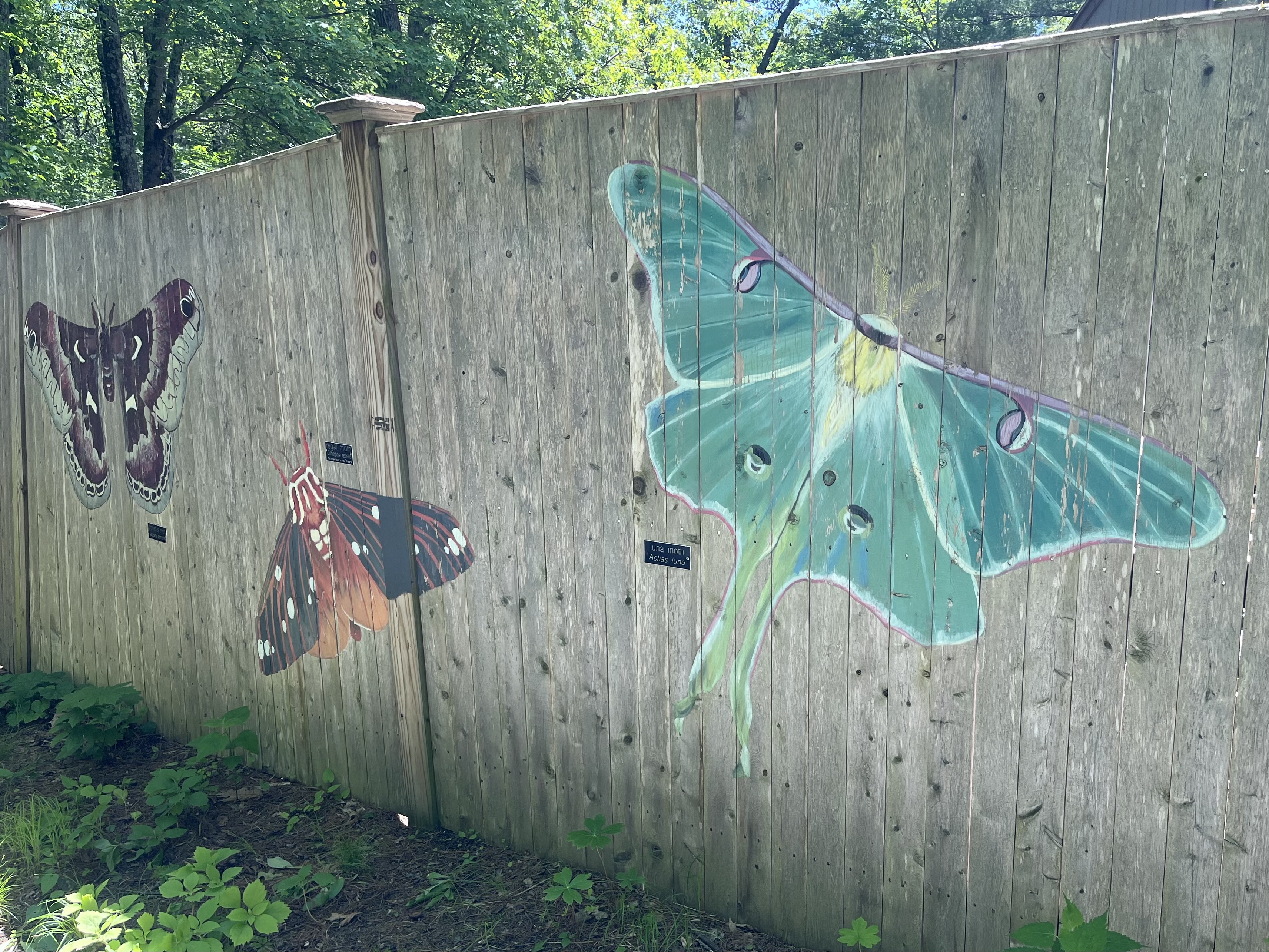
Photo: Alyssa Schukar/for NPR.
Chelsea Andrews (white hat), president and executive director of Montgomery County’s Housing Opportunities Commission (HOC), at groundbreaking for the Hillandale Gateway housing development in Maryland. The HOC owns 9,400+ home rental properties and provides subsidized housing for 9,300+ households.

Here’s how communities can build enough housing for residents: Don’t wait for the the feds.

Jennifer Ludden writes at National Public Radio, “A few miles outside Washington, D.C., a large dirt and gravel lot dotted with construction equipment was the site of a recent celebration. … It marked the kickoff for construction of Hillandale Gateway: 463 new mixed-income apartments that will be majority owned by Maryland’s Montgomery County.

“It’s public housing. Although this is a far different model than traditional, federally funded housing for only the very poor. …

“Montgomery County is a wealthy community, and it’s long focused on housing for lower-earning families. Still, it hasn’t built nearly enough to keep up with demand, and the gap is growing. So a few years ago, it took an unusual step: It created a $100 million revolving fund to dramatically ramp up construction.

“That means it can develop and finance its own projects ‘instead of waiting for Congress to give us a whole bunch more money,’ says Zachary Marks, the senior vice president for real estate with the county’s Housing Opportunities Commission. The public agency owns the controlling stake in these apartments.

“Congress has moved away from funding public housing for decades. And while there are federal incentives to help the private market build lower-cost apartments, ‘we’re using them all up every year and it’s not enough,’ Marks says.

“Now, by financing its own construction, the county doesn’t have to rely on private investors, either. Marks and others say that’s a major advantage in a boom-and-bust industry where volatility can stall financing for new projects. With the new housing production fund, he says, the amount of local money needed for a project is pretty small. And the county offers cheaper financing with a lower rate of return than private investors would demand.

“But the mixed-income model is what makes this all work in the long run. The market rate rents ‘come to us instead of flowing out to the private sector,’ says Marks, allowing other tenants to pay less. …

” ‘The people who will be living here are my seniors, my kids, my middle-aged adults, the workforce,’ says Chelsea Andrews, HOC’s president and executive director. ‘This is a community that will be inclusive on all economic levels but also in terms of our diverse communities.’ …

“Hillandale is the second project financed by the county’s fund. The first apartments, The Laureate, opened last year about a half hour’s drive away. …

“The building looks nothing like the image of U.S. public housing, most of which is generations old and severely underfunded. Among other amenities, there’s a full gym with yoga studio, a pet washing room and a courtyard pool.

“[Christina] Cooley says she immediately noticed the pool has a lift at one corner, to lower people with a disability safely into the water. … She says she has a traumatic brain injury and one side of her body is partially paralyzed.

” ‘Living here has changed my life,’ she says.

“Cooley is 43 and works part time as a teacher’s aide, but her main income is from disability. …

“Rents at The Laureate range from about $1,335 for a smaller one-bedroom — far below the county median — to $3,885 for a larger two-bedroom.

“A quarter of the units are for people making up to 50% of the area median income. In Montgomery County, that’s $77,350 for a family of four. An additional 5% of the units are called ‘workforce’ housing, for those who make up to 120% of area median income.

Importantly, says Marks at the housing commission, these apartments will be affordable permanently.

“By contrast, federal tax credits expire and lower-rent housing built with them can revert to market rate after 15 or 30 years.

” ‘There’s been a lot of uptake and interest for this model from jurisdictions of all shapes and sizes around the country,’ says Paul Williams, who heads the Center for Public Enterprise. He founded the group to push for more public development generally, including mixed-income housing financed at the local level. These projects are profitable, he says, and don’t use up other, scarce federal funding. …

“Other places that have considered or taken up the idea — sometimes called social housing, as it’s referred to in Europe — include New York and Massachusetts, as well as Chicago and Chattanooga, Tenn.”

More at NPR, here.

Photo: Peter Ryan.
Surveys before 2019 found that the number of breeding pairs of Wilkins’ bunting was 120 and going down. Then a wasp got involved.

Before I get into today’s story about efforts to save the habitat of a rare bird, I want to explain where this is happening. Nightingale Island is in the South Atlantic, a bit closer to Cape Town, South Africa, in the east than to Buenos Aires, Argentina, in the west.

Wikipedia says, “Nightingale Island is an active volcanic island in the South Atlantic Ocean, 3 square kilometres (1.2 sq mi) in area, part of the Tristan da Cunha group of islands. They are administered by the United Kingdom as part of the overseas territory of Saint Helena, Ascension and Tristan da Cunha.

“Nightingale Island is [uninhabited but] regularly visited for scientific purposes and research. It is one of the only stops for birds in the Atlantic and sees millions of them visit it annually.” More.

I read the following report on saving the island’s threatened Wilikins’ bunting and couldn’t help wondering how we balance two goods: the need to save species and the need to prevent introduced species (in this case a wasp) from creating unanticipated future havoc.

Helena Horton wrote at the Guardian, “A tiny parasitic wasp has given a lifeline to one of the world’s rarest bird species by killing off an invasive insect that was threatening its survival.

“The Wilkins’ bunting lives on Nightingale Island, part of the Tristan da Cunha \ group; the world’s most remote inhabited archipelago. It eats the fruit of the Phylica arborea, the island’s only native tree.

“But around 2011, scientists began to notice signs of an unwelcome visitor. An invasive, sap-sucking scale insect had been, it seems, accidentally introduced on to the island by humans. These insects secrete honeydew, which encourages the growth of a sooty mould that weakens and eventually kills Phylica arborea. Their arrival threatened to destroy the forest, and the tiny bird population among with it.

“This news was devastating to the scientists who study and protect the little yellow bird, as its numbers had been suffering. Huge storms in 2019 destroyed much of the forest, and surveys before the storm found there were only about 120 breeding pairs of the bird remaining.

“The RSPB, Centre for Agriculture and Bioscience International, Food and Environment Research Agency and Tristan da Cunha Government hatched an unorthodox plan to save the buntings, releasing a small parasitoid wasp called Microterys nietneri, which prevents the scale insects from breeding. They would also set up a tree nursery to boost the number of trees and improve the biosecurity on the island to stop invasive species coming in future.

“But first, the wasps had to survive the trip from London – almost a month by land, sea and air. Dr Norbert Maczey, an entomologist at CABI, said: ‘The wasps faced an epic journey. Firstly, a flight from London to Cape Town, in a cool bag, followed by an enforced stay in a hotel room as part of a staff member’s Covid quarantine. Next came a week-long boat journey to Tristan with temperatures sometimes dropping below zero. Finally, there was a further boat trip to Nightingale Island. It seemed like luck and time was against us but some of the wasps made it.’

“Fewer than 10% of the wasps survived the trip, but in April 2021 the first release took place, and there were more over the next two years. Slowly a population of wasps has started to establish itself. …

“Surveys in February this year showed that despite losing approximately 80% of the forest, there are still an estimated 60-90 pairs of Wilkins’ bunting on Nightingale. Although the population has reduced, the forest has recovered in the short period since the wasps were released, and the scientists think numbers of buntings should stabilize and will have a chance to recover over the next few years.

“David Kinchin-Smith, the RSPB’s UK overseas territories project manager, said: … ‘Hopefully we, and the wasps, have given the buntings a much-needed lifeline.’ ” More at the Guardian, here.
Do you have an opinion on this approach?

And from Wikipedia, something curious about the remote islands: “Edgar Allan Poe‘s The Narrative of Arthur Gordon Pym of Nantucket alluded to Nightingale Island, Inaccessible Island, and Tristan da Cunha.”