This morning after tai chi chuan, I went with the oldest grandson and his friend to the muffin shop. They each had a corn muffin and gave the lady the money. The friend’s dad pulled the wagon until these not-yet-three-year-olds decided they wanted to pull it themselves. It took cooperation.
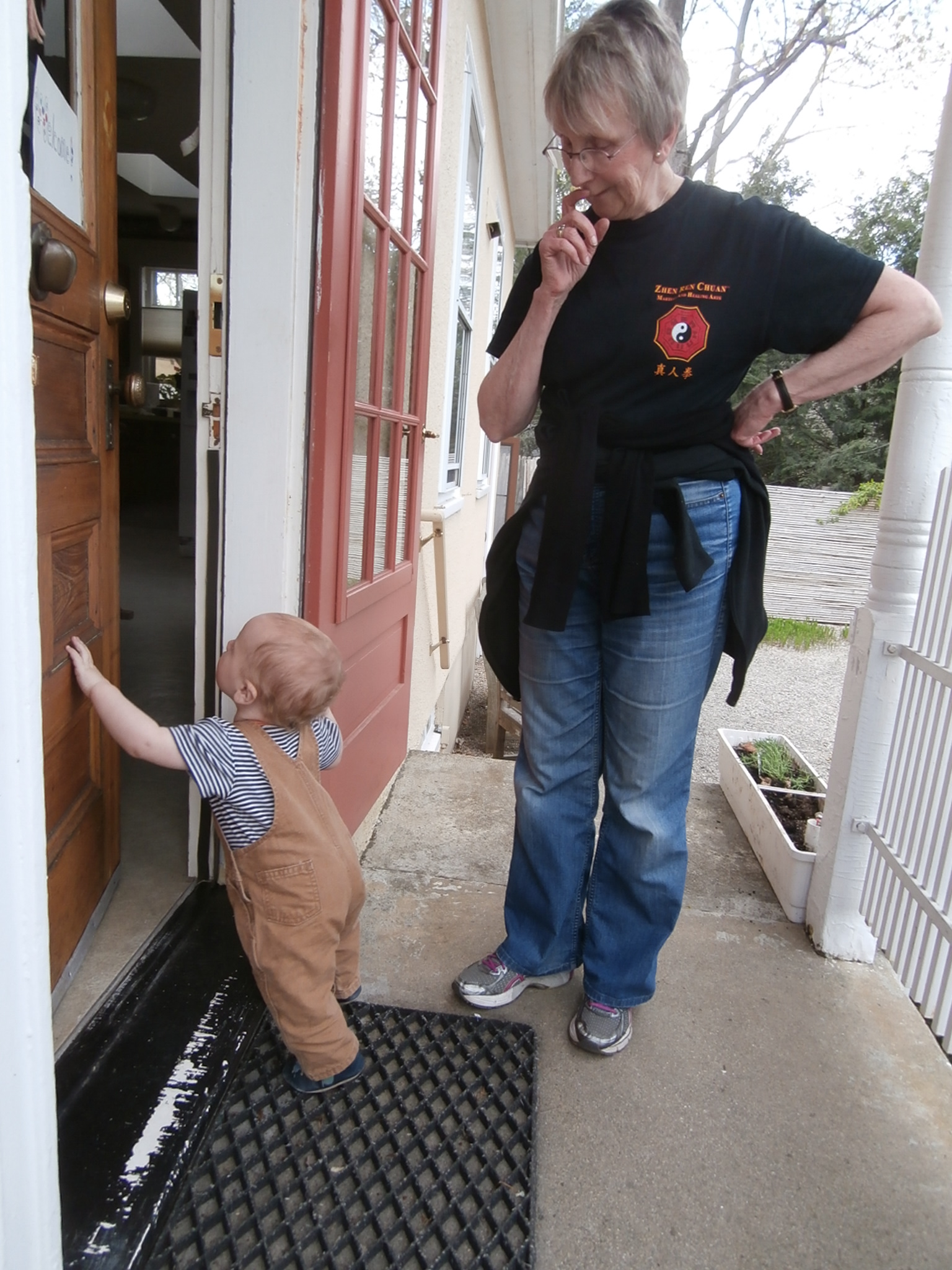
In the afternoon the younger grandson stopped by and did a bit of exploring.
Then I took a walk.
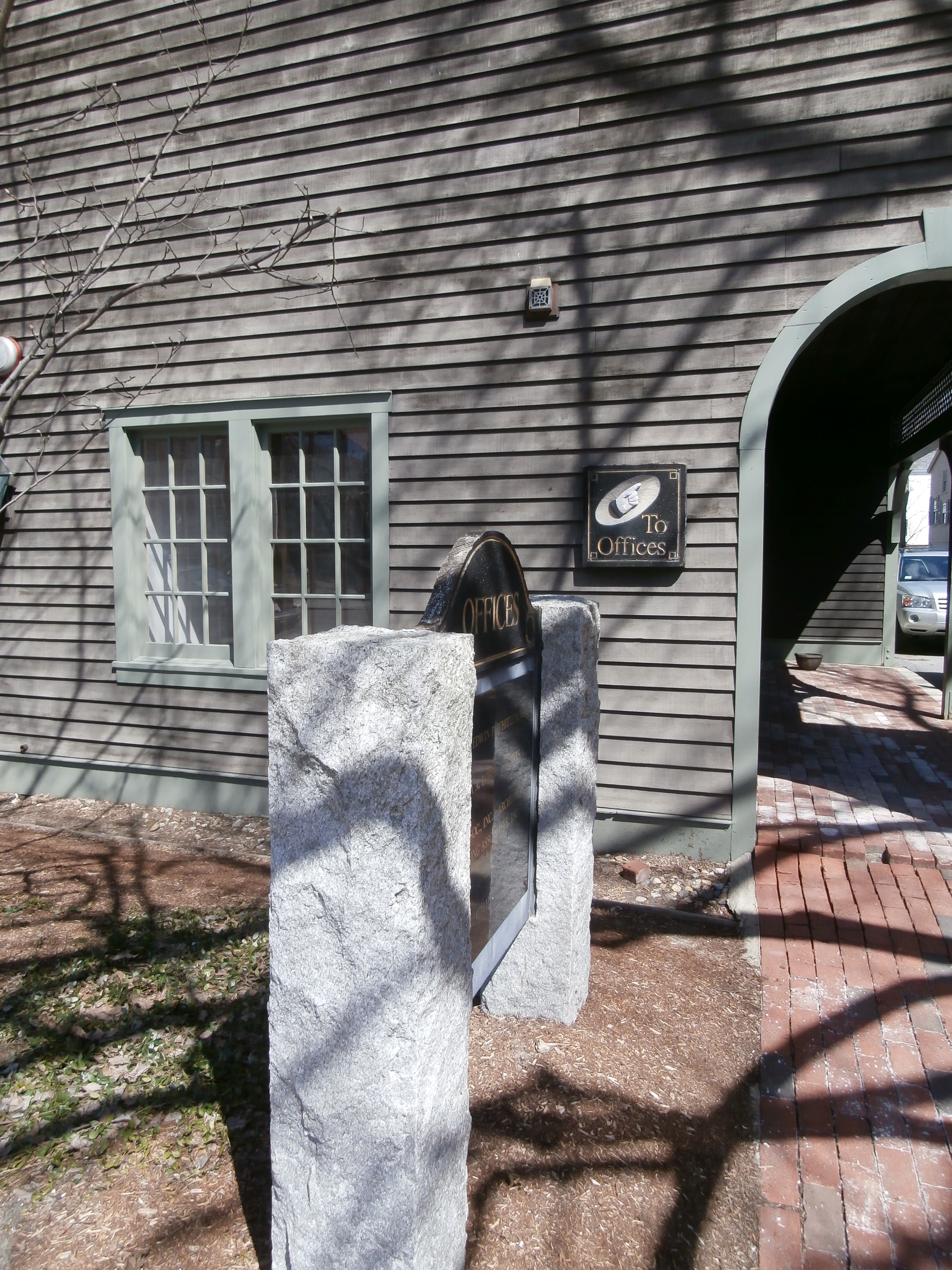
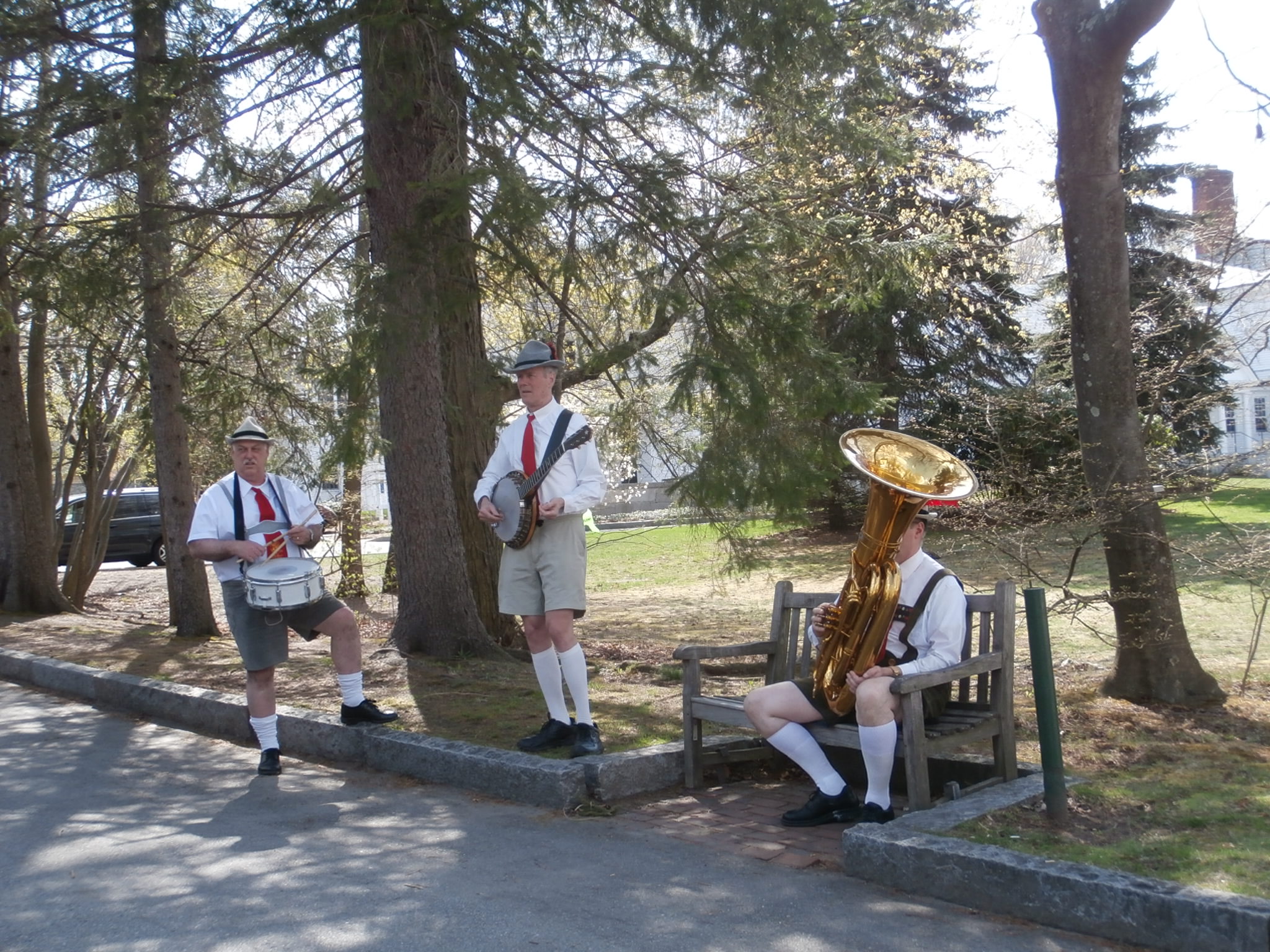
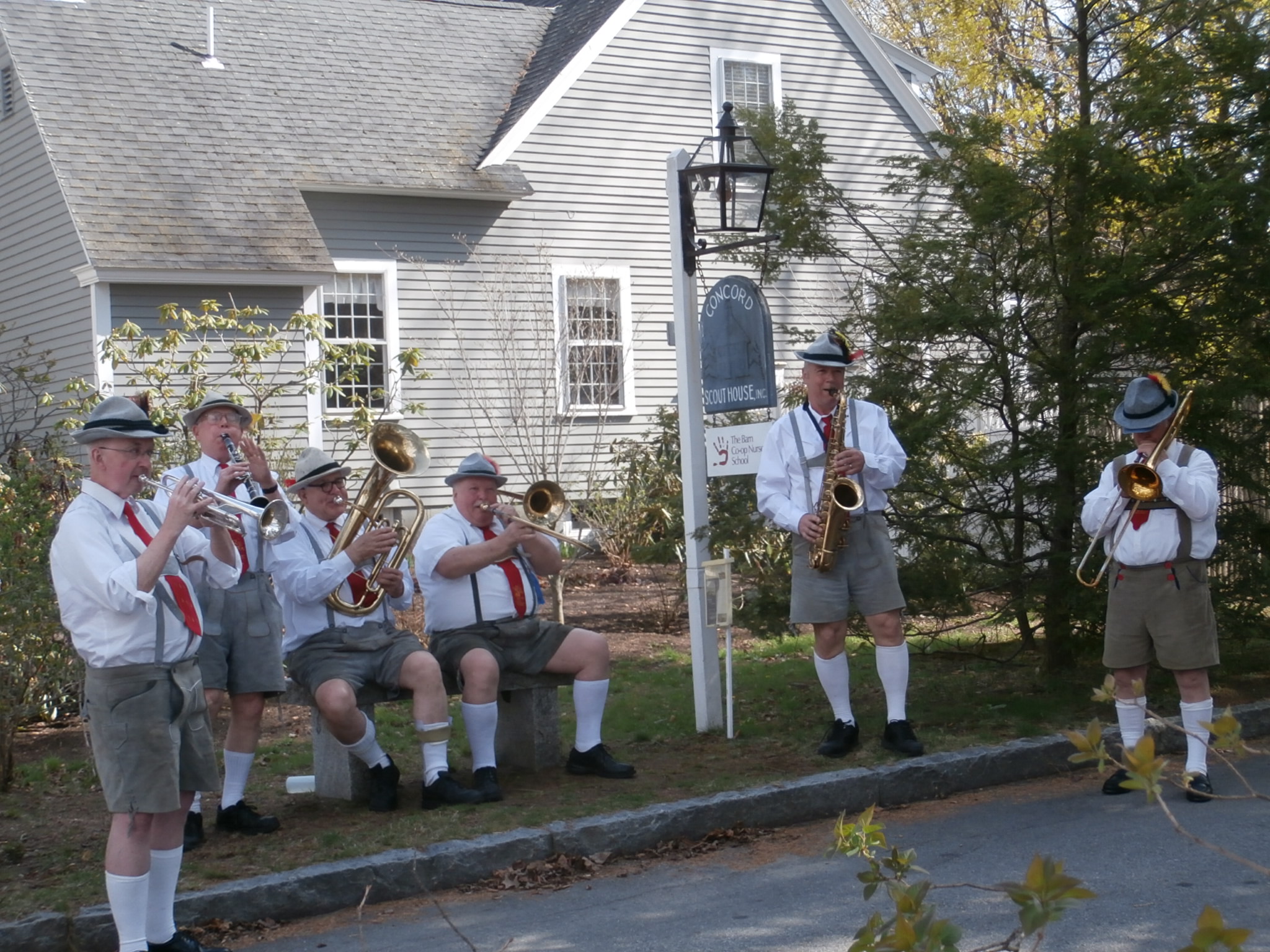
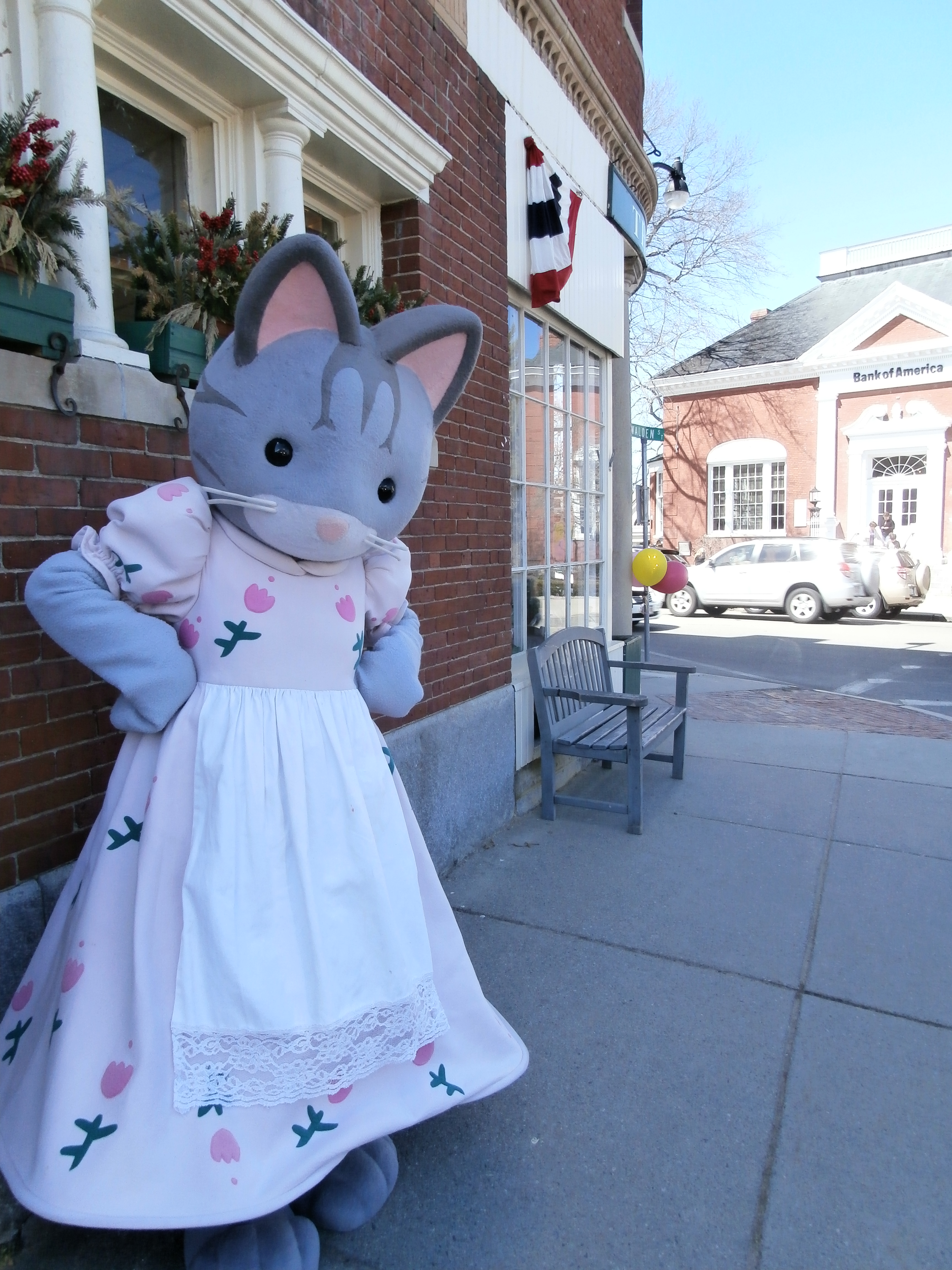
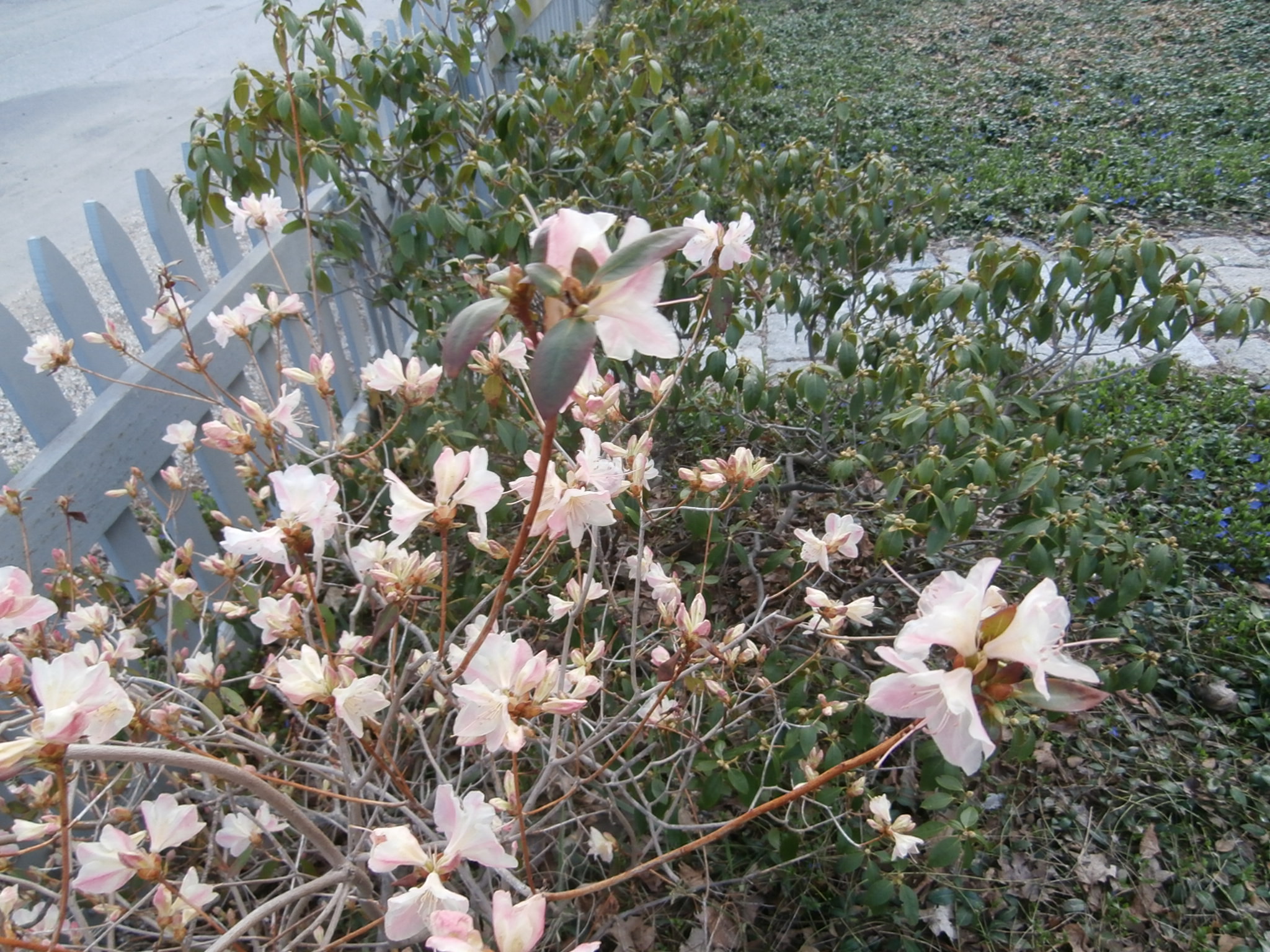
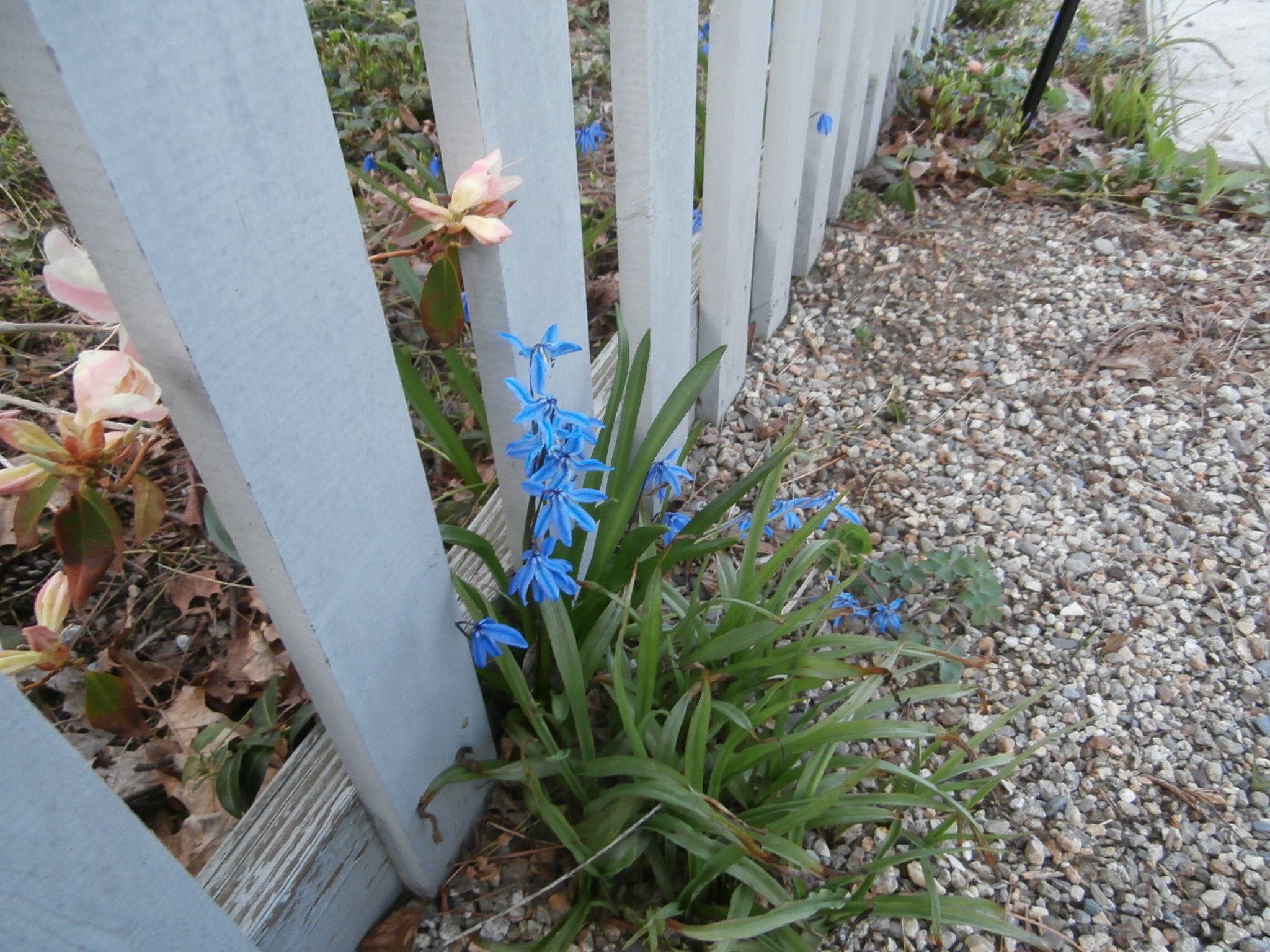
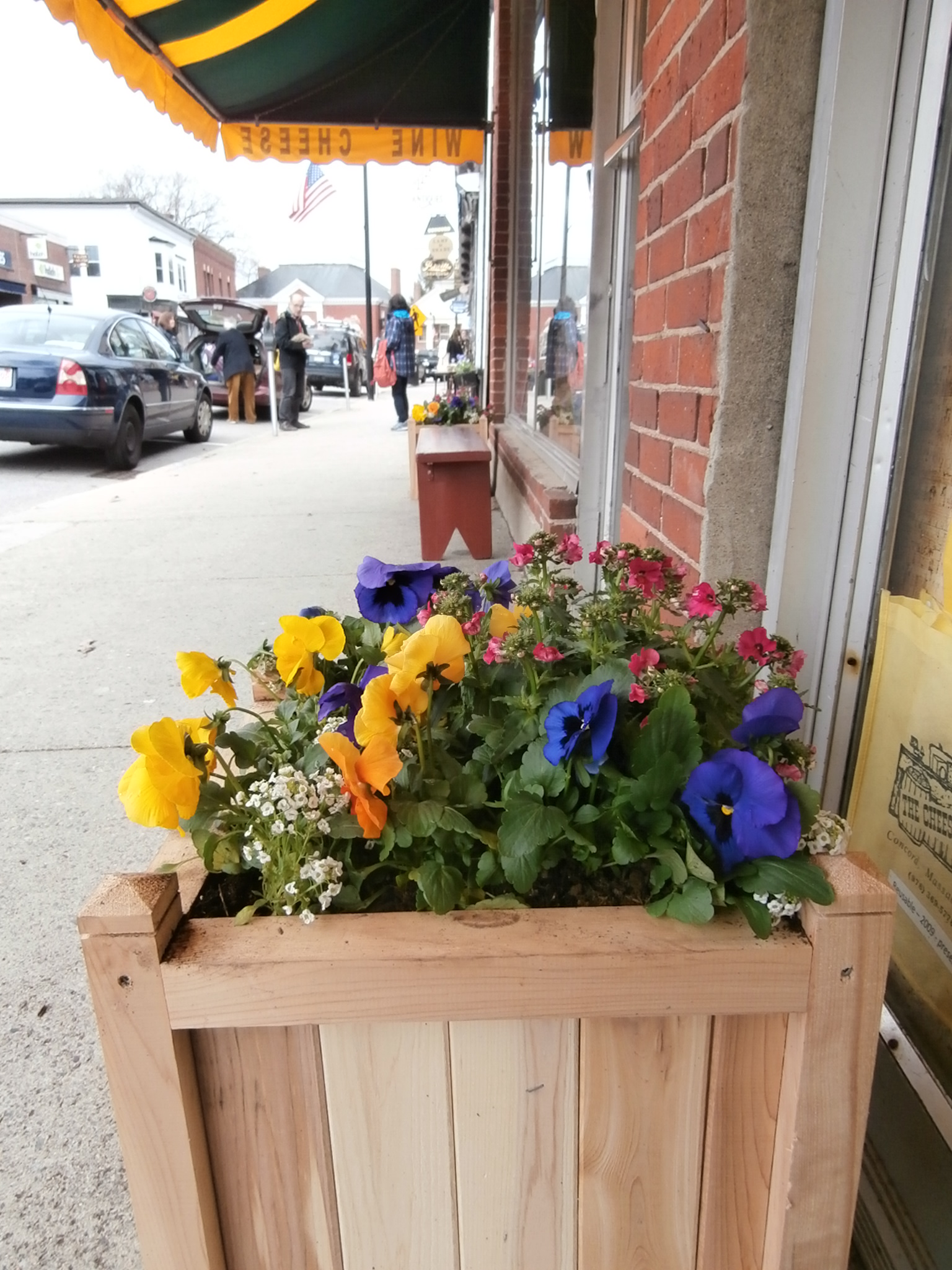
Here are a few scenes. (I have no idea why that band sprouted where it did — unless it is tied to the production of The Sound of Music, which opened last night. It does have a rather Alpine look to it.)
The Design Museum Boston — which, like Erik, has participated in the start-up accelerator program called MassChallenge — launched a challenge of its own. The results of the Street Seats Design Challenge are now available to all, and believe me, you have never seen park benches like these.
Each imaginative public outdoor seating creation is harnessed to a kiosk that gives background on the designer, the materials the designer chose, the ideas behind the competition, and the sponsors.
You can go from bench to bench along Fort Point Channel like Goldilocks testing them out (too hard? too soft? ju-ust right?).
Here is a bench I can see from my office, the Wright bench. It is made of a reconstituted wood that lasts for decades without treating and is combined with a bike rack. Designer Eugene Duclos of Appalachian State University in Cary, North Carolina, explains his approach in the video.
Be sure to check out the other benches at the museum’s Street Seats site, here. One bench is made of rope. Another lets you sit on plants. All are beautiful.
I’m so glad Kai put this on Facebook. He linked to photos of beautiful places. But at Bored Panda you can also find a bird that looks like Salvador Dali, a dad who illustrates his kids’ lunch bags every day with cute cartoons. and a do-it-yourself Porsche made of plastic pipes and aluminum foil. Or you can watch a video of an astronaut crying in weightless space.
I thought, “What the heck?”
Here’s a bit of explanation from the About page.
“Boredpanda.com is a highly visual art and design magazine dedicated to showcasing the world’s most creative artworks, offbeat products and everything that’s really weird or wonderful. …
“We got popular among pandas in a very short time, and now we have an average readership of 1 million unique visitors per month generating ~2 million of page impressions. Most of them come from USA, UK and CANADA .
“So, if you have a story, a product or some weird artworks that are cool enough for pandas – it is a perfect opportunity for you to get noticed. Click here and share it with everyone else!” More.
I myself am going to read up on Thomas Lamadieu. “Every time he looks up, Thomas sees a potential canvas where the building rooftops frame the sky. He photographs it and uses the odd sky shapes to create whimsical line drawings.”
Here are two of those beautiful places I mentioned.
This post’s for my daughter-in-law, who not only loves to cook but is also pretty savvy about healthful eating. I should know. I had a yummy something with orzo and mushrooms for Tofu Tuesday at my son’s house last night.
Today’s story from the NY Times is on the expanded distribution goals of a company with inventive food options currently popular with celebrities.
And, as Stephanie Strom writes, the offerings are not just for vegans.
“Organic Avenue, the tiny purveyor of high-end juices, fresh salads and specialty foods like cashew scallion cream cheese and Thai collard wraps, has hired a new chief executive with the goal of turning its new owner’s dreams of a national chain into reality.
“Martin Bates … will take charge of Organic Avenue in June. …
“ ‘I drink green juices and have done for the last year or so, but living the life of a vegan is not for me. I think there are lots of other people like me out there.’ …
“We want to grow this business around helping people who want food that’s better for them,” [investor Jonathan] Grayer said. ‘That doesn’t mean they have to be vegan. They certainly don’t have to favor raw. They don’t even have to be organic; they just have to want to be healthier.’ ”
Bates, who turned around the Pret a Manger chain, said that he is up for the challenge.
“Perhaps tellingly, he said his favorite Organic Avenue product was Dragon’s Breath, a juice that incorporates ginger, lemon and cayenne pepper. ‘Caution,’ the company’s Web site warns. ‘This shot is not for the faint at heart!’ ” More.
We are into dragons around here. I’ll have to see if I am brave enough to drink Dragon’s Breath.
Photo: Michael Falco for The New York Times Organic Avenue, which caters to a celebrity-studded clientele, hopes to appeal to a range of healthy eaters
The Science section of the NY Times today featured some research on babies.
Sindya N. Bhanoo explains that “In Parents’ Embrace, Infants’ Heart Rates Drop.”
“New mothers quickly learn that babies quiet down when carried and rocked. Now researchers say that this calming response is actually a coordinated set of reactions, involving the nervous, motor and cardiac systems.
” ‘Dr. Kumi O. Kuroda, a neurobiologist at the Riken Brain Science Institute in Japan, led a team that used electrocardiogram measurements to monitor the heart rates of babies and mice after they were picked up and carried. Their heart rates slowed almost immediately.
“ ‘It’s very difficult for adults to relax so quickly,’ said Dr. Kuroda, whose study appears in the journal Current Biology. ‘I think it’s specific to infant physiology.’
“In the case of the mouse pups, it took only one second for the heart rate to drop. In human babies, it took about three seconds.
“The researchers worked with babies under 6 months; the response was stronger in those 3 months and younger. …
“ ‘Lions sometimes carry cubs by the mouth, and it’s known that these infants look very limp and relaxed, with their eyes closed,’ Dr. Kuroda said. ‘But nobody measured the infant response until now.’ ,,,
” ‘By the way, she added, the mother is not the only one who can have this calming effect.
“We actually also did some preliminary studies with fathers and grandmothers,’ she said. ‘And basically they can have the same effect.’ ”
Worth noting, especially considering that the same Science section of the Times had a story on how people with slower heart rates tend to live longer than peers.
I liked this story by Penny Schwartz from the Sunday Globe. It’s about the painstaking work of restoring a magnificent synagogue built in the 17th and 18th centuries and destroyed by the Nazis in WW II.
“For the last 10 years, Laura and Rick Brown have been immersed in the art and architecture of Poland’s historic Gwozdziec synagogue. …
“Now, after a decade of research and building small-scale models, the Browns and their international team of 300 carpenters, artists, and students have created a nearly full-scale replica of the the triple-tiered roof and intricately painted ceiling and cupola of the Gwozdziec synagogue, considered one of the most magnificent, well-documented of the wooden synagogues of the era. …
“ ‘They really have done something miraculous,’ said Barbara Kirshenblatt-Gimblett, professor of performance studies at New York University’s Tisch School of the Arts, who was tapped to lead the museum’s exhibit development team. …
“The Browns’ approach to building, using traditional tools and techniques dating back to the time the synagogue was built, offered something beyond having a copy of the synagogue roof built as a prop, Kirshenblatt-Gimblett said. …
“Both sculptors, the Browns came to the Gwozdziec project as founders and directors of Handshouse Studio, an educational nonprofit in Norwell [Massachusetts] that replicates historic objects using authentic methods. …
“Looking back on the journey, Laura and Rick say they are humbled by the hundreds of people, including many MassArt students and graduates, who have given so much time to this project.
“They are grateful to MassArt for allowing them the flexibility to create courses designed for the project including a series of Lost Historic Paintings’ classes analyzing and replicating quarter-scale, then half-scale models of the Gwozdziec synagogue ceiling panels.
“The 85 percent scale replica represents more than the grandeur of a long ago synagogue, Laura said. ‘This object speaks to a very painful history that is still very alive,’ she said.” More.
Photo: Jonathan Wiggs/Globe Staff Artist Rick and Laura Brown at their studio in Hanover, Massachusetts.
Back in November, Jamie Smith Hopkins wrote for the Baltimore Sun about a group called Gather Baltimore, which “collects donations of food from farmers markets and schools and delivers them to organizations in the city for distribution to those in need.”
Hopkins says, “Gather Baltimore, the fledging group that organized the rapid harvest, does this work every week — collecting food that would otherwise go to waste and distributing it in city neighborhoods.”
“Arthur Gray Morgan, a teacher and urban farmer who founded Gather Baltimore, is a newly minted fellow with the Open Society Institute-Baltimore. His fellowship mission for the next 18 months: expand Gather Baltimore and make it sustainable. …”Morgan, who tends the Hamilton Crop Circle gardens in Northeast Baltimore, has collected and distributed free food for several years — ever since he saw how much went to waste at farmers’ markets. What couldn’t be sold wasn’t necessarily taken back to the farm. Frequently, it was tossed out.
“That bothered Morgan, who hears a frequent refrain from his students at Hamilton Elementary/Middle: ‘I’m hungry, I’m hungry.’ …
“Now he and his army of volunteers have the work down to a science — harvesting, picking up donations from local stores and stopping off at the downtown farmers’ market to cart off anything farmers want to contribute after the customers leave.”
You can help Gather Baltimore by voting for it at reddit, here.
Check out Big, Red & Shiny, “a non-profit arts organization and online art journal [set up to] commission and publish articles, essays and reviews that explore the theory, history and reception of art in its current conditions.”
A tweet sent me to BR&S, where I learned about a special art installation that was hung in the MassArt courtyard on Tuesday.
Stephanie Cardon of BR&S writes, “This is the story of how one student’s year long effort has brought solace and joy to a community when it is most needed. In spite of the crystalline air and brilliant sunshine, Tuesday morning was dark for Bostonians near and far. … Yet, serendipitously, it was on this day that Leah Medin poured a sheet of gold, soft as a caress and reaffirming as a cheer, onto many wounded hearts.
“Her gesture was simple, but took months of planning and painstaking work. While carefully conceived, her sculpture unintentionally came to represent the soaring expression of spirit many of us so desperately needed to find that very day.
“I met with Medin to talk about the timely unfurling of her piece, The Gold Divide, in MassArt‘s central courtyard. For those who witnessed it, the hushed voices spoke of awe and wonder and hope. I was curious to hear how the sculpture had come about, and how its transformation into a symbol affected her.
” ‘What happened Tuesday was everything I wasn’t expecting,’ she said about the overwhelming public response. After all, Medin had been planning this piece for over a year. It all started during her junior year abroad in Amsterdam, where she would ride her bike all around the city. As she biked, she took in the sun and the air.
“The fabric — 440 yards of gold crystal nylon organza stitched in 57 foot long panels — was inspired by these outings, by the sense of freedom and exhilaration they contained, by the light. …
“On the day of the Boston Marathon, Leah Medin was still hard at work in an empty school, putting the finishing touches on the cloth, reinforcing its seams. When she heard what had happened off campus, while she was quietly and solitarily working to meet her deadline, she had a moment of doubt. ‘I called my mom. I wasn’t sure I should stick with it. She told me that now more than ever it was important to bring something beautiful to people.’
” ‘I’ve been waiting for this for a long time. Then, all of a sudden, there were all these eyes on it. On my baby! It was touching the surface and reaching inside the buildings, caressing the people, running along the ground.’ …
” ‘A lot of people have come up to me and said thank you. I don’t even know many of them. We give each other hugs.’ ” More.
Since Monday, I’ve been asking people what they do for comfort, to calm themselves.
A friend who had finished the race barely in time tried staying off social media and having her friends screen news stories to find the many heartwarming, “safe” ones.
Another spent a little time wandering among flowering trees.
Another cooks. Today I’ve been making chicken soup, which can take a long time and involve lots of steps if you want it to. (Barley alone takes an hour to cook.)
A third friend has been dropping off to sleep at night looking at happy family photos.
I like street art and have blogged about it a lot (for example, Slinkachu, Banksy, Egypt, Os Gemeos). It’s an expression of freedom, so even when it has a serious side, it is cheering.
I’m glad to learn about Street Art Utopia, an amazing site for browsing.
It’s not clear to me how you post something there. Although I see it has the supposed Banksy painting I photographed in Boston a while back, it’s not my picture. If you figure out how to participate at Street Art Utopia, let me know.
Today’s mild weather reminds me that May Day and Mother’s Day aren’t far off. Mother’s Day is a highlight of the year at Luna & Stella, Suzanne’s lovely birthstone jewelry company, for which Suzanne’s Mom blogs.
I hope you know about May Day, too. I’d like to see it revived, the ancient custom of leaving flowers at people’s doors in honor of spring. (I don’t begrudge the workers of the world their version of May Day, but they shouldn’t hog the whole thing.)
Why don’t Girl Scout troops do May Day? Why don’t florists? It mystifies me.
I still remember a May basket I made as a kid from a punch-out book. I thought it was a thing of beauty and kept asking my mother to get me another book like that. But they stopped making them.
Now I work from scratch if I have time. Last year I blogged about one kind of a homemade basket, here.
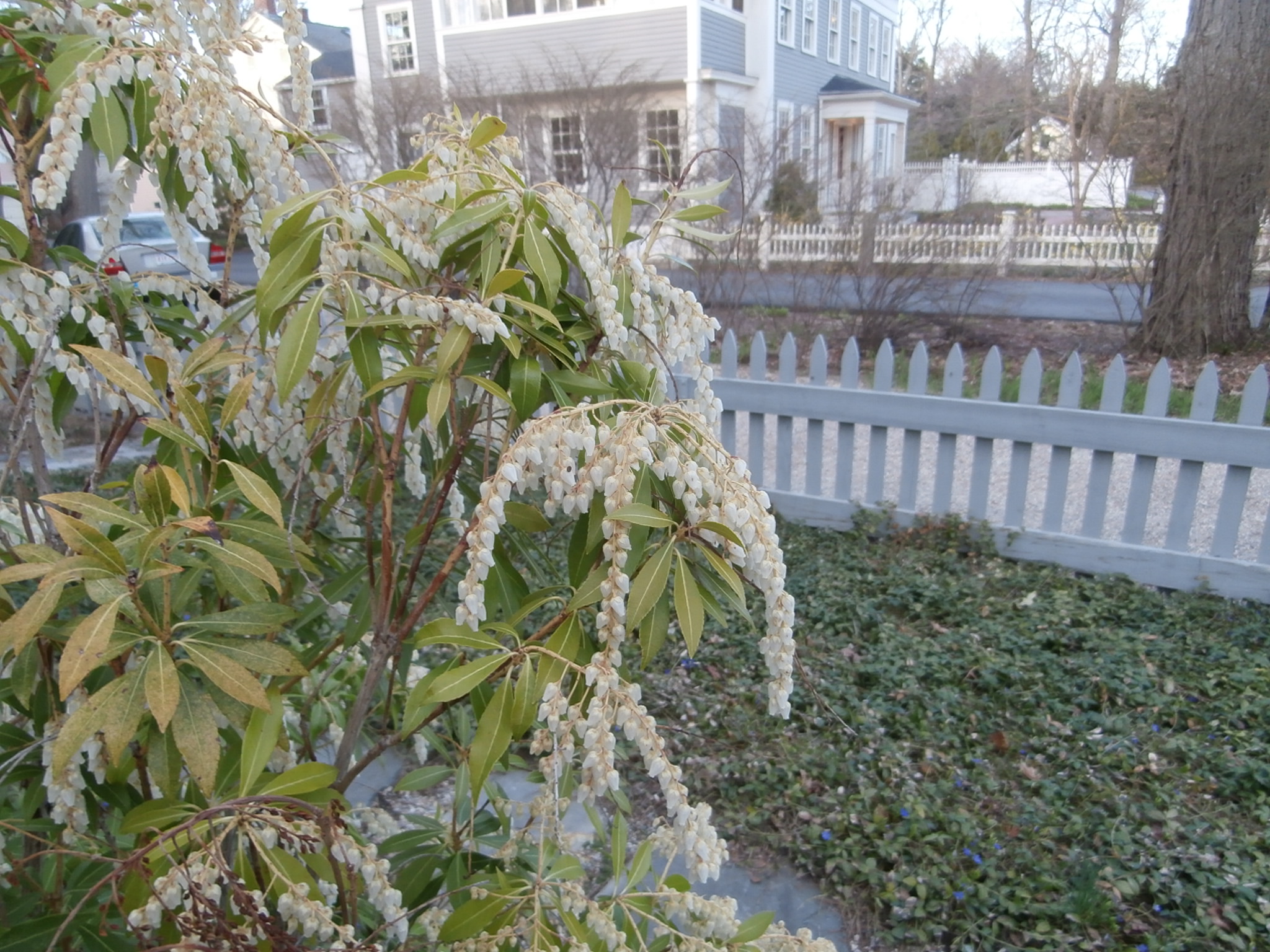
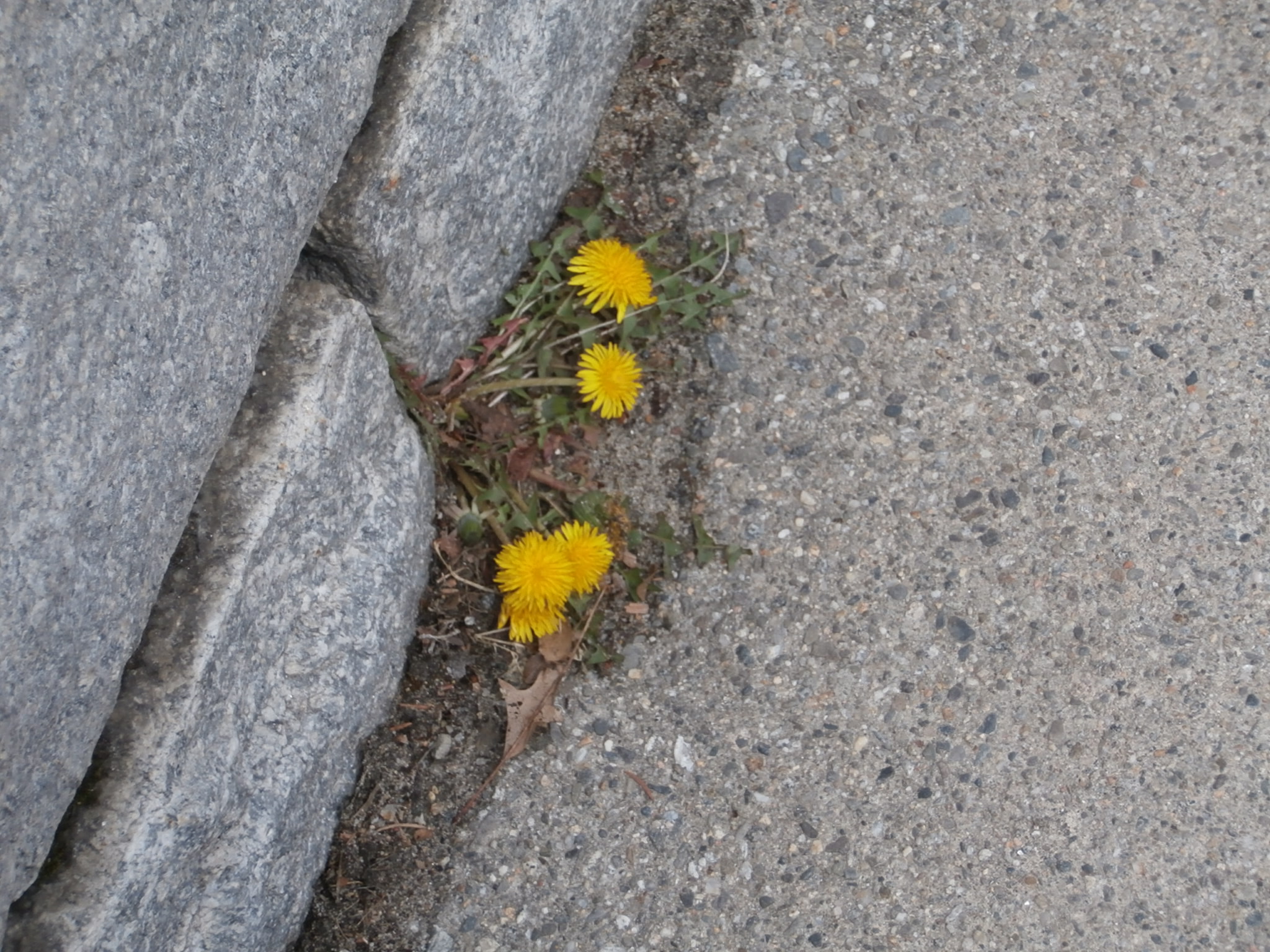
It’s always a surprise to see what flowers are available on May 1 any given year. Since these are in my yard now, I suspect there will be different ones by May.
In addition to poetry, art often brings comfort. (Artists don’t usually want to make anyone “comfortable,” which has a different connotation.)
One reason art brings comfort is that creativity generates surprises, and surprises may bring delight.
So although I’m still preoccupied with Boston, I’ll leave Boston for today and write about Cleveland.
Thank you, Mary Ann, for pointing to the Gwarlingo blog, which recently said of the art scene in Cleveland,”prepare to be surprised.”
Blogger Michelle Aldredge writes in part, “It is possible to experience the best of Cleveland culture entirely on foot. …
“According to Ann Craddock Albano, the director of The Sculpture Center in Cleveland, the 550-acre area that encompasses the Cleveland Museum of Art, the Cleveland Botanical Garden, the Museum of Contemporary Art, the Cleveland Symphony, the Cleveland Institute of Art, the Cleveland Cinematheque, Cleveland Institute of Music, and numerous university and medical facilities is the most concentrated neighborhood of world-class cultural institutions in the country. …
“The latest jewel in the Circle’s crown is Farshid Moussavi’s new building for the Museum of Contemporary Art. MOCA is Moussavi’s first museum design, and also the first American project by the Iranian architect, whose firm, Farshid Moussavi Architecture, is based in London.
“A few blocks away from MOCA, at Case Western Reserve University’s Weatherhead School of Management building, silver planes slice through red brick like paper in a windstorm. While Frank Gehry opted for flamboyance, Moussavi wisely chose a simpler, less ostentatious design for MOCA—one that is unique and engages the surrounding neighborhood.” More.
BTW, I wouldn’t mind hearing what other folks do for comfort.
Photo: Michelle Aldredge The zigzagging stairwell is the most eye-catching feature inside the new MOCA Cleveland
For me, the poet is saying that darkness can never completely win; focus on what it can’t touch.
Try to Praise the Mutilated World Adam Zagajewski
Try to praise the mutilated world.
Remember June’s long days,
and wild strawberries, drops of wine, the dew.
The nettles that methodically overgrow
the abandoned homesteads of exiles.
You must praise the mutilated world.
You watched the stylish yachts and ships;
one of them had a long trip ahead of it,
while salty oblivion awaited others.
You’ve seen the refugees heading nowhere,
you’ve heard the executioners sing joyfully.
You should praise the mutilated world.
Remember the moments when we were together
in a white room and the curtain fluttered.
Return in thought to the concert where music flared.
You gathered acorns in the park in autumn
and leaves eddied over the earth’s scars.
Praise the mutilated world
and the gray feather a thrush lost,
and the gentle light that strays and vanishes
and returns.
I saw these fiddlers a couple times while waiting for the evening train to Porter Square. For weeks there were tweets: “Who are those guys?”
Steve Annear at Boston magazine got the scoop. “Two former Berklee College of Music students have made a full-time job out of playing contemporary music on their violins for the swarms of passengers that crowd the platforms of the MBTA each day.
“After meeting in 2009 outside of the school, violinists Rhett Price and Josh Knowles got together and decided to form a two-piece ensemble and perform songs while standing on the Boston Common. But when winter got too cold and their fingers ‘started to get stiff,’ Price says the pair turned to the T for a busker’s permit so they could share their songs with riders traveling on the underground transit system.
“ ‘It’s been amazing. I was really nervous at first—we were nervous about playing on the T in general, and we didn’t think any one would give us any money. But there are people who come up and [request songs],’ says Price. ‘This is what we do right now to pay bills.’ …
“Price says he and Knowles play at three stops throughout the week, including North and South Stations, and at the Harvard Square stop. In a few weeks, they’re kicking the public transportation appearance up a notch, and will travel to New York City to play for riders there.”
Um. Forget about New York. Spend more time at South Station, please.
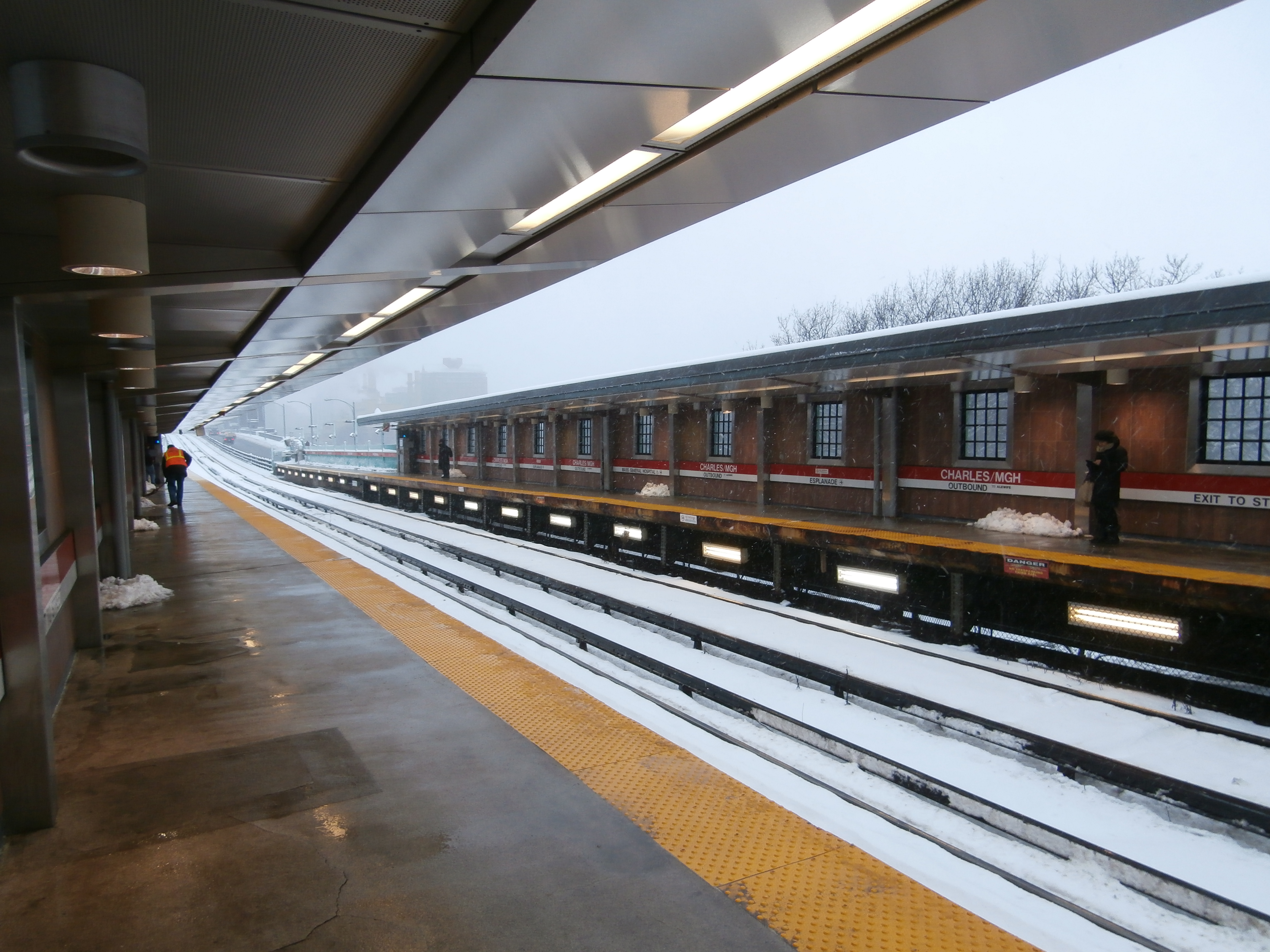
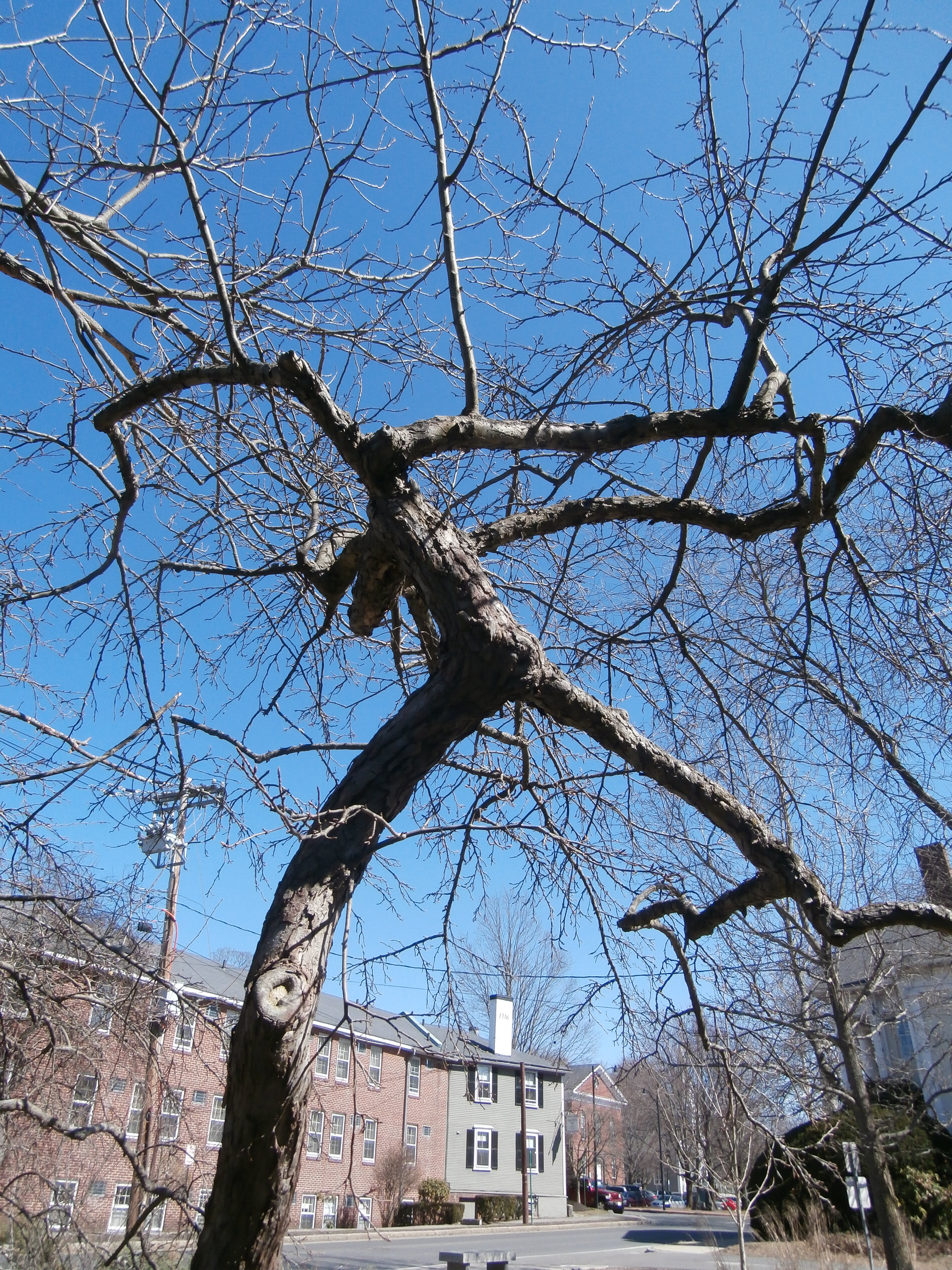
These recent photographs show the changing seasons — from a March storm at a T station to driving with the top down.
The weather changes fast around here — today on my walk I kept zipping and unzipping my coat because the sun kept going in and out of clouds and the temperature kept zooming up and down. As the saying goes, “If you don’t like New England weather, stick around for a few minutes — it will change.”














 Suzanne's Mom's Blog