This Thanksgiving, I’m thankful to Ukrainians for showing us that you go to battle when hostile armies invade your borders, not for fanciful geopolitical strategies that change with every new government.
I’m grateful for the example of courage that ordinary Ukrainians are displaying every day and for their being a strong bulwark against totalitarianism.
The Ukrainian translators, writers, and editors I got to know for the four months of the U24 social-media partnership were the salt of the earth. I’m proud to know them. And I’m grateful to fellow editor Francesca Forrest for alerting me to the opportunity. I wrote about that experience here.
Today those Ukrainians and the native-English-speaking editors on our team stay in touch via Facebook, where we share the usual FB things — family photos, travel pictures, birthdays — plus news of Ukraine and ways to help.
To have a chance to use my skills to support the defense of these brave people was an unimaginable privilege. I am grateful.
Oh, the ingenuity of our species when we put our minds to a problem! Lack of water in the Canary Islands seems to have inspired problem solvers to pull water from thin air.
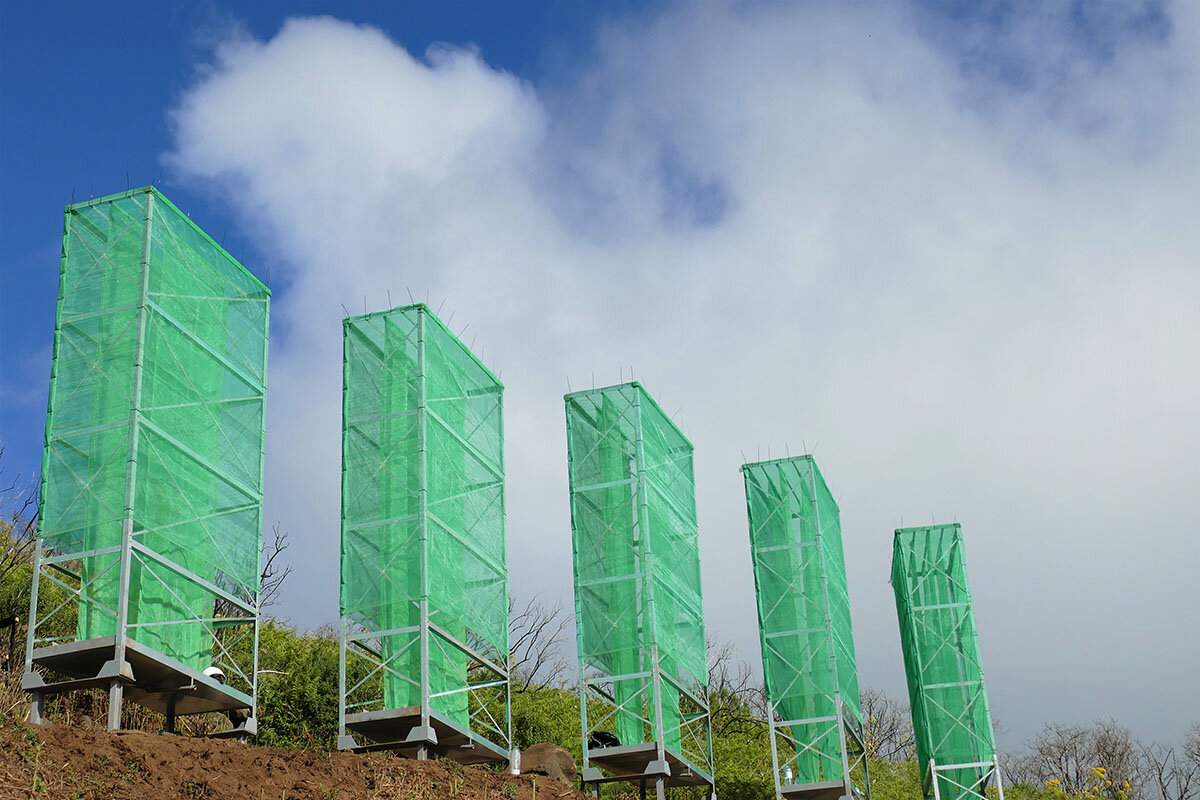
Colette Davidson at the Christian Science Monitor writes, “On a clear day, the tiny hamlet of La Vega, stacked up high on the hillsides of northern Tenerife, offers spectacular views of the rugged Atlantic coast. But this afternoon, the thick mist spiraling through Jonay González Pérez and Sara Rodríguez Dorta’s farmland sets an eerie Alfred Hitchcock filmlike scene. Nearly ripe for fog harvesting.
“ ‘There’s almost enough fog to start collecting it,’ says Mr. González Pérez, trudging through ankle-high grass in rubber galoshes as he snaps dead leaves off an artichoke plant. ‘But we need to wait a little longer, until the fog is at the same level as the catcher.’
“Since 2018, Mr. González Pérez and his wife have relied solely on fog collecting to water their 3.7 acres of farmland – which includes lemon and plum trees, artichoke plants, and 50 chickens – when rain is in short supply in the summer months.
“On a good day, the couple’s 435-yard-long wall of collectors – vertical U-shaped nets cemented into the ground by metal poles – can harvest 475 gallons of water. The suspended fog droplets fall from the nets and flow through 220 yards of black tubing, which snake down the back of their property into a 95,000-gallon storage tank that resembles a giant waterbed.
“Their system – which the couple built with their bare hands over the course of a year – was entirely paid for through government subsidies, after they won a local award for the best initiative in rural farming.
“But this isn’t just a pet project for small-scale farmers. In 2020, the European Commission partnered with the local government in neighboring Gran Canaria to fund the Life Nieblas fog-collecting project, which aims to reforest areas decimated by drought or forest fire. Harvested fog water meets the World Health Organization’s standards on drinking water safety and has provided isolated communities with a much needed resource for decades.
“As the Canary Islands and regions around the world look to combat the effects of climate change, fog collecting is becoming an increasingly viable technology for communities facing soil erosion and water supply challenges.
“ ‘Fundamentally, we depend on our groundwater in the Canary Islands and water is always scarce,’ says María Victoria Marzol Jaén, a retired climate scientist at the University of La Laguna on Tenerife and one of the pioneering researchers into fog collecting in the Canary Islands in the 1990s.
“ ‘Fog water alone can’t supply this, but it can be useful for reforestation purposes, like in the case of forest fires. But for rural zones, where water consumption is much lower, [fog collecting] is more than just helpful. It can be the solution to water problems.’
“The first documented experiments into fog as an alternative water resource can be traced to South Africa in the early 1900s. In 1963, Chilean physicist Carlos Espinosa’s invention of ‘mist traps’ were patented and offered to UNESCO for free use around the world. Since then, researchers have made significant developments into the green technology, and research sites can be found in Chile, Peru, South Africa, Morocco, China, the United States, and the Canary Islands. …
“Apart from the initial materials and building costs, fog collection is a low-energy operation, whose structures, like netting, can blend more seamlessly into natural environments than wind turbines or solar panels. Upkeep involves merely clearing away overgrown plants and cleaning the filters.
“ ‘Fog collecting doesn’t consume any energy and doesn’t affect any other natural resources,’ says Ricardo Gil, a technical architect in Tenerife who runs the Nieblagua company. He has installed around 100 fog collectors across the Canary Islands, mainland Spain, and Portugal. ‘It also takes the pressure off extracting water from aquifers or desalinating ocean water.’
“Each of Nieblagua’s catchers can withstand winds of up to 62 mph, and use four sheets of netting to collect up to 8,000 gallons of water per year in optimum conditions. In several of the Canary Islands, which benefit from around five hours of fog per day, this translates to almost one person’s entire water needs. …
“For thirsty, drought-stricken regions, that can mean the difference between survival and desertification – especially when multiple catchers are set up in one area. In Arafo on Tenerife, 12 of Nieblagua catchers provide an estimated 26,000 gallons annually to new almond tree plantations.
“ ‘It’s not a fantasy. We’re using up our natural resources all around the world,’ says Mr. Gil. … ‘Here we have a natural resource right in front of us. We need to take advantage of it.’ ”
Longtime readers know that my blog is hosted by my daughter’s jewelry company, Luna & Stella. As it happens, both my children are entrepreneurs!
John’s company is Optics for Hire, and his staff in Ukraine and Belarus have invented many technologies that I haven’t known how to describe. Until now. This time my son’s team in Ukraine has invented LED technology for a knife sharpener that tells you how sharp the knife is, and Farberware is using it in a new product. Check it out here.
It’s really been fun hearing how the technology developed from the germ of an idea about the sharpness of hockey skates. (John’s son and daughter are both ice hockey players.)
Emily’s Oysters in Maine, Sun Farm Oysters in Rhode Island, and Cuttyhunk Shellfish Farms in Massachusetts are a few of the hardy crews eager to supply oysters for your Thanksgiving stuffing.
One of Suzanne’s oldest friends runs an oyster business on Cuttyhunk Island, Massachusetts, and Thanksgiving is a big time for her. That’s because, in New England at least, many people see oysters as traditional for Thanksgiving.
The radio show Living on Earth recently did a show on the topic.
“STEVE CURWOOD: In the 19th century, oysters were a popular food item in the US, especially with the advent of commercial food canning, and by 1900, Americans were gobbling down some 160 million pounds of oysters a year. But overconsumption, sanitation concerns about raw oysters and the huge expansion of the beef and pork business that the railroads made possible, led to the oyster’s decline.
“Farmed correctly, oysters can be sustainable and their reefs protect coastal areas, so in recent years the popularity of local foods has spawned new oyster farmers — farmers that were hit hard this year with a drop in demand during the Covid crisis. Not everybody loves them of course, but oysters can be eaten in many ways beyond the half-shell. Celebrity chef Barton Seaver joins us from his kitchen near the harbor of South Freeport, Maine, to show how oysters can even lend flavor to Thanksgiving stuffing. … So tell me, why have the oyster farmers and fishermen been hit so hard by COVID-19?
“BARTON SEAVER: Oysters are, well, they’re so important to the restaurant industry. And that’s where so many of us go to get them. By some anecdotal accounts, in March, April, May, large oyster dealers around the country I’ve talked to lost 98% of their business, who were selling into restaurants; some of that has come back. Massachusetts has some hard data, around about 60 to 70% of their oysters landed, that business was lost. …
“CURWOOD: Where I live in southern New Hampshire near the Great Bay … I noticed that there were folks who actually had set up stands along the side of the road to sell oysters individually to people.
“SEAVER: Yeah! Well, that’s been one of the great success stories. And that’s sort of the inherent nature of oyster farming is that these are small businessmen and -women who are running a farm, and they are entrepreneurs, and they were able to pivot quite quickly. And as, in COVID, we turned our attentions anew to local food systems, oysters are a prominent part of that for those of us on the coasts. There is no food that is of place as much as are oysters, clams, mussels. …
“CURWOOD: Now, we know from history that Native Americans brought shellfish to the pilgrims that came here to the New England area in the 1600s. To what extent do you think oysters and shellfish should regain a place at the Thanksgiving table?
“SEAVER: Well, oysters were one of the foundational foods of this country and long before the white man set foot on this continent, oysters were serving and sustaining native populations for aeons. … But through decimation of local oyster populations in the wild, throughout the United States and our coastlines, we lost access to oysters. …
“CURWOOD: Tell me why you think they’re so important ecologically.
“SEAVER: Oysters, amongst other shellfish, are you know, what was known as a keystone species. They’re fundamental to the health of the ecosystems in which they are prevalent. They provide water quality, they provide habitat for countless other species. They are the bedrock upon which ecosystems’ health and resiliency relies. And in the absence of wild oysters, because we’ve decimated them through overfishing, through disease, etc., habitat loss, oyster farming has stepped into the role of providing those ecosystem services, those vital services.
Every oyster you eat encourages an oyster farmer, a small businessman or -woman, to plant many more, to augment and expand upon those ecosystem services provided by them.
“And in that way, I think it’s our patriotic duty to eat as many farm-raised shellfish as we can.
“CURWOOD: Yeah, in fact, you know, as the storms pick up with climate disruption, oyster reefs are a great way to slow down the storm surge, huh?
“SEAVER: Absolutely. We’ve seen this with Katrina, we saw this with Superstorm Sandy, that these vulnerable civic centers are made more vulnerable by the lack of those natural oyster reefs that naturally stopped those storm surges. …
“CURWOOD: There’s a project going on that the Nature Conservancy is a big part of. They’re [buying up] oysters that are otherwise going unsold to the restaurants during this pandemic, to help farmers who need to have a source of cash, and they’re using those oysters to restore more shellfish reefs. Why is it important to have oysters in local communities? …
“SEAVER: [Sustainable small business.] In my village, there’s a young woman named Emily — ‘Emily’s Oysters.’ She grew up here, and she went to school out in Puget Sound, and she was looking for something to do. [You know there’s a] brain drain in small, rural communities. But oyster farming caught her heart … and now she’s farming 50, 60, 70,000 oysters out in the waters that I can see from my house, pretty much. And she’s selling at local farmers’ markets. [To me, that’s] the quintessential story of success and of human sustainability acting in concert with our ecosystems. …
“CURWOOD: You have some delicious recipes, Barton, on your website. There’s — oh, the oyster risotto, the broiled oysters Rockefeller. And I believe you’re going to show us how to make an oyster stuffing, being that we’re close to Thanksgiving, huh? Now, I must say I never knew the stuffing on my Thanksgiving table could feature shellfish.”
More at Living on Earth, here, where you also can get the recipe for stuffing. Barton Seaver’s book is The Joy of Seafood: The All-Purpose Seafood Cookbook, with almost 1000 recipes.
Photo: Siddarth Machado, Flickr, CC BY NC 2.0. “About half of all fish species live in freshwater,” says the environmental radio show Living on Earth. “Pictured above is the bluegill sunfish, commonly found east of the Rocky Mountains.”
As world leaders wrap up the latest climate-change conference, in Egypt — delivering scary messages to us all — I’d like to think stories like today’s are reassuring. But sometimes the discovery of new species means they were there all along and we just didn’t notice. How they are doing is important because they represent an early warning system.
From the environmental radio show Living on Earth we learn that “more than 200 new species of freshwater fish were discovered worldwide in 2021, including a blind eel found in Mumbai and a fish dubbed the Wolverine pleco for its hidden spines.
“Harmony Patricio is conservation program manager at Shoal, which compiled the report and she joins host Bobby Bascomb for details.
“BOBBY BASCOMB: These 212 new freshwater fish species, I mean, these aren’t just tiny little, you know, minnows or little things that you could see how they can easily be overlooked for a long time. Some of these are actually large fish, can you describe a couple of your favorites for us, please?
“HARMONY PATRICIO: One of them is called the Mumbai blind eel, and it has no eyes, fins or scales. It just has smooth skin that is full of blood vessels and gives it this reddish coloration. It’s a subterranean fish. It is from the northwestern Ghats of India. And the genetic analysis, the researchers who described the species have done show that it’s likely it’s split from its closest relative over 1 million years ago. So it’s had a lot of time to evolve very distinct attributes.
And one remarkable thing about this story of this discovery is that this blind eel was found in a 40 foot deep well, on the premises of a school for the blind. …
“BASCOMB: And I understand there’s also something scientists have called a wolverine fish. Can you tell us about that?
“PATRICIO: Yeah, this one has gotten a lot of interest, I think because of the name Wolverine. It’s a wolverine pleco. … It has these lateral spines that can protrude from its gill coverings that it uses to defend itself in a somewhat violent manner. If anything tries to mess with it, they’re gonna be in trouble. The researchers who described this species said in the process of collecting them from the wild, they ended up with bloody fingers. And interestingly enough, other closely related species in this family have never been seen to exhibit this type of behavior, even those that do have these type of spikes. … Apparently, the local fishers in the area where the scientists are working decided to call the fish Buffalo Bill, because it was so aggressive and stabbing everybody with its with its spines. …
“BASCOMB: On the other end of the spectrum, I understand that they found a fish where you can actually see its brain through the skin on its scalp. Can you tell us about that?
“PATRICIO: Yeah, this is a pretty interesting story. So this is an example of a species that was known to science, but had been misidentified for years. It’s native to Myanmar and it’s very tiny, about the size of your thumbnail. And it’s been used by neuroscientists for research for several years. So it’s just sitting under their noses until they did some genetic analyses, and found out it’s a completely different species than they thought it was. … The reason it’s such a great organism for neurophysiological research is because as you said, it has an open skull, and transparent skin on the top of its head. So you can visually observe its brain while it is alive. And you can use that to collect data on brain activity related to different behaviors. The males of these species communicate with each other through sound. And that’s another really interesting thing that they’re able to see is like, what does the brain do when they’re receiving these communicative sounds and how does it process those sounds? …
“BASCOMB: Why are freshwater fish so threatened right now?
“PATRICIO: It’s a combination of factors. A lot of it stems from the fact that humans are, you know, inherently reliant on freshwater ecosystems for our own survival. Part of the issue is for some species, is that they have been over harvested, especially in the cases of mega fish as we call them, which are the world’s biggest freshwater fish. Their populations have collapsed by around 94%. Typically, they do not mature to where they’re able to reproduce until very late age. And so if they’re harvested, you know, when they’re only five or 10 years old, they haven’t had a chance to breed yet, it’s going to really drop down the population very quickly.
“Another big problem is invasive species. About a third of modern freshwater fish extinctions can be traced back to the impacts of invasive species. They change the environmental conditions in the water bodies that they’re introduced too. They often prey upon native species, or compete with them for food sources. Also, pollution has been a huge problem all from agricultural runoff to industrial that can really affect fish’s health and ability to reproduce successfully. The fragmentation of habitats such as damming rivers and reducing fishes ability to complete their life cycles by moving from downstream to upstream has had a significant impact. And climate change is also starting to have a real impact as well. …
“They’re an indicator group of animals that show us what’s happening with the health of aquatic ecosystems that we as humans are highly dependent on. If the fish are not doing well, we can be assured that those systems are not going to be very useful for humans down the road.”
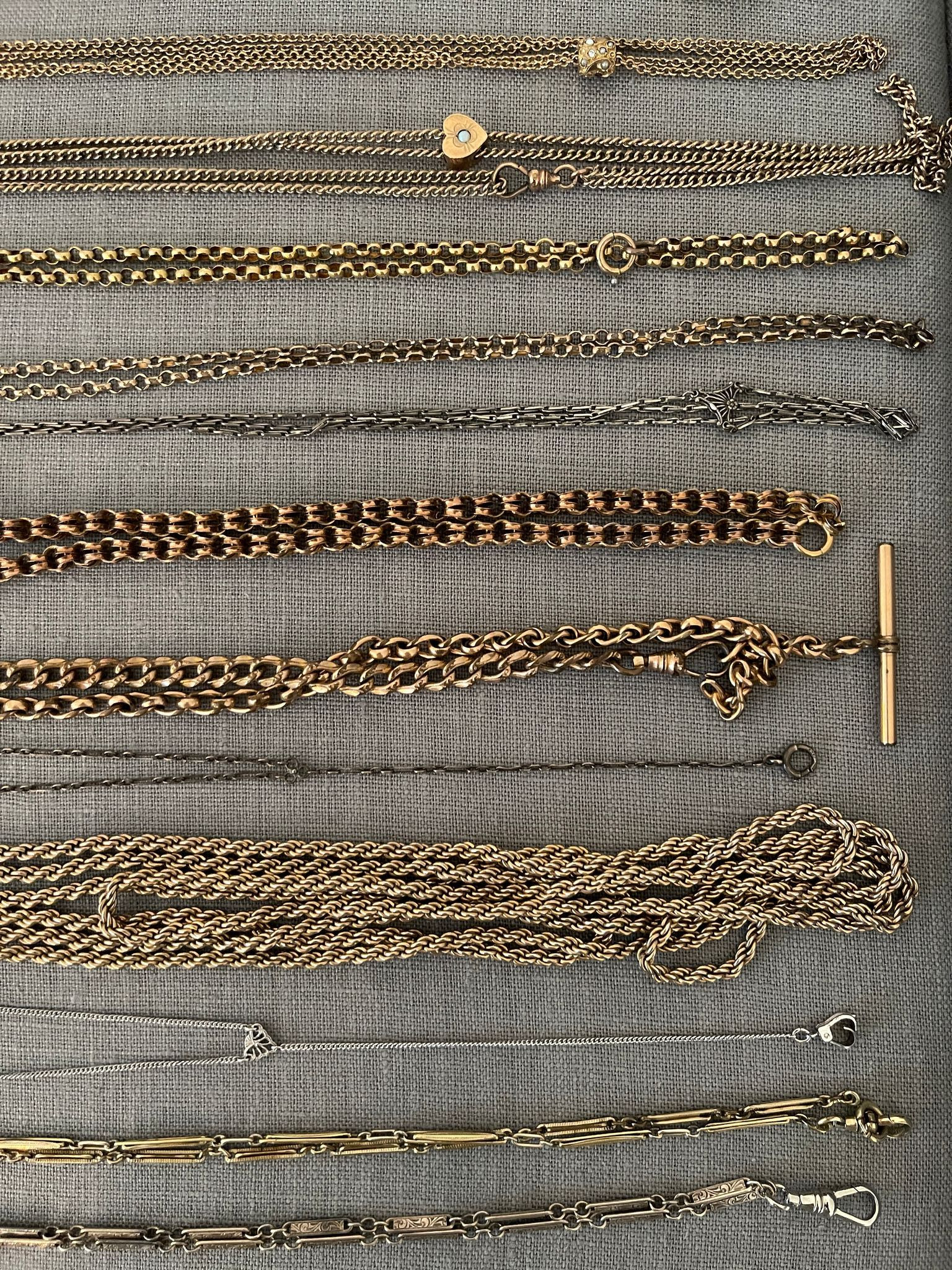
“P.S. As an antique dealer once told me, you can’t put on old locket on a new chain! Check out some of the fabulous Victorian chains we have in stock.”
As the website Right Whale Festival notes, “The North Atlantic right whale (Eubalaena glacialis) is a federally protected endangered species.” Fewer than 350 exist today. Recovery is hampered by a slow reproduction rate and threats from entanglement in fishing nets and collisions with vessels.
Last week, I was talking to my younger grandson about elephants, and the conversation morphed into the topic of endangered species. He told me that the most endangered marine animal is the vaquita. I mentioned the right whale.
Today’s story is about an ocean scientist who is using drones and satellites to protect whales. Tatiana Schlossberg wrote about him for the Washington Post.
“Just yards from the Fish 1, a 22-foot research vessel, a humpback whale about twice the size of the boat hurled itself out of the water, sending shimmering droplets in a broken necklace of splash. In the other direction, a hulking cargo ship, stacked high with containers, crept closer.
“Aboard the Fish 1 … ocean scientist Douglas McCauley wanted to see whether the near real-time detection system he and his colleagues had developed, Whale Safe, could avert collisions between whales and ships in the Santa Barbara Channel.
“The tool represents one of the ways McCauley, who heads the Benioff Ocean Science Laboratory at the University of California Santa Barbara, is working to protect the ocean even as it becomes more industrialized. By collecting data from several sources — an acoustic monitoring buoy that listens for whale songs, identifies them according to species with an algorithm and sends that information to satellites; a predictive habitat model for blue whales; and sightings logged in an app — Whale Safe forecasts to ships the chances of meeting a whale. Then, it grades shipping companies on whether they actually slow down to 10 knots or less during whale migrations, from May 1 to Dec. 15.
‘We can literally watch all of the ships in California and across the whole ocean; we are better positioned than ever before to try to track damage as it occurs, or before it occurs,’ McCauley said. …
“Humans have worked in the seas for centuries: fishing, seafaring and more recently, drilling for oil and gas and the development of offshore wind farms. Shipping lanes cross almost every surface of the sea, except for shrinking swaths of the Southern and Arctic Ocean. …
“In meetings with corporate executives and political leaders, McCauley has made a consistent argument: Protecting the sea is in our interest, since it already does a lot of the work for us.
“In 2020 McCauley led a report that provided a framework for marine protected areas on the high seas, finding that such refuges could be powerful tools for biodiversity conservation, carbon sequestration and climate resilience. Even port and fishing communities, he argued, depend on an ocean that is still wild and alive. …
“The encounter in late September, amid one of the world’s busiest shipping channels and a vibrant ecosystem, offered a glimpse of how to do just that. Minutes after the container ship had passed McCauley’s boat, the whale — possibly the same one, but it is hard to tell — had found another [whale], and the two sent up exhales of spray.
“It was as if a bulldozer operator had plowed through a herd of elephants without stopping, not too far from a major city’s downtown, hoping to avoid a crash. And it happens many times a day here in the Santa Barbara Channel, even though barely anyone sees it. …
“Three shipping companies contacted for this article, as well as an industry association, said that they supported such programs. CMA CGM, among the world’s largest shipping container companies, is sending alerts above medium directly to their captains, and Hyundai Heavy Industries is working with Whale Safe to incorporate its data directly onboard new ships.
“But some of the firms tracked by the tool, which has recently expanded its use to include San Francisco, have received F grades. Matson Navigation, for example, only slowed down roughly 18 percent of the time.
“Lee Kindberg, the head of environment and sustainability for Maersk, which received a B for slowing down in about 79 percent of cases, said the company supports Whale Safe. But she added that shippers must balance safety and speed restrictions against weather and demands from companies — and their customers — who want everything faster.”
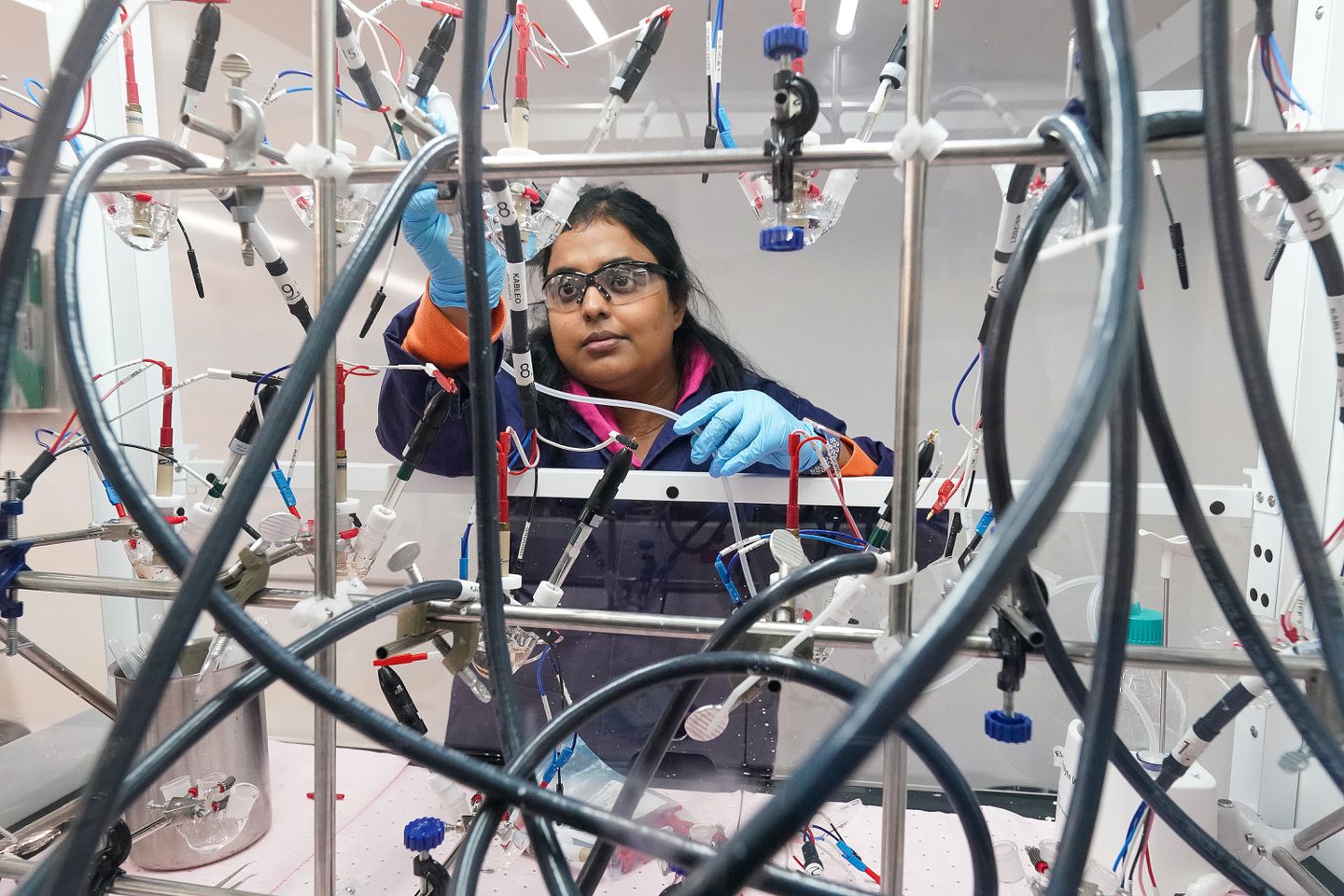
Photo: Barry Chin/Globe. Alolika Mukhopadhyay, senior research scientist at Alsym Energy, validating a battery reaction in a testing room. “Alsym has developed a new kind of rechargeable battery that doesn’t use lithium. Instead it relies on cheap, plentiful minerals,” reports the Boston Globe.
Oh, I wish so much luck to this startup in Massachusetts! Some of you may remember the 1960s line “If you’re not part of the solution, you’re part of the problem.” Right? Well, I am part of the lithium problem, and this startup is trying to obviate the need for that blood mineral in batteries. As we turn more and more to electric, lithium mines are damaging the environment and the human communities nearby. I feel guilty every time I think about it.
But Hiawatha Bray reports at the Boston Globe that “A small startup in Woburn called Alsym Energy is working on one of the world’s biggest problems — the need for better, cheaper batteries for cars, electric utilities, and even seagoing ships.
“Alsym’s founders, veteran entrepreneur Mukesh Chatter and Massachusetts Institute of Technology professor Kripa Varanasi, say they’ve built a new kind of rechargeable battery that delivers the performance of lithium ion cells at half the cost.
“That’s largely because the batteries don’t contain lithium or cobalt — scarce and expensive metals mostly controlled by China. And Alsym says they will never burst into flame like lithium batteries, because none of the ingredients are flammable.
“Now, the 47-person startup is striking deals with shipping companies and an automaker to prove its claims in real-world use. The company is just one of many worldwide that are scrambling to find practical alternatives to lithium ion batteries. …
“Alsym has been in stealth mode since its founding in 2015. In some ways, it still is. The front door of the company’s offices displays the name of a dance academy. And Chatter is extremely secretive about the chemistry that makes his battery work. He hasn’t even tried to patent it, because that would require revealing the formula. Instead, it’s a trade secret, like the recipe for Coca-Cola.
“But Chatter did offer a few hints. The electrolyte — the material that carries energy between the two electrodes — is water mixed with some solvents that Chatter won’t identify. One of the electrodes is mostly made of manganese oxide, but Chatter wouldn’t say anything about the composition of the other — just that there’s no lithium or cobalt involved, and that all the materials are nonflammable, non-toxic and inexpensive.
“The company has gained the trust of investors, who’ve poured $32 million into the project, with Helios Climate Ventures leading the way.
Chatter, who previously founded a pair of networking hardware companies, began Alsym as a way to provide reliable electricity in developing countries.
“ ‘About 2 billion people in the world either don’t have electricity or have it only part of the time,’ said Chatter. … Solar cells and windmills can help, but they must be backed up with batteries to provide consistent power. Lithium cells are too expensive and unstable; Chatter claims his company’s batteries are much safer and cheaper.
“Chatter says he’s landed $2 billion in pre-orders for Alsym batteries. A small factory at the Woburn headquarters has begun cranking out prototypes. Alsym batteries can be made using the same equipment found at any lithium ion battery plant; only the materials inside the batteries are different. That means existing battery plants could quickly switch over if and when the Alsym batteries prove their worth.
“The first buyers will be Singapore-based cargo ship manager Synergy Marine and Japanese cargo ship owner Nissen Kaiun. The two companies plan to equip up to 100 of their seagoing ships with Alsym batteries as an auxiliary power source.
“Alsym has also signed a deal with one of India’s biggest carmakers to provide electric car batteries, though Chatter won’t say which company. It’s a big test for Alsym, because the typical new car in India costs about $10,000. In US electric cars, the battery alone can cost more than that. …
“Alsym is also in negotiations with a utility that’s interested in using batteries to store power from solar and wind farms, and then release the electricity as needed to the local power grid.
“But Shirley Meng, a materials science professor at the University of Chicago, is very dubious. She said that laboratories worldwide are trying to find alternatives to lithium batteries, so far without much success. ‘Lithium has such great performance,’ Meng said. …
“Alternatives to lithium have been invented, Meng said. But so far, they’ve only worked reasonably well on a small scale. In addition, any new battery chemistry would require the development of a new global supply chain for all the chemicals and components needed to make it work, and that could take years. …
“We should find out in a few years. Synergy Marine and Nissen Kaiun plans to conduct three years of real-world testing starting in 2023. Meanwhile, Alsym plans to begin full-scale production of its batteries in 2025.”
Photo: Jean-Christophe Quinton Architecte. Illustration: Stephanie Davidson. “At street level,” CityLab reports, “12 Rue Jean-Bart blends into its neighborhood. At the top, things get a little funky.”
Blogger Laurie and I exchanged comments the other day about how neighbors with decent housing too often vote against building affordable housing nearby. True, even though we all know that forcing families into homelessness hurts us all.
A recent story about Paris, where the neighbors didn’t get to vote, shows that good architecture can enable what the French call “social” housing to be constructed in the most exclusive neighborhoods.
Marie Patino and Kriston Capps write at CityLab, “The project at 12 Rue Jean-Bart is a modest one, just eight units of affordable housing on a narrow lot in Paris near the Luxembourg Gardens. The social housing project nevertheless caused a stir with neighbors in the 6th arrondissement, one of the city’s more affluent areas.
“When local politicians backing the project came to visit the building during its construction, neighbors shouted from windows across the street that it was a shame to build social housing here, according to Jean-Christophe Quinton, the Paris-based architect who designed the small in-fill development.
“Local resistance was a persistent feature of the project throughout its three-year-long construction, Quinton says; the building regularly faced harsh scrutiny in local newspaper Le Parisien.
“Quinton responded to critics with design. The final building that emerged at 12 Rue Jean-Bart is striking: Its facade features great concave swoops of limestone, like ribbons of frosting atop a particularly elegant slab of cake. Yet in many ways, it’s a traditional project. The architect strived to make the building familiar: It’s finished with the same materials found throughout Paris and built to the same proportions as some of the 19th-century buildings on the street.
“ ‘We need to destigmatize social housing,’ Quinton told Bloomberg CityLab from his Paris design studio, his Zoom background cluttered with building models. ‘That’s also why it’s made out of stone, because it’s totally integrated into the city, to say that you can build social housing in Paris, and that’s a good thing.’
“Quinton says he’s learned that there’s no use trying to compete with the street in Paris, so 12 Rue Jean-Bart does its best to fit in amongst its neighbors, in a way that makes it almost invisible from afar. The design’s most dramatic gestures are reserved for the upper floors. At street level, the building’s curves look almost like classical fluted columns. Twin weight-bearing stone culs de lampe on each side of the front entrance, which support the corners of the building where the curves meet, are hidden feats of engineering. …
“Other details are traditional, too, and as typical of Paris architecture as possible. The white balconies and joinery at 12 Rue Jean-Bart are common in the city. So is the honey limestone, which comes from a quarry in Vassens, not far from the city. The scale of the project is simply driven by local building codes. The setbacks at the top of the building match those built during the mid-19th century. …
“For residents at 12 Rue Jean-Bart, the experience is rather dramatic. The building is narrower at the back than at street level, and each floor fans out from a central staircase column. The layouts of the upper-floor units with balconies shiftdramatically from those below in order to maximize light while adhering to strict accessibility standards required by Paris codes — a challenge, given the limited size of the lot. The balconies provide a rhythmic frame for the street.
“The building’s been fully rented for almost a year now. The residents love it, according to the architect. And the neighbors have learned to live with it.
“ ‘From afar, you don’t see it, and up close, it has personality,’ Quinton says. ‘It’s a Parisian personality.’ ”
Photo: Thanassis Stavrakis/AP. Enlightened Ottoman rulers once allowed a religion that wasn’t theirs to flourish in peace. Above is a manuscript created in those days. It’s at the library of Pantokrator Monastery in the Mount Athos, northern Greece.
Tolerance of people who are different is not always a quality associated with powerful leaders in history. But there are exceptions.
Consider this Associated Press (AP) story about the Ottoman Empire and a monastery in Greece.
“High in the great tower of Pantokrator Monastery, a metal library door swings open. There, deep inside the medieval fortified monastery in the Mount Athos monastic Orthodox Christian community, researchers are for the first time tapping a virtually unknown treasure — thousands of Ottoman-era manuscripts that include the oldest of their kind in the world.
“The libraries of the self-governed community, established more than 1,000 years ago on northern Greece’s Athos peninsula, are a repository of rare, centuries-old works in several languages including Greek, Russian and Romanian.
“Many have been extensively studied, but not the Ottoman Turkish documents, products of an occupying bureaucracy that ruled northern Greece from the late 14th century — well before the Byzantine capital, Constantinople, fell to the Ottomans in 1453 — until the early 20th when the area became Greek again.
“Byzantine scholar Jannis Niehoff-Panagiotidis says it’s impossible to understand Mount Athos’ economy and society under Ottoman rule without consulting these documents, which regulated the monks’ dealings with secular authorities.
” ‘Ottoman was the official language of state,’ he told the Associated Press from the library of the Pantokrator Monastery, one of 20 on the heavily wooded peninsula.
“Niehoff-Panagiotidis, a professor at the Free University of Berlin, said the oldest of the roughly 25,000 Ottoman works found in the monastic libraries dates to 1374, or 1371. That’s older than any known in the world, he said, adding that in Istanbul, as the Ottomans renamed Constantinople when they made the city their own capital, the oldest archives only go back to the late 15th century.
” ‘The first documents that shed light (on the first period of Ottoman history) are saved here, on Mount Athos,’ he said, seated at a table piled with documents and books. Others, the more rare ones, are stored in large wooden drawers. These include highly ornate Sultans’ firmans — or decrees — deeds of ownership and court decisions. …
“The manuscripts tell a story at odds with the traditional understanding in Greece of Ottoman depredations in the newly conquered areas, through the confiscation of the Mount Athos monasteries’ rich real estate holdings. Instead, the new rulers took the community under their wing, preserved its autonomy and protected it from external interference. …
” ‘The monks’ small democracy was able to gain the respect of all conquering powers,’ [Anastasios Nikopoulos, a jurist and scientific collaborator of the Free University of Berlin] said. …
‘Mount Athos was seen as a cradle of peace, culture … where peoples and civilizations coexisted peacefully.’
“Nikopoulos said that one of the first actions of Murad II, the Ottoman ruler who conquered Thessaloniki — the closest city to Mount Athos — was to draw up a legal document in 1430 protecting the community. …
“Even before that, Niehoff-Panagiotidis added, a sultan issued a mandate laying down strict punishment for intruders after a band of marauding soldiers engaged in minor thieving from one of the monasteries.
” ‘It’s strange that the sultans kept Mount Athos, the last remnant of Byzantium, semi-independent and didn’t touch it,’ he said. ‘They didn’t even keep troops here. … Mount Athos was something like a continuation of Byzantium.’ …
“Father Theophilos, a Pantokrator monk who is helping with the research, said the documents show the far-flung influence of Mount Athos.
” ‘Their study also illuminates examples of how people can live with each other, principles that are common to all humanity, the seeds of human rights and respect for them, democracy and the principles of social coexistence,’ he told the Associated Press.”
Back in June, I was listening to the radio in the car and heard a local interview with poet Billy Collins. Collins was in the area for a 2Life Communities fundraiser. In searching for more information on 2Life Communities, I found this 2021 story from GBH radio. Turns out, there actually exists, through a lottery system, an affordable and very diverse option for retirement in Greater Boston.
Marilyn Schairer reported, “Some senior adults living in and around Boston face a major life dilemma nowadays, especially when they retire and are on a fixed income: they have to choose between paying for heat, for food or for rent.
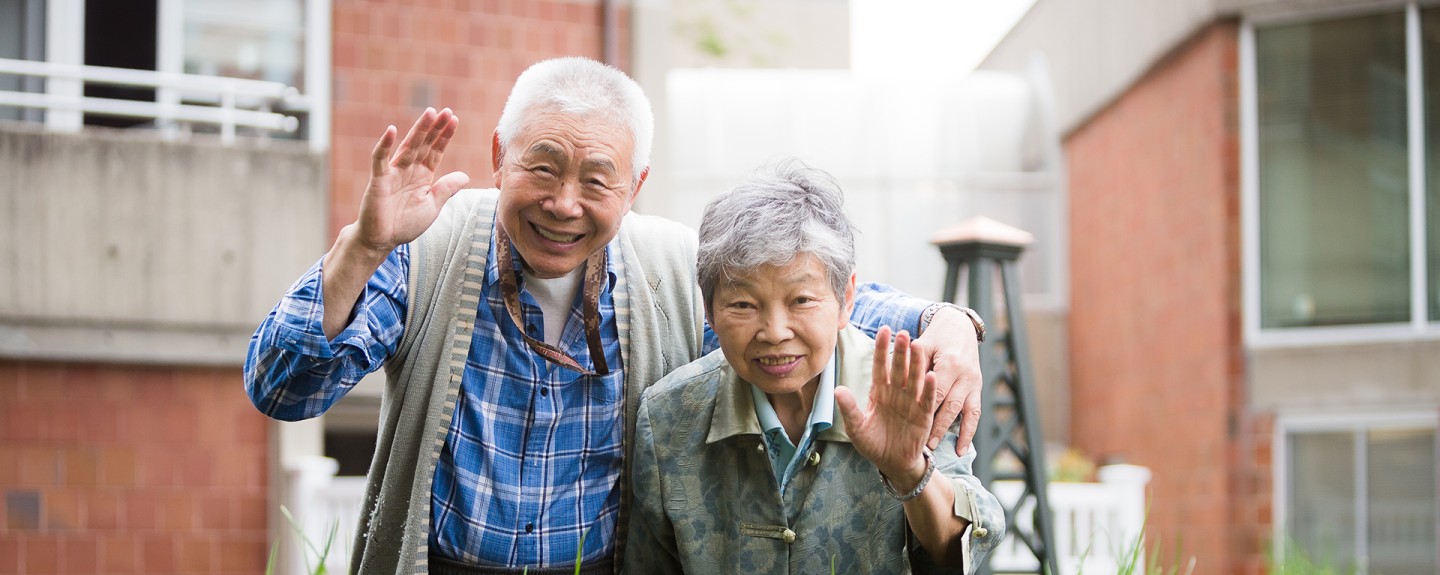
“That’s what 2Life Communities is working to change. The nonprofit is on a mission to help senior adults live in affordable housing in the Greater Boston area, with over 1,300 units and hundreds more in planning and construction stages, as demographic shifts leave more older Americans burdened by housing costs.
“Amy Schectman, president and CEO of 2Life Communities, said 2Life does more than just provide housing for middle- and low-income senior adults.
“ ‘We’re dedicated to the proposition that every older adult should have the opportunity to live a full life of connection and purpose in a dynamic, supportive environment,’ she said.
The organization’s mission brings together a community of people from all backgrounds and cultures. …
“A major demographic shift is underway in the United States as the baby-boomer generation ages. By 2030, one in five Americans will be 65 years old or over, according to the U.S. Census Bureau.
“But Schectman said only a third of older adults who qualify for subsidized housing actually receive it nationwide. The remainder, as found by Harvard Joint Center for Housing Studies, are ‘housing cost burdened,’ Schectman said, ‘meaning they’re spending an inadequate [amount on] money on food and medicine.’
“Currently, 2Life Communities has 1,340 affordable apartments on six different campuses in the Greater Boston area, including Newton and Framingham, and they’re looking to build another campus in Lynn. … Tenants at 2Life are selected through a lottery system, and the waitlist is long. …
“Tenant Darryl Smith won an apartment in the lottery three years ago, and he is thrilled.
“ ‘Oh man, I’m jumping for joy,’ he said. Smith, who is in his 70s. …
“2Life was formed in 1965, and back then it was called Jewish Community Housing for the Elderly. Schectman said the new name is meant to convey a sense of joyous aging, and it comes from a traditional Jewish or Hebrew toast: ‘L’Chaim,’ which means ‘to life.’
“One of the things tenants said they like about the living situation is the diversity. Resident speak a plethora of languages, and there are lots of people from the Boston area, of course, but many are immigrants, representing countries such as China, Ukraine and Belarus. …
“ ‘The end of the year is a big time of giving,’ she said. ‘And let me be clear, we can’t do what we do without philanthropy. We are 100% dependent because we believe you can’t chintz out on services and programs.’
“The median annual household income among residents is $12,078, according to Schectman. But even with federal subsidies and tax credits, she said partnerships with businesses like Dellbrook Construction are needed. Dellbrook’s CEO Michael Fish said he understands the need for organizations like 2Life Communities.
“ ‘The fact that they’re expanding and growing tremendously is not surprising whatsoever, and it’s incredibly necessary given the state we are in and the need for affordable housing for seniors,’ Fish said.
“And tenants like Darryl Smith feel a lot of gratitude for having a newfound home.
“ ‘I’ve got friends now that you can go right to,’ he said, noting the sense of community. ‘If you have any kind of problem, they’ll walk with you, and everybody’s smiling.’ ” More at GBH, here.
As my husband and I scout retirement communities, we realize that although we are fortunate enough to be able to pay the costs, we are going to lose out on contact with people of diverse backgrounds. Diversity of nationality, religion, and language is often tied these days to economic diversity. I will just have to keep volunteering with English as a Second Language classes. For me, making friends in those classes is truly enriching.
In the interest of bringing you some of the latest ideas in sustainability, here is a story on reusing building materials, leasing instead of buying products, and other ideas to lighten the planet’s burden. And they are not just ideas.
Jessica Camille Aguirre reports at the New York Times, “When the Dutch National Bank moved into its Amsterdam headquarters in 1968, the new buildings were epic and stylish. A sprawling Modernist landmark that took up an entire city block off the banks of the Amstel Canal, it was distinguished by a towering high-rise of polished ochre tile. …
“A few decades into the new millennium, the entire complex began to show signs of wear. Tiles fell off the facade. Pipes began to leak. And, perhaps most troubling in a country that prized itself on environmental innovation, its overextended heating systems burned too much fuel.
“In 2020, an architecture firm completed a design plan that would update the original structures and transform the inner courtyard into a public garden. …
“Typically, the fate of a building that has outlasted its usefulness is demolition, leaving behind a huge pile of waste. The Netherlands and other European countries have tried to reduce that waste with regulations. Buildings there are often smashed to pieces and repurposed for asphalt. … A Dutch environmental engineer named Michel Baars thought he could do better than turn [a building] into material for a road.
Mr. Baars considers himself an urban miner, someone who extracts raw materials from discarded infrastructure and finds a market for them. …
“Lean and no-nonsense, Mr. Baars belongs to an emerging group of architects, engineers, contractors and designers who are determined to find a new way to build. This group shares a philosophy rooted in a set of ideas sometimes called the circular or regenerative economy, the cradle-to-cradle approach, or the doughnut economy.
“There are two main tenets to their thinking: First, on a planet with limited resources and a rapidly warming climate, it’s crazy to throw stuff away; second, products should be designed with reuse in mind. The first idea is a recognizable part of our everyday lives: Recycling has retrieved value from household trash for a long time. More recently, the approach has started to gain a toehold in industries like fashion, with secondhand retailers and clothing rental services, and in food production, with compostable packaging. The second takes more forethought and would require companies to rethink their businesses in the most basic ways. Translating either concept to the infrastructure of human settlements requires considering reuse in much longer time scales. …
“Buildings use a prodigious amount of raw materials and are responsible for nearly 40 percent of the world’s climate emissions, half of which is generated by their construction. The production of cement is alone responsible for eight percent of global emissions.
“In recent years, concern about waste and the climate has led cities like Portland, Ore., and Milwaukee to pass ordinances requiring certain houses to be deconstructed rather than demolished. Private companies in Japan have spearheaded new ways of taking high-rises down from the inside, floor by floor. China promised to repurpose 60 percent of construction waste in its recent five-year plan. But perhaps no country has committed itself as deeply to circular policies as the Netherlands.
“In 2016, the national government announced that it would have a waste-free economy by 2050. At the same time, the country held the rotating Council of the European Union presidency, and it made circularity one of the main concepts driving the industrial sector across the bloc. Amsterdam’s city government has set its own goals, announcing plans to start building a fifth of new housing with wood or bio-based material by 2025 and halve the use of raw materials by 2030. Cities like Brussels, Copenhagen and Barcelona, Spain, have followed suit.
“Even in the Netherlands, though, creating a truly circular economy is challenging. Nearly half of all waste in the country comes from construction and demolition, according to national statistics, and a stunning 97 percent of that waste was classified as ‘recovered’ in 2018. But most of the recovered waste is downcycled — that is, crushed into roads or incinerated to produce energy. A 2020 report by the European Environment Agency pointed out that only 3 to 4 percent of material in new Dutch construction was reused in its original form, which means that trees are still being cut for lumber and limestone still mined for cement. …
“Mr. Baars, who runs a circular demolition company called New Horizon, sent a crew of around 15 people to take down the office partitions [in the bank tower]. They packed off interior glass and plasterboard to companies that could make use of the materials. Then, starting at the top of the 86,000-square-foot tower, they began removing the glass facade. A crane lifted pieces to a quay, where they were loaded onto barges in the Amstel Canal for the seven-mile trip upriver to Mr. Baars’s warehouse.”
A 2012 McKinsey report presented at the Davos World Economic Forum suggested that companies were missing out on opportunities to create new business models. “What if, for example, manufacturers could make more money by leasing, rather than selling, their products?
“Thomas Rau, an architect in Amsterdam, is a leading proponent of this idea. In 2015, he appeared in a Dutch documentary called The End of Ownership,in which he didn’t argue for abolishing ownership so much as for shifting it from individuals to manufacturers.
“If manufacturers retain ownership of their products, he argued, they will want to make products that last longer and need fewer repairs. Just as significant, they will want to design stuff that can be easily taken apart and used again. Theoretically, this could help consumers, too. No one wants to own a computer or television or washing machine, Mr. Rau claimed; they just want the services those products offer: computing ability, visual entertainment, textile cleaning. … Think about the speed with which subscription music-streaming services replaced ownership of CDs.” More at the Times, here.
Photo: Parker Michels-Boyce for NPR. Eric Perkins (right) “says lived on the beach, then a shelter and then in a hotel during the pandemic before moving into the Norfolk apartment,” NPR reports.”The median local rent for a one-bedroom apartment is over $1,000. Perkins’ rent is $600.“
This is a story about an approach to housing that hasn’t always worked in the past but, when carefully managed, really can move people out of homelessness and into eventual independence. It’s called the roommate.
Jennifer Ludden has a report at National Public Radio (NPR).
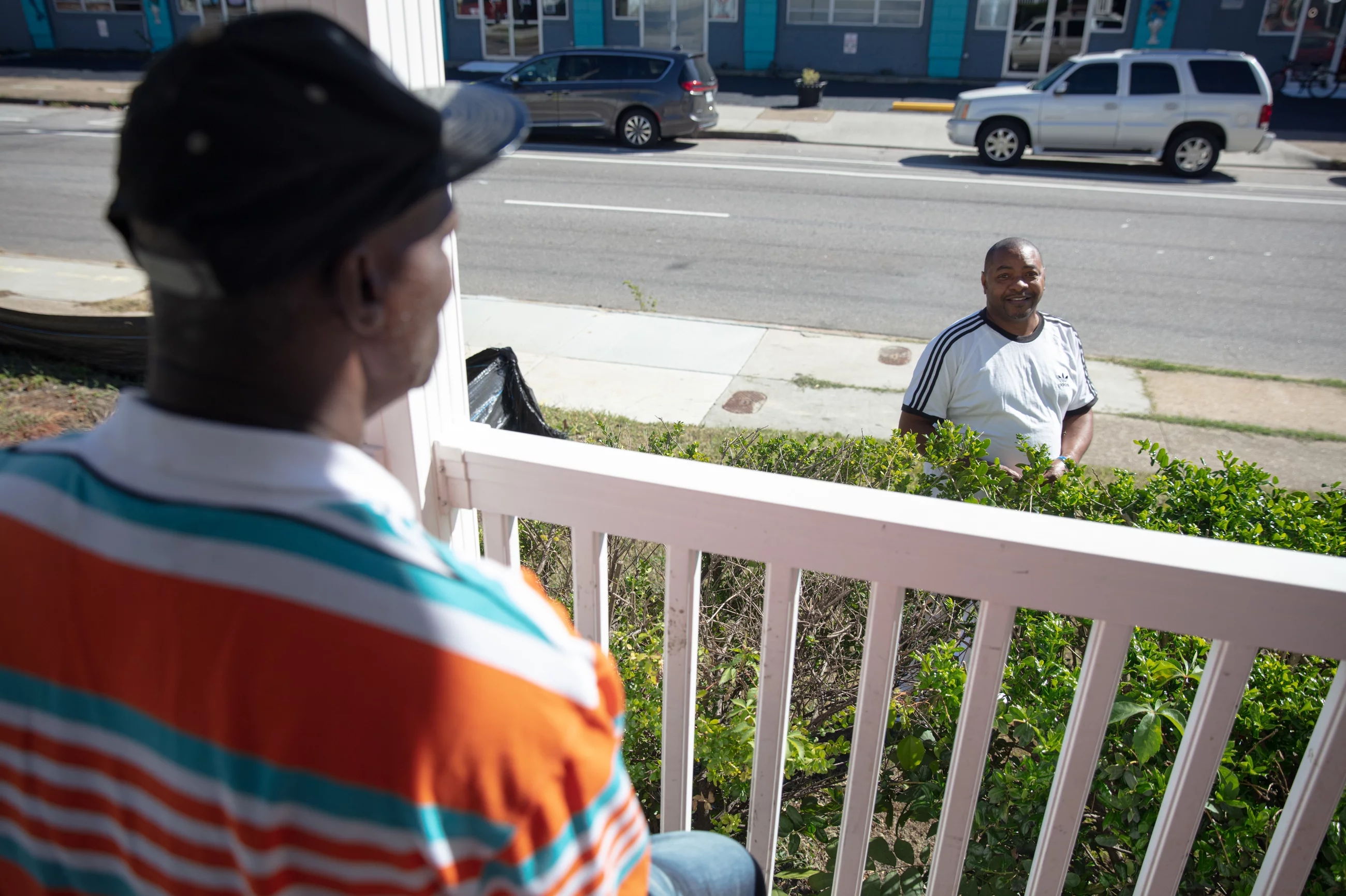
“Even after three years of homelessness, Eric Perkins did not want to move into an apartment with another person who had been unhoused.
” ‘I was real skeptical because of the things I was seeing inside the shelter,’ he says. ‘A lot of drug use, lot of alcohol abuse, PTSD, there was a lot of veterans there. …
“But the arrangement suggested by a local housing provider has turned out better than he expected. On a recent afternoon, Perkins gave a tour of the two-story house where he has lived for more than two years. It’s divided into two apartments, and he shares the one on the first floor. The place came furnished, including with some homey knickknacks. Perkins has his own bedroom but shares a bathroom.
” ‘It’s small, but it’s enough for us,’ he says.
“Farther down the hall is what sold him on the place — a roomy kitchen with a window onto the small yard. ‘I like to cook,’ he says. ‘This is where I want to be.’
“Before he moved in, Perkins had lived on the beach in Virginia Beach, then a shelter and — during the pandemic — a hotel. He ended up without housing after a heart attack in 2017 and double-bypass surgery with no health insurance. He also has chronic lung disease that limits his ability to work. Perkins’ monthly disability payment is just under $800. The median local rent for a one-bedroom apartment is more than $1,000.
“After seeing the apartment and meeting the roommate he’d be paired with, Perkins decided to try it out. His rent is $600, and he gets a lot of help from housing aid. He says his roommate was also a good match with his personality, neat and quiet.
” ‘We got to know each other, we respected each other’s space, we shared everything,’ he says. ‘It was really nice.’
“That roommate ended up reuniting with his family and moved out, and in April 2021, Leon Corprew moved in. Corprew is 59 and Perkins is 56. They say they get along well, though they mostly keep to themselves and give each other space. Perkins used to cook for both of them, but Corprew makes his own meals now because, he says with a laugh, ‘I eat a lot!’
“Getting homeless people into their own apartment, without roommates, is considered the ‘gold standard’ for achieving independence, says Ann Oliva, CEO of the National Alliance to End Homelessness. But record high rents and a historic housing shortage are making it all but impossible in many places in the U.S. …
“Rents in many places around the country have gone up by double digits in the past couple of years, and in June, the median listed rent for an available apartment rose above $2,000 a month for the first time. Federal benefits like Supplemental Security Income — or disability — have been unable to keep up. …
“Oliva says she’s seeing more interest in offering roommate arrangements to homeless people out of necessity. When vacancy rates are as low as 1% or 2%, she says expanding the search to two- or three-bedroom apartments can make it easier to find a place.
“It may also lead to housing in nicer neighborhoods, says Todd Walker, executive director of the Judeo-Christian Outreach Center in Virginia Beach, which found the shared apartment for Eric Perkins.
“Walker started trying out this kind of shared housing eight years ago when one of his volunteers offered to rent out a four-bedroom family home. And he says he quickly learned some of the pitfalls.
” ‘We had clients that weren’t paying [rent], other clients giving that client their money to pay for the utility and it wasn’t getting paid,’ he says. ‘It was a catastrophe.’
“The first major lesson Walker learned was to have a separate lease for each roommate. That way, if one person is a problem they can be moved — or evicted — without everyone else being kicked out. Also, he says it’s important to keep utilities in the landlord’s name and include that cost in the rent.
“Another rule that Walker considers nonnegotiable: No doubling up in bedrooms, and there must be locks on the bedroom doors so that each renter is guaranteed a safe space. …
“The whole idea can also be a tough sell to landlords, who might worry about property damage. Walker talks it up to mom-and-pop landlords at every chance and offers incentives like a bonus or double deposit. He says these arrangements often let him house people who would otherwise be denied a lease, because of lack of income, a criminal record or past eviction. …
“Landlord Sophia Sills-Tailor owns the house where Perkins and Corprew live. When she heard about Walker’s program five years ago, she was desperate to rent out a couple of places. She’d been using Craigslist but found those tenants ‘fly-by-night.’ Working with a nonprofit seemed more stable, even if its clients were homeless.
” ‘When they come in, they don’t just say, “OK, here is the person, goodbye,” ‘ she says. They help them set up the household, donating things like blankets, pots and pans. ‘”‘And then they’re coming to see them.’ “
I love that when Perkins says the shared apartment is small, he adds that it’s “enough for us.” The roommates are not friends, but they are still an “us.”
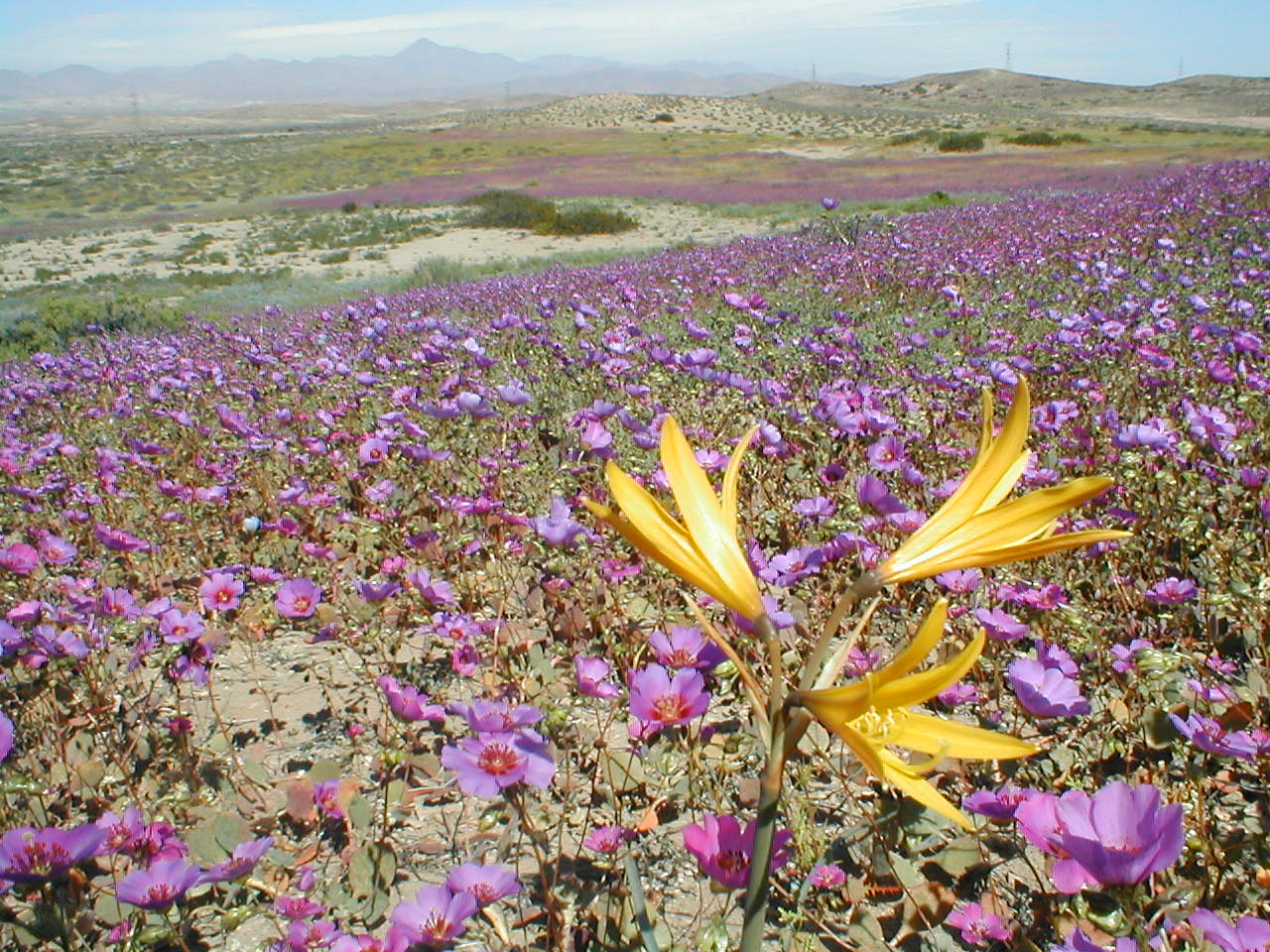
I’m not much of a traveler, but when I see photos like the one above showing the desert in flower, I think it would be a treat to see that. Then I read that Chile’s flowering desert is in danger from tourism and I feel like I am actually doing my part by staying home. (Ha! I sound like the fox in the Aesop’s fable.)
Tibisay Zea reports at the radio show the World, “In Chile’s Atacama Desert, it almost never rains. The area is so dry that it even serves as a practice site for expeditions to Mars. But once or twice every decade, the skies open up and it rains, causing dormant seeds underground to grow.
“As a result, a spectacular ‘flowering desert’ of plants that are mostly endemic to the Atacama region attract tourists and botanists from around the world. But the great interest in the flowers is also the same thing that’s endangering them.
“This natural phenomenon of the blooming desert usually happens every 5 to 7 years, and it’s difficult to predict.
“ ‘There needs to be a perfect combination of precipitation and temperature for the flowers to bloom,’ said Monserrate Barrientos, a tour guide for the flowering desert in Copiapó.
“The most emblematic of the plants is a little pink flower — known as pata de guanaco, or ‘guanaco’s foot’ — that carpets large swaths of the desert during the bloom. Guanaco is a wild llama native to the area, whose feet look similar to the leaves of the flower.
“ ‘The leaves are thick, to [be able to] store water,’ Barrientos said.
“For many scientists, the flowering desert is an exciting event, because it proves the resilience of certain types of flora, like the pata de guanaco, in the world’s driest desert.
“Benito Gomez Silva, a microbiologist at the University of Antofagasta, is studying microorganisms that are very resistant to extreme water scarcity. …
“But the flowering desert is facing several threats. One of them is climate change, according to Cesar Pizarro, a biologist with the Chilean Department of Conservation. ‘Longer droughts or heavier rains could affect the frequency of the desert bloom,’ he said.
Another threat is traffickers who collect the native plants, as well as visitors who pluck flowers to bring home with them.
“During his first visit to the Atacama region earlier this month, Chile’s President Gabriel Boric announced the creation of the Desierto Florido National Park for the first quarter of 2023 in an attempt to preserve the area.
“Environmental organizations have raised concerns in recent years about the possible negative effects of large numbers of tourists visiting the flowering desert, as well as the illegal trade of native flower species and the development of motorsport in the region. … An increased level of protection will ensure that tourists behave responsibly.
“Chilean tourists Carlos Silva and Ana Maria Acuña drove 23 hours from across the country just to see the flowering desert. …
“Ana said that she’s been inspired by the visit. ‘Humans have a lot to learn from nature. It’s so resilient to scarcity, to difficulties.’
“Professor Benito Gomez-Silva agreed that there is a lot to learn. ‘It’s like translating the information that our little brothers, the microorganisms in the desert, provide for us,’ he said.”
More at the World, here. Nice photos. No firewall. Donations to the World welcome.
You might also be interested in my 2021 post “Returning Pilfered Cactuses,” here, about busting traffickers of Chile’s protected cactuses: “most likely the biggest international cactus seizure in nearly three decades.”
Photo: Emmett FitzGerald. Dean Wilson, protector of Louisiana swampland.
Now that we know how important wetlands are for the environment and for protecting us from the worst effects of hurricanes, it doesn’t seem like a fringe occupation to be a protector of swamps. Among those who take Louisiana’s wetlands seriously is the scrappy nonprofit Louisiana Bucket Brigade. Another defender is Dean Wilson. Emmett FitzGerald at Living on Earth [LOE] interviewed him recently.
“LOE: Once, cypress swamps covered hundreds of thousands of acres across the American South. Logging, oil and gas extraction and swamp drainage transformed the landscape. But over recent years, Dean Wilson has worked to protect the remaining cypress swamps of Louisiana’s Atchafalaya Basin from illegal loggers and oil prospectors. Recently, the European biomass industry has set up shop in the state, and conservationists are concerned for the future. Living on Earth’s Emmett FitzGerald reports. …
“EMMETT FITZGERALD: Dean Wilson doesn’t sound like a Cajun, but he’s been living in the swamps of Southern Louisiana for 30 years now.
“DEAN WILSON: I remember the first time I saw the swamp I fell in love with it. You know you see the beautiful green trees, with the Spanish moss, over water, and those egrets flying around like angels. Uh, I just really fell in love with that.
“FITZGERALD: Dean grew up outside of Madrid, in Spain, but he came to Louisiana in his early twenties on his way to South America. He wanted to get used to the humidity and the mosquitoes before doing scientific research in the Amazon. But he never left the Bayou State.
“WILSON: When I realized I could actually make a living off the land, I decided to stay. I was a commercial fisherman for 16 years, full-time. So I made my living hunting and fishing the swamps in the Atchafalaya Basin for 16 years.
“FITZGERALD: Dean says people call all kinds of marshy wetlands swamps, but true swamps are actually pretty rare, and the Atchafalaya Basin is the largest in the United States.
“WILSON: And the difference between a swamp and a marsh is that a swamp is a flooded forest. So you actually go in the springtime when the waters high you go with a boat through the forest and you can see the birds and the animals the otters minks alligators all the things that live in the swamp. It’s a magnificent place. One of the most beautiful places on earth. The Cypress trees grows to different shapes; they can live to up to 4000 years old. So the Cypresses are incredibly beautiful.
The difference between a swamp and a marsh is that a swamp is a flooded forest.
“FITZGERALD: A few years ago, Dean gave up commercial fishing and turned his attention to protecting the ancient Cypress forest he calls home. Now, Dean patrols the swamp in his little motorboat as the head of the conservation organization Atchafalaya Basinkeeper. Today Dean and I are joined in his boat by his German Shepherd Shanka, and a fellow conservationist.
“PAUL ORR: I’m Paul Orr and I’m Lower Mississippi Riverkeeper. …
“FITZGERALD: Dean pulls the boat through the undergrowth into a clearing in the forest, and suddenly hundreds of giant cypress trees are all around us. Their trunks flare out at the bottom like grass skirts. Dean says this cypress forest is teeming with life.
“WILSON: The swamps of the Atchafalaya are considered by scientists the most productive in the entire world. You can go to the Amazon and you may have more biodiversity, but if you get an acre of the Atchafalaya Basin and you’re supposed to get more pounds of fish and crawfish than any other wetlands in the world.
“FITZGERALD: Full-grown cypress trees have nooks and cavities that birds love to nest in.
“WILSON: Nearly half of the waterfowl population in North America come at one time or another through the Atchafalaya basin. So it is a critically important ecosystem not only for North America but the whole western hemisphere.
“FITZGERALD: As we float between the trunks, Dean says swamps like this one once covered much of the American South.
“WILSON: Most people have seen the Amazon river flooding millions of acres of rainforest. The Mississippi used to do the same thing, used to flood 24 million acres of forest. For somebody to picture how big is 24 million acres, there was a time when you could get in a boat, right now this time of year and through this water, could go through this forest, and never leave the forest all the way to Missouri.
“FITZGERALD: But that five-hundred-mile waterway didn’t last. A lucrative timber industry developed in Louisiana around 1700. And then in the 19th century new steamship technology allowed companies to log southern cypress forests quickly and efficiently.
“WILSON: By the year 1900 it was the largest industry in coastal Louisiana, was the cypress logging industry. Uh, and people thought it would last forever. By 1920, it was all over. They logged every single forest in this state. Didn’t leave a single acre standing.
“FITZGERALD: In 1927, the Mississippi River spilled its banks, killing hundreds of people and displacing hundreds of thousands in the most destructive flood in US history. The Army Corps of Engineers responded to the crisis by building levees all up and down the Mississippi to control the flow of the river. The levees were designed to protect cities like New Orleans, but they straight-jacketed the river and prevented the natural flooding of Louisiana’s cypress swamps.
“WILSON: It drained all those forests. Farmers came in, they cut those trees down and today it’s mainly farmland. When people drive through Arkansas, Northern Louisiana, Mississippi through what is called the Delta area, it’s all farmland but it used to be like the Atchafalaya Basin.
“FITZGERALD: Today although the Atchafalaya Basin is smaller than it once was, it’s still one of last great cypress swamps left in the United States. Like all swamps it’s protected under the federal Wetlands Protection Act, and Dean Wilson and Paul Orr want to do everything in their power to preserve it. In 2008, they noticed an uptick in illegal logging in the Atchafalaya. They followed the supply chain all the way to the garden mulch aisle.
“ORR: We realized pretty quickly from following the logs and then finding bags of cypress mulch and following those to Wal-Mart, Lowes and Home Depot that there was this tremendous push to try and build a cypress mulch industry.
“FITZGERALD: But Dean says the companies that supplied the mulch weren’t clear about where it came from.
“WILSON: Home Depot, Lowes and Wal-Mart were selling the mulch as environmentally harvested. The bags would say ‘Made with environmentally-harvested cypress, from Florida’ – you have a Florida address, so they were actually deceiving the public into buying their mulch.
“ORR: And deceiving the retailers — I think that some of the retailers were not very happy that that was not what they said it was.
“FITZGERALD: So when Paul and Dean brought this issue to the attention of the retailers in 2008, the stores agreed to stop selling Louisiana Cypress mulch. But Dean’s still worried about illegal logging. He says the problem is enforcement.
“WILSON: We have laws to protect wetlands, the problem is those laws are not being enforced, and the government isn’t even putting in the resources to enforce them, they don’t even have a boat, so they can’t be enforced.
“FITZGERALD: And Paul Orr believes that problem starts with the cozy relationship between big business and the state government.
“ORR: I guess it was like the late 90s, early 2000s, the Louisiana Department of Economic Development put an ad in a lot of national publications and it was like a guy in a suit doing a back bend and it said, ‘Louisiana bends over backwards for business.’ And that’s really been the culture in Louisiana — the wealthy business people just give away all of our natural resources and our tax monies and everything for business.”
Oh, Homeowners, here’s a simple thing you can do: don’t buy mulch.
More at Living on Earth, here. There is no firewall, but donations are encouraged.









 Suzanne's Mom's Blog