Feeds:
Posts
Comments

Posts Tagged ‘addiction’

Photo: Mike Belleme for the New York Times.
Barbara Kingsolver said she felt indebted to the people who shared their stories when she was doing research for her novel about addiction, and wanted to give back. 

Long before popular author Barbara Kingsolver decided to base a novel on one by Charles Dickens, Mr. Dickens was taking controversial positions on social justice. I think he believed he was not having an influence, but he kept shouting, and over time other voices chimed in and change happened.

There’s a time and place for writers to be impartial, but not in novels. And recently Kingsolver put her money where her mouth is by deciding to take the profits of her novel on the opioid crisis and give it to an addiction center.

Alexandra Alter wrote at the New York Times about Kingsolver’s decision.

“When Barbara Kingsolver was writing Demon Copperhead, a novel that explores the devastating effects of the opioid crisis in southern Appalachia, she was doubtful that people would want to read about such a grim subject.

“To draw readers in, she knew she would have to ground the narrative in real stories and push against stereotypes about the region. So she traveled to Lee County, Va., a corner of Appalachia that’s been battered by drug abuse, and spoke to residents whose lives had been wrecked by opioids.

“ ‘I sat down and spent many hours with people talking about their addiction journey,’ Kingsolver said. …

“The novel was an instant success, in time selling three million copies and winning a Pulitzer Prize for fiction in 2023. But even before the novel came out, Kingsolver felt indebted to the people who shared their stories. …

“Kingsolver decided to use her royalties from Demon Copperhead to fund a recovery program for people battling addiction [and] founded a recovery house for women in Lee County, where the novel is set.

“The center, Higher Ground Women’s Recovery Residence, will house between eight and 12 women recovering from drug addiction, offering them a place to stay, for a small fee, for up to two years, as well as counseling and other forms of support, like free community college classes.

“Kingsolver grew up in rural Kentucky and lives on a farm in Virginia. As someone raised in the region, she said, she felt she couldn’t ignore the opioid epidemic in her fiction. But she struggled for years with how to write about the issue in a way that would make readers pay attention.

“While on a book tour in England, Kingsolver stayed in a bed-and-breakfast where Charles Dickens had worked on his novel David Copperfield, and found inspiration in the story and its resilient young narrator.

“In Demon Copperhead, which is loosely based on Dickens’ novel, Kingsolver tells the story of Damon Fields, a boy who is born to a single teenage mother who struggles with drug addiction. He ends up in foster care and later succumbs to opioid abuse. …

“ ‘I had these royalties that Demon brought me. I took that money and went back to Lee County and said, what can we do with this?’

“The biggest need, she learned, was for support for people in recovery, who often had no housing or job prospects. She and her husband, Steven Hopp, started a nonprofit, Higher Ground, to create a residential home for women, and provided the funds for the nonprofit to purchase the property last summer. …

“Kingsolver said she’s been heartened by support the project has received from local organizations, including church groups that have helped get the living space in shape, a local store that donated furniture and a grant from the Lee County Community Foundation.

“ ‘You might, in earlier times, have expected stigma, for people not to be open to this, but instead it’s been, “Yes in my backyard,” ‘ Kingsolver said.

“ ‘This is the reality of where we live,’ she continued. ‘Everybody knows someone touched by the opioid epidemic.’ ”

Have you read the novel or are you a Kingsolver fan? Say something about this.

More at the Times, here.
Read Full Post »

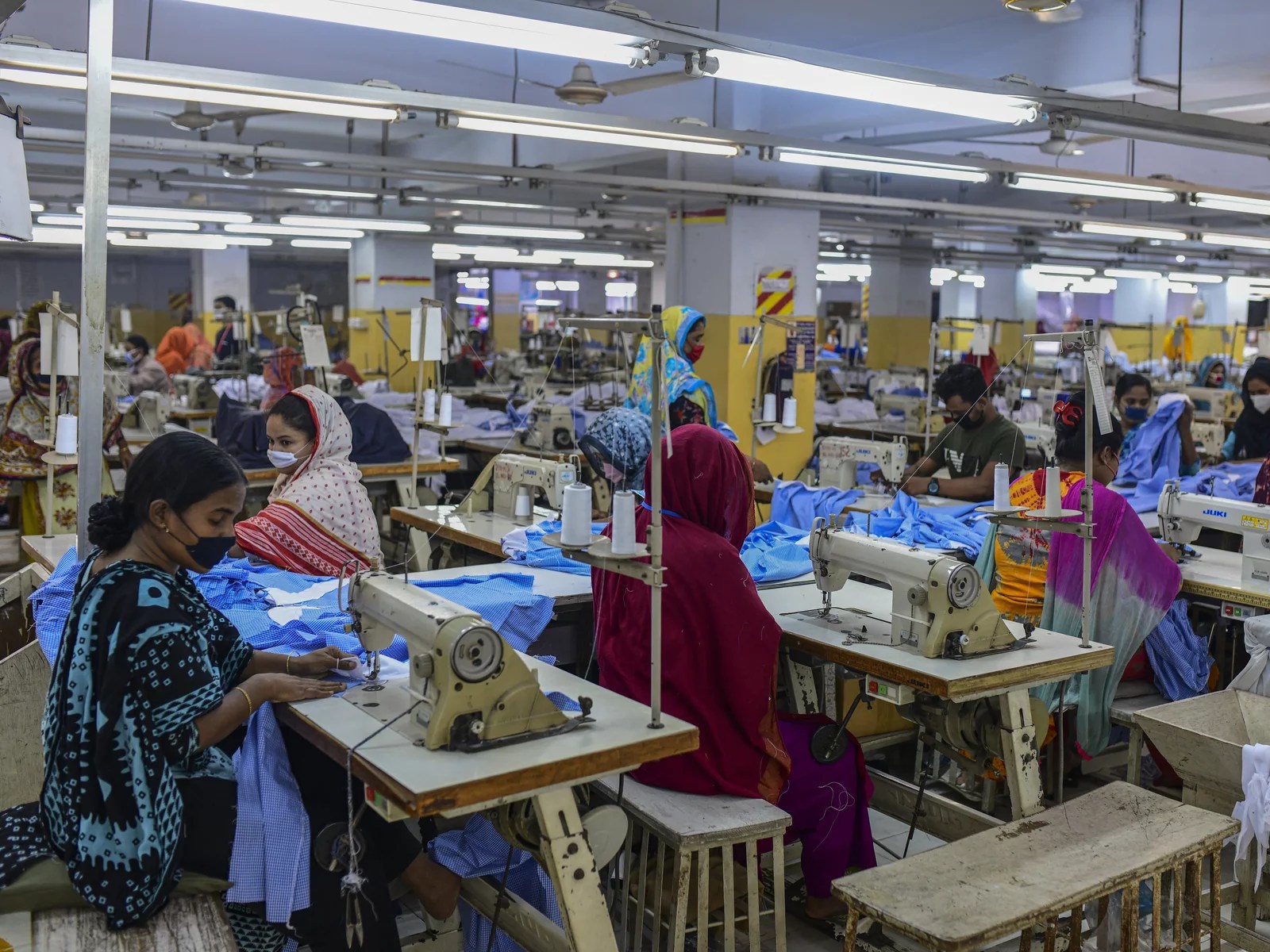
Photo: Zabed Hasnain Chowdhury/SOPA Images/LightRocket via Getty Images.
Garment workers were deemed essential employees during the Covid lockdown in Bangladesh, when workers were more worried about hunger than the pandemic and customers in wealthier places were still demanding new clothes.

Here’s a support group that most of the world needs. It’s one that recognizes capitalism — or at least acquiring more and more “stuff” — as an unhealthy addiction for Spaceship Earth.

Gerry Hadden reports at Public Radio International’s The World, “Twice a month, members of the support group Capitalists Anonymous gather in a small room in Paris, France, beset by chronic buyer’s remorse. 

“Some arrive worried over how much they consume and don’t know how to stop. 

“On a recent night, each of the eight people stood up, introduced themselves, and gave their reasons for coming to the support group. A woman named Claire, who didn’t want to share her last name, said she wants to be with people who share her concerns for the planet and mental health. …

“ ‘Where I live in southwest France’ [said participant Olivier Montegut], ‘it reached 90 degrees one day — in April. We’ve just had a baby, and I am scared for her future,’ he told the group. 

“Most scientists agree extreme weather is being fueled by climate change, which is exacerbated by the burning of fossil fuels. And capitalism is the force behind it all, said the group’s founder, Julien Lamy. 

“He said it’s a global system that pushes unfettered consumption on the rich and poor alike, and virtually everyone, he said, is addicted.

“ ‘To push back, I searched for support groups with a focus on recovery and eventually found Alcoholics Anonymous, with its 12-step method,’ Lamy explained. …

Capitalists Anonymous has just eight steps but starts with the same one — admitting that you have a problem. 

“ ‘It means recognizing that we’re participating in a system that’s destroying life on our planet,’ he said. …

“These steps might sound familiar to people in drug or alcohol programs, but Lamy said in some ways, capitalism is harder to shake because it permeates every part of modern life.

“ ‘I often say that what we’re trying to do is like striving for sobriety,’ he said, ‘but while living inside a bar.’ A planet-sized bar. 

“To avoid feeling overwhelmed, Lamy suggests people take small steps to reduce their impact just to feel better in their personal lives, such as biking to work or cutting back on red meat. …

“Resident Anne-Christelle Beauvois said she heard Lamy on the radio and reached out to learn more.  

“Beauvois worked for years in the fashion industry. She said she became alarmed in the 1990s when so-called fast fashion arrived — that system of mass-producing cheap clothes in sweatshops that then get shipped all over the world.

“ ‘It’s nuts,’ she said. ‘You can wake up in the middle of the night, jump on Instagram to follow some influencer or brand and click, you place an order.’

“Beauvois said she has never ordered anything online in her life. But she’s hardly ‘holier than thou,’ she said as she lit a cigarette and took a puff on another addiction. 

“It may be hard to avoid capitalism when the entire global economy depends on it, but Beauvois said people can still produce differently. 

“ ‘Do we need to make stuff we don’t need?  Must we work 50 hours a week? Is it such a problem to add more pleasure to our lives and less work?’ she said. …

“Lamy, the founder, said people from all over Europe — even Mexico — have written to ask how to start their own chapters.”

So my question is, How do we stop unnecessary acquiring and still ensure that the people who are providing all the “stuff” not only have enough to eat but can have a decent life?

“Houston, we have a problem.”

More at PRI’s The World, here.

Read Full Post »

Photo: Erika Page.
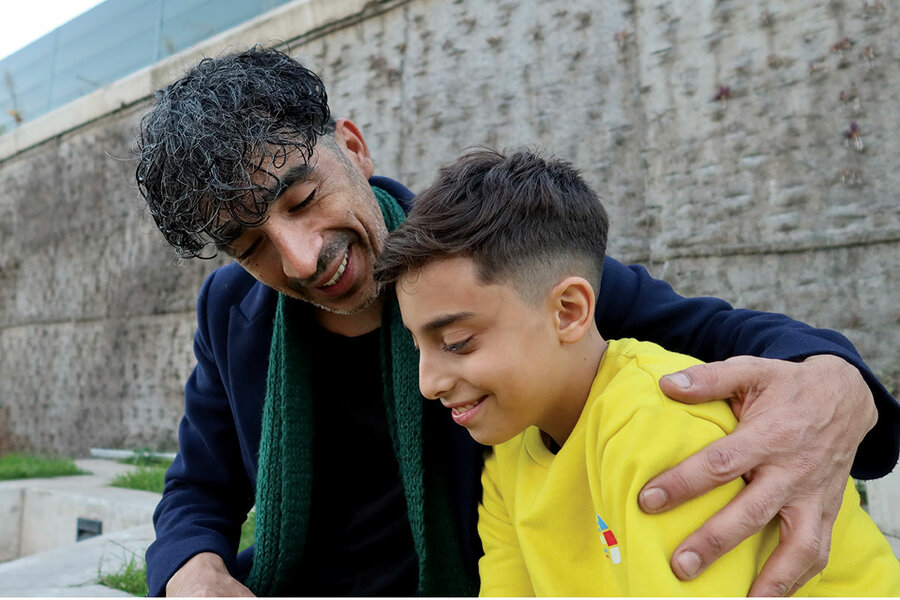
Julio Franchi and Ian Cháves in Buenos Aries, Argentina. The two met in a square four years ago and are now father and son.

Who can resist a story like this at this time of year? I had just finished reading Nothing to See Here, a fanciful novel about parenting someone else’s children, when I read today’s entry by Julio Franchi, written up by Christian Science Monitor staff writer Erika Page.

Fiction and reality are closer than you think.

“At the time,” Franchi reports, “my only thought was to help. I just followed my instinct. Only now am I realizing what it means to be a father. 

“It was 2019. I would meet up with a group of neighbors and our dogs at the square around 10 o’clock at night. We were always the same people. One night a little boy appeared. 

“He was just there, playing with a stick, and you could tell he was alone. He looked abandoned. It was 11 o’clock, 12 o’clock at night. That was late for a 7-year-old. I asked him what his name was, what he was doing there. We got along right away. The next day he came back. 

“From then on he was always there, with his broken sneakers and clothes that weren’t his size. 

“We asked, and he wasn’t going to school. The first thing that occurred to us was to buy him some sneakers. We pooled money between the 10 of us neighbors. 

“I kept trying to connect the dots. I asked where he lived, and he said, ‘that way.’ The next day I walked him to the corner. There were a few squatter houses left in the neighborhood – his was one of them. I went with him one day with the excuse of the new shoes. I didn’t want his mom to think I was meddling. When she came out I realized because of her state that she was dealing with an addiction. But she was receptive to help.

“We found him a local school. That was already a lot. He could eat there and not spend so much time on the street. He would come to my apartment for an afternoon snack, or he’d go to one of the neighbors’ homes. This continued into 2020. We saw each other several times a week. …

“Then the pandemic hit, and the pandemic was really strict here. You couldn’t go anywhere. Six months passed, and I didn’t hear anything from him. When the quarantine began to relax … his mom called to say she was going to be hospitalized. She couldn’t take care of Ian. 

“She wanted to know if I could. I obviously said yes. She never called to ask for Ian back. 

“She clearly loves her son. In her right mind, she’s great. Very fun, very cheerful. But the addiction leads her to lie endlessly. She can sleep for days. Later I learned that Ian had to get her out of places where he was forced to see really ugly situations. Within her chaos, though, she is always looking for the best for him. …

“I’m always thinking about myself, always caught up in my own world. I never thought I would be ready to be a father. When I realized she was handing him over to me, I didn’t think about my life. It’s never crossed my mind even a little bit to wonder what I’ve gotten myself into. I live alone in Buenos Aires; he is my family.

Ian came to pull me out of myself, out of my ego. 

“People who know me can’t believe I get up at 6 a.m. and take him to school. I used to go to bed at 7 in the morning or later. I’ve discovered the morning. I’ve discovered what it means to miss someone. The most important things in my life happen without me expecting them. 

“My relationship with my own father marked me. There are things that have been difficult for me to forgive, moments of violence from another generation. But he never threw in the towel. He always wanted to change. Now I see what it means to be a model for Ian. I can’t hit the brakes and say, ‘I’m not going to raise you for a while. I’m going to spend my time screwing everything up and doing things wrong, so don’t watch me.’ He’s going to watch anyway. 

“Fatherhood is like a giant mirror in which I see all my flaws. The virtues, too, although they aren’t as numerous. It forces me to try to be better, even if I don’t succeed all the time. When I get angry, and I realize five minutes later I’ve made a mistake, I apologize right then. No matter how much I feel like screaming like a madman, I say, ‘Look, what I just said was wrong. I’m sorry.’ …

“When I told Ian the whole truth about what was happening to his mom – what it’s like to be an addict – everything became clearer to him. He began to understand that his mom had a problem. It wasn’t that she didn’t love him. It was essential for him to understand that. …

“When I met him, knowing where he came from, the first thing I imagined was that I was going to bring him things, offer him experiences, buy him stuff. Not that I have any money. I’m a musician. I was better off than him, but just by a bit. But later I realized that in reality what I was going to give him were limits. That’s what he needed. That’s really being a parent. 

“At first we explained things to people about our relationship. Then at one point we said, ‘OK, that’s it, we’re father and son.’ I told him, ‘Just watch, now that we say it, we’re going to start hearing that we look alike.’ Two days later, a woman stopped us and said, ‘You’re identical!’ Ian just started to laugh.”

More at the Monitor, here. No firewall.

Read Full Post »

Photo: Genna Martin/Crosscut.
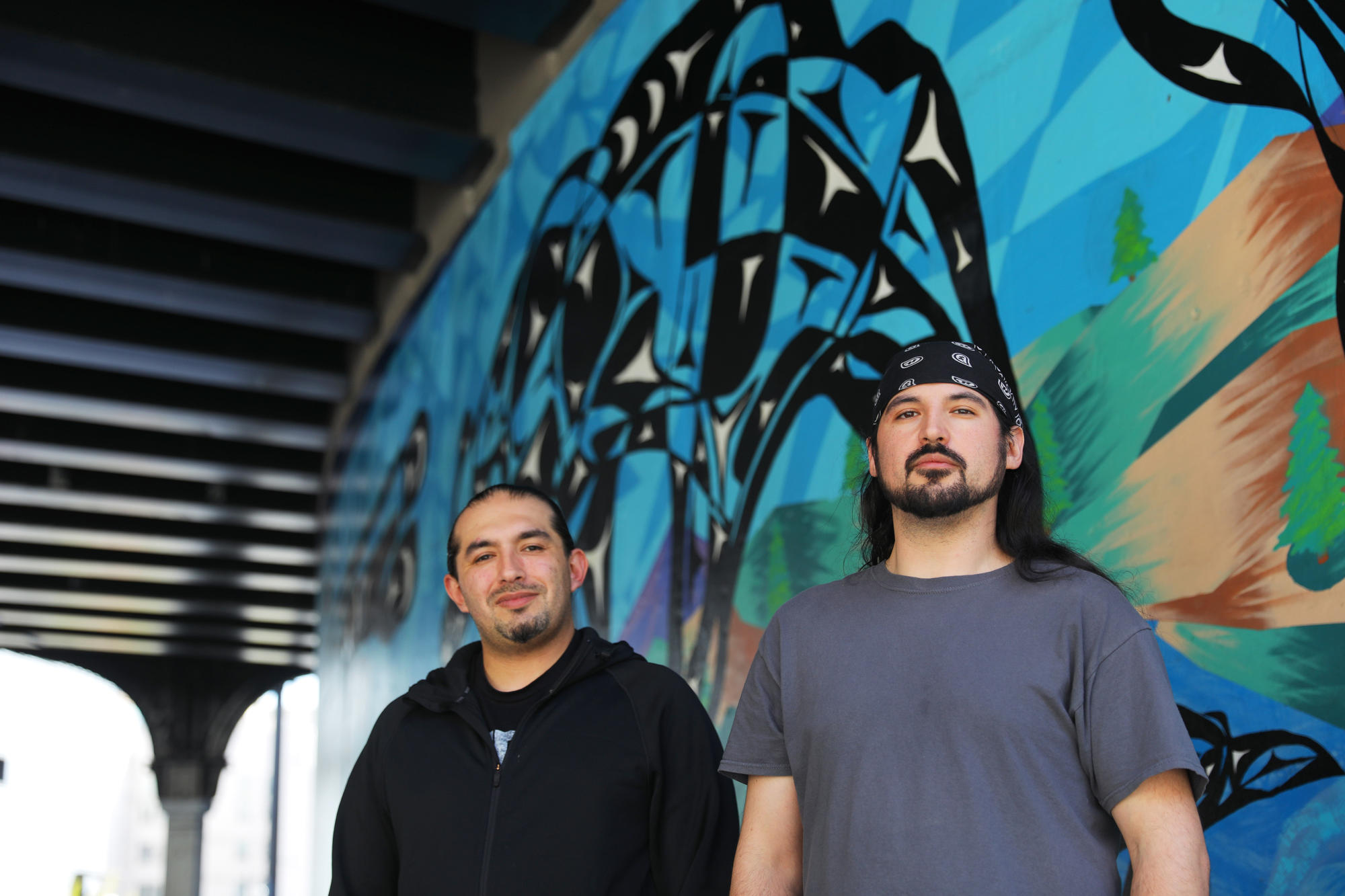
Writes Crosscut, “In their roles as King County support services specialists, Kirk Rodriguez, right, and Joe Barnhart walk the area around the King County Courthouse and City Hall Park, as they build relationships with those who live or hang out in that area, … using their own lived experiences with homelessness to form connections.”

After a recent post on better approaches to homelessness, Hannah sent me a link to a New York Times opinion piece by Maia Szalavitz.

“The needs of homeowners and businesses and those of people who are unsheltered often conflict, ” she writes. “Community leaders, faced with increasing crime and disorder, frequently see police sweeps as the only answer, while advocates for homeless people argue that this response is merely a stopgap that does more damage than good.

“But what if there was a way to stop shifting ‌‌people from encampments to jails to shelters to hospitals and back again? In Seattle a unique collaboration among businesses, neighborhood groups, the police, advocates and nonprofits is fighting cynics and misperceptions driven by politics to cut homelessness.

“The coronavirus pandemic presented Seattle with a crisis and an opportunity. In early 2020, authorities closed congregate shelters, emptied jails and stopped new arrests for minor crimes. Lisa Daugaard, a lawyer, saw a rare chance to develop a new approach to addressing homelessness that didn’t involve law enforcement.

“She’d already had success in getting officials to cooperate across siloed systems: In 2019, she won a MacArthur ‘genius’ award for helping to create a program originally called Law Enforcement Assisted Diversion, which has now been replicated in over 80 jurisdictions across the United States.

“Instead of re-incarcerating homeless people who typically already have long histories of minor arrests, police departments that participate in LEAD refer them to case management services. The program has an overall philosophy of harm reduction, which, in addition to securing shelter, focuses on improving health, rather than mandating abstinence from drugs and other risky behaviors. LEAD originated as a collaboration of public defenders, the police and prosecutors, who put aside differences to work on solutions.

“Peer-reviewed research published in 2017 by the University of Washington found a 39‌‌ percent reduction in felony charges for participants (a group of over 300 people suspected of low-level drug and sex work activity in downtown Seattle) in LEAD compared with controls and an 89‌‌ percent increase in the likelihood of being permanently housed for participants after they started case management. ‌‌

“At the height of the pandemic, when the police were ordered not to make minor arrests or referrals to LEAD, Ms. Daugaard decided to try something new. With federal pandemic funds becoming available and desperate hotel owners newly open to being paid to house nontraditional guests, she said she saw ‘our chance to show that there is another way.’

“Ms. Daugaard and her colleagues created a program now known as JustCare. JustCare staff members, rather than police officers, would respond to urgent calls about encampments. After building trust with ‌‌local homeless people, the workers would move them into housing without strict abstinence requirements and then help clean up the site. The police would be contacted only as a last resort.

“An early success involved an encampment on a major thoroughfare, Third Avenue‌‌, where around two dozen tents were ‌‌erected directly outside the popular local restaurant Wild Ginger, which had closed under pandemic restrictions. A co-owner, Rick Yoder, wanted to reopen the restaurant in the summer of 2021, but he told me, ‘I couldn’t get the windows repaired because the guy said, “I’m not going near those tents.” ‘ …

“Outreach workers from JustCare managed to house ‌‌those living in the encampment and clean up the site without police reinforcement. …

‌”The work begins with no-strings offerings of items like food, water and clean needles‌‌. These regular visits help‌‌ demonstrate trustworthiness and defuse fear about coercion. Creativity is also a must: Conflicts arise over everything from open drug use to burning items for heat. Workers neutralize tense situations with humor and compassion and by recognizing that often bizarre behavior is driven by fundamental needs like hunger, thirst and exhaustion.

“Alison McLean owns a condo in the Pioneer Square neighborhood and contacted JustCare for help dealing with tents that started being pitched against her building during the pandemic. …

“JustCare began its outreach. ‘Maybe two weeks later, they were like, “We found housing for everybody,” ‘ Ms. McLean said. …

“Between the fall of 2020 and this past spring, JustCare closed 14 encampments and placed over 400 people in hotels and other lodging.”

More at the Times, here. Thanks, Hannah. Good tip.

Read Full Post »

Taking my walk in Chinatown this morning,

I noticed an unusual mural.


I got up close to read the sign, which said the South Cove Community Health Center Tobacco Control Project that had created the mural in 1998. The Boston Youth Fund site adds more: “This mural was commissioned by the South Cove Health Center as part of their antismoking campaign. It was funded in part by the Massachusetts Department of Public Health. The mural depicts the path to a healthy lifestyle from cigarette addiction.”

Your eyes are drawn to the Buddha-like figure in the center and the yin/yang symbol, but if you look more closely, there are giant cigarettes throughout the scene. This photographer got sharper pictures.

Much as I love projects like this, I do wonder if they meet their intended goals. Did more people quit smoking? How about the people who created the mural? Was the goal to have youth working on something constructive? Did they continue to be constructive in their lives?

I remember when the storekeepers in my hometown were worried about getting their windows soaped on Mischief Night. They decided to partner with the school to have young people create nice window paintings for them at Halloween. I was one of those kids. Did that prevent store windows from getting soaped? Little Miss Goody Two Shoes would no more have done mischief on Mischief Night than have flown to the moon. The initiative may not have hit the intended target.

Read Full Post »