Feeds:
Posts
Comments

Posts Tagged ‘agriculture’

Vermonters care a lot about their farms. So when a dairy farm in South Woodstock was threatened with development, the neighbors bought it.

“Perched on a hill overlooking a valley,” writes Ann Trieger Kurland at the Boston Globe, “Farmstead Cheese Co. began as a neighborly plan to preserve a dairy farm.

“The bucolic 18-acre site was a former water buffalo farm and creamery that produced mozzarella and yogurt. When its owners moved to Canada and put the land up for sale, locals worried about the loss of jobs and the disappearance of another bit of the Green Mountain State’s rich heritage. They feared that the pastoral landscape might be grabbed by a developer.

“So 14 neighbors banded together to buy the farm and decided cheese making might safeguard its future. Within the year, they rebuilt the creamery, brought in a mixed breed herd — Holstein, Jersey, Ayrshire, and Swiss Brown — to blend milks and make farmstead cheese. They started the first community-owned dairy farm in the state. In two years, the company has won dozens of awards for its cheddar, a harvarti-style tilsit, Edam, and English and French-style cheeses.

“The new owners are not novices. They include seasoned farmers and food industry executives who hired experienced staff. The top cheese maker, Rick Woods, 46, has been plying his craft for 19 years. ‘We’re a new company, but it’s not the first time around the block for these people,’ says Sharon Huntley, who is in charge of marketing.” Read more about the community-owned farm and where you can buy the cheeses.

Photo: Vermont Farmstead Cheese Co.
At the community-owned in South Woodstock, Vt., there are 135 cows.

Read Full Post »

We’re going to the Mother’s Day brunch at Verrill Farm, one of 18 farms in the Boston suburb Concord.

The farm started out as a dairy business in 1918, but today just raises flowers, fruits, and vegetables. There’s an enclosed farmstand that in addition to produce and flowers, sells prepared meals, baked goods, and specialty items. Verrill bounced back from a devastating fire a few years ago and is often credited on menus around the region.

We enjoy the farm’s outdoor brunches. Suzanne and John are likely to run into people they knew in elementary school, now with their own kids in tow. We’ll eat at trestle tables under tents, and the grandsons will be able to ride ponies, climb on a wooden climbing thing like a boat, and roll down the hill. Our granddaughter usually gets a kick out of watching whatever her brother is doing.

The moms will probably be wearing their birthstone jewelry from Suzanne’s company, Luna & Stella. You may want a piece, too, for yourself or your mom. If so, Suzanne says, “You can use BLOGMOM13 for free shipping.”

Read Full Post »

Take two tomatoes and call me in the morning.

***

The University of South Carolina has developed a manual for health centers that want to collaborate with farmers markets on health, even writing food prescriptions for patients who need to improve their eating habits.

The manual’s authors, Darcy Freedman and Kassandra Alia, write in the intro of their manual:

“Farmers’ markets have grown in popularity in recent years as a place for improving health, increasing economic growth for local agriculture, and building communities. …

“Though the rebirth of farmers’ markets represents an exciting movement in the United States, data reveal that the benefits of farmers’ markets are not evenly distributed. Communities with the greatest need for farmers’ markets, for instance, are least likely to have them.

“In the present manual, we describe an approach for developing a health center‐based farmers’ market. Health centers, in particular federally qualified health centers or FQHCs, were identified as a strategic place to locate farmers’ markets because they may be located in food desert contexts (i.e., low‐income communities with low‐access to healthy food retailers). Additionally, locating at a health center makes an explicit connection between farmers’ market and preventive medicine.” More.

Photo: Aram Boghosian for The Boston Globe

Read Full Post »

Once upon a time, mine workers were paid in paper chits that could be redeemed at the company store. (Remember the song “Sixteen Tons,” by Tennessee Ernie Ford and “I owe my soul to the company sto’ “?)

A while back I saw a story in the NY Times about refugee gardens, and there was a picture of someone using wooden coins to buy produce. It turned out that people were not being paid in wooden coins as miners were paid in paper. Instead, the City of San Diego was encouraging poor residents to pursue good nutrition by giving them wooden coins for shopping at farmers markets.

The coins were really just a footnote to Patricia Leigh Brown’s story, which focuses on a national movement to help immigrant farmers get back into the occupation they know best.

“Among the regular customers at [San Diego’s] New Roots farm stand are Congolese women in flowing dresses, Somali Muslims in headscarves, Latino men wearing broad-brimmed hats and Burundian mothers in brightly patterned textiles who walk home balancing boxes of produce on their heads.

“New Roots, with 85 growers from 12 countries, is one of more than 50 community farms dedicated to refugee agriculture, an entrepreneurial movement spreading across the country. American agriculture has historically been forged by newcomers, like the Scandinavians who helped settle the Great Plains; today’s growers are more likely to be rural subsistence farmers from Africa and Asia, resettled in and around cities from New York, Burlington, Vt., and Lowell, Mass., to Minneapolis, Phoenix and San Diego.”

Read how it works. (And click on the slide show to see the wooden coins. My eyes were drawn to them because my father’s favorite “good-bye” line to toddlers always was, “Don’t take any wooden nickels”!)

Photo: Sandy Huffaker for The New York Times
Khadija Musame, right, with a customer from Somalia at the New Roots Farm stand in San Diego.

Read Full Post »

Brian sent me information about Higher Ground Farm, which is putting down roots on the roof of the Design Center in South Boston.

“A roof farm is a type of green roof. A green roof is a system of layers that is laid over an existing roof. A green roof is beneficial to a building owner and the community because it protects the existing roof, doubling to tripling its life, thereby saving money and keeping materials out of the landfill.

“Green roofs also reduce a building’s energy costs by insulating in the winter and cooling the rooftop in the summer. Finally, green roofs temper the effects of two common urban environmental problems – combined sewer overflow and the urban heat island effect.

“A series of roof farms throughout the city will capitalize on the environmental benefits of green roofs while also increasing access to fresh, healthy food. Higher Ground Farm will operate several roof farms throughout the greater Boston area, utilizing previously unused space while providing additional rental revenue to a building owner.

“Roof agriculture has the potential to be a job-producing boost to the economy, and a completely environmentally sustainable business sector that can set Boston apart from other cities. Higher Ground Farm will utilize the resources of our top-notch universities to study roof agriculture, which will position Boston as a leader in the field. Finally, Higher Ground Farm will be a space where our community can reconnect to productive green space and learn about sustainable city planning.” More.

I also found a video interview about it that you will like, here.

Read Full Post »

I was pushing the stroller this morning, singing the old Thanksgiving hymns (“Come Ye Thankful People,” “We Gather Together,” “We Plow the Fields and Scatter the Good Seed on the Ground”) and thinking of harvests.

So today might be a good time to blog about harvests and drought-resistant crops.

“Scientists are developing faster-maturing and drought-tolerant varieties of corn and cotton,” writes Madalitso Mwando at AlertNet, “holding out the hope of much-needed relief for thousands of farmers across Zimbabwe.

“As planting season approaches amid concerns about successive poor harvests, research into drought-resistant seeds is gaining momentum …

“Zimbabwean farmers have suffered a succession of poor harvests with yields far below what the country needs, forcing the agriculture ministry repeatedly to revise its projections for harvests.

“Farmers and their unions blame the cyclical uncertainties of their sector not only on a lack of up-to-date farming technology, but also on their inability to obtain seed varieties that can survive the low rainfall caused by climatic shifts.

“The Scientific and Industrial Research and Development Centre (SIRDC), in partnership with the University of Zimbabwe and Biotechnology Research Institute (BRI), has developed a drought-resistant variety of maize (corn) seed called Sirdamaize 113.

“Farmers have had to wait between 150 and 180 days before harvesting their traditional maize crop, but the center says the new seed takes only 136 days to mature.” Read more.

I hope a bountiful harvest was represented at your dinner table today.

With gratitude to blog readers for reading,
Suzanne’s Mom

Photograph: Philimon Bulawayo/Reuters/File
Martha Mafa, a subsistence farmer, stacks her crop of maize (corn) in Chivi, about 378km (235 miles) southeast of the Zimbabwean capital of Harare.


Read Full Post »

Photograph: Leah Nash for the NY Times
Tyler and Alicia Jones on their farm in Corvallis, Ore.

I’ve blogged before about young people who are attracted to farming. Here, I wrote about a friend’s great niece raising organic chickens on a farm in Connecticut.

At the same time, I have been reading about the phenomenon. For example, Dawn Thilmany and S. Sureshwaran wrote in a publication called Choices about “Innovations to Support Beginning Farmers and Ranchers.” And the USDA has increased the numbers of programs they have for beginners.

Recently, Isolde Raftery wrote in the NY Times about a young farming couple in Corvallis, Oregon.

“For years, Tyler Jones, a livestock farmer,” Raftery wrote, “avoided telling his grandfather how disillusioned he had become with industrial farming.

“After all, his grandfather had worked closely with Earl L. Butz, the former federal secretary of agriculture who was known for saying, ‘Get big or get out.’

“But several weeks before his grandfather died, Mr. Jones broached the subject. His grandfather surprised him. ‘You have to fix what Earl and I messed up,’ Mr. Jones said his grandfather told him.

“Now, Mr. Jones, 30, and his wife, Alicia, 27, are among an emerging group of people in their 20s and 30s who have chosen farming as a career. Many shun industrial, mechanized farming and list punk rock, Karl Marx and the food journalist Michael Pollan as their influences. The Joneses say they and their peers are succeeding because of Oregon’s farmer-foodie culture, which demands grass-fed and pasture-raised meats. …

“Garry Stephenson, coordinator of the Small Farms Program at Oregon State University, said he had not seen so much interest among young people in decades. ‘It’s kind of exciting,’ Mr. Stephenson said. ‘They’re young, they’re energetic and idealist, and they’re willing to make the sacrifices.’ ” Read more.

Check out the National Young Farmers Coalition, here.

Read Full Post »

The U.S. Department of Agriculture funds a wide range of activities to boost the economic strength of small towns and rural areas. It doesn’t just fund farmers, although farmers may benefit from a more vibrant rural economy.

To that point, here’s an story from the Philadelphia Inquirer by Howard Shapiro on how the USDA is helping a New Jersey theater.

“A little semiprofessional theater amid the farmland of Hammonton, N.J., has become the beneficiary of more than a half-million dollars in grants and low-interest loans from a most unlikely arts angel: the U.S. Department of Agriculture. …

“The Agriculture Department money is coming directly to the theater in three acts, so to speak: a $23,000 grant to improve its historic building and its ticketing and computer programming; an $89,000 20-year loan at 3.5 percent interest, mainly to enhance stage equipment; and a 30-year loan of $482,000 at 3.38 percent interest, to buy its building.

” ‘It’s an unusual project for the USDA to finance,’ said Howard Henderson, the department’s rural-development director for New Jersey. “This is a fascinating way we’ve been able to benefit a rural community.’

“The Rural Development program, financed by Congress, exists to strengthen or help establish facilities in rural communities that will improve downtowns, provide services, and encourage local activities. But money usually goes to such projects as firehouse restoration or, as in New Jersey’s northern Sussex County, a plan for hospice units.”

The Eagle Theatre applied for the money because, according to Henderson, everyone around Hammonton knows how active the USDA has been in supporting growth. More.

Photograph: http://theeagletheatre.com/about-us/

Read Full Post »

In a recent article in the NY Times, Kathryn Shattuck described a festival that took place on “600 acres of pasture and test plots at the Land Institute on the outskirts of Salina, Kansas. …

“Each autumn for 34 years, during its annual Prairie Festival, this nonprofit research organization has become a Mecca of sorts for those whose passions run to sustainability, farming and feeding the world.

“For two days, Friday evening through Sunday afternoon, lectures and walking tours, interspersed with art installations and musical performances, focused on climate change, agricultural practices and what the institute’s president, Wes Jackson, called ‘getting over the hump’ in the use of carbon-based energy sources. …

“Jackson, a plant geneticist who co-founded the institute in 1976, calls the festival ‘an intellectual hootenanny,’ where ideas collide with music, art, food like bison chili, and bread and beer made from Kernza, the institute’s trademarked perennial wheatgrass.

“But the democratic casualness of the environment — listeners sprawled on hay bales, children frolicking on the hillside — belied the seriousness of purpose as college hipsters and wizened hippies shared space with revered scientists and conservationists like David Orr, an environmental studies professor at Oberlin; Fred Kirschenmann, a distinguished fellow at the Leopold Center for Sustainable Agriculture at Iowa State University who is also the president of the Stone Barns Center for Food and Agriculture in Pocantico Hills, N.Y.; and Douglas Tompkins, who has preserved more than two million acres of wilderness in Chile and Argentina.”

Read all about it here.

Photograph: Steve Hebert for the New York Times
Sleeping under the stars at the Prairie Festival 

600 acres of pasture and test plots at the Land Institute on the outskirts of Salina, Kansas

Read Full Post »

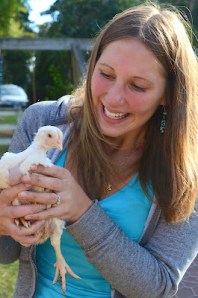
My friend’s great niece doesn’t come from professional farmers, but the gardening gene goes back at least to her Italian great grandfather. Now, having graduated from a liberal arts college and worked for various park services, she is — like a surprising number of young people today — going into farming.

At a farm blog, she describes raising organic chickens in Connecticut.

“Hi! Nichki and Laz from The Wooly Pig here, taking over the Barberry Hill Farm blog for an entry!

“We are young aspiring CT farmers who were lucky enough to meet Kelly and Kingsley last March and over the past several months they have become our good friends and farming mentors. This fall, the Goddards have been so kind as to lend us their pasture and their expertise so that we can raise our very first batch of chickens for our community.

“Our birds are pasture raised, which means they are brought up outdoors with plenty of access to fresh vegetation, open air, and sunlight.

“They are fed a strictly organic diet — an added cost for us that we feel is a worthwhile investment in our customers’ health. …

“We can’t thank our customers enough for supporting local, sustainable agriculture. Your good decisions help build strong, healthy communities right here in Connecticut. …

“For more information on our chickens, please contact us by email at TheWoolyPig@gmail.com.”

Read the engaging Barberry Hill Farm blog here. And if you live near Madison, Connecticut, get your chickens from The Wooly Pig

Photograph from http://www.barberryhillfarm.com.

Read Full Post »

I’m looking forward to the farmers market season, and I’m not the only one. More and more consumers are demanding really fresh food. Fortunately, farmers are increasingly creative about getting that fresh food to consumers.

Now farmers markets are going online. I learned about this via the Christian Science Monitor, which points to an article by Katherine Gustafson for YES! magazine.

Gustafson writes that small producers are using the Internet more.

“Smart use of the Web,” she writes, “can shift the focus of food retail away from industrial suppliers and toward those in the position to offer on-demand delivery of the freshest food around. …

“One example I found particularly inspiring was the Farmers Fresh Market program run by the Foothills Connect Business and Technology Center in Rutherfordton, N.C.

“The organization created a proprietary online system to allow individuals and businesses in nearby cities to order fresh produce from growers local to Rutherfordton. In many cases, the growers pick the food the same day the buyers receive it.”

What’s not to love? Read more.

Photograph: Jonathan Ernst/Reuters/file

Read Full Post »

Community-supported agriculture has been working well for some years now. A person who likes local produce and wants to support local agriculture will buy a “share” that can help support a farmer (recently, even a fisherman) while giving the “investor” a guaranteed amount of food. The “dividend” could be a dozen eggs a week, a basket of produce, a partial catch of fish. Often a group of friends will band together on a share, especially if they don’t think they can use all the zucchini they expect come midsummer.

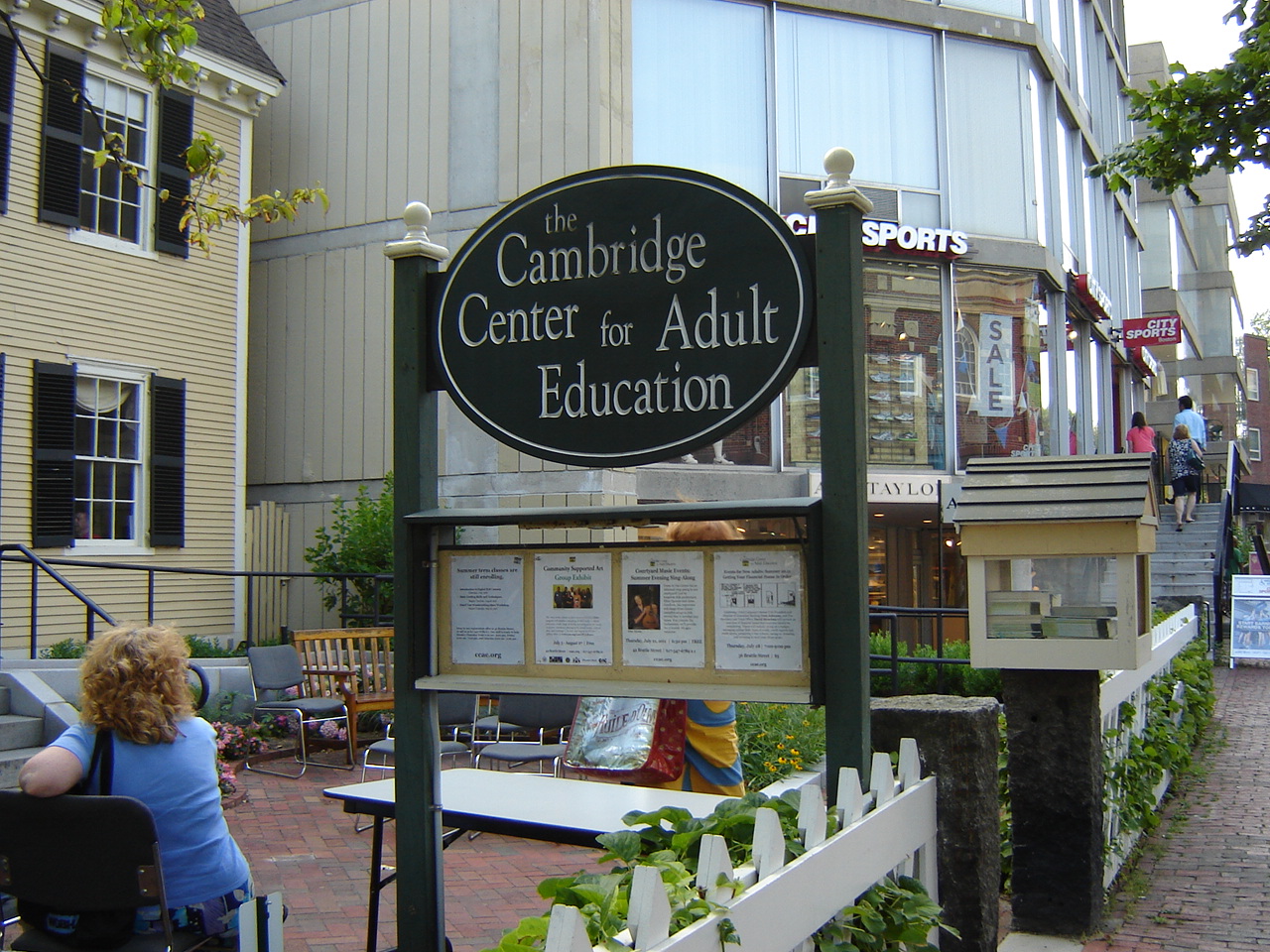
Now some artists are trying this approach. A $300 share in “Community Supported Art will get [a person] three monthly assortments of locally created artworks — nine pieces in all. … CSArt, a new project of the Cambridge [MA] Center for Adult Education, is modeled on a wildly popular Minnesota art CSA, which has inspired groups in Chicago and Frederick, Maryland, to create their versions. And some glassmakers in Burlington, Vermont., independently adopted the CSA form last year.

” ‘The success of the Minnesota program is due in part to the fact that it’s based on something people understand,’ said Laura Zabel, executive director. … CSArt aims to nurture artists as small business owners and to tap into the burgeoning enthusiasm for the local and the handmade.” Read the Boston Globe article.

Read Full Post »

« Newer Posts