Photo:Gavin Doran. “Song of the North” involves 483 puppets, 208 animated backgrounds, 16 masks and costumes and nine performers.
Here’s how an incredibly creative Iranian is showing the world something deeper than the stereotypes about his home country.
Jennifer Schuessler wrote about his puppet epic at the New York Times in March.
“On a recent afternoon on 42nd Street in Manhattan, a mythological bird was preparing to take flight. Backstage at the New Victory Theater, a black-clad puppeteer put on an elaborately stylized mask and stepped into a beam of light, throwing the shadow of fluttering hands onto a large scrim.
“Nearby, two other performers were gearing up to practice a sword fight. Then the music started, and a crew of nine began a full run-through ofSong of the North, an elaborate shadow puppet staging of stories from the 10th-century Persian epic the Shahnameh.
“From the audience, the show unfolded like a seamless animation. But backstage, the next 80 minutes were half ballet, half mad scramble, as the performers grabbed hundreds of different puppets, props and masks stacked on tables and, with split-second timing, jumped in and out of the light beams streaming from two projectors.
“Leaning against a backstage wall was the show’s creator, Hamid Rahmanian. His role? ‘Stressing out,’ he said.
“Since premiering in 2022 in Paris, Song of the North (which is intended for audiences 8 and older) has received enthusiastic reviews and played to packed houses on three continents. Its arrival in the heart of Times Square [was] timed for Nowruz, the Persian new year celebration. It also coincides with the release of a new contemporary prose translation of the Shahnameh that Rahmanian produced in collaboration with the scholar Ahmad Sadri — the first complete English version by Iranians, Rahmanian said.
“The show is mind-dizzyingly complex, involving 483 puppets, 208 animated backgrounds, 16 character masks and costumes and nine performers who follow more than 2,300 separate cues.
“But the idea behind it, Rahmanian said, is simple: to bring the richness of Persian culture to young audiences and adults whose views of Iran may be dominated by negative stereotypes.
“ ‘Everything about Iran is seen through the lens of politics,’ he said. ‘Iranian culture is a symphony. But in the West, we only hear the drumbeat.’
“The Shahnameh, or Book of Kings, is said to be the longest poem ever written by a single author — twice as long as the Iliad and the Odyssey combined. It was composed by the Persian poet Abu al-Qasem Ferdowsi, who spent 33 years turning centuries of historical and mythological lore into more than 50,000 couplets.
“In Iran, where many people give their children names of characters (Rostom, Sohrab), it remains a cultural touchstone. But growing up in Tehran, Rahmanian, now 56, was resistant to his father’s admonitions to actually read it.
“He was more drawn to visual art, and by 19, he said, had founded his own graphic design business. In 1994, he moved to New York to study computer animation at the Pratt Institute. In 1996, he was hired by Disney, where he worked on projects like Tarzan … but he felt like he didn’t fit in, and left two years later. …
“In 2008, Hamid pivoted to what has become his life’s work: promoting the Shahnameh. … Rahmanian was inspired to create a theatrical piece after seeing a restored version of Lotte Reiniger’s 1926 silent film The Adventures of Prince Achmed, believed to be the oldest surviving full-length animated film. ‘I thought, “I want to do something like that!” ‘ he said. …
“Nazgol Ansarinia, a visual artist visiting from Tehran who was watching backstage, said she was amazed by both the intricacies of the performance and the immediacy of the storytelling.
“ ‘In Iran, everyone knows the stories and characters from the Shahnameh, but the text itself is not that accessible,’ she said. ‘Hamid has really made it accessible.’ ”
More at the Times, here. Beautiful photos and videos.
Photo: Sideshow/JanusFilms. The movie Flow is all about animals — no humans and no verbal conversation — and it seems that domestic pets are mesmerized.
I had been wanting to see the movie Flow, so at Easter, Suzanne set it up for the kids and me while she attended to Bunny work.
It was fun to figure out with the grandchildren exactly what was happening in the film and to add our own sound track. But in the end, I don’t think they liked it much. I myself have a problem with ambiguous endings, gorgeous as the animation was.
Now I am fascinated to learn what the movie has meant to a different audience: household pets. Esther Zuckerman has a report at the New York Times.
“Search on TikTok and you’ll find a number of videos of dogs and cats alike viewing Flow alongside their owners, appearing to recognize themselves in the gentle saga, which tells the tale of an adorable black kitty who must work with a motley crew of other industrious animals to survive rising sea levels in a surreal landscape. The trend is a particularly cute coda to what was already one of the feel-good stories of awards season in which the dialogue-free indie — made on open-source software and directed by Gints Zilbalodis — triumphed over studio fare like Inside Out 2 and The Wild Robot, to earn Latvia its first ever Oscar.
“Watching Flow in the theater is a wonderfully immersive experience where the spectacle of the movie’s visuals are on full display. … Watching Flow at home (it is streaming on Max) with an animal is an equally delightful experience, but a different one. You may find your attention pulled in two directions as you try to contemplate what this all means to your pet as well as what it means to you.
“I, for one, tried to decipher just what was going on with [my dog] Daisy. Surely, she wasn’t understanding the climate change allegory, but her huge ears stood up straight as she gazed upon the heroic cat, and I caught her running up to the TV for a sequence in which it and its capybara ally go tumbling off their boat. Seeing — or perhaps just hearing — the characters in peril stressed her out on some level.
“Matiss Kaza, who produced and co-wrote the film, said in an email that he suspects that it’s the real animal sounds used in production that attract the attention of our domesticated friends. …
“When I spoke to social media users who posted clips of their household beasts responding to Flow, they explained that their animals aren’t usually this entranced by the screen.
“Chayse Orion, 24, had seen other TikTok posts about the film before he decided to watch it. He thought it was cute but wasn’t paying super close attention. His cat Fishbone was. ‘Fishbone was so engrossed in the movie,’ Orion said. ‘He was just so into it, which was really weird because I’ve never seen him interact with a show like that.’ …
“Orion knew it would make great internet content. Not only did he start to film Fishbone, he moved the cat’s tower closer to the TV for a better view, one that put Fishbone at eye level with his animated brethren. ‘I actually put it on again yesterday for him to watch while I was working,’ he said. ‘It’s definitely his favorite movie now, for sure.’ …
“Celine Orosco, 29, found that her dog Samson, a golden retriever, was also invested in Flow. She said it was the first movie he ever watched all the way through. He was particularly excited, she noticed, whenever the Labrador that joins the cat’s group of travelers came onscreen. ‘He really loved that dog,’ she said.
“Of course, we don’t know what any of our animals are actually thinking when they watch Flow. Did Gao’s black cat actually recognize herself? Hard to say. My boyfriend at first inferred that Daisy liked the lemur who has a basket full of trinkets, then thought perhaps she was upset by it. I know that she didn’t follow the plot — I love her, but she’s not that intuitive. She did, however, hear the so-called voices of the characters, and reacted to whatever they were conveying. …
“We love to watch our pets watching Flow for the same reason we love to watch Flow. The film understands that delicately anthropomorphizing these animals is a powerful tool. Their movements are carefully calibrated to replicate the way the creatures would behave in real life, but their actions are just human enough to make the story feel relatable.
“Would a cat, a dog, a capybara, a large bird and a lemur all team up to save one another should massive floods happen? Hard to say. But it’s a good metaphor about how empathy can be salvation.”
More at the Times, here. If you’ve already seen the movie and can bear a negative review, check Asakiyume’s reservations, here. But be warned: there are spoilers.
Photo: Aardman/Netflix. A still from Chicken Run: Dawn of the Nugget. The Wallace and Gromit studio reassures fans over rumors of a clay “shortage.”
Here’s a kind of antidote to all the serious things one worries about these days. I myself am an Olympic worrier. For example, when Suzanne went to live in New York after college, I made a little notebook for her, starting with “Things to Worry About in New York City.” (I don’t think it infected her much.)
These days, I worry about the health of people I care about, the war in the Middle East, climate change, the increase in authoritarian governments, Covid, the meanness of our political divide, plastic in the ocean, homelessness, Bangladesh, Burma, Sudan, Ukraine, hungry children, income inequality. And when I don’t know what is going on or why something is happening in my own life, I revert to a childhood way of coping by making up scenarios that are usually off base. Like my scratchy eye means I’m going blind.
So I was delighted to see that there are silly things to worry about. Couldn’t they become a kind of self-inoculation? I guess they would still have to be regarding something you actually cared about. A nice example today is the worry that Wallace and Gromit claymation fans indulged in when they thought there might be a shortage of clay.
Andrew Pulver has the story at the Guardian, the “Wallace and Gromit studio, Aardman Animations, has reassured its fans, and the film industry at large, that production of its popular films will not be grinding to a halt any time soon, saying ‘there is absolutely no need to worry.’
“After reports that the manufacturers of Aardman’s favored modeling clay had gone out of business, meaning the animators had enough supplies for only one more film, Aardman issued a statement on social media saying: ‘We are touched about recent concern over the future of our beloved clay creations, but wanted to reassure fans that there is absolutely no need to worry.’ …
” ‘We have been tinkering away behind the scenes for quite some time with plans in place to ensure a smooth transition to new stocks to continue to make our iconic productions.’
“Aardman is shortly to release ChickenRun: DawnoftheNugget, a sequel to its hit poultry comedy from 2000, while it is still in production on a new Wallace and Gromit feature, due for release in 2024.” More at the Guardian, here. No paywall.
That’s one worry that can be put to bed. … But wait! The Guardian goes on to say, “In 2005 Aardman lost much of its archive material in a warehouse fire in Bristol.” What? Oh, no!
Photo: Disney. Cape Town residents Nadia Darries and Daniel Clarke co-directed Aau’s Song, the final short film in the second volume of the Star Wars: Visions anthology.
I had just given birth to Suzanne when neighbors offered to help out by taking John to Star Wars. He was five, and that was the moment that Star Wars became a big deal in our family.
It was a big deal around the world, too, and today’s story shows that its lasting popularity in Africa has recently led to Disney and Lucasfilm blessing an African version.
Ryan Lenora Brown reports at the Christian Science Monitor, “When George Lucas first created the Star Wars universe [he] probably didn’t imagine extraterrestrial worlds crawling with fynbos, the brightly colored, prickly shrub land of South Africa’s Western Cape. Nor did he likely envision his Jedi warriors channeling the energy of sangomas, southern African traditional healers.
“But when South African filmmakers Nadia Darries and Daniel Clarke were asked recently to create their own version of the Star Wars universe for an animated short film, their alien world bore distinct imprints of their Earthly homeland.
“ ‘We weren’t super intentional about it, but of course we are South Africans, so we are drawing on real experiences from our own world,’ says Ms. Darries, an animator from Cape Town whose work has appeared on the BBC.
“The pair’s 15-minute film, Aau’s Song, is part of a recently released anthology called Star Wars: Visions, in which animation studios from around the world were invited to re-imagine the famous fantasy universe through their own eyes.
The resulting shorts feature Jedi in saris, anime-inspired Sith lords, and lightsaber-wielding teenagers with thick Irish brogues. …
“Since its inception, Star Wars has been the world’s darling. And its films have long had a dedicated following across the African continent. In 2015, for instance, The Force Awakens had the single most profitable opening day in South African cinema history to that point. And the Earthside location of Darth Vader’s twin-mooned home planet, Tatooine, is in Tunisia, where it’s been a popular site of pilgrimage for both local and international fans.
“But the franchise itself has often been slow to reflect back the diversity of its audience. …
“ ‘As someone growing up in South Africa, my perception of sci-fi and fantasy was that the central character will have pale skin, speak English, and probably be a man,’ says Omar Morto, a South African radio presenter, musician, and lifelong Star Wars fan.
“In recent years, however, Star Wars has made strides to look more representative of planet Earth, featuring protagonists of color and female characters who actually speak – sometimes even to each other. But its universe is still being imagined, largely, by Westerners.
“Two years ago, Lucasfilm, the Star Wars production house, released a series of short, Star Wars-inspired films made by Japanese anime studios called Star Wars: Visions. The reaction to that series was so positive, producers said, that they decided to create a second volume, this time featuring animators from around the world. …
“For Ms. Darries and Mr. Clarke, who made Aau’s Song with the South African studio Triggerfish, the project never felt quite so cosmic. They simply wanted to tell a story that meant something to them, Mr. Clarke says.
“Aau’s Song takes place on a planet called Korba. Its inhabitants mine the kyber crystals used in lightsabers, which have been corrupted by the Sith of the Dark Side. Enter Aau, a young girl who has a magical singing voice that can alter the crystals – and a protective father afraid she’ll put herself in danger if she uses it. …
“It [felt natural to Ms. Darries], she says, that the story’s wise woman – a visiting Jedi named Kratu – would resemble a kind of wise woman found in her own family, a sangoma, or diviner. Like Jedi, who often act as peacekeepers and have the power to connect to people’s thoughts, sangomas heal personal and social rifts in part via their connections with the ancestral world.
“And though the story is about a girl with the power to purify lightsaber crystals, Mr. Clarke says they saw it as fundamentally being ‘about a character healing a poisoned land, which is a very South African story.’
“Mr. Morto, the radio presenter, says he can still remember the rainy Cape Town afternoon in the 1990s when his uncle came back from the video rental store with Return of the Jedi. … ‘Since then, it has been my life,’ he says.
“And so, seeing a Star Wars universe that looked like South Africa in Aau’s Song ‘was special to experience.’ ”
Photo: A24. This is Marcel the Shell. Says stop-motion storyteller Kirsten Lepore, “No one in the industry ever works with puppets that small.”
As a child, I was fascinated with shells, and I have noticed that other children are, too. My grandchildren, when they were younger, liked a picture book series that featured photos of clay-sculpted child figures and the shells the children collected at the beach.
Carlos Aguilar writes at the Los Angeles Times about a shell that has become an unlikely star.
“ ‘Marcel the Shell’ began as a series of lovingly crafted homemade shorts for YouTube by Dean Fleischer Camp and Jenny Slate. So when it came time to give the diminutive breakout star the feature film treatment — in A24’s ‘Marcel the Shell With Shoes On,’ now playing in theaters nationwide — some technical concerns needed to be addressed.
“ ‘The challenge for me was always, “How do we maintain that authenticity and the texture from the shorts?” ‘ Camp recently told the Times. …
“He enlisted independent stop-motion storyteller Kirsten Lepore as his animation director to lend her expertise to the meticulous frame-by-frame technique. Her seasoned ability for subtlety of movement in the performance of stop-motion characters was paramount in the decision.
“ ‘It’s a very mechanical process and because of the technical elements, it’s hard to get stuff that feels loose and organic. Every time you watch a stop-motion anything, you’re watching a time lapse of a sculpture being manipulated. Kirsten, more than any other young stop-motion artists I know, really embraced that in her work,’ Camp said. …
“To that end, Lepore and the animation crew first had to create a puppet of Marcel suitable to make multiple copies of.
For the short films, Camp used an actual shell, but since carapaces vary in shape and size, it would have been nearly impossible to naturally find enough similar ones.
“Instead, they did 3D scans of the actual original Marcel figure and then worked with a company called Stratasys. They were able to 3D print a large number of them in a way that the inner translucency and luster of real shells would come across. …
“The petite size of the Marcel puppets, which don’t have any internal armature as most stop-motion characters do, also required added precision when bringing it to life. ‘It’s literally 1 inch by 1 inch. It’s the smallest puppet that any of the animators had ever worked with before,’ said Lepore. …
“ ‘The work that they did is not just a feat of stop motion. It’s a feat of expressing emotion in all the little movements of Marcel’s eye and the nuanced postures they got him to make. They did that acting,’ Slate said. …
“In order to create the illusion that Marcel coexists with our reality, the film had to be shot twice with two different cinematographers.
“First, the live-action shoot in a real house was lensed by Bianca Cline, which occurred like most other productions, except that for the most part the shots were devoid of characters. Lepore had a stand-in of Marcel that she would place in the location to mark where the puppet would go once the stop-motion scenes were composited into the frame. They filmed with the stand-in present, and then again without it. Twice for every single shot.
“For the sake of light continuity, it was pivotal for the stop-motion director of photography, Eric Adkins to be present for the live-action operation in order to take copious notes on how each shot was lighted — down to the measurements of the distance between the light source and the character — to be able to re-create them on the stop-motion stages months later.
“One of the most impressive examples of Adkins’ skills, Lepore recalled, is the car ride that Marcel takes with Dean early in the film. After studying the live-action footage of that sequence and creating an equivalent of the dashboard, where Marcel stands, on a stop-motion stage, Adkins had to program his lights frame by frame to flicker in a way that would perfectly match how trees or other objects block the light from hitting Marcel as the vehicle moves.
“Lepore had a stop-motion staff of around 50 artists working on 10 stages running simultaneously.
“ ‘For every interaction that Marcel has with a live-action character or a live-action prop, there was nothing spontaneous about it,’ she noted. ‘It was all meticulously choreographed to make it look ultimately like it’s just off the cuff, as if it just happened.’ ”
Photo: SZ Photo/Bridgeman Images
A scene from the animated film “The Adventures of Prince Achmed,” by the late Lotte Reiniger. Before there was such a thing as Disney Studios, she was using intricate hand-cut silhouettes to make movies.
Society has become so accustomed to Disney and Pixar types of animations that it has lost sight of predecessors in the field.
In a step toward restitution, Devi Lockwood wrote for the New York Times series Overlooked (“obituaries about remarkable people whose deaths, beginning in 1851, went unreported in the Times“) about an early animation artist we all should know.
“A decade before Walt Disney Productions came into existence, making its name synonymous with animated films, there was another pioneer of the art form — Lotte Reiniger.
“Reiniger’s filmmaking career spanned 60 years, during which she created more than 70 silhouette animation films. … She’s perhaps best known for her 1926 silent film ‘The Adventures of Prince Achmed,’ a fantastical adaptation of ‘The Arabian Nights’ that was among the first full-length animated features ever made.
“Charlotte Reiniger was born on June 2, 1899, in the Charlottenburg district of Berlin to Karl and Eleanor (Raquette) Reiniger. She studied at the Charlottenburger Waldschule, where she learned about scherenschnitte, the art of cutting shapes and designs in paper with scissors. The art form originated in China and later became popular in Germany. …
” ‘I began to use my silhouettes for my playacting, constructing a little shadow theater in which to stage Shakespeare,’ she wrote in 1936 in Sight and Sound magazine.
“At first she wanted to be an actress, but that ambition changed when, as a teenager, she encountered the film director and actor Paul Wegener after a lecture he had delivered in Berlin on the possibilities of animation in cinema. Fascinated by his films, like ‘The Student of Prague’ (1913) and ‘The Golem’ (1915), she persuaded her parents to enroll her in a theater group at the Max Reinhardt School of Acting, where Wegener taught.
“For fun she cut silhouettes of the actors in the group. Wegener was impressed [and] enlisted her to help with his 1918 film, ‘The Pied Piper of Hamelin.’ …
“Her work with Wegener led to her admission to the Institute of Cultural Research in Berlin, where she met the art historian Carl Koch. He would become her husband and a collaborator on her films. …
“Reiniger’s editing was meticulous. Starting with more than 250,000 frames [for ‘Prince Achmed’], she and her crew used just over 100,000 in the film, which ran for an hour and 21 minutes, each second requiring 24 frames. It took three years to complete, and premiered in the Volksbühne, or People’s Theater, in Berlin, when Reiniger was 27. …
“Reiniger designed a complex process to make her films. She cut each limb of each figure out of black cardboard and thin lead, then joined them together with wire hinges. For research, she spent hours at the Zoo Berlin, watching how the animals moved. …
“When Hitler was in power, Reiniger and her husband left Germany for France, Italy and England, where they collaborated with other puppeteers, funders and artists before returning to Berlin in 1944 to look after Reiniger’s mother. In 1948 they moved to London, where they joined a nearby artists’ colony. Reiniger then directed a series of short children’s films for the BBC.
“Her husband died in 1963, and she stopped making films. But in 1972 she was recognized with the Golden Reel Award at the Berlin Film Festival for her contributions to German cinema. Two years later, the Goethe Institute sponsored her on a lecture tour of Canada and the United States.
“ ‘A Reiniger revival swept North America,’ the Canadian newspaper the Globe and Mail wrote.
“The tour inspired her to make a few final short films, including ‘The Rose and the Ring’ (1979), a 24-minute adaptation of the 1854 satirical work of fiction by William Makepeace Thackeray, and ‘Düsselchen and the Four Seasons,’ a two-minute film completed in 1980. She died on June 19, 1981, in Dettenhausen, Germany. She was 82.
“[The] Times film critic A.O. Scott recalled her in a 2018 article about the unsung women who had advanced the art of filmmaking. Praising Reiniger’s ‘blend of whimsy and spookiness,’ Mr. Scott wrote that her ‘dreamy images that seem to tap right into the collective unconscious suggest both an antidote to Disney and a precursor to Tim Burton.’ ”
Photo: Brain Pickings
Kelli Anderson works on paper flowers for an animation illustrating Jane Hirshfield’s poem “Optimism.”
If you haven’t discovered Maria Popova’s blog Brain Pickings yet, I hope that you will. Not only do I got the very best ideas there for books to buy the grandchildren, I learn more than I can say about literature and science — and the intersection of the two.
In one recent post, Popova talks about asking a cut-paper artist to create a short animation to illustrate a Jane Hirshfield poem. I loved reading about the thought process behind this project.
“One spring morning in 2017, walking along a San Francisco sidewalk,” writes Popova, “I was arrested by the sight of a tiny weed poking through the crevice between a concrete wall and a chain link fence, boldly blooming in its yellow gramophone blossoms. I stood there marveling at its persistence, remembering Gwendolyn Brooks’s beautiful lines: ‘Wherever life can grow, it will. / It will sprout out, / and do the best it can.’
“Poetry was on my mind that day — I was in the final stages of composing the inaugural Universe in Verseand was on my way to meet the poet and ordained Buddhist Jane Hirshfield, whose work I had cherished for years and who had kindly contributed to the program her mighty protest poem about the silencing of science and nature.
“A year passed. When I invited Jane to participate in the second annual Universe in Verse, we chose her spare and lovely poem ‘Optimism’ for the show. … It instantly reminded me of the irrepressible yellow blossoms I had seen the day Jane and I first met. I had a sudden vision of bringing the poem to life in an animated stop-motion short film. …
“I enlisted the imaginative help of artist, designer, papercraft engineer, and my longtime collaborator Kelli Anderson — a wrester of wonder from ordinary objects and creator of the wondrous This Book Is a Planetarium. …
OPTIMISM
by Jane Hirshfield
[from Each Happiness Ringed by Lions]
More and more I have come to admire resilience.
Not the simple resistance of a pillow, whose foam
returns over and over to the same shape, but the sinuous
tenacity of a tree: finding the light newly blocked on one side,
it turns in another. A blind intelligence, true.
But out of such persistence arose turtles, rivers,
mitochondria, figs — all this resinous, unretractable earth. …
“Find more highlights from The Universe in Versehere.”
Read the rest of Popova’s post at Brain Pickings, here, where you can also enjoy the delightful animation made from cut paper. (I’m thinking 18th C botanical paper artist Mary Delany would have loved the ability to create an animation.)
Art: Steve Cutts A short animation about the rat race you are sure to recognize.
Slippery Edge has the most amazing blog. It’s full of original works by artists, photographers, animators, musicians. I have long wondered how s/he gets permission, but the posts do send readers to the originators’ websites.
I’m especially enamored of the short animations Slippery Edge posts and just had to share this one by Steve Cutts about the rat race. I thought it was so on-the-money, having squeezed myself into subways like that for many years. All that’s missing are treadmills, which always look to me like something you put in a rat’s cage.
The poor rat in the video thinks he’s on the track of happiness and keeps pursuing whatever contemporary voices — media, advertising, the world at large — suggest is the road to happiness. The message I take away is that I better figure that out for myself and not get distracted by unknown entities’ self-serving promises.
Watch the short animation and see what Slippery Edge has to say about the artist, here.
Gudetama, a gloomy egg yolk in a Japanese cartoon series, is one manifestation of an offbeat sense of humor that some observers see as uniquely Japanese.
Patrick Winn wrote the Global Post story.
“Is it possible to market malaise? In Japan at least, the answer is yes. Meet Gudetama, the anthropomorphic embodiment of severe depression.
“Gudetama is a cartoon egg yolk that feels existence is almost unbearable. It shivers with sadness. It clings to a strip of bacon as a security blanket. Rather than engage in society, it jams its face into an eggshell and mutters the words, ‘Cold world. What can we do about it?’
“Gudetama may hate the world beyond its shell. But the world — within Japan’s borders, at least — sure loves Gudetama.
“The misanthropic egg was introduced last year by Sanrio, a Tokyo-based corporation devoted to creating cutesy characters and licensing out their images. Its flagship character, Hello Kitty, is valued at $7 billion and appears on lunch boxes and pajama sets across the globe.
“Gudetama is following Hello Kitty’s lead. Its distressed little face now appears on fuzzy slippers, iPhone covers, plush dolls and even a themed credit card by Visa. …
“Matt Alt, a Japanese-speaking American and specialist in Japan’s pop culture, [decodes] Japan for Western audiences. [He opines that] in Japan, there’s a long history of personifying and anthropomorphizing inanimate objects.
“Gudetama is the most recent of a long, long lineage of mascot characters. Many Japanese mascots will express emotions that Western mascots would not. In the West, mascots are used almost exclusively to cheer people up. In Japan, they’re often used to get a point across or act as mediators in situations where you wouldn’t want to express yourself directly.” More here.
Some US advocates for people with mental illness object strongly to humor on the subject (even criticizing phrases like “wild and crazy guy”). Others recognize that there are those who use humor to help themselves get well. Wonder what they would think of this egg yolk.
The website Narratively just alerted me to something cool from StoryCorps, a feature I generally hear on National Public Radio (NPR).
According to the StoryCorps website, “The first-ever animated feature from StoryCorps, Listening Is an Act of Love, presents six stories from 10 years of StoryCorps, where everyday people sit down together to ask life’s important questions and share stories from their lives. Framing these intimate conversations is an interview between StoryCorps founder Dave Isay and his nine-year-old nephew, Benji.
“Listening Is an Act of Love will be broadcast by public television stations nationwide. … on varying dates through February 2014. Can’t wait until the animated special airs on your local station? Watch on PBS Roku and Apple TV channels — available on DVD, too!” More here.
(At ny1.com, here, you can read how recording people’s stories caused Isay to take a permanent detour from his medical school ambitions.)
Do you have favorite StoryCorps stories? Have you ever created one?
I have a tape of my father reading the Kipling story “The Elephant’s Child” and poems he loved like “La Belle Dame Sans Merci,” which always choked him up. But if you do a StoryCorps story, you get it archived at the Library of Congress — probably more permanent than my old cassette tape.
She’s a mild-mannered school teacher in Pakistan — unless education for girls is threatened, and then, watch out! She’s the Burka Avenger!
Salman Masood and Declan Walsh have the story at the NY Times: “Cartoon fans in Pakistan have been excited by the arrival of the country’s first caped crusader, in the form of a female superhero who flies through the air, battling villains using pens and books.
“The heroine, Burka Avenger, is certainly an unusual role model for female empowerment in Pakistan: a woman who uses martial arts to battle colorful villains …
“But the cartoon, in which a demure schoolteacher, Jiya, transforms into the action heroine by donning a burqa, or traditional cloak, has also triggered an awkward debate about her costume.
“ ‘Is it right to take the burqa and make it look “cool” for children, to brainwash girls into thinking that a burqa gives you power instead of taking it away from you?” asked the novelist and commentator Bina Shah in a blog post.
“The criticism has not overshadowed the broader welcome that Burka Avenger, which aired [in Islamabad] for the first time on Sunday evening, has received. With slick computer animation, fast-paced action and flashes of humor that even adults can appreciate, the character could offer Pakistanis a new cultural icon akin to Wonder Woman in the United States.”
And she is generating some thoughtful discussions about the role of girls and women and the importance of education for girls. The show’s maker, pop star Aaron Haroon Rashid, points out that the burka is merely the heroine’s disguise.
(An excellent disguise indeed, used effectively by the playwright Tony Kushner in Homebody/Kabul, about a Western woman who leaves home and disappears in Afghanistan.)
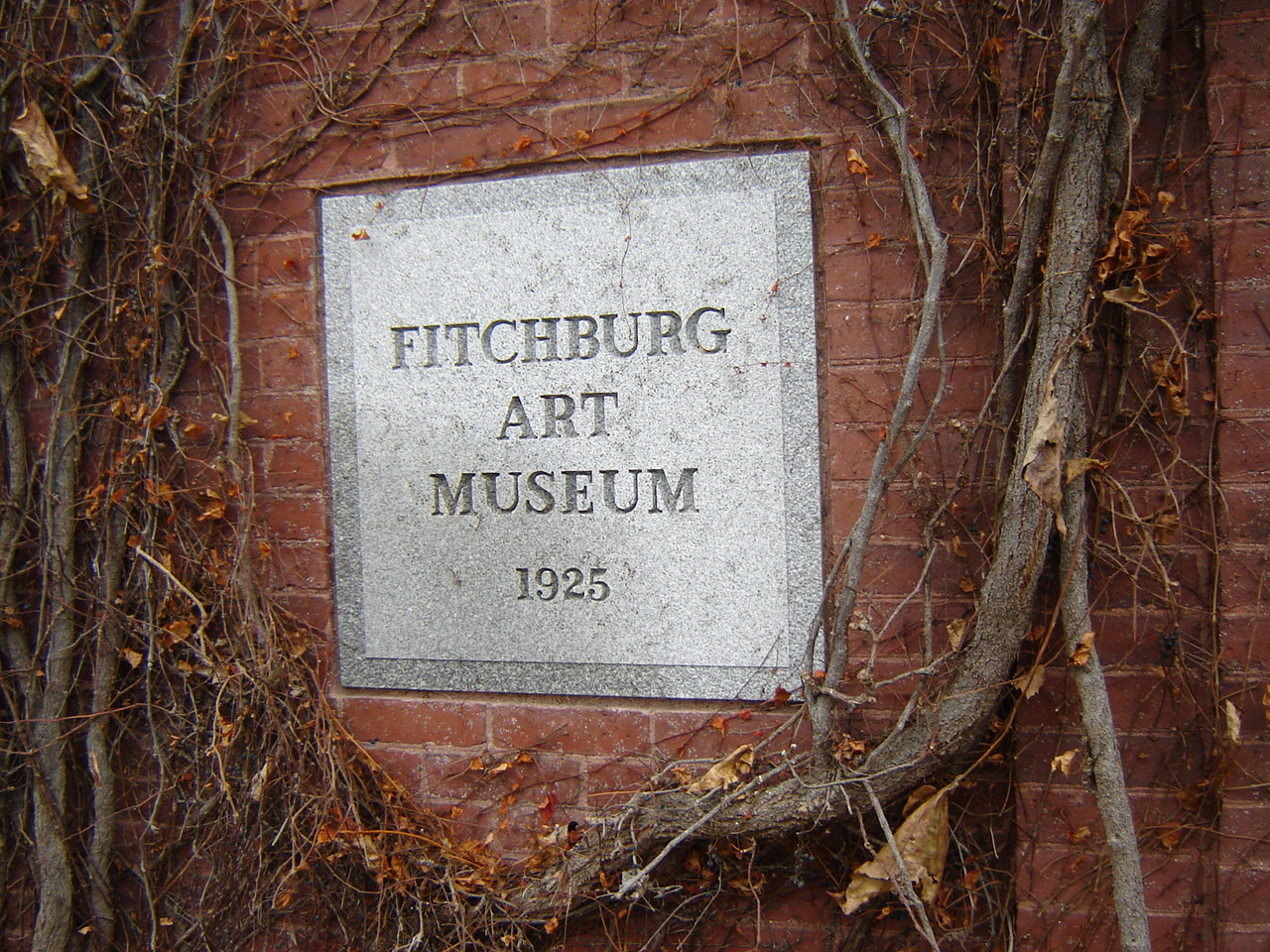
Today I met up with Asakiyume and her daughter the Animator in Fitchburg, a run-down postindustrial city with a lovely little museum, established in 1929 by artist and one-time resident Eleanor Norcross. The show we came for, on graphic art, was put together by the Norman Rockwell Museum in Stockbridge, Mass., and is traveling to New York. Definitely worthwhile. So is the Fitchburg Art Museum itself.
I enjoyed seeing what caught the attention of my companions among the wide variety of graphic styles and stories. For me, the book by Brian Fies on his mother’s cancer and a different book illustrating Kafka’s Metamorphosis were of special interest.
One fun thing was an actual bedroom set up to suggest where a typical comic-loving teen might hang out. The Animator scrutinized the book collection and pronounced the teen’s taste eclectic.
I recognized the art of Lynd Ward, although I did not know he created novels without words. The series in the museum was the novel Gods’ Man, described at the Library of America site:
“Gods’ Man (1929), the audaciously ambitious work that made Ward’s reputation, is a modern morality play, an allegory of the deadly bargain a striving young artist often makes with life.”
If you scroll down at the website, you can see woodcuts from the book.
Asakiyume asked me how I knew about Lynd Ward, and I had a vague memory of a children’s book, possibly of folk tales. I don’t think the book I remembered was The Little Red Lighthouse and the Great Gray Bridge although Ward was the illustrator. It might have been The Biggest Bear.
I tend to think that our creativity comes from our memories, because no one who has ever been or ever will be has exactly the same collection of memories bouncing off one another in exactly the same way.
A recent NY Times science story on a successful artist who got viral encephalitis — and suffered damage to the part of the brain where memories form — doesn’t exactly contradict that view, but it sure raises a lot of questions.
“She is still able to make art, though it is simpler and more childlike than her professional work. Her case is rare, experts say, because few accomplished artists continue to create after sustaining severe brain damage.
“Now scientists at Johns Hopkins University hope Ms. Johnson can help them answer longstanding questions: What parts of the brain are needed for creativity? With little access to one’s life experience, how does an artist create?
“And as Michael McCloskey, a professor of cognitive science at Hopkins, put it, Ms. Johnson’s case ‘raises interesting questions about identity: Here you’ve lost an awful lot of what makes you who you are — what’s left for art?’ ” Read about her.
Although the artist doesn’t seem sad, I think it’s sad to lose memories. I want to keep mine — the bad with the good.
Enjoy this amazing Moray McLaren video about memory, called with irony “We Got Time.”
“Time is a memory
“And memories can make you sad
“With time still in front of me
“Oh we can get it back”
My friend Asakiyume writes a blog at asakiyume.livejournal.com. Like me, she blogs about whatever interests her. She is also an accomplished children’s author under another name. Today on her blog she shares photos from the natural world she loves to observe and ponder: “Sometimes, you can be so sure the day will fall to rain, and instead the sun wins out. This evening the breeze was running through the long grass, making it undulate and shimmer silver.”
Asakiyume is also the mother of four exceptionally gifted children. One, who is in college, calls herself LittleMetalDrop on YouTube and did this adorable animation for the song “Don’t Stop Me Now.”
Although Asakiyume asked me to hurry up and activate my “comments” function, Luna & Stella is still testing the blog. So for now, please send comments to suzannesmom@lunaandstella.com. I aim to include many comments in my entries.


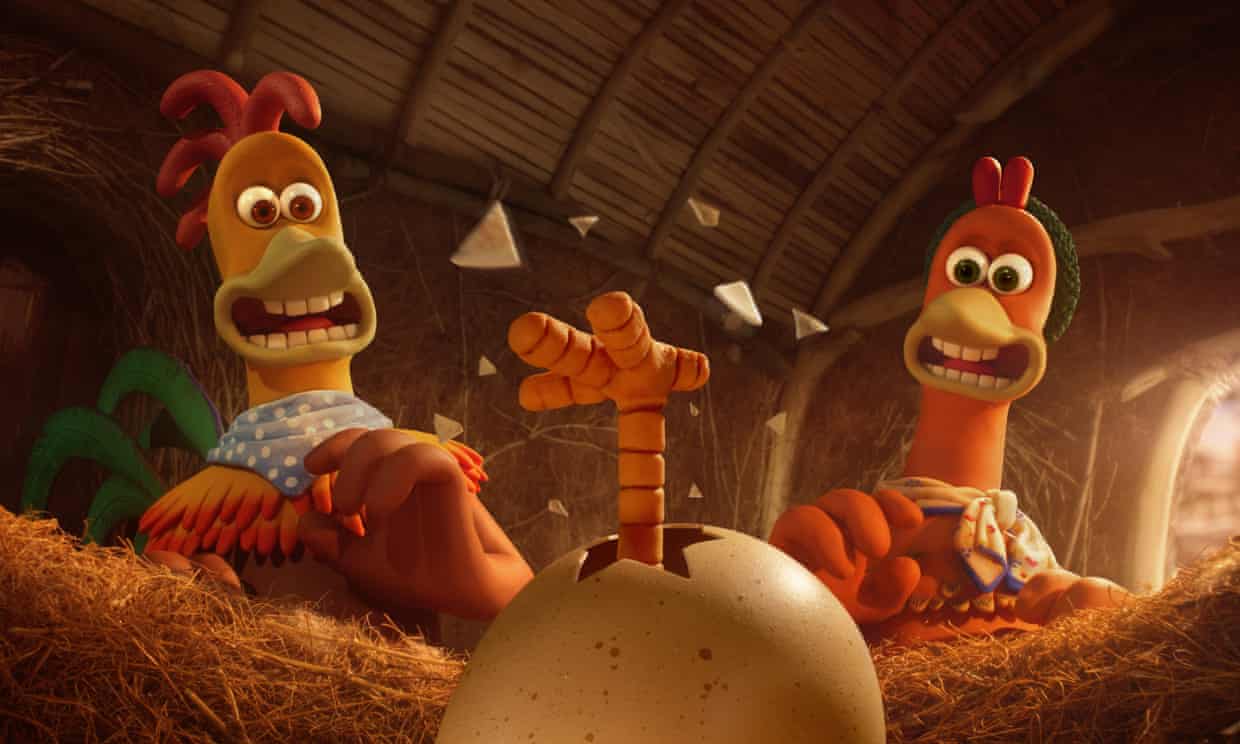
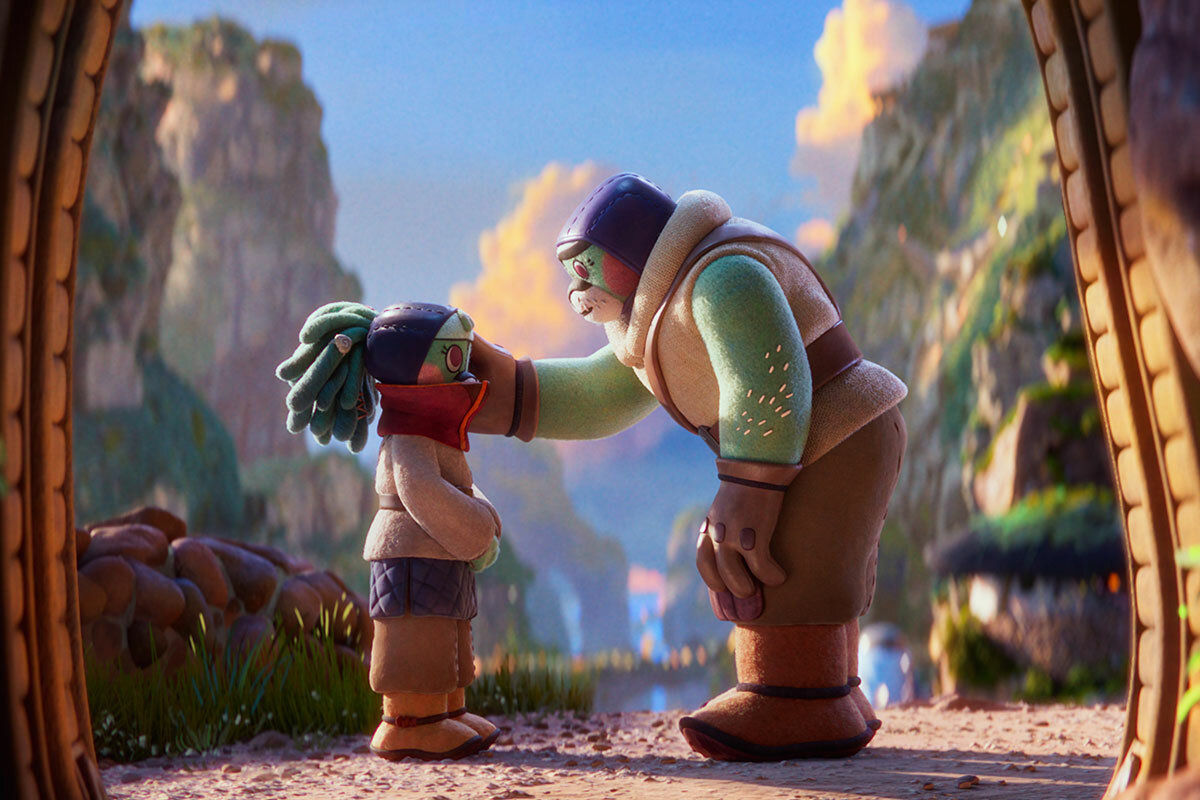

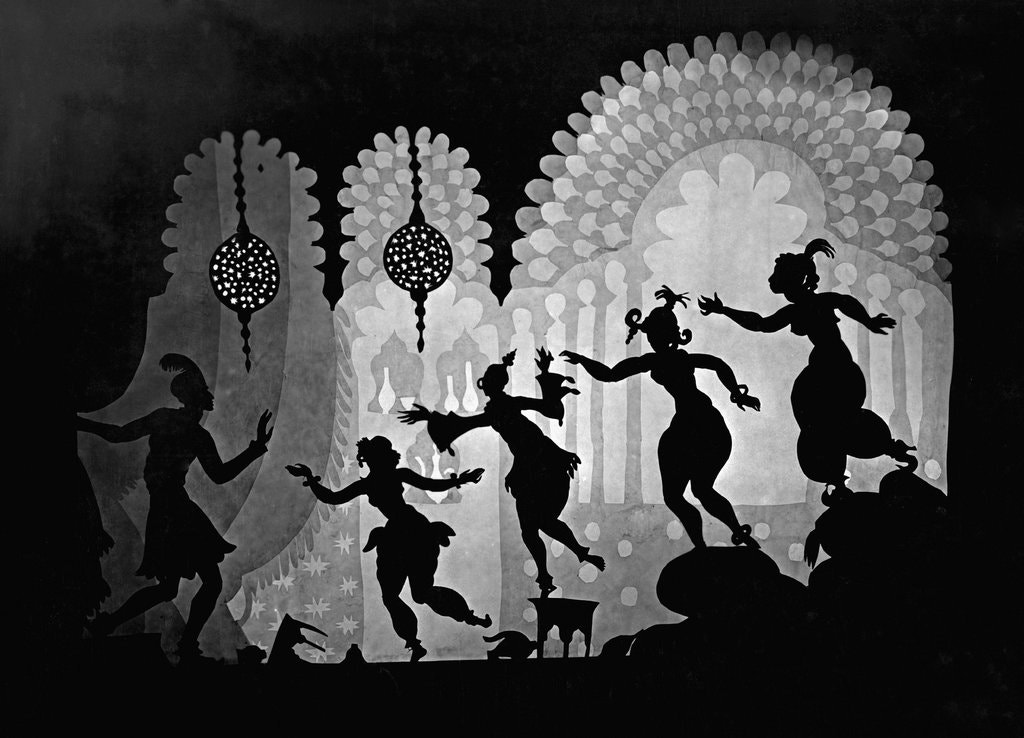
 Photo: Brain Pickings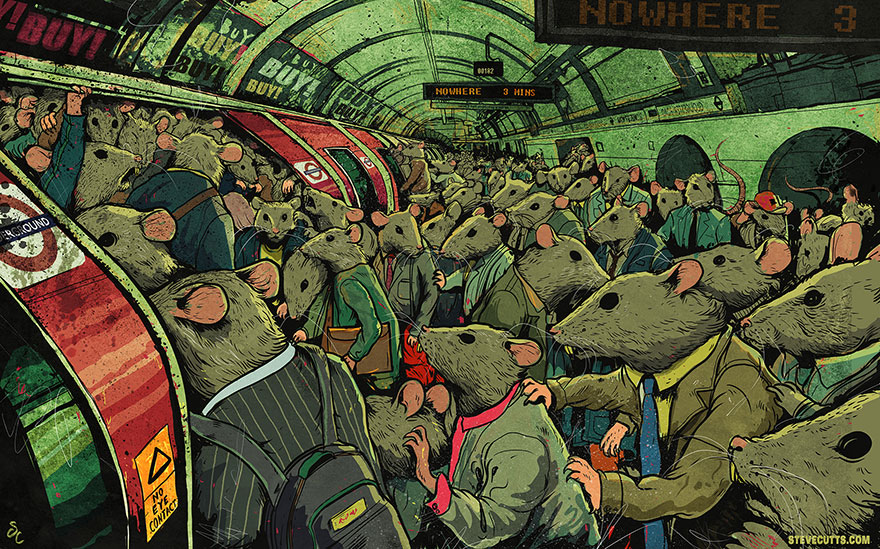



 Suzanne's Mom's Blog