Feeds:
Posts
Comments

Posts Tagged ‘antarctica’

Photo: UK Army/Wikimedia.
Captain Preet Chandi in 2021. Nicknamed Polar Preet, Chandi has made three solo expeditions to Antarctica.

Today’s story is about a woman who loves to push her boundaries, test how much more she can do. What she especially loves is solo travel to the antipodes.

Hannah Al-Othman writes at the Guardian, “The record-breaking British explorer Preet Chandi, who made history trekking solo to the south pole, is now turning her ambitions north.

“Nicknamed Polar Preet, the 36-year-old from Derby has made three solo expeditions to Antarctica, earning herself four Guinness world records. …

“Chandi reached the south pole for the first time in January 2022, traveling 702 miles in 40 days, and becoming the first woman of color to complete a solo expedition to Antarctica.

“A year later, she broke the record for the longest solo unsupported one-way polar ski journey, skiing for up to 15 hours a day on as little as five hours’ sleep, while pulling her kit and supplies … “through winds of up to 60mph and in temperatures as low as -30C [-20F].

“She covered 922 miles over 70 days, beating the previous world record of 907 miles (1,459km) set in 2015 by the retired lieutenant colonel Henry Worsley.

“Now, Chandi is in training to try to become the first woman to travel solo and unsupported to the north pole. She will set off from Canada and the journey will involve traveling across sea ice, crossing sections of open water, climbing over rough ice. …

“The physiotherapist, who served as a medical officer in the British army for 16 years, reaching the rank of captain, joked that when she first told her ‘proud and supportive’ Indian family of her plans, ‘some of them thought I was talking about Southall rather than the south pole.’

“After she collected her MBE in 2023, Chandi said: ‘Wherever we start from, we can go and achieve anything.’ …

“On a visit to Landau Forte college in Derby, the [Catherine, Princess of Wales] said: ‘I just think it’s incredible, what you’ve been able to achieve. … As humans we are meant to connect and be with each other, and being on your own all that time is really challenging.’

“Chandi is now training, and fundraising, for her latest record attempt. … ‘When I reached the south pole the first time [January 2022], I said on my blogpost: “I don’t want to just break the glass ceiling, I want to smash it into a million pieces,” ‘ she wrote on her GoFundMe page.

“ ‘I was told no on so many occasions, called stubborn or rebellious because I wanted to do things that were out of the norm and push my boundaries.

“I want to encourage others to push their boundaries, it is amazing how much your world opens up when you start to do so.’ …

“Chandi took unpaid leave from the army to complete her Antarctica expeditions, and is now on a career break. During her service she was deployed in Nepal, Kenya and a six-month UN peacekeeping tour to South Sudan, where she organized a 30-hour endurance event to raise money for charity. She completed the full 30 hours while other soldiers would join her for anything between one and 12 hours.

“Her taste for endurance challenges came after she undertook an ultra-marathon much closer to home. After completing the Dusk till Dawn 50 mile challenge in the Peak District, she caught the bug for adventure, and began seeking out bigger and bigger challenges.

“ ‘Anything ambitious can feel out of reach at the beginning. I’m often still amazed at how far I made it,’ she said. ‘If a Punjabi girl from Derby can get to Antarctica, you can go and achieve anything.’ “

More at Ziba Adventures, here. See also the Guardian, here.
Read Full Post »

Photo: Naomi Antonino/CNET.
“As the world warms, non-native species threaten Earth’s last great wilderness,” says Jackson Ryan.

In the interest of identifying a problem in order to do something about it, today I share bad news about Antarctica: the invasion of alien species.

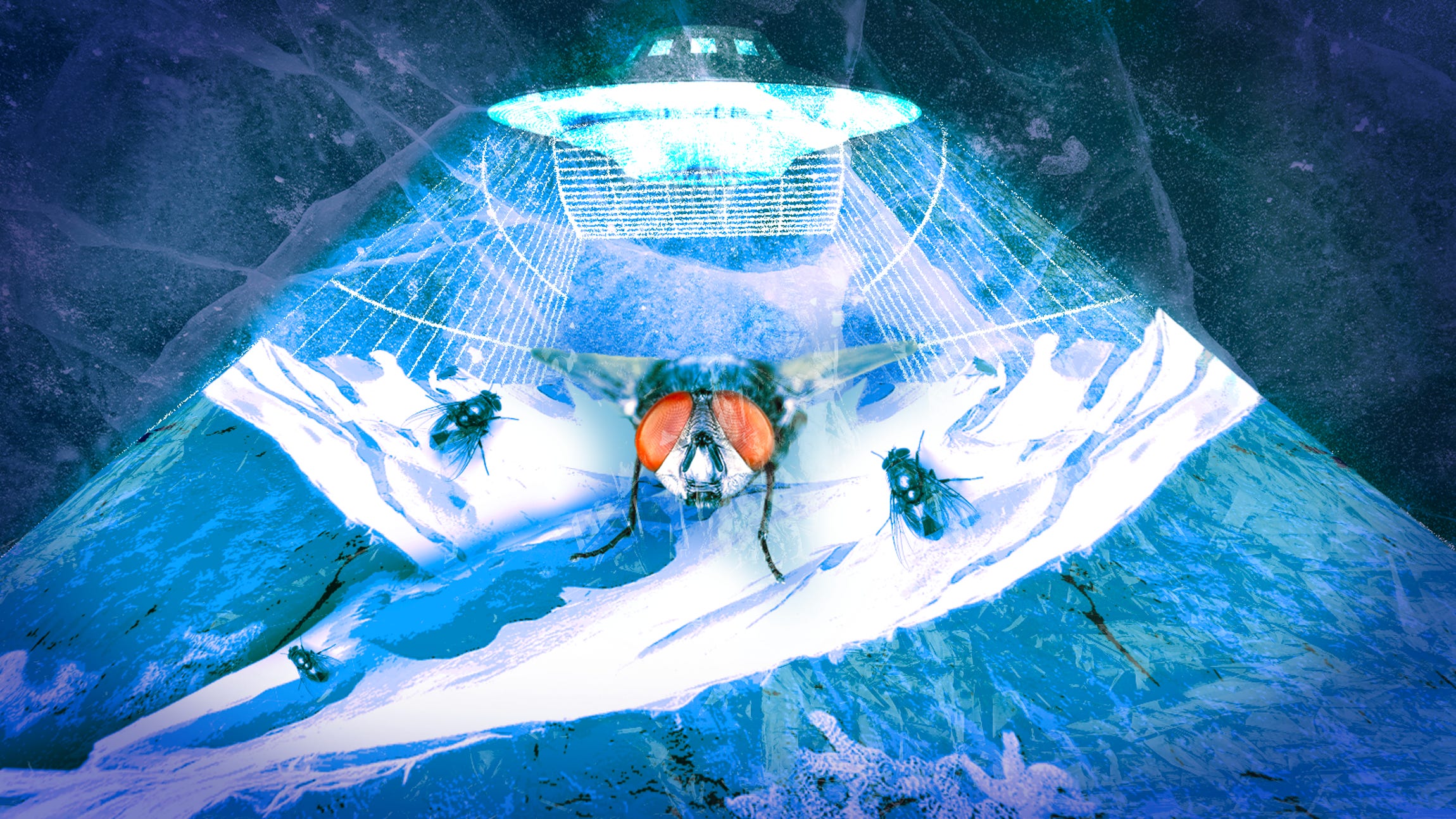
Jackson Ryan reports at CNET Science, “At the bottom of the stairwell leading to deck five, an alien lies upturned on green nonslip flooring. If you get close enough, you can see one of its six legs twitching and one of its translucent wings crushed to pieces. Unlike the throng of Antarctic expeditioners aboard the RSV Nuyina, Australia’s newest icebreaking ship, it hasn’t cleared customs. 

“Days after the Nuyina departed its harbor in Hobart, Tasmania, the alien buzzed its way across the Derwent River, slipped through an open door and zipped into the bowels of the ship until this restless, twitching death. 

“Scientists call the creature Musca domestica. You likely know it as the housefly.

“Even if it hadn’t been felled by an errant hand or boot, it likely wouldn’t have survived the journey to Antarctica. At temperatures below 14 degrees Fahrenheit, flies move lackadaisically and seem to barely get airborne. I know this because I’ve been watching them as part of the crew onboard the Nuyina as it crosses the Southern Ocean. Surviving flies buzz at the ship’s windows, trying to escape the upper decks. 

“If their prison break were to succeed, they’d find themselves facing seemingly endless waters, with nowhere to go. The Southern Ocean provides a formidable barrier to entering Antarctica, a great wall of water and powerful currents that has separated the continent from the rest of the world for about 30 million years. Couple that with freezing temperatures, and the Antarctic provides little hope for a wayward housefly trapped on a ship.

“But Antarctica’s temperature is changing, and dramatically. In March, a French-Italian base in East Antarctica recorded temperatures 70 degrees higher than average for that time of year. That may just be an unprecedented anomaly, but it’s expected the continent’s average temperatures could rise a few degrees by 2050. In particular regions, like the western peninsula, the continent is warming at a rate 10 times faster than the rest of the world. In February 2020, the temperature at Argentina’s Esperanza Base research station reached 18.3 degrees Fahrenheit – an all-time high – providing the kind of conditions a wayward housefly might survive in. 

“Historically, it’s been difficult for lost flies to reach the most southern landmass on Earth. As Antarctic explorers aimed to discover and map the continent in the 1800s, humans began providing fleeting opportunities for alien trespass. A handful of nations with a permanent presence across the continent annually resupply research stations that provide permanent outposts for studying the ice and the Antarctic ecosystem. …

” ‘Back-of-the-napkin math, less than a million people in the entire history of human existence have visited Antarctica,’ says Dana Bergstrom, an ecologist at the Australian Antarctic Division. 

“But that too is changing. Before the pandemic slowed cruises to a halt, Antarctic tourism was on the rise. In the 2019-20 season, almost 75,000 people visited the continent, according to IAATO, the chief tourist body in the Antarctic. That’s a 35% increase over the previous season.

“Wherever humans go, so too our pests. Signatories to the Antarctic Treaty and the Madrid Protocol, which include protections for the Antarctic environment, must endeavor to limit their effects on the pristine wilderness, and tourist bodies like IAATO and national Antarctic programs go to great lengths to prevent biological invasions. …

“If an alien were to slip in, it could be disastrous for the delicate Antarctic ecosystems hidden from the world for millennia.

” ‘It’s a super special place to understand how the planet works,’ says Bergstrom. ‘And so it’s really worthwhile putting all our efforts to try to keep nature operating without interfering.’

“On the eastern edge of Antarctica … [a] base, called Davis, is Australia’s southernmost presence on the continent.  In 2014, its hydroponics facility was the site of an infamous alien invasion.

“In May of that year, expeditioners entered the facility, composed of two gray shipping containers, to pick fresh greens for the chef’s evening meal. … During the vegetable collection, they inspected the facility’s water and noticed a black mat had developed over the surface. ‘When they looked closer, they realized it wasn’t a mat,’ says Andy Sharman, environmental manager at the Australian Antarctic Division, ‘it was thousands of tiny invertebrates.’

“Davis had been invaded by The Thing, a thousand times over. An alien species of arthropod known as Xenylla had snuck into the facility and began multiplying in the warm, wet conditions. The flealike critters, known as collembolans, hadn’t been seen in this region of the Antarctic before but had become established in warmer areas. A crack team of scientists deduced that should they get out, they might threaten the local ecosystem.

Almost immediately, the station went into eradication mode. ‘We had a biohazard response like you might get with a virus or disease,’ notes Sharman.

“The effort was blazingly fast. The response team sprayed alcohol throughout the facility, then bagged and burned everything, including recently harvested vegetables that had already made it to the Davis kitchen. The building was subjected to rigorous freeze-thaw cycling; the heat would trick any leftover eggs into hatching and then the temperatures would drop to minus 11 degrees Celsius, killing the hatchlings. 

“The response team also took extreme social distancing measures. ‘We actually lifted the whole building out and parked it on the sea ice and left it there,’ says Sharman. A few months after the discovery and various eradication measures, the containers were shipped back to Australia.

“An investigation into the source of the incursion eventually discovered that the aliens likely got in through plant feed. Subsequent monitoring hasn’t found the collembolan in the area since, but other stations have experienced invasions, too, and protecting the continent from such risks is a constant battle. 

“Exterminating The Things at Davis is one of the Australian Antarctic Division’s success stories, but the threat of incursion is constant. Invertebrates are the most widely dispersed non-native species and are known to hide in shoes and bags, while plant seeds can become stuck in Velcro and marine creatures can lurk in ballast tanks on vessels.” 

The long, interesting CNET article is, here. No firewall.

Read Full Post »

Raising a family is challenging under any circumstances, but Simon Romero of the NY Times can tell you about families that have added on a somewhat more extreme challenge: settling in Antarctica.

He writes from Villa Las Estrellas, “Children at the schoolhouse here study under a portrait of Bernardo O’Higgins, Chile’s independence leader. The bank manager welcomes deposits in Chilean pesos. The cellphone service from the Chilean phone company Entel is so robust that downloading iPhone apps works like a charm. …

“Fewer than 200 people live in this outpost founded in 1984 during the dictatorship of Gen. Augusto Pinochet, when Chile was seeking to bolster its territorial claims in Antarctica. Since then, the tiny hamlet has been at the center of one of Antarctica’s most remarkable experiments: exposing entire families to isolation and extreme conditions in an attempt to arrive at a semblance of normal life at the bottom of the planet.

“It gets a little intense here in winter,” said José Luis Carillán, 40, who moved to Villa Las Estrellas three years ago with his wife and their two children to take a job as a teacher in the public school.

“He described challenges like trekking through punishing wind storms to arrive at a schoolhouse concealed by snow drifts, and withstanding long stretches with only a few hours of sunlight each day. …

“Most of the students at the village’s small school, who generally number less than a dozen, are the children of air force officials who operate the base; some of the parents say the isolating experience strengthens family bonds.

“That Villa Las Estrellas is so remote — its name can be translated as Hamlet of the Stars, since the lack of artificial light pollution here enhances gazing into the heavens — sits just fine with many who live here.

“ ‘People in the rest of Chile are so afraid of thieves that they build walls around their homes,’ said Paul Robledo, 40, an electrician from Iquique (pronounced E-key-kay). ‘Not here in Antarctica. This is one of the safest places in the world.’ More here.

And here you thought our cold snap was a little intense!

Photo: Daniel Berehulak for The New York Times  
Children being picked up from school in Villa Las Estrellas. Most of the students at the village’s small school, who generally number less than a dozen, are the children of air force officials who operate a nearby base. 

Read Full Post »