Feeds:
Posts
Comments

Posts Tagged ‘art’

A few photos.

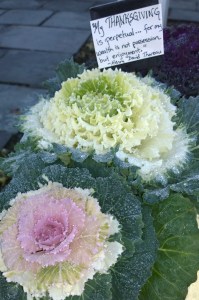
The Barrow Bookstore featured a Thoreau quote on its kale-decorated book barrow at Thanksgiving: “My Thanksgiving is perpetual … for my wealth is not possession but enjoyment.” This shop off Main Street is the place to go for gently used and out-of-print books.

A yellow rose was blooming on Beacon Hill as late as November 19.

Fort Point Arts has a new show by six contemporary mosaic artists using a variety of techniques and materials. One favorite example: Aesop’s wisdom about the fox, the grapes, and the crow, rendered as a mirror.

Finally, no matter how many times I have walked up and down School Street in Boston, I have failed until now to zero in on the reason it is called School Street. A Latin school was established there in 1635, before the founding of Harvard even, and many notables attended over the years. You should be able to read these names on the plaque in the sidewalk: Benjamin Franklin, Samuel Adams, John Hancock, Charles Bullfinch, and Ralph Waldo Emerson. Boston Latin is still going strong, but in a new location.

I love that the original Boston Lain was teaching Latin and Greek, languages I once knew a bit. I am also reminded that those languages were taught at outdoor hedge schools in 18th Century Ireland, when the English were blocking education by Catholics.

112915-thoreau-quote-barrow-bookstore

111915-rose-on-Beacon-Hill


112015-fort-point-art-gallery

112015-Aesop-fox-and-crow-mosiac


112515-Boston-School-Street

11-25-15-who-went-to-early-Latin-school


Read Full Post »

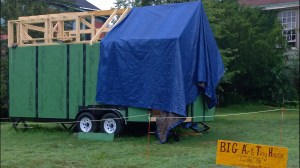
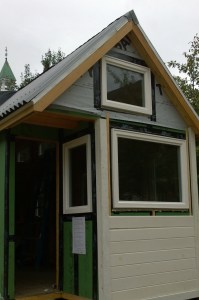
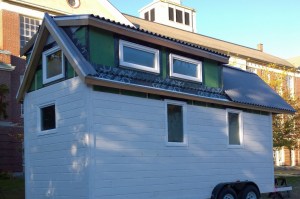
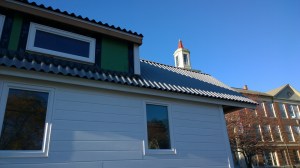
I’ve been watching a tiny house go up in front of the Umbrella Community Arts Center. It’s an art project that started in June and is supposed to wrap up next June.

The Umbrella said “Artist Miranda Aisling will be building a tiny house on the front lawn of The Umbrella and filling it with handmade items.”

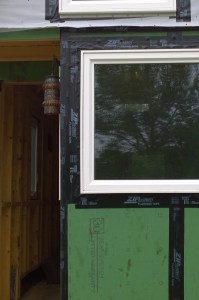
I am now going to post the photos I have taken periodically, and I hope I get them in the right order. Even though the project is only half way, when I saw the new color today I said to myself, “Time to report.”

concord-tiny-house-1

072515-tiny-house-grows


070815-tiny-house-2

070815-tiny-house


072515-tiny-house-moving-along

082615-tiny-house-lantern


090415-tiny-house-growing

100315-Concord-tiny-house


100315-explains-tiny-house-art-project

101815-tiny-house-new-siding


110815-tiny-house-gets-roof

2115-tiny-house-at-half-way

Read Full Post »

An art museum in Minnesota has used the occasion of its 100th birthday to grow a field-size replica of a Van Gogh work.

Emile Klein at Studio 360 has the story.

“The Minneapolis Institute of Art [MIA] has been throwing a year-long party for its 100th birthday, and the guest list has been a bit of a cultural catch-all. …

“How about a 1.2 acre rendition of a Vincent van Gogh painting, composed with items you could buy at the Home Depot?

“Van Gogh’s original piece, Olive Trees with Yellow Sky and Sun, measures about two feet by three feet and hangs on a wall in the MIA. The new rendition, by land artist Stan Herd, covers 1.2 acres, or 7,230 Olive Trees. It’s so big that you’d have to fly a plane over to appreciate it …

“As a land artist, Herd knows that most of his work is just too big to fit inside a traditional museum, and that’s OK by him. ‘I’m a Kansan, and I make art on a frickin’ tractor. Do I really want the avant garde en Paris to see it?’

“Even if a major museum could secure zoning rights, representational art like the kind Herd makes is out of fashion in the art world. Surprisingly, the person who might appreciate Herd’s work the most is van Gogh himself. …

“Herd’s slice of Saint-Rémy won’t last forever. It will fade over time. Surprisingly, so will van Gogh’s. That’s because he painted with pigments now known to be ‘fugitive,’ like a very slowly disappearing ink. The chrome yellows and scarlets scattered throughout the painting’s sky will, in time, wilt like the marigolds in Herd’s field. Everything in nature is ephemeral — van Gogh would probably like that.”

More at Studio 360, here.

Photo: Minneapolis Institute of Art
A living representation of a Van Gogh painting. (Those are actual cars in the lower right corner.)

Read Full Post »

With a little creative thinking, a woman in Detroit was able to put a rundown house to good use, improve the neighborhood, promote her flower business, and help florists who focus on locally grown flowers.

Stacy Cowley writes at the NY Times, “Eleven months ago, a derelict house here that is now filled with 36,000 flowers contained far grimmer things. …

“Twelve thousand pounds of trash had to be hauled out before Lisa Waud, a florist who bought the duplex at auction for $250, could see what kind of canvas she had purchased.

“The house remains a structural wreck, but its atmosphere has been transformed. [In October] some 2,000 visitors [toured] Flower House, an art installation Ms. Waud and more than three dozen floral collaborators from around the country created on the site. Their goal is to cast a new light on the Detroit metropolitan area’s infamous blight, and on their own trade. …

“All of the plants and flowers filling [the rooms] are American-grown, a rarity in an industry that imports a majority of its wares from Colombia and elsewhere. …

“The inspiration for Flower House struck in 2012, when she saw images from that season’s Christian Dior couture show, held in a Parisian mansion filled with flowers in a rainbow of colors.

“ ‘It was stunning, and I knew immediately that I wanted to do that — but living in Detroit, I pictured it in an abandoned house,’ she said. ‘I’m trying to rebrand abandoned houses as a resource.’ …

“Ms. Waud estimated that she would need to raise $150,000 to cover the installation’s floral costs, but when she contacted her usual wholesalers, the California Cut Flower Commission, Mayesh and Nordlie, all three offered to donate their flowers.” Read about the inspiring results here.

Photo: Laura McDermott for The New York Times 
Lisa Waud, a Michigan florist, works on her room on the back side of the Flower House on the first day of the installation in Hamtramck. 

Read Full Post »

Here’s an imaginative trompe l’oeil, art that gives the illusion of a welcome at the border.

Jude Joffe-Block writes at Fronteras, “Artist Ana Teresa Fernandez is attempting to paint a stretch of the border fence in Nogales, Sonora, so it looks like it is no longer there. … The project is an expansion of an earlier installation Fernandez did on the Tijuana border fence.

“Fernandez was born in Mexico, moved to San Diego as a child, and grew up going back and forth between the two countries. She heard story after story of migrants who lost their lives trying to cross the border, and of families divided by it. …

“In 2011, Fernandez went to Tijuana from her home in San Francisco with a plan to paint the fence.

“ ‘I just had this epiphany, of like, you know I can bring the sky down and erase it, just using paint and painting it sky blue,’ Fernandez said.

“She picked a stretch of the fence on the beach on the Mexican side, climbed up a ladder, and began to paint. …

“Fernandez carefully chose a shade of blue that would make it look like the fence disappeared into the sky and the Pacific Ocean behind it.

“The illusion worked. As she was finishing up a jogger came running up excitedly.

“ ‘And this runner was all sweaty,’ Fernandez remembered. ‘He was like, “I get it! I get it!” I looked down from the ladder, and I was like,”Excuse me sir, what do you get?” And he was like, “It looks like it is gone from far away!” ‘…

“Fernandez says her goal is to inspire people to imagine what if the fence really did come down.”

More here at WBUR, where you also can listen to the story.

Photo: Ana Teresa Fernandez
Ana Teresa Fernandez’s art installation on the border fence in Tijuana.

Read Full Post »

Greg Cook has a lovely story at WBUR’s “The Artery” on Boston artist Nate Swain’s Zen garden.

Swain tells the reporter, ” ‘I worked driving a tour trolley in Charlestown, and I drove over that bridge every day to go to work, and looked down … I went down there not even knowing what I wanted to do.’

“At the edge of the Charles River, near the North Washington Street Bridge, by the dock in front of the Residence Inn by Marriott on the east end of the park, he’s been assembling ‘Low Tide City’ or ‘Barnacle City.’ It’s ‘a little city’ of bricks and stones that disappears under the river and appears when the tide goes out. ‘I realized it could be an art piece about sea level change,’ he says. ‘People could watch it flood and imagine Boston could do that if sea level rises.’

“And right under the Zakim Bridge, Swain realized he could rake the existing expanse of gravel he found there into patterns, much like a traditional Zen rock garden, to create ‘Zen Under the Zakim.’ He says, ‘If you really sit there and you listen to all the noise, some of the traffic, even though it’s really noisy, it does sound like ocean waves.’ …

” ‘I try to find places where I can do art without asking permission. In Boston, there’s so much bureaucracy. There’s no room for spontaneity. … With all the bureaucracy and the permission-asking, it sucks all the energy and all the inspiration out of the art piece itself.’ …

” ‘I have this theory,’ he adds, ‘if you put something up beautiful and colorful and fun, in good taste, uplifting, it will stay and everyone will love it and no one will bat an eye.’ ”

More here.

Photo: Greg Cook
Nate Swain’s “Zen Under the Zakim” in 2015.

Read Full Post »

Artists love a challenge. Tell them it’s impossible and they’ll find a way to do it.

As Ralph Gardner Jr. writes for the Wall Street Journal, a good example may be found at one to the most polluted waterways in America, Brooklyn’s Gowanus Canal.

“What is it about the Gowanus Canal,” Gardner asks, “that attracts art and artists? I visited a bit more than a year ago and spotted some sort of homemade art project floating in the middle of the canal. It was as if the anonymous artist was saying, ‘Take that, Superfund site!’

“A far more ambitious project alighted [in late September], when Diana Balmori, a celebrated landscape architect and urban designer, oversaw the launch of a floating landscape at the foot of the Whole Foods parking lot that overlooks the canal.

“ ‘The reason we picked the Gowanus Canal is the attempt to show that plant material can clean water,’ Ms. Balmori explained. At the same time, she acknowledged, ‘We picked the hardest.’ …

“The floating island was to be filled with multiple tubes. In a poetic twist, the tubes were to be made of the same culvert pipe used to dump pollution and sewage into the canal.

“Perhaps even more poetically, the goal of the experiment was to test the viability of creating large-scale ‘edible’ islands in polluted urban rivers to serve as a food source. Some plants were to be irrigated with distilled water, others with captured rainwater, and a hearty few even with water directly from the canal. …

“I was told that a duck had laid an egg on some earlier iteration of the project. And indeed, we stood there admiring the island’s three monarch butterflies, a beleaguered species in recent years, flitting about the plants.”

More at the Wall Street Journal, here, but there may be a firewall. The author is highly skeptical about anyone ever eating plants from this island, but you can tell he has a grudging admiration for an optimistic artistic vision that insists on a better future.

Photo: Cassandra Giraldo for The Wall Street Journal

Read Full Post »

When the MBTA subway system decided to rebuild the stop called Government Center a couple years ago, it began a search for the artist who created the original murals there to see if she would like them back, and if not, if she would be OK with selling them.

It wasn’t easy to find her.

As Malcolm Gay writes at the Boston Globe, she was baking pies as part-owner of the Pie Place Café in Grand Marais, Minnesota.

“ ‘I got a phone call one day,’ [Mary] Beams explained, ‘and a voice I didn’t know said, “How does it feel to know that all of Boston is looking for you?” I had no idea what to say.’

“Beams, it turned out, hadn’t disappeared at all. An animator who had been a teaching assistant at Harvard’s Carpenter Center for the Visual Arts, and whose work has been collected by the Museum of Modern Art, she’d simply left the art world …

“With her blessing, the MBTA plans to hold an online public auction of the artworks, giving Bostonians a chance to own a piece of the city’s history.

“The online auction and display of murals will run Oct. 20-29, with a kick-off event at the state Transportation Building at 10 Park Plaza on Oct. 21. … The event will be something of a homecoming for Beams, who left Boston soon after completing the murals. She has never been back.

“ “I am so curious to see them again,’ she said. ‘I’ve gone on and lived this whole other life. But to be able to confront something that you made 35 years ago and ponder what they’ve been through? It’s quite amazing.’ ”

Pictures of the murals — and more information on the artist — here.

Mural by Mary Beams, for sale at Skinner

Read Full Post »

It took a little poking around on the web as neither the Rhode Island State Arts Council nor the Block Island Airport seem to have published any information on the airport’s new exhibit, but I can finally share some tidings of artist Neal Personeus.

From Cape Scapes: “Neal began his interest in driftwood sculptures as a young boy on the beaches of North Truro in Cape Cod, Massachusetts. His original works were typically pirate ships in the sand made from the various flotsam and jetsam that Cape Cod Bay and the Atlantic Ocean would return to the land. By the time he was in his early teens, his works began to change towards wharf scenes and typical seaside shops perched upon interesting driftwood base pieces.

“When Neal was in his early twenties, he became an architectural and engineering draftsman. He rented a beachside cottage with some friends during the summer of 1984, and spent the entire vacation working beachside on his sculptures while watching the Olympics. It was during this time that he honed in on the type of works he would ultimately settle upon. Utilizing his interest in architecture, he would scour the beaches and dunes for beautifully bleached and unusually shaped base pieces, and then picture the style of house that would blend into and compliment the environment of the base piece.” More here.

You can find lots of Neal’s work on Pinterest if you search on Neal Personeus. And check out this Warwick Museum of Art poster featuring the piece called “Yeah … but the view” here.

Art: Neal Personeus
This humorous piece, currently in an exhibit of Personeus sculptures at the Block Island Airport, is called “Yeah … but the view.”

Read Full Post »

Today I sat on a shady bench next to Fort Point Channel and ate my Vietnamese noodles from the food truck. In front of me, floating on a green platform visited by cormorants, were two sheep — a big one and a small one. As the breeze and the tide nudged the platform, it turned slowly, showing the sculptures with different shadings and from different angles.

Steve Annear at the Boston Globe says, “The installation, called ‘Who Wears Wool,’ was created by artist Hilary Zelson, and pays homage to the Fort Point area’s former wool trade. … Earlier this year, FPAC [Fort Point Arts Community] put out a request for proposals seeking an artist who could weave together a prominent display connecting the neighborhood’s arts community with residents and visitors.  …

“For the project, Zelson said she layered EPS foam — or expanded polystyrene — to create the bodies of the sheep. The layers are held together with a spray adhesive, and the sheep are bolted to the dock with an armature of steel rods. Once built, the sheep were covered in packing peanuts to create the look of wool, before the entire thing was covered with a white acrylic latex coating …

“Zelson started working on the project in August. The first six weeks alone were dedicated to planning, she said.

“ ‘Once I was able to get the foam to my studio, I was working seven days a week,’ she said. ‘It was probably a 300-hour project.’ … The project — from the 3D renderings to the welding to the stacking of foam — was documented on Zelson’s Instagram account”

More here.

What I see in my photo are a ewe and a lamb — and cormorants.
100715-sheep-sculpture-ft-pt-channe;l

Read Full Post »

In 2007, conceptual artist Yoko Ono established the John Lennon Peace Tower in Iceland, a beam of multiple, heaven-directed lights that is intended to appear every year from John Lennon’s birthday, Oct. 9, to Dec. 8. It was most recently relit in 2014.

Wikipedia says, “The Imagine Peace Tower (Icelandic: Friðarsúlan, meaning ‘the peace column’) is a memorial to John Lennon from his widow, Yoko Ono, located on Viðey Island in Kollafjörður Bay near Reykjavík, Iceland.

“It consists of a tall tower of light, projected from a white stone monument that has the words ‘Imagine Peace’ carved into it in 24 languages. These words, and the name of the tower, are a reference to Lennon’s peace anthem ‘Imagine.’

“The Tower consists of 15 searchlights with prisms that act as mirrors, reflecting the column of light vertically into the sky from a 10-metre wide wishing well. … The power for the lights is provided by Iceland’s unique geothermal energy grid. It uses approximately 75 killowatts of power.

“Buried underneath the light tower are over 1 million written wishes that Ono gathered over the years in another project, called Wish Trees. … Iceland was selected for the project because of its beauty and its ecofriendly use of geothermal energy.” More at Wikipedia.

Says the Peace Tower website: “One of the mesmerising features of the Imagine Peace  Tower is that the strength, intensity and brilliance of its light continually changes with the prevailing weather and atmospheric conditions unique to Iceland – creating a clear pillar of light on a cloudless night, beams irridescing with rainbow refractions in rain or snowfall, and brilliantly reflecting off and through any moving layers of cloud.” More.

Photo: McKay Savage
“Imagine Peace” Tower

Read Full Post »

Back when Netscape was the browser of choice, I clicked every day on What’s Cool, and I think that is how I learned about the Museum Of Bad Art (MOBA), “a community-based, private institution dedicated to the collection, preservation, exhibition and celebration of bad art in all its forms and in all its glory.” I read that many pieces were pulled out of dumpsters and attics — or found abandoned by the side of the road.

Twenty years later, I got to wondering if MOBA was still around. I found lots of information on their expanded website.

“MOBA was founded in the fall of 1993 and presented its first show in March 1994. The response was overwhelming. Since then, MOBA’s collection and ambitions have grown exponentially.

“Initially, MOBA was housed in the basement of a private home in Boston. This meager exhibition space limited the museum to being a regional cultural resource for the New England area.

“As the only museum dedicated to bringing the worst of art to the widest of audiences we felt morally compelled to explore new, more creative ways of bringing this priceless collection of quality bad art to a global audience. Another Boston-area cultural institution, Dedham Community Theatre, generously allowed MOBA the use of their basement. Our first permanent gallery is now conveniently located just outside the men’s room in a 1927 movie theatre.

“The ambiance created such a convivial atmosphere, that when we went looking for a second location, the only place that was up to our quality standards was another theatre basement. The Somerville Theater in Davis Square, Somerville MA is now our second gallery.”

MOBA now exhibits online, publishes an email newsletter called MOBA News, and offers the book Museum of Bad Art : Masterworks. More here.

It was hard to pick one piece of art to show you from the many great examples online. But what’s not to love about the landscape below?

Says MOBA, “The wild westerly wind that devastated this peaceful bucolic landscape was strong enough to denude mature trees, grossly distort fair weather clouds, rend the fur from a cow, bend a wrought iron weather vane, and induce panic in a basset hound whose ears and tongue point due east. …

“In the note accompanying his donation, Mr. Roots wrote, ‘I was happy with the way the barn turned out. It was when I started animals and people that [I realized] I was having problems with proportions.’

“He enjoys other creative pursuits in addition to painting. ‘I have won the World’s Worst Poetry Contest in Pismo Beach, CA, placing 1st, 2nd, and 4th in separate years., [and] I have made many bottles of home brew and wine.’ ”

Art: Bob “Grandpa” Roots
“On a Windy Day,” Donated to the Museum of Bad Art

Read Full Post »

I liked this story about a 91-year-old artist having his first solo show. John sent it to me. I hope the Arlington Advocate leaves it up for a while. (I know that all the profiles I wrote for the newspaper chain of which the Advocate is a part — and all my theater reviews — are long gone.)

A solo exhibition called ‘Umberto Centofante: A Life’s Work” was featured at the Arlington Center for the Arts (ACA) until last week and highlighted 40 years of still lifes, portraits and landscapes.

Heather Beasley Doyle writes, “When Umberto Centofante tells a story about his life or talks about his art, a distinct, almost palpable energy underscores his words. His eyes light up, his body springs lightly and a hearty laugh punctuates his paragraphs. …

“Centofante’s life began in Pontecorvo, Italy, where he grew up on his family’s farm. When he was eight years old, he says, his teacher gave him a sketchbook to take home with him.

“ ‘All of a sudden some ideas came into my head,’ Centofante recalled, and he filled the book with drawings of farm life. …

“The drawings earned him a prize and the opportunity to receive professional art instruction — a chance he had to pass up so he could help work the farm. Eventually, Centofante became a police officer and worked in Rome. After World War Two ended, he emigrated from Italy, bound for the Boston area and a job as a truck mechanic at Garwood Industries in Brighton he secured with help from an uncle who lived in Milton. Centofante had never been a mechanic, but he learned with the same intuition that had enabled him to fill the sketchbook.

“Centofante is ‘self-taught in everything,’ including painting, according to the oldest of his four children, Elaine Gleason. …

“In the Gibbs Gallery, Centofante’s paintings of boats ferrying passengers through white-capped brilliant blue seas share space with glowing, color-soaked portraits of children and exacting, nearly monochromatic nature scenes such as ‘High Moon.’ …

“Centofante says he never sketches out a project ahead of time — that he spends more time thinking and planning a painting than setting paint to canvas.

“ ‘I don’t design; I just start. I find the resolution very quickly,’ he explained. …

“Asked why he paints, he replied simply: ‘It makes me feel good.’ ”

Read more of the story at the Arlington Advocate.

Photo: Arlington.Wicked.Local.com

Read Full Post »

Treehugger recently featured some rather magical lamps in the shape of mushrooms.

Kimberley Mok writes, “Whether they glow in the dark or are uncommonly rare, mushrooms are the incredible, unsung heroes of the natural world. They can bio-remediate oil spills, potentially cure diseases, and when used in your garden, can lessen its need for watering. Now, thanks to Japanese artist Yukio Takano, you can even have a LED version of them on your desk, transforming any mundane workspace into one of glowing, fungal wonder.

“Made with glass, salvaged driftwood and outfitted with energy-efficient LEDs and unique little light switches, Takano — who creates under the name The Great Mushrooming — seems to get the little details right enough to make these lamps look like the real thing (they come with hidden battery packs, to up the authentic-look factor, apparently). …

“Takano’s mushroom lights are one-of-a-kind, and while he sells at design fairs like Tokyo’s Design Festa, according to blogger tokyobling he doesn’t ship them abroad, due to the fragility of these glassworks. You can always feast your eyes over at Yukio Takano’s site The Great Mushrooming and visit the portfolio.”

More styles at Treehugger, here.
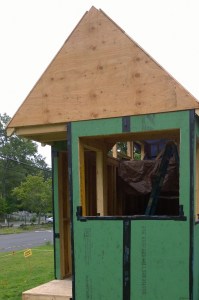
 Photo: Yukio Takano

Read Full Post »

Someone posted a chair by Jeffro Uitto on Facebook, and I had to know more.

Uitto’s About page says, “On the Washington coast there’s a place where nature’s leftovers get a second chance at stardom. The place is Knock on Wood, and Jeffro Uitto is the artist making the magic happen.

“Since high school Jeffro has been creating with wood, his favorite medium. This stuff isn’t from a lumber mill either. Each piece is found and rescued from the shores of Tokeland, the banks of Smith Creek, or the valleys between the Willapa Hills. In due time the varied sticks, slabs, and roots are cured and then found a fitting home. …

“Not everything is built right in the shop though. Clients have brought Jeffro on site to build one-off creations in places like Alaska and Hawaii.

“Jeffro’s shop is located near the historic Tokeland Hotel, a stone’s throw from Willapa Bay. … Visitors are surprised to see that many of Jeffro’s tools are hand made by the artist himself. After you get to know him, this isn’t surprising at all.”

Be sure to check out the amazing sculptures at Jeffro Uitto’s website, here.
Photos: Jeffro Uitto

Read Full Post »

« Newer Posts - Older Posts »