Feeds:
Posts
Comments

Posts Tagged ‘beauty’

Photo: Kentaro Takahashi.
Kazuo Yamagishi inside his studio in Kanazawa in the Ishikawa Prefecture of Japan. Like many lacquer artisans, he was displaced from his original home in Wajima after the 2024 earthquake.

When my husband was working for a company that did a lot of business with Japan, I was often sent on a search for a nice business gift since his Japanese contacts gave him such beautiful ones. I could never compete with the lacquer trays and picture frames and the way they combined utility and artistry. But those beauties can’t compete with the museum-quality lacquer described in today’s article.

Patricia Leigh Brown writes at the New York Times, “Deep in his heart, Kazuo Yamagishi, a lacquer artist designated a Living National Treasure of Japan, does not reside in a nondescript beige apartment complex in a packed area of Kanazawa, the capital city of Ishikawa Prefecture on the country’s main island.

“His real home, the one before he was displaced, is captured in a lacquer tray with delicately carved red lines inlaid with gold and mother-of-pearl stretching across the horizon of its ebony surface. The work is meant to recall ‘the quality of the sunset in autumn,’ he said — the walks he would take along the shore in Wajima, his once-breathtaking small city, as the early evening light shimmered across the Sea of Japan.

“That was before a massive earthquake on New Year’s Day 2024 washed away his wooden home and studio, as it did those of hundreds of other Wajima artisans in this Holy Land of Lacquerware at the tip of the Noto Peninsula about two hours north of Kanazawa. …

“Wajima holds a singular place in the lacquer firmament, prized for its exceptional durability and honed by craftspeople whose family know-how goes back five generations and more. The strength of Wajima-nuri — designated a ‘Traditional Craft of Japan’ by the government — derives from the sap of the urushi tree, from which lacquer originates, reinforced with fine powdery local clay containing microfossils. …

“Today, many craftspeople remaining in Wajima are working out of 85 emergency prefabricated lacquer studios financed by the Japanese government, at a cost of $8.5 million. More than 3,000 housing units have been built to shelter residents, including artisans. … ‘The temporary studios are quite small, and they can’t go back to doing what they did before the quake,’ Shigeru Sakaguchi, the mayor of Wajima City, said in an interview. ‘But they need to keep producing to survive.’ …

“It is a slow craft in a fast world, learned through years of hands-on apprenticeships. … Each piece, including utilitarian bowls, art objects and more, requires over 100 steps and a retinue of specialists — from shapers of the wooden bases to artisans who apply layers of lacquer to produce a veneer thick enough for artists like Yamagishi to carve or incise.

“He and other surface decorators are masters of challenging techniques like ‘chinkin,’ which involves deftly embedding gold, silver or platinum powder into hand-carved dots and grooves. … Each layer of lacquer, known as urushi, needs high humidity and warm temperatures to harden in a box or room called an urushi miro.

“The sparkle of this natural material is difficult to convey without seeing it in person: Jewel-like motifs appear to float on glossy polished surfaces and then dissolve into the depths of the material. ‘Artists see the depth of surfaces as something only lacquer can achieve, with layers and layers of light,’ [Masami Yamada, the Victoria & Albert Museum’s curator of Japanese art] said. …

“A year and 10 months after the quake, the road to Wajima — which had buckled, complicating rescue efforts — remains a roller-coaster patchwork of construction barricades and earthmovers. But it still boasts panoramic vistas of the Sea of Japan, lush rice terraces and cedar forests. …

“The peninsula’s geographic isolation has protected it from modernization efforts, unlike so many other parts of Japan, said Masanori Aoyagi, director of the Ishikawa Prefectural Museum of Art and the country’s former commissioner for cultural affairs. ‘It has a preserved quality, sustaining its own ecosystem of nature and kogei’ (pronounced ‘ko-gay’), he said, using a term for Japanese traditional crafts. ‘It’s a fragile and vulnerable land and culture that really deserves care.’ …

“As Wajima rebuilds … the nurturing of young talent is a top concern. Kunie Komori, a Living National Treasure who harvests bamboo from nearby hills and hand-weaves it for his lacquer art, directs the Ishikawa Prefectural Wajima Urushi Art Technical Training Center, which closed for nine months from quake damage. It received government support to house its 34 students, only two of whom are from Wajima.”

More at the Times, here. Wonderful visuals.

Read Full Post »

Photo: John and Suzanne’s Mom.
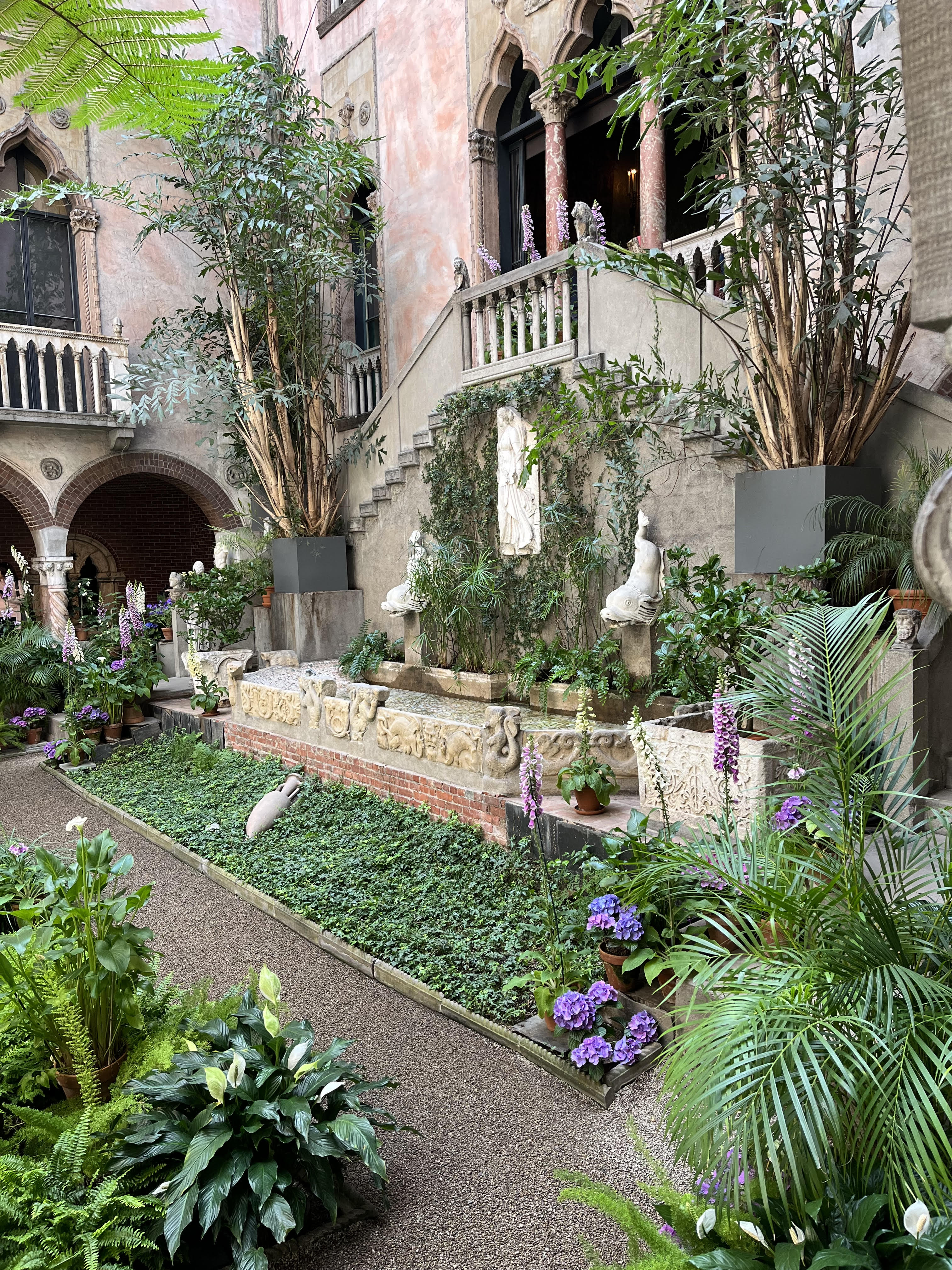
On April 28, the Isabella Stewart Gardner Museum’s courtyard was featuring cineraria and foxglove.

Last Friday, after a medical appointment, I thought I would treat myself to the Isabella Stewart Gardner again, a museum located in a wealthy woman’s former palace not far from the Museum of Fine Arts. The extraordinary collection has been mostly left the way Gardner displayed it, so there are no plaques. You need to rent the audio tour.

The Gardner may be best known outside New England for the brazen heist of valuable artworks in 1990. Empty places on the walls attest to the unresolved loss.

I usually love going there, but to my surprise, the magic really wasn’t happening for me Friday. That wasn’t just because I wanted to see the nasturtium display and they’d already changed it to foxglove and cineraria, or because the timed tickets had done nothing to control overcrowding, or because a guard told me I wasn’t allowed to carry my coat over my arm.

No, it was something along the lines of “what is one person doing with so much wealth?”

I have fallen into overthinking things: Was that piece of fruit picked for a living wage? Are the clothes I wear from factories with good ventilation and frequent bathroom breaks?

And if “philanthropists” give us access to their beautiful things after they die, wouldn’t they have been more truly philanthropic if they had spent some of that wealth trying to abolish poverty?

On Mastodon, I read about Paris Review contributor Katy Kelleher’s new book. Her publisher says she “explores our obsession with gorgeous things, unveiling the fraught histories of makeup, flowers, perfume, silk, and other beautiful objects. …

“Katy Kelleher,” Simon & Schuster continues, “has spent much of her life chasing beauty. As a child, she uprooted handfuls of purple, fragrant little flowers from the earth, plucked iridescent seashells from the beach, and dug for turquoise stones in her backyard. As a teenager she applied glittery shimmer to her eyelids after religiously dabbing on her signature scent of orange blossoms and jasmine.

“And as an adult, she coveted gleaming marble countertops and delicate porcelain to beautify her home. This obsession with beauty led her to become a home, garden, and design writer, where she studied how beautiful things are mined, grown, made, and enhanced. In researching these objects, Kelleher concluded that most of us are blind to the true cost of our desires. Because whenever you find something unbearably beautiful, look closer, and you’ll inevitably find a shadow of decay lurking underneath.

“In these dazzling and deeply researched essays, Katy Kelleher blends science, history, and memoir to uncover the dark underbellies of our favorite goods. She reveals the crushed beetle shells in our lipstick, the musk of rodents in our perfume, and the burnt cow bones baked into our dishware. She untangles the secret history of silk and muses on her problematic prom dress.

She tells the story of countless workers dying in their efforts to bring us shiny rocks from unsafe mines that shatter and wound the earth, all because a diamond company created a compelling ad.

“She examines the enduring appeal of the beautiful dead girl and the sad fate of the ugly mollusk. With prose as stunning as the objects she describes, Kelleher invites readers to examine their own relationships with the beautiful objects that adorn their body and grace their homes.

“[Kelleher] argues that while we have a moral imperative to understand our relationship to desire, we are not evil or weak for desiring beauty. The Ugly History of Beautiful Things opens our eyes to beauty that surrounds us, helps us understand how that beauty came to be, what price was paid and by whom, and how we can most ethically partake in the beauty of the world.”

I think I need to read the book and see if it will help me deal better with the rampant overconsumption and privilege I am finally noticing.

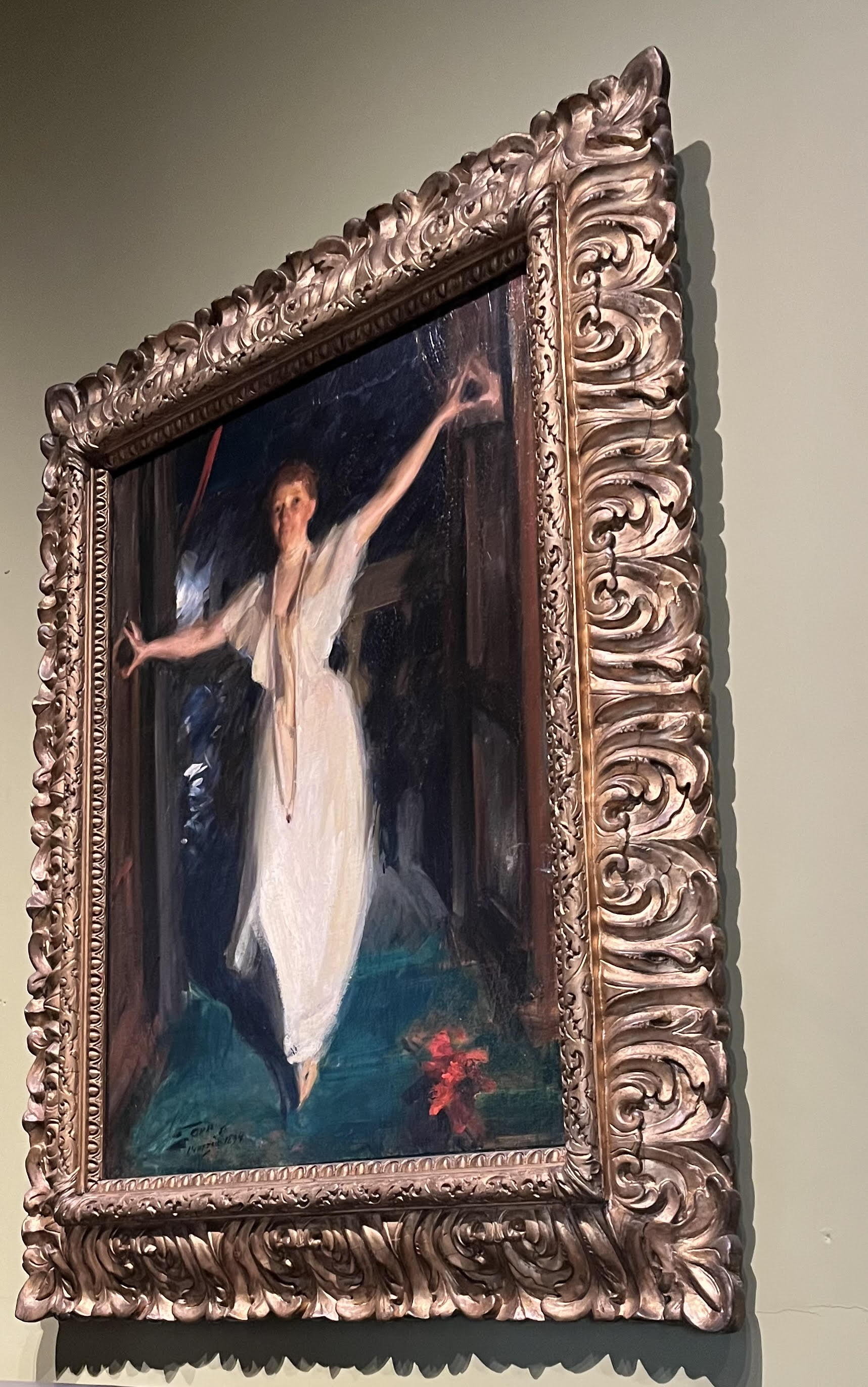
Art: Anders Zorn.
Gardner herself enjoying a high old time in Venice.

Read Full Post »

Photo: Lucas Jackson/Reuters
More than just a tourist attraction, Manhattan’s High Line is a development destination, says author Richard Florida.

Have you walked on Manhattan’s High Line when it’s not too crowded? It is a magical linear garden high above the dusty streets of the city.

And what about the magnificent parks in New York?

I’m in the city now and, having had beautiful walks in the extraordinary Central Park, am determined do a post soon on the genius of designer Frederick Law Olmsted and the supporters who made his urban landscapes possible.

Today’s post, however, is on the economic value of beauty in cities — not that beauty ever needs to be justified in terms of dollars and cents. But it’s worth noting.

Richard Florida asks at CityLab whether cities “benefit from a beauty premium? According to a new study by two urban economists, it seems that they do.

“The study by Gerald A. Carlino of the Federal Reserve Bank of Philadelphia and Albert Saiz of Massachusetts Institute of Technology, examines the connection between a city’s beauty and key growth indicators. A raft of previous studies have found a connection between economic and population growth and urban amenities (a broad category ranging from parks to restaurants, art galleries, and museums). But this study takes a much closer look at the effects of beauty itself.

“To get at this, the researchers measure attractiveness in a unique way: through tourist visits and photos of picturesque locations. … The study compares its own measure of urban beauty to more established measures of urban amenities such as parks, historic spaces, proximity to coastlines, bodies of waters or mountains, the size of the tourism industry, and more. ..

“The study finds evidence of a significant beauty premium for cities and neighborhoods. A city with twice as many picturesque locations as another city saw 10 percent growth or greater in population and jobs from 1990 to 2010. In fact, urban beauty ties with lower taxes as the most important predictor of overall population growth in cities. Plus, these cities disproportionately attract greater numbers of college graduates. Cities in the top 25 percent of picturesqueness saw nearly 3 percent higher growth in the number of college grads than those in the bottom 25 percent. …

“City beauty is not an effect of size, the study finds: Smaller and medium-sized places with more parks, historic buildings, proximity to water and mountains, and clearer skies and less rain are perceived as beautiful as well.

“It’s not just metros broadly that benefit from an urban beauty premium, it’s specific neighborhoods within them. A large number of studies have documented the back-to-the-city movement of younger, more educated, and more affluent people to the urban center. These studies typically document the urban influx into neighborhoods near the Central Business District (CBD), the downtown commercial core of a city. …

“Urban beauty is a powerful tool for economic growth and urban resurgence, but with it comes gentrification and displacement. As the authors of the study put it: ‘Rents, incomes, and educational attainment increased faster in urban beautiful neighborhoods but at the cost of minority displacement.’

“Urban policy makers have to take in the full costs, as well as the benefits, of urban beautification into account. They could mandate that developers who create new condominiums adjacent to publicly created and valued amenities pay more in taxes, provide some affordable housing, or employ local residents in their projects. Cities can devote the increased revenues from beautification projects to affordable housing, workforce development, and the reduction of concentrated poverty.”

Read more here.

Read Full Post »

When Erik and Suzanne were living in California, Erik says, he often wondered how it happened that the state had such a glorious, unspoiled coastline, where one could drive for miles and miles and see only the beauty of nature.

Now he knows. It’s been a long, hard fight, one that probably will never end. Steve Blank talks about the fight at his website, here.

“California has some of the most expensive land in the country,” Blank writes, “and as we all know, our economy is organized to extract the maximum revenue and profits from any asset. Visitors are amazed that there aren’t condos, hotels, houses, shopping centers and freeways, wall-to-wall, for most of the length of our state’s coast.

“It was the Coastal Act that saved California from looking like the coast of New Jersey.

“In 1976 the voters of California wisely supported the Coastal Act and the creation of a California Coastal Commission with 2 goals.

“First, to maximize public access and public recreational opportunities in the coastal zone while preserving the  rights of private property owners, and

“Second, to assure priority for coastal-dependent and coastal-related development over other development on the coast. …

“The Commission has been able to stave off the tragedy of the commons for the California coast. Upholding the Coastal Act meant the Commission took unpopular positions upsetting developers who have fought with the agency over seaside projects, homeowners who strongly feel that private property rights unconditionally trump public access, and local governments who believe they should have the final say in what’s right for their community, regardless of its impact on the rest of the state.”

Good for California! There’s more at Blank’s website.

Photo: http://steveblank.com

Read Full Post »